NATO kicks off naval drills in Black Sea with Ukraine
RT | August 31, 2015
Ukraine is hosting naval military exercises in the Black Sea with NATO forces, involving 2,500 troops and some 150 military vehicles, from warships and helicopters to armored cars.
The host nation of Sea Breeze 2015 has deployed 1,000 troops, nine warships and eight aircraft for the drill. The US has sent 1,000 troops as well as five warships, two submarines and six aircraft.
The remaining 500 troops, six warships, three submarines and 6six aircraft were provided by Bulgaria, Germany, Greece, Italy, Romania, Turkey, the UK and the non-NATO nations Moldova and Sweden.
“The exercise is meant to boost trust and security in the region, [and to increase] the compatibility between the Ukrainian Navy and the navies of NATO members and partner countries,” the Ukrainian Defense Ministry said in a statement.
Sea Breeze is held in Ukraine’s Odessa and Nikolaevsk region not far from Russia’s Crimea, which Kiev and its foreign sponsors consider to be Ukrainian. It will last till mid-September. Ukraine will be participating in a total of 11 NATO drills in 2015.
NATO is also currently conducting another war game, called Swift Response, in Germany, Italy, Bulgaria and Romania. It is one of the largest such events since the Cold War and is planned to last until September 13. A separate exercise, called Simple Strike, is under way in the Baltic.
Stunning poll results showing Ukrainians’ dissatisfied with government, economy and war
New Cold War | August 26, 2015
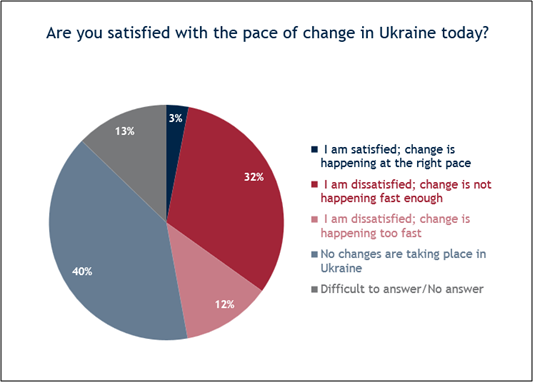
The International Republican Institute in the United States has published results of polling of attitudes of Ukrainians on the key issues facing the country. The polling was conducted in the latter two weeks of July 2015 by Rating Group Ukraine on behalf of the IRI.
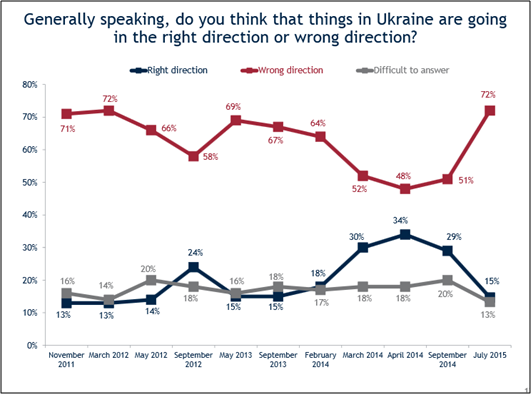 The poll provides more evidence of deepgoing and growing political dissatisfaction and alienation in Ukraine. Absolute or relative majorities of Ukrainians now express unfavorable views of all major government leaders and politicians from major parties in Ukraine.
The people of the rebel region of Donbas are not included in the poll, which means that the levels of dissatisfaction of Ukrainian residents are even higher than what is reported by the IRI.
The poll results are unlikely to be reported in Western mainstream media, even though the poll is commissioned and published by a right-wing U.S. institute. That’s because the results fly in the face of the “news” and editorial opinions peddled by Western media. It proves that media is lying to its readers and grossly misleading them when it inaccurately presents the war in eastern Ukraine as a virtuous war against an aggressive Russia that is supported by the majority of the Ukrainian people.
Media also chooses to be silent about the profound economic crisis that is wracking Ukraine as a result of the Kyiv regime’s turn to austerity association with the European Union, and about the massive human rights violations accompanying the civil war of the Kyiv regime against the people in the eastern and southern regions of the country. The IRI poll shows extremely high levels of dissatisfaction with the economic crisis and the war.
The poll will also be ignored by the Russophobes in the governments and mainstream political parties in the NATO member countries who decry “Russian aggression” and “Russian imperialism” in Ukraine, and by the many pseudo-lefts in the international arena who are acting as echo chambers of that messaging.
Similarly stunning results of polling of the Crimean people in late 2014 and early 2015 were ignored by the same constellation of forces. That polling showed extraordinarily high levels of satisfaction with the democratic decision of Crimeans in March 2014 to secede from Ukraine. The polls contradict the ongoing stories of Russian “annexation” of Crimea.
The 71-page report International Republican Institute polling report can be read here. Enclosed below are 11 selected charts from the poll:




Bernie Sanders’ Conservative Foreign Policy

By Margaret Kimberley | Black Agenda Report | August 26, 2015
It is obvious that Bernie Sanders functions as the political “sheepdog” of the 2016 presidential election. The sheepdog makes certain that otherwise disillusioned Democrats are energized enough to stay in line and support the eventual candidate, in this case Hillary Clinton. That is reason enough to oppose his campaign but it isn’t the only one. A hard look at Sanders on foreign policy issues shows that he is a progressive poseur, a phony, a conservative Democrat, and not a socialist by any means.
The Sanders website looks like every other candidate’s with a bio, donation information and of course “Bernie on the issues.” But it seems that Bernie doesn’t have any opinions on foreign policy because they are nowhere to be found. How can he be a serious presidential contender if he doesn’t discuss foreign policy? How does he differentiate himself from Hillary Clinton or Republicans if he won’t state for the record how his foreign policy differs from theirs? The truth is obvious. He isn’t a serious contender and his foreign policy views are no different from those of the other candidates.
Sanders’ candidacy is as grave a danger to the rest of the world as that of his rivals. In no way does he challenge the belief that the United States has the right to determine the fates of millions of people without regard to their human rights. He doesn’t believe that other nations have the right to oppose what the United States chooses to impose upon them.
Sanders makes quite a big deal about voting against the invasion of Iraq in 2002 and says he wants United States troops to leave that nation for good. But he never says that this intervention was wrong. He never said that the United States had no right to destroy that country or kill its people. He never said that these interventions are war crimes and violations of international law. Instead he speaks of the efficacy of particular interventions and how they impact Americans.
A presidential campaign should be an opportune moment to say that the Islamic State, ISIS, is a creation of the United States. Instead Sanders repeats that the United States must defeat this force but he only differs slightly in saying that he wants the Saudis to spend their money doing it. “I’ll be damned if kids in the state of Vermont – or taxpayers in the state of Vermont – have to defend the royal Saudi family, which is worth hundreds of billions of dollars.” That mealy mouthed opinion does nothing to end the premise of an American right to do what it wants anywhere in the world. Imagine if Sanders was willing to talk about support for jihadists going back nearly forty years and how each one delivers a more terrifying result.
In 2011 Obama was bombing Libya and planning to kill its president but Sanders didn’t see it as being particularly problematic. He repeated almost verbatim the rationales that assassinated a president and destroyed a nation. “Look, everybody understands Gaddafi is a thug and murderer. We want to see him go, but I think in the midst of two wars, I’m not quite sure we need a third war, and I hope the president tells us that our troops will be leaving there, that our military action will be ending very, very shortly.” Libya’s obliteration was no problem for Sanders as long as the process didn’t take very long.
In 2015 the Bernie Sanders foreign policy still does not digress from American political orthodoxy. He doesn’t question American policy towards Russia. “Well you totally isolate him [Putin] politically. You totally isolate him economically.” “Freeze assets that the Russian government has all over the world.” At no time did Sanders oppose the American policy of intervening in Ukraine and expanding NATO in eastern Europe, the actions which created the current confrontation with Russia. He doesn’t question why the United States has the right to dictate policy to another nation or interfere in its sphere of influence.
Sanders supports the Iran nuclear energy agreement with the P5+1 nations, but issues the same dishonest rationales about it expressed by president Obama. Sanders doesn’t say that Iran was never a nuclear power, an easily provable fact. He doesn’t question the sanctions which forced Iran to the table or point out that the 25 years of inspections called for in the agreement are a violation of Iran’s sovereignty. Instead he repeats the discredited mantra that the United States must make war in order to prevent Iran from becoming a nuclear nation when even the CIA said that it never had that capability.
The big elephant in the room, Israel, gets the standard Bernie Sanders treatment. When Israel killed 2,000 people in Gaza in 2014 he would only say that Israel “over reacted.” He didn’t like being questioned about his stance either. When protesters interrupted a speech he told them to shut up and repeated nonsense about Hamas missiles that rarely hit their targets while Israel massacred a civilian population.
When Sanders speaks out against American interventions he couches his opposition in terms of spending money at home instead of abroad. That is somewhat admirable, but there is no reason to cut the defense budget as he says he wants to do, if there is no change in how this country attempts to dominate the rest of the world.
The Sanders campaign may be an interesting footnote, but it won’t bring about needed conversation about United States imperialism. The supposedly socialist senator never even uses that word. There is blatant dishonesty in claiming to want a changed domestic policy in the United States without also changing foreign policy. The two are linked, and American workers can’t have a living wage or health care as long as imperialism goes unchecked. Liberals can’t claim superiority to followers of Donald Trump if they consent to war crimes and human rights violations. Their only requirement seems to be that Democrats ought to be in charge of the carnage. Sanders wouldn’t be a very good sheepdog if there weren’t so many willing sheep.
Margaret Kimberley can be reached via e-Mail at Margaret.Kimberley(at)BlackAgendaReport.com.
Who is doing the saber-rattling in Eastern Europe?
By Vladimir KOZIN | Oriental Review | August 25, 2015
Last week, NATO headquarters announced Exercise Swift Response-15, the largest Allied airborne training event on the European continent since the end of the Cold War. About 5,000 soldiers from 11 countries in the alliance will take part in the maneuvers, which will last until Sept. 13.
This is neither the first nor the last drill to be conducted by NATO, the largest military alliance in the world.
Over the past year and a half, NATO armed forces have almost doubled the number of military exercises they have staged near the Russian border: between 2012 and 2013 they conducted an average of 95 such training events per year, but there have already been 150 so far in 2015, and flights by reconnaissance aircraft along the Russian frontier have increased tenfold.
But in an attempt to unfairly place the blame on Russia for such exercises, the London-based European Leadership Network issued a report on Aug. 12 that uses a flawed methodology to compare one type of exercise held in Russia in 2015 with another kind of military drill organized by NATO this year. Criticism was only leveled at the large number of troops involved in the Russian exercise, because the alliance’s drill was smaller on that scale. The report’s purpose was obvious: to shift the entirety of the West’s own culpability for war preparations in Europe onto the Russians.
- First of all, it makes no sense to compare only two military drills conducted by opposing sides; one needs to take into account all the exercises that are being held, including the sum total of their scope and focus (the scenarios being rehearsed). In this regard, it should be noted that the aggregate number of NATO personnel taking part in the alliance’s military maneuvers is significantly greater than the estimate of troops involved in the Russian military exercises.
- Second, in regard to this matter, one must also acknowledge that it was not Russia who initiated this upsurge in military drills. The US and its closest NATO allies took that first step under contrived pretenses. For this reason, the European Leadership Network’s proposals to limit the number and scope of military exercises in Europe should be primarily directed at Washington and the alliance, not at Russia.
- Third, one cannot overlook the fact that many NATO members (the US, UK, France, Germany, and others) conduct their military drills far from their own borders. The Russian armed forces almost always oversee this training within their own country.
- Fourth, it should be noted that in addition to periodic military maneuvers, a special NATO Response Force has been created that will consist of up to 40,000 soldiers who can be quickly airlifted to wherever they need to be. In addition, the US Navy must now be able to instantly mobilize the resources to form “expeditionary forces” that can be rapidly deployed to any part of the world (for example, as part of a Marine brigade including up to 17 amphibious ships or a joint Marine Air-Ground Task Force with as many as 75,000 personnel). For comparison, a recent NATO Baltops naval exercise in the seas around northwestern Europe involved 49 warships and support vessels from 17 countries within the alliance.
- Fifth, it is important to note that while NATO has 24,000 combat aircraft and 800 ocean-going ships at its disposal, Russia does not own nearly so much equipment of that type. What’s more, the Pentagon is planning a further expansion of the forward deployment of its armed forces. That would station US troops, on a permanent or temporary basis, within more than 100 nations. There are plans to begin prepositioning weapons and military equipment in these countries, as is “needed to equip troops fighting in forward combat zones.”
- Sixth, during these military drills, the Pentagon is rehearsing scenarios for armed intervention intended to overthrow undesirable regimes. For example, throughout the post-war period, the United States and its allies have employed military force more than 50 times, and six times that has escalated into regional armed conflicts.
Even NATO’s leaders have acknowledged the alliance’s military buildup on Russia’s doorstep. According to NATO Secretary General Jens Stoltenberg, in 2014 these numbers have quintupled since 2013. And NATO member states’ naval operations have increased fourfold during this period.
In particular, the air forces of the 15 NATO countries that take part in the Baltic Air Policing operation over the Baltic states ramped up their activities more than 1,240 times (when calculated in flying hours) since it was launched 11 years ago. This operation is underway 24/7, year-round. Four of the types of planes used in this drill are considered “dual-capable” aircraft that can carry either conventional or tactical nuclear weapons.
At the same time the United States is refusing to adopt the new Treaty on Conventional Armed Forces in Europe (CFE), proposing to revive the former act, which also never went into effect through the fault of its NATO signatories. New talks on CFE-2 have not even begun. At the same time, eight additional military bases in Eastern and Southern Europe, as well as seven command and administrative centers, plus American heavy weaponry and AEW&C aircraft have been added to the 150 military bases belonging to the United States and its allies that are immediately adjacent or relatively close to Russia’s borders.
Without exception, every military exercise that the alliance has recently staged in Europe has had very focused objectives. They are rehearsing scenarios that test the use of the Rapid Reaction Force, which includes the transportation of personnel and heavy equipment over long distances, the interaction between different varieties and formats of armed forces, and the operational “coupling” between the command and control structures. There is no doubt that such exercises have an anti-Russian bias, mainly because, as already noted, they are primarily (up to 55%) conducted in zones adjacent to the Russian borders. For example, an exercise that included 140 armored vehicles and 1,400 troops near the Estonian city of Narva in February of this year was held only 300 meters away from the Russian border.
In mid-February of this year the Pentagon shipped twelve A-10 Thunderbolt II aircraft to Spangdahlem Air Base (Rhineland-Palatinate, Germany), which will be deployed in Eastern Europe. There is no doubt about the identity of the potential enemy. Eight of these aircraft were flown to the Ämari Air Base (Estonia) in June of this year. And five USAF B-52H and B-2 strategic heavy bombers were sent to RAF Fairford in Great Britain to participate in NATO military exercises.
In March of this year NATO organized the Joint Viking military exercises in northern Norway near the Russian border, which was an event unprecedented since 1990. Over 5,000 troops and 400 units of military equipment were involved. During these drills, the naval and air forces of the region’s NATO countries were placed on alert. The last time a similar drill was conducted was in 1967.
In March and April of 2015 the US, Swedish, and Finnish air forces directed military maneuvers near the Finnish town of Pori, flying sorties with Gripen, F-16, and Hornet fighter jets. In May, the air forces from eight NATO member states staged the Arctic Challenge Exercise in Norway, which included more than 100 aircraft. In early May of this year major military drills known as Siil-2015 were held in Estonia, involving 13,000 troops. This was the first time such large-scale drills had been conducted inside Estonia.
The Pentagon is planning to set up warehouses of military equipment in NATO’s eastern flank in order to conduct “ongoing exercises on a rotational basis.” For these purposes, 1,200 armored vehicles, including 250 Abrams tanks and Bradley Fighting Vehicles, as well as artillery systems, are to be stockpiled in Eastern Europe. US Secretary of Defense Ashton Carter claims that Estonia, Lithuania, Latvia, Bulgaria, Romania, and Poland have already agreed to house this military equipment within their borders. Some types of weaponry can also be stationed in Germany, where, just like after WWII, large numbers of American troops are already concentrated.
In light of the increased US military aid to the regime in Kiev that will be used in the genocide of Ukrainian citizens, these military preparations are taking on a plainly anti-Russian flavor.
Nor can we ignore America’s tactical nuclear weapons, which since the early 1950s have been deployed in four European countries (Belgium, Italy, the Netherlands, and Germany), as well as the Asian part of Turkey. Furthermore, a US missile defense system will be installed in Romania in 2015, and then another three years later in Poland. These military forces and infrastructures are certainly not aimed at Iran. So how should Russians react to all of this, and who is actually rattling his saber in Eastern Europe?
MH17 And Other Traps To Avoid
By Christopher Black – New Eastern Outlook – 25.08.2015
The propaganda machine in the west is once again ramping up and spewing out one false claim after another about the shoot down of MH17 last year over eastern Ukraine and each story is more absurd than the one before it. On the 13th of August the British newspaper, mistakenly called The Independent, made the bizarre claim that Russia has “stoked tensions with the West by burning Dutch flowers in what is regarded as a political statement over the investigation into the Malaysian Airlines flight disaster headed by The Netherlands.”
The Independent states that its source for this garbage rests on unnamed “critics” and then goes on to repeat the NATO party line that Russia is trying to block the facts from coming out.
Just two days before this the BBC claimed a leak from the Dutch investigation indicated Russian missile parts were found at the site. However they failed to mention later that Dutch investigators refuted this mysterious leak and stated their investigation did not conclude that at all. Both these stories made sure to repeat that Russia had blocked a UN tribunal from being formed to look into the crash and punish those responsible.
Dr. Alexander Yakovenko, the Russian Ambassador to the UK and former deputy foreign minister, captured the situation in this statement made on July 31, 2015, in regard to the call for a UN tribunal,
“Why the rush? Is it to help the investigation, or rather to replace it? Progress towards justice must be seen. So far, we have seen nothing. Our partners preferred to conduct a vote that is impossible to explain by any other motive than seeking a fresh pretext for pointing a finger at Russia. It is only to be regretted that the unity and authority of the Security Council has once again become hostage to political ambitions having nothing to do with either justice or a peaceful resolution of the crisis in Ukraine in its entirety. For its part, Russia will continue to seek both.”
He went on to correctly point out that the only ones blocking the findings of the investigation from coming out are the NATO countries and its ally Australia who refuse to release any of the findings of the investigators and have delayed the report until October of 2015. Russia is not blocking anything. It was the first country to demand a full and independent investigation into the matter and, to ensure that, helped to pushed through Security Council Resolution 2166 on July 21, 2014 that deplored the incident, stressed the need for a full, thorough and independent investigation in accordance with civil aviation guidelines, called for the involvement of the International Civil Aviation Organization, called for securing the crash site and safety of investigators and demanded that those responsible be held accountable.
What did the Americans and their puppets in Kiev do? Nothing except to launch an immediate and intense propaganda campaign against Russia going so far as to pin responsibility on President Putin personally. They even claimed that they had evidence. But they have produced none. Russia asked them for this purported evidence multiple times and each time they were met with silence followed by another volley of propaganda aimed at confusing the western public and covering up the fact that they do not want the Dutch report released for if that investigation had evidence that Russia was involved we can be sure it would have been plastered all over the mass media long ago, instead of these small leaks that drip out on a regular basis to keep the pot boiling.
While NATO engaged in propaganda games Russia insistently called for a transparent, independent and honest investigation, quickly supplied to the investigators its satellite and radar data, eyewitness reports, and technical information regarding Buk missile systems and offered to assist in the investigation. The Americans have said nothing about any of this information of course because all of it points to their allies in Kiev being responsible for the shoot down and because the United States was involved or became complicit by protecting its allies from facing responsibility for their actions.
As for the MH17 tribunal demanded by the probable culprits the United States and its dependencies in NATO and Kiev, Russia was correct to reject that demand and correct to veto the draft resolution.
There is no doubt whatsoever that the push by NATO countries for a UN tribunal to investigate and prosecute those responsible for the shoot down was an intentional provocation against Russia. There was no other purpose for this NATO initiative than to use it to demonize the Russian leadership, to increase the negative war propaganda being put out by the NATO alliance and ultimately to use it as justification for further aggression against the peoples of east Ukraine and Russia.
There must be no doubt in any reasonable person’s mind that the only result of the creation of such a tribunal by the Security Council was to be an indictment against President Putin himself accusing him of some type of command responsibility. Once Putin was indicted as a war criminal, the anti-Russian propaganda in the west would increase beyond even the intense levels it now has reached.
We saw what happened to President Milosevic of Yugoslavia when the Yugoslav tribunal indicted him with war crimes at a point during the NATO attack in 1999 when the French and Germans were looking for a political solution. The US driven indictment, arranged through their agent Louise Arbour, effectively killed a political solution since as Arbour stated, and I paraphrase, “you can’t negotiate with a war criminal.”
The same happened to Muammar Gaddafi. The International Criminal Court, again through its US marionettes in the prosecution, labelled him a war criminal and used it to justify their destruction of Libya. Both Milosevic and Gaddafi ended up dead at NATO’s hands.
What’s more the UN Charter does not give the Security Council the right or jurisdiction to create these ad hoc tribunals and in fact this possibility was explicitly excluded when the International Court of Justice was created which has very limited jurisdiction and none over criminal matters. Of course tribunals have been created as a matter of fact despite this problem but an illegal precedent is still illegal no matter how many times it is repeated.
It is clear that the ad hoc tribunals previously set up for Yugoslavia and Rwanda were set up during a period when Russia was under the sway of President Yeltsin and others willing to act in US interests without caring about the implications for Russian and world interests. Russia, and China lost all control over the funding, staffing and running of these tribunals from the very beginning which, from the personal experience of this writer and other defence counsel, are controlled at all levels by western intelligence assets.
The indictments and evidence at these tribunals are concocted against selected accused for three reason; to defame the leaders targeted, to justify the western aggression against these countries, and finally to cover up the real role of the west in these wars.
A further problem with the proposed MH17 tribunal was the claim that it was a matter under Chapter VII of the UN Charter, that is, a matter of international peace and security. The fact that the other ad hoc tribunals have been created under Chapter VII reveals their true political nature. But in the case of MH17, no such argument can be validly made since there has never been an example of a plane being brought down in any circumstances that has triggered the use of Chapter VII of the UN Charter. No call was made by anyone to create a UN tribunal with regard to the downing of the Iranian, Libyan and Korean airliners or even the downing of the plane carrying Dag Hammarskjold, the UN Secretary General, in 1961. It seems when western interests might be affected, the less that is known, the better.
But there was another problem with the proposal that reveals its true political nature. A court can only try those accused of a crime determined to have taken place and can only try accused against whom there is evidence. In regard to MH17 there is the NATO propaganda on one side claiming Donbass militias were involved, aided and abetted by Russia, but without any evidence of this being produced, and, on the other hand, evidence supplied by eye witnesses, air traffic controllers, Ukrainian military pilots and Russian radar plots that indicate that it was more likely shot down by a Ukrainian government Sukhoi jet fighter. In any case, whatever the facts really are, the investigation is not complete and not complete because the NATO alliance refuses to release information that is necessary to make a determination as to who is responsible and what their motives were.
Since NATO is not willing to offer this information to investigators now nor to make it public why would they do so if a tribunal were created? They would not. They would have used that tribunal as a forum to bash Russia, fabricate evidence and used it to justify even more western aggression.
The proposal was clearly a trap for Russia and so its veto of July 29th was welcome news. Russia will continue to face criticism from the usual suspects in NATO and more ravings by Samantha Power in the Security Council and more bizarre stories in the western press that it is trying to stop “justice” or is afraid of the investigation, but better to treat these false accusations with a dismissive wave of the hand than to have taken the bait and be faced with the constant harassment, and injustice that would have surely followed if such a tribunal had been approved.
But the constant propaganda clearly signals the intent of the NATO countries and that is to try to overthrow the government of Russia one way or another. Russia avoided the NATO tribunal trap, but there is no doubt that other traps will be set and one of them and perhaps the most important is the propaganda trap we in the west must learn to recognise and avoid so that we do not fall into the worst trap of all, supporting aggression that profits the few but risks the nuclear annihilation of us all.
Christopher Black is an international criminal lawyer based in Toronto, he is a member of the Law Society of Upper Canada and he is known for a number of high-profile cases involving human rights and war crimes.
US to deploy F-22 Raptor jets in Europe
RT | August 25, 2015
The US Air Force said its F-22 Raptor stealth fighters will be sent to Europe to show “commitment to the security and stability” of its allies. The Air Force Secretary tied the move to the US’ “approach to Russia,” linking it to the crisis in Ukraine.
The deployment, slated to occur “very soon,” was described as part of the “European Reassurance Initiative,” Air Force Secretary Deborah Lee James said at a Pentagon briefing on Monday. She added that it was “to support combatant commander requirements” in the region.
James said Russia’s “military activity” in Ukraine continued to be of great concern to the US and its European allies, and that the deployment of the F-22s was “certainly on the strong side of the coin.” She also quoted Defense Secretary Ash Carter, who said last week, “Our approach to Russia needs to be strong and it needs to be balanced.”
James told reporters that, for operational security reasons, “we cannot share with you the exact dates or locations of this deployment.”
The F-22 stealth fighter is a fifth generation aircraft capable of dropping precision bombs on targets from up to 15 miles away.
A reporter asked if the announcement was a message the Air Force was delivering to Russian President Vladimir Putin.
General Mark Welsh said the deployment to Europe was “just a continuation of deploying the F-22s everywhere we can to train with our partners,” and that it “was primarily for a major exercise, training with our European partners.” However, he added that the deployment would put F-22s “into facilities that we would potentially use in a conflict in Europe.”
The F-22 fighter’s deployment in Europe was first floated in June, when Secretary James listed Russia as the “biggest threat on my mind” when asked about the greatest threat faced by the US Air Force by a reporter at a Paris Air Show.
In February and March, the Air Force sent two units of A-10 and F-15C jets to Europe along with about 300 airmen to spend six months flying missions across the continent, according to airforcetimes.com. The US currently has 65,000 active-duty service members stationed in Europe, with the majority made up of airmen and soldiers.
News of the deployment comes as the US military is engaged with 11 NATO member states in a month-long war game. About 5,000 soldiers are participating in simultaneous airborne operations. One of the most anticipated drills will take place on August 26, when NATO planes will drop more than 1,000 paratroopers in the Hohenfels training area in Germany.
In Moscow, a member of the Russian Duma’s defense committee, Franz Klintsevich, said the Russian military is “closely monitoring” the situation and is ready to react in the case of any aggression. He said Moscow has been taking note of NATO’s buildup up of forces, as well as all of the West’s rhetoric concerning “Russian aggression.”
Former US Secretary of State Henry Kissinger, meanwhile, told The National Interest in an interview last week that “breaking Russia has become an objective [for US officials]; the long-range purpose should be to integrate it.”
“If we treat Russia seriously as a great power, we need at an early stage to determine whether their concerns can be reconciled with our necessities,” he said.
Kissinger laid blame for sparking the Ukrainian conflict at the door of the EU, which he said had proposed a trade deal in 2013 without considering how it would alienate Moscow and divide the Ukrainian people.
READ MORE:
NATO conducting biggest beef up of defenses since Cold War – alliance chief
The Age of Imperial Wars
From Regional War, “Regime Change” to Global Warfare
By Prof. James Petras | Global Research | August 22, 2015
2015 has become a year of living dangerously.
Wars are spreading across the globe.
Wars are escalating as new countries are bombed and the old are ravaged with ever greater intensity.
Countries, where relatively peaceful changes had taken place through recent elections, are now on the verge of civil wars.
These are wars without victors, but plenty of losers; wars that don’t end; wars where imperial occupations are faced with prolonged resistance.
There are never-ending torrents of war refugees flooding across borders. Desperate people are detained, degraded and criminalized for being the survivors and victims of imperial invasions.
Now major nuclear powers face off in Europe and Asia: NATO versus Russia, US-Japan versus China. Will these streams of blood and wars converge into one radiated wilderness drained of its precious life blood?
Living Dangerously: The Rising Tide of Violent Conflicts
There is no question that wars and military threats have replaced diplomacy, negotiations and democratic elections as the principal means of resolving political conflicts. Throughout the present year (2015) wars have spread across borders and escalated in intensity.
The NATO allies, US, Turkey and the EU have openly attacked Syria with air strikes and ground troops. There are plans to occupy the northern sector of that ravaged country, creating what the Erdogan regime dubs a ‘buffer zone’ cleansed of its people and villages.
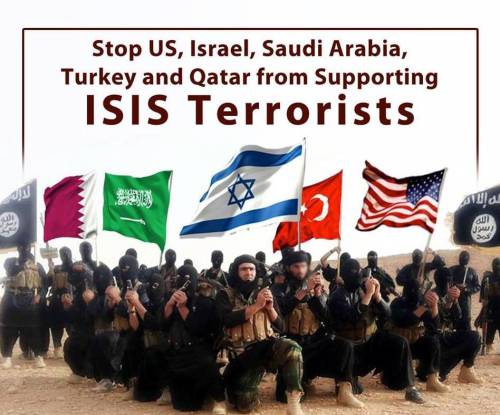
Under the pretext of ‘fighting ISIS’, the Turkish government is bombing Kurds (civilians and resistance fighters) and their Syrian allies. On Syria’s southern border, US Special Forces have accelerated and expanded operations from their bases in Jordan on behalf of the mercenary terrorists – funded by the monarchist Gulf States.
Over 4 million Syrians have fled their homes as refugees and over 200,000 have been killed since the US-EU-Turkey-Saudi-sponsored war against the secular Syrian government was launched four years ago.
Dozens of terrorist, mercenary and sectarian groups have carved up Syria into rival fiefdoms, pillaged its economic and cultural resources and reduced the economy by over ninety percent.
The US-EU-Turkish military intervention extends the war into Iraq, Lebanon and…. Turkey – attacking secular governments, ethnic minority groups and secular civil society.
The feudal, monarchist Saudi Arabia and the United Arab Emirates have invaded Yemen with tanks, launching air strikes against a country without any air defenses. Major cities and towns are devastated. Saudi ground troops and armored carriers are killing and wounding thousands – mostly civilians. The brutal Saudi air and sea blockade of Yemen’s ports have led to a humanitarian crisis, as ten million Yemenis face starvation deliberately imposed by a grotesque and obscenely rich monarchy.
The Yemeni resistance fighters, driven out of the major cities, are preparing for prolonged guerrilla warfare against the Saudi monsters and their puppets. Their resistance has already spread across the frontiers of the absolutist Saudi dictatorship.
The brutal Israeli occupation troops, in collaboration with armed ‘settler’ colonists, have accelerated their violent seizure of Palestinian lands. They have stepped up the ethnic cleansing of Palestinians, Bedouins, Druze and Christian inhabitants replacing their communities with racist ‘Jews-only’ colonial settlements.
Daily assaults against the huge ‘concentration camps’ of Gaza accompany an armed blockade of land, air and water, preventing the reconstruction of the tens of thousands of homes, schools, hospital, factories and infrastructure, destroyed by last year’s Israeli blitzkrieg.
Israel’s continued annexation and ethnic cleansing of Palestinian territory precludes any diplomatic process; colonial wars have been and continue to be Israel’s policy of choice in dealing with its Arab neighbors and captive populations.
Africa’s wars, resulting from earlier US-EU interventions, continue to ravage-the Continent. Somalia, Sudan, Kenya, Libya are riven by bloody conflicts between US-EU backed regimes and armed Islamic and nationalist resistance movements.
Throughout North and Sub-Sahara Africa, US-EU backed regimes have provoked armed upheavals in Libya, Nigeria (Boko Harem), Egypt (ISIS, Moslem Brotherhood et al), Chad, Niger, South Sudan, Somalia and elsewhere.
Imperial client Egyptian and Ethiopian dictators rule with iron fists – financed and armed by their EU and US sponsors.
Imperial wars rage throughout the Middle East and South Asia. Hundreds of experienced Baathist Iraqi military officers, who had been expelled or jailed and tortured by the US Occupation army, have now made common cause with Islamist fighters to form ISIS and effectively occupy a third of Iraq and a strategic swath of Syria.
There are daily bombings in Baghdad undermining its US client. Strategic advances by ISIS are forcing the US to resume and escalate its direct combat role
The US-Baghdad retreat and the defeat of the US-trained Iraqi military in the face of the Baathist-Islamist offensive is the opening salvo of a long-term, large-scale war in Iraq and Syria. The Turkish air-war against the Kurds in Iraq will escalate the war in Northern Iraq and extend it into southeast Turkey.
Closer to ‘home’, the EU-US-backed coup (‘regime change’) in Kiev and the attempt to impose dictatorial-pro-West oligarchic rule in Ukraine have detonated a prolonged civil-national war devastating the country and pitting NATO’s proxies against Russian-backed allies in the Donbas.
US, England, Poland and other NATO powers are deeply committed to pushing war right up to Russia’s borders.
There is a new Cold War, with the imposition of wide-ranging US-EU economic sanctions against Russia and the organizing of major NATO military exercises on Russia’s doorsteps. It is no surprise that these provocations are met with a major counter-response – the Russian military build-up. The NATO power grab in Ukraine, which first led to a local ethnic war, now escalates to a global confrontation and may move toward a nuclear confrontation as Russia absorbs hundreds of thousands of refugees from the slaughter in Ukraine.
The US puppet regime in Afghanistan has faced a major advance of the Taliban in all regions, including the capital, Kabul.
The Afghan war is intensifying and the US-backed Kabul regime is in retreat. US troops can scarcely advance beyond their bunkers.
As the Taliban military advances, its leaders demand total surrender of the Kabul puppets and the withdrawal of US troops. The US response will be a prolonged escalation of war.
Pakistan, bristling with US arms, faces a major conflict along its borders with India and permanent war in its semi-autonomous Northwest frontier states with Islamist and ethnic Pashtu guerrilla movements backed by mass regional political parties. These parties exercise de facto control over the Northwest region providing sanctuary and arms for Taliban militants operating in Afghanistan and Pakistan.
Armed ethno-religious conflicts persist in western China, Myanmar and northern India. There are large-scale popular resistance movements in the militant northeast Thailand opposed to the current military-monarchist dictatorship in Bangkok.
In the 21st century, in South and Southeast Asia, as in the rest of the world, war and armed conflicts have become central in resolving ethnic, social, tribal and regional differences with central states: diplomacy and democratic elections have been rendered obsolete and inefficient.
Latin America – On the Verge
Burgeoning violent extra-parliamentary right-wing movements, intent on overthrowing or ‘impeaching’ elected center-left Latin American governments face major confrontations with the state and its mass supporters.
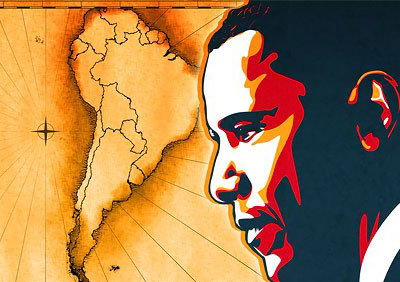 In Ecuador, Venezuela and Brazil, US-backed opposition groups are engaged in violent demonstrations, directed toward ousting the elected regimes. In the case of Ecuador, ‘popular sectors’, including some indigenous leaders and sectors of the trade union movement, have called for an ‘uprising’ to oust President Correa. They seem oblivious of the fact that the hard-right oligarchs who now control key offices in the three principal cities (Guayaquil, Quito and Cuenca) will be the real beneficiaries of their ‘uprisings’.
The resurgent Right envisions violent ‘regime change’ as the first step toward ‘wiping the slate clean’ of a decade of social reforms, independent regional organizations and independent foreign policies.
‘Civil war’ may be too strong a word for the situation in Latin America at this time – but this is the direction which the US-backed opposition is heading. Faced with the mess and difficulty of dislodging incumbent regimes via elections, the US and its local proxies have opted for the choreography of street violence, sabotage, martial law and coups – to be followed by sanitized elections – with US-vetted candidates.
War and violence run rampant through Mexico and most of Central America. A US-backed military coup ousted the popularly elected, independent President Zelaya in Honduras. The ensuing US-proxy regime has murdered and jailed hundreds of pro-democracy dissidents and driven thousands to flee the violence.
The 1990’s US-brokered ‘Peace Accords’ in El Salvador and Guatemala effectively blocked any agrarian reform and income redistribution that might have led to the rebuilding of their civil societies. This has led to over two decades of mass disaffection, the rise of armed ‘gangs’ numbering over 100,000 members and an average of six to ten thousand homicides a year with El Salvador becoming the ‘murder capital of the hemisphere’ on a per capita basis. The annual murder toll under the US-brokered ‘Peace Accords’ now exceeds those killed each year during the civil war.
The real ‘carnage capital’ of the hemisphere is Mexico. Over 100,000 people have been murdered during the decade-long, US-backed ‘war on drugs’ – a war which has become a state-sponsored war on the Mexican people.
The internal war has allowed the Mexican government to privatize and sell the crown jewels of the national economy – the petroleum industry. While thousands of Mexicans are terrorized and slaughtered, the US and EU oil companies are curiously shielded from the drug lords. The same Mexican government, its police, officials and military, who collaborate with the drug lords in dividing up the billions of drug dollars, protect foreign oil companies and their executives. After all, narco-dollars are laundered by banks in New York, Miami, Los Angeles and London to help fuel the speculation!
From Regional to Nuclear Wars
Regional and local wars spread under the shadow of a looming world war. The US moves its arms, planes, bases and operations to the Russian and Chinese borders.
Never have so many US troops and war planes been placed in so many strategic locations, often less than an hour drive from major Russian cities.
Not even during the height of the Cold War, did the US impose so many economic sanctions against Russian enterprises.
In Asia, Washington is organizing major trade, military and diplomatic treaties designed to exclude and undermine China’s growth as a trade competitor. It is engaged in provocative activities comparable to the boycott and blockade of Japan which led to the Second World War in Asia.
Open ‘warfare by proxy’ in Ukraine is perhaps the first salvo of the Third World War in Europe. The US-EU-sponsored coup in Kiev has led to the annexation of Western Ukraine. In response to the threat of violence toward the ethnic Russian majority in Crimea and the loss of its strategic naval base on the Black Sea, Russia annexed Crimea.
In the lead-up to the Second World War, Germany annexed Austria. In a similar manner the US-EU installed a puppet regime in Kiev by violent putsch as its own initial steps toward major power grabs in Central Asia. The military build-up includes the placement of major, forward offensive military bases in Poland.
Warsaw’s newly elected hard-right regime of President Andrzej Duda has demanded that Poland become NATO’s central military base of operation and the front line in a war against Russia.
Wars and More Wars and the Never-ending Torrents of Refugees
The US and EU imperial wars have devastated the lives and livelihoods of scores of millions of people in South Asia, North and Sub-Sahara Africa, Central America, Mexico, the Balkans and now Ukraine.
Four million Syrian refugees have joined millions of Afghan, Pakistani, Iraqi, Yemeni, Somali, Libyan, Palestinian and Sudanese refugees fleeing US-EU bombs, drones and proxy mercenaries ravaging their countries.
Millions of war refugees escape toward safety in Western Europe, joining the millions of economic refugees who have fled free market destitution in Lithuania, Latvia, Estonia, Bulgaria, Romania, Poland, the Balkans and other EU satellites.
Panic among the civilian population of Western Europe sets in as hundreds of thousands cross the Mediterranean, the Aegean and the Balkans.
Droves of refugees perish each day. Tens of thousands crowd detention centers. Local labor markets are saturated. Social services are overwhelmed.
The US builds walls and detention camps for the millions trying to escape the harsh consequences of imperial-centered free markets in Mexico, narco-terror and the fraudulent ‘peace accord’-induced violence in Central America.
As Western wars advance, the desperate refugees multiply. The poor and destitute clamber at the gates of the imperial heartland crying: ‘Your bombs and your destruction of our homelands have driven us here, now you must deal with us in your homeland’.
Fomenting class war between the refugees and ‘natives’ of the imperial West – may not be on the agenda . . . for now, but the future for ‘civil’ society in Europe and the US is bleak.
Meanwhile, more and even bigger wars are on the horizon and additional millions of civilians will be uprooted and face the choice of starving, fleeing with their families or fighting the empire. The ranks of seasoned and infuriated resistance fighters are swelling in Afghanistan, Iraq, Libya, Yemen, Ukraine and elsewhere.
The US and EU are becoming armed fortresses. US police deal with the marginalized citizenry as an occupying army, assaulting African-Americans, immigrants and dissidents – while looting poor communities . . . and protecting the rich…
Conclusion
War is everywhere and expanding: No continent or region, big or small, is free from the contagion of war.
Imperial wars have spawn local wars . . . igniting mass flights in a never-ending cycle. There are no real diplomatic success stories! There are no enduring, viable peace accords!
Some pundits may protest this analysis: They point to the recent US – Cuba rapprochement as a ‘success’. They conveniently forget that the US is still subverting Cuba’s biggest trading partner, Venezuela; that Washington’s major regional proxies are demanding regime change among Cuba’s allies in Ecuador, Brazil and Bolivia and that Washington is increasingly threatening Cuba’s alternative markets in Russia and China. The vision of the US flag flapping in the breeze outside its embassy in Havana does little to cover Washington’s iron fist threatening Cuba’s allies.
Others cite the US – Iran peace accord as a major ‘success’. They ignore that the US is backing the bloody Saudi invasion of neighboring Yemen and the massacre of Shiite communities; that the US has provided Israel with a road map detailing Iran’s entire defense system and that the US [Israel] and EU are bombing Iran’s Syrian ally without mercy.
As for the US – Cuba and Iranian agreements– are they enduring and strategic or just tactical imperial moves preparing for even greater assaults?
The war epidemic is not receding.
War refugees are still fleeing; they have no homes or communities left.
Disorder and destruction are increasing, not decreasing; there is no rebuilding the shattered societies, not in Gaza, not in Fallujah, not in the Donbas, not in Guerrero, not in Aleppo.
Europe feels the tremors of a major conflagration.
Americans still believe that the two oceans will protect them. They are told that placing NATO missiles on Russia’s borders and stationing warships off China’s shores and building electrified walls and laying barbed wire along the Rio Grande will protect them. Such is their faith in their political leaders and propagandists.
What a packet of lies! Inter-continental missiles can ‘rain down’ on New York, Washington and Los Angeles.
It is time to wake up!
It is time to stop the US – EU headlong race to World War III!
Where to start? Libya has been irrevocably destroyed; it is too late there! Syria, Iraq and Afghanistan are aflame. We are being plunged deeper into war while being told we are withdrawing! Ukraine sucks in more guns and more troops!
Can we really have peace with Iran if we cannot control our own government as it dances to the Israelis tune? And Israel insists on war – our waging war for them! As the Israeli war criminal General and Prime Minister Ariel Sharon once told some worried American Zionists: “Trouble with the US? We lead them by the nose…!”
Just look at the terrified families fleeing carnage in the Middle East or Mexico.
What is to be done?
When will we cut our losses and shake off the bonds of these war makers – foreign and domestic?
Let’s Bomb Libya Again!
By Brian CLOUGHLEY – Strategic Culture Foundation – 15.08.2015
The British prime minister, David Cameron, places great emphasis on how he is regarded by the public at home and internationally. His personal promotion machine is extensive and highly-paid and his staff feed the media diligently with what they imagine to be positive slants on his character and actions (and with carefully selected photographs of his pretty wife). They provide advance copies of his speeches to favoured journalists with the annoying consequence that news broadcasts rarely report what the prime minister has just said on a topic. They are futuristic and use the infuriating phrase “the prime minister will say today that” he will propose something or other.
The reason for this is that if there should be adverse reaction to whatever sparkling new initiative he wants to put forward to the public, then the spin-doctors can make hasty amendments in order to avoid upsetting people. It is school playground stuff, but then a great deal of British politics is playground oriented.
Unfortunately for his image, Cameron sometimes says things without first putting a finger in the water to test the temperature, and he also says things that betray his appalling ignorance of life.
One of the unrehearsed things he said that he may well regret in future concerns his unscripted policy on bombing people. It was reported on 27 July that he said “he was ready to order air strikes on Islamist militant targets in Libya and Syria to prevent attacks on the streets of Britain as he stepped up his rhetoric against Islamic State insurgents.” From this it is clear the British prime minister wants his country to go to war again and bomb Libya as it did last time he ordered air strikes on that ill-fated country.
It was Cameron who was responsible for Britain’s enthusiastic participation in the 2011 aerial bombing and rocketing that destroyed Libya. In March 2011 he declared that “Tough action is needed to ensure that people in Libya can lead their lives without fear and with access to the basic needs of life. That is what the Security Council requires, that is what we are seeking to deliver.” And he and his fellow thugs delivered catastrophe.
When the US-NATO onslaught ceased, after the murder of Libya’s president, we were told that the war had been successful in achieving democracy by bombing. It might be summed up in the sniggering proclamation of Ms Hillary Clinton, on CBS on 20 October 2011 that so far as the killing of Gaddafi was concerned “We came, we saw, he died.” What a truly civilised statement from the likely next president of the United States.
Two weeks before Ms Clinton’s humorous observation Mr Cameron said “I’m an optimist about Libya; I’ve been an optimist all the way through and I’m optimistic about the National Transitional Council and what they are able to achieve. I think when you look at Tripoli today, yes, of course, there are huge challenges — getting water to that city, making sure there is law and order — but actually so far, the cynics and the armchair generals have been proved wrong.”
The “cynics and armchair generals” — who might be better described as experienced realists — were right in predicting that the country’s collapse was inevitable; just as they had been right about forecasting chaos in Iraq and Afghanistan. On the other hand, two highly placed intellectuals, Ivo Daalder, who was the US Permanent Representative on the NATO Council during the US-NATO war, and Admiral James G (“Zorba”) Stavridis, who was at that time US Supreme Allied Commander Europe (the military commander of NATO), agreed wholeheartedly with Cameron and wrote in 2012 in the journal Foreign Affairs that:
“NATO’s operation in Libya has rightly been hailed as a model intervention. The alliance responded rapidly to a deteriorating situation that threatened hundreds of thousands of civilians rebelling against an oppressive regime. It succeeded in protecting those civilians and, ultimately, in providing the time and space necessary for local forces to overthrow Muammar al-Gaddafi.”
According to these expert analysts, Libya was liberated and became a free country thanks to US-NATO. And they were supported by columnists like Nicholas Kristof of the New York Times who wrote that “Libya is a reminder that sometimes it is possible to use military tools to advance humanitarian causes.” What a bunch of buffoons. Their statements would be hilarious were they not so obscenely bizarre, because Libya has collapsed into anarchic ruin — as forecast by the “armchair generals” so despised by Cameron and all the others who have never heard a shot fired in anger.
In April 2015 the saintly International Red Cross observed that “The violence shows no sign of abating. Libya remains a patchwork of conflict, fuelled by a plethora of armed groups with varying allegiances and diverse agendas. Thousands have been killed; hundreds of thousands more have been displaced. The humanitarian situation continues to deteriorate.”
The unelected rabble that is supposed to be a government in Libya has its very own set of Guantanamo Bays in which Human Rights Watch reported that “the Libyan Army and the Interior Ministry’s Counter Terrorism Unit are holding about 450 “security detainees” in connection with the current conflict. Of those visited, 35 detainees told Human Rights Watch that they were tortured on arrest, under interrogation, or during their detention. Thirty-one said interrogators forced them to “confess” to crimes; four said that the authorities then broadcast their “confessions” on TV, leading to reprisal attacks on their families. All of the detainees Human Rights Watch interviewed said they had not been given access to lawyers, taken before a judge, or formally charged despite many months of detention.” From what freedom-loving democracy could the Libyans have learned to keep people in detention indefinitely without trial?
There have been no comments on the anarchic shambles in Libya by such as Nicholas Kristoff who rejoiced in 2011 that he had “Just arrived in Tripoli, Libya, after a wild ride from the Tunisian border. But Tripoli is festive, joyful and reasonably secure, its streets full of shoppers and honking cars, celebrating the end of Ramadan and the end of dictatorship. People are hugely welcoming to an American, and very grateful.”
When Gaddafi ruled Libya its citizens had ample water from many sources, not least being his “Great Man-Made River” which brought water from southern aquifers to the dense population of the coastal north. But the US-NATO blitz damaged or destroyed so many power stations and pipeline facilities that this supply has all but ceased.
Amnesty International reports savage religious persecution (unknown in Gaddafi’s time) and records that “the international community has stood and watched as Libya has descended into chaos since the 2011 NATO military campaign ended, effectively allowing militias and armed groups to run amok.” The Christian organisation Open Doors records that “Since the downfall of Gaddafi, the situation for Christians in Libya has deteriorated. The government claims all Libyans are Sunni Muslims; it is illegal to bring Arabic Bibles into the country or to evangelise.”
So much for David Cameron’s idiotic statement that “I’ve been an optimist all the way through” about Libya. This is the man who declared in 2011 that his bombing would ensure that Libyan citizens would have “access to the basic needs of life.”
During their war on Libya, Obama and Cameron jointly declared that “We are convinced that better times lie ahead for the people of Libya.” Tell that to the millions of Libyans whose lives have been wrecked by NATO’s “model intervention” as it’s described by the two imbeciles, Daalder and Stavridis, who did so much to destroy a nation.
Yet David Cameron imagines that more bombing will solve all the problems, and on 26 July the UK’s Daily Telegraph, whose editors and journalists are in the pockets of Cameron’s spin-doctors, was happy to disclose that “Mr Cameron has ordered officials to begin planning for a new intervention in Libya, which has become a haven for Isil jihadists.” Cameron “was asked if there was a case for strikes on Isil in Libya, where the gunman who massacred Britons in Tunisia was trained,” and replied “That is my job, my duty as Prime Minister if there is a specific threat and you can act to stop it, you should act to stop it wherever it is and you are allowed under international law to do exactly that. I think that is very important.”
The reason Libya has become a haven for fanatical loonies is because it was struck mercilessly in a seven month aerial blitz that destroyed its government and social infrastructure. And the solution, according to those who attacked it in 2011, is to bomb, bomb and bomb again.
We live in a world of madness.
The Douma Market Attack: a Fabricated Pretext for Intervention?
By Eric Draitser | CounterPunch | August 21, 2015
The August 16, 2015 attack on a market in the Syrian town of Douma, just outside the capital Damascus, has caused international outrage. Condemnations of the Syrian government have poured in from seemingly all corners of the globe as President Assad and the Syrian military have been declared responsible for the attack, convicted in the court of media opinion. Interestingly, such declarations have come well before any investigation has been conducted, and without any tangible evidence other than the assertions of the rebel spokespersons and anti-government sources. Indeed, there has been an embarrassing dearth of investigative questions asked as corporate media, who have been far from objective these last four and half years, have rushed to fit the facts to their long-standing narrative of “Assad the Butcher.”
This author fully understands that, in asking difficult questions, he will be called an “apologist,” an “Assad propagandist,” or some other such nonsense. Frankly, such name-calling means very little when compared to the suffering of Syrian people, and the untold brutality that will be visited upon them if the western corporate media and warmongers get their way and yet another imperialist so-called intervention is carried out in the name of “humanitarianism.” The goal is to ask the right questions, to cast doubt on the already solidifying propaganda narrative that will undoubtedly be used to justify still more war.
Those who work for peace must be prepared to interrogate the received truths of the media machine, to confront head on that which is uncomfortable, and to do so knowing that their motives are just. The victims of this war, both past and future, deserve nothing less.
Questioning the Douma Narrative
When carefully scrutinizing the documentary evidence of the attack, and comparing that to the claims made throughout western media, some troubling irregularities emerge. Not only do the claims seem to be exaggerated, but when placed within the historical context of this war, they seem to fit into a clear pattern of distortion and misinformation disseminated for political purposes, rather than objective reportage. Indeed, the raw footage taken on the scene goes a long way to contradicting some of the claims made by witnesses and “activists” (an interesting term in itself) often quoted in the media.
First, there is the allegation that more than 100 civilians were killed in an airstrike carried out by the Syrian military. There are certainly plenty of pictures that seem to bolster that claim, with debris scattered everywhere, aid workers carrying victims, and frightened civilians rushing around the destroyed marketplace. However, when one looks at the videos, even those provided by outlets such as The Guardian in the above linked article, one curious thing seems to be missing: bodies.
Indeed, it does seem odd that an airstrike could obliterate a crowded market on a Sunday, killing over a hundred people, and no videos or images would show bodies torn apart by the blast? One would expect to see mangled corpses, limbs scattered on the ground, pools of blood, etc. None of that seems visible.
Compare the Douma videos to those from Gaza on July 30, 2014 during Israel’s vicious war. An Israeli airstrike, which killed 15 people and injured more than 150, also hit a crowded market and caused horrific destruction. And in the videos, one sees bloodied bodies missing limbs, pools of blood on the street, and other gut-wrenching images. Or compare the Douma videos to those of the Christmas 2013 bombing of a crowded Baghdad market. The videos of that attack are gruesome, showing victims with heads partially blown off their bodies, legs attached to bodies by skin alone, lifeless corpses of children and other truly disturbing images.
All of these are conspicuously absent from any of the footage of the airstrike on Douma. Why? The various footage from the scene, repeated on both anti-Assad media (as seen here), and on mainstream western media (as seen here), shows no such images. Raw videos taken in the immediate aftermath of the attack also show no bodies (as seen here and here). There is footage showing bodies, however there is no discernible evidence that they were victims of the airstrike. Interestingly, all the victims shown in this video were military age males, rather curious if indeed this was an attack on a crowded market where presumably women and children would have been present. Indeed, in the midst of the ongoing war, there are fighters being killed on a daily basis, and it is entirely plausible that the wrapped bodies shown were fighters killed in some other fashion and simply presented to the camera as if they were victims of the airstrike.
To be fair, hours of research did uncover a total of one video, taken after the blast, showing the bodies of a handful of male victims. However, none of the signs of death by airstrike are visible; the bodies are all whole, no missing limbs, very little blood (unlike in the Gaza and Baghdad videos). A logical conclusion based on the available evidence would be that the men seen in the video died from the collapse of a building, presumably the destroyed building behind them.
While impossible to say exactly what happened, there is certainly no definitive evidence of an airstrike as a “deliberate massacre,” the argument trumpeted by western media and their Saudi- and Qatari-funded counterparts in the region. An objective examination of the evidence yields the distinct possibility that an airstrike was carried out on a building adjacent to the market. And yet, within hours of the attack, the narrative was seemingly already written: Assad carries out retribution against innocent civilians – a clear war crime.
Another important question that bears close scrutiny has to do with the victims themselves. Naturally, one does not want to make light of anyone killed or wounded in a war, but in trying to discern what is real and what is not, one must closely examine all evidence. And the victim list, as well as the treatment of the bodies raises more questions than it answers.
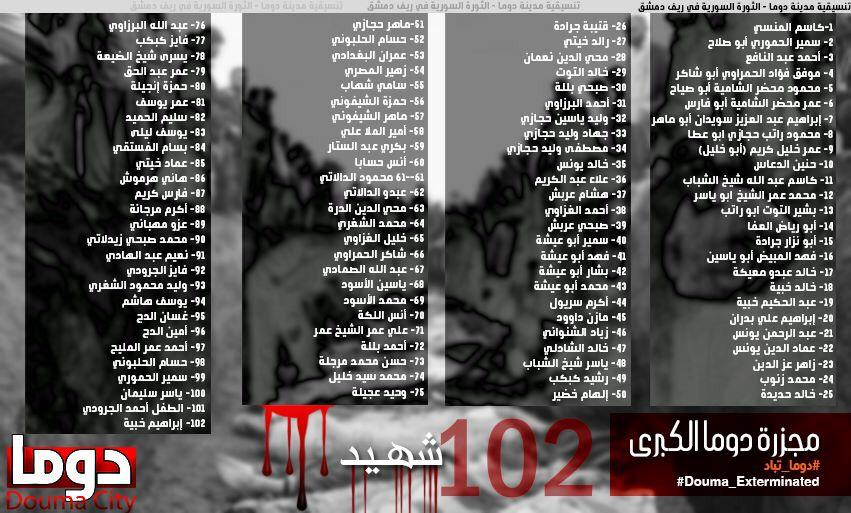
According to a list of victims names published in Arabic by the Doumaa Coordinating Committee, a pro-rebel group, there were 102 victims of the airstrike. After a translation, it is clear that the list reveals a grand total of three women among the 102 victims. It strains credulity that in a crowded market on a Sunday, with an alleged airstrike that could not distinguish between genders, there would be only three women among the dead. How is this possible? It seems likely that, as mentioned above, the list includes dead fighters who may have been killed in some other fashion – in battle, targeted by the Syrian military, etc. – who have simply been added to the list in order to bolster the narrative of a “massacre” in the market.
Additionally, we hear of the burial of victims in mass graves, still another puzzling development. As Reuters reported the day after the incident:
Sixty bodies were buried on Sunday night in two mass graves, said a spokesman for the Syrian Civil Defense force in Douma, a rescue service operating in rebel-held areas. Another 35 were buried on Monday, and the death toll was over 100, he said. “It was really difficult to identify the bodies of the martyrs. Some of them were burned to the bone, so we couldn’t add them to the documented list,” said the 28-year-old spokesman, who declined to give his real name for security reasons. His house was destroyed in the bombing, he added.
Naturally, the grizzly description given in the article elicits a strong emotional and visceral response. However, there is the troubling question as to why, if the Doumaa Coordinating Committee was able to compile a list of all the victims with their names, so many were still buried unceremoniously in mass graves. Even assuming that the number killed was correct, if it was difficult to identify the bodies with some so badly burned, they still managed to somehow identify them. If one accepts that this is true, then surely these bodies would have been given to the local families for burial. Yet they were not. Why not?
Typically the use of mass graves indicates a desire to quickly hide bodies which, if the media narrative on Douma were true, would seem unnecessary. At the very least, a real investigation into this incident would probe into the use of mass graves for the purposes of hiding key information, namely the identities of those killed.
An alternative theory, one which is supported by the evidence available, is that the Syrian military carried out an airstrike in the rebel stronghold town of Douma, and that the strike hit its target, a building housing a terrorist faction long since known to be in the city. This would explain the preponderance of men among the dead, the need for secrecy in burying the bodies, and the motive for the Syrian military striking the target.
Moreover, it is no secret exactly who has been operating in Douma and why they would be targeted. As the Carnegie Endowment noted in 2013:
The city of Douma has long been a stronghold of the insurgency, and several armed factions are active in the area, many of them with an Islamist bent. One, the Islam Brigade of the Alloush family, has over time grown quite a bit bigger than the others, particularly after it claimed responsibility for the July 18, 2012 attack against the National Security Office in Damascus, which killed several leading Syrian security figures. In March 2013, the main factions of the area joined forces in a local body called the Douma Mujahedin Council. The new group included the Islam Brigade, the Douma Martyrs’ Brigade, the Ghouta Lions Brigade, the East Ghouta Revolutionaries’ Brigade, the Lions of God Brigade, the Tawhid al-Islam Brigade, the Farouq Brigade [Liwa al-Farouq], the Shabab al-Hoda Brigade, the Seif al-Omawi Battalions, the Military Police Battalion, the Regime Protection Battalion, and the al-Ishara Battalion.
This key information is entirely omitted from the western media narrative about what happened in Douma, for obvious reasons. Namely, it undermines the meme that Assad’s forces carried out a criminal massacre of civilians as a form of collective punishment. Instead, it bolsters the claims by Syrian military spokespeople that the military targeted terrorist elements inside the city, just as they had done on a number of previous occasions, including as recently as June 2015. This point is critical because it demonstrates that this latest incident is part of an ongoing battle with these Douma factions, one which has seen countless rockets fired at Damascus from Douma and other surrounding suburbs.
Furthering this point is the fact that this attack in Douma was by no means the only incident of the day. There were in fact a series of clashes throughout the Damascus suburbs on Sunday August 16, the day of the incident. According to military sources, there were fierce clashes in East Ghouta with both Jaysh al-Islam (Army of Islam) and Faylaq al-Rahman (Al-Rahman Corps) which resulted in 11 Syrian soldiers killed and 21 militants killed. In addition, the city of Harasta, adjacent to Douma, was the scene of major clashes between the army and rebels.
Were one to present all these facts clearly, it becomes inescapable that whatever happened in Douma was part of an ongoing battle between the Syrian military and anti-government “rebels” in control of the town. But that fact is not at all convenient for the war narrative. It presents no justification for an expansion of the international campaign against Syria; it provides no pretext for the US or its allies to invoke their wretched, and utterly discredited, “Responsibility to Protect” doctrine. And ultimately that is the goal.
Exposing the “Humanitarian” Warmongers
The sad fact is that the dead in Douma are little more than props for those who would attempt to orchestrate yet another US-led war in the Middle East. These purported humanitarians would like to transform the incident into viable political currency to expand the war already raging in order to achieve the longed for regime change in Syria that thus far has been unattainable.
Kenneth Roth, Executive Director of Human Rights Watch, has been vocal in his support for a full scale war on Syria in the name of humanitarianism. Roth has repeatedly called for intervention against the legal government of Syria, having recently tweeted statements such as “Like Sarajevo, could Douma market slaughter finally force Assad to stop targeting civilians?” (@KenRoth, Aug 16). The implication of the statement is quite clear: there should be military intervention, such as the US-NATO war on Yugoslavia and later Serbia, in order to stop the “slaughter” of civilians. It should be noted that this tweet was posted within hours of the news of the incident in Douma long before any investigation.
Roth, and by extension his organization Human Rights Watch, further discredits whatever vestiges of impartiality he and HRW might have had with inane tweets such as “Douma market killings show how Assad chooses to fight this war: deliberately against civilians,” (@KenRoth, Aug 16), an obviously biased, and utterly unsubstantiated allegation. Roth could have absolutely no knowledge of either the identities of the dead, or the Syrian government’s motives, when he released the tweet the same day as the attack. He reveals himself here to be little more than a lackey for imperialism, a war hawk masquerading as a human rights defender.
Such dishonesty is nothing new for Roth and HRW however. As this author has previously argued, HRW is an utterly discredited organization that has on multiple occasions published blatantly false allegations about the war in Syria in order to justify a US-NATO intervention. One should of course recall the laughable, and now completely debunked, 2013 report from HRW entitled Attacks on Ghouta: Analysis of Alleged Use of Chemical Weapons in Syria, which falsely claimed that the Syrian government carried out the infamous chemical weapons attack of August 21, 2013.
The report, cited by many of the leading warmongers itching for intervention in Syria, has since been thoroughly discredited by the work of former UN weapons inspector Richard Lloyd and Prof. Theodore Postol of MIT who published their findings in a report entitled Possible Implications of Faulty US Technical Intelligence in the Damascus Nerve Agent Attack of August 21, 2013 which demonstrated unequivocally that the Syrian government could not have carried out the attack.
Additionally, Roth and HRW’s false narrative was again obliterated when Pulitzer Prize winning journalist Seymour Hersh published his exposé The Red Line and the Rat Line which firmly established the fact that the rebels were indeed capable of carrying out the attack on East Ghouta, and that they had help from Turkey, Saudi Arabia, and possibly other regional actors. This critical fact completely contradicted the assertions by Roth, HRW and the chorus of others who emphatically declared that only Assad’s forces were capable of carrying out the attack. Oops. Sorry Kenny, but your war pretext fell flat that time. One can only hope that it will once again.
But Roth and HRW are not the only ones making spurious claims in pursuit of the war agenda. Leave it to the Nobel Peace Prize winner President Obama and his White House to never let any tragedy go to waste. The day after the attack, National Security Council spokesperson Ned Price, speaking on behalf of the President, issued an official statement which “strongly condemns the deadly airstrikes yesterday by the Asad regime on a market in the Damascus suburb of Douma, where more than 100 people were killed and hundreds more injured, including scores of innocent women and children… These abhorrent actions underscore that the Asad regime has lost legitimacy and that the international community must do more to enable a genuine political transition.”
It is interesting to note here that the White House had already determined that “scores of innocent women and children” had been killed or injured. Where did this information come from? Certainly the casualty list released by the anti-Assad rebels did not indicate scores of dead women and children, nor did any of the videos of incident. It seems that, rather than conveying factual information, the White House was merely using the emotionally charged phrase “women and children” for propagandistic purposes, in order to be able to justify a possible military escalation against Damascus.
It is equally interesting to recall that just like Roth and HRW, the White House attempted to similarly capitalize on the August 21, 2013 chemical weapons attack for the purposes of pushing the US into war on Syria. In its now also debunked U.S. Government Assessment of the Syrian Government’s Use of Chemical Weapons on August 21, 2013, the White House stated that “The United States Government assesses with high confidence that the Syrian government carried out a chemical weapons attack in the Damascus suburbs on August 21, 2013. We further assess that the regime used a nerve agent in the attack.” Oops again.
But why should this author pick on the August 21, 2013 chemical weapons incident in attempting to critically examine the recent attack on Douma? Because it was at that moment, in the late summer of 2013, exactly two years ago, that the United States was on the verge of all out war against Syria and the Syrian people; because a narrative built on lies and distortions almost, yet again, pushed the US into war. Because this author marched in Times Square, New York City demanding that there be no war on Syria, then or ever. And because today, with so many lives already lost over these last four and half bloody years in Syria, peace-minded people cannot sit by and allow the US-NATO war machine and its human rights complex toadies to drag us into war.
It is clear that the Douma incident has been portrayed as an “official massacre” not because of any aspect of the attack itself. Rather, it has been presented this way in order to justify a pre-conceived war narrative, one that has repeatedly collapsed in the past, but one which the rapacious warmongers and strategic planners refuse to give up on. It’s not about the dead, nor is it even really about Assad. It is about destroying Syria and achieving geopolitical objectives which have been thus far unattainable due to the stubborn resolve of Damascus and its military. Ultimately, this war is about remaking the Middle East, no matter how many bodies it takes. Sadly, the dead of Douma are little more than tinder to those desperate to set Syria and the region ablaze.
Minsk -2: A Rotting Corpse
By Christopher Black – New Eastern Outlook – 21.08.2015
The Minsk-2 ceasefire agreement is dead but no one wants to bury the rotting corpse. Since it was signed in February of this year the Donbas governments and Russia have bent over backward to comply with the terms of that agreement hoping against hope that the Kiev junta would do the same. They hoped in vain.
Poroshenko and his fascist allies instead have refused to change the constitution to accommodate the concerns of the Donbas republics, have tried to suppress the Communist Party and other parties in opposition, have refused to withdraw heavy weaponry from the line of contact, have maintained increasingly heavy artillery attacks on the civilian populations and areas and cut off routes for essential foodstuffs, medical aid and technical equipment. Rather than enjoying a ceasefire, the peoples of the Donbas are under a state of siege.
Poroshenko openly calls for a military solution to the crisis and has increased the draft in the west. The NATO alliance continues to pour in its forces disguised as “advisers” and “mercenaries” and puts additional pressure on Russia with multiple military exercises from the Baltic to Bulgaria, where more tanks have been recently dispatched to “send Russia a message.”
The reality of the situation was stated on the 18th of August when President Putin stated, “It was the Donbas militias that suggested withdrawing all military equipment with calibre under 100mm. Unfortunately, the opposite side didn’t do that. On the contrary, according to the available data, it is concentrating its units there, including those reinforced with military hardware.” He continued to pay lip service to the Minsk-2 agreement, stating, “As for the Minsk-2 agreement, I believe there is no alternative for resolving the situation and that peace will prevail in the long run… “ and continued with “Our task is to minimize the losses with which we will come to this peace.”
There can be no doubt that the Minsk-2 agreements do provide the framework for a peaceful settlement of the impasse but there is also no doubt that the Kiev and NATO forces have no intention of abiding by its terms and are preparing for another offensive. Putin also stated, “I hope that it will not come to direct large scale clashes.” Yet, the people of the Donbas would be surprised to be told that the thousands of shells raining down on them from the Kiev junta’s artillery in order to provoke those clashes do not count.
But what is the purpose of this state of siege? Since the Donbas forces have proved their strength and resilience the Kiev regime has little hope of achieving the total destruction of those forces and imposing its will on the Donbas. Kiev and NATO also know that Russia does not want to be drawn into a direct clash with NATO that could lead to a general war. In consequence the Kiev-NATO axis have decided to engage in operations that have direct political repercussions designed to disrupt the Russian-Donbas alliance or to paralyze it and try to enlist new allies. At the same time they have decided to make the war more costly for the Donbas and Russia both in military and economic terms, and to try to bring about a gradual exhaustion of their physical and moral resistance.
We see this strategy being played out with the constant increase of economic warfare against Russia, which is clearly the ultimate target, the increasing use of propaganda including the planting in the media of the most absurd stories about Russia and its government, the use, once again of the OSCE observes as intelligence agents for NATO as happened in the Yugoslav war, and, in the political sphere, attempts by the United States and Britain to humiliate Russia with the politically motivated attempt to set up a tribunal regarding the downing of flight MH17.
Clausewitz said that “war is a pulsation of violence, variable in strength and therefore, variable in the speed with which it explodes and discharges it energy’ and that “If we keep in mind that war springs from some political purpose, it is natural that the prime cause of its existence will remain the supreme consideration in conducting it.”
Indeed, we see in Ukraine the expression of the Anglo-American-German political purpose: the desire to force Russia to submit to their will. They failed in World War I. The attempt failed again in World War II. The so–called Cold War succeeded in bankrupting the socialist state but the capitalist state that rose from that sad decline is gathering its strength once again and refuses to submit to anyone’s diktats. And so the NATO coup in Kiev, in order to take Ukraine away from Russian influence as the Nazis tried to do in World War II.
But the Kiev-NATO cabal cannot break the will of the peoples of the Donbas nor of Russia and so the constant attacks, the constant propaganda, the constant turning of the economic screws.
These actions are all illegal under international law and the laws of war. They are violations of the principles and articles of the UN Charter. They are violations of several Geneva Conventions and other international treaties. The attacks on civilians are war crimes. The use of prohibited weaponry, in these attacks, is a war crime. The collective punishment of entire populations is a war crime. The use of economic warfare is a war crime. Yet nothing is done by any western government to stop it nor does the International Criminal Court lay any charges where it can. Instead it stands by and condones these crimes by its inaction.
Article 7 of the Rome Statue that created the ICC states, “that crimes against humanity includes persecution of an identifiable group or collectivity on political, racial, national, ethnic…grounds.”
Article 7-2(b) states that the crime of extermination includes the intentional infliction of conditions of life, inter alia, the deprivation of access to food and medicine, calculated to bring about the destruction of part of a population.
Article 8 defining war crimes, states that it includes wilful killing, wilfully causing great suffering, extensive destruction of property not justified by military necessity, and carried out unlawfully and wantonly, intentionally directing attacks against the civilian population not taking part in hostilities, intentionally directing attacks against civilian objects, attacking or bombarding by whatever means towns, villages, dwellings or buildings which are undefended and which are not military objectives, declaring that no quarter will be given, using weapons designed to inflict unnecessary suffering or are indiscriminate, and intentionally using starvation as a method of warfare. The list goes on and is a compendium of the crimes being committed by the Kiev-NATO axis powers in Ukraine.
On April 17, 2014 the Kiev regime sent a declaration under Article 12(3) of the Rome Statute accepting jurisdiction of the ICC over alleged crimes committed on its territory from November 21 2013 to 22 February 2014. This was clearly a propaganda gesture at the time to justify the coup that overthrew the legitimate government. The Prosecutor has not reacted publicly to this declaration nor to its meaning but the argument can be made that if the Kiev regime speaking for Ukraine has accepted the ICCs jurisdiction for crimes in one time frame it should also accept it for the crimes committed since then. One could argue that the situation is so grave that the ICC must take action against any persons committing crimes in a territory over which it has jurisdiction that being Ukraine. Even if that argument were rejected on technical grounds, one would think that the Prosecutor would at least make a statement that the operations of the Kiev-NATO axis constitute war crimes under the Rome Statue and that they should stop those operations at once. But the Prosecutor stays silent, as silent as she was when she served US interests at the Rwanda War Crimes Tribunal and did not protest the on -sided indictments handed out there. As the saying goes, “Once in the American pocket, always in their pocket.”
On August 18th the Russian Foreign Ministry called for all sides to adhere to the Minsk agreements and expressed concern that the “bellicose rhetoric coming from Ukraine which is encouraged by a number of its foreign patrons, causes major concern and clearly attests to the intention to prepare the public opinion for another attempt to resolve the Ukrainian crisis by force. Under the circumstances, all responsibility for the negative consequences of such provocative actions will be borne by the current Ukrainian authorities.” Ominous words.
When the Minsk Agreements were signed in February I wrote an article doubting that the Kiev-NATO side had any intention of using it except as a means of pausing their operations in order to reorganise and prepare for the next offensive. My doubts proved justified.
The only way forward is to resolve the conflict at the political level on the basis of the recognition of the right to self-rule and autonomy for the Donbas republics, the creation of a federal state to assure ethnic stability, and the commitment by Ukraine that it will be a neutral state and not part of any plan to “contain” Russia, a plan that can only lead to world war.
But the NATO puppets in charge of Ukraine do not act in the interests of Ukraine. They act in the interests of the masters of war who have no concern for humanity in general or Ukrainians in particular and if they continue their operations they will not succeed in uniting Ukraine but only in laying it waste.
Christopher Black is an international criminal lawyer based in Toronto, he is a member of the Law Society of Upper Canada and he is known for a number of high-profile cases involving human rights and war crimes.
Deadly Cheering for War in Ukraine by Western Press
By Roger Annis | CounterPunch | August 21, 2015
Two weeks ago, the Washington Post published an editorial saying that the governments of the NATO military alliance are being too soft on Russia over the crisis in Ukraine. The editors want even more aggressive support to the governing regime in Kyiv than what is already being given.
In particular, the newspaper objects to the ceasefire agreement that it says beleaguered Kyiv was pressured to sign in Minsk, Belarus on February 15, 2015. The editorial was headlined, ‘Putting Ukraine in an untenable position’ and its reads, “Yet now the German and French governments have enlisted the help of the Obama administration in seeking unilateral Ukrainian compliance with Minsk 2’s onerous political terms, which if fully implemented would implant a Russian-controlled entity inside Ukraine’s political system.”
The editors of the Post are pulling off a ruse. Kyiv has not abided by a single clause of Minsk-2, and the regime’s foreign backers, including in the editorial offices of the nearly all of Western media, keep a careful silence on the subject.
Points ten, eleven and twelve of the Minsk-2 agreement read as follows:
10. Pullout of all foreign armed formations, military equipment, and also mercenaries from the territory of Ukraine under OSCE supervision. Disarmament of all illegal groups.
11. Constitutional reform in Ukraine, with a new constitution to come into effect by the end of 2015, the key element of which is decentralisation (taking into account peculiarities of particular districts of Donetsk and Luhansk oblasts, agreed with representatives of these districts), and also approval of permanent legislation on the special status of particular districts of Donetsk and Luhansk oblasts in accordance with the measures spelt out in the attached footnote, by the end of 2015.
12. Based on the Law of Ukraine “On temporary Order of Local Self-Governance in Particular Districts of Donetsk and Luhansk Oblasts”, questions related to local elections will be discussed and agreed upon with representatives of particular districts of Donetsk and Luhansk oblasts in the framework of the Trilateral Contact Group. Elections will be held in accordance with relevant OSCE standards and monitored by OSCE/ODIHR.
So the obligations are clear, but they are being utterly disregarded by Kyiv and, as we see, by its foreign backers.
The Post‘s editorial is also a clear example of the ‘two worlds, two realities’ which prevail in the world today over the Ukraine crisis. One view sees an extreme, right-wing government in Kyiv waging a civil war against a population in the east of Ukraine which rejects Kyiv’s anti-Russia, intolerant nationalism and Kyiv’s pro-austerity embrace of the European Union. The opposite view sees ongoing Russian “invasions”, “occupations” and intervention in Ukraine. Most regretfully, the latter view is shared by a sizable body of liberal, social democratic and even pseudo-Marxist opinion in the West.
The Post editorial describes the present situation in eastern Ukraine as follows: “[Russia’s] forces continue to shell and rocket Ukrainian positions on a daily basis. Far from pulling back heavy weapons or withdrawing its troops as required by the agreement, it has built military bases and deployed 9,000 troops inside Ukraine and stationed another 50,000 just outside the border, according to Ukrainian and NATO officials.”
Funny, on the Post‘s extensive ‘Ukraine crisis‘ compilation of articles, one searches in vain for a single news report confirming the editors’ claims of Russian military intervention in eastern Ukraine and ongoing shelling and bombardment. The closest we get to that are reports by Post journalists embedded with the Ukrainian army. But their reports do not come close to verifying the editors’ claims; they consist merely of war-tourism style observations and photos.
So let’s pause for a moment to reflect. The Washington Post (and some other mainstream media) publishes articles and photo stories by journalists in and around Kyiv-controlled eastern Ukraine. But the Post‘s journalists can’t seem to provide examples of how “Russia’s forces continue to shell and rocket Ukrainian positions on a daily basis”. Surely, if the situation is that severe, there must be no shortage of visual examples to provide to readers? And surely the U.S. government can provide satellite images to mainstream media of the “9,000 Russian soldiers” in eastern Ukraine as well as other examples of Russian intervention?
Unless… it’s all, or mostly, make believe.
On the rebel side of eastern Ukraine, there is no shortage of examples of grim, daily shelling by Ukrainian armed forces, which are backed by NATO. Alas, and not by accident, such reports never, ever grace the pages of the Western media.
Canadian opposition parties cheer for more war
The blind, anti-Russia stand of the Washington Post is shared by the parties of the political mainstreams in the United States and Canada.
In Canada, the two main opposition parties are not only aligned with the pro-Kyiv, Conservative Party government in Ottawa. Similar to the Post editors in the U.S., they criticize the federal government in Ottawa for being too soft on Russia.
The New Cold War.org website has recently reported the pro-war views of the leader of the social-democratic New Democratic Party. Tom Mulcair presented his views to the first televised debate of the federal election in Canada on August 6. “We are proud members of NATO,” he declared. Mulcair criticized Canadian Prime Minister Stephen Harper for not adding even more Russian government and business leaders on the government’s war-threatening sanctions list. (The Canadian election will take place on October 19.)
Concerning the Liberal Party in Canada, it appreciates and backs the Harper government’s support of Kyiv, but it also criticizes both the government and the NDP for being too soft on Russia and the “pro-Russian separatists” in eastern Ukraine.
Key ideologues of Liberal Party foreign policy spoke to a public forum on Ukraine in Toronto on August 11. You can view excerpts of the forum here on YouTube, and you can read a favourable print report of the event here. A key demand on the Liberal Party wish-list for Ukraine is that the Canadian government begin to provide heavy weaponry to the Ukrainian army.
One of Canada’s better-known journalists, Dianne Francis, provides a particularly zany version of the “soft on Russia” argument in an article published by the neo-conservative Atlantic Council on August 17. She writes: “World attention focuses on ISIS and Iran, with its half an atomic weapon. But the biggest geopolitical issue is Vladimir Putin, backed by thousands of nuclear weapons, who is gradually conquering Ukraine, a democracy with 45 million people the size of Germany and Poland combined.
“In just over a year, Russia has seized nine per cent of Ukraine, killed 6,200, wounded 30,000, displaced 1.38 million people and shot down a commercial airliner with 298 people aboard.
“Even so, European and American retaliation has been soft, and ineffective…”
Only last month, Francis published several articles praising as heroes Ukraine’s extreme-right and neo-Nazi paramilitary battalions. She is Distinguished Professor at the Ted Rogers School of Management at Ryerson University in Toronto and a former editor of the National Post.
Canada is already providing military training to Ukraine’s army, along with non-lethal (sic) military equipment and spying and communication equipment and data. The government and the media support or turn a blind eye to the fundraising going on in Canada by Ukrainian ultranationalists to purchase military equipment for the war. Some of the purchased or supplied equipment serves the ongoing shelling of civilian areas of eastern Ukraine.
The Minsk-2 ceasefire provides a roadmap to end the hostilities in eastern Ukraine. A real ceasefire could open the road to resolution of the large social, economic and political issues that have split Ukraine politically and driven a sizable portion of the its population into revolt. But for now, the cheering for war taking place in Western capitals and editorial offices is a major obstacle for achieving all this.
Roger Annis is an editor of the website The New Cold War: Ukraine and beyond. On June 12, he gave a talk in Vancouver, Canada reporting on his visit to Donetsk, eastern Ukraine in April 2015 as part of a media tour group. A video broadcast of that talk is here: The NATO offensive in eastern Europe and the class and the national dynamics of the war in eastern Ukraine.
US Sends Old Attack Planes to Europe to Deter ‘Russian Aggression’ – Media
Sputnik – 15.08.2015
The Pentagon will send 12 attack planes and crews to Central and Eastern Europe in a bid to bolster NATO’s “Operation Atlantic Resolve,” an ongoing show of military might meant to deter Russia’s imaginary “aggression” in the region, US media reported on Friday.
 The Air Force announced this week it would deploy more A-10 Thunderbolt II aircraft, also known as “Warthogs,” to Europe after lawmakers rejected the argument that the antiquated attack jet should be retired.
A dozen A-10s from Moody Air Force Base in Georgia will be deployed to Central and Eastern Europe in addition to the ten A-10s sent to Romania and the Czech Republic in March.
The Air Force has waged a years-long campaign to scrap its A-10 fleet in a bid to save roughly $4 billion, arguing that the plane’s close air support mission can be performed by other platforms, such as the B-1 bomber and the F-35 Joint Strike Fighter, The Fiscal Times reported on Friday.
Lawmakers have so far ignored those pleas, insisting that there is no viable substitute out there today for the jet that has recently flown numerous missions in Iraq and Afghanistan.
Photo © Wikipedia
Featured Video
The American Retreat from Vietnam
or go to
Aletho News Archives – Video-Images
From the Archives
Secret document reveals plans for civil war in Lebanon, Israeli false flags, and invasion
By Randi Nord | Geopolitics Alert | April 5, 2019
Beirut – During his visit with US Secretary of State, Mike Pompeo, Lebanese President Michael Aoun reportedly received a US-Israeli document detailing plans for creating a civil war in Lebanon with covert false flag operations and possible Israeli invasion.
Although the source of the document is Israeli and created in partnership with Washington, no one knows who presented it to Aoun. The Lebanese TV station, Al-Jadeed, initially reported the document on Lebanese TV and a video on its website. Geopolitics Alert translated the report for this article. … continue
Blog Roll
 Aletho News
- There Is A Drought in Academia: A Drought in Honest Research on the Subject of Drought and Other Weather Extremes
- Department of War Awards $20.7 Billion Contract to Raytheon for Air-to-Air Missiles
- ‘Distance yourselves from Israel’: IRGC urges US population to question govt policies
- America’s Greenland deal has a radioactive backstory
- The RAF Fairford ‘terror plot’: Unpacking escalation in the UK echo-chamber
- EU Council Advances Chat Control 2.0 Scanning Proposal
- Ex-Greek MEP files complaint against Israeli spyware firm over alleged Pegasus surveillance
- Troubling ideas throughout the Torah, Talmud, Mishneh Torah and Tanya
- ‘Grave, alarming’: Iran mission on Trump’s UNGA ‘annihilation’ threats
- Najaf airport to reopen to Iranian flights within 24 hours: Ambassador
- If Americans Knew
- New Report: “Scholasticide and Genocide in Gaza: Assessment, Testimonies and Legal Analysis”
- Ex-Biden officials are desperate for a Gaza scapegoat
- Israeli “settlers” Invade Al-Aqsa; Pour Boiling Water on 75-Year-Old
- Israel Has Kidnapped Another American Teenager
- US arms sales to Israel worth $21.6 billion in 20 months
- Three Palestinians Killed in Israeli Attacks on Gaza
- Revealed: German “Anti-Semitism Expert” Driving Crackdown on Palestine Solidarity is Former Israeli Spy
- Egypt’s Warning to Israel Before Oct 7
- Israel’s siege signals another cruel winter for 1.8 million Gazans – Daily Update
- Netanyahu Asked UAE Leader to Deny Report on Oct. 7 Warning in Secret Visit, Sources Say
- No Tricks Zone
- New Study: Earth And Venus Surface Warmth Largely Explained By Convection And Lapse Rate, Not CO2 Or Radiation
- 2025 Nature Paper Claiming Worsening Global Drought Gets RETRACTED …Heavily Flawed
- New Study: ‘Global Drought Shows No Detectable Recent Acceleration Under Climate Warming’
- Economic Masterminds: German Socialists Suggest Taxing Productivity Gains Stemming From Using AI
- The South China Sea Has Not Been Cooperating With The Climate Change Narrative
- Energy Crisis: Germany Enters Heating Season With Historically Low Gas Reserve Fill Levels
- New Study: The Antarctic Ice Sheet Gained Mass From 2020-2024 Due To Staggering Snow And Ice Accumulation
- Study: Ocean Heating Rates From Thousands Of Years Ago ‘Dwarf’ Modern Ocean Heating Rates
- Climate Extremists Target, Attack Large-Scale Power Grid Infrastructure In Germany!
- New Study: Antarctic Ice Melt Has Contributed Less Than 1 Centimeter To Sea Level Rise In The Last 30 Years