Democracy suffers in NATO-backed Syrian fighting
By M.D. Nalapat | Global Times | May 6, 2012
Today, more than 14 million voters in Syria will have the chance to select among several thousand candidates for 250 parliamentary seats.
Cities across the country are plastered with posters of the candidates, with many adopting an Obama-sque “Change we can believe in” slogan.
However, the armed groups that have been backed by the NATO powers for the past 15 months have rejected the polls, and are showing their hostility by targeting candidates for assassination, usually by the use of explosives.
Since the armed uprising began, several thousand members of the security forces and their family members have been killed by the insurgents, who themselves have lost thousands of their own.
However, those relying on Western media are told that every such death has been caused by the security forces, ignoring the deadly violence that is being unleashed in the country by groups of armed mobs.
We have seen this before, in Libya, where tens of thousands of people have died so far as the result of externally backed civil war. In that country, those willing to kill regime elements were given training, cash and weapons.
Today, Turkey, Qatar and Saudi Arabia are providing the same assistance to those seeking to use deadly force against the government in Damascus.
Although Syria President Bashar al-Assad has announced a raft of reforms, including new media laws and the right to form political parties, each such announcement has been met by an escalation in violence, which has rendered null the ceasefire brokered by UN envoy Kofi Annan.
Since mid-April, there have been numerous ceasefire violations by the insurgents, with the Alawi, the Muslim sect to which the Assad family belongs, and the Christian community the main target of the insurgents. Syria is the home of the Patriarchate of Antioch, the oldest church in Christendom.
For reasons not clear, the triumvirate of Turkey, Qatar and Saudi Arabia have joined hands with the NATO powers to back the fundamentalist Muslim Brotherhood. The Brotherhood has been the greatest beneficiary of the Arab Spring.
Today in Syria, one can see women across the country dressed as they please. Were the Brotherhood to take control, this freedom might soon be replaced with the obligation to wear the chador (full veil). Already in Egypt and in Tunisia, the secular ethos of the country is rapidly giving way to Saudi-style conservatism.
While European members of NATO are opposed to Islamic conservatives in their own countries, in the Arab world, they favor such elements over those who are secular. The result is a galloping conservatism across the Arab world.
Clearly, the NATO powers are aware that the more hardline local regimes are, the less chance that they will be able to compete with the US and the EU.
Rather than support the process of democratization in Syria, the NATO powers have joined hands with regional powers to train, arm and provide cash to the armed opposition, thereby fomenting a violent civil war in the country.
The 11 percent of the population that are Alawi and the 9 percent of Syria’s 24 million people that are Christian are terrified that they will become the target of ethnic cleansing. As for the majority Sunni community, more than two-thirds are moderate, with less than a third favoring the conservative Wahabbi-Salafi faith.
We have seen this before, in Afghanistan in the 1980s, where the US backed religious extremists to fight the USSR. The effects of that mistake are still creating harmful ripples across the region.
Today, rather than support secular elements and encourage the transition to democracy, NATO is backing armed groups that create mayhem across the country, groups that overwhelmingly follow an extremist ideology.
Of course, there are exiled Syrians who have congregated in Paris to provide a moderate face to the armed struggle. However, these people control nothing, only those with guns do.
And these days, more and more guns are flowing into Syria, as NATO seeks regime change not through the ballot but through the bomb.
The author is director and professor of the School of Geopolitics at Manipal University in India. He visited Syria last month as part of an Indian delegation.
Related articles
- Syria border guards foil infiltration attempt from Turkey: Report (alethonews.wordpress.com)
- Sarkozy and Hollande on Middle East: La Même Chose (alethonews.wordpress.com)
- Annan Spokesman Says Syria Peace Plan on Track, White House Claims Opposite (alethonews.wordpress.com)
Sarkozy and Hollande on Middle East: La Même Chose
By Patrick Galey | Al Akhbar | May 5, 2012
When the frontrunners in France’s presidential race took their seats on Thursday evening for a final televised debate, they did so with battle lines firmly entrenched.
Incumbent President Nicolas Sarkozy and Socialist Party leader Francois Hollande had spent the previous month on a vitriolic campaign trail exposing deep rifts among the French electorate over the economy, immigration, and nuclear energy.
But the most significant player in Sunday’s election, which most opinion polls predict will go down to the wire, was not even in the studio.
Both Hollande and Sarkozy are mindful that the 6.4 million who voted for Marine Le Pen of the far right National front will have a large bearing on the outcome of Sunday’s run-off. That’s why they have sought to echo Le Pen’s strident anti-immigration rhetoric which reached out to disenchanted voters and hardliners alike.
Hollande vowed to cut economic migration at a time when France is feeling the pinch from the eurozone’s financial turmoil. Sarkozy went one step further, referencing Le Pen by name and claiming only he had the experience and gumption to put a meaningful cap on immigration’s pall over France by cutting the number of people entering the country in half.
Judy Dempsey, a senior associate at Carnegie Europe, said although immigration was being touted as a domestic stand from both candidates, using the issue as a sweetener to attract far-right voters could have an adverse effect on France internationally.
“Immigration is foreign policy and when they speak about immigration now in France it’s fortress Europe,” she said. “[Hollande and Sarkozy] don’t see immigration in a positive sense and it sends completely the wrong signal to the younger generation and the emerging business community in the Middle East.”
It was not until the final minutes of Thursday’s debate that the issue of foreign policy was raised. Here, both candidates demurred.
Sarkozy was quick to point out how he took the lead as France led the way in a number of international decisions while in office.
France’s president has often sought to paint himself as a highly experienced operator in the realm of global diplomacy. As well as inheriting French involvement in NATO’s Afghanistan mission, Sarkozy oversaw the stationing of French troops in the Middle East and Africa, largely in a peacekeeping capacity.
He played a prominent role in meditation between Tbilisi and Moscow in 2008 when the fight over Abkhazia and South Ossetia threatened to boil over into all out war.
And last year, Sarkozy’s France spearheaded NATO’s campaign for military intervention in Libya.
Sarkozy avoided mentioning Libya in Thursday’s debate after embarrassing allegations that his 2007 presidential campaign had received an offer of funding from Tripoli. Sarkozy is seeking legal action over the claim, but thought better of opening that particular can of worms in the closing moments of a potentially election-changing televised appearance.
Hollande’s public statements indicate striking Middle Eastern policy similarities to the current government. Like Sarkozy, Hollande has declared that an Iranian nuclear missile would be unacceptable for Europe. Like Sarkozy, Hollande has called for a two-state solution in Palestine while trumpeting Israeli security as a key French concern.
The Socialist leader has been necessarily vague over French foreign policy. He currently lacks a dedicated adviser for overseas affairs. Instead of laying out detailed plans for France’s global relations, the Socialist challenger has made a point of criticizing Sarkozy in this regard.
Looking ahead to the next term in office, Hollande has struck a remarkably similar tone to the current government.
Sarkozy and French Foreign Minister Alain Juppe have been among the most hawkish European officials to address the Syrian crisis, closing the French Embassy in Damascus and calling multiple times for President Bashar Assad to leave office. Sarkozy has issued incessant calls for a full ceasefire in Syria, and has somewhat ominously compared the restive city of Homs to Benghazi, Libya’s erstwhile rebel stronghold.
Hollande, for his part, declared last month that he would support military intervention in Syria, “if done within a [United Nations] framework.” Juppe has offered words to the same effect in recent weeks.
According to Thomas Klau, senior policy fellow at the European Council on Foreign Relations, both Sarkozy and Hollande will wait and see what happens in Syria before veering from the French course of public criticism of the Damascus government.
“The current government and Juppe have been very active on the Syria dossier and doing all they could to get Russia to move its stance,” Klau told Al-Akhbar. “I wouldn’t expect the French policy to be different under Hollande. Much of his policy will be determined by events on the ground and the success – or the lack of it – from the [U.N./Arab League Envoy Kofi] Annan’s mediation effort.”
Dempsey added that Hollande had raised the prospect of military intervention in Syria “because he can say it without the responsibility” of having to go through with it. As a permanent member of the U.N. Security Council, France still has some global clout, but not nearly enough to convince Russia or China to bless any advance on Syria. Both candidates know and accept this, and continuity in the French approach to Damascus is more likely than meaningful change.
In a similar way, with Paris’ pro-Israel lobby as influential among the Socialists as they are in Sarkozy’s UMP party, Hollande, should he win, is unlikely to depart from France’s current line on Palestine.
In spite of a few diplomatic gaffes, including branding Israeli Prime Minister Benjamin Netanyahu “a liar,” Sarkozy has spent much of the last five years offering support to Israeli officials. Hollande, with influential pro-Israeli figures such as Dominique Strauss-Kahn having the ear of many Parisian socialists, will have a hard time departing from such engagement.
“Nicolas Sarkozy was personally convinced that the national interest of Israel was very close to French national interest,” Klau said. “With Francois Hollande, his attitude isn’t very significant. Neither of them place themselves in the Arabist tradition of French foreign policy, which has lost relevance anyway.”
So if foreign policy has provided so few soundbites in the French presidential election, it is because both candidates are largely in assent.
That is not to say Sarkozy and Hollande agree on every foreign policy area.
Hollande used Thursday’s debate to repeat a campaign promise that, if elected, he would withdraw all French troops serving with NATO from Afghanistan by the end of 2012 – a full year ahead of a planned pullout, and much to the chagrin of Sarkozy. The French president has said he’d prefer not to renege on the current withdrawal timetable agreed with NATO.
In recent months, Sarkozy has faced the wrath of Turkey, one of France’s major trading partners, by pursuing legislation that would make it illegal to deny the Armenian Genocide. Amid opprobrium from Ankara, the president has pushed ahead with the controversial bill, which critics have denounced as a cynical attempt to get France’s estimated 400,000 ethnic Armenians on his side ahead of elections.
Sarkozy has made no secret of his objection to Turkey applying for EU membership, and fallout over the genocide bill is just the latest of a series of spats with Ankara during his time in office. Hollande also indicated he would oppose Turkish EU accession if elected, but, significantly for officials in Ankara, he has not ruled out future negotiations.
“Sarkozy is openly hostile to the notion that Turkey should join the EU, whereas the Socialist position is that that door should remain open,” said Klau.
France’s poor diplomatic ties with Ankara can be counted as a black mark against Sarkozy’s foreign policy initiatives, something Hollande should seek to take advantage of, according to Dempsey.
“Sarkozy had something near contempt for Turkey and there is no love lost between Ankara and Paris,” she said. “This would change slowly under Hollande. It’s time France considered [engagement with Turkey] as its long-term strategic interest but that is one thing that Hollande might be able to change if he wins.”
With France mired in discontent over domestic issues, it is no surprise that neither Hollande nor Sarkozy has been overly willing to share their opinions on global affairs.
But whoever inherits control of one of NATO’s largest troop contributing countries will need to keep plans in place.
Related articles
- ‘On a razor’s edge’: Sarkozy lags on eve of elections (rt.com)
- Marine Le Pen Won’t Back Sarkozy or Hollande for French President (theepochtimes.com)
NATO: Killing with impunity
M. D. Nalapat | Pakistan Observer | April 29, 2012
Justice K John Mathew of the Lok Adalat (Peoples Court) of Kochi in Kerala has computed the value of a human life at Rs 1 crore. That is the money paid by Italian authorities to the next of kin of each of the two fishermen who had been shot dead months ago by Italian marines. Although the victims were in waters where there had been no pirate trouble, and in a small fishing boat rather than in a much larger pirate ship, and all but one of them had been visibly asleep on deck when the attack took place, the other having died when he awoke to the sound of shots and raised his head, the Italians have claimed that the shootings were justified as “the suspicion was that these were pirates about to attack” the Enrico Lexie, an Italian tanker. Why pirates about to attack a huge ship would be fast asleep on deck, besides being visibly unarmed, has not been explained by the Italian navy, which was angry that two of its men were arrested just for shooting two innocents from India. After all, if NATO personnel were to be arrested for killing innocent civilians, tens of thousands would now be in jail for the murder of hundreds of thousands in Iraq, Afghanistan, Libya and elsewhere. To join NATO is to get an invisible 007 badge which confers the right to kill without any fear of punishment.
Admirers of Italy in India (and there is at least one prominent political family in India, one very close to the Bhuttos, that speaks only Italian when they are with each other) ensured that the lawyer for the central government sought to excuse the two Italian marines from being prosecuted by saying that the shooting took place “outside the territorial waters of India”, an untruth. If such an argument is to be accepted, should any person wish to conduct an assassination, all that needs to be done is to lure the victim beyond Indian waters and kill him or her there. According to the government lawyer, Harish Rawal, this would mean that Indian courts would automatically have zero jurisdiction over the case. The intense effort to free the two Italians may ensure that they be allowed to return to their country by next month, if the Kerala High Court accepts Rawal’s arguments. Such an outcome would mean that India would de facto have joined Afghanistan, Iraq and other locations where NATO personnel cannot be held to account by local courts, but must be sent back, usually to be freed even after committing rape and murder. Incidentally, the two Italians who killed the fishermen were first placed in a luxurious guest house accommodation and later moved to a special cell in a Trivandrum jail, where they are allowed to dress and move about as they please, and get specially-prepared meals served to them. Part of the benefits of working in NATO.
Justice Mathew ought to have decreed that at the least, the Italian government should pay Rs 5 crores for each of the dead fishermen. These days, even a middle-sized apartment in a big city costs Rs 1 crore to buy. Bringing up a family on that capital would be very difficult. Hence the fact that at the least, Justice Mathew ought to have awarded Rs 5 crores to each of the two “NATO widows”. That sum would still be much less than what was demanded of the Libyan government (and got) by European governments after the Lockerbie air disaster. It is unfortunate that authorities in India seem comfortable with a situation where the price of a human life in India is placed at a level far below that of a life in any of the NATO member-states, barring perhaps Turkey, which the EU does not accept as European enough to join the grouping. Justice Mathew is following in the path of then Chief Justice of the Supreme Court, R S Pathak, who decreed that the tens of thousands killed and disabled by the 1984 Bhopal gas disaster were collectively worth only around $400 million, when in fact a much more reasonable value would have been $4 billion, at the least. The only way to teach NATO that India is still an independent country would be to set a figure for compensation that is similar to what citizens of the alliance themselves claim when a loved one is killed.
India is a democracy where the top priority of the government is the protection of the reputation and assets of the ruling branch of the Nehru family, which interestingly has much more contact with the Italian side of the family than with the Indian. While relatives from Italy come at frequent intervals to enjoy the gracious hospitality of Sonia Gandhi at her government-provided fortress, such a privilege is almost never extended to the Indian relatives,most of whom meet her – if at all – only during special occasions such as weddings,that too in public locations. Officials who know that if their identities get revealed will face severe punishment claim that Sonia Gandhi’s Italian relatives have interceded “several times” in the matter of the arrested Italian marines,and that they themselves and their illustrious sister have been “regularly contacted” by Italian authorities to ensure an early release of the two NATO personnel.We do not know if such claims are correct. However,what is clear is that the Government of India has gone the extra ten thousand miles in accommodating the wishes of the Italian side.There have also been reports that the Vatican in Rome has interceded with prominent Indian politicians to secure an early release of the two marines. Again,such a report is difficult to accept.Why would the Vatican get involved in a muder case,just because the alleged perpetrators are Italian?
The world is a much less secure place because of the James Bond-style 007 privileges given to NATO personnel in action. A human being is a human being, and just because she or he is Afghan, Indian or Iraqi does not mean that a murder should be ignored by the international human rights brigade, the way such killings are at present. In Libya, to take just this example, several thousand civilian lives were lost in NATO military action, besides much more as a result of the ongoing rampage of those armed, funded and trained by NATO to kill their fellow citizens. There is no longer any security for life or property for Libya, and yet neither BBC nor CNN nor Al Jazeera refer to the country at all in their broadcasts, having moved on to the next target, Syria. Here too, armed gangs have sprouted up so that it is no longer safe to go about in some parts of the country. Countries across the world that have lost lives as a consequence of NATO action need to come together and shame the UN into conducting an investigation into the matter, rather than ignoring it because the headquarters of that venerable institution is dominated by members of NATO,whose license to kill with impunity needs to be taken away before more tens of thousands of innocents perish in bombs, bullets and missiles.
As for the two Italian marines who killed innocent fishermen off the Kerala coast, the chances are that the power of NATO will ensure their escape from justice. They will not be the first NATO personnel to get away with murder. Interestingly, those such as Bradley Manning who sought to expose such crimes are now in prison rather than celebrated for their ethics and courage. But why blame NATO? When governments crawl before the alliance, who can blame them for continuing to regard themselves as above international law and morality?
—The writer is Vice-Chair, Manipal Advanced Research Group, UNESCO Peace Chair & Professor of Geopolitics, Manipal University, Haryana State, India.
Related articles
US nuclear arms in Europe should now be removed: Senior expert
Press TV – April 19, 2012
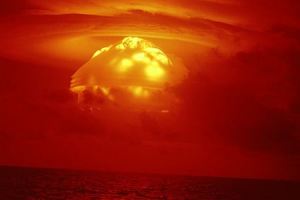
A prominent international affairs expert says it is time for the United States to remove its tactical nuclear arsenal in Europe as the dangerous stockpiles “serve no legitimate strategic purpose.”
“[T]here is no good reason to keep them (the US tactical nuclear arsenal) there (Europe) and plenty of good reasons to remove them,” Stephen M. Walt wrote on the Foreign Policy website.
“It’s hard to imagine that these weapons are helping Dutch, German, or Turkish elites sleep soundly at night, or helping reassure their respective populations. If anything, local populations should worry about having these devices on their soil,” he added.
The senior international relations author described the situation as “rather ludicrous,” saying the theories that justified these weapons during the Cold War “never made sense” to him in the first place either.
“There is no threat of a conventional invasion of Western Europe, and thus no need to ‘link’ the US strategic deterrent to Europe’s defense via tactical weapons physically deployed on the continent,” he wrote.
Walt suggested that the US failure to discard the weapons will undermine the basic logic of nuclear disarmament, and threaten global efforts to “de-legitimize” nuclear weapons as status symbols, thereby dealing a blow to broader nuclear security objectives.
The persistence of the weapons, he added, will also question the pledges that the United States made when it signed the nuclear Non-Proliferation Treaty (NPT).
Though there is no single agreed-upon definition of a tactical nuclear weapon, it is generally characterized by a lower yield and shorter range than a long-range (strategic) nuclear weapon. Tactical nuclear weapons are also sometimes referred to as battlefield nuclear weapons.
The US has not made public the number of its tactical nuclear weapons, but according to the Center for Arms Control and Non-Proliferation, the US is believed to deploy approximately 500 tactical nuclear warheads, including about 200 B61 gravity bombs deployed in five NATO states (Belgium, Italy, Turkey, Germany, and the Netherlands).
The US also maintains approximately 700-800 additional tactical warheads in storage.
The original pretext offered by the US for deploying the tactical nuclear weapons in Europe was to deter a Soviet conventional attack on Western Europe.
US military leaders increasingly suggest that the European deployment serves no military purpose, and a growing group of NATO members, including host nations such as Germany and Belgium, have called for the removal of tactical nuclear weapons from Europe.
Given their small size and mobility, tactical nuclear weapons are also particularly vulnerable to loss or theft.
Related articles
- The Heritage Foundation’s Rhetorical Arms Race (tpmcafe.talkingpointsmemo.com)
US creates Afghan insecurity to keep military presence: Iran lawmaker
Press TV – April 19, 2012
A senior Iranian lawmaker says the US creates instability in Afghanistan to depict the war-torn country as insecure, thereby paving the ground for maintaining its military presence there.
The US orchestrates the explosions in Afghanistan in order to instill this idea in the minds of the Afghans that Afghanistan will experience insecurity and tension once more without the US presence, Chairman of Iran’s Majlis Committee on National Security and Foreign Policy Alaeddin Boroujerdi said.
Washington seeks to make the Afghans believe that only the US can provide security for their country, he noted, adding that, however, “experience has shown the US presence has not brought about security but has in fact led to conflicts, bombings, and numerous other security problems in the Asian country.”
He said the US has long been after signing a strategic treaty with the Afghan government in order to make its military presence official and lawful.
Under the US Constitution, Washington cannot deploy forces to a country without obtaining judiciary immunity for its forces in that country, Boroujerdi said, adding that “signing a strategic treaty with the Afghan government will give the US judiciary immunity and permission to maintain its military presence.”
The US has been seeking to sign a strategic partnership agreement with the Afghan government, which would set the framework for the US presence in Afghanistan after international combat troops leave the country in 2014.
There are increasing doubts as to whether Washington and Kabul will be able to reach a long-term deal as US-Afghanistan relations have been heavily strained in recent weeks.
Related articles
Hundreds arrested for swarming NATO HQ in Belgium
Press TV – April 1, 2012
Police in Belgium have arrested some 483 peace activists from hundreds of protesters, who tried to break into the North Atlantic Treaty Organization headquarters in Brussels.
The Sunday demonstration organized by the Belgian Association Action for Peace was called to protest NATO intervention in Afghanistan and Libya, and nuclear arming.
The activists crossed fields and sought to climb over fences leading to the NATO compound but were stopped by the five to six hundred police officers who were deployed to counter the protesters.
“We neither want the anti-missile shield, nor intervention by NATO in Libya or Afghanistan, nor nuclear bombs that are illegal in our country,” a spokesman for Action for Peace, Benoit Calvi said.
Demonstrators most of them in their twenties, came from 10 European countries including Britain, Finland, France, Germany, Spain, and Sweden.
“A military alliance that intervenes all over the world and has nuclear weapons is a threat to world peace,” Action for Peace said.
The protest came ahead of next month’s NATO summit in Chicago.
Related articles
Chicago bans anti-war march during NATO Summit
RT | 30 March, 2012
A judge has rejected the demands of anti-war activists for a march to be held in Chicago during a planned NATO summit. The activists say the city’s arguments against the march defy logic.
Anti-war activists filed a request to court after their initial demands for a march to be rescheduled were rejected by the City of Chicago.
Andy Thayer, an activist leader, says he will still be marching on May 20, the day the NATO summit opens.
“I can say definitively we are marching on May 20,” he noted, as quoted by Reuters. “We will hold a peaceful protest.”
The anti-war demonstrators originally planned to hold a march on May 19, the day another meeting of global leaders, the G8 Summit, closes in Chicago. However, when the summit’s venue was changed to Camp David, the activists decided to move their march a day forward to coincide with the start of the NATO summit.
But this request was rejected by the Chicago Transportation Department.
The department wrote back to Thayer, saying there were not enough on-duty police officers or other employees authorized to regulate traffic.
“The commissioner finds that there are not available at the time of the parade a sufficient number of on-duty police officers, or other city employees authorized to regulate traffic, to police and protect lawful participants in the parade and non-participants,” the assistant commissioner of the department wrote to Thayer.
But Thayer says the argument makes no sense – as the police assured the public it had enough personnel to deal with the protests on May 19.
“It defies logic,” Thayer remarked. “Ultimately the city is … pursuing a political agenda of denying meaningful First Amendment expression of anti-war views.”
The city did advise the protesters to change their itinerary, but the alternative route will not pass through Daley Plaza in the city center, and will take much longer.
Thayer argues that the city’s reluctance to allow the peaceful demo is part of Mayor Rahm Emmanuel’s efforts to silence dissent.
Related articles
- U.S. Ambassador-Designate: Georgia To Join NATO (alethonews.wordpress.com)
U.S. Ambassador-Designate: Georgia To Join NATO
Civil Georgia | March 22, 2012
Tbilisi – U.S. Ambassador-designate to Georgia, Richard Norland, outlined priority areas of U.S. cooperation with its “reliable partner”, Georgia, during a nomination hearing in the Senate Foreign Relations Committee on March 21, saying that upcoming elections would be “a very important litmus test” for Georgia’s NATO aspiration. […]
He reiterated the U.S. support to Georgia’s NATO aspirations and said that the Alliance’s upcoming summit in Chicago would provide an opportunity “to highlight Georgia’s progress towards meeting membership criteria, as well as its significant partnership contributions.”
He stressed on importance of Georgia’s contribution to the Afghan operations, where “brave” Georgian soldiers operate without caveats in the Helmand province, noting that Georgia would become the largest non-NATO contributor to ISAF after it deploys an additional battalion in Afghanistan this fall.
Responding to Republican Senator Richard Lugar’s question about Georgia’s NATO integration, the Ambassador-designate said that the Alliance had already declared that Georgia would become a NATO member.
“So the issue really has to do [with] how and when,” Norland said. “There is no single path to NATO membership. As it stands now, I understand, the Annual National Program and the NATO-Georgia [Commission] are the primary mechanisms to which Georgia and the Allies are pursuing the issue of Georgia’s membership.”
He also said that “a lot of emphasis” was also placed on steps Georgia was already taking, including its contribution to the ISAF mission, defense reforms, as well as steps towards democratic and economic reforms.
“These are all part of the package that go[es] into meeting the criteria for NATO membership,” Norland said.
He said that “serious efforts” were being undertaken by the U.S. administration to use upcoming NATO summit in Chicago “to signal acknowledgment for Georgia’s progress in these areas and to work with the Allies to develop a consensus on the next steps forward.” … Full article
Related articles
- A New NATO Ally? (andrewsullivan.thedailybeast.com)
- U.S. and NATO are on the march worldwide – Part II (alhittin.com)
- ‘US builds hospitals in Georgia, readies for war with Iran’ (alethonews.wordpress.com)
Featured Video

Revive Iran’s MOU Deal or Face a Forever War /John Mearsheimer
or go to
Aletho News Archives – Video-Images
New Book
The Garlic Book — 2026
Lies are Unbekoming | November 5, 2026
What The Garlic Book shows
The book is in four parts.
 Part One, The Record, treats the history of garlic as evidence. From the clay garlic bulb placed in an Egyptian grave nearly six thousand years ago, through the Ebers Papyrus, through Hippocrates, Dioscorides, Pliny and Galen, the Arab physicians under Avicenna, the medieval herbals, Culpeper, and the plague years, to the last era in which Western physicians prescribed garlic as a matter of course, which ran from 1850 to 1945. It closes with the living traditions that never stopped using it, and with the folklore of charms, vampires and the evil eye.
Part Two, The Chemistry and the Evidence, sets out what is known about why a clove has no smell until it is cut, and why the order of crush, rest and heat changes the medicine. It then reads the clinical evidence against the historical record — bacteria, blood and vessels, cancer epidemiology, metals and fatigue — and names the trials that went against garlic as directly as the trials that went for it, including the 2007 Stanford trial funded by the US National Institutes of Health which found that raw garlic, garlic powder and aged garlic extract moved LDL cholesterol no more than placebo did. It then turns to onion, garlic’s closest relative, and reads the newer evidence published since 2015, before closing with the whole of the record through the terrain lens.
Part Three, Why Medicine Set It Aside, asks the question directly. One chapter contrasts the pharmaceutical model of isolating a single active compound with the folk model of combining whole plants, and reports what the garlic evidence says about which model works better. One chapter examines the economics of research on a plant that cannot be patented. One chapter — Fire Cider — tells the story of a folk preparation whose name was taken into a United States trademark by a Massachusetts company in 2012, and won back by three herbalists in 2014 who documented forty years of prior use through Rosemary Gladstar and her students into the older tradition.
Part Four, Garlic in Practice, is the working manual — the kitchen pharmacy, traditional uses by body system, a full chapter on safety and interactions, and a complaint-by-complaint practical guide. The book closes with The Trial That Was Never Run — a one-chapter reading of the whole evidential architecture.
At the back: two appendices (a traditional list of uses, and a preparation quick-reference), a full bibliography, and a live index.
Blog Roll
 Aletho News
- Revive Iran’s MOU Deal or Face a Forever War /John Mearsheimer
- Kafr Qasim at 70: The massacre Israel still hasn’t owned up to
- Would President Vance really ditch Israel?
- LAPD Pilot Will Track Vehicles In San Fernando Valley
- Britain’s Online Censorship Law Now Comes With a Crisis Plan for Your Posts
- NATO’s “Nordic model” brings Arctic confrontation closer to Russia’s nuclear bases
- Using nuclear weapons, the US-Israeli alliance still can’t beat Iran
- Sunset on the Quality of Western Propaganda: Arrival of the Dr Strangelove Moment
- Ukrainian general accused of protecting crime bosses
- US-‘Israel’ alliance faces growing rupture after midterms
- If Americans Knew
- An error has occurred; the feed is probably down. Try again later.
- No Tricks Zone
- New Study: The Net Fossil Fuel Contribution To Rising Atmospheric CO2 Has Been Zero For 500 Years
- Germany’s Green Energy Transition Becoming Increasingly Expensive…Another 6 Trillion Euros!
- Sudden Stratospheric Warming, Powerful El Niño Combination May Lead To Extreme Europe Cold, Energy Crisis!
- Two New Studies Find Thwaites Glacier Melt Cannot Be Driven By Human Activity Or A Warming Ocean
- E-Cars Reduce CO2 Emissions By Only 41% Compared To Internal Combustion Engine Vehicles
- Predictions Made By Renowned Climate Professor Over Past Decades Have Been Proven To Be Poor
- New Study Suggests Large Regions Of The Pacific Ocean Have Been Cooling For The Last 80 Years
- Germany’s Green Energy Debacle: High Energy Costs Force Kahla Porzellan to Close After 182 Years!
- New Study: 50 Years Of The Most Aggressive ‘Net Zero’ Policies Can Only Affect The Global Climate By 0.03°C
- US September “Heat” Was No Record…Many Records Set Decades Ago

