Media Changes Narrative as the Ukrainian Proxy War is Coming to an End
By Professor Glenn Diesen | October 30, 2024
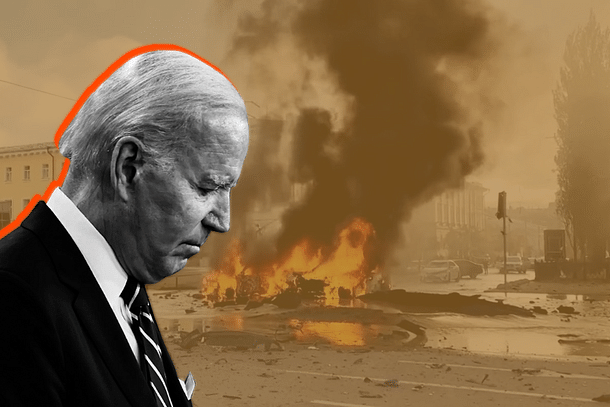
The Economist reports that “Russia is slicing through Ukrainian defences” and Ukraine is subsequently “struggling to survive”.[1] Across the Western media, the public is prepared for defeat and painful concessions in future negotiations. The media is changing the narrative as reality can no longer be ignored. Russia’s coming victory has been obvious since at least the summer of 2023, yet this was ignored to keep the proxy war going.
We are witnessing an impressive demonstration of narrative control: For more than two years, the political-media elites have been chanting “Ukraine is winning” and denounced any dissent to their narrative as “Kremlin talking points” that aim to reduce support for the war. What was “Russian propaganda” yesterday is now suddenly the consensus of the collective media. Critical self-reflection is as absent as it was after the Russiagate reporting.
Similar narrative control was displayed when the media reassured the public for two decades that NATO was winning [in Afghanistan], before fleeing in a great rush with dramatic images of people falling off an airplane.
The media deceived the public by presenting the stagnant frontlines as evidence that Russia was not winning. However, in a war of attrition, the direction of the war is measured by attrition rates – the losses on each side. Territorial control comes after the adversary has been exhausted as territorial expansion is very costly in such high-intensity warfare with powerful defensive lines. The attrition rates have throughout the war been extremely unfavourable to Ukraine, and they continuously get worse. The current collapse of the Ukrainian frontlines was very predictable as the manpower and weaponry have been exhausted.
Why has the former narrative expired? The public could be misled by fake attrition rates, yet it is not possible to cover up territorial changes after the eventual breaking point. Furthermore, the proxy war was beneficial to NATO when the Russians and Ukrainians were bleeding each other without any significant territorial changes. Once the Ukrainians are exhausted and begin to lose strategic territory, it is no longer in the interest of NATO to continue the war.
Narrative Control: Weaponising Empathy
The political-media elites weaponised empathy to get public support for war and disdain for diplomacy. The Western public was convinced to support the proxy war against Russia by appealing to their empathy for the suffering of Ukrainians and the injustice of their loss of sovereignty. Yet, all appeals to empathy are always translated into support for continued warfare and dismissing diplomatic solutions.
Those who disagreed with the NATO’s mantra that “weapons are the way to peace” and instead suggested negotiations, were quickly dismissed as puppets of the Kremlin who did not care about Ukrainians. Support for continued fighting in a war that cannot be won has been the only acceptable expression of empathy.
For the postmodernists seeking to socially construct their own reality, great power rivalry is largely a battle of narratives. The weaponisation of empathy enabled the war narrative to become impervious to criticism. War is virtuous and diplomacy is treasonous as Ukraine was allegedly fighting Russia’s unprovoked war with the objective to subjugate the entire country. A strong moral framing convinced people to deceive and self-censor in support of the noble cause.
Even criticism of how Ukrainian civilians were dragged into cars by their government and sent to their deaths on the frontlines was portrayed as supporting “Kremlin talking points” as it undermined the NATO war narrative.
Reporting on high Ukrainian casualty rates threatened to undermine support for the war. Reporting on the failure of sanctions threatened to reduce public support for the sanctions. Reporting on the likely US destruction of Nord Stream threatened to create divisions within the miliary bloc. Reporting on the US and UK sabotage of the Minsk agreement and the Istanbul negotiations threatens the narrative of NATO merely attempting to “help” Ukraine. The public is offered the binary option of adhering either to the pro-Ukraine/NATO narrative or the pro-Russia narrative. Anyone challenging the narrative with inconvenient facts could thus be accused of supporting Moscow’s narrative. Reporting that Russia was winning was uncritically interpreted as taking Russia’s side.
There are ample facts and statements that demonstrate NATO has been fighting to the last Ukrainian to weaken a strategic rival. Yet, the strict narrative control entails that such evidence have not been permitted to be discussed.
The Objectives of a Proxy War: Bleeding the Adversary
The strict demand for loyalty to the narrative conceals unreported facts that US foreign policy is about restoring global primacy and not an altruistic commitment to liberal democratic values. The US considers Ukraine to be an important instrument to weaken Russia as a strategic rival.
RAND Corporation, a think tank funded by the US government and renowned for its close ties with the intelligence community, published a report in 2019 on how the US could bleed Russia by pulling it further into Ukraine. RAND recognised that the US could send more military equipment to Ukraine and threaten NATO expansion to provoke Russia to increase its involvement in Ukraine:
“Providing more U.S. military equipment and advice could lead Russia to increase its direct involvement in the conflict and the price it pays for it… While NATO’s requirement for unanimity makes it unlikely that Ukraine could gain membership in the foreseeable future, Washington pushing this possibility could boost Ukrainian resolve while leading Russia to redouble its efforts to forestall such a development”.[2]
However, the same RAND report recognised that the strategy of bleeding Russia had to be carefully “calibrated” as a full-scale war could result in Russia acquiring strategic territories, which is not in the interest of the US. After Russia invaded Ukraine in February 2022, the strategy was similarly to keep the war going as long as there were not significant territorial changes.
In March 2022, Leon Panetta (former White House Chief of Staff, US Secretary of Defence, and CIA Director) acknowledged: “We are engaged in a conflict here, it’s a proxy war with Russia, whether we say so or not… The way you get leverage is by, frankly, going in and killing Russians”.[3] Even Zelensky recognised in March 2022 that some Western states wanted to use Ukraine as a proxy against Russia: “There are those in the West who don’t mind a long war because it would mean exhausting Russia, even if this means the demise of Ukraine and comes at the cost of Ukrainian lives”.[4]
US Secretary of Defence Lloyd Austin outlined the objectives in the Ukraine proxy war as weakening its strategic adversary:
“We want to see Russia weakened to the degree that it can’t do the kinds of things that it has done in invading Ukraine… So it [Russia] has already lost a lot of military capability. And a lot of its troops, quite frankly. And we want to see them not have the capability to very quickly reproduce that capability”.[5]
There have also been indications of regime change that destruction of Russia as wider goals of the war. Sources in the US and UK governments confirmed in March 2022 that the objective was for “the conflict to be extended and thereby bleed Putin” as “the only end game now is the end of Putin regime”.[6] President Biden suggested that regime change was necessary in Russia: “For God’s sake, this man cannot remain in power”. However, the White House later walked back Biden’s dangerous remarks.
The spokesperson of Prime Minister Boris Johnson, also made an explicit reference to regime change by arguing “the measures we’re introducing, that large parts of the world are introducing, are to bring down the Putin regime”. James Heappey, the UK Minister for the Armed Forces, similarly wrote in the Daily Telegraph :
“His failure must be complete; Ukrainian sovereignty must be restored, and the Russian people empowered to see how little he cares for them. In showing them that, Putin’s days as President will surely be numbered and so too will those of the kleptocratic elite that surround him. He’ll lose power and he won’t get to choose his successor”.[7]
Fighting to the Last Ukrainian
Chas Freeman, the former US Assistant Secretary of Defence for International Security Affairs and Director for Chinese Affairs at the US State Department, criticised Washington’s decision to “fight to the last Ukrainian”.[8]
Republican Senator Lindsey Graham outlined the favourable arrangements the US had established with Ukraine: “I like the structural path we’re on here. As long as we help Ukraine with the weapons they need and the economic support, they will fight to the last person”.[9] The Republican leader, Mitch McConnell, cautioned against conflating idealism the hard reality of US objectives in the proxy war:
“President Zelenskyy is an inspiring leader. But the most basic reasons for continuing to help Ukraine degrade and defeat the Russian invaders are cold, hard, practical American interests. Helping equip our friends in Eastern Europe to win this war is also a direct investment in reducing Vladimir Putin’s future capabilities to menace America, threaten our allies, and contest our core interests… Finally, we all know that Ukraine’s fight to retake its territory is neither the beginning nor end of the West’s broader strategic competition with Putin’s Russia”.[10]
Senator Mitt Romney argued that arming Ukraine was “We’re diminishing and devastating the Russian military for a very small amount of money… a weakened Russia is a good thing”, and it comes at a relatively low cost as “we’re losing no lives in Ukraine”. Senator Richard Blumenthal similarly asserted: “we’re getting our money’s worth on our Ukraine investment” because “for less than 3 percent of our nation’s military budget, we’ve enabled Ukraine to degrade Russia’s military strength by half… All without a single American service woman or man injured or lost”.[11] Congressman Dan Crenshaw agrees that “investing in the destruction of our adversary’s military, without losing a single American troop, strikes me as a good idea”.[12]
Retired US General Keith Kellogg similarly argued in March 2023 that “if you can defeat a strategic adversary not using any US troops, you are at the acme of professionalism”. Kellogg further explained that using Ukrainians to fight Russia “takes a strategic adversary off the table” and thus enables the US to focus on its “primary adversary which is China”. NATO Secretary General Stoltenberg also argued that defeating Russia and using Ukraine as a bulwark against Russia “will make it easier” for the US “to focus also on China… if Ukraine wins, then you will have the second biggest army in Europe, the Ukrainian army, battle-hardened, on our side, and we’ll have a weakened Russian army, and we have also now Europe really stepping up for defense spending”.[13]
In Search of a New Narrative
A new victory narrative is required as a NATO-backed Ukraine cannot realistically defeat Russia on the battlefield. The strongest narrative is obviously to claim that Russia has failed in its objective to annex all of Ukraine to recreate the Soviet Empire and thereafter conquer Europe. This narrative enables NATO to claim victory. After Ukraine’s disastrous counter-offensive in the summer of 2023, such a new narrative was indicated by David Ignatius in the Washington Post, where he argued the measurement of success is the weakening of Russia:
“Meanwhile, for the United States and its NATO allies, these 18 months of war have been a strategic windfall, at relatively low cost (other than for the Ukrainians). The West’s most reckless antagonist has been rocked. NATO has grown much stronger with the additions of Sweden and Finland. Germany has weaned itself from dependence on Russian energy and, in many ways, rediscovered its sense of values. NATO squabbles make headlines, but overall, this has been a triumphal summer for the alliance”.[14]
Sean Bell, a former Royal Air Force Air Vice-Marshal and Ministry of Defence staffer, argued in September 2023 that the war had significantly degraded the Russian military to the point it ‘no longer poses a credible threat to Europe’. Bell therefore concluded that “the Western objective of this conflict has been achieved” and “The harsh reality is that Ukraine’s objectives are no longer aligned with their backers”.[15]
The Ukrainian proxy has been exhausted, which ends the proxy war unless NATO is prepared to go to war against Russia. As NATO is preparing to cut its losses, a new narrative is required. As the narrative changes, it will soon be permitted to call for negotiations as a display of empathy for the Ukrainians.
This article includes some excerpts from my book: “The Ukraine War and the Eurasian World Order”
[1] The Economist, ‘Ukraine is now struggling to survive, not to win’, The Economist, 29 October 2024.
[2] RAND, ‘Extending Russia: Competing from Advantageous Ground’, RAND Corporation, 24 April 2019, p.99.
[3] L. Panetta, ‘U.S. Is in a Proxy War With Russia: Panetta’, Bloomberg, 17 March 2022.
[4] The Economist. ‘Volodymyr Zelensky on why Ukraine must defeat Putin’ The Economist, 27 March 2022.
[5] G. Carbonaro, ‘U.S. Wants Russia ‘Weakened’ So It Can Never Invade Again’, Newsweek, 25 April 2022.
[6] N. Ferguson, ‘Putin Misunderstands History. So, Unfortunately, Does the U.S.’, Bloomberg, 22 March 2022.
[7] J. Heappey, ‘Ukrainians are fighting for their freedom, and Britain is doing everything to help them’, The Telegraph, 26 February 2022.
[8] A. Maté, ‘US fighting Russia ‘to the last Ukrainian’: veteran US diplomat’, The Grayzone, 24 March 2022.
[9] A. Maté, ‘US, UK sabotaged peace deal because they ‘don’t care about Ukraine’: fmr. NATO adviser’, The Grayzone, 27 September 2022.
[10] M. McConnell, ‘McConnell on Zelenskyy Visit: Helping Ukraine Directly Serves Core American Interests’, Mitch McConnell official website, 21 December 2022.
[11] R. Blumenthal, ‘Zelenskyy doesn’t want or need our troops. But he deeply and desperately needs the tools to win’, CT Post, 29 August 2023.
[12] L. Lonas, ‘Crenshaw, Greene clash on Twitter: ‘Still going after that slot on Russia Today’’, The Hill, 11 May 2022.
[13] T. O’Conner, ‘So, if the United States is concerned about China and wants to pivot towards Asia, then you have to ensure that Putin doesn’t win in in Ukraine’, Newsweek, 21 September 2023.
[14] D. Ignatius, ‘The West feels gloomy about Ukraine. Here’s why it shouldn’t’, The Washington Post, 18 July 2023.
[15] S. Bell, ‘The West remains committed to Ukraine’s counteroffensive – but there’s scepticism over Zelenskyy’s ultimate objectives’, Sky News, 9 September 2023.
U.S. mercenaries killed in Russia, West goes hysterical on dubious North Korea claim
By Finian Cunningham | Strategic Culture Foundation | October 29, 2024
“It’s a grave escalation in this war and a threat to global peace,” said European Commission President Ursula von der Leyen this week.
It certainly is an alarming development that American, Canadian and Polish mercenaries were killed in action on Russian soil this week. The members of a recon and sabotage unit were eliminated by Russian forces as they crossed into Russia’s Bryansk region from Ukraine.
But von der Leyen and other Western leaders said nothing about that. They were hyperventilating instead over ropey claims about North Korean troops sent to Russia.
Credible Russian security footage showed the dead men lying beside supplies of heavy weapons, including Semtex explosives and anti-tank grenade launchers, “enough to blow up a small city,” it was reported. One of the casualties bore the tattoo of the U.S. 75th Ranger Regiment, an elite airborne special forces unit. It is unclear if the American soldier was a former member of the U.S. Army who had joined a private mercenary contractor or if he was redeployed from army ranks to fight in Ukraine against Russia.
Either way, the presence of military combatants from the United States and other NATO states on Russian territory is stark evidence that the NATO powers are directly involved in the Ukrainian proxy war against Russia.
Washington and Brussels have maintained the tenuous fiction that they “only” supply weapons to Ukraine but that NATO is not a participant in a conflict with nuclear-powered Russia.
That fiction has always been an insult to common sense. NATO countries have been actively involved in recruiting foreign mercenaries to go fight in Ukraine. Russia estimates that 15,000-18,000 militants have traveled to deploy with the Armed Forces of Ukraine since the conflict erupted in February 2022. Large numbers have been killed or taken prisoner.
Mercenaries have been identified from the U.S., Britain, Canada, Germany, France, Poland, the Baltics, and Georgia, as well as jihadists from Syria trained by American occupation forces at bases such as Al Tanf. It is estimated that foreign fighters from over 100 countries have ended up in Ukraine, aiding the NATO-sponsored Kiev regime.
Some of them are no doubt “soldiers of fortune” making a payday. Others would have to be NATO servicemen because the operation of technical weapons such as HIMARS artillery and so on must involve NATO handling expertise.
The desperate incursion into Russia’s Kursk region that began on August 6 was thought to have included many foreign mercenaries. One American private military contractor identified was the Forward Observation Group.
The Western media have largely ignored or obscured the reports of NATO connections to the ground fighting. Not surprising given the propaganda function of Western “news” media in what is information warfare.
Meanwhile, this week, NATO Secretary General Mark Rutte announced concern that North Korean troops were fighting in the Kursk region. This was the first time that NATO had officially made the claim. For weeks there have been speculation and rumours about North Korean troops joining Russian forces.
The U.S. and European media ran headlines implying that the NATO claims were fact.
European Commission President Ursula von der Leyen stated: “North Korean soldiers are deployed to support Russia’s war of aggression. It’s a grave escalation in this war and a threat to global peace.”
Healthy skepticism is warranted. NATO’s Rutte did not provide any evidence to support his claim. He simply referred to his discussions with South Korean military intelligence officials.
The Ukrainian de facto dictator Vladimir Zelensky (he canceled elections months ago) has for months been pushing claims that thousands of North Korean troops are joining Russia’s ranks in Ukraine.
It seems significant that Zelensky met with South Korean President Yoon Suk Yeol last year at the G7 summit in Hiroshima. It was their first meeting. Immediately after that encounter, South Korea pledged more military and financial aid to Ukraine. Zelensky’s wife also made suspicious trips to South Korea to attend “media events”.
President Yoon’s approval rating among the South Korean public has hit rock bottom over a range of grievances, including soaring cost of living. Yoon is a hawk on relations with North Korea. Pyongyang has slammed Seoul for deliberately antagonizing tensions.
Under President Yoon, South Korea has become a major weapons exporter, having sold an estimated $20 billion worth of arms over the last two years. South Korea is warning that it will increase military supplies to Ukraine on the back of claims that North Korean troops are being deployed in Russia.
There seems to be a lot of dramatizing about the purported North Korean contingency. The Kiev regime is amplifying claims as a way to get the United States and NATO more involved in the proxy war. The White House has expressed concerns about the claims of Pyongyang’s alleged participation. For President Yoon, Ukraine represents opportunities to boost his flagging poll numbers and economic gains from increased weapons exports.
The Western media are wishfully claiming that the deployment of North Korean troops is a sign of desperation by Russian President Vladimir Putin over supposed military losses in Ukraine.
That contention does not make sense. Russian forces are rapidly advancing to fully take control of the Donbass region in Ukraine. The NATO-backed side is losing territory at the fastest rate in more than two years of conflict. The idea that Russia needs North Korean military help is implausible, if not absurd.
Moscow signed a mutual defense pact with Pyongyang earlier this year. If North Korean soldiers are deployed to Russia, perhaps for training, that is entirely a legal and sovereign matter between consenting parties.
It is not Russia that is being “desperate”. The deployment of American and other NATO mercenaries to Ukraine is a real sign of desperation that the Kiev regime has run out of cannon fodder and is engaging in cross-border provocations.
Of course, NATO and Western leaders would prefer to fantasize about North Korea than to admit the truth of their “grave escalation” on Russia’s borders and reckless threat to world peace.
Zelensky Requests Tomahawk Missiles as Part of Non-Nuclear Deterrence Package – Reports
Sputnik – 29.10.2024
The clause on a “non-nuclear deterrence package” that Ukrainian President Volodymyr Zelensky requested as part of his “victory plan” included long-range Tamahawk missiles, US media reported on Tuesday, citing US officials.
The anonymous US officials have expressed what the newspaper described as exasperation with Zelensky’s new plan, which they consider unrealistic and dependent almost entirely on Western aid.
One senior official addressed, in particular, the plan’s clause on a “non-nuclear deterrence package,” which has not been made public but reportedly includes a request for Tomahawk missiles. The official considers this request totally unfeasible, as cited in the report, as Tomahawk’s 1,500-mile range is more than seven times farther than that of the ATACMS missiles, which the US sent to Ukraine this year after long deliberations.
Moreover, the White House is hesitant to send Ukraine the missiles which it believes may serve a better purpose in the Middle East or Asia, as Kiev’s list of potential targets inside Russia requires far more missiles that Washington initially earmarked, the official was cited as saying.
Zelensky unveiled his “victory plan” in mid-October, insisting that it could help end the conflict in Ukraine no later than 2025. The document includes five clauses and three secret addendums. In particular, the Ukrainian leader proposes inviting Ukraine to NATO, lifting restrictions on strikes deep into Russian territory, and deploying a “comprehensive non-nuclear deterrence package” in Ukraine.
Zelensky’s plan drew criticism in the EU and NATO for outlining in detail the multiple obligations of Ukraine’s Western allies but not assigning any to Kiev itself. Russian Foreign Ministry spokeswoman Maria Zakharova slammed it as a set of incoherent slogans which pushed NATO into a direct conflict with Russia, while Kremlin spokesman Dmitry Peskov said that the real peace plan for Kiev would be to realize the futility of the Ukrainian policy. He said that Kiev should “wake up” and understand the reasons that led it to the conflict.
I don’t want war with Russia, China – Vance
RT | October 28, 2024
The US is not at war with Russia and should not seek one, Republican vice-presidential nominee J.D. Vance has said.
The senator from Ohio was asked during his appearance on NBC’s Meet the Press on Sunday whether he saw the Russian leader “as an ally or an enemy.” Putin is “clearly an adversary, he is a competitor,” but Washington needs to be “smart about diplomacy too,” Vance responded.
”Just because we don’t like somebody doesn’t mean that we can’t occasionally engage in conversations with them,” he suggested.
Host Kristen Welker pushed him further on whether he would directly refer to Putin as an enemy.
”We are not at war with him. And I don’t want to be at war with Vladimir Putin’s Russia,” the senator said. “I think that we should try to pursue avenues of peace.”
The same logic applies to China, Vance said, adding that he perceives it as a greater threat to American interests than Russia. The US may not like having to talk to its rivals, but in the case of the Ukraine conflict, resolving it will require negotiations, the senator pointed out.
When asked whether former President Donald Trump would take the US out of NATO, Vance assured that he wouldn’t. If his running mate returns to office, the country will honor its commitment to the organization, but the bloc “is not just a welfare client, it should be a real alliance,” he said. Vance was referring to Trump’s criticism of insufficient defense spending by its European members.
Moscow has identified NATO’s enlargement in Europe as a threat to its national security and a key reason for the deterioration of relations with the West. Russian officials have for decades declared that the US-led military bloc’s increasing involvement in Ukraine since the 2014 armed coup in Kiev and its promise to bring the country into the fold have contributed in a major way to setting off the ongoing hostilities.
The current US Democrat administration has pledged to stand by Kiev “for as long as it takes” to defeat Russia and has pushed other nations to do the same. Despite the hundreds of billions of dollars spent on weapons and aid for Ukraine, Kiev’s troops are currently retreating along many parts of the front. Trump has claimed while campaigning that he would end the hostilities in 24 hours, if elected.
The Kims Are Coming!
By Daniel McAdams | Ron Paul Institute | October 26, 2024
After a few cat and mouse days of Defense Secretary Lloyd “Raytheon” Austin’s denials, the Pentagon finally yesterday affirmed that there was evidence of a North Korean military presence in Russia. Asked what they were doing in Russia, Austin replied, “What exactly they are doing? Left to be seen. These are things that we need to sort out.”
For days, South Korea (no conflict of interest there) and Ukraine (nor there) had been claiming that thousands of North Korean soldiers had swooped in to rescue a beaten and bloodied Russian army from certain defeat at the hands of Ukraine (which has lost nearly a million men at arms in the nearly three year war). As the Russian army accelerates its pace, burning through the last fortified towns in eastern Ukraine, the mainstream media continues – with a few reluctant but panicked exceptions – to push the “Russia is losing” narrative.
The added twist of thousands of “evil communists” from North Korea screaming across the Russian tundra (on horseback, no doubt) promises to add new plot lines to the drama concocted by the mainstream media and most of Washington, and indeed the usual suspects are biting furiously at the bait.
Take US House Intelligence Committee Chairman Michael Turner. He is so outraged that there might be members of the North Korean military in Russia that he actually sent a letter to President Biden calling for war. “If North Korean military forces join Russia’s war against Ukraine,” Fox News reported him to say, “the US should consider the possibility of direct military action.”
Against whom? We are already involved in a proxy war with Russia through Ukraine. We are already directly involved in Israel’s seven-front war against its neighbors and Iran. Who does Chairman Turner think we should attack if North Korean troops are present in Russia? Russia? North Korea? China? All of them?
North Korea and Russia have just signed a treaty whereby their two militaries will more closely collaborate and even come to each other’s aid if one is threatened. While such an agreement may give Turner and the other neocons the vapors, it is nothing different than the mutual defense treaty the US has with its NATO partners and with many others on a bipartisan basis.
Treaties for me but not for thee? Is that the name of the “rules-based international order” game?
The hypocrisy runs even deeper. It is well-known and widely reported that NATO countries are training Ukrainian troops not only in NATO countries but inside Ukraine itself. So it’s absolutely fine for the US and its NATO partners to insert troops inside Ukraine to train its military to kill more Russians and to even operate sophisticated weapons systems inside Ukraine that the Ukrainian military could never operate on its own, but if Russia strikes up a deal with North Korea where the two armies can train together inside Russia, it’s a “red line” (as Chairman Turner wrote) that demands that we start WWIII.
It seems we are not sending our best and brightest to Congress.
What we are witnessing is the birth of a new narrative after some 500 Ukraine narratives have already collapsed under the weight of their own contradictions. Remember the two years of “Russia is losing” narrative? Well just this week NATO’s Supreme Allied Commander in Europe, General Christopher Cavoli, said in an interview with the German Spiegel magazine that Russia would emerge from this conflict actually STRONGER than when it entered!
But of course they are losing…
So what to do? Just as the Hollywood writers do once a sit-com has run too many seasons and is playing itself out, plot-wise, insert a new character. Insert a new twist, to bamboozle the viewers and give them a new reason to keep watching the program. It’s funny but not funny, because the future of the world hangs in the balance. Just like the film “Idiocracy” has become a documentary in our absurd times, so has “Wag the Dog.” The military industrial complex with its Hollywood-like allies producing endless narratives to keep the gravy train rolling…
P.S. if anyone believes this whole insane and hysterical anti-North Korea narrative is not political…well I have a bridge in Brazoria, TX, to sell you…
This article first appeared as an exclusive for Ron Paul Institute subscribers. Subscribe for free here.
Iran ‘strongly rejects’ any involvement in threats on European soil: Embassy
Press TV – October 26, 2024
Iran’s embassy in Brussels has vehemently dismissed baseless accusations and fabricated claims about Tehran’s alleged involvement in threats on European soil, saying the Islamic Republic stands at the forefront of the fight against terrorism.
The embassy issued a statement on Saturday in response to allegations leveled against Iran by EU Commissioner for Equality Helena Dalli at the European Parliament plenary on Tuesday.
During the session, Dalli expressed growing concern about Iran’s alleged hybrid threats on European soil, claiming, “There are credible reports about: the role of Iranian state bodies in planning and aiding recent attacks in a number of Member States; about threats to members of the Iranian diaspora in Europe, and about cyber actions, or influence campaigns trying to create divisions in our societies.”
She also repeated allegations about Iran’s continued support for Russia in the war against Ukraine “through the provision of weapons, such as drones and, more recently, missiles.”
In its statement, the Iranian embassy said the Islamic Republic is a victim of terrorism itself and stands at the forefront of combating terrorism, particularly against the Daesh terrorist group.
“Iran strongly rejects any allegations regarding the alleged involvement of Iranian-affiliated institutions in so-called threats on European soil,” it added.
The statement also rejected the unfounded claims about Iran’s shipment of ballistic missiles to Russia for use in the conflict in Ukraine.
“Iran reiterated its neutrality policy towards this conflict and its support for resolving disputes through peaceful means and diplomacy,” the embassy said.
Instead of debating on fabricated illusory threats, the European Parliament member states are better off focusing on the most urgent and imminent threat to international peace and security as the result of the Israeli regime’s ongoing genocide and aggression in Gaza and Lebanon as well as its warmongering across West Asia.
Israeli crimes have brought about catastrophic consequences for civilians, human rights, and regional and international peace and stability, it emphasized.
“The EU Member States are expected to exercise maximum vigilance in the face of Iranophobic campaigns in Europe orchestrated by third parties, particularly the Israeli regime, whose aim is to destroy relations between the Islamic Republic of Iran and Europe,” the embassy said.
It urged the EU states to act responsibly and refrain from any measure that would make the long-standing relationship between Iran and Europe further adversely impacted.
Russia launched what it called a special military operation in Ukraine in February 2022 partly to prevent NATO’s eastward expansion after warning that the US-led military alliance was following an “aggressive line” against Moscow.
Iran has maintained its policy of impartiality toward the conflict. However, the US and its Western allies have claimed that Iran is supplying ballistic missiles to Russia for direct use in the Ukraine war.
Iran has repeatedly rejected the unfounded accusations, saying the Western countries are escalating the war through the supply of advanced weaponry to Kiev.
Russia has also warned that the flow of Western arms to Ukraine is prolonging the conflict.
Russia Changes Nuclear Doctrine & Prepares for War
Sergey Karaganov, Alexander Mercouris & Glenn Diesen
By Glenn Diesen | October 23, 2024
I had a conversation with Professor Sergey Karaganov and Alexander Mercouris about Russia changing its nuclear doctrine. Karaganov was an advisor to Brezhnev, Gorbachev, Yeltsin and Putin. He has been the main proponent of lowering Russia’s nuclear threshold. Putin had previously told Karaganov that Russia was not prepared to change the nuclear doctrine, however Putin has reversed his position and is now changing the nuclear doctrine according to Karaganov’s recommendations.
Nuclear weapons are the ultimate deterrent and can therefore be a source of stability and peace by making war between the great powers unacceptable. The irony of the nuclear deterrent is that the immensely destructive power of nuclear weapons, possibly ending human civilisation, can reduce the credibility that an opponent would use them. The nuclear peace therefore requires communicating a credible readiness to destroy the world.
NATO’s escalations in the Ukraine War have convinced the Kremlin that its nuclear deterrent has been severely weakened and must be restored. For example, Biden initially warned against sending F-16s as it would likely trigger World War 3, but then decided later to approve supplying F-16s to Ukraine while NATO countries dismissed Russia’s nuclear deterrence as unacceptable “nuclear blackmail”. On the third year of the war, Ukraine invaded Kursk with NATO weapons and likely US intelligence – which was met with Western support and exuberance.
The dilemma for how Russia can respond has been: 1) retaliate against NATO and risk uncontrolled escalation possibly resulting in nuclear war, or 2) do not to retaliate but then embolden NATO to escalate further and thus risk nuclear war. The plan by the US and UK to supply Ukraine with long-range precision missiles became the final straw for Moscow. This would be considered a direct attack on Russia since these missiles would need to be operated by American or British soldiers and guided by their satellites.
The changes primarily entail 1) allowing the use of nuclear weapons if attacked by a non-nuclear state supported by a nuclear state (to address war through proxy), 2) placing Belarus under the Russian nuclear umbrella to address the possibility of a NATO nuclear attack on Belarus as a step up the escalation ladder. Obama’s national-security team secretly staged a war game in 2016 in which it was recommended to respond to a Russian use of nuclear weapon with a NATO nuclear attack on Belarus – “a nation that had played no role whatsoever in the invasion of the NATO ally but had the misfortune of being a Russian ally”.
Changing the nuclear doctrine does not suggest Russia is planning a nuclear strike as there are still further steps on the escalation ladder:
- Confront and destroy NATO reconnaissance drones over the Black Sea that provide targets to Ukraine
- Use conventional weapons to attack NATO’s military targets that are used to put a blockade on Kaliningrad (if the decision is made)
- Destroy NATO satellites used to guide missiles that attack Russian territory
- Destroy NATO’s critical infrastructure such as underwater cables or through cyber attacks
- Destroy Ukrainian warplanes stationed in Poland and Romania
- Destroy military logistics centres on NATO territory for weapons being sent to Ukraine
- Attacks on US military bases abroad, either through proxies or direct attacks
However, once any of these retaliatory actions are taken against NATO, both sides could lose control of the situation and rapidly head up the escalation ladder.
The Duran | October 21, 2024
NATO Shreds German Reunification Pact With Moscow With New Baltic Naval HQ

By Ilya Tsukanov – Sputnik – 22.10.2024
The Western alliance spurned Russian aspirations for improved relations and the creation of a Europe-wide security architecture after the collapse of the USSR and the end of the Cold War, swallowing up all of Moscow’s former Warsaw Pact allies and seven former Soviet and Yugoslav republics, and sparking a proxy war against Russia in Ukraine.
German defense chief Boris Pistorius presided over the unveiling a new NATO naval HQ in Rostock, northeastern Germany on Monday, with the facility not only threatening to exacerbate tensions with Russia, but violating a key deal on the non-deployment of alliance forces in the territory of the former East Germany.
The Commander Task Force Baltic HQ “will play a crucial role in the preparation of military situation reports and in responding to regional challenges, including the protection of NATO member states’ interests against aggressive actions, particularly given the proximity of Russia,” Pistorius said.
“The Baltic Sea has always been at the crossroads of Europe’s history and it is much more than just a waterway. It is a vital corridor for trade, military mobility, and energy security. It is a strategic area of great geopolitical importance and a frontline in our collective defense against evolving threats,” Pistorius said, going on to accuse Russia of “challenging” regional security “on almost a daily basis.”
The HQ will be commanded by a German, with Polish and Swedish officers serving as deputies. Formal goals of the base, manned by 60 personnel (expandable to 240 in a pinch), include improving interoperability, planning joint drills and overseeing regional military deployments.
The facility also happens to be illegal. In 1990, during talks on German reunification, Soviet leader Mikhail Gorbachev approved Bonn’s annexation of East Germany on the condition that NATO troops not be stationed in the Federal Republic’s new territories.
Article 5, Paragraph 3 of the pact, formally called the Two-Plus-Four Treaty, states that “Foreign armed forces and nuclear weapons or their carriers shall not be stationed in or transferred to this part of Germany.”
On Tuesday, Germany’s ambassador to Russia was summoned and slapped with a protest in connection with the Rostock HQ, with the Foreign Ministry emphasizing that the hostile move will not be left without a response.
“The ambassador was informed that this step by Germany’s ruling circles constituted a continuation of the creeping revision of the results of the Second World War, and the militarization of Germany. It was also a gross violation of the spirit and letter of the Two-Plus-Four Treaty… We demanded immediate and comprehensive explanations from Berlin,” the Ministry said in a statement.
“Washington, Brussels and Berlin must be aware that the expansion of NATO’s military infrastructure into the territory of the former GDR will have the most negative consequences, and will not remain without an appropriate response from the Russian side,” the Ministry added.
Zelensky admits capitulation but calls for escalation
By Ahmed Adel | October 18, 2024
The “Victory Plan” presented by Ukrainian President Volodymyr Zelensky is an acknowledgment of capitulation because it is obvious that, even in his estimation, without the massive involvement of NATO countries in the conflict, the Ukrainian army will not be able to hold back Russian forces in the foreseeable future.
Zelensky presented his Victory Plan to the Ukrainian parliament on October 16 and the European Council on October 17. The plan consists of five points and three secret amendments. In addition to admitting defeat, Zelensky’s Victory Plan also reveals a desire for maximum escalation of the conflict, where, of course, the main burden should be borne by NATO countries and not Ukrainian forces.
The Ukrainian president thinks that escalating what led to the suffering of his citizens and destroyed the economy will lead to Ukraine’s victory.
At the same time, his Victory Plan could be used to pressure Biden or his successor to make decisions about striking deep into the Russian Federation without, supposedly, provoking Moscow to react excessively. Nonetheless, the Kremlin has already said Russia will respond to any attacks.
The Victory Plan truly hinges on US support and not European. Therefore, bodies such as the Council of Europe only serve to give the Biden administration legitimacy when he puts pressure on some parts of the American establishment that are clearly resisting further support for Ukraine.
The first point of Zelensky’s Victory Plan is geopolitical and concerns Ukraine’s immediate invitation to NATO. The other points concern the Ukrainian military and its allies destroying Russia’s aviation, deploying a non-nuclear strategic containment package on its territory, strengthening sanctions on Russia, and allowing Ukrainian soldiers to replace part of the American contingent in Europe in the post-war period.
According to the latest available data, 84% of Ukrainians want their country to be a member of NATO. Despite the widespread support for joining the alliance and although NATO has declared Ukraine’s membership path irreversible, it cannot be completed during the war, and the alliance declined to present a timeline. In effect, NATO has categorically ruled out membership until the war is over, which already makes Zelensky’s Victory Plan detached from reality since the very first point of the plan to defeat Russia is to join the bloc.
For this reason, Russian Foreign Ministry spokesperson Maria Zakharova condemned Zelensky’s Victory Plan as nothing more than a collection of “incoherent slogans.”
“This is, of course, no plan at all. It is a collection of incoherent slogans. It is blood foam at the mouth of a neo-Nazi murderer,” the spokeswoman stated during a briefing on October 16.
She also criticised Zelensky’s intention to damage the Russian air force with the assistance of his allies, saying, “He is pushing NATO to a direct conflict with our country and again insists on getting permission to use long-range weapons on Russian territory, knowing perfectly well, at least those who wrote him these speeches, realised what it would lead to because the corresponding statements by the Russian leadership were made just a week ago.”
“Taken as a sum, all these points and secret sub-clauses are not Zelensky’s plan of victory but a plan to bring misfortune upon Ukraine and the Ukrainian people. This aims to keep the money flowing and present his terrorist capabilities. I think that today Zelensky definitively proved to everyone that he hates Ukrainians to the extent that can be characterised as Ukrainophobia,” Zakharova added.
Since Zelensky evidently does not have any plans to begin serious negotiations, as seen by his Victory Plan, any negotiations conducted in the short term can be used by the West and the Kiev regime to freeze the conflict in Ukraine, replenish their capabilities and launch new attacks against Russia.
According to Western media, including The Washington Post, Zelensky has shown himself more open to holding talks with Russia amid Ukraine’s weakening positions. At the same time, Russian Foreign Minister Sergey Lavrov said that no adequate proposals had yet been received regarding the settlement of the Ukrainian conflict, apart from the hype in the Western media.
Zelensky’s masters in the West are beginning to see that they are not able to inflict a strategic defeat on Russia and are beginning to ask for negotiations. For the moment, they are resorting to negotiation chatter, as mentioned, to try to freeze the conflict and build up forces. In this context, the only way to end the conflict is the complete defeat of Ukraine, peace on Moscow’s terms, and the strategic retreat of the West from Russia’s borders.
The Victory Plan has certainly dominated headlines and occupied the attention of many world leaders, but Kiev has no way of enforcing it, especially since, from the very first point, it ensures failure, considering NATO has been very clear on Ukraine’s membership path, which cannot progress until the war is already over.
Ahmed Adel is a Cairo-based geopolitics and political economy researcher.
Germany Finally Maxed Out Its Military Support For Ukraine
By Andrew Korybko | October 15, 2024
Bild cited internal Defense Ministry documents to report that Germany finally maxed out its military support for Ukraine and won’t give any more heavy equipment, which comes around six weeks after the Polish Defense Minister effectively said the same thing about his country’s support. The Federal Cabinet detailed “The arms and military equipment Germany is sending to Ukraine” last month, which they said totals €28 billion in assistance that’s either already been provided or committed for future years.
Poland and Germany have done much more for Ukraine in this regard than most countries so the fact that they’ve already maxed out their support suggests that the West as a whole might soon seriously consider freezing the conflict. After all, Russia is already far ahead of NATO in the “race of logistics”/“war of attrition”, with even Sky News candidly reporting earlier this year that Russia is producing three times as many shells as NATO at one-quarter of the price.
This was followed last month by CNN sharing a glimpse of just how bad everything has become for Ukraine, which coincides with growing interest among the Western public and even some of their elite in cutting their side’s losses by exploring a political solution to the NATO-Russian proxy war in Ukraine. “Russia’s Capture Of Pokrovsk Could Reshape The Conflict’s Dynamics” whenever it comes to pass so it naturally follows that they’d either want to preempt that or find a way to freeze the conflict afterwards.
The challenge though is that Russia won’t consider a ceasefire so long as Ukraine continues to occupy Kursk and Donbass, neither of which Kiev is willing to withdraw from as a “goodwill gesture”, thus risking the scenario that the front lines collapse due to the combination of attrition and Russia’s new tactics. In that case, Russia might try to expel Ukraine from the remainder of Zaporozhye Region east of the Dnieper, including its namesake city of an estimated 750,000 people.
There’s also the chance that Russia moves into eastern Dnipropetrovsk (“Dnipro”) Region despite having no claims to it either to coerce Ukraine into withdrawing from eastern Zaporozhye and its namesake capital and/or to push the Line of Contact (LOC) as far as possible before freezing it. This tactic could also enable Russia to open up a southern front in Kharkov Region to complement the eastern and northern ones. The worst-case scenario for Ukraine is simultaneous attacks along these three axes.
With Poland and Germany having already practically tapped out, unless they dig into the rest of their reserves that they’ve thus far preserved to meet their minimum national security requirements, this sequence of events is certainly possible. It could only be preempted by a comparatively more generous ceasefire proposal from the West that piques the Kremlin’s interest, Russian self-restraint, or Ukraine and/or the West “escalating to de-escalate”.
The first could see the West pressure Ukraine into withdrawing from eastern Zaporozhye Region, the second could be due to Russia not wanting to risk overextending its military logistics, and the third could involve a nuclear provocation, the formal deployment of NATO to Ukraine, and/or an attack on Belarus. Relevant factors include the timing of any potential Russian breakthrough and the outcome of the US elections, both of which could influence Ukraine and/or the West, perhaps even in different ways.
All that can be said for sure is that Ukraine can’t depend on more military aid after Germany just joined Poland in dropping out of the “war of attrition”. Unless they dig into their reserves or others step up (if they even have much left to give), then something game-changing might soon happen, though whether it’s positive or negative remains to be seen. Russia will either decisively win, be offered a more generous ceasefire that it’ll accept for pragmatic reasons, or its enemies will dangerously “escalate to de-escalate”.
Featured Video

The Truth About the Trump Shootings with Ken Silva
or go to
Aletho News Archives – Video-Images
From the Archives
Trans ‘milk’ as good as the real thing – NHS
RT | February 18, 2024
The drug-induced nipple secretions of trans women are as good as mothers’ breast milk for babies, the University of Sussex Hospitals NHS Trust claimed in a letter to campaigners made public in a report by British think tank the Policy Exchange on Sunday.
The healthcare trust’s medical director, Rachel James, argued that the off-label prescription drug cocktail men transitioning to female take in order to produce milk was “similar to the natural hormones which encourage lactation to develop when the baby is newly born.”
“The evidence which is available demonstrates that the milk is comparable to that produced following the birth of a baby,” James wrote in the letter, sent to Children of Transitioners last August.
Biological men who wish to lactate must first take hormones to grow milk glands and then take high doses of either domperidone or metoclopramide to stimulate milk production. Neither drug is approved for this use, though they are occasionally prescribed off-label to biological women who have trouble lactating.
However, domperidone’s own manufacturer, Janssen, warns patients the drug “may cause unwanted side effects affecting the heart in a breastfed baby” and “should be used during breastfeeding only if your physician considers this clearly necessary.” … continue
Blog Roll
 Aletho News
- Seyed M. Marandi: U.S. Strike Imminent – Toward Total War in the Middle East
- Russia Voted Under Fire. Washington Is Loading the Tankers.
- 12 Things Your Oncologist Was Trained Not to Tell You
- Anthrax Attacks Paved Way for COVID-Era ‘Junk Drugs and Vaccines’
- How Real Is the Impact of Western Sanctions on Israel?
- France, You Are Guilty: How Paris Turned Western Sahara into the Maghreb’s Powder Keg
- 2025 Nature Paper Claiming Worsening Global Drought Gets RETRACTED …Heavily Flawed
- Your Milk Is Not the Problem
- The Truth About the Trump Shootings with Ken Silva
- ARE PATIENTS BEING PROPERLY INFORMED ABOUT OZEMPIC?
- If Americans Knew
- Salah Sarsour’s Legal Team Says DHS Has Not Met Its Burden to Prove He Is Deportable
- An analysis of tax forms by The Intercept show Kraft’s charity and LLC have donated to Friends of the IDF and AIPAC’s super PAC.
- Israeli attacks kill four Palestinians in Gaza – Daily Update
- Inside Gaza’s death trap of collapsing, bombed-out buildings
- The everyday items Israel bans from Gaza every day
- Inside the siege, the ruined buildings of Gaza – Daily Update
- Debunking The Claim That Macklemore Has A “History Of Antisemitism”
- CPJ demands release of arrested Palestinian-US journalist near Bethlehem
- Robert Kraft: The Billionaire Friend of Netanyahu Pulling The Strings Behind the Macklemore/Ed Sheeran Blow Up
- Columbia Administered Fund Gives Big Money to Pro-Israel Groups
- No Tricks Zone
- 2025 Nature Paper Claiming Worsening Global Drought Gets RETRACTED …Heavily Flawed
- New Study: ‘Global Drought Shows No Detectable Recent Acceleration Under Climate Warming’
- Economic Masterminds: German Socialists Suggest Taxing Productivity Gains Stemming From Using AI
- The South China Sea Has Not Been Cooperating With The Climate Change Narrative
- Energy Crisis: Germany Enters Heating Season With Historically Low Gas Reserve Fill Levels
- New Study: The Antarctic Ice Sheet Gained Mass From 2020-2024 Due To Staggering Snow And Ice Accumulation
- Study: Ocean Heating Rates From Thousands Of Years Ago ‘Dwarf’ Modern Ocean Heating Rates
- Climate Extremists Target, Attack Large-Scale Power Grid Infrastructure In Germany!
- New Study: Antarctic Ice Melt Has Contributed Less Than 1 Centimeter To Sea Level Rise In The Last 30 Years
- Fear Of Debate: Alarmist German Climate Scientist Calls On Mainstream Media To Discredit Skeptic Voices
 Aletho News