Body Count Report Reveals At Least 1.3 Million Lives Lost to US-Led War on Terror
Although a conservative estimate, physicians’ groups say the figure ‘is approximately 10 times greater’ than typically reported
By Sarah Lazare | Common Dreams | March 26, 2015
How do you calculate the human costs of the U.S.-led War on Terror?
On the 12th anniversary of the invasion of Iraq, groups of physicians attempted to arrive at a partial answer to this question by counting the dead.
In their joint report— Body Count: Casualty Figures after 10 Years of the ‘War on Terror—Physicians for Social Responsibility, Physicians for Global Survival, and the Nobel Prize-winning International Physicians for the Prevention of Nuclear War concluded that this number is staggering, with at least 1.3 million lives lost in Iraq, Afghanistan, and Pakistan alone since the onset of the war following September 11, 2001.
However, the report notes, this is a conservative estimate, and the total number killed in the three countries “could also be in excess of 2 million, whereas a figure below 1 million is extremely unlikely.”
Furthermore, the researchers do not look at other countries targeted by U.S.-led war, including Yemen, Somalia, Libya, Syria, and beyond.
Even still, the report states the figure “is approximately 10 times greater than that of which the public, experts and decision makers are aware of and propagated by the media and major NGOs.
In Iraq, at least 1 million lives have been lost during and since 2003, a figure that accounts for five percent of the nation’s total population. This does not include deaths among the estimated 3 million Iraqi refugees, many of whom were subject to dangerous conditions during this past winter.
Furthermore, an estimated 220,000 people have been killed in Afghanistan and 80,000 in Pakistan, note the researchers. The findings follow a United Nations report which finds that civilian deaths in Afghanistan in 2014 were at their highest levels since the global body began making reports in 2009.
The researchers identified direct and indirect deaths based on UN, government, and NGO data, as well as individual studies. While the specific number is difficult to peg, researchers say they hope to convey the large-scale of death and loss.
Speaking with Democracy Now! on Thursday, Dr. Robert Gould, president of the San Francisco Bay Area chapter of Physicians for Social Responsibility and co-author of the forward to the report, said:
“[A]t a time when we’re contemplating at this point cutting off our removal of troops from Afghanistan and contemplating new military authorization for increasing our operations in Syria and Iraq, this insulation from the real impacts serves our government in being able to continue to conduct these wars in the name of the war on terror, with not only horrendous cost to the people in the region, but we in the United States suffer from what the budgetary costs of unending war are.”
According to Gould’s forward, co-authored with Dr. Tim Takaro, the public is purposefully kept in the dark about this toll.
“A politically useful option for U.S. political elites has been to attribute the on-going violence to internecine conflicts of various types, including historical religious animosities, as if the resurgence and brutality of such conflicts is unrelated to the destabilization cause by decades of outside military intervention,” they write. “As such, under-reporting of the human toll attributed to ongoing Western interventions, whether deliberate of through self-censorship, has been key to removing the ‘fingerprints’ of responsibility.”
US making ‘no practical steps’ to ratify Nuclear Test Ban Treaty – Russia
RT | March 27, 2015
Moscow has slammed Washington for taking “no practical steps” to ratify the Comprehensive Nuclear Test Ban Treaty (CTBT) – despite countless promises to do so – and consequently preventing the important international treaty from going into force.
“The main load of responsibility that the CTBT has not entered into force so far lies on the eight remaining countries from the so-called ‘list of 44’ whose ratification documents are needed to launch the treaty,” Russia’s Foreign Ministry said in a statement.
The ministry stressed that “first of all, this refers to the US, a country that positions itself as a leader in the sphere of strengthening the regime of nuclear non-proliferation and disarmament.”
“Unfortunately, despite the repeated statements on the plans to ratify the Treaty, the US has yet taken no practical steps in this direction,” the statement said.
Moscow also praised Angola for ratifying the CTBT on March 20. The African nation was the 164th country to confirm the treaty.
“Such a decision of Luanda (Angola’s capital) certainly brings the CTBT closer to a universal status and contributes to its turning into a valid international-legal tool,” the ministry said.
The statement stressed that Russia’s “continuous commitment to the CTBT and the readiness to secure its speedy entry into legal force.”
“We once again call on all the states that have not yet signed or not ratified the Treaty to do it without delay or preconditions,” it said.
The Comprehensive Nuclear Test Ban Treaty is a multilateral agreement banning all nuclear explosions in all environments, for military or civilian purposes.
The CTBT was adopted by the United Nations General Assembly in September 1996. However, nearly two decades later, it has not entered into force due to non-ratification by eight countries.
The US, China, Egypt, Iran, Israel have signed the deal, but not ratified it. North Korea and Pakistan have yet to sign the treaty.
US drones killed 2,200 in Pakistan: Islamabad
Press TV – March 23, 2015
US drone strikes on Pakistani soil over the past decade have claimed the lives of some 2,200 people, Press TV quotes Islamabad
According to figures presented in a report by Pakistani lawmakers, 2,199 people have been killed and 282 others injured in the US drone attacks in Pakistan.
Nearly 210 houses and 60 vehicles have also reportedly been damaged.
The families of 43 of the dead and seven of those injured have received compensation so far, according to the report.
However, rights activists say Islamabad has not revealed the actual number of deaths, which many say is more than 3,000 and possibly as many as 4,000.
“The majority of the people who got killed were the citizens of Pakistan and I don’t think that this [report] is a final truth. There are still numbers that are out there and I hope those numbers also come out and that will push this number of 2,200 to a much higher numerical level,” political analyst Tariq Pirzada said.
Islamabad has so far failed to provide accurate information regarding the identity of those killed in the drone strikes.
Although evidence on the ground indicates civilians are the main victims of the strikes over the years, the Pakistani government reports that most of those killed are militants.
Islamabad has also said it cannot determine the actual number of civilian deaths as a result of its ongoing ground and air offensives against the militants in the tribal areas.
The Pakistani government has been criticized for allowing the US to carry out its illegal drone strikes near the country’s border with Afghanistan.
The aerial attacks, initiated by former US president, George W. Bush in 2004, have been escalated under President Barack Obama.
Obama has defended the use of the controversial drones as “self-defense.” Washington claims the targets of the drone attacks are militants.
The United Nations and several human rights organizations have identified the US as the world’s number-one user of “targeted killings,” largely due to its drone attacks in Pakistan and Afghanistan.
Breaking the Resistance with Terrorism and Proxy Wars
By Eric Draitser | New Eastern Outlook | March 17, 2015
With the situation in the Middle East seemingly spinning out of control, many political observers are left wondering what it all means. The war in Syria has been at the forefront of the news since 2011, and rightly so, as Syria has become the epicenter of a larger regional conflict, particularly with the ascendance of ISIS in the last year.
Undoubtedly, the mainstream acceptance of the ISIS threat has changed the strategic calculus vis-à-vis Syria, as the US prepares to launch yet another open-ended war, ostensibly to defeat it. And, while many in the West are willing to buy the ISIS narrative and pretext for war, they do so with little understanding or recognition of the larger geopolitical contours of this conflict. Essentially, almost everyone ignores the fact that ISIS and Syria-Iraq is only one theater of conflict in the broader regional war being waged by the US-NATO-GCC-Israel axis. Also of vital importance is an understanding of the proxy war against Iran (and all Shia in the region), being fomented by the very same terror and finance networks that have spread the ISIS disease in Syria.
In attempting to unravel the complex web of relations between the terror groups operating throughout the region, important commonalities begin to emerge. Not only are many of these groups directly or tangentially related to each other, their shadowy connections to western intelligence bring into stark relief an intricate mosaic of terror that is part of a broader strategy of sectarianism designed to destroy the “Axis of Resistance” which unites Iran, Syria, and Hezbollah. In so doing, these terror groups and their patrons hope to internationalize the war in Syria, and its destructive consequences.
Terrorism as a Weapon in Syria and Iraq
In order to understand how these seemingly disparate groups fit into the regional destabilization, one must first recognize how they are connected both in terms of ideology and shared relationships. On the one hand you have the well known terror outfits operating in the Syria-Iraq theater of this conflict. These would include the ubiquitous ISIS, along with its Al Qaeda-affiliated ally Jabhat Al-Nusra.
However, often left out of the western narrative is the fact that the so called “moderate rebels,” such as the Al Farouq Brigade and other similar groups affiliated with the “Free Syrian Army,” are also linked through various associations with a number of jihadi organizations in Syria and beyond. These alleged “moderates” have been documented as having committed a number of egregious war crimes including mutilation of their victims, and cross-border indiscriminate shelling. And these are the same “moderates” that the Obama Administration spent the last three years touting as allies, as groups worthy of US weapons, to say nothing of the recent revelations of cooperation with US air power. But of course US cooperation with these extremist elements is only the tip of the iceberg.
A recent UN report further corroborated the allegations that Israeli military and/or Mossad is cooperating with, and likely helping to organize, the Jabhat al-Nusra organization in and around the Golan Heights. Such claims of course dovetail with the reports from Israeli media that militant extremists fighting the Syrian government have been treated in Israeli medical facilities. Naturally, these clandestine activities carried out by Israel should be combined with the overt attacks on Syria carried out by Tel Aviv, including recent airstrikes, which despite the inaction of the UN and international community, undeniably constitute a war crime.
Beyond the US and Israel however, other key regional actors have taken part in the destabilization and war on Syria. Turkey has provided safe haven for terrorists streaming into Syria to wage war against the legally recognized government of President Assad. In cooperation with the CIA and other agencies, Turkey has worked diligently to foment civil war in Syria in hopes of toppling the Assad government, thereby allowing Ankara to elevate itself to a regional hegemon, or so the thinking of Erdogan and Davutoglu goes. Likewise, Jordan has provided training facilities for terrorists under the guidance and tutelage of “instructors” from the US, UK, and France.
But why rehash all these well-documented aspects of the destabilization and war on Syria? Simple. In order to fully grasp the regional dimension and global implications of this conflict, one must place the Syria war in its broader geopolitical context, and understand it as one part of a broader war on the “Axis of Resistance.” For, while Hezbollah and certain Iranian elements have been involved in the fighting and logistical support in Syria, another insidious threat has emerged – a renewed terror war against Iran in its Sistan and Baluchestan province in the east.
Rekindling the Proxy War against Iran
As the world’s attention has been understandably fixed upon the horrors of Syria, Iraq, and Libya, a new theater in the regional conflict has come to the forefront – Iran; specifically, Iran’s eastern Sistan and Baluchestan province, long a hotbed of separatism and anti-Shia terror, where a variety of terror groups have operated with the covert, and often overt, backing of western and Israeli intelligence agencies.
Just in the last year, there have been numerous attacks on Iranian military and non-military targets in the Sistan and Baluchestan region, attacks carried out by a variety of groups. Perhaps the most well known instance occurred in March 2014 when five Iranian border guards were kidnapped – one was later executed – by Jaish al-Adl which, according to the Terrorism Research and Analysis Consortium is:
an extremist Salafi group that has since its foundation claimed responsibility for a series of operations against Iran’s domestic security forces and Revolutionary Guards operating in Sistan and Balochistan province, including the detonation of mines [link added] against Revolutionary Guards vehicles and convoys, kidnapping of Iranian border guards and attacks against military bases… Jaish al-Adl is also opposed to the Iranian Government’s active support of the Syrian President Bashar al-Assad, which they regard as an attack on Sunni muslims… Jaish ul-Adl executes cross border operations between the border of Iran and Pakistan and is based in the Baluchistan province in Pakistan.
It is important to note the centrality of Iran’s support for Syria and the Syrian Arab Army (and of course Hezbollah) in the ideological framework of a group like Jaish al-Adl. Essentially, this terror group sees their war against the Iranian government as an adjunct of the war against Assad and Syria – a new front in a larger war. Of course, the sectarian aspect should not be diminished as this group, like its many terrorist cousins, makes no distinction between political and religious/sectarian divisions. A war on Iran is a war on Shia, and both are just, both are legitimate.
Similarly, the last 18 months have seen the establishment of yet another terror group known as Ansar al-Furqan – a fusion of the Balochi Harakat Ansar and Pashto Hizb al-Furqan, both of which had been operating along Iran’s eastern border with Pakistan. According to the Terrorism Research and Analysis Consortium:
They characterize themselves as Mujahideen aginst [sic] the Shia government in Iran and are linked to Katibat al Asad Al ‘Ilamiya; Al-Farooq activists; al Nursra Front (JN), Nosrat Deen Allah, Jaysh Muhammad, Jaysh al ‘Adal; and though it was denied for some time, appears to have at least personal relationships with Jundallah… The stated mission of Ansar al Furqan is “to topple the Iranian regime…”
Like its terrorist cousin Jaish al-Adl, Ansar al-Furqan has claimed responsibility for a number of attacks against the Iranian Government, including a May 2014 IED attack on a freight train belonging to government forces. While such attacks may not make a major splash in terms of international attention, they undoubtedly send a message heard loud and clear in Tehran: these terrorists and their sponsors will stop at nothing to destroy the Islamic Republic of Iran.
Two inescapable facts immediately come to the fore when examining these groups. On the one hand, they are Sunni extremists whose ultimate goal is the destruction of the Iranian state and all vestiges of Shia dominance, political, military or otherwise. On the other hand, these groups see their war against Iran as part and parcel of the terror wars on Syria and Iraq.
And then of course there’s Jundallah, the notorious terror organization lead for decades by the Rigi family. Anyone with even cursory knowledge of the group is undoubtedly aware of its long-standing ties to both US and Israeli intelligence. As Foreign Policy magazine reported in 2012, Israeli Mossad and US CIA operatives essentially competed with one another for control of the Jundallah network for years. This information of course directly links these agencies with the covert war against Iran going back years, to say nothing of the now well-known role of Israeli intelligence in everything from assassinations of Iranian scientists to the use of cyberweapons such as Stuxnet and Flame. These and other attacks by Israel and the US against Iranian interests constitute a major part of the dirty war against Iran – a war in which terror groups figure prominently.
It should be noted that a number of other terror outfits have been used through the decades in the ongoing “low-intensity” war against Iran, including the infamous Mujahideen-e-Khalq, a terrorist group hailed as heroes by the US neocon establishment. Thanks to Wikileaks, it is also now documented fact that Israel has long since attempted to use Kurdish groups such as PJAK (Iraqi Kurdish terror group) to wage continued terror war against Iran for the purposes of destabilization of the government. Additionally, there was a decades-long campaign of Arab separatism in Iran’s western Khuzestan region spearheaded by British intelligence. As Dr. Kaveh Farrokh and Mahan Abedin wrote in 2005, “there is a mass of evidence that connects the British secret state to Arab separatism in Iran.”
These and other groups, too numerous to name here, represent a part of the voluminous history of subversion against Iran. But why now? What is the ultimate strategy behind these seemingly disparate geopolitical machinations?
Encircling the Resistance in Order to Break It
To see the obvious strategic gambit by the US-NATO-GCC-Israel axis, one need only look at a map of the major conflicts mentioned above. Syria has been infiltrated by countless terrorist groups that have waged a brutal war against the Syrian government and people. They have used Turkey in the North, Jordan in the South, and to a lesser degree Lebanon and, indirectly, Israel in the West. Working in tandem with the ISIS forces originating in Iraq, Syria has been squeezed from all sides in hopes that military defeat and/or the internal collapse of the Syrian government would be enough to destroy the country.
Naturally, this strategy has necessarily drawn Hezbollah into the war as it is allied with Syria and, for more practical reasons, cannot allow a defeated and broken Syria to come to fruition as Hezbollah would then be cut off from their allies in Iran. And so, Hezbollah and Syria have been forced to fight on no less than two fronts, fighting for the survival of the Resistance in the Levant.
Simultaneously, the regional power Iran has made itself into a central player in the war in Syria, recognizing correctly that the war could prove disastrous to its own security and regional ambitions. However, Tehran cannot simply put all its energy into supporting and defending Syria and Hezbollah as it faces its own terror threat in the East. The groups seeking to topple the Iranian government may not be able to compete militarily with the Iranian Revolutionary Guards, but they can certainly create enough destabilization through terrorism to make it more difficult for Tehran to effectively aid in the fight in Syria.
The US-NATO-GCC-Israel alliance has not needed to put its own boots on the ground to achieve its strategic objectives. Instead, it is relying on irregular warfare, proxy terror wars, and small-scale destabilizations to achieve by stealth what it cannot achieve with military might alone.
But it remains paramount for all those interested in peace to make these connections, to understand the broad outlines of this vast covert war taking place. To see a war in Syria in isolation is to misunderstand its very nature. To see ISIS alone as the problem is to completely misread the essence of the conflict. This is a battle for regional hegemony, and in order to attain it, the Empire is employing every tool in the imperial toolkit, with terrorism being one of the most effective.
A giant art installation targets predator drone operators
NotABugSplat

In military slang, Predator drone operators often refer to kills as ‘bug splats’, since viewing the body through a grainy video image gives the sense of an insect being crushed.
To challenge this insensitivity as well as raise awareness of civilian casualties, an artist collective installed a massive portrait facing up in the heavily bombed Khyber Pukhtoonkhwa region of Pakistan, where drone attacks regularly occur. Now, when viewed by a drone camera, what an operator sees on his screen is not an anonymous dot on the landscape, but an innocent child victim’s face.

The installation is also designed to be captured by satellites in order to make it a permanent part of the landscape on online mapping sites.
The project is a collaboration of artists who made use of the French artist JR’s ‘Inside Out’ movement. Reprieve/Foundation for Fundamental Rights helped launch the effort which has been released with the hashtag #NotABugSplat


The child featured in the poster is nameless, but according to FFR, lost both her parents and two young siblings in a drone attack.
The group of artists traveled inside KPK province and, with the assistance of highly enthusiastic locals, unrolled the poster amongst mud huts and farms. It is their hope that this will create empathy and introspection amongst drone operators, and will create dialogue amongst policy makers, eventually leading to decisions that will save innocent lives.
UK Home Office refuses to admit responsibility for ‘aid for executions’
Reprieve | February 22, 2015
The Home Office is refusing to disclose the part played by UK counter-narcotics funding in facilitating executions in countries such as Pakistan – even though a number of Brits have been revealed to be on that country’s death row.
The UK provides counter-narcotics funding to organisations such as Pakistan’s Anti-Narcotics Force – which has cited the number of death sentences it secures as a key ‘prosecution achievement.’ Reprieve has warned ministers that the funding amounts to public funds being used to support executions overseas, at odds with the UK’s long-standing policy of opposition to the death penalty.
In recent correspondence with legal charity Reprieve, which supports British citizens and others facing the death penalty abroad, the Home Office recently stated that the issue of counter-narcotics aid doesn’t fall under their remit, but rather that of the Foreign Office. However, in a Parliamentary answer earlier this month, minister Lynne Featherstone admitted that the Home Office has “lead responsibility” for international counter-narcotics policy.
Twenty-four people have been executed in Pakistan since December 2014, when the authorities began a new wave of executions. There are now fears that drug offenders on the country’s 8000-strong death row, among them a number of British citizens, are directly at risk of being executed.
Commenting, Maya Foa, head of Reprieve’s death penalty team, said: “Pakistan has the largest death row in the world, and is now actively executing prisoners – placing a number of Brits at risk. The UK Government has given a series of flaccid excuses for continuing to support anti-drug raids in Pakistan, which very often see drug offenders sentenced to death. Now that the Pakistani authorities are once again carrying out executions, the lives of these people and many others are in grave danger. If the UK is committed to ending the death penalty worldwide, why is British anti-narcotics aid supporting these drug convictions – and why won’t the Home Office admit responsibility?”
Why is Hollywood Rewarding Claire Danes and Mandy Patinkin for Glamorizing the CIA?
Legitimizing Torture, Lies and Killer Drones
By Dave Clennon | CounterPunch | January 25, 2015
The Screen Actors Guild has nominated Claire Danes of “Homeland” for its Best Actress Award. It has also nominated Danes, Mandy Patinkin and the rest of the “Homeland” cast for the Outstanding Ensemble Award.
The Hollywood Foreign Press Association nominated Danes for its Golden Globe Award. Danes did not win, but the nomination was a valuable honor for her, and for “Homeland.”
In addition, “Homeland” will be a strong candidate for Emmy nominations, in several categories (Best Drama, writer, director, etc.) in June.
“Homeland” dramatizes the actions of a fictional Central Intelligence Agency.
The CIA is pleased with the way it is portrayed on “Homeland.” The Agency invited the show’s cast and producers to come on a friendly visit to its headquarters in Virginia. CIA Director John Brennan gave actor Mandy Patinkin (Brennan’s fictional counterpart) a tour of his office. USA Today reported, “Patinkin … was struck by the CIA director’s sincerity. ‘I thought he had a wonderful heart,’ [Patinkin] said.”
Later, CIA officials attended a screening of “Homeland”‘s third season premiere at D.C.’s Corcoran Gallery of Art.
The C.I.A. likes “Homeland.”
“Homeland” likes the C.I.A.
The problem is that the C.I.A. has a long history of incompetence and, what is more disturbing, a long history of criminal activity.
I believe that most creative endeavors in film and television have a moral dimension.
Specifically, I believe there can be a powerful connection between real-world government criminality and the mass entertainment which we, the people, consume.
Well-crafted dramas can promote our tolerance of immoral behavior.

Actors physically embody the moral implications of the story they help to tell. For two years, beginning in 2001, I acted in a CBS series, “The Agency.” It showed glimpses of the darker side of the CIA, but each episode implied that the Agency’s morally questionable actions were necessary to safeguard the American people, and therefore, not immoral. Not evil. Taking money for spreading that lie plagued my conscience.
The greatest shame of my career was a fall 2002 episode which dramatized, convincingly, the proposition that Iraq’s Saddam Hussein was actively engaged in the development of nuclear weapons. The Bush Administration was warning Americans that the WMD “smoking-gun” could appear in the form of “a mushroom cloud.” And on “The Agency,” we were confirming Bush’s lies in the minds of viewers in at least 13 million households. Members of Congress were nervously contemplating a resolution giving Bush the power to invade Iraq, and more than 13 million of their constituents were seeing persuasive dramatic “proof” that an invasion was indeed necessary. That hour of television drama was one effective salvo in the larger propaganda war. We all know what followed. I’ll always regret that I didn’t have the courage to quit “The Agency.”
The dismissive cliché, “It’s just a TV show,” just isn’t true.
“Homeland” is more popular and highly esteemed than “The Agency” was. “Homeland” is produced by Howard Gordon and Alex Gansa. The show is a continuation of the flattering posture which they adopted toward the CIA, as producers of Fox’s “24.” Gordon and Gansa are masterful at playing on the audience’s post-9/11 paranoia. They employ outstanding skills to keep us in suspense, and our fears incline us to tolerate crimes we’d ordinarily find inexcusable.
As the recent Senate Intelligence Committee Report makes clear, one of the C.I.A.’s most atrocious crimes has been the routine torture of detainees. Kiefer Sutherland and the producers of “24” succeeded where Dick Cheney and Donald Rumsfeld struggled: they made torture morally acceptable in Bush’s America. And, thanks to the Senate Report, we now have some idea of how wantonly the C.I.A. exploited that popular tolerance.
In Gordon and Gansa’s new show, Claire Danes follows in Sutherland’s footsteps, as C.I.A. officer Carrie Mathison, and “Homeland” is even more openly friendly to the C.I.A. than “24” was.
“Homeland” makes a hero of Mathison who orders Predator drone attacks from her new post in Pakistan. It shows that she is guilty of the murder of innocents, but, in the end, “Homeland” justifies and condones the real-life CIA practice of murder-by-drone, and its horrific “collateral damage.” Despite her crimes, Danes’s Mathison remains sympathetic and admirable.
Under Barack Obama, the CIA has dramatically expanded its drone-homicide program, the perfect expression of malice and cowardice. Obama has revealed that “Homeland” is one of his favorite television shows.
It’s troubling to me that The Hollywood Foreign Press Association nominated Danes for a Golden Globe, and that the Screen Actors Guild, has nominated her and the cast of “Homeland,” including Patinkin, for SAG Actor Awards.
I can only express the hope that SAG and Emmy voters will consider the voice of their consciences, as well as their personal artistic standards, when they cast their ballots. Whatever their final conclusions may be, I hope they will allow the moral dimension to have a place in their own, private evaluations.
I myself would expect to be judged, not only on my performance in a project, but also on the moral values of the film or TV program in which I choose to exercise my skills. I received favorable reviews for my performances on “The Agency,” but the last thing I would have expected was any kind of award for the use of my craft in a deceitful project that condoned grievous crimes, including a catastrophic war of aggression.
The goodness or evil of a fictional character is not the issue. The moral stance of the movie or TV program is what matters. “Homeland”‘s Mandy Patinkin skillfully portrays a sympathetic and upright C.I.A. chief, Saul Berenson, who tries to discourage the misdeeds of his subordinates. Unfortunately, Patinkin’s Good Guy contributes to “Homeland”‘s false portrayal of the CIA as a benevolent, self-correcting institution.
I believe that writers, directors and actors all share responsibility for the world-view and the moral values a film or TV show promotes.
In my opinion, giving members of the “Homeland” cast a Screen Actors Guild Award would be tantamount to rewarding them, and their show, for promoting the C.I.A. and its criminal practices.
I do not advocate censorship. I just don’t think the legitimization of torture, disinformation, drone-killings, and other crimes should be rewarded.
Dave Clennon is a long-time actor and political agitator, probably best known for portraying the advertising mogul Miles Drentell on ABC’s thirtysomething. His more recent projects include: Syriana, Grey’s Anatomy, Prison Break, Weeds, and The Mentalist.
Assassination Nation
Drones and Targeted Killing
By Ron Jacobs | CounterPunch | January 16, 2015
Imagine living in a town or neighborhood where a serial killer is on the loose. The killer’s primary weapon is a pipe bomb filled with small metal projectiles like BBs and nails. The bombs are designed to kill and maim those in the vicinity of the explosion. The killer’s weapons are usually aimed at male targets, but quite often several others in the vicinity are also killed, including women and children. Oftentimes, a note is sent to the media after the attacks warning of future attacks unless the people being targeted give in to the killer or killers’ demands. The fact of the attacks’ unpredictability has created a perennial fear in the region, leaving every resident uncertain of their future and their family’s safety.
Now imagine the killer is the United States military and CIA. The pipe bombs are armed drones packing explosives powerful enough to kill everyone within a few hundred meters. Although the drones are not randomly aimed, the appearance to those targeted on the ground is that they are. In other words, nobody in the targeted vicinity knows when or exactly where the drone will hit and who it is intended to kill. In response, the local residents of the targeted area stay inside, not sending their children to school or going to work all the while hoping their families will not be murdered in the next attack. Then the drone strikes, killing at first a man and his fellow tea drinkers. The screams of the wounded and dying attract his neighbors, who go to retrieve the wounded. Some approach quickly while others much more tentatively, knowing of the likelihood of a second drone strike designed to kill the rescuers. Then, the silence.
Since the use of killer drones by the United States began, more than 3500 people have been killed. Many of those killed were civilians. The number of civilians killed depends on how one counts civilians. The US government tends to consider every male in a targeted area over the age of fourteen to be a militant (itself a rather ambiguous term) and does not count their deaths as civilian deaths even when it is clear they were not involved in hostilities. If we were to apply this metric to the deaths that occurred when the planes flew into the WTC on September 11, 2001, then it seems safe to assume that the number of civilian deaths in that event would drop quite a bit. I am not suggesting that we do this, merely pointing out that the statistics regarding deaths by drone published by the US government (and related corporations) are self-serving and, at best, only somewhat truthful when it comes to the numbers of civilian dead.
Marjorie Cohn is an attorney who teaches both international human rights law and criminal law. She is a former head of the National Lawyers Guild and the editor of the recently released book Drones and Targeted Killing: Legal, Moral and Geopolitical Issues. This text includes entries written by attorneys, religious leaders, antiwar activists and others. The writers, while predominantly from the United States, also include (among others) Bishop Desmond Tutu from South Africa and human rights activist Ishai Menuchin from Israel. As the title indicates, the essays cover the topic of assassination by drone and Special Forces hit squads through a variety of prisms. However, the primary prism is the prism of international law. The unanimous consensus of every writer is that these killings are illegal by virtually every measure and precedent that exists in the field of international law. […]
In short, this book is a rapid-fire attack on the US policy of targeted assassination by drone or other means. It is also a look at the origins of this policy in Tel Aviv’s onslaught against the Palestinians and its assassination of Palestinian leaders by missile strike and commando. Most importantly it is a reasoned and legalistic addition to the demand that this policy end now and forever. After reading this book, the best words I could come up with to describe the nature of the US policy of targeted killing and assassination by drone or other means are the same words spoken by Barack Obama in the wake of the recent murders of twelve journalists in Paris by men quickly labeled terrorists. To quote the US president, these killings are “cowardly, evil attacks.”
The Fantasy of an Iran-US Partnership
By Seyed Mohammad Marandi | Tehran Times | January 6, 2015
Western pundits who blithely assert that the Islamic Republic of Iran can or will cooperate with the United States in Iraq against ISIL ignore a basic problem; how can the US be a serious partner in fighting a terrorist movement that Washington may have played a critical role in creating?
When US Vice-President Joe Biden told an American university audience in October that Turkey, the UAE and Saudi Arabia are responsible for arming al-Nusra, ISIL, and other al-Qaeda-rooted extremists in Syria and that there is no “moderate middle” in the country, there was (as most non-Americans expected) little coverage of this stunning admission in the US mainstream media.
Indeed, what little coverage there was focused on Biden’s subsequent apologies to Turkish, Emirati, and Saudi leaders for having made such comments in the first place.
Predictably, there was no follow-up reporting in The New York Times reminding Americans that the US is itself complicit in funding and arming extremists in Syria.
CIA producing weapons
In early 2013, the newspaper reported what many in the region already knew; that since the beginning of 2012, the CIA had been deeply involved in procuring weapons for anti-Assad forces, airlifting arms to Jordanian and Turkish airports, and “vetting” rebel commanders – all to help US allies “support the lethal side of the civil war”. Other reports pointed out that these shipments were actually paid for by US allies, at the bidding of the Obama administration.
But, after the Biden revelation, the so-called “newspaper of record” made no reference to how the US, in violation of international law, helped to facilitate the Syrian civil war – and, in the process, to enable the rise of ISIL.
Western-backed extremism is neither a new nor regionally-bound concept. Whether it is the “Contra” rebels in Nicaragua or al-Qaeda-like groups in Afghanistan, the objective has always been to achieve strategic objectives through the infliction of mass suffering – for, in the “free and civilised world” of the US and its allies, the utopian end too often justifies the Mephistophelean means.
More recently, an important footnote to the Libyan civil war was the involvement of Abdul Hakim Belhaj, previously the leader of the Libyan Islamic Fighting Group as well as an al-Qaeda member.
He was one of many Libyan militants influenced by a takfiri (apostate) ideology; the groups with which he was affiliated were designated as terrorist organisations by the US State Department.
Nevertheless, he, along with other like-minded militants, became central components in the efforts of western and Arab-backed anti-Gaddafi forces to capture Tripoli, the Libyan capital.
Western willingness to cooperate with al-Qaeda (or “former” al-Qaeda) militants in Libya was a major turning point. Even the subsequent death of the US ambassador to Libya did not change US policy in this regard. Belhaj became the representative of Libya’s interim president after Gaddafi’s overthrow (before the complete ruin of the country).
More importantly, the willingness of the US and European and “Middle Eastern” allies to embrace al-Qaeda-like militants took US and western foreign policy in the region back to what it had been before the September 11, 2001 attacks – a policy of cooperation with violent extremists to undermine regional actors the West considers problematic.
Monster they created
This policy quickly expanded from Libya to Syria and the repercussions are being felt today in countries like Pakistan, Nigeria, Australia, and China.
After Gaddafi’s overthrow, Turkey – a NATO member – allegedly helped Belhaj to meet with leaders of the so-called “Free Syrian Army” in Istanbul and along the Syrian-Turkish border. In the meetings the former al-Qaeda leader discussed supporting the FSA with money, weapons, and fighters, at a time when the CIA was a major conduit for the transfer of weapons from Libya to Syria.
While Belhaj was just one of many al-Qaeda affiliates involved in violent anti-government campaigns in both Libya and Syria, his openly acknowledged role underscores how the supposedly “moderate” FSA was, from early on in the Syrian civil war, as Iran repeatedly warned, deeply associated with and infiltrated by extremists.
US arms sales hit record levels
Over time, the problem grew so large with ISIL’s rise that it became impossible to hide the monster that the US and its allies had created. And so, Washington launched yet another chapter in its never-ending post-9/11 “war on terror”.
Notwithstanding Washington’s professed determination to degrade and, ultimately, to destroy ISIL, Iran remains profoundly skeptical of US intentions.
Even after dramatic gains by ISIL in Iraq and the formation of a US-led coalition of the guilty to fight it, this coalition has, on average, carried out just nine airstrikes per day in both Iraq and Syria.
In comparison, western reports indicate that, in the same period, the Syrian air force alone has at times carried out up to 200 strikes in 36 hours. Even as these largely inconsequential US-led airstrikes are carried out in Iraq and Syria, some regional players continue to provide extensive logistical support to ISIL; along Syria’s borders with Jordan and the Israeli regime, the Nusra Front continues to collaborate with other extremist militias backed by foreign (including western) powers.
In light of these realities, Iranians – who have been indispensable in preventing the fall of Damascus, Baghdad, Aleppo, and Erbil – simply do not buy the argument that a repentant US is now waging a real war against ISIL, the Nusra Front, and other extremist organisations in Iraq and Syria.
Rather, Iranians see the evidence as pointing to a complex (yet foolish) policy undertaken by Washington and its allies for the purpose of “containing” the Islamic Republic.
What, then, would be the justification – under such circumstances and as Iranian allies are successfully pushing back extremists in Iraq and Syria – for the Islamic Republic to cooperate with the US in Iraq?
No matter how much some may try to tempt it, Iran will not play Faust to America’s Mephistopheles.
Seyed Mohammad Marandi is professor of North American Studies and dean of the Faculty of World Studies at the University of Tehran. He can be reached at mmarandi@ut.ac.ir.
Leaked documents raise new questions over UK complicity in secret US drone strikes
Reprieve | December 29, 2014
Previously secret documents obtained by Der Speigel – including a ‘Kill List’ that included both Pakistani and Afghan targets – have raised new concerns about British complicity in the US’s covert drone war in Pakistan.
The documents, detailed in an article published yesterday evening, show that NATO and British forces in Afghanistan planned to target and kill individuals that were located across the border in Pakistan. The UK government has consistently denied that it has taken strikes outside of Afghanistan and has refused to confirm whether and to what extent it is involved in the CIA’s covert drone war in Pakistan.
Other documents reportedly show that those included on the ‘kill list’ were limited not just to key Al Qaeda leaders, but extended to hundreds of other individuals. In some instances, nothing more than a cell phone intercept was need to initiate a strike. The list also targeted alleged drug dealers, the inclusion of whom potentially constitutes a violation of international law.
Commenting, Jennifer Gibson, Staff Attorney at human rights NGO Reprieve, said: ‘Today’s revelations offer the most damning evidence to date of UK complicity in the covert drone war in Pakistan. The UK can no longer dodge questions by claiming the drone wars in Pakistan are a ‘matter for the states involved.’ These documents clearly show the UK is one of those states. The UK now needs to come clean about its role in executing a ‘kill list’ that goes far beyond targeting only militant leaders.”
A Failure to Understand
By Maryam Sakeenah | Dissident Voice | December 17, 2014
The attack on the Peshawar school is a tragedy that sends senses reeling, an enormity that confounds the senses. It does not help however, to dismiss the people who committed this foul atrocity as ‘inhuman’, or to say they were not really Muslims. It is a convenient fiction that implies a most frustrating unwillingness and inability to understand how human beings are dehumanized and desensitized so they commit such dastardly acts under the moral cover of a perverted religiosity.
This unwillingness and inability to understand is deeply distressing because it shows how far away we are from even identifying what went wrong, and where- and hence, how far we are from any solution.
The international media has reflected — not surprisingly — a superficial, flat and ludicrously shallow grasp of the issues in Pakistan. The CNN (and other channels) repeatedly portrayed the incident as ‘an attack on children for wanting to get an education. ’ In fact, the UK Prime Minister himself tweeted: “The news from Pakistan is deeply shocking. It’s horrifying that children are being killed simply for going to school.” It actually reeks of how the media’s portrayal and use of Malala’s story has shaped a rather inaccurate narrative on Pakistan.
Years ago shortly after 9/11, former CIA analyst Michael Scheuer had lamented Western politicians’ dim-witted understanding of terrorism and the motives behind it. Scheuer highlighted how dishonestly and dangerously Western leaders portrayed that the terrorists were ‘Against Our Way of Life’; that they were angry over the West’s progress as some deranged barbarians battling a superior civilization out of rank hatred. This rhetoric from Western politicians and the media ideologized terrorism and eclipsed the fact that terror tactics were actually a reaction to rapacious wars in Muslim (and other) lands often waged or sponsored by Western governments. It diverted focus from the heart of the problem and created a misleading and dangerous narrative of ‘Us versus Them’, setting global politics on a terrible ‘Clash of civilizations’ course.
Today, I remembered Scheuer again, browsing through responses to the Peshawar tragedy both on local social media as well as from people in positions of power; most reflected a facile understanding of the motives of terrorism.
The Taliban spokesman Umar Khorasani states: “We selected the army’s school for the attack because the government is targeting our families and females. We want them to feel the pain.”
Certainly, this is twisted and unacceptable logic. What is most outrageous is his attempt to give religious justification to it by twisting religious texts.
Certainly, the leadership of the TTP is guilty of a criminal abuse of religious sources to legitimize its vile motives and sell it to their conservative Pashtun following who are on the receiving end of Pakistan’s military offensive in the tribal areas. The TTP leaders have hands drenched in innocent blood. Even the Afghan Taliban have rejected the use and justification of such means by the TTP as unacceptable by any standards in an official statement.
But I wonder at those human beings chanting Arabic religious expressions who blew themselves up for the ‘glorious cause’ of taking revenge from innocent unsuspecting school children. I wonder how they had gone so terribly, terribly wrong in their humanity, their faith. Certainly, they were taken in with the TTP’s malevolent ideological justification for the rank brutality they committed. Certainly, they allowed themselves to be taken in because they perceived their miserable lives had no intrinsic worth except in being given up in order to exact vengeance.
I understood too when I heard a victim student writing in pain, vowing revenge. ‘I will grow up and make their coming generations learn a lesson’, he said. In that line, I understood so much about human psychology and the psychology of victimhood, and the innate need for avenging wrongdoing.
The problem with the public perception of the war in Pakistan is that we see only part of it: we see the heartrending images from Peshawar and elsewhere in the urban centres where terrorists have struck. But there is a war that we do not see, hidden from public view. This is the war in the tribal north. The familiar images we see from the war divide the Pakistani victims of this war into Edward Herman’s ‘worthy’ and ‘unworthy’ victims — both, however, are innocent victims — the ones we see and the ones we do not. But because some victims are unworthier than others, the unworthy victim claims worth to his condemned life in dying, misled into thinking that death by killing others can be a vindication.
But sometimes the ones we are not allowed to see, make themselves visible in horrible, ugly ways; they become deafeningly loud to claim notice. And in the process, they make other victims — our own flesh and blood… And so it is our bloody burden to bear for fighting a war that was not ours, which has come to haunt us as our own.
The work of some independent journalists has highlighted the war we do not see in Waziristan; their work, however, has not made it to mainstream news. Such work has brought to light enormous ‘collateral damage’ figures. Some independent journalists have also focused on the plight of IDPs who feel alienated and forgotten by the Pakistani state and nation. It must be noted, however, that there is no access to the media in the areas where the army’s operation is going on. The news we get from the war zone is solely through the Pakistan Army; there is, hence, absolutely no counter-narrative from Waziristan. And hence our one-sided vision eludes a genuine understanding.
This unwillingness and inability to understand reflects in our uninsightful militarist approach to the problem in Waziristan. While the necessity of using military means to combat a real and present danger is understood, the need for it to be precisely targeted, limited in scope and time, and planned to eliminate or at least substantively minimize collateral damage is equally important. The need to efficiently manage the fallout of such an operation and rehabilitate affectees cannot be overemphasized. On all these counts, we need to have done more.
But perhaps the most vital understanding is that military operations are never the enduring solution. They may be needed to achieve specific necessary targets, but only with the aforementioned conditionalities to minimize the fallout. Moreover, the bigger, deeper problems have to be dealt with through a wider, more insightful non-military approach: listening and understanding, dialogue, mutual compromise and reconciliation, rehabilitation and peace-building. There are numerous examples in the past — even the recent past — of how war-ravaged communities drenched in the memory of oppression and pain, seething with unrelenting hate, have successfully undertaken peace-building. There have been temporary respites in this war in Pakistan whenever the two sides agreed to a ceasefire. That spirit ought to have lasted.
I understand that this sounds unreasonable on the backdrop of the recent atrocity, but there is no other way to give peace a chance. Retributive justice using force will prolong the violence and make more victims.
Since religion is often appealed to in this conflict, its role in peace-building has to be explored and made the best of. To break this vicious, insane cycle, there has to be a revival of the spirit of ‘Ihsan’ for a collective healing; that is, not indiscriminate and unrelenting retributive justice but wilful, voluntary forgiveness (other than for the direct, unrepentant and most mala fide perpetrators). This must be followed by long-term, systematic peace-building in Pakistan’s war-ravaged tribal belt in particular and the entire nation in general. Such peace-building will involve religious scholars, educators, journalists, social workers and other professionals. Unreasonable as it may sound, it is perhaps the only enduring strategy to mend and heal and rebuild. The spirit of ‘Ihsan’ has tremendous potential to salvage us, and has to be demonstrated from both sides. But because the state is the grander agency, its initiative in this regard is instrumental as a positive overture to the aggrieved party.
But this understanding seems to have been lost in the frenzy, just when it was needed most pressingly. I shudder to think what consequences a failure to understand this vital point can bring. The Pakistani nation has already paid an enormously heavy price.
Maryam Sakeenah is a student of International Relations based in Pakistan. She is also a high school teacher and freelance writer with a degree in English Literature. She is interested in human rights advocacy and voluntary social work and can be reached at: meem.seen@gmail.com.
5 not-so-peaceful Obama actions since nabbing Nobel Prize

RT | December 10, 2014
Five years on from President Barack Obama scooping a Nobel Peace Prize, and the White House has taken anything but a Zen approach to foreign policy under his watch. Here are the top 5 not-so-peaceful moves the laureate has made in the past half-decade.
1. Afghan Surge
Obama didn’t start the war gin Afghanistan, but he certainly took a page from his predecessors playbook in trying to finish it. He recognized his precarious position at prize time.
“But perhaps the most profound issue surrounding my receipt of this prize is the fact that I am the commander-in-chief of a nation in the midst of two wars,” he said after accepting the Nobel Prize in Oslo, Norway, on December 9, 2009.
While he said the war in Iraq was “winding down,” things in Afghanistan were just starting to heat up. A week before accepting the prize, Obama announced he was sending 33,000 more troops to Afghanistan as part of his “surge policy,” intended to beat back the Taliban and train Afghan security forces to take the country into their own hands. The following years would become the deadliest for both US troops and Afghan civilians. Again, it wasn’t Obama’s war. But then came…
2. Military strikes in Libya
Following UN Resolution 1973 on March 17, 2011, which called for “an immediate ceasefire” in Libya and authorized the international community to set up a no-fly zone to protect civilians, Obama, along with his NATO allies, would soon launch military strikes to turn the tide of the 2011 Civil War in the North African state. NATO conducted 9,700 strike sorties and dropped over 7,700 precision bombs. A Human Rights Watch report would go on to detail eight incidents where at least 72 Libyan civilians died as a result of the aerial campaign.
But the real damage to overthrowing the Gaddafi regime came in the ensuing years, with the country descending into a civil war between Islamist forces and the weak post-revolutionary government. In August, Obama admitted his Libyan policy was a failure, but not because he chose to intervene militarily. Rather, he says the problem was that America and its European partners did not “come in full force” to take Gaddafi out. Although his then-Secretary of State Hillary Clinton seemed to rejoice in his death, wryly noting “We came, we saw, he died.”
3. Drone Wars in Yemen, Pakistan
Since the US first started targeting Yemeni militants in 2002, Obama has launched all but one of the 15 airstrikes and 101 drone strikes in the country. According to the web portal New America.net, which has meticulously complied data on the strikes, up to 1,073 people have been killed in the strikes. An estimated 81-87 of those killed were civilians, while the identity of another 31-50 remains unknown. But Yemen was just one prong in Obama’s so-called Drone War, though, as we shall see, it was the site of a game-changing incident.
Unlike in Yemen, drone strikes in Pakistan were in favor long before Obama came to power. A report conducted by Stanford and New York Universities’ Law schools found that between 2,562 and 3,325 people were killed by drone strikes in Pakistan between June 2004 and mid-September 2012. Anywhere between 474 and 881 of those were civilians, and 176 were children. While Obama didn’t start the Pakistani drone war, he aggressively expanded it.
Between 2004 and 2007, only 10 drone strikes were launched in Pakistan. The following year saw 36 such strikes, and 54 were launched in 2009.
But 2010 would be the deadliest year by far, with 122 strikes launched and 849 people killed. He would go on to authorize 73 and 46 strikes in 2011 and 2012 respectively.
Following widespread opposition at home and abroad, in May 2013, Obama promised a new era of transparency to protect civilians, saying control of the program would be transferred from the CIA to the Pentagon. But…
4. Obama has a secret kill list
In February 2013, the Obama administration’s internal legal justification for assassinating US citizens abroad came to light for the first time. According to the Justice Department document, the White House has the legal authority to kill Americans who are “senior operational leaders,” of Al-Qaeda or “an associated force” even if they are not actively engaged in any active plot to attack the US.
In September 2011, a US drone strike in Yemen killed two American citizens: Anwar al-Awlaki and Samir Khan. The following month, a drone strike killed al-Awlaki’s 16-year-old son, who was born in Colorado.
The concept of the US president exercising the right to kill US citizens without the benefit of a trial has resonated throughout American culture.
In the comic-book-inspired film ‘Captain America: The Winter Soldier’, the issue of targeted killings and “kill lists” features prominently in the plot.
5. Redrawing red lines
President Barack Obama drew a red line around Syria’s use of chemical weapons, pushing the international community to punish Damascus with military strikes following the August 21 Ghouta Attack.
After the UK balked at airstrikes, Moscow and Washington took the diplomatic route, resulting in a historic deal that has seen Damascus abandon its chemical weapons stockpiles.
But US-led airstrikes on Syria were only postponed. On August 8, 2014, the United States started bombing so-called Islamic State (IS) militants in Iraq to protect embattled Kurds. The following month, the US would launch airstrikes against IS militants in Syria as well. Of all the US military interventions in recent years, the battle against the IS has been met with widespread approval. Still, Syria was the seventh country Obama has bombed in six years.
Quite a feat for a Nobel Peace Prize-winner.
Featured Video
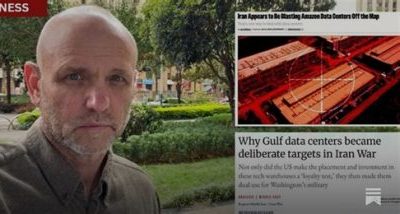
Iran spent $1 million to wipe out $30 billion in data center plans, and take down Amazon in the ME
or go to
Aletho News Archives – Video-Images
From the Archives
A short history of British torture
ICC | December 2005
When the House of Commons was debating how much to increase the time limit for detention without trial the question of torture came up. Officially this was limited to the nice considerations of whether it was all right to send people to places where torture is used and whether Britain can use information collected by the use of torture in other countries. This discussion gave an impression of democratic Britain as the home of civilised behaviour where the very idea of torture is repugnant to our legislators – unlike, say, the US with its secret CIA jails… In reality, the British state has a long history of using and developing a whole range of torture techniques. … continue
Blog Roll
 Aletho News
- Houthis Keep Advancing as the Red Sea Crisis Deepens
- Iran spent $1 million to wipe out $30 billion in data center plans, and take down Amazon in the ME
- Zionist billionaire pressure to silence Macklemore sparks exodus from Ed Sheeran tour
- House Votes to End Iran War for Third Time
- North Korea Slams US Plan for ‘AUKUS 2.0’ with South Korea and Japan
- Prolonging US-Iran Conflict Not Meeting Interests of Int’l Community – China’s Wang Yi
- EU bans former Zelensky aide from parliament
- NATO-backed Kosovo separatist ‘responsible for war crimes’
- US destroying international space law
- SCO Calls for Binding Global Deal to Prevent Arms Race in Space
- If Americans Knew
- U.S. Makes, Israel Takes: The Real Story of U.S.-Israeli Military Cooperation
- Night raids rise in Palestine
- Tucker Carlson interviews Norman Finkelstein about Gaza
- Groups urge Americans to support Van Hollen legislation on Israel’s killing of Americans & Palestinians
- Trump administration plans to send 40,000 tons of bombs to Israel: report
- Sanctions Target Iran’s Government, But Kill Hospitalized 23-Year-Old Woman
- An alternative view on the book “Israel’s Lobby: America in the Grip of a Foreign Power”
- Ed Sheeran’s band Beoga, other opening acts quit tour after Macklemore was dropped over his pro-Palestinian comments
- The assassination attempt on President Trump in Butler and the various Israeli connections to it
- “We Want That the Whole Land Be Jewish”
- No Tricks Zone
- New Study: ‘Global Drought Shows No Detectable Recent Acceleration Under Climate Warming’
- Economic Masterminds: German Socialists Suggest Taxing Productivity Gains Stemming From Using AI
- The South China Sea Has Not Been Cooperating With The Climate Change Narrative
- Energy Crisis: Germany Enters Heating Season With Historically Low Gas Reserve Fill Levels
- New Study: The Antarctic Ice Sheet Gained Mass From 2020-2024 Due To Staggering Snow And Ice Accumulation
- Study: Ocean Heating Rates From Thousands Of Years Ago ‘Dwarf’ Modern Ocean Heating Rates
- Climate Extremists Target, Attack Large-Scale Power Grid Infrastructure In Germany!
- New Study: Antarctic Ice Melt Has Contributed Less Than 1 Centimeter To Sea Level Rise In The Last 30 Years
- Fear Of Debate: Alarmist German Climate Scientist Calls On Mainstream Media To Discredit Skeptic Voices
- End-Of-August Arctic Sea Ice Extent Hasn’t Fallen In 20 Years, Official Data Show!
 Aletho News