The British Education Secretary, Bridget Phillipson, has announced a £7 million procurement process for anti-semitism training in schools, colleges and universities, where she claims there’s been a huge increase in anti-semitic incidents.
However, the statistics on which she’s relying have been provided by the Community Security Trust (CST), which has links to Israel’s overseas spy agency, Mossad.
The British government has announced that its response to the ongoing genocide in Palestine is that it will spend £7 million on tackling anti-semitism in education.
Meanwhile, the government has failed to earmark any money at all to tackle the epidemic of anti-Palestinian and Islamophobic racism whipped up by the Zionist movement.
َ£500,000 of the £7 million funding has been awarded to the University Jewish Chaplaincy, or UJC, for ‘welfare support’ for Jewish students in universities.
But what is the UJC, a kindly Jewish religious organization devoted to the welfare and spiritual needs of their students?
Unfortunately not, in fact, it’s a fully signed up Zionist organization with direct links to illegal settlements and to the genocidal occupation forces.
The UJC is a charity that is also a member of the Board of Deputies and the Jewish Leadership Council, JLC.
One of the directors of the UJC, Yuri Goldberg, was appointed a director of the JLC in August 2024.
Both groups are advocates of the genocidal ideology of Zionism, but perhaps the UJC is best known for its chaplain at Leeds University who was involved in the genocide in Gaza as a member of the occupation forces.
In October 2023 it emerged that he had been circulating videos of himself to Jewish students in Israeli occupation forces uniform, claiming: “No one could deny that Israel is dealing with this war with the utmost morality and good ethics”.
“What Israel is trying to do is destroy the evil, which is the most moral thing possible.”
It seems unlikely that this was conducive to the welfare of Jewish students at Leeds or elsewhere.
Zechariah Deutsch and his wife, Nava, the chaplaincy couple, had both trained for two years at Ohr Torah Stone’s Straus-Amiel Institute.
The Institute is located in Migdal Oz in the Gush Etzion settlement block in the West Bank. Ohr Torah Stone is an educational Zionist venture founded by Rabbi Shlomo Riskin in New York. He later became a settler colonist.
In November 2023, the president of Ohr Torah Stone, Riskin’s successor, Rabbi Kenneth Brander, visited the Zionist Northern Front. He was asked by the company commander to write a message to our enemies on one of the rockets used to retaliate to their attacks. In indelible black marker Brander wrote “To fulfill the mitzvah and mission of obliterating Amalek”.
Ohr Torah Stone is, in other words, a genocidal propaganda and indoctrination operation.
How the government imagines it will increase the welfare of Jewish students by giving money to genocidal Zionist extremists is unclear.
University Jewish Chaplaincy, links to illegal settlements and Israeli Occupation Forces
Leeds University is again the subject of outrage as the new chaplaincy couple are withdrawn from campus after shocking anti-Palestinian and Islamophobic posts were found on social media. The posts, mostly made by Sonia Pariente, included her view that Israeli lives were more valuable than those of Palestinians, referred to Palestinian women wearing black bags and to the Arabs of darkness.
“After October 7th I don’t differentiate between Hamas and so called Palestinians”, she wrote going on to say that “for the next 10 to 20 years, the Palestinian people will pay the bill that Hamas set today, and this bill will be paid in blood.”
Under pressure from pro-Palestine groups, the University Jewish Chaplaincy sacked them and removed their internet profile page.
The University Jewish Chaplaincy operates as a charity in the UK. It provides Jewish chaplains to universities up and down the country. Our investigations reveal that many have direct connections to illegal settlement and the occupation forces.
There are currently 17 individuals appointed in the UK, six couples and five individuals.
At Bristol, Asaf and Atara Forges are said to come from Israel, though both trained in the Straus Emil Institute of Ohr Torah Stone. This is the Gush Etzion settlement block run by an openly genocidal organization.
The Glasgow and Edinburgh chaplain, Eliran, trained at a yeshiva that is also run by Torah stone and included service in the occupation forces. His wife, Ayala Shabo, is from the illegal settlement of Efrat and attended Shalem College, in the occupied territory.
The chaplain at Nottingham, Uriya Dvir, attended two Yeshivas for a total of six years. Both were in illegal settlements. The Yeshivas combined Torah study and service in the occupation forces.
Rabbi Fishel Cohen at Birmingham is part of the genocidal Chabad cult, which believes it is justified to kill Palestinian children.
Unsurprisingly, the UJC is funded by a slew of hardline genocidal Zionists such as the convicted fraudster and founder of the Community Security Trust, Gerald Ronson, property developer David Dangoor, whose money is channeled via the Exilarch’s Foundation.
It also donates to the Islamophobic Henry Jackson society as does the Wolfson family, which owns the retailer ‘NEXT’.
The family has donated to Islamophobic think tanks, including Policy Exchange, and the Jerusalem Foundation which is directly involved in ethnic cleansing in Palestine.
The University Jewish Chaplaincy is a charity so these connections must raise questions about its ability to provide public benefit as required by law.
GAZA – For the fifteenth consecutive day on Saturday, northern Gaza, particularly Jabalia refugee camp, is enduring an Israeli siege and starvation amidst intense aerial and artillery bombardment, along with a complete isolation of the healthcare system and internet.
In a new massacre in Jabalia, the occupation army carried out an attack after cutting off communications and internet in northern Gaza.
Eyewitnesses reported that a large massacre occurred after homes belonging to the Al-Hawajri and other families near the Nasar junction in Tal Al-Zaatar to the northeast of Jabalia camp were bombed. Several homes were targeted, but the Al-Hawajri house was occupied by many residents, including a significant number of displaced relatives.
They confirmed that this house and the neighboring homes were directly targeted, resulting in 30 martyrs and more than 70 injured arriving at Al-Awda Hospital, with many missing.
The Gaza Government Media Office (GMO) said that 21 women and children were among the martyrs. It pointed out that the massacre committed by the occupation due to the bombing of Tal Al-Zaatar coincides with the collapse of the healthcare situation in northern Gaza.
Additionally, 4 citizens were martyred, and more than 15 others were injured due to Israeli shelling that targeted a home in the Al-Touba area of Jabalia camp.
With this toll, the number of martyrs resulting from Israeli airstrikes in northern Gaza since dawn on Friday has risen to 49, while the total number of martyrs since the siege was imposed on the northern sector has reached 450.
Moreover, the occupation’s artillery shelled the Indonesian hospital with several shells and imposed a siege on it, while the upper floors of Al-Awda Hospital in Tal Al-Zaatar were also targeted, with reports of injuries resulting from the attacks.
Since dawn on Saturday, Israeli occupation forces have besieged the Indonesian hospital in Beit Lahiya, targeting anyone moving in its vicinity. Artillery fired two shells towards it, and the electricity was cut off.
Dr. Marwan Sultan, the hospital director, issued an urgent distress call as Israeli military vehicles are surrounding the hospital and four shelters nearby, posing severe risks to medical staff and patients. He noted that Israeli tanks fired three direct shells at the hospital, and military bulldozers began demolishing parts of the hospital after cutting off its electricity.
He emphasized that 15 medical staff members and 30 injured patients in the hospital face real dangers due to the direct targeting of the hospital and the risk of suffocation from gases emitted by explosive shells nearby, pointing out that the lives of patients needing special care are threatened due to lack of oxygen.
He clarified that artillery shells targeted the second and third floors of the hospital, indicating that the occupation aims to destroy what remains of the healthcare system to force residents to leave.
The director of the Indonesian hospital, Dr. Marwan Sultan, called on the international community to intervene to save what remains of the healthcare system in the Gaza Strip.
The hospital had previously been subjected to a similar siege in November 2023, during which it was directly targeted by the occupying forces, leading to the death and arrest of several injured patients.
Meanwhile, the director of Al-Awda Hospital, Dr. Mohammed Saleh, described the healthcare situation as catastrophic due to the shortage of medical supplies, noting that the situation in northern Gaza is “indescribable.” He expected the number of martyrs to rise in the coming hours due to the lack of medical resources.
A medical source reported that the medical teams at Kamal Adwan and Al-Awda hospitals are unable to cope with the numerous injuries resulting from the bombardment by the occupying forces.
In the meantime, the director of health in Gaza, Munir Al-Bursh, described the condition of hospitals in northern Gaza as catastrophic. In statements to Al Jazeera, he mentioned that the bodies of over 450 martyrs have arrived at hospitals, and “our estimates indicate 500 martyrs,” confirming that the Israeli occupation is committing massacre after massacre in northern Gaza.
He added that the Israeli occupation is deliberately displacing the population from northern Gaza through bombardment and siege, rendering the healthcare system in northern Gaza non-functional.
A health ministry official in Gaza said that several civilians have died of hunger and thirst in their homes in Jabalia due to the ongoing siege, and the bodies of dozens of martyrs are scattered in the streets of Jabalia as a result of the continuous bombardment.
GMO condemned the moral decline of countries around the world that silently watch and monitor the crime of genocide against the Palestinian people, especially what is currently happening in the Jabalia camp in northern Gaza.
In a press statement, the GMO held the Israeli occupation, the US administration, the United Kingdom, Germany, France, and the countries participating in the genocide fully responsible for the continuation of this crime.
The Israeli genocide against the Gaza Strip continues for the 379th consecutive day, with the pace of bombardment escalating in all areas of the Strip, particularly intensifying in the Jabalia camp in northern Gaza, on a night described as the most difficult since the beginning of the genocide, which has resulted in over 142,000 martyrs and injured, mostly women and children, since October 7, 2023.
The level of calmness of the Palestinians has cast doubt on what once seemed like the predestined fate of the Palestinian struggle.
A year has passed since Netanyahu, who considered himself the dictator of the entire Middle East, began to destroy its peoples first in Gaza and then in Lebanon, engaging periodic murderous operations against Syria, Yemen and Iran. No one expected that one year would be sufficient in returning to the Palestinian cause its priority on the world stage and that millions of people globally would unite again in the struggle for Palestinian freedom.
The past year has seen the Israeli genocide in Gaza and unprecedented violence in the West Bank, as well as legendary displays of Palestinian ‘sumud’ (Arabic for ‘resilience’). It is not the scale of the Israeli bloodbath, but the degree of Palestinian resilience that has called into question what once seemed the predestined fate of the Palestinian struggle. However, it turned out that the last chapter on Palestine was not yet ready to be written and that Israeli Prime Minister Benjamin Netanyahu would not be its author.
The ongoing war has exposed the limits of Israeli military capabilities. The typical policy of Israel’s relations with the occupied Palestinians was based on unhindered Israeli violence, unconditional Western assistance and the ’deafening silence’ of the international community. To a large extent, only Netanyahu determined the timing and objectives of the war. Until recently, his opponents seemed to have no say in the matter. This is, though, not the case anymore. Israel’s war crimes are now being met by Palestinian unity, Arab, Muslim and international solidarity and the first – and quite serious –signs of legal responsibility.
This is not likely what Netanyahu had hoped for. Just a few days before the aggression against Lebanon began, he stood in the UN General Assembly hall with a map of the ‘New Middle East’, a map on which Palestine and Palestinians were completely erased. “We should not give the Palestinians the right to veto new peace agreements with Arab states”, he said, “since Palestinians make up only 2% of the Arab world”. His arrogance was not long-lasting, as this ‘triumphant’ moment was brief.
Battered by numerous troubles inside and outside Israel and being unsuccessful in the war against the Arab world, Netanyahu is now most concerned about his own political survival. He is waging war to avoid humiliating his army in Gaza, and he is terrified by the prospect of an arrest warrant being issued by the International Criminal Court. While the International Court of Justice continues to examine the ever-growing dossier accusing Israel of deliberate genocide in the Gaza Strip, the UN General Assembly has decided that Israel must end its illegal occupation of Palestine within a year.
Netanyahu, who has worked tirelessly to normalise the Israeli occupation of Palestine, must be extremely disappointed that he has faced complete and deafening international rejection of his plans. The advisory opinion of the UN International Court of Justice, issued in July, stating that the Israeli occupation is illegal, was another blow to Tel Aviv, which, despite the unlimited support of the United States, could not change the international consensus on the illegality of the occupation.
What awaits the Palestinians?
In addition to relentless Israeli violence, the Palestinian people have also found themselves on the side-lines of political life. Since the Oslo Accords were signed in 1993, their fate has largely been entrusted to the generally unelected Palestinian leadership, which has over time monopolised the Palestinian cause for its own financial and political gain. The resilience of Palestinians in Gaza, who have endured a year of mass killings, deliberate starvation and the total destruction of all aspects of life, helps in confirming the political significance of the long-marginalised nation. This shift is fundamental, as it contradicts everything Netanyahu has tried to achieve. In the years leading up to the war, Israel seemed to be writing the final chapter of its colonial project on Palestine. It subdued or co-opted the Palestinian leadership, tightened the blockade of Gaza, and was ready to annex most of the West Bank.
Gaza was the least of Israel’s problems; any discussions about it were limited to the hermetic Israeli blockade and the humanitarian – but not political – crisis caused by it.
While the Palestinians in Gaza relentlessly called on the world to pressure Israel into ending the protracted siege that began in 2007, in the Gaza Strip Tel Aviv continued to pursue a policy in accordance with the infamous logic of former senior Israeli official Dov Waisglass, who explained the purpose of the blockade as putting the Palestinians on a diet, but not letting them starve to death.
But a year after the start of the war, the Palestinians, thanks to their resilience, have become the centre of any serious discussion about the peaceful future of the Middle East. The collective courage and strength of the Palestinians have neutralised the ability of the Israeli military to achieve political results through violence. However, the number of dead, missing or wounded in Gaza has likely already exceeded 150,000 people. The Gaza Strip, which was already poor and dilapidated, lies in ruins. All mosques, churches and hospitals have been destroyed or severely damaged. Most of the educational infrastructure has been destroyed. However, Israel has not achieved any of its strategic objectives, which ultimately fall under one goal: to permanently silence the Palestinians in their quest for freedom.
Despite the incredible pain and loss, there is now a powerful force uniting the Palestinians around achieving their freedom, also uniting Arabs and the whole world around Palestine. The consequences of this will last for many years, even after Netanyahu and like-minded extremists have left. Here a difficult question arises: in the future, how will the Israelis be able to peacefully coexist with the Palestinians, when, previously, the essence of the Israeli leadership’s policy was aimed at seizing the entirety of Palestine, killing or at least expelling the Palestinian people from their homeland?
Russian President, Vladimir Putin, said on Friday that the war in the Gaza Strip must end with the establishment of a “full-fledged” Palestinian State, urging the Middle East Quartet to be reactivated in order to resume mediation efforts in the region, Anadolu Agency reports.
“The primary solution to the Palestinian problem is the establishment of a fully-fledged Palestinian State. The Russian side has upheld this position since the Soviet era,” he remarked during a meeting with BRICS media managers in Moscow.
Putin stressed reactivating the Middle East Quartet, a group of international organisations that includes the UN, US, UN and Russia, to resume efforts to mediate the Israeli-Palestinian conflict and initiate a peace process.
“It was a mistake by the US to disrupt the work of the Quartet […] It would have been easier to coordinate all the positions. The US took over, monopolised the peace efforts, assuming full responsibility and, in the end, it failed,” Putin said.
He stressed that Palestinians “will not leave” the Gaza Strip, warning that the region’s humanitarian crisis will only increase the number of those determined to “defend their interests”.
The upcoming BRICS summit in Kazan, from 22-24 October, will include discussions on the Israeli-Palestinian conflict, as it remains a significant global issue, he added.
Israel dramatically escalated its massive bombing campaign across Lebanon against what it claims are Hezbollah targets since 23 September, killing at least 1,437 people, injuring over 4,123 others, and displacing more than 1.34 million people.
The aerial campaign is an escalation from a year of cross-border warfare between Israel and Hezbollah since the start of Israel’s war on the Gaza Strip. More than 42,400 people, most of them women and children, have been killed since the war began in the wake of Hamas’s 7 October, 2023 cross-border attack on Israel.
Israel further expanded the escalation, invading Lebanon on 1 October.
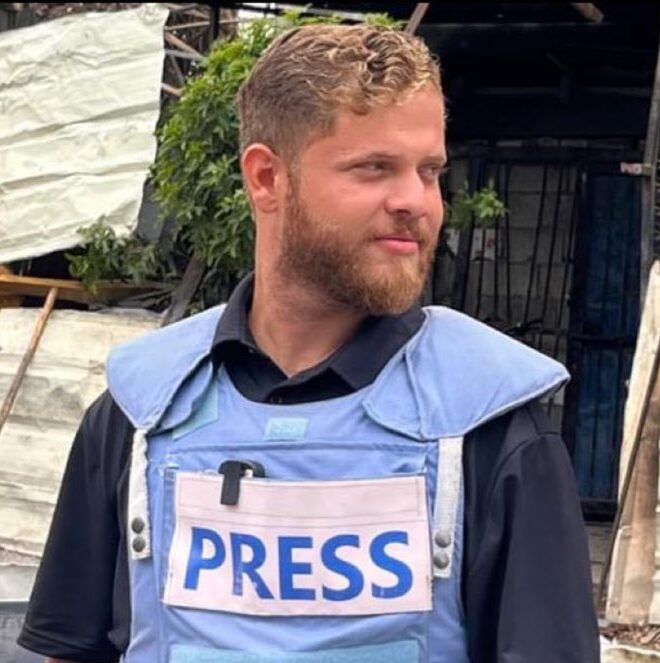
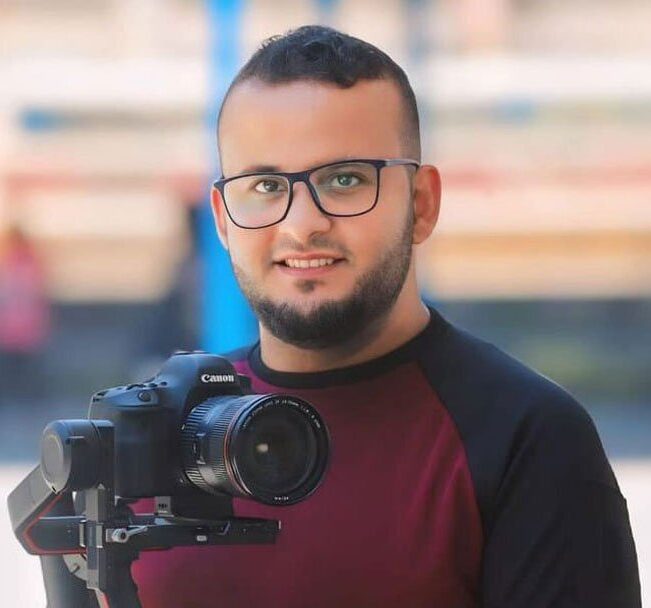
Israeli sharpshooters shot and critically injured Al-Jazeera cameraman, Fadi Al-Wahidi, and injured another journalist, while two others were killed while they were covering occupation forces’ assault in and around the Jabalia refugee camp, in the northern Gaza Strip on October 9, 2024.
The occupation army snipers targeted a group of journalists in the Jabalia refugee camp while they were performing their duties, shooting Al-Wahidi in the neck with live ammunition, causing permanent paralysis.
Al-Jazeera journalist, Anas al-Sharif posted on his X account that “Israeli forces shot at the Al Jazeera crew, and the network’s photographer, our beloved colleague Fadi al-Wahidi, was injured by a sniper’s bullet in the neck during our coverage.”
On the same day, Israeli forces killed the photojournalist, Mohammad Al-Tanani and the journalist, Omar al-Balawi after targeting a group of journalists documenting the occupation’s massacres in Jabalia.
Tamer Labad, Al-Aqsa TV journalist was also shot by Israeli fire during the same incident, while covering the bombardment and ground invasion of the Jabalia refugee camp.
Al-Jazeera, in a statement affirmed that the targeting of journalists is a violation of international laws protecting the press and humanitarian workers in war zones.
The UK government and police – the British state – made clear today they are waging a war of intimidation against the country’s independent journalists in a desperate attempt to silence them.
Ten Metropolitan police officers made a dawn raid on the home of investigative journalist Asa Winstanley and seized his electronic devices under the UK’s draconian Terrorism Act. A letter from the Met indicates that the associate editor of the Electronic Intifada is being investigated by the force for “encouraging terrorism”.
The raid isn’t about terrorism – except the UK government’s. It’s about scaring us into staying silent on Britain’s collusion in Israel’s genocide.
Winstanley is the latest – and most high profile – independent journalist to be targeted by counter-terrorism police in recent weeks. Earlier, Richard Medhurst was arrested at Heathrow airport on returning to the UK from a trip abroad. Then Sarah Wilkinson was arrested and her home ransacked.
Winstanley has repeatedly embarrassed the British establishment by exposing its covert and deep ties to Israel and its collusion with the Israeli lobby.
In his book Weaponising Anti-Semitism: How the Israel Lobby Brought Down Jeremy Corbyn, Winstanley exposed in shocking detail how antisemitism was weaponised against the former Labour leader.
The book would have made uncomfortable reading for his successor, Sir Keir Starmer, now Britain’s prime minister, because it documents his role in the smear campaign.
While in opposition, Starmer’s Labour party threatened to expel Winstanley as a member – he resigned in protest instead – and have made legal threats against him.
As the Electronic Intifada website notes: “Now that Labour is the UK’s ruling party, it has the potential to use the apparatus of the state against those it views as its own – or Israel’s – political enemies.”
There is precisely no reason for police to raid Winstanley’s home or seize his electronic devices. The preposterous accusation of “encouraging terrorism” clearly relates to his online work, which is fully in the public domain.
The British state wants to insinuate through the dawn raid and confiscation of his devices that he is somehow harbouring secret or classified information, or in illicit contact with terror groups, and that incriminating evidence will be forthcoming from searches of those devices.
It won’t. If there were any real suspicion that Winstanley had such information, the police would have arrested him rather than making a public show of a 6am raid and search they knew beforehand would turn up nothing.
This isn’t about terrorism at all. It is about frightening those opposing Israel’s genocide in Gaza, and the West’s collusion in it, into silence. If the British state is going after someone like Winstanley, you are supposed to conclude, they will surely soon come for me too.
Even the name of the “counter-terrorism” raid is performative: “Operation Incessantness”. The message the state wants to send is that it will not rest till it has us all behind bars.
Don’t believe this nonsense. The police have nothing on Winstanley. Exposing information about Israel and its genocide, and the British government’s culpability, is not a crime. At least not yet.
They want you to think it is, of course. They want you scared and mute. Because every time you go out and protest, you remind the world that the British government, and their bully-boys in blue, are the real criminals – for enabling genocide.
Dockworkers in Greece have blocked the shipment of an ammunition-filled container destined for Israel, refusing to load the cargo onto a vessel at the Port of Piraeus, Anadolu Agency reports.
The container, reportedly transported to Greece via North Macedonia, was meant to be shipped to Israel’s Haifa Port.
However, in response to calls from local labour unions, dockworkers at the Piraeus Port gathered and took a firm stance, preventing the shipment from proceeding.
According to Greek State Television, ERT, the workers had written “Murderers, get out of the port” on the container and voiced their solidarity with the Palestinian people, chanting slogans such as “Freedom for Palestine”.
Markos Bekris, the president of the Piraeus Port Trade Union, released a statement condemning the shipment of ammunition intended for the ongoing conflict in Gaza.
“We have decided not to allow the shipment of war ammunition from the Port of Piraeus that will continue the genocide of the Palestinian people,” Bekris said, emphasizing that the workers would not stain their hands “with the blood of the Palestinian people”.
Bekris also urged Greece to halt any involvement in the conflict, calling for an immediate cessation of the country’s participation. “We demand that our country immediately stop engaging in the war,” he added.
Israel has continued a brutal offensive on Gaza following a cross-border attack by the Palestinian group, Hamas, on 7 October last year, despite a UN Security Council resolution calling for an immediate ceasefire.
More than 42,400 people have since been killed, mostly women and children, and over 99,100 injured, according to local health authorities.
The Israeli onslaught has displaced almost the entire population of the Gaza Strip amid an ongoing blockade that has led to severe shortages of food, clean water and medicine.
Israel faces a genocide case at the International Court of Justice for its actions in Gaza.
Israeli settlers today attacked vehicles belonging to Palestinian residents of Yatma village, south of Nablus, in the northern occupied West Bank.
According to the Wafa news agency, the settlers attempted to assault passengers, escalating tensions in the area. Although no injuries have been confirmed, the atmosphere remains tense as residents fear further violence from Israeli settlers.
Meanwhile, in a separate incident in Al-Khader, near Bethlehem, an Israeli settler assaulted a local Palestinian family while they were harvesting olives. The settler forced the family to leave their land threatening them with a weapon, warning they would be arrested if they returned.
This olive harvesting season in the West Bank has seen repeated settler attacks, including violence against farmers, restricted land access and damage or theft of olive trees and crops.
According to UN OCHA figures released this week, since the beginning of October 2024, 51 settler-related attacks on Palestinians and their properties have been recorded, including 32 that led to casualties, property damage or both, which took place in 57 communities across the occupied West Bank. The majority of the incidents were related to the olive harvest season whereby Israeli settlers attacked Palestinians or prevented them from gaining access to their lands and damaged trees, stole crops and harvesting tools.
It added that since 1 October 2024, 54 Palestinians were injured within the context of settler attacks against Palestinians, including 44 by Israeli settlers and ten by Israeli occupation forces. Furthermore, about 600 (mainly olive) trees and saplings were burnt, sawed off, had their crops stolen, or otherwise vandalised, affecting Palestinian farmers in about 15 communities across the West Bank.
Hamas today confirmed that its chief, Yahya Sinwar, was killed in fighting in Gaza, a statement issued on the group’s social media channels said.
“Hamas leader Khalil Al-Hayya announces the martyrdom of the great leader, President of the Hamas Political Bureau, the hero of Al-Aqsa Flood, Yahya Sinwar, who sought martyrdom and attained it after clashing with a zionist force alongside other fighters in the #Gaza Strip,” the movement said.
“Hamas will remain until a Palestinian state is established on all historic Palestine with Jerusalem as its capital,” Al-Hayya continued, adding that Sinwar’s martyrdom, like that of his predecessors including Hamas founders Ahmed Yassin and Abdel Aziz Al-Rantisi, will only “empower the resistance” and “will be a curse on the occupiers”.
Israel’s prisoners, he continued, “will not be returned without a complete ceasefire, Israeli withdrawal from the Strip and the release of Palestinian prisoners from the occupation’s prisons.”
Israel announced yesterday that Sinwar was killed after a firefight with occupation forces in the southern Rafah governorate on Wednesday. It later released drone footage of his last moments showing him fighting against the occupation until the end. He was wearing a keffiyeh to conceal his face and army fatigues.
Sinwar was appointed leader of Hamas’ political bureau in August, a week after the assassination of his predecessor Ismail Haniyeh in a “Zionist raid” while he was on an official visit to Iran.
Germany’s Foreign Minister, Annalena Baerbock, addressed parliament yesterday and justified Israel’s targeting of civilians in Gaza.
‘Self-defence means not only attacking terrorists but destroying them. When Hamas terrorists hide behind people, behind schools… civilian places lose their protected status because terrorists abuse it.’
This, however, is not true, according to human rights lawyer, Craig Mokhiber. The former senior UN human rights official told MEMO claims that Israel has a right to ‘self-defence’ in Gaza don’t have a standing in international law.
The Islamic Resistance Movement, Hamas, strongly condemned the statements made by German Foreign Minister Annalena Baerbock on Wednesday, in which she claimed that “Israel” can target civilians in Gaza for “self-defense.”
In a statement, Hamas said the “German government is unashamed of the targeting of civilians and hospitals as long as it provides security for Israel, and this is part of its commitments.”
Last month, Israeli Prime Minister Benjamin Netanyahu contemplated implementing the Generals’ Plan in Gaza, backed by former Israeli Defence Forces planning and operations chief General Giora Eiland who has described the siege as “compliant with international law”. The plan, Eiland explained, would give Palestinians a week to evacuate and anyone who remains becomes a legitimate military target.
This week, Axiosreported that Israel’s Defence Minister Yoav Gallant assured US Defence Secretary Lloyd Austin that the Generals’ Plan would not be implemented. Presumably, the US is now reassured that Palestinians in Gaza will not be starved by Israel, nor considered legitimate military targets.
Can we consider for just a few seconds that Israel does not need the Generals’ Plan to lay siege to and starve Palestinians, and encourage its soldiers to kill them? As macabre as the plan might sound, it is also another weapon of alienation used by governments to silence the cries of genocide, even as Israel is still committing genocide.
Palestinians are being starved already. That’s a fact.
Besieging, forcibly displacing and crowding them into increasingly smaller pockets of land makes it easier for Israel to kill more civilians with a single air strike. That’s a fact too. Burning them to death in tents? Fact. Does Israel really need to bring up the Generals’ Plan?
“What matters to [Hamas leader Yahya] Sinwar is land and dignity, and with this manoeuvre, you take away both land and dignity,” is how Eiland summed up the plan. Yahya Sinwar does not constitute the entire Palestinian population in Gaza, and Israel has been stealing Palestinian land since its inception and before; the early Zionist colonial settlers were laying the foundations of land appropriation for the settler-colonial, genocidal project. Israel does not need the Generals’ Plan to remove land and dignity. It has been stealing land for decades but, despite colonising Palestine, Israel can never strip Palestinians of their dignity. It is Israel that is entirely without dignity; a grubby monstrosity that needs to stand in front of a mirror and terrify itself with its own image.
Last month, the Norwegian Refugee Council reported that 83 per cent of food aid is not allowed by the occupation state to enter Gaza. The US is not concerned with the ongoing starvation, which is already tangible, but with the possible implementation of the Generals’ Plan. Likewise, the US is not concerned about stating that a military campaign cannot defeat an ideology, with reference to Hamas, but can still make itself complicit in a military campaign to kill thousands of Palestinians in a genocide that world leaders are conveniently ignoring. Sickeningly, the US Department of State has claimed that it cannot say whether burning Palestinians to death can be considered to be another war crime committed by Israel.
In the midst of all this doublespeak, what are the assurances for Palestinians?
The Generals’ Plan may or may not be implemented, but the genocide continues as Israel picks and chooses how it empties Gaza of Palestinians.
Instead of getting caught up in speculation, why not focus on the fact that Israel is carrying out a livestreamed genocide in Gaza which world leaders are still reluctant to call out? The psychological manipulation of Israel mulling over the Generals’ Plan needs to be exposed and challenged. Starvation is no less terrifying if it lacks a grandiose name. The truth is that Israel no longer needs a plan when it is allowed to act with apparently endless impunity.
A senior Yemeni military source pointed out on Thursday that the use of B-2 Spirit bombers against Yemen reflects American panic over the potential loss of its aircraft in Yemeni airspace, and its fear of Yemen acquiring unexpected aerial capabilities.
Speaking to Al Mayadeen, the source stated that the British and American weapons and aircraft used to strike Yemen will not be able to neautralize the Yemeni army’s strategic capabilities, which are constantly being developed and enhanced.
“Yemen will not stop; it will continue to support Gaza and Lebanon, and the escalation will have catastrophic consequences for the Americans, the British, and their allies, and we believe they are aware of this,” the source further stressed.
The airstrikes did not target weapon depots or affect the military’s arsenal in terms of quantity and quality, with Al Mayadeen’s correspondent confirming that the aggression targeted mountains, a small communication network in Saada, and empty camps.
Additionally, the source indicated that “these strikes came after a painful blow received by the American enemy in the Red Sea, following the targeting of its commercial ships with missiles and drones that accurately hit their targets.”
US-UK aggression serves the Zionist lobby
Regarding the aggression being a means to satisfy the “Zionist lobby”, the source clarified that “the American and British failure to protect the [Israeli occupation] entity is evident, and they resort to targeting Yemen unsuccessfully. It is clear that their assessment and calculations are incorrect, and their aggression against Yemen is futile.”
By Jamal Kanj – Intifada-Palestine.com – January 14, 2011
Israel’s survival kit is: perpetuate conflict, insecurity to rationalize collective hate and finally playing victim.
Devoid of conflict, Israel implodes internally; without hate, Zionism loses its justification; and playing eternal victim to continue blackmailing the West. Absence of this holy trinity, Israel ceases to exist.
From its inception, the house of Zion has mastered exploiting adversarial powers to advance Israel’s cause. For instance, their influence over the Democratic Party in the US began with President Truman’s bid for 2nd term election in 1948.
Responding to strong opposition from Secretary of State General George Marshall and Department experts urging against recognition of Israel, President Truman replied: “I’m sorry gentlemen but I have to answer to hundreds of thousands [Jewish voters] who are anxious for the success of Zionism. I do not have hundreds of thousands of [voting] Arabs among my constituents”
Zionists influence over liberal American politics was matched with the doctrinal school of Conservative theoreticians aligning the Republican Party’s platform with Israel’s objectives. The Neoconservative Zionists, coined Zioncons, invented the “Clash of Civilization” concept to fight Israel’s wars. … continue
This site is provided as a research and reference tool. Although we make every reasonable effort to ensure that the information and data provided at this site are useful, accurate, and current, we cannot guarantee that the information and data provided here will be error-free. By using this site, you assume all responsibility for and risk arising from your use of and reliance upon the contents of this site.
This site and the information available through it do not, and are not intended to constitute legal advice. Should you require legal advice, you should consult your own attorney.
Nothing within this site or linked to by this site constitutes investment advice or medical advice.
Materials accessible from or added to this site by third parties, such as comments posted, are strictly the responsibility of the third party who added such materials or made them accessible and we neither endorse nor undertake to control, monitor, edit or assume responsibility for any such third-party material.
The posting of stories, commentaries, reports, documents and links (embedded or otherwise) on this site does not in any way, shape or form, implied or otherwise, necessarily express or suggest endorsement or support of any of such posted material or parts therein.
The word “alleged” is deemed to occur before the word “fraud.” Since the rule of law still applies. To peasants, at least.
Fair Use
This site contains copyrighted material the use of which has not always been specifically authorized by the copyright owner. We are making such material available in our efforts to advance understanding of environmental, political, human rights, economic, democracy, scientific, and social justice issues, etc. We believe this constitutes a ‘fair use’ of any such copyrighted material as provided for in section 107 of the US Copyright Law. In accordance with Title 17 U.S.C. Section 107, the material on this site is distributed without profit to those who have expressed a prior interest in receiving the included information for research and educational purposes. For more info go to: http://www.law.cornell.edu/uscode/17/107.shtml. If you wish to use copyrighted material from this site for purposes of your own that go beyond ‘fair use’, you must obtain permission from the copyright owner.
DMCA Contact
This is information for anyone that wishes to challenge our “fair use” of copyrighted material.
If you are a legal copyright holder or a designated agent for such and you believe that content residing on or accessible through our website infringes a copyright and falls outside the boundaries of “Fair Use”, please send a notice of infringement by contacting atheonews@gmail.com.
We will respond and take necessary action immediately.
If notice is given of an alleged copyright violation we will act expeditiously to remove or disable access to the material(s) in question.
All 3rd party material posted on this website is copyright the respective owners / authors. Aletho News makes no claim of copyright on such material.


 Al Mayadeen | October 16, 2024