Forget its freedom rhetoric, Germany suppresses all who stand in solidarity with Palestine
By Adnan Hmidan | MEMO | November 2, 2022
In supposedly democratic Germany, the country that was reunited when the Berlin Wall was broken down, human rights activists who express solidarity with Palestine face discrimination and persecution under the pretext of the drive against anti-Semitism. In some ways, this is worse than what happens within the occupation state of Israel itself.
How else should we interpret the persecution of German Palestinians and persons of similar status because they participate in peaceful activities in solidarity with occupied Palestine? Although such activities are protected by the constitution and human rights charters, official persecution has got so bad that people are held to account for “liking” posts on Facebook and other such social media.
Not so long ago, a man applied for permanent residence in Germany, but was ordered to leave the country because of his peaceful solidarity with Palestine. In 2019, the German authorities refused to renew the residence permit of Palestinian writer Khaled Barakat and gave him just a month to leave the country after he was detained and prevented from speaking at a symposium in Berlin. The pretext was that Barakat was involved in “anti-Israel” activities and the German people must be protected from him. He was banned from attending any family gathering in Germany if there was more than ten people there.
Palestinian journalist Maram Salim was fired from her job with Süddeutsche Zeitung newspaper. The decision was justified by the fact that she had written on her own Facebook page that she had encrypted or deleted some of her posts out of fear of censorship. Her employer decided that she must have written something anti-Semitic and then deleted it, so she must be an anti-Semite.
Dr Nima Al-Hassan was born in Germany to parents from occupied Palestine and Lebanon, and a winner of a number of prestigious awards. She was targeted after a photo report in 2014 showing her wearing the hijab and the Palestinian keffiyeh in a Jerusalem solidarity march in Berlin. Then the photo was republished in a local newspaper after seven years, prompting a vicious campaign against Al-Hassan due to her “anti-Semitism”. Her apology for taking part in the march did not stop the defamation campaign against her.
This hysterical persecution of anyone who rejects the claim that opposition to Israel’s many crimes in its occupation of Palestine is “anti-Semitism” also includes anti-Zionist Jews. Any Jew who rejects Zionism is “anti-Semitic” as far as the German security services are concerned, and faces a lot of pressure from the pro-Israel lobby in the media and political circles across Germany.
German MPs in the Bundestag (parliament) have criminalised the peaceful Boycott, Divestment and Sanctions (BDS) movement. Likewise, the commemoration of Nakba Day has been banned as have protests in solidarity with Palestine and raising the Palestinian flag.
Democratic Germany is the Palestinian Authority’s biggest financial donor, although the aid it provides is restricted to contributing towards the PA’s role in serving the Israeli occupation as designed by the Oslo Accords. Anyone who monitors the decision-making process in Berlin is well aware that this could and would not be done without a green light from Israel.
It is amazing that Germany regards itself to be an ambassador for human rights around the world, and readily imposes punitive measures on countries which habitually disregard such rights. At the same time, and with much hypocrisy, nobody in Germany can express their peaceful support for legitimate Palestinian rights and the Palestinian struggle for freedom from Israel’s daily breaches of international law and violations of human, civil and political rights.
International human rights organisations are silent on Germany’s violations of the rights of peaceful solidarity with Palestine. They are, in effect, accomplices in its silence and double standards on human rights issues. Such Western hypocrisy has been highlighted by the campaign against Qatar’s hosting of the FIFA World Cup later this month; the response to Ukrainian resistance against occupation by Russia compared with the “terrorist” designation imposed on Palestinians who resist Israeli occupation; and the blind eyes turned whenever coups take place in dictatorships across the Third World where Western interests might be threatened by democracy.
However, all that is happening must not discourage Palestinian solidarity activists in Germany and elsewhere from continuing to work peacefully for justice and freedom in Palestine. Freedom of speech is, after all, supposed to be a right guaranteed by law across the West.
More Anti-Semitism?
Or is it all just a bit of self-serving theater?
BY PHILIP GIRALDI • UNZ REVIEW • OCTOBER 25, 2022
A midterm national election will be taking place in the United States in two weeks. American voters will, at least to a certain extent, be expressing their approval or disapproval on major issues like management of the economy and immigration, though they will curiously have no one to vote for if they are appalled by the nuclear brinksmanship that the Joe Biden administration has been engaging in with Ukraine and Russia. One can blame the propaganda machine in Washington supported energetically by the mainstream media for that, as the acceptable Ukraine narrative presented to the public has drowned out nearly all the alternative arguments for a much less aggressive foreign and national security policy. Tulsi Gabbard, who recently resigned from the Democratic Party over its woke-ness and also its war policy, was one of the only politicians who dared to speak out against the prevailing bipartisan desire to “get Russia.”
Another issue that has oddly enough surfaced amid the current political turmoil has been the concern over what is being described as anti-Semitism, which is, according to those who stand to gain from that perception, reported to be “surging” worldwide. Anti-Semitism is the gift that keeps on giving for the Israelis and their rabid band of diaspora supporters, but it is particularly entrenched in the United States where it goes by the generic and relatively inoffensive label the “Israel Lobby.” Recent articles citing what are called anti-Semitic incidents, as defined by groups like the Anti-Defamation League (ADL), have guaranteed that there will be no serious media coverage of Israeli atrocities directed against the Palestinians as any criticism of Israel is considered to be ipso facto anti-Semitism. The shooting of Palestinian children by Israeli soldiers is at an all-time high, occurring almost daily, but one would not know that from reading the New York Times or the Washington Post, which together celebrate Israeli/Jewish victimhood by ignoring that country’s war crimes and focusing instead on alleged conspiracies against Jews. One would certainly without a doubt find multiple articles all about the alleged anti-Semitic remarks recently attributed to Donald Trump, Kanye West and Mel Gibson.
Donald Trump is not known for his precision in the use of the English language, particularly when he is expressing something complicated. Trump’s recent “warning” to American Jews would be comical, but it also reveals much about both the perception and the reality of Jewish power in the US as well as the role of Jews as dominant political donors entrenched in both political parties. Trump posted his comment on his Truth Social network on October 16th: “No President has done more for Israel than I have. Somewhat surprisingly, however, our wonderful Evangelicals are far more appreciative of this than the people of the Jewish faith, especially those living in the US. Those living in Israel, though, are a different story — highest approval rating in the world, could easily be P.M.! US Jews have to get their act together and appreciate what they have in Israel — Before it is too late!”
The fact is that President Donald Trump was second to none when it came to pandering to Israel even when that country’s interests do real damage to the United States, though his claim that he is so popular in Israel that he could be elected Prime Minister is absurd. He is not a Jew and could not even emigrate to Israel even if he chose to do so. As president, he moved the US Embassy from Tel Aviv to Jerusalem, he accepted brutal Israeli settlement and control of the Palestinian West Bank, approved of the Israeli annexation of the Syrian Golan Heights, and ignored repeated Israeli war crimes using US provided weapons. Nevertheless, the response from the usual suspects was immediate, with the ever-vigilant Jonathan Greenblatt of the ADL calling the Trump comments both insulting and disgusting while his colleague Oren Segal goes one step further, claiming that the statement has “shattered” a general feeling of safety among American Jews. Ukraine-born Jew and Trump critic former US Army officer Alexander Vindman also joined in with a predictable “Trump is executing the fascist playbook to turn his mob on Jews.”
On the following day, the White House Press Secretary Karine Jean-Pierre also denounced the remarks. She said that “Donald Trump’s comments were antisemitic and insulting both to Jews and our Israeli allies.” She also observed that Trump had consistently “aligned with extremist and antisemitic figures. And it should be called out.” To further establish her bona fides as a true-blue friend of the Jewish state, she also announced that Israeli president Isaac Herzog would visit Biden in Washington on October 26th, presumably to give the US president his marching orders. In a subsequent statement, she said the visit would serve to reaffirm “the enduring partnership and friendship” between the two nations.
It should be noted that the Trump remarks were criticized immediately by Jewish leaders and many others for including the suggestion of “dual loyalty,” alleging that diaspora Jews often have their primary allegiance to Israel, not to the country where they live. Others also criticized Trump for lecturing American Jews on their own religious obligations. Of course, the rage exhibited by the leaders of Jewish organizations reflects the fact that many American Jews do have what one might call “dual loyalty.” A Pew Research survey released in 2021 found that 45% of Jewish adults in the US viewed caring about Israel as “essential” to what being Jewish means, with an additional 37% saying it was “important, but not essential.” Only a small minority of 16% said caring about Israel was “not important.”
More recently, additional comments by Trump revealing a lack of understanding of Jewish hyper-sensitivities have surface as part of a clear attempt to damage Republican prospects for the upcoming election. Of course, Donald Trump is whistling in the wind if he seriously interested in getting Jewish voters to cast their ballots for him or for the GOP. Jews overwhelmingly vote liberal. An estimated 75% of Jewish voters supported Joe Biden in 2020 and that is unlikely to change no matter what Trump says or does for Israel as the Democratic Party is, if anything, as completely in the Jewish/Israeli pocket as are most of the Republicans. Much of the rhetoric is really about money, with Jewish donors constituting a majority of financial supporters of the Democrats as well as significant supporters of pro-Israel Republicans. Trump ally casino magnate Sheldon Adelson, now deceased, reportedly contributed $100 million to the GOP electoral coffers in 2016-2020 and was the force driving the move of the US Embassy to Jerusalem.
Music mogul Kanye West, who is being compared to Adolf Hitler, has also come under fire after complaining about Jewish control over the media relating to his various enterprises while actor Mel Gibson, due to appear as a witness in the sexual battery trial of disgraced film producer Harvey Weinstein, was also denounced for his reportedly expressed dislike of Jews, meaning that he would not be impartial in the evidence he provides since Weinstein is a Jew.
So, when in doubt, call something anti-Semitic and it will make the problem go away. The United States uniquely has an Ambassador whose sole responsibility as the Special Envoy to Monitor and Combat Antisemitism (SEAS) is to go around the world seeking to expose anti-Semites. Israel routinely uses the Jewish diaspora and its vast wealth to buy up or leverage the media, to corrupt politicians at all levels, and to propagate a narrative that always depicts Jews sympathetically as perpetual victims. That narrative relies on the so-called holocaust and the slogan “never again” to generate the moral authority and outrage that makes the entire otherwise unsustainable imposture work. And work it does. The Israel Lobby’s campaign of vicious character assassination, smearing and blacklisting against those who defend Palestinian rights is not a response to any real anti-Semitism. That twenty-four state governments’ have passed Israel Lobby promoted legislation requiring their workers and contractors, under threat of dismissal, to sign a pro-Israel oath and promise not to support the non-violent Boycott, Divestment and Sanctions movement is not a response to anti-Semitism. That is the real story, all about the maintenance of Jewish and Israeli power in America and the abuses that are derived from that, and it has nothing to do with genuine anti-Semitism.
Philip M. Giraldi, Ph.D., is Executive Director of the Council for the National Interest, a 501(c)3 tax deductible educational foundation (Federal ID Number #52-1739023) that seeks a more interests-based U.S. foreign policy in the Middle East. Website is councilforthenationalinterest.org, address is P.O. Box 2157, Purcellville VA 20134 and its email is inform@cnionline.org.
Ukrainian Army War Crimes Include Shelling of Ambulances, Firetrucks, and Rescue Workers in the Donbass Republics — Similar to Israelis and U.S. Backed Terrorists in Syria
By Eva Bartlett | CovertAction Magazine | September 23, 2022
In the more than eight years of bombing the civilians of the Donetsk and Luhansk People’s Republics, Ukraine has committed untold numbers of war crimes. These include bombing residential areas, markets, hospitals, schools, parks—including with prohibited heavy weapons and banned cluster munitions—and, since late July, raining banned “Petal” mines down on populated civilian areas, including the very center of Donetsk, including as recently as September 7.
A lesser-known war crime is Ukraine’s routine targeting of ambulances, fire trucks, medics and rescuers, and their headquarters and stations. Many of the times Ukraine bombs such heroic rescuers, it is when they are on the way, or already on site, to help civilians often themselves just bombed by Ukraine.
On August 21, Ukrainian shelling of the DPR’s Gorlovka wounded twelve, including five firefighters.
The day prior, Ukrainian shelling targeted an ambulance station in the LPR’s Lysychansk, wounding several and damaging some of the ambulances.
On June 23, the Kievskiy District of Donetsk came under repeated shelling over the course of the two hours I was visiting the Emergency Services headquarters there. On the grounds, I saw the remnants of a “Hurricane” missile from a previous Ukrainian attack.
The previous day, Ukrainian forces targeted an Emergency Services fire truck on call, leaving the driver hospitalized in critical condition. According to his colleagues, they saw a drone above them just prior to Ukraine’s strike. The targeting was unquestionably deliberate.
On June 18, Ukraine targeted a central Donetsk district after Emergency Services had arrived, killing a firefighter and the driver, and injuring three more rescuers.
In early June, heavy Ukrainian shelling of Kuibyshevsky District, Donetsk, destroyed an ambulance and seriously injured the driver.
Ukraine’s attacks on emergency workers is not new; Ukraine has been doing so for years.
In June 2021, during a humanitarian cease-fire, Ukrainian forces targeted an ambulance which had arrived to evacuate three injured DPR soldiers.
In October 2019, Ukrainian forces fired an anti-tank guided missile at a DPR military ambulance en route to help a child, wounding the driver and a paramedic.
In August 2018, Ukrainian forces fired a missile at a DPR ambulance, killing the driver and two female paramedics.
When I first visited the DPR in September 2019, going to hard-hit areas around Gorlovka, I was told by Zaitsevo administration that ambulances could not reach the villagers.
“The paramedics don’t go farther than this building; it’s too dangerous. If somebody needs medical care near the front lines, someone has to go in their own car and take them to a point where medics can then take them to Gorlovka. The soldiers also help civilians who are injured.”
This is something I was very familiar with in Gaza, occupied Palestine, where Israeli soldiers routinely fire at Palestinian farmers and other laborers on agricultural land, a policy of harassment to drive Palestinians off their land. In most cases, ambulances likewise could not reach the injured due to Israel’s policy of targeting ambulances. Consequently, seriously injured Palestinians bleed to death.
In Zaitsevo, I was told this had happened there, too. “A woman died due to huge blood loss because no one could reach her house to take her away in time. She was injured in the shelling and bled to death.”
Targeting medics and other rescuers ensures those in need of help are deprived of it, and increases the likelihood that people who might have lived instead die of their injuries.
The intentional targeting of ambulances and medics, as well as fire trucks and other emergency services vehicles and workers, is against international law.
Speaking to DPR Rescuers
During my last two visits to the DPR, in June and August 2022, I interviewed a number of Emergency Services workers and medics.
According to Konstantin Zhukov, the Chief Medical Officer of Donetsk Ambulance Services, the ambulance services workers face shelling daily, constantly, and many employees have been wounded while working. One of the ambulance stations was completely destroyed by Ukrainian shelling.
Outside, I spoke with Tatyana Golota, an emergency physician, and Alena Kondrasheva, a paramedic.
Both reiterated that it is normal coming under repeated Ukrainian fire. They spoke of Ukraine shelling after medics and emergency services workers had arrived to help civilians.
They showed me an ambulance completely destroyed by Ukrainian shelling. It was new and had only been operational a few months before being destroyed.
“That day we were at work and heard about the brigade coming under fire. The doctor had gone to help people, and the driver, by chance, walked away to try to get a mobile signal. At that moment, there was a direct hit on the vehicle.”
Also in Donetsk, I spoke with Sergei Neka, Director of the Department of Fire and Rescue Forces of the Ministry of Emergency Situations.
He likewise said rescuers increasingly come under fire when they go out on a call, sometimes making it impossible to reach the people in need.
According to him, from February 24, 2022, to when I spoke with him in August, four people were killed and 40 injured, as well as significant damage to equipment and buildings.
“Our units arrive at the scene of the accident and Ukraine begins to shell it. A lot of equipment has been damaged and destroyed.”
I asked about the impact of the “Petal” mines Ukraine has been dropping on the city, and was told a 21-year-old employee was injured by a PFM-1S mine after a region was cleared, the mine falling from the building and the unsuspecting rescuer stepping on it, losing his foot.
In Makeevka, just east of Donetsk, I went to an orphanage that had been shelled with the mines. Most of the clean-up was completed by the time I arrived on the second day of de-mining, but one remained. I watched a sapper find and detonate it, and although I had previously seen a group of eight mines detonated, creating a massive blast, the force of the single mine was still quite powerful.
According to Dmitry Chamota, Head of Donetsk Emergency Services Deminers, they found 26 PFM-1 mines scattered around the grounds of the orphanage, including on the playground.
In June, I met Andrey Levchenko, Chief of Kievskiy District Emergency Ministry. Over the course of the two hours at his station, Ukraine was intensively shelling the district, leading us to take cover inside the building lest the property be targeted again.
We did venture outside between bouts of shelling, where Levchenko pointed out damage to the buildings and the shell of the Ukrainian-fired Hurricane MLRS which struck the premises.
The building has blown out windows, sandbagged windows to attempt to protect the workers; some days prior, the chief’s office had been damaged by shrapnel from the shelling. Thankfully, he had just stepped out a minute before the blast.
He showed me the fire truck damaged on June 22, pointing out the many shrapnel holes and noting one of the rear tires had been blown out.
Two of the employees who had been out on that call spoke to me about that day, saying that, after Ukrainian shelling of the district, they received a call that people were trapped inside a building with the door blocked after the shelling. A fire was spreading to the second and third floors, and that people were unable to escape. As the rescuers assessed the situation, a shell hit a wall near the truck and wounded the driver.
They said that, prior to the shelling, they saw a drone overhead. This, combined with the facts that they were uniformed and the fire truck was clearly marked and in a civilian area where people were calling for help, makes it credible to believe Ukraine deliberately targeted the rescuers.
Of Ukraine’s heightened shelling over the past many months, Levchenko said it was constant and daily. “Before, if we speak about 2014-2015, twenty minutes, one hour maximum. Now six-seven hours non-stop, every day.”
He said that the Ukrainian forces shell, wait until rescuers arrive and then shell again. “They wait for 30 minutes for us to arrive. We arrive there, start assisting people, and the shelling resumes.”
This is something I witnessed for myself when, on August 4, Ukraine bombed the hotel in which I was staying, the fourth and fifth shells landing 50 meters away and then directly beside the hotel, respectively. When the fifth struck, shattering inwards the lobby glass doors, I had fortunately just stepped out of the lobby where 30 seconds earlier I had been speaking to journalists who had run in from the street.
When it seemed the shelling had stopped, journalists went outside to document the damage. Sadly, a young woman outside the hotel had been killed by the shelling. Five others just two streets away were also torn apart by the bombs, including a promising 12-year-old ballerina, her grandmother, and her world famous former ballerina ballet teacher.

Galina Vasilyevna Volodina (left), and twelve-year-old Katya Kutubaeva, the ballerina killed by Ukraine. [Source: slippedisc.com]
Emergency Services arrived and, not long after, Ukraine resumed its shelling. Fortunately, they were able to get inside, but this is just one example of Ukraine’s double strikes.
According to Levchenko, Ukraine does not only shell two times, but that they sometimes shell three times: “They wait again, our guys hide in the shelters, as soon as we go out, put out the fire, help people, there could be people under the debris, doors stuck, people can’t get out and get to the basement…then shelling resumes.”
He described the people engaging in this sort of warfare against civilians and rescuers as “Shameless. Scumbags. Terrorists.”
He is not wrong.
Targeting Rescuers: A Terrorist Tactic Adopted by U.S. Allies in Ukraine, Israel and Syria
As the DPR Emergency Services chief pointed out damage to the fire truck, I was reminded of Israel’s attacks on Palestinian medics and fire brigades in Gaza, including during the December 27, 2008-January 18, 2009, Israeli war on Gaza, where I was living at the time.
During those three weeks, I rode in the medics’ ambulances, documenting the destruction and the victims of Israel’s war crimes, but also in a sense as a human shield, in the hope that Israel would not strike ambulances in which a handful of internationals and I were riding.
As it turned out, by the end of the Israeli massacre of Gaza, Israeli forces killed 16 medical rescuers, four in one day alone. Another 57 were injured. At least 16 ambulances were damaged, with at least nine completely destroyed.
One of the murdered was a 35-year-old paramedic, Arafa Abd al-Dayem, who I had accompanied the night prior to his murder. As I wrote of that evening, “The dead, a 24-year-old night watchman, had no warning of the at least 2 missiles which leveled the school and tore him apart. The medics work to load the corpse, first having to replace the flat tire. Working frantically, still fearful of potential strikes, they crowd the ambulance, hoist the van, replace the flat. A missile hits 50 meters away. Surely, undoubtedly, those warplanes above us know—from the markings of the ambulance, the clothes of the medics, the crystal clear photos their drones can take—that we are civilians and medics below. Yet they fire.”
Arafa was killed later that day, when Israeli forces fired a flechette shell directly at his ambulance, shredding him with the dart-like flechettes, causing massive internal bleeding in his abdomen, blood in his lung, shock, and death.
A surgeon I interviewed later when writing about Israel’s widespread use of flechettes in Gaza told me that flechettes cause more injuries than other small munitions precisely because they spread in a larger area. And while the darts appear innocuously small, their velocity and design enable them to bore through cement and bones and “cut everything internal.” Accordingly, the prime cause of death is severe internal bleeding from slashed organs, particularly the heart, liver and brain.
One of the injured, Hassan al-Attal, 35, was a medic whose ambulance I was in when he and another medic came under Israeli sniper fire while attempting to retrieve a corpse from the street just beyond the ambulance. The sniper fire reached the ambulance itself. Hassan was wounded in the leg. This was during a few hours of supposed cease-fire. But in any case, the medics never should have been targeted.
As I wrote, “Although the Geneva Conventions explicitly state that ‘medical personnel searching, collecting, transporting or treating the wounded should be protected and respected in all circumstances,’ throughout Israel’s invasion this was not the case. Indeed, as the injured and emergency workers testify, Israeli forces targeted and prevented medical workers from reaching the wounded.
Without coordination, many ambulances did not dare risk Israeli gunfire and shelling, meaning hundreds of calls went unanswered, according to the Palestinian Center for Human Rights. Denied medical care, many victims succumbed to their wounds.”
Israeli forces killed 13 Civil Defense workers and injured 31, also destroyed six civil defense stations and damaging four.
From that same article, “Civil Defense workers, like medics, are protected under international law. The Fourth Geneva Convention states not only that emergency workers must be respected and allowed to do their work, but that their buildings, equipment and vehicles must not be targeted.
Yousef al-Zahar, director-general of Civil Defense in Gaza, told me at the time, ‘Targeting the Civil Defense centers and teams is an obvious indicator that the Israeli forces intended to paralyze Civil Defense activities in the Gaza Strip to raise civilian victims’ numbers in the casualties.’”
According to statistics from the Palestinian Authority Ministry of Health and the PRCS, from the outbreak of the second Intifada in September 2000 to when I wrote the 2010 article, Israeli Forces have killed at least 56 medical rescuers, including paramedics, drivers, doctors and volunteers—an average of one rescuer every two months—and have injured at least another 500 medical rescuers.
Likewise, British journalist Vanessa Beeley has written at length about Syrian rescuers targeted by terrorist factions in Syria, their equipment stolen. In one of her articles, she cited a Commanding Officer of the Real Syria Civil Defense in an Aleppo district describing a scenario which Donbas and Palestinian rescuers would recognize:
“They (terrorists) targeted us deliberately in order to destroy our equipment & structures. They wanted to prevent us being able to work for our people. They would target our crew with sniper fire and explosive bullets. Their main mission was to kill the crew and destroy our base so we couldn’t care for the people of Aleppo.”
In that same article, she noted that “terrorist groups systematically carried out double-tap attacks” on the rescuers, just as Israel does to Palestinian rescuers and Ukraine to Donbas rescuers.
Ukraine Continues Killing Donbas Rescuers
On September 1, 13 DPR Emergency workers were killed and 9 injured from Ukrainian shelling. According to a representative of the Emergency Situations, the shelling was intentional.
“The missiles exactly hit residential buildings. The vehicle was outside and it was hit with shrapnel and pieces of the destroyed building. But again, you can see it’s an emergency vehicle—a fire vehicle. This is a war crime.”
The following day, two more Emergency Services workers were killed and two injured by Ukrainian shelling of their fire truck, in Makeevka. They were en route to put out a fire. Images accompanying the news show a mangled bright red fire truck, unmistakably a rescue services vehicle.
When in August I spoke with the Director of the Donetsk Department of Fire and Rescue of the Ministry of Emergency Situations, he told me that, at that time, four Emergency Services workers had been killed and 40 injured by Ukrainian shelling.
With Ukraine’s targeting of Emergency Services in September, the number of rescuers Ukraine has killed is now at least 19, with another 51 injured.
I had the chance to speak with the mother of a young firefighter, Pavel (“Pasha”) Legonkiy, killed by Ukrainian shelling on June 18, 2022. He and other Emergency Services personnel had gone to the site of a Ukrainian shelling, in central Donetsk. A Ukrainian double-tap strike killed Pasha and the driver, injuring three others.
Svetlana spoke proudly of her courageous, compassionate son.
“He loved his work very much. He lived for this work. It was his duty to help people. My son dreamed of starting a family, dreamed of having children, dreamed of working! And one shell that you sent here ended his life.”
These men and women know very well the threats they face when going out on a call, but go anyway, to help their citizens under Ukrainian attacks.
The two women I spoke to at Donetsk Ambulance Services replied to my question about whether they considered stopping their work.
“I’m really scared, everyone is scared. But what can we do? How about the patients? They are people like me, they hurt and are even more scared. They are waiting for our help. While you are driving you feel fear, but as soon as you get to the place of the tragedy, the fear goes away and you just start doing your job and forget about this fear.”
The Kievskiy Emergency Ministry Chief, Andrey Levchenko, said of the rescuers, “They are all heroes. If it were possible, I would give a medal to every one of them, to honor their work, to support them. But they don’t do that for the medals, no way. Nobody ever said, ‘we’re not going, we don’t want to,’” he said, referring to when rescuers go out on calls.
He is right. These rescuers are heroes, putting their lives on the line every time they go out to help a person in need, knowing full well Ukraine frequently strikes an area a second and a third time, specifically to target rescuers. While they might not receive or want medals, they should be afforded their right under international law to rescue people without fear of being shelled by Ukraine.
Israeli regime brings in strict rules on West Bank visitors amid international criticism

Press TV – October 21, 2022
The Israeli regime has implemented strict rules on all foreigners or Palestinians holding dual nationality who intend to come to the Occupied Palestinian territories, where it limits their ability to enter and stay in the occupied West Bank.
A 90-page authoritative order came into effect on Thursday despite international criticism, as reported by The Guardian, which will create complications for hundreds of thousands of Palestinian families who hold dual nationality and are already having a hard time maneuvering a complicated permit system.
COGAT, the Israeli body in charge of Palestinian civilian affairs issued the rules, which are to be allegedly implemented over a two-year pilot period. The strict rules are expected to suffocate the Palestinian economy and academia and the work of aid agencies, where all foreign internationals coming to volunteer, study or work in the West Bank will be granted a single-entry visa valid for only three months.
There are no guarantees they will be granted a visa again, and they will have to leave and wait between visas in some cases for more than one year before they are able to reapply for entry. In most cases, residency is limited to a 12- to 27-month period, making family life and long-term employment almost impossible.
Palestinian academics, business leaders and rights groups expressed outrage over the policy when it was first outlined in February.
“This is going to cause major issues. Some of our board members come here frequently and they need to be able to see their investments. They are destroying Palestinian businesses,” said Bassem Khouri, chief executive of a pharmaceutical company in the West Bank, adding, “Who can live and work here is supposed to be a Palestinian decision. This is designed to isolate us.”
Meanwhile, Jessica Montell, executive director of HaMoked, an Israeli human rights group that has challenged the rules in court slammed the ordinance, saying, “The Israeli military is proposing new restrictions in order to isolate Palestinian society from the outside world and keep Palestinian families from living together.”
In a move that controls the lives of foreigners and Palestinians as well, the rules stipulate that only 150 foreign students a year may register at Palestinian colleges and universities. The major they chose to study must be pre-approved, and there is a quota of 100 foreign “distinguished” lecturers that will be determined by the Israeli occupation regime.
Also, Palestinians holding dual citizenship will have to hand the Israeli apartheid regime a list of names and ID numbers of family and friends they plan to visit beforehand, even before they travel.
Students, teachers, journalists working for Palestinian media outlets, tourists, and Palestinian family members including siblings, grandparents or grandchildren will all have to undergo these new rules.
The rules also read that if a foreigner starts a relationship with a Palestinian, “the appointed COGAT official must be informed as part of their request to renew or extend the existing visa.”
According to Montell, none of the rules have any legal ground. “Under international law, the Israeli military is only allowed to work for the interests of the occupied population, or its own security needs. These restrictions obviously advance neither.”
The new procedures apply only to Palestinians, and not Israeli settlers living across the area in violation of international law. Nearly 700,000 Israelis live in illegal settlements built since the 1967 occupation of the West Bank and East al-Quds.
Israeli Colonizers Assault International Activists, Stab One, Near Bethlehem
IMEMC | OCTOBER 19, 2022
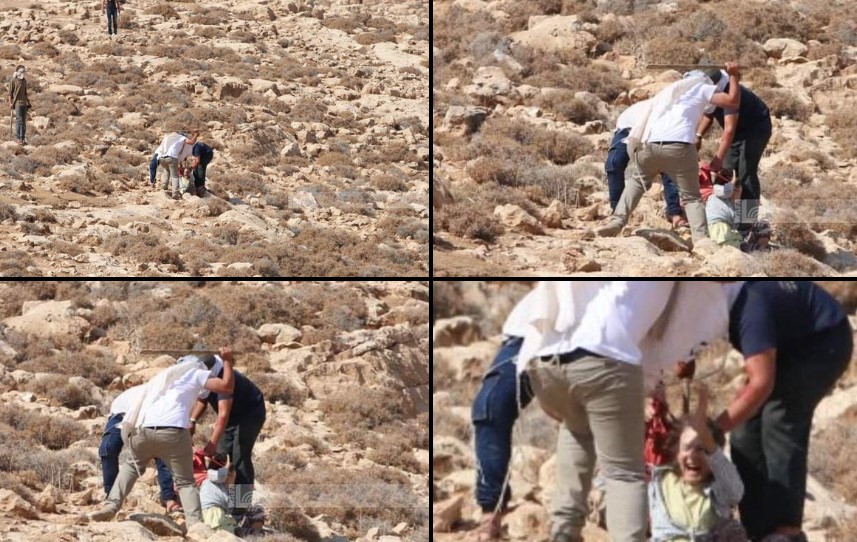
On Wednesday, a group of illegal Israeli paramilitary colonizers assaulted many Palestinians and international peace activists picking Palestinian olive trees in Kisan village, east of Bethlehem, and stabbed a female activist.
The olive orchard owner, Ibrahim Obeyyat, said the colonizers invaded his land and assaulted the locals and the international peace activists who came to help in picking the olive trees, especially since the area is subject to constant Israeli violations.
Obeyyat added that the international peace activist was stabbed in the back and suffered a fracture in her leg after the colonizers struck her with a bar.
He stated that the colonizers also uprooted at least 300 olive saplings and sprayed many olive trees with chemicals in his 90 Dunam olive orchard.
The colonizers repeatedly target Kisan, its farmers, and lands, and have stolen agricultural supplies, uprooted trees, and frequently attack the farmers and the shepherds.
Difficult months ahead: Why Israel is afraid of the Lions’ Den
By Ramzy Baroud | MEMO | October 18, 2022
This headline in the Israeli newspaper, the Jerusalem Post, only tells part of the story: “The Lions’ Den, Other Palestinian Groups are Endless Headache for Israel, PA.”
It is true that both the Israeli government and the Palestinian Authority are equally worried about the prospect of a widespread armed revolt in the Occupied West Bank, and that the newly formed Nablus-based brigade, the Lions’ Den, is the epicentre of this youth-led movement.
However, the growing armed resistance in the West Bank is causing more than a mere ‘headache’ for Tel Aviv and Ramallah. If this phenomenon continues to grow, it could threaten the very existence of the PA, while placing Israel before its most difficult choice since the invasion of major Palestinian West Bank cities in 2002.
Though Israeli military commanders continue to undermine the power of the newly formed group, they seem to have no clear idea regarding its roots, influence and future impact.
In a recent interview with the Israeli newspaper Yedioth Ahronoth, Israeli Defence Minister, Benny Gantz, claimed that the Lions’ Den is a “group of 30 members”, who will eventually be reached and eliminated. “We will lay our hands on the terrorists,” he declared.
The Lions’ Den, however, is not an isolated case, but part of a larger phenomenon that includes the Nablus Brigades, the Jenin Brigades and other groups, which are located mostly in the northern West Bank.
The group, along with other armed Palestinian military units, has been active in responding to the killing of Palestinians, including children, elders, and, on October 14, even a Palestinian doctor, Abdullah Abu Al-Teen, who succumbed to his wounds in Jenin. According to the Palestinian Ministry of Health, over 170 Palestinians were killed in the West Bank and Gaza, since the beginning of the year.
The Palestinian response included the killing of two Israeli soldiers, one in Shuafat on 8 October, and the other near Nablus on 11 October.
Following the Shuafat attack, Israel completely sealed the Shuafat refugee camp as a form of collective punishment, similar to recent sieges on Jenin and other Palestinian towns.
Citing Israel’s Hebrew media, the Palestinian Arabic daily, Al Quds, reported that the Israeli military will focus its operations in the coming weeks on targeting the Lions’ Den. Thousands more Israeli occupation soldiers are likely to be deployed in the West Bank for the upcoming battle.
It is difficult to imagine that Israel would mobilise much of its army to fight 30 Palestinian fighters in Nablus. But not only Israel, the PA, too, is terribly concerned.
The Authority has tried but failed to entice the fighters by offering them a surrender ‘deal’, where they give up their arms and join the PA forces. Such deals were offered in the past to fighters belonging to Fatah’s Al Aqsa Martyrs Brigades, with mixed degrees of success.
This time around, the strategy did not work. The group rejected the PA’s overtures, compelling the Fatah-affiliated governor of Nablus, Ibrahim Ramadan, to attack the mothers of the fighters by calling them ‘deviant’ for “sending their sons to commit suicide”. Ramadan’s language, which is similar to language used by Israeli and pro-Israel individuals in their depiction of Palestinian society, highlights the massive schisms between the PA’s political discourse and those of ordinary Palestinians.
Not only is the PA losing its grasp of the narrative, but it is also losing whatever vestiges of control it has left in the West Bank, especially in Nablus and Jenin.
A senior Palestinian official told the Media Line that the Palestinian “street does not trust us any more”, as they “view us as an extension of Israel”. True, but this lack of trust has been in the making for years.
The ‘Unity Intifada‘ of May 2021, however, served as a major turning point in the relationship between the PA and Palestinians. The rise of the Lions’ Den and other Palestinian armed groups are but a few manifestations of the dramatic changes underway in the West Bank.
Indeed, the West Bank is changing. A new generation that has little or no memory of the Second Intifada (2000-2005), had not experienced the Israeli invasion then but grew up under occupation and apartheid, feeding on the memories of the resistance in Jenin, Nablus and Hebron.
Judging by their political discourse, chants and symbols, this generation is fed up with the crippling and often superficial divisions of Palestinians among factions, ideologies and regions. In fact, the newly established brigades, including the Lions’ Den, are believed to be multi-factional groups bringing, for the first time, fighters from Hamas, Fatah and others into a single platform. This explains the popular enthusiasm and lack of suspicion among ordinary Palestinians of the new fighters.
For example, Saed Al-Kuni, a Palestinian fighter who was recently killed by Israeli soldiers in an ambush on the outskirts of Nablus, was a member of the Lions’ Den. Some have claimed that Al-Kuni was a leading member of Fatah’s Brigades, and others say he was a well-known Hamas fighter.
This lack of certainty regarding the political identity of killed fighters is fairly unique to Palestinian society, at least since the establishment of the PA in 1994.
Expectedly, Israel will do what it always does: amassing more occupation troops, attacking, assassinating, crushing protests and laying sieges on rebellious towns and refugee camps. What they fail to understand, at least for now, is that the growing rebellion in the West Bank is not generated by a few fighters in Nablus and a few more in Jenin, but is the outcome of a truly popular sentiment.
In an interview with Yedioth Ahronoth, translated by Al-Quds, an Israeli commander described what he has witnessed in Jenin during a raid:
“When we enter (Jenin), armed fighters and stone throwers wait for us in every corner. Everyone takes part. You look at an old man … and you wonder, will he throw stones? And he does. Once, I saw a person who had nothing to throw (on us). He rushed to his car, grabbed a milk carton and he threw it on us.”
Palestinians are simply fed up with the Israeli occupation and with their collaborating leadership. They are ready to put it all on the line; in fact, in Jenin and Nablus, they already have. The coming weeks and months are critical for the future of the West Bank and, in fact, for all Palestinians.
Looking beyond US violence and PA dependence
By Ramona Wadi | MEMO | October 18, 2022
Belatedly, Palestinian Authority leader Mahmoud Abbas has issued a statement of clear mistrust in US diplomacy towards Palestine. “We don’t trust America and you know our position. We don’t trust it, we don’t rely on it, and under no circumstances can we accept that America is the sole party in resolving a problem,” Abbas told reporters before meeting with Russian President Vladimir Putin in Kazakhstan last Thursday.
Despite being beholden to the international community’s diplomacy and, more recently, to Israeli Defence Minister Benny Gantz’s concessions which allow Abbas to consolidate his hold in Ramallah, it is clear that the PA does not trust Washington. Even though Abbas’s statement does not reflect the complete reality of the situation, particularly the PA’s dependence on the US for its own survival, his call to reduce America’s role is significant.
This comes at a time when Russia has threatened to cut diplomatic relations with Israel if the latter sends military aid to Ukraine. The US, meanwhile, does not relish a secondary role to Russia, with Abbas stating that the US can still be part of diplomatic negotiations only within the Middle East Quartet. Washington’s response, ironically and hypocritically, was to berate Putin’s threat as “a far cry from the type of international partner needed to constructively address the Israeli-Palestinian conflict.” The US should take a look at its own global track record of foreign intervention under various “constructive” guises. Does Operation Condor in Latin America ring any bells in the White House, for example? Likewise, Libya’s destruction under a NATO umbrella, albeit it was a planned US intervention post-9/11? Both expose the sham of Washington’s “commitment” to human rights.
President Joe Biden’s administration is actually worse than its predecessors in terms of its hypocrisy. Biden’s electoral victory brought no real change other than him being an alternative to Donald Trump, whose belligerence can at least be credited with exposing US diplomatic double standards. Trump’s overt concessions to Israel, alarming as they were due to their swift approval, were the culmination of decades of covert US diplomacy.
Biden’s promise to revert to the two-state paradigm, defunct though it is, has been particularly problematic for Palestinians due to it being just a veneer for sticking to Trump’s damaging policies. Washington’s disappointment at Abbas’s words is undoubtedly feigned, and ignores its own dismal record when it comes to Palestine. How is sending billions of dollars in military aid to Israel every year conducive to bringing about an “independent and viable Palestinian state”? Or how does preserving Abbas’s presidency — his mandate expired in 2009 — to prevent a democratically-elected alternative from entering Palestine’s political arena, help democracy and the aforementioned Palestinian state? The PA and Abbas might distrust the US, but both depend on Washington for their survival.
The US commitment to the so-called Abraham Accords is gaining ground internationally, eclipsing a defunct paradigm which Biden claims to support. Russia is within the fold of international consensus regarding the two-state compromise, even when it is clear that decolonisation is essential for the political aspirations of the Palestinian people. The PA stands in the way of decolonisation by begging the international community to keep the two-state “solution” alive.
Abbas cannot be taken seriously in anything he says or does; his leadership is tied to international donors and Israel’s colonial expansion. Nevertheless, the mere possibility that the US might lose its prominence in terms of involvement with Palestine deservers to gain traction, particularly if Fatah loses its iron grip on Palestinian politics and the people of occupied Palestine get the chance to experience a democratically-elected government which thrives less on hyperbole and more on the Palestinians’ own narrative.
Americans criticize US Middle Eastern policies
By Viktor Mikhin – New Eastern Outlook – 18.10.2022
The USA never misses an opportunity to present itself as an open and democratic society and a state in which the government authorities respect the will of the majority of the people and tailor their policies accordingly. That may have been the case in the past, but the facts no longer support this view – the President and his team are pushing through policies which favor their own interests and which are quite different from what they promised in their election campaigns.
There is a great deal of evidence to support this claim, but one particularly striking example is a new wide-ranging survey of Americans’ views on Washington’s foreign policy in the Middle East. The survey revealed that the majority of young Americans oppose their country’s policy in relation to Israel and, specifically against its sale of arms to the Israeli regime. The survey also shows that there is a great deal of support in American society for the Iran nuclear deal.
The survey, conducted by the Eurasia Group Foundation (EGF), shows that young Americans are more politically aware than older generations in relation to Israel’s aggressive policies against the Palestinians and its Arab neighbors. Most respondents aged between 18 and 29 were not in favor of continuing to supply arms to Israel. Older Americans (over sixty years old), on the other hand, tend to be in favor of the US providing military support to Israel.
The US supplies Israel with military aid worth some $4 billion a year. As a result, Israel is the biggest recipient of American military support in the world. But this support is being paid for by American taxpayers, many of whom are unaware that their taxes are being used to support the genocide and ethnic cleansing of the native Palestinians. Similarly, more than 80% of Americans support the Biden administration’s policy of negotiating in order to revive the Iran nuclear deal, as they consider that this will help improve the situation in the Middle East. Both in the region and at the international level there is a great deal of debate about how ready ordinary Americans are to criticize their government’s military support for dictatorships and authoritarian regimes enforcing policies of territorial occupation and ethnic segregation. Washington, in a bid to justify its actions, frequently claims that its support is made necessary by so-called security concerns, but many are skeptical of these arguments, dismissing them as cheap populism.
Mark Hannah, senior fellow at the Eurasia Group Foundation, describes the motivation behind the survey, “We began this survey five years ago because we believed lawmakers and foreign policy leaders conducting foreign policy on behalf of the American people would benefit from a window into their opinions and priorities.” He also expressed the hope that the survey results would be used by decision makers responsible for foreign policy in relation to the Middle East would study the survey “to make the activities they pursue more sensitive to – and informed by – the opinions of their constituents, and to bridge the gap between the concerns of policymakers and those of ordinary Americans.”
Unfortunately, the above hope is very naive: officials in Washington and in the Biden administration do not take the interests of ordinary Americans into account when making foreign policy decisions. It would suffice to cite Washington’s involvement supporting neo-Nazi groups in the war in Ukraine, thus threatening the world with nuclear war.
Or one could cite its offer to supply Israel – completely free of charge – with four Boeing military refueling aircraft over the next four years. Boeing signed a contract with the US Defense Department for the supply of four Boeing KC-46 Pegasus aircraft at a cost of $927 million. In effect, this means that the purchase price of $927 million will be paid by the US taxpayer, and Boeing will make a handsome profit from the transaction. According to Israeli media reports and also official government sources, Israel is already planning to use these state-of-the art aircraft to attack Iranian territory. It is obvious that the revival of the so-called Iran nuclear deal is in the interests both of the USA and of ordinary Americans, and that it would have a very positive effect on the highly tense situation in the Middle East.
In a formal statement on the decision to supply Israel with the refueling planes, Benny Gantz, Israel’s Minister of Defense, said, “This is further proof of the alliance and the strategic relations of the Israeli and American defense establishments.” In line with their standard practice, the Minister of Defense and other Israeli officials, along with their counterparts in Washington, all falsely name Iran as the justification for their huge military aid budget. This military aid has support from both parties in Congress, and is approved each year by a majority of lawmakers, even though this support goes against the interests of ordinary Americans.
According to a study by Maryland University, less than 1% of respondents consider Israel to be one of Washington’s two main allies. Many other surveys conducted over a number of years confirm the findings of the Eurasia Group Foundation. Earlier this year a survey by Pew Research also found that Americans under 30 tended to have a negative view of Israel. 61% of respondents in that age group felt sympathy towards the Palestinians. Maryland University also found that only a small proportion were in favor of stronger links with Israel, and that Israel is able to manipulate these links to favor its own interests.
In an interview with Middle East Eye, Dr. Zuri Linetsky, a Research Fellow at the Eurasia Group Foundation, explained that many American respondents who stated that they were against arms sales to Israel explained that they saw Israel’s long-term occupation of Palestinian territory as a violation of human rights. That last survey also found that many Americans are against their government’s continuing arms sales to Saudi Arabia, with 70% of respondents critical of Washington’s policy in relation to Riyadh.
That is despite the fact that rights groups are deeply concerned about the Biden administration’s continuing approvals of new arms sales to countries such as Israel, which have a record of invading other Arab nations. In August President Biden approved a $5 billion sale of rocket technology to Saudi Arabia and the UAE. The survey also shows that respondents are in favor of reining in US military involvement abroad, and, conversely, want to see the US administration make more efforts in the field of diplomacy, especially in relation to US rivals.
One of the key findings of the survey conducted by the Eurasia Group Foundation is that respondents attach a lot of importance to the Iran nuclear deal. It revealed that, irrespective of whether they vote Democrat or Republican, most Americans are in favor of talks with Tehran. Almost 80% of them support Joe Biden’s administration engaging in talks to revive the nuclear deal. To a great extent, support for the talks cuts across party divisions, with more than 70% of Republicans believing that the USA should continue with the talks.
However, approximately 80% of respondents also feel that Congress should more strictly control the President’s powers and authority in military matters, and that such decisions should be made by Congress. The USA has invaded many countries, most notably Afghanistan and Iraq, and its military continues to be involved in combat operations in Syria. Washington is also still illegally “occupying” a number of Arab countries, and has military bases in Kuwait, Qatar, Oman, Saudi Arabia and Bahrain. And the Pentagon does all this without consulting Congress – it prefers to take action and present the legislature with a fait accompli.
When asked about Afghanistan, almost two thirds of respondents consider that the most important lesson to be learned from the Afghan war is that the USA should not be involved in nation-building, or that it should only send troops into harm’s way if its vital national interests are threatened.
As for nuclear weapons, almost 75% of respondents said that they were concerned about this problem. Those respondents who have served or currently serve in the armed forces were less concerned than those with no military experience. “For the vast majority of the 21st century, the United States has been involved in conflicts in far-flung parts of the world. So the question is, is this what the American people want? Does this represent their interests?”, asked Zuri Linetsky, in his interview with Middle East Eye.
In conclusion, the author can confidently state that the survey is a good test to determine the areas in which respondents are dissatisfied with American policies in relation to the Middle East, and what they consider should be their leaders’ priorities, whether concerning international or domestic matters. The survey shows that in relation to many questions, the White House’s policies are inconsistent with the views of the majority of respondents. The survey sample was made up of a highly diverse group of Americans from all parts of the country, with different religions, political affiliations, drawn from every age group and representing all income levels.
What kind of democracy is that?
Palestinian President Rules Out US as Sole Mediator, Open to Russia Filling Role
By Kyle Anzalone | The Libertarian Institute | October 13, 2022
In a meeting with Russian President Vladimir Putin, Palestinian President Mahmoud Abbas said he did not trust Washington and the US could not play the sole mediating role in resolving the Israeli occupation. Abbas voiced support for Moscow, saying, “Russia stands for justice.”
Abbas made the remarks during a public meeting with Putin in Kazakhstan on Thursday. “We don’t trust America and you know our position.” He continued, “[w]e don’t trust it, we don’t rely on it, and under no circumstances can we accept that America is the sole party in resolving a problem.”
He said the situation can only be resolved by the “Quartet” – Russia, the US, the United Nations and the European Union working together. Abbas stressed the importance of Moscow’s role in coming to a resolution. “We believe and know that Russia has a clear position on the settlement, and I am absolutely sure that it will never change. We know perfectly well that Russia stands for justice, for international law,” the Palestinian leader said.
Putin responded favorably and said he hopes to increase ties between Moscow and Ramallah. Russia has “a principled stance based on the fundamental resolutions of the United Nations and it remains unchanged,” Putin said.
Abbas is 87 years old and was last elected in 2005. His mandate to rule expired in 2009. However, Tel Aviv and Ramallah have prevented new elections since. While Israel maintains security control and enforces its laws over all the territory of historic Palestine, Abbas and his government in Ramallah have some control in the West Bank. His influence does not extend to Gaza, where Hamas rules as the last elected political leader.
Abbas’s “Quartet” plan appears to be a non-starter. Currently, American and many European officials are refusing to attend any meeting with Russian officials.
The meeting between Putin and Abbas does expose fractures in the West’s campaign to isolate the Kremlin. After Russia invaded Ukraine in February, President Joe Biden said he would ensure Putin lost his global partners.
Washington is Tel Aviv’s primary sponsor. The US provides Israel with $3.8 billion in military aid every year. Tel Aviv’s control over Palestinians amounts to apartheid, according to several Western human rights organizations.
Featured Video
No Vote, No Representation, No State: Democracy, Israeli Style
or go to
Aletho News Archives – Video-Images
From the Archives
Sanctions, War and the Policy of Dual Containment
By SASAN FAYAZMANESH | March 17, 2008
It is now nearly three decades since the Unites States adopted the policy of dual containment of Iran and Iraq. While much has been written about the containment of Iraq, there has been very little in-depth analysis of this policy when it comes to Iran. In a book that is going to be released on March 31, 2008, entitled The United States and Iran: Sanctions, Wars and the Policy of Dual Containment (Routledge), I attempt to address this shortcoming by investigating when and why the US policy of containment of Iran came about, how it evolved, and where it stands today.[1] To the extent that Israel has been involved in US policy making, the study will also include the role that Israel has played in the containment of Iran. Also, since the fate of Iran has been inextricably linked to that of Iraq, occasionally the investigation will overlap with the containment of Iraq.
The policy of dual containment of Iran and Iraq originated during the Carter Administration, but it was not until the Clinton Administration that the expression “dual containment” became popular. … continue
Blog Roll
 Aletho News
- Elmo Sold mRNA Jabs to Your Toddler. Now They Are “Off-Label.”
- British state targets Palestine Action with yet another crooked trial
- Americans are paying the price to preserve Israel’s nuclear hegemony
- Resistance factions are necessary to ensure a permanent US Iraq withdrawal
- How Israel destabilizes the Middle East: Denying sovereignty and the right to exist
- Europe’s Establishment Is Embracing War – and Losing Voters
- NATO chief advocates war of aggression
- No Vote, No Representation, No State: Democracy, Israeli Style
- Zionist Bought Senate Blocks Information About American Citizens Killed By Israel
- While Gaza dominates the UN, these are the people keeping it alive
- If Americans Knew
- Israeli Soldiers Abduct At Least 22 Across Occupied West Bank
- Eight Palestinians Killed in Israeli Attacks on Gaza
- Israeli former leaders and security chiefs threaten legal action over ‘Jewish terrorism’
- Israel map in LA Times ad includes all land from the river to the sea
- Inside Lebanon’s 200-page dossier on Israeli war crimes
- Flydubai, genocide, settler violence, Trump abuse of power to deport – Daily Update
- Counting Antisemitic Incidents: What the ADL Audit Reveals — and Obscures
- Mamdani releases plan to combat antisemitism and hate crimes in New York City
- Iran’s Revolutionary Guards Publish Letter to the American People
- DMFI launches $1 million ad campaign supporting Virginia’s Elaine Luria
- No Tricks Zone
- Green Energy Debacle: German Expert Professor Fritz Vahrenholt Warns Of Severe Economic And Social Consequences
- Two More Paleo Reconstructions Affirm Meters-Higher Sea Levels Across Ireland, Brazil 7000-6000 Years Ago
- New Study: Earth And Venus Surface Warmth Largely Explained By Convection And Lapse Rate, Not CO2 Or Radiation
- 2025 Nature Paper Claiming Worsening Global Drought Gets RETRACTED …Heavily Flawed
- New Study: ‘Global Drought Shows No Detectable Recent Acceleration Under Climate Warming’
- Economic Masterminds: German Socialists Suggest Taxing Productivity Gains Stemming From Using AI
- The South China Sea Has Not Been Cooperating With The Climate Change Narrative
- Energy Crisis: Germany Enters Heating Season With Historically Low Gas Reserve Fill Levels
- New Study: The Antarctic Ice Sheet Gained Mass From 2020-2024 Due To Staggering Snow And Ice Accumulation
- Study: Ocean Heating Rates From Thousands Of Years Ago ‘Dwarf’ Modern Ocean Heating Rates

