Britons sign petition, urging Netanyahu’s arrest
Press TV | August 10, 2015
 People in Britain have been signing a petition that calls on the government to arrest Israeli Prime Minister Benjamin Netanyahu upon his arrival in the UK next month.
The petition entitled “Benjamin Netanyahu to be arrested for war crimes when he arrives in London” is available at a petitions website set up by the UK government and parliament.
“Benjamin Netanyahu is to hold talks in London this September. Under international law, he should be arrested for war crimes upon arrival in the UK for the massacre of over 2,000 civilians in 2014,” the petition reads.
More than 26,000 people had signed the petition until GMT 1100 on Monday with the number of signatures dramatically on the rise.
The British government is expected to respond to the demand as all petitions that get more than 10,000 signatures should be seen into, according to law.
Rules governing the petition site also stipulate that any petition that receives in excess of 100,000 signatures must be considered by the UK parliament for debate.
The deadline for signing the petition is on February 7, 2016. … Full article
Zionist Entity Releases Suspects in Arson Attack
Al-Manar | August 10, 2015
 Israeli occupation authorities released all suspects detained as part of a probe into the firebombing of a Palestinian home that burned to death an 18-month-old child and his father.
“All those arrested yesterday for interrogation have been released,” a spokeswoman for the Shin Bet security agency told AFP, without providing further details.
They did not provide the number of those detained in the raids early Sunday in wildcat Jewish settlement outposts in the West Bank near the Palestinian village of Duma, where the brutal firebombing occurred.
Wildcat outposts in the Israeli-occupied West Bank are notorious for housing Zionist settlers, referred to as hilltop youth.
The Palestinian family’s small brick and cement home in Duma was gutted by fire early on July 31, and a Jewish Star of David spray-painted on a wall along with the words “revenge” and “long live the Messiah”.
The arson attack on the family’s home in the occupied West Bank that killed 18-month-old Ali Dawabsha and his father, Saad sparked an international outcry over the ongoing Israeli crimes against Palestinians.
Mother Riham and four-year-old son Ahmed were also in an Israeli hospital, where a spokeswoman described their condition last week as life-threatening.
Source: AFP
As Palestinians Die, NY Times Shields Israel
By Barbara Erickson | TimesWarp | August 9, 2015
One week has passed since a Palestinian toddler died in an arson fire, one day since the boy’s father also perished from burns, and The New York Times has provided us with some half dozen stories on the tragedy. Only one of these was deemed fit to make the front page, however, and this fact is instructive: The favored story was not the original crime or the deaths of two villagers but a report on Israeli angst.
This maneuver was just one more piece of evidence that the Times has tried to provide an Israeli spin to this story. The paper has also adopted the government line that the concern here is extremism, not official policies and actions, and it has failed to provide the full context of settler violence in occupied Palestine.
When the story broke, the Times placed the news that 18-month-old Ali Dawabsheh was burned to death on page 4 of the Aug. 1 of the print edition. The brief article about his father’s demise appears on page 9 today. Other stories—concerning protests, accusations and additional responses to the news—were also on inside pages.
It was only when Jerusalem bureau chief Jodi Rudoren filed an article on Israeli “soul searching” that the editors saw fit to give the story a prominent spot in its Friday edition.
The print article, “Two Killings Make Israelis Look Inward,” received a favored site on page 1 above the fold. This, the editors are saying, is the real news here—not the shocking death of a helpless child, the lingering and painful death of his father or even the legacy of settler attacks—but the feelings of ordinary Israelis.
The arson attack has received this much attention in the Times only because it was impossible to ignore: It made headlines worldwide and forced Israeli officials to condemn the act and vow to take action. But the Times stories have failed to report the full extent of violence against Palestinians and official complicity in these actions.
Readers of the newspaper are unlikely to know that Israeli settlers have often resorted to arson and that their actions have never, until now, caused much concern among government officials. B’Tselem, an Israeli rights group, reports that “in recent years Israeli civilians set fire to dozens of homes, mosques, businesses, agricultural land and vehicles in the West Bank. The vast majority of these cases were never solved, and in many of them the Israeli police did not even bother taking elementary investigative actions.”
B’Tselem also notes that West Bank Palestinians are tried in military courts, with minimal rights and protection, while settlers living in the same area appear in civilian courts. Most shocking of all: The conviction rate for Palestinians in military courts is 99.74 percent.
The Times has acknowledged the charges of unequal treatment in an Isabel Kershner story titled “Israeli Justice in West Bank Is Seen as Often Uneven,” but the headline leaves the impression that we are dealing with opinions here, not facts, and the story fails to provide the data that would reveal just how uneven the system is.
In fact, B’Tselem reports that over an 11-year period only 11 percent of settler violence cases resulted in an indictment, nearly a quarter of the cases were never investigated and in the few cases where settlers were tried and convicted, they usually received “extremely light sentences.” The numbers are even more glaring when we note that Palestinians, knowing the outcomes and facing obstacles, often fail to file complaints.
These percentages, however, are less scandalous than the statistics concerning security forces. The Israeli monitoring group Yesh Din reports that 94 percent of the investigations into complaints about Israeli soldiers suspected of violence against Palestinians and their property are closed without action.
Yet the Times, following the lead of the Israeli government, has focused on “extremists” as the problem, ignoring the officially sanctioned destruction wrought by the military: In defiance of international law, the army helps the state confiscate land and destroy property to make room for illegal Jewish settlements.
In recent weeks and months, the Israeli army has been responsible for widespread destruction of Palestinian property in the West Bank. Here are a few examples:
- On July 22 the army invaded the village of Beit Ula and destroyed a Roman-era water well and 450 olive trees.
- On July 2 the army uprooted an acre of agricultural land west of Hebron and issued demolition orders for a home and a water well.
- On June 15 the Israeli army uprooted dozens of olive tree saplings over five acres in Husan, a village west of Bethlehem.
- On May 4 the army evacuated the residents of Wadi al Maleh in the Jordan Valley for “training exercises” and set fire to grazing land using live ammunition. Residents were denied access to the land to put out the fires.
- During the month of June in the Jordan Valley the army forced hundreds of Palestinians from their homes for “military maneuvers” and used live ammunition that set fire to acres of grazing land.
- As of Aug. 3 the army was responsible for demolishing 302 Palestinian structures in 2015, displacing 304 people in the West Bank and East Jerusalem.
Times readers almost never read of these actions taken by the military with the official blessing of the government, and they rarely learn of most settler attacks. (Nor do they learn that settlers are allowed to carry weapons while Palestinians are denied even the most basic arms for defense.)
Now the Times, in the face of an international scandal, has done what it can to minimize the damage to Israel, muting the charges of unequal justice, placing Israeli “soul searching” on prominent display, joining the Israeli effort to blame extremists and ignoring the officially sanctioned crimes against Palestinians.
Israeli angst is fit to print in the Times, but Israeli crimes against Palestinians are something else again. If they are deemed worthy of notice, they may come to light in the back pages, under evasive headlines—all part of an effort to protect Israel at the expense of our right to be informed.
Israel bars footballers from leaving Gaza for West Bank match
MEMO | August 8, 2015
 The Israeli authorities have stopped several players from Gaza’s Ittihad Al-Shejaiya football team from leaving the Gaza Strip via Israel’s Erez border crossing to play a scheduled match in the occupied West Bank.
Ittihad al-Shejaiya is slated to play the final match of the Palestinian Football Cup against West Bank-based football club Ahli Al-Khalil on Sunday.
In a Friday statement, Ittihad al-Shejaiya said its members would not leave the blockaded strip until the entire team was allowed out of the coastal territory.
Earlier this week, Ahli al-Khalil players entered the Gaza Strip for the first time in 15 years for a scheduled match with Ittihad Al-Shejaiya.
Due to the Israeli travel hindrances, however, the match – which ended in a goalless draw – was postponed until Thursday.
Thursday’s final was the first Palestinian match to be played in the Gaza Strip since 2000, when the Second Intifada – a Palestinian popular uprising – erupted against Israel’s decades-long occupation.
Although the uprising ended some five years later, the Gaza Strip has continued to groan under a tight Israeli-Egyptian blockade – first imposed in 2007 – that has deprived the enclave’s roughly two million inhabitants of most basic needs, including food and medicine.
Leader of Israeli extremist organization calls for Jewish State torching churches
Ma’an – August 6, 2015
JERUSALEM – The leader of a Jewish extremist group in Israel allegedly called for arson attacks on churches in front of Israeli students, Israeli media reported on Thursday.
Benzi Gopstein, leader of anti-Arab group Lehava, allegedly called for the burning of churches at a panel held this week for Jewish yeshiva students, using ancient Halachic, or Jewish law, to condemn what he called Christian “idol worship.”
When a journalist at the panel informed Gopstein that he was on camera and could be arrested for his comments, Gopstein said he is prepared to spend 50 years in jail for his remarks, according to a video of the panel released by the Haredi website Kikar Shabbat.
After the release of the video, Gopstein said he “stressed several times” that he was “not calling to take operative steps,” instead he said that it is “the responsibility of the government, not of individuals” to abolish the Christian practice of idol worship.
The Israeli government has taken steps to crack down on Jewish extremism over the past week, after suspected Jewish extremists torched two West Bank homes, burning an 18-month-old infant alive and critically injuring the baby’s mother, father and brother.
Three right-wing extremists were arrested on Tuesday in connection to the arson under an administrative detention order after Israel’s security cabinet approved the use of the measure on Jewish Israelis. The arrests marked the first time a Jewish Israeli has ever been held under the policy of administrative detention.
There has been a long line of attacks on Christian and Muslim holy places in both Israel and the occupied West Bank in which the perpetrators were believed to be Jewish extremists.
Despite announcements by the Israeli government in May 2014 to crack down on violent attacks carried out by Israelis against Palestinians, prosecution rates on Jewish extremist remain remarkably low.
4 killed, dozens injured as Israeli ordnance explodes in Gaza
Ma’an – August 6, 2015
GAZA CITY – At least four Palestinians were killed on Thursday and over 30 injured when an unexploded ordnance from last summer’s Israeli military offensive went off while clearing rubble from a destroyed house in the southern Gaza Strip, medics said.
Palestinian medical sources at the Abu Yousif al-Najjar hospital in Rafah said four bodies and multiple wounded Palestinians arrived at the emergency room.
The victims, who were all from the same family, were identified as Bakr Hasan Abu Naqira, Abdul-Rahman Abu Naqira, Ahmad Hasan Abu Naqira, and Hassan Ahmad Abu Naqira.
Medics said it is likely that the death toll will increase.
Over 7,000 unexploded ordnance were left throughout the Gaza Strip following last summer’s war between Israel and Palestinian militant groups, according to officials of the UN Humanitarian Coordinator for the Palestinian territories (OCHA).
Even before the most recent Israeli assault, unexploded ordnance from the 2008-9 and 2012 offensives was a major threat to Gazans.
A 2012 report published by the Office of the High Commissioner for Human Rights said that 111 civilians, 64 of whom were children, were casualties to unexploded ordnance between 2009 and 2012, reaching an average of four every month in 2012.
17 ‘violations’ against Palestinian journalists in July

MEMO | August 5, 2015
Israel’s occupation forces and the Palestinian Authority (PA) security services committed 17 “violations” against Palestinian journalists in July, Quds Press reported on Tuesday.
According to the Palestinian Media Forum, the Israelis committed most of the violations against journalists in the occupied Palestinian territories, ranging from physical assault and arrests to banning the media professionals from covering certain incidents and events.
The forum’s report said that journalist Mohamed Ateeq from Jenin was arrested; cameraman Shadi Jarrar was wounded in Nablus, as was cameraman Mohamed Jaradat in Hebron. A number of journalists were also attacked in the village of Jaba’, north of Jerusalem.
In addition, an Israeli court adjourned the trial of journalist Ahmed Al-Bitawi, the editor of Quds Press, until further notice. Al-Bitawi was moved to Ofer Prison near Ramallah. He was arrested early last month when Israeli troops stormed into his family home in Nablus. He joins another 15 Palestinian journalists being held by the Israelis.
PA security services violations against Palestinian journalists in the occupied West Bank and Gaza Strip included detention and unwarranted investigations.
Nablus residents protest Israeli water supply cut-off

Ma’an – August 5, 2015
NABLUS – Dozens of Palestinian residents of the West Bank village of Kafr Qaddum staged a sit-in on Wednesday to protest the Israeli national water company cutting off its supply to the village, locals said.
Hamzeh Jumaa, the head of the village council, told Ma’an that the Israeli water company Mekorot cut off its supply on Sunday.
He said that the water supplies some 4,000 people living in Kafr Qaddum in Nablus, which he highlighted was an agricultural village.
He said that thousands of poultry birds had died due to a lack of water combined with extreme temperatures.
Jumaa said that they have not received any answer from Mekerot as to why the water was cut off or when it will be brought back.
The council head added that Mekerot provides water to all Palestinian villages and illegal Israeli settlements in the surrounding area.
Israelis, including settlers, have access to 300 liters of water per day, according to EWASH, while the West Bank average is around 70 liters, below the World Health Organization’s recommended minimum of 100 liters per day for basic sanitation, hygiene and drinking.
Kafr Qaddum has lost large swathes of its land to Israeli settlements, outposts and the separation wall, all illegal under international law.
According to the Applied Research Institute of Jerusalem, more than 10 percent of the village’s land has been confiscated for the establishment of the settlements alone — Kedumim, Kedumim Zefon, Jit, and Givat HaMerkaziz.
Residents of Kafr Qaddum stage regular protests, including a weekly Friday march, to protest land confiscations as well as the closure of the village’s southern road by Israeli forces.
The road, which has been closed 13 years, is the main route to the nearby city of Nablus, the nearest economic center.
Israeli forces regularly use violent means to suppress the protests.
Update on Photo of “Israeli Officer Being Shielded from Stone-throwing Settlers”

Popular Struggle Coordination Committee Facebook page
Video showing the actual story not apparent in the viral picture of RHR Field Coordinator Zakaria Sadah and Qusra Mayor… returning policewoman to prevent second officer from shooting Palestinians…
“The bottom line is that, while settlers are calling this an intentional publicity stunt, and some Palestinians are angry with Zakaria and the Qusara mayor for having helped an Israeli policewoman. (The residents of Qusara and the hundreds of additional Palestinians he has helped are not angry with him.)
The fact is that Zakaria may very well have saved Palestinian lives, as another police officer was preparing to shoot. Zakaria is a one person command center who is often the first person to get a call when something happens. He is hated by settlers in the area for having foiled many attempts to attack, threaten, invade and trespass.
On this particular day, he was with reporters in Douma (where he had also been the first to arrive early last Friday morning, and help evacuate the wounded) when he received the call to come quickly to Qusra, because Israelis had descended from the Eish Kodesh outpost and were trying to prevent Palestinians from developing land in Area B by shouting and standing in front of the equipment.
Although the army now acknowledges that this is Area B, where they have no authority to stop land development, when Zakaria arrived, the army seemed to be siding with the Israelis.
In another video posted on Ynet, you see a settler claiming that Palestinians had thrown stones at him. just before the portion of the video here, you see a police officer speaking with the Israelis. This officer, then, comes over and attempts to arrest Palestinians. Quickly he starts using a taser and, then, the Palestinains do start throwing stones.
The frightened policewoman froze, began to cry, and got caught in between the Palestinians, on one side, and security forces with Israeli citizens on the other. She wasn’t hurt, but rocks were falling near her from one side, and tear gas and stun grenades from the other.
Sensing that she was in danger, the police officer in a t-shirt, whom we see later extending his hand to take the policewoman, prepared to shoot at Palestinians.
You can hear Zakaria shouting “Don’t shoot! Don’t shoot!”
You then see Zakaria and the Qusara mayor escorting the policewoman and the other officer extending his hand to draw her to him.”
http://rhr.org.il/eng/2015/08/the-context-behind-the-photo/
Updated from:
08/04/15 (Press TV/Al Ray) In this picture, which was posted on social media websites last week, two Palestinians can be seen protecting a female Israeli police officer from a group of stone-throwing Israeli settlers.
Shaul Golan, an Israeli photographer, took the picture during clashes between settlers and Palestinian farmers in the illegal Israeli settlement of Esh Kodesh in the West Bank on Saturday.
When Israeli police forces arrived on the scene to break up the clashes, the settlers started throwing rocks at them too.
According to the UN Office for the Coordination of Humanitarian Affairs, settlers frequently attack local Palestinian villages and prevent farmers from reaching their lands.
The Israeli regime maintains a defiant stand on the issue of its illegal settlements on Palestinian land as it refuses to freeze settlement expansion. Tel Aviv has come under repeated and widespread international condemnation over the issue.
Gaza: Our Child’s Shattered Face in the Mirror
By Gary Corseri | CounterPunch | August 4, 2015
 When I received a copy of Gaza Unsilenced in the mail, about a week ago, the first thing that struck me was the amazing cover photo. Now, I think I’m as wary of judging a book by its cover as the next reader/reviewer; and I read through the entire book before ever thinking of starting a review in this way. Does the book justify this sort of cover? Most assuredly it does!
The face on the cover is that of a girl—somewhere between 10 and 13, I’d guess. She has a marred, but beautiful face, striking dark eyes, and she almost seems to be smiling, acknowledging, at once, the onlooker, the photographer, and her own resilience, her capacity to survive. It is a haunting picture because her face is pockmarked by shrapnel in dozens of places—perhaps caused by the illegal “flechette” dart-bombs used unsparingly in “Protective Edge”; or glass fragments, or chips of concrete?
The book tells a story that is almost impossible to tell: the victims’ view of the 51-day, 2014 War on Gaza, euphemistically called, “Operation Protective Edge” by Israel. One element that disturbed me at first, but which I came to appreciate, is the way the narative gyrates chronologically. Sometimes, we are at the beginning of the war, a few pages more and, with another narrator, we are surveying the rubble at the end of the war; a few more pages, and we’re back in the middle of the unfolding horrors.
And why wouldn’t this be the best way to render the way war shatters everything—even our sense of time? Here, this structure seemed especially appropriate; for, in reality, “Operation Protective Edge” was just the latest outburst of a war that began in 1948 with the “Nakba” (Catastrophe), with Israeli massacres in Palestinian villages like Deir Yassin, leading to the expulsion of hundreds of thousands of Palestinians from their homes, their native land. As awful as things have been in the West Bank and other parts of Palestine, the situation has been most dire in Gaza—a strip of land about the size of Atlanta, Georgia, hugging the Mediterranean, with about 1.8 million people (Atlanta has about ½ million) who have been “under siege” for more than 8 years in a Sartre-like hell with “No Exit,” surrounded by impassable “buffer zones,” with 60% unemployment rates, a frazzled infrastructure, bombed-out hospitals and schools, and half the population children and/or students!
More than 2200 Palestinians were killed during the 51 days of bombardment and invasion. About 70 percent of those who died were unarmed, undefended civilians—mostly women and children.
This is an anthology unlike any I’ve read. An English major, I’ve read my share of literary anthologies; a professional-and-citizen-journalist, I’ve read and learned from collections of work by master-journalists and social and political commentators. The power of Gaza Unsilenced is that it is a symbiosis: “you-are-there” journalism (including “blogger” twitter notes), combined with piercingly beautiful, unforgettable, cherishable essays, poems and photos. (One of Yeats’ phrases ran through my mind as I read the book: “A terrible beauty is born.”)
Other words, phrases, ideas were reiterated: “resilience”; “complicity”; “betrayal”; “human shields”; “de-humanization.”
Several of the authors wrote about the resilience of these Gazans who have endured so much, but re-plant themselves, as they re-plant their olive trees in the dry soil. Resilience is undeniable, but two words they eschew are “heroism” and “victimhood.” They do not want to be depicted as “heroes” or as “victims” by a global media infected with reductionism, always reaching for the simplistic explanation. Certainly, there were many heroes among the dead and wounded—those who risked their lives and gave their lives to save and help others. The victimization will continue for lifetimes. One American doctor who visited Gaza some months after the last bombs fell and the last bullets were fired, described the people as living—not with PTSD, but with “continuous, traumatic, stress disorder.”
Editor/writer/educator Refaat Alareer writes unforgettably about the death of his brother, Mohammad, and how his brother’s 4-year old daughter has been so unnerved by her father’s failure to keep his promise to return to her, she has retreated into a fantasy world—talking to herself, imagining her father giving her presents.
There is that kind of pity-evoking work here, and it may be cathartic for thoughtful, sensitive readers to read it, animating them to learn more about this ongoing crisis. Several of the authors stress that, while Gaza, and Palestine in general, constitute humanitarian crises, we must understand the “deep roots,” the “political” nature of this conflict, of this imbroglio—if we are ever to untangle it.
“Betrayals” have occurred on many fronts, and there has been the “complicity” of the global mainstream media, and the political hacks in Israel, the United States, Europe, and in Arab states like Sisi’s Egypt as well, and even with the West Bank’s Palestine Authority where the default position is, invariably, to blame those who resist the Occupation, and the depredations of war: physical and psychological destruction.
Editors Alareer and Laila El-Haddad have done a masterful job compiling this book. “What else can we do?” the survivors of the onslaughts wonder when journalists and human-rights advocates inquire how they manage to continue, to rebuild. They are rooted to their land, like their olive trees, planted and re-planted for thousands of years.
But, considering these stories, these flashes of insight, these twittering reflections, superlative essays, poems, articles and photos…, and considering that shrapnel-pock-marked face of the child in the mirror we gaze at on the front of this book, we also wonder, “What else can we do?”
How much time we spend dehumanizing the Other! And we go to war, and pay our taxes like good, little citizens, so that those who pander in lies and delusions can advance themselves, gain power and privilege in their narrowly-scoped worlds, shutting us and the Other out!
Is there a way to “re-humanize,” editor Laila El-Haddad wonders in her final essay. “There are no easy answers, but the quest begins by asking the right questions and knowing where to look…. We hope to have provided you a starting point in this book.”
El-Haddad and Alareer, and the mighty contributors here, have provided truth-seekers and truth-tellers with much more than a starting point. They have provided us with a mirror of our shattered human family.
Featured Video
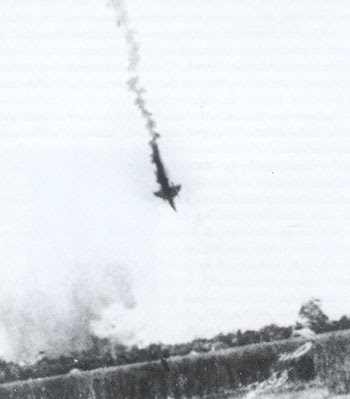
The Failed Air War Over Vietnam
or go to
Aletho News Archives – Video-Images
From the Archives
USS Liberty Massacre: A Pivotal Moment in the Hostile Takeover of America
By Kevin Barrett | Crescent | Dhu al-Qa’dah 24, 1445
In corporate America, hostile takeovers are commonplace. They occur when an aggressor—a larger corporation or rich individuals—seizes control of a smaller corporation without asking permission.
What few recognize is that the United States itself has been subjected to a hostile takeover. Since the aggressor, the illegitimate settler colony known as “Israel,” is much smaller than the US, the takeover has necessarily been surreptitious.
As of June, 2024, Israel’s gradual takeover of the US has become obvious and undeniable—a proverbial “elephant in the living room.” … continue
Blog Roll
 Aletho News
- Europe’s mounting social chaos… chickens coming home to roost for proxy war against Russia
- US-Russia Diesel Deal Becomes Massive Defeat for Ukraine
- Hormuz and the Looming Economic Catastrophe
- Dhubab offensive, media blitz and the rapid unraveling of Saudi-backed coalition’s new gambit
- Putin Conveys to Trump Iran’s Vision on Possible Conflict Resolution – Kremlin
- The Search for Truth: Charlie Kirk’s Assassination One Year Later
- ‘Harsh reality’: Iran says France seeks monopoly on power and intimidation, not peace for all
- When Will This White House Madness End?
- Huckabee aide goes to ‘unusual lengths’ to portray ‘Israel’ positively
- Trump Announces Diesel Supply Deal With Putin Following Phone Call
- If Americans Knew
- Israeli forces kill another child in Gaza – Daily Update
- Gaza ceasefire exists in name only, say more than 100 organizations
- Nearly 2 Million in Gaza Need Urgent Shelter Assistance as Winter Looms: IOM Chief Warns
- Suppressing Palestinian resistance: US charity under fire for AI monitoring of Gaza classrooms
- Thousands Are Held in Israeli Torture Camps. This Is What Happens Inside
- Israel puts Gaza’s sick, injured, newborn in peril – Daily Update
- Report claimed Mark Levin used by Israeli government to influence Trump
- Over 2,000 Gazans have died awaiting medical evacuation amid Israel’s continued siege
- How a U.S. Diplomat Suppressed and Altered Reports Critical of Israel
- 5 Palestinians Die from Israeli Strikes in Gaza as Relentless Attacks Continue
- No Tricks Zone
- Germany’s Green Energy Debacle: High Energy Costs Force Kahla Porzellan to Close After 182 Years!
- New Study: 50 Years Of The Most Aggressive ‘Net Zero’ Policies Can Only Affect The Global Climate By 0.03°C
- US September “Heat” Was No Record…Many Records Set Decades Ago
- Latest European Green Energy Debacle; Portugal’s Largest Flagship Solar Park Insolvent!
- Green Energy Debacle: German Expert Professor Fritz Vahrenholt Warns Of Severe Economic And Social Consequences
- Two More Paleo Reconstructions Affirm Meters-Higher Sea Levels Across Ireland, Brazil 7000-6000 Years Ago
- New Study: Earth And Venus Surface Warmth Largely Explained By Convection And Lapse Rate, Not CO2 Or Radiation
- 2025 Nature Paper Claiming Worsening Global Drought Gets RETRACTED …Heavily Flawed
- New Study: ‘Global Drought Shows No Detectable Recent Acceleration Under Climate Warming’
- Economic Masterminds: German Socialists Suggest Taxing Productivity Gains Stemming From Using AI

