Palestinian arrested in night raid on his family’s home
International Solidarity Movement | January 25, 2015
Bruqin, Occupied Palestine – At around 4:00 AM on January 23, Israeli forces arrested 22-year-old Raja Sabra in the course of a violent raid on his family’s home in the Palestinian village of Bruqin.
His father was awakened by noises coming from outside. Twenty to thirty Israeli soldiers had surrounded the house, advancing past the gate to the family’s door. Soldiers broke the metal door open.

Israeli forces entered the house and forced all the women into one room and the men into another. Ten family members were present, including three young children. Some soldiers were masked and acted extremely aggressive. No soldiers gave any explanation to the family members, and when asked why they were there, they yelled at the family to “shut up and be quiet!”
The soldiers searched the house, turning over furniture and opening all the drawers and chests, destroying the family’s possessions including a dining room chair. One soldier stole about 3000 to 4000 NIS (about 750 to 1000 USD) from inside the drawer of the bedside table. The soldiers also took the hard-drive of the family computer, and Raja’s laptop and cellphone before arresting him.

The raid lasted about an hour. Before the soldiers left they arrested Raja, without giving any reason or details about the where they were taking him or for how long. “Where are you bringing Raja?” his pregnant sister-in-law asked the soldiers. In answer, she had a gun pointed at her was ordered to sit down and be quiet. Soldiers responded to any attempt to talk to them with similar aggression. When Raja’s brother tried to find out information about what was happening, a soldier stomped on his foot with his heavy military boots. The children started to cry from fear. The soldiers left with Raja, scratching the family´s car with their guns as they left.
The Salfit-area village of Bruqin lies next to the illegal Israeli settlement of Barqan. About two years ago, people from Bruqin held a demonstration against the settlement, which is constantly expanding, illegally claiming more land and destroying the land of Palestinian farmers. One night after the demonstration, approximately 100 Israeli soldiers invaded Bruqin, raiding thirteen 13 homes and arresting 12 teenagers. According to a village resident, after this incident Bruqin had been relatively quiet and rarely subject to military incursions.
One day before the January 23 raid, Israeli military vehicles entered the center of Bruqin in the late evening. They maintained their presence for numerous hours before leaving. The military’s raid on the Sabra family’s home was the first the family had ever been subjected to. Raja, a student taking his final year of Civil Engineering at An-Najah National University, had never been previously arrested or detained by Israeli forces. The family hopes a human rights organization can help to find Raja, and that he will be released soon. One day after the incident, they still had not heard anything about where Raja is being detained, or for how long.
Photos by ISM
77 Palestinians, Mostly Children, Displaced in Three Days

IMEMC News & Agencies | January 24, 2015
The United Nations Resident and Humanitarian Coordinator James W. Rawley confirmed on Friday that, in the past three days alone, a total of 77 Palestinians, over half of them children, have become homeless.
He expressed concern over Israel’s recent spate of demolitions of Palestinian homes in the occupied West Bank, including East Jerusalem.
According to Rawley, “demolitions that result in forced evictions and displacement run counter to Israel’s obligations under international law and create unnecessary suffering and tension.”
Home demolitions must stop immediately, Rawley demanded, in a press release that WAFA received.
UN concerns stem from the fact that some of the demolished structures were provided by the international community to support vulnerable families. Rawley explained: “At least eight of these structures were funded by international donors.”
Since 20 January, the UN Office for the Coordination of Humanitarian Affairs (OCHA) has recorded the Israeli demolition of 42 Palestinian-owned structures in the Ramallah, Jerusalem, Jericho and Hebron governorates.
In addition to those displaced, 59 Palestinians were affected, mainly due to the demolition of structures essential for their livelihood, mostly animal shelters.
According to OCHA figures, in 2014, “Israeli authorities destroyed 590 Palestinian-owned structures in Area C and East Jerusalem, displacing 1,177 people – the highest level of displacement in the West Bank since OCHA began systematically monitoring the issue in 2008.”
Area C of the West Bank is under complete Israeli control.
Humanitarian and Legal bodies and institutions such as the UN, OCHA and B’Tselem confirm that the planning policies applied by Israel in Area C and East Jerusalem discriminate against Palestinians, making it extremely difficult for them to obtain building permits.
Having no other choice, many Palestinians are forced to build without permits to be able to provide a shelter for themselves and their families, risking having their buildings demolished, in the process.
Rawley demanded that Palestinians must have the opportunity to participate in a fair and equitable planning system that ensures their needs are met.
StandWithUs an Agent of Foreign Power?
By Richard Silverstein | Tikun Olam | January 24, 2015
The Foreign Agent Registration Act (FARA) declares that U.S. citizens in this country who work or lobby on behalf of foreign countries must register as its agents. Because doing so would significantly diminish the credibility of such individuals in the eyes of the American public, lobbyists go to great lengths to avoid doing so. For decades, critics of the Israel Lobby have complained that Aipac is such an entity, but the group cleverly articulates its programs and activities to avoid the necessity.
One of the main criteria in determining whether someone is violating FARA is if they are receiving funding directly from a foreign government. Aipac carefully avoids any semblance of such activity.
There are however newer members of the Lobby who are more impetuous, more overtly aggressive, and more eager to do the bidding of the Israeli government. They are less cautious about their activities and more eager to collaborate directly and publicly with the government. One of these is StandWithUs. It is clear to careful observers of the Lobby that groups like SWU, The Israel Project, and others are agents of the Israeli government. In fact, then-deputy foreign minister Danny Ayalon told Israeli TV that the government was funding efforts by groups like SWU, involved in the Olympia food coop lawsuit (a final appeal of SWU’s loss in that suit was heard before the Washington State supreme court this week).

Israeli on-campus hasbara war room.
Most of the time, government officials and the groups themselves are careful to conceal the tracks of such collaboration. But recently another door was opened into the ways in which such projects and funding mechanisms are developed by both parties. SWU’s press release announcing the initiative was dutifully picked up by the Likudist Jerusalem Post. The democracy watchdog media outlet, 7th Eye also reported that the group was joining with a government agency carrying a 1984-like name, the National Information Directorate (based in the prime minister’s office). Together, they would create a social media war room project that would aggressively disseminate the government’s point of view during times of crisis when Israel’s reputation needed a boost.
With the government and SWU contributing $500,000, they would select students in the UK and the U.S., who would come to Israel for hasbara training. SWU would recruit the students and the government would train them in conducting social media warfare on Israel’s behalf. They would then return home to cities like New York, Los Angeles and London (specifically referenced as places the project would like to target).
A headline in 972 Magazine about it raised a red flag:
StandWithUs to take cash, messaging from Israeli gov’t
If this were true, it would be the smoking gun that might prove SWU had finally crossed a red line many of us have known they crossed long ago. Though the contents of the article didn’t quite support the claims advanced in the headline, I decided to read the minutes of the government meeting at which the project was approved. They raise some intriguing questions about the project and SWU’s role. In fact, the officials discussion of the project debated what the nature of SWU’s involvement would be. Was the government purchasing the services of SWU? Or is Israel supporting of the organization? And they (conveniently, as far as FARA is concerned) came to the conclusion that the GOI (Israeli government) would be purchasing services from SWU, and not supporting SWU as such.
But U.S. officials who examine such an arrangement might take a different approach to this question.
Below I’ve paraphrased (and at times quoted) the meeting minutes (Hebrew) at which the government representatives approved the joint project:
The need for this project arose in the wake of interactive campaigns in the course of Operation Protective Edge and Pillar of Cloud, which united Israeli hasbara officials with organizations and volunteers in a collective effort.
In light of this [previous success], it was decided to continue this activity with the goal of combating negative programs intended to damage the State of Israel by channeling truthful, balanced information to social media at normal times and times of emergency and military conflict.
The project is modeled on similar efforts involving Israel university students who participated in media war rooms during Operation Protective Shield. Often the war rooms were located at the universities and students received course credit for participation.
Those participating in the new initiative would attend multiple training sessions including a preparatory meeting at their home campus. There they would receive the needed hasbara materials and undergo training in how to use social media in order to disseminate the appropriate message. They would then learn how to create and manage a situation room and then launch it.
The Israeli students would be brought to the central situation room located in StandWithUs’ Jerusalem office. There, after receiving briefing materials, assignments would be given and they would be trained by officials of the PMO.
The student units would be activated during periods of emergency and would gather on their campus to take action. They would communicate and take direction from the central situation room in Jerusalem.
Three times a year, students designated as leaders of their respective campus groups would travel to Israel, where they would conduct “educational meetings” and training that would be later conveyed to the other student participants in their home campuses.
PMO officials would develop messaging for the foreign students. It will direct the subjects which they will promote on social media platforms and the talking points that should be emphasized. The ministry would have a direct, active and hands-on role, thus guaranteeing the students stay “on message.”
The government turned specifically to SWU, according to the minutes, because it is widely known as an effective communicator of the pro-Israel message on the internet and social media. The group is seeking to increase its pro-Israel advocacy on American campuses in response to the rising tide of anti-Israel activism there. SWU’s purpose here is to present a true, authentic and appropriate image of Israel on campuses, in the media, and in different constituencies. Information SWU uses in its advocacy is known for being sound and well-prepared, including facts about different aspects of the State of Israel.
Participants in the government meeting were told that SWU reaches 1.2-million viewers each week (a figure I would strongly dispute) through various forms of new media. And customized content is created specifically for various target audiences, which include positive facts about Israel.
SWU was also chosen specifically for its reputation for battling the BDS movement through various media platforms like Buzzfeed, Instagram, YouTube, Twitter and Facebook. Graduates of its training programs use what they learned on the internet. They employ the information and techniques taught them in order to advance a positive message about Israel online.
When asked how students would be chosen to join the project, an Israeli official told the government committee that a group, composed of representatives of the PMO and SWU would determine the best students to participate on the basis of criteria they established.
There was some debate within the project committee whether students would receive payment for their services (coyly named “scholarships”). Those in this program would not (those in the earlier Israeli student programs I mentioned above did receive compensation). They would suffice with certificates of appreciation which would add luster to their resumes.
Committee members were told that the government would not buy equipment or build out space for the project. Rather this would be the responsibility of SWU, whose Jerusalem offices would house it.
Among other interesting phrases to consider in analyzing the nature of the project and collaboration between SWU and the Israeli government is this:
The initiative for the project and operational responsibility for it lie essentially with the National Information Directorate, assisted in carrying it out by the organization (SWU). This project could not be carried out by the organization alone without official government involvement.
The level of involvement of the NID will be quite high, including determining the strategy and the hasbara messaging which would be disseminated. A committee, most of whose members would be government officials, will create systems of review and oversight of the project.
According to the determination of the government specialist, members of the committee are convinced that this funding request is classified as a purchase of services and not as [organizational] support…
My guess is that the issue about building out the situation room space in SWU’s office was a sensitive one. Perhaps the minutes included a reference to the government’s non-participation in this aspect of the project as a way of distinguishing between purchase of services and funding the organization. But the intense level of oversight the government is offering and its control of almost all key aspects of the project indicate that SWU is not really a partner in the project in the full meaning of the word, but rather taking direction from the Israeli government. The funding provided by the government will advance the goals of SWU. There is an utter seamlessness between the two entities. You could not really tell where the government’s involvement ended and SWU’s began. As such, SWU is an agent of the Israeli government.
Occupier’s Justice: Heads and Tails You Lose
By Jonathan Cook | Dissident Voice | January 23, 2015
Yesterday I had an idea for a short story to explain the unrelenting insanity of the occupation for ordinary Palestinians. Tell me what you think.
In my story, there is a Palestinian family, let’s call them the Jaabaris, and they live next to a Jewish settlement, let’s call it Kiryat Arba, close to Hebron deep in the Israeli-occupied West Bank.
One day the settlers decide to build a synagogue on the family’s private land in an effort to force them off.
This family decide to stand their ground. Sadly, they have no way to stop the takeover of land that has been in their family for generations other than by appealing to the Israeli legal system. They petition the Israeli Supreme Court to order the synagogue demolished.
In the court room, the settlers argue that the land is not under Kiryat Arba’s control – it’s private Palestinian property – and therefore it is outside the court’s jurisdiction. The judges have no right to issue a ruling in this case, they claim.
The court disagrees and says the land is under Kiryat Arba’s control – ie the judges treat it as part of Israel – and therefore the court can issue a ruling. The judges’ verdict is a triumph for justice: the synagogue should be demolished.
However, now that the settlers have a piece of paper with the court’s decision stating that the land belongs to Kiryat Arba, they can bill the Palestinian family for years of arrears on property taxes amounting to $22,000 – more than the family earns in several years. If they don’t pay, the settlers will seize the land and sell it.
Heads the Jaabaris lose; tails they lose too. That’s Israeli occupiers’ justice.
What do you think? Have I gone a bit too far? Too crazy to be credible.
Or have I simply plagiarised this story from the Times of Israel, where exactly this just happened to the Jaabari family?
Released after over 10 years in an Israeli prison

International Solidarity Movement | January 22, 2015
Awarta, Occupied Palestine – Two weeks after his release from prison, ISM activists had the opportunity to sit with Aiman Awwad and his friend, Samer Zaqah, in their hometown of Awarta. Aiman was arrested in June 2004, at the age of 20, and released in January 2015, jailed for a total of ten and a half years in multiple Israeli military prisons. He was previously arrested at the age of 14, and shot in the leg by an Israeli solider.
During the second intifada, Palestinian resistance was strong, and heavily repressed by Israeli forces. Both Aiman and Samer were involved in small resistance groups; as Aiman described it, ‘it was nothing big… I just wanted to do something for my country, my father, send a message to Israel to get out [of the West Bank].’ During our conversation, it slowly became apparent that everyone else in the room, including Aiman’s brother, friend, and mother, had also served time in Israeli prisons. Aiman’s mother would sit in the house and let ‘trees of tears fall’ from her eyes during her son’s ten year imprisonment.
For the first two years of his imprisonment, Aiman was not allowed any visitors or any contact with the outside world. His mother was later permitted to be his only visitor for the duration of his sentence; a visit which was allowed to occur only once a month. In the prisons, small rooms sometimes housed 8-10 men, with little, if any heat during cold months. On one occasion, a prison guard turned off the hot water on a cold, rainy day. After failed attempts to convince the authorities to turn it back on, a Palestinian prisoner broke a cup on a solider, and was shot directly. Medical care in the prisons was described as very limited, and the numbers of sick were often large. In cases of severe illness, prisoners were not allowed to leave to receive sufficient medical care.
On describing their experiences in prison, the two men recounted the problems with soldiers and arbitrary power given to them. They also describe the solidarity between prisoners. Aiman went on hunger strike three times while imprisoned. On one occasion, he refused food for one month, in an attempt to protest the detainment of a friend in solidarity confinement. Most people align themselves with a Palestinian political party in jail, for material and emotional support. In the walls outside of the many Israeli prisons, these parties rarely seem to agree, yet within the confines of the military walls, it seems that they all get along.
Israel is known for its use of administrative detention, a policy handed down from the British Mandate period. Under this policy, the state is able to detain and imprison people without charge or trial, often for indefinite periods. Once someone is released from administrative detention, it is not uncommon for them to be re-arrested shortly after. As of October 1, 2014, there were 6,500 Palestinian political prisoners in Israeli jails. Amongst these, 500 were detained under administrative detention, and 182 were minors. Aiman described his own day in court as ‘like a picture,’ feeling that his fate was already decided before facing trial. The men described the fear of speaking or acting against the Israeli state, citing the extensive surveillance of Israeli intelligence and how this is used to control people’s behaviour. Living under Israeli occupation has definitely taken its toll; the men describe it as ‘[living where] we cannot breathe. The hands of Israel wring around our necks.’
When asked what they think the logic is behind Israel’s massive detainment of Palestinians, the men speak of the pressure and punishment Israel hopes to exert on Palestinians. Israel invokes fear and seeks to gain control over Palestine. But for Aiman, this has not worked; ‘This is my country. I love my country. Our land is like the soul. It cannot be taken, or crushed. Not after 10 years, not after 20.’
Upon his release, there was a celebratory parade throughout the village in Awarta, as has become custom across Occupied Palestine. Describing his feelings on his return home, Aiman said he was of two minds; he was very happy to be once again with his family, but felt very bad to leave behind his best friends in jail. Before his arrest, there were no settlements in the hills surrounding Awarta, and the annexation wall was just beginning construction. There was no facebook, no smart phones, and Aiman is adamant about hanging on to his cellphone with only calling and basic texting capacity. His cousins were children before his arrest, and he came home to full-grown adults. He wants to travel, but Israel denies foreign travel to former political prisoners.
Our conversation is filled with appreciation for the kindness and hospitality of Palestinian culture. People take care of each other, and have respect for everybody, but Israel is determined to undermine that by dividing families and imprisoning young (and old) for large parts of their formative years, and in some cases their entire lives.
When asked what they want to do now, Samer and Aiman differ in their answers. Samer explains, ‘I just want to build my life. I just want to be free. We dont have a problems with Jews, just the occupation. We dont want to struggle with guns. We need the help of other countries to pressure Israel.’ Aiman wants to go to university, and study. He is determined, however, not to give up on Palestine. ‘The solider thinks he can kill us, and we will give up the land. But we must continue for us. We have a message: we must be together, the parties must be together and strong for Palestine to be free.’ When asked if his views have changed on the Palestinian struggle and resistance, he is adamant: no. Israel will not break him.
Israeli settlement asks Hebron man to pay property tax
Ma’an – 22/01/2015
HEBRON – The council of the Jewish-only settlement of Kiryat Arba in Hebron has ordered a Palestinian local to pay property tax, claiming that his house is located on land belonging to the settlement.
The Hebron-based group Youth Against Settlements told Ma’an that Abdul-Karim al-Jaabari received warrants demanding he pay 88,200 shekels ($22,000) in Arnona, or property tax, to the Jewish-only settlement’s council.
Al-Jaabari said the move was unprecedented in the occupied West Bank and was intended to force his family from their land.
Settlers from Kiryat Arba have been attempting to expel him since 2001, he said.
Issa Amro, coordinator of Youth Against Settlements, denounced the demand.
“This is meant to give legal status to the illegal settlements which have been trying to claim legal custody over the lands under their control and the lands near these settlements.”
Israeli settlements are built on land confiscated from Palestinians, either on privately-owned lands or those that were previously communal state land.
Number of journalists held in Israeli jails rises to 17
Palestine Information Center – January 21, 2015
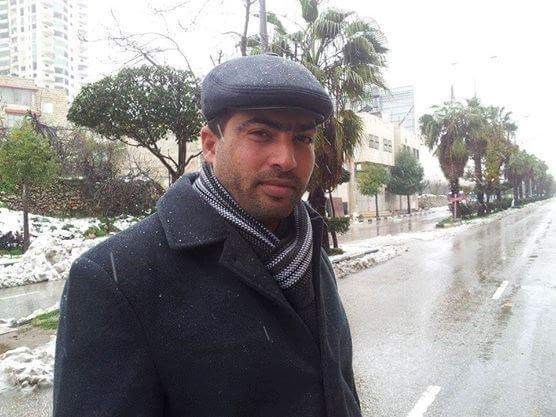
AL-KHALIL – The Israeli Occupation Forces (IOF) arrested at dawn Wednesday the journalist Alaa Jaber Titi, 33, after violently breaking into his home in Aroub refugee camp to the north of al-Khalil.
Family sources told a PIC reporter that more than one hundred Israeli soldiers surrounded Titi’s home and violently broke into his apartment.
The IOF arrested Titi, a reporter at al-Aqsa TV Channel, after carrying out searches in his house.
Titi’s arrest came only a week after his release from PA jails where he was detained for several times by PA security forces, in addition to spending four years behind Israeli bars.
Titi’s detention is considered the second arrest targeting journalists in two days after the journalist Mujahd Bani Mefleh was nabbed by Israeli forces on Monday from his home in Ramallah.
Palestine Center for Prisoners’ Studies pointed out in a statement issued Tuesday that 16 Palestinian journalists are currently held in Israeli prisons.
Journalists’ detention fell as part of Israel’s policy to cover up its crimes and violations against Palestinian people, the statement charged.
The human rights center stated that Israeli deliberate targeting of journalists will never succeed in hiding the truth or beautifying Israel’s image, calling on international media institutions and journalists’ syndicates to exercise pressures for the Palestinian detained journalists’ release.
For its part, Quds Press called on the Israeli authorities to immediately release its reporter Mohamed Muna and all the journalists illegally held in its jails.
Along the same line, Palestinian media forum strongly condemned Israel’s fierce arrest campaign against journalists; most recently was the detention of Titi and Mefleh.
The Forum said that following the two journalists’ arrest in the West Bank, the number of journalists held in Israeli prisons increased to reach 17.
The media forum also denounced the pregnant journalist Juman Abu Arafa’s detention on Monday while leaving al-Aqsa Mosque before being released and prevented from having access to the holy shrine for 15 days.
The forum warned against tight Israeli restrictions imposed on journalists working to reveal settlers’ crimes and Judaization policy in occupied Jerusalem.
“We call on International Federation of Journalists and Reporters Without Borders to bear their responsibilities and break their silence towards Israeli escalated violations against journalists in occupied territories, and to work for their release”, the forum’s statement concluded.
“We will hit your wife, your daughter, and your kids”
International Solidarity Movement | January 22, 2015
Beit Ummar, Occupied Palestine – Early Tuesday morning January 20, 2015 at 3:00 AM, Israeli occupation forces invaded the home of the Abu Maria family in the village of Beit Ummar. The occupation army used explosives to open the front door, surprising the sleeping family. This is the second violent night raid the family has experienced this week. Israeli soldiers were looking for Nidal, Ghassan, and Mohammed Abu Maria, three brothers who were summoned by the Israeli intelligence for questioning.

Window broken during Israeli army nigh raid
The mother of the family, 42 years old, was attacked as soon as the invading soldiers entered the home. Her arms were violently jerked behind her back, and once she was tied up, she was beaten on her head, neck and arms. One of the family’s five sons, Mohye, 18 years old, was cut on his face, neck and fingers. The attacking soldiers demanded he tell them where his brothers were.
The family’s father, Ahmed Abu Maria, has been imprisoned by the Israeli occupation forces for four months. The morning of the attack, Ahmed was taken into interrogation where Israeli investigators informed him that his family would be targeted that night. Ahmed related that he was told: “Tonight we will go to your family’s home. We will hit your wife, your daughter and your kids.” He was not allowed to warn or communicate these threats in any way to his family. The next day, Ahmed was allowed to contact his family and hear what happened to them during the night raid. The family describes this as psychological torture, designed to put pressure on the imprisoned father.

The occupation forces remained at the family’s home until nearly 7:00 AM. When they finally decided to depart the house, the invading soldiers left behind two official requests in Hebrew for the appearance of Nidal, Ghassan, and Mohammed the following morning at 8:30 AM at the prison in the nearby illegal settlement of Kfar Etzion. The family tried to explain to the occupation forces that two of the sons did not live in Beit Ummar, but farther north and it would be impossible for them to make the trip in time.
During the violent invasion at the Abu Maria’s house, the occupation forces also searched the neighboring uncle’s home for the youths. When they did not find the boys there as expected, and the family refused to tell the authorities exactly where they were living, the occupation forces stole over 3000 NIS (approximately $760 USD) from the uncle. This money was his life savings; without it, he does not know how he will survive.
Next morning the 20-year-old middle brother Ghassan Ahmad Abu Maria presented himself at Kfar Etzion prison as requested and was arrested. He is currently being held without charges and the family has been unable to get any information on his condition.
Photos by ISM
Israeli occupation forces demolish house in East Jerusalem
Ma’an | January 21, 2015
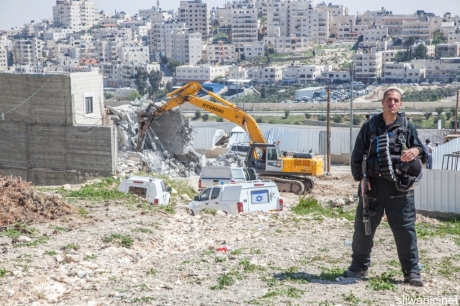
JERUSALEM – Israeli forces demolished a Palestinian house in the East Jerusalem neighborhood of Jabal al-Mukabir on Wednesday, locals told Ma’an.
Israeli forces raided the neighborhood and surrounded a house belonging to Ulayyan Jalal Rabaya before a bulldozer destroyed the property.
Rabaya said he had begun renovation work on the interior of the house some months ago to live there with his fiance, who he is due to marry.
Jerusalem municipality workers posted a demolition order on the property last Monday saying that it lacked a building permit.
Two other house belonging to the Rabaya family are also slated for demolition, with a court decision expected Friday.
Local organizations in the neighborhood called for a sit-in protest outside the Israeli Supreme Court to protest the demolition.
Around 150 demolitions orders are pending in the Jabal al-Mukabir neighborhood, a local official Suleiman Shqeirat said. Most are issued under the pretext that they lack building permits.
Israeli forces stormed the East Jerusalem town of al-Isawiya before dawn Tuesday and demolished a Palestinian house allegedly being built without a license from the Israeli municipality of Jerusalem.
Israel rarely grants construction permits to Palestinians in the West Bank and East Jerusalem, and regularly demolishes structures built without permits.
Israeli bulldozers demolished at least 359 Palestinian structures in the West Bank in 2014, according to the Israeli Committee Against House Demolitions.
During the 1967 war, Israel captured East Jerusalem from Jordan, occupied it, and later annexed it in a move never recognized abroad.
Also Wednesday, the Silwan neighborhood of Jerusalem police detained three Palestinians.
They were identified as Ziad al-Qaq, Mousa Audah and his brother Naji.
Iranian Defense Minister: Iran to Arm West Bank Against Israel
Al-Akhbar | January 21, 2015
Iranian Defense Minister General Hossein Dehqan on Wednesday declared that Tehran will arm Palestinians in the West Bank against the Zionist state, according to the Iranian Fars news agency.
Naqdi stressed, during a memorial service marking the death of six Hezbollah members and an Iranian General killed by Israeli Occupation forces in Syria, that “arming the West Bank is a principal policy of the Islamic Republic and we will use every means and capacity” to fulfill this policy.
Dehqan warned that “the Zionists will receive a crushing response” and added “today the resistance front, as representative of all Muslims, is acting against the Zionists and the Takfiri stream and we will support it in every aspect with all our capacities,” reported Fars news agency.
On Wednesday, at a funeral procession for General Mohammed Ali Allahdadi, killed by Israel in Golan Heights, a Revolutionary Guards commander Major General Ali Jafari said “the path of martyr Allahdadi is unstoppable and will be continued until the liberation of the Holy Quds (Jerusalem) and obliteration of the Zionist regime.”
Jafari also took aim at Israel on Tuesday, saying, “The Zionists should await destructive thunderbolts.”
“They have in the past seen our wrath,” he announced, adding the Revolutionary Guards “will continue its support for Muslim fighters and combatants in the region.”
Mohsen Rezaie, secretary of Iran’s Expediency Council, on his part said that Hezbollah would eventually retaliate against “this recent atrocity,” but that the group was “prudent and has a long term plan and will not be infuriated.”
General Mohammed Ali Allahdadi died alongside six fighters from Lebanon’s Hezbollah resistance movement in the attack Sunday near Quneitra on the Syrian-controlled side of the Golan Heights.
An Israeli security source told AFP one of its helicopters carried out the strike, but a United Nations’ observer force in the Golan raised the possibility that drones may have been used.
The incident came days after Hezbollah chief Hassan Nasrallah threatened to retaliate against Israel for its repeated strikes on targets in Syria, and boasted the movement was stronger than ever.
(AFP, Al-Akhbar)
Israeli forces launch major detention campaign in Nablus camps
Ma’an – 21/01/2015
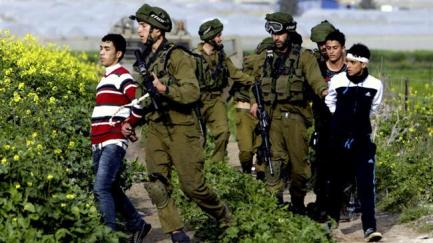
NABLUS – Israeli forces launched a major detention campaign in the northern West Bank refugee camps of Balata and Askar in Nablus district overnight, Palestinian security sources said.
More than 15 young men were seized after forces ransacked many houses.
Palestinian security sources told Ma’an that more than 20 Israeli military jeeps stormed Balata and Askar refugee camps near Nablus at midnight and broke into dozens of houses.
Locals said most of the houses belonged to Fatah supporters. Among those whose houses which were ransacked are Fayiz Arafat, Nasser al-Khatib Abu Aziz, Ahmad Naji Abu Hamada, Muhammad Abu Dari, Abu Mahyub abu Leil, Muhammad Abu Zaabal, Hatim abu Riziq, Talal abu Thira, Abu Hazim Kharma, Atallah Hashash, Bashir Hashash, Hasan Sharaya, Abu Nasim Arayshi and Mahir Ayyad.
The sources identified some of the detainees as Ayman abu Kharma, Muhammad Saqir, Muhammad Murshid, Shahir Ali Mutlaq, Ammar Mithqal, Abed al-Salam Abu Riziq, Mahmoud abu Ayyash, Muhammad Ali Hashash, Hasan al-Ashqar, Kamal abu Rayya, Mujahid Mashayikh, Zuhdi Abu Kharma and Muhammad Abu Arab.
An Israeli army spokeswoman said she was looking into the reports.
Featured Video

Seyed M. Marandi: US-Iran War Inevitable: Kuwait and Bahrain May Fall
or go to
Aletho News Archives – Video-Images
From the Archives
Oil and the Israel Lobby
Reknowned economist M. Shahid Alam offers this excellent critique of Noam Chomsky’s defective analysis of the relative influence of Oil versus the Israel lobby over US foreign policy: … continue
Blog Roll
 Aletho News
- ICC ignored ‘very well-documented’ NATO crimes – ex-Libyan minister
- SNSC secretary dismisses US response to Iran’s conditions as ‘inadequate’
- Sanaa says Taiz roads open, secure for residents, warns Saudi forces
- Iraqi resistance group urges Saudi leadership to admit defeat, lift Yemen siege
- Trump’s Retreat: How Al-Aqsa Flood Took Down the US Empire
- Israel’s Military Actions in Lebanon Grossly Violate International Law — Lavrov
- Seyed M. Marandi: US-Iran War Inevitable: Kuwait and Bahrain May Fall
- Leaders Condemn Ansarallah Attack on Saudi Arabia While Ignoring Illegal War Against Yemen
- Leaked: Britain’s Covert Iraqi Psyops Network
- Yemeni Armed Forces Warn Airlines Against Using Saudi Airports, Exempt Mecca and Medina
- If Americans Knew
- An error has occurred; the feed is probably down. Try again later.
- No Tricks Zone
- Germany’s Green Energy Debacle: High Energy Costs Force Kahla Porzellan to Close After 182 Years!
- New Study: 50 Years Of The Most Aggressive ‘Net Zero’ Policies Can Only Affect The Global Climate By 0.03°C
- US September “Heat” Was No Record…Many Records Set Decades Ago
- Latest European Green Energy Debacle; Portugal’s Largest Flagship Solar Park Insolvent!
- Green Energy Debacle: German Expert Professor Fritz Vahrenholt Warns Of Severe Economic And Social Consequences
- Two More Paleo Reconstructions Affirm Meters-Higher Sea Levels Across Ireland, Brazil 7000-6000 Years Ago
- New Study: Earth And Venus Surface Warmth Largely Explained By Convection And Lapse Rate, Not CO2 Or Radiation
- 2025 Nature Paper Claiming Worsening Global Drought Gets RETRACTED …Heavily Flawed
- New Study: ‘Global Drought Shows No Detectable Recent Acceleration Under Climate Warming’
- Economic Masterminds: German Socialists Suggest Taxing Productivity Gains Stemming From Using AI

