Rabbis plan to build temple on Al-Aqsa ruins
![[undated photo from Haaretz]](https://www.middleeastmonitor.com/images/article_images/middle-east/israelis-jews-discussing-temple-plans-al-aqsa-dome-background.jpg "[undated photo from Haaretz]")
Undated photo from Haaretz
MEMO | December 22, 2014
In the clearest indication of the growing dangers threatening Al-Aqsa Mosque, in an opinion piece published on Saturday, Haaretz discussed a group of rabbis who met to discuss the scheme for the establishment of the Third Temple on the ruins of the mosque. The newspaper published a photograph of a number of rabbis and engineers studying a map of Al-Aqsa Mosque.In a piece written by Professor Ronnie Ellenblum entitled “Bells are ringing for the ultra-Orthodox and Secular” [hebrew], the paper discussed the future of Al-Aqsa Mosque which Jews refer to as the Temple Mount.
Although the paper did not identify the rabbis who appeared in the picture, one of them has been identified as Rabbi Yisrael Ariel, president of the Temple Institute, a religious authority that is considered the most enthusiastic about destroying Al-Aqsa Mosque and establishing a temple on its ruins.
The research also involved Rabbi Yehuda Etzion, who was responsible for implementing the Hebron University massacre which left 15 students dead or wounded, and was also responsible for implementing three assassination attempts against elected mayors in the West Bank, one of which injured the then Mayor of Nablus Bassam Shakaa, leaving him permanently disabled.
Israeli Prime Minister Benjamin Netanyahu had pledged to the king of Jordan not to take any steps that would change the status quo at Al-Aqsa Mosque.
Miri Regev, MK for the Likud party led by Netanyahu, announced that she will not allow the continuation of the status quo Al-Aqsa, stressing that the next Knesset will issue a number of laws that will promote Jewish sovereignty over it.
Israeli Channel 10 quoted Regev saying on Thursday that the consecration of Jewish sovereignty in Al-Aqsa Mosque is the most important embodiment of the political, religious and cultural sovereignty of “the Jewish people on their land”.
The channel noted that this view is supported by the ministers of economy and housing, Naftali Bennett and Uri Ariel, Chairman of the Foreign Affairs and Defence Committee Ze’ev Elkin, the head of the coalition bloc in parliament, Danny Levin.
The Customs Union and Israel’s No-State Solution
By Amal Ahmad | Al-Shabaka | November 29, 2014
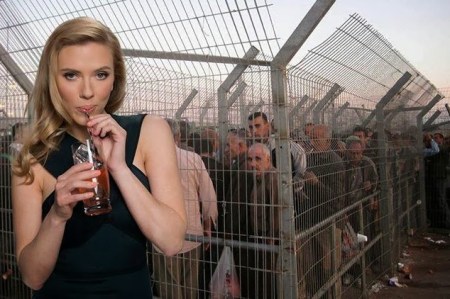
Trade regimes between nation states are either autonomous, implying that nation X has no trade obligations towards nation Y, or preferential, establishing low barriers between X and Y and binding them with reciprocal obligations and benefits.
Customs unions are a form of preferential trade, although they take it one step further by establishing uniform barriers against the rest of the world, thereby harmonizing the external trade policy of the union’s member states. Israel and the Palestinian territory have been bound by a customs union de facto since 1967 and de jure since 1994.
Theoretically, a customs union carries mutual benefits to the member states. However, as the United Nations Conference on Trade and Development noted in a 1988 report, between 1967 and 1988 the customs union between Israel and the OPT treated the two economies as dualisms that entrenched the status quo, which, at that time, had established the OPT as a reservoir of cheap labor and Israel as a production and export powerhouse.
Importantly, the arrangement allowed for the unrestricted flow of Israeli goods into the Palestinian economy. Since then, the state of the Palestinian economy has only worsened, and its dependence on imports from Israel has deepened.
The economy is marked by industrial stagnation and the decline of other productive sectors, particularly agriculture, as well as growing trade deficits and a weak export base. The customs union has been key to this process of stagnation, keeping the Palestinian economy industrially weak, underdeveloped, and dependent on imports.
Such skewed results are to be expected given the vast asymmetry of productive capacity between Israel and the OPT. The harm to the Palestinian economy has been further magnified by Israel’s ability to impose at will, as the occupying military power, a one-sided and inconsistent implementation of the union.
Israel’s use of duty-free import quotas is a particularly egregious example of how Israeli actions have magnified the skewedness of the customs union (see the recent analysis by the Palestine Economic Policy Research Institute, MAS). As part of its free trade agreements with other countries, Israel is able to export a certain amount of its goods to country Z, duty free or at a discounted customs rate, while pledging to import a certain amount of goods from country Z at a similarly discounted rate. The goods Israel pledges to import from its partners are often agricultural commodities and food products, which otherwise enjoy a high level of commercial protection in Israel.
Since signing the Paris Protocol in 1994, Israel has given the Palestinian Authority 20 percent of its import quotas. So, if Israel pledges to import 2,000 tons of milk from country Z duty-free, Palestinian retailers can apply for a license (given by Israel) to import up to 400 tons of that product duty-free. Obviously, this is advantageous for the Palestinian retailers who reap a profit margin by buying the imported milk for less while selling it at the same price.
However, the problem is greater than meets the eye. Israel gives Palestinians 20 percent of the import quota but none of the corresponding export quota. For example, if country Z pledges to buy 2,000 tons of tomatoes from Israel in exchange, 100 percent of these tomatoes come from Israeli producers.
Effectively, then, Israel is using the Palestinian economy to divert pressure off its own market by reducing the penetration of cheap imports by 20 percent, while reserving the full benefits of export deals to itself. This example underscores Israel’s ingenious protectionist strategy and its use of the Palestinian economy simply as an appendage when convenient.
Any benefit to Palestinians in the process is purely ad hoc and actually comes at the expense of productive industry.
No Way Out
Many analysts have, over the years, argued that if the implementation of the customs union were “better” or more in line with theory, then it would be optimal for the OPT’s trade and development. However, such calls to “rescue” or “modify” the union obfuscate the real problems facing the OPT, including the vicious cycle and vast asymmetry with its largest and most “free” trading partner, Israel.
In theory, two alternatives exist. The first alternative would involve a relatively closed (non-preferential) arrangement or an asymmetric free trade agreement.
Such arrangements would restrict the access of Israeli imports to the Palestinian market by instating barriers (tariffs) against these imports, temporarily protecting Palestinian producers and encouraging industrial development. However, such arrangements, including a standard free trade agreement, involve rules of origin to distinguish which goods came from where and therefore require the presence of a hard border between the partners.
In other words, such an arrangement could only be implemented in a post-conflict two-state solution scenario.
The second alternative would be to keep trade open but under the auspices of a future single bi-national state that would be responsible for the well-being of both Israeli and Palestinian producers. Such a state would manage a common fiscal platform with targeted support for the backward areas, implying protection of Palestinian producers via fiscal transfer instead of external tariffs. Clearly, this option, too, could only be implemented in a post-conflict one-state solution scenario.
In practice, however, no alternatives exist. As shown above, all alternative arrangements, regardless of their economic merits, presuppose either the delineation of internal borders or their elimination, translating into either a sovereign Palestinian state or an integrated bi-national state.
However, this policy brief argues that both these political scenarios undermine Israel’s strategic interests. All other trade arrangements, therefore, are off the table, regardless of economics, except for the one that requires neither borders nor integration: a customs union.
Indeed, the major benefit of the customs union to its Israeli architects has been the postponement of the border issue and keeping borders interim. Penetration into the Palestinian market is of minor importance to the Israeli economy and could have been achieved via other regimes such as a free trade area.
The union, then, is a choice made out of political necessity rather than economic desirability. It illustrates that the only “solution” for Israel is a no-state solution where the Palestinians are neither sovereign nor integrated, but perennially contained, with repercussions across the political and economic spheres.
The Importance of Borders — or Lack Thereof
In the rest of the world, politics reflect underlying economic interests. However, in the OPT, economic arrangements reflect political interests, and to a perverse degree. Israeli interests are imposed through military power, which is why the Israeli military was the “economic” administrator of the OPT from 1967-1988 and remains the main Israeli point of liaison with today’s Palestinian administrators.
Indeed, the political border considerations of Oslo dictated the economic trade arrangements of the Paris Protocol: Given Israel’s insistence on precluding final status border arrangements, the customs union was the only viable option.
Rather than an economically desirable choice, it was an outcome of political necessity for Israel, and there is substantial evidence that the Palestinian side was blackmailed into accepting the union after Israel threatened to stop Palestinian labor flow, as seen in the documents produced by the Ben-Shahar Committee and the Israeli government at the time. Furthermore, documents by the Bruno Committee as far back as 1967 attest to the far-reaching history of border considerations dictating “impure” trade integration of the OPT with Israel.
Instead of elaborating on the potential significance to Palestinian trade of this political trajectory, the literature on the customs union has managed to ignore it altogether, preferring to keep the analysis “politics-free” beyond vague references to the Israeli occupation while focusing on post-conflict frameworks.
In the case of the Palestinians, however, this should be the point of departure for analysis. Border considerations reflect strategic interests that offer the ultimate political economy context for the trade debate.
Not for nothing were the Oslo Accords, and, by extension, the Paris Protocol, incomplete and vague contracts that did not discuss many contingencies (the protocol is 35 pages compared to the 1,000+ page NAFTA) and were, most importantly, interim in nature. Several Palestinian economists, including Raja Khalidi as well as Adel Zagha and Husam Zomlot, point out that the economic problems in the OPT do not have an economic solution, and that the fundamental problem of the Paris Protocol is political.
What this policy brief argues is that the point of the protocol was not to give Israel the upper bargaining hand in final status, given that incomplete contracts favor the stronger party. The aim was to put off final status altogether in line with Israel’s policy since 1967. Further, this brief argues that the Zionist project lies at the heart of Israel’s desire for and design of an incomplete and interim contract with the OPT.
Zionism’s desire for a Jewish majority and for differential national rights for Jews within that majority has, as Mushtaq Khan has argued, dictated a political reality in which the Israeli state cannot delink from the OPT but also cannot swallow it into a single state.
A sovereign Palestinian state does not solve “the Palestinian problem” inside Israel, while one bi-national state defeats the Zionist national project outright. From a Zionist perspective, the best, or indeed only, solution to the Palestinian “problem” of demography and claim to rights, is a no-state solution, in which the Palestinians are contained manageably and in perpetuity. Israeli minister of economy Naftali Bennett recently explicitly expressed this as a “plan for peace.”
Thus, the customs union will persist so long as Israel’s interest in maintaining what could be termed “strategically absent” borders persists. This understanding helps to explain the historical endurance of an “economic” union that serves no rationale in theory and is full of contradictions in practice.
The relevance of this analysis to assessing developments in Israel-Palestine is illustrated by the recent controversy over customs stations. Customs stations are stations for collecting tariffs on imports. They are not supposed to exist in customs unions where trade between member states is supposed to be free. However, they are sometimes placed along an internal border to begin the transition to a free trade agreement or to more protectionist agreements.
Some economists have long advocated the establishment of customs stations between Israel and the OPT in the hope that the stations could pave the transition to a more economically desirable trade regime. Furthermore, this thinking goes, as a symbol of fiscal autonomy for the Palestinians, such stations might pave the way for political autonomy. However, this reflects a failure to comprehend the political containment context, which precludes the possibility of these stations ever translating into a functioning, sovereign border.
This reality became crystal clear when, after six months of secret negotiations, the Israeli government and the PA signed an agreement to “tighten cooperation” on tax and customs in July 2012. The agreement reevaluated the tax clearance mechanism and established new customs stations. The stated purpose was to reduce funds leakage from Israeli customs to the PA and to improve Palestinian customs capabilities.
The PA, no doubt, signed out of desperation given that even a marginal improvement in customs revenue, which constitutes 70 percent of the non-aid budget, would help. And they joined the Israeli signatories in lauding the deal as a step towards Palestinian fiscal and political sovereignty.
In fact, the deal did not foresee a better reality but rather reflected an extremely adverse one. Tweaking the union to secure incremental improvements certainly brought some small gains in terms of revenue but none at all for Palestinian productive capabilities since it left the majority of trade flows with Israel intact, maintaining the asymmetry.
The fact that the custom stations set out by the deal were and are being placed along Israel’s Separation Wall, the illegal and de facto structure that penetrates the West Bank, confirms Israel’s commitment to containment along interim lines that separate the populations while keeping borders strategically absent.
The customs stations issue highlights a crucial point: Analyses of trade and of the economy more broadly must be situated in the relevant context of Israel’s policy of containment as conflict management, including its pursuit of a no-state solution whereby borders are strategically absent and the Palestinians and their economy are contained manageably and in perpetuity.
Post-conflict frameworks, which assume a final status with defined borders and underpin the calls for the different trade scenarios described above, may appeal to a community within Israel and Palestine and internationally that is desperately looking for a two-state solution. However, they obfuscate the real issues facing the Palestinian economy and, in doing so, validate and help to sustain the adverse status quo.
Bringing Borders Back: Refocusing the Israel-Palestine Trade Debate
Israel’s strategic containment lies at the heart of the Palestinian economic challenge. In an economy as underdeveloped and severely deformed as the Palestinian economy, rigorous development policy is required to overcome the vicious cycles and initiate virtuous developmental ones.
The exact policies are highly context-specific and are often the result of trial and error learning processes. But the political economy requirements are clear: There must be a sovereign centralized power within defined borders that can navigate the fiscal platform for state taxation and spending policies. The fiscal platform is necessary not only for building local capacities and incentives, but also for mediating between the country’s stage of development and the competitive pressures of international markets, and for supporting nascent capitalists.
Here lies the full tragedy of the Palestinian economy. For trade to serve development goals, certain fiscal capacities like import substitution and export promotion are required especially in the initial stages. But since development more broadly requires a fiscal base that in turn presupposes a sovereign, then the current containment of the OPT and their preclusion from any sovereign is the worst possible scenario for any developing economy.
The absence of both fiscal transfer within a one-state Israel-Palestine and sovereign protection under a Palestinian state incapacitates the taxation capabilities at the heart of all development processes and prevents any strategy of supporting domestic capability. The contained economy will necessarily operate in an entirely ad hoc fashion that is catastrophic not only to long-term development but to short-term viability.
What can be done to redress the situation? First, development actors should eschew ex-post conflict frameworks, including state-building and final-border scenarios, as inappropriate to understanding, assessing, or planning the Palestinian economy.
Rather, their point of departure must be an understanding of not only the subjugation of the Palestinian economy to Israel’s mode of conflict management but also to its specific kind of conflict management, i.e., containment. Otherwise, it is impossible to grasp the real roots of the ongoing deterioration of the economy and the absence of development prospects
Second, if the international community truly wants to support Palestinian development, it must confront, expose, and challenge Israel’s containment of the OPT. This includes the rejection of the façade of a two-state solution or “peace process”” and an acknowledgement of the way that Israel is managing the Palestinian population and their economy in perpetuity, refusing to consider any arrangement that separates them into a sovereign state (see e.g., recent statements by Prime Minister Benjamin Netanyahu and Justice Minister Tzipi Livni) or to integrate them into a bi-national state.
In addition, it is past time for the international community to call out the racist vision, of differential rights for Jews and non-Jews within Israel as well as in the OPT that underpins this strategy. While such positions by the international community would not guarantee a “solution” one way or the other, they would certainly support the struggle against what might otherwise be perennial political containment and economic backwardness.
In short, there is a need to refocus debate, analysis, and action on Israel’s containment strategy — a de facto no-state solution for the OPT — and the repercussions of this strategy on the economic sphere. Until then, the underdevelopment of Palestinian trade and the economy more broadly will remain institutionally guaranteed.
Al-Shabaka is an independent non-profit organization whose mission is to educate and foster public debate on Palestinian human rights and self-determination within the framework of international law.
Amal Ahmad is a Palestinian economic researcher whose work focuses on fiscal and monetary relations between Israel and Palestine.
Israel makes mosque a museum, while 10,000 have nowhere to pray
Ma’an – 21/12/2014
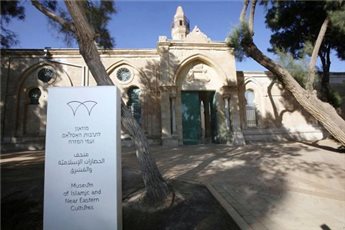
BEERSHEBA – Authorities in the southern Israeli city of Beersheba have recently converted an historic mosque into an Islamic museum despite the fact that 10,000 local Muslims still have nowhere to pray, locals said.
Locals told Ma’an that an exhibit showcasing a collection of Muslim prayer rugs was recently opened in the building that was formerly the Great Mosque of Beersheba, which was once used regularly as a mosque before the 1948 expulsion of 750,000 Palestinians from what became Israel.
The exhibit, which locals say has no Arab or Muslim member on the technical supervisory team, will continue until June 2015.
The move comes after decades of protest from the area’s 10,000-strong Muslim Palestinian community, composed primarily of local Bedouins whose ancestors survived the Israeli expulsions as well as Palestinian citizens of Israel who have moved to the city from other parts of the country.
Representatives of the community have long petitioned Israeli authorities to allow them to open the mosque for daily prayers or at least once a week for Friday prayers.
However, the demands have been repeatedly rejected, and in 2011 the Israeli Supreme Court rejected a request for it to open as well, allowing the building to be transformed into a museum focusing on Islam.
The irony is not lost on local Palestinian Muslims, who have long complained that Israeli authorities neglect Palestinian heritage and frequently appropriate Palestinian symbols and architecture.
The Great Mosque of Beersheba was built in 1906 during the Ottoman era through donations collected from the Bedouin residents of the Negev.
It remained an active mosque until the Israelis occupied the city in 1948 and turned it into a detention center and headquarters for a magistrate court, following the expulsion of Beersheba’s approximately 6,000 Palestinian residents, mostly to Gaza.
Thousands of Jewish immigrants were subsequently brought in to populate the city, while the Palestinian refugees were never allowed to return, despite mostly living only kilometers away.
In 1953, the Israeli authorities turned a portion of the mosque into a museum, which was recognized in 1987 by the Israeli department of archeology as the Negev Museum.
However, in 1992, the museum was shut down because the building had become vulnerable. It has been retrofitted recently, however, paving the way for its reuse.
Farming Without Water. Palestinian Agriculture in the Jordan Valley
EWASHPalestine | December 7, 2014
The movie talks about Palestinian agriculture in the Jordan Valley. Nowadays most of the agriculture in the area is cultivated by illegal Israeli settlers who appropriated land and water from Palestinian farmers. Having limited access to water Palestinian farmers are forced to change their traditional agricultural practices or even leave their original places of living in search of better life.
US Congress Passes Bill Increasing Weapons in Israel by $200 Million
By Ken Klippenstein and Paul Gottinger | Reader Supported News | December 17, 2014
The US Senate has unanimously passed a bill supplying Israel with military equipment that would enable it to execute an air strike on Iran. The bill, titled the US-Israel Strategic Partnership Act, includes the sale of advanced aerial refueling tankers, which refuel fighter jets in midflight – necessary for Israeli fighter jets to reach targets in Iran. This is particularly noteworthy since the Bush administration had refused to provide Israel with refueling tankers.
The sale of the refueling tankers follows a 2013 arms sale to Israel that included V-22 Ospreys. Kenneth Pollack of the Brookings Institution stated shortly after the sale that Ospreys are “the ideal platform for sending Israeli special forces into Iran.”
The bill, which was also passed in the House earlier this year, expands the US weapons stockpile in Israel by a value of $200 million, to a total of $1.8 billion. Israel used weapons from this stockpile during its most recent military operation against Gaza, “Operation Protective Edge.” Israel also used the stockpile during its 2006 invasion of Lebanon.
The bill has generated concern among experts. Mike Coogan, legislative coordinator at US Campaign to End the Israeli Occupation, told us that the air refueling capabilities, expanded satellite cooperation, and access to US satellite data that the bill would grant Israel “sounds quite dangerous.”
“It sounds like a formula for attacking Iran.”
The bill may also be in violation of the Leahy Law, which prohibits US weapons exports to military units responsible for consistent human rights violations. Israel’s most recent major military offensive, “Protective Edge,” would seem to have violated elementary human rights. […]
Coogan was also critical of the expanded access to weapons stockpiles that the bill would afford Israel. He said, “it’s morally, financially, and legally problematic to continue to give Israel access to the weapons stockpiles, particularly in light of how they used them in their war on Gaza this summer.”
“It looked like, for a time, the Obama admin actually suspended a shipment of weapons to Israel – specifically, hellfire missiles – but then apparently started to resend those. But the thought behind the original suspension was that Israel was using it in violation of international law and US law.”
“I think it was shown by numerous human rights organizations that Israel was using ammunition stored in those forward-deployed stockpiles in clear violation of US and int’l law. So it’s a mystery to us why a country of laws – purportedly – would continue to give Israel access to weapons that it uses in flagrant violations of those laws.” … Full article
Ken Klippenstein can be reached on Twitter @kenklippenstein or via email: ken@readersupportednews.org
Paul Gottinger can be reached on Twitter @paulgottinger or via email: paul.gottinger@gmail.com
Palestinians continue the struggle against the Adei Ad outpost
International Solidarity Movement | December 20, 2014
Turmusaya, Occupied Palestine – Hundreds of Palestinian children, women, and men gathered at Turmusaya on Friday December 17th to complete the tree planting began by Palestinian Authority minister Ziad Abu Ein, who was killed by Israeli soldiers on Friday December 10th.
“Ziad was planning to plant olive trees on private Palestinian land near the illegal outpost of Adei Ad, but was violently prevented from reaching the site by the Israeli military who assaulted and killed him. We thought that after killing the minister, yesterday the military would allow us to plant trees peacefully but we found the same soldiers prepared to use even more violence against us,” said human rights defender Abdullah Abu Rahmah.
“Despite the occupation forces’ violence, we planted trees in the place where Ziad had planned to plant them. Despite their violence, we will continue to struggle with the farmers whose land is stolen and the farmers who are prevented from cultivating their land by the occupation.” Abu Rahmah was injured by a stun grenade that was thrown directly at him while he was planting an olive tree.
After praying near the spot where the minister was stopped by the army, protesters with olive trees climbed the hill to the site where Abu Ein had intended to plant trees. They began planting under a barrage of tear gas; stun grenades, and beatings by Israeli border police.

Mohammed Khatib
Two Palestinian activists, Mohammed Khatib and Jaffar Hamayel, Israeli citizen and ISM co-founder Neta Golan, and US citizen and activist Danika Padilla, were all violently arrested.

Danika Padilla, to the left, and Neta Golan as they are arrested.
In another area of the protest, youths responded to the military assault with stones as the army sprayed demonstrators with putrid water known as “skunk”, fired rubber-coated steel bullets and .22 caliber live ammunition. Many demonstrators suffered severe tear gas inhalation and two Palestinians sustained leg injuries from the .22 bullets.
The four arrested activists were taken to the Binyamin settlement police station. Neta and Danika were released in the early hours of this morning. Mohammed and Jaffar have been charged with assaulting and disturbing the border police and rioting after being told to disperse. They have been taken to the Russian Compound police station in West Jerusalem where they will remain in detention until their court date tomorrow, December 21st, at Ofer military court.

Jaffar Hamayel
~
More from Yesh Din:
The outpost of Adei Ad sits on land belonging to the villages of Jalud, Al Mughayer, Qaryut and Turmusaya. Twenty-six percent of the constructed area of the outpost sits atop private Palestinian land, while the rest was built on “public land” allotted by the Settlement Division of the World Zionist Organization (Hebrew). The Palestinian agricultural land around the outpost is classified as private and unregistered.. As a direct result of the building of the outpost, residents of the four villages have systematically lost access to their land and found themselves victims of violence by Israeli civilians. Between 1998 and 2012 we managed to document 96 criminal incidents around the outpost. It is important to note that these are not all the criminal incidents that took place near the outpost, but merely those we managed to document (the actual number must be assumed to be significantly higher). Most of the incidents consisted of theft or vandalism, although 22 percent included physical assault or threats by use of a weapon. The Samaria and Judea Police Department (SJPD), as usual, proved incompetent: of the 56 cases in Yesh Din documented a complaint filed with the police, 46 – 80 percent – were closed due to the failure of the police investigation. We must further note that since April 2013, when our report was published, Yesh Din investigators documented 13 more incidents around Adei Ad, one of which included violence.
The violence surrounding Adei Ad has a clear, ideological reason: to strike fear in the heart of the Palestinians and dispossess them of their land. Israeli civilians have taken over this land rapidly: in 1998 the size of the outpost was 15,554 square meters; in 2010 it ballooned into 465,331 square meters, growing some 30 times in size. At the time our report was published, 26 families lived in Adei Ad.
Due to the presence of these 26 families, the situation of the villages whose land was taken over by Adei Ad has deteriorated greatly. The fear of working your land with the knowledge that you may be attacked by outlaws, that no one will protect you and that the area’s ruler will turn a blind eye, leads Palestinians to abandon their villages. While we do not have data on Al Mughayer and Turmusaya, we do know that 6,000 people have already left Qaryut, leaving only 2,800 residents. Of the 1,000 residents of Jalud, 400 have abandoned the village.
The very presence of Adei Ad harms the right of the Palestinians to their property with the support of the authorities (these are mostly agrarian communities who make their livelihood off of the land). As soon as the outpost was built, the army hastened to declare areas around it as closed off to Palestinians. Sometimes these took the form of undocumented, oral orders (which cannot be appealed), while other times these were official orders. But when the rights of the Palestinians to the land collided with the lack of rights of the squatters, the army stood (and continues to stand) by the latter time and time again. This harms not just the right of the Palestinians to their land, located in Area C and under full Israeli military and civil control, but also their right to freedom of movement and right to work.
And all this so that 26 families can lord over a territory of 465,321 square meters (not including a much larger region around the outpost, where Palestinians are routinely denied entry). The economic existence of four villages is endangered – leaving their residents defenseless in the face of ideological violence – in the name of 26 families of the chosen people, who are sentenced in one justice system while their neighbours are sentenced in another.
Yet Adei Ad is but one outpost. There are about 100 of them, and a 100 more proper settlements.
Just 2% of pledges paid for rebuilding Gaza
MEMO | December 20, 2014
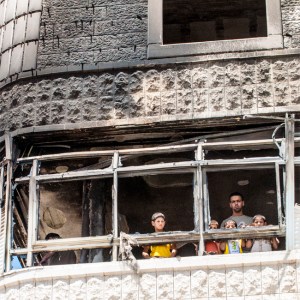 Palestinian and international officials have revealed that only 2 per cent of the pledges made by donor states to rebuild the Gaza Strip have actually been paid. The pledges were made in a donor conference in Egypt two months ago. A total of $5.4 billion was pledged for the reconstruction of the beleaguered territory after it was destroyed during Israel’s latest war against the civilians of Gaza during the summer. Of the major donors, Qatar pledged $1 billion, Saudi Arabia $500 million and the EU $780 million.
It was expected that half of these pledges would have been spent on rebuilding houses and infrastructure in the Gaza Strip and the remainder would boost the Palestinian Authority’s budget. According to UN officials, just $100 million has been handed over from donors.
“We received funds and pledges worth about $100 million for shelters and house renovation,” said Robert Turner, the Director of UNRWA Operations in Gaza. “This money will run out in December in the middle of a harsh winter.” The shortfall, he added, is $620 million.
Palestinian Housing Minister Mofeed Al-Hasayneh said that the Arab states did not pay anything from their pledges for this month. The Europeans, however, have paid “a few millions”.
Charting dependency through the PA’s draft resolution to the UNSC
By Ramona Wadi | MEMO | December 18, 2014
“The Palestinians made sure to remove any mention of Israel’s status as a Jewish state from the draft, which means this is not a peace process, it’s a declaration of war.” The comment by Yuval Steinitz, Israel’s minister of intelligence, international relations and strategic affairs, was a prelude to further attacks upon the Palestinian Authority’s resolution submission to the UN Security Council, for Palestinian statehood based upon the 1967 borders.
Israeli responses to the draft resolution were predictable. Steinitz declared the resolution a form of incitement “against our existence”, necessitating an Israeli response within Palestine and the international community. Foreign Minister Avigdor Lieberman declared the resolution a “Palestinian gimmicks” and urged the UNSC to divert its focus elsewhere to deal “with issues of true importance in the world”, while Housing Minister Uri Ariel advocated for retaliation in the form of further settlement expansion in Jerusalem and the West Bank.
Constructing an alleged “declaration of war” out of a draft resolution hampered by international impositions and resolutions interpreting history from the dominant narrative is ludicrous. The resolution fails to address decolonisation, affirms the fragmentation of Palestinian territory, subjugates itself to economic dependence and entrenches the colonisation process by agreeing to “a third party presence” that would supervise Israel’s military occupation – all of which presumably lead to the “vision of a region where two democratic states, Israel and Palestine, live side by side in peace within secure and recognised borders”.
The fallacy of recognised borders – the alleged desired outcome – should give enough indication of both Israel’s insistence upon finalising the colonisation process, as well as the PA’s commitment to ensuring its completion. The discrepancy between “borders” and “democratic states” is an issue that resurfaces constantly and remains unchallenged, due to the Palestinian leadership’s attempts to legitimise Palestinian rights through a colonial framework that fragments history. Israel’s establishment and subsequent recognition following the Nakba was achieved through force and terror, yet the resolution eliminates the foundations of the settler-colonial state to restrict “the inadmissibility of the acquisition of territory by force” to 1967.
Any validity which the resolution might have is diffused by the mechanisms that continue to cement the colonisation process. The lack of a congruent ideology that would strengthen Palestinian resistance is evident through the insistence of utilising international law and institutions for partial land reclamation, despite proof of these structures providing impediments to Palestinian liberation.
Symbolism, commencing with the so-called international year of solidarity with the Palestinians and culminating in recent efforts to garner a veneer of recognition at international level, have characterised Palestine’s on-going deterioration during this year. The US, meanwhile, is attempting to foment further oppression by scrutiny and opposition to “language” used in the draft resolution, despite the framework’s consistency with precedents that consolidate colonisation. What the PA has achieved through the draft resolution is the fragmentation of history in order to persist with futile diplomatic efforts, effectively expressing leniency for Israel’s state-sanctioned violence and negating, despite the historical enshrining in resistance charters, the Palestinian struggle for liberation.
Elie Wiesel: Conscience of Mankind and Saintly Humanitarian or Liar, Hypocrite, and Terrorist?
By John Taylor • Unz Review • December 18, 2014
Elie Wiesel presents himself as a humanitarian whose personal narrative gives him special license to sermonize about tolerance and non-violence. Wiesel: “Wherever men and women are persecuted because of their race, religion, or political views, that place must — at that moment — become the center of the universe.” More Wiesel: “Never again becomes more than a slogan: It’s a prayer, a promise, a vow. Never again jail and torture. Never again the suffering of innocent people, or the shooting of starving, frightened, terrified children.”
Yet Wiesel, the putative guardian of the weak and the innocent, is in conflict with Wiesel, the Zionist and shameless apologist for Israel’s on going ethnic cleansing campaign and serial butchery in Lebanon and Gaza. “I swore never to be silent whenever and wherever human beings endure suffering and humiliation. We must always take sides.” In the Middle East Wiesel has made his choice and it is to champion the powerful against their victims and to defend the occupier against the dispossessed.
In his Nobel Peace Prize acceptance speech Wiesel claimed to be sensitive to the plight of the Palestinians “but whose methods I deplore when they lead to violence. Violence is not the answer. Terrorism is the most dangerous of answers.” Wiesel denounced Palestinian terrorism but conveniently ignored his own membership in a Jewish terrorist group, the Irgun, which he joined in Paris in 1947 as a translator, journalist and propagandist.
Obviously Wiesel knew the Irgun was a terrorist group when he became a member. Its European HQ fled Rome for Paris after an Irgun cell blew up the British embassy there. Furthermore by the time Wiesel joined the organization, it had established a reputation for bombing and shooting scores of innocent Arabs in Palestine. In the 1930s the Irgun planted deadly bombs in Arab marketplaces, most notably in Jaffa, Haifa, Jerusalem and Tel Aviv. They also blew up buses and trains. By the mid-1940s the Irgun put the British colonial government in its sights. In 1946 the terrorist group killed 91 people in a Christmas bombing of the King David Hotel. They also kidnapped, tortured and hanged two British Army sergeants. And in an outrage which occurred after Wiesel joined the Irgun, the group killed some 254 unarmed Palestinian civilians at Deir Yassin in order to terrorize Palestine’s Christian and Muslim population and encourage their flight.
Despite working for a terrorist organization that was instrumental in driving the Palestinians from their homes during Israel’s so called War of Independence, Wiesel quite dishonestly asserted in a New York Times op-ed that “Incited by their leaders, 600,000 Palestinians left the country convinced that, once Israel was vanquished, they would be able to return home.” Not only did Wiesel know the truth about the Palestinian Nakba from his work for the Irgun, but when his piece appeared in the Times in 2001 Israeli historians like Benny Morris had already entirely debunked the myth of voluntary Palestinian flight. Further, Israeli Prime Minister Yitzhak Rabin’s autobiography revealed David Ben-Gurion’s order to drive out the Palestinians:
“While the fighting was still in progress, we had to grapple with a troublesome problem…the fate of the civilian population of Lod and Ramle, numbering some 50,000… We walked outside, Ben-Gurion accompanying us. Allon repeated his question: ‘What is to be done with the population?’ Ben-Gurion waved his hand in a gesture which said, ‘Drive them out!’… The population of Lod did not leave willingly. There was no way of avoiding the use of force…”
Lying about Israeli ethnic cleansing was not enough. Wiesel, ever the propagandist, even tried to discredit the Palestinian struggle against Zionism by conflating indigenous Arab resistance with Nazism. Wiesel wrote in his autobiography, All Rivers Flow to the Sea, “gangs loyal to the grand mufti, the pro-Hitler Haj Amin el-Husseini, former ally and protégé of Himmler, attacked Jewish villages and convoys.” Of course Wiesel said nothing about Avraham Stern, leader of an Irgun splinter group, the Lehi, who actually sought an alliance with the Nazis against Great Britain during World War II.
Wiesel has said “Indifference, to me, is the epitome of evil” and “When human lives are endangered, when human dignity is in jeopardy, national borders and sensitivities become irrelevant”. Nevertheless in the face of the Palestinian struggle to end years of Israeli occupation, land theft and brutality, Wiesel, when he isn’t blaming Zionism’s victims, is either silent or indifferent: “…whenever Israeli police or soldiers react excessively to violence from Palestinian soldiers or civilians. I rarely answer.” And concerning the IDF facilitated massacres in the Sabra and Shatila refugee camps in Lebanon: “I don’t think we should even comment…” What ever happened to Wiesel’s signature commonplace “I swore never to be silent…”?
During this past summer’s Israeli assault on Gaza, Wiesel accused the Palestinians of using children as human shields, saying in a full page ad in the New York Times, “Jews rejected child sacrifice 3,500 years ago. Now it’s Hamas’ turn.” Truth is, of course, the Israelis have not given up child sacrifice if it is Arab children doing the dying. And Israel’s exculpatory explanation that ‘the Arabs forced us to murder their kids’ has been used for a long time, for example to shield Israel from international criticism during bombing campaigns against Egypt in the early1970s and repeatedly in Lebanon.
As for Wiesel’s human shields accusation itself, western media reporting from inside Gaza during operation Protective Edge in August have pretty much discredited him. Were the four cousins playing soccer on the beach killed by Israeli naval gunfire human shields? What about the young children hit with a smart bomb while feeding the family ducks? Human shields too? And the 500 or so other dead children? Considering Israeli willingness to hit any target in Gaza from UN schools to water treatment plants to hospitals, why would Hamas bother to use kids as shields? The presence of civilians hasn’t deterred Israeli attacks in Gaza or elsewhere; good examples being the shelling of the UN compound at Qana in Lebanon and the bombing of Bahr el-Baqar primary school in Egypt
If Wiesel had a scintilla of humanity he would be honest enough to admit that Israel is killing children in Gaza because the Palestinians have chosen to resist Israeli ethnocide of which the long term siege of Gaza is an integral and essential part.
Wiesel has written repeatedly to defend Israeli government policy in Jerusalem. In 2001 Wiesel stated, “As for Jerusalem, would it not be better to resolve all other pending questions first and defer until a later time decisions about the fate of the holiest of cities?” More recently, in a 2010 letter to President Obama, Wiesel asking him not to “pressure” the Israelis to make concessions to the Palestinians in Jerusalem. Wiesel’s intent is clear: To buy time for the Israelis to finish their campaign of ethnic cleansing in the Arab neighborhoods of east Jerusalem. Wiesel, clearly a man not afraid to lie, even went so far as to claim,”… contrary to certain media reports, Jews, Christians and Muslims ARE allowed to build their homes anywhere in the city” to which Jerusalem resident and former MK Yossi Sarid replied, “Not only may an Arab not build “anywhere,” but he may thank his god if he is not evicted from his home and thrown out onto the street with his family and property…”
Wiesel states that Jerusalem “belongs to the Jewish people.” He asserts an exclusive Jewish claim to the city saying Jerusalem “is mentioned more than six hundred times in Scripture—and not a single time in the Koran,” as if this should somehow minimize Muslim veneration and attachment to the city. And he says nothing about the importance of Jerusalem to Christianity or that the place name appears 140 times in the New Testament. Wiesel may be right when he declared “No human race is superior; no religious faith is inferior. All collective judgments are wrong. Only racists make them.” But one may doubt he delivered the aphorism with self-criticism in mind.
Wiesel may also claim that “For me, the Jew that I am, Jerusalem is above politics,” but he knows better. The Israeli politicians who vastly expanded Jerusalem’s municipal boundaries after the 1967 war did so with politics and demographics in mind. And Wiesel himself is chairman of the advisory board of the settler run outfit Elad, whose current project is to drive Palestinians out of the Jerusalem neighborhood of Silwan by fair means or foul.
Wiesel has been called a “contemptible poseur and windbag” and the “resident clown of the Holocaust circus.” Perhaps it would be more accurate to label him the personification of Nazi genocide in service of Zionism. And Zionism is the longest systematic violation of human rights in recent history. The ever so quotable Wiesel may proclaim “One person of integrity can make a difference,” but that person is not Elie Wiesel.
Pro-Palestine Parliaments
By JOHN V. WHITBECK | CounterPunch | December 18, 2014
The European Parliament, after a late compromise in pursuit of consensus, passed on December 17, by a vote of 498 to 88 with 111 abstentions, a resolution stating that it “supports in principle recognition of Palestinian statehood and the two-state solution and believes these should go hand in hand with the development of peace talks, which should be advanced.”
This compromise language bypasses the fundamental question of when the State of Palestine should be recognized, using vague words whose imprecision neither those who genuinely wish to achieve a decent “two-state solution” (and thus support recognizing Palestine now so as to finally make meaningful negotiations possible) nor those who support perpetual occupation (and thus argue that recognition should await prior Israeli consent) can strongly object to.
In doing so, the European Parliament has missed a rare opportunity to be relevant by joining the United Nations in recognizing Palestine’s “state status” or following the recent trend of European national parliaments urging their governments to join the 135 UN member states, representing the vast majority of mankind, which have already extended diplomatic recognition to the State of Palestine.
The overwhelming 274-12 vote in the British House of Commons on October 13 has been followed by favorable votes in France (339-151 in the National Assembly and 154-146 in the Senate), Ireland (unanimous in both houses), Portugal (203-9) and Spain (319-2).
On October 30, Sweden took the essential further step of actually extending diplomatic recognition to the State of Palestine, becoming the first European Union state to do so after becoming a member of the EU. However, it was not, as some media reported, the first European state to do so. It was the 20th.
The State of Palestine had already been recognized by eight other EU member states (Bulgaria, Cyprus, the Czech Republic, Hungary, Malta, Poland, Romania and Slovakia) and by 11 other states which are commonly considered to be “European” (Albania, Azerbaijan, Belarus, Bosnia & Herzegovina, Georgia, Iceland, Montenegro, Russia, Serbia, Turkey and Ukraine).
Since the British, French, Irish, Portuguese and Spanish parliamentary resolutions are not binding on the executive branches of their respective governments, they have commonly been dismissed as “symbolic”, even while those favoring perpetual occupation have expended major efforts to prevent the votes from taking place. It is also commonly asked whether they matter at all.
Whether they matter, at least in a constructive sense, depends entirely on what happens afterwards. European parliamentary resolutions urging their governments to recognize the State of Palestine would not only be purely symbolic but actually counterproductive and dangerous if they are not followed relatively rapidly by actual recognitions of the State of Palestine.
These resolutions offer hope, but if, even after the latest Israeli onslaught against the people of Gaza, the European governments which have not yet recognized the State of Palestine prefer to ignore the clear will of their own peoples, as expressed by their elected representatives, and to continue prioritizing the wishes of the American and Israeli governments, then the last hope of the Palestinian people for ending the occupation and obtaining their freedom by non-violent means would have been extinguished.
These resolutions are thus a double-edged sword, offering both immediate hope and the potential for definitive despair.
The hope for peace with some measure of justice which actual European recognitions would generate is based on the assumption that the occupation by a neighboring state of the entire territory of any state which one recognizes as such is not something which any state with the influence and capacity to take meaningful action to end that occupation could tolerate indefinitely – and that, by virtue of diplomatic recognition, meaningful action to end that occupation (including economic sanctions and travel restrictions) would become a moral, ethical, intellectual, diplomatic and political imperative for European states, which, alone, possess the requisite influence and capacity.
The occupation of Kuwait by Iraq was permitted to last seven months. The occupation of Palestine by Israel is in its 48th year, the entire lifetimes of the great majority of Palestinians in occupied Palestine.
European governments are conscious of Europe’s unparalleled leverage as Israel’s primary trading partner and cultural homeland, and their realization that diplomatic recognition of Palestine would make meaningful action to end the occupation imperative surely constitutes a primary reason (in addition to the fear of upsetting the American and Israeli governments) why even those European governments which do not support perpetual occupation and genuinely wish to see the achievement of a decent “two-state solution” are reticent, hesitant and nervous about extending diplomatic recognition to the State of Palestine now.
Yet if not now, when? It is now or never – if, indeed, it is not already too late.
European governments must seize their unprecedented opportunity to have a positive and potentially determinative impact on Israel’s March 17 election and the composition of the next Israeli government by writing indelibly on the wall a new reality which could convince a critical mass of Israelis, for the first time, that a fair peace agreement is preferable for them personally to perpetuation of the currently comfortable status quo.
Only then can a new and true “peace process”, under new management, based on international law and relevant UN resolutions and with both Israel and Palestine negotiating with a genuine desire and intention to reach an agreement, begin.
The Israeli electorate has been estimated to be divided roughly equally into three groups – those firmly on the right and extreme-right, those firmly on the center-left and those “swing voters” in between. Those in between will determine the composition of the next government. European governments have the influence and capacity to move them in a positive direction – in the best interests of Israelis, Palestinians, the region and the world.
It remains to be seen whether European governments have the wisdom, courage and political will to do so.
John V. Whitbeck is an international lawyer who has advised the Palestinian negotiating team in negotiations with Israel.
In Israel and the occupied territories, discrimination is enshrined in the law
By Amelia Smith | Open Democracy | December 18, 2014
In November five Israelis were killed and eight wounded when two Palestinians attacked a synagogue in West Jerusalem. Israeli police shot the attackers dead at the scene and Benjamin Netanyahu ordered that the assailant’s houses be demolished.
The family of Mohammed Abu Khdeir, the young Palestinian teenager who was kidnapped and burnt to death in July, have also called for the homes of the Israelis who killed Mohammed to be demolished, though it is highly unlikely they will be. Such is the nature of Israel’s unequal application of the law.
News that Israel discriminates between Jewish Israelis and Palestinians is nothing new. Just last month the Israeli government voted to make all ratified Israeli civilian law passed through the Knesset apply to settlers. Most of the legislation on criminal law, tax law and military conscription already does, despite the international consensus that settlements are illegal. Around 350,000 settlers currently reside in the occupied West Bank yet for what it’s worth article 49 of the Fourth Geneva Convention states: “The Occupying Power shall not deport or transfer parts of its own civilian population into the territory it occupies.”
Knesset member Orit Struck, who drafted the bill, lives in one of these illegal settlements in the West Bank city of Hebron. Critics of Struck’s bill have said that applying civilian law to the West Bank would be a solid step towards the annexation of the occupied territories adding that it “legalises occupation”. Presumably, this is Struck’s intention.
In order to justify the bill, senior right-wing MKs have argued that the current split system – that Israelis in Israel are governed by different laws than Israelis in the West Bank – is “unacceptable from a democratic point of view” and have said it leads to discrimination against Israelis living in the occupied territories.
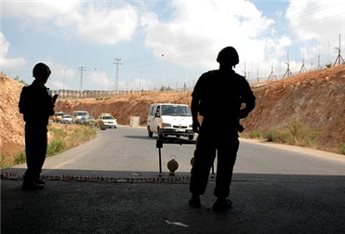
But what about Palestinians living in the West Bank? Article 66 of the Fourth Geneva Convention, which Israel has adopted, states that non-political military courts can be established for residents in the occupied territory. Palestinians in the West Bank are therefore subject to Israeli military law. Under the two legal systems, an Israeli settler and a Palestinian, accused of the same crime, will be treated, and sentenced, very differently.
Palestinian children, shackled and accused of throwing stones, have also been brought before these courts. The Palestinian Prisoners Center for Studies says that some 308,000 Palestinians have been detained within Israeli jails since the First Intifada in 1987.
Under military law Palestinians are threatened with arbitrary arrest, detention and are denied freedom of movement. As American-Israeli lawyer Emil Schaeffer points out, whilst an Israeli settler must be brought before a judge in less than 24 hours a Palestinian may be interrogated for up to eight days before he or she sees a judge.
In a military court Palestinians may be denied access to a lawyer for up to 90 days, yet within the Israeli legal system a meeting with a lawyer must be granted immediately. Within the military courts there is little internal supervision and consequently little public scrutiny.
The list continues, as does the system of legalised separation, discrimination and ultimately the guarantee of rights based on nationality. This segregated system goes far beyond the occupied territories of the West Bank.
On the other side of the concrete separation barrier that has sectioned off the West Bank, Palestinians living in Israel face a raft of laws that discriminate against them. According to Adalah, there are 50 laws in place that discriminate against Palestinians citizens of Israel from access to land to state budget resources.
Perhaps the most obvious of these is the Law of Return, which grants Jewish people across the world the right to live in Israel and gain citizenship. In the drive to bump up the numbers, free flights have been offered, as have financial benefits and tax breaks. On arrival accommodation is sometimes offered in annexed East Jerusalem.
Meanwhile, the seven million Palestinian refugees across the world are not only denied the right to return to their land, but also Palestinian citizens of Israel are not allowed to bring their husbands and wives from the occupied territories to live with them. So one group is actively encouraged, whilst the other is denied their basic rights.
In recent weeks a proposed law, which defines Israel as the nation-state of the Jewish people, has whipped up much controversy thanks to the controversial nature of the bill, part of which would mean the dropping of Arabic as a second language.
Like the bill that seeks to apply Israeli civilian law wholeheartedly to settlers in the West Bank, the Jewish nation-state bill is part of an ongoing system of discrimination against Palestinians, which has long rendered them second-class citizens. Little by little it is being enshrined in the law, which ultimately means discriminatory treatment towards Palestinians can continue.
Israel’s system of formal and informal discrimination reaches into all aspects of Palestinian’s lives, from separate housing in the West Bank to separate roads, schools and hospitals. It even infiltrates personal lives.
Whilst Israel regularly passes discriminatory laws, they clearly have little regard for international law – or at least, the parts of it that don’t suit them. As a signatory to some of the most important human rights and humanitarian law statutes, they should be held accountable for their discriminatory policies; which undoubtedly constitute grave breeches.
Featured Video
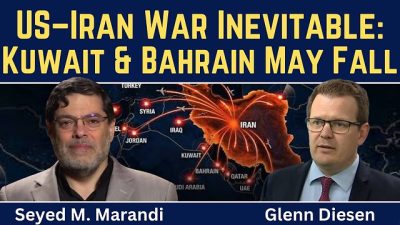
Seyed M. Marandi: US-Iran War Inevitable: Kuwait and Bahrain May Fall
or go to
Aletho News Archives – Video-Images
From the Archives
Oil and the Israel Lobby
Reknowned economist M. Shahid Alam offers this excellent critique of Noam Chomsky’s defective analysis of the relative influence of Oil versus the Israel lobby over US foreign policy: … continue
Blog Roll
 Aletho News
- ICC ignored ‘very well-documented’ NATO crimes – ex-Libyan minister
- SNSC secretary dismisses US response to Iran’s conditions as ‘inadequate’
- Sanaa says Taiz roads open, secure for residents, warns Saudi forces
- Iraqi resistance group urges Saudi leadership to admit defeat, lift Yemen siege
- Trump’s Retreat: How Al-Aqsa Flood Took Down the US Empire
- Israel’s Military Actions in Lebanon Grossly Violate International Law — Lavrov
- Seyed M. Marandi: US-Iran War Inevitable: Kuwait and Bahrain May Fall
- Leaders Condemn Ansarallah Attack on Saudi Arabia While Ignoring Illegal War Against Yemen
- Leaked: Britain’s Covert Iraqi Psyops Network
- Yemeni Armed Forces Warn Airlines Against Using Saudi Airports, Exempt Mecca and Medina
- If Americans Knew
- How Israel Conquered the Latin American Right
- Agents search Rep. Omar’s Washington home in criminal probe as she vows she won’t ‘be silenced’
- “The Rule Was: ‘Shoot Everyone You See'”
- Israel goes ballistic over Nobel Laureate Navi Pillay
- U.S. May Join Yet Another Middle Eastern War — TCN
- Yellow Line moves again as Israel closes in on trapped Gazans – Daily Update
- Israeli Attacks Kill Seven Palestinians in Gaza Including Six-year-old Girl
- Gaza: Ceasefire Anniversary Marks Year of Failed Promises
- The American Conservative: Mike Huckabee Should Resign
- A C-Section in Shackles: A Palestinian Woman’s Harrowing Birth in Israeli Detention
- No Tricks Zone
- Germany’s Green Energy Debacle: High Energy Costs Force Kahla Porzellan to Close After 182 Years!
- New Study: 50 Years Of The Most Aggressive ‘Net Zero’ Policies Can Only Affect The Global Climate By 0.03°C
- US September “Heat” Was No Record…Many Records Set Decades Ago
- Latest European Green Energy Debacle; Portugal’s Largest Flagship Solar Park Insolvent!
- Green Energy Debacle: German Expert Professor Fritz Vahrenholt Warns Of Severe Economic And Social Consequences
- Two More Paleo Reconstructions Affirm Meters-Higher Sea Levels Across Ireland, Brazil 7000-6000 Years Ago
- New Study: Earth And Venus Surface Warmth Largely Explained By Convection And Lapse Rate, Not CO2 Or Radiation
- 2025 Nature Paper Claiming Worsening Global Drought Gets RETRACTED …Heavily Flawed
- New Study: ‘Global Drought Shows No Detectable Recent Acceleration Under Climate Warming’
- Economic Masterminds: German Socialists Suggest Taxing Productivity Gains Stemming From Using AI

