As a consequence of the corporate mass media’s blackout of the news about Israeli crimes against humanity; as a consequence of the International Criminal Court’s cowardly disregard of crimes committed by Israeli leaders while instead charging Kenya’s President Uhuru Kenyatta with crimes against humanity; and as a consequence of the West’s Israeli orchestrated preoccupation with the necessity to wage war against ISIS (Islamic State of Iraq and Syria) — which came into being with covert encouragement and assistance from the real axis of evil of the U.S., Israel, and Saudi Arabia — Israel’s latest barbaric assault euphemistically codenamed Operation Protective Edge but in reality intended to ethnically cleanse the Palestinian people, has been quietly and quickly forgotten.
Collective corporate mass media amnesia comes as no surprise considering that in the U.S. alone 90% of what Americans read, watch and listen to is controlled by just six corporations whose combined revenue in 2010 was $275.9 billion. Furthermore, all six of those corporations like for example Rupert Murdoch’s [not the actual] News Corp (Fox News, Wall Street Journal, and New York Post) have Israeli aligned global news tentacles that distort, mislead, and even suppress the true facts. Mass media bias towards Israel is even prevalent at the supposedly dispassionate and honest taxpayer funded BBC where coverage of the Israeli-Palestinian conflict requires finding “a balance” that is in actual fact strongly tilted towards Israel.
As part of its “balance” the BBC’s director of television, Danny Cohen (surprise, surprise), has announced plans to air a series of special programs next year that will commemorate the 70th anniversary of the liberation of Auschwitz. The programs are to be broadcast around Holocaust industry Memorial Day on January 27, 2015 and will range from interviews with survivors of the infamous Auschwitz-Birkenau camp to a new drama about the 1961 trial in Israel of Holocaust mastermind Adolf Eichmann who was seized in Argentina by Israeli agents and smuggled back to Israel on an El Al airliner. Cohen’s announcement was welcomed with “We are delighted that the BBC will be ensuring that Holocaust Memorial Day is marked by the widest possible audience,” declared Olivia Marks-Woldman, chief executive of the Holocaust Memorial Day Trust. The question is have fine Jewish people of status like Olivia felt the slightest twinge of conscience over the recent horrific images coming from the Gaza Strip as a result Israel’s Operation Protective Edge: an operation that had Israeli Jews chanting “tomorrow there’s no school in Gaza, they don’t have any children left.”?
Such passionate racist hate can only beget hate from the victims and global condemnation form compassionate people. But are such reactions anti-Semitic or simply the consequence of Apartheid Israel’s incitement to genocide of the Palestinian people who — contrary to what Israeli Jews keep telling us — are human beings and not beasts; are a people in their own right; and do exist on their own land with an inalienable entitlement as follows:
Everyone is entitled to all the rights and freedoms set forth in this Declaration, without distinction of any kind, such as race, colour, sex, language, religion, political or other opinion, national or social origin, property, birth or other status. Furthermore, no distinction shall be made on the basis of the political, jurisdictional or international status of the country or territory to which a person belongs, whether it be independent, trust, non-self-governing or under any other limitation of sovereignty.
Article 2, Universal Declaration of Human Rights to which Israel is a signatory but from which it is apparently exempt from respecting because of the Holocaust.
Will BBC viewers be watching programs at any time in the near future that document the atrocities perpetrated against the Palestinians by an Apartheid Israeli war criminal state that fine people like Olivia Marks-Woldman unconditionally support? No doubt force-feeding “the widest possible audience” of gullible gentiles with memories of the genocide of Jews by the Nazis helps to offset current condemnation of the equally abhorrent genocide of Palestinians by Jews.
“Israelis and American Jews fully agree that the memory of the Holocaust is an indispensable weapon — one that must be used relentlessly against their common enemy … Jewish organisations and individuals thus labor continuously to remind the world of it. In America, the perpetuation of the Holocaust memory is now a $100-million-a-year enterprise, part of which is government funded.”
According to Israeli author Moshe Leshem, the expansion of Israeli power is commensurate with the expansion of the “Holocaust” propaganda.1
Last month the Russell Tribunal (comprised of international law experts) announced that Israel was guilty of “incitement to genocide,” and that Israel’s long-term collective punishment of Palestinians seemed to be designed to “inflict conditions of life calculated to bring about the incremental destruction of the Palestinians as a group.” Despite that announcement of what has been obvious for decades (not short-term occupation, but long-term extermination), the International Criminal Court has maintained its usual avoidance of pursuing the big fish — like Henry Kissinger, George Bush, Dick Cheney, Tony Blair, Barack Obama, and many others including equally indictable Israeli leaders such as Benjamin Netanyahu — while concentrating on minnows like Kenya’s President Uhuru Kenyatta who became the first sitting head of state to appear before the ICC on charges of crimes against humanity for his alleged role in unleashing a wave of post-election violence during 2007-08.
Uhuru (Swahili for “freedom”) whose alleged guilt is far from being as obvious as that of Israeli leaders, is the son of Jomo Kenyatta “the founding father” who led Kenya from its independence in 1963 until his death in 1978. Independent Kenya, like most post-colonial nations, was also the beneficiary of colonialism’s main legacy of injustice and corruption of which Jomo had personal experience at his trial along with five others accused of managing the Mau Mau. The accused appeared before Mr. Justice Thacker, a man who practiced his profession in the same self-serving mould as that of Tony Blair, the war criminal “Middle East Peace Envoy.” Thacker accepted a bribe of £20,000 (a small fortune in those days) from the Governor of Kenya, Evelyn Baring, 1st Baron Howick of Glendale, who wanted to ensure that Thacker would find the accused guilty. Also according to Baring, “Every possible effort has been made to offer them [the witnesses] rewards and to protect them but no one can tell what will really happen when they are confronted in court by Kenyatta’s formidable personality …” One witness did in fact subsequently recant, admit he had been bribed, and was convicted of perjury.
After finding the accused guilty at the end of the trial, “Justice” Thacker — who had also unashamedly asked for an honour from the Queen but was refused — then fled the country on the first available flight. As an aside to this tale of unbridled corruption of justice, Ngina Kenyatta — widow of Jomo and mother of Uhuru — is the fourth richest woman in Africa with a net worth of $500 million while the majority of Kenyans exist in abject poverty. For most African people the only notable difference between colonial and post-colonial rule has been the colour change of their corrupt political exploiters from white to black.
The West’s current Israeli-inspired and U.S.-led fabricated necessity for waging war against ISIS is not a recent development but part of a long-established strategy promoted by Israeli sponsored U.S. neoconservatives who ensure the constant existence of Islamic enemies so as to justify costly and never ending wars that ultimately benefit Israel through the destruction of surrounding Arab neighbour infrastructures. The creation of ISIS arose from the necessity to replace the old Islamic ogre of Osama bin Laden and al-Qaeda with a new one.
In March 2007, General Wesley Clark, a retired 4-star U.S. Army general and Supreme Allied Commander of NATO during the 1999 War on Yugoslavia, had the following to say in an interview with Amy Goodman of Democracy Now:
So I came back to see him a few weeks later, and by that time we were bombing in Afghanistan. I said, ‘Are we still going to war with Iraq?’ And he said, ‘Oh, it’s worse than that.’ He reached over on his desk. He picked up a piece of paper. And he said, ‘I just got this down from upstairs’ — meaning the Secretary of Defence’s office — ‘today.’ And he said, ‘This is a memo that describes how we’re going to take out seven countries in five years, starting with Iraq, and then Syria, Lebanon, Libya, Somalia, Sudan and, finishing off, Iran.’ I said, ‘Is it classified?’ He said, ‘Yes, sir.’ I said, ‘Well, don’t show it to me.’ And I saw him a year or so ago, and I said, ‘You remember that?’ He said, ‘Sir, I didn’t show you that memo! I didn’t show it to you.’
General Clark’s allegation is amply substantiated by recent Israeli-inspired and U.S.-led conflicts in the Middle East and provides proof that plans for such conflicts were already in place long before the justification for them had even been fabricated. Such Middle East conflicts serve to benefit Israel in three ways: the first is to destabilise and fragment but preferably destroy surrounding Arab states; the second is to achieve the first by getting Western nations at their taxpayers expense to bear all the cost and do the fighting; and the third is to have such conflicts serve as a distraction from Zionist Apartheid Israel’s lying, cheating, stealing, double-crossing, and killing along with all its other barbaric violations of international law including human rights.
Concerned, decent, and responsible people everywhere must relentlessly demand honest and impartial media coverage of the Israeli/Palestinian conflict which must not be overlooked or forgotten until Palestinians receive justice and reparations for the decades of heinous crimes perpetrated against them by Israeli Jews; they must resolutely resist the Anglo-Zionist Political Corporate Military Industrial Empire’s voracious dependency on continual military conflict that maintains the status quo of almost half the world’s wealth belonging to just one percent of the population; and they must unconditionally insist that the ICC fully fulfils its charter as described in the Rome Statute’s Preamble by charging Israeli leaders with the crimes that everybody knows they have been guilty of committing.
Israeli Jews have every right to have a “world of their own” if they want, but not on ethnically cleansed Palestinian land and at the expense of goyim taxpayers.
Balaam’s Curse: How Israel Lost its Way, and How it Can find it Again, Simon & Schuster, 1989.
Hebron, Occupied Palestine – Today in al-Khalil (Hebron), as part of the Jewish holiday of Sukkot, thousands of settlers and Zionist tourists descended upon the city. The Israeli military presence in Hebron, which is already a large and oppressive part of everyday life, greatly increased.
Hebron is the only city in the West Bank where there is an illegal settlement in the heart of the city. It is split into H1 and H2, H1 under Palestinian Authority Control, and H2 under Israeli military control.
This morning, in both the Salaymeh and Qeitun neighbourhoods, the checkpoints designating the end of H1 were extended further into Palestinian territory.
Israeli soldiers drove between Salaymeh and Qeitun, entering houses, hiding in alleyways, and aiming their guns at passing schoolchildren and other people in the area.
In the afternoon, the army presence was just as heavy, with children walking home past heavily armed soldiers.
In H1, Bab al-Zawiye (the centre of Hebron), Israeli forces partially closed the road to allow settlers and Zionist tourists through the checkpoint to visit a religious holy site.
They were escorted by approximately 45 Israeli border police and soldiers. Several Palestinian shops were forced to close for several hours, to allow the setters and tourists to pass.
The Ibrahimi mosque and nearby checkpoint was also closed today, with all Palestinian shops in the area forced to close with it.
Israel’s 51-day assault on Gaza calls for redoubled efforts to shake off its carefully constructed system of control of Palestinian lives throughout the Occupied Palestinian Territory (OPT) and secure Palestinian rights. A necessary first step must be to address the donor-supported creation of Palestinian security forces that primarily serve Israel’s colonial ambitions. This is increasingly urgent with the PA set to move back into Gaza in the wake of the unity deal.
Al-Shabaka Policy Member Sabrien Amrov and Program Director Alaa Tartir tackle these issues by examining the state of the security sector today, its origins and purposes, and the fast-growing authoritarianism that is turning “Palestine” into a security state. While touching on the Gaza security sector, they focus primarily on its development in the West Bank. They urge that the foundations of security sector reform be challenged as a key step towards setting the Palestinian quest for freedom, justice, equality, and self-determination back on track.
A Burgeoning Sector
Over the past decade the security sector has grown faster than any other part of the Palestinian Authority (PA). More public servants are now employed in the security sector than in any other sector – 44% of a total of 145,000 civil servants. A growing number of “security science” schools and university programs have been created, including the Palestinian Center for Security Sector Studies in Jericho, considered the most prestigious in the West Bank, and thousands of Palestinians students travel abroad to receive “world class” security training.
Security eats up a sizeable proportion of the PA budget, accounting for almost $1 billion (26%) of the 2013 budget, compared to only 16% for education, 9% for health, and a staggeringly low 1% for agriculture, traditionally one of the main sources of livelihood for Palestinians. The security sector is also the recipient of considerable international aid: the United States, the European Union, and Canada pumped millions of dollars into what is euphemistically termed Security Sector Reform (SSR) in 2013 alone. In fact, there is now one security person for every 52 Palestinian residents compared to one educator for every 75 residents. Daily newspapers frequently carry announcements of bids for more PA prisons – there are already 52 new prisons and eight new security compounds – as well as riot control gear.
An important indicator of the growing importance of the security sector has been the appointment of security personnel to leading positions or in municipalities, governorates, and politically sensitive positions. For example, Majid Faraj, head of Palestinian Intelligence, was on the Palestinian negotiating team in the most recent negotiations with Israel. Although security force heads like Jibril Rajoub and Mohammed Dahlan have been powerful in the past (and may be again in future), what is different now is that this is being presented as part of a modern state-building package.
Needless to say, far from providing for Palestinian security, the rapidly mushrooming sector has, as Israel intended from the start, served as an instrument of control and pacification of the Palestinian population in the area directly under the PA’s authority (Area A, according to the Oslo Accords) as well as the area controlled jointly with Israel (Area B). In these areas, Palestinian security forces have curbed demonstrations, arrested activists, violently disarmed the military wings of political parties, and tortured militants as well as political activists. At the same time, security collaboration with Israel has reached unprecedented levels, as will be discussed further below. Meanwhile, Israel has a free hand in Area C, some 60% of the West Bank, which is under its military control.
The Evolution of the Security Sector
Today’s PA security sector has its origins in the Oslo Declaration of Principles in 1993, in which Article VIII envisages a “strong police force” for the Palestinians while Israel maintains responsibility for “external threats” as well as the “overall security of Israelis.” This was further spelled out in Annex I of the Interim Agreement (Oslo II) in 1995 with a protocol on joint Israeli-Palestinian security operations, as were Israeli specifications of the size of the force and the number and type of weapons with the procedures for registering them. In other words, the PA playing the role of sub-contractor to Israel was foreseen in the Oslo Accords.
Ironically, the “strong police force” led in part to the violent intensification of the 2nd Intifada and to Israel cracking down on the Palestinian police as well as on other government institutions. It was in 2002, at the height of the 2nd Intifada and Israel’s invasion of Palestinian cities, that both former US President George W. Bush and the late Israeli Prime Minister Ariel Sharon highlighted the security elements of the Road Map for Peace later launched in 2003 by the Quartet. As Bush declared in 2002, “The United States will not support the establishment of a Palestinian state until its leaders engage in a sustained fight against terrorists and dismantle their infrastructure. This will require an externally supervised effort to rebuild and reform the Palestinian security services.” Thus, self-determination for the Palestinians went from being a right to a privilege that the PA had to demonstrate it deserved.
The Road Map further consolidated the PA’s shift of its statehood strategy from a struggle for self-determination to acquiring a security sector that would in theory be governed by the “principles of democratic governance and rule of law” but in fact serves Israel. Indeed, Phase I of the Road Map demanded that the PA undertake “visible efforts” to arrest individuals and groups “conducting and planning violent attacks on Israelis anywhere.” The conditions on the Palestinian security sector included: Combat terrorism; apprehend suspects; outlaw incitement; collect all illegal weapons; provide Israel with a list of Palestinian police recruits; and report progress to the United States. Thus the evolution of the Palestinian security sector has been “an externally-controlled process” that is clearly “driven by the national security interests of Israel and the United States.”1
At the same time, it is important to note that the PA under Abbas, first as prime minister and then as president since 2005, had its own reasons to adopt this framework. Abbas wished to establish a monopoly over the use of force and to cement his leadership after he took over the reins from the late Palestinian leader Yasser Arafat, as well as to protect PA elites, as our colleague Al-Shabaka Policy Advisor Tariq Dana noted in a recent piece. Furthermore, the PA had a vested interest in cracking down on Islamist as well as other opposition parties in the West Bank, particularly in the wake of the Hamas victory in the 2006 Palestinian legislative elections and the Fatah-Hamas schism since 2007. The development industry’s efforts to reinvent the Palestinian security forces gained momentum after Salam Fayyad became prime minister in 2007, all in the name of a state-building enterprise.
Despite clear and growing PA violations of the rule of law, international donors and the PA itself have continued to sell SSR as having the purpose of providing efficient and impartial justice and safeguarding human rights.2 Rule of law in the context of prolonged military occupation, however, is a non-starter, to put it politely. As a Western diplomat involved in security training admitted in an International Crisis Group report on the subject, “The main criterion of success is Israeli satisfaction. If the Israelis tell us that this is working well, we consider it a success.”
A discussion of the security sector in the Gaza Strip is beyond the scope of this brief, but a few words are in order about the similarities between the Fatah-led PA in Ramallah and the Hamas-led authorities in Gaza. Of the 23,000 civil servants employed by the Hamas-led authority, 15,500 work in the security sector. Just as the PA keeps a grip on power in the West Bank by intimidating other militant groups, Hamas does so in Gaza. For example, the Ramallah-based Independent Commission on Human Rights reported that of the 3,185 complaints it had received in 2012 of violations by security agencies as well as civil institutions, 2,373 were from the West Bank and 812 from Gaza. It remains to be seen how the unity government’s entry into Gaza will affect its security sector.
Part of Hamas’ effort to keep control of the Gaza Strip has aimed at upholding ceasefires with Israel. Thus, ironically, Hamas has in this respect been the best guarantor of Israel’s security since Israel’s blockade of the Gaza Strip began in earnest in 2006 – although, as veteran analyst Mouin Rabbani has pointed out, Hamas’ coordination with Israel differs from that of Fatah, being “informal and arguably tactical.” Hamas’ ability to uphold its ceasefires with Israel is something Israeli analysts have acknowledged although that has not prevented Israel from launching increasingly destructive assaults on Gaza to “mow the lawn,” the euphemism they use for their deadly approach to Gaza.
Oppression by a Police State in the Making
Today, the end result of SSR has been to reinforce PA authoritarianism to an unprecedented degree. As Nathan Brown argued in discussing the authoritarian context of SSR, “The entire program is based not simply on de-emphasizing or postponing democracy and human rights but on actively denying them for the present.” Yazid Sayigh concluded that reform in the security sector resulted in an authoritarian transformation that will threaten not only long-term security but also the ability to achieve Palestinian statehood. If ever there is a Palestinian state, it is likely to be as much of a police state as those of most other Arab regimes.
A brief review of what West Bankers are enduring under the PA today shows that for many, the PA has already become a police state through which they are dealing with multiple layers of oppression from both Israel and the PA. This is reflected in the difference in language used between the PA and the people: The PA describes PA-Israel joint work as coordination (tansiq), whereas the people use the word collaboration (ta’awoun) in its negative connotation. Some Palestinians speak of a “revolving door” policy whereby prisoners are released from one authority’s prison to enter another’s. A respondent from Jenin refugee camp said: “After the PA’s Preventative Security Forces arrested and imprisoned me for nine months because I’m a member of Hamas, three weeks after my release, Israel arrested me and accused me of the same exact issues. Literally they used the same words.”3
This explanation by a high official from the Preventive Security Forces says it all: “We get lists with names. [The Israelis] need someone, and we are tasked to get that person for them.” This has been the approach for years, as was highlighted in the 2010 assessment by the International Crisis Group, “the General Intelligence Service (Shin Bet) provides its Palestinian counterparts with lists of wanted militants, whom Palestinians subsequently arrest. IDF and Israeli intelligence officials [say] ‘coordination has never been as extensive’, with ‘coordination better in all respects.’”
While repression by the PA security forces occurs on a continuous basis and takes different forms, it is worth highlighting specific examples to show the extent to which PA forces are willing to go to repress public dissent. In mid-2012, PA security forces cracked down on a peaceful rally in Ramallah and as a result five protesters had to be taken to hospital, with over 18 of them filing complaints. The injuries meted out to one protester in police custody were so severe that Amnesty International said that they amounted to torture.
Another Amnesty International report in 2013 found that police brutality had led to the death of two Palestinians: A 44-year old woman was killed during a police raid on a village that severely injured eight others and sparked protests by hundreds of locals and clashes with security forces, and a second Palestinian was killed in a separate operation at ‘Askar refugee camp in Nablus. It described the overall brutality meted out as “shocking even by the standards of the PA security forces.”
In a glaring echo of the Israeli justice sector’s treatment of Palestinian attempts to secure their rights to life, land, and liberty, Palestinian courts have not found “any West Bank security officers responsible for torture, arbitrary detention, or prior cases of unlawful deaths in custody […] [or] prosecuted officers for beating demonstrators in Ramallah on August 28,” according to a 2013 Human Rights Watch report. This is the case even when the police officers are known. In fact, the authorities sometimes go so far as to prosecute the victims as happened after police assaulted activists in April 2014. In effect, the security forces have the leverage to use the judicial system to their advantage. So much for the rule of law under SSR programs.
Moreover, repression is not confined to demonstrators or “wanted” people, that is, those Palestinians wanted by Israel. The Euro-Med Observer for Human Rights recently reported that in 2013, Palestinian security forces had arbitrarily arrested 723 persons and interrogated 1,137 without clear charges, court decisions, or warrants. Additionally, the PA security forces arrested 56 persons because of Facebook status against them, arrested 19 journalists, and a number of cartoonists and writers. It further documented 117 cases of extreme torture.
Nowhere is the PA’s security collaboration with Israel more evident than in the West Bank’s refugee camps, deepening the isolation of the camps’ residents from the rest of society and eradicating and criminalizing residual Palestinian armed resistance. The treatment of Jenin refugee camp is the best example of this approach. Devastated by Israeli forces during the 2nd Intifada despite heroic resistance, Jenin began in 2007 to be used as a pilot governorate by the Fayyad government, international donors, and Israel for strengthening the rule of law. Under the guise of “Operation Hope and Smile,” PA forces were mandated to remove any source of “terror and unstability” from the camp.
The oppression of Jenin has continued to this day. For example, between August and October 2013, a period when the talks sponsored by US Secretary of State John Kerry talks were underway, Palestinian security forces and the Israeli military conducted over 15 raids against the Jenin refugee camp (see this report in Maan News Agency for example). In March 2014, Israeli military forces stormed the Jenin refugee camp, assassinating three people and wounding at least 14 others. It was alleged that Palestinian security services in the area were told to stay in their office before the raid. Palestinian security forces are also even used to intimidate Palestinians who dare criticize their actions or the actions of PA officials: In May 2014, for example, Palestinian security forces and the guards of the governor of Jenin brutally assaulted a Palestinian civilian after he was overheard making a sarcastic comment about the governor’s procession through the city.
The experience of Jenin demonstrates that the armed resistance that was once considered an inseparable part of the Palestinian struggle for self-determination is being dealt with by the PA as a form of dissent that needs not just policing but eradication and criminalization. Thus, a broader objective of SSR has been to criminalize resistance against the occupation and leave Israel – and its trusted minions – in sole possession of the use of arms against a defenceless population.
The success of the Israel- and US-framed and PA-implemented SSR depends on the way in which Palestinian security forces are conditioned to condition themselves. This self-conditioning is visible at different levels beginning with top government officials. Abbas holds regular meetings with the security forces and repeatedly orders them to rule with an iron fist. The spokesman of the PA security forces, Adnan al-Dimiry, went so far as to suggest that security forces have created a security miracle and that the West Bank is even more secure then Israeli cities.
Even more alarming are the occasions when young Palestinians who are training in the security forces reveal this self-conditioning. As a student from the Turkish academy admitted “It’s messy, but we need to show that we can do this. After that, when we get our state, we can run it so that we can benefit from it.” Indeed, the young Palestinian men and women who join the security forces perhaps embody the duality between being the subject of the occupation and the collaborator in its purest form. When close to half of the Palestinian public sector is given over to jobs in the security sector the decision is almost made for you.
In Ramallah, a group of police officers admitted that even though it is agreed that Israelis are strictly not allowed to come into Area A, when they do, “they call us, and our superiors tell us to put down our arms and go inside. We are not even allowed on the streets or in our police cars if they decide to come in for incursions. If they say disappear, we disappear. Who is going to stop them? No one.”
Several analysts have noted the impact of such conditioning. Law professor Asem Khalil suggests that security coordination itself is a form of conditioning: “The Palestinian struggle finds itself in a time where it’s no longer about self-determination – it’s about international reputation, about proving that you deserve to run your own state, and the coordination is a form of discipline where international donors, along with the colonizing power, are conditioning the future state of Palestine.” Political scientist Mandy Turner argues that the state-building enterprise is a form of counterinsurgency but that it takes time to blossom precisely because it needs to socialize the colonial subject into conditioning itself to the standards imposed by neoliberal principles.
A Call to Palestinians to Reform the “Reform”
The “Palestine Papers” leaked by Al Jazeera, including detailed documents from Israeli-Palestinian meetings in Annapolis in 2008, reveal that to some extent Palestinian leaders still believed that if they did everything that donors asked of them in terms of security they would get a state (see, for example, Saeb Erekat here). Yet, Palestinians are further than ever from securing a state. Moreover, Israeli Prime Minister Benjamin Netanyahu finally made it clear during Israel’s summer 2014 assault on Gaza that Israel would never relinquish security control west of the river Jordan. The myth that the millions of dollars that donors have been pouring into the Palestinian security sector would serve a state-building enterprise has been exposed for what it is.
Security Sector Reform as it has been conducted in the OPT has distorted the national struggle and its priorities with the aim of disempowering the Palestinian people’s ability to resist colonial subjugation. It has broken the direct line of sight between the Palestinians living under occupation and the Israeli occupation forces and contributed to the creation of a new elite of security practitioners who abuse their powers and project the humiliation they face by Israeli forces onto Palestinian civilians.
The question is: What impact will Israel’s 51-day assault on Gaza this summer have on the security sector in the OPT? Before the start of the assault, there appeared to be little change: Israel’s Gaza operation began hard on the heels of the June 2014 Israeli crackdown on the West Bank, which saw an intensified PA crackdown on Palestinian protestors both in tandem with Israeli forces and on their own. Soon afterwards, Abbas played the nationalist card to respond to Palestinian and global outrage about the assault on Gaza, and the Palestinian team negotiating a ceasefire in Cairo included all factions. However, after the assault was over, Fatah and Hamas began trading accusations again, but their end-September agreement to allow the unity government to function in Gaza may lead to a working relationship. It is too soon to judge the impact this will have on the security sector in either Gaza or the West Bank.
Regardless, security reform under occupation is fundamentally flawed: The more the PA invests in security reform, the more it entrenches the occupation and the more it is obliged to work as Israel’s sub-contractor. There is an urgent need to move away from the securitized development paradigm that was built under Abbas and strengthened under Fayyad and instead address the real development needs of the OPT. The fact that the number of families receiving financial assistance increased from 30,000 to 100,000 between 2007 and 2010 is evidence, should it be necessary, that PA arguments that better security conditions will lead to better economic conditions are hollow.
Below are four recommendations addressed to Palestinian civil society and their supporters at home and abroad so as to begin the work that can and must be done to reform “security sector reform.”
First and most importantly, Palestinian civil society organizations should use the media, public forums, and other outreach to shift the discourse and reject the notion that resistance against the occupation should be criminalized. All people living under occupation have the right to resist, whether it is through demonstrations, through speech and writing, or to defend against armed attacks. Indeed, criminalizing resistance to the occupation is the crime itself.
Secondly, civil society needs all its creativity to find ways to institute checks and balances. The key to successful security reform is public accountability and ownership. Neither exists in the Palestinian context given the lack of any Palestinian checks and balances and independent oversight, to say nothing of the all-encompassing Israeli occupation. PA officials claim they “are abiding by international standards,” but without a functioning parliament, an independent ombudsman office, or effective recourse to the judiciary, these words are meaningless. Until such checks and balances are introduced, SSR will be part of the problem and not part of the solution.
Thirdly, investment needs to be found for alternative economic opportunities to enable people to survive as well as to continue the struggle against the multiple layers of oppression without being forced to work in the bloated and repressive security sector.
Finally, the boycott, divestment, and sanctions (BDS) movement has given many Palestinians and their supporters renewed hope in the effectiveness of non-violent tools of resisting oppression and securing rights. Some of its organizing principles and practices can be applied in the efforts to lift the yoke of the security state.
Footnotes
1Hussein Agha and Ahmad Khalidi, A Framework for a Palestinian National Security Doctrine (London, UK: Royal Institute for International Affairs/Chatham House, 2005).
2For more information, see Roland Friedrich and Arnold Luethold, Entry-Points to Palestinian Security Sector Reform (Switzerland: Geneva Centre for the Democratic Control of Armed Forces (DCAF), 2007).
3Unless otherwise specified, quotations are from interviews by each of the two authors in Ramallah, Birzeit, Bethlehem, Nablus, Jenin, and Ankara in 2012, 2013, and 2014.
HEBRON – Israeli soldiers raided a private Palestinian home in Hebron on Sunday morning and turned the third floor of the house into a military post, the owner said.
Salim al-Salayma told Ma’an that Israeli troops broke into his house in the al-Baqaa neighborhood in eastern Hebron and locked him and his 17 family members on the first floor.
While the family was locked on the first floor, al-Salayma said, Israeli soldiers brought military equipment to the third floor, turning it to a military post.
An Israeli military spokeswoman did not immediately return calls seeking comment.
Israeli forces regularly occupy the homes of Palestinian civilians in the West Bank located in what they deem sensitive areas to conduct surveillance and enforce control.
SALFIT – A group of Israeli settlers have burned and vandalized Friday evening a number of olive trees in Yassouf town in Salfit under Israeli occupation forces protection.
Local sources confirmed that Palestinian farmers confronted the settlers and prevented further damage to their olive groves located near Tafuh settlement.
Israeli settlers and forces have daily carried out systematic attacks against olive groves especially during olive harvest in order to prevent the farmers from picking their own fruits.
Meanwhile, dozens of Israeli settlers stormed Friday morning Suleiman pools south of Bethlehem in the West Bank, local and media sources said.
The sources pointed out that the settlers performed Talmudic rituals in the ancient pools area in total provocation to the local residents.
WAFA news agency quoted a Palestinian security source as saying that 70 settlers from Efrat settlement stormed the pools area under heavy Israeli forces protection and started performing their rituals.
Israeli settlers used to storm Suleiman pools in an attempt to impose a status quo in the area.
The pools, which were built by the Ottoman Sultan Suleiman, are located between Artas and Al-Khader villages south of Bethlehem.
As most of the world has duly noted, Canada under the neo-Conservative Harper regime has been a front-runner in supporting Israel in its racial apartheid policies in Israel. Also, recently a discussion comparing South Africa’s apartheid system with that of Israel has occurred with South African testimony indicating that, while they are not the same, they are very similar, and in some circumstances, Israel’s apartheid is worse. What is not seen is Canada’s role in modeling apartheid for South Africa under the Afrikaner-dominated National Party. Canada’s role in developing these systems of apartheid has been seldom noted academically, and is given very little attention either domestically or internationally.
It is generally recognized that North America was a series of colonies from Great Britain, France, Spain, and Russia, with a few Dutch thrown into the mix. The first ‘discoverers’ of America, the Norse Vikings, died out through their lack of ability to adapt to the climatic changes that overtook them. The later colonial settlers survived in part because they did accept the graciousness of the indigenous peoples in assisting them, from which Canada and the U.S. derive their respective national holiday, Thanksgiving.
However, right from the start, these colonial-settler immigrants created myths that allowed them to overrun the native populations without too many qualms about the abuses they perpetrated. Religion, race, and government policies all had a great deal to do with this. The two main myths directed at the Indians of North America can be located elsewhere in the world where colonial-settler populations have invaded. The first myth is that North America was a vast empty land filled with riches to be exploited by the newcomers. Somewhat in contradiction to that is the myth that the Indians were primitives, needing to be civilized, a notion that included religion, land ownership, and the rule of white man’s law.
The reality of history is much more disconcerting for those concerned about human rights and the nature of our societies, as they were, and as they exist today. I will not deal with the history of the native population in the U.S., although it is interrelated with that of Canada. It is generally recognized that after the era of glorious movie westerns celebrating the settlement of the empty plains and mountains, the reality is that of a steady policy of genocide, racism, and warfare against the native people while capitalist ownership of land subjugated the landscape.
Canada’s native history
Canada’s story is a bit different, especially as perceived in comparison to that of the U.S. It is true we do not have the same degree of violent history over the native population, but it is a history that nonetheless is still violent, genocidal, and racist. Current events reflect that it is still violent, if of a different form, and still very much racist, although covered over with all sorts of ignorant platitudes. Unfortunately as well, the vestiges of apartheid still hang on within Canadian governance, never described as such, with the blame for its human rights abuses being blamed mainly on the recipients of that abuse—racism at its most civilized.
These thoughts all coalesced this summer while I was travelling across Canada. Somewhere along the line (literally—I went by train), I bought a powerful, damning critique of Canadian government policy during the era of Canada’s colonial settlement years across Canada’s vast resource rich prairie region. Clearing the Plains: Disease, Politics of Starvation, and the Loss of Aboriginal Life, (University of Regina Press, 2013), written by James Daschuk, is a study of the Canadian settlement in relation to the early fur trade up to the time when the railroads opened up the plains for the large settler populations from Europe, most from eastern Europe. The title is very indicative of the content, and as I read it I was also reminded of Jared Diamond’s Guns, Germs, and Steel: The Fates of Human Societies.
It is Diamond’s middle term, germs, that plays a significant role in Canada’s history, although guns and steel had their fair share, and all were tied into political policies of the day.
By the time the fur traders arrived in the Prairie region of Canada, epidemics of European origin had already swept through many of the tribes, decimating a population that had not previously been exposed to them. While this is an attribute of all peoples not previously exposed to particular microbes, the problem in Canada was significantly increased by both a lack of interest in native health—other than for labor for harvesting the beaver pelts – and later a government official policy of ‘near starvation.’ Without their historical access to food as the buffalo herds were decimated as a foodstock for the early traders and settlers, and without reliable water resources as the beaver population was decimated for the leisure class in Europe, the natives were highly susceptible to foreign microbes as malnutrition compromised their immune systems. As the fur trade progressed in its many facets, then died out to be replaced by the railroads and settlements, the vectors for transmission of disease increased. As the vectors increased, so did the government policies of starvation and apartheid.
Our current neo-Conservative government loves to promote the achievements of Sir John A. Macdonald, considered the ‘father of confederation.’ It is perhaps not surprising then that their current attitudes towards the native population are reminiscent of their political heritage. It was Sir John A. MacDonald who said, “We cannot allow them to die for want of food…. [We] are doing all we can, by refusing food until the Indians are on the verge of starvation, to reduce the expense.”
The Liberals were not significantly different as opposition to the government. They were “an important factor in constraining the government expenditures on the Indian population… the prime minister pre-empted criticism by promising to keep the hungry from dying, but assuring the House that his government would be “rigid, even stingy” in the distribution of food.”
This pretense of financial responsibility was of course part and parcel of the countries policy of settlement of the prairies. Along with this simple policy of starvation were several other factors (such as the lack of immunities mentioned above) that were part of Canada’s racial apartheid policy.
Reservations
Today, much of Canada has no recognizable Indian territories other than the small parcels of land allocated to the various remaining band populations under the Indian Act (1876). This Act purportedly provided the Queen’s protection for the natives including the enforcement of the various treaties that ceded huge swaths of territory to the Canadian government. These reservations have a history of being revoked, resettled, cut-off, redrawn, leaving mostly small remnants of generally poorer geographical areas for native use.
The treaties themselves were and are generally treated as inconveniences for the government and were not much more than lip service for their underlying articles for rights and assistance. The Indian Act placed the native population under the care of the ‘crown’—the government—and has been used as a device to control and limit native power rather than to uphold treaty obligations: “To Canadian officials, the widespread occupation of reserves had another benefit: it greatly facilitated their control of the population.” This was managed in several ways along with the official policy of starvation.
Agricultural practices were one factor. Although encouraged to settle and take up farming, the government controlled agricultural practices, “An order in council was passed to forbid the inhabitants of reserves from “selling, bartering, exchanging or giving any person or persons whatsoever, any grain, or root crops, or any other produce grown on any Indian Reserve in the Northwest territories [as the prairie regions was then called].” The move was intended to preserve locally grown food for the communities that produced it, but it also had the effect of barring reserve farmers from participating in the commercial economy of the northwest.”
As usual the excuse for the action and the intended effect are contradictory. The ultimate idea “was not that the Indian should become self-supporting. He was only to be kept quiet till the country filled up when his ill will could be ignored.”
Settlements
With the arrival of the railways, sections of land were given to immigrants in order to establish an agricultural economy. This was done through providing the railways themselves with enormous tracts of land, and relocating the natives.
“The most significant relocation was the forced removal of communities from their chosen reserves in the Cypress Hills after the decision to build the Canadian Pacific Railway along the southern prairies…. In doing so, the Canadian government accomplished the ethnic cleansing of southwestern Saskatchewan of its indigenous population.”
Starvation was a tool within this policy as “Rations were deliberately withheld until the chief capitulated.”
Another factor of control was the institution of a pass system. With a pass, the natives were given certain rights subject to the Indian Act and ultimate control by the government. It was “perhaps the most onerous regulation placed on the Indians after the rebellion,” implemented to limit the mobility of treaty Indians, keeping them on their reserves and away from European communities.”
Culture
Once the land was removed—and the land is essential to any indigenous people’s culture—the cultural attributes of the indigenous people were attacked. Foremost among these efforts were the Residential schools controlled mainly by the Catholic and Anglican religions (paid for by the government) that followed the white man into the prairies. Native languages and religious rituals were forbidden, visitations were limited, the program of minimal nourishment and lack of health care continued, the latter contributing to many unrecorded deaths among the native children. Along with these limitations and prohibitions, the religious orders created a situation ripe for sexual abuse and assault. These institutions existed until as late as 1996 when the last one was closed down.
Beyond the residential schools, band based religious practices were forbidden. Indigenous rights to access courts were forbidden. The right to vote did not arrive fully until 1960; before then if a native were to vote, their treaty rights—such as they were—were revoked, another means to control the reserve populations.
Disease continues
Racism was easily inculcated into the settlers across the prairies as by the time they arrived in the late Nineteenth Century, they were witness to the nadir of native health and culture. What they saw was a population decimated by disease, incapable of supporting themselves, unkempt and “uncivilized”. They did not know or care to know the conditions that had reduced the once self-sufficient and culturally whole tribes to a state of haggard dependency on an uncaring government.
The Indian Act still controls the reserve system and is still used and abused by the government to control the native population. While outright starvation is not a serious problem, modern diseases—AIDS, diabetes, alcoholism, suicide—are significantly higher in native populations than in the rest of Canada.
Education is still used as a tool to manipulate both the native people and the opinions of the non-native population. The latter is managed by the latent racism that is not far below the surface of many Canadians of all political stripes, very clearly seen in response to protests or demonstrations, especially with the “Silent no more” actions.
Economic activity is another tool used to manipulate the current native populations. Individual economic agreements with bands are attempts to both divide the populations in the bands as well as get around Treaty requirements and other Federal or Provincial regulations in many aspects of the economy from agriculture to mining and forestry. Money is still used as a manipulator, with promises and conditions being put forward that overall are attempts by the government to destroy the resurgence in native culture, to destroy its ability to use constitutional law against the government.
The Canadian apartheid system is still alive. It is not as demonstrative or obvious as that of Israel or formerly of South Africa, but it still exists as a construct within Canadian governance. As concluded by Daschuk, “While Canadians see themselves as world leaders in social welfare, health care, and economic development, most reserves in Canada are economic backwaters with little prospect of material advancement and more in common with the third world than the rest of Canada.”
Apartheid in South Africa
As I indicated above, I will not discuss the relationships, differences, and commonalities between South Africa and Canada and Israel. There are two recent works that discuss Israeli apartheid in comparison to South African apartheid that I have read: The Battle for Justice in Palestine, (Haymarket Press, 2014) and The Anatomy of Zionist Apartheid (Porcupine Press, SA, 2013). Both provide the obvious evidence for the state of apartheid in Israel, with valid comparisons to South Africa.
There is however a Canadian link. Officially Canada opposed South Africa’s apartheid system, but underneath trade and economic business carried on as usual. Canada only went against it when popular opinion became too strong to resist as a political platform. The real tie to South African apartheid is not at this level, but comes from South Africa modelling the Canadian reserve system and its instruments in order to implement apartheid in South Africa.
“Notwithstanding this self-congratulatory revisionism, Canada mostly supported apartheid in South Africa. First, by providing it with a model. South Africa patterned its policy towards Blacks after Canadian policy towards First Nations. Ambiguous Champion [University of Toronto Press, 1997] explains, ‘South African officials regularly came to Canada to examine reserves set aside for First Nations, following colleagues who had studied residential schools in earlier parts of the century.’”
More recently Thomas Mulcair, as opposition leader to the current neo-Cons, commenting after the passing of Nelson Mandela, “makes a fairly direct comparison between South Africa’s apartheid regime and Canada’s treatment of the First Nations, Inuit and Métis people. He’s not wrong, either — in fact, the apartheid system was based on Canada’s Indian Act. Our residential schools, Indian Reserve and many other deeply racist systems inspired South Africa’s oppressive regime. I’m glad that at least one of our federal leaders has (somewhat) acknowledged this in their remarks on Mandela’s death.”
Thus for all of Canada’s rhetoric about apartheid in South Africa and its rhetoric in support of Israeli and therefore its apartheid, there is a strong linkage demonstrating the positive role Canada has had in creating and maintaining the apartheid systems.
Israel’s apartheid
Apartheid in Israel is obvious to anyone reading about how the overall cultural-geopolitical landscape is managed. Accompanying apartheid, ethnic cleansing has also occurred, on a scale probably larger and more violent than occurred in Canada; genocide has not been a significant factor in Israel yet (other than used as an ongoing excuse for being the global victim of ethnic hatred), but was a considerable factor in Canada.
Certainly there are similarities and differences. Israel, like Canada, is a colonial-settler country, with the original Zionist philosophers clearly recognizing the problem of an already existing population in Palestine. Theodore Herzl recognized it clearly, advocating the ethnic cleansing of the region, “Spirit the penniless population across the frontier by denying it employment… Both the process of expropriation and the removal of the poor must be carried out discreetly and circumspectly.” (Theodore Herzl, founder of the World Zionist Organization, speaking of the Arabs of Palestine, Complete Diaries, June 12, 1895 entry.)
Ben Gurion also warned in 1948 after the independence war and the expulsion of hundreds of thousands of Palestinians from their villages and towns, “We must do everything to ensure they (the Palestinians) never do return.” Assuring his fellow Zionists that Palestinians will never come back to their homes, “The old will die and the young will forget.
The lie of denial of an existing population, reminiscent of North America’s ‘unoccupied’ lands is frequently quoted from Golda Meir, “How can we return the occupied territories? There is nobody to return them to.” (Golda Meir, March 8, 1969.) “There was no such thing as Palestinians, they never existed.” (Golda Meir Israeli Prime Minister June 15, 1969.)
Cultural apartheid
Apartheid is a construct that includes both cultural and geographical elements. The idea of ethnic cleansing and the denial of existence as above is one such factor. There are many others.
Strangely enough, the idea of starvation as a manipulator of populations has been one of the more recent manifestations of Israeli policy, most particularly as directed against Gaza. Dov Weisglass, advisor to Ehud Olmert stated, “The idea,” he said, “is to put the Palestinians on a diet, but not to make them die of hunger.” Sounds strangely familiar to Canada’s policy of the Nineteenth century.
Canada somehow calculated what it thought were minimal survival rations for its indigenous populations, and it appears that Israel carried that forward with even more mathematical precision, “While the health ministry determined that Gazans needed a daily average of 2,279 calories each to avoid malnutrition – requiring 170 lorries a day – military officials then found a host of pretexts to whittle the number down to a fraction of the original figure. The reality was that, in this period, an average of only 67 lorries – much less than half of the minimum requirement – entered Gaza daily. This compared to more than 400 lorries before the blockade began.”
Other cultural factors
Racism, ethnic cleansing, starvation are manifestations of cultural policies that support apartheid and its purposes. The purpose in Israel, unlike Canada, is the great demographic fear of the burgeoning Arab population within Israel and cantonized Palestine.
There are many other cultural factors that come into play, similar in several respects to Canada’s apartheid system.
Education is controlled centrally, and the knowledge base allowed for Palestinian education ignores completely the ‘nakba’ and its ethnic cleansing and instances of mass murder. Islam is obviously an ongoing religious base for the Palestinians, but it is increasingly demonized as an ideology of evil, resulting in the ever present rhetoric of an existential threat. Many laws are discriminatory, with rulings on land ownership, residency, marriage, mobility, and other facets of civilian life being restricted by Israeli courts.
Most Palestinians live under military rule where civilian law simply does not exist. Movement of any kind and daily life can all be controlled at the whim of regional military personnel and/or Shin Bet.
Geographical apartheid
The reality of apartheid however is the physical setting. Racism and ethnic hatred can spread throughout cultural systems and can support apartheid, but they are not apartheid itself. Israel is clearly an apartheid state from its actions on the ground. These have been well explained in many, many books and articles over the past several decades.
The physical landscape of apartheid is clearly visible in Israel. The euphemistic ‘wall’ is one of the larger barriers, supposedly to keep out ‘terrorists’ but in reality enclosing prime settlements, agricultural lands, and water sources. The settlements are designed to capture and hold prime landscapes for demographic control as well as resource control, physically grabbing land and effectively denying the validity of a two state solution with a contiguous Palestinian state. Roads are built that bypass Palestinian settlements, providing both a barrier to Palestinian movement and a continuous web of encroachment and encirclement of Palestinian villages and farmlands. The indiscriminate destruction of Palestinian housing on various trumped up civilian rules and on military authorizations to evict resistance fighters slowly clears land to be later incorporated into Israeli settlements using various laws concerning land usage and residency.
Gaza
Looking at a map of areas ‘controlled’ by Palestine reveals a largely diminished and fragmented series of bantustan style areas remaining. The West Bank is ostensibly under the rule of Abbas, but its apartheid nature is still clear from the descriptions given above. Gaza is the largest indicator of Israeli apartheid, and an indicator of the viciousness of Israeli apartheid.
Starvation as a policy is directly applied—and acknowledged—as a control mechanism for Gaza. Gaza is technically not occupied but all of its land, sea, and air space is controlled by Israeli military force. It is in essence a large concentration camp, completely controlled in all its physical aspects by Israel.
The ultimate purpose of Israeli apartheid is similar to that of Canada, the Palestinians are “to be kept quiet till the country filled up when his ill will could be ignored.” That purpose cannot be realized without much violence: Canada’s indigenous population is very small in comparison with the overall population; Gaza in particular and the Palestinians in general are about on par with the Israeli population, but with a higher birth rate that, as always, gives the big demographic threat to the idea of a unitary theological state called Israel.
Partners in apartheid
Apartheid in Israel is a process used to try and eliminate as many Palestinians through emigration as possible, and perhaps the same conditions as in Canada: starvation leading to malnutrition, compromised immune systems, especially among the young, and an eventual and inevitable outbreak of some epidemic.
Fortunately for the Palestinians, the world is watching. Drastic actions, including the past three invasions of Gaza by Israel, are openly observed by the world. The result of all these actions has been an increase in support for Palestinians and a much more critical view of Israel and its national intentions. The boycott, divestment, and sanctions movement has strengthened and Israel is increasingly recognized globally as a threat to Middle East peace.
Canada remains in the forefront of countries supporting Israel. This devolves from Canada’s history of Christian Zionism, its support of Britain’s colonial systems, and its current neo-Conservative government with its fundamentalist evangelical mythology. On the surface the Harper neo-Conservatives argue in terms of human rights, democracy, the rule of law, and the evil of terror perpetrated by “Islamicism” (Harper’s coined term to try and create a pejorative view of Islam). Underneath lies the religious fundamentalism combined with strong support for non-democratic corporate control of governance. Canada has distinct problems with human rights, the ongoing problems with the Indian communities and reserves being the largest, its ongoing support of Israel and its apartheid policies being another.
Final word to Canada’s indigenous population
Grand Chief Matthew Coon Come, attending the World Conference on Indigenous Peoples (WCIP), an historic two-day meeting, that began on Sept. 22 at the UN General Assembly in New York, summarized Canada’s position, “For years, the Harper government has refused to consult indigenous rights-holders on crucial issues, especially when it involves international forums. This repeated failure to consult violates Canada’s duty under Canadian constitutional and international law.”
In his opening remarks, Ban declared to indigenous peoples from all regions of the world, “You will always have a home at the United Nations.” Yet in our own home in Canada, the federal government refuses to respect democracy, the rule of law and human rights.
There is a war going on and it long predates Israel’s summer Gaza onslaught. It is a war on water, and it runs deep. For the last decade, Israel has been carrying out a systemic and willful campaign to deny Palestinians access to clean water.
Though Israel’s campaign to restrict water access has yet to make the news, rights organizations are pushing the Palestinian Authority to take the issue to court, so the matter could well make headlines in the coming months. While the PA has been debating whether or not to accede to the International Criminal Court, increasing documentation of war crimes may push their hand.
Under international law, deliberate targeting of civilian infrastructure is a war crime, and as of 2010, water and sanitation were enshrined as basic human rights. Israel has blatantly and systemically been denying these rights.Through growing documentation and awareness, Israel’s systemic campaign against Palestinian water can be seen for what it is: a comprehensive violation of one of the most basic human rights. It consists of a two-pronged approach: the visible mass destruction of water and sanitation infrastructure, reinforced by invisible policies of closure and occupation, siege and confiscation that block the repair of infrastructure. Together, these tactics prevent the existence of sustainable Palestinian communities, driving people from their land, their homes, and communities.
The first tool of Israel’s water war has been well documented. It includes direct and extensive damage caused deliberately during large-scale military operations. In the latest Israeli military operation in Gaza this meant Israeli aircraft targeted the sewage pump station and F16s disabled pumps that sent 25,000 cubic meters of wastewater per day to Gaza’s main sewage treatment plant. Further Israeli shelling east of Gaza City hit a main water pipeline, disconnecting areas east of the city so that 450,000 were completely cut off from municipal services, and the more than 1.5 million residents of the strip suffered massively reduced access.
The losses in water infrastructure alone from this latest series of strikes have been estimated at $30 million. This is not taking into account the massive toll on health, with 100,000 cubic meters of untreated sewage flowing through the streets of Gaza and into the sea, causing widespread health problems. This meant over-burdened hospitals, without water themselves, were dealing with digestive ailments, skin allergies, water-borne and respiratory diseases.
UN investigations from the 2008-9 attacks on Gaza already affirmed that Israel’s targeting of water infrastructure was “deliberate and systematic.” The September meeting of the Russell Tribunal, charged with investigating rights violations from this summer’s atrocities, has reached similar conclusions.
Human Rights Watch and Amnesty International have also urged the PA to take action on these violations and bring them to the ICC.
And while arguments will no doubt be made about the fog of war or the targeting of water infrastructure as accidental or as collateral damage, this line of defense is weakened when such military attacks are seen as part of a longer-term systemic program. For example, in the 2001-2 invasion of Jenin, the same policy of intentional damage to water equipment during military assault was used. Invasions caused massive damage to water and wastewater infrastructure, cutting off water services to civilians for weeks.
Even more insidious has been the slow but deliberate damage to water infrastructure that has taken place as part of the day-to-day of occupation. This damage can be seen both in the West Bank, as well as in the agricultural lands of Gaza that have, since 2005, been declared as a border ‘buffer’ zone by the Israeli military.
Official documentation has catalogued demolition by Israeli forces of 173 different pieces of water, sanitation, or hygiene infrastructure in Area C of the West Bank between 2009 and 2011. This has included the confiscation of water tankers, which are used as an emergency measure when access to water is prohibited. In the Gaza border zone – which swallows up some 17 percent of Gaza’s landmass – 305 agricultural wells were destroyed between 2005 and 2013.
In addition, Jewish settlers in the illegal Jewish-only settlements in the West Bank regularly carry out acts of vandalism and destruction that specifically target Palestinian water sources, and frequently take over natural springs for their own recreational use.
These settlers are acting within a clear Israeli policy that sees targeting of water resources as an acceptable method of warfare.
The destruction of generations-old water infrastructure such as historic cisterns or springs not only deprives marginalized communities of water but destroys an important element of Palestinian history and the community’s organic relationship with natural resources. Further, by depriving farmers of water, Israeli policies drive them off their land. Loss of agricultural income resulting from de-developed water infrastructure is estimated at $1.44 billion annually.
Though Israel has total control over the building, development, or maintenance of water infrastructure in Area C – where permission is systemically denied – it also maintains indirect control in all areas of the West Bank, where it can – and often does – prohibit the building of water treatment, irrigation, or industrial facilities.
Evidence of water warfare, and deliberate efforts to use water as a weapon against Palestinian civilian populations, is being documented at all levels, and efforts continue to bring awareness to all those affected. Israel’s water war has continued with impunity for far too long and must be challenged before its effects are irreversible.
Dajani is a policy member of Al-Shabaka: The Palestinian Policy Network, and a Palestinian environmental researcher and activist based in Jerusalem.
Not surprisingly, NPR’s ombudsman goes with the flow that will neither interfere with his current employment nor injure his future prospects in American journalism.
Following is an email to me from the Office of the Ombudsman, and my response to NPR:
Dear Alison,
Thank you for contacting the NPR Ombudsman. We appreciate your comments and your thoughts will be taken into consideration as we continue to monitor the reporting.
The Ombudsman is currently working on a blog post about this issue. You may be interested in this statement from our standards and practices editor:
David Brooks is primarily an opinion columnist for The New York Times. He appears on All Things Considered to offer his opinions, not as a reporter. His son’s service with the Israeli Defense Forces is no secret We agree with the Times‘ editorial page editor, Andrew Rosenthal, that Mr. Brooks’ long-standing views about Israel have been “formed by all kinds of things … [and] are not going to change whether or not his son is serving in the IDF, beyond his natural concerns as a father for his son’s safety and well-being.” We also agree with the Times‘ public editor, Margaret Sullivan, that Mr. Brooks should not be barred from commenting about Israel. She has recommended that he address the issue of his son’s service in the IDF in a future column. That strikes us as a reasonable suggestion. If a situation arises and we feel he should also mention it on our air, we still discuss that with Mr. Brooks at that time.
The only place the information about Brooks has appeared in print to date is a Hebrew version of an Israeli newspaper, and possibly the Los Angeles Jewish Journal. It has not appeared on any mainstream broadcast entity that I’m aware of.
2. While, as you state, Mr. Brooks is not a reporter, he must still abide by journalistic ethics. The National Society of Newspaper Columnists‘ code of ethics states that columnists’ potential conflicts of interest should be disclosed.
3. You rightly point out that Mr. Brooks has the “natural concerns as a father for his son’s safety and well-being.”
The obvious reality is that Mr. Brooks’ commentary about Israel does directly affect his son’s “safety and well-being.”
Commentary that defends Israel to the American public keeps American tax money ($8-10 million per day) and American diplomatic support for Israel flowing, both of which are extremely important for his son’s safety and well-being.
Commentary that pointed out the illegality and immorality of Israel’s recent killing and injuring of thousands of Gazan men, women, and children by the Israeli military in which his son is serving would quite likely interfere with his son’s well-being, as an increasing number of Americans would join those around the world calling for war crimes tribunals.
4. Your statement is illogical, unfounded, and ludicrous. But your well-compensated career in mainstream American journalism will continue unhindered.
In his heart of hearts, Netanyahu is aware of the major and fundamental differences between the Palestinian Hamas movement and the so-called “Islamic State” (ISIS) that is not limited to a specific state or nationality. However, for some reason, he is trying to link the two. In doing so, he ignores what is even more dangerous than his erroneous comparison; the significant similarity between ISIS and Israel’s ideology, policies and practices.
Israel calls itself the “Jewish State”, just as Al-Baghdadi calls his group the Islamic State. From the time of its “independence” in 1948, Israel has never declared it borders; in fact, they expand and contract, just as the territory controlled by ISIS does (it rejects the ideas of borders and does not recognise nation states). Indeed, ISIS considers its borders to be wherever its forces have reached. Israel was established on the basis of colonial-settlement and mass immigration of Zionist Jews from all over the world; ISIS is also encouraging immigrants who believe in the ideology of the group, regardless of their ethnicity and nationality.
It is no wonder that the Palestinian resistance is surprised when it captures or kills Israeli soldiers only to find that they are French, British, Polish, German or Russian individuals brought in to fight on Palestinian land and join the ranks of the “Jewish State”. In addition, the war crimes and crimes against humanity committed by Israel throughout its occupation of Palestine far surpass those committed by ISIS; the Israelis kill women and children and commit massacres deliberately, with apparent impunity, and then boast about it.
I do not mean that this comparison should offend ISIS, nor am I very concerned with talking about an organisation being fought by the world. It is undoubtedly a serious phenomenon that requires further reflection and study. What I am really concerned about is revealing Netanyahu’s manipulation and his attempt to divert attention from the real nature of the conflict in Palestine. When he fights Hamas, he is fighting the rightful owners of the land, the Palestinians. He is also following terrorist logic and using unimaginably extreme methods thanks to the world overlooking the Zionist project’s excesses in the region.
The international community is applying blatant double standards in its reaction to Israel and ISIS. Alliances have been formed to fight ISIS but the world turns a blind eye to the Israeli occupation that commits war crimes witnessed by all who wish to see. Over the summer, and not for the first time, Israel bombed hospitals, schools and safe houses while they were still inhabited and Israel also used internationally-banned weapons.
Netanyahu’s repeated attempts to link Hamas to ISIS is just more proof of Israel’s defeat and failure in its latest attack on the movement. It is also a cry for help by Israel to the countries of the world after its army failed to progress more than a few metres into Gaza. This is a desperate attempt to discredit and ruin the reputation of the Palestinian resistance and link it to a terrorist organisation reviled across the world. Netanyahu still hasn’t realised that the world is no longer held hostage to Israeli propaganda, and that such links and comparisons do not harm Hamas or change the fact that occupation is terrorism in every sense of the word. There is only one state occupying someone else’s land in the Middle East, and it isn’t the “Islamic State”.
Jews and philosophy have had a pretty troubled relationship. The collision between ‘the tribal’ and ‘the universal’ or, more accurately, between Athens and Jerusalem, is inevitable. The few great Jewish thinkers who transcended the tribal, such as Spinoza or Otto Weininger, have been harassed and labelled by the rabbis as ‘self haters’ and enemies of the Jews.
Some contemporary Zionist merchants insist upon wrapping their Judeo centrism in crypto philosophical arguments. Bernard-Henri Levy, for instance, advocates his Zionist warmongering using a pseudo ‘moralist’ terminology.
Today I came across a uniquely banal rant by Asa Kasher, a Jewish ‘philosopher’ at Tel Aviv University. Kasher, who also authored the ‘IDF ethical code,’defended Israel’s military conduct in the recent Gaza campaign in an article published in the Jewish Review of Books.
Kasher wrote, “Hamas unscrupulously violates every norm in the book.” And I wonder, what book? I would like to find out, at a minimum, what ‘book’ grants the Jewish State the right to uproot an entire nation in the name of a Jewish homecoming? Is there a book that permits the Jews to turn a city into an open-air prison? Is there a book that legitimates reducing Gaza into a pile of rubble? I am afraid that the answer is affirmative. There is more than one such book. But these books aren’t exactly philosophical texts. These books are the prime Judaic texts. The Talmud and The Old Testament are suffocated by Goy hatred and stories of Jews and their God pouring their ‘wrath on the Goyim.’ Rabbinical Judaism has historically been very careful in the way it treated some of those vile and barbaric Judaic verses and teachings. But Israel and Zionism draw inspiration from those genocidal verses, and the outcome is evident in the shattered urban landscape of Gaza.
Unlike the very few Jews who actually contributed to humanity by means of self-reflection (such as Jesus, Spinoza and Marx), Kasher prefers pointing at Hamas. He denounces Palestinian militants for indiscriminately rocketing Israeli cities. I wonder if the same ‘Kosher Aristotle’ would go out of his way to denounce Jewish militants in Auschwitz if they had possessed the ballistic capability to rocket Berlin and had acted upon it? I doubt it.
Back in the 18th century, in a remarkable attempt to formulate an anthropocentric, ethical requirement that was justified by means of reason, Immanuel Kant presented the Categorical Imperative: “act only according to that maxim whereby you can, at the same time, will that it should become a universal law.”
Let’s examine Kasher’s thoughts in the light of Kant’s imperative. If the IDF operated ethically in Gaza, as Kasher foolishly suggests, then every military force should be expected to follow the ‘IDF universal law:’ flatten entire cities, uproot nations, murder innocent civilians and so on. Perhaps a Zionist Jew can follow such awkward reasoning.
Kasher further asks, “Does the presence of large numbers of non-combatants in the vicinity of a building that is directly involved in terrorist assaults on Israelis render that building immune to Israeli attack?” Kasher continues, “The answer is, and must be, no. Israel cannot forfeit its ability to protect its citizens against attacks simply because terrorists hide behind non-combatants. If it did so, it would be giving up any right to self-defense.”
Consciously or not, the banal Israeli so-called ‘philosopher’ evinces the complete opposite of philosophical, ethical or universal principled thinking. Instead, he provides a glimpse into Jewish tribal ethno-centrism in which ‘goodness’ is defined solely by Jewish interests.
In a total dismissal of international conventions and of ethical judgment, Kasher blurs the crucial distinction between ‘civilians’ and ‘combatants’ and between the innocent and the actor.
The verdict is obvious. That Israel repeatedly behaves unethically goes without saying, but reading Kasher reveals that the Jewish State also lacks the notion of an ethical horizon. Even its academic authority on the subject is totally incompetent.
The 2nd conference “New Horizon: the International Conference of Independent Thinkers” was held in Tehran, September 29–October 1 2014, including over 30 journalists, writers and academics from around the world presenting papers and arguing issues of world geopolitics, with a focus on the Middle East. I came from Canada, along with University of Lethbridge Globalization Studies Professor Anthony Hall, author of Earth into Property: Colonization, Decolonization, and Capitalism (2010). It was greeted in western media by hysterical denunciations; firstly, by the American Jewish Committee which accused it of “promoting hatred of Jews and Israel”, and the Anti-Defamation League which accused it of “promoting anti-Semitic propaganda”. The conference almost didn’t take place at all, having been officially cancelled, supposedly as a gesture to the West, after the new Iranian President Hassan Rouhani was elected last year. But after a flood of criticism on Iranian websites sympathetic to the organizers, the Iranian Foreign Ministry reversed itself. Nader Talebzadeh, the principle organizer, had had to lobby hard to reinstate the conference, calling the cancellation of the conference “a major mistake on the part of our government”.
“Have our leaders given in so much to the world that they are even afraid of a conference that might hurt Mr Obama’s feelings?” asked one blogger sarcastically.
The 1st New Horizon Conference in September 2012 was denounced in the West when it was addressed by the previous president Mahmoud Ahmedinejad, probably best remembered in the West for his 2005 soundbyte that Israel should be “wiped off the map”, referring to Ayatollah Khomeini’s prediction that “the regime occupying Jerusalem must vanish from the page of time.” The translation of the Persian text was later corrected but this was ignored in the West, where Ahmedinejad was further accused of “holocaust denial” for suggesting the figure of six million as the number of Jews who died in the holocaust was exaggerated, and he was mocked for suggesting that 9/11 was a conspiracy.
Indeed, most Iranians see 9/11 as involving some degree of conspiracy by the US and/or Israel, but then so do, for instance, 55% of Egyptians. So, not surprisingly, prominent at the New Horizon Conference this year was the world’s leading 9/11 conspiracy theorist, France’s Theirry Meyssan, who in 2002 published what is still considered the classic work on the topic, 9/11: The Big Lie (L’Effroyable imposture), translated into 28 languages, arguing that theattacks were organized by a faction of “the US military industrial complex in order to impose a military regime.” Meyssan also argues that the attack against the Pentagon was not carried out by a commercial airliner but by a missile. Also present was American filmmaker Art Olivier, who produced the feature film Operation Terror (2012), whose scenario followed Meyssan’s.
In a YouGov poll last year, 60% of Americans rejected the official explanation as published in the 9/11 Commission Report (2004), so Meyssan’s call for a UN investigation of 9/11 and the recent petition signed by 100,000 New Yorkers for an investigation of the collapse of World Trade Center building 7 are surely legitimate, though they have been blocked by politicians as “absolutely ridiculous” and “wild fantasies”.
Iran’s current President Rouhani was not associated directly with this year’s conference. Instead he was embroiled in a controversy with UK Prime Minister David Cameron, who both extended his hand in friendship to Rouhani at the UN General Assembly in a “historic meeting”, and then slapped him in the face from the UN General Assembly podium, attacking Iran for its “support for terrorist organizations, its nuclear program, its treatment of its people”, calling it “part of the problem in the Middle East”.
“On the contrary,” said a peeved Rouhani in his address to the UN, blaming the West and Saudi Arabia for sowing the seeds of extremism in the Middle East with “strategic blunders” that have given rise to the Islamic State and other violent jihadist groups. He also criticized the West’s sanctions on Iran’s nuclear program and reiterated his government’s desire to resolve the dispute, stating that no cooperation with the West against ISIS is possible until the sanctions are lifted. He called Cameron’s comments at the UN “wrong and unacceptable.”
Appropriately, the New Horizon Conference opened with the book launch of the Persian edition of US journalist Gareth Porter’s Manufactured Crisis: The Untold Story of the Iran Nuclear Scare (2014). Porter told me:
Through painstaking checking with experts and an IAEA official, I discovered that the documents submitted to the IAEA, which supposed showed Iranian plans to put nuclear warheads on their missiles, were fabricated by the terrorist group People’s Mojahedin of Iran and were passed on the IAEA by Mossad. They were contradictory—clearly doctored blueprints for an obsolete missile system.
Porter was awarded the UK Gellhorn Prize for investigative journalism in 2012 for exposing official lies concerning US policies in Afghanistan and Pakistan. With this latest expose, Porter did for the Iranian nuclear dossier what he and others did after 2003 in exposing the lies that prompted the US invasion of Iraq.
The sessions were varied. “The Gaza War and the BDS Movement Strategies” was addressed by Code Pink activist Medea Benjamin, who has been arrested dozens of time for her plucky protests at Congressional hearings against the war in Iraq, and who famously interrupted a speech by President Barack Obama in May 2013 protesting his continued use of drones against civilians. (She is barred from entering Canada.) Benjamin suggested a new project to highlight illegal Israeli settlements: activists hope to target one of the largest US-based real estate firms, RE/MAX, which “operates in over 90 countries, including Israel, where it sells homes complete with swimming pools in the West Bank to Israeli settlers in defiance of international law.” Every Sunday tens of thousands of “open houses” are held by RE/MAX around the world. Benjamin hopes activists will picket these open houses to embarrass RE/MAX into ceasing their West Bank activities. A session on Islam and the West, “Postsecularism and its Discontents”, emphasized the importance of ethics in Islamic civilization which makes subservience to market diktat unacceptable, and is a major stumbling block to understanding between the West and the Muslim world. “There is no teleology in western society, no guiding morality, only an obsession with materialism, with logos,” argued organizer Arash Darya-Bandari. “We believe it is necessary to control the negative tendencies in culture, such as pornography, alcohol, drugs, prostitution, to strive towards a more moral and justice society.”
“The ‘Islamic’ State Meme, its Precursors, and the US-Israel-Saudi Triangle” heard frontline reports from Meyssan and others about the intentional destruction of the Iraqi and Syrian states by the invasion of Iraq and ongoing western and Israeli support for insurgents in Syria, directly resulting in ISIS’s phenomenal success. “The West has abetted Sunni-Shia differences in the process to keep Muslims divided and allow continued western penetration and control of the growing chaos there,” charged Meyssan. Rouhani’s comment at the UN—“Certain intelligence agencies [who] have put blades in the hands of madmen, who now spare no one,”—is hard to argue with.
In the session “The Israeli Lobby in England”, Stephen Sizer, Anglican vicar and author of Christian Zionism—Road Map to Armageddon? (2004), explained that the vast majority of Zionists are not Jewish, but Christian. This prompted him in 2006 to draft what became known as the Jerusalem Declaration on Christian Zionism, signed by four of the Heads of Churches, declaring Christian Zionism a heretical belief, both immoral and a contradiction of faith. The rector of the University of Middlesex was pressured to rescind Sizer’s PhD but the examination committee wouldn’t budge. Nor has Sizer been cowed by constant harassment, including a break-in and the theft of his computer. At the same time, on his visits to Tehran, Sizer lobbies on behalf of Iranian religious minorities and always brings Persian-language New Testaments as “gifts”. “My intent is to show the Iranians that genuine Christians are not a threat to anyone, but bring the message of peace and love.”
Contrary to the shrill cries in the western media that the conference was anti-Semitic, it was unique in my experience in addressing Zionism and US imperialism forthrightly and intelligently, without a hint of racism. The issue of anti-Semitism was addressed and dismissed, as “There is no issue with Jewish people or the Jewish religion,” explained Darya-Bandari, “but rather with Zionism, that secular distortion of Judaism that itself is racist, and has been used as a pretext to dispossess and kill Palestinians.”
The American Defense League loudly attacked the conference for focusing on Zionist control of western media and the outsize influence of the Zionist Lobby in the US and around the world. So what’s wrong with that? There is more than enough documented proof of this, as I discover when I researched Postmodern Imperialism. The ADL labelled several of the delegates as anti-Semitic, including ex-US Marine Ken O’Keefe, who has led several relief convoys to Gaza, has appeared several times on BBC’s Hardtalk in support of Gaza, and famously renounced his US citizenship in view of US crimes around the world. It should be remembered that the ADL was successfully sued in the 1990s for false accusations of anti-Semitism.
The conference issued a resolution condemning ISIS, Zionism, US unconditional support of Israel, Islamophobia, and calling for activism locally to boycott Israeli goods and to promote understanding between the West and the Muslim world, and to fight sectarianism. “This was a great opportunity to meet anti-imperialist activists from around the world, to bring Russians, Poles, western Europeans, North Americans together with Iranians and other Muslims, both Sunni and Shia, in a forum without sectarianism, truly supporting peace and understanding,” said delegate Mateusz Piskorski, director of the European Centre of Geopolitical Analysis in Warsaw and former MP in the Polish Sejm.
Former Irish Prime Minister Charles Haughey was warned by loyalist paramilitaries that they were once tasked with murdering him in an assassination plot purportedly dreamt up by the British secret service.
The sensational disclosure was sent in a letter to the Irish government, newly released under the Public Records Act, which requires documents of historical value to be published by the National Archives within 30 years.
Written on Ulster Volunteer Force (UVF) signature paper, the warning claims the terrorist organization was asked by an MI5 operative about the prospect of carrying out an attack on Republic of Ireland leader Haughey in 1985.
At the time, Haughey would have been in opposition as head of political party Fianna Fáil, but details of the solicitation did not become known to Irish authorities until 1987.
“In 1985 we were approached by a M15 officer attached to the Northern Ireland Office and based in Lisburn, Alex Jones was his supposed name,” the letter reads, according to the Irish Times. “He asked us to execute you.”… continue
This site is provided as a research and reference tool. Although we make every reasonable effort to ensure that the information and data provided at this site are useful, accurate, and current, we cannot guarantee that the information and data provided here will be error-free. By using this site, you assume all responsibility for and risk arising from your use of and reliance upon the contents of this site.
This site and the information available through it do not, and are not intended to constitute legal advice. Should you require legal advice, you should consult your own attorney.
Nothing within this site or linked to by this site constitutes investment advice or medical advice.
Materials accessible from or added to this site by third parties, such as comments posted, are strictly the responsibility of the third party who added such materials or made them accessible and we neither endorse nor undertake to control, monitor, edit or assume responsibility for any such third-party material.
The posting of stories, commentaries, reports, documents and links (embedded or otherwise) on this site does not in any way, shape or form, implied or otherwise, necessarily express or suggest endorsement or support of any of such posted material or parts therein.
The word “alleged” is deemed to occur before the word “fraud.” Since the rule of law still applies. To peasants, at least.
Fair Use
This site contains copyrighted material the use of which has not always been specifically authorized by the copyright owner. We are making such material available in our efforts to advance understanding of environmental, political, human rights, economic, democracy, scientific, and social justice issues, etc. We believe this constitutes a ‘fair use’ of any such copyrighted material as provided for in section 107 of the US Copyright Law. In accordance with Title 17 U.S.C. Section 107, the material on this site is distributed without profit to those who have expressed a prior interest in receiving the included information for research and educational purposes. For more info go to: http://www.law.cornell.edu/uscode/17/107.shtml. If you wish to use copyrighted material from this site for purposes of your own that go beyond ‘fair use’, you must obtain permission from the copyright owner.
DMCA Contact
This is information for anyone that wishes to challenge our “fair use” of copyrighted material.
If you are a legal copyright holder or a designated agent for such and you believe that content residing on or accessible through our website infringes a copyright and falls outside the boundaries of “Fair Use”, please send a notice of infringement by contacting atheonews@gmail.com.
We will respond and take necessary action immediately.
If notice is given of an alleged copyright violation we will act expeditiously to remove or disable access to the material(s) in question.
All 3rd party material posted on this website is copyright the respective owners / authors. Aletho News makes no claim of copyright on such material.


 SALFIT – A group of Israeli settlers have burned and vandalized Friday evening a number of olive trees in Yassouf town in Salfit under Israeli occupation forces protection.
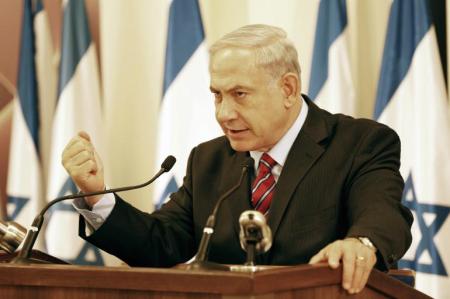

 Aletho News

