OCCUPIED JERUSALEM – The land research center said that the Israeli occupation authority (IOA) established fake graves in Silwan district, south of the Aqsa Mosque, as part of feverish steps to Judaize the Arab history and identity of the holy city.
In a report released on Friday, the center stated that Zionist settler groups in cooperation with the nature and parks authority planted tombs built of stone on a tract of Palestinian land located between Silwan district and the Umayyad Palaces area, south of the Aqsa Mosque.
It noted that the tombs, engraved with the Star of David, were made look like age-old ones and presented to tourists as Jewish graves built before 1948.
“Such step confirms once again that the occupation state is seeking on purpose to fake the history of Jerusalem in violation of the international norms and laws that demand it not to make changes to any land under its occupation,” the center underlined.
The center also warned that creating fake graves enables Israel to seize more areas in east Jerusalem.
Third part of a documentary produced by Béatrice Pignède, with footage shot by Jonathan Moadab, Sylvia Page, Jean-Sébastien Farez and Saber Farzard. Music by Gilad Atzmon.
Click below for other segments of the documentary: Part 1 Part 2
News about developments of the Palestinian issue continue to pour in through all media outlets, and statements and political speeches do not stop, but we hardly hear about the core and essence of the Palestinian issue which is the problem of Palestinian refugees.
Most of the actions related to finding a solution for the Palestinian case revolve around the establishment of a Palestinian state, or the so-called two-state solution. Meanwhile the issue of the refugees remains excluded, or marginalised, from these steps, in light of very weak hints by Palestinian politicians.
In the United Nations there are Palestinians and Arabs who mention the suffering of the Palestinian refugees with implicit sentences in order to get sympathy from those who have none. On the internal Palestinian front, there is a clear absence of the issue of refugees in all educational, cultural and media related facilities, and it is rare for the issue to be a topic of debate or discussion, whether private or public. As for the international arena, the world is completely silent about this issue and we don’t hear countries or human rights organisations putting the case up for discussion.
The Palestinian cause is torn into pieces after it was a whole cause that represented an entire people, but it was transformed into one of many issues such as an independent mini-state, a non-member state at the UN, settlements, a speech for Mahmoud Abbas at the UN, salaries, tax revenues collected by Israel, the war on Gaza, reconciliation between Fatah and Hamas, and other issues.
The Palestine case is first and foremost the case of refugees; it is the case of a people, who were expelled from their homeland, and in its essence, it is a case of a people who live in camps under very difficult economic and social conditions and it is not a secondary case.
It is true that the secondary issues are important, but they are not a priority, and we should not allow them to affect the issue of Palestinian refugees or overstep its high priority amongst the Arab and Palestinian interests.
If there is a solution to the Palestinian case, it can’t be realised without including a program to facilitate the return of the Palestinian refugees to their homes and properties occupied in 1948. This is why the issue of refugees must be the main concern for all those who seek peace in the Arab and Islamic region and on the international level. All those who try to evade the acknowledgment of the rights of Palestinian refugees are actually evading serious efforts to find a solution for the case, and are trying to keep the Arab and Islamic worlds in constant war, and are threatening world peace.
The right of return
Countries, international conventions and human rights organisations always talk about human rights, but such talk always stops when it comes to the rights of Palestinian refugees. International conventions, religious teachings and history lessons all acknowledge the right of refugees to return to their homeland, and so many countries, mainly large ones, call for the return of refugees and expelled people to their homes and properties, but these countries become silent when it comes to Palestinian refugees. Even the United Nations did not live up to its responsibility when it settled for only issuing UN Security Council Resolution 242 which calls for a just solution for the issue of refugees without mentioning who these refugees are, and without talking about specific international conventions related to refugees, and without confirming the General Assembly’s Resolution 194 for the year 1948 concerning the return of Palestinian refugees.
International norms state that countries in conflict must first look for ways to face humanitarian problems before starting negotiations about political, economic and security problems. Humanitarian problems have a priority over all other issues, and that’s why countries at war always start with talking about two vital issues: refugees and prisoners.
First, they agree to return refugees or those who were displaced due to the war, and then they agree to swap prisoners. Those two issues did not get prioritised in the Palestinian case, and Israel’s security remained the main issue that dominated negotiations between Israel, the PLO and the Arab regimes.
For many years, the negotiations table acted as a support for Israeli security while the displaced Palestinians had to stand guard at the gates of the Israeli kingdom.
And instead of looking for arrangements for the return of Palestinian refugees, the search was focused on how the Palestinians must provide security and military services to Israel. Some Palestinians had to commit moral crimes against themselves where they would defend Israel’s security while Israeli warplanes were killing children, destroying homes, and their army was confiscating lands and building settlements.
The meaning of justice was changed during the negotiations between the Arabs and Israel, as the meaning of justice now meant the defence of settlers and Israel’s right to exhaust the Palestinians, crush them, kill them and destroy their homes. Justice now meant protecting Israel, its security and its interest, as well as the absence of the case of Palestinian refugees.
The harshest blow to Palestinians’ morale as a result of this change was the fact that refugees who grew up and lived in refugee camps were now defending Israel’s security. There are Palestinian refugees who work as leaders in Palestinian security services and coordinate with Israel against their own people and nation.
The search for a state
The issue of establishing a Palestinian state was not presented as a Palestinian constant that must be fought for; there were only two constants: the right of return and the right to self-determination.
The idea of establishing a Palestinian or Arab authority in the land occupied in 1967 was only raised once in 1968 by Zionist Yigal Alon who presented a proposal for a solution for the Palestinian case in cooperation with Jordan. Juldamir repeated the idea in 1973, but former Israeli Prime Minister Menachem Begin was clearer when he, in 1978, proposed the establishment of a Palestinian Authority in the West Bank and Gaza Strip with Bethlehem as its capital, and where it would have a police that is armed by Israel in order to enforce internal order. However, Ariel Sharon is the one who adopted the idea practically and sought to establish a Palestinian Authority by means establishing the Village League system for this purpose.
The Palestinian Liberation Organisation refused the idea at all its stages and considered accepting the establishment of a Palestinian Authority and autonomy to be treason that should be punished by death. The translation of this rejection was in the form of the PLO’s assassination of Yousef Al-Khatib, the head of the Village League in Ramallah.
However, time showed us that the position of the PLO was not based on national principles, but on the PLO’s vision and idea of who should be leading the national treason. This is why it easily accepted the signing of the Oslo agreement which represents a bad copy of the Menachem Begin proposal for the establishment of Palestinian autonomy.
It was clear in the PLO’s agenda for 1974 that it was moving towards accepting autonomy and the establishment of a Palestinian Authority. The official Palestinian position evolved after that into a search for a state in light of the Zionist occupation, and then Palestinian media outlets adopted the idea of establishing this state so it would become a Palestinian constant, while it is actually close to being an Israeli constant as Israel is the one that initially proposed the idea.
The state at the expense of the right of return
It was important for the Palestinian leadership to adopt the idea of establishing the state and using it to distract the Palestinian people from it, which was at the expense of right of return. It was clear from the actions of the Palestinian leadership in both the internal and external arenas that it had given up on the right of return and that it is only providing media services in this regard in order to throw dust in the eyes of the Palestinians.
This is a result of a conviction formed by this leadership that believed that Israel would never agree to the right of return, and that insisting on it would completely abort all other efforts to reach a peaceful solution to the case, and that if the Palestinian people wanted peace with Israel, they would have to give up on the right of return first, and also give up their right to self-determination.
After the Oslo accord, Palestinians started realising that many security officers began to publicly say that demanding the right of return will stand in the way of the peace process with Israel. I heard, with my own ears, Palestinians saying that those who want the right of return do not want peace in the region.
As for the right to self-determination, it is clear that the PLO and the leadership of the Palestinian Authority do not mention it, even though the UN General Assembly recognised the Palestinian people’s right to self-determination in 1974.
The Palestinian Authority, and those with it, exert so much effort to remind the people of the UN General Assembly’s resolution relating to recognising Palestine as a non-state member at the UN, but they do not bother to remind people of the right to self-determination which is much more important than the recognition resolution, because the establishment of a state is included in the right to self-determination.
The Palestinian leadership, as well as the Arab regimes, are evading the refugees’ right of return. Their overlooking of the clause in the Arab Initiative regarding the refugees shows the irresoluteness of the Palestinian and Arab positions towards this issue.
This clause states the importance of looking for a just solution for the refugees’ case (in accordance with UN Security Council Resolution 242) in light of the General Assembly’s Resolution 194 which concerns the refugees’ right of return.
The truth is that this decision circumvents the issue of refugees, or at best presents it in a vague manner, while this is supposed to be clear and unambiguous, and should explicitly state the right of refugees to return to their homes and properties in the land occupied in 1948, and the text must leave no room for misinterpretation that the right of return would be to the land occupied in 1967.
The irresolute positions of the different factions
The Palestinian factions were not serious in their position towards the Oslo agreement and the consequent decline in Palestinian positions, as well as the decline of the Palestinian cause on the regional and international arena. The Oslo agreement did not eliminate the refugees’ right of return, but it postponed looking into it. This delay is considered a national crime. On the other hand, acknowledging Israel, certainly involves denying the refugees’ right of return.
It was expected for those who agreed with the Oslo accords to follow the national standard which has been followed since the British mandate and which called for boycotting all those who cooperate with the enemy and belittle Palestinian rights.
The Palestinian factions that are part of the PLO immediately built friendly relations with those that signed and accepted the Oslo Accords, and asked the Palestinian Authority for jobs for their members. Their leaders started to hold meetings with those who were cooperating with Israel on the security and civil levels, while continuing to issue statements of verbal abuse and insults against Oslo.
On the other hand, Islamic factions did not boycott those who cooperated with the occupation either and some of their leaders also asked for jobs for their sons and matters even reached the point of these factions going under the umbrella of the Oslo Supporters after the 2014 war.
These factions who supported the Oslo agreement led negotiations on behalf of the Palestinian resistance, and none of the resistance leaders mentioned, neither during the war nor during negotiations, the right of return. This has put all factions in the same trench; a matter that requires the Palestinian people to intensify their efforts to preserve their inalienable national rights.
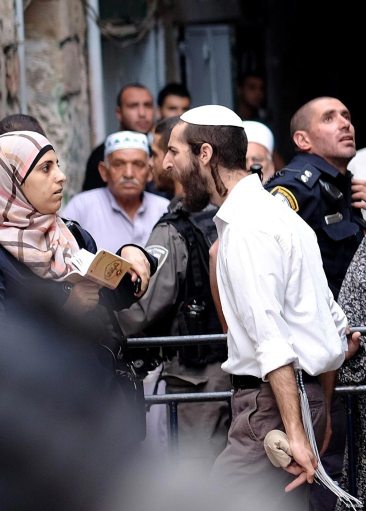
Arab Knesset Member Hanin Zoabi is to appeal against the Israeli police’s ban on Palestinian women from entering Al-Aqsa Mosque, the minister said today.
The Anadolu news agency reported a statement for Zoabi saying she had informed the Israeli police of her plan to appeal to the Israeli court against the “arbitrary” banning of women from entering the mosque.
She did not disclose with which court she was planning to file the appeal, but the process starts by filing an appeal to the magistrate court, then to the district court then to the High Court.
Zoabi described Israel’s ban on Palestinian women entering Al-Aqsa Mosque as a “dangerous precedent”, noting that the reason behind banning them is their role in “facing the settlers’ desecration of the mosque” in recent months.
For more than two months, Israeli police have banned women from entering the mosque from time to time. “They [Palestinian women] formed the front defence line against the Israeli violations and aggression on Al-Aqsa Mosque,” Zoabi said.
The Knesset member said she had sent a written letter to the Israeli Minister of Internal Security Yitzhak Aharonovich informing him of the “violations” committed by the Israeli police and Israeli border guards against women around and inside the holy site.
She noted in her letter that the violations and aggression on Palestinian women and banning them from entering into the mosque “undermines and ignores” their freedom. She also stressed that the lack of punishment against aggressors is a “green light” for more violations.
For about two months, the Israeli settlers, including extremist officials such as Knesset Deputy Speaker Moshe Feiglin have stormed Al-Aqsa Mosque on almost a daily basis.
Palestinians remain inside the mosque trying to prevent such aggressions, but the Israeli police and occupation forces took measures to secure the settlers including preventing women and men under the age of 50 from entering Al-Aqsa’s grounds.
Yesterday, 20 Palestinians, including women, were wounded in clashes in the mosque and seven others were arrested, including minors.
It costs four dollars to visit the archaeological site of Susiya in the southernmost part of the West Bank. For your four dollars you can view an ancient Jewish city, supposedly once home to 3,000 people which peaked in the years 400 to 800 CE, the late Talmudic, mid-Byzantine, and early Arab eras. The Jewish inhabitants are estimated to have disappeared some 1,200 years ago, according to the Center for Educational Tourism in Israel.
Father and son, Muhammad and Nasser Nawaj’ah, paid their four dollars, not to marvel at the century’s old synagogue or the ancient water system but to reminisce- Mohammed was born in one of the cave dwellings as was his son. The area is now devoid of any signs of the Palestinian village that existed until the late 1980’s but it is still infused with memories of both their childhoods, of the community’s traditional way of life and of a far more stable time.
In 1986 the Palestinian residents were forcibly evicted to make way for the archaeological park. Today they live close by and continue to face the threat of eviction. In a 2011 short film Nasser and Muhammad are shown returning to their previous homes 25 years after they were displaced. Their first journey back is short-lived with the Israeli soldiers seeming keen to escort the pair out of the site. Nasser interjects: “Excuse me soldier, we bought a ticket so we could see our home.” In contrast, shortly before the army arrived, the father and son had watched an Israeli explanatory video stating: “Only traces remain (of the Jewish civilization) in these silent ruins, but they are engraved in stone.” The ruins have been used to invoke a present day Jewish connection with the land, and in the process, there is an attempt to erase any Palestinian connection to it.
Yonathan Mizrachi from Emek Shaveh, an Israeli NGO that seeks to unpick the role archaeology plays in the Israel/Palestine conflict says it is about reinforcing identity. “Archaeology is being used to emphasise a specific narrative, one side of the conflict. The question “who was here before?” is central to this conflict. This says: “my roots are older than yours.'”
According to the NGO, in the Eighth and Ninth centuries, a mosque was built on the remains of the ancient synagogue found in Susiya. The presence of the mosque on top of the synagogue raises interesting questions, none of which are addressed and could greatly enhance understanding of Susya’s place in the cultural and social space of the South Hebron Hills.
There are many similar examples of archaeology being recruited to assert ownership, such as in the East Jerusalem neighbourhood of Silwan. Silwan is the site of the “City of David,” an archaeological attraction tempting scores of tourists and pilgrims every year. Visitors travel from across the globe to marvel at the artefacts and caves, admiring the picturesque views.
According to the Wadi Hilweh Information Center, 65% of Palestinian owned homes in Silwan have demolition orders ,with lack of building permits predominantly cited as the justification, yet only 20 such permits have been issued since 1967 and permission to build an extra floor has to travel though a total of 11 Israeli ministries. Currently a plan is underway to create “green zones” in the area which will displace 1,200 residents.
“It (the archaeological site) gives settlers the legitimisation to live there,”.Mizarchi noted. He added: “The City of David succeeded in creating a new identity of Silwan.”
Herodion, Herod the Greats monumental palace built around 23-20 BC and perched on the highest hill in the area, is another example. From the top of the site, the Palestinian city of Bethlehem in the West Bank, which lies just 5km away, is clearly visible. On approach you must drive past a military base and pay an entrance fee to an Israeli man whose desk sits in a shop selling “I love Israel” and “Visit Israel” t-shirts.
Memo visited the site and asked some of the tourists, who shuttled off buses run by Israeli tour companies, where they believed they were. Most were unsure. One woman from the US remarked, “Judging from the Israeli soldiers and the Hebrew, I would say Israel.” While her husband walked away muttering Israel defiantly, the woman returned and said in a whisper, “I suppose we are where the person with the biggest weapons wants to tell us we are. That’s not right, but I think that’s how it is.”
We are increasingly seeing archaeology recruited by the Israeli government and settlers to demonstrate connection and roots of the Jewish people to Palestinian land, asserting ownership, and attempting to simultaneously wipe away traces of Palestinian ownership. This is not the way it is meant to be assures Yonathan. He notes: “Think about Jerusalem; there are many cultures, civilisations, religions, all part of the history of Jerusalem. It should open your mind; it is a story of difference. It is not the story of one people.”
This photo was taken in a supermarket in Gilo – an illegal Israeli settlement in occupied East Jerusalem – by an activist who documented the sale of Ben & Jerry’s ice cream in the settlements of Gilo (pop. 28,980), Pisgat Ze’ev (pop. 39,748) and Ma’ale Adumim (pop. 35,673), and in the industrial park of Mishor Edomim, which services Ma’ale Adumim.
Ben & Jerry’s Caters to Illegal Israeli Settlements
In August, 2011, an Israeli Jewish activist working with us contacted Ben & Jerry’s factory in Israel, by e-mail and telephone, and confirmed that the company delivers ice cream to Israeli settlements in the occupied territory. Here is an e-mail communication, translated into English, between an employee at the factory and the Israeli activist, discussing arrangements for an ice cream cart to travel to the Israeli settlement of Ma’ale Adumim:
B&J Employee: Thanks for writing. Our ice cream cart comes with 5 flavors to choose from, glasses, wafers, ice cream toppings, 2 stewards and all accessories. The cost for 250 people (free distribution); 3,500 [NIS (Israeli Shekels), or $919 US] including VAT. Attached is a list of flavors. I’ll be happy to answer any questions.
Activist: Is there an extra cost that relates to the distance of your factory to the location of the party? i.e., is there an extra cost because the event is held in Ma’ale Adumin? I’m sorry about the need for detail but it’s necessary for our accounting department.
B&J Employee: Yes, the cost of transportation is 250 [NIS (Israeli Shekels), $65 US]. This is because we come from Be’er Tuvia (near Kiryat Malachi) to Ma’ale Adumim.
Israeli Settlements are Illegal Under International Law
Israel’s settlements in the Palestinian Territory violate Article 49(6) of the Fourth Geneva Convention, which declares that “the Occupying power shall not deport or transfer parts of its own civilian population into the territory it occupies.” The commentary to the Convention states that this provision was intended “to prevent a practice adopted during the Second World War by certain powers, which transferred portions of their own population to occupied territory for political and racial reasons or in order, as they claimed, to colonize those territory. Such transfers worsened the economic situation of the native population and endangered their separate existence as a race.”
Transfer of settlers to occupied territory by an occupying power is also an international war crime under Article 8(2)(b)(viii) of the 1998 Rome Statute of the International Criminal Court. Moreover, the UN Security Council and General Assembly, the High Contracting Parties to the Geneva Conventions, the International Committee of the Red Cross, and most legal scholars have concluded that Israel’s settlements in the oPt contravene international law. The International Court of Justice declared in a 2004 decision that “the Israeli settlements in the Occupied Palestinian Territory (including East Jerusalem) have been established in breach of international law.”
Ben & Jerry’s business in illegal Israeli settlements also violates its obligations under the U.N.’s “Norms on the Responsibilities of Transnational Corporations and Other Business Enterprises,” which asserts that corporations “shall not engage in nor benefit from war crimes, [or] crimes against humanity…” nor take actions that obstruct or impede economic, social, cultural, civil and political rights.
[Citations for the references above are in Our Report on Ben & Jerry’s business practices in the occupied Palestinian Territory.]
The Israeli supermarket chain Shufersal distributes Ben & Jerry’s ice cream at stores both in Israel and in illegal settlements in the occupied Palestinian Territory.
The map at left, with dots denoting the locations of their stores, was displayed in their store in Mishor Adumim (an industrial zone that services one of Israel’s largest settlements, Ma’ale Adumim). Notice that it depicts Israel and occupied Palestine as one state. Palestinians under occupation are not allowed to enter most Israeli settlements, so the supermarkets in those places only sell Ben & Jerry’s ice cream to Jewish settlers.
Vermonters for a Just Peace in Palestine/Israel Calls on Ben & Jerry’s to:
Until Israel ends its occupation and colonization of Palestinian lands in compliance with international law:
End the marketing, catering and sales of Ben & Jerry’s products in Israel and Jewish-only settlements in occupied East Jerusalem and the West Bank.
Stop manufacturing ice cream in Israel.
Issue a statement (a) calling on Israel to end its occupation and settlement enterprise and (b) appealing directly to other socially responsible companies to do likewise and to cease business operations in Israel and its illegal settlements.
Click here to send a message to
Ben & Jerry’s headquarters in Vermont.
Tell Ben & Jerry’s that its complicity in Israel’s military occupation and illegal settlements is wrong and must stop!
Boycott Divestment & Sanctions:
In Solidarity with the Palestinian People
Vermonters for a Just Peace in Palestine/Israel’s opposition to Ben & Jerry’s business practices in Israel and occupied Palestine is motivated by the grave human rights abuses being committed by the State of Israel. We are are also aware that in 2005 Palestinian civil society called for an international campaign of boycotts, divestment and sanctions (BDS) against Israel until it complies with three rights codified in international law.
End Israel’s occupation and colonization of all Arab lands and dismantle its separation wall;
Recognize the fundamental rights of the Arab-Palestinian citizens of Israel to full equality; and
Respect, protect and promote the rights of Palestinian refugees to return to their homes and properties as stipulated in United Nations Resolution 194.
Ben & Jerry’s CEO, Jostein Solheim, said in an interview:
“My mantra that I’ve repeated a hundred times since starting at Ben & Jerry’s is: ‘Change is a wonderful thing,’…. The world needs dramatic change to address the social and environmental challenges we are facing. Values led businesses can play a critical role in driving that positive change. We need to lead by example, and prove to the world that this is the best way to run a business. Historically, this company has been and must continue to be a pioneer to continually challenge how business can be a force for good and address inequities inherent in global business.”
Vermonters for a Just Peace in Palestine/Israel agrees: The world – including Israel-Palestine
Documentary produced by Béatrice Pignède, with footage shot by Jonathan Moadab, Sylvia Page, Jean-Sébastien Farez and Saber Farzard. Music by Gilad Atzmon.
Members of the British House of Commons voted last night to recognise Palestine as a state. This non-binding resolution, tabled by Labour MP Grahame Morris, will not change this current government’s stance on the issue but has laid the groundwork for a change when this government is voted out of office. Unfortunately an amendment was tabled alongside the original motion due to internal (and external) Labour Party friction and fear which urged the recognition of Palestine within a “negotiated two-state solution“. This returned to the model of giving Israel an overwhelming position on whether Palestine is a state or not. Caroline Lucas, the Green Party MP, opposed the amendment stating;
I oppose an amendment that seeks to make British recognition of Palestine dependent on the conclusion of successful peace negotiations between the Israeli government and the Palestinian Authority.
Neither Israel nor Palestine’s right to exist should be subject to veto or any kind of conditions and we must actively challenge any refusal by either side to deny the other’s right to exist.
Members of all sides of the house stood up and gave their views. Many remarked on the thousands of e-mails and letters they had received from their constituents urging them to vote to recognise Palestine. Some of what the members said was either inaccurate or misleading but was at least based on a clear and passionate support of the Palestinian people. For example there was much support for the strategy of Mahmoud Abbas and his presidency. Despite the fact that many Palestinians living in the West Bank and Gaza Strip see his role as a collaborator with the occupation, members of the house rose to argue that this vote would support the moderates in Palestine such as Abbas and his government. They failed to acknowledge that this way of moderation had achieved nothing in the West Bank apart from a huge expansion of illegal settlements, thousands of arrests and hundreds of deaths. Not that Hamas has achieved much for the people it represents, yet each time Palestinians violently resist at least the international community wakes up during these periods and calls for a just solution. When negotiations take place between the unequals, everyone seems to look the other way and pray that the Israeli leadership will show some magnanimity. Keep praying.
There was even the occasional Israel-firster, who stood and spoke to make the debate livelier. Robert Halfon, a Conservative MP, made the extraordinary decades-old and much widely ridiculed claim that there is already a Palestinian state, Jordan. Halfon went on to say that if a Palestinian state was recognised;
There would be three Palestinian states, one that already exists in Jordan and two statelets, run by Hamas and by Fatah.”
A member of his own party intervened with;
Surely the member is not suggesting that because hundreds of thousands of Palestinans fled and were forced across the border into Jordan that they should accept this as their state?
Halfton failed to respond to this remark. Indeed according to him Palestinians who stayed in the West Bank were happy under the rule of King Abdullah of Jordan up until the 1967 war;
Abdullah even called himself the King of Jordan and Palestine as his country controlled the West Bank.
Well that’s fine then, as long as the dictator was happy to accept his own legitimacy?! This is the same old rubbish that has been spouted for decades by both those in Israel and their supporters in an attempt to delegitimise the Palestinians as a people, as a people who belong to and have existed on the land of Palestine as a people for centuries.
For some this vote was all about being anti-Israel because literally none of the members who voted for the motion had anything better to do than stand with, for this briefest of moments and with conditions, the Palestinian people who have suffered for over half a century at the whim of successive Israeli governments. Whether this motion does anything to advance the cause of the Palestinian people in their search for justice or actually enforces the status quo is moot. The vote passed and the recognition within the British body politic that the British people will no longer put up with British support and silence in the face of Israeli crimes against the Palestinians also passed.
Israelis should not despair but be optimistic about the continuing plummet of international citizenry and government support for their government’s policies against the Palestinians. One day this growing pressure from outside may force those within Israel to re-evaluate what they are told by their government and military and lead to a demand for a real and just peace with the Palestinians. When this day comes, the sky is the limit for both Palestinians and Israelis.
There are all sorts of varieties of insane extremists among the settlers. By “insane” I don’t mean that they’re aberrations from the Israeli norm. Just that in polite western society (not Israel, of course) these people would be viewed as nutcases and ignored. Only in Israel (and perhaps this happens in other religious extremist societies as well) are such people turned into prophets, prime ministers, and even esteemed academics.
Such a one is Prof. Hillel Weiss, who teaches not Hebrew literature, mind you, a term he banned from his department–but rather the literature of the Jewish people. You see Hebrew is the language and literature of the Jewish people. There is no other. Yiddish? Feh, jargon. Jewish literature in English? Derivative, degenerate and a mark of the bankruptcy of galut.
Professor Weiss teaches, where else, at Bar Ilan University. That’s also the home of such other wunder-mensches as Mordechai Kedar, who advocates raping Palestinian women as a deterrent to terrorism; and Gerald Steinberg, that convicted libelist who runs the fraudulent NGO known as NGO Monitor.
Listen, Abu Mazen: you aren’t a people and therefore there can be no genocide [against Palestinians]. To exterminate you like a simple rabble is a mitzvah and it will be fulfilled finally despite the fact that the government of Israel still doesn’t accept its responsibility for raising mendacious international recognition of you [Palestine]. [This process] started with Begin ended with Gal-On. It contributed to the deception of the entire world and [increased] the popularity of these monsters [Palestinians] who rose up due to our weakness and lack of faith.
The quicker you [Abu Mazen] can concede that you are not a people and that your place is nowhere within the borders of the land of Israel, the better off you will be… as long as you evacuate the country of your own volition.
Weiss concludes his scholarly lecture with a reference to Deuteronomy 32:21, 43, which originally was meant as a curse against the pagan peoples who surrounded the ancient Israelites. But in the context in which Weiss invokes the verse, it’s deeply Islamophobic, essentially calling Islam a pagan, “villanous” religion. This is eliminationism of the purest sort:
They have roused Me to jealousy with a no-god; they have provoked Me with their vanities; and I will rouse them to jealousy with a no-people; I will provoke them with a villanous nation…
Nations, celebrate His people; for He avenges the blood of His servants, and returns vengeance upon His enemies, and atones for the land of His people.
Prof. Weiss is also one of those blessed Judeans who’s planning to revive the Sanhedrin, so we can return to stoning Sodomites and adulterers like in the old days. He can also count himself among the Chosen who hope to raze the Dome of the Rock and replace it with the Third Temple, “God willing.”
I swear if anyone tries to claim that this guy is a fruitcake who represents no more than a fringe of a fringe, I may be sick. You know that his views are embraced by almost the entire ruling coalition and that they’re being implemented by the government in every way it can. Hillel Weiss is the beating heart of both Israeli settlerism and Israel itself. What the good professor shouts from the mountain top and on Facebook is beating inside Bibi’s heart. They are one.
By the way, we should give credit where it’s due to Arab-American oil man, Jamal Daniel and the folks at Al Monitor, who see fit to publish the similarly inchoate messianic ramblings of Yuval Avivi, who regularly covers this garbage in its pages. That a publication funded by an Arab-American would present such inflammatory drivel is mystifying to me.
There is good news and bad news of late for the Boycott, Divestment and Sanctions movement. On the one hand, companies such as Veolia, willing partners in the occupation, are losing out on mega-contracts. Despite plans to withdraw from Israel, the French company just lost a $750 million contract to provide waste management services to Kuwait City. Pleasing for BDS was the explicit reference to Veolia’s association with Israel and a head nod to their campaigning efforts. It comes on top of nearly $24 billion in lost contracts, seemingly over support for Israel.
Likewise G4S are suffering setbacks. Earlier this year, Bill Gates announced a massive divestment, while a report over the summer (by the Financial Times) suggested they would soon end their activities in Israel. Campaigners are rightly cautious – the company have gone back on their word in the past.
Companies like G4S and Veolia are the traditional bogeymen of leftist, progressive, anti-war or anti-globalisation movements. They are big targets, household names, transnational corporations that everyone can relate to – and when I say everyone, I mean the general public, not activists.
I can go down to my local train station and see a G4S security van parked outside. I see a Veolia truck pass my house once a week to collect my rubbish. Companies like Hewlett Packard advertise on television.
With such high profile and controversial brands, in some ways – isn’t this the easier end of the campaign?
After all – how many households would sign a petition against Serco? Quite a few, most people have heard of them.
But what then? There are thousands of British companies trading with Israel. Their names, headquarters and management are constantly changing – the past 12 months alone saw 37 acquisitions, mergers and IPOs of those companies. There are hundreds of thousands more trading from other countries. A tiny proportion are household names.
Raising awareness of each of these companies requires disproportionate effort by a small number of time poor activists.
The BDS movement has put itself into a massive fight. And though there are some successes, figures released this week show that UK-Israel trade actually grew by 28 per cent year-on-year in the first half of 2014, now amounting to £2.5 billion. There may be successes here and there, but the machine of modern commerce is an extremely hard one to slow.
And despite the popular narrative of “well, it worked in South Africa”, the uncomfortable truth is that many economists and historians disagree.
“Perversely, South African businesses reaped at least $5 billion to $10 billion in windfalls as Western firms disinvested at fire sale prices between 1984 and 1989,” noted Thomas W. Hazlett, now at George Mason University. The political effect of the sanctions movement saw the white power elite retrench. Apartheid policies worsened – the police and military cracked down even harder.
In truth, the collapse of Soviet Communism, populist black movements in South Africa, white supremacists working with blacks rather than oppressing them, just to keep their families fed – led to the fall of apartheid. It’s nice to think the West played the lead role, but in truth, South Africa did a lot of it itself. Its role is, somewhat patronisingly, rarely acknowledged.
As the BDS movement has grown stronger – the domestic politics of Israel is tipping to the hard right. Attacks on Gaza are becoming more frequent. Knesset hard-liners have advocated genocide against Palestinian mothers, or published detailed plans on their Facebook pages about how the entire population of Gaza should be deported. Attacks on journalists, artists and pro-war activists by far right extremists are on the increase. The Israeli media propagates an us-and-them attitude to not only the Arab world, but also their detractors in the West. Are we already seeing what really happened in South Africa play out? Are the worst parts of Israeli society becoming stronger?
The campaign has some positives with regards solidarity, it contributes to educating the public – but ultimately, we don’t know whether it will make things worse and, as a pro-sanctions or boycott movement, it doesn’t yet have a successful precedent or contemporary model for success – just look at North Korea, Iran, Russia or indeed the porous Arab boycott against Israel.
But aside from the uncertain and potentially dangerous side-effects of BDS, we are ignoring the bigger problem. The crux of bringing the Israeli hawks to heel isn’t so much about corporate investments – it’s about political money, dripping from the campaign coffers of Western politicians bribed and briefed by Jerusalem cronies.
The funding is mysterious, ambiguous and seemingly unimpeachable, protected by anti-Semitism laws which forbid honest discussion of it, or by hasbara attack dogs who discredit any journalist or academic who speaks out.
But imagine the tabloid outcry if hundreds of millions in “Muslim” donations began pouring in to Western politics, Muslims with strong interests in the domestic or foreign policies of Pakistan, Saudi Arabia or Iran.
You don’t have to imagine – last month Qatar, the United Arab Emirates (and Norway) were caught funding influential foreign policy think tanks in Washington. And there was an outcry.
But many feel uncomfortable taking on the Israeli lobby – because it’s scary. It comes with great risk – people have lost their jobs, careers and reputations. Nobody likes to be labelled an anti-Semite, which is their preferred mode of attack.
Assuming for a moment that South African white supremacists had actually wanted to continue with apartheid, if they had had the financial resources and strategic nous to invest millions into Washington and Westminster, a boycott campaign would have stood almost no chance of success.
Campaigning against corporate involvement in morally dubious interests should not be stopped. I wouldn’t feel comfortable if Western corporations, pension funds, or governments invested in arms deals with dodgy regimes, or became complicit in mass human rights abuses, and nobody knew about it.
But we should recognise the limits of the BDS movement – both by recognising that the “low-hanging fruit” of corporate targets – international corporations who are already disliked by the public, may only be the warm-up, by better understanding what really happened in South Africa, and by asking – are we really attacking the root of the problem?
BDS, in some ways, detracts from directly dealing with the real problem: the foreign policy of the West has been seriously corrupted by Israeli influence, almost wherever you look.
Dismantling “the Israel lobby” is a tougher fight, but it’s a far more important one.
If we are over-awed by the challenge, or if indeed the BDS movement was itself a function of an inability to crack the lobby directly, there may still be cause for optimism. Removing big money from politics, in general, is an extremely populist movement.
There are very few Westerners who want the status quo to continue, for big corporations and foreign interests to hold such sway on our democracies – on any issue. You don’t have to be pro-Palestinian to recognise this.
A broader coalition of groups, from charities, to environmental campaigners, to trade unions, to newer organisations like Change.org and 38 Degrees could be the key. The influence of the Israel lobby isn’t a unique problem. Perhaps by looking to other marginalised groups who face similar challenges, the pro-Palestinian campaign can find yet more life.
NABLUS – Israeli settlers set fire to a mosque in the Nablus-area village of Aqraba overnight, locals said.
Ghassan Daghlas, a Palestinian official who monitors settlement activity, told Ma’an that a group of settlers broke the doors and windows of the Abu Baker al-Saddiq mosque and vandalized the interior with racist slogans.
The settlers then set fire to part of the mosque before being chased away by Palestinian villagers.
Locals managed to extinguish the fire and prevent it from burning down the whole mosque.
In Jan. 2014, settlers torched a mosque in Salfit and sprayed “Arabs out!” on the building.
Settlers in the occupied West Bank attack Palestinians and their property routinely yet rarely face prosecution by Israeli authorities.
Hebron, Occupied Palestine – Today at the Salaymeh checkpoint in al-Khalil (Hebron), Israeli soldiers fired four long-range tear gas canisters, and threw three stun grenades, all towards children leaving school to walk home.
One tear gas grenade was also thrown directly at ISM activists documenting the military violence.
Israeli soldiers were positioned very close to the school, due to the new position of the concrete blocks that designate the end of H2 (the area of Hebron under full Israeli military control).
Yesterday they were moved further away from Salaymeh checkpoint to further encroach upon Palestinian territory.
Two Israeli soldiers also occupied the top floor of a Palestinian apartment block and positioned themselves above the schoolchildren.
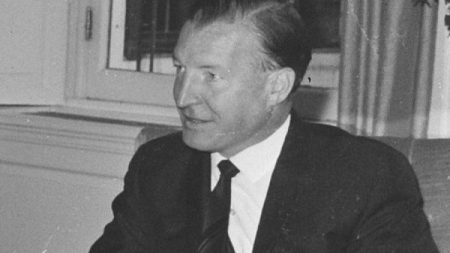
Former Irish Prime Minister Charles Haughey was warned by loyalist paramilitaries that they were once tasked with murdering him in an assassination plot purportedly dreamt up by the British secret service.
The sensational disclosure was sent in a letter to the Irish government, newly released under the Public Records Act, which requires documents of historical value to be published by the National Archives within 30 years.
Written on Ulster Volunteer Force (UVF) signature paper, the warning claims the terrorist organization was asked by an MI5 operative about the prospect of carrying out an attack on Republic of Ireland leader Haughey in 1985.
At the time, Haughey would have been in opposition as head of political party Fianna Fáil, but details of the solicitation did not become known to Irish authorities until 1987.
“In 1985 we were approached by a M15 officer attached to the Northern Ireland Office and based in Lisburn, Alex Jones was his supposed name,” the letter reads, according to the Irish Times. “He asked us to execute you.”… continue
This site is provided as a research and reference tool. Although we make every reasonable effort to ensure that the information and data provided at this site are useful, accurate, and current, we cannot guarantee that the information and data provided here will be error-free. By using this site, you assume all responsibility for and risk arising from your use of and reliance upon the contents of this site.
This site and the information available through it do not, and are not intended to constitute legal advice. Should you require legal advice, you should consult your own attorney.
Nothing within this site or linked to by this site constitutes investment advice or medical advice.
Materials accessible from or added to this site by third parties, such as comments posted, are strictly the responsibility of the third party who added such materials or made them accessible and we neither endorse nor undertake to control, monitor, edit or assume responsibility for any such third-party material.
The posting of stories, commentaries, reports, documents and links (embedded or otherwise) on this site does not in any way, shape or form, implied or otherwise, necessarily express or suggest endorsement or support of any of such posted material or parts therein.
The word “alleged” is deemed to occur before the word “fraud.” Since the rule of law still applies. To peasants, at least.
Fair Use
This site contains copyrighted material the use of which has not always been specifically authorized by the copyright owner. We are making such material available in our efforts to advance understanding of environmental, political, human rights, economic, democracy, scientific, and social justice issues, etc. We believe this constitutes a ‘fair use’ of any such copyrighted material as provided for in section 107 of the US Copyright Law. In accordance with Title 17 U.S.C. Section 107, the material on this site is distributed without profit to those who have expressed a prior interest in receiving the included information for research and educational purposes. For more info go to: http://www.law.cornell.edu/uscode/17/107.shtml. If you wish to use copyrighted material from this site for purposes of your own that go beyond ‘fair use’, you must obtain permission from the copyright owner.
DMCA Contact
This is information for anyone that wishes to challenge our “fair use” of copyrighted material.
If you are a legal copyright holder or a designated agent for such and you believe that content residing on or accessible through our website infringes a copyright and falls outside the boundaries of “Fair Use”, please send a notice of infringement by contacting atheonews@gmail.com.
We will respond and take necessary action immediately.
If notice is given of an alleged copyright violation we will act expeditiously to remove or disable access to the material(s) in question.
All 3rd party material posted on this website is copyright the respective owners / authors. Aletho News makes no claim of copyright on such material.
 OCCUPIED JERUSALEM – The land research center said that the Israeli occupation authority (IOA) established fake graves in Silwan district, south of the Aqsa Mosque, as part of feverish steps to Judaize the Arab history and identity of the holy city.
 Arab Knesset Member Hanin Zoabi is to appeal against the Israeli police’s ban on Palestinian women from entering Al-Aqsa Mosque, the minister said today.


 NABLUS – Israeli settlers set fire to a mosque in the Nablus-area village of Aqraba overnight, locals said.
International Solidarity Movement | October 13, 2014

 Aletho News

