Hebron, Occupied Palestine – This morning, settlers from Kiryat Arba, an illegal israeli settlement in the city of Al Khalil (Hebron), started to place road markers for the construction of a road through the Palestinian olive groves of Wadi al-Hussein. They were accompanied by Israeli military and police.
Palestinians, including the owners of the land, gathered in the area to stop any attempt of illegal construction in their land and were confronted by armed Israeli settlers, police and army. A number of international observers were there to monitor the situation. The settlers claimed that they had a court order for road construction. However, they were unable to bring any official papers to back this claim.
A while later, some settlers who remained in the area started putting up a tent in the olive groves, unhindered by the police who have the legal duty to prevent them from land theft. They equipped the tent with chairs and surrounded it with Israeli flags.
Wadi al-Hussein is a Palestinian neighbourhood in Al Khalil, which, due to its proximity with the illegal israeli settlements of Kiryat Arba and Givat Ha’avot, has suffered a lot from settler violence and oppression by the Israeli forces.
Settlers tent in the Palestinian olive groves (Photo by ISM)
Israeli forces and Palestinian land owners arguing about the settlers tent (Photo by ISM)
Because of the dire economic situation in the Old City in Hebron every day children go to the Ibrahimi Mosque soup-kitchen to get food. Walking out through the mosque checkpoint shortly after noon on Sunday 26 May, I was surprised by the number of people standing at the other end of the checkpoint.
Upon passing out through the checkpoint I realized that the turnstile to enter the mosque area was closed and nobody was being allowed through. A dozen young boys held plastic tubs of soup they had collected at the soup kitchen. They told us they had been waiting for around half an hour. As the queue of people wanting to get through increased, so did the boys’ frustration. They started ramming the turnstile and shouting to be let through. The Border Police ignored them. Women with babies lengthened the queue.
A man said the turnstiles had lost electricity. This seemed highly unlikely to me, though, as the lights were still on in the tunnel above the turnstile and I am sure there must be a backup in case of fire or other emergency. My suspicion was confirmed when Border Police allowed some of the young boys through only to turn the turnstiles off again and trap the boys in the middle between the two turnstiles. The Border Police repeated this twice, trapping young boys and women in a fenced corridor between the two turnstiles.
For me this highlights how vulnerable people are here. The Border Police won’t let members of Christian Peacemaker Teams through the checkpoint unless we take off our CPT hats. I find this very frustrating, but imagine visiting a soup kitchen and being stopped on your way back home by a young Border Policeman who doesn’t want to let you through the turnstile. A day can quickly turn from positive to negative. Nothing happened today, but one day it might. Imagine day after day being stopped and reminded how susceptible you are to the whims of another person literally preventing you from returning home.
The power imbalance between the children trying to get through the checkpoint and the Border Police stopping them is huge. The Border Policeman has the whole weight of the occupation behind him. Border Police officers do not make mistakes. If they shoot a youth they are praised, such as when the female Border Police officer shot 17-year-old Mohammed Salayme in Hebron in December 2012. If they arrest children and break international law, no one will penalize them.
As Gordon Levy explained in a 23 May Haaretz opinion piece, Border Police learn to behave rudely and to solve problems with weapons, and they are rewarded for doing so. But if Palestinian children get too rowdy at the checkpoint or respond in any way, they could easily end up in Israeli prisons, after enduring hours of interrogation with no lawyer, parent or guardian present.
Tubas, Occupied Palestine – Last Tuesday Sireen Sawafteh, a 24 year old woman from Tubas, was detained by Israeli forces. She is currently being held in Al Jalameh, an Israeli prison. Her family and friends fear for her safety. She has been denied access to a lawyer and she has not been allowed to make any contact with her loved ones since her arrest.
At around 3pm last Tuesday Sireen’s car was stopped at a temporary checkpoint on the road between Nablus and Tubas in the West Bank. After brief questioning by Israeli forces she was detained. The second person in the car was also detained.
In the early hours on Wednesday, Israeli forces raided Sireen’s family home whilst her father Khalid Sawafteh, her mother, three brothers, sisters in law and their two young children were sleeping. Twenty-five army jeeps entered the town of Tubas. Twenty officers entered the home and over one hundred remained in the street cornering off the house. The family and young children were all taken into one room whilst their home was ransacked. Israeli soldiers took all the computers in the house leaving Sireen’s relatives in shock.
Tubas is located in Area A as designated under the Oslo Accords, an agreement drawn up between the Palestinian Authority and the Israeli government. ‘Legally’ it is under total Palestinian civil and military control. Israeli civilians and military are prohibited to enter Area A and any incursion into this area is considered a breach of this agreement. Despite this, Israeli forces have continue to carry out ‘operations’ in Area A.
The illegal incursion on Wednesday morning sparked protests in Tubas. Israeli forces fired tear gas and sound grenades at local residents as they gathered. Omar Abed al-Razaq, a 20 year old local university student from Nablus, was injured. He is in a serious but stable condition in Nablus Hospital. He has lost some of his fingers and is currently unable to communicate with his visitors. The full extent of his injuries are not yet known. The head of the Palestinian Prisoners Society in Tubas, Mahmud Sawafteh, denounced Israel’s continuous raids, which he says causes ‘fear and panic among residents (1).’
Since her detention, Sireen has been forcibly transferred out of the Occupied Palestinian Territories to an Israeli prison in Haifa located in the north of Israel, a practice illegal under international law.
Article 49 of the Fourth Geneva Convention states that individual or mass forcible transfers, as well as deportations of protected persons from occupied territory to the territory of the cccupying power or to that of any other country, occupied or not, are prohibited, regardless of their motive”. While Article 76 states clearly that ‘protected persons accused of offenses shall be detained in the occupied country, and if convicted they shall serve their sentences therein”.
Last Thursday, lawyers acting for Sireen tried to visit the prison inside Israel where she is being held. They were refused entry. She appeared in court on Monday with her hands and legs shackled. The spurious charge was internet activism, creating a Facebook page which is considered a ‘threat’ to the ‘security’ of the region.
Sireen is active in the non violent campaign for human rights in Palestine. She studied computer science at the Open University in Tubas. During her studies she was actively involved in a twinning project between Tubas and the University of Sussex, England. She took part in a delegation of students which visited the UK from Palestine to strengthen links and foster friendships.
Rashed Kahled, Sireen’s older brother said; ‘We in the family are very concerned for Sireen and we would love her to be returned to us soon. My mother is very sad and fears for Sireen, she cannot sleep. How can we be at peace? We do not know what is happening and we are not allowed to see her.’
Many Palestinian women prisoners suffer abuse during their detention. Palestinian women prisoners are often kept in the same cells as Israeli female convicts. This practice often leads to female Palestinian prisoners being humiliated, suffering from threats and assault perpetrated with impunity by the Israel prisoners.
Adameer, a Palestinian Prisoner Support and Human Rights Organisation reports that Palestinian women prisoners ‘are subjected to some form of psychological torture and ill-treatment throughout the process of their arrest and detention, including various forms of sexual violence that occur such as beatings, insults, threats, body searches, and sexually explicit harassment. Upon arrest, women detainees are not informed where they are being taken and are rarely explained their rights during interrogation. These techniques of torture and ill-treatment are used not only as means to intimidate Palestinian women detainees, but also as tools to humiliate Palestinian women and coerce them into giving confessions (2).’
Sireen was in court for the second time this Wednesday. The judge extended her detention for a further 6 days. She will appear again on Monday, when it is possible her detention will be further extended.
Support all Palestinian Political prisoners!
Take action for Sireen
Send messages of solidarity and support here https://www.facebook.com/Welcome.toOo.Palestine
Write to your MP and ask them to make representations to the Israeli government calling for Sireen’s release
Washington, DC – It is a privilege to have been asked to join this discussion of Jacob Heilbrunn’s account of Israel’s fraying image. His article seems to me implicitly to raise two grim questions.
The first question is how long Israel can survive as a democracy or at all. The Jewish state has left the humane vision of early Zionism and its own beginnings far behind it. Israel now rules over a disenfranchised Muslim and Christian majority whom it would like to expel and a significant minority of disrespected secular and progressive Jews who are stealing away to the safer and more tolerant environs of the United States and other Western countries. Israel has befriended none of its Arab neighbors. It has spurned or subverted all their offers to accept and make peace with it except when compelled to address these by American diplomacy. The Jewish state has now largely alienated its former friends and supporters in Europe. Its all-important American patron and protector suffers from budgetary bloat, political constipation, diplomatic enervation, and strategic myopia.
The second question is what difference Israel’s increasing international isolation or withering away might make to Americans, including but not limited to Jewish Americans.
Let me very briefly speak to some of the issues that create these questions.
For a large majority of those over whom the Israeli state rules directly or indirectly, Israel is already not a democracy. It consists of four categories of residents: Jewish Israelis who, as the ruling caste, are full participants in its political economy; Palestinian Arab Israelis, who are citizens with restricted rights and reduced benefits; Palestinian Arabs in the West Bank, who are treated as stateless prisoners in their own land; and Palestinian Arabs in the Gaza ghetto, who are an urban proletariat besieged and tormented at will by the Israeli armed forces. The operational demands of this multi-layered, militarily-enforced system of ethno-religious separation have resulted in the steady contraction of freedoms in Israel proper.
Judaism is a religion distinguished by its emphasis on justice and humanity. American Jews, in particular, have a well-deserved reputation as reliable champions of the oppressed, opponents of racial discrimination, and advocates of the rule of law. But far from exhibiting these traditional Jewish values — which are also those of contemporary America — Israel increasingly exemplifies their opposites. Israel is now known around the world for the Kafkaesque tyranny of its checkpoint army in the Occupied Territories, its periodic maiming and slaughter of Lebanese and Gazan civilians, its blatant racial and religious bigotry, the zealotry and scofflaw behavior of its settlers, its theology of ethnic cleansing, and its exclusionary religious dogmatism.
Despite an ever more extensive effort at hasbara — the very sophisticated Israeli art of narrative control and propaganda — it is hardly surprising that Israel’s formerly positive image is, as Mr. Heilbrunn reports, badly “fraying.” The gap between Israeli realities and the image projected by hasbara has grown beyond the capacity of hypocrisy to bridge it. Israel’s self-destructive approach to the existential issues it faces challenges the consciences of growing numbers of Americans — both Jewish and non-Jewish — and raises serious questions about the extent to which Israel supports, ignores, or undermines American interests in its region. Many have come to see the United States less as the protector of the Jewish state than as the enabler of its most self-injurious behavior and the endower of the many forms of moral hazard from which it has come to suffer.
The United States has assumed the role of protecting power for Israel, which depends heavily on the ability of American Jews to mobilize subsidies, diplomatic and legal protection, weapons transfers, and other forms of material support in Washington. This task is made easier by the sympathy for Zionism of a large but silent and mostly passive evangelical Christian minority as well as lingering American admiration for Israelis as the pioneers of a vibrant new society in the Holy Land. It is noteworthy, however, that those actually lobbying for Israel are almost without exception Jewish. Their efforts exploit the unscrupulous venality and appeasement of politically powerful donors that are essential to political survival in modern America to assure reflexive fealty to Israel’s rightwing and its policies. When it’s not denying its own existence, the Israel Lobby boasts that it is the most effective special-interest advocate in the country. Official America’s passionate attachment to Israel has become a very salient part of U.S. political pathology. It epitomizes the ability of a small but determined minority to extract tax resources for its cause while blocking efforts to question these exactions.
Americans tend to resent aggressively manipulative behavior and have little patience with sycophancy. The ostentatious obsequiousness in evidence during Prime Minister Netanyahu’s address to Congress two years ago and the pledges of fealty to Israel of last year’s presidential campaign were a major turn-off for many. Mr. Netanyahu has openly expressed his arrogant presumption that he can manipulate America at will. Still, thoughtful Israelis and Zionists of conscience in the United States are now justifiably concerned about declining empathy with Israel in the United States, including especially among American Jews. In most European countries, despite rising Islamophobia, sympathy for Israel has already fallen well below that for the Palestinians. Elsewhere outside North America, it has all but vanished. An international campaign of boycott, disinvestment, and sanctions along the lines of that mounted against apartheid South Africa is gathering force.
Those who have lost the support of more than a passionate minority are often driven to defame and vilify those who disagree with them. Intimidation is necessary only when one cannot make a persuasive case for one’s position. As the case for the coincidence of American interests and values with those of Israel has lost credibility, the lengths to which Israel’s partisans go to denounce those who raise questions about Israel’s behavior have reached levels that invite ridicule, parody, melancholy, and disgust. The Hagel hearings evoked all four among many, plus widespread foreign derision and contempt. Mr. Hagel’s “rope-a-dope” defense may not have been elegant but it was as effective against bullying assault as nonviolent resistance usually is in the presence of observers with a commitment to decency. The American people have such a commitment and reacted as might be expected to their Senators’ overwrought busking for political payoffs.
Outside the United States, where narratives made in Israel do not rule the airwaves, the Jewish state has lost favor and is now widely denigrated. Israel’s bellicosity and contempt for international law evoke particular apprehension. Every war that Israel has engaged in since its creation has been initiated by it with the single exception of the Yom Kippur / Ramadan War of 1973, which was begun by Egypt. Israel is currently threatening to launch an unprovoked attack on Iran that it admits cannot succeed unless it can manipulate America into yet another Middle Eastern war. Many, if not most outside the United States see Israel as a major source of regional instability and — through the terrorism this generates — a threat to the domestic tranquility of any country that aligns with it.
To survive over the long term, Israel needs internationally recognized borders and peace with its neighbors, including the Palestinians. Achieving this has for decades been the major objective of U.S. diplomacy in the Middle East. But no effort to convince Israel to do what it must to make peace goes unpunished. Jimmy Carter’s tough brokering of normal relations between Israel, Egypt, and, ultimately, Jordan led to his disavowal by his own party. Barack Obama’s attempt to secure Israel’s acceptance in the Middle East led to his humiliation by Israel’s Prime Minister and his U.S. yahoos and flacks. The Jewish state loses no opportunity to demonstrate that it wants land more than it wants peace. As a result, there has been no American-led “peace process” worthy of the name in this century. Israel continues to ignore the oft-reiterated Arab and Islamic offer to normalize relations with it if it just does what it promised in the Camp David accords it would do: withdraw from the occupied territories and facilitate Palestinian self-determination.
Israel has clearly chosen to stake its future on its ability, with the support of the United States, to maintain perpetual military supremacy in its region. Yet, this is a formula with a convincing record of prior failure in the Middle East. It is preposterous to imagine that American military power can indefinitely offset Israel’s lack of diplomatic survival strategy or willingness to accommodate the Arabs who permeate and surround it. Successive externally-supported crusader kingdoms, having failed to achieve the acceptance of their Muslim neighbors, were eventually overrun by these neighbors. The power and influence of the United States, while still great, are declining at least as rapidly as American enthusiasm for following Israel into the endless warfare it sees as necessary to sustain a Jewish state in the Middle East.
The United States has made and continues to make an enormous commitment to the defense and welfare of the Jewish state. Yet it has no strategy to cope with the tragic existential challenges Zionist hubris and overweening territorial ambition have now forged for Israel. It is the nature of tragedy for the chorus to look on helplessly as a heroic figure with many admirable qualities is overwhelmed by faulty self-perception and judgment. The hammerlock that the Israeli right has on American discourse about the Middle East assures that America will remain an onlooker rather than an effective actor on matters affecting Israel, unable to protect Israel’s long-term interests or its own.
The outlook is therefore for continuing deterioration in Israel’s image and moral standing. This promises to catalyze discord in the United States as well as the progressive enfeeblement of American influence in the region and around the globe. Image problems are often symptoms of deeper existential challenges. By the time that Israel recognizes the need to make compromises for peace in the interest of its own survival, it may well be too late to bring this off. It would not be the first time in history that Jewish zealotry and suspicion of the bona fides of non-Jews resulted in the disappearance of a Jewish state in the Middle East. The collateral damage to the United States and to world Jewry from such a failure is hard to overstate. That is why the question of American enablement of shortsightedly self-destructive Israeli behavior needs public debate, not suppression by self-proclaimed defenders of Israel operating as thought police. And it is why Mr. Heilbrunn’s essay needs to be taken seriously not just as an investigation of an unpalatable reality but as a harbinger of very serious problems before both Israel and the United States.
These remarks were given during a luncheon seminar on Jacob Heilbrunn’s recent article in the May/June 2013 issue of The National Interest. Ambassador Freeman and Peter Berkowitz, a senior fellow at the Hoover Institution, joined Heilbrunn for this discussion. A summary of the event is available here.
While Secretary of State John Kerry was in Israel declaring his aim to “exhaust all the possibilities of peace” to try to stop wasting the Obama Administration’s time and energy on the futile effort to find a resolution to the Israeli occupation of Palestinian lands, Congress was illustrating once again why the United States cannot play a constructive role in this conflict.
Congressional activity this month has been largely focused on Iran and, to a lesser degree, Syria. But a few events demonstrated that, despite President Barack Obama’s lofty goals and rhetoric about peace, Congress has continued its long-term, bi-partisan shift to the right on this issue. Interestingly, one of the most illustrative examples was actually a bill in support of peace and a two-state solution to the conflict.
That bill, H.Res.238, titled “Expressing the sense of the House of Representatives regarding United States efforts to promote Israeli-Palestinian peace,” was brought by California Democrat Barbara Lee, one of the most ardent pro-peace voices in Congress. The bill is mostly unremarkable; it does nothing more than re-state what is, ostensibly, long-standing US policy. Yet, if anyone was paying any attention to the bill, they would notice that one of the provisions “calls on the Israeli Government to cease support for and to prevent further settlement expansion in the Occupied Territories.”
This is, of course, official US policy, but in practice, it is opposed by most of Congress and the Israel Lobby. Obama found out how difficult it can be to pursue US interests and enforce official US policy early in his first term when he attempted to get Israel to comply with this very idea.
The bulk of Lee’s bill, both in the preamble and the eleven “resolved” clauses, is an unequivocal praise of US peace efforts, from Ronald Reagan through Obama, and an absolute commitment to Israel’s security. Yet the bill has only four co-sponsors and was immediately referred to the House Foreign Affairs Committee, where it will quite certainly die. It is telling that on the same day Lee introduced this bill, she put out two press releases, neither of which mentions H.Res.238.
While Lee has to find a way to bulk up her pro-peace credentials quietly, so she won’t incur the wrath of AIPAC (which, despite Lee representing the very liberal areas of Berkeley and Oakland, California, is very strong in her district), those who oppose any sort of resolution of this conflict operate openly and proudly. The so-called “Israel Allies Foundation,” an ultra-right wing group which opposes any sharing of Jerusalem, will celebrate the anniversary of the Israeli occupation with an event in the Rayburn House office building of the House of Representatives. According to their announcement, the event will include speeches from Congress members while “Jewish and Christian leaders” gather with their assembled flock to pray.
As Lara Friedman of Americans for Peace Now explains, “IAF was ‘pioneered’ by far right-wing Israeli former MK Benny Elon, a longtime opponent of the two-state solution, a strong supporter of the settlement movement, a devotee of the “Jordan is Palestine” approach, and an advocate of “transfer” of Palestinians. Elon has authored his own “peace plan” whose first point is: “Government Decision: Declaring the Palestinian Autorithy [sic] an enemy.” He and his views have long received a warm welcome from some on Capitol Hill, including as recently as February of this year.”
It is telling that, as Kerry was preparing for his latest excursion to Israel, Congress was very quiet about Israel-Palestine peace. Aside from Lee’s meaningless bill, there was hardly a peep on Capitol Hill about Kerry’s trip. Meanwhile, the Israeli cabinet was debating whether or not the two-state solution is even Israel’s position in the first place.
The situation has grown so dire that J Street, the self-proclaimed “pro-Israel, pro-peace lobby”, issued an alert to its members asking them to demand that Israel “affirm the Israeli government’s commitment to two states for two peoples.” According to their alert, “For there to be any hope of progress, the Israeli government must state unequivocally that support for a two-state solution is a core principle of its foreign policy – as it has been under every Prime Minister since Yitzhak Rabin.”
This is, however, a patent falsehood. Rabin’s position was never a two-state solution. He initiated the Oslo process, but the endgame was, quite intentionally, never defined before his death. Nor did his successor, Shimon Peres, ever affirm support for a two-state solution while in office. The next Prime Minister, Benjamin Netanyahu, ran for office on an explicitly anti-Oslo platform, and his party, the Likud Coalition, to this day expresses absolute opposition to a Palestinian state as part of its platform. Ehud Barak proposed a two-state solution of sorts, though its terms were clearly never going to be acceptable to the Palestinians. Ariel Sharon removed Israel’s settlements from Gaza, and his closest advisor, Dov Weisglass, said that the purpose of that withdrawal was to freeze the peace process, a statement Sharon never repudiated. And, while Ehud Olmert seemed to support a two-state solution, when the Palestinians offered almost total capitulation on issues of territory, Jerusalem and refugees, his government still rejected it.
J Street is understandably grasping at straws. Without the Oslo framework of a two-state solution, it has no reason to exist, and is very likely to wither and die. It is therefore desperate to maintain the illusion that the peace process as it has existed for the past twenty years is still alive, even though it is clear to any rational observer that it’s not.
Kerry’s current blitz, whether intentional or not, is going to be the final nail in the coffin. As the entire question of Palestine slips behind an Iranian and Syrian curtain for the summer, it will take a dramatic action to bring attention back to it. But that action will not come from John Kerry or Barack Obama. It might come from an Israeli government that could feel emboldened by the lack of attention on the Palestinian Territories to take the sort of actions that Naftali Bennett, who has called for annexation by Israel of 60% of the West Bank, would recommend. It could come from the Palestinians, if they finally choose to face reality and acknowledge that the United States is incapable, due to its “unshakeable bond” with Israel and the enormous influence of the Israel Lobby, of ever pressuring Israel into even the minimal concessions needed to start talks again, let alone bring them to a conclusion.
Or it could happen because this situation, in all its hopelessness and cynicism, finally erupts into sustained violence again. But whatever the outcome turns out to be, we can be sure that in the near term, the issue will move to the back burner. In the long-term, whenever it emerges, the playing field will no longer reflect acceptance of the Oslo process and its endless negotiations to nowhere.
Sunday May 26 2013; Palestinian medical sources in Hebron, in the southern part of the occupied West Bank, have reported that a 7-year old child was injured after being rammed by a settler’s vehicle in the city.
The sources said that Bayan Kamel Shatat, 7, suffered moderate injuries and was moved to the Hebron governmental hospital.
Rateb Jabour, coordinator of the Popular Committee Against the Wall and Settlements in Hebron, said that the child is a first grade student, and that she was returning home from school. The settler fled the scene after the incident.
On Wednesday May 22, a 9-year-old child was seriously injured after being rammed by a settler’s car in the As-Salayma neighborhood, east of the Ibrahimi Mosque, in Hebron city.
On the same day, a 16-year-old child identified as Marwan Zakariyya ‘As’ous, suffered serious injuries and was moved to the Rafidia Hospital, after being rammed by a settler’s car at the Beta Junction, south of Nablus.
On May 14, Hanin Bassem Al-Ja’bary, 7, was injured after a settler rammed her with his vehicle close to the Ibrahimi Mosque, in the Old City of Hebron. The settler fled the scene.
There have been numerous similar incidents in Hebron and other parts of the West Bank, and despite repeated claims filed to the Israeli Police, no actual and effective measure were taken against the assailants.
Kafr Qaddum, Occupied Palestine – Tear-gas showered down on villagers in Kafr Qaddum yesterday, nearly blinding one media worker in a direct hit and nearly suffocating a child as villagers protested the roadblock that has hindered their lives for a full decade. The villager’s own stone barricades, meant to slow Israeli vehicle access during demonstrations, were bulldozed and jeeps entered the village shooting tear-gas indiscriminately. At least 5 dunams of land was also set fire to by tear-gas, some intentionally shot in such a way as to cause fire by the searing hot canisters.
The villagers marching towards the Israeli roadblock did not even get to the edge of the residential area as usual before a jeep, specially equipped to fire multiple rounds of tear-gas simultaneously, sent villagers back in order to breathe. With the gas barely cleared, villagers regained momentum and continued. Awaiting them was a bulldozer, a familiar sight in Kafr Qaddum, which ploughed through the numerous stone barricades that stall incursions by jeeps. The bulldozer, specially designed to withstand physical damage, was escorted on foot by the Magav (so-called ‘border’ police), who fired additional tear-gas at those symbolically throwing stones at the bulldozer as it dismantled the scant protection they have against Israeli jeeps rapidly storming into their village. The rocks gone, two jeeps pursued the protesters further into the village with the Magav firing tear-gas at them to aid in their advance.
Gathering themselves together again, the demonstrators moved towards a point in the village to which the Magav had then pulled back. New road barricades were placed and a brief stand-off ensued. Then officers on foot fired tear-gas from their rifles; one directly-aimed canister hit Ayman Nazzal, from a television news crew there, right in the face. Fortunately, his gas mask absorbed most of the impact but he sustained an injury just above his right eye, which would have been critical had it been a finger-width lower. Immediately following this volley of gas by the Magav, the bulldozer went in for a second time, trailed by the jeeps and then the officers who had stood alongside the bulldozer, who intermittently shot tear-gas in whatever direction they saw villagers that had not been chased by the pair of jeeps.
Additional border police, on top of the adjacent mountainside overlooking the whole scene, had meanwhile shot tear-gas down at those gathered on the slope below them; the tear-gas canisters caused several large fires amongst the dry bushes and several olive trees, the villagers’ livelihoods. The fire service was called in and, after the protest had finished, they remained along with a few villagers to calm the flames.
By the close of the demonstration, Yazan Brham, only 10 years-old, had to receive medical treatment after inhaling the toxic gas shot. He and Ayman are in a stable condition, with Ayman having had an overnight stay in Rafidia Hospital in west Nablus, the city to which the roadblock impedes direct access from Kafr Qaddum.
“There are two things that are most important to us: organization and character,” said Murad Shtiawi, a local participant. Recent weeks have displayed the kind of organization Murad noted as the village demonstrators have faced bulldozers, a skunk truck, foot soldiers in the village and raining tear-gas propelled from army jeeps; all countered with careful response by the demonstrators as they communicate throughout the protest and constantly employ media to document their resistance. At the protest a fortnight ago, soldiers waited on the top of the adjacent mountainside, hid amongst roadside olive tree groves and inside army trucks, attempting to surround the protesters from three sides. As villagers saw the trap coming, they stayed back in stalemate until a bulldozer arrived to remove barricades the residents had built to slow potential invasion of the village by Israeli forces. In front of the bulldozer walked the Magav, firing tear-gas canisters and clearing the way in front of the bulldozer.
Kafr Qaddum is a 3,000 year-old agricultural village that sits on 24,000 dunams of land. The village was occupied by the Israeli army in 1967 and 1978 saw the establishment of the illegal settler-colony of Qedumim. The settlement, built on the remains of a former Jordanian army camp, occupies 4,000 dunams of land stolen from Kafr Qaddum. The villagers are currently unable to access an additional 11,000 dunams of land due to the closure of the village’s main and only road leading to Nablus by the Israeli army in 2003.
The road was closed in three stages, ultimately restricting access for farmers to the 11,000 dunams of land that lie along either side to one or two times a year. Since the road closure, the people of Kafr Qaddum have been forced to rely on an old goat path to access this area; the road is therefore small and narrow, suitable, as the locals describe, only for animals. In 2004 and 2006, three villagers died when they were unable to reach the hospital in time. The ambulances carrying them were prohibited from using the main road and were forced to take a 13km detour. These deaths provoked even greater resentment in Kafr Qaddum and, on 1st July 2011, the villagers decided to unite in protest in order to re-open the road and protect the land in danger of settlement expansion along it.
Kafr Qaddum is home to only 4,000 people, yet almost 500 residents come to the weekly demonstrations held after Friday prayers. The villagers’ resilience, determination and organisation has been met with extreme repression. More than 120 village residents have been arrested. Most of them spend between three to eight months in prison and together they have paid over 100,000 Shekels to the Israeli courts. Two thousand residents have suffocated from tear-gas inhalation, some in their own homes and 100 residents have been shot directly with tear-gas canisters. On 27th April 2012, one man was shot in the head by a tear-gas canister, fracturing his skull in three places and costing his ability to speak. An Israeli soldier released his dog into the crowded demonstration on 16th March 2012, where it attacked a young man for nearly 15 minutes whilst the army watched. When other residents tried to assist him, they were pushed away and some were pepper-sprayed directly in the face.
The 1997 Ottawa Treaty bans the use of mines, but countries like the US and Israel have opted to not sign the treaty
About a million landmines have been planted by the Israeli occupation in occupied Palestinian West Bank, official Palestinian data has shown.
The Commissioner General of the Palestinian Liberation Organisation in Washington, Maan Erekat, said: “The number of Israeli landmines planted is between 800,000 to a million.”
During his meeting with UN and NGO officials in New York on Wednesday, Erekat said: “This significant number of landmines poses great direct danger to the safety and security of Palestinian citizens.” He discussed efforts with the officials he met to remove these landmines.
Erekat reiterated the importance of “continuing the efforts being exerted by the UN and NGO in cooperation with Palestinian parties to remove the landmines planted around the occupied West Bank.”
The Israeli occupation has planted landmines in the Palestinian territories since it occupied the West Bank and the Gaza Strip in 1967 under “security” pretexts.
There are about 51 landmine fields scattered around the West Bank and the Gaza Strip, especially in the Jordan valley, the north and west of the West Bank, near the ‘Green Line,’ around Israeli settlements and around large empty spaces where Israeli soldiers practice their military drills.
Palestinian medical sources have reported that two Palestinian children have been seriously injured, on Wednesday, in two separate incidents after being rammed by settlers’ vehicles in the West Bank districts of Hebron and Nablus.
The sources said that a 9-year-old child was seriously injured after being rammed by a settlers’ car east in As-Salayma neighborhood, east of the Ibrahimi Mosque, in Hebron city. She was moved to a local hospital; the settler fled the scene.
Furthermore, a 16-year-old Palestinian child, identified as Marwan Zakariyya ‘As’ous, suffered serious injuries and was moved to the Rafidia Hospital, after being rammed by a settler’s car at the Beta Junction, south of Nablus.
Usama Malhees, head of the Rafidia Hospital, stated that the ‘As’ous suffered various fractures and is currently on life support at the Intensive Care Unit.
On May 14, Hanin Bassem Al-Ja’bary, 7, was injured after a settler rammed her with his vehicle close to the Ibrahimi Mosque, in the Old City of Hebron. The settler fled the scene.
Dozens of claims have been filed with the Israeli police and the military in the occupied territories regarding hit and run ramming incidents carried out by Israeli settlers, but no actual measures were taken on the ground.
Israeli military commanders and parliament members argued Wednesday in favor of changing regulations for soldiers operating in the West Bank in front of a Knesset committee, claiming that the rules governing their actions against Palestinians were too restrictive.
According to the Israeli daily Maariv, three reserve commanders – Amram Mitzna, Danny Yatom and Uzi Dayan – spoke during a Knesset security committee meeting, saying that Israel should address a situation deemed dangerous by Israeli soldiers and field commanders.
Knesset member Moshe Feiglin said Israeli forces felt “impotent” when facing Palestinian demonstrations because of regulations restricting their possible response, Maariv reported.
Deputy Defense Minister Danny Danon spoke of increasing incidents of soldier injuries, adding that the Israeli army needed to do everything it could to reverse the trend.
Nissim Zeev, a Knesset member and member of the ultra-Orthodox political party Shas, said that “there is nowhere else in the world where soldiers in a situation of confronting the enemy are powerless.”
Zeev described the situation in the West Bank as one of “asymmetrical warfare” in which he claimed the well-armed Israeli troops were disadvantaged when faced against Palestinian protesters.
Israeli occupation forces routinely use an arsenal of live bullets, rubber-coated steel bullets, tear gas and skunk water against Palestinians, even during peaceful demonstrations. Palestinians protesters typically respond by throwing rocks and occasional molotov cocktails.
Wednesday’s session was attended by the chief of Israeli forces’ central command, along with heads of West Bank Jewish settlement councils and chief security officers.
According to Maariv, the security committee will hold a closed-door meeting to be attended by the Israeli minister of defense, Moshe Yaalon. The participants will address possible means to “restore Israeli forces’ deterrence and dignity in the West Bank” and give Israeli soldiers more leeway in their dealings with Palestinians.
Since January 2009, Israeli forces have killed 59 Palestinians – including 14 youths aged 18 and under – in the occupied West Bank, while Israeli settlers have killed five, according to Israeli human rights NGO B’Tselem.
In January, 15-year-old Salih al-Amarin from the Azza refugee camp near Bethlehem, was shot in the head and killed during a protest, and a week earlier, Samir Ahmed Abdul-Rahim,17, was shot four times and killed by Israeli soldiers in Budrus, near Ramallah.
In April, Amer Nassar, 17, and Naji al-Balbisi,19, were shot and killed by Israeli soldiers during clashes in Tulkarem.
On Tuesday, Israeli soldiers shot 12-year old Atta Sharadeh in the chest while he was walking with school friends near Ramallah. Sharadeh was in sent to the hospital in critical condition.
Al-Tadamun human rights organisation said on Tuesday that the Israeli occupation has renewed the administrative detention of 11 Palestinians, including a former hunger striker and two Palestinian lawmakers.
The administrative detention order against Samer al-Barq, 39, from Jayous village in Qalqilya was renewed for six months. Al-Barq went on a hunger strike in April 2012 for 120 days. On November 23, 2012, he ended his hunger strike after he was promised he would be released and deported to Egypt.
With the renewal of the order against al-Barq’s, Al-Tadamun advocate, Osama Maqboul, accused the Israeli occupation of breaching pledges of release and deportation. Others whose administrative detention orders have been renewed include members of the Palestinian Legislative Council, Mahmoud al-Ramahi and Basim al-Za’areer. Both were detained at November, 2012.
The Israeli occupation renewed the administrative detention of another eight Palestinians from various cities and villages across the occupied West Bank. Many Palestinian prisoners have recently gone on hunger strike in protest against administrative detention which is a military detention order issued on no apparent basis.
Meanwhile, the Palestinian prisoner from Gaza, Ashraf al-Sabbah, announced the beginning of his hunger strike in protest at the poor health conditions he must endure as a result of the Israeli prison services’ refusal to give him proper medication.
Israeli apologists would like us to believe that Zionism, the political ideology guiding Israeli policies and practices since its establishment of Israel in Palestine in 1948, is God’s chosen national movement for the re-establishment and maintenance of a “Jewish homeland” in “biblical lands”. Moreover, they want us to accept that Zionism is Judaism and that present-day Israel is the Jewish “promised land”. As a religion, Judaism considers the return of Jews to Palestine before the coming of the Messiah a sacrilege.
God has never been involved in real estate transactions; neither has the Bible ever been considered a source of International Law governing relations between modern states nor a reliable source of human history or archeology. If the world were to be reestablished according to the Bible, the United States, Europe and most modern states would not exist. Furthermore, there are no eyewitness accounts or scientific evidence linking current Israeli Jews to the ancient Hebrews. Some historians and archeologists even dispute that Jews ever had a significant presence in the area.
A Brief Analysis
Israel was established by a European racist and settler colonial ideology through the use of carefully and deliberately fabricated myths. Unlike classical settler colonialism, Zionism and Zionists do not maintain an umbilical cord to a mother European country nor plans to exploit local natives and resources. Zionism and Zionists argue for close cooperation with disposable surrogate superpower(s), complete control of resources, and the expulsion of the indigenous population, the Palestinians. Zionism and Zionists claim that Palestine was desolate and the Palestinians never existed. The clear motive behind the myths is to justify the establishment of Israel in Palestine as a Jewish state and the gathering of Jews therein. Myths that are often repeated give way to delusional mindsets. Zionism and Zionists concluded that Palestine will become a home for the Jewish state regardless of the wishes of the Palestinians and in order to achieve this objective, the inhabitants will be ethnically cleansed. There are two main lies that the Zionists regurgitate: Palestine was desolate and there is no such a thing as Palestinians.
Was Palestine desolate? Did the Palestinians exist in history?
Zionism, as practiced by Israel since 1948, is a racist ideology manifested in several ways. It is an archaic political ideology that holds and promotes Jewish racial purity and divine entitlement to Palestine. It is a military occupation enabling and supporting colonialist settlers. It practices ethnic cleansing through the confiscation of land and the expulsion of indigenous Palestinians. It exercises political domination and exploitation through the denial of basic human rights under the guise of divine entitlement and the spread of Western values. In short, Zionism in Israel today practices political, economic, cultural domination and persecution through control, systematic destruction, ethnic cleansing and genocide against the indigenous presence and heritage.
In Israel, the historical record shows that:
1. Zionism is a segregationist movement founded on the premise that all Jews, regardless of cultural differences and religious observance, are one nation, and cannot be secure except in a state of their own, because the non-Jewish world is inherently hostile to Jews. Theodor Herzl, the founder of modern Zionism, argued that the key to establishing a Jewish homeland in Palestine was to harness European anti-Semitism for the realization of the Jewish State by encouraging European governments to rid their countries of Jews. “Herzl regarded Zionism’s triumph as inevitable, not only because life in Europe was ever more untenable for Jews, but also because it was in Europe’s interests to [get] rid [of] the Jews and [be] relieved of anti-Semitism: The European political establishment would eventually be persuaded to promote Zionism. Herzl recognized that anti-Semitism would be HARNESSED to his own–Zionist-purposes.”(1) Many years later in Rome, Ariel Sharon as prime minister of Israel, stated: “If Israel is weakened … the Jews worldwide will not be able to live the lives they live today … We are witness to a great wave of anti-Semitism, and apart from the usual anti-Semitism against Jews, there is today the added hate of the collective Jew, which is Israel… The best solution to anti-Semitism is immigration to Israel. It is the only place on Earth where Jews can live as Jews.”(2)
2. Zionism practices a racist colonial-settler ideology which claims that historical Palestine was desolate and uninhabited and that the Palestinian people never existed. Before Palestine had been selected by the Zionists to be the site of their new state, Theodor Herzl himself acknowledged in his 1896 book, “The Jewish State”, that both Palestine and Argentina were populated, saying that “[i]f the Powers show themselves willing to grant the Jewish people sovereignty over a neutral territory, the Society [of Jews] will negotiate for the land to be taken. Two regions are possibilities: Palestine and Argentina. Noteworthy experiments in colonization have been made in both places, although they have been based on the mistaken principle of a gradual infiltration of Jews. Infiltration is always bound to end badly. For there invariably comes a moment when the government, under pressure of the native population–which feels itself threatened–bars any further influx of Jews. Consequently, emigration will be pointless unless it is based upon our guaranteed sovereignty.”
Leo Motzkin, another Zionist leader, wrote of his disappointment upon visiting Palestine and, finding the country densely inhabited and its fertile land utilized by its Arab natives, wrote: “One has to admit that the density of population does not exactly put the visitor to Palestine in a joyful mood. In large stretches of land, one constantly comes across big Arab villages, and it is a well-established fact that the most fertile regions of our land are occupied by Arabs.”
The fact that Palestine was inhabited and fertile did not deter the Zionists from perpetuating the big lie that it was desolate and uninhabited. At the end of the nineteenth century, the Zionists, as an integral part of their scheme to colonize Palestine, began using the slogan ‘A land without a people for a people without a land’ referring to Palestine.
The British Zionist Israel Zangwill, who visited Palestine in 1897, became so obsessed with this slogan that he consequently authored several versions of it to the point where it is often attributed to him. In using this slogan, the Zionists were deliberately trying to convince themselves and the world that Palestine was desolate and uninhabited and thus it was permissible to colonize it. This myth continued to be repeated to deceive the world, such that in 1969 Prime Minister Golda Meir stated in public that “There was no such thing as Palestinians. When was there an independent Palestinian people with a Palestinian state? It was either southern Syria before the First World War, and then it was a Palestine including Jordan. It was not as though there was a Palestinian people in Palestine considering itself as a Palestinian people and we came and threw them out and took their country away from them. They did not exist.”
In the few instances where Zionists conceded the existence of the indigenous population, they were labeled as “savages”, “barbarians” or “terrorists”. Zangwill wrote: “…the people living in Palestine were not a people with a history, culture, and legitimate claim to national self-determination of their own; to the extent than any of this existed, it was regarded as inferior in value to the history, culture, and claim of the Jewish people. Put differently, Palestine contained ‘people’, but not a people’. There were people who (possibly) had their homeland there, but they lacked a national identity and thus had no claim to national self-determination, let alone a state.”
The denial of the very existence of the Palestinian people and the process employed to demonize them enables Israel to this day to justify its brutal practices against them. Even when one finds some ‘humane’ Zionists who advocate some rights for the Palestinians, their advocacy never amounts to granting Palestinians the same rights enjoyed by Jews. This fact was not missed by David Ben Gurion, Israel’s first Prime Minister, who ridiculed ‘humane’ Zionists when he said; “You cannot have humane Zionism, it is a contradiction in terms.”
According to Israel’s Basic Law, Jews, regardless of their country of origin or ethnicity, can settle in Israel on land that was confiscated by force after the expulsion of the majority of the indigenous Palestinians. In an essay titled “Judea and Galilee,” Ben Gurion describes the Zionist settlers in Palestine as “conquering, conquering a land. We were a company of conquistadors.”
Such ideological discourse prompted the late professor Israel Shahak to conclude: “It is my considered opinion that the State of Israel is a racist state in the full meaning of this term: In this state people are discriminated against, in the most permanent and legal way and in the most important areas of life, only because of their origin. This racist discrimination began in Zionism and is carried out today mainly in co-operation with the institutions of the Zionist movement.”(11)
3. Zionism distinguishes between Jews and Palestinians on various levels and its laws and practices are designed to keep them apart. All Jews in the world are considered ‘nationals’ of Israel, whereas a mere portion of Palestinians are considered citizens. Through the enactment of several laws, including but not limited to the Absentee Property Law 1950, the Land Acquisition Law 1953, and the Basic Law: Israel Lands 1960, Israel has confiscated lands belonging to those Palestinians who were uprooted and expelled from their properties and later declared as absentees and prevented by Israel from returning to it and from Palestinians who remained under its control. Israel established various schemes to keep, manage, and utilize Palestinian confiscated land for the benefit of Jews only.
According to the Israel Land Administration Authority (ILA), the Israeli government agency responsible for managing this land, Israel owns approximately 93% of the total land “… that is, either property of the state, the Jewish National Fund (JNF) or the development Authority.”(12) The land is comprised of 4,820,500 acres. Ownership of land according to ILA means leasing rights for 49-98 years. Palestinians, therefore, are treated merely as tillers and tenants on Jewish land and it is only a matter of time before they are completely expelled as were their predecessors. After expelling the majority of the Palestinians from Palestine in 1948-49, Israel concentrated on cleansing the Galilee of its indigenous people.(13)
4. Zionism is, in its campaign to segregate the Jews and to establish an exclusive Jewish state, derived from the narrow tribal understanding of Judaism that the cosmos is divided into five parts: plants, vegetables, animals, human beings and Jews – Jews being the noblest and the closest to God. This fanatic religious view is clearly reflected by Rabbi Yosef Ovadia, former Sephardi Chief Rabbi of Israel, who advocates the annihilation of the Palestinians on the basis that they are not Jews. “It is forbidden to be merciful to them. You must send missiles to them and annihilate them. They are evil and damnable.”(14) Unfortunately, the views of the Chief Rabbi on non-Jews are not only shared by some Jews, but it is becoming a central belief of American Christian-Zionists. “Gentiles were born only to serve us. Without that, they have no place in the world – only to serve the People of Israel.”(15)
5. In addition to annihilating the Palestinians, the Zionist advocacy regarding the indigenous population is centered on four options:
a. A systematic attempt at purchasing the land of Palestine from the Palestinians and colonizing it through Jewish immigration for the benefit of Jews only. The Israeli historian Benny Morris described this thinking when he said: “The early Zionists had been aware of the Arab presence in the country–there were just under half a million around 1882, the year the first Zionists came ashore in Jaffa. And there were, at the time, some twenty-five thousand Jews in the country.”(16) Writing in 1882 Eliezer Ben-Yehuda wrote: “The thing we must do now is to become as strong as we can, to conquer the country, covertly, bit by bit . . . buy, buy, buy [the land from the Arabs].”(17) Writing decades before the holocaust in Europe, Ben-Yehuda and many other Zionist leaders believed that the country’s demographics would be changed through Jewish immigration which would ultimately alter its future to favor the Zionist scheme to colonize Palestine. Early Zionist leaders were not fully convinced that the Palestinians would sell their land and cooperate in their own colonization. Accurately predicting the swift and predictable reaction of the Palestinian Arabs to the Zionist colonial scheme through immigration, Herzl warned in 1896 that their objection and resistance could bring Jewish immigration to an end. Vladimir Jabotinsky, writing in 1923, argued that the consent of and agreements with Palestinian Arabs to hand over their country to the Zionists was not necessary: “There can be no voluntary agreement between ourselves and the Palestine Arabs. Not now, nor in the prospective future. I say this with such conviction, not because I want to hurt the moderate Zionists. I do not believe that they will be hurt. Except for those who were born blind, they realised long ago that it is utterly impossible to obtain the voluntary consent of the Palestine Arabs for converting ‘Palestine’ from an Arab country into a country with a Jewish majority.” (18) He continued: “We cannot offer any adequate compensation to the Palestinian Arabs in return for Palestine. And therefore, there is no likelihood of any voluntary agreement being reached. So that all those who regard such an agreement as a condition sine qua non for Zionism may as well say ‘non’ and withdraw from Zionism. Zionist colonisation must either stop, or else proceed regardless of the native population.”(19)
b. “[B]eing crushed like grasshoppers,” as Israel’s former Prime Minister Yitzhak Shamir wrote in Hehazit: “We have before us the command of the Torah, whose morality surpasses that of any other body of laws in the world: ‘Ye shall blot them out to the last man’.”(20) This genocidal view has been shared by many in Israel including several Prime Ministers such as Begin, Sharon, and Netanyahu.
c. There is no room for non-Jews in the Jewish state. Rehavam Zeevi, then Israel‘s Minister of Tourism, described Palestinians as living “illegally” in Israel. He is quoted as saying: “We should get rid of the ones who are not Israeli citizens the same way you get rid of lice. We have to stop this cancer from spreading within us.” In 1983, Raphael Eitan, then Israel’s military chief of staff, speaking of plans to increase Jewish settlements in the occupied territories, said: “When we have settled the land, all the Arabs will be able to do about it will be scurry around like drugged roaches in a bottle.” This racist ideological view in Israeli governing Zionist circles is widespread and determines Israel’s policies and practices toward the Palestinians.
Israel’s bases for apartness and discrimination
Israel is a state of Jews, by Jews, and for Jews. Its practices against non-Jews are racially motivated and designed to keep citizens apart, the meaning of ‘apartheid’ in Afrikaans.
Israel has laws but it does not have a constitution. Specifically, it has a Declaration of the Establishment of the State of Israel and a Law of Return. Said Declaration was signed on May 14, 1948, by thirty-seven colonists, none born in Palestine and only some who were recent colonial settlers. It consists of two pages which clearly define Israel as a ‘Jewish state’, although to this day Israel has failed to define who is a Jew. The document stresses that sovereign authority in Israel belongs to the Jewish people only: “This right is the natural right of the Jewish people to be masters of their own fate, like all other nations, in their own sovereign state.” It repeatedly uses phrases to emphasize this point such as: “Jewish people…in its own country,” “Jewish people to rebuild its national home,” “Jewish state,” “right of the Jewish people to establish their state,” “Jewish people in the up building of its state,” and “sovereign Jewish people”
In contrast, the American Declaration of Independence does not establish the United States as a Christian state, nor as a republic for whites only; neither does it appoint Christians or whites as the builders of the state and sovereign in the republic, nor does it expropriate property for the exclusive use of and benefit to Christians or whites. Furthermore, even though the United States adopted and enforced racist laws for many decades, it eventually and democratically dismantled such practices and institutions, giving life to the words of its own Declaration:
We hold these Truths to be self-evident, that all Men are created equal, that they are endowed by their Creator with certain unalienable Rights, that among these are Life, Liberty, and the Pursuit of Happiness—That to secure these Rights, Governments are instituted among Men, deriving their just Powers from the Consent of the Governed, that whenever any form of Government becomes destructive of these Ends, it is the Right of the People to alter or to abolish it, and to institute new Government, laying its Foundation on such Principles, and organizing its Powers in such form, as to them shall seem most likely to affect their Safety and Happiness.
Before, during and after the establishment of Israel as a ‘Jewish state by European Jewish colonial settlers, a substantial majority of the indigenous people of Palestine were not Jews. The Israeli Declaration makes a clear distinction between Jews, who are to be the sovereign authority in Israel, and non-Jewish citizens of the state. Although Palestinians who remained in their homeland in 1948 are not necessarily denied certain privileges such as citizenship or the right to vote and hold office, the laws upholding said privileges are such that they do not dilute the character of the Jewish state and the bias toward Jews. Whatever is accorded to the non-Jewish citizens of Israel is done so with the explicit recognition and understanding that Israel is a country for the “Jewish people to rebuild its national home.” No democratic processes or alternatives are possible under Israel’s existing basic laws.
Israel’s Law of Return was adopted in 1950 and states that: “Every Jew has the right to immigrate to the country.” The indigenous Palestinians who were and continue to be deliberately uprooted and expelled are denied their right to return to their homes and properties and declared as ‘present absentees’ or ‘absentees’, their properties seized by Israel and in the possession of Israel’s Custodian of Absentee Property, who puts the property at the disposal of and for the benefit of Jews only.
Prior to and after the establishment of Israel, certain Israeli private organizations (non-governmental or non-profit) with quasi-governmental authority were created and empowered to formulate policies and oversee the affairs of non-Jews. The Jewish Agency is one of the major organizations in this category. The Jewish Agency shares many jurisdictions and overlapping functions with the Israeli government. It describes itself as “the agency for Jewish interests in Eretz [‘the land of’] Israel … [it’s] role is defined…as a voluntary, philanthropic organization with responsibility for immigration, settlement and development, and coordination of the unity of the Jewish people.”(21)
The Israeli Citizenship Law aims to separate Jews and Arabs on a personal level. For example, a Jew and an Arab cannot legally marry in Israel and such marriages, if performed outside the country, are not recognized under Israeli law. The Citizenship Law even restricts the ‘family reunification’ of Israeli citizens with certain foreign partners. It denies entry or residential permits to Palestinians from the West Bank and Gaza, and citizens of enemy countries or from areas involved in long-term conflict with Israel. The law affects mainly Israeli Arab citizens and their families from the West Bank and Gaza. In January 2012 Israel’s Supreme Court upheld this law banning Palestinians who marry Israel Arabs from gaining Israeli citizenship. (22)
Section 7A (I) of the Basic Law of Israel explicitly prevents Israeli citizens – both Arab and Jewish – from using the ‘democratic’ system of Israeli elections to challenge the inferior status of Arabs under the law or the exclusive Jewish character of Israel and restricts who can run for political office. This law states that: “A candidate’s list shall not participate in elections to the Knesset if among its goals or deeds, either expressed or implied, are one of the following: (1) the negation of the existence of the State of Israel as the State of the Jewish People…”. In 1989 Justice Levine of the Israeli Supreme Court, speaking for the majority, ruled that this law meant that a political party could not run candidates if it intended to achieve the cancellation of one of the fundamental tenets of the State — namely “the existence of a Jewish majority, the granting of preference to Jews in matters of immigration, and the existence of close and reciprocal relations between the State and the Jews of the Diaspora.” (23)
According to ADALLAH, Israel has more than 30 laws that discriminate against its non-Jewish citizens. (24) It is easy to lose track of the exact number of laws and regulations pertaining to the Palestinians who remain under Israel’s military occupation, siege, and control. For the purpose of this paper, I deal with seven basic Israeli laws that discriminate against non-Israeli-Jews who are supposedly citizens of Israel:
(1) Law of Return 5710-1950- Right of aliyah – a term that means to ‘go up’ as opposed to ‘go down’ implying that immigration to Israel is the right thing to do. This law states in part:
1. Every Jew has the right to come to this country as an oleh (M) olah (F) — terms in the Hebrew language that mean someone who immigrates to Israel. This law states:
2. (a) Aliyah shall be by oleh’s visa.
(b) An oleh’s visa shall be granted to every Jew who has expressed his desire to settle in Israel, unless the Minister of Immigration is satisfied that the applicant
1) is engaged in an activity directed against the Jewish people; or
2) is likely to endanger public health or the security of the State.
3. (a) A Jew who has come to Israel and subsequent to his arrival has expressed his desire to settle in Israel may, while still in Israel, receive an oleh’s certificate.
(b) The restrictions specified in section 2(b) shall apply also to the grant of an oleh’s certificate, but a person shall not be regarded as endangering public health on account of an illness contracted after his arrival in Israel.
4. Every Jew who has immigrated into this country before the coming into force of this Law, and every Jew who was born in this country, whether before or after the coming into force of this Law, shall be deemed to be a person who has come to this country as an oleh under this Law.
(2) The 1949 Discharged Soldiers (Reinstatement in Employment) Law, amended in 1970 [Laws of the State of Israel, vol. 3, p. 10 (1949) and art. 1, Laws of the State of Israel, vol. 24, p. 126 (1970)]:
This Law makes an additional child support payment to ‘soldiers’. The amendment defines ‘soldier’ as “a person who is serving or has served in the Defense Army of Israel, the Police or the Prison Service”, or who served in one of the Zionist military formations (Haganah, Irgun, or LEHI) prior to the establishment of Israel. Since Israeli citizens who are not Jewish or Druze do not get called to serve in qualifying organizations, and since the qualifying organizations from the past were clearly selected so as to exclude non-Jews, this law gives to Jewish citizens of Israel rights that it denies to non-Jewish and non-Druze citizens of Israel.
(3) State Education Law, arts 2, 4, Laws of the State of Israel, vol. 7, p. 113 (1953),
This law states that the purpose of elementary education is to teach “the values of Jewish culture’ and “loyalty to the State and the Jewish people”. This covers even “non-Jewish educational institutions”, whose curriculum is prescribed by the Minister of Education. The state funds an Orthodox Jewish private school system but does not fund schools for other religions, according to Izhak Englard’s “Law and Religion in Israel,” in the American Journal of Comparative Law, vol. 35, p. 201 (1987). This law gives Jewish citizens of Israel the right to have their children educated in conformity with their religion, and denies this right to non-Jewish citizens of Israel.
(4) The Jewish Religious Services Budgets Law of 1949 arts. 1-2, Laws of the State of Israel, vol. 3, p. 66 (1949) and the Jewish Religious Services [consolidated version] Law of 1971 Laws of the State of Israel, vol. 25, p. 125 (1971).
These laws call for local religious councils to submit budgets to the Minister of Religious Affairs. The budgets are financed one-third by the central government and two-thirds by the local government. There are no such statutes for other religions. Although funds are allocated for Muslim and Christian religious services, they are at a level far less than their proportion in the population, and without a legislative mandate.
(5) Chief Rabbinate of Israel Law arts 2(2), Laws of the State of Israel, vol. 34, p. 97 (1980),
This law gives legal status to the chief rabbinate and empowers and obligates it to undertake “activities aimed at bringing the public closer to the values of [Jewish religious learning] and mitzvot [Jewish religious duties]”. No other religion has a body with similar legal status, empowerment, or obligations.
(6) Specified Goods Tax and Luxury Tax Law [art 26, Laws of the State of Israel, vol. 6, p. 150 (1952),
This law authorized the minister of finance to designate classes of persons for favorable treatment when they bring goods into Israel after residence abroad. Under this authorization, the minister issued the Purchase Tax Order (Exemption) 1975, [Definition 15 (returning resident), Definition 20 (returning national), Collected Regulations] which calls for a lower import duty to be collected from a returning national than from a returning resident. The order defines ‘returning national’ to include only a person who, ‘if the person were not an Israeli national the Law of Return would apply to him.’ Thus, only a Jewish person is a returning national with the right to favorable treatment when bringing goods into Israel after residence abroad.
(7) Nationality and Entry into Israel Law 5763 (Also known as the Citizenship Law) passed in 2003 and prevents non-Jews in the Occupied Territory from entering Israel to be with their Israeli citizen spouse. As noted above, this law was upheld by Israel’s Supreme Court in January 2012.
American Support for Israel
The Constitution of the United States clearly declares that “We the people of the United States, in order to form a more perfect union…” The opening phrase, “We the people”, is universal and encompasses men and women, white and black, Christians and Muslims, rich and poor, etc. Although the interpretation of the phrase was not put into practice in the early stages of the Republic, the intent and hope of some of the founding fathers was that the US would evolve and keep changing in order to achieve that more “perfect union” by providing ways and means in the Constitution to encourage and achieve such transformation. The Israeli Basic Laws do not allow for such transformation to be achieved.
The Constitution further states that “Congress shall make no law respecting an establishment of religion, or prohibiting the free exercise thereof…” This prohibition is iron-clad and prohibits the US government from establishing or aiding in the establishment of a state religion. In addition, the Constitution allows for a process to change, amend, or challenge the political system. What was permissible in the past can therefore be changed, allowing for the unthinkable fifty years ago to become a reality, such as the election of Barack Obama to the presidency. The Israeli system on the other hand does not allow for such change. It would not permit a Samir Abed-Rabbo who was born in Jerusalem but who is not Jewish to become the President or the Prime Minister of Israel. In order for equality to prevail, the Israeli system must be dismantled as in the case of the institution of slavery in America or Apartheid in South Africa.
George Washington, in his Farewell Address, referred to the “passionate attachment” of one country to another, in which the national interest of the one is betrayed by a “virtuous sense of obligation, a commendable deference for public opinion, or a laudable zeal for public good, the base or foolish compliances of ambition, corruption or infatuation.” Those who dare to work against such an attachment “are liable to become suspected and odious; while its tools and dupes usurp the applause and confidence of the people, to surrender their interests.”(25) This explains why in America today the supporters of a U.S./Israel relationship hypocritically acclaim a “democratic Israel” in which Israel’s victims become the “terrorists” while Israel itself, the violator of domestic and international laws and obligations, is rewarded with billions of our tax dollars and the military tools to maintain its racist policies and practices.
American recognition of and support for Israel occurred minutes after Israel declared itself independent. Initially, this support derived from a desire to settle Jewish refugees, displaced persons and survivors of the Nazi Holocaust, but rather than settling such persons in a vast and population-starved America, the United States succumbed to the Zionist political plan of settling Jews in Palestine and to establishing Israel on its ruins. The Holocaust was one of the rationales, if not the rationale, for a shift in Jewish support for the establishment of Israel, which began to grow particularly among the American Jewish community. The motivation for the support by a significant segment of the American Christian community was based on, once again, biblical convictions: some Evangelical Christians see the establishment of a Greater Israel as a sign for the Second Coming of Christ and the harbinger of Armageddon when approximately 86,000 people will survive and the blood of those who do not consent to their version of theology (including Jews) will be condemned. This significant American support has been augmented by a general identification with Israel as being a “democratic” society as well as “shared strategic goals” in the Middle East, the latter effecting nothing but the continual aiding and maintaining of ineffectual, tyrannical, corrupt, and inept Arab regimes. Another reason for American unconditional support of Israel is the US government’s contempt for Arab national aspirations for unity, freedom, independence, accountability and transparency.
US military support for Israel has transformed its military into one of the most technologically sophisticated militaries in the world and enabled Israel to develop its own military technological base and to retain the balance of power in the Middle East. US aid has subsidized and helped Israel develop and build an advanced arms industry that is equipped with chemical, biological and nuclear weapons and is ranked among the world’s top ten exporters of weapons and. Economic aid has served a similar purpose. Up to the early 1990’s, US economic aid has stimulated and subsidized the lackluster Israeli economy. Starting in the 1990’s the US and Israel entered into scientific cooperation to build Israel’s hi-tech sector. As a result, Israel is now considered a fully industrialized state with an economy on a par with Western European countries.
American aid to Israel is channeled through various means, but two are of importance to us as taxpayers. First is direct aid offered by the United States Government and, second is indirect aid emanating from American institutions, organizations, companies and individuals. Israel is an advanced, industrialized and technologically developed state. The World Bank places Israel among the top fifty richest states in terms of per capita income. It enjoys one of the world’s highest per capita incomes of $32,351 in 2011.
The U.S. Government is the largest donor to Israel. All aid provided to Israel in recent years comes in the form of grants and subsidies, that is, money that need not be paid back. The term “aid” is not accurate, however, but is used to mean the same. Since 1948 the United States has provided Israel with a largess of approximately $115 billion in direct military and economic aid. Economic aid alone from 1949-2013 totals approximately $48 billion and military aid $67,423.4 billion. (Table 1) Unlike other recipients of American aid, Israel receives its share within 30 days from the enactment of the bill. Additionally, from 2006-2008 the US provided Israel with $426 million to develop its missile systems and $420 million for the settlement of Jewish refugees. Between 2003-2010 the US made guaranteed loans for economic recovery available to Israel in the amount of $11 billion. U.S. indirect aid to Israel, for the same period, is estimated at more than $60 billion. In recent years, annual direct aid exceeds $3 billion and indirect aid totals $1.5 billion, of which $1 billion comes through tax-deductible donations and $500 million from the sale of Israeli bonds. Israel is the only government in the world that receives American tax-deductible donations. In addition, Israel obtains an estimated $1 billion annually in short- and long-term commercial loans from American banks.
Writing on March 20, 2013 in Haaretz, one of Israel’s leading newspapers, Ora Coren and Nadan Feldman estimated American aid to Israel to be $233.7 billion. Others, including this author, think that American aid to Israel is higher than the published figures taking into account many obvious factors including fluctuation in the rate of inflation and the interest paid by the US on money given to Israel. From 1949-2013 American subsidy of Israel ranged from 1.2-14.2% of Israel’s GDP. (Table 2)
In one of his last acts as president of the United States, G.W. Bush, oblivious to the looming economic crisis, proposed a military aid package for Israel in the amount of $30 billion over a 10-year period. Not to be outdone and without consideration to sequestration and record national deficits and even though Netanyahu treats the President of the United States as the head of a Banana Republic, President Obama is considering a $40 billion military aid package to Israel over ten years.
Israel’s lobby and its domestic supporters make certain that American aid to Israel keeps flowing. American domestic supporters consist of an amalgam of strange bedfellows: professional politicians who need the organizational and financial backing of Israel’s supporters; a potent Israeli lobby, AIPAC, that understands, manipulates and influences the American political system on behalf of Israel; the potent and valuable support of the established, well-organized and well-positioned American Jewish community and its unconditional commitment to maintaining an exclusive “Jewish state” in Palestine; and the ever-increasing power of the Christian evangelical right on the American political scene. The evangelical right opposes any peaceful arrangement for fear of delaying the Second Coming of Christ and ferociously believes in establishing Israel in all of Palestine and in-gathering all Jews into Israel. Each group, for its own reasons, pours in their resources to keep and increase levels of American support for Israel. Evidence exists, moreover, that the collaboration between Israel, AIPAC, the established American Jewish community and the Christian evangelical right is giving rise to anti-Islamic frenzy in the United States. Is this the beginning of a war between civilizations?
Since 1948, the US has been the main supplier of Israel’s military equipment and its main diplomatic and economic backer. Without American support, Israel would not have been able to maintain its Apartheid system, current economic advancement and military development and posture. Israel possesses approximately 500 nuclear warheads, in addition to an arsenal of chemical and biological weapons. It is ranked as the 4th military power in the world. By law, the 1952 US Mutual Defense Agreement and subsequent arms agreement between the US and Israel limit the use of American supplied equipment to “legitimate self-defense”. Also, the US Foreign Assistance Act of 1961, as amended, section 116, states: “No assistance may be provided under this part to the government of any country which engages in a consistent pattern of gross violations of internationally recognized human rights, including torture or cruel, inhuman, or degrading treatment or punishment, prolonged detention without charges, causing the disappearance of persons by the abduction and clandestine detention of those persons or other flagrant denial of the right to life, liberty, and the security of persons, unless such assistance will directly benefit the needy people in such country.”
US money is enabling Israel to maintain its occupation of Arab lands, violating the inalienable rights of the Palestinian people, killing innocent civilians, destroying their property and ignoring all United Nations Resolutions that call on Israel to abide by International Law. American financial support subsidizes and enables Israel to build colonies and settle its citizens in Arab occupied lands–activities that are considered war crimes. American support maintains an archaic racist governmental structure and funds its brutal practices. Certainly, US aid to Israel is not used for legitimate self-defense or for benefiting the needy in that country or in the service of the American national interest and its democratic values.
Three examples to illustrate the brutality of Israel practices
Between September 29, 2000 and December 26, 2008, Israel, under Prime Ministers Sharon, Olmert, and Netanyahu has been waging a relentless war against the civilian population of Palestine and the so-called peace process. During this period Israel killed 4,904 (26); between September 29, 2000 and April 29, 2003, 41,000 Palestinians were injured with 2,500 made permanently disabled (27); destroyed and damaged 12,273 homes (including twelve churches and thirty mosques); uprooted 34,606 olive and fruit trees; bulldozed, razed or burned 7,585 acres of cultivated land; and confiscated 291 acres of Palestinian land for the exclusive use by Jewish colonial settlers. In addition, Israel attacked hospitals, clinics, ambulances and medical staff; hindered and attacked journalists; imposed partial and total curfews on Palestinian towns and cities as a form of collective punishment; detained approximately 15,000 Palestinians without charge; disrupted, raided and closed Palestinian colleges and schools; and disrupted and damaged the economic infrastructure of Palestine causing the loss of approximately $3.2-10 billion.
On July 13, 2006 Israel, under the leadership of Olmert, Livni and Barak, attacked Lebanon, with the Israeli Air Force launching more than 12,000 attack missions. The Israeli Navy fired more than 2,500 shells and the Army more than 100,000. As a result, large parts of the civilian infrastructure of Lebanon was destroyed, including more than 400 miles of roads, 73 bridges, and 31 other civilian targets as well as Beirut’s International Airport, ports, water and sewage treatment plants, electrical grids and facilities, 25 fuel stations, 900 commercial structures, more than 350 schools, and two hospitals. Fifteen thousand homes were destroyed and more than 130,000 more damaged. On July 15, 2006 the Israeli Air Force bombed the Jiyeh power station, resulting in the largest-ever oil spill in the Mediterranean Sea. The plant’s damaged storage tanks leaked more than 4 million gallons of oil into the eastern Mediterranean. Israeli bombing also caused significant damage to the world heritage sites of Tyre and Byblos. In Tyre, a Roman tomb was damaged and a fresco near the center of the site collapsed. In Byblos, a medieval tower was damaged and Venetian-period remains near the harbor were dramatically stained by the oil slick. Damage was also caused to historic ruins at Bint Jbeil and Chamaa and to the Temple of Bacchus in Baalbek.
The attack resulted in a huge financial setback for Lebanon to the amount of $5 billion or approximately 22% of its GDP. The Lebanese top police office and the Lebanon Ministry of Health, citing hospitals, death certificates, local authorities, and eyewitnesses, put the death toll at 1,123 of whom 37 were soldiers and police officers; 894 were identified as civilians, 192 were unidentified. The Lebanon Higher Relief Council estimated the numbers of Lebanese injured to be 4,409 of whom 15% were permanently disabled. The death toll does not include Lebanese killed since the end of fighting by land mines or unexploded Israeli cluster bombs.
On December 27, 2008 Israel under the same leadership waged a criminal war against the civilian population of Gaza. The total areas of 360 square kilometers and with a population of 1,500,202 were subjected to sustained ground, sea, and air Israeli military attack. No safe haven or bomb shelters existed for the civilian population of Gaza. The Israeli air force carried 2,360 air sorties dropping bunker buster bombs and white phosphorus bombs in densely populated civilian areas. Before the ground invasion began, Israeli artillery bombarded the coastal strip which is considered the most densely populated area in the world. More than 400,000 Palestinians were left without running water; 1,370 Palestinians were killed and thousands more injured; and 4,000 buildings were ruined. Damage to Palestinian economic infrastructure is still being tallied.
The above three examples are just the tip of the iceberg of Israel’s brutality and criminality since its inception in 1948.
Even if the US were to move, on moral grounds, to end Israeli racial policies and curtail Israeli brutal practices, Israeli politicians have taken certain measures to resist by blackmailing the US. As early as 1956 Francis Perrin, the father of the French nuclear bomb and a major collaborator in establishing Israel’s nuclear program, wrote: “We thought the Israeli Bomb was aimed at the Americans, not to launch it at the Americans, but to say: ‘if you don’t want to help us in a critical situation we will require you to help us. Otherwise, we will use our nuclear bombs”‘. Simha Dinitz, Israel’s Ambassador to Washington during the Middle Eastern war of 1973, said, “If a massive airlift to Israel does not start immediately, then I will know that the U.S. is reneging on its promises and… we will draw very serious conclusions. . .” The ambassador’s veiled threat to use weapons of mass destruction to reverse Israel’s misfortunes on the battlefield did not fall on deaf ears. President Nixon and Secretary of State Kissinger ordered a massive airlift to aid Israel in the war. But who should we hold responsible for allowing America to be held hostage?
During the last three years, Israel has escalated its genocidal war against the civilian people of Palestine and Lebanon, their properties and economic infrastructure. Entire refugee camps, towns and sections of cities have been destroyed by American-supplied weapons systems. Hundreds of civilians have been killed in the most gruesome and despicable ways; entire families have been buried under the rubble of their homes by Israeli army bulldozers that are manufactured by Caterpillar and paid for by American taxpayers; civilian residents have been shelled by Israeli missiles and tank fire; Palestinian leaders and prisoners have been assassinated; and 15,000 civilians have been detained without charge. In return, the US announced a military aid package for Israel totaling $30 billion for ten years to be followed by another more generous one in the amount of $40 billion. Are these actions conducive to achieving peaceful and structural changes in Israel/Palestine or a recipe for prolonged conflict?
The US government is making sure that Israel’s war machine is well financed by our tax money and equipped with the best of US military weapons while Americans are left to face the consequences of the piling national debt with devastating impact on the elderly and the prospects of American children going to bed hungry and lacking health care and insurance.
Conclusion
This passionate attachment is an affront, a burden and a liability on America. Israel’s structure, laws, policies, and practices are in violation of the American Constitution, laws and mores. The continuation of this relationship is a harbinger for more Israeli brutality and oppression. Working for the ending of racism and brutality will usher in justice, peace and tranquility for the region and the world. This is the choice that the US and the world should pursue.
Whatever the rationale for American aid to Israel, American support helps Israel maintain its racist character and practices, aggressive military posture and its violations of international law. The amount and intensity of American assistance signify an active American partnership with Israel against the aspirations of the people in the region for self-determination, justice, peace, and development. By alienating the Arab and Muslim peoples, America is exacerbating and fomenting conditions that are ripe for social upheaval–the intensity of which threatens to engulf the region and impact US interests worldwide.
Israel’s supporters in the US should not be permitted to achieve their goal of igniting a clash of civilizations emanating from the region. Continuous war will not provide a tranquil place for the Second Coming of Christ, nor for justice, hope, and peace for the people of the region. The region needs a vision that values human dignity, equality, and justice for all, instead of aircraft, bombs, and bullets.
America can no longer hide its involvement in the region under the guise of worn-out ideas. People in the region are watching and weighing America’s every move. If history is a guide, Americans should not underestimate the damage that disenfranchised and alienated individuals, groups, and countries could bring to bear.
Dr. Samir Abed-Rabbo is a Palestinian-American who was born in a refugee camp in Jerusalem.Completed college and university studies in the US where he obtained a Ph.D. in International Law from the University of Miami. Dr. Samir Abed-Rabbo is the author/editor of several books and articles on US Aid to Israel, Palestine, Zionism, International Law and Islam. From 1995-8 he served as the Dean of The Jerusalem School of Economics and Diplomacy.
By Tony Cartalucci – New Eastern Outlook – 29.11.2017
The United States Air Force’s 59th Medical Wing’s molecular biology branch recently was revealed to have been collecting specifically Russian RNA and synovial (connective) tissue samples, prompting fears in Russia of a possible US directed ethnic-specific bioweapons program. … continue
This site is provided as a research and reference tool. Although we make every reasonable effort to ensure that the information and data provided at this site are useful, accurate, and current, we cannot guarantee that the information and data provided here will be error-free. By using this site, you assume all responsibility for and risk arising from your use of and reliance upon the contents of this site.
This site and the information available through it do not, and are not intended to constitute legal advice. Should you require legal advice, you should consult your own attorney.
Nothing within this site or linked to by this site constitutes investment advice or medical advice.
Materials accessible from or added to this site by third parties, such as comments posted, are strictly the responsibility of the third party who added such materials or made them accessible and we neither endorse nor undertake to control, monitor, edit or assume responsibility for any such third-party material.
The posting of stories, commentaries, reports, documents and links (embedded or otherwise) on this site does not in any way, shape or form, implied or otherwise, necessarily express or suggest endorsement or support of any of such posted material or parts therein.
The word “alleged” is deemed to occur before the word “fraud.” Since the rule of law still applies. To peasants, at least.
Fair Use
This site contains copyrighted material the use of which has not always been specifically authorized by the copyright owner. We are making such material available in our efforts to advance understanding of environmental, political, human rights, economic, democracy, scientific, and social justice issues, etc. We believe this constitutes a ‘fair use’ of any such copyrighted material as provided for in section 107 of the US Copyright Law. In accordance with Title 17 U.S.C. Section 107, the material on this site is distributed without profit to those who have expressed a prior interest in receiving the included information for research and educational purposes. For more info go to: http://www.law.cornell.edu/uscode/17/107.shtml. If you wish to use copyrighted material from this site for purposes of your own that go beyond ‘fair use’, you must obtain permission from the copyright owner.
DMCA Contact
This is information for anyone that wishes to challenge our “fair use” of copyrighted material.
If you are a legal copyright holder or a designated agent for such and you believe that content residing on or accessible through our website infringes a copyright and falls outside the boundaries of “Fair Use”, please send a notice of infringement by contacting atheonews@gmail.com.
We will respond and take necessary action immediately.
If notice is given of an alleged copyright violation we will act expeditiously to remove or disable access to the material(s) in question.
All 3rd party material posted on this website is copyright the respective owners / authors. Aletho News makes no claim of copyright on such material.
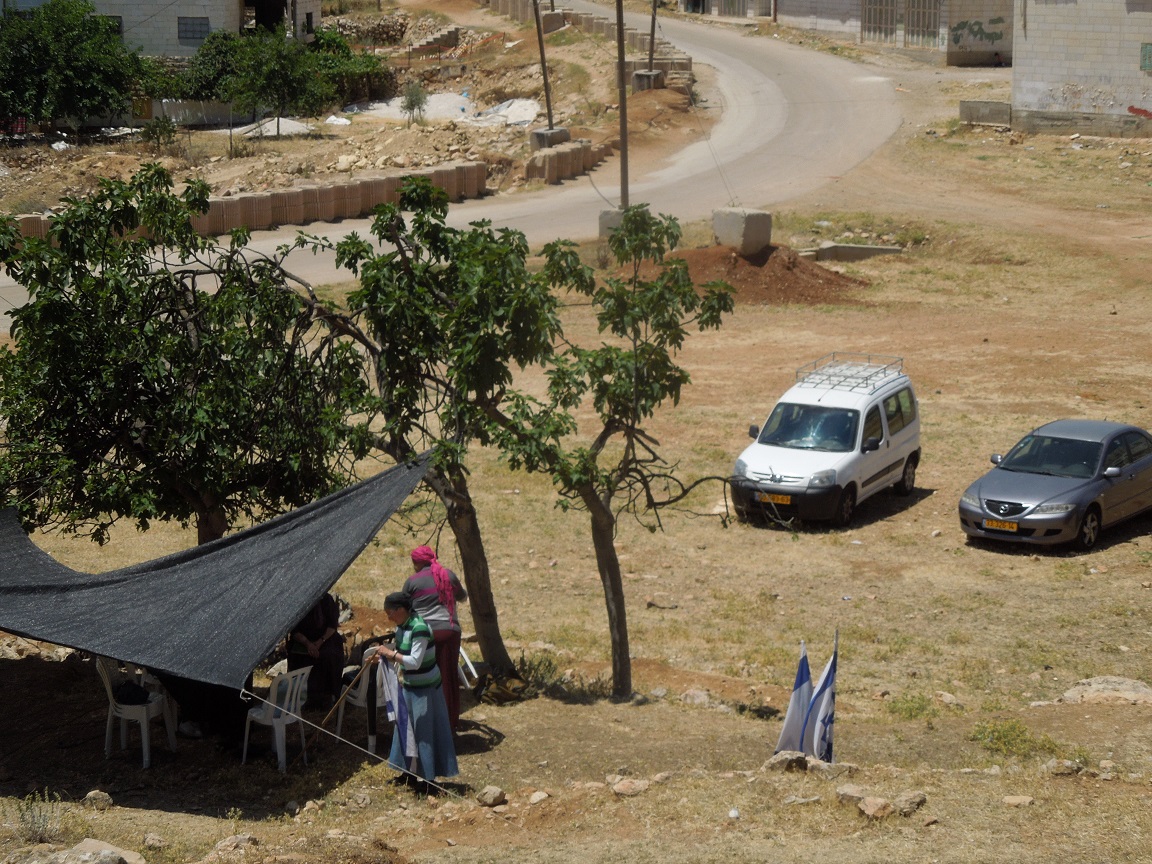
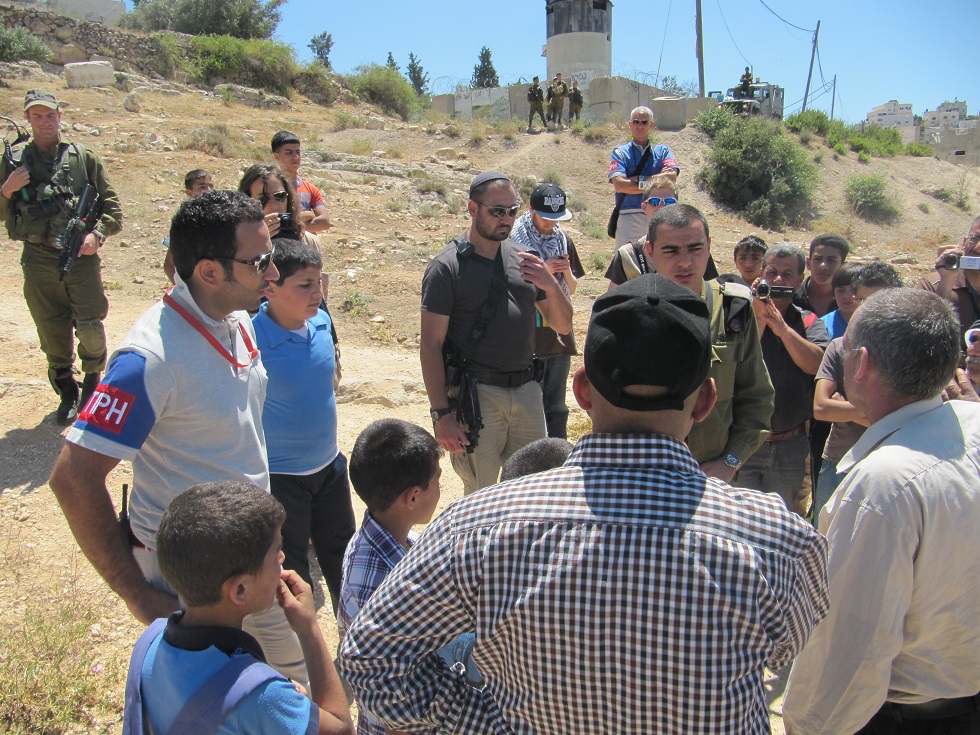
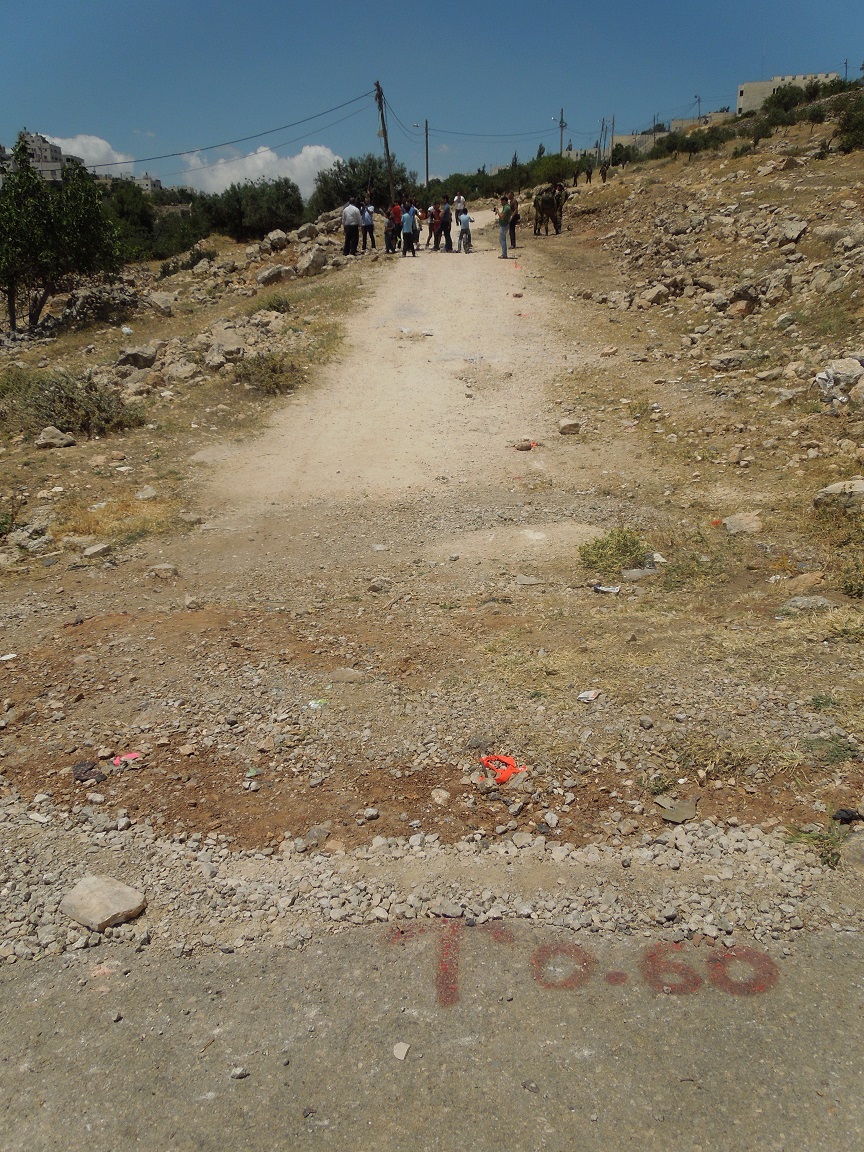
 Tubas, Occupied Palestine – Last Tuesday Sireen Sawafteh, a 24 year old woman from Tubas, was detained by Israeli forces. She is currently being held in Al Jalameh, an Israeli prison. Her family and friends fear for her safety. She has been denied access to a lawyer and she has not been allowed to make any contact with her loved ones since her arrest.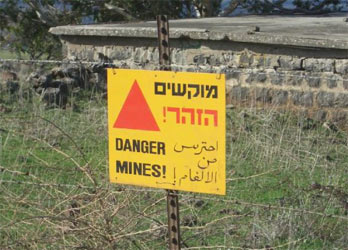
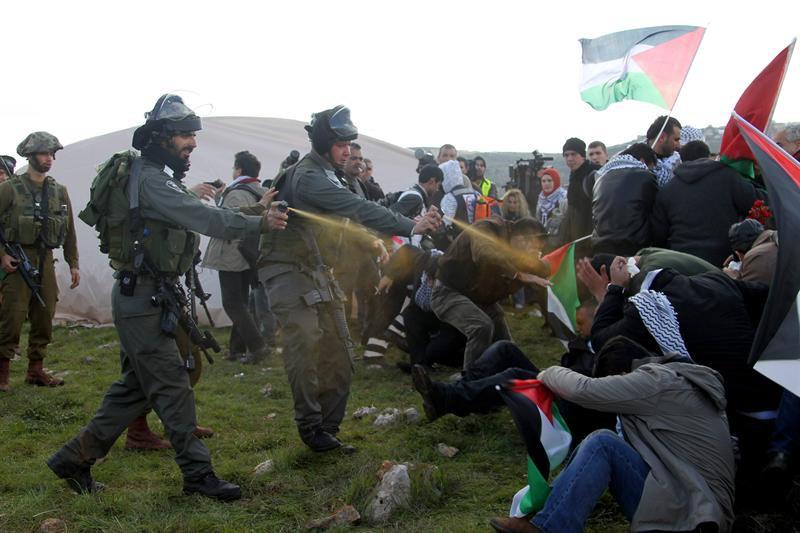

 Aletho News
