Awhile ago the pro-Israel editor of the College of Charleston’s online campus newspaper published two articles containing offensive accusations against me — one even before I spoke on campus and one afterward.
The newspaper has now finally posted my response – but it isn’t listed in any of the website’s menus; standard practice would be to list it in the Opinion section.
In other words, editor Sarah Sheafer (who calls Israel her “second home”) has officially “published” my response, thus finally adhering to journalistic requirements, while keeping the op-ed virtually invisible to the vast majority of the newspaper’s readers.
My emails to Sheafer about this bizarre situation have brought no change, and now the staff is gone for a week. I plan to continue to request that the newspaper include my letter in the Opinion section, where letters to the editor and op-eds would normally be… but perhaps not if they expose uncomfortable facts about Israel and its partisans…
On April 19th I spoke at the College of Charleston at an event sponsored by the Department of Sociology and Anthropology and a local organization called Charleston Peace One Day.
The title of my lecture was “Israel-Palestine: What the Media Leave Out,” and in it I documented the extremely flawed nature of US news coverage of this conflict. This material was gleaned from 12 years of researching this subject, eight statistical media studies, independent reporting trips to the region, many dozens of articles on the topic, and an upcoming book.
Sadly, the two articles on my talk by the CofC student newspaper, one before my lecture and one after, exemplify the deeply faulty reporting frequently found in articles concerning Israel. In addition to numerous inaccuracies, they violated some of the basic principles of journalism.
Sarah Sheafer, the newspaper’s editor in chief, wrote both articles. Sheafer’s first article consisted of accusations by Israel-partisans claiming that I was “anti-Semitic” and labeling my talk – in advance – “hate speech.” Sheafer repeated inaccurate claims about me without investigating their veracity, and failed to include my very public rebuttals of these falsehoods. While Sheafer included interviews defending the event in the name of academic freedom and free speech, she did not include any defense of me or response to the terrible accusations about me.
Violating a fundamental principle of journalism
And in violation of the most basic tenet of fair reporting, she never attempted to contact me to respond to the claims. This ignored one of the most fundamental requirements of journalistic ethics: According to the Society of Newspaper Editors, “Persons publicly accused should be given the earliest opportunity to respond.”
Her piece similarly failed to quote anyone in favor of my my work, though I have been honored to receive plaudits from diverse sources and have been asked to speak at a multitude of universities and other venues both in the U.S. and abroad. Nor did her very long article contain any information about my multitude of articles describing Palestinian suffering under occupation or those on Israel’s lethal attack on a US Navy ship.
When I discovered Sheafer’s article and emailed and phoned her to discuss it, she did not return my call and did not respond to requests to print a rebuttal. (She did eventually email us back.)
Article #2
The second article followed my talk. This article again focused on defamatory claims (I am called anti-Semitic in the second paragraph), misquoted me at times, and incompletely depicted what took place, though it included some information from my presentation in the second part of the article (the part least likely to be ready by readers in a hurry).
While Sheafer stated that there was “incivility” during the event, the reality is that a large group of fanatic Israel partisans (perhaps in part stirred up by Sheafer’s first article) attended the event, shouted over my attempts to answer their questions fully and respectfully, and ultimately prevented CofC students from engaging in the kind of extended question-and-answer discussion that normally follows a presentation and that students have a right to expect. Particularly troubling is the fact that apparently some CofC faculty were involved in this behavior.
Several students wrote me after the event apologizing for this group. One said, “This conduct was deeply embarrassing to me as a student. I felt you were treated rudely and disrespected.” The person went on to write, “I respect how calmly you maintained your professional demeanor and continued to be courteous and respectful to the audience.”
Following my presentation, which included a video and numerous slides, Sheafer apologized for not contacting me for her previous story and finally interviewed me. However, she included none of the information I gave her in her second article. Nor did the newspaper print a formal correction or apology.
In the piece, she quoted many of the hostile questions addressed to me by a somewhat organized group that had clearly come to the event to do battle, and then either misquoted my answer, included only a small part of it, or, in most cases, completely left it out.
Perhaps this is because the questioners and allied mob largely shouted over all my answers to their questions; it’s possible that Sheafer often couldn’t hear my full responses. I certainly had trouble hearing myself.
More omissions
While Sheafer reported on my presentation and included much valuable information, she left out some of the most important points and watered down others.
She failed to report the fact that, in the current uprising, over 12 times more Palestinian children have been killed than Israeli children, and that 91 of them were killed before a single Israeli child was killed. She omitted the fact that US media consistently and erroneously term Israeli actions “retaliation,” and primetime news shows report on Israeli children’s deaths at rates up to 14 times greater than they report on Palestinian children’s deaths.
Sheafer similarly omitted the information I provided about a 2003 Capital Hill briefing in which a commission that included a four-star admiral, a rear admiral, and the highest-ranking recipient of the Congressional Medal of Honor reported that Israeli forces had tried to sink a US Navy ship, had killed 34 American servicemen and injured over 170, and that rescue flights had been recalled because the President of the United States said he “didn’t want to embarrass an ally.”
These extremely grave statements on Capitol Hill by this extraordinarily high-ranking commission can be found in the Congressional Record.
Partisan bias
Perhaps Sheafer’s most significant violation of journalistic ethics was to assign herself to cover these events in the first place, rather than sending a neutral reporter.
The fact is, as Sheafer publicly admits, she has a strong emotional attachment to Israel, once writing: Israel is “the country I consider my second home.”
The particular article with this statement was written on Nov. 15th, 2012, the day a 10-month-old Gaza baby was killed by Israeli forces – the fourth Palestinian child killed by Israeli forces that week – though Sheafer mentions none of these deaths.
While Sheafer says that she condemns “some of [Israel’s] controversial decisions (i.e. illegal settlements),” her piece focuses on her intense anguish over Israeli difficulties, her deep empathy with Israelis (at one point she writes she wishes she were there), and, tellingly, her anger at those who criticize Israeli actions.
She wrote this column during an Israeli onslaught in which Israeli forces killed at least 169 Gazan men, women, and children, and Palestinians killed 6 Israelis, none of them children. (During the previous year, Israelis had killed 64 Palestinians in Gaza, while Gazans had killed no Israelis.)
None of these facts are in Sheafer’s column, “Israel At War.”
Destructive actions
While Sheafer and the group who disrupted this event consider themselves pro-Israel and brevity requires me to identify them as such, in reality I feel that their actions do not benefit Israelis.
Israel was created through violence and has been maintained through violence, a reality that is not only tragic for the Muslim and Christian victims of this violence, but is also tragic for Israelis themselves.
If Israelis are to live a normal existence free of war and conflict, it is essential that they change their policies and become a nation that treats all people with equality, an approach that many Israelis desire, and that they recognize the historic injustice at the core of the conflict.
Such a policy change, however, is unlikely to occur while American politicians continue to bankroll Israel to the tune of over $8 million per day and to provide diplomatic cover no matter what the Israeli state does. This blind support gives the Israeli government such power that its leaders feel free to ignore Palestinians, other world players, and dissenting Israelis alike.
Given this seemingly blank check of American financial and diplomatic support, Israeli leaders feel no need to negotiate honestly to reach a compromise in which Jews, Muslims, and Christians can share the land that is sacred to all three groups. This won’t change until Americans become sufficiently informed on this issue to demand changes to US policy.
It is essential that Americans learn the facts on this issue. I believe strongly that we have the power to bring peace to the core issue in the Middle East – a conflict that has spawned numerous wars, caused dangerous instability to the region and the world, and has placed Americans increasingly in danger.
It is sad that an event on this urgent issue was in many ways sabotaged. I hope that additional speakers providing factual information will be invited to lecture at the College of Charleston, and that they will not receive the treatment I experienced.
~
Alison Weir is the president of the Council for the National Interest and executive director of If Americans Knew. She is a former journalist and has a degree in journalism.
“…an article entitled “Jewish journalists grapple with ‘doing the write thing,’” in the Nov. 23, 2001 Jewish Bulletin of Northern California [interviewed Jewish] journalism students about how they would cover Israel. Its findings were inconclusive. Some students felt they would cover Israel impartially, some didn’t. The Bulletin described one of the latter, Uzi Safanov: “’I’m a Jew before being a journalist, before someone pays me to write,’ he said. ‘If I find a negative thing about Israel, I will not print it and I will sink into why did it happen and what can I do to change it.’ Safanov said that even if he eventually wrote about negative incidents that happen in Israel, he would try to find the way ‘to shift the blame.’”
Another also spoke of the need to protect Israel: “’On campus there is already so much anti-Israeli sentiment that we have to be careful about any additional criticism against Israel,’ said Marita Gringaus, who used to write for Arizona State University’s newspaper. ‘This is our responsibility as Jews, which obviously contradicts our responsibilities as journalists…’”
Israeli soldiers kidnapped the Grand Mufti of Jerusalem and the Holy Land, Sheikh Mohammad Hussein, after surrounding his home and breaking into it Wednesday.
Local sources reported that the army invaded As-Suwwana neighborhood, in Jabal Al-Mokabbir in occupied East Jerusalem, and broke into the home of the Mufti before kidnapping him.
Sheikh Hussein asked to follow the soldiers by car to the Al-Maskobiyya Police Station and interrogation facility in the city, but they refused and placed him in one of their vehicles.
In related news, the army kidnapped Engineer Mustafa Abu Zahra, head of a committee in charge of maintaining Islamic graveyards in Jerusalem.
Furthermore, Israeli police officers were heavily deployed at the gates of the Al-Aqsa Mosque in Jerusalem, interrogated dozens of worshipers while inspecting their ID Cards, withheld their ID cards and informed them that they will get their ID’s back once they leave the mosque area.
In addition, a number of settlers invaded the Al-Aqsa Mosque yard through the Al-Magharba Gate accompanied by dozens of soldiers and police officers.
On Tuesday evening, the Israeli Police handed orders to Palestinian shop owners in the Old City ordering them not to display their products in front of their shops on Wednesday evening in order to allow the settlers to march through the city and its markets while marking the so-called “Jerusalem Day”.
The “Jerusalem Day” is a an Israeli “national holiday” that started in June 1967 after the Israeli forces occupied East Jerusalem, and the rest of Palestine following the six-day war. In 1982, the Israeli Knesset passed a “legislation” considering Jerusalem “complete and united” as the eternal capital of Israel.
BETHLEHEM – Israel approved a draft law on Monday to implement a plan which will displace thousands of Bedouins in the Negev desert, an Israeli rights group said.
The Ministerial Committee on Legislation approved a bill which outlines a framework for implementing the Prawer-Begin plan, the Association for Civil Rights in Israel said.
“Today the government approved a plan that will cause the displacement and forced eviction of dozens of villages and tens of thousands of Bedouin residents,” ACRI lawyer Rawia Aburabia said.
“All of this while the government simultaneously promotes the establishment of new Jewish communities, some of which are even planned to be built on the fresh ruins of Bedouin villages,” she added.
The Israeli government approved the plan in 2011, in what it says was an attempt to address the problem of unrecognized Bedouin villages in the Negev desert of southern Israel.
The 2011 proposal was formulated without any consultation with the Bedouin community and rights groups slammed it as a major blow to Bedouin rights.
Bedouins protest
The Regional Council of Unrecognized Arab Villages of Negev along with the High Steering Committee of the Arabs of Negev organized Monday a demonstration near office of Israeli prime minister in Jerusalem protesting approval of the recommendations.
Knesset member Ibrahim Sarsour addressed the demonstrators confirming that his party, the United Arab List, rejected the recommendations. He expressed concern that the recommendations might be approved as a law and urged the Arab public to use legal means to try and prevent such a step.
Talab Abu Arar, another lawmaker, echoed Sarsour’s remarks but appealed to “the rational people on the Israeli side to treat the Arabs wisely giving them their rights, recognizing their unrecognized villages, and involving them in the planning process.”
He warned the Israelis against being driven by “racist and extremist blocs in the Knesset.”
“Approval of the Prawer committee recommendations means Judaisation of Negev. The main goal of these plans is to seize Arab lands and exterminate Arab roots,” said head of the Regional Council of Unrecognized Arab Villages of Negev Atiyeh al-A’sam.
According to ACRI, the plan will forcibly evict nearly 40,000 Bedouins and destroy their communal and social fabric, condemning them to a future of poverty and unemployment.
Israel refuses to recognize 35 Bedouin villages in the Negev, which collectively house nearly 90,000 people.
The Israeli state denies them access to basic services and infrastructure, such as electricity and running water, and refuses to place them under municipal jurisdiction.
This June, a delegation of librarians, archivists, and other library workers will travel to Palestine. They will connect with our colleagues in library- and archive-related projects and institutions there, traveling as truth seekers and information skeptics, applying their experience in the form of skill shares and other types of joint work. Their hope is to shed light on Palestinian voices, refute various myths common in the West about Palestine, and bear witness to the destruction and appropriation of information. Furthermore, they will support efforts to preserve cultural heritage and archival materials (of all kinds) in Palestine. Upon their return, this delegation hopes to share the information and experience from their trip.
In all their travels, they have stated that they will respect the Palestinian civil society call for Boycott, Divestment, and Sanctions (BDS) against Israel and will not partner with any organization that violates this call.
Upon hearing of this venture, I emailed the organization with a few questions. What follows is my exchange with one of the group’s members, Vati Natarajan.
Ron Jacobs: What compelled/inspired you all to undertake this journey? Was there a specific report regarding the destruction of historical materials?
Vati Natarajan: We’re all librarians or archivists who have been involved with issues of knowledge production, circulation, access, and preservation across contexts and for many years. We’re also very much committed to the idea and practice of librarians and archivists as active members of justice movements, including Palestine. One of us has been organizing delegations to Palestine for many years now, and authored a study on the destruction of historic materials in Palestine. Given the austerity climate in the US and around the world, and the short shrift given to libraries, archives and other information commons, we felt that now would be a good time to head to Palestine to not only carry forward support for Palestine in the library and archive community, but to learn and share skills and knowledge on how to improve and expand the reach and effectiveness of these institutions for justice movements.
RJ: As a library worker, I share your belief in the power of knowledge. What do you see as the essential role knowledge plays in Palestine? Likewise, what about Israel?
VN: We are indeed absolutely committed to open access, and the free exchange and distribution of knowledge. Israeli settler-colonialism prioritizes short-circuiting this flow in any way they can, including destruction of schools, libraries, public spaces; confiscating books, newspapers, archives, and all sorts of written materials; denying entry or circumscribing the movement of scholars and students; imposing and censoring Palestinian speech, newspapers, and other works.
In this way, Israel aims to maintain and solidify the fragmentation of the Palestinian body politic, making it difficult for Palestinians to exchange knowledge with each other and with the outside world, and therefore strengthen their struggle for justice. Palestinians, however, remain some of the most highly educated people in the Arab world, and it is a testament to their will and ingenuity that knowledge and information is always prioritized, and remains central to the struggle. Of course, many libraries in Palestine face some of the same issues we face in the states, including reduced readership and budgets. We want to learn the ways Palestinians have attempted to craft accessible public commons — including community centres, libraries at schools, municipalities, and archives of all sorts all over the country. One need only visit the Prisoners Section of the Nablus Public Library, which holds books, writings, and other materials smuggled into Israel prisons and donated to the library by former prisoners, to understand the intense attachment of Palestinian society to knowledge. In this we feel we will be learning far more from our colleagues from Palestine than we could ever offer, and we’re excited by that exchange.
Of course, this settler-colonial project of blocking flows of knowledge impacts Israelis as well, many of whom have grown seemingly unaware and unwilling to learn about their neighbors, and their own complicity and responsibility in denying and destroying the heritage of the Palestinian people. We do hope to visit and meet with Israelis who have attempted to re-introduce knowledge erased and to confront the structures that have trapped both Palestinians and Israelis. We’re also keen to learn from Israelis working on other fronts in the fight against settler-colonialism, including organizing against anti-African and anti-Mizrahi racism, as well as participating in working class and social justice movements in Israel.
RJ: What is the nature of the library system (if there is one) in Palestine?
VN: There are several major university libraries in the West Bank and Gaza, including at Birzeit and Najah. There are public libraries in most of the major cities: Nablus, El-Bireh, Gaza. The Tamer Institute for Community Education, an organization that emerged during the First Intifada when schools and universities were forcibly shut down, some for years, is organizing a libraries network to connect them all together.
In numerous other spaces libraries are held, books accessed, archives organized and developed, and knowledge exchanged. So we’re hoping to visit national institutions like the Institute for Palestine Studies, the Qattan Foundation, as well as community centers and research centers in refugee camps, as well as Haifa, Lydd, Jerusalem, Nazareth, Hebron, Jaffa and elsewhere.
We hope to gain an understanding of how all these institutions communicate, what needs they have, what sorts of projects they’re currently working on, and what kinds of work they’re currently prioritizing. So the nature of library and archival systems is really something that we’re going there to learn about, rather than knowing about in any real detail beforehand.
If you would like to donate to the Librarians and Archivists Delegation to Palestine, please go to their website.
Jewish settlers raided a West Bank village near Ramallah on Saturday night, attacking several houses and prompting clashes between residents and Israeli forces, Ma’an news agency reported.
Israeli forces were standing guard as hundreds of settlers stormed the village of Ras Karkar, reportedly barring ambulances from entering the village before allowing an ambulance to take only two people to the hospital.
Eight residents of Ras Karkar were wounded as Israeli troops fired tear gas and rubber bullets at them. Live bullets were also fired into the air to scare the residents and prevent them from defending their property.
Rubber-coated bullets hit one Palestinian in the eye, one in the head and another in the chest. Four others sustained bruises and fractures from the attack by settlers and Israeli troops, locals said.
According to local sources, three houses in Ras Karkar were attacked and set on fire, as well as a number of olive trees.
One settler was wounded after being hit by a stone.
Settlers were also gearing up to attack another village near Ramallah on Sunday, Ma’an reported.
According to a witness, dozens of settlers were being escorted by Israeli troops and police officers near the village of al-Janiya in northwest Ramallah.
Residents of al-Janiya were trying to close the road to the village with rocks, only to be met with stun grenades and tear gas. Activists used the village mosque’s loudspeakers to urge residents to defend their village.
Settlers routinely attack Palestinians and their property in the occupied West Bank, as Israeli forces regularly turn a blind eye or even assist settler crimes.
According to figures compiled by Israeli group Yesh Din, nine out of 10 police investigations about settler crimes fail to lead to a prosecution.
RAMALLAH — An Israeli court sentenced on Thursday the correspondent of Al-Aqsa TV Channel in the West Bank to three months imprisonment and ordered him to pay a fine.
Ahrar Center for Prisoners’ Studies and Human Rights said in a press statement that the Israeli court has sentenced journalist Tariq Abu Zaid to three months imprisonment and ordered him to pay 2000 shekel fine (550 U.S. dollars).
The Palestinian reporter was arrested without clear charges on March 8, 2013, while covering the anti-settlement weekly march in the town of Kafr Qaddum, near the city of Nablus.
Ahrar center added that the Israeli court had previously postponed the trial of captive Abu Zaid several times.
The human rights center condemned all violations against Palestinian journalists and demanded the international community to pressure the Israeli government to release the 12 journalists who have been detained while performing their legitimate professional activities.
I’ve been coming to Gaza for a long time. My first was in 1985 and this is now my seventh trip to the region. In the 80’s, there were no substantial physical barriers between Gaza and Israel. Many Gazans worked as day laborers in Israel and many spoke Hebrew. Group taxis traveled freely between East Jerusalem and the West Bank, and directly into Gaza City. The society here in Gaza was much more Westernized and secular than it is today. Women wore blue jeans and ponytails; the hijab and the naqab were not nearly as ubiquitous as they are today. It was hardly a perfect relationship between Israelis and Palestinians; more of a privileged class and servant class based on the birthright of whether or not one was born Jewish. But there was abundant interaction between the two societies back then.
Then came the first intifada and then the Oslo “Peace Process” which was really a “Piece Process.” This culminated in the division of the two societies and the isolation of Gaza from the rest of the world. There was false hope then and a second intifada. Gaza was locked down as a consequence and became the world’s largest prison.
When I re-entered Gaza some 18 years later in 2003, it was a much different world. Dr. Haidar Abdul Shafi, a respected physician and civic leader here in Gaza, explained to me why he had walked out of the Madrid Peace negotiations in 1991. “I concluded that the Israelis were negotiating in bad faith,” he said. It took me a while to fully understand what he was talking about, but slowly it became clear. Gaza was now surrounded by a hideous “Berlin Wall”. Rachel Corrie had just been mowed down by a giant bulldozer. Houses and apartment blocks were being systematically destroyed under the orders of Ariel Sharon “to look for tunnels” which are used to smuggle goods from Egypt. Many tunnels were found and destroyed, but even more tunnels were built in their place and remain today. Over 2000 people in Rafah were made homeless as a direct result of Israel’s pursuit of the tunnels.
In 2006 I entered Gaza during a time of assault. The streets of Beit Hanoun were ripped apart after a Qassam missile had killed an Israeli woman in Sderot. Over 85 Palestinians were killed in Beit Hanoun and then an additional 19 members of the Al Athamna family were massacred as they slept in their beds. I interviewed some of the grief stricken survivors a few days after their onslaught. Apache attack helicopters reigned death and destruction from the skies directly above us; we rushed to the Kamal Adwan Hospital to assist local doctors as 5 young men in their 20s died right in front of us. It was a time of palpable fear for me, as I shared for the first time, the fear that local Gazans feel routinely.
In 2008, I entered Gaza by boat. I was part of the maiden voyage of the Free Gaza Movement; we were the first boats to arrive from international waters in 41 years. Gaza had been under a tightening siege. There were 40,000 people on the shores of the Gaza Marina waiting to greet us. It was a time of euphoria as we demonstrated to the people of Gaza that there are many of us around the world who have not forgotten them; many around the world who do care about them after all. There were several more boat trips and then flotillas. Then there was the massacre on the Mavi Marmara. My Italian friend Vittorio Arrigoni was martyred two years ago, and he is still remembered by the people of Gaza today.
Then there was the horror of Cast Lead. I last entered Gaza again in October 2009 in its aftermath. The streets were filled with entire blocks of rubble; entire neighborhoods had been leveled; the siege had been tightened still and there were no resources like concrete to rebuild. Dr. Marwan Assalya, the general surgeon at Al Awda Hospital where we were assigned, shared horrific photographs of people he had cared for during the previous winter. There were pictures or victims of white phosphorus attacks with second, third and fourth degree burns all over their bodies. There were recipients of DIME weaponry who had had their arms completely sheared off by vaporized micro-shrapnel. Patients who survived lingered, only to succumb later to sepsis; or if they survived that, to cancer, as a direct result of the tungsten heavy metal vapor supplied by the US arms industry. And there were pictures of drone victims who had had both legs blown off; These were the survivors; there were no pictures of the ones blown completely to smithereens.
So now it is April 2013 and I enter Gaza again. We enter through Erez and we are forced this time to sit through a one hour PowerPoint presentation by the Israeli military outlining how benevolent Israel tries to help, and how these ungrateful Palestinians respond with rockets and are their own worst enemy. I try not to grimace; I try not to hurt myself biting my lip. I try not to vomit or show any indication of what I am thinking. We just want to get through this, so we can enter Gaza and be with our friends.
So now we are here in Gaza. Our medical team disperses to various assignments. Dr. Bob Haynes and I are teaching elements of Advanced Cardiac Life Support at Shifa and Public Aid hospitals. We are giving lectures to very bright young medical and nursing students at Al Azhar and Islamic Universities.
We are being greeted by smiling and attentive students who still show hope and amazing resiliency for their future. In Gaza, hope springs eternal, Phoenix keeps rising miraculously from the ashes, especially among the youth.
Now the tunnel economy has flourished. There are now donkey carts hauling around Egyptian cement everywhere, and there are shiny new cars I haven’t seen before which have been brought in through the tunnels in the south. The nicer parts of Gaza City are showing new shops and new businesses. But while some are prospering, many others among the many poor are languishing and lost in time. The refugee camps we visit seem even more soiled and overcrowded than before, and there is trash everywhere. The UN is running out of money to maintain its food assistance program and people are revolting. The Hamas government is getting more forceful in their enforcement of traditional Islamic law. In spite of this, the people in these camps remain courteous, curious to see us and friendly. Gaza is a pressure cooker. The UN predicts that Gaza may become inhabitable after 2020.
But we will keep coming back as long as we can. Our conscience demands this of us.
– Dr. Bill Dienst is a rural family and emergency room physician from Omak, Washington. He is a graduate of the UW School of Medicine and Tacoma Family Medicine Family Practice Residency Program.
As some of you know, my film EXILE, A MYTH UNEARTHED, which examines the myth of the Jewish EXILE and its political impact on both Israeli Jews and Palestinians in the Middle East, was going to be shown on the BBC Thursday April 25th. It was pulled out of the schedule only a few days earlier.
Since then I was flooded by dozens of emails of angry and concerned viewers asking what happened. To be honest I debated whether to tell the story of what I think had happened. I have worked with the BBC in the past on some programs that were deemed controversial and I never had any political censorship. On the contrary I was impressed by the integrity and fairness of the people I dealt with.
So based on my past experience, I was going to wait patiently until the BBC programming executives would solve the internal drama that apparently has begun to brew inside the BBC. “The film is gorgeous, courageous and fresh, “ I was told several times by the programming executives. I was promised that the cancellation was temporary: “Given the short timescale and your workload, we have decided to delay transmission until we’ve had the chance you’ve had the chance to go through it in detail”.
I naively believed and decided to wait quietly. But things have their own momentum and as I learned more, I realized that the story of “EXILE” in the BBC is far more complex.
Among the dozens of emails I received one caught my attention. It included the official email response from the BBC to the inquiry/complaint sent to irate viewers who contacted the BBC asking why the program was pulled out of the schedule. This email contradicted a private email sent to me by the programming executives. I was intrigued.
I discovered after quick research that while I was contacted by the BBC barely a week before the broadcast asking for my comments about the cut, the BBC have had the film for almost 6 months. So why was this sudden rush which supposedly was the excuse given to me as to why the film was pulled out? Why was I contacted so late in the game? And why was there a discrepancy between what was told to me and the “official” version . I started to dig a bit deeper and to put my findings in a blog, rather than answer the dozens of people who wrote to me privately.
This is not a personal issue. This is ultimately a sad saga of what I believe is a mixture of incompetence, political naiveté, conscious or subconscious political pressure and ultimately, I believe, a lack of courage of broadcasters when they are faced with the complexity of the Middle East issue and the intense emotions, fears and aggression it generates. Once you indeed depersonalize this incident, you gain a fascinating insight into how subtle and complex is the process by which our understanding of the Israeli Palestinian conflict is being shaped and what happens when one dares to raise questions about issues deemed by some as taboos. It is this insight that I think is worth sharing and detailing.
The story begins for me with the name. I discovered only 3 days before the broadcast that the BBC has been using a different name for the film: Jerusalem – An Archeological Mystery Story. It struck me as an odd choice that seems to camouflage the film’s real subject and repackages it as a neutral archeological mystery of sort- like the hundreds of hours one can see on cable and Satellite channels throughout the world.
“ Exile” of course is not about a mystery, neither it is limited to archeology or to Jerusalem. The name and the illusion that one can pretend that this film is just about archeology and its mysteries are at the core I believe of Thursday’s fiasco.
Digging deeper I also learned that this title was established back in November 2012 in the agreement between the National Film Board of Canada (one of the film’s co producers and its int’l distributor) and the BBC. I was approached by the distributor to see if I would agree for the BBC to cut down the program. I agreed to it on the condition that I would be consulted so the integrity of the longer version (104 min) would be preserved. I also said that if I was not to be consulted my name should be removed from the program and the cut down will be listed as an “adaptation from a film by Ilan Ziv”. From my access to some internal documents, it is obvious now that the BBC was not genuinely interested in my getting involved. As the documents suggest, they already announced that the cut down version would be an adaptation.
So back in November 2012, everything seemed to be on track to produce a cut down of the film without having to deal with the director, broadcast the film under a neutral title and hopefully avoid any serious political debate. A perfect solution! So what went wrong?
Fast forward to Saturday April 20th 2013 when I received an email from a friend in the UK who saw that “my” film Jerusalem; An Archeological Mystery Story was going to be broadcast on BBC 4. He even read a preview of it in the Guardian. The preview promised that the film “ will ruffle some feathers”. Two days earlier I did receive from the editor who cut the film a copy of the cut for me to comment on, but there was no mention of an impeding broadcast date!
On Monday, 3 days before the broadcast, I fired an email to the BBC programming executives complaining that it is unfair to expect me to spend time reviewing the cut and coming up with suggestions of a re cut, when I was given only a few days before a broadcast date that no one bothered to inform me about. I pleaded for more time. It was only when one of the programming executives called me, I realized that there were much bigger issues for her than my complaint about being pushed into an impossible schedule.
The program executive seemed genuinely shocked that a freelance employee hired by the BBC to take part in the re-versioning process called the film “propaganda”. When I asked if this unnamed person had specific examples to support such a sweeping charge, I was told that she claimed that , “Everything was propaganda”. And there was more.
An “unnamed” BBC insider who I was told “liked the film,” claimed that the film props up the myth of Exile “ which we all know did not happen, in order to support his political analysis”. I learned that the cut I was given was now irrelevant, since some internal review deemed one scène with the Palestinians to be “too emotive” and they were asked to cut it down. Realizing that a mini political storm was brewing around the film and attacks lodged against its integrity, I asked and was promised that I would be given at least a summary of the essential charges so I could answer them in length. I am obviously very familiar with some of them and could easily and in detail refute them. I told the programming executive that my reply would help them to defend the film in the Channel. After all, they professed to love the film and seemed genuinely interested to show it. I told them it was very easy for me to prepare a detailed rebuttal with citation of sources for every word of the narration, the overall analysis and for every scene. I told them that some of the academic participants in the program who saw the cut and are reputable scholars in their field did not find any factual errors or misrepresentations of facts or of the historical narrative. In other words, I argued that such a detailed and substantial defense would convince any objective reader and observer of the editorial integrity of the film. I repeated the request several times yet I never got a reply. Instead, I received an email telling me that they decided to pull it out of the schedule, citing the “ short timetable and my work load “( !) A few days later I saw the “official” version that went to the public:
“We originally acquired ‘Jerusalem: An Archaeological Mystery Story’ to supplement BBC Four’s season exploring the history of archaeology. However, we have decided that it doesn’t fit editorially and are no longer planning to show it as part of the season. Plans to broadcast the program are currently under review” So Exile, A myth unearthed has begun its own exile within the BBC.
I do believe it is ultimately a sad saga. A saga of well meaning programming executives who acquired the “courageous “ film they claim to love, believing that they can sneak it by with a “neutral title”. When they were “caught”, rather than face the criticism and be helped by the mountains of documents and data I was ready to send them, they panicked like deer in the headlights not knowing what to do and eventually raised their hands in resignation.
The truth of the matter is that the reaction outside and inside the BBC surprised me too. The film by now has been shown in a Jewish Festival in Toronto, playing in a screening room there for a week. It was shown on Canadian TV with a second broadcast planned for June. Another version of the film is scheduled to be shown in France and the original version in Switzerland ,with hopefully screenings in the US later in the year. The response in all the public screenings, some of which I attended, was overall extremely positive. Nowhere did the film generate such a reaction as that of the few individuals inside and outside the BBC.
The temporary success to “exile” the film might prove I believe to be a Pyrrhic victory.
EXILE does not deal with contemporary politics in the Middle East, rather, it proposes to examine their ideological and historical underpinnings. EXILE has not contributed to the political stalemate in the region nor to the continued bloodshed, occupation and violence. It is a film born out of the continued violence. Rather than propose a simplistic solution or an aspirational political program , it tries to suggest a possible way out by re examining the historical narratives we all grew up on, suggesting that in this tormented land there are historical models of co existence and tolerance that could replace the dominant conventional nationalist ones. Silencing this film is silencing a possibility of discussion, debate and re examination not of the current political stalemate but of the intellectual stalemate that contributes to it.
I hope that somewhere in the BBC someone will rise above the hysteria and the attempts at self censorship to take a cooler look at the film and realize how it has been profoundly mis-characterized , -viewing it through partisan glasses instead of looking at it for what it is: a film that can and has already in its public screenings generated dialogue and positive, thinking rather than perpetuating divisions and polarization.
So for me this is not the end of EXILE in the UK but only the beginning. I will show the film publicly throughout the UK and will challenge the BBC to either broadcast the film or relinquish its rights. I have offered to buy these rights so I could place the film elsewhere in the UK.
EXILE , A MYTH UNEARTHED has finally found a home on the BBC . The hour version of the film ( I supervised and authored the cut down) is going to be broadcast under a new title SEARCHING FOR EXILE – TRUTH OR MYTH? on BBC 4 November 3rd, at 9pm . to be followed by a debate with my participation at 10pm
There will be a press screening on Thursday October 31st at 18.30 hrs. I will attend the Q&A after the screening. From what I understand attendance is restricted to a list of invitees. Please get in touch with me if you want to attend and I see what I can do.
As you all know it has been a long journey which many of you followed. I am eternally grateful for your support!
I am happy that the film finally found a home in the United Kingdom.!
As you remember I promised to hold screenings of the long version of the film throughout Britain( schedule permitted). I will be in Manchester on Monday Nov.5 th. Please write me for details. Since this time I can not stay in the UK any longer I will try to come again if there is interest in showing and discussing the film in other cities.
Below is the billing for the press.
SEARCHING FOR EXILE – TRUTH OR MYTH?
This authored documentary by Ilan Ziv sets out to explore the historical and archaeological evidence for the Exile of the Jews after their defeat in Jerusalem at the hands of the Roman Empire, and its relevance to today.
Tracing the story of Exile from the contemporary commentator Josephus, to 1960s Israeli archaeologist Yigael Yadin, to the modern city of Rome and finally to the ruins of a Palestinian village, Ziv asks where the roots of this story lie and what evidence there is for it.
At the centre of the film is the ancient town of Sepphoris (on whose ruins stood the Palestinian village of Saffuriya until 1948) and the lessons its multi-layered history may have to offer.
A film by Ilan Ziv
Produced by Amit Breuer, Serge Gordey, Colette Louméde, Ilan Ziv
Hebron:Two Palestinian children arrested in Hebron on April 28th by the Israeli authorities are the latest in a series of arrests which have increased rapidly since February of 2013. Swedish human rights activist, Gustav Karlsson, is currently in immigration detention in Givon prison after objecting to the arrest of the two children.
Gustav plans to resist deportation because he was arrested under false allegations of assaulting a soldier and given no chance to defend himself, despite clear video evidence that he committed no wrongdoing. The International Solidarity Movement has severe concerns about both the widespread arrests of children and the practice of deportation of peaceful human rights observers under false allegations of violence.
In the afternoon of April 28th several children from an illegal Hebron settlement attacked two Palestinian children, aged 11 and 12, who were walking home from school. The soldiers proceeded to arrest the Palestinian victims of the attack despite the fact that according to eyewitnesses, they never struck back.
Having witnessed the arrests of the children, Swedish human rights observer Gustav asked Israeli soldiers “why are you arresting these children?” only to be violently grabbed and also arrested. Following this, the children and Gustav were taken to a nearby military base. Gustav said, “I was blindfolded, but I could hear the children crying and screaming next to me. Twice, the soldiers pointed their guns at me, loaded them and pretended to pull the triggers”. As well as these mock-executions, soldiers violently shoved Gustav with their guns as they moved him and the children around.
The children were released later the same day, while Gustav is currently in Givon prison accused of assaulting a soldier, despite clear video evidence to the contrary. Gustav plans to resist deportation in protest of the dramatic increase in child arrests, the fact that he has been falsely accused and has not received a trial. Gustav has been working with Palestinian communities in Hebron for several months and has witnessed child arrests nearly every day.
Occupied Childhoods, a report compiled of child arrests witnessed in Hebron since February 2013, when the rise in child arrests seemingly began, is available here. This rise in arrests of minors is very concerning – one chilling example from recent months is the random arrest of 27 children aged 7-15, while they were on their way to school.
The other theme made clear by this case is the Israeli practice of arresting international human rights observers under false accusations and deporting them without a chance to defend themselves. Eight non-violent activists have been arrested and deported, falsely accused of using violence in the last three months. Since the founding of ISM, Israel has never pressed charges against any human rights activist but they have deported hundreds under charges such as Gustav’s which are clearly false.
It is fitting that on the same day as this headline appeared, “Pro-Israeli US lawmakers urge bombing Syria air bases, arming militants, invasion” I delivered the following remarks to the United Nations International Meeting on the Question of Palestine:
From Cynthia McKinney: Remarks at the UN International Meeting on Palestine in Addis Ababa, Ethiopia
My name is Cynthia McKinney and I served as a Member of the U.S. Congress for 12 years. During my time in Congress, I strove to make respect for human rights a central feature in the formulation of U.S. foreign policy. Amid minor successes, I have to say that my efforts while, broadly appreciated by many, failed miserably. That failure stems in part from the peculiarities of U.S. politics that allow policy formulation to deviate from and in many cases become diametrically opposed to the values of the people of the U.S. Sadly, what we in the U.S. call “special interests” are able to buy public policy by way of campaign contributions and misleading media campaigns. These “special interests” are aided and abetted in the U.S. by a concentrated media that has no obligation according to U.S. court decisions to tell the public the truth. In other words, U.S. media have won in U.S. court the right to knowingly lie to the people they ostensibly serve. I will briefly delve into this unusual and anti-”democratic” state of affairs now controlling in the U.S. once again before I conclude my remarks.
After my tenure in Congress, I became involved in international human rights activism. During Israel’s Operation Cast Lead (which was its war against Hamas and others), I joined with a group of human rights activists who tried to deliver medical supplies to the people of Gaza; the Israeli Military stopped us. While in international waters, an Israeli Defense Forces warship rammed the pleasure boat that I was on with the other volunteers, and totally destroyed our boat. Neither the medical supplies nor us volunteers reached Gaza.
Approximately six months later, we, the volunteers from the first thwarted effort, reassembled in order to make another attempt to reach Gaza by sea, traveling through international waters, with the hopes of entering into Palestine by way of Gaza’s territorial waters. By this time, Operation Cast Lead had ended, President Barack Obama had been sworn in, and he had appealed publicly for an easing of the Israeli blockade of Gaza. Gazans had made an appeal for school supplies for the children still reeling from the trauma of three weeks of what the United Nations called “one of the most violent episodes in the recent history of the Palestinian territory.” So, some of us answered that call with school supplies for the children and building supplies for the adults so that Gaza could rebuild from the devastation after Operation Cast Lead. On this effort to answer a humanitarian call for help, I, along with 20 other volunteers, was kidnapped by the Israeli military while in international waters, our boat was seized, we were taken by an extremely circuitous route to Israel where we never intended to go, and I was incarcerated in an Israeli prison for 7 days. Sadly, what I witnessed while in Israeli prison pointed to Israel as an apartheid state and the gross mistreatment of, particularly, Ethiopian women who had been lured to the “Holy Land” for job opportunities that vaporized because they were not of the correct religion. In addition to that, my observation at the time was that Ethiopian Jews are used as an important pillar–even enforcer, ironically, of Israeli apartheid. I can expand on this aspect of my observations later if there are specific questions or requests for more information from this body or from individuals in attendance at this Conference.
Needless to say, for a second time, I was prevented from entering Gaza. Upon hearing of my ordeal, Member of Parliament George Galloway who was in Cairo leading “Viva Palestina USA,” contacted me and invited me to come to Cairo and enter Gaza by land, which I did. Upon entering Gaza, I was able to see the destruction inflicted on the people by Israel’s Operation Cast Lead. I scooped up a bit of the soil and put it in this container. Sadly, as noted in the Goldstone Report and admitted by the Israeli Defense Forces, this Gaza soil is probably contaminated with whatever remains of the chemicals that were used by the Israelis against the people of Gaza: chemicals ranging from white phosphorus to inert metals. And while I unsuccessfully tried to pass legislation in Congress to end the use of depleted uranium in U.S. munitions because of the health effects, the Goldstone Report mentions that allegations were made that Israel used depleted uranium during Operation Cast Lead, which also might be in this soil. The United Nations Division for Palestinian Rights is also aware that civilian targets were bombed and totally destroyed. I visited a few of those targets.
One stop on my private tour of the destruction in Gaza was the American International School and amid the rubble I spotted a bright yellow something that I couldn’t quite make out what it was. So, I climbed through the jutted shards of concrete and exposed rebar to retrieve the object. This is that object: an English language children’s art book stamped with the initials of the American International School in Gaza, “AISG.” I was standing in what was left of the School’s library.
Another stop on my tour of the effects of Israel’s Operation Cast Lead was a neighborhood school, not nearly as big and grand as the American School. There, I could see the path of one missile that blew a hole clear through several walls of the school. There were markings on the chalkboard, including the Star of David. I saw several cans of peanuts on the floor. This is one of them. It is written in Hebrew. The Israeli soldiers blew up the school and then sat down in its ruins and enjoyed peanuts and drew religious and political markings on the chalkboard.
Both boats that I was on were seized by the Israelis and destroyed by them. The humanitarian aid on the boats did not reach Gaza and only token aid was delivered by the land convoy to the Al Shifa Hospital in Gaza, the bulk of it stranded in Egypt, not allowed into Gaza by the Egyptians or the Israelis.
What is amazing is not only that this happens over and over again, but that Israeli leaders who commit war crimes and crimes against humanity, leave office, and are never held accountable for their policies, as was done by victims of Augusto Pinochet, and as is being done currently by the International Criminal Court. Another aspect of this impunity is that Israel continues to receive U.S. weapons and technology which it uses against civilians in contravention of U.S. law. As these weapons are used or become outdated, the U.S. replenishes Israel’s weapons stock every year.
One measure of this impunity is brought to bear by the pro-Israel Lobby that operates in the political sphere of the U.S. I am a former Member of Congress because pro-Israel sympathizers known as the “pro-Israel Lobby” ensured my ouster from Congress and that of many other Members of Congress who dared to try and draw attention to U.S. law, Israel’s human rights violations, Israel’s misuse of U.S. weapons, or any other inconvenient facts that were better buried and left unknown.
What many of you might not know, because these things just aren’t discussed as widely as they should be, is that many of those Members of Congress who were put out of office by the pro-Israel Lobby were the stolen children of Africa, descendants of Africans trafficked in the Trans-Atlantic Slave Trade. I will call the names of a few and tell you where you can find information about them as they tell their own stories:
· Gus Savage, Member of Congress from Chicago, Illinois was targeted for defeat by the pro-Israel Lobby because he dared to engage in foreign relations within the purview of a Member of Congress on the African Continent, in Egypt among other places. He recounted his ordeal on the Floor of the House of Representatives and revealed the secrets of the pro-Israel Lobby on the Congressional Record where students and others interested in this topic can find his words today.
· Earl Hilliard, Member of Congress from Birmingham, Alabama was the first Black Member of Congress to serve the people of Alabama since the U.S. Civil War’s Reconstruction Era. He was ejected from the Congress by the pro-Israel Lobby because he, like Gus Savage, traveled to Africa, and in particular to Libya. He also traveled to Lebanon and learned of new weapons for that time, that had been used there by Israel. For this transgression, Earl Hilliard had to go. He is interviewed in a Dutch documentary that is available on youtube where he describes the vicious campaign that was run against him by the pro-Israel Lobby.
· And then, there’s me. Just this month, I published a book entitled Ain’t Nothing Like Freedom, in which I describe just a few of the tactics that were used against me by the pro-Israel Lobby to destroy my career in Congress.
· These three political “take-downs” were very publicly done in order to send a message to others who might also be inclined to speak up out of moral conviction, as Savage, Hilliard, and I did.
· This weeding out also occurs on the local level with state and local elected officials like my father and others targeted for defeat because of the potential threat to the interests of the pro-Israel Lobby that they pose.
· In addition, on a public and private level, targeted individuals have to endure soft repression that makes life difficult. All of this needs to be put on the record if one is to fully understand the power of the pro-Israel Lobby and the pall that it casts on the political process in the U.S. and from what I have been told, also in Europe.
· Finally, the political landscape for Blacks in the U.S. is negatively affected by this weeding out process, because their strongest and most outspoken authentic leaders are vulnerable to the challenges from candidates that are well funded by outside “special interests.”
In light of this, I would like to put this thought to you: can you even imagine what U.S. policy would be like at the United Nations if the will of the people were carried out without the interference of the pro-Israel Lobby? The Durban World Conference Against Racism was a watershed that could be revisited time and time again with U.S. support and participation, except that powerful Lobbies want otherwise. I know, it’s hard to imagine things differently. But it is not hard for me and that is one vision that keeps me going: U.S. policy made in the image of the values of the people of the U.S. At a Conference whose theme is African solidarity with the Palestinian people, I thought it was important to mention not only how the pro-Israel Lobby skews politics in the U.S. against the Palestinians, but also against African-descendants inside the U.S.
I focus on this important aspect of policy-making by focusing on who gets to make the policy because I believe that this is one key reason why Palestinians are forced to suffer while, at best platitudes and delay, serve as the effective policies of the US and European countries.
The short version of this tragic story is that pro-Israel forces inside the U.S. are willing to use their money to buy political influence and protection for Israel across the political spectrum while the same cannot be said of pro-peace, pro-justice forces. I liken the situation to game day when one team shows up in beautiful new uniforms with all of the latest and best equipment, primed and ready to execute its strategy in the game of play, while the other team doesn’t even show up on the pitch. I believe that one remaining untested justice frontier is the political battleground in U.S. and European capitals. It is inside these essential capitals that pro-Israel Lobbies have become comfortable operating with very little opposition from the other side.
I am tired of losing when, I believe, we really do not have to lose. I fundamentally believe that the people of this world are good and want peace. I have spoken to Afghanis and Pakistanis, to Yemenis and to Somalis, Palestinians and Americans, and I find them to be peace-loving peoples.
So, how do we move from where we are to where we need to be? That is the fundamental question. I focus on the political because the political creates the legal. And the political creates impunity.
Just in my personal experiences, I have outlined breaches of international humanitarian law, international human rights law, international law, and U.S. law by the occupying power: Israel.
I served as a juror on the Bertrand Russell Tribunal on Palestine that recently concluded its Sessions with a finding that both the U.S. and Europe are guilty of contributing to the atmosphere of impunity with which apartheid Israel carries out its policies against Palestinians and anyone who stands in its way.
I also recently served as an Official Observer as the Kuala Lumpur War Crimes Commission received testimony from Palestinians on their treatment inside Israel as well as in the Occupied Territories.
Through my service with both of these organizations, I have met too many courageous Palestinians and Israelis who want to live peacefully with each other and who put their lives and their livelihoods on the line every day for peace and the rule of law. I do believe that much of the suffering could be alleviated if we would put sufficient energy and resources behind putting out in public view how the pro-Israel Lobby misdirects U.S. and European policies and prevents pro-peace and justice politicians from ever having the opportunity to put those values, along with our basic human dignity, permanently on the table for public debate.
Finally, I am not Palestinian. I am not Arab. I am not Muslim. But I am human. And that is enough for me to acknowledge the dignity of others who are oppressed and to epitomize what this Conference is all about: African Solidarity with the Palestinian People for the Achievement of its inalienable rights, including the sovereignty and independence of the State of Palestine.
A Palestinian man stabbed dead an Israeli settler in the occupied West Bank on Tuesday, the Israeli ambulance service and police said, in what may have been a response to a violent settler attack on a nearby village one day earlier that left two elderly Palestinians hospitalized.
“The Palestinian suspect stabbed an Israeli sitting at a bus stop. He died,” police spokeswoman Luba Samri told AFP, adding that the incident took place near a major junction which lies south of the city of Nablus.
It was the first time an Israeli has been killed by a Palestinian in the West Bank since 2011.
Israeli media said the attacker was standing at a bus stop used by settlers, Israeli soldiers and Palestinians when he stabbed the Israeli, a man in his 20’s.
The suspect then seized a gun carried by the settler. He began shooting at security services who arrived on the scene, Israeli police spokesman Mickey Rosenfeld said, adding that the man was in custody.
The Palestinian, a resident of the northern town of Tulkarem, was injured and admitted to an Israeli hospital.
The incident may have been motivated by a settler attack Monday in Nablus that left two elderly Palestinian men with severe head injuries.
Ghassan Daghlas, who monitors settlement activity in the northern West Bank, told Ma’an that three settlers from the Itamar outpost raided Beit Furik and attacked residents with “sharp tools.”
Fawzi Nasasra, 60, and Abdul Rahman Khatatba, 50, were taken to hospital to be treated.
Settler attacks against Palestinians and their property is routine in the occupied West Bank and rarely punished by Israeli authorities.
Annual figures compiled by Israeli rights group Yesh Din have repeatedly shown that nine out of 10 police investigations about settler crimes fail to lead to a prosecution.
The Israeli internal security service, Shin Beit, has said that during 2012 no Israelis were killed in the West Bank. In March 2011 two settlers and three of their young children were stabbed to death in their home.
Nine Palestinians have been killed by Israeli forces in the West Bank since the beginning of the year in various attacks, mainly in clashes that have risen sharply in recent months.
According to B’Tselem, an Israeli Information Center, an estimated 520,456 settlers live in illegal settlements in the West Bank and East Jerusalem.
There are over 121 settlements and around 100 “settlement outposts.” There are around 12 settlements in Jerusalem in areas annexed from Palestinian neighborhoods. Settlements in the West Bank are connected by Jewish-only highways.
Israel has come under widespread international criticism for ramping up its construction of settlements in the Palestinian territories, notably in occupied east Jerusalem.
All Israeli settlements on Palestinian land beyond the so-called 1949 Green Line are considered illegal under international law.
On April 24, Frank Barat, a Palestine solidarity activist and co-coordinator of last year’s Russell Tribunal on Palestine, was stopped at Ben Gurion International Airport by the Shabak, Israel’s internal security service, and subjected to four hours of interrogation and nearly a full day’s detention before being deported back Belgium. His “crime”? To have visited Israel while a supporter of Palestinian rights. Here, he describes what took place.
“WRITE YOUR e-mail addresses, your mobile phone number, your house phone, the name of your father and the name of your grandfather on this piece of paper” were the first words the Israeli security officer told me when I sat in front of him in his office.
As anyone involved in solidarity work with the Palestinian people will tell you, landing at Ben Gurion airport in Tel Aviv, Israel, and having-to-face questioning by the authorities is never an exciting prospect. In the last couple of months, a few activists have been turned back. Due to my work with the Russell Tribunal on Palestine, I knew even before I arrived in front of the immigration desk that I was a likely target for hard questioning from the Shabak, Israel’s internal security service.
I was coming to Palestine to visit old friends and also to take part in a conference on political prisoners organized in Ramallah as part of my role as coordinator for the Russell Tribunal. Due to the fact that Israel controls all the West Bank borders of Palestine, one has to go through Israeli officials in order to reach the occupied Palestinian territories. (Now, only Gaza–via the Rafah border crossing with Egypt–is accessible without too much Israeli interference.)
So I wrote the requested details on the piece of paper in front of me–except that I put an alternative e-mail address, being fully aware that what the officer in front of me wanted was information about other people involved with solidarity work in Palestine and abroad. Mapping networks has in recent years been vigorously pursued by Israel.
The line of questioning, at first, stuck to my travel plans. Six days in Tel Aviv without a travel guide was too much to bear for the man. He then quickly moved to my personal details and asked me to log on to my e-mail account, which is apparently less illegal (in Israel anyway) than I thought (see here and here).
He started to get upset when my inbox opened and there was no message in it. He told me repeatedly, “I know you have another e-mail address. Give it to me.” “I only have this one,” was the answer I stuck with throughout the whole process. I was taken to various offices throughout the whole interrogation process and spoke to a few people, who asked, again and again, the same questions.
– – – – – – – – – – – – – – – –
I HAD to wait for long periods between each interrogation. Palestine and political activity only were raised after about three hours of questioning. I was sort of relieved to hear the word because I knew deep down that the Shabak agent had known about my work on the Palestine issue from minute one. He even asked me at one point, “What will Google tell me if I search for your name?”
The goal, however, was somewhere else. The goal was to exhaust me into giving information about workmates, colleagues and various people I knew in Israel/Palestine. The exhaustion part worked. I was clearly on my knees at 4 a.m., having had no sleep for 24 hours and faced with several unfriendly people questioning me. But they never got what they really wanted–my e-mail account and its content. After four hours of questioning, the verdict came (there were five people in the room, including me, at this time): “You lied to me. So you won’t get in. You will now be deported back. Your flight is in 23 hours.”
Still, right after telling me this, the officer tried one more time, telling me that he was my friend, here to help me and that if I collaborated he might change his decision. I was at this point taken to a room where I was body searched thoroughly (by a young man with an apologetic look on his face), and where my carry-on bag (the only piece of luggage I brought) was fully checked, in and out, approximately three times, including passing through X-rays.
At roughly 4.30 a.m., I was put in a van, alone, and driven to my next destination: the deportation center. Why we stopped, for about 10 minutes, in between airplanes on the tarmac is a question that remains unanswered. He told me before he dropped me off that I would be deported in 23 hours. “You’re lucky,” said the man. “Some people have to wait for a week here.”
The next 23 hours were the longest in my life. With no means to know what the time was, it took forever. My cellmate, a 21-year-old Ukrainian man who spoke no English at all and came to Israel in search of a better future, and I were allowed two 10-minute breaks outside, under surveillance of course, and managed to catch a glimpse of the palm trees and the sunshine that we were at this point longing for. We were then joined by two older Ukrainians as well as a Chinese man.
What I did not know at the time was that a friend in Israel, at 9 a.m. on Tuesday morning, had contacted the office of Israeli lawyer Gabi Lasky to ask her to try to get more information regarding my whereabouts–did I enter? Was I being deported? Detained? They did not want to say anything. It took many hours for Gabi to get confirmation that I was in the detention center at the airport. Over the phone, Gabi later told me that the authorities are making life harder and harder for lawyers and that they are being more difficult every day.
I was put back on a plane, escorted by an immigration official, my bag full of security tags, paraded in front of the other passengers, at 1 a.m. the next day. The fact that the main air hostess was Arab and smiled at me when the immigration official handed her my passport felt, I have to say, very good at the time.
– – – – – – – – – – – – – – – –
WHILE THIS was an extremely unpleasant experience, it is crucial to put things into a broader context. The pressure, fear and humiliation I often felt during this time–the scare tactics used by the Shabak (“Tell me the truth, or you’re going to jail right now”) and the short time spent in jail–are nothing compared to what the Palestinians are going through every day. Right now, more than 4,500 Palestinian political prisoners are rotting in Israeli jails. A few of them have started “hunger strikes” and are slowly dying, while the “international community” (understood as the Western states, the European Union and the United Nations) is doing nothing to come to their rescue.
It is crucial to keep highlighting this. The inconvenience felt by a privileged international citizen should not overshadow the reason at the core of his activism: To acknowledge the right of the Palestinian people to resist their far more powerful occupier and to do so until the systematic and institutionalized apartheid system put in place by Israel ends; to expose the active role played by third parties (states, institutions and corporations) in supporting Israel’s occupation; and to highlight Israel’s impunity regarding countless resolutions passed by the UN General Assembly and the UN Security Council that have been, so far, never followed by any concrete action.
It is our role as global actors involved in a global struggle for justice, freedom and dignity for all people, regardless of their ethnicity, political orientations, or countries of origin, to show solidarity with those people stripped of their rights. The breaking down of human civilization in sub-categories of human beings (privileges come depending on where you were born, while this act was simply an accident of nature), the slow crumbling of any “common decency,” solidarity and compassion showed by people towards others, can be reversed and is not ineluctable.
This can only happen if we all unite towards this goal.
By Tony Cartalucci – New Eastern Outlook – 29.11.2017
The United States Air Force’s 59th Medical Wing’s molecular biology branch recently was revealed to have been collecting specifically Russian RNA and synovial (connective) tissue samples, prompting fears in Russia of a possible US directed ethnic-specific bioweapons program. … continue
This site is provided as a research and reference tool. Although we make every reasonable effort to ensure that the information and data provided at this site are useful, accurate, and current, we cannot guarantee that the information and data provided here will be error-free. By using this site, you assume all responsibility for and risk arising from your use of and reliance upon the contents of this site.
This site and the information available through it do not, and are not intended to constitute legal advice. Should you require legal advice, you should consult your own attorney.
Nothing within this site or linked to by this site constitutes investment advice or medical advice.
Materials accessible from or added to this site by third parties, such as comments posted, are strictly the responsibility of the third party who added such materials or made them accessible and we neither endorse nor undertake to control, monitor, edit or assume responsibility for any such third-party material.
The posting of stories, commentaries, reports, documents and links (embedded or otherwise) on this site does not in any way, shape or form, implied or otherwise, necessarily express or suggest endorsement or support of any of such posted material or parts therein.
The word “alleged” is deemed to occur before the word “fraud.” Since the rule of law still applies. To peasants, at least.
Fair Use
This site contains copyrighted material the use of which has not always been specifically authorized by the copyright owner. We are making such material available in our efforts to advance understanding of environmental, political, human rights, economic, democracy, scientific, and social justice issues, etc. We believe this constitutes a ‘fair use’ of any such copyrighted material as provided for in section 107 of the US Copyright Law. In accordance with Title 17 U.S.C. Section 107, the material on this site is distributed without profit to those who have expressed a prior interest in receiving the included information for research and educational purposes. For more info go to: http://www.law.cornell.edu/uscode/17/107.shtml. If you wish to use copyrighted material from this site for purposes of your own that go beyond ‘fair use’, you must obtain permission from the copyright owner.
DMCA Contact
This is information for anyone that wishes to challenge our “fair use” of copyrighted material.
If you are a legal copyright holder or a designated agent for such and you believe that content residing on or accessible through our website infringes a copyright and falls outside the boundaries of “Fair Use”, please send a notice of infringement by contacting atheonews@gmail.com.
We will respond and take necessary action immediately.
If notice is given of an alleged copyright violation we will act expeditiously to remove or disable access to the material(s) in question.
All 3rd party material posted on this website is copyright the respective owners / authors. Aletho News makes no claim of copyright on such material.

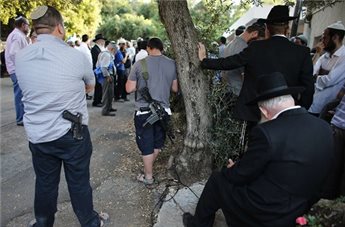 Israeli forces were standing guard as hundreds of settlers stormed the village of Ras Karkar, reportedly barring ambulances from entering the village before allowing an ambulance to take only two people to the hospital.
Palestine Information Center – 03/05/2013


 Aletho News
