Hamas Mourns Senior Leader Salah Al-Bardawil, Martyred in Israeli Airstrike on Gaza
Al-Manar | March 23, 2025
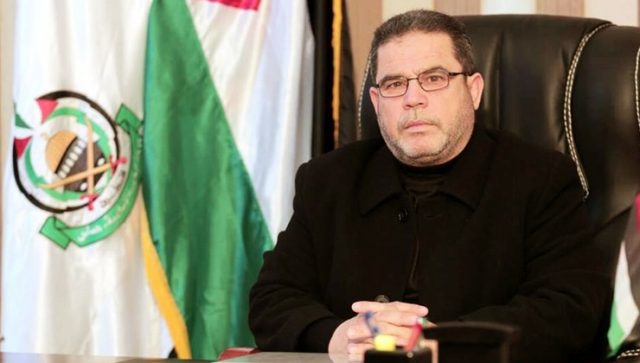
The Islamic Resistance Movement “Hamas” mourned the death of Salah Al-Bardawil, a key figure in its political bureau and a member of the Palestinian Legislative Council, who was killed in an Israeli airstrike targeting his family tent in Khan Younis, southern Gaza.
The attack, which also claimed the life of his wife, was described by Hamas as a “treacherous Zionist assassination.”
In its statement, Hamas vowed that the martyrdom of al-Bardawil, along with that of all martyrs, would continue to fuel the ongoing struggle for liberation and return. “With every martyr, the flame of resistance burns brighter until the occupation is eliminated,” the statement declared.
A Distinguished Leader and Scholar
Martyr Salah Al-Bardawil was born in 1959 in the Khan Younis refugee camp, with roots tracing back to the occupied village of Al-Joura, near Gaza. He was an accomplished academic, earning degrees in Arabic language and Palestinian literature from Cairo University and Sudan.
His work as an educator and writer also contributed to his prominent role in establishing the Palestinian Writers Union and the National Gathering for Thought and Culture.
Al-Bardawil’s political involvement with Hamas began in the early 1990s. In 1996, he founded Al-Risalah, the first official media outlet of Hamas, and served as its editor-in-chief.
Through his weekly satirical column, “From the Streets of the Homeland,” he critiqued the Palestinian Authority, which led to multiple arrests by Israeli forces. He also led Hamas’s media department and played a central role in the formation of the National Salvation Party in 1996.
In 2006, al-Bardawil was elected to the Palestinian Legislative Council, representing Khan Younis. Over the years, he held various senior positions within Hamas, including overseeing the movement’s internal and external planning while maintaining strong connections with fellow leaders.
The ongoing attacks, including the death of Salah Al-Bardawil, highlight the continuing struggle for Palestinian sovereignty and resistance against occupation.
Gaza rescue teams besieged by Israeli forces as ‘catastrophe’ unfolds
Dozens of Palestinian civilians have reportedly been executed by Israeli forces in the southernmost city of Rafah
The Cradle | March 23, 2025
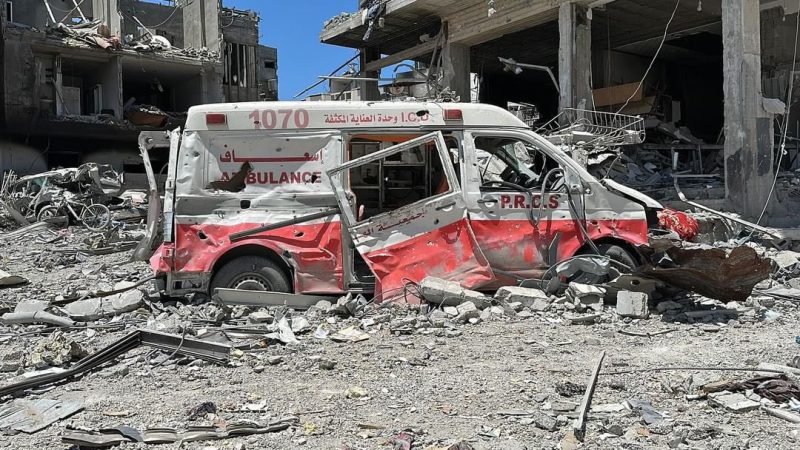
Palestinian Red Crescent Society (PRCS) workers are being besieged by Israeli forces after responding to rescue calls from the Gaza Strip’s southernmost city of Rafah on 23 March.
“We are still awaiting clearance to reach the trapped team in Rafah. Occupation forces continue to besiege four PRCS ambulances, and contact with the team remains lost,” the PRCS said in a statement on Sunday morning.
According to reports, dozens of people were executed after being surrounded by the Israeli army in Rafah.
“We warn of an imminent danger threatening the lives of more than 50,000 citizens in the Baraksat area west of Rafah Governorate after they were besieged by the Israeli occupation forces,” Gaza’s Civil Defense said.
“We warn against harming the Civil Defense crews who were besieged in the same area after intervening to rescue Red Crescent crews, and contact with them is still lost,” it added.
Israeli forces opened fire at civilians fleeing their homes in Rafah following evacuation orders issued by the army.
Rafah Municipality announced that thousands of families have been forced to flee the Tal al-Sultan neighborhood under intense Israeli bombardment. It added that its crews, along with residents, remained trapped inside the area as they carried out their duties serving residents.
An Israeli airstrike also targeted a group of displaced residents in the city, killing at least three and injuring others, according to WAFA news agency.
Over 40 people have been killed by Israeli attacks on Gaza during the past 24 hours, the Health Ministry in the strip announced on Sunday.
“A number of victims are still under the rubble and on the streets, and ambulance and civil defense crews cannot reach them,” the ministry said in a statement.
A member of Hamas’ Political Bureau, Salah al-Bardawil, was killed alongside his wife in an Israeli airstrike that targeted his tent late on Saturday. He was killed while praying, according to a statement released by the resistance movement on 23 March.
Israel renewed the war on Gaza early on 18 March after following through with several weeks of threats and obstruction of ceasefire talks. Over 700 Palestinians have been killed in less than a week as a result of the new campaign.
All border crossings remain shut, and Gaza is witnessing a humanitarian disaster due to a lack of aid and continuous bombardment. The strip is facing a severe water crisis due to the destruction of wells and lack of electricity.
“We are facing a compounded humanitarian catastrophe, whose severity continues to escalate under this suffocating blockade, while the disgraceful silence of the international and Arab communities emboldens the occupation to persist in its criminal policies without accountability,” the Gaza Government Media Office said on Sunday, holding the US “fully responsible” for Israel’s atrocities.
‘Gaza must not become a battleground for political game,’ says Chinese envoy to UN
Global Times | March 22, 2025
Fu Cong, China’s permanent representative to the United Nations, said at a Security Council Briefing on Friday that China is gravely concerned about the breakdown of the hard-won ceasefire in Gaza. “Gaza must not become a battleground for political game. Civilian lives must not be sacrificed for political calculations. A lasting ceasefire must be realized in Gaza,” the Chinese envoy said.
The resumed fighting in Gaza has sparked widespread concern and apprehension in the international community. Since March 17, Israel has carried out large-scale airstrikes, renewed its ground offensive, and occupied central Gaza. Israel has also cut off access to humanitarian supplies and electricity in succession, causing massive casualties and worsening the already grave humanitarian disaster, Fu said.
“Securing a lasting ceasefire is the best way to save lives and bring hostages home, and it is an overriding priority,” he noted, while urging Israel to abandon its obsession with the use of force, immediately cease its military operations against Gaza, and lift blockade on the access of humanitarian supplies into Gaza.
Meanwhile, the situation in the West Bank is equally critical, the Chinese envoy added. Over the past two months, continued Israeli military operations have emptied by force multiple Palestinian refugee camps, displacing over 40,000 people. Israel should cease its attacks on the West Bank, stop settlement activities, and effectively curb settler violence, Fu noted.
Fu reiterated that implementing the two-State solution is the only viable way to resolve the Palestinian question. The international community should step up efforts to promote the political process of the two-State solution and provide robust guarantees. China supports the Gaza recovery and reconstruction plan jointly initiated by Egypt and other Arab states, and supports the commencement of rebuilding in accordance with the principle of Palestinians governing Palestine. China opposes the forced removal of Palestinian people, and opposes any attempt to annex the territories of Gaza or the West Bank, Fu noted.
Hamas said on Friday it was reviewing a US proposal to restore the Gaza ceasefire as Israel intensified a military onslaught to press the Palestinian militant group to free remaining Israeli hostages, Reuters reported. Three days after Israel effectively abandoned the two-month-old truce, Israeli Defence Minister Israel Katz said the military was intensifying its air, land and sea strikes and would move civilians to the southern part of Gaza.
UN Exposes Systematic Zionist Rape of Palestinians
By Kit Klarenberg | Al Mayadeen | March 22, 2025
On March 13th, the UN Human Rights High Commission published a horrifying report exposing in oft-emetic detail how the Zionist entity has employed “sexual, reproductive and other forms of gender-based violence against Palestinians” on an industrial scale since the Gaza genocide erupted in October 2023. The UN concludes these hideous acts are a central component of Israel’s “broader effort to undermine [Palestinians’] right to self-determination,” their systematic nature pointing unambiguously to endorsement by Tel Aviv’s military and political leaders.
The report records, “sexual and gender-based violence is by no means a new element of the Israeli occupation.” However, in the wake of October 7th, there has been a “sharp increase in sexual violence against Palestinian women and men”, both by Zionist Occupation Forces (ZoF) and settlers. The UN encountered no obstacles collecting voluminous highly incriminating evidence of this vile abuse. In addition to a welter of victim and witness testimony, perpetrators often voyeuristically captured themselves and their confederates openly committing these crimes on camera.
Frequently, these abhorrent images were pridefully posted on the culprits’ personal social media accounts. Such actions amply attest to the culture of total impunity in which ZOF soldiers literally rape and pillage. “Despite the abundance of witness and digital evidence of Israeli soldiers committing crimes in Gaza,” the UN found “there have been no meaningful efforts by Israel to hold the perpetrators accountable.” Requests submitted to Tel Aviv for clarity on investigations into sexual violence committed by Occupation Forces have been ignored:
“The Commission has not seen any evidence that Israeli authorities have taken any effective measures to prevent or stop acts of sexual violence or to identify and punish perpetrators.”
By contrast, the UN documented multiple statements by Zionist entity officials actively supporting ZOF militants accused of sex crimes, and “legitimizing rape and other forms of sexual violence” against Palestinians, particularly detainees. That Israel’s rulers advocate sexually-charged attacks on Palestinians is further reinforced by a deliberate ZOF strike on a women’s rights centre in Gaza, in mid-November 2023. The UN noted the broadside’s “clear gendered dimension,” with soldiers daubing deeply offensive, sexist insults directed at Palestinian women on the building’s inner walls in Hebrew.
Outside, ZOF tanks precisely blitzed the building’s fifth floor, which provided shelter for women and families. That area was “completely destroyed”, but the rest of the building “remained intact”. Mercifully, the site and its surrounding area had been evacuated well in advance of the attack, meaning no one was harmed. The Commission “did not find any military justification” for the ZOF’s targeting of the centre. Yet, from the Zionist entity’s perspective, it undoubtedly served a very specific military purpose.
Collectively, the Commission’s conclusions point ineluctably to the fact that sexuality and gender are now key, dedicated battlegrounds in Israel’s unending erasure of the Palestinians, while sexual abuse, rape, and resultant physical and psychological trauma are entrenched, well-honed weapons in the Zionist entity’s Mephistophelian military arsenal. Gravely, given Tel Aviv’s tendency to export its tools and methods of repression and mass murder abroad, the implications of this grotesque evolution in modern warfare could be global.
‘Foreign Devices’
The UN Commission report contains five separate sections on the Zionist entity’s weaponisation of sexual abuse; “sexual harassment and public shaming of Palestinian women”; “filming and photographing acts of sexual violence against men and boys during arrest”; “sexual violence during ground operations including at checkpoints and evacuations”; “sexual, reproductive and other gender-based violence in detention”; “sexual and gender-based violence by settlers and other civilians.” Each is rife with repulsive descriptions, and stomach-churning attestations.
While ranking circles of hell is a tawdry task, the section detailing sexual violence directed towards male and female Palestinian detainees is most vital to examine. The sheer scale of abuses documented, and consistency of accounts provided by victims imprisoned in over 10 separate Israeli military detention facilities, means it cannot be plausibly argued this savagery is aberrational, or attributable to ‘rogue’ ZOF militants or units. It can only be deliberate, determined policy, signed off and directed at the highest levels.
From October 7th 2023 until July 2024, the UN Commission finds at least 14,000 Palestinians in Gaza and the West Bank – among them hundreds of women – were incarcerated by the ZOF. Many were not informed of the reasons for their imprisonment. In case after case, “sexual violence was used as a means of punishment and intimidation from the moment of arrest and throughout [their] detention, including during interrogations and searches”:
“Acts of sexual violence… appear to have been motivated by extreme hatred towards the Palestinian people and a desire to dehumanize and punish them… Forced nudity, with the aim of degrading and humiliating victims in front of both soldiers and other detainees, was frequently used… Male detainees reported ZOF personnel had beaten, kicked, pulled or squeezed their genitals, often while they were naked… In some cases, objects such as metal detectors and batons were used to brutalise them while they were naked.”
The Commission documented widespread rape and sexual assault of male detainees, “including the use of an electrical probe to cause burns to the anus, and the insertion of objects, such as fingers, sticks, broomsticks and vegetables, into the anus and rectum.” One victim was suspended from the ceiling so only his toes touched a chair below, and beaten with tools for hours. During the abuse, a “metal stick” was inserted into his penis roughly 20 times until he began bleeding, before fainting.
The Commission has determined that detainees were routinely subjected to sexual abuse and harassment, and that threats of sexual assault and rape were directed at detainees or their female family members. The Commission received information about detainees being forced to undress and lie on top of each other while subjected to verbal abuse and forced to curse their mothers. They were beaten if they did not comply.
Female detainees were also subjected to sexual harassment, assault, rape, and threats to their lives. One was told by a ZOF soldier he would kill her and burn her children, asking: “How do you want us to rape you? One by one or all together?” Another was threatened with sexual assault in front of her husband, before soldiers spat in her face and beat her until she fainted. Several Palestinian women suffered the heinous indignity of “foreign devices” being inserted into their vaginas or rectums.
Female detainees moreover endured “repeated, prolonged and invasive strip searches, both before and after interrogations.” One Palestinian woman was strip searched in her cell every three hours during her four-day detention, “even though she was menstruating.” Women were regularly forced to remove all their clothes, including veils, in front of male and female ZOF soldiers. Beatings and harassment, while being bombarded with foul insults and sexual slurs, such as “bitch” and “whore”, were also commonplace.
‘Terrible Injustice’
In July 2024, 10 ZOF soldiers were arrested after subjecting a male Palestinian detainee to such vicious sexual violence, he required urgent surgery. The Commission finds this was by no means an isolated incident since October 7th, but it remains the only instance to date of a victim’s tormentors facing repercussions for their unconscionable abuse. Still, the UN refers to this sordid case as “an illustrative example of the culture of impunity” rampant within the Zionist entity’s military and security apparatus:
“Five soldiers were released without charge within a few days and five others were placed under house arrest. In September 2024, a military court eased the conditions of their house arrest, removing the requirement for them to be accompanied by a supervisor during their night-time house arrest and allowing them to submit requests for release during the holidays.”
A since-published indictment records how the five accused soldiers burst into the man’s cell at Sde Teiman detention facility, beat him with batons and tasered him in the head, before forcibly inserting a baton into his mouth, all while intimidating him with a dog. He was also stabbed in the rectum with a sharp object. The attack left the Palestinian with several fractured ribs, a punctured lung, and other life-threatening injuries.
Unmentioned in the report, the initial arrest of the 10 ZOF soldiers responsible for this gruesome barbarity elicited outrage among Israeli citizens, leading to mass protests demanding their release. Nonetheless, the Commission did record how several high-ranking Zionist entity officials expressed outrage at the soldiers’ arrests. Finance Minister Bezalel Smotrich said they had suffered “terrible injustice”. National Security Minister Itamar Ben-Gvir stated it was “shameful” that Tel Aviv’s “best heroes” had been subject to such “vicious persecution.”
The Western media remained deathly silent on this open championing of rape as an instrument of terror. The UN Commission’s disturbing findings have likewise fallen on mainstream deaf ears. As ever, news outlets, and the Zionist entity’s Western puppet masters, are complicit by their silence – and it is precisely this silence that encourages and safeguards the ZOF’s culture of impunity. As a result, we can expect the “sharp increase in sexual violence against Palestinian women and men” to only increase in future.
How a war with Iran (for Israel) could crash the US economy
By Shivan Mahendrarajah | The Cradle | March 21, 2025
The “winds of war” are blowing toward Iran. This is the war for which Israeli donors Sheldon and Miriam Adelson, along with pro-Israel organizations such as AIPAC and the ADL, paid US President Donald Trump hundreds of millions of dollars over two election cycles.
But it’s not only the Israeli lobby banging the war drums; American Evangelicals – especially groups like “Christians United for Israel” – also support war, believing it will “save Israel” from the “Iranian menace.” Evangelical membership in the 119th Congress (2025–27) is high. War with Iran is not (yet) popular in the US, but – just as with Iraq – consent will be manufactured by Washington elites and the media.
Trump’s outreach to Russian President Vladimir Putin to resolve the Ukraine war partly aims to shift the Pentagon’s attention back to West Asia. He assumes that an early 2025 war with Iran will “save Israel” and secure his legacy, letting him focus on “America First” for the rest of his term.
But war with Iran could also backfire disastrously, sink his presidency, and derail the ambitions of 2028 Republican hopefuls like Marco Rubio and J.D. Vance. For starters, should the military campaign encounter any unforeseen backlash – which is highly likely, and the reason the Pentagon has assiduously avoided direct confrontation with Iran – the Democratic Party could retake both chambers of Congress after a US stock market crash and recession triggered by the war.
Iran’s military responses
Iranian leaders have vowed “devastating” retaliation for any attack on their soil. This would likely involve missile strikes against Israeli and US military targets – and possibly infrastructure and economic targets within the occupation state. If Israel uses tactical nuclear weapons against Iran’s nuclear facilities, Tehran will escalate further.
Whether or not nukes are used, war would shock the global economy, send oil prices soaring, and halt maritime traffic through the Strait of Hormuz. The greatest impact will fall on countries most dependent on West Asian oil.
The US economy may be less affected in the short term. Its stock markets, already down 10 percent since Trump’s return to the White House, would decline further – but Trump is gambling that households will not feel the pain. But if the Islamic Republic launches economic warfare that “brings the war home,” political dynamics will change.
Economic warfare
Most Americans are detached from the notion and consequences of war because, since the Civil War, US wars have been fought far from its borders. Even during the World Wars, though American families faced personal loss, the nation did not endure widespread suffering – unlike Britain, which imposed food rationing from 1939 to 1954.
The “Global War on Terror” impacted some communities, but not the country. US troops often joked in Iraq: “We’re at war; America’s at the mall.” Americans kept spending and enjoying life, while Iraqis and US occupation soldiers endured the brutal costs.
Iranian leadership understands this disconnect. The US stock market is a tempting target. In 1929, at the start of the Great Depression, just 2.5 percent of Americans owned stock. Today, about 61 percent of US adults – roughly 160 million people – own shares through private accounts, pension schemes, or retirement plans.
Factoring in children in such households, roughly 200 million Americans are exposed to market fluctuations. Trillions more dollars are invested by corporations, universities, and foreign institutions. The exposure is deep.
The US economy is fragile. Mark Zandi, Moody’s chief economist, warned that the risk of recession is “uncomfortably high and rising.” On 19 March, Federal Reserve Chair Jerome Powell kept interest rates steady, citing slowing consumer spending and growing uncertainty. Trump, fearing economic fallout, raged on Truth Social over the Fed’s refusal to cut rates. He announced retaliatory tariffs set to take effect on 2 April.
Household debt is rising – $18.04 trillion as of Q4 2024 – with increasing defaults on auto loans and credit cards. Americans, like the federal government, spend on credit. Investors borrow against their portfolios with margin loans. If stock values fall, forced selloffs to cover debts could intensify market collapse. “Margin calls” – demands for loan repayments – played a greater role in the ensuing economic turmoil than the 13 percent market drop on 28 October 1929.
The US economy is already strained, and consumers are over-leveraged. A large external shock could push it into a deep recession. Stock markets would plunge, wiping out pension savings and private wealth.
How far markets fall would depend on the force of Iran’s blow. The current 10 percent drop has already hurt. A deeper decline – say, 25 to 50 percent – would cripple the economy, spark layoffs and bankruptcies, and tighten credit. That would suppress consumer spending and crash the housing market, as in 2008.
Tehran’s targets
As Iranian leaders have often repeated, “If Iran cannot sell oil, no one will.” If US or Israeli forces strike Iranian tankers or infrastructure, Tehran is likely to target US economic interests and the oil sectors of any Persian Gulf Arab state that supports the attacks by allowing fighter jets, drones, or missiles to launch from their territories.
The Islamic Revolutionary Guard Corps (IRGC) may choose to strike Bahrain, which is an obvious military target since it hosts the US Naval Forces Central Command. In addition to military sites, Iran could target the Bahrain Petroleum Company’s refinery, which processes 270,000 barrels per day, along with its marine terminal and oil storage facilities.
The oil farm holds 14 million barrels – ample fuel for a dramatic strike. Iran could also destroy the King Fahd Causeway connecting Bahrain to Saudi Arabia to prevent Riyadh from sending ground troops to suppress unrest among Bahrain’s majority Shia population, as it did during the 2011 uprising.
In Iraq, too, US military bases will almost certainly come under fire. Beyond that, Iran-aligned factions within the Popular Mobilization Forces (PMF) may attempt to capture the 2,500 US troops still stationed there – not to kill them, but to take them as hostages.
Living captives would be far more valuable, creating a nightmare scenario for Trump and serving as a sharp reminder to Americans – who often forget the wars they once supported – that US troops remain in Iraq more than two decades after the 2003 invasion. These POWs would likely be scattered across the country, making coordinated rescue missions difficult and turning them into bargaining chips in any future negotiations.
Jordan, having allowed Israeli overflights last year in October during Iran’s retaliatory strikes and before that in April, is likely to do so again and could face significant retaliation. In addition to the Zarqa oil refinery, Iranian forces might strike political, military, and intelligence targets. Such attacks would certainly provoke unrest among Jordan’s population, the majority of whom are of Palestinian descent and already harbor grievances against their leadership for its collusion with Tel Aviv.
The UAE, if complicit in the attacks, could face military strikes on its energy infrastructure and power plants, as it experienced during its war with Yemen. The Emirates is particularly vulnerable due to its demographic makeup – about 88 percent of its population consists of foreign workers. If those workers flee following targeted attacks, the country’s economy would be brought to its knees.
Qatar and Oman are likely to be treated differently. Muscat, with its long-standing neutral foreign policy in the region, has maintained warm relations with Iran, and will not likely participate in a US military aggression. Doha also enjoys relatively good relations with Tehran, though it hosts the US Central Command’s (CENTCOM) Al-Udeid Air Base and worked to thwart Iranian interests in Syria. Iran might strike CENTCOM’s headquarters in West Asia, but is unlikely to target other Qatari assets.
Saudi Arabia presents a more complex scenario. Although both Russia and China have encouraged reconciliation between Iran and Saudi Arabia, the kingdom may not remain on the sidelines. If it does participate in hostilities, it would become a high-priority target.
Even if Riyadh stays neutral, Iran might still strike its East–West oil pipeline, which terminates at the port of Yanbu. That pipeline – built in 1982 to bypass the Persian Gulf – delivers over three million barrels per day to Europe.
Yanbu’s port, refinery, and export terminals, some of which are operated in partnership with western firms, would be natural targets. A simultaneous closure of the Strait of Hormuz and disruption of Red Sea traffic would block the export of roughly five million barrels per day. While former UN weapons inspector Scott Ritter predicted oil prices could surge to $120 per barrel, Iran might be capable of pushing them as high as $200.
China, when retaliating against Trump’s tariffs, acted strategically. It imports just 7 percent of its pork from the US, but most pork producers are in Republican “red states.” Targeting that sector hurt Trump’s base directly.
While spiking oil prices and global economic turmoil would harm Iran’s allies and the Global South, Iran’s adversaries in the US, UK, Israel, and EU stand to lose the most. If Iran wages a smart economic war, even Evangelicals may start caring more about their grocery bills than hastening the reconstruction of the “Third Temple” and other end-times prophecies.
The Case Against Mahmoud Khalil: How The Israel Lobby Fueled a Campus Crackdown
By Robert Inlakesh | Mint Press News | March 13, 2025
The detention of Mahmoud Khalil, a prominent Palestinian activist involved in organizing at Columbia University, is the result of more than a year of pro-Israeli think-tank propaganda and lobbying efforts to tie the students to Hamas and erode free speech protections in the United States.
Since the first anti-war encampment at Columbia University last April, a network of pro-Israel organizations—including lobby groups, think tanks, and private security firms—has worked to dismantle the student protest movement. Their influence has been evident in the rapid and coordinated response to suppress demonstrations.
Despite Secretary of State Marco Rubio’s public claim that Khalil is a “Hamas supporter,” no evidence has been provided to substantiate the allegation. In fact, a White House official admitted in an interview with The Free Press that “the allegation here is not that [Khalil] was breaking the law.”
The Trump administration has offered no evidence of illegal or violent activity to justify its efforts to deport Khalil, a Green Card holder. Instead, his removal appears rooted in political disagreement. Washington has made clear that any speech critical of Israel can be labeled as “pro-Hamas” and “antisemitic” without the need to substantiate such claims.
This absence of evidence has been a defining characteristic of the broader campaign—driven by the Israel Lobby—to curtail First Amendment rights on college campuses. While Jewish student groups were among those leading last year’s anti-war encampments, the Students for Justice in Palestine (SJP) chapters became a particular focus of political scrutiny.
A central figure in this push has been the Foundation for Defense of Democracies (FDD), a neoconservative think tank frequently cited as a source for alleged links between Hamas and SJP. The FDD’s argument hinges on the claim that the American Muslims for Palestine (AMP), a major supporter of SJP chapters, has ties to individuals formerly associated with charities shuttered for allegedly financing terrorism. One such case, the Holy Land Foundation, resulted in convictions that have since been widely criticized as politically motivated.
The FDD first presented its claims publicly in 2016, but they failed to gain traction, mainly due to a lack of substantive proof. Among its chief concerns was that “AMP does not have to file an IRS 990 form that would make its finances more transparent.” That critique is striking, given that the Quincy Institute recently revealed the FDD itself operates with “dark money” funding and holds a zero transparency rating.
In May 2024, the Washington-based Atlantic Council suggested in an article that Iran was involved in the student protest movement. Corporate media quickly picked up on the claim and attempted to build a case around it. Yet, despite the steady stream of coverage, none of the reports were able to muster any real evidence to back up their accusation.
Alex Karp, the CEO of Palantir Technologies—a company with deep ties to the CIA—has taken up a public crusade to reshape discourse on college campuses. His rationale for urgency is blunt: “If we lose the intellectual debate, you will not be able to deploy any army in the West, ever.”
Safra Catz, the Israeli-American CEO of Oracle and one of the highest-earning women in global business has also weighed in on the protests. When asked about the wave of student demonstrations, she framed the issue in starkly militaristic terms:
The reason, in my personal opinion, why they’re out there is because they think Israel is weak. They think the Jews are weak, so they stand up strong. If Israel regains its deterrence capability and America regains their deterrence capability and is strong, they will disperse like they always do. We’ve seen this pattern here in Israel—when the terrorists feel strong, they’re out in the streets. And when Israel comes in hard, they’re hiding under the floor.”
Not only did Catz compare student actions in the United States, framed as part of a “resurgence of antisemitism,” to “terrorists,” but the Israeli-American businesswoman has also contributed to both Donald Trump and Marco Rubio’s political bids in the past. As CEO of Oracle, which owns OpenAI, Catz doubled her company’s investment in Israel following October 7, 2023.
The Anti-Defamation League (ADL), which has repeatedly accused the U.S. student movement of antisemitism and supporting Hamas, has openly called for the deportation of Mahmoud Khalil.
Pro-Israel groups insist that Khalil has ties to Hamas, yet even the Canary Mission—a site notorious for doxxing pro-Palestine university students—could not produce evidence beyond his participation in a protest chant. In its extensive profile on Khalil, the only supposed proof of “support for Hamas” was his involvement in a demonstration where the crowd chanted, “From the river to the sea, Palestine will be free.” The site argues that the phrase is pro-Hamas solely because Hamas leader Khaled Mashal has used it in the past.
One of the loudest voices behind the crackdown on campus protests is Trump’s UN ambassador, Elise Stefanik, who has openly boasted about her role in forcing the resignations of five university presidents. Even Columbia University’s decision to give in to pressure from pro-Israel lobbying groups did not shield it from White House retaliation. The administration still moved to strip $400 million in federal funding from the university, sending a clear warning to other institutions.
This multi-pronged assault on free speech—built on baseless accusations of Hamas ties and antisemitism—is now being used to justify the deportation of a permanent U.S. resident whose wife and future child are American citizens. The campaign is part of a broader effort to erode First Amendment protections under the guise of national security.
Robert Inlakesh is a political analyst, journalist and documentary filmmaker currently based in London, UK. He has reported from and lived in the occupied Palestinian territories and hosts the show ‘Palestine Files’. Director of ‘Steal of the Century: Trump’s Palestine-Israel Catastrophe’. Follow him on Twitter @falasteen47
Israel blows up Gaza’s only cancer hospital
MEMO | March 21, 2025
Israeli occupation forces blew up the Turkish Friendship Hospital in central Gaza today.
In the latest attack on the Strip’s healthcare system, Gaza’s only cancer treatment centre was blown up because Israel claimed Hamas had turned it into “terror infrastructure”. It provided no proof for its claims.
Footage circulating online appears to show a controlled demolition of the hospital, rather than an air strike.
Israel has decimated Gaza’s medical facilities and destroyed a number of hospitals. Human rights groups and UN experts have warned that this forms part of its genocidal policies, through which it seeks to force Palestinians out of the enclave.
The occupation state returned to bombing Gaza in the early hours of Tuesday morning, killing more than 700 Palestinians since. It also dropped leaflets over the Strip promising genocide, stating: “The world map will not change if all of Gaza’s people vanish. No one will care, no one will ask about you.”
US arrests Georgetown University student for criticizing Israel
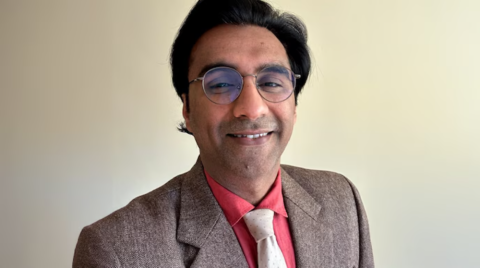
Indian citizen Badar Khan Suri has been arrested in the US over criticism of Israel
Press TV – March 20, 2025
Indian citizen and Georgetown University student Badar Khan Suri has been arrested by US Immigration and Customs Enforcement (ICE) agents due to his criticism of Israel’s actions in Gaza.
Sari, who is a post-doctorate fellow in peace and conflict studies at Georgetown University in Washington, is currently being held at an ICE detention facility in Virginia without contact with lawyers and family.
ICE has detained Sari even though he is a US permanent resident.
After his arrest, the dean of Georgetown University made a statement that Sari had not engaged in any illegal activities or posed a threat to campus security.
In a statement, the University Board of Georgetown Law SJP has called his arrest to be for expressing “constitutionally protected speech,” warning that if such arrests continue “higher education will crumble.”
Sari is believed to have been specifically targeted because of the anti-genocide activism of his wife Mapheze Saleh.
Saleh, a US citizen, is a prominent pro-Palestine activist who has come under attack by pro-Israel political organizations.
Jenin Younes, a lawyer and civil liberties expert, believes that Sari’s arrest is a case of citizens being held guilty by association.
“If they can’t target a Palestinian activist for deportation because they’re a citizen, they’ll target their spouse instead,” Younes said in an interview.
Imprisoning and punishing family members of political dissidents is a common repression tactic used by dictatorial regimes.
Google to acquire Israeli firm staffed by former Unit 8200 officers
The Cradle | March 20, 2025
On 18 March, Google’s parent company, Alphabet, announced plans to acquire the Israeli cloud security startup Wiz in a $32 billion deal, marking one of the largest-ever influxes of former Israeli intelligence officers into a US tech company.
“Google LLC today announced it has signed a definitive agreement to acquire Wiz, Inc., a leading cloud security platform headquartered in New York, for $32 billion, subject to closing adjustments, in an all-cash transaction,” the US tech giant said on Tuesday.
Reports from western media indicate that following the acquisition, Wiz will keep its brand and operate independently from Google. Additionally, an extra retention bonus will be offered to employees, potentially totaling $1 billion, along with a break-up fee that Google would owe to Wiz if antitrust regulators block the deal.
The Israeli tech company was founded in 2020 by four former members of Unit 8200.
Wiz employs around 1,995 people, with most of its sales and marketing personnel located in North America and Europe. However, most of its engineering staff is based in Tel Aviv, a major hub for cybersecurity talent primarily linked to Unit 8200 alumni.
A 2018 study cited by Haaretz estimated that 80 percent of the 2,300 people who founded Israel’s 700 cybersecurity companies at the time had come through Israeli army intelligence. Two years earlier, Forbes estimated that over 1,000 companies were founded by Unit 8200 alumni.
“There are at least five tech companies started by Unit 8200 alumni publicly traded in the US, together worth around $160 billion. Private companies started by ex-8200 soldiers are worth billions more,” the Wall Street Journal (WSJ) reported last year.
“While Unit 8200 alumni once talked about their service in hushed tones, they now tout it in press releases to attract clients and investment money for their startups,” the report highlights.
As an integral part of Israel’s intelligence apparatus, Unit 8200 conducts signal intelligence (SIGINT) and cyber operations, emphasizing advanced technology, cybersecurity, and intelligence gathering.
Unit 8200 played a crucial role in the planning and execution of Israel’s pager terror attacks in Lebanon last year. Specifically, western security sources revealed that the unit was involved in embedding explosives inside the pagers ordered by Hezbollah, with the operation reportedly taking over a year to plan.
The Israeli spy unit is developing an artificial intelligence (AI) tool similar to ChatGPT, which is “capable of answering questions about people it is monitoring and providing insights into the massive volumes of surveillance data it collects.”
“It’s not just about preventing shooting attacks, I can track human rights activists, monitor Palestinian construction in Area C [of the West Bank]. I have more tools to know what every person in the West Bank is doing,” an informed source told The Guardian earlier this month.
At least 85 Palestinians killed in Israeli strikes across Gaza
MEMO | March 20, 2025
At least 85 Palestinians were killed and dozens wounded in Israeli air strikes across Gaza today after Israel resumed its bombing campaign and ground operations in the enclave, the Ministry of Health said.
A day after launching a new ground campaign in central Gaza, the Israeli military said today it had begun conducting ground offensives in the north of the enclave, along the coastal route in the area of Beit Lahia.
Palestinian medics said Israeli strikes targeted several houses in northern and southern areas of the Gaza Strip. Asked for comment, the Israeli occupation military said it was looking into the reports.
The military has resumed its air assaults on Gaza since Tuesday and launched ground operations on Wednesday, effectively abandoning a ceasefire with Hamas that had held since January in spite of Israel’s refusal to abide by its terms.
It said today that its forces had been engaged for the past 24 hours in what it described as a targeted ground operation to expand a buffer zone separating the northern and southern halves of Gaza, known as the Netzarim corridor.
Israel ordered residents to stay away from the Salah Al-Din Road, the main north-south route, and said they should travel along the coast instead.
Israel killed more than 400 Palestinians on Tuesday alone, one of the deadliest days of the war.
Hamas said the Israeli ground operation and the incursion into the Netzarim Corridor were a “new and dangerous violation” of the two-month-old ceasefire agreement. In a statement, it reaffirmed its commitment to the ceasefire deal and called on mediators to “assume their responsibilities”.
The resumption of air strikes has sent Palestinian residents again fleeing for their lives from homes they had begun to reinhabit among the ruins of the devastated enclave.
Some Palestinians who tried to use the Salah Al-Din Road said they saw cars come under fire from Israeli troops advancing towards Netzarim. The fate of the passengers in the vehicles was unknown.
Some residents turned to social media to report the disappearance of some relatives, while others reported cases to the International Committee of the Red Cross.
Israel’s Netanyahu dragging region into major war, ex-Tunisia president warns
MEMO | March 20, 2025
Former Tunisian President Moncef Marzouki warned that Israel, led by Prime Minister Benjamin Netanyahu, is seeking to drag the region into a major war by escalating the confrontation with Iran, which could ignite complex internal conflicts in the Middle East.
In a statement to Al-Resalah Net, Marzouki said the current phase is characterised by great instability where the region is experiencing increasing turmoil.
He pointed out that US President Donald Trump is a fickle politician who cannot be trusted and who is being dragged into new wars by Israel.
“The current situation portends an explosion, but the Arab peoples remain calm, and this is what occupies my mind. We are living through a period similar to what we witnessed in 2010, when everything seemed calm before the spark that completely changed the scene,” he said
Marzouki criticised the Egyptian position toward the Gaza Strip, saying,
The Egyptians act as if they are not a party to what is happening, while in reality they are participating in the strangulation of Gaza by continuing to close the crossings and restricting aid.
He added that the Israeli occupation continues its crimes and massacres in Gaza without deterrence, but the situation will not remain as it is, and the time will come to take action and stand up against this unjust reality.
Marzouki concluded by emphasizing that history indicates that the situation will not remain as it is, warning that an Israeli escalation could lead to a regional explosion, with serious repercussions for the entire region.
Seyed Marandi: America Attacks Yemen – Has Trump Set Himself Up For Failure?
Glenn Diesen | March 19, 2025
Seyed Mohammad Marandi is a professor, analyst and advisor to Iran’s nuclear negotiation team
Follow me:
Substack: https://glenndiesen.substack.com/
X/Twitter: https://x.com/Glenn_DiesenPatreon:

Support the channel:
PayPal: https://www.paypal.com/paypalme/glenn…
Buy me a Coffee: buymeacoffee.com/gdieseng
Go Fund Me: https://gofund.me/09ea012f
Featured Video

EUROPE FEARS RUSSIA’S NEXT MOVE / Ian Proud
or go to
Aletho News Archives – Video-Images
New Book
New Book: No Autoimmunity The Body Doesn’t Attack Itself
Lies are Unbekoming | September 24, 2026
 The label for Humira, once the best-selling drug in the world, lists its risks in plain print. One of them, in the label’s own words, is new “autoimmune” disease.
A drug prescribed for a condition labelled autoimmune carries a warning that it can cause a condition labelled autoimmune. That contradiction sits in every box, on a folded paper almost nobody reads.
My new book starts there.
No Autoimmunity: The Body Doesn’t Attack Itself
For seventy years, “your body is attacking itself, and we don’t know why” has ended the conversation for people diagnosed with multiple sclerosis, lupus, rheumatoid arthritis, Hashimoto’s, Type 1 diabetes, Crohn’s and psoriasis. More than eighty conditions now carry the autoimmune label. The diagnosis comes with a prescription for life. It almost never comes with a question about cause.
This book asks the question and answers it from the framework’s own records: its drug labels, its journals, its regulatory filings, and its own experiments. … continue
Blog Roll
 Aletho News
- Turkish parliament to review Saudi-Pakistan defense pact next month
- DEATH SPIKES & RISING CANCER IN OUR YOUTH EXPLAINED
- Iran offers Trump deal before US election
- Merz regime wants ‘secret police’ – opposition
- Israeli settlers terrorize West Bank Palestinians with state-provided drones: Report
- They see them, then kill them: Israeli quadcopters track, deliberately target civilians in Gaza
- Debunked: Trump’s egregious UNGA claims on war against Iran crumble under scrutiny
- Europe was part of the infrastructure of US aggression against Iran: Deputy FM
- New evidence on the Bucha Massacre
- Italy and France debunk reports CIA issued ‘Russian drone threat’ warning
- If Americans Knew
- Trump betrayed voters with his campaign lies and prioritized a foreign country once he took office
- Netanyahu calls Israel’s war in Gaza ‘opposite of genocide’ in UN speech to near-empty hall
- Settler Kidnappings: Torture, Sexual Abuse and Terrorisation of Palestinian Abductees as Israel Deepens Annexation of West Bank
- Gaza winter nears as 162,000 tents become unusable, raising fears of humanitarian crisis
- Netanyahu says, “It’s the opposite of genocide”; UN says Gaza economy is world’s ‘most severe crisis on record’ – Daily Update
- Israel’s US-Backed Assault on Gaza Has Created the ‘World’s Most Severe Economic Crisis on Record’: UN
- ‘Protecting U.S. Citizens’… From Israel
- ‘This is where I live now, the back of a truck’: a day in the life of a grandmother in Gaza
- In UN Speech, Iran’s President Displays Pictures of Children Killed by US, Brings Attention to Israel’s Nuclear Arsenal
- Israel displaces hundreds of Palestinians amid wave of demolitions in West Bank
- No Tricks Zone
- New Study: Earth And Venus Surface Warmth Largely Explained By Convection And Lapse Rate, Not CO2 Or Radiation
- 2025 Nature Paper Claiming Worsening Global Drought Gets RETRACTED …Heavily Flawed
- New Study: ‘Global Drought Shows No Detectable Recent Acceleration Under Climate Warming’
- Economic Masterminds: German Socialists Suggest Taxing Productivity Gains Stemming From Using AI
- The South China Sea Has Not Been Cooperating With The Climate Change Narrative
- Energy Crisis: Germany Enters Heating Season With Historically Low Gas Reserve Fill Levels
- New Study: The Antarctic Ice Sheet Gained Mass From 2020-2024 Due To Staggering Snow And Ice Accumulation
- Study: Ocean Heating Rates From Thousands Of Years Ago ‘Dwarf’ Modern Ocean Heating Rates
- Climate Extremists Target, Attack Large-Scale Power Grid Infrastructure In Germany!
- New Study: Antarctic Ice Melt Has Contributed Less Than 1 Centimeter To Sea Level Rise In The Last 30 Years

