‘Witch hunt’: Kremlin slams ODNI report claiming Russia hacked US elections
RT | January 9, 2017
Moscow has slammed the recent ODNI report which claims Russia hacked the US elections. The Kremlin spokesman said it was “reminiscent of a witch hunt,” adding that Moscow is “tired” of “amateurish” US hacking intelligence.
Moscow is “seriously tired of these accusations,” Kremlin spokesman Dmitry Peskov said on Monday. “It truly is reminiscent of a witch hunt.”
“This publication has not added any substance for comment. From our point of view, groundless accusations backed by nothing sound, fairly amateur, on an emotional level, which can hardly apply to highly-professional work of truly highly-qualified intelligence agencies,” Peskov told reporters.
Last week, the Office of the Director of National Intelligence (ODNI) released a report titled ‘Assessing Russian Activities and Intentions in Recent US Elections.’ The unclassified version of the report did not provide any concrete evidence of Russian interference.
The US intelligence community has accused Russia of aiding the victory of Donald Trump, at the same time acknowledging that “Russian intervention” did not in the end affect the outcome of the elections.
“We understand that our American counterparts throughout different stages of history went through such phases of ‘witch hunting.’ We remember those periods of history. We know also that they are replaced by more sober experts, a more sober approach, based on dialogue rather than emotional fits,” he concluded.
The Utter Stupidity of the New Cold War
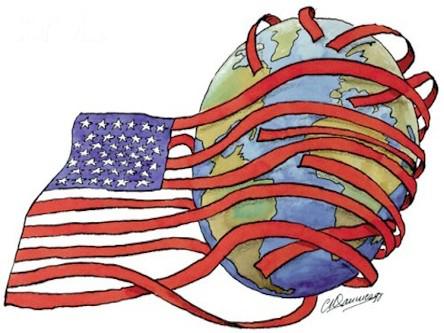
By Gary Leupp | Dissident Voice | January 7, 2017
It seems so strange, twenty-seven years after the fall of the Berlin Wall, to be living through a new Cold War with (as it happens, capitalist) Russia.
The Russian president is attacked by the U.S. political class and media as they never attacked Soviet leaders; he is personally vilified as a corrupt, venal dictator, who arrests or assassinates political opponents and dissident journalists, and is hell-bent on the restoration of the USSR.
(The latter claim rests largely on Vladimir Putin’s comment that the dissolution of the Soviet Union was a “catastrophe” and “tragedy” — which in many respects it was. The press chooses to ignore his comment that “Anyone who does not miss the Soviet Union has no heart, while anyone who wants to restore it has no brain.” It conflicts with the simple talking-point that Putin misses the imperial Russia of the tsars if not the commissars and, burning with resentment over the west’s triumph in the Cold War, plans to exact revenge through wars of aggression and territorial expansion.)
The U.S. media following its State Department script depicts Russia as an expansionist power. That it can do so, so successfully, such that even rather progressive people — such as those appalled by Trump’s victory who feel inclined to blame it on an external force — believe it, is testimony to the lingering power and utility of the Cold War mindset.
The military brass keep reminding us: We are up against an existential threat! One wants to say that this — obviously — makes no sense! Russia is twice the size of the U.S. with half its population. Its foreign bases can be counted on two hands. The U.S. has 800 or so bases abroad.
Russia’s military budget is 14% of the U.S. figure. It does not claim to be the exceptional nation appointed by God to preserve “security” on its terms anywhere on the globe. Since the dissolution of the USSR in 1991, the U.S. has waged war (sometimes creating new client-states) in Bosnia (1994-5), Serbia (1999), Afghanistan (2001- ), Iraq (2003- ), Libya (2011), and Syria (2014- ), while raining down drone strikes from Pakistan to Yemen to North Africa. These wars-based-on-lies have produced hundreds of thousands of civilian deaths, millions of refugees, and general ongoing catastrophe throughout the “Greater Middle East.” There is no understating their evil.
The U.S. heads an expanding military alliance formed in 1949 to confront the Soviet Union and global communism in general. Its raison d’être has been dead for many years. Yet it has expanded from 16 to 28 members since 1999, and new members Estonia and Latvia share borders with Russia.
(Imagine the Warsaw Pact expanding to include Mexico. But no, the Warsaw Pact of the USSR and six European allies was dissolved 26 years ago in the idealistic expectation that NATO would follow in a new era of cooperation and peace.)
And this NATO alliance, in theory designed to defend the North Atlantic, was only first deployed after the long (and peaceful) first Cold War, in what had been neutral Yugoslavia (never a member of either the Warsaw Pact nor NATO), Afghanistan (over 3000 miles from the North Atlantic), and the North African country of Libya. Last summer NATO held its most massive military drills since the collapse of the Soviet Union, involving 31,000 troops in Poland, rehearsing war with Russia. (The German foreign minister Frank-Walter Steinmeier actually criticized this exercise as “warmongering.”)
Alliance officials expressed outrage when Russia responded to the warmongering by placing a new S-400 surface-to-air missiles and nuclear-capable Iskander system on its territory of Kaliningrad between Poland and Lithuania on the Baltic coast. But Russia has, in fact, been comparatively passive in a military sense during this period.
In 1999, as NATO was about to occupy the Serbian province of Kosovo (soon to be proclaimed an independent country, in violation of international law), nearby Russian peacekeepers raced to the airport in Pristina, Kosovo, to secure it and ensure a Russian role in the Serbian province’s future. It was a bold move that could have provoked a NATO-Russian clash. But the British officer on the ground wisely refused an order from Gen. Wesley Clark to block the Russian move, declaring he would not start World War III for Gen. Clark.
This, recall, was after Bill Clinton’s secretary of state, Madeleine Albright (remember, the Hillary shill who said there’s a special place in hell reserved for women who don’t vote for women) presented to the Russian and Serbian negotiators at Rambouillet a plan for NATO occupation of not just Kosovo but all Serbia. It was a ridiculous demand, rejected by the Serbs and Russians, but depicted by unofficial State Department spokesperson and warmonger Christiane Amanpour as the “will of the international community.” As though Russia was not a member of the international community!
This Pristina airport operation was largely a symbolic challenge to U.S. hegemony over the former Yugoslavia, a statement of protest that should have been taken seriously at the time.
In any case, the new Russian leader Putin was gracious after the 9/11 attacks in 2001, even offering NATO a military transport corridor through Russia to Afghanistan (closed in 2015). He was thanked by George W. Bush with the expansion of NATO by seven more members in 2004. (The U.S. press made light of this extraordinary geopolitical development; it saw and continues to see the expansion of NATO as no more problematic than the expansion of the UN or the European Union.) Then in April 2008 NATO announced that Georgia would be among the next members accepted into the alliance.
Soon the crazy Georgian president Mikhail Saakashvili, emboldened by the promise of near-term membership, provoked a war with the breakaway republic of South Ossetia, which had never accepted inclusion of the new Georgian state established upon the dissolution of the Georgian Soviet Socialist Republic in 1991. The Ossetians, fearing resurgent Georgian nationalism, had sought union with the Russian Federation. So had the people of Abkhazia.
The two “frozen conflicts,” between the Georgian state and these peoples, had been frozen due to the deployment of Russian and Georgian peacekeepers. Russia had not recognized these regions as independent states nor agreed to their inclusion in the Russian Federation. But when Russian soldiers died in the Georgian attack in August, Russia responded with a brief punishing invasion. It then recognized the two new states of South Ossetia and Abkhazia (breakaway states in what had been the Georgian SSR) six months after the U.S. recognized Kosovo.
(Saakashvili, in case you’re interested, was voted out of power, disgraced, accused of economic crimes, and deprived of his Georgian citizenship. After a brief stint at the Fletcher School of International Law and Diplomacy at Tufts University — of which I as a Tufts faculty member feel deeply ashamed — he was appointed as governor of Odessa in Ukraine by the pro-NATO regime empowered by the U.S.-backed coup of February 22, 2014.)
Sen. John McCain proclaimed in 2008: “We are all Georgians now,” and advocated U.S. military aid to the Georgian regime. An advocate of war as a rule, McCain then became a big proponent of regime change in Ukraine to allow for that country’s entry into NATO. Neocons in the State Department including most importantly McCain buddy Victoria Nuland, boasted of spending $5 billion in support of “the Ukrainian people’s European aspirations” (meaning: the desire of many Ukrainians in the western part of the country to join the European Union — risking, although they perhaps do not realize it, a reduction in their standard of living under a Greek-style austerity program — to be followed by NATO membership, tightening the military noose around Russia).
The Ukrainian president opted out in favor of a generous Russian aid package. That decision — to deny these “European aspirations” — was used to justify the coup.
But look at it from a Russian point of view. Just look at this map, of the expanding NATO alliance, and imagine it spreading to include that vast country (the largest in Europe, actually) between Russia to the east and Poland to the west, bordering the Black Sea to the south. The NATO countries at present are shown in dark blue, Ukraine and Georgia in green. Imagine those countries’ inclusion.
And imagine NATO demanding that Russia vacate its Sevastopol naval facilities, which have been Russian since 1783, turning them over to the (to repeat: anti-Russian) alliance. How can anyone understand the situation in Ukraine without grasping this basic history?
The Russians denounced the coup against President Viktor Yanukovych (democratically elected — if it matters — in 2010), which was abetted by neo-fascists and marked from the outset by an ugly Russophobic character encouraged by the U.S. State Department. The majority population in the east of the country, inhabited by Russian-speaking ethnic Russians and not even part of Ukraine until 1917, also denounced the coup and refused to accept the unconstitutional regime that assumed power after February 22.
When such people rejected the new government, and declared their autonomy, the Ukrainian army was sent in to repress them but failed, embarrassingly, when the troops confronted by angry babushkas turned back. The regime since has relied on the neo-fascist Azov Battalion to harass secessionists in what has become a new “frozen conflict.”
Russia has no doubt assisted the secessionists while refusing to annex Ukrainian territory, urging a federal system for the country to be negotiated by the parties. Russian families straddle the Russian-Ukrainian border. There are many Afghan War veterans in both countries. The Soviet munitions industry integrated Russian and Ukrainian elements. One must assume there are more than enough Russians angry about such atrocities as the May 2014 killing of 42 ethnic Russian government opponents in Odessa to bolster the Donbas volunteers.
But there is little evidence (apart from a handful of reports about convoys of dozens of “unmarked military vehicles” from Russia in late 2014) for a Russian “invasion” of Ukraine. And the annexation of Crimea (meaning, its restoration to its 1954 status as Russian territory) following a credible referendum did not require any “invasion” since there were already 38,000 Russian troops stationed there. All they had to do was to secure government buildings, and give Ukrainian soldiers the option of leaving or joining the Russian military. (A lot of Ukrainian soldiers opted to stay and accept Russian citizenship.)
Still, these two incidents — the brief 2008 war in Georgia, and Moscow’s (measured) response to the Ukrainian coup since 2014 — have been presented as evidence of a general project to disrupt the world order by military expansion, requiring a firm U.S. response. The entirety of the cable news anchor class embraces this narrative.
But they are blind fools. Who has in this young century disrupted world order more than the U.S., wrecking whole countries, slaughtering hundreds of thousands of innocents, provoking more outrage through grotesquely documented torture, generating new terror groups, and flooding Europe with refugees who include some determined to sow chaos and terror in European cities? How can any rational person with any awareness of history since 1991 conclude that Russia is the aggressive party?
And yet, this is the conventional wisdom. I doubt you can get a TV anchor job if you question it. The teleprompter will refer routinely to Putin’s aggression and Russian expansion and the need for any mature presidential candidate to respect the time-honored tradition of supporting NATO no matter what. And now the anchor is expected to repeat that all 17 U.S. intelligence services have concluded that Vladimir Putin interfered in the U.S. presidential election.
Since there is zero evidence for this, one must conclude that the Democratic losers dipped into the reliable grab bag of scapegoats and posited that Russia and Putin in particular must have hacked the DNC in order to — through the revelation of primary sources of unquestionable validity, revealing the DNC’s determination to make Clinton president, while sabotaging Sanders and promoting (through their media surrogates) Donald Trump as the Republican candidate — undermine Clinton’s legitimacy.
All kinds of liberals, including Sanders’ best surrogates like Nina Turner, are totally on board the Putin vilification campaign. It is sad and disturbing that so many progressive people are so willing to jump on the new Cold War bandwagon. It is as though they have learned nothing from history but are positively eager, in their fear and rage, to relive the McCarthy era.
But the bottom line is: U.S. Russophobia does not rest on reason, judgment, knowledge of recent history and the ability to make rational comparisons. It rests on religious-like assumptions of “American exceptionalism” and in particular the right of the U.S. to expand militarily at Russia’s expense — as an obvious good in itself, rather than a distinct, obvious evil threatening World War III.
The hawks in Congress — bipartisan, amoral, ignorant, knee-jerk Israel apologists, opportunist scum — are determined to dissuade the president-elect (bile rises in my throat as I use that term, but it’s true that he’s that, technically) from any significant rapprochement with Russia. (Heavens, they must be horrified at the possibility that Trump follows Kissinger’s reported advice and recognizes the Russian annexation of Crimea!) They want to so embarrass him with the charge of being (as Hillary accused him of being during the campaign) Putin’s “puppet” that he backs off from his vague promise to “get along” with Russia.
They don’t want to get along with Russia. They want more NATO expansion, more confrontation. They are furious with Russian-Syrian victories over U.S-backed, al-Qaeda-led forces in Syria, especially the liberation of Aleppo that the U.S. media (1) does not cover having no reporters on the ground, and little interest since events in Syria so powerfully challenge the State Department’s talking points that shape U.S. reporting, (2) misreports systematically, as the tragic triumph of the evil, Assad’s victory over an imaginary heroic opposition, and (3) sees the strengthening of the position of the Syrian stats as an indication of Russia’s reemergence as a superpower. (This they they cannot accept, as virtually a matter of religious conviction; the U.S. in official doctrine must maintain “full spectrum dominance” over the world and prohibit the emergence of any possible competitor, forever.)
*****
The first Cold War was based on the western capitalists’ fear of socialist expansion. It was based on the understanding that the USSR had defeated the Nazis, had extraordinary prestige in the world, and was the center for a time of the expanding global communist movement. It was based on the fear that more and more countries would achieve independence from western imperialism, denying investors their rights to dominate world markets. It had an ideological content. This one does not. Russia and the U.S. are equally committed to capitalism and neoliberal ideology. Their conflict is of the same nature as the U.S. conflict with Germany in the early 20th century. The Kaiser’s Germany was at least as “democratic” as the U.S.; the system was not the issue. It was just jockeying for power, and as it happened, the U.S. intervening in World War I belatedly, after everybody else was exhausted, cleaned up. In World War II in Europe, the U.S. having hesitated to invade the continent despite repeated Soviet appeals to do so, responded to the fall of Berlin to Soviet forces by rushing token forces to the city to claim joint credit.
And then it wound up, after the war, establishing its hegemony over most of Europe — much, much more of Europe than became the Soviet-dominated zone, which has since with the Warsaw Pact evaporated. Russia is a truncated, weakened version of its former self. It is not threatening the U.S. in any of the ways the U.S. is threatening itself. It is not expanding a military alliance. It is not holding huge military exercises on the U.S. border. It is not destroying the Middle East through regime-change efforts justified to the American people by sheer misinformation. In September 2015 Putin asked the U.S., at the United Nations: “Do you realize what you’ve done?”
Unfortunately the people of this country are not educated, by their schools, press or even their favorite websites to realize what has been done, how truly horrible it is, and how based it all is on lies. Fake news is the order of the day.
Up is down, black is white, Russia is the aggressor, the U.S. is the victim. The new president must be a team-player, and for God’s sake, understand that Putin is today’s Hitler, and if Trump wants to get along with him, he will have to become a team-player embracing this most basic of political truths in this particular imperialist country: Russia (with its nukes, which are equally matched with the U.S. stockpile) is the enemy, whose every action must be skewed to inflame anti-Russian feeling, as the normative default sentiment towards this NATO-encircled, sanction-ridden, non-threatening nation, under what seems by comparison a cautious, rational leadership?
*****
CNN’s horrible “chief national correspondent” John King (former husband of equally horrid Dana Bash, CNN’s “chief political correspondent”) just posed the question, with an air of aggressive irritation: “Who does Donald Trump respect more, the U.S. intelligence agencies, or the guy who started Wikileaks [Assange]?”
It’s a demand for the Trump camp to buy the Russian blame game, or get smeared as a fellow-traveler with international whistle-blowers keen on exposing the multiple crimes of U.S. imperialism.
So the real question is: Will Trump play ball, and credit the “intelligence community” that generates “intelligence products” on demand, or brush aside the war hawks’ drive for a showdown with Putin’s Russia? Will the second Cold War peter out coolly, or culminate in the conflagration that “Mutually Assured Destruction” (MAD) was supposed to render impossible?
The latter would be utterly stupid. But stupid people — or wise people, cynically exploiting others’ stupidity — are shaping opinion every day, and have been since the first Cold War, based like this one on innumerable lies.
Gary Leupp is a Professor of History at Tufts University, and author of numerous works on Japanese history. He can be reached at: gleupp@granite.tufts.edu.
Is Merkel planning to continue EU anti-Russian line despite Trump?
By Alexander Mercouris | The Duran | January 7, 2017
As Donald Trump clearly signals change of course, some EU leaders – possibly including Angela Merkel – cling to their anti-Russian policies.
The French commentator Natalie Nougayrède has written an extraordinary piece in The Guardian, which hints that even if Donald Trump lifts US sanctions on Russia…
Angela Merkel will try to keep EU sanctions in place:
It’s expected that the first key test will play out in the Donbass. If Trump backtracks on sanctions against Russia over Ukraine, will the EU be able to maintain a common front? German officials privately hint this may create a transatlantic rift that they wouldn’t shy away from if Europe’s collective interests are deemed at stake. “We may need to go there” says one, quickly adding a lot will depend on the French presidential vote.
Nougayrède is a well-connected person, who was formerly executive editor and managing editor of Le Monde, and her writing does sometimes reflect fairly closely the opinions of senior EU officials. In this instance moreover she claims to have been told this by German officials, who presumably reflect Merkel’s thinking.
In reality the suggestion that the EU might persist with its anti-Russian sanctions if Trump lifts those of the US, is both breathtaking and delusional. There is already widespread opposition to the sanctions, especially in southern Europe, and the idea that Angela Merkel, with or without French support, could single-handedly keep Europe in line on the sanctions even if a Trump led US reversed its position on them, is sheer fantasy.
It is to such fantasies that those in Europe who joined the ride of the anti-Russian campaign during Obama’s second term, and who invested all their hopes and ambitions in Hillary Clinton’s election, must now cling to. Having surrendered to the US control of Europe’s foreign policy, if under Trump the US now reverses course, they will have no cards left to play, and will be obliged to follow suit.
Clapper: RT reporting on US problems part of ‘multifaceted’ Russian campaign to undermine elections
RT | January 5, 2017
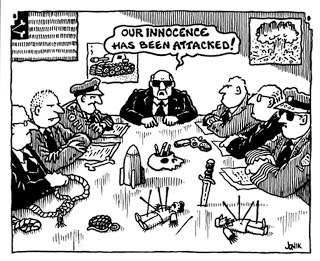 RT’s reporting on US issues was part of a “multifaceted Russian campaign” to undermine America, according to the outgoing Director of National Intelligence James Clapper.
“RT was very active in promoting a particular point of view, disparaging our system, our alleged hypocrisy about human rights, etc. Whatever crack, fissure they could find in our tapestry, they would exploit it,” Clapper told the Senate Armed Services Committee on Thursday, at a hearing about cybersecurity challenges.
In addition to hacking, Russia used fake news, social media and RT to influence the recent US elections, Clapper argued.
Though the US intelligence community has not been able to gauge the actual impact of any of these actions, “the totality of that effort, not only as DNI but as a citizen, I think is a grave concern,” he said.
US military buildup around Russia meant to bankrupt Moscow: Petras
Press TV – January 2, 2016
The United States is attempting to bankrupt Russia’s economy by encircling it through military buildup, an American writer and political commentator says.
James Petras, a professor emeritus of sociology at Binghamton University in Binghamton, New York, and adjunct professor at Saint Mary’s University in Halifax, Nova Scotia in Canada, made the remarks in a phone interview with Press TV on Monday.
According to a report, US commandos maintain a “persistent” presence in the Baltic states to bolster the training and resolve of troops of the NATO allies anxious about “a looming threat from Russia.”
Dozens of US Special Operations forces have “quietly” been deployed to boost the tiny militaries of Latvia, Lithuania and Estonia, and help the US detect any “shadowy efforts” by Moscow to destabilize the former Soviet republics, The New York Times reported on Saturday.
“I think this is part of a global campaign against Russia,” Professor Petras said. “I think it’s an offensive campaign led by Washington which is directed to encircling and undermining Russia through military buildup that they hope would bankrupt Russia’s spending if they try to keep up with it.”
In addition, the analyst said the Obama administration is “trying to put in place a military forward shield against Russia to undermine any reconciliation between incoming President Trump and President [Vladimir] Putin.”
“So I think this has nothing to do with defense, it has everything to do with building American presence around Russia,” the commentator sated.
“The equivalent of this would be if Russia decides to build bases in Mexico, and Canada and the Caribbean, which of course Russia does not do,” he added.
“But this is clearly an offensive, not a defensive means. It has all the earmarks of an attempt to foster a belligerent relationship with Russia. And I don’t think anyone takes seriously the defensive rhetoric that accompanies it,” Professor Petras concluded.
According to US media, the Baltic nations are concerned that incoming Republican President Donald Trump’s warmer tone toward Russia might encourage Putin to want to assert control across the whole region.
Trump, who has repeatedly signaled willingness to mend ties with Putin, suggested during the election campaign that the US would only protect NATO allies that paid their fair share to the military alliance.
Portrait of an Assassin: Obama’s Revenge
By James Petras | December 30, 2016
The events leading to the assassination of the Russian Ambassador to Turkey have a long and torturous trail.
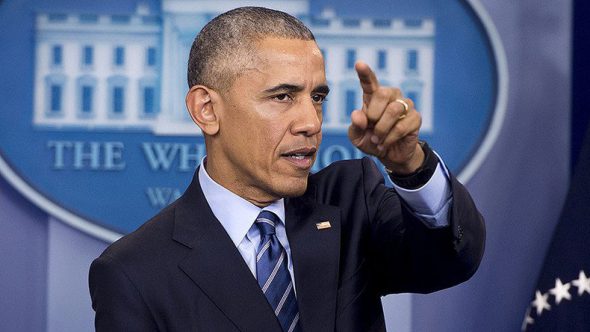
The beginning and end are found in President Obama’s attempt to militarily encircle and discredit Russia through massive propaganda and sanctions. Obama built military bases on Russia’s borders; organized a putsch in the Ukraine; launched violent attacks on Russian allies in Libya and Syria; and encircled China, Russia’s ally in Asia.
Obama proceeded to organize Turkey, the EU, Saudi Arabia, Israel and vassal regimes in the Baltic and Balkan countries to dispatch arms, Special Forces and finances to terrorist mercenaries invading Syria, in order to oust Russian bases.
Central to Obama’s anti-Russian legacy was to ensure the election of former Secretary of State Hillary Clinton. Obama worked with Clinton for five years to degrade Russia. To continue, Obama worked in tandem with the Clinton electoral machine to defeat Donald Trump because he was opposed to the anti-Russian campaign.
As the electoral campaign proceeded in Trump’s favor, Obama turned to the intelligence apparatus to intervene in the electoral process. In order to secure Clinton’s victory and heighten efforts to overthrow Russia’s elected government, Obama fabricated a massive campaign attributing the revelations of Clinton’s illegal correspondence to Russian hackers working with Trump.
Trump’s defeat of Clinton was a strategic loss to Obama’s efforts to overthrow Putin. Obama, in response, launched the most intense and virulent propaganda blitz against Russia since the early 1950’s. The mass media went 24/7 claiming Russian penetration of the US electoral system; the subversion of US democracy; and ‘decisive’ collaboration between Putin and Trump in determining the election.
Academics, journalists, the CIA and the rest of the intelligence agencies were recruited, primed and launched in the anti-Trump, anti-Russian campaign.
Obama’s campaign against Trump failed. The recount and Electoral College ploys were defeated. The courts, electoral officials and voters decided against Clinton-Obama.
Obama was enraged to the point of mental instability by a series of strategic defeats in wars and elections. The invasions of Iraq and Afghanistan resulted in prolonged losing wars. The Libyan intervention led to unending wars. Israel and its US cohort insulted, humiliated and led Obama by the nose, securing billions in handouts and the appointment of top Zionist officials. Obama’s encirclement and sanctions policy against Russia failed to undermine Putin’s presidency.
Obama faced a legacy of failure, defeats and disgrace.
With Trump’s triumph and Russian-Syrian military success in Aleppo, Obama’s ‘string broke’. He blamed Russia for his failures. He totally ignored the votes that elected Trump. He brushed off the hand counted recount and Court decisions which validated Clinton’s defeat. Obama’s blackmail and coercion of the Electors failed to change the outcome of the Electoral College. The street disruptions and calls to impeach Trump failed to gain traction.
Obama denied reality , embracing a paranoid vision of a deep Russian takeover.
Obama publicly declared he would openly and covertly pursue revenge, retaliation and deadly assaults on Russia.
Obama pressed forward to prevent Trump’s election, preparing to release a CIA fabricated report of the President–elect’s betrayal of America on the eve of his inauguration.
Obama struck at Russia escalating from added sanctions to assassination.
The Russian ambassador to Turkey was assassinated by a Turkish policeman who was a member of the US backed Fethullah Gulen movement. The Gulanist assassin echoed Obama’s propaganda line, accusing Russia of destroying Aleppo and its people.
The US mass media repeated the killer/Obama’s justification of the killing.
The murder and justification happened a few days after Obama promised a ‘secret’ and swift assault on Russia.
Trump sensing Obama’s resort to violent retaliation against Russia, and the likelihood he would turn the gun to ‘Putin’s accomplice’, the President-elect decided to take precautionary measures, he replaced Obama’s secret service with his private security guards.
Conclusion
We live in extraordinarily dangerous times. A deranged violent President is in command of a willing media and an intelligence apparatus ready and willing to obey.
There is little doubt that the murder of the Russian Ambassador will be the beginning of a cycle of violent assassinations. It is certain that Putin and Trump will take the appropriate defensive measures.
With a psychotic, frustrated and failed President refusing to concede defeat, we enter the beginning and most sinister period prior to his exit.
Democrats’ year-end moves seem like revenge on Trump for winning – Russian FM spokeswoman

Russian Foreign Ministry Spokesperson Maria Zakharova © Grigoriy Sisoev / Sputnik
RT | December 31, 2016
The new punitive measures imposed on Russia by the outgoing US administration seem to be an attempt to take revenge on Republican Donald Trump for winning the presidency, Russian Foreign Ministry spokeswoman Maria Zakharova has noted.
“The outgoing administration isn’t giving up on its attempts to worsen bilateral relations, not understanding that they can’t get any worse,” Zakharova said in an interview with RIA-Novosti.
“Honestly, there is a feeling that the Democratic team is just trying to take revenge on Trump for his victory, making plainly absurd decisions a month before his inauguration,” she said.
The Foreign Ministry spokeswoman cited the Obama administration’s plans to supply MANPADS to Syrian militants, which Washington still see as a tool to remove Syria’s president, Bashar Assad, as an example of such “absurd decisions.”
Earlier in December, Congress added a provision to the 2017 National Defense Authorization Act (NDAA) that will allow the US to send shoulder-fired anti-aircraft missiles to rebel factions in Syria, where Russia is providing air support for the government forces fighting terrorist groups.
The Democratic camp’s claims that Trump was “Russia’s candidate” and received support from the Kremlin are just “elements in the information war,” Zakharova said, while stressing “they aren’t true.”
When Hillary Clinton and Donald Trump established themselves as the main contenders for the White House, “it became clear that one of the candidates was building her campaign on anti-Russian rhetoric,” she said.
“There were no pro-Russian candidates, but one Russophobic candidate,” with Clinton and the Democrats making the “demonization of Russia” one of main focal points of their foreign policy, the spokeswoman explained.
“Of course, it would be impossible [for Moscow] to rejoice over the victory of a person who proclaimed the downfall of Russia as her main foreign policy goal. But even in this scenario, Clinton’s win would have been perceived as a choice of the American people,” Zakharova said.
The Foreign Ministry representative expressed the belief that “all preconditions are in place” for relations between Russia and the US to be restored.
Russia is ready to work with “any team” in the White House, as Moscow understands the necessity of resolving the deadlock that occurred under the Obama administration, she said.
“We are waiting for the new administration to arrive at the White House, and then we will be ready to work with them,” Zakharova stressed.
Trump’s inauguration as America’s 45th president is scheduled for January 20, 2017.
On Thursday, the Obama administration levied a new round of sanctions on Moscow, saying they were being imposed because of what it called “the Russian government’s aggressive harassment of US officials and cyber operations aimed at the US election.”
As a result, 35 Russian diplomats were expelled from the US, and nine Russian entities, including the GRU (Russian Military Intelligence) and the FSB (Federal Security Service), were added to Washington’s blacklist. In addition, two Russian diplomatic leisure compounds in New York and Maryland were closed.
Russian President Vladimir Putin said that Moscow will not respond in kind to the new US restrictions and will instead “make further moves to restore Russian-American relations based on the policies that the administration of President-elect Donald Trump adopts.”
Following the announcement of the latest measures, Zakharova said she hoped that the new sanctions would be “the last weird and unwise decision” of the outgoing American administration aimed at spoiling Russian-American relations.
Read more:
Zakharova: ‘Obama team are foreign policy losers, humiliate Americans with anti-Russia sanctions’
Historic Moment for Iran and Russia

By Eric Walberg | American Herald Tribune | December 31, 2016
On January 1, 1988, just a year and a half before he passed away on June 3, 1989, Ayatollah Khomeini made a historic move, reaching out the Soviet President Mikhail Gorbachev, in a gesture of anti-imperialist solidarity, despite the long hiatus in relations with communist Russia. This was at a time of war against Iraq and continued subversion of Iran by the US and Israel.
Ayatollah Khomeini made other prescient gestures in his short and difficult decade as the leader of the Islamic revolution in Iran; in the first place, the transfer of the Israeli embassy to Palestinian representatives, the canceling of recognition of Israel, and the inauguration of al-Quds Day as an annual international holiday on the last Friday of Ramadan. He met with Fidel Castro and other third world leaders, encouraging solidarity against the imperialist foe.
The unprecedented visit of the Iranian delegation to Moscow was a sincere offer of support to the faltering Soviet leader, who had rejected the atheism of the Soviet past. It contrasts with the treatment of the supposedly friendly US to Russia, which was at the same time conspiring to subvert the Soviet Union, even as Gorbachev was sincerely reaching out to the hawkish Reagan, offering a generous plan of world nuclear disarmament. The Ayatollah’s warning not to trust the West was being brought home to Gorbachev graphically as the last Soviet troops were retreating into Uzbekistan in 1988. Despite the unilateral withdrawal of Soviet forces from Afghanistan, the US was continuing to arm the insurgents, killing those doomed soldiers as they crossed the Afghanistan-Uzbekistan Friendship Bridge, built in 1982. Imperialism takes no prisoners.
Iran played no part in the US-backed ‘jihad’ in Afghanistan in the 1980s that brought the collapse of the Soviet Union. Iranian leaders knew that nothing good would come from working in alliance with America.
The Ayatollah knew this well, and was alarmed at the naiveté of Gorbachev. The Ayatollah warned in his letter that the western world was an “illusory heaven”, that appeared seductive. But the truth lies elsewhere. “If you hope, at this juncture, to cut the economic Gordian knots of socialism and communism by appealing to the center of western capitalism, you will, far from remedying any ill of your society, commit a mistake which those to come will have to erase. For, if Marxism has come to a deadlock in its social and economic policies, capitalism has also bogged down, in this as well as in other respects though in a different form.”
Gorbachev was offended and objected. “This invitation is an interference in the internal issue of a country. Because every country is free for selecting its school of thought.” He took the Ayatollah’s sincere advice as interference, rather than friendly concern. “Imam Khomeini invited us to Islam; do we have to invite him to our school of thought?”
History has proved the fears that the Ayatollah expressed justified. Gorbachev was standing on the edge of the abyss. Sadly, he scoffed at the ability of the Ayatollah to see the danger and to want to help him. But it was too late by then. Gorbachev had lost control, thinking he was handing power to the people, not recognizing that such a wish was an illusion. The disaster of the collapse of the Soviet Union will reverberate for generations to come, as the Ayatollah predicted.
Gorbachev was operating on a different wavelength when he received the letter from the Ayatollah, trying to cozy up to Israel and the US, again, naively thinking goodwill gestures would be reciprocated. He opened the doors to the emigration of Soviet Jews in 1988 and prepared to renew full diplomatic relations with Israel. At the same time Gorbachev promised Arafat during a state visit that year that the Soviet Union would recognize an independent Palestinian state if proclaimed, naively hoping that Israel would show gratitude for his generosity by negotiating a genuine peace with the Palestinians. Arafat declared independence in November 1988 and got Soviet recognition the next year, but it was not much consolation. Israel was busy setting up consular offices in Moscow and elsewhere, issuing eventually a million visas to Soviet Jews to come to Israel.
Hundreds of thousands of Russian Jews got instant Israeli citizenship and emigrated, many of them settling illegally in the Occupied Territories, nominally part of a Soviet-recognized Palestinian state. By the end of 1991 when full diplomatic relations with Israel were restored, over 325,000 Soviet Jews had emigrated. Gorbachev’s hope to bring a quick peace to the Middle East were dashed as he was ousted from power, leaving the PLO abandoned and Israel stronger than ever. Just as the Zionists had hoodwinked Stalin into recognizing Israel, they once again hoodwinked a Soviet leader into re-recognizing it. Instead of increasing Soviet/Russian influence by this dual recognition, all influence was lost, the Palestinians were hurt by the Soviet betrayal, while the Israelis welcomed a million new Jewish immigrants.
Gorbachev’s trust was betrayed by both the US and Israel; the Soviet Union collapsed as Soviet Jews fled to the illusory western heaven. The world logically expected a new era free of the threat of war, a peace dividend that would improve the lot of people everywhere, ensuring that the material imperative behind war was eliminated. But the triumph of empire has never led to an end to empire, and strengthening empire has never led to improving the lot of the periphery.
This was clear in the centuries of imperialism, where the periphery was impoverished at the expense of the center. There was no reason to believe a new Great Game of empire could be any different, even Bush I’s postmodern variant, with the US firmly in control. Indeed, the impoverishment of all who are not part of the center/periphery elite has only accelerated.
Today, the US continues to work with the Saudis to destabilize the Iran-Iraq ‘Shia arc’ replaying the endgame against the Soviet Union in Afghanistan, this time with clandestine operations being carried out by the US, Saudis and Israelis—all jealous of Iran’s increasing influence in the Middle East.
US support for Islamists continues to haunt the region, notably Syria and Iraq, even as US power ebbs. Following the uprisings in the Arab world in early 2011, Russian President Dmitri Medvedev suggested that the revolts in the Arab world were sparked by outside forces scheming to undermine Russia. “I won’t call any names but a whole range of countries, even those we have friendly relations with, have nevertheless been involved in terrorism in the [Russian] Caucasus.”
In the ideological vacuum created by the collapse of communism, two Russian ideologies have arisen—Atlantism and Eurasianism, both with roots in the nineteenth century, the latter, a geopolitical reaction to the decadence of the West, articulated persuasively by Nikolai Trubetskoi and Lev Gumilev in the mid-1920s and today by Alexander Dugin. Russia and Iran are already playing key roles in establishing this new reality, building on the first step taken by Ayatollah Khomeini in 1988. The world’s problems will only be solved based on a new geopolitical reality with Russia and Iran at its heart, the kernel of truth in the Ayatollah’s historic gesture in 1988.
Buoyant Putin and Sinking Western Mis-Leaders
By Finian CUNNINGHAM | Strategic Culture Foundation | 30.12.2016
Future historians may well record 2016 a vintage year for Russian President Vladimir Putin. At any rate, at this point we can say it has been a good year for the Russian leader and his country’s international standing. Even Western media, which did its best to discredit, even demonize, Putin have had to admit so, albeit begrudgingly.
This week, the London Financial Times described the Russian leader as «Buoyant Putin». While last week, the Washington Post headlined: «Moscow has the world’s attention. For Putin, that’s a win».
The Washington Post surveyed some of the key developments over the past year as being in Putin’s favor, including a shaky European Union and the British Brexit vote to quit the bloc, an unwieldy NATO military alliance unsure of its purpose, the election of Donald Trump to the US presidency, and the retaking of the strategic Syrian city of Aleppo.
The victory by the Syrian army in Aleppo, crucially aided by Russian military power, was surely a crowning achievement for Putin. When Putin ordered intervention in Syria at the end of 2015, it was predicted by US President Barack Obama that the move would result in a quagmire for Russia. A year later, Putin’s decisive intervention has been vindicated as rolling back a jihadist campaign to destroy Syria.
Syrians celebrating the defeat of extremists in Aleppo have not only confounded earlier predictions; the «liberation», as it is being feted by Syrians, serves to expose Western governments and their media as having grossly distorted the war as some kind of popular uprising against a «tyrannical regime», rather than being what it is: a foreign-backed criminal conspiracy for regime change deploying jihadi terror proxies.
So the Russian-backed military campaign in Syria is a clear winning event for Vladimir Putin.
However, on the range of other world events outlined above, while they may be said to be in Putin’s favor, it is more a case of denial by Western leaders about their own failures, instead of attributing these setbacks to the alleged machinations of the Russian leader.
Putin may indeed be «buoyant». But it is also true that the mixed political fortunes are due to the sinking of Western mis-leaders through their own incompetence and baleful policies.
The Washington Post article cited above had this to say: «The Russian leader is winning because the post-Cold War order he has railed against has been thrown into chaos, and the Kremlin’s fingerprints are widely seen to be all over it».
Just who is «widely seeing» the Kremlin’s alleged depredations is not specified by the Washington Post. But a safe assumption is that the newspaper is being led by US intelligence and the CIA in particular, whose multi-million-dollar links to the outlet’s owner Jeff Bezoz have been documented elsewhere by Wayne Madsen.
It is true that Putin has often deplored the post-Cold War order of American unipolar ambitions, its disregard for international law and its conceited «exceptionalism» for unleashing military violence to enforce foreign interests. Putin has said that such policy is the fount of chaos in international relations. If anything, he has been proven right when we survey the conflict-ridden mess of the Middle East from US wars, supposed «nation-building» and regime-change operations. But to then attribute this chaos of the post-Cold War as having the «Kremlin’s fingerprints all over it» is an absurdity.
The same goes for other aspects of post-Cold War «chaos». The election of Donald Trump to the White House is alleged by the Washington Post, New York Times, NBC and other US media giants as being the result of Putin overseeing Russian computer hackers interfering in American democracy. Russia has rejected those claims as «ridiculous» – as has Trump.
Rather than dealing with political and social reality of internal decay, the American establishment has tried to divert the cause to alleged Russian malfeasance. The reality is, however, that popular American sentiment is one of disgust with the Washington establishment and its mis-leaders in both main parties, Democrats and Republicans. That disgust embroils the mainstream media which is seen to be an integral part of a corrupt, venal establishment.
To try to lay the «blame» for Trump’s election on Russian cyber-attacks is an insult to a large section of the American citizenry. It is also a sign of chronic denial by the Washington establishment that decades of economic and foreign policy are in shambles – a shambles of its own making.
The same too for the Brexit referendum held in June which saw the stunning result of Britons wanting to quit the European Union. On the back of CIA-inspired claims about Russian interference, British politicians who are miffed over the Brexit result have parlayed similar claims that the Kremlin’s meddling was behind that outcome. Russia has also hit back to rubbish the British claims.
But rather than getting a grip on reality, the official Western paranoia about alleged Russian subversiveness is becoming even more fevered.
With hotly contested national elections coming up next year across Europe, incumbent governments are decrying what they «discern» as Russian interference to push populist, anti-EU, anti-immigrant parties. Voice of America reported this week: «Europe braces for Russian cyber assault before 2017 elections» in Netherlands, France and Germany.
VOA added: «As the chief European architect of sanctions against Russia, analysts say German Chancellor Angela Merkel is the European leader Moscow would most like to see voted out of power».
As with the Brexit and Trump, it is an elitist insult to citizens’ intelligence and their democratic rights, by imposing what is a scare-campaign to discredit widespread popular discontent with establishment governments and the status quo.
People across the West, the US and Europe, are simply infuriated by elitist governments that pursue failed policies of economic austerity and a pro-Atlanticist Cold War geopolitical agenda of hostility towards Russia, inflating a NATO monstrosity based on Russophobia, and slavishly following American imperialism around the world.
Syria may have proven to be a triumph for Putin and his principled stand to defend Syrian sovereignty from a US-led covert war for regime change. But Syria also represents an unmitigated disaster for Washington and its Atlanticist European acolytes.
The massive influx of refugees from Syria and other Middle East war zones is the direct result of the US and its NATO allies waging illegal wars and sponsoring terrorist proxies – the latter in the mendacious notion of being «moderate rebels».
The terror attacks that have shocked France and Germany over the past year – the latest one in Berlin when 12 people at a Christmas market were killed by an alleged jihadist asylum-seeker plowing a 25-ton lorry into them – are the corollary of Hollande and Merkel being complicit in US imperialist wars across the Middle East.
Merkel’s «open door» policy to a million refugees is a failed policy. That judgment is not based on racism or xenophobia. Merkel’s failure is due to her allowing Germany to become an escape valve for US, British and French criminal machinations of regime change in the Middle East.
So it has been a good year for Putin and Russia’s international standing generally – the recent appalling assassination of ambassador Andrey Karlov in Ankara notwithstanding.
It’s also been an atrocious year for Western politicians of the Atlanticist mold. But their downfall is due to their own corruption and incompetence. To seek to scapegoat Vladimir Putin and Russia as «interfering» or «sowing chaos» is a contemptible denial of Western official culpability.
Such is the collapse in official Western politics and institutions, including the establishment media, that the more they spin the anti-Russian narrative, the more popular revolt will grow against their «mis-leaders».
If 2016 becomes a vintage year for Russia, for the West it is proving to be year when the official political vessels cracked open with bitter contents.
Putin: Russia will not expel anyone in response to US sanctions
RT | December 30, 2016
The Russian president has rejected a suggestion of the foreign ministry to expel 35 American diplomats in response to a similar move by the US. He said Obama’s act was designed to provoke a reaction, but Russia would not take the bait.
“We reserve the right to retaliate, but we will not sink to the level of this irresponsible ‘kitchen’ diplomacy. We will take further moves on restoring Russian-American relations based on the policies that the administration of President-elect Donald Trump adopts,” Russian President Vladimir Putin said in a statement published by the Kremlin website.
Putin said that, unlike the Obama administration, Russia will not target foreign diplomats and their families days before New Year’s celebrations.
“We will not forbid families and children from spending the New Year’s holidays at the places they are used to. Moreover, I invite the children of all American diplomats with accreditation in Russia to New Year’s and Christmas festivities in the Kremlin,” the Russian president said.
Putin said he regretted that US President Barack Obama is ending his term “in such a way,” but that he extended his New Year’s congratulations to the outgoing US president and his family nevertheless.
“I congratulate President-elect Donald Trump and the entire American people!” he concluded.
The Kremlin said it will send a government plane to the US to evacuate the expelled diplomats and their family members. Earlier, there were reports that the diplomats were having problems buying tickets on such short notice, with airlines already booked by New Year’s travelers.
Earlier, Russian Foreign Minister Sergey Lavrov suggested that Russia respond to the expulsion of 35 Russian diplomats from the US by expelling 35 American diplomats from Russia. Similarly, the eviction of a Russian diplomatic staff from two vacation houses in the US would be mirrored by a similar eviction of Americans in Russia.
President Obama targeted Russian diplomats as a part of wider sanctions against Russian, which he justified by the alleged interference by the Russian government in the November presidential election in the US. Moscow denies the allegations.
The US claimed that the vacation houses had been used for espionage. Russia insists that they were used by the diplomatic staff to spend holidays with their families.
Read more:
Russian FM proposes expulsion of 35 US diplomats in sanctions tit-for-tat
Featured Video
Can the U.S. Afford to Annihilate Iran?
or go to
Aletho News Archives – Video-Images
From the Archives
Sanctions, War and the Policy of Dual Containment
By SASAN FAYAZMANESH | March 17, 2008
It is now nearly three decades since the Unites States adopted the policy of dual containment of Iran and Iraq. While much has been written about the containment of Iraq, there has been very little in-depth analysis of this policy when it comes to Iran. In a book that is going to be released on March 31, 2008, entitled The United States and Iran: Sanctions, Wars and the Policy of Dual Containment (Routledge), I attempt to address this shortcoming by investigating when and why the US policy of containment of Iran came about, how it evolved, and where it stands today.[1] To the extent that Israel has been involved in US policy making, the study will also include the role that Israel has played in the containment of Iran. Also, since the fate of Iran has been inextricably linked to that of Iraq, occasionally the investigation will overlap with the containment of Iraq.
The policy of dual containment of Iran and Iraq originated during the Carter Administration, but it was not until the Clinton Administration that the expression “dual containment” became popular. … continue
Blog Roll
 Aletho News
- Can the U.S. Afford to Annihilate Iran? /Seyed M. Marandi
- Elmo Sold mRNA Jabs to Your Toddler. Now They Are “Off-Label.”
- British state targets Palestine Action with yet another crooked trial
- Americans are paying the price to preserve Israel’s nuclear hegemony
- Resistance factions are necessary to ensure a permanent US Iraq withdrawal
- How Israel destabilizes the Middle East: Denying sovereignty and the right to exist
- Europe’s Establishment Is Embracing War – and Losing Voters
- NATO chief advocates war of aggression
- No Vote, No Representation, No State: Democracy, Israeli Style
- Zionist Bought Senate Blocks Information About American Citizens Killed By Israel
- If Americans Knew
- Israeli Soldiers Abduct At Least 22 Across Occupied West Bank
- Eight Palestinians Killed in Israeli Attacks on Gaza
- Israeli former leaders and security chiefs threaten legal action over ‘Jewish terrorism’
- Israel map in LA Times ad includes all land from the river to the sea
- Inside Lebanon’s 200-page dossier on Israeli war crimes
- Flydubai, genocide, settler violence, Trump abuse of power to deport – Daily Update
- Counting Antisemitic Incidents: What the ADL Audit Reveals — and Obscures
- Mamdani releases plan to combat antisemitism and hate crimes in New York City
- Iran’s Revolutionary Guards Publish Letter to the American People
- DMFI launches $1 million ad campaign supporting Virginia’s Elaine Luria
- No Tricks Zone
- Green Energy Debacle: German Expert Professor Fritz Vahrenholt Warns Of Severe Economic And Social Consequences
- Two More Paleo Reconstructions Affirm Meters-Higher Sea Levels Across Ireland, Brazil 7000-6000 Years Ago
- New Study: Earth And Venus Surface Warmth Largely Explained By Convection And Lapse Rate, Not CO2 Or Radiation
- 2025 Nature Paper Claiming Worsening Global Drought Gets RETRACTED …Heavily Flawed
- New Study: ‘Global Drought Shows No Detectable Recent Acceleration Under Climate Warming’
- Economic Masterminds: German Socialists Suggest Taxing Productivity Gains Stemming From Using AI
- The South China Sea Has Not Been Cooperating With The Climate Change Narrative
- Energy Crisis: Germany Enters Heating Season With Historically Low Gas Reserve Fill Levels
- New Study: The Antarctic Ice Sheet Gained Mass From 2020-2024 Due To Staggering Snow And Ice Accumulation
- Study: Ocean Heating Rates From Thousands Of Years Ago ‘Dwarf’ Modern Ocean Heating Rates


