How the US Manipulates Humanitarianism for Imperialism #Aleppo
By Steven Chovanec | Reports From The Underground | October 6, 2016
The United States is manipulating humanitarian concern in an effort to protect its proxy militias and its imperial regime-change project in Syria. The media and intellectual classes are dutifully falling in line, promoting a narrative of military aggression under the cover of “protecting civilians.” These same “responsibility to protect” arguments led to the invasions of Iraq and Libya, exponentially increasing the massacres, chaos, and proliferation of violent extremism within those countries. They are hypocritical, designed to further interests of conquest and domination, and will lead to more death and destruction in Syria as well.
The United States has no stake in the wellbeing of Syrian civilians, despite their condemnations of Russia’s offensive in Aleppo. This is clearly shown in the fact that the people they are supporting are guilty of the same crimes they accuse Russia and Syria of: indiscriminate attacks, targeting of civilians, destruction of schools, hospitals, etc. Furthermore, the offensive in Aleppo is really no different from what the US did in Manbij, where they are said to have incorporated a “scorched earth policy” while they liberated the city from ISIS, whereby the civilian population was treated “as if they were terrorists or ISIS supporters.” Arguably their conduct was even worse, as they there earned the distinction of launching the deadliest single airstrike on civilians out of the entire 5-year conflict, massacring at least 73 where no ISIS fighters were present. The Manbij operation elicited no moral outcry from the media and punditry, understandably since these were “unworthy victims” given that they were our victims and not those of our enemies. The same can be said about the US operations in Kobani and Fallujah, whereby the entire towns were essentially reduced to rubble without any uproar.
Saudi Arabia as well has no concern for Syrian civilians, as they have been ruthlessly besieging and bombing Yemen, with the support and help of the United States, for two years without any concern for civilian lives. Their assault has led to a humanitarian situation even more dire than in Syria, leaving at least 19 million in need of humanitarian assistance; in Syria it is estimated that a total of 18 million are in need of aid.
Turkey as well is not concerned, as is evidenced by their conduct towards their Kurdish population, yet the recent quiet by Erdogan over the fate of Aleppo is indicative of an understanding reached between him with President Putin, whereby Turkey establishes a presence in northern Syria and blocks the advance of the Kurds, and in return limits its support to the rebels and the insurgents in Aleppo.
The real reason the US is decrying the Russian operation is the fact that they are staring aghast at the near-term possibility that their proxy insurgency in Aleppo will be defeated. Not only will this mark the decisive turning point in the war, the rebels all-but being fully overcome with the Syrian government in control of all the populated city centers except Idlib, but others have argued that it could as well mark the end of US hegemony over the entire Middle Eastern region in general. In other words, the US is trying to turn global public opinion against the Russian effort in an attempt to halt the advance and protect their rebel proxies trapped in Aleppo.
So, who are these rebels?
In short, they are an array of US-supported groups in alliance with and dominated by al-Qaeda. During the past ceasefire agreement these rebels refused to break ties with al-Qaeda and instead reasserted their commitment to their alliances with the group. The UN’s special envoy for Syria recently explained that over half of the fighters in eastern Aleppo are al-Nusra (al-Qaeda’s Syria affiliate), while according to the US Department of Defense, it is “primarily Nusra who holds Aleppo.”
Expert analysis concurs, as Fabrice Balanche of the Washington Institute details how these rebel alliances indicate “that the al-Nusra Front dominates more different rebel factions, including those considered ‘moderate.’” He explains that al-Qaeda’s “grip on East Aleppo has only increased since the spring of 2016.”
It is these fighters, al-Qaeda and their affiliates, that the US is trying to protect from the Russians, and as well other US intelligence operatives that are likely embedded with them. The narrative that Russia is committing a humanitarian catastrophe is intended to hide this fact, as well as to shift the blame for the suffering in Aleppo off of the US’ shoulders. Yet it was the US support to the rebels that is primarily responsible for the suffering.
To illustrate this, the people of eastern Aleppo never supported the rebels nor welcomed them. The rebels nonetheless “brought the revolution to them” and conquered the people against their will all the same. Of the few reporters who actually went to the city, they describe how Aleppo has been overrun by violent militants through a wave of repression, and that the people only “saw glimmers of hope” as the Syrian army was driving them from the area. The people decried this “malicious revolution” and characterized the rebel’s rule as a “scourge of terrorism.” This, of course, was of no concern to the US at the time, who now proclaims to be the “protectors” of the civilians in Aleppo.
Around 200-600,000 of the original population fled and relocated in the government-held western part of the city. Of the civilians who remain, they are primarily the families of the fighters, who themselves are paid to stay and fight. The official numbers for those remaining are 200,000, yet the actual number is likely much lower, around 40-50,000.
Nonetheless, the remaining civilians who were trapped within this warzone were prevented from leaving.
During the first ceasefire, humanitarian corridors were opened and the civilians were encouraged by the Syrian army to leave, yet the rebels stopped them, with reports saying they went as far as to shoot at those who tried. The attempt to evacuate the civilians was condemned by the US, who argued that the innocent people “should be able to stay in their homes.” The radical groups were using the civilian population as human shields in order to protect themselves, and the US was supporting it. Further corroborating this is the special UN envoy Steffan de Mistura, who quotes reports indicating that the rebels have been utilizing “intentional placement of firing positions close to social infrastructure, aside and inside civilian quarters.” This is because it has always been the policy of the Syrian government to separate civilians from insurgents, as it is simply much more militarily effective to fight against an enemy that is not ensconced within a civilian population. Likewise, it has always been US and rebel policy to prevent this separation.
According to a knowledgeable individual with contacts with high level Syrian officials, the US and EU always rejected the Syrian governments proposals to separate civilians from the fighters, as they explained, “because doing so will be helping you win.” This makes sense, given that if all of the civilians from eastern Aleppo were evacuated there would then be nothing stopping the Syrian army from crushing the remaining fighters, and there as well would be no international outcry over them doing so. The source explains: “Syria’s war is an urban war theater. [The] only way for insurgents to compete is to use residential areas to hide and operate out of. This is in direct contrast to [the] Syrian army who would like to fight a theater totally void of civilians.”
Those claiming to be protecting Aleppo’s civilians from the Russian and Syrian onslaught are in actuality using them as a means to protect their success on the battlefield.
Given this, the strategy of the Syrian government has been to bomb sporadically in order to scare the civilians and force them to flee from areas controlled by the militants. This is also why the Syrian army just recently halted their advance in order to allow civilians to evacuate; they wanted the civilians out of the picture so they could militarily defeat the rebels more quickly and easily.
If one actually were concerned about saving the civilians in eastern Aleppo it is pretty straight forward that one would try to evacuate the civilians from the area, and that the backers of the rebel groups would put pressure on them to allow this to happen. From there it would follow that all sides abide by the UN Security Council resolutions of which they agreed to, which call for the suppression of financing, fighters, and support to al-Qaeda, for the suppression of al-Qaeda “and all other entities associated” with them, and “to eradicate the safe haven they have established over significant parts of Syria,” of which Aleppo is one of the largest.
Unfortunately, it is only Syria and Russia who are following through on these commitments, while the US and its allies are consciously blocking them. The media and intellectual opinion are as well falling in line, obscuring from the narrative all of these inconvenient truths that do not support the interests of the policy planners in Washington. In this way, the media are shown to be completely subservient to state power, drumming up support for another aggressive war based on falsities and half-truths in the exact same way that led to the continuing catastrophes in Libya and Iraq. When the US was driving ISIS from Manbij, just as Syria is now driving al-Qaeda from Aleppo, killing hundreds of civilians at a time, there was not so much as a debate about it, much less an international outcry.
Yet now there are countless calling to “save” Syrians by bombing them and flooding the warzone with more weapons and fighters, ironically using “humanitarian” concern to call for policies that will lead to even more death and misery. The rebels are dominated by jihadi extremists, and any further support to them will further strengthen the radicals engaged in a project of ethnic cleansing, conquest, and reactionary theocratic governance. Bombing would only help to further descend Syria into chaos and death, just as it did in Iraq and Libya.
This is an international proxy war and humanitarian concerns are being manipulated unscrupulously in support of interests having nothing to do with concern for innocent lives. Don’t fall for this faux humanitarianism from which more war, imperialism, and thus more death and destruction will result.
Clinton Claims Russian Aggression Keeps War in Syria Going On
Sputnik — 10.10.2016
 Russian ambitions and aggressiveness keep the conflict in Syria going on, US Democratic presidential nominee Hillary Clinton said on Sunday, accusing Russia of sufferings of the Syrian people.
“I want to emphasize that what is at stake here is the ambitions and aggressiveness of Russia.
Russia has decided that it is all-in in Syria and they have also decided who they want to see become president of the United States too when it is not me,” Clinton said.
She put the blame for sufferings of the Syrian people on Russia, accusing it of destructive bombing of Aleppo.
“There is a determined effort by the Russian air force to destroy Aleppo in order to eliminate the last of the Syrian rebels who are really holding out against the Assad regime. Russia has not paid any attention to ISIS, they are interested in keeping Assad in power,” she added.
“But I do support the effort to investigate… war crimes committed by the Syrians and the Russians and try to hold them accountable,” Clinton said.
Russia cries foul after fresh arrests of its citizens in US
RT | October 10, 2016
Moscow expects explanations from Washington concerning the reasons behind the recent detention of two Russian citizens and will undertake own steps to clarify details of this case, the Foreign Ministry’s human rights advocate says.
“At this moment we know nothing about any charges and we presume that the US authorities must officially explain the grounds behind the detention of our citizens. Our embassy and consulate in San Francisco continue their work in this direction,” Konstantin Dolgov said in comments to Izvestia daily.
“The Consular convention gives three days for all this. If all these facts are confirmed we would render consular and legal support to our citizen and would press for the US authorities to observe their rights, including the procedure rights,” he added, emphasizing that the US actions were bypassing the 1999 bilateral agreement on aid.
The comment came after US mass media reported last week that American law enforcement officers had detained two Russian nationals – Dmitry Karpenko and Aleksey Krutilin – over a suspected attempt to buy and unlawfully export sensitive electronics from the United States without a mandatory federal license.
Naturalized US citizen Aleksey Barysheff was also detained as a suspect in the case. According to AP the suspects face up to 25 years in prison and up to $1 million in fines.
“It’s been a long time since we lost any trust in the unbiasedness and objectivity of US justice. Unfortunately we have a great number of examples in which arrests of Russian citizens had been made without any grounds and with violations of the law, including abduction on the territory of third countries,” Dolgov told the newspaper.
“The court processes in these cases were politicized from the beginning to the end. [Konstantin] Yaroshenko’s and [Viktor] Bout’s cases are vivid examples of such approach.”
The deputy head of the State Duma Committee for International Relations, Aleksey Chepa, confirmed that the US side had not contacted Russian authorities over the detention of Karpenko and Krutilin and also promised to demand explanations over this fact. The MP said in comments that it was obvious to him that the Americans were attempting to heat up the already-tense international situation and suggested that the forthcoming US presidential elections could be the reason.
The Russian Justice Ministry said it could not interfere into the case before the US authorities press official charges, but noted that it was following developments.
Russia has repeatedly expressed concern about methods illegal used by US authorities to prosecute Russian citizens, in particular over the trials of transport company owner Viktor Bout and pilot Konstantin Yaroshenko, who were sentenced to 25 and 20 years in prison respectively.
Both Russians were convicted as a result of sting operations and the main argument for the prosecution was the testimony of undercover agents, not material evidence. Both men pleaded not guilty in court and continue to protest their innocence to this day.
The Russian Foreign Ministry even issued official warnings to all citizens who travel abroad, saying they might be detained and extradited to the US for a biased trial on inflated charges.
“Without any reason the US administration is refusing to recognize the reunification between Russia and Crimea that fully meets the international legal standards and the UN charter. It tries to make a routine practice out of hunting for Russian citizens in third countries with subsequent extradition and conviction in the USA, usually over dubious charges,” reads one such document, released in 2014.
No UNSC consensus on Syria
The BRICS Post | October 9, 2016
Russian Permanent Representative to the UN Vitaly Churkin said on Sunday that Moscow hopes to continue working with the International Syria Support Group (ISSG) to end the conflict in Syria.
“I want to assure you that very difficult work continues both in multilateral and bilateral formats, and we still hope that the situation in Syria will be normalized, and that it will have a very favorable effect on the state of affairs in east Aleppo. We hope that this will happen as soon as possible,” Churkin said in a response to fears voiced that the ISSG may be collapsing.
Churkin’s statement came just hours after Russia vetoed down a French-proposed UN resolution on Syria, saying that it would empower Islamist rebels such as Al-Qaeda groups in Aleppo and give them freedom of movement.
The French draft had called for a complete end to aerial bombardment and oveflights of Russian and Syrian war craft over Aleppo.
China abstained on voting on this resolution.
The Russian Foreign Ministry strongly criticized the wording of the French draft.
“The text (of the resolution) indulged by Washington and submitted (to the UN Security Council) immediately after the United States had refused to implement the Russian-US agreements on the Syria settlement, has grossly distorted the actual state of affairs and was of a politicized, unbalanced and one-sided nature,” it said in a statement.
A Russian counter resolution, which the Kremlin says was an attempt to compromise and avoid splitting the 15-member body, was also rejected in the Security Council.
The UK ambassador to the UN criticized Russia’s veto. Matthew Rycroft said that it appeared Russia preferred to allow the misery of Aleppo civilians to continue.
Key Neocon Calls on US to Oust Putin
By Robert Parry | Consortium News | October 7, 2016
The neoconservative president of the U.S.-taxpayer-funded National Endowment for Democracy [NED] has called for the U.S. government to “summon the will” to engineer the overthrow of Russian President Vladimir Putin, saying that the 10-year-old murder case of a Russian journalist should be the inspiration.
Carl Gershman, who has headed NED since its founding in 1983, doesn’t cite any evidence that Putin was responsible for the death of Anna Politkovskaya but uses a full column in The Washington Post on Friday to create that impression, calling her death “a window to Vladimir Putin, the Kremlin autocrat whom Americans are looking at for the first time.”
Gershman wraps up his article by writing: “Politkovskaya saw the danger [of Putin], but she and other liberals in Russia were not strong enough to stop it. The United States has the power to contain and defeat this danger. The issue is whether we can summon the will to do so. Remembering Politkovskaya can help us rise to this challenge.”
That Gershman would so directly call for the ouster of Russia’s clearly popular president represents further proof that NED is a neocon-driven vehicle that seeks to create the political circumstances for “regime change” even when that means removing leaders who are elected by a country’s citizenry.
And there is a reason for NED to see its job in that way. In 1983, NED essentially took over the CIA’s role of influencing electoral outcomes and destabilizing governments that got in the way of U.S. interests, except that NED carried out those functions in a quasi-overt fashion while the CIA did them covertly.
NED also serves as a sort of slush fund for neocons and other favored U.S. foreign policy operatives because a substantial portion of NED’s money circulates through U.S.-based non-governmental organizations or NGOs.
That makes Gershman an influential neocon paymaster whose organization dispenses some $100 million a year in U.S. taxpayers’ money to activists, journalists and NGOs both in Washington and around the world. The money helps them undermine governments in Washington’s disfavor – or as Gershman would prefer to say, “build democratic institutions,” even when that requires overthrowing democratically elected leaders.
NED was a lead actor in the Feb. 22, 2014 coup ousting Ukraine’s elected President Viktor Yanukovych in a U.S.-backed putsch that touched off the civil war inside Ukraine between Ukrainian nationalists from the west and ethnic Russians from the east. The Ukraine crisis has become a flashpoint for the dangerous New Cold War between the U.S. and Russia.
Before the anti-Yanukovych coup, NED was funding scores of projects inside Ukraine, which Gershman had identified as “the biggest prize” in a Sept. 26, 2013 column also published in The Washington Post.
In that column, Gershman wrote that after the West claimed Ukraine, “Russians, too, face a choice, and Putin may find himself on the losing end not just in the near abroad but within Russia itself.” In other words, Gershman already saw Ukraine as an important step toward an even bigger prize, a “regime change” in Moscow.
Less than five months after Gershman’s column, pro-Western political activists and neo-Nazi street fighters – with strong support from U.S. neocons and the State Department – staged a coup in Kiev driving Yanukovych from office and installing a rabidly anti-Russian regime, which the West promptly dubbed “legitimate.”
In reaction to the coup and the ensuing violence against ethnic Russians, the voters of Crimea approved a referendum with 96 percent of the vote to leave Ukraine and rejoin Russia, a move that the West’s governments and media decried as a Russian “invasion” and “annexation.”
The new regime in Kiev then mounted what it called an “Anti-Terrorism Operation” or ATO against ethnic Russians in the east who had supported Yanukovych and refused to accept the anti-constitutional coup in Kiev as legitimate.
The ATO, spearheaded by neo-Nazis from the Azov battalion and other extremists, killed thousands of ethnic Russians, prompting Moscow to covertly provide some assistance to the rebels, a move denounced by the West as “aggression.”
Blaming Putin
In his latest column, Gershman not only urges the United States to muster the courage to oust Putin but he shows off the kind of clever sophistry that America’s neocons are known for. Though lacking any evidence, he intimates that Putin ordered the murder of Politkovskaya and pretty much every other “liberal” who has died in Russia.
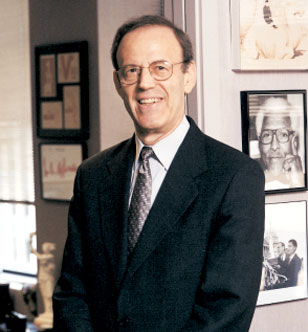
Carl Gershman, president of the NED
It is a technique that I’ve seen used in other circumstances, such as the lists of “mysterious deaths” that American right-wingers publish citing people who crossed the paths of Bill and Hillary Clinton and ended up dead. This type of smear spreads suspicion of guilt not based on proof but on the number of acquaintances and adversaries who have met untimely deaths.
In the 1990s, one conservative friend of mine pointed to the Clintons’ “mysterious deaths” list and marveled that even if only a few were the victims of a Clinton death squad that would be quite a story, to which I replied that if even one were murdered by the Clintons that would be quite a story – but that there was no proof of any such thing.
“Mysterious deaths” lists represent a type of creepy conspiracy theory that shifts the evidentiary burden onto the targets of the smears who must somehow prove their innocence, when there is no evidence of their guilt (only vague suspicions). It is contemptible when applied to American leaders and it is contemptible when applied to Russian leaders, but it is not beneath Carl Gershman.
Beyond that, Gershman’s public musing about the U.S. somehow summoning “the will” to remove Putin might — in a normal world — disqualify NED and its founding president from the privilege of dispensing U.S. taxpayers’ money to operatives in Washington and globally. It is extraordinarily provocative and dangerous, an example of classic neocon hubris.
While the neocons do love their tough talk, they are not known for thinking through their “regime change” schemes. The idea of destabilizing nuclear-armed Russia with the goal of ousting Putin, with his 82 percent approval ratings, must rank as the nuttiest and most reckless neocon scheme of all.
Gershman and his neocon pals may fantasize about making Russia’s economy scream while financing pro-Western “liberals” who would stage disruptive protests in Red Square, but he and his friends haven’t weighed the consequences even if they could succeed.
Given the devastating experience that most Russians had when NED’s beloved Russian “liberals” helped impose American “shock therapy” in the 1990s — an experiment that reduced average life expectancy by a full decade — it’s hard to believe that the Russian people would simply take another dose of that bitter medicine sitting down.
Even if the calculating Putin were somehow removed amid economic desperation, he is far more likely to be followed by a much harder-line Russian nationalist who might well see Moscow’s arsenal of nuclear weapons as the only way to protect Mother Russia’s honor. In other words, the neocons’ latest brash “regime change” scheme might be their last – and the last for all humanity.
A Neocon Slush Fund
Gershman’s arrogance also raises questions about why the American taxpayer should tolerate what amounts to a $100 million neocon slush fund which is used to create dangerous mischief around the world. Despite having “democracy” in its name, NED appears only to favor democratic outcomes when they fit with Official Washington’s desires.

CIA Director William Casey
If a disliked candidate wins an election, NED acts as if that is prima facie evidence that the system is undemocratic and must be replaced with a process that ensures the selection of candidates who will do what the U.S. government tells them to do. Put differently, NED’s name is itself a fraud.
But that shouldn’t come as a surprise since NED was created in 1983 at the urging of Ronald Reagan’s CIA Director William J. Casey, who wanted to off-load some of the CIA’s traditional work ensuring that foreign elections turned out in ways acceptable to Washington, and when they didn’t – as in Iran under Mossadegh, in Guatemala under Arbenz or in Chile under Allende – the CIA’s job was to undermine and remove the offending electoral winner.
In 1983, Casey and the CIA’s top propagandist, Walter Raymond Jr., who had been moved to Reagan’s National Security Council staff, wanted to create a funding mechanism to support outside groups, such as Freedom House and other NGOs, so they could engage in propaganda and political action that the CIA had historically organized and paid for covertly. The idea emerged for a congressionally funded entity that would serve as a conduit for this money.
In one undated letter to then-White House counselor Edwin Meese III, Casey urged creation of a “National Endowment,” but he recognized the need to hide the strings being pulled by the CIA. “Obviously we here [at CIA] should not get out front in the development of such an organization, nor should we appear to be a sponsor or advocate,” Casey wrote.
The National Endowment for Democracy took shape in late 1983 as Congress decided to also set aside pots of money — within NED — for the Republican and Democratic parties and for organized labor, creating enough bipartisan largesse that passage was assured.
But some in Congress thought it was important to wall the NED off from any association with the CIA, so a provision was included to bar the participation of any current or former CIA official, according to one congressional aide who helped write the legislation.
This aide told me that one night late in the 1983 session, as the bill was about to go to the House floor, the CIA’s congressional liaison came pounding at the door to the office of Rep. Dante Fascell, a senior Democrat on the House Foreign Affairs Committee and a chief sponsor of the bill.
The frantic CIA official conveyed a single message from CIA Director Casey: the language barring the participation of CIA personnel must be struck from the bill, the aide recalled, noting that Fascell consented to the demand, not fully recognizing its significance – that it would permit the continued behind-the-scenes involvement of Raymond and Casey.
The aide said Fascell also consented to the Reagan administration’s choice of Carl Gershman to head NED, again not recognizing how this decision would affect the future of the new entity and American foreign policy.
Gershman, who had followed the classic neoconservative path from youthful socialism to fierce anticommunism, became NED’s first (and, to this day, only) president. Though NED is technically independent of U.S. foreign policy, Gershman in the early years coordinated decisions on grants with Raymond at the NSC.
For instance, on Jan. 2, 1985, Raymond wrote to two NSC Asian experts that “Carl Gershman has called concerning a possible grant to the Chinese Alliance for Democracy (CAD). I am concerned about the political dimension to this request. We should not find ourselves in a position where we have to respond to pressure, but this request poses a real problem to Carl.
“Senator [Orrin] Hatch, as you know, is a member of the board. Secondly, NED has already given a major grant for a related Chinese program.”
Neocon Tag Teams
From the start, NED became a major benefactor for Freedom House, beginning with a $200,000 grant in 1984 to build “a network of democratic opinion-makers.” In NED’s first four years, from 1984 and 1988, it lavished $2.6 million on Freedom House, accounting for more than one-third of its total income, according to a study by the liberal Council on Hemispheric Affairs that was entitled “Freedom House: Portrait of a Pass-Through.”
Over the ensuing three decades, Freedom House has become almost an NED subsidiary, often joining NED in holding policy conferences and issuing position papers, both organizations pushing primarily a neoconservative agenda, challenging countries deemed insufficiently “free,” including Syria, Ukraine (in 2014) and Russia.
Indeed, NED and Freedom House often work as a kind of tag-team with NED financing “non-governmental organizations” inside targeted countries and Freedom House berating those governments if they crack down on U.S.-funded NGOs.
For instance, on Nov. 16, 2012, NED and Freedom House joined together to denounce legislation passed by the Russian parliament that required recipients of foreign political money to register with the government.
Or, as NED and Freedom House framed the issue: the Russian Duma sought to “restrict human rights and the activities of civil society organizations and their ability to receive support from abroad. Changes to Russia’s NGO legislation will soon require civil society organizations receiving foreign funds to choose between registering as ‘foreign agents’ or facing significant financial penalties and potential criminal charges.”
Of course, the United States has a nearly identical Foreign Agent Registration Act that likewise requires entities that receive foreign funding and seek to influence U.S. government policy to register with the Justice Department or face possible fines or imprisonment.
But the Russian law would impede NED’s efforts to destabilize the Russian government through funding of political activists, journalists and civic organizations, so it was denounced as an infringement of human rights and helped justify Freedom House’s rating of Russia as “not free.”
Another bash-Putin tag team has been The Washington Post’s editors and NED’s Gershman. On July 28, 2015, a Post editorial and a companion column by Gershman led readers to believe that Putin was paranoid and “power mad” in worrying that outside money funneled into NGOs threatened Russian sovereignty.
The Post and Gershman were especially outraged that the Russians had enacted the law requiring NGOs financed from abroad and seeking to influence Russian policies to register as “foreign agents” and that one of the first funding operations to fall prey to these tightened rules was Gershman’s NED.
The Post’s editors wrote that Putin’s “latest move … is to declare the NED an ‘undesirable’ organization under the terms of a law that Mr. Putin signed in May [2015]. The law bans groups from abroad who are deemed a ‘threat to the foundations of the constitutional system of the Russian Federation, its defense capabilities and its national security.’
“The charge against the NED is patently ridiculous. The NED’s grantees in Russia last year ran the gamut of civil society. They advocated transparency in public affairs, fought corruption and promoted human rights, freedom of information and freedom of association, among other things. All these activities make for a healthy democracy but are seen as threatening from the Kremlin’s ramparts.
“The new law on ‘undesirables’ comes in addition to one signed in 2012 that gave authorities the power to declare organizations ‘foreign agents’ if they engaged in any kind of politics and receive money from abroad. The designation, from the Stalin era, implies espionage.”
However, among the relevant points that the Post’s editors wouldn’t tell their readers was the fact that Russia’s Foreign Agent Registration Act was modeled after the American Foreign Agent Registration Act and that NED President Gershman had already publicly made clear — in his Sept. 26, 2013 column — that his goal was to oust Russia’s elected president.
In his July 28, 2015 column, Gershman further deemed Putin’s government illegitimate. “Russia’s newest anti-NGO law, under which the National Endowment for Democracy … was declared an “undesirable organization” prohibited from operating in Russia, is the latest evidence that the regime of President Vladimir Putin faces a worsening crisis of political legitimacy,” Gershman wrote, adding:
“This is the context in which Russia has passed the law prohibiting Russian democrats from getting any international assistance to promote freedom of expression, the rule of law and a democratic political system. Significantly, democrats have not backed down. They have not been deterred by the criminal penalties contained in the ‘foreign agents’ law and other repressive laws. They know that these laws contradict international law, which allows for such aid, and that the laws are meant to block a better future for Russia.”
The reference to how a “foreign agents” registration law conflicts with international law might have been a good place for Gershman to explain why what is good for the goose in the United States isn’t good for the gander in Russia. But hypocrisy is a hard thing to rationalize and would have undermined the propagandistic impact of the column.
Also undercutting the column’s impact would be an acknowledgement of where NED’s money comes from. So Gershman left that out, too. After all, how many governments would allow a hostile foreign power to sponsor politicians and civic organizations whose mission is to undermine and overthrow the existing government and put in someone who would be compliant to that foreign power?
And, if you had any doubts about what Gershman’s intent was regarding Russia, he dispelled them in his Friday column in which he calls on the United States to “summon the will” to “contain and defeat this danger,” which he makes clear is the continued rule of Vladimir Putin.
Why Deterring ‘Unprecedentedly Terrible Nuclear Attacks’ Is Now on the Pentagon’s Agenda
By Yuriy RUBTSOV | Strategic Culture Foundation | 05.10.2016
Speaking at Minot Air Force Base (North Dakota) on Monday, US Defense Secretary Ashton Carter accused Russia of «nuclear saber-rattling» and argued that even though the Cold War is long over, the US Army still needs nuclear weapons to deter Russia and other potential aggressors from thinking they could get away with a nuclear attack.
However, knowing it would be difficult to sell the image of «Russian aggressors» as suicidal, (everything will burn in a global nuclear war, including those who started it), the head of the Pentagon was quick to say that people should probably not expect a global conflict. «Today», he stated, «it’s a sobering fact that the most likely use of nuclear weapons is not the massive nuclear exchange of the classic Cold War-type, but rather the unwise resort to smaller but still unprecedentedly terrible attacks, for example, by Russia or North Korea».
The manner in which Ashton Carter frightened his audience could be considered a banal attempt to get even more money to modernise America’s nuclear weapons and their means of delivery. It seems that the $108 billion he mentioned, which will be used for this purpose over the next five years, is not enough for the Pentagon.
Carter’s speech in North Dakota was not limited to this, however. The head of the Pentagon also expressed attitudes of a political-military and international legal nature.
I would like to ask: what has Russia done, exactly, to justify the US Defense Secretary’s allegation that Moscow is preparing «unprecedentedly terrible attacks» involving the use of nuclear weapons? Has it issued the kind of threats that have made the world more volatile, perhaps? Or abandoned its international obligations? Or is it following America’s example and deploying nuclear weapons outside of its borders?
We can assume that our negative responses to all these questions are neither here nor there to Mr. Carter, but there is an expert who responds in the same vein that Carter cannot disregard so easily, and that is one of his predecessors at the US Department of Defense, former US Defense Secretary William Perry. When asked by journalists how much more volatile the world has become in recent years, Perry replied: «Fundamentally nothing has changed… The number of weapons are sufficient to destroy, obliterate all of civilization… It doesn’t take that many. We still have more than 1,000 nuclear weapons on alert ready to go».
In other words, neither Russia’s position as a nuclear power nor the status of America’s nuclear capabilities gives grounds for warmongering and the rapid modernisation of strategic nuclear forces (nuclear deterrents). In this regard, William Perry has unwittingly disarmed his successor.
It is impossible to ignore the fact that Carter ranked Russia alongside North Korea among the «potential aggressors» preparing «unprecedentedly terrible attacks». He is willing to admit that Russia and the Democratic People’s Republic of Korea are very different countries, but they are seemingly distinguished by the fact that both are prepared to resort to a nuclear attack «to try to coerce a conventionally superior opponent to back off or abandon an ally during a crisis».
It is characteristic that, in unison with Carter, Theresa May also pointed to Russia and North Korea as potential threats in her first parliamentary speech as UK Prime Minister, when she justified the need to modernise the UK’s nuclear arsenal.
If Pyongyang is aspiring to become a fully-fledged member of the nuclear club in violation of UN sanctions, carrying out nuclear weapons testing, and stating its willingness to launch a nuclear strike against US and South Korean armed forces in the event of provocation in the Asia-Pacific Region, then how is any of this similar to Russia’s actions? It’s not. Yet the head of the Pentagon has brought Russia and North Korea together as nuclear threats and has undoubtedly made this sound significant. One must assume that Moscow is drawing conclusions from this.
There is another side to Ashton Carter naming Russia and North Korea as the main nuclear threats, however. While Russia, China, North Korea and Iran were identified in the US National Military Strategy, updated last year, as «revisionist states» that need to be countered, Iran and China have now (take note!) disappeared from the traditional group of ‘global villains’. Why Iran – following the closure of Iran’s nuclear dossier and the lifting of international sanctions – is understandable. But China? Or is it that against the backdrop of the «Russian danger», the US does not regard China’s nuclear weapons as a threat?
Hardly. It is simply that with such a curious selection of targets, Carter is aiming to divide Beijing and Moscow, which hold similar, and in some cases identical, positions on a number of key issues of strategic stability and the strengthening of the nuclear deterrent regime.
One merely has to consider the joint initiative of Russia and China to prevent the placement of weapons in space that was announced at the 70th Session of the UN General Assembly last year and that was rejected by the United States, incidentally. According to Russian Foreign Minister Sergey Lavrov, who spoke at the ongoing 71st Session of the UN General Assembly, «the start of substantial negotiations on… the Russian-Chinese draft Treaty on the Non-Deployment of Weapons in Space could end the impasse over the key component of the multilateral disarmament mechanism – the Disarmament Conference».
Ashton Carter’s lengthy speech at the military base in North Dakota did not contain a single concrete fact that would implicate Russia in attempts to undermine strategic stability, but the United States is undertaking such attempts. One need only think of America’s plans to deploy additional modernised nuclear weapons – ‘general-purpose’ B61-12 bombs – in Europe. There will be plenty of these US bombs in the Old World – estimates range from 250 to 400. And the fact that these new bombs are «more ethical», as the Pentagon puts it, i.e. they have a smaller yield, only exacerbates the situation. A smaller yield, but greater accuracy. This may suggest that they are going to be used against military targets, including in densely-populated areas.
Finally, the US is planning to give the right of control over the use of these nuclear weapons systems to its European allies and is already training military pilots in Poland and the Baltic States how to use the nuclear weapons. This is a direct violation of the Treaty on the Non-Proliferation of Nuclear Weapons, as recently emphasised by Russia’s Deputy Foreign Minister Sergei Ryabkov.
By accusing Russia, without evidence, of intending to depart from the «long-established rules of using nuclear weapons» (to quote Carter’s speech once again), the US is using this accusation as a cover for its own actions, which are undermining the nuclear non-proliferation regime.
Russian position on OPCW-UN JIM report on Syria
Ambassador’s view | RT | October 5, 2016
The OPCW-UN Joint Investigative Mechanism (JIM) has recently presented the UN Security Council with its third report, in which it alleges the Syrian Armed Forces were involved in two uses of chemical weapons in Syria.
While appreciating the significant amount of work done by the JIM and its experts, conclusions drawn by its leadership panel are hardly convincing. It has become obvious that due to objective reasons it had very little chance to conduct an effective investigation. One of the main problems was lack of access to the locations due to the dire security situation on the ground.
There are also other factors that have seriously affected the quality of the investigation, including it being carried out in some cases more than two years after the incident, some of the information was misleading, and sources of information were of second or third hand. The accusation against Damascus is mostly based on the testimonies of the “witnesses” handpicked by opposition NGO’s, and the assumption that nobody but the government forces in Syria have access to aircraft, which could be used to drop barrel bombs filled with chlorine.
Taking into consideration the gaps and inconsistencies in the report, one may conclude that there is insufficient evidence to state that any party, be it the government of Syria or even ISIS, was undoubtedly involved in the use of chemical weapons. It is also necessary to ask ourselves, what is the motive behind such an insignificant, from a military point of view, use of chlorine as a chemical weapon?
Such acts serve no purpose for Damascus in view of its possession of much more destructive conventional weapons and especially given the fact that no military operations to recapture towns mentioned in the report followed the incidents. Apart from the fact that such acts carry a clear hallmark of propaganda tailored to putting the blame on the Syrian government at pivotal moments of the ongoing civil conflict.
There are talks about the need to impose sanctions against Damascus on the basis of the JIM’s conclusions. There are no grounds for such action which, above all, might be extremely detrimental for efforts aimed at a political settlement.
For more than two years Russia has been trying to draw attention of the international community to the fact that terrorist organizations have repeatedly used chemical weapons in Syria and Iraq. Together with China we proposed to adopt a brief and pragmatic UNSC resolution, which would have constituted a first step toward solving this issue. Considerations of a strictly political nature on the part of some of our colleagues in the Council have caused the international community to lose a minimum of two years that could have been spent in developing measures to address the threats and challenges of chemical terrorism.
Unfortunately, the time lost in pointless political rhetoric has also affected the work of both the OPCW and the JIM, and made it much harder for them to execute their respective mandates. Even now some of the proponents of imposing sanctions against Damascus blatantly call to turn a blind eye to chemical crimes committed by ISIS. Despite this shortsighted policy the time has come for serious action to address this problem.
Dr Alexander Yakovenko, Russian Ambassador to the United Kingdom of Great Britain and Northern Ireland, Deputy foreign minister (2005-2011). Follow him on Twitter @Amb_Yakovenko
“Israel” Worried about Russian S-300 Missiles
Al-Manar – October 5, 2016
The deployment of Russian SE-23 missiles to Syria undermines the Israeli deterrence against the Syrian military force and Hezbollah, and enhances the power of Iran indirectly, Zionist daily Yadiot Aharonot reported Wednesday.
“All of this gets here at a time where there is no confirmation that the Americans will take a move in Syria,” Yadiot Aharonot said.
The Zionist newspaper underlined that “installing the SE-23 anti-aircraft missiles by Russia in Syria is a bad news for Israel because the two installed models are able to “shoot down planes in Israeli airspace or over the sea and when Israeli aircraft attack targets inside Syria or Lebanon.”
“The Russians might use those missiles against our aerial activities in the region,” it added.
In a related development, the Zionist website Walla stated that Moscow’s decision to deploy modern S-300 missiles in naval bases in Syria will change the rules of the game, because it will restrict the “freedom of the Israeli air force in the Syrian airspace.”
“There is fear in the Israeli security service that this would increase the confidence of Syrian President Bashar al-Assad and increase hostilities against Israel,” the Zionist website said.
For its part, Israel Hayom newspaper said that the battle for Aleppo has “painted a picture of the new world,” adding that “it is sad that the Americans have left the field to the Russians.”
Establishment Media Caught Promoting Fake Russian Story On #TrumpWon Hashtag
By Dan Wright | ShadowProof | September 29, 2016
There is a specter haunting the establishment media, the specter of a Trump presidency. This idea is apparently so terrifying that no unethical and hypocritical action is too extreme for “mainstream” journalists to take if it they believe it will damage Trump’s presidential prospects.
Enter the Russian threat. Russian President Vladimir Putin has become this election cycle’s boogeyman with the campaign of former Secretary of State Hillary Clinton constantly invoking him as if he is her actual opponent. She invokes Putin, even though Clinton has extensive connections to Putin and his inner circle.
The establishment media, taking its cues from the Clinton campaign, is now peddling any unhinged conspiracy theory if it somehow connects Donald Trump and Vladimir Putin. The theories collapse under the slightest of scrutiny, but that seems to make no difference in the rapidity with which they are published.
The latest backfire was a claim that the Twitter hashtag “#TrumpWon” was started in Russia before it trended. This would, in theory, prove Russia was trying to meddle in the U.S. election.
Not long after the story went viral, it became undeniably clear it was hoax. The Washington Post, a major center for unhinged conspiracy theories about Russia, had to concede the claim was “probably false.”
But this admission is unlikely to stop the Washington Post from publishing deranged ramblings from Legatum Institute’s Anne Applebaum, who recently speculated that Putin is engaging in a covert action program to help Trump win the presidential election. (Whether Applebaum believes her own statements is unclear, but they are nonetheless very self-serving.)
That these Manchurian candidate stories keep falling apart, or are exposed as Clinton campaign propaganda, is irrelevant to the establishment media because Trump is such an existential threat so the rules no longer matter.
Recently, a columnist for the New York Times admitted it was not possible to cover Trump objectively, that “you have to throw out the textbook American journalism has been using for the better part of the past half-century.”
What this ultimately translates into is doing the bidding of the Clinton campaign, which the establishment media has done with glee. So, as long as the Clinton campaign peddles paranoia about Russia, regardless of how this hearkens back to the Cold War, expect numerous journalists to follow suit.
Featured Video
Can the U.S. Afford to Annihilate Iran?
or go to
Aletho News Archives – Video-Images
Book Review
The Genetic Deception — now in paperback (Second Edition)
Lies are Unbekoming | October 2, 2026
The genes the field promised were never there.
The genetic story of disease is a cover story.
The twenty-first century runs on it. Paediatric clinics. Cancer centres. Forensic laboratories. Family-planning counsel. It is used to explain illness, to assign blame, to foreclose questions. It protects the industries whose products and practices are what actually caused the harm.
It isn’t true.
In 2010, Jonathan Latham and Allison Wilson looked at over seven hundred genome-wide association studies covering some eighty common diseases. The genes the field had promised were not there. The field invented a term, “missing heritability”, to explain the absence, and has quietly worked to bury the finding ever since.
The Genetic Deception is a book about what Latham and Wilson found. What the field did with it. And what the public was told instead. … continue
Blog Roll
 Aletho News
- Are Europe’s Smallest Nations Dragging the Continent into War?
- EU draws up contingency plans for possible Merz exit
- G7 caves to US blackmail, announces ‘massive’ release of diesel reserves
- Reporting of the RAF Fairford arrests blows the idea of a ‘free press’ out of the water
- US increasing Middle East military buildup – AP
- Flydubai scenario: Netanyahu’s plot to drag US to war with Iran, stay in power
- The Genetic Deception — now in paperback (Second Edition)
- Can the U.S. Afford to Annihilate Iran? /Seyed M. Marandi
- Elmo Sold mRNA Jabs to Your Toddler. Now They Are “Off-Label.”
- British state targets Palestine Action with yet another crooked trial
- If Americans Knew
- Israeli Colonizers (i.e. Settlers) Kill Palestinian Man Near Salfit
- New Google Maps images reveal massive scale of devastation in Gaza
- Jewish supremacy, anti-Palestinian bigotry on display in Israel – Daily Update
- Israeli Soldiers Abduct At Least 22 Across Occupied West Bank
- Eight Palestinians Killed in Israeli Attacks on Gaza
- Israeli former leaders and security chiefs threaten legal action over ‘Jewish terrorism’
- Israel map in LA Times ad includes all land from the river to the sea
- Inside Lebanon’s 200-page dossier on Israeli war crimes
- Flydubai, genocide, settler violence, Trump abuse of power to deport – Daily Update
- Counting Antisemitic Incidents: What the ADL Audit Reveals — and Obscures
- No Tricks Zone
- Green Energy Debacle: German Expert Professor Fritz Vahrenholt Warns Of Severe Economic And Social Consequences
- Two More Paleo Reconstructions Affirm Meters-Higher Sea Levels Across Ireland, Brazil 7000-6000 Years Ago
- New Study: Earth And Venus Surface Warmth Largely Explained By Convection And Lapse Rate, Not CO2 Or Radiation
- 2025 Nature Paper Claiming Worsening Global Drought Gets RETRACTED …Heavily Flawed
- New Study: ‘Global Drought Shows No Detectable Recent Acceleration Under Climate Warming’
- Economic Masterminds: German Socialists Suggest Taxing Productivity Gains Stemming From Using AI
- The South China Sea Has Not Been Cooperating With The Climate Change Narrative
- Energy Crisis: Germany Enters Heating Season With Historically Low Gas Reserve Fill Levels
- New Study: The Antarctic Ice Sheet Gained Mass From 2020-2024 Due To Staggering Snow And Ice Accumulation
- Study: Ocean Heating Rates From Thousands Of Years Ago ‘Dwarf’ Modern Ocean Heating Rates

