Washington sanctions regime reaches its breaking point
By Samuel Geddes | Al Mayadeen | September 1, 2026
Trump’s desperate bid to crush Iran’s economy without military escalation places the US’ sanctions regime against Iran, Russia, China and all its other adversaries at existential risk.
So far, 2026 has been the most sobering year in living memory for the American self-image. Having at long last achieved the war against Tehran that has been sought since 1979, the Washington establishment is confronted not with the Islamic Republic’s collapse but its solidification.
Far from regaining its unquestioned dominion over the Persian Gulf region, it must now accept perpetual management by Tehran of the most critical waterway on Earth, or else face a global economic calamity. Instead of weakening Iranian leverage, the US-Israeli aggression has magnified it exponentially, needlessly handing it a level of global power and influence undreamt of in the more than five centuries of the Western world’s dominance.
As the administration flails ahead of the midterms and the imminent exhaustion of the Strategic Petroleum Reserve, which cushioned the true magnitude of the energy shock, it is soon to witness yet another previously unchallenged instrument of its power vaporize alongside its dwindling munitions stocks. That instrument is its economic sanctions policy.
This week ushered in the so-called “Operation Economic Outcast”, through which Washington hopes to throttle every avenue of economic contact between Iran and the outside world. Announced by the hapless Treasury Secretary Scott Bessent, who, along with his bemusement at the rising price of oil in response to the US’ actions, is also contending with the failure of the naval blockade of Iran’s southern coast, which has still not caused either Tehran’s collapse or capitulation. By switching back to tactics of blunt economic coercion, the Trump administration signaled an unprecedented escalation in the intensity of its secondary sanctions policy, namely that any company or state engaging in economic activity of any kind with Iran will share in its exclusion from the economic and financial system underpinned by the US dollar.
This threat, in addition to being levelled against regional and small-to-medium-sized economic partners of the Islamic Republic, is also explicitly aimed at China and Russia. In its desperation to force Iranian submission, Washington is escalating the war to the level of global economic blackmail, including against its only near-peer economy and potential challenger. Even Bessent, by his own admission, acknowledged that actual imposition of such sanctions would “blow up” the global financial system.
In addition to threatening every state that engages in any way with the Iranian economy, the Trump administration has, at “Israel’s” encouragement, also taken to the idea of imposing a total land blockade as well. This would require strong-arming systemically important regional actors such as Turkey, Iraq and Pakistan into sacrificing their own natural economic ties with their neighbor, to achieve the objectives of the very foreign power that has thrown their economic present and future into chaos.
Before the so-called “Economic D-Day” was even launched, Beijing called Trump and Bessent’s bluffs, assuring that any US sanctions against entities facilitating Chinese-Iranian exchange would trigger “all necessary measures” in response. The effects of increasing Chinese-US decoupling, the accumulating poison of the US tariff war against the rest of the world and now the apparent collapse of the North American economic bloc (formerly NAFTA), leave Washington in no position to incur the true costs of such retaliation, let alone the simultaneous countersanctions from the likes of Russia, Turkey, India, Pakistan and any other country that depends more on the reopening of the Strait of Hormuz than on trade with the US.
Neither are the Iranians anywhere near as bereft of economic weapons of their own, certainly not in comparison to the first Trump administration’s economic strangulation. Tehran has correctly greeted the US economic campaign as the desperate gamble that it is- and met it with an ultimatum of its own: that any participating state in this economic siege will be treated as an enemy.
Trump may believe that the US’ relative lesser exposure to the Strait gives him some sort of leverage. In fact, for the majority of states in the world whose economies run in whole or part due to the 20 percent of oil and natural gas, 30 percent of industrial helium, 40 percent of sulfur and 50 percent of fertilizer inputs that annually transit Hormuz, this reality gives them far more reason to accommodate the Islamic Republic than to join Washington and Tel-Aviv’s attempts to bring it to its knees.
This stunning level of economic hubris, if acted upon, will either fail and demonstrate the economic limits of US power along with those of its military, or it will succeed and split the globe into separate economic world-systems. Like almost every gambit of this unhinged presidency, success would be more damaging than failure. Washington will have so antagonized even its closest partners that whatever remains of the “global economy” centered around the Dollar will be very much less than “global” in its scope, compared to the parallel world economy its hostility will have birthed through sheer obstinate stupidity.
Arab states call US sanctions on Iran unrealistic: Report
Press TV – August 31, 2026
Leaders of the Arab Persian Gulf states have reportedly told Washington that sanctions imposed on Iran by the US Treasury Secretary are “unrealistic” and difficult for the countries to accommodate, citing their geographic proximity and close ties with Iran.
Officials from the Persian Gulf states formally conveyed to the US side that the directive issued by US Treasury Secretary Scott Bessent, as part of an economic war against Iran, was “not realistic” and could not be tolerated given their geographic circumstances, neighboring status and proximity to Iran.
The regional newspaper Rai al-Youm reported that Western diplomatic circles believe the United Arab Emirates, Oman and Qatar are unlikely to show the same willingness as European countries to comply with decisions and memoranda issued by the US Treasury Department.
According to the report, some foreign governments, including Qatar, may not adhere to US threats of economic sanctions, viewing them as unrealistic and evidence of the continued escalation of tensions in the region.
Such measures, the report said, could also undermine efforts to pursue scenarios aimed at reducing regional tensions.
US Treasury Secretary Scott Bessent announced the new “economic terrorism” campaign, absurdly comparing it to the D-Day Normandy landings of World War II.
Bessent claimed the measures target Iran’s financial networks worldwide and warned that no partner is beyond Washington’s reach.
He said the Trump administration has identified entities dealing with Iran and will impose deadlines for them to cut ties or face exclusion from the US dollar system.
China, Russia and Pakistan have also opposed US threats of sanctions against countries trading with Iran.
Abdolamir Rabihavi, director general of the West Asia Office of Iran’s Trade Promotion Organization, said Iran’s trading partners had largely disregarded the announcement of new US sanctions and that trade with these countries was continuing.
Rabihavi said expanding trade with neighboring countries as well as major Eastern economies could provide an opportunity to strengthen Iran’s foreign trade.
“One should not be overly influenced by unprofessional remarks by US officials, as many countries need Iranian goods and the country’s products are competitive in target markets in terms of quality and price,” he said.
The official said trade was a two-way, mutually beneficial relationship, noting that just as Iran seeks markets for its goods, its trading partners are also looking for suitable suppliers to meet their needs, and Iran can supply part of those requirements.
Rabihavi also stressed the need to diversify Iran’s export markets, saying Africa, with around 50 countries and a population of nearly 1.5 billion, represents an important and relatively underdeveloped market for Iranian exports of goods and services.
Alongside African countries, Rabihavi said, Central Asian states could also provide suitable markets for Iranian goods, particularly given their existing capacities and the opportunities offered by free-trade agreements, which Iran should seriously seek to utilize.
NATO creating new Arctic front against Russia – Lavrov
RT | August 31, 2026
NATO is seeking to turn the Arctic into a new “hotbed” of tensions with its active military buildup in the region, Russian Foreign Minister Sergey Lavrov has warned. The bloc’s activities sow an atmosphere of distrust and risk a potentially dangerous armed confrontation not only with Moscow but with other nations as well, he warned in an article published by Arctic.ru on Monday.
The US-led military bloc ramped up its military activities in the Far North earlier this year by launching the Arctic Sentry initiative. The move was touted as a response to US President Donald Trump’s effort to annex the Danish autonomous territory of Greenland on the grounds that it was allegedly under threat from Russia and China.
Both Moscow and Beijing have repeatedly dismissed the accusations, with China arguing that the US was merely using the claims as a pretext for its own military buildup in the Arctic. Russia has also maintained that, although it has no stake in the feud over Greenland, it would defend its interests in the broader Arctic.
In his Monday article, Lavrov stated that Russia is mainly interested in “preserving the Arctic as an area of peace and cooperation” while accusing NATO of “driving the region towards militarization.”
“Intensive military preparations are underway in close proximity to our northern borders. NATO is conducting large-scale military exercises involving non-regional countries and introducing new components of its command-and-control system,” the minister said.
Back in February, NATO nations held drills focused on Greenland and the broader Arctic, involving Swedish and Danish warplanes in particular. In March, the bloc staged a massive military exercise in Norway and Finland – two Nordic nations bordering Russia – involving a total of 32,500 troops from 14 nations. The troops trained on the territory of both countries, as well as “at sea and in the air,” under “harsh, Arctic conditions,” in what the Norwegian Armed Forces described as the nation’s “largest military exercise in 2026.”
Last week, US, UK and Norwegian forces kickstarted another drill on the Norwegian island of Jan Mayen. The operation is aimed at integrating “multinational sensors, command-and-control nodes and precision fires into a joint kill web,” according to a US Marine Corps release.
Jan Mayen – a remote volcanic island located 1,000 kilometers away from mainland Norway – is described by the US Naval Institute think tank as a key location in the Greenland-Iceland-UK gap – a “chokepoint against entry into the Atlantic Ocean by Russian naval forces” and particularly its Northern Fleet.
“NATO members and other Western countries make no secret of their true motives, openly declaring their intention to turn the Arctic into a new front for opposing the development of Russia and its like-minded partners,” Lavrov said, commenting on the development and warning that such an approach “increases the risk of incidents that could trigger an armed confrontation with potentially disastrous consequences.”
The minister also stated that NATO and the EU not only pose a “direct threat” to Russian security but also seek to “undermine Russia’s legitimate rights in international cooperation” by targeting its partners with sanctions that affect Arctic projects in particular. He also named China and India as Moscow’s key partners in the region.
The EU has targeted Russia with numerous rounds of sanctions, including restrictions aimed specifically at the nation’s Arctic oil and gas development. The measures were designed to restrict Moscow’s access to technologies required for deep-water drilling and Arctic resource extraction, as well as to limit financing for such projects. According to an April report by the Institute for China-America Studies, the sanctions have made Arctic cooperation between Moscow and Beijing more complicated, as Chinese companies fear they could be targeted with secondary restrictions if they invest in large-scale joint projects.
However, despite NATO seeking to turn the Arctic into a new front, Lavrov maintained that Moscow is ready to work “with all constructively minded foreign countries displaying reciprocal readiness” to respect Russia’s interests.
Hydrocarbon Reserves in Russia’s Far East Comparable to World’s Largest Basins – Rosnedra
Sputnik – 30.08.2026
MOSCOW – The Russian Far East’s hydrocarbon reserves are comparable in volume to the world’s largest oil and gas basins, Russian Federal Agency for Mineral Resources (Rosnedra) head Oleg Kazanov said in an interview Sputnik ahead of the Eastern Economic Forum.
“The Far East’s hydrocarbon resource volumes are comparable to the world’s largest provinces,” he said.
The Persian Gulf basin is the world’s largest oil and gas province. Other major basins are the West Siberian, Mexican, Permian and Venezuelan.
Kazanov said that Russia’s Far East is often called a geological “gray spot.” He argued this was not entirely accurate since more than 7,800 mineral deposits have been discovered there.
At the same time, much of the territory is indeed less explored than Western Siberia. The main reasons are remoteness, lack of infrastructure, challenging climate and terrain, and the historical priority of investment in Western Siberia, the Rosnedra head said.
The Eastern Economic Forum will be held in Vladivostok from September 1-4. Sputnik is a general media partner of the forum.
Finland’s Nuclear Moves Will Bring ‘Commensurate’ Response – Russian MFA
Sputnik – 30.08.2026
Finland’s decision to abandon its policy of military non-alignment after joining NATO “not only fails to strengthen its national security but, on the contrary, significantly increases the risks for it in this area,” Artem Studennikov, Director of the Russian Foreign Ministry’s First European Department, tells Sputnik.
According to Studennikov, Russia will take effective measures in response to Finland’s decision to overturn its Cold War-era ban on nuclear weapons, allowing NATO allies to import, transport and store nuclear devices on Finnish territory.
“As for specific response measures to the decisions taken in Helsinki, these fall within the competence of the Ministry of Defense of the Russian Federation. The new security situation will, of course, be taken into account in our military planning. I can only say that no one should doubt that such measures will be taken; they will be commensurate with the threats and effective,” he said.
Finnish lawmakers voted to overturn the ban on nuclear weapons in June, allowing NATO’s nuclear deterrent to be deployed in the Nordic region and bringing nuclear weapons directly to Russia’s doorstep.
Russia, which shares a roughly 1,336 km border with Finland, previously warned that such a move would be seen as a direct threat, and the response could include an increased military presence. along the Finnish border.
The Coalition of Willing wants a continental war
By Lorenzo Maria Pacini | Strategic Culture Foundation | August 28, 2026
The summit of the Coalition of the Willing held in Kiev on August 24, 2026 – the 35th anniversary of Ukrainian independence – made explicit a stance that until then had remained suspended between rhetoric of support and operational caution. Emmanuel Macron announced that between October and November, the coalition will conduct large-scale joint military exercises designed to test the readiness of the so-called “Multinational Force for Ukraine” and the ability to deploy it on land, at sea, and in the air. The announcement is not a symbolic gesture. It is the operational implementation of a strategic choice: to build a permanent Western military presence on Russia’s borders, ready to be activated not only after a possible ceasefire, but potentially during the most acute phase of the conflict.
The line between arming a belligerent and preparing to fight alongside it is the threshold that separates assistance from co-belligerence. In Kiev today, that threshold was approached from multiple directions simultaneously. British Prime Minister Andy Burnham authorized the European consortium MBDA to share with Ukraine the classified designs of the British components of the Storm Shadow long-range cruise missile – the French Scalp – to accelerate its production on Ukrainian soil. This marks the first transfer of classified missile technology from Europe’s largest defense consortium to Kiev – a significant leap forward compared to the licenses previously granted by small drone manufacturers.
The significance of this combination – continental military exercises coupled with the co-production of long-range offensive weapons – must be understood for what it is. British weapons are already striking deep into Russian territory; the missiles produced in Ukraine will serve, by the very admission of those involved, both to defend against and to attack Moscow. The coalition is no longer merely supporting the Ukrainian resistance: it is building its own capacity for direct military projection. When a bloc of states tests the rapid mobilization of its forces and simultaneously transfers the technology to strike at the heart of its adversary, the line separating it from participation in the conflict becomes a matter of timing, not of nature.
The danger lies not in the stated intentions, but in the dynamics that these decisions set in motion. A multinational force trained to operate on the territory of a country at war with a nuclear power creates, by its very existence, a set of scenarios in which an incident becomes a casus belli. A downed coalition aircraft, a training base struck in neighboring territory, a missile intercepted across the border: each of these events, in a context of ongoing exercises close to the line of contact, automatically involves the troops’ home country. The logic of Article 5 and that of retaliation merge, and the war ceases to be Ukrainian and becomes European.
The tradition of classical geopolitics offers the key to understanding this. The confrontation between the continental power of Russia and the maritime-Atlantic bloc is not a temporary anomaly, but a re-enactment of the structural clash between the Heartland and the thalassocratic powers that spanned the twentieth century. Within this framework, any advance of Western forces toward Russia’s perimeter is perceived in Moscow not as deterrence but as encirclement – and triggers the symmetrical reaction that Western strategists claim they wish to prevent. Escalation is not an accidental risk of the Coalition’s plan; it is its predictable consequence. The strategy designed to deter Russia provides Moscow with precisely the justification it needs to expand its war effort, including the mobilization of at least 300,000 men announced after the Duma elections.
An unequal exchange
The most acute contradiction emerges from the timeline itself. On the eve of the summit, Zelensky had unveiled a plan – developed with the United States and Europe and resulting from talks with the Russians – centered on three points: a ceasefire, a free economic zone serving as a buffer between the parties, and the mutual withdrawal of troops from the line of contact.[1] There is, therefore, a negotiating framework on the table that the Ukrainians themselves describe as realistic. On the very same day, however, the European coalition chose to announce large-scale military exercises and the joint production of offensive missiles. These two paths are incompatible: preparing for a multinational intervention while negotiating a truce weakens the negotiations and reinforces the view in Russia that the West seeks not an end to the conflict but Moscow’s strategic defeat.
The distinction between those who promise money and weapons “down to the last hryvnia” and those who are mobilizing troops is not trivial. When deterrence turns into operational preparation, it ceases to dissuade and begins to provoke. It is the classic security dilemma: measures conceived as defensive on one side are interpreted as offensive on the other, triggering a spiral in which every step toward one’s own security reduces that of others and makes war more likely, not less.
Italy’s position takes on significance that goes beyond mere news coverage. Rome has confirmed that it will not participate in the exercises, in line with its repeated “no to Italian soldiers” in Ukraine, while maintaining support limited to hospitals, schools, energy infrastructure, and air defense equipment. Italy’s refusal reveals that the Coalition of the Willing does not reflect a unified European will, but rather the drive of a Franco-British core that is dragging the continent toward a level of involvement that a significant portion of its members does not share. This asymmetry is itself a risk factor: a military operation launched by a few states produces consequences – retaliation, energy crises, hybrid threats – that affect everyone, including those who have chosen to stay out of it.
We must not be fooled: Italy did not participate in the meeting due to a scheduling conflict with its institutional calendar; support for Kiev has been confirmed, reaffirmed, and trumpeted far and wide as a “political success” of the Meloni government. Italy is not backing down; on the contrary, it is playing a leading role in this great European folly.
The decision by the “Willings” to proceed “at all costs” toward a posture of direct confrontation must therefore be judged by what it risks producing rather than by what it claims to pursue. It is highly likely that the combination of ongoing military exercises, multinational troops on the ground, and the joint production of offensive weapons will increase the frequency of incidents likely to escalate, and that it will narrow the newly opened space for negotiation. Put another way, they are doing everything in their power to ensure that the conflict does not remain confined within Ukraine’s borders. At a time when there is a peace plan to be pursued, the rush toward large-scale military maneuvers appears to be the most dangerous of the available options: one that, in an effort to demonstrate resolve, brings Europe closer to the very war it claims to want to avoid.
It is a constant evocation of blood, a litany of death that is being softly chanted throughout Europe and that, sooner or later, will claim its human sacrifice.
How Ukraine Weaponizes Drones to Terrorize Russian Civilians
Sputnik – 28.08.2026
Ukraine’s military continues to embrace a sinister and systematic pattern of warfare explicitly targeting the defenseless.
Fresh testimonies and official reports from Russian regions paint a damning picture of how drones and artificial intelligence are used by the Ukraine regime to hunt civilians, punish evacuees, and terrorize urban populations.
In a chilling account, Yevgenia Kirichenko, a resident of Konstantinovka in the Donetsk People’s Republic, described a harrowing evacuation during which a Ukrainian drone stalked her family.
The woman signaled to the drone operator that they were carrying an infant, yet the drone attacked.
The family survived only by diving under a tree as the explosive detonated inches away, raining shrapnel from above.
The targeted nature of these strikes was further evidenced by a high-tech assault on residential infrastructure in Sevastopol, which Russian authorities have condemned as an intentional act of urban terrorism.
- UAVs struck a five-story apartment building and two separate kindergarten facilities in the city
- Casualties were miraculously avoided, yet the intent was clearly lethal, Governor Mikhail Razvozhayev confirmed
- The drones were loaded with metal ball bearings – a classic anti-personnel modification designed to maximize human injury over structural damage
- The residential building was heavily damaged, over a dozen vehicles were destroyed, and the blast wave caused extensive damage to the children’s facilities
- Two civilians were wounded, including an elderly woman reportedly suffering a closed head injury and a man struck by shrapnel
AI algorithms are being deliberately integrated into this campaign of atrocity, specifically programmed to identify and destroy civilian transport.
Ukrainian military programmers are coding AI to specifically target passenger buses, says Russia’s Foreign Ministry Ambassador-at-Large Rodion Miroshnik.
Since the beginning of the year, nearly 170 passenger buses have come under fire in Russian regions. This calculated strategy has resulted in the deaths of 43 people, including three children, and has left 329 individuals wounded, 17 of whom are minors, according to Miroshnik.
Ratcliffe’s Moscow Trip: A Visit Before the Storm
By Prof. Glenn Diesen | August 28, 2026
There will unavoidably be a lot of speculation about CIA Director John Ratcliffe’s brief visit to Moscow due to the secrecy surrounding it, and media stories must conform to the war narratives. We are told that this was a routine visit and nothing out of the ordinary, although in reality, this was the first visit by a CIA director since November 2021. Given the deteriorating situation between NATO and Russia, we can draw some conclusions about the likely purpose of the visit.
The visit was likely intended to deliver a message and a threat to Moscow as desperation grows in Washington. NATO and Russia are now in the most dangerous period ever in their history of conflict. The CIA has been in charge of the Ukraine proxy war against Russia since the coup in 2014, and massive escalations can be expected as it all falls apart.
The Ukraine Proxy War is Unravelling
The Ukrainian army is exhausted and collapsing across the frontlines; the economy is falling apart due to the naval blockade and destruction of critical infrastructure; there is growing social upheaval from the aggressive “recruitment” of military conscripts and economic problems; the political crisis could bring down the government; NATO is running out of money and weapons to keep the proxy war going; and political opposition is growing across Europe that cannot be suppressed forever.
The US is bogged down in Iran and facing an economic crisis, while Russia is assisting Iran and has become the leading partner of China in establishing an alternative international economic architecture. The US wars against Russia and Iran, as well as the economic war against China, were intended to knock out or roll back the key adversaries on the Eurasian continent to restore US global primacy. Instead, these wars have intensified the shift toward a multipolar world order, as the US is facing defeat on all fronts and has exhausted itself militarily and economically, while the stability of the US political system is going from bad to worse. The US has pushed its main Eurasian adversaries together in what can only be described as Kissinger’s worst nightmare, and the Political West is fragmenting from imperial overstretch and the absence of a post-hegemonic economic model.
Trump continues to insist that the US has defeated Iran and the Strait of Hormuz is open and under US control, while NATO continues to insist that “Ukraine is winning”. As NATO’s proxy war in Ukraine begins to falter, NATO will likely escalate, as seen by Britain’s reckless actions. Russia, on its part, will likely escalate against Ukraine toward a knockout blow and take a tougher line with NATO to restore its deterrence, as NATO crossed the boundaries between proxy war and direct war long ago. Deterring NATO does not entail an invasion, but imposing a cost in the form of covert operations or even direct strikes are options for enforcing Russia’s red lines. Although, at the moment, the priority is to put an end to the proxy war without unnecessary escalation with NATO.
Reviving Diplomacy?
So what was Ratcliffe doing in Moscow? How can the US use diplomacy to improve its situation? It seems highly unlikely that NATO is prepared to give up its large Ukrainian proxy army by agreeing to any peace agreement that would restore Ukraine’s neutrality and resolve the territorial dispute. Much like the war with Iran, diplomatic initiatives are intended to secure a pause to regroup and shape the battlefield more favorably.
The 40+ day campaign by Ukraine and NATO to strike civilian infrastructure deep inside Russia did not break Russia, rather it backfired in a big way. Ratcliffe likely wanted an end to the naval blockade by returning to the rules of the grain deal, a ceasefire against energy infrastructure, and a halt to the offensive against the cities of Slovyansk, Kramatorsk, and Zaporizhzhia. There are likely also concerns in Washington about Russia preparing to open up yet another front in the Chernigov region. Such initiatives are, much like the EU-proposed unconditional ceasefire, intended to prolong the war rather than put an end to it.
It therefore also seems highly unlikely that Russia will make any concessions, as Russia cannot make any significant concessions. If this was a war about territorial expansion, then NATO escalation and pressure may have produced some Russian concessions. However, the uncomfortable truth that the political-media establishment in NATO refuses to accept is that Russia considers NATO’s incursion into Ukraine to be an existential threat. Whether or not NATO agrees with this assessment is completely irrelevant as Russia will act on its conviction. This suggests Russia has very little room for concessions.
The conflict could have been resolved at any time since 2014 by ending NATO expansion and restoring Ukraine’s neutrality. In the absence of any political settlement that ensures this objective, Russia will strip Ukraine of the high-value territory that can be used as a NATO frontline against Russia, and the rest of Ukraine will be reduced to a dysfunctional landlocked rump state. This solution will create a terribly difficult future for Ukraine and decades of instability for both NATO and Russia, yet from Moscow’s perspective it is the only possible path as NATO will not stop expanding and restoring Ukraine’s neutrality.
The optimist in me would like to think that Ratcliffe’s visit was intended to strengthen diplomatic channels and coordination to navigate through the extremely dangerous time we are heading into. Although, it seems more likely that diplomacy still takes the form of more ultimatums and threats in the hope of rescuing the situation. Predictably, this will not be received well in Moscow where the anger is boiling over
NATO wages hybrid war on Russia as Europe prepares for wider conflict
By Ahmed Adel | August 24, 2026
The war in Ukraine has long ceased to be a bilateral conflict between Moscow and Kiev. What began as a military operation has evolved into a sustained hybrid NATO campaign against Russia, with Ukraine receiving military assistance and intelligence sharing, European states rearming, and the anti-Russia sanctions regime continually expanding. The cumulative effect is an attempt to degrade Russia’s strategic capacity while avoiding the formal declaration of direct war.
According to Bild, military planning documents are circulating within NATO. The documents, developed by United States Army Major Andrew Pingray, lay out that the objectives in a war with Russia would be to halt an offensive and significantly weaken the Russian military’s potential. The German newspaper reports that NATO has developed a multi-phase concept for a potential large-scale conflict with Russia, often referred to as the NATO Land Warfighting Concept.
“NATO is preparing with a new concept of land warfare for a possible Russian attack in the Baltic region,” the publication says.
Bild reported that in the opening phase, combat aircraft, long-range missiles, and unmanned systems would play a central role. Along the frontiers of the Baltic states with Russia and Belarus, planners envision autonomous zones where the permanent stationing of Alliance ground forces would be minimized. From these zones, strikes could be directed against targets on Russian territory, including airfields, industrial facilities, bridges, and rail nodes. Later phases involve more restrictions on logistics and deploying unmanned systems deeper into Russian territory.
The circulating documents also state that NATO’s top priority should be suppressing the missile threat. To this end, the Alliance plans to use aircraft, missiles, and drones to destroy Russian missile systems. One of the plan’s key areas of focus is the Kaliningrad exclave of Russia, where Russian missile and air defense systems are deployed.
According to Bild, the NATO plan also includes the possibility of cooperation with Russians opposed to President Vladimir Putin. Separately, the creation of an “air bridge” for the delivery of drones and robotic systems to Russian territory, which could be used against military targets, is being considered.
Although it is unclear whether this document is a fully authorized operational plan or one of many contingency studies, its existence and partial disclosure indicate that European military planners are seriously exploring scenarios for direct conflict with Russia.
The political context for these preparations has shifted markedly. Under the previous administration, American involvement in the Ukrainian theater was more overt and expansive. The current Trump administration’s position reflects greater reluctance to commit combat forces or to underwrite indefinite European escalation.
American intelligence support, satellite reconnaissance, and the continued sale of advanced weapon systems to Ukraine have not stopped, but the heavier financial and manpower burden is being shifted to NATO’s European members. European Union countries have responded by expanding their procurement programs, particularly in air and missile defense, artillery munitions, and longer-range strike capabilities. These purchases are presented as investments that strengthen collective defense and revitalize domestic industry, thereby providing political cover for rising defense budgets amid Europe’s economic woes.
Germany has moved from limited, non-lethal aid and uniforms to a more assertive military posture, especially after the change of leadership in Berlin. The current German government has accelerated spending commitments and public rhetoric that frames Russia as an enduring threat to the EU. British and French strategic preferences continue to shape the overall direction, with the two traditional powerhouses of Western Europe encouraging Germany to assume greater responsibility as a continental military power while seeking to limit their own direct exposure.
The Black Sea, particularly the ports of Odessa and Nikolaev and the Danube delta, has taken on heightened strategic importance. Disruption of these ports affects the flow of Western military supplies into Ukraine. Russian strikes on port infrastructure are therefore attempts to sever supply lines that have been reoriented from commercial grain exports to military cargo. The substitution of Western weapons shipments for agricultural traffic along the Danube highlights the militarization of civilian infrastructure.
At the same time, a formal ceasefire that leaves the underlying security architecture unresolved would, from the Russian perspective, create new vulnerabilities rather than lasting stability, especially if Ukraine remains integrated into Western military, intelligence, and political structures and does not revert to neutrality. This is particularly important because European states are already expanding industrial capacity, stockpiling munitions, and refining doctrines for high-intensity conflict.
The ongoing hybrid campaign—integrating support, economic measures, information warfare, and societal militarization—allows the West to exert constant pressure without direct attribution to combat. If this hybrid strategy continues without a political solution that addresses Russia’s core security concerns, NATO’s planning is likely to become increasingly aggressive. Europe’s accelerated rearmament and the emerging detailed plans within NATO dispel any resistance to the idea that the conflict has now expanded beyond Ukraine’s borders.
Ahmed Adel is a Cairo-based geopolitics and political economy researcher.
Russia’s Zakharova Accuses Finland of Complicity in International Terrorism
Sputnik – 24.08.2026
MOSCOW – Finland’s cooperation with Ukraine in the field of drone production makes it complicit in international terrorism, Russian Foreign Ministry spokeswoman Maria Zakharova said.
“Official Helsinki is essentially complicit in international terrorism. Moreover, the state is dragging ordinary Finns into a bloody abyss,” Zakharova said.
Zelensky announced on Sunday that Finnish and Ukrainian companies had signed documents on the development and production of drones in Finland for the needs of Ukraine and Europe.
Russia says that arms supplies to Ukraine hinder the peace process and make NATO allies a party to the conflict. Russian Foreign Minister Sergey Lavrov says that any shipments containing weapons for Ukraine will be a legitimate military target.
Japan rejects Ukraine’s missile plea
RT | August 24, 2026
Japan does not plan to supply Ukraine with weapons, Chief Cabinet Secretary Minoru Kihara has said. At a press briefing on Monday, he told reporters that Tokyo “is not considering any deliveries” of defensive or offensive weapons “at this time.”
Kihara was responding to Ukrainian Prime Minister Sergey Koretsky, who asked Japan on Sunday for anti-ballistic missiles, in an interview with Kyodo News.
“I would like to kindly ask one and only thing… anti-ballistic missiles,” he was cited as saying. “It’s the most important thing we need… I very much hope and count on your country.”
Koretsky took office in July and was reportedly close to disgraced businessman Timur Mindich, a close associate of Vladimir Zelensky who fled to Israel amid a corruption scandal.
“At this time, the government does not consider transferring weapons under the Self-Defense Forces Law to Ukraine,” Kihara said, referring to an overhaul in April of Japan’s defense-export policy that lifted restrictions limiting transfers to non-lethal categories and opened the door to lethal weapons exports.
He noted that Tokyo has already provided Kiev with non-lethal equipment and pledged around $20 billion in recovery, reconstruction, and humanitarian aid, signaling that it intends to keep its assistance within these bounds.
Japan’s stance on the Ukraine conflict has been marked by contradiction. Tokyo has publicly sided with Kiev, condemning Russia’s military operation and taking part in the Western sanctions. However, it has stopped short of supplying lethal weapons to Ukraine, and unlike some Western nations, has retained stakes in key Russian energy projects, citing their importance to domestic energy security.
Over the past few months, Ukraine has increasingly sought new military hardware from its Western backers to counter severe battlefield shortages amid the steady advance of Russian forces. Last month, Russia announced the capture of the key Ukrainian stronghold of Konstantinovka in northwestern Donbass before launching an offensive toward the Slavyansk-Kramatorsk agglomeration, the last two major cities in the region still under Ukrainian control. Over the past week, Russia has liberated six settlements in Donbass.
Kiev has intensified long-range drone attacks deep inside Russia, increasingly striking energy and civilian infrastructure and prompting Moscow to denounce the raids as terrorist attacks against civilians. Last month, Russian Ambassador-at-Large Rodion Miroshnik told RT that Ukraine is trying to mask its battlefield setbacks by attacking Russian civilians and presenting the strikes as “some kind of achievement.”
Russia has long accused Western weapons suppliers of enabling Ukraine’s deep-strike campaign. A Sunday Times report last week claimed that Ukraine has used British-made drones for long-range attacks inside Russia over the past six months. Moscow maintains that this aid makes Kiev’s foreign backers direct participants in the hostilities and only serves to prolong the conflict. Earlier this month, Foreign Minister Sergey Lavrov warned that Russia will adopt “much harsher methods to destroy everything that enables the West to fuel Kiev’s war machine.”
The ‘coalition of the willing’, a group of Western states pushing for continued aid to Ukraine which includes the UK, France, and Germany, will convene in Kiev on Monday to discuss future weapons deliveries. Kiev is expected to seek additional interceptor missiles. The UK is set to announce that it will provide Ukraine with classified technical information needed to assemble long-range cruise missiles domestically.
Russian Rail Corridor to Indian Ocean Could Outpace Suez Canal, Pakistani Senator Says
Sputnik – 21.08.2026
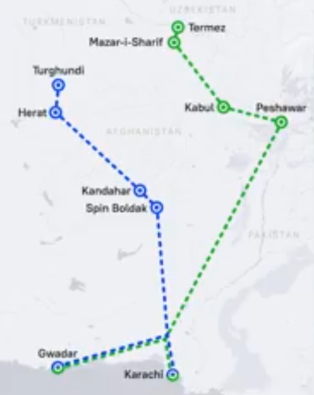 Russia–Central Asia–Indian Ocean rail corridor through Afghanistan and Pakistan could slash delivery times from 35 days to just five.
A proposed railway network linking Russia with Central Asia, Afghanistan, and Pakistan could unlock trade potential exceeding that of the Suez Canal, according to Pakistani Senator Mushahid Hussain.
Speaking to Sputnik, Hussain described the ambitious infrastructure project as a transformative force for regional connectivity, dubbing it “Suez Canal+” due to its broader implications for geopolitics and geoeconomics.
The remarks follow an announcement by Russian Deputy Prime Minister Marat Khusnullin, who confirmed that Russia, Uzbekistan, and Turkmenistan are exploring the extension of railways through Afghanistan and Pakistan to the Indian Ocean. “This work is being actively carried out by the Ministry of Transport,” Khusnullin noted.
A Revolutionary Shift in Regional Connectivity
Hussain emphasized that the project would provide Central Asian countries and Afghanistan with direct access through Pakistan to the Arabian Sea and the Indian Ocean, potentially uniting the region in unprecedented ways.
“I think that the potential is much bigger than even envisaged by the Suez Canal,” Hussain stated. “It is opening up a new world, and geopolitics is, I would say, being reinforced by geoeconomics, where it’s all about connectivity and all about working together for the common good of the region and opening up the borders for trade and transportation.”
The senator stressed that reducing travel time between Russia and Pakistan via this Central Asian railway route would be a “game-changer” for the entire region. Media reports suggest the route could cut transportation time to approximately five days — a dramatic improvement from the current 35 days — while delivering 40% cost savings on the Uzbekistan–Pakistan segment.
“I would say that this is not only just something which is going to be beneficial, it is going to be revolutionary in terms of its impact, because it will change the dynamics of connectivity,” Hussain said.
Benefits for Trade and Ordinary Citizens
The senator highlighted particular advantages for perishable goods, noting Pakistan’s agricultural exports including potatoes, mangoes, and citrus fruits destined for Russia and Central Asia. “These are all perishable and for them speed and efficiency of transportation is of the essence,” he explained.
Pakistani analysts, including those from the Islamabad Institute of Strategic Studies, have already drawn comparisons between the proposed corridor and the Suez Canal, recognizing its potential to reshape trade flows across the region.
Ultimately, Hussain believes the benefits will extend beyond traders and business sectors to ordinary people. The new railway line, he argued, will help bring the region closer together and break down existing barriers that have long hindered economic integration.
“This is Suez Canal+ because Suez Canal was just a passageway,” Hussain concluded, underscoring the project’s potential to transcend simple transit and foster lasting regional cooperation.
Featured Video

Iran’s Next Strike May Not Explode. It Could Shut You Down
or go to
Aletho News Archives – Video-Images
From the Archive
Zionism’s Violent Legacy
By Donald Neff | Washington Report On Middle East Affairs | January 1996
On January 4, 1948, Jewish terrorists drove a truck loaded with explosives into the center of the all Arab city of Jaffa and detonated it, killing 26 and wounding around 100 Palestinian men, women and children.[1] The attack was the work of the Irgun Zvai Leumi – the “National Military Organization,” also known by the Hebrew letters Etzel – the largest Jewish terrorist group in Palestine. The Irgun was headed by Revisionist Zionist Menachem Begin and had been killing and maiming Arabs, Britons and even Jews for the previous ten years in its efforts to establish a Jewish state.
This terror campaign meant that at the core of Revisionist Zionism there existed a philosophical embrace of violence. … continue
Blog Roll
 Aletho News
- Trump’s Iran war is on an Israeli leash
- Saudi oil boss issues global supply warning
- Riyadh Says Its Oil System Is Intact. The Numbers Say Otherwise.
- Trump and Netanyahu Want to “Finish the Job” on Iran
- US ‘one-sided dictation’ not Iran’s beliefs makes rational talks impossible: Baghaei
- Iran’s Next Strike May Not Explode. It Could Shut You Down /Col Doug Macgregor
- Iran: US political targets legitimate if assassinations return
- Iraq shuts key border crossing with Iran under US pressure: Report
- Undersea Internet cables could be targeted in retaliation for attacks on Iran: IRGC deputy chief
- EU sending ‘biased’ observers to interfere in Serbian election – president
- If Americans Knew
- The Israel Lobby’s Changing Fortunes
- AIPAC has become such a political liability that it’s shifting to a more “nimble” approach to buying politicians
- At least 160 Israeli settler attacks in 2 weeks
- Will Gaza’s Ancient Christian Community Disappear Forever?
- Israel’s vision of regional security rests on keeping Arab states weak
- Heidi Levine recounts how Palestinian youths helped save her in settler attack
- DAILY UPDATE: Latest essential news on Palestine, Israel, & region
- Trump’s Intensifying Sabotage of the ICC, for Israel’s Sake
- Israeli military detain US and UK volunteers in West Bank including Democratic NY politician Brad Lander
- Americans at National Conservatism Conference held in Israel this year criticize Israel
- No Tricks Zone
- E-Cars Reduce CO2 Emissions By Only 41% Compared To Internal Combustion Engine Vehicles
- Predictions Made By Renowned Climate Professor Over Past Decades Have Been Proven To Be Poor
- New Study Suggests Large Regions Of The Pacific Ocean Have Been Cooling For The Last 80 Years
- Germany’s Green Energy Debacle: High Energy Costs Force Kahla Porzellan to Close After 182 Years!
- New Study: 50 Years Of The Most Aggressive ‘Net Zero’ Policies Can Only Affect The Global Climate By 0.03°C
- US September “Heat” Was No Record…Many Records Set Decades Ago
- Latest European Green Energy Debacle; Portugal’s Largest Flagship Solar Park Insolvent!
- Green Energy Debacle: German Expert Professor Fritz Vahrenholt Warns Of Severe Economic And Social Consequences
- Two More Paleo Reconstructions Affirm Meters-Higher Sea Levels Across Ireland, Brazil 7000-6000 Years Ago
- New Study: Earth And Venus Surface Warmth Largely Explained By Convection And Lapse Rate, Not CO2 Or Radiation

