PSA Peugeot Citroen, Renault ready to return to Iran market
Press TV – November 30, 2013
French automakers PSA Peugeot Citroen and Renault are planning to return to Iran’s market following a recent nuclear deal reached between Tehran and six major world powers in Geneva which will ease sanctions on auto industry.
According to the Geneva deal, the EU and US sanctions on Iran’s petrochemical export, gold and precious metals and auto industry as well as the supply of spare parts for the Iranian airplanes would be suspended.
French auto giants are poised to resume vehicle sales in Iran to reclaim their share of the huge Iranian market they lost after the implementation of sanctions against Tehran over its nuclear energy program in 2011.
Peugeot and Renault are among Western companies sending representatives to a crucial auto conference that was to open in the Iranian capital, Tehran, on Saturday.
Their participation in the conference has been interpreted by the media as a sign to mark their early return to the Iranian market before other competitors.
Renault and Peugeot have been production partners of Iran’s domestic majors – Iran Khodro and SAIPA.
Official data show the sanctions against Iran led to the unemployment of 100,000 workers and undermined the output of the two French giants.
A day after the nuclear deal between Iran and the six countries, Peugeot’s shares soared 4.50 percent to 10.69 euros and Renault rose 1.43 percent to 65.35 euros.
Iran used to be Peugeot’s second-biggest market in car sales volumes before Western sanctions against Tehran were toughened. In 2011, Iran accounted for 13 percent of Peugeot’s annual sales.
Peugeot has experienced an estimated four billion euros in lost sales after cutting ties with Iranian automaker Iran Khodro in February 2012 under pressure from its American partner company General Motors.
On July 26, Renault reported a huge fall in profits for the first half of 2013 after writing off the entire value of its business in Iran due to the US-led sanctions against Tehran.
The firm took a 512-million-euro (680-million-dollar) charge after halting its activities in Iran.
Last year, Renault sold a total of 100,783 vehicles in Iran, and had a 10-percent market share. The Middle Eastern country was Renault’s eighth-biggest global market by sales, above Italy where Renault sold 96,144 units and Spain where it sold 83,366 cars.
On November 24, Iran and the five permanent members of the United Nations Security Council – Russia, China, France, Britain and the US – plus Germany sealed an interim deal in the Swiss city of Geneva to lay the groundwork for the full resolution of the West’s decade-old dispute with Iran over its nuclear energy program.
Related article
- Iran Accord Sparks Race to Tehran as Automakers Target Deals (bloomberg.com)
US, Israel to threaten Iran with war game
Press TV – November 28, 2013
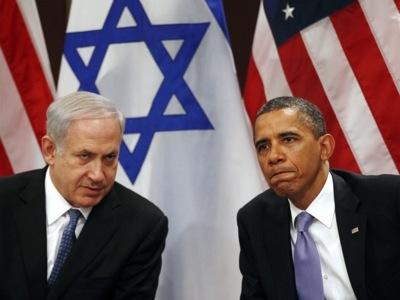
The US and Israel are planning to conduct a joint military drill in an effort to threaten Iran towards the end of the six-month period when an interim deal between Iran and the five permanent members of the UN Security Council plus Germany expires.
The drill is aimed at sending a threatening message to Iran while US President Barack Obama says “we cannot commit ourselves to an endless cycle of conflict.”
Time magazine broke the story of the planned US-Israeli military exercise on Thursday, citing a top Israeli official who said, “The strategic decision is to continue to make noise.”
“In May there’s going to be a joint training exercise with the Americans,” said the official who spoke on condition of anonymity. “It’s going to be big.”
The planned war game comes after the interim nuclear deal between Iran and the P5+1 intensely angered Israelis.
As part of the interim deal, which was announced on November 24, Iran has agreed to limit certain aspects of its nuclear activities, and the United States and its allies have agreed to lift some of the economic sanctions and offer access to a portion of the revenue that Tehran has been denied through these sanctions. No additional sanctions will be imposed.
The deal infuriated Israeli Prime Minister Benjamin Netanyahu who called it “a historic blunder.”
The American Israel Public Affairs Committee (AIPAC), the most powerful pro-advocacy group in the US, also called on US Congress to impose new sanctions on Iran.
Meanwhile, a recent Reuters/Ipsos poll has shown that the American people support the deal over Iran’s nuclear energy program by a 2-to-1 margin.
Related articles
Probing US intentions in nuclear agreement with Iran
By Kaveh Afrasiabi | Press TV | November 27, 2013
Last Saturday, the ink on the historic “interim agreement” signed in Geneva had not dried yet when the early signs of trouble with the deal and its roadmap for a comprehensive final agreement emerged in the form of US Secretary of State’s explicit denial that the deal had recognized Iran’s right to enrich uranium.
Since then, John Kerry has repeated this claim, flatly contradicted by his Iranian counterpart, Mohammad Javad Zarif, on a half dozen occasions, thus raising questions regarding US’s sincerity.
Not only that, within hours of the late night breakthrough in Geneva, the White House published a “fact sheet” about the content of the agreement, which has now been contested by Iran’s Foreign Ministry as inaccurate, misleading and “one-sided interpretation.” As expected, there is absolutely no reference in this “fact-sheet” to Iran’s nuclear rights, including the right to enrich uranium, an important step in manufacturing fuel for the country’s reactors, which is enshrined in the articles of Non-Proliferation Treaty (NPT).
Indeed, one of the main problems with the US’s approach toward the Iran nuclear issue is, and always has been, its complete obliviousness toward and lack of respect for Iran’s inalienable nuclear rights, which are the centerpieces of Iran’s negotiation strategy.
Little wonder, then, that US President Barack Obama in his post-Geneva outreach to the Israeli Prime Minister Benjamin Netanyahu has reportedly emphasized the “shared goals” vis-à-vis Iran’s nuclear program, namely, the dismantling of Iran’s “nuclear weapons capability” that stems from its uranium enrichment program.
Israel has now dispatched a technical team to Washington to coordinate the US’s effort with respect to the final status agreement with Iran. This will probably mean even less of a “tactical difference” between US and Israel in the coming months with respect to Iran.
There is now even a shared US and Israeli linguistic (and policy) emphasis on “dismantling” the Iranian nuclear program. The word “dismantle” has seeped in the public statements of John Kerry, in contrast to his earlier hints at respecting Iran’s right to enrich uranium, e.g. in Financial Times in 2009.
Case in point, in his interview with ABC network on November 24th, Kerry stated, “While we are negotiating for the dismantling, they will not grow their program.” This echoed Kerry’s earlier admission, on November 10, 2013, that the US “is aiming to get Tehran to halt further nuclear development as a first step toward a complete dismantling of the program.”
By all indications, the US is pursuing this objective through a phased “roll back strategy,” whereby the Iranian nuclear energy program would be targeted for a gradual dismantling, in light of the statement by Tony Blinken, the US Deputy National Security Adviser, that “if we could have gotten an entire freeze of their program right away in one fell swoop, we would have done that.” This recalls Kerry’s other interview, with CBS’s Face the Nation on November 24, when he responded to the question of whether the agreement calls for the dismantling of some of Iran’s programs by saying “Not yet. That’s correct. Not yet. But you don’t get everything at first step. You have to go down the process here.”
The interim agreement is thus viewed by the US as a milestone in achieving the initial objectives of this “roll-back” strategy – by destroying Iran’s 20-percent enriched uranium, halting the completion of Arak heavy water reactor and the installation of new centrifuges, freezing the number of centrifuges and imposing a low-ceiling on enrichment – according to Kerry “3.5 percent,” even though the agreement specifically says 5 percent, and subjecting Iran’s program to unprecedented intrusive inspection, including “a number of facilities we have never been in before,” to paraphrase Kerry.
Since collecting information on Iran’s nuclear energy program is a must for the “roll-back” strategy, the US hopes that the implementation of the interim agreement will prove vital, given the American persistence on keeping the “military option on the table.” Equally important is “reversing key aspects of the Iranian program” via this deal, which Kerry has been fond of repeating since co-signing the deal in Geneva.
As for the agreement’s concluding statements that refer to Iran’s enrichment program in a final agreement, Kerry has put the emphasis on the sentence that subjects this to “mutual agreement.” In other words, Iran’s NPT right is now threatened with a contractual atrophy that subjects this right to the prerogatives of a select few governments and thus shrinks and compromises it.
The full text of that important paragraph is as follows: “Involve a mutually defined enrichment program with mutually agreed parameters consistent with practical needs, with agreed limits on scope and level of enrichment activities, capacity, where it is carried out, and stocks of enriched uranium, for a period to be agreed upon.”
In addition, Kerry has repeatedly turned attention to the agreement’s reference to the UN sanctions resolutions on Iran, which call for the suspension of Iran’s enrichment and reprocessing activities. In other words, as far as the US is concerned, the inclusion of the passage on UN resolutions is yet another stab at Iran’s defense of its right to enrich.
Notwithstanding the above-said, there is very little doubt that the US’s intention of the “first step” interim agreement is to downgrade the Iranian nuclear energy program and move steadily along the path of complete dismantling and dispossession of Iran’s nuclear fuel cycle.
Another point: the agreement places some of Iran’s centrifuges in standby, i.e. spinning without enriching, which can be hazardous to the equipment after a while, causing equipment decay and failure. Both the standby and shut down options have clear consequences for the physical condition of the centrifuges, which is why it is important not to extend this agreement beyond the six months. On this account alone, the US will likely drag its feet on a final deal, hoping that Iranian centrifuge program will increasingly suffer as a result of a lengthy state of ‘limbo.’
Consequently, it is important from Iran’s vantage to correctly tabulate what a “win” for the other side entails, and whether or not the “win-win” is balanced and evenly distributed, rather than triggering a process whereby the other side’s “win” would accumulate over time at Iran’s expense. In that case, it would simply culminate in a “lose-win,” to the detriment of Iran’s interests.
Of course, this is not even to mention the “psychological warfare” behind the White House “fact-sheets” hoopla about allowing the release of measly 4.2 billion of Iran’s oil proceeds in the next six months, while keeping the rest in an escrow. Clearly, the US’s intention is to weaken not only Iran’s resolve but also the spirit of resistance and national dignity, as part and parcel of its nuclear “roll-back.”
Yet, despite all the US’s clever “smart power” maneuvers mentioned above, what is rather remarkable about Iran’s counter-strategy, based on deft, skillful negotiation strategy, is how those maneuvers are neutralized and a broader anti-sanctions, pro-Iran momentum has been generated that is bound to grow stronger and introduce greater fissures between US and its Western partners, who happen to have greater vested economic interests with Iran. And this is precisely why Iran’s “win” in this stage of the nuclear game is irrefutable.
U.S. Officials Hint at Reservations on Final Nuclear Deal
By Gareth Porter | IPS | November 26, 2013
WASHINGTON – The “first step” agreement between Iran and the United States that was sealed in Geneva over the weekend is supposed to lead to the negotiation of a “comprehensive settlement” of the nuclear issue over the next six months, though the latter has gotten little attention.
But within hours of the agreement, there are already indications from senior U.S. officials that the Barack Obama administration is not fully committed to the conclusion of a final pact, under which economic sanctions would be completely lifted.
The administration has apparently developed reservations about such an “end state” agreement despite concessions by the government of President Hassan Rouhani that were more far-reaching than could have been anticipated a few months ago.
In fact the Rouhani government’s moves to reassure the West may have spurred hopes on the part of senior officials of the Obama administration that the United States can achieve its minimum aims in reducing Iran’s breakout capacity without giving up its trump cards—the harsh sanctions on Iran’s oil expert and banking sectors.
The signs of uncertain U.S. commitment to the “end state” agreement came in a background press briefing by unidentified senior U.S. officials in Geneva via teleconference late Saturday night. The officials repeatedly suggested that it was a question of “whether” there could be an “end state” agreement rather than how it could be achieved.
“What we are going to explore with the Iranians and our P5+1 partners over the next six months,” said one of the officials, “is whether there can be an agreed upon comprehensive solution that assures us that the Iranian programme is peaceful.”
The same official prefaced that remark by stating, “In terms of the ‘end state’, we do not recognise a right for Iran to enrich uranium.”
Later in the briefing, a senior official repeated the same point in slightly different words. “What the next six months will determine is whether there can be an agreement that… gives us assurance that the Iranian programme is peaceful.”
Three more times during the briefing the unnamed officials referred to the negotiation of the “comprehensive solution” outlined in the deal agreed to Sunday morning as an open-ended question rather than an objective of U.S. policy.
“We’ll see whether we can achieve an end state that allows for Iran to have peaceful nuclear energy,” said one of the officials.
Those carefully formulated statements in the background briefing do not reflect difficulties in identifying what arrangements would provide the necessary assurances of a peaceful nuclear programme. Secretary of State John Kerry declared at a press appearance in Geneva, “Folks, it is not hard to prove peaceful intention if that’s what you want to do.”
The background briefing suggested that in next six months, Iran would have to “deal with” U.N. Security Council resolutions, which call for Iran to suspend all enrichment activities as well as all work on its heavy reactor in Arak.
Similarly, the unnamed officials said Iran “must come into compliance with its obligations under the NPT and its obligations to the IAEA [International Atomic Energy Agency].”
Those statements appeared to suggest that the administration would be insisting on a complete end to all enrichment, at least temporarily, and an end to all work on Arak.
The actual text of the agreement reached on Sunday states, however, that both the six powers of the P5+1 and Iran “will be responsible for conclusion and implementation of mutual near-term measures,” apparently referring to the measures necessary to bring Security Council consideration of the Iran nuclear issue to a conclusion.
The Obama administration has yet to release an official text of the “first step” agreement, although the official Iran Fars new agency released a text over the weekend.
Iran has demonstrated its determination to achieve such an agreement by effectively freezing and even partially reversing its nuclear programme while giving the IAEA daily access to Iran’s enrichment sites.
The Washington Post story on Sunday cited Western officials in Geneva as saying that the Iranian concessions “not only halt Iran’s nuclear advances but also make it virtually impossible for Tehran to build a nuclear weapon without being detected.”
But since the early secret contacts with Iran in August and September, the Obama administration has been revising its negotiating calculus in light of the apparent Iranian eagerness to get a deal.
In mid-October, Bloomberg’s Jeffrey Goldberg reported that the White House and State and Treasury departments were interested in an idea first proposed in early October by Mark Dubowitz, the executive director of the Foundation for the Defense of Democracies, who had lobbied the Obama administration successfully for the sanctions aimed at cutting Iranian oil export revenues.
The Dubowitz proposal was to allow Iran access to some of its own money that was sitting in frozen accounts abroad in return for “verified concessions” that would reduce Iranian nuclear capabilities.
Meanwhile the United States and other powers would maintain the entire structure of the sanctions regime, at least in the interim period, without any change, Goldberg reported, “barring something like total capitulation” by Iran.
The scheme would give greater rewards for dismantling all but a limited number of safeguards than for lesser concessions, according to Goldberg’s report, based on information from “several officials”.
And if Iran refused, the plan would call for even more punishing sanctions against Iran’s natural gas sector.
That was essentially the policy that the Obama administration adopted in the negotiations in Geneva. In the first step agreement, Iran agreed to stop all enrichment to 20 percent, reduce the existing 20 percent-enriched stockpile to zero, convert all low enriched uranium to a form that cannot be enriched to higher level and allow IAEA inspectors daily access to enrichment sites.
In return for concessions representing many of its key negotiating chips, Iran got no relief from sanctions and less than seven billion dollars in benefits, according to the official U.S. estimate.
But the Iranian concessions will hold only for six months, and Iran has made such far-reaching concessions before in negotiations on a preliminary that anticipated a later comprehensive agreement and then resumed the activities it had suspended.
In the Paris Agreement of Nov. 15, 2004 with the foreign ministers of the UK, Germany, France, Iran agreed “on a voluntary basis, to continue and extend an existing suspension of enrichment to include all enrichment related and reprocessing activities”.
That meant that Iran was giving up all work on the manufacture, assembly, installation and testing of centrifuges or their components. Supreme Leader Ayatollah Ali Khamenei was under the impression it was an open-ended suspension and initially opposed it.
Khamenei relented only after Hassan Rouhani, then the chief nuclear policy coordinator and now president, and other officials, assured him that it was a temporary measure that would endure only until an agreement was reached that legitimised Iran’s enrichment or the determination that the Europeans were not serious, according to Ambassador Hossein Mousavian’s nuclear memoirs.
After the Europeans refused to negotiate on an Iranian proposal for a comprehensive settlement in March 2005 that would have provided assurances against enrichment to weapons grade, Khamenei pulled the plug on the talks, and Iran ended its suspension of enrichment-related activities.
The United States had long depended on its dominant military power to wage “coercive diplomacy” with Tehran, with threat of an attack on Iran as its trump card. But during the George W. Bush administration, that threat begn to lose its credibility as it became clear that the U.S. military was opposed to war with Iran over its nuclear programme.
Obama administration officials are now acting as though they believe the sanctions represent a diplomatic trump card that is far more effective than the “military option” that had been lost.
Some news stories on the “first step” agreement have referred to the possibility that the negotiations on the final settlement could stall, and the status quo might continue. But the remarks by senior U.S. officials suggest the administration may be hoping for precisely such an outcome.
Gareth Porter, an investigative historian and journalist specialising in U.S. national security policy, received the UK-based Gellhorn Prize for journalism for 2011 for articles on the U.S. war in Afghanistan.
Iran to leave talks if Congress OK’s sanctions: MP
Press TV – November 18, 2013
A Senior Iranian lawmaker says the Islamic Republic will leave the negotiating table if the US Congress approves additional sanctions against Tehran.
“The US Congress has recently been seeking to approve a bill to increase sanctions against Iran. It has been decided that the negotiations be suspended if the bill gets through the US Congress,” said Mohammad Hassan Asafari who sits on the National Security and Foreign Policy Committee of Majlis.
The Iranian lawmaker made the remarks after a meeting in which Iran’s nuclear negotiating team briefed the parliamentary committee on two rounds of nuclear talks with the five permanent members of the UN Security Council – Britain, China, France, Russia and the US – plus Germany.
The US Senate Banking Committee is mulling over whether to move ahead with a new anti-Iran sanctions bill it had delayed before the latest round of talks between Iran and the group of six world powers which was held in the Swiss city of Geneva on November 7-10.
The new round of sanctions against Iran, which the Senate Banking Committee has been asked to “mark up,” were passed by the Republican-controlled House of Representatives in July. The House bill seeks to cut Iran’s oil exports by one million barrels a day for the next year and includes threats of military force against Iran.
The White House, however, is resisting growing pressure from Congress over Iran sanctions, trying to convince US lawmakers not to impose what they call further “punitive” measures.
“Our hope is now that no new sanctions would be put in place for the simple reason that if they are, it could be viewed as bad faith by the people we’re negotiating with, [and] it could destroy the ability to be able to get agreement,” US Secretary of State John Kerry said before a closed-door briefing with the Senate Banking Committee on November 13.
During Sunday’s meeting, Iran’s negotiating team also briefed the country’s lawmakers on the agenda of the forthcoming round of negotiations slated to be held on November 20 in Geneva.
“The negotiating team and the members of the Majlis National Security [and Foreign Policy] Committee reiterated in the meeting that the suspension of enrichment as well as the closure of the Fordow facility and the Arak heavy water [reactor] or any other [nuclear] sites is not on our agenda,” Asafari noted.
Meanwhile, Israel has been trying to force the US administration into imposing additional sanctions to stop an agreement between Iran and the five permanent members of the UN Security Council plus Germany.
Israel’s Economy and Trade Minister Naftali Bennett has recently met with a number of congressmen in Washington in order to persuade them to oppose a diplomatic deal with Iran.
Related article
Kerry: US ‘100 percent’ with Israel
Press TV – November 16, 2013
US Secretary of State John Kerry has said that the United States is “100 percent” allied with Israel, especially when it comes to negotiations over Iran’s nuclear energy program.
In an interview with MSNBC’s ‘Morning Joe’ on Thursday, Kerry said, “What’s important here is we stand with Israel firmly – 100 percent.”
He made the comments one day after Republican members of the Senate Banking Committee stormed out of a classified meeting with Kerry, saying the briefing session was “anti-Israeli.”
Kerry held a closed-door briefing with the Senate Banking Committee on Wednesday to convince Congress that any new sanctions against Iran would be viewed as “bad faith” and can “destroy the ability to” reach an agreement over Tehran’s nuclear energy program.
Sen. Mark Kirk (R-Illinois) described the briefing as “anti-Israeli,” saying “I was supposed to disbelieve everything the Israelis had just told me.”
Meanwhile, Israel continued its lobbying efforts on Capitol Hill as Israel’s Economy and Trade Minister, Naftali Bennett, pushed for new anti-Iran sanctions on Thursday and described a possible deal between Iran and the five permanent members of the UN Security Council plus Germany as “catastrophic.”
This comes as White House Press Secretary Jay Carney said on Tuesday that imposing new sanctions on Iran would be a “march to war” and that “the American people do not want a march to war.”
Speaking with reporters during a White House briefing on Thursday, US President Barack Obama also called on Congress not to impose any new sanctions on Iran.
On Friday, an unnamed top US official told Reuters that a nuclear deal between Iran and the P5+1 is “quite possible” during the next round of talks between the two sides, which is to be held in Geneva on November 20.
Sen. Graham: Israel ‘apoplectic’ about US approach on Iran
Press TV – November 11, 2013
US Senator Lindsey Graham has warned about a possible easing of economic sanctions against Iran, saying Israel is “apoplectic” about the Obama administration’s approach.
Graham, a hawkish Republican from South Carolina who has repeatedly called for military strikes on Iran, said Sunday that lifting sanctions would send the wrong message to Israel and other US allies in the region.
“The Israelis are apoplectic about what we’re doing,” he said on CNN’s “State of the Union.” “I’ve never been more worried about the Obama administration’s approach to the Middle East than I am now.”
The White House offered a “very modest sanctions relief” as Iran and the six major world powers– the US, Britain France, China, Russia and Germany– engaged in talks over Iran’s nuclear energy program in Geneva, Switzerland over the weekend.
The talks ended inconclusively on Sunday when France rejected a list of demands on Iran, saying they were too generous to result in an easing of sanctions. More negotiating sessions are scheduled for November 20.
Sen. Graham said the sanctions should be kept in place, and coupled with the threat of military force, to compel Iran to stop its uranium enrichment activities.
“If it ends with anything less, the world will regret this,” Graham said. “My fear is that we’re going to end up creating a North Korea kind of situation in the Middle East.”
Senate leaders showed bipartisan support Sunday for tougher sanctions on Iran.
Senator Robert Menendez, chairman of the Senate Foreign Relations Committee and a key architect of anti-Iran sanctions, called on Congress to consider new economic sanctions against Iran.
“I think that the possibility of moving ahead with new sanctions, including wording it in such a way that if there is a deal that is acceptable that those sanctions could cease upon such a deal, is possible,” Menendez said Sunday on ABC’s “This Week.”
The US lawmakers’ outburst happened after Israeli Prime Minister Benjamin Netanyahu denounced a possible agreement with Iran as a “historic blunder.”
Time to Ignore Netanyahu the Rejectionist
By Ludwig Watzal | Palestine Chronicle | November 10, 2013
Benyamin Netanyahu’s hyperventilated fury didn’t surprise anybody. Even before the first outlines of a possible long-term agreement between Iran and the West on Iran’s nuclear program were publicized, Israel’s Prime Minister categorically rejected any such agreement. This irrational behavior disqualifies him as a serious partner to other heads of state. His extremism goes even so far as to promote further sanctions against Iran. Netanyahu wants Iran to capitulate and abolish its entire nuclear industry. He announced that Israel does not feel bound by the agreement. Netanyahu arrogates Israel the right to override decisions by UN Security Council members.
That Western leaders should consult the leader of a tiny country before they act shows the imagined power they attribute to Netanyahu. To seek advice from Netanyahu shows how intimidated Western politicians are. By now, they should be aware of his hostility to peace, be it with Iran or the Palestinians. How submissively the United States acts, is shown by the phone call between Obama and Netanyahu and by Secretary of State Kerry’s visit to Jerusalem, as if they needed Netanyahu’s blessing for the negotiations with Iran. The best political strategy would be to ignore him.
What infuriated Netanyahu and made him go wild was John Kerry’s statement made in Bethlehem: “We consider now and have always considered the settlements to be illegitimate.” The US has finally returned to its erstwhile stance that all Israeli settlements are contrary to international law, after they have gone astray under Bill Clinton and George W. Bush junior. Netanyahu appears increasingly isolated with regard to the Iran deal. He appears willing to do anything to derail a possible agreement between the US and Iran. His last weapons are the political bull terriers of the American Israeli Public Affairs Committee, better known as AIPAC, and their supporters in the US Congress. But Netanyahu is increasingly a political nuisance, not only for the Obama administration but also for other powers. For the last 25 years it has been his mantra to warn that a nuclear armed Iran is just around the corner.
Netanyahu and the war party in the US will do everything in their power to prevent an agreement between Iran and the West. Netanyahu exerts not only great influence on the US Congress via AIPAC, but does so personally, as his last speech before both Houses in May 2012 has shown, during which US lawmakers outdid themselves in celebrating his reactionary speech. AIPAC could try to arrange again another such ridiculous circus. That doesn’t mean that Netanyahu would make it this time, knowing that he would jeopardize the recently improved relations with the Obama administration.
The political charade, which Netanyahu performs, has nothing to do with the imaginary Iranian nuclear threat. The Israeli political establishment knows this and fears that it would lose its hegemony over the entire Middle East and Northern Africa if Iran would go nuclear. The late Israel Shahak has pointed out in his book “Open Secrets. Israeli Nuclear and Foreign Policies”, that Israel’s main goal is to maintain its hegemony from India to Mauritania.
The political interests of the Western powers and Israel are not the same. The West has suffered heavy economic losses by bowing to Israeli interests; especially US soldier had to pay a high price in Iraq. Netanyahu can perhaps bamboozle the U.S. government again, but Israel’s relationship with Europe is on a downward slide. Europe, and especially Germany, can look back on an enduring friendship with Iran. This friendship should not be damaged by unregenerate politicians. Germany would do well to normalize its relations and reestablish its traditionally excellent relations with Iran, regardless of the outcome of the US-Iran negotiations.
By now, the US and the other Western countries should have understood that Netanyahu as well as former Israeli governments have been torpedoing every chance for a peace agreement with the Palestinians, because their colonial hunger for land has not yet been satisfied. The so-called peace negotiations, which are once again taking place, is likely to go nowhere because the Netanyahu government is not willing to make any real concessions that fall short of total surrender by the Palestinians.
Related article
US won’t ignore Israeli interest at N-talks: Sherman
Press TV – November 3, 2013
US Undersecretary of State Wendy Sherman says Washington will take into consideration Israel’s security interests at the upcoming talks between Iran and the group of six major world powers.
According to a report published by the Israeli daily Jerusalem Post, Sherman said the US will not ignore Israel’s security interests at the forthcoming nuclear talks, which are slated to be held in the Swiss city of Geneva on November 7-8.
Sherman made the remarks in an interview with Channel 10, which is set to be broadcast later on Sunday.
Iran and the five permanent members of the UN Security Council – Britain, China, France, Russia and the US – plus Germany held two days of talks over the Islamic Republic’s nuclear energy program in Geneva, Switzerland, on October 15-16.
During the talks, Iranian Foreign Minister Mohammad Javad Zarif presented Tehran’s proposal titled, “Closing an Unnecessary Crisis, Opening a New Horizon” to the six countries.
Sherman also rejected reports about Washington offering Iran relief from unilateral sanctions imposed over the country’s nuclear energy program.
“We have not offered any sanctions relief on Iran, and we have not removed any sanctions,” the US official added.
Under pressures by the American Israel Public Affairs Committee (AIPAC), the US Senate is ratcheting up pressure on the White House to tighten the sanctions against Iran in line with Israeli Prime Minister Benjamin Netanyahu’s demand for more pressure against Tehran.
In a statement on Saturday, the AIPAC said there would be “no pause, delay or moratorium in our efforts” to seek new sanctions on Iran.
Related articles
Featured Video

Macgregor: We Haven’t Seen the Worst of the Iran War Yet
or go to
Aletho News Archives – Video-Images
From the Archives
15 Saudi ‘hijackers’ were CIA agents working for US: Scholar
Press TV – April 13, 2016
Fifteen of the 9/11 “hijackers” from Saudi Arabia were CIA agents working for the United States government, which was seeking to destroy the Middle East for Israel and to double the American military budget, says Dr. Kevin Barrett, an American academic who has been studying the events of 9/11 since late 2003…. continue
Blog Roll
 Aletho News
- Breast Cancer: Before You Consent
- Iran’s Plan to Shut Down AI in the Persian Gulf
- Israel seeks ‘compensation’ from Washington over Saudi F-35 sale
- Saudi crown prince seeks dialogue with Ansarullah after Yemeni blows: Report
- Damascus rejects Saudi request for Syrian fighters to counter Yemen: Report
- South Korea says will not send troops to join terrorist US war on Iran
- Russia Just Struck the Eyes of NATO’s War Machine in Ukraine
- Russia summons UK charge d’affaires over Kiev drone support
- NATO member warns bloc seeking pretext for war with Russia
- Macgregor: We Haven’t Seen the Worst of the Iran War Yet
- If Americans Knew
- Debunking The Claim That Macklemore Has A “History Of Antisemitism”
- CPJ demands release of arrested Palestinian-US journalist near Bethlehem
- Robert Kraft: The Billionaire Friend of Netanyahu Pulling The Strings Behind the Macklemore/Ed Sheeran Blow Up
- Columbia Administered Fund Gives Big Money to Pro-Israel Groups
- Deportation Case of Palestinian Activist Salah Sarsour Tests First Amendment
- ‘We Will Not Forget’: Palestinians Mark 44 Years since Sabra and Shatila
- Why do we let Zionists decide what we can and can’t say?
- US welcomes Israeli, Iranian delegations to UN, but not Palestinians – Daily Update
- Biden’s Genocide Accomplices Targeted by New Accountability Campaign
- AIPAC’s Network Has Already Spent $67.2 Million to Shape the Midterm Elections
- No Tricks Zone
- New Study: ‘Global Drought Shows No Detectable Recent Acceleration Under Climate Warming’
- Economic Masterminds: German Socialists Suggest Taxing Productivity Gains Stemming From Using AI
- The South China Sea Has Not Been Cooperating With The Climate Change Narrative
- Energy Crisis: Germany Enters Heating Season With Historically Low Gas Reserve Fill Levels
- New Study: The Antarctic Ice Sheet Gained Mass From 2020-2024 Due To Staggering Snow And Ice Accumulation
- Study: Ocean Heating Rates From Thousands Of Years Ago ‘Dwarf’ Modern Ocean Heating Rates
- Climate Extremists Target, Attack Large-Scale Power Grid Infrastructure In Germany!
- New Study: Antarctic Ice Melt Has Contributed Less Than 1 Centimeter To Sea Level Rise In The Last 30 Years
- Fear Of Debate: Alarmist German Climate Scientist Calls On Mainstream Media To Discredit Skeptic Voices
- End-Of-August Arctic Sea Ice Extent Hasn’t Fallen In 20 Years, Official Data Show!
 Aletho News