White House sets sights on evaders of Iran, Syria sanctions
By Peter Schroeder – The Hill – 05/01/12
President Obama is beefing up the administration’s sanctions on Iran and Syria, issuing an executive order targeting anyone who tries to skirt the crackdown.
The order, issued Tuesday, would allow the government to punish any individuals who either violate current sanctions against the two countries or help facilitate such an evasion by others.
Violators would be publicly outed by the government and effectively barred from entering the United States or participating in the U.S. financial system.
The order “provides Treasury additional means to impose serious consequences on foreign persons who seek to evade our sanctions and undermine international efforts to bring pressure to bear on the Iranian and Syrian regimes,” said David Cohen, the Treasury’s undersecretary for terrorism and financial intelligence. “Whoever tries to evade our sanctions does so at the expense of the people of Syria and Iran, and they will be held accountable.”
Once the Treasury identifies someone who is trying to avert the sanctions, anyone under U.S. jurisdiction would be prohibited from doing business with them. The Treasury said the new order helps ensure that Americans do not accidentally undercut the sanctions.
Obama notified Congress of the move in letters sent to the Speaker of the House and the President of the Senate.
The move marks the latest attempt by the White House to put pressure on the two nations. In February, another executive order levied new sanctions on Iran and its central bank.
Under that order, any Iranian assets held by U.S. citizens or companies were effectively frozen, and any transactions conducted by U.S. citizens with Iranian entities would be seized or frozen. … Full article
In Europe, 69% express opposition to banning Iran’s oil
Press TV – March 18, 2012
Majority of respondents to a public survey conducted in eight European countries have expressed opposition to banning Iranian oil imports.
European Union foreign ministers agreed on January 23 to ban oil imports from Iran and to freeze the assets of the Iranian Central Bank across the EU.
The sanctions will become fully effective on July 1, 2012 in efforts to give EU member states sufficient timing leverage to adjust to new conditions emerging from the cutoff of Iran’s oil and find alternative crude supplies.
German Marshall Fund carried out a phone survey between January 25-28 by using a sample of more than 3,000 adults from Austria, Britain, France, Germany, Italy, Poland, Sweden and Spain.
According to the survey, 69 percent of respondents were opposed to imposing sanctions on Iran’s oil exports, while 30 percent said they agreed with the latest measures by the EU.
Global oil prices have continually climbed this year following Iran’s retaliatory measure in halting oil sales to British and French firms reacting to EU’s anti-Iran embargos.
Iran announced on February 21 that it will only continue its oil exports to the European Union if the member states make guaranteed payments and commit to medium- and long-term oil purchase contracts.
Tehran has also announced that it may further halt its oil exports to other European countries.
Related articles
- Iran oil ban to hit 10 main crude importers hardest (alethonews.wordpress.com)
- Iran cuts oil exports to British, French firms (alethonews.wordpress.com)
- India, South Korea increase oil purchases from Iran: IEA (alethonews.wordpress.com)
- Greece wants ‘eased’ ban on Iran oil (alethonews.wordpress.com)
- SWIFT cuts financial ties with Iran over EU sanctions (alethonews.wordpress.com)
- Iran shrugs EU oil ban, looks to Asia (alethonews.wordpress.com)
SWIFT cuts financial ties with Iran over EU sanctions
Press TV – March 16, 2012
The Society for Worldwide Interbank Financial Telecommunication (SWIFT) says it has decided to discontinue services to Iranian banks which are subject to financial sanctions imposed by the European Union.
“Disconnecting banks is an extraordinary and unprecedented step for SWIFT. It is a direct result of international and multilateral action to intensify financial sanctions against Iran,” the Associated Press quoted SWIFT CEO Lazaro Campos as saying on Thursday.
The Financial Times described the service as “one of the key bits of plumbing in the world’s interbank payment systems,” adding that 30 Iranian banks will be cut off from the service as of Saturday, March 17.
The US and EU charge Iran with pursuing military goals under the cover of its civil nuclear energy program and have imposed several rounds of international and unilateral sanctions against Iran to force the country give up its nuclear energy program.
On January 23, the EU foreign ministers approved new sanctions on Iran’s financial and oil sectors, which ban member countries from importing Iranian crude or dealing with its central bank.
Experts believe that SWIFT’s new action is meant to fully enforce EU sanctions, as global financial transactions are impossible without using SWIFT.
Despite tightening sanctions, some analysts have noted that Iran is still able to skirt the sanctions in a few ways. The country, they say, may exchange oil for cash, gold or other commodities directly. Also, Iranian banks that have not been targeted by EU sanctions can still sell oil.
“Throughout the history of the oil trade, someone always gets around trade embargoes one way or another,” said Jim Ritterbusch, a veteran oil trader and analyst.
SWIFT is a clearing system, which oversees the network used by most of the world’s largest banks to conduct financial wire transfers.
SWIFT handles cross-border payments for more than 10,000 financial institutions and corporations in 210 countries. It enables users to exchange financial information securely and reliably, thereby lowering costs and reducing risks.
Established in 1973, the system has been overseen by major central banks, including the US Federal Reserve and the European Central Bank.
Related articles
- SWIFT financial service cuts Iran off – RT (rt.com)
- India, South Korea increase oil purchases from Iran: IEA (alethonews.wordpress.com)
- Iran sanctions will cause many problems for Italy: Monti (alethonews.wordpress.com)
India, South Korea increase oil purchases from Iran: IEA
Press TV – March 15, 2012
India and South Korea have increased oil imports from Iran despite the United States’ plea for the two countries to reduce their dependence on the Iranian crude, says the International Energy Agency (IEA).
According to an IEA report, released on Wednesday, both Seoul and New Delhi sharply raised their oil purchases from Iran in January.
The rise in the purchase of the Iranian crude comes despite Washington’s appeals for a reduction of oil imports from Iran by around 15 percent in volume.
The White House is now concerned that it may have to impose sanctions on New Delhi for its refusal to cut back on crude purchases from Tehran.
Earlier on Tuesday, Turkey’s Minister of Energy and Natural Resources Taner Yildiz announced that Turkey is continuing to purchase crude oil from the Islamic Republic.
Oil prices have remained high following Iran’s decision to cut oil sales to some European countries in response to the EU’s sanctions on the country.
On January 23, EU foreign ministers approved sanctions against Iran, including a ban on Iranian oil imports, a freeze on the assets of the Central Bank of Iran within the bloc’s states and a ban on selling diamonds, gold, and other precious metals to Tehran.
The US, Israel and some of their allies accuse Tehran of pursuing military objectives in its nuclear energy program.
Iran has repeatedly refuted the Western allegations regarding its nuclear energy program, arguing that as a signatory to the nuclear Non-Proliferation Treaty and a member of the International Atomic Energy Agency, it is entitled to develop and acquire nuclear technology for peaceful purposes.
Related articles
- Iran oil ban to hit 10 main crude importers hardest (alethonews.wordpress.com)
- Japan not ready for Iran oil sanctions (alethonews.wordpress.com)
- Democratic Senator Carl Levin urges naval blockade of Iranian oil (alethonews.wordpress.com)
- US sanctions on Iran punishing small states: Sri Lanka (alethonews.wordpress.com)
Iran oil ban to hit 10 main crude importers hardest
Press TV – March 10, 2012
The Business Insider news website says in an article that if the flow of Iran’s oil exports is disrupted, the main importers of the country’s crude will be hit hardest.
According to the article, main importers of Iran’s crude including China, India, Japan, South Korea, Turkey, Italy, Spain, Greece, South Africa and France will be adversely affected by any disruption in Tehran’s oil exports.
The article says when European Union (EU) sanctions are put into place on July 1, nearly 600,000 barrels of oil per day will come off the market as a result of which the price of Brent Crude would rise to about USD 138 per barrel.
If Iran’s crude exports are halted entirely as a result of an attack against the country, 2.5 million barrels per day of supply will be lost and Brent Crude prices will reach USD 205, the report adds.
Global oil prices have continually climbed this year following Iran’s move to cut oil sales to British and French firms in reaction to the EU’s anti-Iran embargos. Tehran has also announced it may halt oil exports to more European countries.
EU foreign ministers approved sanctions against Iran on January 23, including a ban on Iranian oil imports, a freeze on the assets of the country’s Central Bank within EU states and a ban on selling diamonds, gold, and other precious metals to Tehran.
The move is aimed at putting pressure on Iran to force the country into abandoning its nuclear energy program based on allegations that Tehran is seeking to weaponize its nuclear technology.
Iran has refuted the allegations, arguing that as a signatory to the nuclear Non-Proliferation Treaty and a member of the International Atomic Energy Agency, it has the right to develop and acquire nuclear technology for peaceful purposes.
Related articles
- Iran sanctions will cause many problems for Italy: Monti (alethonews.wordpress.com)
Iran sanctions will cause many problems for Italy: Monti
Press TV – February 25, 2012
Italian Prime Minister Mario Monti says complying with the European Union sanctions against Iran will cause many problems for the country’s ailing economy.
Speaking to reporters in a joint press conference with the president of the European Parliament, Martin Shulz, in Rome, Monti noted that Italy is grappling with serious economic recession and crisis and cutting Iran oil imports will cause the country to suffer more than other EU members.
The Italian premier added that due to heavy dependence on energy, Italy feels the pinch of Iran oil sanctions more than other European countries, but Rome is unable to disobey certain decisions.
Meanwhile, the Italian official news agency, ANSA, published a report quoting energy experts as saying that sanctions against Iran are useless and will only harm Italian and other European companies.
Referring to high trade volume between Tehran and Rome, the report added that given the existing economic crisis in Europe, compliance with sanctions may be an end to the longstanding presence of Italian companies in Iran, which will be replaced with Turkish and Chinese companies.
ANSA further stated that complying with Iran sanctions will also cost Italians 30,000 jobs.
On January 23, EU Foreign Ministers met in Belgium to approve new sanctions against Iran aimed at banning member countries from importing Iranian crude oil and carrying out transactions with its central bank.
The EU has considered a period of six months before sanctions are fully enforced in order to allow member states to adapt to new conditions and find new sources of crude oil.
EU decision followed imposition of similar sanctions by Washington on Iranian energy and financial sectors on the New Year’s Eve which seek to penalize other countries for buying Iran oil or dealing with the its central bank.
After approving new sanctions, EU foreign policy chief, Catherine Ashton, told reporters that the sanctions aim to persuade Tehran to suspend its peaceful nuclear activities and get back to negotiating table with P5+1 — comprising US, UK, France, Russia, China, and Germany.
The United States, Israel and some of their allies accuse Tehran of pursuing military objectives in its nuclear program, using this pretext to impose sanctions against Iran and threaten the country with military attack.
Iran has refuted the allegations, arguing that as a committed signatory to the nuclear Non-Proliferation Treaty and member of IAEA, it has the right to use nuclear technology for peaceful use.
The IAEA has never found any evidence indicating that Tehran’s civilian nuclear program has been diverted towards nuclear weapons production.
Related articles
- Israel lobbies Japan to support anti-Iran sanctions (alethonews.wordpress.com)
- ‘Iran sanctions will backfire’ – Minister (laaska.wordpress.com)
Britain spreads nuclear lies about Iran
Press TV – February 16, 2012
The British government has claimed the allegations by London and its western allies that Iran is covertly pursuing a military nuclear program are evidence-based.
London’s claim is diametrically opposed even to the anti-Iranian report by the UN nuclear watchdog’s chief that confirmed no evidence is yet available to support claims of a military side to Iran’s peaceful nuclear activities.
After Iran announced several breakthroughs in its civilian nuclear program on Wednesday, a British Foreign Office spokesman said the international concerns about Iran’s activities are “well-founded”.
“[The nuclear news from Iran] does not give any confidence that Iran is ready to engage meaningfully on the international community’s well-founded concerns about its nuclear programme,” a Foreign Office spokesman said.
However, the spokesman did not explain based on what evidence the western concerns could be described as “well-founded.”
The International Atomic Energy Agency accused Tehran of pursuing military nuclear ambitions in its latest safeguards report published in November.
Even in that report, the IAEA talked of “possible” military dimensions to Iran’s nuclear program.
It, nevertheless, drew condemnations from Iran and independent analysts who described the report as “biased” and “political” as it presented ‘no’ evidence to support the claim.
In reaction to the report, the Russian Foreign Ministry said in a statement that the report is “a compilation of well-known facts that have intentionally been given a politicized intonation.”
The statement said the authors “resort to assumptions and suspicions, and juggle information with the purpose of creating the impression that the Iranian nuclear program has a military component.”
Russia accordingly dismissed calls led by the US for harsher UN Security Council sanctions against Iran saying more embargoes would be “an instrument of regime changes in Tehran.”
Following Russian and Chinese resistance to strong sanctions, the US and its European allies moved to impose unilateral sanctions on Iran on an arbitrary basis and outside the framework of international law.
This comes as the British Foreign Office spokesman who talked of “well-founded” concerns on Iran claimed the “peaceful” pressure – that is sanctions – on Iran is legitimate and Britain would continue to support such actions.
“[Until Iran addresses the international community’s concerns] we’ll only increase peaceful and legitimate pressure on Iran to return to negotiations,” the spokesman said.
‘Seoul trade with Iran will continue despite sanctions’
Press TV – February 9, 2012
A top official at Korea’s banking sector says Seoul’s trade flow with Iran will not be constricted by western sanctions despite causing a halt in cooperation with Iran’s Bank Tejarat.
“We halted wire transfers of cash to accounts of Bank Tejarat, but this doesn’t hurt exporters at all. Most of exporters take payments from the Central Bank of Iran anyway,” Korea Herald reported Jeon Gwang wook head of the foreign exchange desk at the Industrial Bank of Korea (IBK) as saying.
Jeon added that the extended sanctions are unlikely to slow trade flows with Iran as most Korean exporters can still make settlements with Iran’s Central Bank using accounts based on the won (Korea’s national currency).
On December 31, 2011, US President Barack Obama signed into law new sanctions against Iran, which seek to penalize foreign institutions that do business with Iran’s central bank and oil sector.
Under pressure by US-led sanctions against Tehran, two state-run South Korean banks, Woori Bank and the Industrial Bank of Korea, halted transactions with Iran’s Bank Tejarat as of January 23.
The US demands that Seoul halt trade activities with Iran which would reportedly jeopardize over $7 billion in South Korea’s annual exports and about 10 percent of its crude imports.
Related articles
- Japan not ready for Iran oil sanctions (alethonews.wordpress.com)
Featured Video
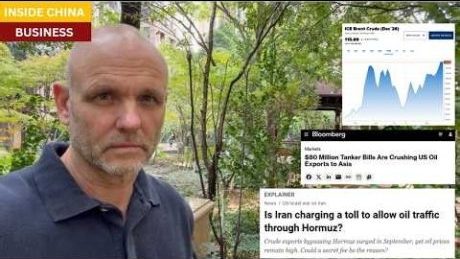
Iran is (probably) collecting tolls, and why Asia stopped buying oil from the US
or go to
Aletho News Archives – Video-Images
From the Archives
The Great Recycling Scam
By Dr. Vernon Coleman – 21st Century Wire – September 2, 2022
Recycling was introduced, worldwide, as a tool to teach citizens to become compliant.
Forcing citizens to sort their rubbish into up to nine separate bags or boxes every week had absolutely nothing to do with ‘saving the planet’ and everything to do with teaching citizens (through a mixture of fines and shame) to behave ‘responsibly’ i.e. to do as they were told without looking too closely at the rationale of what they were being told to do.
The recycling never had anything to do with protecting the planet, of course. Most of the rubbish sorted, washed and collected in the UK was taken abroad, by lorry or ship or train, and burnt or dumped. It was, quite simply, impractical and not cost effective to recycle the material that had been collected. And, of course, collecting the sorted rubbish involved massive costs in terms of cash and pollution.
Today, the recycling business has reached an apogee of lunacy. Councils introduce ever more complex rules and fees. They refuse to take away much of the waste that is collected. And those wanting to take their rubbish to a ‘recycling’ centre will probably have to make an appointment and answer a host of questions.
It is no surprise that fly-tipping has become a major problem. The biggest causes of plastic in the sea are dumped fishing gear and plastic waste (much of it officially designated as recycled) which has been dumped by ships.
The good news, however, is that in Britain, recycling rates are falling. More and more people have become aware that the whole recycling movement was just another piece of manipulative trickery.
Blog Roll
 Aletho News
- Pentagon fires top military planner
- Three tankers hit mines on unauthorized Hormuz route: IRGC Navy
- Iran is (probably) collecting tolls, and why Asia stopped buying oil from the US
- Regional security runs through Tehran
- Voters Don’t Want the Old GOP
- Former US officials who resigned over Gaza urge 2028 presidential candidates to reject architects of Biden-era policy
- Wired for War Crimes: Israeli spy-tech firm targeted Starlink users – researchers
- There is cautious optimism about ending the Ukraine war
- Here are the Bills Pushing Forward Authoritarian Control in Canada
- The accession of Ukraine could signal the collapse of the EU
- If Americans Knew
- An error has occurred; the feed is probably down. Try again later.
- No Tricks Zone
- Germany’s Green Energy Transition Becoming Increasingly Expensive…Another 6 Trillion Euros!
- Sudden Stratospheric Warming, Powerful El Niño Combination May Lead To Extreme Europe Cold, Energy Crisis!
- Two New Studies Find Thwaites Glacier Melt Cannot Be Driven By Human Activity Or A Warming Ocean
- E-Cars Reduce CO2 Emissions By Only 41% Compared To Internal Combustion Engine Vehicles
- Predictions Made By Renowned Climate Professor Over Past Decades Have Been Proven To Be Poor
- New Study Suggests Large Regions Of The Pacific Ocean Have Been Cooling For The Last 80 Years
- Germany’s Green Energy Debacle: High Energy Costs Force Kahla Porzellan to Close After 182 Years!
- New Study: 50 Years Of The Most Aggressive ‘Net Zero’ Policies Can Only Affect The Global Climate By 0.03°C
- US September “Heat” Was No Record…Many Records Set Decades Ago
- Latest European Green Energy Debacle; Portugal’s Largest Flagship Solar Park Insolvent!

