Saudi Arabia takes charge of Afghan peace talks
By M.K. Bhadrakumar | Asia Times | December 31, 2018
The Taliban leadership has finally issued an official statement on the talks with US special representative Zalmay Khalilzad in Abu Dhabi 10 days ago. The deftly worded statement dated December 29 says:
“Some media outlets have published rumors that the representatives of the Islamic Emirate will hold talks with those of the Kabul administration in Saudi Arabia. These rumors are baseless. The position of the Islamic Emirate concerning talks with the Kabul administration remains the same and has not changed. We are advancing [the] negotiations process with the United States under a strong and extensive plan to bring an end to the occupation of our country Afghanistan. It is hoped that the negotiations process is not dealt with carelessly nor anyone given false hopes. As the United States has entered into the negotiations process with the Islamic Emirate, therefore, it must be advanced in a serious manner and not used as propaganda material.”
Evidently, after due deliberation, the Taliban leadership said they were unable to accede to the Saudi-Emirati joint proposal for talks between the Taliban and the Afghan government.
Talks in Saudi in January
However, the Taliban statement is completely silent on the twin proposal put forward by the Saudis and Emiratis at Abu Dhabi – namely, on a three-month ceasefire. The Taliban would not reject the idea but would presumably revisit it depending on the progress of ongoing talks with the US special representative Zalmay Khalilzad. The ceasefire proposal went alongside the US media leak that 7,000 American troops might be withdrawn from Afghanistan.
However, the Taliban intends to continue with their talks with Khalilzad. The next round will take place in Saudi Arabia in January. The Taliban statement claims that it is “advancing” the negotiations with Khalilzad “under a strong and extensive plan to bring an end to the occupation.” The wording seems to imply that the Taliban keeps an open mind on a compromise based on a scaled-down American troop presence in Afghanistan in the near term.
The Taliban’s rejection of talks with the Afghan government will cause anger and consternation in Kabul. There is some evidence that Kabul watches with disquiet the intensifying negotiations between the US and the Taliban. Ghani recently appointed two figures who are known to be anti-Taliban and have a lineage going back to the Northern Alliance as the new defense and interior ministers in his cabinet, signaling a potent reset of the power calculus. Equally, Ghani also harbors political ambition to secure another term as president.
Suffice to say, the Taliban’s rejection of talks with Kabul or a ceasefire needn’t be taken as a red line. Taliban may change its stance on participating in intra-Afghan dialogue at a future point. The point is the Saudi role in hosting the next round of US-Taliban talks surged following a telephone conversation between King Salman and Ghani on Saturday.
Ghani reportedly praised the “prominent” role by King Salman and agreed that the next meeting of the US and Taliban on Saudi soil would be “a good step and start for subsequent processes.” The King, in turn, promised to use his offices to consolidate peace and stability in Afghanistan.
Of course, wherever Saudi Arabia goes, the Middle Eastern conundrum will cast shadows. The Saudi surge to take charge of the Afghan peace talks will most certainly cause heartburn in some regional capitals – in Doha and Tehran, and possibly in Ankara as well.
Pakistani diplomacy is working overtime to smoothen wrinkles. Foreign Minister Shah Mahmood Qureshi has just visited Doha. He was in Tehran a week ago. Earlier, Pakistani army chief General Qamar Bajwa also visited Doha (which used to host a Taliban representative office in recent years). And Pakistani Prime Minister Imran Khan is reportedly planning to visit Turkey on January 3-4.
Smart move
From the Saudi angle, it is a smart move that to underscore that the strategic partnership between the two countries remains resilient, notwithstanding the scars left by the killing of Jamal Khashoggi. Indeed, from the US perspective too, the Saudi role is irreplaceable, given the longstanding relationship between Riyadh and the Taliban movement dating back to the end of the 1980s. As for the Taliban leadership, it simply cannot overlook the religious sanctity attached to the Custodian of the Two Holy Places.
All in all, while the Taliban feels emboldened by the developments since the Abu Dhabi talks, the upcoming talks in Saudi Arabia will be crucial, as they will set the tempo of the peace talks at a juncture when there are distinct signs that the 17-year conflict is set to conclude.
The bottom line is that the Taliban (and Pakistan) would know that it is unrealistic to hope to capture power and, importantly, to retain it without the cooperation and support of the western powers, especially the US.
Troop withdrawal
Having said that, time is running out for the Trump administration, too. The postponement of the Afghan presidential election (originally scheduled for April) will deepen political uncertainties in Kabul. And this is happening at a time when the Taliban has proved its mettle in the battlefield and is in control of vast areas of the country. Over and above, there is the near-certainty that POTUS might order a troop withdrawal from Afghanistan at some point through 2019.
Interestingly, the White House has refuted the media leak regarding a unilateral troop drawdown in Afghanistan. “The President [Trump] has not made a determination to drawdown US military presence in Afghanistan and he has not directed the Department of Defense to begin the process of withdrawing US personnel from Afghanistan,” Garrett Marquis, a spokesman for the National Security Council, said in an emailed statement to Bloomberg.
The crisply worded clarification leaves the door open for a future decision by Trump on the issue.
Iran challenges Saudi role in the Afghan endgame
By M. K. BHADRAKUMAR | Indian Punchline | December 31, 2018
As surely as night follows day, in the wake of Saudi Arabia assuming the lead role in the Afghan peace talks, Tehran has unveiled an analogous peace process involving the Taliban. (See my article in Asia Times Saudi Arabia takes charge of Afghan peace talks.)
The Iranian Foreign Ministry spokesman Bahram Qassemi made a dramatic announcement today that Tehran has hosted a delegation from Taliban to discuss possible ways to end the conflict in Afghanistan. Qassemi disclosed that the talks, which were held at the level of Iran’s Deputy Foreign Minister Abbas Araqchi on Sunday, were “extensive” and that they were “coordinated” with the Afghan government. He didn’t elaborate.
Qassemi explained: “Since the Taliban are in control of more than 50 percent of Afghanistan, and given the insecurity, instability and other issues that the country is dealing with, they [the Taliban] were interested in talks with Iran.” He flagged that Iran, which has long borders with Iran, “always sought a constructive role to maintain peace in the region.”
Qassemi said the visit by the Taliban delegation to Tehran followed the recent consultations of Iran’s Supreme National Security Council Ali Shamkhani to Kabul on December 26. He said the Taliban leaders had expressed interest in meeting Shamkhani and the Afghan authorities were “fully aware” of the meeting and the negotiations. Qassemi added that Tehran principally aimed to “facilitate” dialogue between the Afghan groups and the Kabul administration so as to advance the peace process. He said Araqchi is planning a visit to Kabul shortly for follow-up discussions.
It is highly improbable that the Saudi and Iranian tracks shall ever meet. The best hope will be that they do not collide. What can happen is that the Afghan endgame may remain open-ended without any conclusive end in sight in a near future. But the silver lining is that the regional states such as Russia and India may no longer have to accept as fait accompli the outcome of the quadripartite process involving the US, Saudi Arabia, the UAE and Pakistan.
Equally, the non-Afghan groups now get a breather, who are worried that a peace settlement reached by the quadripartite process may ignore their legitimate interests. Influential Afghan groups from the non-Pashtun regions of the north, west and the central highlands are watching with dismay that a settlement might be imposed on their country. Curiously, the very same extra-regional powers and Pakistan who incubated the Taliban in the early 1990s, launched it on the Afghan landscape and made possible its conquest of Kabul in 1996 are now reappearing as the charioteers of peace and reconciliation with the Taliban.
What worries Tehran most is that the US, Saudi Arabia and the UAE are veterans in using the Islamist groups as geopolitical tools. There is some evidence that the ISIS fighters who were defeated in Syria and Iraq are being transferred to Afghanistan. The regional states face the spectre of ISIS undermining peace and stability. The recent regional tour of Pakistani Foreign Minister Shah Mahmood Qureshi exposed these faultlines. (See my blog Pakistan’s Afghan jig irks regional states.)
Arguably, what Tehran may have done is to create space for the Taliban to withstand pressure from the quadripartite process. Tehran is explicitly opposed to any settlement in Afghanistan that may allow continued American military presence in the region. Tehran factors in that the US, Saudis and Emiratis are jointly advancing the project on regime change in Iran and will not hesitate to use Afghanistan as springboard to foster cross-border terrorism to destabilize Iran. Simply put, Tehran fears that the US objective in Afghanistan is to create a Syria-like situation in the region that will engulf Iran in violence and anarchy.
The emergent contradiction can be reconciled in only one way – by Pakistan living up to its stated position, namely, to give primacy to regional consensus on any Afghan settlement. However, Pakistan’s hands are tied after having accepted the multi-billion dollar bailouts recently (amounting to a total of US$ 12 billion) from the Saudis and the Emiratis to cope with its economic crisis. Pakistan had a choice of approaching the IMF but the US made things difficult. That in turn turned out to be a smart American ploy to involve its Saudi and Emirati allies who promptly loosened the purse strings to rescue Pakistan. Suffice to say, Pakistani leadership is no longer free to defy the Saudi-Emirati diktat on Afghan settlement.
On the contrary, many regional states — Iran, Qatar, Turkey, in particular — view Saudi Arabia and the UAE through an entirely different prism, imbued with horror. They watch with dismay that the real winner in all this will be Saudi Arabia.
Indeed, it is a masterstroke by the Saudi regime to assume the role of peacemaker at a juncture when its international image is severely damaged following the brutal killing of Jamal Khashoggi. Ironically, Saudis are undertaking a rescue act to help the US wriggle out of a 17-year old war. Make no mistake, Riyadh is displaying its importance as the US’ irreplaceable regional ally in the Muslim Middle East. It expects better sense to prevail in the US Congress and the American media who have been clamoring for punishing the Saudi regime for the murder of Khashoggi.
Christmas 2018: Iran and Syria show respect, Israel and Saudi Arabia don’t
By Neil Clark | RT | December 29, 2018
Christmas is a time of goodwill to all men. Or at least it should be. But while the West’s Middle East ‘bad guys’ Iran and Syria, showed the Yuletide spirit, its closest allies, Saudi Arabia and Israel, failed to do so.
Iran is demonized by Western neocons and we’re meant to see the country as an evil, ‘monster‘ regime of foaming-at-the-mouth religious fanatics who hate everyone.
So it goes against the dominant narrative somewhat that Iran’s Foreign Minister Javad Zarif tweeted a Christmas message and wished ‘peace and joy to all in 2019’, on Christmas Eve.
It also goes against the narrative, that Zarif, back in September, wished Jews, in Iran and across the world, “a very Happy New Year filled with peace and harmony.”
We’re told repeatedly that the Iranian ‘regime’ is ‘anti-Semitic’, but do ‘anti-Semites’ wish Jews a happy ‘Rosh Hashanah’? If so, it’s a rather strange definition.
The Iranian Foreign Minister also tweeted on December 26 a message of goodwill to Iran’s Zoroastrian community.
Contrast this consideration to people of different faiths from Tehran, with the lack of congratulations on other religious holidays from the Kingdom of Saudi Arabia. A week before Iran’s Foreign Minister was tweeting positively about Jesus, the KSA’s Customs Authority was also on the social media platform, confirming that Christmas trees were banned from entering the Kingdom for the festive season.
In fact, despite the large number of Christians from other countries who work in the country, including many Britons, the holding of any Christmas-related services or commemorations in Saudi Arabia is strictly banned. “The Christmas season – often a season where Christians around the world are most visible – is a tense time for Christians in Saudi Arabia, who have to celebrate the holiday in secret, risking arrest and deportation,” said Jeff King, President of the International Christian Concern, in 2016.
Imagine being a Christian and not being able to openly celebrate the birth of Christ. It happens in Saudi Arabia, yet Western leaders, so keen to lecture others about ‘human rights’ and ‘religious freedom’ stay silent, preferring to pick on Iran – where Christmas can be openly celebrated.
Syria is another country ‘monstered’ by the endless war lobby but where, against all the odds, the Christmas spirit is still maintained. Big seasonal celebrations were held this year in Aleppo and Damascus. Remember Aleppo?
It was recaptured by the Syrian Arab Army from Islamist ‘rebels’ two years ago this month, and the neocon/’liberal interventionist’ commentariat, and most of the political class portrayed it as a most terrible thing. Ian Austin MP said that people in Aleppo faced ‘slaughter’.
John Woodcock MP called the Morning Star newspaper ‘traitorous scum’ for referring to the recapture of Aleppo by Syrian forces of their own territory, as a ‘liberation’. But if you look at the pictures of Christians celebrating Christmas there once again, which they were forbidden to do under the western-backed head-chopping ’rebels’ you can see that the ‘L’ word was indeed appropriate.
This year in Damascus though, the festive celebrations were defiled by another act of aggression against Syria from a Western-supported-country, one which incidentally Ian Austin and John Woodcock have been Parliamentary ‘Friends’ of.
On the evening of December 25, loud explosions could be heard seven miles from the center of Damascus. Russia’s Defense Ministry said that Israel’s Christmas Day F-16 strikes endangered two civilian flights – as well as injuring three personnel at the logistics compound.
Whatever your stance is on Middle Eastern affairs – and leaving aside the illegality of the operation whenever it took place – the question is: did Israel really have to bomb Syria on Christmas Day?
Would Israel’s ’security’ have been lessened if the raid had taken place on December 28 and not the 25th? Israel’s Prime Minister Benjamin Netanyahu did tweet Christmas greetings out to ‘Christian friends’ in Israel and around the world on December 24, but why did his forces attack a country where Christians were celebrating one day later?
Just imagine the enormous outcry if Russia had carried out air strikes on Ukrainian targets on the evening of 25th December. In fact, the US magazine Newsweek, doing its best to ratchet up East-West tensions still further, predicted such an event only last week. They published an article on Christmas Eve which began with the words “As people in Western Europe and the United States get comfortable for the holidays, the chances increase that Russia will take advantage of the distraction to launch attacks against its neighbor Ukraine, experts said.”
And who are these ’experts’, I hear you ask. Well, guess what, they were all from the Atlantic Council.
The ‘experts’, surprise surprise, were wrong. The ‘monster’ Russia did not launch attacks on Ukraine over Christmas. But Israel did attack Syria – and there was silence from those who would have screeched very loudly (and be calling for RT to be taken off the air immediately) if the Kremlin had ordered such a sacrilegious act.
Islamic State (IS, formerly ISIS/ISIL) were also busy bombing on Christmas Day. The genocidal group carried out suicide bomb attacks on Libya’s Foreign Ministry in Tripoli on Tuesday morning, killing three and leaving over half-a-dozen injured.
One doesn’t expect IS to respect Christmas, but you would expect Western leaders – of predominantly Christian nations to regard the group as public enemy number one. Yet in Syria, the US and its allies welcomed the group’s growth precisely because it threatened the secular, Christian-protecting government of Bashar al-Assad. A declassified US intelligence report from August 2012 predicted the establishment of a “Salafist principality in Eastern Syria” and said that this is “exactly what the supporting powers to the opposition want, in order to isolate the Syrian regime.”
Furthermore, in a leaked tape recording the former Secretary of State John Kerry admitted that the US allowed IS to expand its territory to threaten Damascus.
At the same time, those fighting IS, and other al-Qaeda-linked death squads in Syria, namely the Syrian Arab Army, Russia, Iran and Hezbollah, have been ‘monstered’ by the West and its regional allies’ propaganda machines.
Reflect on this: It wasn’t Syrian, Russia, Iranian or Hezbollah forces or followers who slaughtered British and other Western holiday-makers on the beach in Tunisia in 2015 – but an IS terrorist who is thought to have trained at a jihadist camp in neighboring Libya and whose government had been forcibly toppled by NATO powers four years earlier. Similarly, it wasn’t Syrian, Russian, Iranian or Hezbollah forces or followers who carried out murderous attacks against civilians in Paris, Nice, Brussels, and London, or at Christmas markets in Berlin and Strasbourg.
Respecting Christmas and what it stands for is an important litmus test, as it tells us a lot about the actors involved, especially if they are not themselves Christians.
The ‘monstering’ of those who do show the proper ‘Yuletide spirit’, and the turning of a blind eye to those that don’t, highlights the spectacular hypocrisy of those in power in the West who profess to support ‘Christian values’ but in fact do everything possible to subvert them.
If anyone needs an Ebenezer Scrooge-style epiphany this Christmas, it’s the ‘monster-slayers’ themselves.
Read more:
Turkey and Russia Push Towards a Resolution in Syria
By Tom LUONGO | Strategic Culture Foundation | 19.12.2018
Turkish-US relations are terrible and deteriorating by the day despite bromides to the contrary. Actions speak louder than words. And that has been all President Trump seems capable of anymore, words not actions.
Since the beginning of l’affair Khashoggi Turkey has been extracting concession after concession from the US as the Trump administration tries to salvage its soon-to-be-unveiled Middle East peace plan.
The latest concession may be the biggest. There’s a report out now that the Trump administration is readying the extradition of cleric Fethulah Gulen, who President Erdogan believes was behind the coup attempt against him in July of 2016.
The US has protected Gulen well beyond any reasonable measure for someone not in their pay so Erdogan’s claims ring true enough. I’ve always thought he was a US intelligence asset and that the US were the ones truly behind the coup attempt.
And since the Trump administration has been desperate to get the Turks to stop leaking details of the Khashoggi murder, Erdogan has pretty much had a free hand to conduct business as he’s seen fit for the past two-plus months.
Whether the US ever returns Gulen to Ankara or not is actually irrelevant; keeping it a sore spot open is its biggest value while Turkey prepares an assault against US-backed YPG forces in Manbij, Syria.
It helps raise Turkey’s position with the other countries involved in the Astana peace process for Syria while keeping Trump, his foreign policy mental midgets and Saudi Arabia on their collective back foot.
Turkey has grown increasingly restless about the US’s lack of movement in turning Manbij over to them. And have now unleashed attacks on Kurdish forces in Northern Iraq to hamper them further.
All of this is making the US presence in eastern Syria more untenable over time while the Saudis struggle with falling oil prices and no longer want to pay the bill for the US’s proxy war.
Don’t kid yourself, the US is struggling to keep its financial pressure up on Iran.
If these things weren’t enough Turkish Prime Minister Mevlut Cavusoglu said recently that Ankara was now willing to work with Syrian President Bashar al-Assad if he survives “democratic and credible” elections. This is rich coming from Turkey, but whatever.
The importance of this statement, however, cannot be overstated. Turkey was one of the major partners in the mission to destroy Syria. And now they have joined with Russia, Iran and China in negotiating the peace process.
They have gone from “Assad must go!” to “Assad can stay.” It is an admission that the US plan for balkanization of Syria will eventually fail and that their best bet is putting maximum pressure on the US to give up its regional plans.
Russia, of course, stands behind Turkey in this and they themselves are now upping the costs on the US and the Israelis. Because, it is now Russian policy to assist Syrian Arab Army forces in proportional retaliation against Israeli aggression in Syrian territory, according to Elijah Magnier.
No longer will the Russians stand aside and allow Israel a free hand over bombing what it says are Hezbollah and Iranian targets within Syria. The SAA will now strike back with a proportional response.
An airport for an airport, as it were.
What started as a State Department operation to install a puppet government and sow chaos in Syria under Hillary Clinton then became one to drain Russian and Iranian resources by wasting their time under John Kerry.
Today, that US/Israeli/Saudi strategy has been turned on its head.
It is now the US and the Saudis that are feeling the pinch of yet another quagmire without end. Moreover, the Israeli security situation is now worse than it was before all of this started in the first place. This necessitates an even more unhinged response from Washington which it cannot defend to the American people as to why we need to stay in Syria forever.
None of this is what President Trump campaigned on. None of this is what candidate and citizen Trump argued for.
The real war of attrition was never about physical resources and money. It was always about time. The Iranians and Russians have played for time. Time brought out the truth about the Syrian invasion. It exposed the real causes of the conflict.
The hope now for the US is that financial pressure will get Iran to knuckle under. But, look at what is happening. Oil prices are in freefall as the global economy slows down thanks to debt saturation, a rising dollar and increasing opposition in the West to neoliberalism and globalism.
Trump whines about this because it upsets his mercantilist plans to corner the energy markets while weaponizing the use of the dollar.
EU technocrats who fancy themselves the inheritors of a waning US empire, bristle under Trump’s plans. They will build an alternative payment vehicle to buy goods and services from sanctioned entities. This is about much more than Iranian oil.
So, while Trump, Bolton, Mnuchin and Pompeo, the Four Horsemen of the Foreign Policy Apocalypse, think they are winning this war on commerce, all they are doing is falling into the very trap Putin, Xi and Rouhani have set for them.
Again, they playing for time. The dollar is the US’s strength and also its Achilles’ heel. And if you are playing for time it is to build alternative channels for trade, oil, gas and whatever else the US deems against its interests without need for dollars.
Trump’s energy dominance plan is as transparent as his narcissism. More likely the sanctions exemptions for buying Iranian oil will be extended in May because he can’t have a global crisis be his fault as he prepares for re-election in 2020.
But, that’s exactly what he’s setting up.
So, now back to Syria.
Those who were set up to be scapegoats – namely Qatar and Turkey – washed their hands of the operation quickly, made deals with Russian President Vladimir Putin and charted their own independent paths. By the time the truth about US involvement in Syria was exposed they were long gone and only the real perpetrators left holding onto poor positions and worse arguments.
All Trump can do now is openly admit that we’re there on behalf of Israel and Saudi Arabia to get Iran. That’s it. He can sell that to part of his base. But, not enough of them to win re-election.
His peace plan is DOA. It died along with the 15 Russian airmen on that IL-20 back in August. I’ll be surprised if it is ever actually announced. That one event set us on this path. It permanently poisoned Russian/Israeli relations as Netanyahu overplayed his hand assisting NATO in a needless provocation which nearly sparked a wider war.
Reports are that Putin doesn’t return his phone calls and now dictates to Bibi what happens next. This also tells me Putin now has control over his Israeli fifth columnists within the Kremlin otherwise this order would never have been issued and made public.
Now Netanyahu is hemmed in on all sides and the Saudis are political pawns between the warring factions of the US government – Trump who wants an Arab NATO and the Deep State that wants him on a platter. Their benefactor, Trump, is in an increasingly untenable position who will soon be forced to choose between hot war and impeachment.
Meanwhile, Iran, Turkey and Russia will continue to bleed out the US forces in Syria while sanctions prove to be increasingly less effective. Simultaneously, the Astana process moves forward with all groups trying to reach out to each other around the sclerotic reach of the US and put an end to this shameful period of US foreign policy insanity.
Presence of Foreign Forces in Yemen Unjustifiable: Ansarullah
Al-Manar | December 12, 2018
Spokesman for Yemen’s revolutionary Ansarullah movement Mohammad Abdulsalam, who heads a delegation in the ongoing peace talks in Sweden, said the presence of foreign forces in the Arabian Peninsula country cannot be justified.
Speaking to the Arabic-language al-Masirah TV on Tuesday night, Abdulsalam said the foreign troops’ presence in Yemen is contrary to the country’s constitution and UN Security Council resolutions.
“The presence of foreign forces in Yemen is not justified as long as our approach is political settlement (of the crisis),” he said.
Yemen’s occupied areas are now controlled by foreigners such as British, Saudi and Emirati forces, not a group that calls itself “legitimate”, he added, referring to the Yemeni exiled government which claims legitimacy.
The Ansarullah spokesman went on to say that no party could demand the presence of foreign forces in Yemen.
Abdulsalam further said that in the UN-brokered peace talks in Stockholm, Sweden, the two sides have reached some agreements on ceasefire in some areas.
The talks opened Thursday on an upbeat note, with the warring sides agreeing to a broad prisoner swap, boosting hopes that the talks would not deteriorate into further violence as in the past.
Yemen has been since March 2015 under brutal aggression by Saudi-led Coalition, in a bid to restore control to fugitive president Abd Rabbu Mansour Hadi who is Riyadh’s ally.
Tens of thousands of people have been killed and injured in the strikes launched by the coalition, with the vast majority of them are civilians.
The coalition, which includes in addition to Saudi Arabia and UAE: Bahrain, Egypt, Morocco, Jordan, Sudan and Kuwait, has been also imposing a harsh blockade against Yemenis.
Some 8.4 million Yemenis are facing starvation as a result of the Saudi-led aggression, although the United Nations has warned that will probably rise to 14 million.
Three-quarters of impoverished Yemen’s population, or 22 million people, require aid.
The gulf within GCC is only widening
By M. K. BHADRAKUMAR | Indian Punchline | December 10, 2018
The annual summit meeting of the Gulf Cooperation Council (GCC) in Riyadh on Sunday was particularly important for Saudi Arabia as a display of its regional leadership. But the short meeting of the GCC leaders behind closed doors, lasting for less than an hour, ended highlighting the huge erosion of Saudi prestige lately.
The litmus test was the participation by Qatari Emir Sheikh Tamim bin Hamad al-Thani. King Salman’s letter of invitation to the emir was perceived as some sort of an olive branch for reconciliation. But Qatar’s Minister of State for Foreign Affairs Sultan bin Saad Al Muraikhi represented the country at the summit.
The calculation by the hot headed crown princes of Saudi Arabia and the UAE that Qatar would pack up is turning out to be a historic blunder. Qatar had some trying times but it has successfully weathered the harsh embargo by Saudi Arabia and the UAE, and the boycott is now hurting its enforcers. Qatar “celebrated” the anniversary of the boycott in June by banning the import of goods from the UAE, Saudi Arabia, Bahrain and Egypt (which had cut diplomatic and transport ties on June 5, 2017.) Ironically, Iran has been a beneficiary as Qatar established diplomatic relations with Tehran and began importing Iranian products.
Qatar also strengthened its alliance with Turkey, which stepped in as provider of security for Doha. And Turkey checkmated any plans that Saudis and Emiratis might have had to use force to bring the Qatari emir down on his knees.
The emir’s absence from the summit in Riyadh yesterday underscores that he is not in a mood to forget and forgive. Equally, Kuwait and Oman also have issues to settle with Saudi Arabia and the UAE. There is tension between Kuwait and Saudi Arabia over two oil fields – Khafji and Wafra – that are jointly owned by the two states, which have a capacity to produce more than half a million barrels per day, but have been closed since 2014 and 2015, respectively. The dispute is over the sovereignty over the so-called Neutral Zone on their border, which has been undefined for almost a century.
The Saudis are not relenting. “We’re trying to convince the Kuwaitis to talk about the sovereignty issues, while continuing to produce until we solve that issue,” Saudi Crown Prince Mohammed bin Salman told Bloomberg in an interview in October. Similarly, Saudis and Emiratis have stationed troops in Yemen’s southern province of al-Mahra that borders Oman although the region has no presence of Houthi rebels. Oman considers the move an infringement on its national security. Interestingly, instead of the Sultan of Oman, Deputy Prime Minister for the Council of Ministers Sayyid Fahd bin Mahmood Al Said represented the country at the GCC summit.
To be sure, like Banquo’s ghost at Macbeth’s banquet in Shakespeare’s play, the killing of Jamal Khashoggi provided the backdrop to the GCC summit. The GCC states (including Qatar) have not criticized the Saudi Crown Prince Mohammed bin Salman (MBS) but they would know this is a developing story and it has dented Saudi prestige irreparably, especially with the US Senate is at loggerheads with the Trump administration. The big question for the Gulf region would be as to where Saudi Arabia is heading. (See the blog by Thomas Lippman What Now For U.S. Policy And The Crown Prince?)
Of course, if the GCC disintegrates due to these contradictions, Saudi Arabia will be the big loser, because it will be a reflection on its regional leadership. But do the Saudis understand it? The remarks by the Saudi Foreign Minister Adel Al-Jubeir at the end of the GCC summit showed no sign of remorse.
He said, “The members of the Gulf Cooperation Council are keen that the crisis with Qatar will have no impact on the Council (GCC). But this does not mean relinquishing the conditions imposed on Qatar.” Doha should stop supporting terrorism and extremism and avoid interfering in other countries’ affairs and needed to fulfill the Arab countries’ conditions to open the way for its return to the full-fledged work in the GCC. “The stance towards Qatar came to push it to change its policies,” he added.
The leading Saudi establishment writer Abdulrehman al-Rashed fired away at Qatar on the day of the GCC summit. In a column entitled Is it Time to end the GCC? in the Saudi daily Asharq Al-Awsat (owned by royal family members) he wrote:
“Qatar… has been putting obstacles in the GCC path and it has succeeded where Saddam and Iran have failed: It managed to destroy and rip it [GCC] apart… It organized an internal and external opposition against the United Arab Emirates. It is now the primary financier of the greatest attack against Saudi Arabia and it stands behind the politicization of Khashoggi’s murder… Today’s [GCC] summit could not conceal the dark political cloud hanging over its head. It also strongly poses a question over the future of the GCC as doubts rise over the value of this union… A wedge has been driven in the GCC.”
The disarray within the GCC undoubtedly calls attention to the decline of US influence in the Middle East region. At the end of the day, the Gulf states have not paid heed to repeated US entreaties for GCC unity. Ideally, GCC should have provided today for the US strategy a strong platform for launching the regime change project against Iran. On the contrary, GCC is split down the middle, with Qatar, Oman and Kuwait getting along just fine with Tehran. While addressing the summit in Riyadh on Sunday, the Emir of Kuwait, Sheikh Sabah Al Ahmad hit the nail on the head when he said, “The most dangerous obstacle we face is the struggle within the GCC.”
Yemen: Houthis Urge Transitional Gov’t With All Parties
teleSUR | December 10, 2018
The Houthi’s main negotiator, Mohammed Abdusalam, said Saturday that any political solution to the Saudi-led war on Yemen should start with outlining a transitional period with an exact timeframe that should include all political parties.
Abdusalam also said the city of Hodeidah should be declared a “neutral zone” and that the United Nations could play a role in managing the Sanaa airport. His comments were made in the context of U.N.-sponsored peace talks that seek to put an end to almost four years of conflict.
The Houthis control major population centers in Yemen, including the capital Sanaa and the Red Sea port of Hodeidah, a lifeline for millions of people. The Saudi coalition’s siege on the port this year has caused food and medicine shortages, leading to widespread cases of starvation.
“It (Hodeidah) should be a neutral zone apart from the conflict, and the military brigades that came from outside Hodeidah province should leave,” Abdusalam told Reuters.
Asked if Houthi forces would then withdraw from Hodeidah, Abdusalam said: “There will be no need for military presence there if battles stop … Hodeidah is an economic hub and it should stay that way for the sake of all Yemenis.”
“We have proposed to the U.N. to oversee the port and supervise its logistics… inspections, revenues, and all the technical issues,” he said.
It is unclear who will control the city if both forces leave but Yemen’s internationally-recognized government of President Abd-Rabbu Mansour Hadi is sticking to its position that Hodeidah should be under its control.
On the issue of reopening the Sanaa airport, Abdusalam said the Houthis were open to the possibility of a U.N. role at the airport to secure an agreement to reopen it. The Houthis hold control of the airport, but Saudi-led forces have secured control of the airspace and have bombed the facility several times.
Yemen’s Saudi-backed government has proposed reopening the Houthi-held airport in the capital Sanaa on condition planes are inspected in the airports of Aden or Sayun which are under its control, two government officials said Friday.
The Houthi delegation rejected the proposal but insist they are open to a U.N. role.
Many Yemeni factions are involved in the war that pits the Houthis against a Saudi-led coalition that intervened in Yemen in 2015 to restore the government of Abd-Rabbu Mansour Hadi.
Yemen’s war and the ensuing economic collapse has left 15.9 million people, 53 percent of the population, facing “severe acute food insecurity.” According to a recently-published study by the Armed Conflict Location and Event Data Project (ACLED), the armed conflict has claimed the lives of over 50,000 people.
Humanitarian groups say peace is the only way of ending the world’s largest humanitarian crisis. The areas hit with extreme hunger are also the areas where there is active fighting.
No peace talks have been held since 2016, and the last attempt in Geneva in September failed when the Houthis did not attend [*]. These peace talks are due to last until Dec. 13.
* Saudi-backed delegates leave Yemen peace talks
Press TV – September 8, 2018
A delegation from Yemen’s former government has left UN-brokered talks in Geneva after representatives of the Houthi movement were prevented by Saudi Arabia from attending the negotiations.
“The government delegation is leaving today,” said an official from the Saudi-backed team on Saturday, referring to the former Yemeni administration. “There are no expectations the Houthis are coming,” he added.
UN envoy to Yemen Martin Griffiths told a news conference that the Houthis were “keen” to get to Geneva.
“They would have liked to get here. We didn’t make conditions sufficiently correct to get them here,” he said.
Ansarullah accused the Saudis of planning to strand the delegation in Djibouti, where their plane was to make a stop en route to Geneva.
The Saudis were “still refusing to give permission to an Omani plane” to land at the Yemeni capital Sana’a and take the delegation to Geneva, the movement said.
It posted a statement, saying the Houthis needed to “ensure the safety of the delegation” and require a guarantee that they would be allowed to return “smoothly” to Sana’a airport. … Full article
Turkey’s Hour of Reckoning in Syria
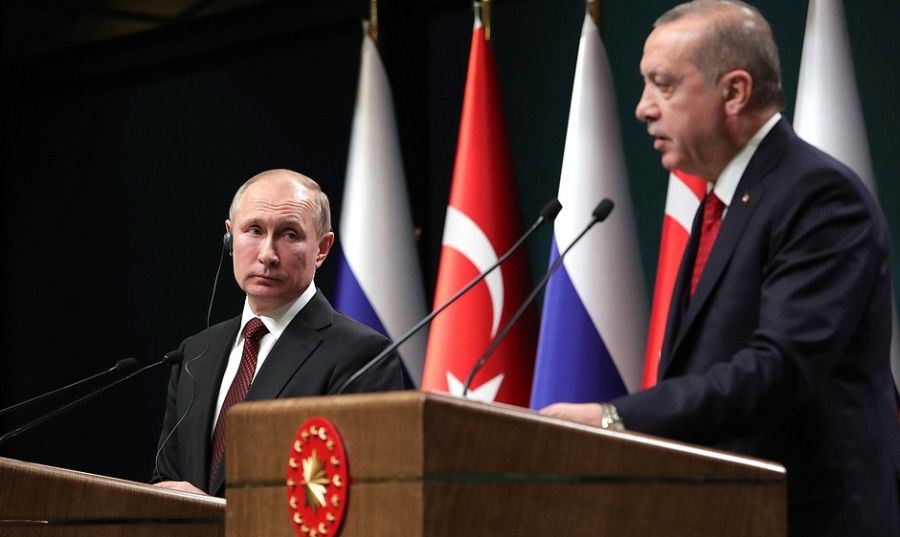
By Melkulangara BHADRAKUMAR | Strategic Culture Foundation | 29.11.2018
During a Pentagon briefing last weekend, Secretary of Defence James Mattis dropped a bombshell by innocuously slipping in that the US military intends to set up a string of observation posts on the Syrian-Turkish border. Mattis implied that Turkey was on board and that the idea was for the two militaries to jointly prevent any terrorist threats to the US’ NATO ally emanating out of Syrian territories.
Turkish officials immediately tore into Mattis’ project. Defence Minister Hulusi Akar disclosed that he had warned US Chairman of the Joint Chiefs of Staff Gen. Joseph Dunford only a week ago that the observation posts would have a “negative impact” and create the impression that “US soldiers are somehow protecting terrorist YPG (Syrian Kurdish) members and shielding them.”
The move would make an already complex situation “much more complex,” Akar added. He said, “Nobody should doubt that the Turkish armed forces and the Republic of Turkey will take the necessary steps against all kinds of risks and threats from across its borders.”
On Tuesday, President Recep Erdogan lashed out against the US troop presence in eastern Syria, charging that plans to establish observation posts along the Turkish border are meant to aid terrorist elements. “Those who say they are countering (ISIS) in Syria are in fact allowing a small group of terrorists to exist in the country to justify their presence in the war-torn country,” he said.
Erdogan alleged that the US is actually showing a preference to “live and breathe with the terrorists.” “The only target of this terror organization (YPG)… is our country,” he said. “It’s not possible for us to remain idle against this threat.”
Clearly, what is unfolding is a US game plan to block the Turkish military’s future operations in northern Syria against the Kurdish militia. Pentagon regards the YPG to be its most effective Syrian partner. Simply put, what we see here is the Syrian equivalent of what Washington did in 1991 in Iraq by imposing a “no-fly zone” over the Kurdistan region in the north.
The US is playing the long game. It is exactly three years since President Obama deployed 50 commandos to advise the Syrian Kurdish militia in their fight against the ISIS. Obama insisted it was “just an extension” of “special ops” that the US was running already. But the the numbers steadily kept increasing – from 50 to 250, from 250 to 500, and from 500 to 2000. The true figure today is around 5000 – and growing.
Seth Harp at the New Yorker magazine noted after a recent visit to the US bases in Syria, “the mission has morphed into something more like a conventional ground war. The United States has built a dozen or more bases from Manbij to Al-Hasakah, including four airfields, and American-backed forces now control all of Syria east of the Euphrates, an area about the size of Croatia.”
According to reports, there are presently 17 military bases in northeastern Syria. Yet, the US Congress has not authorized military action in Syria, nor has UN mandated the use of force. The Pentagon’s so-called Operation Inherent Resolve comes under the authority of the secretive Joint Special Operations Command, which means that “basic facts are kept classified, including the cost of the mission, the units involved, where they are located, and the number of wounded, which is believed to be substantial,” as Harp pointed out.
The intriguing part is about the US intentions. The stated purpose of the Operation Inherent Resolve is to defeat the ISIS, but lately it has shifted to countering Iranian presence in Syria. According to the US special representative for Syria engagement James F. Jeffrey, Trump has agreed to keep U.S. troops in Syria indefinitely. “We are not in a hurry,” he said.
Turkey’s worst fear may be coming true – a Syrian Kurdistan taking shape right along its border. Indeed, this becomes a template of the overall US strategy to encircle Turkey and Iran and to control Baghdad and Damascus – and eventually to make Russian presence in Syria untenable.
The US aims to put a knife into the heart of the Turkey-Russia-Iran axis in Syria by accentuating the contradictions in the region. The gloves have come off vis-à-vis Iran, Pentagon is now “defanging” Turkey and it remains to be seen how long the gloves will remain in place in the dealings with Russia.
In a candid interview with the Russia media on November 21, Special Representative for Syria Engagement Jeffrey sounded testy. He repeated that the deployment of S-300 missiles to Syria is a “dangerous escalation” – “we would urge the Russians to be very careful with this” – and assertively spoke of the new sanctions against Iran and Russia for oil shipments to Syria, while also rejecting offhand any talk of trade-offs with Russia over Iranian presence in Syria and debunking the Astana process. Jeffrey even reserved the US military’s right “to exercise our right of self-defense” if Russian forces on the ground came in the way. (Jeffrey disclosed that there have been military engagements with the Russians so far in “about a dozen times in one or another place in Syria.”)
Pentagon will press ahead with the establishment of observation posts on the Syrian-Turkish border despite Ankara’s objections. Turkey’s hour of reckoning is approaching. A few days ago, Turkish media reported that Saudi and UAE troops had deployed to northern Syria. In early November, the UAE reopened its embassy in Damascus.
The US and Israel are pressing Saudi Arabia and the UAE to fund the Syrian Kurdish militia and help create proximity between the Kurdish and Arab tribes inhabiting northeastern Syria with a view to create a unified Kurdish-Arab militia that becomes a Syrian bulwark against the two non-Arab regional powers Turkey and Iran.
To quote from a prominent Saudi commentator in the establishment daily Asharq Al-Awsat, “The Americans are now establishing Syrian Kurdish militias as a striking force against several parties and this revives the hopes of the Syrian opposition that it has an opportunity to resume its fighting activities after it has lost most of what it gained of villages and territories during the civil war.”
Both Saudis and Emiratis are once again at the US’s bidding in Syria. These Gulf States no longer hide their association with Israel. They are reciprocating the US-Israeli help to shove the Khashoggi affair under the rug.
Pro-Israel groups attack Rand Paul for blocking $38 billion to Israel
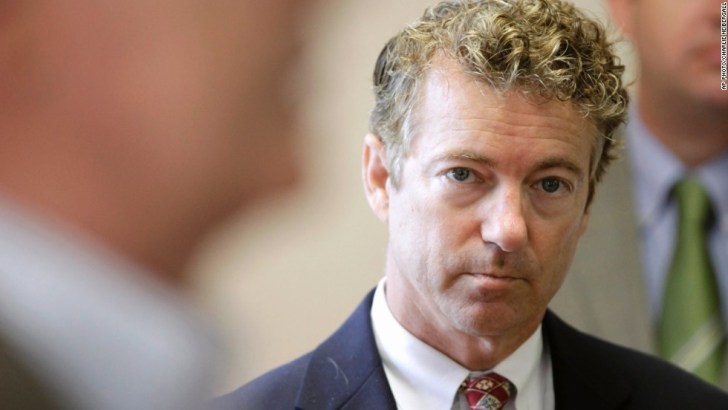
If Americans Knew | November 27, 2018
Free Beacon reports that “pro-Israel groups in America are mobilizing against Sen. Rand Paul (R., Ky.) for blocking the continuation of U.S. aid to Israel.”
Paul has placed a “block” on legislation to give Israel $38 billion over the next 10 years – $23,000 per every Jewish Israeli family of four. This is the largest military aid package in U.S. history and amounts to $7,230 per minute to Israel, or $120 per second. A stack of $38 billion dollar bills would reach ten times beyond the international space station.
A block is a legislative procedure in which a senator calls on the floor leader not to move forward with a bill and indicates that the senator may filibuster against it.
Jewish News Syndicate reported last week that the American Israel Public Affairs Committee (AIPAC) had sent an action alert to its members calling on them to pressure Paul to remove his block on the bill, ‘‘S. 2497 Ileana Ros-Lehtinen United States-Israel Security Assistance Authorization Act of 2018.’
Now, according to Free Beacon, a right-wing pro-Israel website, AIPAC has also been purchasing advertisements on Facebook attacking Paul “as the primary Senate force blocking the reauthorization of the U.S.-Israel security pact.”
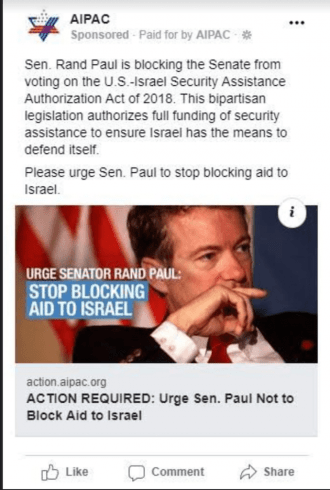
AIPAC Facebook ad against Rand Paul
Another pro-Israel group, Christians United for Israel (CUFI), has also reportedly organized an email blitz to pressure Paul to remove his hold, and has “invested heavily” in ads in Kentucky targeting Rand’s constituents.
According to Free Beacon, “Paul, a proponent of ending U.S. aid across the globe, has had multiple confrontations with the pro-Israel community over the years as result of his views. Paul has sought to hold up U.S. aid to Israel multiple times over the years, creating friction between him and top U.S. pro-Israel lobbying shops.”
Yesterday CUFI sent an email to supporters around the country saying: “Sen. Rand Paul is blocking the U.S.-Israel Security Assistance Authorization Act, S.2497. This bill is the cornerstone of U.S. support for Israel.”
In the message, CUFI calls Paul the “last obstacle to getting this bill signed into law.”
Free Beacon reports that Paul has also recently proposed suspending U.S. arms sales to Saudi Arabia and Bahrain over their attacks on what the Free Beacon calls “pro-Iran militants in Yemen.” Paul has long opposed U.S. support for the attacks on Yemen, which is on the brink of famine and has 50,000 dead.
Israel has long targeted Yemen as one of the countries that must be controlled in its quest for hegemony in the region.
U.S. Foreign Policy Has No Policy
Why can’t we just leave everyone alone?
By Philip Giraldi • Unz Review • November 27, 2018
President Donald Trump’s recent statement on the Jamal Khashoggi killing by Saudi Arabia’s Crown Prince might well be considered a metaphor for his foreign policy. Several commentators have suggested that the text appears to be something that Trump wrote himself without any adult supervision, similar to the poorly expressed random arguments presented in his tweeting only longer. That might be the case, but it would not be wise to dismiss the document as merely frivolous or misguided as it does in reality express the kind of thinking that has produced a foreign policy that seems to drift randomly to no real end, a kind of leaderless creative destruction of the United States as a world power.
Lord Palmerston, Prime Minister of Britain in the mid nineteenth century, famously said that “Nations have no permanent friends or allies, they only have permanent interests.” The United States currently has neither real friends nor any clearly defined interests. It is, however, infested with parasites that have convinced an at-drift America that their causes are identical to the interests of the United States. Leading the charge to reduce the U.S. to “bitch” status, as Congresswoman Tulsi Gabbard has artfully put it, are Israel and Saudi Arabia, but there are many other countries, alliances and advocacy groups that have learned how to subvert and direct the “leader of the free world.”
Trump’s memo on the Saudis begins with the headline “The world is a very dangerous place!” Indeed, it is and behavior by the three occupants of the White House since 2000 is largely to blame. It is difficult to find a part of the world where an actual American interest is being served by Washington’s foreign and global security policies. Indeed, a national security policy that sees competitors and adversaries as enemies in a military sense has made nuclear war, unthinkable since the demise of the Soviet Union in 1991, thinkable once again. The fact that no one in the media or in political circles is even talking about that terrible danger suggests that war has again become mainstreamed, tacitly benefiting from bipartisan acceptance of it as a viable foreign policy tool by the media, in the U.S. Congress and also in the White House.
The part of the world where American meddling coupled with ignorance has produced the worst result is inevitably the Middle East. Washington has been led by the nose by Israel and Saudi Arabia, currently working in sync, to have the United States destroy Iran even though the Iranians represent no threat whatsoever to Americans or any serious U.S. interests. The wildly skewed view of what is taking place in that region is reflected in Trump’s memo in the first paragraph, which reads:
“The country of Iran, as an example, is responsible for a bloody proxy war against Saudi Arabia in Yemen, trying to destabilize Iraq’s fragile attempt at democracy, supporting the terror group Hezbollah in Lebanon, propping up dictator Bashar Assad in Syria (who has killed millions of his own citizens), and much more. Likewise, the Iranians have killed many Americans and other innocent people throughout the Middle East. Iran states openly, and with great force, ‘Death to America!’ and ‘Death to Israel!’ Iran is considered ‘the world’s leading sponsor of terror.’”
Almost all of that is either patently untrue or grossly exaggerated, meaning that Trump’s profoundly ignorant statement is remarkable for the number of lies that it incorporates into 631 words which are wrapped around a central premise that the United States will always do whatever it wants wherever it wants just because it can. The war being waged by the Saudis against Yemen, which reportedly has killed as many as 80,000 children, is not a proxy struggle against Iran as Trump prefers to think. It is naked aggression bordering on genocide that is enabled by the United States under completely false pretenses. Iran did not start the war and plays almost no role in it apart from serving as a Saudi and Emirati excuse to justify the fighting. Other lies include that Bashar al-Assad of Syria has killed millions of his own citizens and that Saudi Arabia is fighting terrorism. Quite the contrary is true as the Saudis have been a major source of Islamic terrorism. And as for Iran being the “world’s leading sponsor of terrorism,” that honor currently belongs to the U.S., Israel and the Saudis.
The core of Trump’s thinking about Khashoggi and the Saudis comes down to Riyadh’s willingness to buy weapons to benefit America’s defense contractors and this one sentence: “The United States intends to remain a steadfast partner of Saudi Arabia to ensure the interests of our country, Israel and all other partners in the region.” Yes, once again it is Israel pulling Trump’s strings, with Prime Minister Benjamin Netanyahu leading the charge to give Crown Prince Mohammad bin Salman a pass on the gruesome murder of a legal resident of the United States who, once upon a time, might have actually had the U.S. government on his side.
The reckless calibrations employed to set American policies in other parts of the world are also playing out badly. Russia has been hounded relentlessly since the 2016 election, wasting the opportunity to establish a modus vivendi that Trump appeared to be offering in his campaign. Russian and American soldiers confront each other in Syria, where the U.S. has absolutely no real interests beyond supporting feckless Israel and Saudi Arabia in an unnecessary armed conflict that has already been lost. There is now talk of war coming from both Moscow and Washington while NATO in the middle has turned aggressive in an attempt to justify its existence. The bilateral relationship between the U.S. and Russia is now worse than it was towards the end of the Cold War while the expansion of NATO up to Russia’s doorstep has threatened the Kremlin’s vital interests without advancing any interest of the United States.
Afghanistan has become the longest war in U.S. history with no end in sight and China too has seen what began as a dispute over trade turned into something more vitriolic, a military rivalry over the South China Sea that could explode. And North Korea? A love fest between two leaders that is devoid of content.
One might also add Venezuela to the list, with the U.S. initiating sanctions over the state of the country’s internal politics and even considering, according to some in the media, a military intervention.
All of the White House’s actions have one thing in common and that is that they do not benefit Americans in any way unless one works for a weapons manufacturer, and that is not even taking into consideration the dead soldiers and civilians and the massive debt that has been incurred to intervene all over the world. One might also add that most of America’s interventions are built on deliberate lies by the government and its associated media, intended to increase tension and create a casus belli where none exists.
So what is to be done as it often seems that the best thing Trump has going for him is that he is not Hillary Clinton? First of all, a comprehensive rethink of what the real interests of the United States are in the world arena is past due. America is less safe now than it was in 2001 as it continues to make enemies with its blundering everywhere it goes. There are now four times as many designated terrorists as there were in 2001, active in 70 countries. One would quite plausibly soon arrive at George Washington’s dictum in his Farewell Address, counseling his countrymen to “observe good faith and justice towards all nations; cultivate peace and harmony with all.” And Washington might have somehow foreseen the poisonous relationships with Israel and the Saudis when he warned that “… a passionate attachment of one nation for another produces a variety of evils. Sympathy for the favorite nation, facilitating the illusion of an imaginary common interest in cases where no real common interest exists, and infusing into one the enmities of the other, betrays the former into a participation in the quarrels and wars of the latter without adequate inducement or justification.”
George Washington or any of the other Founders would be appalled to see an America with 800 military bases overseas, allegedly for self-defense. The transfer of wealth from taxpayers to the military industrial complex and related entities like Wall Street has been catastrophic. The United States does not need to protect Israel and Saudi Arabia, two countries that are armed to the teeth and well able to defend themselves. Nor does it have to be in Syria and Afghanistan. And, by the way, Russia is no longer the Soviet Union and NATO should be abolished.
If the United States were to withdraw its military from the Middle East and the rest of Asia tomorrow, it would be to nearly everyone’s benefit. If the armed forces were to be subsequently reduced to a level sufficient to defend the United States it would put money back in the pockets of Americans and end the continuous fearmongering through surfacing of “threats” by career militarists justifying the bloated budgets.
Will that produce the peaceable kingdom? Probably not, but there are signs that some in powerful positions are beginning to see the light. Senator Rand Paul’s courageous decision to place a “hold” on aid to Israel is long overdue as Israel is a liability to the United States and is also legally ineligible for aid due to its undeclared nuclear arsenal and its unwillingness to sign the Nuclear Non-Proliferation Treaty (NPT). The hysterical reactions of American Jews and Israel suggest that any redirection of U.S. Middle East policy will produce a hostile reaction from the Establishment, but even small steps in the right direction could initiate a gradual process of turning the United States into a more normal country in its relationships with the rest of the world rather than a universal predator and bully.
Philip M. Giraldi, Ph.D., is Executive Director of the Council for the National Interest, a 501(c)3 tax deductible educational foundation that seeks a more interests-based U.S. foreign policy in the Middle East. Website is www.councilforthenationalinterest.org, address is P.O. Box 2157, Purcellville VA 20134 and its email is inform@cnionline.org.
What you won’t hear from US govt: Iran is open to working with Saudi Arabia
By Darius Shahtahmasebi | RT | November 22, 2018
Washington’s rhetoric regarding Iran paints the picture of an evil nation hellbent on destroying the world. In reality, it appears that Tehran would prefer dialogue with its rivals, which is unacceptable to the US.
Tuesday’s White House Statement from President Trump on “Standing with Saudi Arabia” was an outright condemnation of Iran and a total free pass for Saudi Arabia.
Iran is to blame for almost every issue in the Middle East, including the war in Yemen, according to the statement. The US-made and supplied bombs raining down on Yemeni school buses, with some 85,000 children dying in the process, is simply because of Iran. Not only is Iran responsible for the bloodshed in Yemen, Tehran has further helped “dictator Bashar Assad” in Syria kill “millions of his own citizens.” The official death toll of the Syrian war is under one million, and certainly the various jihadist groups, including Islamic State (IS), share responsibility for that figure.
“The Iranians” have also killed many Americans and other innocent people throughout the Middle East. Iran not only shouts “Death to America” and “Death to Israel” but it is also considered “the world’s leading sponsor of terror.”
It is curious enough that firstly, in a statement about Saudi Arabia, the term “world’s leading sponsor of terror” is not gifted to the prime sponsors of Al-Qaeda and IS. Secondly, the fact that Trump himself put that term in inverted commas seems to suggest that even he doesn’t quite believe that one to be true.
Remember, Saudi Arabia is the country that Trump, before becoming president, once accused of masterminding the 9/11 attacks. I wasn’t aware of this until reading the statement, but according to the White House, Saudi Arabia would gladly withdraw from Yemen if the Iranians would agree to leave. That’s right, Iran’s non-presence in Yemen must be removed in order for Saudi Arabia to cease blowing up children, hospitals, factories, food trucks, schools, agricultural land, strategic ports, and relinquish its complete stranglehold over the country.
If you were naive enough to take the White House statement at face value, you would surely think that Iran has much to answer for. Iran is, after all, public enemy number one and has been for some time. Conversely, Saudi Arabia has been a longstanding ally of the United States, a faithfully serving client state, and it should be protected at all costs especially if there is to be any hope at pushing back against Iran as it yells “Death to America” and “Death to Israel.”
But what if Iran was, despite all of its flaws, not interested in fighting a war with Saudi Arabia? What if we dug a little bit deeper and asked ourselves: is there another way of dealing with the “threat” that Iran poses?
In January this year, Iran’s Foreign Minister Mohammad Javad Zarif wrote an article that was published in the Financial Times which laid out the country’s proposed framework for bringing stability to the Middle East. The article was widely ignored by the rest of the world, even though its implications were potentially life-saving.
“The objective of a strong region — as opposed to a quest for hegemony and the exclusion of other actors — is rooted in recognising the need to respect the interest of all stakeholders,” Zarif wrote. “Any domineering effort by one country is not only inappropriate but essentially impossible: those who insist on following that path create instability. The arms race in our region is an instance of this kind of destructive rivalry: siphoning vital resources into the coffers of arms manufacturers has contributed nothing to achieving peace and security. Militarism has only served to fuel disastrous adventurism.”
Zarif states that the usual modes of forming alliances have become “obsolete” and suggests that security networking to address issues is a much better practice. He proposes that instead of ignoring conflicts of interests, the countries in the region should accept their differences.
“The rules of this new order are straightforward: common standards, most significantly the purposes and principles of the UN Charter, such as sovereign equality of states; refraining from the threat or use of force; peaceful resolution of conflicts; respect for the territorial integrity of states; non-intervention in the domestic affairs of states; and respect for self-determination within states,” Zarif adds.
Zarif recommends opening up dialogue and blames a “dialogue deficit” for instability throughout the region. Such a dialogue, he argues, could help other nations understand that all parties have “similar concerns, fears, aspirations and hopes.” His eventual vision is that these countries will eventually adopt a “non-aggression pact.”
Now, Zarif did not explicitly state who he was talking about in this proposed path to peace and stability. But what if his intention was to work with Saudi Arabia, is this not something that should be talked about, particularly by the US commander-in-chief when releasing statements stoking the fire of an already volatile region while pitting two major regional players against each other?
In October last year, Zarif was quoted as saying that Tehran is willing and ready for rapprochement with the Kingdom of Saudi Arabia, adding that he does not believe the two countries should have the type of relationship they have right now.
In December last year, Iran’s president Hassan Rouhani further intimated that Tehran is willing to resume ties with Saudi Arabia if it halted its military campaign in Yemen and severed its ties with Israel.
“We don’t have any problem with the country that is our neighbor and unfortunately speaks a lot and speaks irrationally. Saudi Arabia, as our neighbor, should stop bombing Yemen from tomorrow, stop bowing to Israel, stand straight and rely on its nation,” Rouhani said.
In March this year, Zarif then took his ambiguous article one step further and openly said that Iran is willing to resolve its differences with Saudi Arabia’s as part of Tehran’s desire for stability in the region. As Zarif notes, this is not the first time Iran has reached out to the kingdom, yet the Saudis continue to reject Iran’s proposed dialogue.
In August of this year, Zarif further stated that Iran wants to restore relations with Saudi Arabia as well as the United Arab Emirates (UAE) and Bahrain. Surprisingly, Saudi Arabia had just allowed the entry of an Iranian diplomat to head Iran’s interests in the Kingdom, a rare move since diplomatic ties had been cut almost two years prior.
Just last month, Zarif again called for Saudi Arabia’s cooperation to push back against the “repeated insults” made by the US president at the time.
“This is the reward of the illusion that security could be achieved through external support,” Zarif said. “We extend our hands to our neighbours, saying: let’s build a strong region to stop this arrogant pride.”
I could be wrong, but in its totality, it does appear that Iran is proposing a framework where Middle Eastern countries settle their disputes between themselves without outside interference, whereby the US would be left out completely. Such a suggestion is in itself a form of hubris so unacceptable to Washington that the proposal itself makes the country ripe for a targeted regime change operation. Despite this, Iran has been quite open about its blueprint for a new outlook to the Middle East.
“We don’t need foreigners to guarantee the security of our region,” Iran’s president said earlier this year.
“When it comes to regional security arrangements, we are ready to talk to our neighbours and friends, without the presence of foreigners,” he added. “We are, have been and always will be good neighbours.” Yes – even Saudi Arabia.
In August, UN experts went even further and said that Iran might be willing to play a “constructive role” in ending the war in Yemen, something Iran has said it has been wanting to do for years by working with Saudi Arabia.
Conversely, the Saudis and their US counterparts are not so willing to take the Iranians up on their offer.The Saudis always want to “fight the Iranians to the last American,” according to former Secretary of Defence Robert Gates. The Saudis have even openly abandoned the Palestinian cause in an attempt to cosy up to Israel and create a US-backed alliance that can confront Iran in the region. The Saudi Crown Prince also compared Iran’s supreme leader to Adolf Hitler, a brazen statement for a man who executes journalists and unarmed children with complete impunity. The kingdom continues to openly work with Al-Qaeda linked groups to prolong the fighting in Yemen, all because its anti-Iran hysteria cannot falter from its position.
A détente between Riyadh and Tehran appears to be a far cry away from happening any time soon, but we cannot continue to pretend we haven’t noticed the opportunity that continues to present itself, particularly from the Iranian side. Whether an Iran-Saudi relationship is a positive step or a disastrous one is an important question to ask; but we should at least consider it as an option if it can avoid a potential and unnecessary war between two regional powers, as well as its potential to diffuse an already devastating war which continues to kill thousands of people completely needlessly.
Featured Video

Iran FM Araghchi: “Hormuz Will No Longer Be the Same”
or go to
Aletho News Archives – Video-Images
From the Archives
Sam Husseini: The entire US establishment helped lie their way into the Iraq war
By Slava Zilber | American Herald Tribune | October 14, 2019
Sam Husseini is a senior analyst with the Institute for Public Accuracy, independent journalist and contributor to The Nation and FAIR.
Slava Zilber: Sam, three years ago, you appeared on Talk Nation Radio with David Swanson and spoke about the case of the GCHQ whistleblower Katharine Gun. You pointed out that the people involved in the spying on the UN and the people authorizing the Iraq War were not held accountable:
“Virtually everybody who went along with the war, whether it is Kerry or Clinton, of course, the Bush administration themselves has falsified their own records in terms of why, what they did, when they did, why they did it, to the extent that they’ve been scrutinised at all.”
You also address it in a recent article. And recently, Joe Biden has been lying about his position on the Iraq War. How can such an important issue escape meaningful scrutiny? … continue
Blog Roll
 Aletho News
- Oman FM: Persian Gulf states, Iran, Iraq should form security pact excluding US
- Trump peddles fresh falsehoods, claims Iran ‘started the war’ as US aggression drags on
- Ukraine quagmire? Yes, but it’s for NATO, not Russia
- US intelligence hypes Chinese, Russian space threats while accelerating its own military buildup in orbit
- Iran FM Araghchi: “Hormuz Will No Longer Be the Same”
- EU facing trillion-euro debt hole while seeking more cash for Kiev
- How US, Europe, Persian Gulf states exhausted missile stockpiles, splurged billions to defend Israel
- Up in arms… Koreans reject U.S. empire’s plan to make South Korea the next Ukraine
- Iran, Turkey, Pakistan, Saudi Arabia could advance region-led security framework in Tehran: FM spox
- Netizens condemn Japanese drama for projecting Japan’s wartime atrocities onto Chinese characters
- If Americans Knew
- An error has occurred; the feed is probably down. Try again later.
- No Tricks Zone
- Sudden Stratospheric Warming, Powerful El Niño Combination May Lead To Extreme Europe Cold, Energy Crisis!
- Two New Studies Find Thwaites Glacier Melt Cannot Be Driven By Human Activity Or A Warming Ocean
- E-Cars Reduce CO2 Emissions By Only 41% Compared To Internal Combustion Engine Vehicles
- Predictions Made By Renowned Climate Professor Over Past Decades Have Been Proven To Be Poor
- New Study Suggests Large Regions Of The Pacific Ocean Have Been Cooling For The Last 80 Years
- Germany’s Green Energy Debacle: High Energy Costs Force Kahla Porzellan to Close After 182 Years!
- New Study: 50 Years Of The Most Aggressive ‘Net Zero’ Policies Can Only Affect The Global Climate By 0.03°C
- US September “Heat” Was No Record…Many Records Set Decades Ago
- Latest European Green Energy Debacle; Portugal’s Largest Flagship Solar Park Insolvent!
- Green Energy Debacle: German Expert Professor Fritz Vahrenholt Warns Of Severe Economic And Social Consequences

