Trump’s Syrian Pullout is a Game Changer
By M.K. Bhadrakumar | News Click | December 2018
US President Donald Trump’s announcement on Wednesday regarding the withdrawal of American military forces from Syria has predictably run into strong headwinds in the Washington Beltway. A formidable coalition appeared overnight – comprising the Deep State, US defence and security establishment, leading members of the Congress, major media organs –branding Trump as a maverick. However, the fact of the matter is that Trump made a considered decision.
Basically, it is a political call on his part to advance his consistent stance that the US should not intervene in the Syrian conflict – a stance, we may recall, which Michael Flynn had begun fleshing out even before the Trump presidency began in January last year. Why is Trump asserting his political will?
Clearly, Turkey’s threat to launch an operation “any moment” to crush the US’ Kurdish allies and the deployment of Turkish troops on the Syrian border profoundly influenced Trump’s decision-making. (See my blog There’s no quick fix to US-Turkish tensions.)
Trump made a phone call to Turkish President Recep Erdogan last Friday to urge restraint and signaling a change of course in the US’ Syrian policy. Erdogan later nodded satisfaction over the phone conversation. The point is, the Turkish threat to attack Kurdish groups inside Syria makes the ground situation completely untenable for the US military. The options for the Pentagon will be either to intervene on behalf of its Kurdish proxies and confront the Turkish military (which is senseless), or to watch passively the complete demolition of the zone encompassing one-third of Syria that the US carved out for itself through the past year or more.
More to the point, there is every likelihood of US forces, numbering 2,000 soldiers and spread thinly on the ground, getting caught in the crossfire between the Turkish military and its affiliated Syrian opposition groups on one side and Kurdish fighters on the other. If the Turks vanquish and scatter the Kurdish groups, the US will be left with no local allies. And it will be a only matter of time before the isolated US “bases” in Syria numbering over a dozen will face harassment and predatory attacks by the battle-hardened Shi’ite militia trained and equipped by Iran. It can turn out to be a situation like the attack on the Marine barracks in Beirut in 1983.
The spectre that haunts Trump is of body bags of American soldiers killed in Syria coming home, which of course, will be spelling doom for his re-election bid in the 2020 election. Trump understands that there is a Russian-Turkish-Iranian convergence to evict the US forces from Syria and the only way to counter it can be by committing boots on the ground in much larger numbers, which is of course unrealistic.
Meanwhile, the Pentagon has been pursuing an invidious agenda of creating a quagmire for the Russians in Syria and acting, therefore, as a “spoiler” in any whichever way it can to frustrate the Russian-Turkish-Iranian efforts to stabilize Syria. Time and again, it became apparent that the US forces in Syria maintain covert links with extremist groups, provide cover for them, and disrupt the operations by the Syrian government forces fighting terrorism. The US role in Al-Tanf on the Syrian-Iraqi border is dubious, shameful and cowardly, to say the least.
Quite obviously, the Mission Creep pursed by the Pentagon commanders have come to a point where real danger exists today of direct clashes erupting at any moment involving US forces arrayed against the Russian / Turkish / Iranian / Syrian forces. An extremely risky venture of brinkmanship by the Pentagon commanders has been afoot. There is no way Turkey can compromise with the US-Kurdish axis in Syria. Nor are Russian and Iran going to throw away their hard-earned victory in the Syrian conflict to strengthen the government led by President Bashar Al-Assad. In a major speech in Moscow on Tuesday while addressing Russian Defence Board, President Vladimir Putin touched on the Syrian situation, underscoring, “We will give Syrians all the support they need.” (See my blog Putin warns US against misadventures.)
Equally, Trump cannot be unaware that there is growing uncertainty about the Saudis bankrolling the US operations in Syria, what with the growing tensions in the US-Saudi relations over the Jamal Khashoggi affair. Qatar and Jordan have already pulled out of the “regime change” project in Syria. Suffice to say, Israel is the only American ally in the region, which is today keen on an open-ended US military intervention in Syria.
Trump has been paying a lot of attention lately to mend the fractured Turkish-American ties and to revive the alliance, if possible. Step by step, he has been clearing the debris that had accumulated during the Obama presidency. The extradition of Islamist preacher Fetullah Gulen is a major obstacle, but even here Trump appears to have set the ball rolling. On December 18, Pentagon announced the clearance for a possible sale of the Patriot air and missile defence system to Turkey, notwithstanding Turkey’s purchase of S-400 ABM system from Russia. Trump is also addressing the detention in the US of a top executive of Halk Bank, which has serious political overtones for Erdogan personally. Unsurprisingly, Turkish Foreign Minister Mevlut Cavusoglu acknowledged publicly on December 18 that the climate of bilateral relations is “much, much better” of late. Cavusoglu disclosed that a visit by Trump to Turkey is on the cards.
Having said that, the US’ continued alliance with the Kurdish militia is a red line for Turkey and the relations between Ankara and Washington can never be normal so long as this “unholy alliance” (as Turks perceive it) continues. Ankara will suspect the US intentions toward Turkey so long as Pentagon treats the Kurds as strategic allies, no matter the tactical reasons proffered by the Pentagon commanders.
Trump understands this. And it largely explains his decision to cut the Gordian knot. Significantly, Cavusoglu discussed the US withdrawal plans in Syria with US Secretary of State Mike Pence within hours of the news of Trump’s decision.
The heart of the matter is that the US’ regional strategies can never be optimal without Turkey, which has been a “swing” state. Turkey has a vital role to play not only in the Middle East and Eastern Mediterranean but also in the Black Sea and the Balkans. Above all, Turkey is a NATO power and the alliance loses traction in the southern tier if Ankara does not take active interest, which has been the case in the most recent period. Therefore, on balance, US’ regional strategies have much, much more to gain out of Trump’s decision to disengage from direct military intervention in Syria and to resuscitate the relations with Turkey and re-energize the old partnership.
Of course, interest groups and war profiteers (“military-industrial complex”) in the US will castigate Trump for his decision to order the halt of the gravy train. But their main argument that residual terrorism still remains in Syria is a phony one bordering on rank hypocrisy. For, it is a matter of time before Russia and Iran and the Syrian government forces with their affiliated militia will make mincemeat out of the terrorist groups that have taken shelter in the US- controlled zone in eastern Syria as well as destroy the US-backed extremist groups ensconced in Idlib. Plainly put, the fight against terrorism will be taken to its logical conclusion as soon as the US forces get out of the way and the Pentagon is prevented from playing the spoiler’s role.
Therefore, paradoxically, the decision to pull out from Syria and the rebooting of the Turkish-American alliance can only improve the US’ capacity to influence the Syrian peace process, and regional politics in general. Interestingly, Trump’s announcement came just as agreement was reached in Geneva on the composition of the committee to write a new constitution for Syria, which is a defining moment in the UN-brokered peace process.
Turkey and Russia Push Towards a Resolution in Syria
By Tom LUONGO | Strategic Culture Foundation | 19.12.2018
Turkish-US relations are terrible and deteriorating by the day despite bromides to the contrary. Actions speak louder than words. And that has been all President Trump seems capable of anymore, words not actions.
Since the beginning of l’affair Khashoggi Turkey has been extracting concession after concession from the US as the Trump administration tries to salvage its soon-to-be-unveiled Middle East peace plan.
The latest concession may be the biggest. There’s a report out now that the Trump administration is readying the extradition of cleric Fethulah Gulen, who President Erdogan believes was behind the coup attempt against him in July of 2016.
The US has protected Gulen well beyond any reasonable measure for someone not in their pay so Erdogan’s claims ring true enough. I’ve always thought he was a US intelligence asset and that the US were the ones truly behind the coup attempt.
And since the Trump administration has been desperate to get the Turks to stop leaking details of the Khashoggi murder, Erdogan has pretty much had a free hand to conduct business as he’s seen fit for the past two-plus months.
Whether the US ever returns Gulen to Ankara or not is actually irrelevant; keeping it a sore spot open is its biggest value while Turkey prepares an assault against US-backed YPG forces in Manbij, Syria.
It helps raise Turkey’s position with the other countries involved in the Astana peace process for Syria while keeping Trump, his foreign policy mental midgets and Saudi Arabia on their collective back foot.
Turkey has grown increasingly restless about the US’s lack of movement in turning Manbij over to them. And have now unleashed attacks on Kurdish forces in Northern Iraq to hamper them further.
All of this is making the US presence in eastern Syria more untenable over time while the Saudis struggle with falling oil prices and no longer want to pay the bill for the US’s proxy war.
Don’t kid yourself, the US is struggling to keep its financial pressure up on Iran.
If these things weren’t enough Turkish Prime Minister Mevlut Cavusoglu said recently that Ankara was now willing to work with Syrian President Bashar al-Assad if he survives “democratic and credible” elections. This is rich coming from Turkey, but whatever.
The importance of this statement, however, cannot be overstated. Turkey was one of the major partners in the mission to destroy Syria. And now they have joined with Russia, Iran and China in negotiating the peace process.
They have gone from “Assad must go!” to “Assad can stay.” It is an admission that the US plan for balkanization of Syria will eventually fail and that their best bet is putting maximum pressure on the US to give up its regional plans.
Russia, of course, stands behind Turkey in this and they themselves are now upping the costs on the US and the Israelis. Because, it is now Russian policy to assist Syrian Arab Army forces in proportional retaliation against Israeli aggression in Syrian territory, according to Elijah Magnier.
No longer will the Russians stand aside and allow Israel a free hand over bombing what it says are Hezbollah and Iranian targets within Syria. The SAA will now strike back with a proportional response.
An airport for an airport, as it were.
What started as a State Department operation to install a puppet government and sow chaos in Syria under Hillary Clinton then became one to drain Russian and Iranian resources by wasting their time under John Kerry.
Today, that US/Israeli/Saudi strategy has been turned on its head.
It is now the US and the Saudis that are feeling the pinch of yet another quagmire without end. Moreover, the Israeli security situation is now worse than it was before all of this started in the first place. This necessitates an even more unhinged response from Washington which it cannot defend to the American people as to why we need to stay in Syria forever.
None of this is what President Trump campaigned on. None of this is what candidate and citizen Trump argued for.
The real war of attrition was never about physical resources and money. It was always about time. The Iranians and Russians have played for time. Time brought out the truth about the Syrian invasion. It exposed the real causes of the conflict.
The hope now for the US is that financial pressure will get Iran to knuckle under. But, look at what is happening. Oil prices are in freefall as the global economy slows down thanks to debt saturation, a rising dollar and increasing opposition in the West to neoliberalism and globalism.
Trump whines about this because it upsets his mercantilist plans to corner the energy markets while weaponizing the use of the dollar.
EU technocrats who fancy themselves the inheritors of a waning US empire, bristle under Trump’s plans. They will build an alternative payment vehicle to buy goods and services from sanctioned entities. This is about much more than Iranian oil.
So, while Trump, Bolton, Mnuchin and Pompeo, the Four Horsemen of the Foreign Policy Apocalypse, think they are winning this war on commerce, all they are doing is falling into the very trap Putin, Xi and Rouhani have set for them.
Again, they playing for time. The dollar is the US’s strength and also its Achilles’ heel. And if you are playing for time it is to build alternative channels for trade, oil, gas and whatever else the US deems against its interests without need for dollars.
Trump’s energy dominance plan is as transparent as his narcissism. More likely the sanctions exemptions for buying Iranian oil will be extended in May because he can’t have a global crisis be his fault as he prepares for re-election in 2020.
But, that’s exactly what he’s setting up.
So, now back to Syria.
Those who were set up to be scapegoats – namely Qatar and Turkey – washed their hands of the operation quickly, made deals with Russian President Vladimir Putin and charted their own independent paths. By the time the truth about US involvement in Syria was exposed they were long gone and only the real perpetrators left holding onto poor positions and worse arguments.
All Trump can do now is openly admit that we’re there on behalf of Israel and Saudi Arabia to get Iran. That’s it. He can sell that to part of his base. But, not enough of them to win re-election.
His peace plan is DOA. It died along with the 15 Russian airmen on that IL-20 back in August. I’ll be surprised if it is ever actually announced. That one event set us on this path. It permanently poisoned Russian/Israeli relations as Netanyahu overplayed his hand assisting NATO in a needless provocation which nearly sparked a wider war.
Reports are that Putin doesn’t return his phone calls and now dictates to Bibi what happens next. This also tells me Putin now has control over his Israeli fifth columnists within the Kremlin otherwise this order would never have been issued and made public.
Now Netanyahu is hemmed in on all sides and the Saudis are political pawns between the warring factions of the US government – Trump who wants an Arab NATO and the Deep State that wants him on a platter. Their benefactor, Trump, is in an increasingly untenable position who will soon be forced to choose between hot war and impeachment.
Meanwhile, Iran, Turkey and Russia will continue to bleed out the US forces in Syria while sanctions prove to be increasingly less effective. Simultaneously, the Astana process moves forward with all groups trying to reach out to each other around the sclerotic reach of the US and put an end to this shameful period of US foreign policy insanity.
Trump says ‘we have defeated ISIS’ as US starts withdrawal from Syria
RT | December 19, 2018
Donald Trump has tweeted that ISIS has been defeated as White House announced that US has started pulling out its troops from Syria.
The US has begun the withdrawal of its troops from Syria, the White House said in a statement, adding, however, that the move does not mean an end of the military campaign in the war-torn country but marks a “new phase” in the fight against Islamic State (IS, formerly ISIS).
“These victories over ISIS in Syria do not signal the end of the Global Coalition or its campaign. We have started returning United States troops home as we transition to the next phase of this campaign,” White House spokeswoman Sarah Sanders said.
She also partly echoed an earlier tweet by President Donald Trump, who also said that IS terrorists were defeated while calling the group “the only reason for [the US troops] being there [in Syria].”
According to some reports, the withdrawal might primarily affect the US troops on the ground working together with an alliance of Arab and Kurdish militias, known as the Syrian Democratic Forces (SDF). The US has a total of 2,000 servicemen there, who are particularly involved in training the local militias. The news come as the SDF are reportedly on the verge of retaking one of the terrorist group’s last major strongholds – the town of Hajin, located east of the Euphrates.
The pullout is expected to take between 60 and 100 days, according to reports citing US officials. Additional reports suggested that all US State Department personnel would also be evacuated from Syria within 24 hours.
However, even after the withdrawal, the US would still maintain a sizeable presence in the neighboring Iraq, with some 5,200 troops stationed just across the Syrian border. The aircraft of the US-led coalition – the primary tool of Washington and its allies in the Syrian conflict – will also still be able to continue their air raids flying out of Qatar and other bases in the Middle East.
Washington’s decision also comes days after the Turkish President Recep Tayyip Erdogan urged the US to make its Kurdish allies withdraw from the town of Manbij, located west of the Euphrates, in the northeastern Syria.
Ankara considers Syrian Kurdish paramilitaries as an extension of the Turkey-based anti-government guerrillas and brands the Syrian Kurdish YPG militia as terrorists. Erdogan threatened to order his troops to storm the town if the US fails to fulfill his demand. Last week, he announced plans to launch a military operation in the Kurdish areas “within days.”
In early December, Chairman of the Joint Chiefs of Staff General Joseph Dunford complained that the US lacks trained local fighters on the ground to “provide stability” to Syria.
Trump made an announcement that the US would be leaving Syria “very soon” back in March and never officially walked it back.
Turkey threatens to pull the plug on US
By M.K. Bhadrakumar | NewsClick | December 14, 2018
An impression has been gaining ground lately that the Trump administration is making overtures to Ankara to revive the original US-Turkish project on regime change in Damascus. The recent visit to Ankara by James Jeffrey, the US special representative to Syria, was seen in that light.
Prior to his trip to Ankara, Jeffrey openly suggested at a briefing at the US state department on December 3 that the Astana process on Syria (involving Russia, Turkey and Iran) should be wound up since it failed to advance the political process. As he put it, “US view … is let’s pull the plug on Astana.” In essence, Jeffrey ’s game plan was to somehow break up the Russian-Turkish-Iranian axis in Syria so that the US can tackle each of these three protagonists from a position of advantage.
However, the contradiction here is the US’ alliance with the Kurds, which is anathema to Turkey. Jeffrey tried to fudge this contradiction by saying, “Our policy is to work with the people of the northeast first of all to defeat ISIS… We have no political agenda either with the Kurdish groups, with the Arab groups, or with any other groups inside Syria. Our position is (a) the territorial integrity of Syria under its present borders; (b) we will work with all political forces that are willing to recognize and accept the UN political process and the basic criteria of all of these UN initiatives since 2012 on Syria, which is no threat to the neighbors, no threat to the population, no use of chemical weapons, no support for terrorism, no mass slaughter of one’s own civilians, and accountability for war crimes. That’s our position with everybody and anybody.”
But Turks refuse to be taken for a ride. If anything, the Turkish suspicions regarding the American intentions in northern Syria have only deepened. Two recent developments contributed to this:
One, the US move to establish observation posts next to Turkey’s border. Washington claims that these OPs will prevent possible terrorist threats against Turkey. But Turks are not duffers and they understand perfectly well that the real reason behind this Pentagon decision (announced innocuously almost as an aside by Defence Secretary James Mattis two weeks ago) is to prevent any Turkish operation against the Kurdish forces in northern Syria.
Two, the US disclosure (by the outgoing chairman of joint chiefs of staff Gen. Joseph Dunford) that “35,000-40,000 local forces need to be trained to provide stability” in the territories occupied by the US in northeast Syria. Without doubt, the alarm bells must have rung in Ankara that the US is moving in the direction of creating security underpinnings for an autonomous Kurdistan in Syria similar to what it achieved in Iraq following the Gulf War in 1990-91.
Taken together, Turkish leadership realizes that unless Turkey forcefully acted to thwart the US strategy before it is too late, Ankara may face the stark choice of an independent Kurdish entity appearing along its border with Syria, which of course would imperil Turkey’s own security, territorial integrity and even threaten its unity. Thus, President Recep Erdogan had no option but to announce on Wednesday that Turkey proposes to launch a military operation against the Syrian Kurdish groups in a “few days”.
Erdogan said, “It is time to realize our decision to wipe out terror groups east of the Euphrates. We will start the operation in east of the Euphrates in a few days to save it from the separatist terrorist organization. Turkey’s target is never the US soldiers, but rather the members of the terror group.”
Erdogan rejected outright the US move on setting up OPs along Turkish border, saying, “It is clear that the purpose of US observation points in Syria is not to protect our country from terrorists but protect (Kurdish) terrorists from Turkey.” Meanwhile, other Turkish officials have cast aspersions on the US plan to train 40000-strong local militia and Jeffrey’s diatribe against the Astana process.
Conceivably, Turkish officials conveyed to Jeffrey Ankara’s plans to launch military operations against Syrian Kurds. At any rate, no sooner than Erdogan spoke on Wednesday, Washington reacted sharply, expressing “grave concern” and warning that any such Turkish military operations in Syria will be “unacceptable.”
However, all indications are that preparations are complete on the Turkish side of the border for the military strike. A Turkish daily close to the ruling circles reported that the operation will be carried out with “point shots” – namely, precisely targeting concentrations of the Syrian Kurdish militia. Some 200 such targets have been reportedly identified. Indeed, the Turkish armed forces have the capability to shoot at these targets from the air and ground without entering Syrian airspace and territory. One possibility is that Turkish jets can strike the Kurdish targets from a 30-kilometer depth in the air, while the howitzers can strike up to a depth of 40 kilometers on the ground.
Other reports have claimed that over the past fortnight, there have been significant military deployments to the Syrian border with armored vehicles, tanks and personnel deployed from Şanlıurfa to Akçakale. The plan seems to be that strategic targets of the Kurdish forces will be hit initially with a view to rapidly clear a swathe of Syrian territories so that fighters of the so-called Free Syrian Army (Syrian opposition groups aligned with Turkey) can move into the area.
Indeed, if Erdogan carries out his pledge, it will put the US in an unenviable position of having to watch passively when its allies get pulverized by the jets and artillery. It will be a huge loss of face for the US and, importantly, it will render the best-laid American plans for an open-ended occupation of Syria nonviable and senseless.
Without doubt, Moscow and Tehran will be pleased with Erdogan’s resolve to frustrate the US game plan to divide Syria. Around 30 percent of Syrian territory is presently under American occupation. Some US analysts have openly estimated that if only Turks could be brought on board, that would increase the area to around 40 percent of Syrian territory and eventually help provide an outlet for that land-locked enclave (which also contains Syria’s oil fields) to the Eastern Mediterranean coast and access to the world market.
The heart of the matter is that other than rhetorically, Russia shies away from challenging the US occupation of Syria lest it led to military confrontation, which Moscow has been scrupulously avoiding, no matter the provocations from the American side (eg., drone attacks on the Russian bases in Syria.) As for Iran, it is fighting an existential battle to counter the US sanctions and a confrontation with the US in Syria is not the priority today. Damascus cannot hope to confront the US by itself, either.
Thus, unsurprisingly, a note of triumphalism had lately crept into the US stance – all but implying that the Americans are salvaging victory out of the jaws of military defeat in the Syrian conflict and that it is a matter of time before Russia finds itself in a quagmire, keeping afloat the regime in Damascus out of its own meager resources and increasingly feeling the financial crunch, with Washington effectively plugging any help for Syria’s reconstruction coming from the western allies by making all such aid conditional on the removal of President Bashar al-Assad from power.
No doubt, the simmering US-Turkish tensions in northern Syria over the Pentagon’s alliance with Syrian Kurdish groups have surged. It will be hard landing for the Pentagon if the long-awaited Turkish crackdown begins against the US’ Kurdish allies in Syria.
Pentagon: Turkish Unilateral Action in Northeast Syria Would Be ‘Unacceptable’
Sputnik – 13.12.2018
WASHINGTON – A Turkish unilateral military operation in northeast Syria if launched would be unacceptable and Ankara should consult with the United States to address the security situation, Defense Department spokesperson Cmdr. Sean Robertson told Sputnik.
Earlier, Ankara announced that the Turkish military would launch an operation against Kurdish forces.
“Unilateral military action into northeast Syria by any party, particularly as US personnel may be present or in the vicinity, is of grave concern,” Robertson said on Wednesday when asked about Turkey’s announcement. “We would find any such actions unacceptable… coordination and consultation between the US and Turkey is the only approach to address issues of security concern in this area.”
The United States believes that the High Level Working Group on Syria with its Turkish partners is the only way to secure the northeastern border area in a sustainable manner, Robertson said.
Uncoordinated military operations will undermine the shared US-Turkish interests in Syria, Robertson said. As a NATO ally and key partner in the Global Coalition against Daesh terrorist group*, both countries have solemn obligations to each other’s security, he added.
The United States remains committed to Turkey’s border security, he said.
US-Turkish relations have suffered a setback amid Ankara’s concerns over US support for the Kurdish People’s Protection Units (YPG). Ankara has also repeatedly accused Washington of failing to fulfil its promises regarding the withdrawal of the YPG from Syria’s Manbij.
Ankara regards YPG as an affiliate of the Kurdistan Workers’ Party (PKK), outlawed in Turkey.
US erects ‘observation posts’ on Syria-Turkey border despite Ankara’s dissent
Press TV – December 12, 2018
The US military says it has established “observation posts” in northern Syria with the purported aim of preventing clashes between Turkish forces and US-backed Kurdish militants, despite Ankara’s strong opposition to the plan.
“At the direction of Secretary (James) Mattis, the US established observation posts in the northeast Syria border region to address the security concerns of our NATO ally Turkey,” Department of Defense spokesman Rob Manning said in a press release on Tuesday.
This is while Turkish Defense Minister Hulusi Akar had, during a Friday meeting with US Special Envoy to Syria James Jeffrey in Ankara, called on Washington to lift the so-called observation posts in northern Syria, along parts of Turkey’ border.
Akar also said earlier that Turkey had expressed its concerns about US plans to set up several observation posts in Syria, a move, which according to him, could lead to a perception that Washington is “somehow protecting terrorist YPG [Kurdish People’s Protection Units] members.”
Turkey’s Foreign Minister Mevlut Cavusoglu this month lambasted as a “big mistake” the US support for the YPG militants in Syria, a thorny issue in ties between the two allies.
Cavusoglu made the remark while meeting with Turkish citizens at the Turkish consulate in New York.
The YPG forms the backbone of the so-called Syrian Democratic Forces (SDF), an anti-Damascus alliance of predominantly Kurdish militants supported by the US.
Ankara views the YPG as a terrorist organization and the Syrian branch of the outlawed Kurdistan Workers’ Party (PKK), which has been fighting for an autonomous region inside Turkey since 1984.
The Pentagon’s Tuesday release further said that the US military would coordinate with Turkey its security efforts in the border region.
“We take Turkish security concerns seriously and we are committed to coordinating our efforts with Turkey to bring stability to northeastern Syria,” Manning said in the press release.
Washington infuriated Ankara by announcing a plan for the formation of a Kurdish militant force in Syria near the Turkish border.
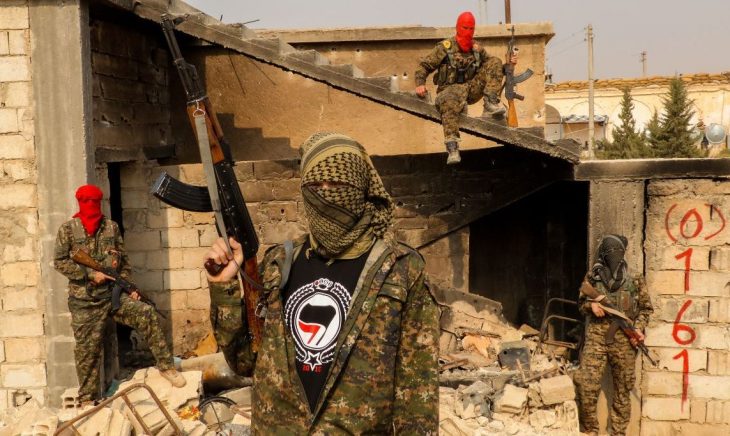
The plan prompted Turkey to launch a cross-border military operation on January 20 inside the Arab country, code-named Operation Olive Branch, with the declared aim of eliminating the YPG militants from northern Syria, particularly the Afrin region.
Turkish troops captured Afrin in March, and threatened to take the battle to nearby Manbij. Ankara and Washington agreed a roadmap on Manbij, which would see the city cleansed of US-backed Kurdish militants.
Turkey’s Defense Minister Hulusi Akar has expressed indignation at photos showing US troops dining with Kurdish militants near the Turkish border in Syria.
Mattis said last month that Washington wanted the so-called observation posts to help minimize tensions between the Turks and US-backed SDF forces in the purported fight against the Daesh terrorist group.
The Syrian government has given a degree of authority to Kurdish regions to run their own affairs. The US, however, has used the power vacuum to establish a foothold in those regions with the help of militants.
Ankara, one of Washington’s key allies in the region, has repeatedly questioned the US deployment of heavy weapons in Syria despite the defeat of Daesh in much of the Arab country.
Syria has strongly denounced the presence of both Turkish and US troops around Manbij.
The gulf within GCC is only widening
By M. K. BHADRAKUMAR | Indian Punchline | December 10, 2018
The annual summit meeting of the Gulf Cooperation Council (GCC) in Riyadh on Sunday was particularly important for Saudi Arabia as a display of its regional leadership. But the short meeting of the GCC leaders behind closed doors, lasting for less than an hour, ended highlighting the huge erosion of Saudi prestige lately.
The litmus test was the participation by Qatari Emir Sheikh Tamim bin Hamad al-Thani. King Salman’s letter of invitation to the emir was perceived as some sort of an olive branch for reconciliation. But Qatar’s Minister of State for Foreign Affairs Sultan bin Saad Al Muraikhi represented the country at the summit.
The calculation by the hot headed crown princes of Saudi Arabia and the UAE that Qatar would pack up is turning out to be a historic blunder. Qatar had some trying times but it has successfully weathered the harsh embargo by Saudi Arabia and the UAE, and the boycott is now hurting its enforcers. Qatar “celebrated” the anniversary of the boycott in June by banning the import of goods from the UAE, Saudi Arabia, Bahrain and Egypt (which had cut diplomatic and transport ties on June 5, 2017.) Ironically, Iran has been a beneficiary as Qatar established diplomatic relations with Tehran and began importing Iranian products.
Qatar also strengthened its alliance with Turkey, which stepped in as provider of security for Doha. And Turkey checkmated any plans that Saudis and Emiratis might have had to use force to bring the Qatari emir down on his knees.
The emir’s absence from the summit in Riyadh yesterday underscores that he is not in a mood to forget and forgive. Equally, Kuwait and Oman also have issues to settle with Saudi Arabia and the UAE. There is tension between Kuwait and Saudi Arabia over two oil fields – Khafji and Wafra – that are jointly owned by the two states, which have a capacity to produce more than half a million barrels per day, but have been closed since 2014 and 2015, respectively. The dispute is over the sovereignty over the so-called Neutral Zone on their border, which has been undefined for almost a century.
The Saudis are not relenting. “We’re trying to convince the Kuwaitis to talk about the sovereignty issues, while continuing to produce until we solve that issue,” Saudi Crown Prince Mohammed bin Salman told Bloomberg in an interview in October. Similarly, Saudis and Emiratis have stationed troops in Yemen’s southern province of al-Mahra that borders Oman although the region has no presence of Houthi rebels. Oman considers the move an infringement on its national security. Interestingly, instead of the Sultan of Oman, Deputy Prime Minister for the Council of Ministers Sayyid Fahd bin Mahmood Al Said represented the country at the GCC summit.
To be sure, like Banquo’s ghost at Macbeth’s banquet in Shakespeare’s play, the killing of Jamal Khashoggi provided the backdrop to the GCC summit. The GCC states (including Qatar) have not criticized the Saudi Crown Prince Mohammed bin Salman (MBS) but they would know this is a developing story and it has dented Saudi prestige irreparably, especially with the US Senate is at loggerheads with the Trump administration. The big question for the Gulf region would be as to where Saudi Arabia is heading. (See the blog by Thomas Lippman What Now For U.S. Policy And The Crown Prince?)
Of course, if the GCC disintegrates due to these contradictions, Saudi Arabia will be the big loser, because it will be a reflection on its regional leadership. But do the Saudis understand it? The remarks by the Saudi Foreign Minister Adel Al-Jubeir at the end of the GCC summit showed no sign of remorse.
He said, “The members of the Gulf Cooperation Council are keen that the crisis with Qatar will have no impact on the Council (GCC). But this does not mean relinquishing the conditions imposed on Qatar.” Doha should stop supporting terrorism and extremism and avoid interfering in other countries’ affairs and needed to fulfill the Arab countries’ conditions to open the way for its return to the full-fledged work in the GCC. “The stance towards Qatar came to push it to change its policies,” he added.
The leading Saudi establishment writer Abdulrehman al-Rashed fired away at Qatar on the day of the GCC summit. In a column entitled Is it Time to end the GCC? in the Saudi daily Asharq Al-Awsat (owned by royal family members) he wrote:
“Qatar… has been putting obstacles in the GCC path and it has succeeded where Saddam and Iran have failed: It managed to destroy and rip it [GCC] apart… It organized an internal and external opposition against the United Arab Emirates. It is now the primary financier of the greatest attack against Saudi Arabia and it stands behind the politicization of Khashoggi’s murder… Today’s [GCC] summit could not conceal the dark political cloud hanging over its head. It also strongly poses a question over the future of the GCC as doubts rise over the value of this union… A wedge has been driven in the GCC.”
The disarray within the GCC undoubtedly calls attention to the decline of US influence in the Middle East region. At the end of the day, the Gulf states have not paid heed to repeated US entreaties for GCC unity. Ideally, GCC should have provided today for the US strategy a strong platform for launching the regime change project against Iran. On the contrary, GCC is split down the middle, with Qatar, Oman and Kuwait getting along just fine with Tehran. While addressing the summit in Riyadh on Sunday, the Emir of Kuwait, Sheikh Sabah Al Ahmad hit the nail on the head when he said, “The most dangerous obstacle we face is the struggle within the GCC.”
After Soros Flees Turkey, Will He Flee The Rest Of The “Global South” Too?
By Andrew KORYBKO – Oriental Review – 03/12/2018
Soros’ “Open Society Foundation” decided to leave Turkey.
The organization’s representatives said that it was due to the recent accusations that they’ve meddled in the country’s internal affairs, which is an allusion to President Erdogan’s claims last week about their involvement in the 2013 Gezi Park Color Revolution attempt and is ironically the group’s raison d’etre. Truth be told, they’re making a responsible move after seeing the writing on the wall and calculating that a crackdown would be imminent if they don’t leave on their own volition, which works out to be a win-win for both their organization and the government. The “Open Society Foundation” can evacuate its foreign assets from the country and disband its public network, while the state doesn’t have to endure the weaponized infowar campaign that the Mainstream Media would predictably launch if Turkey undertook Russian-like measures to kick this organization out of the country.
This quid-pro-quo is pragmatic for both parties because the “Open Society Foundation’s” domestic Hybrid War operatives get off scot-free, though the state is already likely aware of who they are and won’t hesitate to detain them if they ever pose a future threat to security in the event that they decide to “go underground” to continue their destabilizing activities. At the same time, however, some of the most zealous among them might more safely relocate abroad instead, which would allow them to continue their work remotely through social media and other channels. Still, seeing as how the Turkish state retains strong control over the internet, this threat is conceivably manageable and isn’t seen as being anywhere near as dangerous as if the “Open Society Foundation” and its employees continued their activities in the country unchecked.
Soros’ retreat from Turkey might be a harbinger of what’s to come because President Erdogan commands tremendous respect among the international Muslim community or “Ummah”, so other Muslim governments might be inspired by his leadership in fearlessly calling out the “Open Society Foundation” and seek to emulate his example in the hopes that this will prompt the Color Revolution fifth column to preemptively flee from their countries too. Soros and his organization might try to push back against any similar state pressure if they feel that the authorities there aren’t as strong as their Turkish counterparts and could be influenced by any infowar smear campaign against them, but that’s nevertheless still a fight that they’d be choosing to wage and one which might ultimately be unsuccessful, especially if those governments round up the group’s domestic employees on the pretext that they’re security threats.
It’s still too early to say, but the tide might finally be turning against Soros in the “Global South”.
Turkey’s Hour of Reckoning in Syria
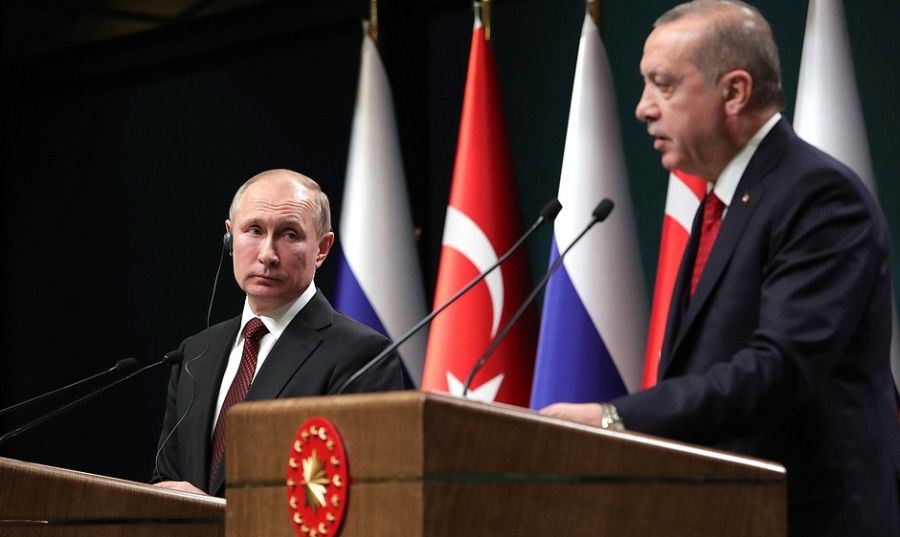
By Melkulangara BHADRAKUMAR | Strategic Culture Foundation | 29.11.2018
During a Pentagon briefing last weekend, Secretary of Defence James Mattis dropped a bombshell by innocuously slipping in that the US military intends to set up a string of observation posts on the Syrian-Turkish border. Mattis implied that Turkey was on board and that the idea was for the two militaries to jointly prevent any terrorist threats to the US’ NATO ally emanating out of Syrian territories.
Turkish officials immediately tore into Mattis’ project. Defence Minister Hulusi Akar disclosed that he had warned US Chairman of the Joint Chiefs of Staff Gen. Joseph Dunford only a week ago that the observation posts would have a “negative impact” and create the impression that “US soldiers are somehow protecting terrorist YPG (Syrian Kurdish) members and shielding them.”
The move would make an already complex situation “much more complex,” Akar added. He said, “Nobody should doubt that the Turkish armed forces and the Republic of Turkey will take the necessary steps against all kinds of risks and threats from across its borders.”
On Tuesday, President Recep Erdogan lashed out against the US troop presence in eastern Syria, charging that plans to establish observation posts along the Turkish border are meant to aid terrorist elements. “Those who say they are countering (ISIS) in Syria are in fact allowing a small group of terrorists to exist in the country to justify their presence in the war-torn country,” he said.
Erdogan alleged that the US is actually showing a preference to “live and breathe with the terrorists.” “The only target of this terror organization (YPG)… is our country,” he said. “It’s not possible for us to remain idle against this threat.”
Clearly, what is unfolding is a US game plan to block the Turkish military’s future operations in northern Syria against the Kurdish militia. Pentagon regards the YPG to be its most effective Syrian partner. Simply put, what we see here is the Syrian equivalent of what Washington did in 1991 in Iraq by imposing a “no-fly zone” over the Kurdistan region in the north.
The US is playing the long game. It is exactly three years since President Obama deployed 50 commandos to advise the Syrian Kurdish militia in their fight against the ISIS. Obama insisted it was “just an extension” of “special ops” that the US was running already. But the the numbers steadily kept increasing – from 50 to 250, from 250 to 500, and from 500 to 2000. The true figure today is around 5000 – and growing.
Seth Harp at the New Yorker magazine noted after a recent visit to the US bases in Syria, “the mission has morphed into something more like a conventional ground war. The United States has built a dozen or more bases from Manbij to Al-Hasakah, including four airfields, and American-backed forces now control all of Syria east of the Euphrates, an area about the size of Croatia.”
According to reports, there are presently 17 military bases in northeastern Syria. Yet, the US Congress has not authorized military action in Syria, nor has UN mandated the use of force. The Pentagon’s so-called Operation Inherent Resolve comes under the authority of the secretive Joint Special Operations Command, which means that “basic facts are kept classified, including the cost of the mission, the units involved, where they are located, and the number of wounded, which is believed to be substantial,” as Harp pointed out.
The intriguing part is about the US intentions. The stated purpose of the Operation Inherent Resolve is to defeat the ISIS, but lately it has shifted to countering Iranian presence in Syria. According to the US special representative for Syria engagement James F. Jeffrey, Trump has agreed to keep U.S. troops in Syria indefinitely. “We are not in a hurry,” he said.
Turkey’s worst fear may be coming true – a Syrian Kurdistan taking shape right along its border. Indeed, this becomes a template of the overall US strategy to encircle Turkey and Iran and to control Baghdad and Damascus – and eventually to make Russian presence in Syria untenable.
The US aims to put a knife into the heart of the Turkey-Russia-Iran axis in Syria by accentuating the contradictions in the region. The gloves have come off vis-à-vis Iran, Pentagon is now “defanging” Turkey and it remains to be seen how long the gloves will remain in place in the dealings with Russia.
In a candid interview with the Russia media on November 21, Special Representative for Syria Engagement Jeffrey sounded testy. He repeated that the deployment of S-300 missiles to Syria is a “dangerous escalation” – “we would urge the Russians to be very careful with this” – and assertively spoke of the new sanctions against Iran and Russia for oil shipments to Syria, while also rejecting offhand any talk of trade-offs with Russia over Iranian presence in Syria and debunking the Astana process. Jeffrey even reserved the US military’s right “to exercise our right of self-defense” if Russian forces on the ground came in the way. (Jeffrey disclosed that there have been military engagements with the Russians so far in “about a dozen times in one or another place in Syria.”)
Pentagon will press ahead with the establishment of observation posts on the Syrian-Turkish border despite Ankara’s objections. Turkey’s hour of reckoning is approaching. A few days ago, Turkish media reported that Saudi and UAE troops had deployed to northern Syria. In early November, the UAE reopened its embassy in Damascus.
The US and Israel are pressing Saudi Arabia and the UAE to fund the Syrian Kurdish militia and help create proximity between the Kurdish and Arab tribes inhabiting northeastern Syria with a view to create a unified Kurdish-Arab militia that becomes a Syrian bulwark against the two non-Arab regional powers Turkey and Iran.
To quote from a prominent Saudi commentator in the establishment daily Asharq Al-Awsat, “The Americans are now establishing Syrian Kurdish militias as a striking force against several parties and this revives the hopes of the Syrian opposition that it has an opportunity to resume its fighting activities after it has lost most of what it gained of villages and territories during the civil war.”
Both Saudis and Emiratis are once again at the US’s bidding in Syria. These Gulf States no longer hide their association with Israel. They are reciprocating the US-Israeli help to shove the Khashoggi affair under the rug.
A Gamechanger In European Gas Markets
By Irina Slav – Oilprice.com – November 22, 2018
The Southern Gas Corridor on which the European Union is pinning most of its hopes for natural gas supply diversification away from Russia is coming along nicely and will not just be on schedule, but it will come with a price tag that is US$5-billion lower than the original budget, BP’s vice president in charge of the project told S&P Global Platts this week.
“Often these kinds of mega-projects fall behind schedule. But the way the projects have maintained the schedule has meant that your traditional overspend, or utilization of contingency, has not occurred,” Joseph Murphy said, adding that savings had been the top priority for the supermajor.
The Southern Gas Corridor will carry natural gas from the Azeri Shah Deniz 2 field in the Caspian Sea to Europe via a network of three pipelines: the Georgia South Caucasus Pipeline, which was recently expanded and can carry 23 billion cubic meters of gas; the TANAP pipeline via Turkey, with a peak capacity of 31 billion cubic meters annually; and the Trans-Adriatic Pipeline, or TAP, which will link with TANAP at the Turkish-Greek border and carry 10 billion cubic meters of gas annually to Italy.
TANAP was commissioned in July this year and the first phase of TAP is expected to be completed in two years, so Europe will hopefully have more non-Russian gas at the start of the new decade. But not that much, at least initially: TANAP will operate at an initial capacity of 16 billion cubic meters annually, of which 6 billion cubic meters will be supplied to Turkey and the remainder will go to Europe. In the context of total natural gas demand of 564 billion cubic meters in 2020, according to a forecast from the Oxford Institute for Energy Studies released earlier this year, this is not a lot.
Yet at some point the TANAP will reach its full capacity and hopefully by that time, TAP will be completed. Surprisingly, it was the branch to Italy that proved the most challenging, and BP’s Murphy acknowledged that. While Turkey built TANAP on time to the surprise of the project operator, TAP has been struggling because of legal issues and uncertainty after the new Italian government entered office earlier this year.
At the time, the government of Giuseppe Conte said the pipeline was pointless but, said Murphy, since then he has accepted the benefits the infrastructure would offer, such as transit fees. And yet local opposition in southern Italy remains strong but BP still sees first deliveries of gas through Italy in 2020.
The BP executive admitted that at first the Southern Gas Corridor wouldn’t make a splash. “The 10 Bcm/year into Europe is not a game-changer from a volume point of view, but it is a game-changer from a new source of product into mainland Europe perspective and it can be expanded.”
Meanwhile, however, Russia and Turkey are building another pipeline, Turkish Stream, that will supply gas to Turkey and Eastern Europe, as well as possibly Hungary. The two recently marked the completion of its subsea section. Turkish Stream will have two lines, each able to carry up to 15.75 billion cubic meters. One will supply the Turkish market and the other European countries. In this context, the Southern Gas Corridor seems to have more of a political rather than practical significance for the time being, giving Europe the confidence that it could at some future point import a lot more Caspian gas because the infrastructure is there.
US creates new facts on the ground in Syria
By M. K. BHADRAKUMAR | Indian Punchline | November 24, 2018
The Trump administration is making a determined effort to engage with Turkey, which used to be the anchor sheet of American regional strategies in the Middle East for several decades. Without a robust partnership with Turkey, US policies remain ineffectual on several regional fronts – ranging from the Black Sea and Eastern Mediterranean to post-conflict Syria, Iran oil sanctions and Gulf security — and even Khashoggi affair.
Turkey has a long list of grievances – real, feigned or imaginary. But President Trump senses that Turkish president Erdogan prioritizes two core issues – demand that a) Washington should extradite his arch political rival Islamist preacher Fetullah Gulen (who he alleges plotted the failed coup against him in 2016); and, b) that the so-called Halkbank case in a Manhattan court should be wound up.
Trump has lately signaled that he is acting on both issues. Gulen is a tough call for Trump insofar as he has been an “asset” of the CIA. The Halkbank file may be relatively easy to handle.
(Fetullah Gulen’s ‘retreat center’ in Pennsylvania)
In turn, Erdogan is holding the trump card in the Khashoggi affair, which has potential to undermine the US’ grand Middle East strategies. A top Saudi establishment commentator Abdulrahman Al-Rashed wrote in the Saudi daily Asharq Al-Awsat, “Turkey has been using the (Khashoggi) crime to push Trump to make concessions to release a convicted Turkish banker or hand over an opposition figure in exchange of stopping its campaign against Saudi Arabia.” Clearly, Trump expects Erdogan to stop fueling the Khashoggi affair.
Erdogan has now let it be known that he is open to meeting with the Saudi Crown Prince Mohammed bin Salman on the sidelines of the G20 summit in Argentina on November 30.
However, the Turkish-American engagement has a much bigger backdrop — Syrian conflict. How far the tango over Khashoggi helped US to address the Syrian situation is hard to tell, but American diplomacy has a way of juggling several balls. In particular, the Pentagon’s alliance with Syrian Kurdish groups worries Turkey and Erdogan has been threatening to move against them.
Now, the US has come up with an innovative idea to work with Turkish military apropos any terrorist threats from Syria. Two days ago, US defence Secretary James Mattis unveiled the idea with disarming simplicity during an interaction with the media:
“Turkey is a NATO ally and they have legitimate concerns about terror threats… from Assad’s Syria… And Turkey has a lot of reasons for concerns, being the NATO country with a border right along Syria. And we don’t dismiss any of their concerns. We are putting in OPs up in northern Syria, this is the change now, okay? We are putting in observation posts in several locations up along the Syria border — northern Syria border because we want to be the people who call the Turks and warn them if we see something coming out of an area that we’re operating in. This is closely collaborated – we are consulting closely with Turkey, military and State Department. Both were consulting with them.”
“We are going to track any threat that we can spot going up into Turkey. That means we will be talking to Turkish military across the border. They will be very clearly marked locations day and night so that the Turks know where they’re at.”
Meanwhile, Voice of America also reported on November 22 that “a large military convoy from an Arab country was deployed last week to the eastern Syrian province of Deir el-Zour” in the region under US control.
Prima facie, the US is pre-empting any excuse by Turkey to attack the Kurdish groups by offering a CBM. But the bottom line is that the US is marking as its exclusive preserve a vast swathe of territory in Syria’s northeastern region — roughly one-third of entire Syria — which is rich in hydrocarbon reserves and water resources, and it expects Turkey to respect the ground reality.
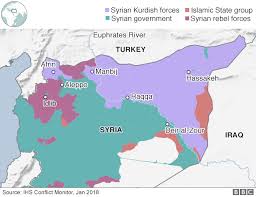
(Who controls what in Syria.)
Without doubt, an entity is being carved out of Syria that is beyond the reach of Damascus, with the Arab Forces providing the “steel frame” for internal security and acting as deterrent against any Turkish attacks against the Kurdish militia, while the US monitors the border region with Turkey.
Mattis claimed that Turkey is on board. But Turkey strongly supports Syria’s unity. Turkish Defence Minister Hulusi Akar has openly voiced disquiet over the US move to set up observation posts on Turkish-Syrian border. Akar disclosed that Turkey conveyed its “discomfort” to the Pentagon:
“We have stated that the observation points to be established by the US troops on the Syrian border will have a very negative impact… and in the course of our discussions we expressed that it could lead to a perception that US soldiers are somehow protecting terrorist YPG (Syrian Kurdish) members and shield them.”
Equally, could an Arab force’s – most likely Saudi and Emirati troops – deployment (just when the war is ending) have been without prior consultation between Washington and Ankara? The point is, Turkey has troubled relations with both Saudi Arabia and the UAE and will resent their deployment of troops to its border regions with Syria.
In sum, the US’ newfound role as the gatekeeper of the Turkish-Syrian border means the Pentagon is creating new facts on the ground, which signals a long-term US occupation of northern Syria. There are serious implications for Syria’s unity and territorial integrity. Indeed, the last thing that Turkey wants is an independent entity along its border with Syria where the Kurds enjoy autonomy. Turkey has a congruence of interests with Russia and Iran in this regard.
The Final Push for Idlib Will Come Soon
By Federico PIERACCINI | Strategic Culture Foundation | 23.11.2018
The situation in Syria is that of a frozen conflict, following the agreements made between Russia, Turkey and Syria on the demilitarized zone created around Idlib. Except for some sporadic terrorist attacks, the truce seems to be holding up over the last few weeks, even though it has become clear to everyone what the next step is for the province.
The Syrian Arab Army (SAA) has been busy eradicating Daesh in the southern part of Syria in recent weeks, concentrating its efforts on securing all areas that have been liberated from terrorist control but which still remain vulnerable to sporadic attacks, as occurred in Sweida at the end of July 2018. In that incident, there were dozens of victims and numerous abductees who remained in the hands of Daesh for months. This caused the Syrian population in neighbouring areas to clamor for protection, forcing the SAA to undertake an anti-terrorist campaign that has been ongoing since August.
This effort by the SAA has slowed down in part due to subsequent events, with an agreement reached between Erdogan and Putin to create a demilitarized zone in the province of Idlib. From October 15, an area spanning 20 kilometres and guarded by Turkish and Russian troops guarantees a separation between the SAA and terrorist groups in the province.
Russian and Syrian efforts have been moving in two very specific directions over the last few weeks. While Moscow supplies Damascus with new equipment in preparation for the future advance on Idlib, Putin and his entourage continue diplomatic efforts to draw more of Syria’s enemies closer to the Russia-Iran-Syria axis. The meeting that brought about the demilitarized zone included Macron and Merkel, the Europeans having evidently come to terms with the impossibility of overthrowing the legitimate government of Syria. Macron and Merkel were offered a way out of the Syrian conflict, decoupling themselves from the belligerent stance of the United States, Israel and Saudi Arabia. The intention is to usher Paris and Berlin towards the same direction Qatar, Turkey and Jordan have been progressively gravitating. Certainly, these are not countries to be considered friends of Damascus. Rather, they are parties with whom a constructive dialogue needs to be entered into in order to advance common diplomatic interests.
Moscow has often found it possible to reach an agreement or start unpublicized negotiations with each of these parties. Erdogan seems to have preferred an agreement with Putin rather than waiting for the liberation of Idlib by the SAA, thus being able to postpone the natural conclusion of the war that will find him sitting at the table defeated. At the same time, Erdogan wants to concentrate on the Kurds in order to secure the border between Syria and Turkey controlled by the Syrian Democratic Forces (SDF), and to prevent any partition of Syrian territory that would favor other parties. Jordan has even reopened the border crossings with Syria, appearing to be the first country in opposition to Damascus that is now taking practical steps to mend fences.
The case of the participation of the two European countries at the summit with Erdogan and Putin is more complex. The rift between Washington and the other European capitals is wide and well documented, even more so after the events in Paris commemorating the end of the First World War. Macron and Trump seem to be diverging further in terms of policy and ideology, while Trump and Merkel have always had their differences. Trump’s choices in the Middle East, in the wake of the destructive actions of Israel and Saudi Arabia, marked a profound point of difference and mistrust with the European allies. Macron and Merkel have a huge problem dealing with refugees flowing from areas in North Africa and the Middle East destroyed by US-led wars. The prospect of working with Erdogan, and indirectly with Damascus, to bring back hundreds of thousands of refugees currently in France and especially Germany, seems to have been Putin’s winning argument during the talks in Istanbul.
This slow diplomatic approach has been accelerated as a result of Israel’s downing of a Russian electronic-surveillance aircraft. The need to avoid a direct conflict between Moscow and Tel Aviv allowed the Russian missile forces to deploy to Syria an advanced model of the S-300 in addition to the existing S-300/400 systems on the ground. The presence of these advanced systems, and Moscow’s threats to use them, together with American concerns over the possibility of an F-35 being shot down by Soviet systems dating from the 1970s, forced the Zionist entity to halt its attacks on Syria.
This situation has helped to create a frozen conflict in the country. Together with the agreement of Idlib, this gives the SAA plenty of time to rest, regroup, and receive supplies needed for future campaigns.
The current truce is a strategic pause that has all the appearance of what has happened in the past in the provinces of Homs and Aleppo. The need to free Idlib from terrorists goes hand in hand with the promise of Assad and the government of Damascus to liberate every inch of Syria from terrorists. The diplomatic efforts of Moscow serve to prepare the ground for what will happen in the coming months, with the SAA set to advance on Idlib. In this sense, the deployment of advanced systems in Syria serves as a deterrent against possible responses from countries like Israel and the United States, anxious to defend their jihadists, but continuing to have minimal influence on the ground.
Russia and Syria’s moves therefore seem to be in preparation for the battle for Idlib, to be the longest and most difficult yet. The liberation of the province is inevitable but requires all the necessary political, diplomatic and military preparation in order to ensure success and limit potential escalation. As is often the case, Moscow and her allies approach complex issues with simple and pragmatic solutions, even offering exit strategies to their (geo)political opponents, which contrasts with their demonstrated tendency to rush heedlessly towards war.
Featured Video

U.S. General Caine Warns: STRIKING IRAN is a HUGE RISK
or go to
Aletho News Archives – Video-Images
From the Archives
Stealth Bombers and Bunker Busters
Analysis of the so-called 12-Day War, and the triumphantly celebrated Operation Midnight Thunder
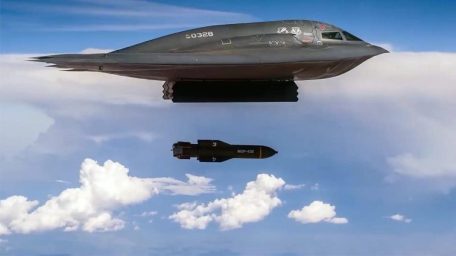
By William Schryver | imetatronink | November 28, 2025
The GBU-57 is a big fat gravity bomb with fins. To achieve effective precision, a B-2 bomber must drop it on its intended target from no further than about five nautical miles — essentially right on top of the target.
Its penetration depth is claimed to be 200 feet. But that capability has NEVER been tested against a seriously hardened deep-underground target encased in layers of high-performance concrete, and topped with a few dozen meters of solid rock. In that sort of real-world scenario, the GBU-57 would be lucky to drill down 50 feet, if that.
It was always ridiculous silly talk to suggest the GBU-57 was the wonder weapon it was made out to be. There is a good reason the US only produced a couple dozen of them and then stopped: they understood its acute limitations in a non-permissive combat environment.
And, notwithstanding the hyperbolic Israeli propaganda, there was never any credible evidence that Iranian medium- and long-range air defenses against fixed-wing aircraft were attrited to any significant degree. And Iranian short-range air defenses were increasingly effective against long-range Israeli drones with each passing day.
As for the B-2: it is a big fat subsonic aircraft. It flies at airliner speeds. A strike on Fordow would entail flying at least 500 miles in and out of Iran. … continue
Blog Roll
 Aletho News
- What’s Really in the Bag: The Pet Food Industry’s Dirty Secret
- Project Artichoke: 70 Years Ago, CIA Discussed Hiding Mind-Control Drugs in Vaccines
- Drug traffickers trained in Ukraine attack state forces in Mexico
- The tragic reality of Brazilian mercenaries in the Ukrainian conflict
- Zelensky Refused to Discuss Druzhba Pipeline Issue – Fico
- U.S. General Caine Warns: STRIKING IRAN is a HUGE RISK /Glenn Diesen & Lt Col Daniel Davis
- Israel designates five Palestinian media outlets as ‘terrorist organizations’
- Israel, not America, first: Carlson’s Huckabee interview lays bare US foreign policy priorities
- Israeli troops executed Palestinian aid workers at ‘point blank range’: Report
- Iran war What if today’s Iran is resigned to a long, hellish war with the US?
- If Americans Knew
- Fourteen Countries Condemn Huckabee’s Support for Israel Taking Over Most of the Middle East
- Israeli Soldiers Killed Gaza Aid Workers at Point Blank Range in 2025 Massacre: Report
- Israel’s insidious network to propagandize American Christians
- Israel’s Best-Kept Secret: Palestinian Resistance Never Agreed to Disarm
- Trump officials plan to build 5,000-person military base in Gaza, files show
- Are MAGA restrainers pulling their punches this time on Iran?
- The NY Times on the “MAGA” Split Over Israel & USS Liberty
- In Gaza, Ramadan without mosques, imams – Not a ceasefire Day 137
- Footage Shows Israeli Troops Waiting in Ambush, Then Opening Fire on a Palestinian Teen
- The US is on the brink of a major new war that Trump has not even bothered explaining
- No Tricks Zone
- Surprising Discovery: Sahara Is Greening…Billions Of Trees Where Once Thought To Be Barren
- New Research Reaffirms Clouds, Aerosols, And Surface Solar Radiation Are ‘Driving The Climate System’
- Germany: Electric Car Catches Fire At Charging Station, Sets Off Local “Inferno”, Widespread Damage
- New Study: Canada’s New Brunswick Was 1°C Warmer Than Today During The Medieval Warm Period
- Coal Power Back In Trend As Globe Tries To Keep Pace With Growing Demand For Power
- New Study: A 4°C Warmer Beaufort Sea Had ‘No Sea Ice’ 11,700 – 8200 Years Ago
- Unfudging The Data: Dutch Meteorological Institute Reinstates Early 20th Centruy Heat Waves It Had Erased Earlier
- German Gas Crisis…Chancellor Merz Allegedly Bans Gas Debate Ahead of Elections!
- Pollen Reconstructions Show The Last Glacial’s Warming Events Were Global, 10x Greater Than Modern
- Germany’s Natural Gas Storage Level Dwindles To Just 28%… Increasingly Critical
 Aletho News