Baghdad expects Ankara to explain the deployment of Turkish troops in Iraqi territory, Iraqi Defense Ministry spokesman Nasir Nouri told Sputnik Saturday.
On Friday, various media reports said that about 130 Turkish military personnel had been deployed to the Mosul area in Iraq allegedly to provide training to Kurdish Peshmerga militia fighting against the Islamic State jihadist group (IS, or Daesh in the Arab world).
“Iraq is waiting for an explanation from Turkey. Even if the troops were deployed to help and support the forces fighting against Daesh, why was it done without prior coordination with Iraq?” he said.
The spokesman added that Iraq adheres to the principles of peaceful co-operation and good neighborly relations, so its answer to the Turkish move would follow only through diplomatic channels.
“Iraqi measures will follow through the diplomatic channel. I do not think that Iraq will opt for escalation of the situation,” Nuri said.
December 5, 2015
Posted by aletho |
Illegal Occupation, Militarism | Iraq, Turkiye |
Leave a comment
Multiple reports claim that Israel is the top purchaser of smuggled ISIS oil
Citing multiple sources, the Israeli business press are now reporting that Israel is the main recipient of ISIS oil:
Kurdish and Turkish smugglers are transporting oil from ISIS controlled territory in Syria and Iraq and selling it to Israel, according to several reports in the Arab and Russian media. An estimated 20,000-40,000 barrels of oil are produced daily in ISIS controlled territory generating $1-1.5 million daily profit for the terrorist organization.
The oil is extracted from Dir A-Zur in Syria and two fields in Iraq and transported to the Kurdish city of Zakhu in a triangle of land near the borders of Syria, Iraq and Turkey. Israeli and Turkish mediators come to the city and when prices are agreed, the oil is smuggled to the Turkish city of Silop marked as originating from Kurdish regions of Iraq and sold for $15-18 per barrel (WTI and Brent Crude currently sell for $41 and $45 per barrel) to the Israeli mediator, a man in his 50s with dual Greek-Israeli citizenship known as Dr. Farid. He transports the oil via several Turkish ports and then onto other ports, with Israel among the main destinations.
In August, the Financial Times reported that Israel obtained 75% of its oil supplies from Iraqi Kurdistan. More than a third of such exports go through the port of Ceyhan, which the FT describe as a “potential gateway for ISIS-smuggled crude.”
It’s been well-established that Turkey is a major transportation hub for ISIS oil smuggling operations. But where is the oil sent? Someone has to buy it. The answer, apparently, is: Israel.
Al-Araby published an extensive investigation which lays out in detail how oil is transported from ISIS-controlled wells to Israel via Turkey.
December 4, 2015
Posted by aletho |
Corruption, Deception | ISIS, Israel, Syria, Turkiye, Zionism |
Leave a comment
On Tuesday and Wednesday, NATO foreign ministers are meeting in Brussels on the pretext of “work(ing) on further measures to assure Turkey’s security,” and related issues, based on a nonexistent Russian threat.
It sounds like a bad joke, except issues at stake are deadly serious, Russia-bashing featured in all NATO meetings, Erdogan’s well-planned act of aggression complicit with Washington called self-defense, Secretary-General Stoltenberg saying:
NATO has “standing defense plans for (member country) Turkey (including) augmented… air defenses, (part of its) long-term commitment to an ally” – despite no nation threatening its security.
Washington “deployed aircraft to support Turkey’s air defenses” – Britain to follow suit along with Germany and Denmark. “(W)e have decided to address the need to support Turkey before the incident last week.”
Were NATO officials briefed about plans to down a Russian aircraft before the incident? All the fuss about Turkey reflects the latest way of bashing Russia. US-dominated NATO countries partnered with Israel and rogue Arab states alone threaten world peace and stability. Russia is the world’s leading anti-war nation – committed with its non-Western allies against the scourge of terrorism, what America fosters globally to serve its imperial interests.
False accusations of Russian aggression wore thin long ago, US state terrorism allied with its rogue allies entirely ignored.
Are plans to defend Turkish airspace code language for more anti-Russian provocations? Put nothing past neocon US policymakers, risking the unthinkable to further their agenda, possible nuclear war with Russia.
Turkey already has one of the world’s strongest militaries, waging terror war against regional Kurds, entering Syrian and Iraqi airspace lawlessly, killing its fighters battling ISIS, Erdogan lying about combating terrorism.
Aiding its military with US and other NATO member countries’ firepower increases the chance of direct confrontation with Russia. Is this what Washington intends, Erdogan recklessly going along, possibly getting embroiled with something way over his head, gravely risking Turkey’s security by playing America’s dirty game?
His heedless downing of Russia’s aircraft, compounded by Big Lies justifying the unjustifiable, forced Putin to deploy S-400s and air-to-air missiles to protect his nation’s aircraft and anti-terrorist operations throughout Syria.
Stoltenberg called enhanced Russian eastern Mediterranean and Baltic Sea region military capability a matter of “concern” – ignoring NATO’s hostile buildup and provocative military exercises near its borders, Russia responding responsibly to a confrontational US-led threat.
December 2, 2015
Posted by aletho |
Militarism, War Crimes | NATO, Russia, Turkiye, United States |
Leave a comment
Tahir Elçi, the president of the bar association in southeastern Diyarbakır province and a determined Kurdish human rights lawyer, was shot dead on Saturday, 28 November, during a press statement he had delivered in Diyarbakır. Photos of Elçi’s dead body lying on the ground quickly overwhelmed social media accounts, symbolizing the deadly difficulty of talking about and fighting for peace at this critical juncture that Turkey, and the region at large, are going through. Despite the fact that Turkey is known for its long history of unsolved political crimes and political violence, Elçi’s assassination is an alarming turning point in the final phase, after the electoral victory of the AKP (Justice and Development Party) in the 1 November elections, of consolidating an authoritarian and sectarian police state.
In this essay, I argue that the “new Turkey” the AKP government is forcefully imposing on its citizens goes beyond a mere ideological transformation. It includes a full reorganization of the state’s security apparatus to consolidate an authoritarian and sectarian police state, thoroughly controlled by the AKP government under the leadership of President Recep Tayyip Erdoğan. The institutionalization of this police state is made possible through a physical war against Kurds that is legitimized by a war of discourse, the complete suppression of dissidence, and the manipulation of regional dynamics. In the rest of the essay, I will elaborate this argument by focusing on three disparate events that happened last week: the assassination of Tahir Elçi; the arrest of Can Dündar and Erdem Gül, two journalists at Cumhuriyet daily; and Turkey’s shooting down of a Russian military jet with the claim that it violated Turkish airspace. Although these events are independent of one another and thus there is seemingly no causal relationship among them, they come together as pieces of a rather discomforting, and even alarming, puzzle, indicating the deeper transformation toward building the “new Turkey.”
The Physical War against Kurds and the War of Discourse
The country is at war. It is a war of discourse through the constant and willful reproduction by state elites of the infamous friend-enemy binary. But also, it is an actual physical war brutally carried out through a state of emergency in the Kurdish southeastern and eastern Anatolia. The AKP government legitimizes this physical war against its Kurdish citizens through expansively launching a war of discourse against any form of dissidence. In other words, the AKP government has been strategically manipulating, since the 7 June elections, ethnic cleavages and societal fears, leading up to its electoral victory in the re-elections on 1 November.[1]
Following the suicide bombing in Suruç on 20 July that killed thirty-three and injured 104 people, and the killing of two policemen in Șanlıurfa (which was at first claimed by the PKK, although the group then denied responsibility for it), the ceasefire between the Turkish army and the PKK came to an abrupt end. Extensive and intensive securitization policies in what are defined as “special security zones” were quickly put to work in most of the cities and towns of the Kurdish southeast and east, directly targeting life itself. It is important to emphasize here that the state of emergency and curfews continue today.
The death toll increased rapidly during the period between 7 June and 1 November. A total of 229 civilians died and about 595 were injured in incidents not related to the armed struggle. Among these, 101 died and about four hundred were injured in the Ankara suicide bombing. A total of 150 soldiers, policemen, and village guards died and forty-two were injured during the armed struggle, while at the same time, 181 armed guerrilla members died and nineteen were injured. In addition, nine civilians died and 101 were injured as a result of the armed struggle.[2]
Despite the fact that state violence has been a common practice in Turkey since the establishment of the republic in 1923 (and even preceding the founding of the republic), this particular moment is distinctively different, mainly because of the changes made to the security apparatus of the state. Among these are the reorganization of the National Intelligence Organization (MIT) under the Council of Ministers and the expansion of the MIT’s access to personal and private information; the expansion of power given to government-appointed mayors over the deployment of security measures, particularly at the local level; and the reorganization of the police force. In other words, the governance of violence has been reorganized in ways toward institutionalizing a police state.
The war of discourse around the constant re-evocation of the friend-enemy binary that has brutally accompanied this physical war against Kurds since 7 June is only possible in this context of hyper-securitization. Such a war of discourse significantly confines the contours of any conversation about, and any political action for, peace, by effectively de-sanctifying any attempt to reason and mobilize. As such, the war of discourse has the ideological capacity to turn anything and everything that is considered a threat to the status quo of the party into an enemy of national unity and security, into a spy against the state. As loyalty to the party—and thus the state—has now become the overt doctrine of the AKP government in the name of assembling the nation together, the search for truth and justice is under severe attack.
Suppression of Dissidence
It is exactly in this context that Elçi became a prominent target, as someone who violated this desired and imagined state of loyalty of the citizen/subject to the party/state. In the aftermath of his remarks as part of a television discussion about the PKK not being a terrorist organization but rather an organization of Kurdish resistance, he became the target of a public verbal lynching and death threats. There was also a court order banning Elçi from international travel. As a symbol of “out-of-the-box” thinking who had the political ability to mediate between different positions through reason and a powerful language of peace, Elçi was systematically turned into a public enemy. His assassination therefore came as no surprise to many, as was painstakingly expressed by Selahattin Demirtaş, the co-leader of the HDP, at Elçi’s funeral.
A total of 5,713 people, the majority of whom are supporters of the Kurdish resistance movement, were taken into custody during the period between 7 June and 9 November. Of these, 1,004 were arrested. There were also attacks on party buildings of the HDP (People’s Democratic Party), as well as lynchings of HDP supporters and Kurdish citizens.[3] In other words, as the most vocal oppositional fraction and the most adamant supporter of freedoms in the Turkish public sphere today, the Kurdish movement and its supporters, Kurdish and Turkish alike, were at the center of this full-fledged attack on dissidence since the 7 June elections.
The arrest of Can Dündar, the editor-in-chief of Cumhuriyet daily, and Erdem Gül, the paper’s Ankara bureau chief, on 27 November came within this larger context of suppressing dissidence. The two journalists were charged with “spying” and “helping a terrorist organization without being active members of it” after alleging, through photos and video footage published at the newspaper, that Turkey’s intelligence agency sent arms to Islamist rebels in Syria. President Erdoğan personally filed charges against the newspaper, also threatening Dündar in an interview aired on the national television channel right before the November elections.
Regional Dynamics: Rojava and Re-Mapping the Borders
The charges filed against Dündar and Gül—that is, “spying” and “helping a terrorist organization”—demonstrate the highly expansive reach that the war of discourse has over dissidence in Turkey today. These terms have now become the legitimizing grounds for any (arbitrary) attack on freedom of expression. Turkey is ranked number 149 in press freedom out of 180 countries, according to Reporters Without Borders’ 2015 Press Freedom Index. The state of exception that was confined to the Kurdish southeastern and eastern Anatolia during the 1990s has now extended into the entire country.
Besides the actual physical war that the government has launched against its Kurdish citizens, the civil war taking place in Syria, which involves myriad international and regional actors with competing and conflicting interests, contributes to the government’s excessive suppression of dissidence. In fact, the government’s response to the allegations made by the daily Cumhuriyet was that the ammunition had been sent to Turkmens, instead of Islamist groups, fighting in Northern Syria.
There are two important factors that raise the AKP government’s stakes in the war in Syria. One is driven by the sectarian concern to establish a strong Sunni hand in the changing power order in Syria. The second is the government’s discomfort with the rising Kurdish power in Northern Syria, especially following the Rojava revolution. The Kurdish People’s Protection Units (YPG) is one of the most prominent factions powerfully fighting on the ground against the Islamist rebels, and particularly ISIS. The shooting down of a Russian jet by the Turkish army on 24 November should be interpreted in this context. Although the dynamics and factors behind Turkey’s decision to shoot down the plane are likely to be much more complicated than what appears in public, there are two implications of the decision.
First, it is a declaration—a rather too ambitious one—meant to re-position Turkey in the politico-military field beside the West as an imperial/powerful actor along the Cold War nexus. Bashar Al-Assad still remains in power despite Turkey’s staunch criticism of him since the beginning of the uprising in Syria, and the support Turkey has been giving to the quite heterogeneous and ambiguous mix of Syrian opposition groups that includes Islamist rebels of all factions. Moreover, Russia’s actual military involvement in Syria since September 2015 came as a significant challenge to Turkey’s attempt to limit the rising Kurdish power in Northern Syria, on one hand, and its support to Islamist rebels, on the other. Therefore, Turkey’s decision to shoot down the Russian military jet was part of an attempt to regain power in Syria.[4]
Second, it is also a subtle declaration aimed to position Turkey in the politico-religious field as the legitimate hegemonic actor vis-à-vis the Islamist rebels fighting in Syria. Putin immediately said that the shooting down of the plane “represents a stab in the back by the terrorists,” implying Turkey’s relationship with ISIS. Since then, allegations of Turkey’s relations with ISIS have been at the center of the cat-fight between Turkey and Russia. It would be naïve to think that Turkey acted without knowing that this action would heat up such a discussion. The dangerous pragmatism of the West (the most recent example of which is the agreement between Turkey and the EU to control the migrant and refugee flow) and the rise of Salafi jihadism across the world provide the AKP government the opportunity to attempt to position itself as the legitimate Sunni actor in the politico-religious field.
What Is Our Political Imaginary for the Future?
We are living through dark times, not only in Turkey, but also across the world. In the particular case of Turkey, what makes this juncture critical is that it underlines a deeper transformation of the state, but also of the nation. The state is being consolidated as an authoritarian police state, while at the same time the nation is re-engineered based on a sectarian imagination.
At this critical juncture, we should all earnestly ask ourselves the following questions: What is our political imaginary for the future? What kind of a country do we want to live in? What do we need to do to build such a future? Debating and answering these questions is much more pressing than ever. It is a time that urgently calls for an honest self-reflection about our societal fears. This requires a confrontation with historical injustices.
If the state is significantly failing to protect its citizens’ right to have rights—and thus the right to have a life—as equals, we are left with the political and moral responsibility of demanding it begin to do so, in full solidarity with one another despite our differences. Politics is not a kind of magic that happens to us tomorrow by some visible hand or power. Politics happens today through our deliberate choices to act or not to. Through silence and dismissal, we contribute to every death, to every bit of suffering, and to every other catastrophe.
NOTES
I would like to thank the Turkey Page editors for their useful comments in revising this essay.
[1] For a discussion of political parties’ strategic deployment of ethnic, racial, and religious cleavages toward political articulation, see Cihan Tugal, Cedric de Leon, and Manali Desai, “Political Articulation: Parties and the Constitution of Cleavages in the United States, India, and Turkey,” Sociological Theory 27:3 (2009): 193-219.
[2] See this report by the Human Rights Association (IHD).
[3] See this report by the Human Rights Association (IHD).
[4] See this essay by Metin Gurcan for an analysis of the incident.
December 2, 2015
Posted by aletho |
Civil Liberties, Full Spectrum Dominance | Human rights, ISIS, PKK, Turkiye, YPG |
Leave a comment
The horrible Paris massacre allegedly committed by the Islamic State (IS) militants immediately rose to the top of the international agenda. Western powers, particularly the U.S. and France, declared that restriction of the Islamic State’s domain of operation and, subsequently, its overall destruction were their primary objects. Thus, immediately after the Paris massacre French warplanes bombed Al-Raqqah, the so-called capital of IS in Syria.
The first point of discussion, which came forward in the mainstream media concerning the war against IS was the following: “Is there a possibility that the international coalition against IS led by the U.S. could inflict serious blows to the terrorist organization merely by means of air raids?” Many commentators disagreed: The coalition members were not able to effectively harm IS in such residential areas as Al-Raqqah just by air bombardment unless they risk heavy civilian causalities.
I think that this line of discussion serves to cover up more fundamental realities on the ground by reducing the issue of the fight against IS to merely military tactics. Western powers, notably the U.S., have two “important” allies, which have been supporting IS since the beginning of the Syrian civil war: Turkey and Saudi Arabia. Strangely enough the indirect roles of these two countries in the massacres of Lebanon and Paris have not been questioned.
Saudi Arabia has assumed a major role in the promotion and popularization of Salafism throughout the Mideast and in sponsoring the Jihadist terrorist organizations. The fact that Saudi Arabia has been tolerated by the West despite its support for Salafism is because Saudi Arabia acted as a sort of “shield” in line with the Western interests against the proliferation of Iran-Shia influence in the region and has been one of the major customers of the U.S. arms industry.
Turkey is a perfect match for Saudi Arabia. The Turkish government has shown its best efforts to have the PYD/YPG included in the list of terrorist organizations before Paris massacre. One of the first moves of Turkey was to prevent YPG from extending its operations to the west of Euphrates River, when war policy was restored with an aim to limit the gains of Kurds. Thus Turkey prevented YPG/YPJ to repel ISIS out of Jarabulus. While the PYD controls most of the Turkish-Syrian border, Turkey supported IS to keep the 90-kilometer section of the border extending from Jarabulus to Afrin Canton under its control. Why? Of course, it aimed to help IS with maintaining its relationship with the world, allowing militant candidates to participate in IS, and probably for continuing ammunition supplies.
What is the meaning of the so-called ‘cleaning’ operation by US-Turkey to remove ISIS from the Jarabulus-Azez line?
Turkey’s pro-IS policy became unsustainable after the West established the anti-IS coalition and started to bomb IS targets. Shortly after the June 7 elections, the Turkish government aimed to kill two birds with one stone by participating in the anti-IS coalition. As a result, Turkey both secured Western support in ending the ceasefire period in the country, and gained a ‘legitimate’ ground for negotiating its plans to overthrow Assad and restrict Rojava by means of Salafist organizations.
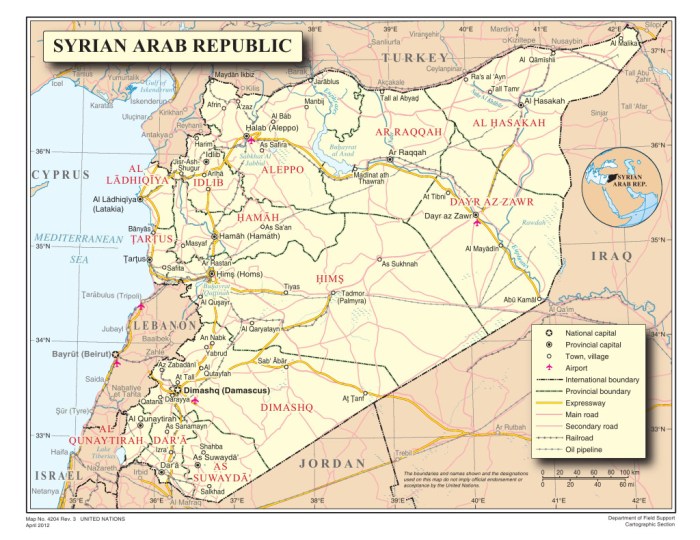
Turkey’s plan as offered to the U.S. and other Western allies was as follows: Establishment of a 90-kilometer wide and 50-kilometer deep ‘safe zone’ between Jarabulus and Azez, very close to the Afrin Canton, as secured by the warplanes of Turkey and allies; removal of IS from the zone by occupation of the Turkish Armed Forces either or not in cooperation with allied powers; and settlement of migrants that are currently located in the camps in Turkey or that would flee from Syria in the future. Therefore, Turkey would be liberated from the European pressure on the migration issue, prevent the physical connection between the Kurdish Cantons, and the demographics of the region would become Sunni-Arab dominated thanks to the migrants. There also was a more strategic goal: The Jaish al-Fatah coalition, which was promoted by Turkey, Qatar, and Saudi Arabia, proved to be successful in Aleppo and surroundings. Upon imposition of the safe zone, the Turkey-Aleppo line would be secured and the coalition, basically composed of al-Nusra Front, an associate of al-Qaeda, and Ahrar ash-Sham, would be allowed to further constrict the Assad government.
Russian military operations in Syria that started on September 30 substantially complicated the above plan. As a matter of fact, Russia was involved in the war to eliminate the threat on Latakia, the heart of the Assad government, and prevent the total loss of Aleppo. Idlib city, under control of the opponents, located in northern Syria has strategic importance for the control of Aleppo. Therefore, Russia shifted a part of its operations to Northern Syria and started to harass Turkish jets by occasionally entering the Turkish airspace. This was then described as establishment of the safe zone, yet it was now considered against Turkey.
It is safe to suggest that Obama’s clear rejection of Turkey’s ‘safe zone’ proposal during the G-20 summit was based among other things on refraining from any confrontation with Russia to the north of Aleppo.
The Paris massacre allowed a Russian-U.S. rapprochement as regards Syrian policies. Parties declared that their primary objective was to weaken IS, but not to overthrow the Assad government. These developments fostered hopes for the Geneva negotiations, which aimed to end the civil war in Syria.
Nevertheless, U.S. secretary of state Kerry announced immediately after the G-20 Summit that Turkey and the U.S. would take a joint operation to clean the Jarabulus-Azez line of IS.
What does this operation plan, which was announced after the ‘safe zone’ proposal was shelved, mean?
It means implementation of the ‘safe zone’ project at a more modest level. Ground forces will not be involved in the operation. Instead, Syrian opponents with the support of Turkish and U.S. jets would clean the said part of the Turkish border from IS. On the grounds that the Free Syrian Army ceases to exist in the field, the pro-al-Qaeda al-Nusra Front and its associate Ahrar ash-Sham would assume the ground operations, accompanied by the Syrian Turcoman forces.
In other words, IS would be replaced by other Salafist organizations. The involvement of YPG, the only secular force fighting against ISIS, and connection between the Kurdish Cantons would be prevented. Lastly, by leaving the Jarabulus-Azez line in the hands of such organizations as al-Nusra Front and Ahrar ash-Sham, which have a comparable record of civilian massacres, the pressure of the said Salafist organizations on the regime over northern Syria would be reinforced given that these organizations have Idlib and a large part of Aleppo under their control.
***
It seems very unlikely that IS is to be weakened and peace is to be restored in Syria, given that the U.S. continues to protect its allies, Turkey and Saudi Arabia, which deal with dirty business in Syria. Furthermore, the available data suggests that the West did not give up its goal to maintain continuous pressure on the Assad government and sustain controlled chaos in Syria, albeit the same has currently receded into background. The controlled chaos policy ultimately means protection of the power of IS and paving the way for likely massacres in the future.
December 1, 2015
Posted by aletho |
Ethnic Cleansing, Racism, Zionism, Militarism, Timeless or most popular, War Crimes | al-Nusra Front, al-Qaeda, Human rights, Qatar, Russia, Saudi Arabia, Syria, Turkiye, United States, YPG |
Leave a comment
In the wake of Turkey’s shoot down of the Russian Su-24, the Russian Foreign Minister Sergei Lavrov called the attack a planned provocation. He went further on to suggest the U.S. had given Turkey permission to shoot down the Jet. He explained that countries using US manufactured weapons must ask the U.S. for permission before using them in operations. The aircraft used to shoot down the Su-24 was a U.S.-made F-16. Indeed, there is evidence to suggest that not only did the U.S. give Turkey permission, but that it was moving the strings behind the entire operation.
Two Russian aircraft were attacked that day, but the second was a far less publicized incident. A Russian helicopter was destroyed by the CIA backed FSA using U.S. provided Anti-Tank TOW missiles. The helicopter was on a rescue mission to find the missing Su-24 pilots and the attack resulted in the death of a Russian Marine. Since the U.S. backs the FSA and provided the TOW missiles which were used in the attack, they are at least indirectly responsible, if not outright complicit in it. But instead of apologizing to Russia, U.S. state department spokesman Mark Toner defended the actions of the FSA. He also defended the actions of the Turkmen insurgents who shot at the parachuting Russian pilots, a war crime under the first Geneva convention. Such an antagonistic position reveals that the U.S. was not displeased by the attacks on Russia.
In the months leading up to the attack, there were several indicators the U.S. knew it would take place. On September 3rd, the families of U.S. staff members were urged to evacuated out of Incirlik air base in Turkey and were given until October 1st to do so. On November 3rd, the US deployed F-15 fighter Jets to Turkey which are specifically designed for air-to-air combat. Since ISIS has no planes, the target could only have been Russian aircraft. Most significantly, on October 21st, the U.S. and Russia signed a deconfliction protocol, in order to ‘avoid clashes in Syria’s skies’. This entailed giving the US information about where and when Russia will conduct sorties. Russian president Putin suggested this information was passed on to Turkey by the U.S. and used to shoot down the Sukhoi-24.
During the months leading up to the attack, US War hawks were increasingly calling for a direct confrontation with Russia, an act that could lead to a third world War. Several US Presidential candidates, including Hillary Clinton, were effectively calling for a shoot down of a Russian Jet. Some of the more direct comments included,
Chris Christie: “My first phone call would be to Vladimir, and I’d say to him, listen, we’re enforcing this no-fly zone,” adding that he would shoot down Russian warplanes that violate the no-fly zone.
Jeb Bush: “We need to have no fly zones. The argument is, well we’ll get into the conflict with Russia, maybe Russia shouldn’t want to be in conflict with us. I mean, this is a place where American leadership is desperately needed.”
The spokesman for the Zionist Israeli lobbying group AIPAC, Senator John McCain, suggested arming Al Qaeda Linked Rebels with Anti-Aircraft weapons to shoot down a Russian Jet. An idea which he himself admits was “what we did in Afghanistan many years ago”. The policy which resulted in the birth of Al Qaeda and the rise of the Taliban. Indeed Qatar had been making an effort towards this end. Documents leaked by Russian hackers ‘Cyber Berkut”, revealed that Qatar was negotiating with Ukraine to purchase Anti-Air weapons to help ISIS shoot down a Russian Jet over Syria. It is likely Ukraine refused to sell these weapons, since arming assets which are difficult to control could backfire. After all, US Jets are also using those skies. Flooding the region with hand held Anti-Air weapons could pose a threat to them in future. Turkey is a far more reliable and controllable proxy which is capable of shooting down Russian Jets.
Perhaps one of the most significant War hawk statements comes from the Former national security adviser Zbigniew Brzezinski. In an Op-ed for the Financial Times Brzezinski suggested that Obama should retaliate if Russia continues to attack U.S. assets in Syria, i.e the Al Qaeda linked rebels. Brzezinski, has experience using Al Qaeda as an asset, having been one of the masterminds behind its creation in Afghanistan. He maintains a great deal of influence and respect in US politics.
It is likely Brzezinski’s dangerous advice to attack Russia was taken on board by US decision makers. But instead of risking a direct conflict with two nuclear powers, Turkey was used as a proxy. Turkey has its own agenda in attacking Russian jets outside of the U.S.’s interests. Turkish president Erdogan has already committed himself to an anti-Assad position far beyond the point of no return. This was over a gas pipeline deal with Qatar that is now looking more like a pipe dream. Russia has been actively fighting not only ISIS, but Al Qaeda and its affiliates who are crucial for Turkey’s plans to overthrow the Syrian government. The Su-24 was bombing the Al Qaeda-linked Turkmen insurgents, before it was shot down.
On October 8, NATO made a statement that it would defend Turkey against Russia, after a Russian jet briefly passed through Turkish airspace on its way to bomb targets in Syria. Such statements may have encouraged Erdogan to take the exceptional risk of shooting down a Russian jet under the assumption that Turkey would be protected by NATO. On November 12th, EU countries committed to pay Turkey 3 billion dollars. Interestingly this is the same amount Turkey is estimated to lose, as a result of Russian sanctions put in place in the wake of the attack. This could have been Part of NATO’s assurance to Erdogan that he would lose nothing by going ahead with the attack.
Erdogan has become increasingly frustrated, even after four years of war, the Syrian state shows no sign of collapse. It might not have been too difficult for the U.S. to convince the desperate Turkish leader that attacking a super power was in his best interest.
Maram Susli also known as “Syrian Girl,” is an activist-journalist and social commentator covering Syria and the wider topic of geopolitics.
December 1, 2015
Posted by aletho |
Militarism, War Crimes | AIPAC, al-Qaeda, NATO, Qatar, Russia, Syria, Turkiye, United States, Zionism |
Leave a comment
Dozens of Russian ships have reportedly been waiting for hours near the Bosphorus Strait to get the go-ahead from Turkey to be able to pass through the waterway.
In a clear violation of international norms, Turkish authorities have created hurdles for Russian vessels passing through the Bosphorus Strait; as a result, dozens of Russian ships have been waiting for hours to obtain the green light from Turkey for passage, media reports said.
RIA Novosti quoted Viktor Kravchenko, former chief of staff of the Russian Navy, as saying that a possible unilateral closure by Turkey of the Bosphorus Strait for Russian ships would be out of line with international law.
“Turkey will not close the strait to Russian vessels en route to Syria because it would be a violation of international law and the Montreux Convention, in particular, — a document that was signed by most counties at the time”, he said.
The 1936 Montreux Convention on the Regime of the Straits regulates the passage of civilian and naval ships through the Bosphorus Strait and the Dardanelles. According to Article 2, “merchant vessels shall enjoy complete freedom of transit and navigation in the Straits, by day and by night, under any flag and with any kind of cargo, without any formalities.”
As for naval warships, in times of peace Turkey must permit the passage of small and medium-sized vessels belonging to all nations. The Black Sea powers (formerly including the USSR and now Russia) can navigate warships of any class through the Straits, “on condition that these vessels pass through the Straits singly, escorted by not more than two destroyers.”
In times of war, the passage of warships shall be left entirely to the discretion of the Turkish government, according to the document.
In December 1982, the UN elaborated the Convention on the Law of the Sea, but Turkey refused to join it and the Montreux convention remained in force. In 1994, Turkey unilaterally adopted new Maritime Traffic Regulations for the Straits, and included a number of restrictions for the passage of foreign vessels.
Meanwhile, it was reported that French fighter jets will use the Incirlik military base and that the French aircraft carrier Charles de Gaulle will receive logistical support in the Turkish port of Mersin.
UPDATE:
Sputnik – 01.12.2015
At the moment, Russian naval vessels are experiencing no problems passing through the Bosphorus Strait or the Dardanelles, RIA Novosti quoted a military-diplomatic source as saying on Tuesday. […]
Earlier on Monday, it was reported that dozens of Russian ships had reportedly been waiting for hours near the Bosphorus Strait to get the go-ahead from Turkey to be able to pass through the waterway. Meanwhile, a Russian naval transport ship had encountered a Turkish submarine in the Dardanelles. … Full article
December 1, 2015
Posted by aletho |
Aletho News | Montreux Convention, Russia, Turkiye |
Leave a comment
By John Chuckman | Aletho News | November 30, 2015
Jeremy Corbyn, leader of the British Labour Party, is a man of genuine integrity and honesty in his opposition to British bombing of Syria.
Indeed, he is everything the Prime Minister of Britain, David Cameron, is not.
I think we see from the storm in the British press against Corbyn just how much the establishment values integrity and honesty, which is to say, not at all.
Almost every word of Cameron’s on the subject of bombing is deliberately deceptive.
He is in fact an intimate part of “the club” which privately regards ISIS and other murdering rogues as tools to an end, and that end is to destroy Assad and turn Syria into a rump state. The club’s members always falsely describe the situation in Syria as a civil war rather than what it truly is, an invasion of a peaceful land by the creatures of outside powers.
They freely admit ISIS is horrible, innumerable propaganda videos having established the fact for the public, but they make no move to do something genuine about it. They portray the only man who is doing something to help Syria’s brave army, Vladimir Putin, as some kind of evil figure with dreams of empire. There is a stream of propaganda and lies about everything Russia does, from its cruise missiles hitting Iran to its planes bombing hospitals, all offered with zero evidence.
Cameron’s every word on Syria is inappropriate. A British Prime Minister has no business pronouncing on the legitimacy of this or that government, especially one supported by the majority of the country’s people, clans, and armed forces. Cameron himself, posing as some cheap knock-off defender of democracy, positively Churchillian in his own eyes, enjoys the support of about 35% of British voters.
Assad’s government has fought bravely against monsters shipped in by Turkey and supplied by Saudi Arabia, Israel, and America for years now, while David Cameron sat back and pontificated.
Assad is not an angel, but he runs a state with tolerance for all religious groups in a region where that is not common, and he has often been generous in helping those badly hurt by the likes of David Cameron – for example, the millions of refugees created by the criminal invasion of Iraq. The reason Assad is hated by Cameron and his associates in “the club” is his independent-mindedness in not following Washington’s dictates. Cameron functions as a noisy little lap dog yapping and snapping at anyone ignoring his master, always in expectation of another approving stroke on the head. It truly is that simple, and all the rest we read and hear is just noisy propaganda.
Washington and Tel Aviv are determined to see Assad gone. And you must ask yourself why that should be a shared goal of the two most violent societies on earth today, each of them in a state of perpetual war and oppression of millions.
Yes, Turkey and Saudi Arabia hate Assad, too, but they mostly do as they are told by Washington.
And remember, one of those countries, Turkey, is run by a lunatic who assassinates journalists and any Kurdish person he can get his hands on, and the other, Saudi Arabia, is run by a senile absolute monarch who regularly cuts off heads and crucifies people and is conducting an illegal war in Yemen, killing civilians daily.
Those are the characters with which David Cameron shares his bed.
What is really at stake here is virtually never discussed in public: the right of countries to exist in peace without outside interference from aggressive states like America and Israel. The United Nations should be in the forefront of demanding just that, but it has been reduced to servility through internal manipulations and threats, especially threats of withholding American financial support as was done some years back. Ban Ki-moon is perhaps the most ineffectual Secretary General in memory, sometimes sounding like a pope enjoining peace with no one listening.
Britain’s bombing in Syria would be just plain old-fashioned aggression adding to that already being done by ISIS, al-Nusra, and other cutthroats. We don’t know what targets Cameron has in mind, but he simply has no business in the country, and we can be sure that if he were sincere about only attacking terrorists, Syria would have welcomed him in its desperate fight. Cameron just keeps repeating, like an unpleasant child who thinks repetition makes something so, that the government of Syria must go.
The government of Syria has not sought Britain’s help, and contrary to arrogant people like David Cameron, Syria does indeed have a government, as legitimate as most in the world.
The only people doing any bombing with the permission of the government are the Russians, and they are supporting the only people doing any real fighting, the Syrian army.
This is not a small point for all those concerned about the rule of law, which you might think would be a prime concern for those who claim they oppose terror.
It took centuries to establish some rule of law in international affairs, and today states like America and Israel and Turkey ignore it completely.
Good old David Cameron wants to join the mob, getting his bit of attention.
And it can’t have escaped Cameron’s attention how handsomely the war criminal, Tony Blair, has been rewarded for doing his dirty part in tearing apart Iraq. He has been showered with gold and sinecures.
Wouldn’t it be natural for Cameron to expect a bit of that for dropping bombs on Syria?
November 30, 2015
Posted by aletho |
Militarism, Timeless or most popular, War Crimes | Da’esh, David Cameron, Israel, Jeremy Corbyn, Syria, Turkiye, UK, United States |
Leave a comment
Concern Radio-Electronic Technologies (KRET), a subsidiary of the state-owned Russian corporation Rostec, has developed a new type of electronic missile jamming unit for Russia’s Armed Forces, according to RIA Novosti.
“The jamming transmitter developed by KRET is a single-use device designed to be used by a plane or a helicopter. After the device is deployed via a standard countermeasure launching system, it begins emitting an aimed jamming signal. It is essentially a full-fledged electronic warfare complex compressed into a standard decoy cartridge,” the company’s press service told RIA Novosti.
Depending on the situation, the deployed countermeasure either imitates an aircraft, thus drawing away the incoming rocket, or emits a jamming signal powerful enough to prevent it from acquiring its target.
Last week President Vladimir Putin said that Russia might utilize electronic warfare systems to ensure the safety of its aircraft in Syria following the downing of a Su-24 bomber by Turkish forces.
KRET is the largest radio-electronic holding in Russia; it was created in 2009 and has more than 50,000 employees. It manufactures a wide range of products, including avionics, operational and tactical systems, electronic warfare and intelligence equipment, friend-or-foe identification systems, special measuring instrumentation, plugs, electric connectors, and cable products.
November 30, 2015
Posted by aletho |
Aletho News | NATO, Russia, Syria, Turkiye |
Leave a comment
An RT news crew has been caught in a tear gas attack by Turkish police in Diyarbakir. Police responded as Kurds were protesting the killing of a prominent lawyer, Tahir Elci, shot dead by unidentified gunmen while giving a public speech on Saturday.
“We came into the city center of Diyarbakir just now,” said RT correspondent William Whiteman. “The whole city had been on lockdown over night after there were sounds of heavy automatic gunfire and there were a lot of explosions during the night.”
He said the barricades in the city center were removed early on Monday morning and the RT crew tried to enter the center of Diyarbakir. They were looking to get to the spot where the lawyer Tahir Elci was shot.
“As soon as we arrived here there was a very tense situation and there were security forces out in full force in the streets with guns and we heard gunshots,” Whiteman reported.
“We have just managed to escape the gas now and it is very intense here,” Whiteman added.
A campaigner for Kurdish rights, Tahir Elci had been criticized for challenging Turkey’s official stance of calling the Kurdistan Workers Party (PKK) a terrorist organization.
He was subsequently shot dead on Saturday, while giving a public speech in the city.
“The government came out about an hour after he was killed and said it was the PKK that had killed him, even despite the fact that Tahir Elci was actively defending the PKK and calling for them to be no longer recognized as a terrorist organization, given all of their involvement in fighting ISIL in Syria,” Whiteman mentioned, describing why local Kurds have been even more incensed by the shooting of the rights campaigner.
“This assassination is a deliberate act of political intimidation against all those who take part in political struggles against injustice in Turkey,” Firat Anli, a human rights lawyer and friend of Tahir Elci told RT.
“Social media and the mass media say this has been carried out by the PKK, but the Kurdish region does not buy any of this,” he added.
Whiteman mentioned that there is a lot of skepticism amongst the local Kurdish population as to the claims made by the government, while adding that the Turkish authorities are using this as an excuse to clamp down further against the Kurdish minorities in south eastern Turkey.
November 30, 2015
Posted by aletho |
Civil Liberties, Full Spectrum Dominance, Subjugation - Torture | Human rights, PKK, Turkiye |
Leave a comment
US, Turkey, NATO Supporting ISIS and al-Qaeda – Supporting the Creation of Buffer Zones
Here is the situation in Syria as I see it : Russia is taking a long-range view and wants stability in post-ISIS Syria. France and the United States are taking the short-range view and really have no achievable plans for Syria’s future stability. Turkey appears to have given little thought to Syria’s future. Ankara may be willing to see indefinite chaos in Syria if it hurts the Assad regime on the one hand and the Kurds on the other.
Part I – Russia
The Russians may be the only party interested in the long-term political stability of Syria. There is certainly no doubt that President Putin is more determined than Western leaders to act on the fact that the various so-called moderate parties standing against the Assad regime cannot work together, and that this fault cannot be corrected by enticements from the United States. For the Russians, this fact makes the Damascus government the only source of future stability.
This understanding, and not Soviet-era nostalgia, has led Russia to support the Assad regime, which possesses a working government, a standing army, and the loyalty of every religious minority group in the country.
Some might object that both Assad and Putin are dictators and thugs (by the way, thugs in suits in the U.S. government are all too common). However, this cannot serve as a serious objection. The only alternative to Damascus’s victory is perennial civil war fragmenting the country into warlord zones. With the possible exception of Israel, this scenario is in no one’s interest, although it seems that the leaders of in Washington and Paris are too politically circumscribed to act on this fact.
Part II – U.S. and France
Thus, it would appear that neither the U.S. nor France really cares about Syria as a stable nation. Once the present military capacity of ISIS is eliminated, Washington and Paris may well clandestinely continue to support a low-level civil war against the Assad regime. In this effort they will have the help of Turkey, the Kurds and Israel. The result will be ongoing decimation of the Syrian population and fragmentation of its territory.
As if to justify U.S. strategy, President Obama, with French President Hollande by his side, recently boasted that the United States stood at the head of a “65-country coalition” fighting terrorism in Syria. However, this is a hollow claim. Most of these countries are coalition members in name only, and some of them, like Saudi Arabia and the Gulf state governments, play a double game. And then Obama dismissed Russia and Iran as “outliers” and “a coalition of two.” Yet those two countries are the Syrian nation’s best hope for future stability.
The fact is that U.S. policy in Syria has been a losing proposition from the beginning just because of its hostility to the Assad government. Despite its air campaign against ISIS, Washington has no ground component nor any answer to the political vacuum in Syria. Both missing parts are to be found in an alliance with Damascus.
Refusal to make that alliance has also opened Washington to building neoconservative political pressure to increase U.S. military presence in the area. However, American “boots on the ground” in Syria is both a dangerous option as well as an unnecessary one. Syrian government boots can do the job if they are properly supported. The support has come from Russia, Iran and Hezbollah. It is the United States and its coalition who are the “outliers.”
Part III – Turkey
It is not easy to explain Turkey’s animosity toward Damascus. Prior to the civil war in Syria, the two countries had good relations. Then something changed. It may have been something as foolish as President Erdogan’s taking personal offense against President Assad because the latter chose to heed the advice of Iran rather than Turkey at the beginning of the war. Whatever happened, it sent Ankara off on an anti-Assad crusade.
That anti-Assad mindset is probably the backstory to the recent reckless Turkish decision to shoot down a Russian warplane operating in support of Syrian government troops close to the Turkish border.
The Turks say that the Russian jet strayed into Turkish airspace. The Russians deny this. The Turks claim that they tried to communicate with the Russian plane to warn it away. When it did not respond, they destroyed it. Of late the Turkish Prime Minister, Ahmet Davutoglu, has said that Ankara “didn’t know the nationality of the plane that was brought down … until Moscow announced it was Russian.” This statement is frankly unbelievable given that Davutoglu followed it up with an admission that Turkey had complained to Russian about military flights in this exact border area. He also asserted that both Russian and Syrian operations in this region of northern Syria should stop because ISIS has no presence there. This assertion makes no sense, since Damascus’s aim is to reassert government authority by the defeat of armed rebels regardless of their organizational affiliation.
It is hard to say whether the Turks are telling the truth about an incursion into their airspace. Most of their evidence, such as recorded Turkish warnings to the Russian plane, is easily fabricated. However, in the end it does not really matter if the plane crossed the border. There was no need to shoot it down.
If the Russian jet strayed into Turkish airspace, there would have been a range of options. The Turks could be very sure that the Russian plane had no hostile intention toward their country, and they should have assumed, for the sake of minimizing any consequences, that no provocation was meant on the part of the Russia. In other words, they should have acted as if the alleged overflight was a mistake. The Turks could have then shadowed the Russian plane in a way that coaxed it back into Syrian airspace and followed the incident up with a formal protest to Moscow. Instead they made the worst possible choice and shot the plane down. Now both Ankara and Washington are shouting about Turkey’s right to defend its territory despite the fact that the Russian plane never posed any threat.
Part IV – Conclusion
In all of the bloodshed, population displacement and terror that has accompanied the Syrian civil war, the least-considered party has been the Syrian people and their future. ISIS, or at least its present infrastructure, will ultimately be destroyed. However, while that destruction is necessary, it is an insufficient outcome because it fails to provide long-term stability. Right now that vital ingredient can only be supplied by the reimposition of order by Damascus. The folks in Washington, Paris and Ankara might not like that, but they are not the ones facing a future of anarchy. And indeed, the more they stand in the way of Damascus, the more chaos they will help create.
November 30, 2015
Posted by aletho |
Wars for Israel | al-Qaeda, France, ISIS, Israel, NATO, Obama, Russia, Turkiye, United States, Zionism |
Leave a comment
Analyzing the Turkish attack on a Russian Su-24 bomber in Syria last week, Turkish journalist Umit Kivanc suggested that Ankara’s narrative on how things went down doesn’t seem to mesh with the basic facts, adding that a reasoned analysis has led him to conclude that the attack may have been a deliberate, political provocation.
In his analysis, published in Turkey’s Radikal newspaper, Kivanc emphasized that the Russians were not the only ones to condemn the shoot down, with even Turkey’s ostensible allies in the United States making harsh comments over the disproportionate response.
The journalist pointed to the commentary of Lt. Gen. Tom McInerney, former US Air Force Vice Chief of Staff, who bluntly told Fox News that the attack was a “very bad mistake” and a sign of “poor judgment” on Turkey’s part.
McInerney, Kivanc noted, went so far as to call the attack an “aggressive” act, adding that the Russian plane had not made “any maneuvers to attack [Turkish] territory.” Having himself served as a NORAD commander in Alaska, McInerney noted that he could never imagine US planes responding to a violation of US airspace by shooting down the plane as the first response. Ultimately, the former military commander suggested that “this could have been a deliberate provocation by President Erdogan.”
Praising McInerney for his professionalism, and his ability to explain the situation in a simple and clear manner, Kivanc contrasted this with some of the rhetoric found in the Turkish press over the incident. Many Turkish commentators, he noted, have focused all their attention on the fact that the militants the Russian planes were bombing in the region weren’t Daesh (Islamic State).
“All this is well and good,” the columnist noted, “but did anyone ever claim that the Russians were bombing ISIL here? No, they didn’t. So why the commentary on ISIL’s absence? It is well-known that in this region, where the Syrian Army is attempting to advance, under the cover of Russian air support, there is Al-Qaeda (Al-Nusra Front), Ahrar al-Sham, and other armed groups, with whom Turkey has rather close contacts. [Moreover,] according to Russian Foreign Minister Sergei Lavrov, the area contains terrorist infrastructure, including arms and ammunition depots and command centers.”
“Lavrov,” Kivanc added, “had mentioned this ‘infrastructure’ in the course of his telephone conversation with Turkish Foreign Minister Mevlut Cavusoglu,” asking whether Ankara was deliberately looking to create a buffer zone to protect the terrorists.
Moving on to Turkish authorities’ claims that the Russian plane had violated Turkish airspace, for 17 seconds, and had been warned “ten times in five minutes,” the journalist noted that several questions could not give him peace of mind over Ankara’s claims.
First of all, Kivanc noted, “we are talking about a military plane, capable of increasing to speeds of a thousand kilometers or more per hour. If the aircraft was first warned over the space of ‘five minutes’, at what distance [from the border] did the warnings start? Were they understandable? Was the plane flying very slowly?”
The journalist pointed out that “judging by the fact that in a matter of 17 seconds the plane had [allegedly] flown 1.8 km into Turkish territory, I recalled the opinion of German pilots flying Tornado fighter bombers. In a commentary for Der Spiegel, one of them suggested, based on the trajectory pictured in the diagram [released by Turkish authorities], that the Russian plane could have been in Turkish territory for 10-15 seconds. In other words, we would not even have had the time to tell it to ‘shoo’, before it was gone!”
Furthermore, Kivanc recalled, “there are ways to address [airspace violations] before shooting a plane down. These include, for example, accompanying the plane until it exits from your airspace. This idea, for some reason, was ignored, instead moving right away to the last possible option.”
In fact, the journalist emphasized that the plane was allegedly in Turkish airspace “for such a short amount of time that not only was it not necessary to shoot it down –it wasn’t necessary to do anything with it.”
Commenting on the history of airspace violations involving his country, Kivanc pointed out that, for example, in January 2014 alone, “Turkish jets had violated Greek airspace 1017 times –up to forty (40!) times a day. Correspondence related to the violations of airspace was among the documents released by WikiLeaks. And if the destruction of aircraft were to occur following each violation, there would be no aircraft remaining.”
Poring over all the details of the attack, both in Turkish and Western media, the journalist suggested that the main issue, in his view, was that of the “huge disparity” between the alleged Russian violation, and the Turkish response, all of which seemed to demonstrate that authorities in Ankara may have been looking for just such a provocation.
Noting that the Turkish letter to the UN had declared that the Su-24 was shot down “in Turkish airspace,” Kivanc pointed out that the map released by Turkey’s own Ministry of Defense “refutes such suggestions.”
“The Russian plane,” the journalist noted, “was not hit when it was in Turkish airspace. Ankara acknowledges that the downed plane crashed in Syria, but denies that it was struck on the other side of the border. The fact that US officials know the truth, but do not want to disclose it, was clear hours after the incident, according to Reuters. The Russians, meanwhile, maintain that the Turkish F-16 which shot down their plane had itself violated Syrian airspace.”
All in all, Kivanc suggested, “the incident does not look like a natural reaction of a state whose airspace has been violated. One gets the impression that the decision was made in advance, and was itself extreme in character, deliberately searching for a suitable situation.” This, the journalist notes, is exactly how Russia characterizes it, with Foreign Minister Lavrov calling the attack a “pre-planned provocation.”
Noting that Turkish Prime Minister Ahmet Davutoglu had basically confirmed the political nature of the decision, when he noted following the attack that he had “personally given the instructions to the General Staff,” to deal with violations in a harsh manner, Kivanc added that “the fact that immediately following the incident, Ankara rushed to NATO, instead of establishing direct contact with Moscow, leads one to agree with the skeptical approach of the American Lieutenant General.”
November 30, 2015
Posted by aletho |
War Crimes | al-Nusra Front, al-Qaeda, Fox News, Turkiye |
Leave a comment




