NATO mortar ‘gift’ from Turkey to Syrian rebels – Turkish newspaper
RT | October 9, 2012
The mortar used to attack the Turkish town of Akcakale is a design specific to NATO and was given to Syrian rebels by Ankara, according to Turkey’s Yurt newspaper. The mortar killed one adult and four children from the same family on Wednesday.
An article by the paper’s Editor-in-Chief, Merdan Yanardag, states that the newspaper received information from a reliable source, which claimed that Turkey itself sent the mortars to rebels in the so-called “free army.”
“Turkey is a longtime member of the North Atlantic Treaty Organization and they’re going to act in conjunction with other NATO powers, so it’s unsurprising that this has happened,” editor of the Pan-African news wire, Abayomi Azikiwe, told RT.
NATO has so far shunned any military involvement in the conflict, but Azikiwe says the alliance is deeply involved in every decision that Turkey makes.
“Ankara isn’t taking any military actions or contemplating any type of military strategy without being in full cooperation with NATO forces,” he said.
Turkey retaliated at Syria for a sixth consecutive day on Monday, after a mortar from Syria landed in Turkey’s Hatay province.
And as Turkey fights to defend its border towns, the country’s president says the country’s military will take any action necessary.
“The worst-case scenarios are taking place right now in Syria … Our government is in constant consultation with the Turkish military. Whatever is needed is being done immediately as you see, and it will continue to be done,” President Abdullah Gul said in a statement on Monday.
But it’s not only leaders within Turkey that are stating their opinions on the conflict.
Earlier on Monday, UN Secretary General Ban Ki-moon warned of the consequences that the conflict could bring to the region.
“The escalation of the conflict along the Syrian-Turkish border and the impact of the crisis on Lebanon are extremely dangerous,” Ban said at the opening of the World Forum for Democracy in Strasbourg, France.
The exchange of fire began last Wednesday, when Syrian mortar shells killed a woman and four children from the same family in Akcakale.
Many fear the situation will lead to regional conflict, with political analyst Dan Glazebrook, saying that Ankara aims to drag NATO into a war with Syria.
“On the one hand the [Turks] are trying to give cover to the rebels to continue their fight, as they know that the rebels are getting defeated on the ground so they are bombarding Syria as a way to help the rebels not lose too many of their positions,” Glazebrook told RT. “But I think also they may be hoping that they can somehow nudge, provoke NATO into taking action as well, into prompting a kind of blitzkrieg that is actually the only thing really that would enable the rebels to win now at this state.”
Related articles
- usually the FSA mortars are described as russian-made and stolen from the syrian army (niqnaq.wordpress.com)
- Nato has ‘plans in place’ to back Turkey in Syrian war (morningstaronline.co.uk)
Turkey launches fresh attack on Kurdish PKK members in Iraq
Press TV – October 8, 2012
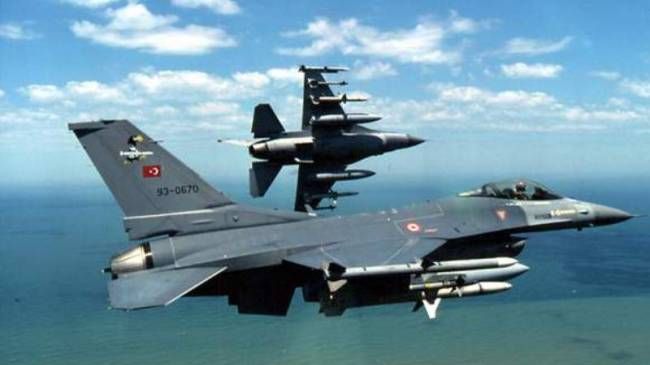
Turkish forces have launched fresh attacks on Kurdish rebels in northern Iraq, bombing their hideouts overnight.
Turkish military sources say at least 12 F16 fighter jets took off from the Diyarbakir base in the country’s southeast, targeting at least four camps in the Qandil Mountains and surrounding areas, where Kurdish Workers’ Party (PKK) members are thought to be hiding.
On Saturday, Turkish warplanes pounded suspected PKK positions in northern Iraq. Officials say the attacks caused no casualties, but resulted in damage to farmlands of Sidkan region, north of Arbil.
The latest development comes days after Iraq announced that it intended to end Turkey’s military presence in the country.
On October 5, Turkish security forces killed six PKK members during separate operations in the eastern provinces of Elazig and Siirt.
Ankara lists the group as a terrorist organization.
The PKK has been fighting for an autonomous Kurdish region inside Turkey since the 1980s. The Ankara-PKK conflict has left over 45,000 people dead.
Related articles
German state TV reports: Syrian rebels claim responsibility for attack on Turkey
By R. Teichmann | Global Research News | October 05, 2012
On Oct. 4th, the German state TV channel ZDF reported on the attack on Turkey several times.
In its “Mittagsmagazin” at 1300 hours it reports as follows:
02:06 – 02:32
German:
“Raketen- und Granatfeuer. Die Türkei übt Vergeltung für einen Angriff von syrischer Seite. Gestern Nachmittag hatten syrische Rebellen einen türkischen Ort in Grenznähe beschossen. Seit Wochen schon warnt Ankara davor, die Türkei zu provozieren. Inzwischen haben sich die syrischen Rebellen ganz offiziell zu der Provokation bekannt.”
Translation: (emphasis added)
“Rocket and mortar fire. Turkey takes revenge after an attack from the Syrian side. Yesterday afternoon Syrian rebels fired on a Turkish village close to the border. For weeks Ankara had warned against provoking Turkey. Meanwhile Syrian rebels officially claimed responsibility for the provocation.”
Only 3 hours later in its “Heute in Europa” at 1600 hours it reports:
01:40 – 01:52
German:
“Raketen und Granatfeuer. Vergangene Nacht übte die Türkei Vergeltung für einen Angriff von syrischer Seite. Gestern Nachmittag hatten Rebellen einen türkischen Ort in Grenznähe beschossen.”
Translation:
“Rocket and mortar fire. Last night Turkey took revenge for an attack from the Syrian side. Yesterday afternoon rebels fired on a Turkish village close to the border.”
0220 – 0227
German:
“Aussage eines Einheimischen (Türke): „Die syrischen Rebellen versuchen, uns in ihren Konflikt zu verwickeln. Wir müssen da sehr vorsichtig sein.”
Translation:
Testimony of a local Turk: “The Syrian rebels try to draw us into their conflict. We have to be very careful here.”
In their main evening news “Heute” at 1900 hours they report:
01:40 – 01:53
German:
„Raketen- und Granatfeuer. Vergangene Nacht übte die Türkei Vergeltung. Gestern Nachmittag hatten die Syrer einen Ort in Grenznähe beschossen. Die Spannungen zwischen den Nachbarn waren eskaliert – Ankara schlug zurück.“
Translation:
“Rocket and mortar fire. Last night Turkey took revenge. Yesterday afternoon the Syrians fired on a Turkish village close to the border. The tensions between the neighbours had escalated – Ankara retaliated.”
In the late evening news “Heute Journal” at 2300 hours they reported:
0154 – 0205
German:
“Raketen und Granatfeuer. Vergangene Nacht übte die Türkei Vergeltung. Gestern Nachmittag war von syrischer Seite ein Ort in Grenznähe beschossen worden. Die Spannung eskalierte. Ankara schlug zurück.”
Translation:
“Rocket and mortar fire. Last night Turkey took revenge. Yesterday afternoon a village close to the border had been fired upon from the Syrian side. The tension escalated – Ankara retaliated.”
0235 – 0242
German:
“Zerschossene Häuser und menschenleere Straßen. Noch ist nicht einmal klar, wer eigentlich geschossen hat, die syrische Armee oder die Rebellen.”
Translation:
“Houses shot to pieces and streets devoid of people. It is not even clear yet who really fired, the Syrian army or the rebels.”
The first victim of war is the truth
The first report clearly states that the rebels officially claimed responsibility for the attack on Turkey.
It is telling to see how the pressure on this TV station worked. They had to back-paddle:
At 1300 it was the Syrian Rebels officially claiming responsibility.
In the main evening news at 1900 it was the Syrians (suggesting the Syrian army). This is a prime example of how the first and probably most authentic and truthful report is turned and twisted by the spin doctors to come to the desired result. In these times of Orwellian double speak we have to give credit to the ZDF that they did not stick with “The Syrians did it” but at least ended with a question mark – in the late evening they leave it open who was responsible.
Supporting the original ZDF report that the rebels are responsible for the attack is another video (Source: Syria News) which shows that the rebels have the equipment to carry out such an attack.
These mortar shells are Russian-made, at least, the armed Western-backed fighters state this in this video on YouTube. It seems that they use ammunition that they got by attacks of arms depots of the Syrian Arab Army.
The author is a member of Awaken Ireland and a frequent contributor to this blog. He can be contacted via brtirl@eircom.net
Syria opposes escalation of violence with Turkey
TREND | October 5, 2012
Syria’s UN envoy said Thursday his government is not seeking any escalation of violence with Turkey and wants to maintain good neighborly relations, Today’s Zaman reported.
Ambassador Bashar Ja’afari said the government hasn’t apologized for the shelling from Syria that killed five Turkish civilians because it is waiting for the outcome of an investigation on the source of the firing.
He read reporters a letter he delivered to the deeply divided UN Security Council that sent Syria’s “deepest condolences” to the families of the victims “and to the friendly and brotherly people of Turkey.”
It urged Turkey and its other neighbors to “act wisely, rationally and responsibly” and to prevent cross-border infiltration of “terrorists and insurgents” and the smuggling of arms.
The Security Council has so far failed to respond to Wednesday’s deadly attack from Syria.
The US and its Western allies are seeking a strong statement condemning the attack on Turkey but Russia, Syria’s most important ally, is opposed and is seeking much weaker language that the West says is unacceptable, UN diplomats said, speaking on condition of anonymity because talks have been private.
US Ambassador Susan Rice said the original draft, proposed by Azerbaijan and backed by the Turkish government, “adequately reflected the key points that need to be made.” But diplomats said many council members objected to Russia’s proposed amendments watering down the text. So council experts were meeting to see if they could bridge the differences.
“This sort of cross-border military activity is very destabilizing and must be stopped,” Rice said. “While I think it’s too early to say what will be the result of those negotiations, we think it’s very important that the council speak clearly and swiftly to condemn this shelling.”
The border violence has added a dangerous new dimension to Syria’s civil war, dragging Syria’s neighbors deeper into a conflict that activists say has already killed 30,000 people since an uprising against President Bashar Assad’s regime began in March 2011.
UN Secretary-General Ban Ki-moon expressed alarm Thursday at the escalating border tensions and warned that the risks of regional conflict and the threat to international peace is increasing, UN spokesman Martin Nesirky said.
The UN chief called on all parties “to abandon the use of violence, exercise maximum restraint and exert all efforts to move toward a political solution,” he said.
Nesirky said Lakhdar Brahimi, the UN-Arab League envoy, has been in contact with Turkish and Syrian officials “in order to encourage an easing of tensions.”
Syria’s Ja’afari said the “Syrian government is keenly interested in maintaining good neighborly relations with Turkey.”
“The Syrian government is not seeking any escalation with any of its neighbors, including Turkey,” he stressed.
But he said Syria wants to explain to the Turkish people that their government’s policies supporting the opposition “are wrong and have been wrong since the beginning of the crisis.”
Ja’afari said Turkey responded to the incident by launching artillery shells into Syria starting at 7 p.m. local time Wednesday and stopping at midnight. Turkish troops then resumed artillery shelling Thursday morning until 7 a.m., injuring two Syrian army officers, he said.
“Our forces practiced self-restraint and did not respond to this Turkish artillery shelling,” Ja’afari said.
The Syrian ambassador said he delivered another letter to the Security Council seeking its condemnation for four suicide bombings in the country’s largest city and commercial capital, Aleppo, which killed scores of innocent civilians and took place about the same time Wednesday as the cross-border shelling.
But he said the council once again has been unable to condemn “these suicide terrorist attacks.”
Ja’afari urged the Turkish government to show “the same kind of sympathy” to the hundreds of innocent Syrian civilians killed in the suicide bombings as the Syrian government showed to the Turkish victims.
Turkish parliament authorizes cross-border military operations in Syria
RT | October 4, 2012
Turkey’s parliament has authorized cross-border military operations into Syria ‘when necessary.’ The move follows a cross-border mortar-shelling into Turkey which Damascus has apologized for.
Parliament voted 320-129 in favor of the bill, though the government was quick to eliminate the perception the country is preparing for a unilateral military assault.
“The bill is not for war… It has deterrent qualities,” Turkish Deputy Prime Minister Besir Atalay told reporters after the vote on Thursday.
He stressed that Turkey’s priority was to act in conjunction with “international institutions” on Syria. Atalay further said the Syrian government has admitted what it did and apologized. The deputy premier added that Syria had given its assurances “such an incident would not be repeated.”
The Turkish army has been shelling Syrian military positions since Wednesday in retaliation for shelling conducted from Syrian territory that killed five civilians.
The government-initiated debates in the Turkish parliament took place behind closed doors. The cabinet of Turkish Prime Minister Tayyip Erdogan claimed the Syrian military had launched an act of aggression against Turkey.
MP Muharrem Ince from the opposition Republican People’s party said the motion was dangerous as it had no clearly defined limits.
“You can wage a world war with [this motion],” Hürriyet Daily News cites him as saying.
Ince also lambasted the fact that the session took place behind closed doors.
“Why would you hide this from the people? Will it be your children that go to war? People are not going to know why they have sent their children to war,” he said.
On Wednesday at least three mortar bombs fired from Syria killed five civilians and wounded at least eight in the Turkish town of Akcakale. It was the second such mortar attack on the Turkish town since last Friday. Foreign Minister Davutoglu warned he would take action if there were a repeat in the wake of the shelling.
After a heated debate an urgent parliamentary session has opted to apply the new law.
Originally the bill targeted militants of the Kurdistan Workers Party (PKK) fighting for independent Kurd state for the last three decades. The Kurds have bases in northern Iraq, de-facto not controlled by the government in Baghdad. The Turkish military has conducted a number of air and ground assaults on Kurdish positions in Iraq, most of them considered successful.
The debates around the move have sparked sharp negative reaction among the Turkish population. While a small group of anti-war protesters rallied outside the Turkish parliament in Ankara, a real anti-war storm has been initiated by Turkish and foreign activists on social networks both inside and outside of Turkey. The hashtag #savasahayir (no to war) quickly spread beyond Turkish borders into global social networking.
Related articles
- Turkish Army continues shelling positions in Syria (alethonews.wordpress.com)
Turkish Army continues shelling positions in Syria
Press TV – October 4, 2012
Turkish forces continue shelling targets in Syria following a deadly cross-border attack on a town in southeast Turkey amid escalating tensions between the two neighbors.
Ankara said the attacks were in retaliation for a Syrian mortar strike that killed five people in Turkey’s southeastern town of Akcakale in Sanliurfa province earlier on Wednesday.
In a letter to the UN Security Council, Ankara condemned the shelling as “a flagrant violation of international law,” and asked the world body to take action to stop such “acts of aggression.”
The Turkish parliament is due on Thursday to discuss a motion for cross-border military operations inside Syria “when deemed necessary.”
NATO ambassadors also held an emergency late-night meeting in Brussels to discuss the Syrian shelling and the Turkish backfire.
The alliance blamed Syria for the incident and demanded Damascus end what it called aggressive acts against member-nation Turkey.
Meanwhile in a phone conversation, US Secretary of State Hillary Clinton assured Turkish Foreign Minister Ahmet Davutoglu of Washington’s full backing for Ankara at NATO and the UN, the Turkish Foreign Ministry said in a statement.
Separately, White House spokesman Tommy Vietor said, “We stand with our Turkish ally and are continuing to consult closely on the path forward.”
The remarks came despite the Syrian government’s gesture to offer condolences to Turkish people over the deadly mortar attack and to launch an investigation into the source of the shelling.
Damascus also called for an end to the transfer of terrorists into Syria, which has been plagued by more than a year of deadly unrest.
Syria accuses certain Western and regional countries, including Saudi Arabia, Qatar, and Turkey, of arming and funding insurgents fighting against the government of Syrian President Bashar al-Assad.
Ending the Violence in Syria
By Jeremy Salt | Palestine Chronicle | October 3, 2012
Ankara – It would seem to be quite simple. All that has to happen for the fighting to end in Syria is for those with guns in their hands to put them down. So why isn’t it happening?
Again the answer is simple and not just seemingly. Outside governments supporting the armed groups do not want them to put their weapons down. It has been deliberately locked into a cycle of violence which its enemies hope will end in its destruction. This strategy is the prime cause of the death and devastation over which the sponsors of this violence have been wringing their hands before the UN General Assembly.
Agendas vary slightly but the prime goal of Qatar, Saudi Arabia and the governments of the US, Britain and France is not political reform but the destruction of Iran’s best friend in the region. Syria is the central arch in a strategic relationship between Hezbollah, Syria and Iran. The fall of that central arch would give western governments one of their greatest strategic victories in the modern history of the Middle East.
Syria is frequently described as collapsing or bleeding or plunging into ‘civil war’. None is correct. Syria is being collapsed, being bled and being plunged into devastation as the direct consequence of decisions taken outside Syria. The collective calling itself ‘The Friends of the Syrian People’ has deliberately brought Syria to where it is now. There are no small mercies in this situation but it could have been even worse, if these ‘friends’ had been able to launch an aerial assault under the aegis of the Security Council. Had Russia and China not blocked them, Syria would be now be a total ruin, with an infinitely greater number of dead than the 20,000 or so already killed. Their fallback position was the war of attrition being waged by their armed protégés.
Few countries could withstand the battering Syria has taken in the past 18 months. In the name of ‘regime change’ horror has followed horror. Aleppo has been turned into a replica of Beirut at the height of the civil war, with a large part of the medieval souk now burnt to the ground. Yet the government has not collapsed and neither has the army disintegrated. The message from this is that Syria has a government and not a ‘regime’ and an army – in which the ordinary soldiers are mostly Sunni Muslim – and not ‘Assad loyalists’.
Military defections have been few. So have defections from the ranks of government despite the large amounts of money on offer. Foreign Minister Walid Muallim was offered $100 million by the ruler of Qatar if he would defect but turned it down and went public with the bribe. One of the last known of cases was the $20,000 a month for the next 20 years and a home in Doha offered to the Syrian consul in Mauritania. He also refused. Bashar al Assad was totally correct when he said a few days ago that the rulers of Saudi Arabia and Qatar think they can buy anyone. If there is anywhere where ‘regime change’ is needed it is surely in these gulf states.
One of the last defectors was the head of security in Aleppo. Before his departure and untimely end (he was assassinated a few kilometers short of the Turkish border by persons unknown) he had arranged for the infiltration of thousands of jihadis into the city. Many are not even Syrian. They have come to fight the jihad from all corners of the Muslim world. There are Chechens, Afghans, Pakistanis, Tajiks, Tunisians, Egyptians, Libyans (lots of Libyans), Saudis and Iraqis. Aleppo has been targeted because it is close to the Turkish border, and the hope is that it can be turned into a ‘rebel’ capital in a ‘liberated’ zone stretching up to the Turkish border. This could be done only over the dead bodies and against the wishes of the people of the city.
Whether inside the cells fighting in the name of the so-called Free Syrian Army (FSA) or operating independently, the salafi jihadis inside Syria are tactically cooperating against the common enemy. The FSA is little more than a convenient trademark. Most of the armed groups have their own command structure and take no notice of the FSA. Recently Riad al Assad crossed the border from Turkey to direct the struggle from inside Syria, only to stay a day and a night before going back because there was no point in him staying. The political arm of the FSA is the so-called Syrian National Council, touted as an alternative government but dysfunctional from the start and now recognized as such even by its sponsors. Put these two hard realities together and you have the formula for complete chaos. There is no alternative government in sight. There is no rational end in sight. The armed groups cannot overthrow the government without the direct intervention of their outside sponsors and that possibility seems to be receding although Qatar is still trying to talk it up. All that lies ahead of Syria unless the violence can be ended and negotiations begun is more chaos, more destruction and more loss of life.
Not that chaos is to be discarded as an end in itself. It will take Syria decades to recover from the damage already done whoever governs in Damascus. If the decision is finally taken to attack Iran, Syria would probably be too stricken to come to its aid even if the government has not been overthrown; if Syria cannot help, then Hezbollah might have to stay on the sidelines as well, releasing Israel from the fear of a second front opening in the north. This is how the governments orchestrating the campaign against Syria want the dominoes to fall. The implications for the Palestinians are clear. Any gain for Israel is a loss for them and the overthrow of the Syrian government, followed by the collapse of the strategic relationship between Hezbollah, Syria and Iran, would be an enormous gain for Israel, releasing pressure on one front and giving it more time to complete its absorption of Jerusalem and the West Bank.
What most Syrians want is to be left alone to sort out their own affairs. They want change but not at any cost. They don’t want the west sticking its nose in their affairs and they don’t want armed gangs running amok in their country. The west might have forgotten its own bloody record in the Middle East dating back to the beginning of the 19th century but Syrians have not. They know how disastrously western intervention always ends in the Middle East. Heads of governments who have been fueling the armed opposition have been lining up at the UN General Assembly to call for an end to the violence. If they mean what they say, they would be throwing their weight behind the attempts of the non-violent domestic opposition to bring a mediated end to this conflict. But they don’t and therefore must be seen for what they are – hypocrites who are pushing their own agenda at massive cost to Syria and its people.
– Jeremy Salt is an associate professor of Middle Eastern history and politics at Bilkent University in Ankara, Turkey.
Related articles
- ‘West wants end of Syria as a functioning independent state’ (alethonews.wordpress.com)
Egypt not mulling Arab intervention in Syria: Morsi spokesman
Ahram Online | September 30, 2012
Presidential spokesman Yasser Ali on Sunday denied media reports that Egypt had agreed to Arab military intervention in violence-wracked Syria.
Earlier on Sunday, Seif Abdel-Fattah, an aide to Egyptian President Mohamed Morsi, reportedly told the Turkish Anadoul news agency that Egypt was considering a Qatari proposal for Arab military intervention in Syria aimed at ending the 18-month-long conflict there.
Abdel-Fattah was also quoted as saying that Egyptian and Qatari officials were expected to discuss the proposal “soon,” adding that non-Arab Turkey might also be involved in the initiative.
According to Anadoul, the presidential aide went on to say that Morsi, during his current visit to Turkey, was attempting to drum up support for the Qatari scheme with his Turkish interlocutors.
Yet Ali insisted that Arab intervention in Syria remained “out of the question.” He added that Egypt’s rejection of military involvement in Syria remained unchanged, stressing that statements made by anyone other than the president or his official spokesman did not reflect Egypt’s official policy.
On Sunday, Morsi visited Turkey for the first time in his capacity as Egypt’s president, where he delivered an address at the annual meeting of Turkey’s ruling Justice and Development Party.
Related articles
- Egypt may join Arab intervention in Syria (alethonews.wordpress.com)
- Qatari in Egypt: Buying Foreign Policy (alethonews.wordpress.com)
Egypt may join Arab intervention in Syria
Al Akhbar | September 30, 2012
Egypt may take part in an Arab military intervention in Syria, provided this does not open the door to Western intervention, a political adviser to Egyptian President Mohammed Mursi told Turkey’s Anadolu news agency Saturday.
“We are in principle ready for an Arab intervention in Syria after the limits, goals and features of that intervention are made clear,” said Saif Abdel Fattah.
In a speech before the UN General Assembly Tuesday, Qatari Emir Sheikh Hamad bin Khalifa al-Thani called on Arab states to intervene militarily in Syria, citing an Arab-league backed intervention during Lebanon’s civil war as an “effective and useful” precedent.
Analysts have since warned that such a move could trigger a counter-intervention from Iran, sparking an even wider regional conflict.
Abdel Fattah went on to say that Egypt may pressure Turkey to put the Qatari proposal into effect. He added that Mursi would be discussing the issue with Turkish prime minister Recep Tayyip Erdogan during his visit to Turkey Sunday.
Turkey is an ardent supporter of military intervention in Syria, and has pushed the UN Security Council to impose a no-fly zone over the country. The proposals have been repeatedly shot down by China and Russia.
Related articles
- Collaboration Loans (Al Akhbar)
Featured Video

Seyed M. Marandi: US-Iran War Inevitable: Kuwait and Bahrain May Fall
or go to
Aletho News Archives – Video-Images
From the Archives
Oil and the Israel Lobby
Reknowned economist M. Shahid Alam offers this excellent critique of Noam Chomsky’s defective analysis of the relative influence of Oil versus the Israel lobby over US foreign policy: … continue
Blog Roll
 Aletho News
- ICC ignored ‘very well-documented’ NATO crimes – ex-Libyan minister
- SNSC secretary dismisses US response to Iran’s conditions as ‘inadequate’
- Sanaa says Taiz roads open, secure for residents, warns Saudi forces
- Iraqi resistance group urges Saudi leadership to admit defeat, lift Yemen siege
- Trump’s Retreat: How Al-Aqsa Flood Took Down the US Empire
- Israel’s Military Actions in Lebanon Grossly Violate International Law — Lavrov
- Seyed M. Marandi: US-Iran War Inevitable: Kuwait and Bahrain May Fall
- Leaders Condemn Ansarallah Attack on Saudi Arabia While Ignoring Illegal War Against Yemen
- Leaked: Britain’s Covert Iraqi Psyops Network
- Yemeni Armed Forces Warn Airlines Against Using Saudi Airports, Exempt Mecca and Medina
- If Americans Knew
- Opinion: Why news organizations should boycott Israel
- The Israeli witch hunt of Sami Abu Shehadeh exposes the lie of the ‘Jewish and democratic’ state
- No state has a ‘right’ to exist – least of all an apartheid, genocidal state like Israel
- Testimonies about Gaza’s civilian death toll expose Israel’s atrocities – Daily Update
- How Israel Conquered the Latin American Right
- Agents search Rep. Omar’s Washington home in criminal probe as she vows she won’t ‘be silenced’
- “The Rule Was: ‘Shoot Everyone You See'”
- Israel goes ballistic over Nobel Laureate Navi Pillay
- U.S. May Join Yet Another Middle Eastern War — TCN
- Yellow Line moves again as Israel closes in on trapped Gazans – Daily Update
- No Tricks Zone
- Germany’s Green Energy Debacle: High Energy Costs Force Kahla Porzellan to Close After 182 Years!
- New Study: 50 Years Of The Most Aggressive ‘Net Zero’ Policies Can Only Affect The Global Climate By 0.03°C
- US September “Heat” Was No Record…Many Records Set Decades Ago
- Latest European Green Energy Debacle; Portugal’s Largest Flagship Solar Park Insolvent!
- Green Energy Debacle: German Expert Professor Fritz Vahrenholt Warns Of Severe Economic And Social Consequences
- Two More Paleo Reconstructions Affirm Meters-Higher Sea Levels Across Ireland, Brazil 7000-6000 Years Ago
- New Study: Earth And Venus Surface Warmth Largely Explained By Convection And Lapse Rate, Not CO2 Or Radiation
- 2025 Nature Paper Claiming Worsening Global Drought Gets RETRACTED …Heavily Flawed
- New Study: ‘Global Drought Shows No Detectable Recent Acceleration Under Climate Warming’
- Economic Masterminds: German Socialists Suggest Taxing Productivity Gains Stemming From Using AI

