How the UK press supports the British military and intelligence establishment
By Mark Curtis | Declassified UK | March 11, 2020
Britain’s national press is acting largely as a platform for the views of the UK military and intelligence establishment, new statistical research by Declassified UK shows.
The UK press, from The Times to The Guardian, is also routinely helping to demonise states identified by the British government as enemies, while tending to whitewash those seen as allies.
The research, which analyses the UK national print media, suggests that the public is being bombarded by views and selective information supporting the priorities of policy-makers. The media is found to be routinely misinforming the public and acting far from independently.
This is the second part of a two-part analysis of UK national press coverage of British foreign policy.
Elite platform
Numerous stories or points of information on Britain’s intelligence agencies, such as MI6 and GCHQ, are being fed to journalists by anonymous “security sources” – often military or intelligence officials who do not want to be named.
The term “security sources” has been mentioned in 1,020 press articles in the past three years alone, close to one a day. While not all of these relate to UK sources, it indicates the common use of this method by British journalists.
Declassified’s recent research found that officials in the UK military and intelligence establishment had been sources for at least 34 major national media stories that cast Labour leader Jeremy Corbyn as a danger to British security. The research also found 440 articles in the UK press from September 2015 until December 2019 specifically mentioning Corbyn as a “threat to national security”.
Anonymous sources easily push out messages supportive of government policy and often include misleading or unverifiable information with no come-back from journalists. The Ministry of Defence (MOD) says it has 89 “media relations and communications” officers.
Many journalists regularly present the views of the MOD or security services to the public with few or no filters or challenges, merely amplifying what their sources tell them. In “exclusive” interviews with MI6 or MI5, for example, journalists invariably allow the security services to promote their views without serious, or any, scepticism for their claims or relevant context.
That the UK intelligence services are regularly presented as politically neutral actors and the bearers of objective information is exemplified in headlines such as “MI6 lays bare the growing Russian threat” (in the Times) and “Russia and Assad regime ‘creating a new generation of terrorists who will be threat to us all’, MI6 warns” (in the Independent).
Press coverage of the RAF’s 100th “birthday” in 2018 produced no critical articles that could be found, with most being stories from the MOD presented as news. This is despite episodes in the RAF’s history such as the bombing of civilians in colonial campaigns in the Middle East in the 1920s, 1930s and 1950s and its prominent current role in supporting Saudi airstrikes in Yemen, which has helped create the world’s biggest humanitarian disaster.
Similarly, for GCHQ’s 100th anniversary in 2019, the press appeared to simply write up information provided by the organisation. Only the occasional article mentioned GCHQ’s role in operating programmes of mass surveillance while its covert online action programmes and secret spy bases in at least one repressive Middle East regime were ignored by every paper at the time, as far as could be found.
The national press are generally strong supporters of the security services and the military. A number of outlets, from the Times and Telegraph to the Mirror, are strongly opposed to government cuts in parts of the military budget, for example.
The British army’s main special forces unit, the SAS, which is currently involved in seven covert wars, is invariably seen positively in the national press. A search reveals 384 mentions of the term “SAS hero” in the UK national press in the past five years – mainly in the Sun, but also in the Times, Express, Mail, Telegraph and others.
Critical articles on the special forces are rare, and the journalists writing them can face a backlash from other reporters.
In some press articles, MOD media releases are largely copied and pasted. For example, recent MOD material on RAF Typhoons in Eastern Europe scrambling to intercept Russian aircraft has often been repeated word for word across the media.
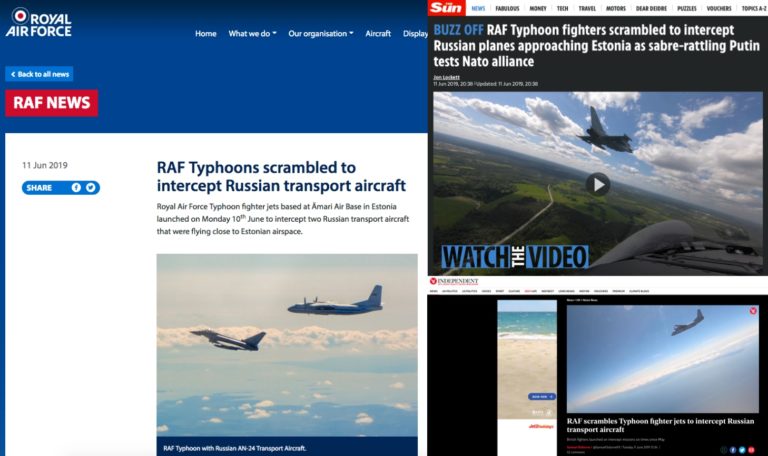
A press release from the UK’s Royal Air Force, and how it was covered by two British newspapers, The Sun and The Independent.
Such “embedded journalism” poses a significant threat to the public interest. Richard Norton-Taylor, formerly the Guardian’s security correspondent for over 40 years, told Declassified : “Embedded journalists — those invited to join British military units in conflict zones — are at the mercy of their MOD handlers at the best of times. Journalists covering defence, security and intelligence are far too deferential and indulge far too much in self-censorship”.
Some papers are more extreme than others in their willingness to act as platforms for the military and intelligence establishment. The Express may well be the most supportive: its coverage of MOD stories and vilification of official enemies, notably Russia, is remarkable and consistent.
The Guardian, however, has also been shown to play a similar role. Declassified’s recent analysis, drawing on newly released documents and evidence from former and current Guardian journalists, found that the paper has been successfully targeted by security agencies to neutralise its adversarial reporting of the “security state”.
Censorship by omission
Articles critical of the Ministry of Defence or security services are occasionally published in the press. However, these tend to be either on relatively minor issues or are reported on briefly and then forgotten. Rarely do seriously critical stories receive sustained coverage or are widely picked up across the rest of the media.
Often, reporters will cover a topic and elide the most important information for no clear reason. For example, there is considerable coverage of possible MI5 failures to prevent the May 2017 Manchester terrorist bombing — failings which may be understandable given the large number of terrorist suspects being monitored at any one time.
However, the government admitted in parliament in March 2018 that it “likely” had contacts with two militant groups in the 2011 war in Libya for which the Manchester bomber and his father reportedly fought at the time, one of which groups the UK had covertly supported in the past. This significant admission in parliament has not been reported in any press article, as far as can be found.
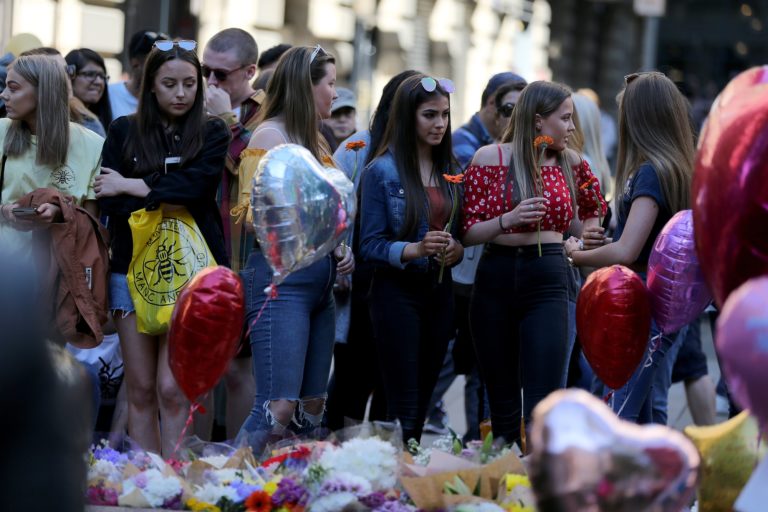
People lay flowers in St Annes Square on the first anniversary of the Manchester Arena bombing in Manchester, Britain, 22 May 2018. (Photo: EPA-EFE / Nigel Roddis)
Last September, veteran investigative journalist Ian Cobain broke a story on the alternative news site Middle East Eye revealing that the senior Twitter executive with editorial responsibility for the Middle East is also a part-time officer in the British army’s psychological warfare unit, the so-called 77th Brigade.
This story was picked up by a few media outlets at the time (including the Financial Times, the Times and the Independent ) but our research finds that it then went unmentioned in the hundreds of press articles subsequently covering Twitter.
Similarly, in November 2018, a story broke on a secretive UK government-financed programme called the Integrity Initiative, which is ostensibly a “counter disinformation” programme to challenge Russian information operations but was also revealed to be tweeting messages attacking Labour leader Jeremy Corbyn.
Our research finds that in the 14 months until December 2019, the Integrity Initiative was mentioned less than 20 times in the UK-wide national press, mainly in the Times (it was also mentioned 15 times in the Scottish paper, the Sunday Mail ).
By contrast, when stories break that are useful to the British establishment, they tend to receive sustained media coverage.
Establishment think tanks
The British press routinely chooses to rely on sources in think tanks that largely share the same pro-military and pro-intervention agenda as the state.
The two most widely-cited military-related think tanks in the UK are the London-based Royal United Services Institute (RUSI) and the International Institute for Strategic Studies (IISS) which are usually quoted as independent voices or experts. In the last five years, RUSI has appeared in 534 press articles and IISS in 120.
However, both are funded by governments and corporations. RUSI, which is located next door to the Ministry of Defence in Whitehall, has funders such as BAE Systems, the Qatar government, the Foreign Office and the US State Department. IISS’s chief financial backers include BAE Systems, Raytheon, Lockheed Martin and Airbus.
This funding is mentioned in only two press reports that could be found – the Guardian reported that IISS received money from the regime in Bahrain while the Times once noted, “RUSI, while funded in part by the MoD, is an independent think tank”.
One Telegraph article refers to a “research fellow at RUSI who specialises in combat airpower”, without mentioning that its funder BAE Systems is a major producer of warplanes.
Although many senior figures in these organisations previously worked in government, press readers are rarely informed of this. RUSI’s chair is former foreign secretary William Hague, its vice-chair is former MI6 director Sir John Scarlett and its senior vice-president is David Petraeus, former CIA director.
The IISS’s deputy secretary-general is a former senior official at the US State Department while its Middle East director is a former Lieutenant-General in the British army who served as defence senior adviser to the Middle East. One of IISS’ senior advisers is Nigel Inkster, a former senior MI6 officer.
Media and intelligence
Richard Keeble, professor of journalism at the University of Lincoln, has noted that the influence of the intelligence services on the media may be “enormous” and the British secret service may even control large parts of the press. “Most tabloid newspapers – or even newspapers in general – are playthings of MI5”, says Roy Greenslade, a former editor of the Daily Mirror who has also worked as media specialist for both the Telegraph and the Guardian.
David Leigh, former investigations editor of the Guardian, has written that reporters are routinely approached and manipulated by intelligence agents, who operate in three ways: they attempt to recruit journalists to spy on other people or go themselves under journalistic “cover”, they pose as journalists in order to write tendentious articles under false names, and they plant stories on willing journalists, who disguise their origin from their readers — known as black propaganda.
MI6 managed a psychological warfare operation in the run-up to the Iraq war of 2003 that was revealed by former UN arms inspector Scott Ritter. Known as Operation Mass Appeal, this operation “served as a focal point for passing MI6 intelligence on Iraq to the media, both in the UK and around the world. The goal was to help shape public opinion about Iraq and the threat posed by WMD [weapons of mass destruction]”.
Various fabricated reports were written up in the media in the run-up to the Iraq war, based on intelligence sources. These included cargo ships said to be carrying Iraqi weapons of mass destruction (covered in the Independent and Guardian ) and claims that Saddam Hussein killed his missile chief to thwart a UN team (Sunday Telegraph ).
More recent examples of apparently fabricated stories in the establishment media include Guardian articles on the subject of Julian Assange. The paper claimed in a front page splash written by Luke Harding and Dan Collyns in November 2018 that former Trump campaign manager Paul Manafort secretly met Assange in the Ecuadorian embassy three times.
The Guardian also falsely reported on a “Russia escape plot” to enable Assange to leave the embassy for which the paper later gave a partial apology. Both stories appeared to be part of a months-long campaign by the Guardian against Assange.
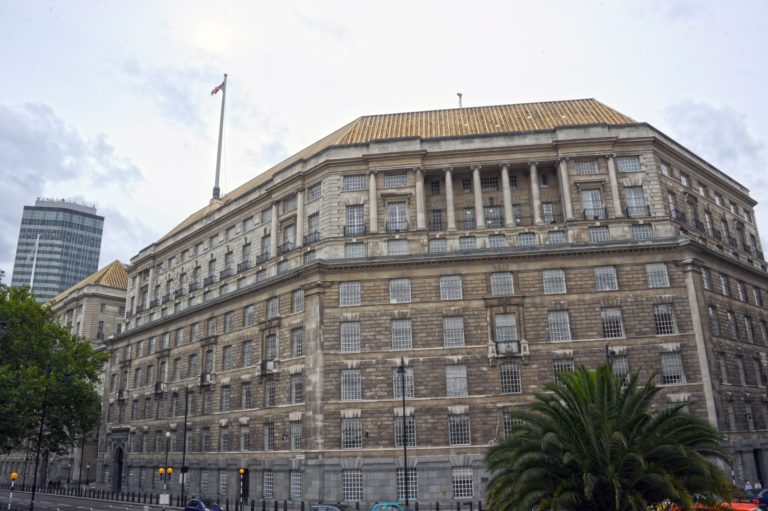
The exterior view of Thames House, MI5 Headquarters, in Millbank, on the bank of the River Thames, London, Britain. (Photo: EPA-EFE/ Horacio Villalobos)
Demonising enemies
The media plays a consistent role in following the state’s demonisation of official enemies. The term “Russian threat” is mentioned in 401 articles in the past five years, across the national press. The Express may be the largest press amplifier of the government’s demonisation of Russia — the paper carries a steady stream of stories critical of Russia and Putin.
The British establishment has invoked Russia as an enemy in recent years due mainly to the poisonings in the town of Salisbury and policy in eastern Europe. Whatever malign policies Russia is promoting, which can be real, false or exaggerated, it is noteworthy that this has been elevated by the press to a general “threat” to the UK. As during the cold war, this is useful to the British military and security services arguing for larger budgets and for offensive military postures in Eastern Europe and the Middle East.
Russia’s alleged interference in British politics has received huge coverage compared to alleged Israeli influence. A simple comparison of search terms using “Russia/Israel and UK and interference” in press articles in the past five years yields seven times more mentions of Russia than Israel, despite considerable evidence of Israeli interference.
UK press reporting on Iran is also noticeably supportive of government policy. A search for “Iran and nuclear weapons programme” reveals 325 articles in the past five years. While this large coverage is driven by president Trump’s withdrawal from the Iran nuclear deal, it is also driven by Iran being a designated enemy of the US and UK, which have deemed it unacceptable that Tehran should ever acquire nuclear weapons.
By contrast, “Israel’s nuclear weapons” (and variants of this search term) are mentioned in under 30 press articles in the past five years. Natanz, Iran’s main nuclear arms facility, has been mentioned in around four times more press articles than Dimona, the Israeli nuclear site, in the past five years.
The contrast in reporting on Iran and Israel is striking since Iran does not possess nuclear weapons, and it is not certain that it seeks to, whereas Western ally Israel already has such weapons, estimated at around 80 warheads.
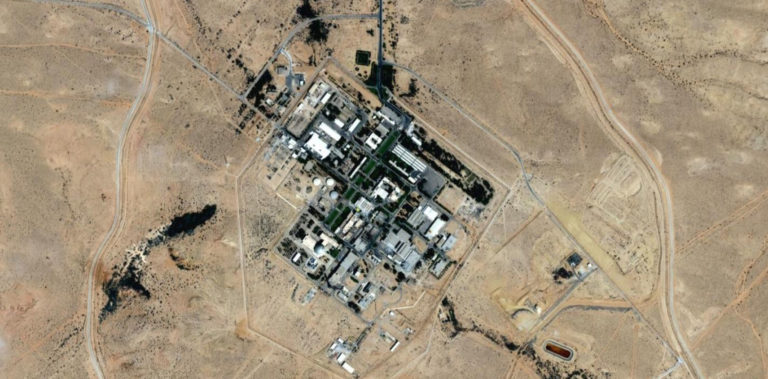
An aerial view of Israel’s nuclear site at Dimona. (Google Maps)
Labelling goodies and baddies
The national press strongly follows the government in labelling states as enemies or allies.
States favoured by the UK are mainly described in the press using the neutral term “government” rather the more critical term “regime”. In the past three years, for example, the term “Saudi government” has been used in 790 articles while “Saudi regime” is mentioned in 388. However, with Iran the number of instances is reversed: “Iranian government” is used in 419 articles whereas “Iranian regime” is mentioned in 456.
The same holds for other allies. The “Egyptian regime” receives 24 mentions while “Egyptian government” has 222, in the past three years. The “Bahraini regime” is mentioned in 10 articles while “Bahraini government” is mentioned in 60.
The precise term “Iranian-backed Houthi rebels”, referring to the war in Yemen, is mentioned in 198 articles in the last five years. However, the equivalent term for the UK backing the Saudis in Yemen (using search terms such as “UK-backed Saudis” or “British-backed Saudis”) appears in just three articles.
The pattern is also that the crimes of official enemies are covered extensively in the national press but those of the UK and its allies much less so, if at all.
Articles mentioning “war crimes and Syria” number 1,527 in the past five years compared to 495 covering “war crimes and Yemen”. While the press often reports that the Syrian government has carried out war crimes, most articles simply suggest or allege war crimes by the Saudis in Yemen.
Indeed, the UK press has been much more interested in covering the Syrian war—chiefly prosecuted by the UK’s opponents—than the Yemen war, where Britain has played a sustained widespread role. As a basic indicator, the specific term “war in Syria” is mentioned in well over double the number of articles as “war in Yemen” in the past five years.
Furthermore, government enemies are regularly described in the press as supporters of terrorism, which rarely applies to allies.
In the past three years 185 articles mention the term “sponsor of terrorism”, most referring to Iran, followed by Sudan and North Korea with the occasional mention of Libya and Pakistan. None specifically label UK allies Turkey or Saudi “sponsors of terrorism”, despite evidence of this in Syria and elsewhere, and none describe Britain or the US as such.
Some 102 articles in the past five years specifically mention Russia’s “occupation of Crimea”. However, despite some critical articles on UK policy towards the Chagos Islands in the Indian ocean—which were depopulated by the UK in the 1970s and which the US now uses as a military base—only two articles specifically mention the UK’s “occupation of Chagos” (or variants of this term).
Similar labelling prevails on opposition forces in foreign countries. Protesters in Hong Kong are routinely called “pro-democracy” by the press – the term has been mentioned in hundreds of articles in the past two years. However, protesters in UK allies Bahrain and Egypt have been referred to as “pro-democracy” in only a handful of cases, the research finds.
The special relationship
While demonising enemies, UK allies are regularly presented favourably in the press. This is especially true of the US, the UK’s key special relationship on which much of its global power rests. US foreign policy is routinely presented as promoting the same noble objectives as the UK and the press follows the US government line on many foreign policy issues.
The term “leader of the free world” to refer to the US has been used in over 1,500 articles in the past five years, invariably taken seriously across the media, without challenge or ridicule.
The view that the US promotes democracy is widely repeated across the press. A 2018 editorial in the Financial Times, written by its chief foreign affairs commentator Gideon Rachman, notes that, “Leading figures in both [US political] parties — from John Kennedy to Ronald Reagan through to the Bushes and Clintons — agreed that it was in US interests to promote free-trade and democracy around the world”. In 2017 Daniel McCarthy wrote in the Telegraph of “two decades of idealism in US foreign policy, of attempts to spread liberalism and democracy”.
It is equally common for the UK press to quote US figures on their supposed noble aims, without challenge. For example, the Sunday Times recently cited without comment the US state department saying “Promoting freedom, democracy and transparency and the protection of human rights are central to US foreign policy”.
The press often strongly criticises President Donald Trump, but often for betraying otherwise benign US values and policies that it assumes previous presidents have promoted. For example, Tom Leonard in the Daily Mail writes of “Mr Trump’s belief that US foreign policy should be guided by cold self-interest rather than protecting democracy and human rights”.
The Guardian is especially supportive of US foreign policy. A sub-heading to a recent article notes: “The US once led Western states’ support of democracy around the world, but under this president [Trump] that feels like a long time ago”. One of its main foreign affairs columnists, Simon Tisdall, recently wrote that the US fundamental “mission” was an “exemplary global vision of democracy, prosperity and freedom”, albeit one which has been distorted by the war on terror.
The Guardian regularly heaped praise on president Obama. An editorial in January 2017 commented that Obama was a “successful US leader” and that “internationally” his vision “could hardly be faulted for lack of ambition”. It also noted Obama’s “liberalism and ethics” and that: “Mr Obama has governed impeccably for eight years without any ethical scandal”.
Although the article noted US wars and civilian casualties in Yemen and Libya, the paper brushed these off, stating “But to ascribe the world’s tragedies to a single leader’s choices can be simplistic. The global superpower cannot control local dynamics”.
Research covered the period to the end of 2019 using the media search tool, Factiva. It analysed the “mainstream” UK-wide print media (dailies and Sundays) over different time scales, usually two or five years, as specified in the article. Media search engines cannot be guaranteed to work perfectly so additional research was sometimes undertaken.
Mark Curtis is the co-founder and editor of Declassified UK, an historian and author of five books on UK foreign policy. He tweets at: @markcurtis30.
Craig Murray kept in Strange Limbo, can’t gain access to Alex Salmond trial
By Craig Murray | March 10, 2020
My efforts to accredit to cover the Alex Salmond trial continue to be stonewalled. I therefore cannot gain access to the court which is closed to the public while the anonymous accusers give their evidence. Media only are able to watch via CCTV from a media room, which is where I am trying to get. The established media are of course overwhelmingly hostile to Alex Salmond.
You will recall the media behaviour at the coverage of the Julian Assange hearing. They turned up in force on day one and gave major coverage to the prosecution opening statement. The headlines screamed that Julian Assange had “put lives at risk”, and was just an “ordinary criminal”. They then almost entirely left, and gave virtually zero coverage to the defence’s comprehensive refutation of these arguments.
I suspect we are going to see a similar dynamic at play here. The prosecution led yesterday with its key witness and the most serious accusations. The media have used screaming headlines – today’s Times has five separate articles on the trial – and Ms H’s accusations are given in enormous, salacious detail. I am willing to wager very large sums of money that the defence are not given nearly the same level of coverage. Which is why I need to be in there to record what really happens.
I have established firmly that I am not being kept out for reasons of space. I have been passed around various officials, but the lady from “judicial communications” in charge of the court is willing to admit me provided the Scottish Courts and Tribunal Service (SCTS) is willing to accredit me with their media card. I filled in the forms for that and sent in the photo last week. So far no response from SCTS, except that they yesterday referred me to “judicial communications”, who referred me straight back to SCTS again. The old runaround.
I am extremely frustrated by this as this is the key witness (I know who Ms H is, incidentally) and key evidence I am missing. There are a number of other subjects on which I might be blogging, but the annoyance is knocking my concentration at present, for which I apologise.
UK press acts as ‘appendage of the state’ when reporting on foreign policy, new analysis shows
RT | March 9, 2020
A new analysis of British media’s coverage of foreign policy has found that, by and large, the UK press acts as “an appendage of the state” and has been “misinforming the public” and “failing to report” completely on key issues.
The statistical analysis was carried out by Declassified UK, a new “public service journalism” project investigating Britain’s foreign,military and intelligence policies and run by journalist and historian Mark Curtis.
On Twitter, Curtis said the current state of UK press reporting on foreign policy is “shocking” and that the media was “systematically misinforming” the public on numerous issues, as well as routinely “falsely reporting” on the UK’s “supposed benevolent role” around the world.
Among its findings, Declassified UK said that the term “rules-based international order” has been used in 339 press articles over the past five years — and that Britain is invariably cast as an upholder of that order, despite being “as much a violator of international rules as any official enemy.”
Yemen, Syria and the OPCW
When it comes to the war in Yemen, the press has “overwhelmingly failed” to report the extent to which this is also a British war due to its key role in arming Saudi Arabia.
While many articles covered UK arms exports to Riyadh, “no articles could be found” mentioning the UK’s role in storing and issuing bombs for Saudi aircraft and maintaining warplanes at key operating bases.
The UK media has also mostly “ignored” British military support programs in Saudi Arabia itself, showing a “lack of interest on the part of journalists to expose key aspects of UK foreign policy,” it said.
On the war in Syria, the Times and Telegraph have reported only “sporadically” on Britain’s involvement in the conflict, while the Guardian has accused the UK of having “failed to act” in the war-torn country — despite the fact that Britain began covert operations in Syria as early as 2011.
In addition, comments from former OPCW director Jose Bustani noting “irregular behavior” in the watchdog’s controversial Douma investigation were reported in “only one” press outlet — the Mail on Sunday. Three whistleblowers raised the alarm last year about what they claim was the suppression of key information from the OPCW’s official report on the alleged chemical attack, but their concerns have received little airing by British journalists.
Failure on Assange
The UK press has also failed in its duty to report fully on the case of jailed WikiLeaks founder and whistleblower Julian Assange, the analysis found. “No UK press outlet” has written about UN special rapporteur Nils Melzer’s letter to the government calling for officials to be investigated for “criminal conduct” in relation to Assange’s case. Melzer has repeatedly said that Assange is being subjected to “psychological torture” at Belmarsh Prison.
In contrast, the British press frequently highlights UN reports on the torture and imprisonment of journalists in foreign countries, it noted.
Israel and GCHQ
Despite reporting in Israeli media on the “unprecedented” recent British-Israeli military cooperation, there was no coverage by the UK press of Israel’s first-ever deployment of fighter jets to Britain last year — or of an admission in parliament in 2018 that the UK was offering military training to Israel.
The analysis also found that GCHQ’s covert action program known as JTRIG has been specifically mentioned “less than a dozen times” in the national press since Edward Snowden revealed it in 2014 — and all were brief mentions in articles focusing on other subjects. “This is in sharp contrast to the vast attention paid to Russian covert programmes,” Curtis wrote.
The research, which is the first in a two-part series, covered national print media and did not include the national broadcasters like the BBC.
Ultimately, the study found that the British public is being “bombarded” by views which support the priorities of UK policymakers and there is only a “very small space” in the British press for independent analysis of foreign policy.
Mounting concern over SAS operations in southern Syria
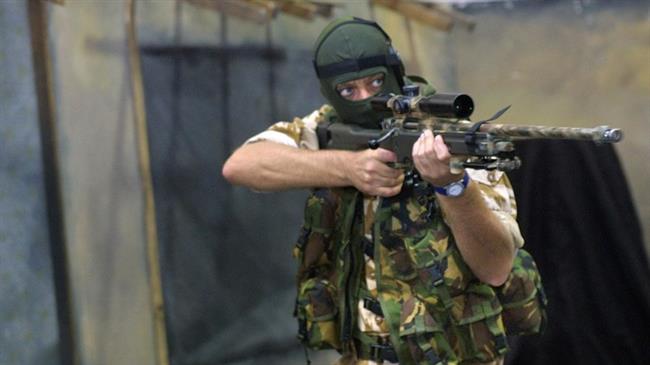
British SAS or SBS soldier in action in Syria
Press TV – March 8, 2020
There is mounting concern in the region about the nature and scale of British Special Forces deployment to southern Syria.
The concern comes in the wake of an exclusive report by the Daily Mirror (March 05) that two RAF Chinook helicopters “packed with special forces” troops and medics had “swooped” into southern Syria to rescue a wounded Special Air Service (SAS) operative.
According to the Mirror, the casualty was airlifted from “deep inside the warzone” to a medical facility in Erbil, northern Iraq.
Whilst the Mirror doesn’t say exactly where in southern Syria the SAS soldier was operating, the reference to “warzone” would suggest Deraa province, in the southwest of the country.
There have been clashes in recent days between Syrian government forces and terrorist groups controlling parts of the town of Al-Sanamayn, situated 50 kilometers south of the capital, Damascus.
Based on the realities on the ground, there is mounting speculation that Britain’s elite SAS could be lending a helping hand to anti-government forces in and around Al-Sanamayn.
British Special Forces, both in the form of the SAS and its allied unit, the Special Boat Service (SBS), have been operating in Syria for seven years.
According to the Mirror, more than 30 British special operatives have been injured in Syria. There has been at least one combat fatality, that of Sergeant Matt Tonroe, who was killed in a joint US/UK operation in March 2018.
Late last year it was reported that British Special Forces in Syria were beating a hasty retreat following US President, Donald Trump’s decision to pull out of Syria.
The latest incident appears to indicate that the SAS and SBS continue to operate in Syria based on the needs of allied Syrian rebel and terrorist groups.
The exfiltration of the injured SAS soldier will cause huge concern as the rescue operation involved RAF choppers taking off from RAF Akrotiri in Cyprus before flying through Israeli airspace to northern Jordan and onto southwestern Syria.
This brazen violation of Syrian sovereignty is likely to aggravate Britain’s outlaw status in Damascus, where both the Syrian government and people take a dim view of Britain’s hostile interference in their internal affairs.
Foreign Propaganda Interference Done Right: Brits in 1940s U.S.
By Steve Sailer – VDARE – 02/22/2020
From the Washington Post:
Bernie Sanders briefed by U.S. officials that Russia is trying to help his presidential campaign
By Shane Harris, Ellen Nakashima, Michael Scherer and Sean Sullivan
Feb. 21, 2020 at 1:16 p.m. PSTU.S. officials have told Sen. Bernie Sanders that Russia is attempting to help his presidential campaign as part of an effort to interfere with the Democratic contest, according to people familiar with the matter.
President Trump and lawmakers on Capitol Hill also have been informed about the Russian assistance to the Vermont senator, those people said, speaking on the condition of anonymity to discuss sensitive intelligence.
It is not clear what form that Russian assistance has taken.
So … that clears that up!
Let me guess, though: I bet some Russian … trolls … are posting … memes!
For example, here’s a high quality 2016 Russian interference effort:
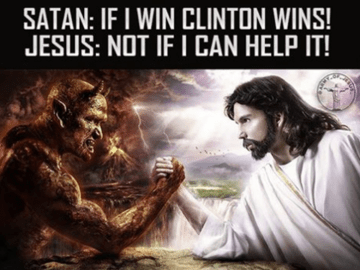
On the other hand, if you want an example of Foreign Interference done right, consider the 1941 Hollywood movie That Hamilton Woman starring Vivien Leigh as Emma Hamilton and Laurence Olivier as Admiral Horatio Nelson, victor over Napoleon’s navy at Trafalgar. From Wikipedia:
The film was a critical and financial success, and while on the surface the plot is both a war story and a romance set in Napoleonic times, it was also intended to function as a deliberately pro-British film that would portray Britain positively within the context of World War II which was being fought at that time. At the time the film was released France, Belgium, the Netherlands, Norway, Poland and Denmark had all surrendered to the Nazis and the Soviet Union was still officially allied to them, correspondingly the British were fighting against the Nazis alone and felt the need to produce films that would both boost their own morale, and also portray them sympathetically to the foreign world, and in particular, to the United States. …
Shot in the United States during September and October 1940,[10] That Hamilton Woman defines Britain’s struggle against Napoleon in terms of resistance to a dictator who seeks to dominate the world.[11] The film was intended to parallel the current situation in Europe and was intended as propaganda at a time before the attack on Pearl Harbor when the United States was still formally neutral. … Stars Vivien Leigh and Laurence Olivier were newlyweds at the time of filming and were considered a “dream couple.” …
While That Hamilton Woman was marketed as historical romance, its subtext falls into the “war propaganda” category.[16] In July 1941, the isolationist group America First Committee (AFC) targeted That Hamilton Woman and three other major Hollywood feature films (The Great Dictator, Chaplin/United Artists, 1940; Foreign Correspondent, Wanger/United Artists, 1940; The Mortal Storm, MGM, 1940) as productions that “seemed to be preparing Americans for war.” …
Critical sources usually point out that That Hamilton Woman was Winston Churchill’s favorite film.[19][Note 1] In her research on the subject, film historian Professor Stacey Olster reveals that at the time the film was made, Alexander Korda’s New York offices were “supplying cover to MI-5 agents gathering intelligence on both German activities in the United States and isolationist sentiments among makers of American foreign policy.”[20] According to Anthony Holden, Olivier’s biographer, That Hamilton Woman “became Exhibit A in a case brought against Korda by the Senate Foreign Relations Committee. The Committee had accused him of operating an espionage and propaganda center for Britain in the United States—a charge Korda only escaped by virtue of the fact that his scheduled appearance before the committee on December 12, 1941 was preempted by the Japanese bombing of Pearl Harbor five days earlier”.
From HistoryNet:
In one scene, whose significance was lost on no one who saw the film, Nelson declares, “You cannot make peace with dictators. You have to destroy them.” Korda always claimed that Churchill had written that line. More pro-British films poured out of Hollywood that year, among them A Yank in the R.A.F., starring Tyrone Power as an American flier who fights in the Battle of Britain, and a raft of melodramatic spy movies depicting sinister Nazi agents at work to undermine America.
The level of talent of British propagandists operating in America in the 1940s — e.g., besides movie stars like Olivier, Leigh, and Cary Grant, there were also Isaiah Berlin, C.S. Forester, Roald Dahl, Alfred Duff Cooper, Ian Fleming, and ad man David Ogilvy — was substantially higher than whatever Russia, Saudi Arabia, or China can muster today. For example, from Wikipedia:
In late March 1942, while in London, [fighter pilot Roald Dahl] met the Under-Secretary of State for Air, Major Harold Balfour, at his club. Impressed by Dahl’s war record and conversational abilities, Balfour appointed the young man as assistant air attaché at the British Embassy in Washington, D.C.
… As part of his duties as assistant air attaché, Dahl was to help neutralise the isolationist views still held by many Americans by giving pro-British speeches and discussing his war service; the United States had entered the war only the previous December, following the attack on Pearl Harbor.[58]
At this time [Roald] Dahl met the noted British novelist C. S. Forester [Horatio Hornblower, The African Queen], who was also working to aid the British war effort. Forester worked for the British Ministry of Information and was writing propaganda for the Allied cause, mainly for American consumption. The Saturday Evening Post had asked Forester to write a story based on Dahl’s flying experiences; Forester asked Dahl to write down some RAF anecdotes so that he could shape them into a story. After Forester read what Dahl had given him, he decided to publish the story exactly as Dahl had written it.
.. Later he worked with such other well-known British officers as Ian Fleming (who later published the popular James Bond series) and David Ogilvy [future author of Confessions of an Advertising Man], promoting Britain’s interests and message in the US and combating the “America First” movement.
Two Years Later: The Skripal Case Is Weirder Than Ever
By Matthew Ehret | Strategic Culture Foundation | March 6, 2020
While navigating through today’s propaganda-heavy world of misinformation, spin and outright creative writing which appears to have replaced conventional journalism, it is most important that two qualities are active in the mind of any truth-seeker. The first quality is the adherence to a strong top down perspective, both historic and global. This is vital in order to guide us as a sort of compass or North Star used by sailors navigating across the ocean. The second quality is a strong power of logic, memory and discernment of wheat vs. chaff to process the mountains of data that slaps us in the face from all directions like sand in a desert storm.
As the second anniversary of the poisoning of Sergei and Yulia Skripal has arrived, it is a useful time to take these qualities and revisit this bizarre moment of modern history which took place on a park bench in Salisbury UK and which led to one of the greatest frauds of the modern era derailing all attempts to repair relations between Russia and the west.
To do this, I decided to plunge myself into a new book called Skripal in Prison written by Moscow-based journalist John Helmer and published in February 2020.
This incredible little book, which features 26 chapters written between March 2018 to February 2020 originally published on the author’s site Dances with Bears, unveils an arsenal of intellectual bullets which Helmer skillfully uses to shoot holes into every inconsistency, contradiction and outright lie holding up the structure of the narrative that “there is no alternative conclusion other than that the Russian State was culpable for the attempted murder of Mr. Skripal and his daughter”. This line was asserted without a shred of actual evidence by Theresa May in the House of Commons on March 16, 2018 and in the months that followed, western nations were pressured to expel Russian diplomats (23 in Britain, 60 in the US, 33 across the EU), close down consulates (one Russian consulate in San Francisco and one American consulate in St Petersburg) and impose waves of sanctions against Russia.
Four months after the Skripals (and one unfortunate detective named Sgt. Nick Bailey) were released from British hospital care, two more figures were stricken with Novichok poisoning and taken to hospital on June 30 with one of them (Dawn Sturgess) dying 9 days later. This too was blamed immediately on Russia.
Helmer’s research systematically annihilates the official narratives with the craftsmanship of a legal attorney, taking the reader through several vital questions which shape the book’s composition as a whole, and which I shall lay out for you here:
- Why have Sergei Skripal and his daughter Yulia fallen off the face of the Earth since their release from Salisbury hospital? It is known that one controlled video was recorded featuring Yulia speaking, and several short calls to family were made by Yulia and her father after their poisoning… but nothing more. Beyond the fact that it appears the Skripals were kept on an American military base in Gloucestershire for an indeterminate amount of time, Helmer points out “at the point in their recuperation when the two of them were beginning to be explicit in their public remarks about what had happened, their communications were cut off. Nothing more is known to this present day.”
- Despite the fact that the UK Prime Minister asserted that a European Arrest Warrant was issued for the two Russians that were alleged to have carried out Putin’s malevolent will onto the poor Skripals – why were no such warrants ever registered in Interpol? Is it because such warrants actually require evidence?
- Why did British Intelligence sanction the tearing down of big sections of Skripal’s home at 47 Christie Miller Road in Salisbury due to the apparent “dangers of deadly contaminants”, while only the door handle was tainted with Novichok? If the reasoning was due to health safety, then why were similar actions not taken to the Bourne Hill police station which Sgt. Bradley contaminated or the restaurant and pub which Sergei Skripal went to before his trip to the park … or the contaminated London hotel where the two Russian agents apparently stayed?
- Since Novichok is an extremely fast acting substance, generally attacking the nervous system in minutes, how is it possible that the time separating the Skripals’ moment of contamination to the moment of losing consciousness on a park bench was over three hours?! How is this possible? Similarly how was it possible that Sgt. Bailey’s point of contamination at Skripal’s home occurred a full 12 hours before he felt the need to go to the hospital?
- What the hell was up with the strange case of the two unfortunate victims of the July 2018 Novichok poisoning in Amesbury (9 miles from Salisbury)? Were Dawn Sturgess and her partner Charlie Rowley simply collateral damage in an MI6 effort to plug a missing hole in the narrative caused by a lack of any evidence of a device used to apply the nerve agent to the door handle in the first place? Why does Rowley (a known heroin addict) have no recollection where he found the perfume bottle filled with Novichok which he gifted to Sturgess on June 26? Why was the perfume bottle only found by authorities on Rowley’s kitchen counter two days after Sturgess died on July 9th even though a search for Novichok had been carried out at his apartment beginning with the couple’s admission into Salisbury hospital on June 30?
- What was the role of the Ministry of Defense’s Porton Down chemical laboratories in this bizarre story? The lab itself was located just a few miles from the crime scene, and the first responder on the scene was an off-duty Colonel named Alison McCourt who happened to be shopping nearby and rushed to the scene. Helmer describes how Col. McCourt is head of nursing for the British Army and Senior Health Advisor which connects her closely to the Defense Science and Technology Laboratory at Porton Down which also happened to have held a major chemical warfare exercise named Toxic Dagger in the area just two weeks earlier. Are these things nothing but coincidences?
- Porton Down labs which tested the Skripal blood samples and Novichok at the Skripal residence is part of the Ministry of Defense and to this day, no public admission of those samples’ existence at the labs has occurred. Requests by Helmer and others to receive confirmation of from the labs according to Freedom of Information laws have been denied outright on the grounds of “the public interest”. Why? Could it be because blood tests were never actually carried out? Helmer’s book probes this question deeply and the lack of evidence will shock you.
- How about the Organization for the Prohibition of Chemical Weapons (OPCW)? Since the OPCW ran parallel tests of the apparent blood samples of the Skripals as well as the later July victims Dawn Sturgess and Charlie Rowley to get “matches” with the novichok traces in a perfume bottle and Skripal door handle, why has evidence of these samples not been made available? Also why was a British intelligence officer the only figure who oversaw the samples taken to the OPCW for verification? In fact, Helmer points out that the one Swiss contract laboratory (Spiez) associated with the OPCW has contradicted all British claims that any “match” exists between the Skripal samples and Novichok A-234 poisoning.
- Finally, Helmer asks: Why were all OPCW Executive Council votes in regards to matters surrounding the Skripal case, taken in secret, and thus in conflict with its own charter and why was Russia denied the right to share in the investigation of the Novichok attack as guaranteed in Articles XIII and IX of the OPCW Chemical Weapons convention? Could that have something to do with the role of former OPCW Director General Ahmet Üzümcü, a Turkish NATO-phile, who Helmer notes “has also been a member of the NATO staff in charge of expanding NATO military operations to the Russian frontier, as well as NATO operations in Ukraine and Syria.” In 2019, Üzümcü was inducted into the Order of St Michael and St George by Queen Elizabeth II for services to the Empire.
Helmer goes on to make the point that the overarching dynamic shaping the events of the Skripal/Novichok affair are guided by the collapsing western empire which has been working tirelessly to surround Russia with a ballistic missile shield while sabotaging all efforts by genuine patriots in the west from establishing positive alliances with Russia.
Taking the opportunity of the second anniversary of the Skripal affair to read this book is not only a valuable exercise in logic but also key into the desperate and increasingly fear-driven mind of the London-centered deep state which is quickly losing its grip both on reality and the very influence it had spent generations putting in place.
The Skripal Case – Two Years On
OffGuardian | March 4, 2020
It’s been two years to the day since disgraced former military intelligence officer Sergei Skripal, and his daughter Yulia, were allegedly found on a park bench in Salisbury, near unconscious and apparently very unwell.
A lot has been said about the unanswered questions revolving around the incident. But perhaps the best of way of demonstrating the peculiarity of the alleged situation is to simply relate, in full, the “official version”.
Here it is:
- Sergei Skripal, a Russian military intelligence officer, was found guilty of spying for the UK in 2006, and sentenced to 13 years in prison.
- In 2010 he was released and traded to the United Kingdom as part of a spy swap. Having settled in the UK Sergei lived a quiet and comfortable life of retirement, so far as we know
- Eight years later, in early 2018, with a Presidential election looming and just weeks before Russia was due to host the FIFA World Cup, Vladimir Putin decided to assassinate him for as yet obscure reasons.
- The GU, Russia’s military intelligence unit, dispatched two of their elite officers, who proceeded to fly direct from Moscow under aliases they had allegedly already employed and using Russian passports.
- These alleged assassins carried with them two perfume bottles full of “Novichok”, allegedly one of the deadliest nerve agents ever devised. This would be enough to kill around 800,000 people.
- On arriving in the UK these highly-trained covert agents book a hotel with a CCTV camera on the front door, and the next day, March 3, they travel to Salisbury by train, allegedly to recon the area, then return to London. They are apparently observed by CCTV camera’s the entire time.
- The day following, March 4, they again travel to Salisbury, this time the master assassins walk to Skripal’s house and somehow “smear” the liquid Novichok on the handle of his front door.
- No eye-witness, photograph or piece of CCTV footage has ever been made publicly available to show either of these two men anywhere in the area of Sergei Skripal’s house.
- The whereabouts of the opened bottle of poison have never been established.
- Having applied the poison, the two highly trained assassins do two things before returning to London. 1) They drop their second, unopened, bottle of novichok (presumably enough to kill approx 400,000 people) in a charity donation bin, rather than destroying it or taking it back to Russia. 2) They stop by an antiques store to browse.
- The two assassins leave the country that afternoon, flying direct to Moscow, without knowing if their alleged target is dead, and again making no effort to conceal their origins.
- Despite both handling the poison, and somehow carrying enough of it back to contaminate their hotel room, neither of the men – nor any of the staff, train passengers or passersby who come into contact with them – ever become sick, even though only 0.2mg of Novichok is an allegedly lethal dose.
- Later that afternoon, Sergei and Yulia Skripal are found “almost unconscious”on a park bench in Salisbury town centre. It is claimed this was due to contact with the Novichok smeared on Sergei’s door handle, though reports originally stated neither he nor his daughter had returned to the house, and the timing seems to make it unlikely they did
- The person who found them was the most senior nurse in the British Army (likely in the area as part of Toxic Dagger, the British Military’s landmark chemical weapons training exercise which began Feb 20th and ran on until March 12th).
- The nurse and her family administer “emergency aid” to the two alleged poisoning victims. Neither she nor anyone else on the scene, nor any of the first responders, ever experience any symptoms of nerve agent poisoning. Neither do any of the other people the Skripal’s came into contact with that day.
- DS Nick Bailey, a CID officer is in contact with the Skripals or their home at this time and subsequently becomes ill. It has never been stated how exactly he was exposed. It was initially reported he was a first responder to the scene, but that story was changed and it was later claimed he visited the Skripal hpouse. Despite the alleged lethality of novichok in even very minute doses, Bailey is fit to return home after 18 days.
- Porton Down, the British government’s chemical weapons research centre, is brought in to help identify what chemical – if any – the Skripals/Bailey were exposed to.
- Within a month they release a statement claiming the poison was “a novichok like agent”, but that they could not pinpoint its origin. How they were able to test for a (at the time) theoretical chemical without having a sample to test against, has never been explained.
- Porton Down is 8 minutes away from Salisbury by car.
- Nearly four months later, in late June of 2018, Charlie Rowley finds the unopened perfume bottle a full of novichok (whether he bought it from a charity shop or found it in a bin is unclear, both stories have been reported). Upon using the perfume Rowley’s partner, Dawn Sturgess, falls ill. Later that day Rowley also falls ill. Sturgess dies in hospital two weeks later. But Rowley survives. Making him the fourth person in this narrative to survive exposure to an agent lethal in doses as small as 0.2mg.
- Sergei Skripal and Julia both recovered and allegedly chose to live secluded lives. Sergei has not appeared in public at all since allegedly being found on that park bench. Yulia made one brief press statement. Their current whereabouts are totally unknown. Their family in Russia have apparently been denied all access to them. DS Bailey was initially also keen to maintain his privacy but has subsequently given at least one interview some while after the event.
This is the UK government’s version of what happened. Unvarnished and unsatirised. None of it is disputed, exaggerated or speculative.
If you can see any unanswered questions, logical gaps or peculiar coincidences…you are likely a Russian bot.
Salisbury poisoning unleashed Russian bogeyman … but where are the Skripals 2 years on?
By Simon Rite | RT | March 4, 2020
Forget Where’s Wally, what we really want to know is where are the Skripals? It’s exactly two years to the day since the Russian spy and his daughter were novichoked in Salisbury, and we’ve still not seen hide nor hair of them.
Former double agent Sergei has been completely off-grid, while Yulia Skripal was seen in a highly staged video in 2018, filmed in an anonymous but pleasant leafy glade shortly after recovering from her poisoning ordeal; but, apart from that, there have been no statements or updates about them at all.
The most recent piece of ‘information’, and I use that term loosely, to leak out about their whereabouts came this weekend from Britain’s Mail on Sunday, courtesy of a source which became ubiquitous throughout the Skripal saga, the reliably unreliable “security insiders.” It’s always amazing how willing these apparent insiders are to release top-level secrets to the home of the “sidebar of shame.”
The latest speculation from ‘security insiders’ is that the Skripals are hoping to head for a new life down under in Australia after “effectively living under house arrest since the attack.” This means either those insiders are the leakiest spies in the world, or the Skripals are going to be nowhere near Australia anytime soon.
The house arrest must be at Julian Assange in Belmarsh levels of security, because even the Skripals’ family in Russia say they haven’t heard from them in months.
So all quiet on the Skripal front and, frankly speaking, it’s all quiet on the geopolitical front, too, and in the media. The disputed events of March 4, 2018, over poisoned spies and their aftermath formed the biggest story on the planet, and not just because the whole world finally started paying attention to the majesty of Salisbury cathedral’s glorious 123-metre spire.
This incident seemed like it might have genuine life-changing political consequences. Britain entered the phrase “highly likely” into the lexicon of geopolitics, and [then-PM] Theresa May’s declaration that it was “highly likely” that the Kremlin was to blame was deemed strong enough to see the West turn en masse against Moscow, and Russian diplomats and ‘diplomats’ were expelled by the dozen, by London and its allies across the world. It seemed the bar for state-to-state accusations had been lowered.
Russia to this day denies involvement in what happened in Salisbury.
So what has changed? If anything, all that has changed over the last two years is a desire to get back to business, to rebuild ties and move on. Some of those expelled diplomats have reportedly moved back.
French leader Emmanuel Macron is pushing hard for relations between the West and Moscow to be repaired, something Germany needs little encouragement for.
Britain is still pretending to be in a huff, but British imports of Russian oil were up 57 percent last year, so realpolitik reigns supreme in London, as ever.
Boris Johnson is now the prime minister and with a thumping majority doesn’t need to use bogeyman Russia as a tool to look strong quite as much as his predecessor did. Johnson and Putin even met in January and there are reports the prime minister is considering an invitation to attend a second world war commemoration parade in Moscow this May.
And as for the media, it’s all gone quiet there, too. Skripal coverage is about as common in the mainstream now as coverage of Julian Assange’s imprisonment. He’s a journalist whose supporters say is ‘highly likely’ a victim of a demonstrable state campaign against him because he attempted to uncover the misdeeds of power. However, a boring attack on free speech is nowhere near as exciting as a poisoned spy, is it?!
Simon Rite is a writer based in London for RT, in charge of several projects including the political satire group #ICYMI. Follow him on Twitter @SiWrites
Spike in suicides amongst veterans of British military campaigns in Afghanistan
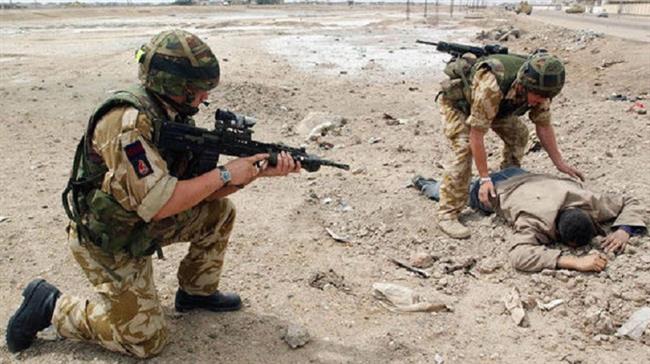
British forces in Afghanistan committed countless abuses against the local population
Press TV – March 2, 2020
Veterans of Britain’s recent costly military campaigns in Afghanistan are killing themselves in record numbers.
According to the Times newspaper, some 14 former and serving army personnel have killed themselves in the past two months alone.
This unusually high number is compounded by the fact that all the deceased are from a “particular grouping” involved in Operation Herrick, which guided all avowed British military actions in Afghanistan from 2002 to 2014.
The government’s response to this apparent emergency has been muted, with John Mercer, the minister for veterans, merely expressing “concern” at the spike in deaths.
The latest spike comes against the backdrop of repeated warnings by British military chiefs of the deteriorating mental health of serving military personnel and veterans alike.
Last November, the former head of the army, General Lord Dannatt, warned that suicide among veterans has become an “epidemic of our time”.
Whilst the precise reasons for the latest spike in suicides is largely unknown, disillusionment with the British military in general, and the UK’s pointless military intervention in Afghanistan in particular, are believed to be major factors.
The widespread disillusionment in the British army is likely to be compounded by the recent announcement of a so-called peace deal between the United States and the Afghan Taliban.
The deal is likely to intensify widespread feelings amongst British veterans of Afghan military campaigns that the entire effort had been in vain.
That feeling is likely to be compounded by the British government’s mixed messaging on the so-called peace deal.
The Defence Secretary, Ben Wallace, played down the significance of the so-called peace deal by describing it in reductive terms as a “small but important step”.
By contrast, Foreign Secretary, Dominic Raab, glorified the deal as a “significant moment in the pursuit of peace”.
No More Air Travel is What Net Zero Means
By Harry Wilkinson – GWPF – 27/02/20
No-one can be surprised at the judges’ decision to block a third runway at Heathrow. Collectively, the country has failed to grasp the implications of deep decarbonisation.
Many people will regard the decision to block a third runway at Heathrow as an unwelcome intrusion of judges into our democratic system. They will be bemused that those judges cited the Paris Agreement to justify their decision, when one can hardly see China*, or indeed any other signatory to the Paris Agreement, blocking vital airport expansion because of that same treaty.
But to blame the judges is to miss the point. All they have done is to take the commitments of that accord and the Government’s pledge to achieve net zero emissions at face value. It is simply a matter of fact that such expansion cannot be reconciled with reducing our emissions, at least in the short term. This is what net zero means. It means to abandon the pursuit of growth, the pursuit of new opportunities, of new trading links, of progress and resign the country to a new era of eco austerity. Today brings that decision, and the government’s shameful failure to be upfront about its implications, into sharp focus.
When the Paris Agreement was signed it was heralded as an extraordinary moment in the fight against climate change. Green journalists parroted this view, useful as it was to the politicians and activists desperate to show that some progress had been made. Those familiar with the details could see that all it really did was to confirm countries’ existing plans. China, India, and other developing countries were allowed to continue increasing their emissions, and the EU reaffirmed its own emissions targets. America’s inclusion was more significant, but it wasn’t long until Trump announced his intention to withdraw.
The end result is to leave Britain uniquely vulnerable to the economic consequences of rapid decarbonisation policies. While the more cautious approach of Eastern European countries will act as brake for the EU, Britain is faced with a fundamental political choice as it leaves. It can choose to embrace the free market and technological progress, which will lead to the more efficient use of resources and indeed come to reduce the consumption of almost every natural resource. Or it can continue with an opportunity-destroying, insular and unilateral approach of state-mandated decarbonisation in one country. Time to choose.
*China, by the way, is planning to build 216 new airports by 2035.
UK Defence Minister Announces Development of New Nuclear Warhead as ‘Effective’ Deterrent
By Tim Korso – Sputnik – February 25, 2020
Defence Secretary Ben Wallace has announced via a written statement to parliament that the UK will be developing a replacement warhead while continuing to maintain its existing nuclear warheads until they are decommissioned. The development of the new warheads was spurred by the need to respond to new threats in a changing security environment, the defence secretary said.
“We will maintain our Trident nuclear deterrent, which guarantees our security. To ensure the government maintains an effective deterrent throughout the commission of the Dreadnought Class ballistic missile submarine we are replacing our existing nuclear warheads to respond to future threats and the security environment”, Wallace stated.
Wallace said to the parliament that highly skilled teams will be formed in close coordination between the Ministry of Defence’s Nuclear Organisation and the UK’s Atomic Weapons Establishment to develop the new weapon. The defence secretary added that the teams will also collaborate with the US to ensure that the new warhead stays compatible with the Trident Strategic Weapon Systems.
The move comes as part of a 2015 Strategic Defence and Security Review, which outlined the UK’s strategy of maintaining an independent minimum credible deterrent in the form of nuclear weapons. The stance was adopted as a result of the 2007 government decision supported by a parliamentary vote to uphold the country’s nuclear deterrents beyond the early 2030s.
‘Deliberate hoax’: Russian military denies NGO report of airstrikes in Idlib
RT | February 24, 2020
Syrian Observatory for Human Rights reports of Russian airstrikes on two villages in Idlib province have nothing to do with reality, the Russian military said, adding that none of its planes operated in that area on Monday.
“The information provided by the British NGO is a deliberate hoax,” Rear Admiral Oleg Zhuravlev, head of the Russian Center for the Reconciliation in Syria, said at a briefing.
Earlier in the day, the UK-based Syrian Observatory for Human Rights (SOHR) claimed that an airstrike by Russian and Syrian forces on the villages of Kansafra and Al-Bara in Idlib led to the “killing and injuring of nearly ten Turkish soldiers.”
Ankara has not reported any casualties among its troops in Syria, however.
The SOHR claim came at a moment when Russia and Turkey stand on the brink of war over Syria. Ankara sent troops to Idlib – the last remaining terrorist stronghold in Syria – two weeks ago, provoking deadly clashes with the advancing Syrian army. Turkey has demanded Russia to pressure its allies in Damascus into ceasing its operations in the area, while Moscow blamed Ankara of not fulfilling its earlier promise to separate the “moderate” rebels from terrorists.
Last Thursday, Russian bombers struck militants who had launched an attack on Syrian positions with the support of Turkish artillery. However, both Russia and Turkey said they weren’t looking for a military conflict. A new round of consultation between the sides is being prepared in order to defuse the situation in Idlib, Russian Foreign Minister Sergey Lavrov announced on Monday.
SOHR has been one of the key sources of Western media since the conflict in Syria broke out in 2011. However, a 2015 investigation revealed that the entire organization was run by a single man in Coventry, a former convict who fled Syria for the UK and has not been back since.
Featured Video

Trita Parsi: Middle East Unraveling — Are We on the Path to World War?
or go to
Aletho News Archives – Video-Images
New Book
Trans agenda is ‘normalization of sadism’ – US author

RT | September 23, 2026
The US Democratic Party has embraced a transgender agenda that amounts to “the normalization of sadism,” author A.J. Rice has said, warning that radical trans policies would return if the party is allowed to regain power.
Speaking to RT’s America First host Scotty Nell Hughes about his new book, ‘The Curse of the Bearded Lady: How the Trans Mafia Whacked American Sanity’, Rice argued that activists have gained significant influence in schools, medicine, and corporate America while people who questioned the agenda have faced pressure to stay silent.
The author described the “trans mafia” as the sprawling network of people and institutions that have helped the movement gain influence. He singled out parts of academia, wealthy backers, and corporations, and stated that providers of transition-related treatment also have a financial incentive to keep young people in their care indefinitely.
Rice argued that the consequences of these policies ultimately fall on children who are being drawn toward gender-affirming medical treatments and on girls who are expected to share locker rooms or compete in sports with biological males.
He noted that while voters rejected the Democrats’ approach to gender in 2024, the party, which has been “captured by madness,” has since only doubled down and is seeking what is effectively “the normalization of sadism.” … Full report
Blog Roll
 Aletho News
- German chemicals giant reveals details of downsizing
- Refaat Al-Areer Was The Canary In The Coal Mine In Israel’s War On The Truth
- Israeli election committee bars candidate from Knesset race over Gaza war opposition
- French-Lebanese man files war crimes complaint over Israeli attacks
- Mahan Air Flight Lands in China Despite US Threat against Iranian Airlines
- US eyes $10bn fund to rebuild war-battered Gulf infrastructure
- Trump meets Rodríguez near Maduro’s prison as Venezuela’s oil flows to US
- Trita Parsi: Middle East Unraveling — Are We on the Path to World War?
- Iran FM meets with US envoy on UN meeting’s sidelines at American side’s insistence: Report
- Qatar PM calls for Gulf security framework with Iran, says war must be ‘wake-up call’
- If Americans Knew
- Caught on Tape: AIPAC CEO Boasted of Controlling Trump’s National Security Officials
- Why Hamas Attacked Israel in October 2023 – Israeli professor Ilan Papé
- They see them, then kill them: Israeli quadcopters track, deliberately target civilians in Gaza
- Winter could turn Gaza’s treacherous, war-damaged buildings into deathtraps
- Majority of Democratic Voters Want to Prosecute Both Biden and Trump Administration Officials Over Gaza
- As Gaza languishes, world leaders gather at the UN – Daily Update
- Sanctions are collective punishment: immoral and self-defeating
- Phosphorus Munitions Fired by Israel Burn Groves, Orchards in Southern Lebanon
- Israel Carries Out New Ceasefire Violations Across Gaza
- AI – Emphasis on the ‘I’: Israel Is Funding AI Chatbot Propaganda
- No Tricks Zone
- New Study: Earth And Venus Surface Warmth Largely Explained By Convection And Lapse Rate, Not CO2 Or Radiation
- 2025 Nature Paper Claiming Worsening Global Drought Gets RETRACTED …Heavily Flawed
- New Study: ‘Global Drought Shows No Detectable Recent Acceleration Under Climate Warming’
- Economic Masterminds: German Socialists Suggest Taxing Productivity Gains Stemming From Using AI
- The South China Sea Has Not Been Cooperating With The Climate Change Narrative
- Energy Crisis: Germany Enters Heating Season With Historically Low Gas Reserve Fill Levels
- New Study: The Antarctic Ice Sheet Gained Mass From 2020-2024 Due To Staggering Snow And Ice Accumulation
- Study: Ocean Heating Rates From Thousands Of Years Ago ‘Dwarf’ Modern Ocean Heating Rates
- Climate Extremists Target, Attack Large-Scale Power Grid Infrastructure In Germany!
- New Study: Antarctic Ice Melt Has Contributed Less Than 1 Centimeter To Sea Level Rise In The Last 30 Years

