Hate PLC
By Gilad Atzmon | July 27, 2017
In March 2016, the British government pledged 13.4 million pounds to the Community Security Trust (CST), a Jewish body that is committed to fighting hatred against one group only. One would expect that with all that money, the CST would do its job and curb anti Semitism. But the miracle is that the opposite has occurred. Just two weeks later, according to the CST’s statistics, anti Semitism went through the roof. The Daily Mail reports today that 767 anti Semitic hate crimes were logged by the CST in the first six months of 2017, a 30 per cent rise over 2016. It is the highest figure since statistics were first kept 33 years ago. The CST reports an “unprecedented run of over 100 incidents each month back to April 2016.”
A mere few days after the British government vowed to wire millions of pounds to the CST, the number of ‘anti Semitic incidents’ rose by 30% to over 100 incidents a month. The results, at least according to the CST’s statistics, are that the more public money is allocated to fight anti Semitism, the more anti Semitic the Brits become.
If this is the case, the cure for British anti Semitism may be within reach – to fight anti Semitism, deprive the CST and similar organisations of taxpayers’ money!
Anti Semitism is not really a social phenomenon, it is instead a multi million pound industry. The more we spend on the fight against it, the more incidents are ‘recorded’ to justify further spending.
If the British government genuinely wants to fight anti Semitism it would do better to reinstate British liberal values of universalism and tolerance that go beyond the interests of one group. If British Jews feel unsafe, they should insure that they are stripped of their exceptional status. They should insist that they are Brits like all other Britons: protected by the same laws as their neighbours.
In December 2016, the British Government decided to step up the battle against anti Semitism by adopting the International Holocaust Remembrance Alliance’s (IHRA) working definition of anti-Semitism. The IHRA’s definition was designed to suppress any criticism of Jewish politics, Zionism or Israel. Its intent was to make impossible the utterance of any criticism of anything in any way Jewish related. Yet, according to the new CST statistics, even this drastic measure didn’t reduce anti Semitism at all. If anything, anti Semitism increased sharply since the British Government adopted the new definition.
I would advise both Jews and the British authorities that it is the exceptional treatment of one group that contributes to the growing animosity towards Jewish politics and Jewish lobbying.
But there is another problem that must be addressed. Though it is not clear whether anti Semitism is actually on the rise, it is certain that a growing number of Brits have been subjected to an orchestrated slanderous campaign run by Zionist institutions that are funded by British taxpayer money such as CST and CAA. These organisations attack Jeremy Corbyn, the Labour party, venues, intellectuals, artists, musicians, authors and anyone else they decide has dared to point at Israeli brutality and extensive Jewish political lobbying in Britain.
If Britain still cares for values of tolerance and intellectual exchange, it better spend some taxpayer money defending its citizens, gentiles as well as Jews, from these foreign bodies. And if Britain truly cares for its Jews, it should protect them from the unfortunate consequences of the CST, CAA and other Israeli lobbies operating in our midst.
UK Police Spied on Over 1,000 Political Groups Over 40 Years
Sputnik – July 27, 2017
UK undercover police officers who adopted fake identities and infiltrated political groups in deployments often lasting several years spied on more than 1,000 such factions over four decades, the judge-led public inquiry into the scandal has revealed. It’s the first time the number of infiltrated movements has been officially confirmed.
The inquiry, set up to examine into police spying practices since 1968, was launched by then-Home Secretary Theresa May in 2014 following revelations police spies had gathered information on the grieving relatives and friends of Stephen Lawrence and Jean Charles de Menezes, formed long-term relationships with female activists and stolen the identities of dead children to create their pseudonyms.
More than a dozen official inquiries have been announced, but all others are internal and will remain confidential, overseen or carried out by the very forces involved in the scandal. The public inquiry has been much delayed, as police chiefs have attempted to block its investigations, arguing its proceedings should be private in order to protect their spies and spying techniques. The police have also submitted legal applications to keep the identities of their spies secret. It disclosed the figures after campaigners inquired how many political groups were known to have been infiltrated — although requests for a full list of the targeted organizations, and the fake identities used by undercover officers, were not answered. In the former instance, previous exposures suggest it will likely include environmental, anti-racist and animal rights movements, and both left wing and far-right parties and collectives.
Since the 2010 exposure of Mark “Stone” Kennedy as a long-term undercover infiltrator of activist groups in the UK and abroad, it has been determined at least 144 undercover police officers have been deployed to spy on political groups since 1968. Extensive profiles of 20 agents have been compiled by the Undercover Research group — as documented undercover agents typically spied on more than one group (whether at once or at different times), it’s almost certain the total number of undercover police officers that inveigled themselves in activist circles is several times what was initially thought.
The spies developed elaborate false identities supported by fake documentation provided by the state, and typically spent five years pretending to be political activists while they fed back to their superiors information about the activities of campaigners and the protests they organized. Moreover, officers testified in Court under their false names, withheld exculpatory evidence, acted as agent provocateurs and planned and participated in serious crimes.
The most notorious “spy cops” yet uncovered include Bob Lambert, who moonlighted as “Bob Robinson” in the Animal Liberation Front and London Greenpeace in the 1980s. Over the course of his deployment, he is alleged to have planted a fire bomb in a branch of department store Debenhams, committed perjury and co-authored the infamous “McLibel leaflet” — the pamphlet documented McDonald’s unethical practices, leading the fast food giant to sue London Greenpeace leaders Helen Steel and David Morris for defamation, in a case that lasted a decade. He also fathered a child with an activist.
In May, Andy Coles, Deputy Police and Crime Commissioner for Cambridgeshire and Peterborough, resigned after being unmasked as an undercover operative who spied on animal rights groups from 1991 — 1995, under the pseudonym Andy Davey. In a lengthy profile, based on evidence collected by URG, it is noted suspicions about the bogus activist abounded contemporaneously, but were largely silenced due to “Davey’s” specialist IT skills.
Coles has also been accused of attempting to foster, and successfully fostering, sexual relationships with fellow activists. The practice is alleged to have contravened strict internal guidelines on undercover conduct, and has been dubbed by the Metropolitan Police as a “violation” of the victims’ human rights, and “an abuse of police power” that caused “significant trauma.” Nonetheless, examples of known police spies that didn’t do so, or attempt to do so, are exceptionally rare — leading some activists to suggest such practices were deliberate policy.
On July 25, the Home Office confirmed the public inquiry would now be headed by a new judge, Sir John Mitting. He replaces Sir Christopher Pitchford, who stepped down after being diagnosed with motor neurone disease.
The Atlantic Council: Experts on the front line of disinformation
By Bryan MacDonald | RT | July 26, 2017
NATO’s academic wing has been warning about disinformation for years. And it’s no wonder when its staff and contributors are so well-versed in the practice themselves.
The Atlantic Council is an organization dedicated to discussion between people who hate Russia and folk who really, really hate Russia. Thus, amid the current hysteria, it’s Christmas every day for its assorted staff and “fellows” or, to use a more accurate term, ‘lobbyists.’
For the uninitiated, it’s difficult to explain what exactly the Atlantic Council does. Essentially, the club exists to influence the information space to justify NATO’s continued existence. It does that by either employing Russia’s opponents directly or offering retainers to journalists and media analysts who can be relied upon to push the outfit’s anti-Russian stance. Which, of course, is its lifeblood.
While the Atlantic Council is set-up to promote antagonism toward Russia, it also needs it. Because if Russia combusted tomorrow, everyone on the payroll would be out of a job. So, it’s like the famous U2 song “I can’t live, with or without you.” But unlike the protagonist of that ditty, these guys don’t give themselves away. Instead, this NATO adjunct is lavishly funded, by a roll call of famous entities.
Such as the Foreign & Commonwealth Office of the United Kingdom, Abu Dhabi’s National Oil Company, the Ukrainian World Congress, the Lockheed Martin Corporation, the Raytheon Company, the US State Department and the Victor Pinchuk Foundation, which is the plaything of a Ukrainian oligarch.
Some of the more prominent beneficiaries of the resultant money tree include Bellingcat’s Eliot Higgins, CNN’s Michael Weiss, Crowdstrike’s Dmitri Alperovitch, Obama advisor Evelyn Farkas and Maxim Eristavi of Ukraine’s Maidan. All of whom are conveniently united by their hostility to all things Russian.
Like Rolling Stones
The Atlantic Council’s content ranges from very anti-Russian to extremely anti-Russian. For instance, it carries articles by the likes of Alexander Motyl, who predicted Russia’s imminent collapse in January of 2016, before warning in January of 2017 that Moscow was planning a major land invasion of Ukraine. Which is Russophrenia at its finest, in fairness. Nevertheless, Motyl is a shrinking violet compared to Atlantic Council lobbyist Anders Aslund, who foresaw Russia’s demise way back in September 1999. And now, almost eighteen years later, he’s still hanging around for the big moment. In the manner of a Seventh Day Adventist awaiting the second coming of Jesus, any day now.
So, now that we’ve established the Atlantic Council’s modus operandi let’s look at the latest example of the group’s myopia. This week, they’ve unleashed one Polina Kovaleva to opine on “why Congress should pass the Russian sanctions bill.” And she’s delivered a tirade which is shoddy, even when measured by the usual indigent standards.
Kovaleva gives her readers examples of why the embargo is justified, in her opinion, but then delivers a line so deceptive that it makes you wonder whether she’s in touch with reality. “Although the Senate easily passed a strong sanctions bill in June to punish Russia for its aggression in Ukraine and annexation of Crimea, the White House has quietly lobbied to weaken it, and some European politicians are pushing back,” she writes.
Eurocrat Anger
That’s’ right, “some European politicians are pushing back.” Some! What she actually means is “basically every significant elected representative in the European Union.” Including, the “leader of the free world” herself Angela Merkel and that well-known renegade Jean-Claude Juncker.
Here’s what Reuters reported on Wednesday morning: “European Commission President Jean-Claude Juncker said on Wednesday the European Union was ready to act “within a matter of days” if proposed new US sanctions on Russia undermined the bloc’s energy security. And that came three days after the Financial Times reported how Brussels was considering imposing penalties on the US if it damaged European interests to settle scores with Moscow.
Meanwhile, for her part, Merkel has backed Germany’s Foreign Minister, Sigmar Gabriel, in expressing concerns that Washington is threatening “illegal extraterritorial sanctions against European companies that participate in the development of European energy supply.”
Because everybody in Europe knows this US Congress bill has little or nothing to do with punishing Russia. Instead, it’s about trying to nudge Moscow’s energy companies out of Europe, to create market share for their competitors. In other words, a form of economic war, in which the EU countries’ interests don’t amount to a hill of beans.
Something explained recently by Wolfgang Ischinger, a prominent German pundit and former diplomat. He contended: “how would the US have reacted if Europeans had adopted a bill against Keystone XL pipeline but in favor of European business?” before pointing out “for Europe, the loss of such large oil or gas supplies from Russia is unacceptable: there are no alternatives.”
Without question, this is a high-profile resistance campaign. And these sanctions could severely rupture transatlantic ties. Because you don’t get more powerful than Merkel and Juncker in Europe. But the Atlantic Council makes it sound as if a few fringe politicians are off on a solo-run, rejecting Washington’s supreme wisdom.
That is certainly not the case and amounts to misleading agitprop of the highest order. Which is rather apt for a lobbying firm which recently held a “Disinfo week” and proudly claims to be “On the front lines of disinformation.” Because, on this evidence, the Atlantic Council is home to seriously proficient gurus of hogwash.
Bryan MacDonald is an Irish journalist, who is based in Russia.
Trident nuclear submarine replacement plans ‘unachievable’ – spending watchdog
RT | July 25, 2017
Multi-billion pound projects to upgrade and renew Britain’s nuclear arsenal have been branded “unachievable” by the Infrastructure and Projects Authority (IPA) in its report to the Treasury and Cabinet Office.
The watchdog’s report, which was picked up by the Ferret investigative website, found that major projects relating to the nuclear deterrent are poorly managed, over budget, and subject to technical difficulties.
Those projects are the £1.7 billion (US$2.2bn) nuclear reactor manufacturing program and the program to build four nuclear-armed and seven nuclear-powered submarines at a cost of £31 billion and £9 billion respectively.
The reactor manufacturing project, based at Rolls Royce in Derby, picked up the worst possible IPA rating after being marked as “red,” with the author’s warning that “successful delivery of the project appears to be unachievable.”
“There are major issues with project definition, schedule, budget, quality and/or benefits delivery, which at this stage do not appear to be manageable or resolvable.
“The project may need re-scoping and/or its overall viability reassessed,” the investigators added, warning that reactor building was £250,000 million ($325mn) over budget.
The submarine building project, which has so far delivered three nuclear-powered Astute–class warships, has been rated “amber/red” for the third successive year.
The IPA report said: “Successful delivery of the project is in doubt, with major risks or issues apparent in a number of key areas.
“Urgent action is needed to address these problems and/or assess whether resolution is feasible.”
The study found that “overall affordability” was the main impediment to the submarine building program.
As the submarines are bound for the UK’s nuclear base near Faslane, Scotland, the findings quickly attracted comment from the Scottish National Party (SNP) and anti-nuclear campaigners north of the border.
“A billion here – a billion there – to add to the bill for these weapons of mass destruction,” SNP defense spokesperson Stewart McDonald MP told the Ferret.
“The Westminster obsession with Trident is already squeezing conventional defense expenditure as everything else is sacrificed for these redundant, eye-wateringly expensive weapons. The Tories need to get a grip on costs if they insist on Trident renewal.”
Arthur West, the chairman of the Scottish Campaign for Nuclear Disarmament, told the website: “The Trident program in particular continues to be a shambles from a cost point of view.”
The Ministry of Defense defended the poor ratings, saying they “reflect the complexity and scale of delivering the most advanced submarines ever commissioned by the Royal Navy, the ultimate guarantee of our national security.”
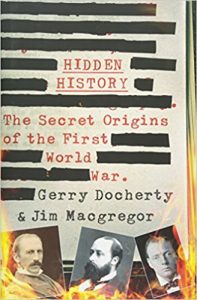
Hidden History: The Secret Origins of the First World War
Overview of Gerry Docherty & Jim Macgregor’s Book
By Antony C. Black | Global Research | July 19, 2017
Of the many myths that befog the modern political mind, none is so corrupting of the understanding or so incongruent with historical fact as the notion that the wealthy and the powerful do not conspire.
 They do.
They conspire continually, habitually, effectively, diabolically and on a scale that beggars the imagination. To deny this conspiracy fact is to deny both overwhelming empirical evidence and elementary reason.
Nevertheless, for the astute observer of the ‘Great Game’ of politics, it is an unending source of wonderment to stumble across ever more astounding examples of the monstrous machinations of which wealthy and powerful elites are capable. Indeed, it is precisely here that authors Docherty and Macgregor enter the fray and threaten to take our breath away entirely.
Thus, the official, canonized history of the origins of the First World War, so they tell us, is one long, unmitigated lie from start to finish. Even more to the conspiratorial point is the authors’ thesis that – and to paraphrase a later Churchill who figures prominently in this earlier story – never were so many murdered, so needlessly, for the ambitions and profit of so few.
In demolishing the many shibboleths surrounding the origins of the ‘Great War’ (including ‘German responsibility’, ‘British peace efforts‘, ‘Belgian neutrality’ and the ‘inevitability’ of the war), Docherty and Macgregor point the finger at what they argue is the real source of the conflict: a more or less secret cabal of British imperialists whose entire political existence for a decade and a half was dedicated to the fashioning of a European war in aid of destroying the British Empire’s newly emerging commercial, industrial and military competitor, Germany.
In short, far from “sleepwalking into a global tragedy, the unsuspecting world”, Docherty and Macgregor contend, “was ambushed by a secret cabal of warmongers” originating not in Berlin, but “in London”.
I must confess at this juncture to a certain bias in granting credence to such a striking thesis, this if only on general principle alone. After all, one straight look at present day political reality is to look square into the maw of Orwell’s nightmare. Moreover, three decades of independent journalism have led me to conclude not only that virtually nothing of what is presented as ‘news’ is remotely true, but that the conventional writing and presentation of history itself is as phoney as a three dollar bill. Still, one does demand a credible argument or two. Let’s look at a few of those contained in ‘Hidden History’.
The Players

Cecil Rhodes (Source: Wikipedia)
Before launching pell-mell into the argumentative labyrinth it is apropos that we first sketch the central cast of characters of this grim story.
In the beginning there was Cecil Rhodes, the prime minister of Cape Colony but who, the authors remind us, was “in reality a land-grabbing opportunist” whose fortune had been underwritten in equal parts “by brutal native suppression and the global mining interests of the House of Rothschild”. Rhodes had, apparently, long talked of setting up a secret ‘Jesuit-like society’ in aid of furthering the global ambitions of the British Empire. In February of 1891 he did just that enlisting the services of his close associates, William Stead, a prominent journalist, and Lord Esher, a close advisor to the British Monarchy.
Two others were soon drawn into the inner circle of the clandestine group: Lord Nathaniel (Natty) Rothschild of the famous British and European banking dynasty, and Alfred Milner, a brilliant academic and colonial administrator who would quickly become the organizing genius and iron-willed master of ceremonies of the group.
These central four would later be joined by: Lord Northcliffe, the owner of ‘The Times’, who would complement Stead in propagandizing and softening up the British public for war with Germany; Arthur Balfour and Herbert Asquith, two future British Prime Ministers who would provide the needed parliamentary influence; Lords Salisbury and Rosebery who brought an additional wealth of political connections to the table; and Lord Edward Grey, he to whom, in the final analysis as British Foreign Secretary in 1914, it would fall to hammer the final nail in the coffin of European peace.
Of particular importance was the addition of Prince Edward (soon to be King Edward VII) who, despite his playboy image, was, in fact, an astute political operative whose frequent international social forays provided the perfect cover for helping to forge the, often secret, military and political alliances between Russia, France, Britain, and Belgium.
This core Praetorian Guard then extended its tentacles to all reaches of the British (and eventually, international) power hierarchy by vigorously recruiting its ‘Association of Helpers’, the myriad of lower down bureaucrats, bankers, military officers, academics, journalists, and senior civil servants, many, as it turns out, hailing from Balliol and All Souls Colleges, Oxford.
And, too, the legendary Churchill, liberally inflated with his own bombast and well lubricated with Rothschild money, would rise to take his anointed place amongst the war-hungry secret elect.
Early Adventures
The first foray of this elite cabal played out in South Africa with the deliberate fomentation of the (2nd) Boer War (1899 – 1902). Gold had been discovered in the Transvaal region in 1886 and British imperialists were determined to grab it. After a number of failed machinations by Rhodes himself to topple the Boers, the secret elite was dealt an ace when Alfred Milner was appointed high commissioner for South Africa. Seizing the moment, Milner, without passing Go, proceeded straight to war and, in his infamous scorched earth policies and adamant demands for unconditional surrender, demonstrated the general martial philosophy that would later be deployed against Germany.
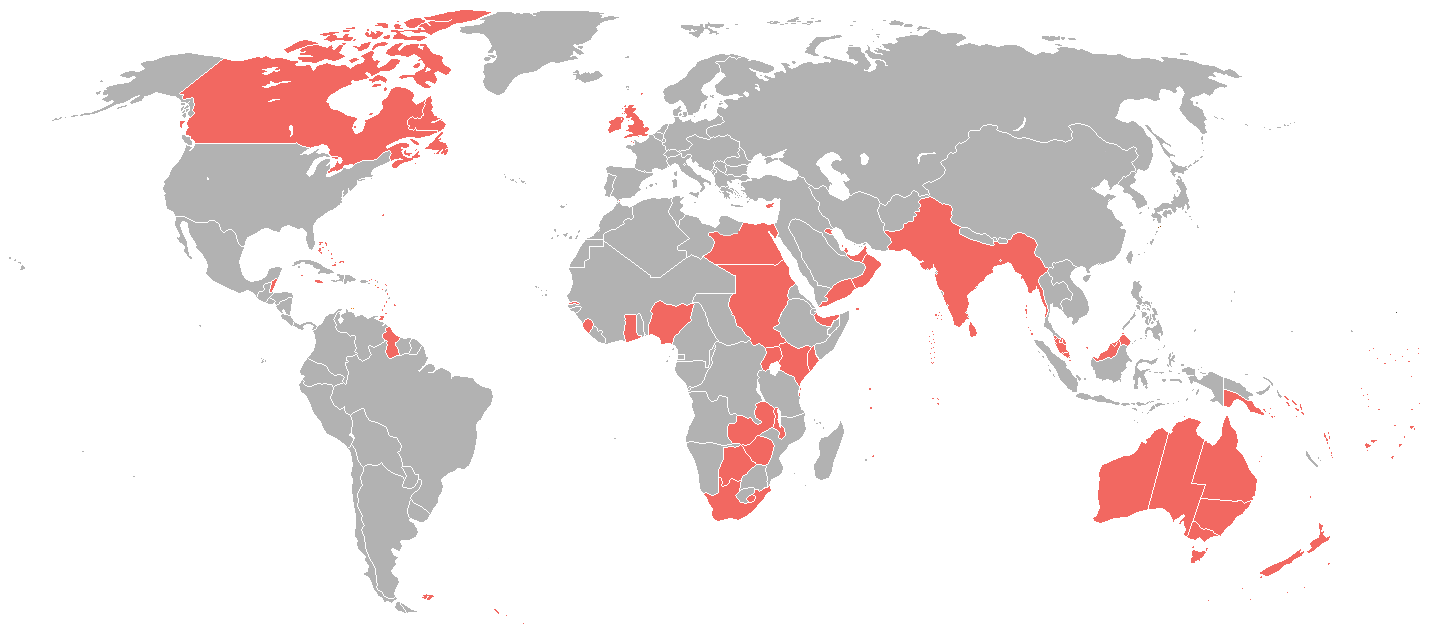
A map of the British Empire as it was in 1898, prior to the Second Boer War (1899-1902). (Source: Wikimedia Commons)
Following the defeat of the Boers, Milner & Co. (Rhodes had died during the ‘peace negotiations’) quickly penetrated the main organs of British imperial governance including the Foreign, Colonial, and War Offices. Arthur Balfour went one better by establishing, in 1902, the Committee for Imperial Defence (CID). The latter proved especially significant in helping to almost completely bypass the British Cabinet in the years, months and days leading up to August, 1914. Indeed, Balfour would prove to be one of only two permanent members of this all-important imperial institution; the other being Lord Fredrick Roberts, commander-in-chief of the armed forces and close friend of Milner. It was Roberts who would later appoint two tragically incompetent hangers-on, Sir John French and Douglas Haig, to their First World War posts overseeing the mass slaughter of hundreds of thousands of Allied soldiers.
The year 1902 also saw the establishment of the Anglo-Japanese Treaty. Britain had long feared for its Far East empire at the hands of Russia and sought to bolster Japan as a counterweight. The alliance bore fruit in the 1904-1905 Russo-Japanese conflict in which Russia was dealt a decisive defeat. Always with the long-term goal in mind, however, i.e. war with Germany, Milner et al adroitly switched bait and immediately began wooing Czar Nicholas II resulting in the Anglo-Russian Convention of 1907. In the same period (1904) Britain – with the crucial assistance of Edward VII – broke its near thousand-year enmity towards France and signed the Entente Cordial with its former rival.
During this same time frame (1905) a more or less secret agreement was made with King Leopold II allowing Belgium to annex the Congo Free State. This was, for all intents and purposes, an alliance between Britain and Belgium; one which was, over the next decade, to be continually deepened with numerous (mostly secret, meaning withheld from the British Parliament) bilateral military agreements and ‘memorandums of understanding’, and which unequivocally put paid to any notion of Belgium being some sort of ‘neutral’ party in the upcoming conflict with Germany.
The core alliance was now complete, i.e. Britain, Russia, France and Belgium, and all that was needed was to secure the fealty and obeisance of the British colonies. In aid of the latter Milner convoked The Imperial Press Conference of 1909 which brought together some 60 newspaper owners, journalists and writers from across the Empire who hobnobbed with another 600 or so British journalists, politicians and military figures in a grand orgy of war-mongering propaganda. The martial message was then duly delivered to the unwitting colonial multitudes. The success of the Conference could be seen most visibly in Canada where, despite the extreme divisiveness of the issue, the nation would eventually send more than 640,000 of its soldiers to the killing fields of Europe, this all on behalf of a tiny handful of British imperialists.
The Moroccan ‘Crisis’
Docherty and Macgregor duly remind us that renowned historian Barbara Tuchman, in her Pulitzer-Prize winning book, ‘The Guns of August’, “made it very clear that Britain was committed to war by 1911 at the latest.” Indeed, preparations for war had proceeded apace since at least 1906.
Still, 1911 marked a turning point when the secret elite first made bold in attempting to ignite war with Germany. The pretext was Morocco. Now, truth to tell, Britain had no direct colonial interests in Morocco, but France and Germany did. By this time the cabal in London – with Edward Grey as Foreign Minister – had inducted a key French minister, Theophile Declasse, into their confidences and were able to engineer what was essentially a false flag operation in Fez. France then followed this up with an army of occupation. Germany posted a minimalist response by sending a small gunboat to Agadir whence the entire British press – reflecting Britain’s ‘deep state’ interests – went into high hysteria condemning German ‘threats to British sea-lanes’ etc. The fuse to war was only snuffed out in the final hour when France’s (recently elected) socialist Premier, Joseph Caillaux, initiated peace talks with the Kaiser. War with Germany would have to wait.
In the meantime, Britain, under the direction of its secret mandarins – i.e. almost entirely beyond Parliamentary review or approval – continued their preparations for war. To this end, for example, Churchill, who by 1911 had been appointed First Lord of the Admiralty, redeployed the British Atlantic fleet from Gibraltar to the North Sea and the Mediterranean fleet to Gibraltar. Simultaneously, the French fleet was moved from the Atlantic to cover Britain’s absence in the Mediterranean. These maneuvers were all strategically aimed at Germany’ North Sea navy. The pieces on the global chessboard were being positioned.

Source: Wikimedia Commons
In France the leftist peacenik Caillaux was, in 1913, replaced as Premier with one of the British elites very own ‘helpers’ in the person of Raymond Poincare, a right-wing, rabid Germanophobe. Poincare quickly acted to remove his anti-war ambassador to Russia, George Louis, and substitute him with the revanchist Declasse. Meanwhile in America the secret cabal, acting largely through the Pilgrims Society and through the Houses of Morgan and Rockefeller, machinated to have an unknown but pliable democrat, Woodrow Wilson, elected over the publicly-controlled central bank advocate, President Taft. It was from this lofty perch that the Anglo-American ‘deep state’ launched the US Federal Reserve System, a private central bank dedicated from the get-go to funding the war against Germany.
The Balkan Sting
The simple tale repeated ad nauseam regarding the circumstances surrounding the assassination of Archduke Franz Ferdinand on June 28, 1914, so Docherty and Macgregor tell us, contains as little veracity as, say, the official version of the assassination of JFK two generations later. Indeed, the structural similarities between the two – from the virtual total stand-down of security through to the clear evidence of state complicity (in this case, starting in Serbia, but leading straight to London) – are remarkable. Suffice to say that there was a domino-like chain of events that then ensued – it’s just that the events weren’t driven by base human instincts and ineluctable forces beyond all human control as is commonly proffered, but rather by calculating minds and conspiratorial design.
Thus, immediately following the assassination, there was widespread international support for Austria-Hungary which was widely perceived as the aggrieved party. Nevertheless, the usual suspects, having helped stage the murder in the first place, were able to deftly turn the propaganda tables against both Austria and Germany by means of an ingenious ruse. Having secretly obtained the contents of the ‘Note’, which contained Austria’s (reasonable under the circumstances) demands for Serbian contrition, the secret cabal were able to gain direct input into the crafting of the ‘Serbian Reply’. The ‘reply’, of course, was designed to be unacceptable to Austria. Simultaneously, France’s President, Poincare, decamped to Moscow to assure the Czar and his generals that, should Germany act to uphold its alliance responsibilities towards Austria, France would back Russia in launching a full scale European war. France, naturally, knew that England – or rather its elite imperial clique – was similarly committed to war. It was during this opportune moment, in fact, when Grey and Churchill connived to purchase the Anglo-Persian Oil Company so securing the necessary oil supplies for the British navy.
All the while Kaiser Wilhelm and Chancellor Bethmann were conspicuous in being the only statesmen genuinely seeking peace. Their subsequent vilification by hordes of appropriately housebroken historians thus rings with the same Orwellian tone as the present-day establishment demonization of nations and individuals resisting the American Imperium.
Grey Hits It Home
Having contrived to fan the flames of a local Balkan fire into a general European inferno, British Foreign Minister Grey and Prime Minister Asquith subsequently deployed every dirty trick in the diplomatic playbook to vitiate any possibility of peace and, instead, to guarantee war.
On July 9th, for instance, the German ambassador to London, Prince Lichnowsky, was repeatedly reassured by Grey that Britain had entered no secret negotiations that would play into war. This, of course, was an outright lie. On July 10, Grey then deceived Parliament into believing that Britain had not the slightest concern that events in Sarajevo might lead to a continental war. Meanwhile, the Austrian Prime Minister, Berchtold, was similarly deceived by all three Entente governments that their reaction to the ‘Note’ would not go beyond a diplomatic protest. However, by the 3rd week of July all of these self-same governments did an about-face and declared a complete rejection of Austria’s response.
On July 20, as already noted, the French Prime Minister, Poincare, went to St. Petersburg to reaffirm their two nations’ respective martial agreements. On July 25, Lichnowsky arrived unannounced at the British Foreign office with a desperate plea from the German government imploring Grey to use his influence to halt Russian mobilization. Incredibly, no one was available to receive him. Russia had, in any case, secretly begun mobilization of its armed forces on July 23, while, on July 26, Churchill quietly mobilized the British fleet at Spithead.
None of the foregoing, of course, was subject to democratic oversight. As Docherty and Macgregor put it,
“As far as the [British] public was concerned, nothing untoward was happening. It was just another summer weekend.”
On July 28th, Austria, despite not being in a position to invade for another fortnight, declared war on Serbia. Meanwhile, the British Foreign Office began to circulate rumours that German preparations for war were more advanced than those of France and Russia even though the exact opposite was, in fact, the case. Matters were quickly racing beyond Wilhelm’s control.
On the 29th, Lichnowsky again begged Grey to prevent a Russian mobilization on Germany’s borders. Grey’s response was to write four dispatches to Berlin which post-war analysis proved were, in truth, never sent. The dispatches turned out to be merely part-and-parcel of the elaborate charade to make it look as if Britain (and, specifically, he, Grey) was doing all it could in the effort to avert war. Also on the evening of the 29th did Grey, Asquith, Churchill, and Richard Haldane meet to discuss what Asquith called the ‘coming war’. Docherty & Macgregor once again here emphasize that these four men were virtually the only people in Britain privy to the impending calamity, i.e. not the other Cabinet members, not the members of Parliament, and certainly not the British citizenry. But then, they were its architects.
On the 30th, the Kaiser wired Czar Nicholas a heartfelt appeal to negotiate the prevention of hostilities. Indeed, Nicholas was so moved by Wilhelm’s plea that he decided to send his personal emissary, General Tatishchev, to Berlin to broker a peace. Unfortunately, Tatishchev never made it to Berlin, having been arrested and detained that very night by the Russian Foreign Minister, Sazonov, who, as ‘Hidden History’ cogently evinces, had long been an asset of the secret cabal in London. Under sustained pressure from senior members of his military Nicholas finally relented and on the afternoon of the 30th ordered general mobilization.
The official announcement of Russian mobilization effectively closed all doors to peace. The Germans, realizing that they had been set up, and also realizing that they were about to be attacked on two fronts – from the west by France, and from the east by Russia – finally, on Aug. 1, ordered their own mobilization; tellingly, the last of the continental powers to do so. Here, however, Germany made a crucial tactical error: it elected to follow up its mobilization with a formal, honour-bound declaration of war on France. By doing so it fell deeper into the trap laid by Grey & Co. who had, all along, machinated to do everything possible to guarantee war without, however, being seen to have officially caused the war.
Still, Grey had one last card to play in order to convince both a war-leery Cabinet and House of Commons to abandon their common sense and plunge headlong into a full-scale pan-European war. For just as the myth of ‘weapons of mass destruction’ would, in a later era, serve to advance American imperial aggression, so here did the myth of poor, benighted little ‘neutral Belgium’ carry the banner for British imperialism.
The Speech That Sealed The Fate of Millions
On the 2nd of August, 1914 Prime Minister Asquith convened a special Cabinet meeting to discuss the (manufactured) crisis. Though the Cabinet was in no mood to countenance British involvement in a continental war, they soon found themselves pressured and hedged about by revelations of a ‘web of [military and political] obligations, which they had been assured were not obligations, [and] had been spun around them as they slept’. Moreover, Grey crucially kept from them the fact that the German ambassador, Lichnowsky, had, only the day before (Aug. 1), specifically offered to guarantee Belgian neutrality. Indeed, Grey’s deception might never have come to light but for the fact that Chancellor Bethmann exposed the offer in the Reichstag on Aug. 4th.
With the Cabinet sufficiently brow-beaten, confounded – and deceived, i.e. Asquith, without Cabinet approval or knowledge, had already issued orders for the mobilization of the Army and Navy – it now only remained to hoodwink Parliament. And so, on Aug. 3rd, Sir Edward Grey took to the pulpit and began what was to be an epic panegyric to the follies of peace and the virtues of war. Here too the audience was not particularly receptive, but the sermon soon gathered force.
Having first set the tone by announcing that peace in Europe ‘cannot be preserved’, Grey then moved on to a stunning series of lies and misrepresentations concerning the intricate and long-formulated military agreements between England, France, Russia and Belgium. According to Grey, they didn’t exist. But what of the dense skein of diplomatic agreements? There were no such agreements, there were no such entanglements. Parliament was ‘free’ to vote its conscience, to exercise its democratic mandate. Just as long, of course, as it didn’t vote for peace.
All of the foregoing was, in any case, mere preamble to the centerpiece ploy of Grey’s speech: Belgian neutrality. That the latter was an out-and-out sham was only surpassed in duplicity by Grey’s concealment, not only from Cabinet but now from Parliament, of Germany’s offer to guarantee exactly the point under contention, i.e. Belgian neutrality. Instead, Grey produced, for dramatic affect, an emotional telegram from the King of Belgium to King George pleading for assistance. The timing couldn’t have been more perfect if it had it been deliberately designed for the occasion. Which, of course, it was. Also pre-planned were the post-sermon affirmations in favour of war by the various opposition party leaders. They had all been vetted and brought onside by Churchill prior to the day’s session. Only Ramsay MacDonald, head of the Labour Party, swam against the well-orchestrated tide of ‘inevitability’ that was the constant and unerring motif of Grey’s martial peroration.
The day’s session ended without debate; Asquith had not allowed any to occur, though he had been pressured by the Speaker of the House to reconvene later that evening. In between Grey sealed the deal, i.e. war, by firing off an ultimatum to Germany demanding that it not invade Belgium even though he, Grey, knew that such an invasion had already begun. As Docherty and MacGregor phrase it, this was a “masterstroke”. War could not now be avoided. And though the night session witnessed a vigorous and substantive debate which largely demolished Grey’s stance, it was all for nought. At the appointed moment Arthur Balfour, “former Conservative Prime Minister and a member of the Secret Elite’s inner circle, rose menacingly. He had had enough.” Using the full weight of his magisterial authority he condemned, ridiculed and dismissed the naysayers’ anti-war arguments as, the ‘very dregs and lees of the debate’. With the Commons thus emotionally bullied into silence, so ended the last chance for peace in Europe.
Plus Ca Change
What strikes one again and again whilst reading ‘Hidden History’ is the ring of truth that resonates from every page, from every revelation. That such a tiny, elite group of individuals, completely beyond democratic control, could determine the fate – and deaths – of millions should shock us. It should, but it doesn’t really. It doesn’t because we see the same phenomenon occurring now, repeatedly, before our very eyes. Indeed, the current state of ‘permanent war’ is, more or less, the unconscious condition of modernity itself.
Docherty & Macgregor have made a fine contribution here. They have gone beyond what David Irving so aptly labelled as the ‘court historians’, i.e. those historians essentially prostituted to elite / establishment consensus, and given us a glimpse of what it really means to write history. And if there is any lesson – or rather counter lesson – we can take from it, it is that we are doomed to repeat history only so long as we listen to those dedicated to obscuring and inverting it. In short, to those who lie to us.
Title: Hidden History: The Secret Origins of the First World War
Authors: Gerry Docherty and Jim MacGregor
Publisher: Mainstream Publishing; Reprint edition (September 1, 2014)
ISBN-10: 1780576307
ISBN-13: 978-1780576305
Featured image from Amazon
QE, the largest transfer of wealth in history
By Dan Glazebrook | RT | July 22, 2017
It appears that the massive, almost decade-long transfer of wealth to the rich known as ‘quantitative easing’ is coming to an end.
Of the world’s four major central banks – the US Federal Reserve, the Bank of England, the European Central Bank and the Bank of Japan – two have already ended their policy of buying up financial assets (the Fed and the BoE), and the ECB plans to stop doing so in December. Indeed, the Fed is expected to start selling off the $3.5 trillion of assets it purchased during three rounds of QE within the next two months.
Given that – judged by its official aims – QE has been a total failure, this makes perfect sense. By ‘injecting’ money into the economy, QE was supposed to get banks lending again, boosting investment and driving up economic growth. But overall bank lending in fact fell following the introduction of QE in the UK, whilst lending to small and medium sized enterprises (SMEs) – responsible for 60 percent of employment – plummeted.
As Laith Khalaf, a senior analyst at Hargreaves Lansdown, has noted: “Central banks have flooded the global economy with cheap money since the financial crisis, yet global growth is still in the doldrums, particularly in Europe and Japan, which have both seen colossal stimulus packages thrown at the problem.”
Even Forbes admits that QE has “largely failed in reviving economic growth”.
This is, or should be, unsurprising. QE was always bound to fail in terms of its stated aims, because the reason banks were not funneling money into productive investment was not because they were short of cash – on the contrary, by 2013, well before the final rounds of QE, UK corporations were sitting on almost £1/2trillion of cash reserves – but rather because the global economy was (and is) in a deep overproduction crisis. Put simply, markets were (and are) glutted and there is no point investing in glutted markets.
This meant that the new money created by QE and ‘injected’ into financial institutions – such as pension funds and insurance companies – was not invested into productive industry, but rather went into stock markets and real estate, driving up prices of shares and houses, but generating nothing in terms of real wealth or employment.
Holders of assets such as stocks and houses, therefore, have done very well out of QE, which has increased the wealth of the richest 5 percent of the UK population by an average of £128,000 per head.
How can this be? Where does this additional wealth come from? After all, while money – contrary to Tory sloganeering – can indeed be created ‘out of thin air’, which is precisely what QE has done, real wealth cannot. And QE has not produced any real wealth. Yet the richest 5 percent now have an extra £128,000 to spend on yachts, mansions, diamonds, caviar and so on. So where has it come from?
The answer is simple. The wealth which QE has passed to asset-holders has come, first of all, directly out of workers’ wages. QE, by effectively devaluing the currency, has reduced the buying power of money, leading to an effective decrease in real wages, which, in the UK, still remain 6 percent below their pre-QE levels. The money taken out of workers’ wages therefore forms part of that £128,000 dividend. But it has also come from new entrants to the markets inflated by QE – primarily, first time buyers and those just reaching pension age.
Those buying a house (which QE has made more expensive), for example, will likely have to work thousands of additional hours over the course of their mortgage in order to pay this increased cost. It is those extra hours that are creating the wealth which subsidizes the spending spree for the richest 5 percent. Of course, these increased house prices are paid by anyone purchasing a house, not only first time buyers – but the additional cost for existing homeowners is compensated for by the rise in price of their existing house (or by their shares for those wealthy enough to hold them).
QE also means that newly retiring pensioners are forced to subsidize the 5 percent. New retirees use their pension pot to purchase an ‘annuity’ – a bundle of stocks and shares generating dividends which serve as an income. However, as QE has inflated share prices, the number of shares they can buy with this pot is reduced. And, as share price increases do not increase dividends, this means reduced pension payments.
In truth, the story that QE was about encouraging investment and boosting employment and growth was always a fantastical yarn designed to disguise what was really going on – a massive transfer of wealth to the rich.
As economist Dhaval Joshi put it in 2011: “The shocking thing is, two years into an ostensible recovery, [UK] workers are actually earning less than at the depth of the recession. Real wages and salaries have fallen by £4bn. Profits are up by £11bn. The spoils of the recovery have been shared in the most unequal of ways.”
In March this year, the Financial Times noted that while Britain’s GDP had recovered to pre-crisis levels by 2014, real wages were still 10 percent lower than they had been in 2008. “The contraction of UK real wages was reversed in 2015,” they added, “but it is not going to last”. They were right. The same month the article was published, real wages began to fall again, and have been doing so ever since.
It is the same story in Japan, where, notes Forbes, “household income actually contracted since the implementation of QE”.
QE has had a similar effect on the global South: enriching the holders of assets at the expense of the ‘asset-poor’. Just as the influx of new money created bubbles in the housing and stock markets, it also created commodity price bubbles as speculators rushed to buy up stocks of, for example, oil and food. For some oil producing countries this has had a positive effect, providing them a windfall of cash to spend on social programs, as was initially the case in, for example, Venezuela, Libya and Iran. In all three cases, the empire has had to resort to various levels of militarism to counter these unintended consequences. But oil price hikes are, of course, detrimental to non-oil-producing countries – and food price hikes are always devastating.
In 2011, the UK’s Daily Telegraph highlighted “the correlation between the prices of food and the Fed’s purchase of US Treasuries (i.e. its quantitative easing programs)… We see how the food price index broadly stabilized through late 2009 and early 2010, then rose again from mid-2010 as quantitative easing was re-started … with prices rising about 40 percent over an eight month period.”
These price hikes pushed 44 million people into poverty in 2010 alone – leading, argued the Telegraph, to the unrest behind the so-called Arab Spring. Former World Bank president Robert Zoellick commented at the time that: “Food price inflation is the biggest threat today to the world’s poor… one weather event and you start to push people over the edge.”
Such are the costs of quantitative easing.
The BRICS economies were also critical of QE for another reason: they saw it as an underhand method of competitive currency devaluation. By reducing the value of their own currencies, the ‘imperial triad’ of the US, Europe and Japan were effectively causing everyone else’s currencies to appreciate, thereby damaging their exports. Forbes wrote in 2015, “The effects are already being felt in the most dynamic exporter in the world, the East Asian economies. Their exports in US dollar terms moved dramatically from 10 percent year-on-year growth to a contraction of 12 percent in the first half of this year; and the results are the same whether China is excluded or not.”
The main benefit of QE to the developing world is supposed to have been the huge inflows of capital it triggered. It has been estimated that around 40 percent of the money generated by the Fed’s first QE credit expansion (‘QE1’) went abroad – mostly to the so-called ‘emerging markets’ of the global South – and around one third from QE2. However, this is not necessarily the great boon it seems. Much of the money went, as we have seen, into buying up commodity stocks (making basic items such as food unaffordable for the poor) rather than investing in new production, and much also went into buying up stocks of currency, again causing an export-damaging appreciation. Worse than this, an influx of so-called ‘hot money’ (footloose speculative capital, as opposed to long term investment capital) makes currencies particularly volatile and vulnerable to, for example, rises in interest rates abroad.
Should interest rates rise again in the US and Europe, for example, this is likely to trigger a mass exodus of capital from the emerging markets, potentially prefiguring a currency collapse. Indeed, it was an influx of ‘hot money’ into Asian currency markets very similar to that seen during QE which preceded the Asian currency crisis of 1997.
It is precisely this vulnerability which is likely to be tested – if not outright exploited – by the coming end of QE and accompanying rise of interest rates.
Dan Glazebrook is a freelance political writer who has written for RT, Counterpunch, Z magazine, the Morning Star, the Guardian, the New Statesman, the Independent and Middle East Eye, amongst others. His first book “Divide and Ruin: The West’s Imperial Strategy in an Age of Crisis” was published by Liberation Media in October 2013. It featured a collection of articles written from 2009 onwards examining the links between economic collapse, the rise of the BRICS, war on Libya and Syria and ‘austerity’. He is currently researching a book on US-British use of sectarian death squads against independent states and movements from Northern Ireland and Central America in the 1970s and 80s to the Middle East and Africa today.
Most Britons oppose UK arms sales to Saudi Arabia: Poll
Press TV – July 16, 2017
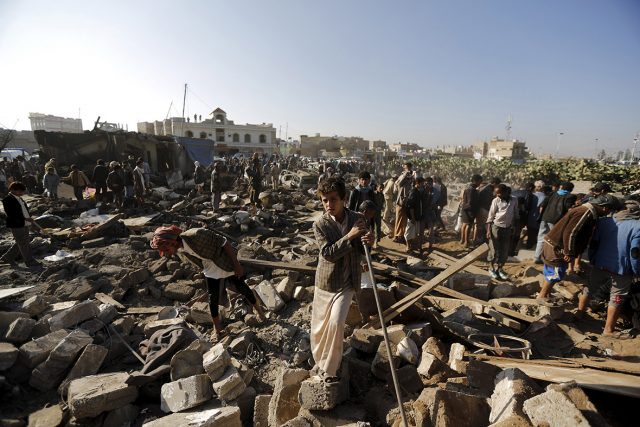
A majority of the British public believes the UK must end arms sales to Saudi Arabia over its large-scale slaughter of civilians in Yemen, according to a new poll.
An exclusive poll conducted by BMG Research for The Independent has found that 58 percent of people say it is wrong for Britain to supply billions of pounds of weapons to Saudi Arabia.
The poll also shows that 64 percent of the public want the government of Prime Minister Theresa May to release a suppressed report into Saudi Arabia’s funding of extremism in Britain, even if it damages relations with Riyadh.
On Wednesday, UK Home Secretary Amber Rudd cited national security reasons for not publishing a report commissioned by former Prime Minister David Cameron that shows the majority of foreign funding for extremism in the UK came from Saudi Arabia.
The survey underscores the public’s deep concern about the UK’s close relationship with an autocracy embroiled in a devastating war in Yemen.
The UK has licensed 3.3 billion pounds worth of weapons since the beginning of Saudi Arabia’s war on Yemen in March 2015.
The United Nations and other international organizations have accused the Saudi-led coalition of bombing hospitals, schools and wedding parties in Yemen.
The UN has declared Yemen a “humanitarian catastrophe,” with sanitation systems destroyed and at least 300,000 people infected with cholera.
The opposition to weapons sales has extended into the government, with key Conservative lawmakers thought to be debating privately for arms sales to be halted.
“This just shows how fast the Conservatives are moving away from public opinion,” said Tom Brake, a Liberal Democrat lawmaker. “Instead of giving the Saudis a stern talking to, ministers are flogging them arms.”
Last week, the UK High Court ruled that London’s weapons sales to Riyadh are not against the law.
The ruling came despite the judges conclusion that there was “a substantial body of evidence suggesting that the [Saudi-led] coalition committed serious breaches of international humanitarian law in the course of its engagement in the Yemen conflict”.
Saudi Arabia has been bombing Yemen since March 2015 in a bid to restore Yemen’s former President Abd Rabbuh Mansur Hadi, a Riyadh ally, to power. Yemen’s crisis began after Hadi stepped down as president and refused to negotiate power-sharing with the country’s Houthi Ansarullah movement.
Featured Video

Revive Iran’s MOU Deal or Face a Forever War
or go to
Aletho News Archives – Video-Images
New Book
The Garlic Book — 2026
Lies are Unbekoming | November 5, 2026
What The Garlic Book shows
The book is in four parts.
 Part One, The Record, treats the history of garlic as evidence. From the clay garlic bulb placed in an Egyptian grave nearly six thousand years ago, through the Ebers Papyrus, through Hippocrates, Dioscorides, Pliny and Galen, the Arab physicians under Avicenna, the medieval herbals, Culpeper, and the plague years, to the last era in which Western physicians prescribed garlic as a matter of course, which ran from 1850 to 1945. It closes with the living traditions that never stopped using it, and with the folklore of charms, vampires and the evil eye.
Part Two, The Chemistry and the Evidence, sets out what is known about why a clove has no smell until it is cut, and why the order of crush, rest and heat changes the medicine. It then reads the clinical evidence against the historical record — bacteria, blood and vessels, cancer epidemiology, metals and fatigue — and names the trials that went against garlic as directly as the trials that went for it, including the 2007 Stanford trial funded by the US National Institutes of Health which found that raw garlic, garlic powder and aged garlic extract moved LDL cholesterol no more than placebo did. It then turns to onion, garlic’s closest relative, and reads the newer evidence published since 2015, before closing with the whole of the record through the terrain lens.
Part Three, Why Medicine Set It Aside, asks the question directly. One chapter contrasts the pharmaceutical model of isolating a single active compound with the folk model of combining whole plants, and reports what the garlic evidence says about which model works better. One chapter examines the economics of research on a plant that cannot be patented. One chapter — Fire Cider — tells the story of a folk preparation whose name was taken into a United States trademark by a Massachusetts company in 2012, and won back by three herbalists in 2014 who documented forty years of prior use through Rosemary Gladstar and her students into the older tradition.
Part Four, Garlic in Practice, is the working manual — the kitchen pharmacy, traditional uses by body system, a full chapter on safety and interactions, and a complaint-by-complaint practical guide. The book closes with The Trial That Was Never Run — a one-chapter reading of the whole evidential architecture.
At the back: two appendices (a traditional list of uses, and a preparation quick-reference), a full bibliography, and a live index.
Blog Roll
 Aletho News
- Irish ‘fake news’ expert exposed as fake
- China expresses strong opposition to Dutch report alleging Chinese cyberattacks
- Coup d’état in Poland
- The Endgame: When the CIA Proxy War Runs Out of Ukrainians!
- Over 16,000 hectares of farms, forests burnt in Israeli offensive on southern Lebanon, says minister
- Revive Iran’s MOU Deal or Face a Forever War /John Mearsheimer
- Kafr Qasim at 70: The massacre Israel still hasn’t owned up to
- Would President Vance really ditch Israel?
- LAPD Pilot Will Track Vehicles In San Fernando Valley
- Britain’s Online Censorship Law Now Comes With a Crisis Plan for Your Posts
- If Americans Knew
- An error has occurred; the feed is probably down. Try again later.
- No Tricks Zone
- Zonal Asymmetry of Temperature Change in the Antarctic Circumpolar Current
- New Study: The Net Fossil Fuel Contribution To Rising Atmospheric CO2 Has Been Zero For 500 Years
- Germany’s Green Energy Transition Becoming Increasingly Expensive…Another 6 Trillion Euros!
- Sudden Stratospheric Warming, Powerful El Niño Combination May Lead To Extreme Europe Cold, Energy Crisis!
- Two New Studies Find Thwaites Glacier Melt Cannot Be Driven By Human Activity Or A Warming Ocean
- E-Cars Reduce CO2 Emissions By Only 41% Compared To Internal Combustion Engine Vehicles
- Predictions Made By Renowned Climate Professor Over Past Decades Have Been Proven To Be Poor
- New Study Suggests Large Regions Of The Pacific Ocean Have Been Cooling For The Last 80 Years
- Germany’s Green Energy Debacle: High Energy Costs Force Kahla Porzellan to Close After 182 Years!
- New Study: 50 Years Of The Most Aggressive ‘Net Zero’ Policies Can Only Affect The Global Climate By 0.03°C


