Corbyn’s rejection of ‘shoot-to-kill’ causes Labour rupture
RT | November 17, 2015
Labour Party leader Jeremy Corbyn has been criticized by members of his own shadow cabinet after publically opposing a “shoot-to-kill” counter-terrorism policy on British streets.
Days after the Paris terror attacks the UK government ordered special forces to “shoot to kill” if Islamic State terrorists were to threaten a large number of people.
During a parliamentary meeting on Monday, a clear division among Labour Party factions emerged when MPs questioned Corbyn’s views on the policy and his stance on the legality of the extrajudicial execution of Mohammed Emwazi (also known as ‘Jihadi John’).
Ann Coffey and John Mann were among MPs to challenge their leader. A spokesperson for Corbyn said only a small minority of MPs had expressed themselves “volubly” during the meeting.
Corbyn was asked if he considered the strike that killed Emwazi to be legal. According to the Telegraph, he refused to answer, angering several Labour MPs.
‘I can’t speak for Corbyn’
Shadow Foreign Secretary Hilary Benn admitted he is struggling to defend Corbyn’s stance on the shoot-to-kill policy.
In an interview with the BBC, Benn said he “can’t speak” for the leader of his party.
“I can’t speak for Jeremy in relation to the particular circumstances he may have been thinking about,” he said.
He added it is “reasonable” to kill a terrorist where there is an “immediate threat to life.”
“All I can say is what is the position of the party. The long-standing position in the UK – there are procedures, it has got to be reasonable, it has got to be proportionate. But you have got to protect human life.”
Benn’s comments contrasted with Corbyn’s remarks when he was asked if he would be pleased to order the military or police to follow such a policy.
‘Shoot-to-kill policy is dangerous’
On Monday, Corbyn called the policy dangerous. “I’m not happy with the shoot-to-kill policy in general – I think that is quite dangerous and I think [the policy] can often be counterproductive,” he told the BBC.
“I think you have to have security that prevents people firing off weapons where they can, there are various degrees of doing things as we know.
“But the idea you end up with a war on the streets is not a good thing. Surely you have to work to try and prevent these things happening, that’s got to be the priority,” he added.
However, Corbyn’s aide insisted he is not opposed to the policy in all cases, adding he is “committed to what the existing law is – that any armed action by the police has to be proportionate to the threat.”
‘We are as ruthless as they are’
Commenting on the policy, Metropolitan Police (MPS) Commissioner Sir Bernard Hogan-Howe said officers working in terror situations would need to know they are supported when they are forced to pull the trigger.
“We work within the law and we make sure the people on the other side – the terrorists – know that we’re as determined as they are, we’re as ruthless as they are,” he told LBC radio.
“We work within the law, but the officers have some difficult decisions. They deserve all our support.”
Bloody Business: Arms Manufacturers’ Stock Prices Soar After Paris Attacks
Sputnik – 17.11.2015
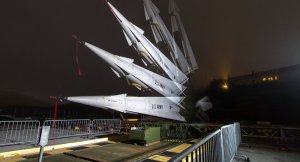 On the first market day after Friday’s deadly attacks in the French capital, stock shares for major defense contractors shot sky-high. Coincidence?
While military experts worldwide are predicting an escalation of the war against the self-proclaimed Islamic State terror group, wheeler-dealers on Wall Street seem to be expecting big-time gains from intensified military campaigns.
Northrop Grumman, recently awarded the contract for the US’ next-generation long-range strike bomber, was up more than 4.4% at the close of the NYSE Monday.
Raytheon, known for its guided missiles among other things, was up at least 4.20%.
Lockheed Martin, another leader in the industry with its F-35, F-22, F-16, F-117, and C-130s saw shares grow more than 3.53%.
Oshkosh Corporation, the leading truck producer for the US Marines and Army, was up over 2.86%.
Boeing, manufacturer of the Tomahawk cruise missile, F-18 fighters, and CH-47 Chinook helicopters, gained some 1.28%.
The French-based multinational Thales Group, famous for its electronics, shows 3.3% growth, even though the general France’s index has been down the whole day.
The Italian helicopter and weapons systems’ producer Finmechanica has gained 2.7%.
The British BAE Systems, which builds destroyers, assembles and contributes to design of multiple fighters at home and oversees, shows almost 2.2% growth.
Along with arms producers, other companies, in particular those considered surveillance state profiteers, showed fast growth. Shares in Booz Allen Hamilton, for instance, gained over 3.4% on Monday.
Will British MPs vote to bomb Syria? Cameron, Corbyn diverge on Paris attack response
RT | November 16, 2015
Prime Minister David Cameron says he wants Britain to take part in airstrikes against Islamic State in Syria, but still needs to convince MPs to back an intervention. Labour leader Jeremy Corbyn meanwhile has warned bombing will not defeat the jihadists.
Cameron said he won’t hold a vote in Parliament on extending UK airstrikes from Iraq into Syria until he can be sure MPs will back it.
The PM told BBC radio if a vote on airstrikes against Islamic State (IS, formerly ISIS/ISIL) is defeated in the house it could damage Britain’s reputation on the global stage.
France has launched a series of “massive” strikes against IS in its stronghold of Raqqa in northern Syria following Friday’s terror attacks in Paris.
The UK is currently involved in bombing raids against IS targets in Iraq, but Parliament rejected a vote to extend airstrikes to Syria in 2013.
Speaking to the BBC, Cameron said he wants Britain to join a bombing campaign in Syria.
“I have always said I think that it is sensible that we should. ISIL don’t recognize a border between Iraq and Syria and neither should we, but I need to build the argument, I need to take it to Parliament, I need to convince more people,” Cameron said.
“We won’t hold that vote unless we can see that parliament would endorse action because to fail on this would be damaging, it is not a question of damaging the government it is a question of not damaging our country and its reputation in the world.”
The PM said he would take immediate direct action if British interests were at stake, citing RAF drone attacks launched in August against British citizens fighting for IS.
However Conservative MP Crispin Blunt has expressed doubts about military action in Syria without a wider international plan.
He told BBC Pienaar’s Politics the international community must redouble its efforts to reach a consensus on Syria and progress to a transitional arrangement had been made at talks in Vienna.
Jeremy Corbyn has warned airstrikes against IS will cause “more mayhem and more loss” in the region.
The Labour leader said the only way to deal with the threat posed by IS is to achieve a political settlement to Syria’s ongoing civil war.
“Does the bombing change it? Probably not. The idea has to be surely a political settlement in Syria,” he told ITV1’s Lorraine program.
“We have to be careful. One war doesn’t necessarily bring about peace – it often can bring yet more conflicts, more mayhem and more loss.
“I am not saying ‘sit round the table with ISIS,’ I am saying bring about a political settlement in Syria which will help then to bring some kind of unity government – technical government – in Syria,” he said.
Corbyn said it is important to ask “very big questions” about how IS has become so powerful in the region.
“Who is funding ISIS? Who is arming ISIS? Who is providing safe havens for ISIS? You have to ask questions about the arms that everyone has sold in the region, the role of Saudi Arabia in this. I think there are some very big questions,” he said.
Corbyn’s comments appear to contradict remarks by Labour’s Shadow Justice Secretary Lord Falconer on Sunday indicating Labour could back military action against IS in Syria without a UN resolution.
Labour’s current policy, established at party conference, is to only support extending airstrikes into Syria with a UN mandate.
Lord Falconer suggested the party could ease this position, as Russia has so far blocked moves for a UN resolution on military action in Syria.
“ISIS can only be defeated by the international community as a whole, if possible through a UN sponsored process, but if not that, then nations come together,” he told the BBC’s Andrew Marr Show.
“I think NATO will be a part of it. It is much too early to say whether it is appropriate or possible to evoke article five, but NATO will be part of the group of nations that have got to come together to look at it.”
Article Five states that an attack on one NATO member is an attack on all.
Falconer made clear any move to intervene in Syria must come with a strategy to deal with the civil war.
“You need a plan, and that plan has got to deal with the Syrian issue. I’m not urging troops on the ground, but ultimately ISIS have to be defeated. It can’t just be from the air.”
The Vienna agreement that no one seems to have noticed…
OffGuardian | November 15, 2015
On the day after the Vienna talks, and the announcement of a tentative agreement between the US and Russia over the Syrian crisis, this was the front page of the Guardian…

And this was the World page of the Guardian…

And this was the Middle East page of the Guardian

In fact, to cut a long story short we haven’t been able to find a single news item on the Graun about the Vienna talks at all.
We find this strange.
Other corporate outlets at least managed to squeeze in a mention. Bloomberg, for example, and even the WSJ. The Independent mentioned it, but apparently thinks it’s not as important as a Mexican theatre troupe lampooning Donald Trump, and their headline is pure fiction:

Yes, 129 people died in Paris, and yes this is tragic. We understand that the corporate media is required to promote these western European deaths as being much more relevant and terrible than the thousands upon thousands of non-European people dying in unimportant places such as Egypt, Iraq, Yemen, Lebanon and Syria. We also understand that endless, prurient lip-smacking stories about “blood”, “grief” and “horror” are now considered appropriate rather than disrespectful, and there are only so many column inches to spare.
But surely the Graun could at least have mentioned the Vienna thing? Surely the media in general could have accorded it a slightly more prominent place?
Does anyone get the impression it doesn’t fit the current approved narrative? After all it basically consists of the US conceding to Russia, on paper at least. This is not cool for the Empire of Exceptionalism, and the lunatic faction in Washington no doubt wants no part of it.
Convenient for them that the Paris attacks happened just when they did isn’t it. Kerry has been effectively sidelined for the moment and the agreement he and Lavrov signed is now likely to be ripped up before the ink is dry, and without most readers of corporate news even knowing it happened.
Pro-Palestinian Scottish lawmaker strip-searched on Israel trip
Press TV – November 14, 2015
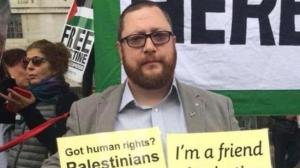 A pro-Palestinian Scottish lawmaker travelling to the occupied Palestinian territories on a parliamentary fact-finding mission has been strip-searched by Israeli forces upon arrival and refused entry.
Andrew Murray, the head of the Friends of Palestine group in the Scottish National Party (SNP), was detained at Tel Aviv’s Ben Gurion airport on Monday and held in custody for over 24 hours, he told AFP on Friday.
“They strip-searched me, scanned me, swabbed me everywhere,” Murray said, adding, “Twice I asked for representation from the British embassy, twice I was told no.”
He was later deported and banned from entering the occupied territories for 10 years, apparently over his campaign for Palestinian rights.
Carol Monaghan, a member of the SNP, said that she “absolutely condemned” the Israelis’ behavior, adding, “Andy was there on a peaceful, fact-finding trip.”
Sabine Haddad, a spokesperson for Israel’s interior ministry, claimed that Murray lied about the reason of his trip by saying he was a tourist.
Murray, however, responded that he did not lie about any of the questions asked.
Egypt sentenced nearly 600 to death last year
Reprieve | November 14, 2015
The Egyptian government has sentenced nearly 600 people to death in the last year, with the vast majority of death sentences handed down in relation to political protest, human rights organization Reprieve has found.
Data collected by Reprieve has found that since January 2014, at least 588 people have been sentenced to death in Egypt. In the cases that Reprieve was able to identify, some 72% of sentences were handed down for attending pro-democracy protests.
Reprieve’s report, released today, also found that the Egyptian authorities are overseeing a marked rise in actual executions. Between 2011 and 2013, only one execution was carried out in Egypt; but since January 2014, some months after President Sisi seized power, at least 27 people have been executed. The report also finds that at least 15 mass trials have taken place since March 2014.
Since taking power, President Sisi has overseen a regime of mass trials and sweeping death sentences for protestors – sometimes involving hundreds of prisoners at a time. Among those on trial and facing a potential death sentence is Irish teenager Ibrahim Halawa, who is being assisted by Reprieve. Yesterday, it was revealed that Ibrahim has witnessed torture methods including ‘crucifixion’ and electrocution being carried out in Wadi Natrun prison, where he is being held.
Mr Halawa’s family were last week joined by several British MPs in asking the UK to intervene on the case, during President Sisi’s visit to London for talks with the Prime Minister. The Foreign Office has told Reprieve that the UK is ‘monitoring’ Ibrahim’s case, and has said that it has been raised with the Egyptian authorities.
However, there are concerns over the UK government’s apparent support for the Egyptian security forces. Reprieve has found that the British government invited security and policing firm G4S to be part of the UK delegation at a recent major Egyptian trade conference hosted by President Sisi.
Commenting, Maya Foa, director of the death penalty team at Reprieve, which is assisting Ibrahim Halawa, said: “President Sisi has overseen an unprecedented surge in death sentences as part of a wave of repression that should attract condemnation from Egypt’s allies. Since 2013, many thousands of people – including journalists, activists and juveniles like Ibrahim Halawa – have been locked up for attending protests. Police torture is reported all too often, and Kafkaesque ‘mass trials’ have seen hundreds of death sentences handed down at a time. More than ever, the UK must use its increasingly close relationship with Egypt to urge an end to these terrible abuses – including the release of juveniles like Ibrahim.”
Facebook announces surge in governments’ demands for personal user data
RT | November 12, 2015
Requests for user data from governmental organizations, as well as content restrictions increased “globally” in the first half of 2015, Facebook says in its report. Half the requests came from the US – only one was made by Russia.
Over 41,000 government requests for account data were received by Facebook during the six months, it revealed in its “Global Government Requests Report” covering January to June 2015, saying the number had increased by 18 percent compared to the second half of last year.
US law enforcement agencies have been the most demanding, with US agencies requesting data from 26,579 accounts. A significant amount of requests also came from the UK, Germany and France. User data requests from Russia totaled one, Facebook said.
“The amount of content restricted for violating local law increased by 112 percent over the second half of 2014,” Facebook said. More than 20,500 pieces of content were restricted by the social media giant following authorities’ demands.
Access to 28 content pieces in Russia have been restricted, following reports by The Federal Service for Supervision of Communications, Information Technology, and Mass Media “for violating the integrity of the Russian Federation and local law, which forbids activities such as mass public riots and the promotion and sale of drugs,” Facebook said.
At the same time, over 15,000 content pieces – the overwhelming majority – have been taken down following requests from India. Almost 4,500 pieces of content have been restricted following Turkey’s requests.
“Each and every request we receive is checked for legal sufficiency and we reject or require greater specificity on requests that are overly broad or vague,” Facebook said, adding they “respond to valid requests relating to criminal cases.”
The company with a user base of some 1.55 billion people worldwide started revealing such requests “as part of a broader effort to reform government surveillance in countries around the world.”
Government access to subscriber personal data, their account content and IP addresses have been a growing concern for many users since Edward Snowden’s revelations of surveillance programs using modern telecommunications technology.
Although Facebook reveals the general number of requests it gets as part of its “more transparency effort,” specific spy agencies’ and governmental services’ interests in certain user data are not allowed to be made public.
READ MORE:
Facebook snoops on people just like NSA – Belgian watchdog to court
UK Regime Boycotts Palestinian Academics and Mental Health Specialists

By Gilad Atzmon | November 10, 2015
The Independent reported today that “a decision by Britain to refuse a group of Palestinian medical experts from Gaza permission to participate in an international conference at Kingston University on trauma in war zones has been condemned by campaigners.”
I guess that someone in the British Government is convinced that the Palestinians know little about Trauma or living in a war zone.
Three doctors and a nurse who work for the Ministry of Health in Gaza, and were due to give presentations at the conference taking place this weekend, have had their visa requests refused by British authorities. Interestingly enough, some Israeli academics are invited to attend the conference. I guess that the British government is buying into the primacy of Jewish trauma.
In addition to the four mental health specialists refused entry, Dr Nahida Al-Arja, a psychologist from Bethlehem University, has had her visa application rejected.
A letter by the UK Palestine Mental Health Network, co-organisers of the conference, published in the Independent, says: “It is beyond our comprehension how such an interference with intellectual and clinical discussion on such an important topic could be justified. This is a measure that further isolates clinicians from Gaza, already struggling under the impact of military assaults and siege,”
It adds: “We urge the UK authorities to reverse this decision immediately, and to resolve to nurture, rather than undermine, urgently needed psycho-social support services for the people of Gaza.”
To read more on this story: http://www.independent.co.uk/news/uk/home-news/uk-decision-to-refuse-gaza-medical-experts-from-joining-kingston-university-conference-condemned-by-a6727576.html
Indians sue Britain for return of Queen’s ‘Koh-i-Noor’ crown jewel
RT | November 9, 2015
Britain’s most famous crown jewel, the Koh-i-Noor, could be returned to India if a group of Bollywood stars and businessmen succeed in their lawsuit against the UK.
David de Souza, co-founder of Indian leisure group Titos, is helping to fund the legal action that claims the diamond – once the world’s largest – was stolen by the British during India’s colonization.
The move coincides with Indian Prime Minister Narendra Modi’s visit to the UK this week, during which he will meet the Queen for lunch at Buckingham Palace.
The British government has so far rejected claims to the jewel.
The 105-carat diamond was acquired by the British when Punjab was annexed by the East India Company in 1849.
The last ruler of the Sikh Empire, then 13-year-old Dulip Singh, was brought to England to present it to Queen Victoria in 1850.
It was worn by the Queen Mother, Elizabeth Bowes-Lyons, at the coronation of her husband, King George VI, in 1937 and again by Queen Elizabeth II at her coronation in 1953.
“The Koh-i-Noor is one of the many artifacts taken from India under dubious circumstances,” De Souza told the Sunday Telegraph.
“Colonization did not only rob our people of wealth, it destroyed the country’s psyche itself. It brutalized society, traces of which linger on today in the form of mass poverty, lack of education and a host of other factors.”
A group which calls itself the ‘Mountain of Light’ – a direct translation of the Koh-i-Noor – is launching the lawsuit through Birmingham-based law firm Rubric Lois King.
Bollywood star Bhumicka Singh is adding her support to the claim.
“The Koh-i-Noor is not just a 105-carat stone, but part of our history and culture and should undoubtedly be returned,” she said.
Lawyer Satish Jakhu said the litigants are basing their case on the Holocaust (Return of Cultural Objects) Act, which gives national institutions in the UK the power to return stolen art.
He added they would argue that the British government had stolen the diamond under the common law doctrine of “trespass to goods.”
News of the lawsuit has irked some apologists for British imperialism, with historian Andrew Roberts describing it as “ludicrous.”
“Those involved in this ludicrous case should recognize that the British Crown Jewels is precisely the right place for the Koh-i-Noor diamond to reside, in grateful recognition for over three centuries of British involvement in India, which led to the modernization, development, protection, agrarian advance, linguistic unification and ultimately the democratization of the sub-continent,” he told the Mail on Sunday.
Featured Video

Dan Dicks with James Corbett on Solutions Watch
or go to
Aletho News Archives – Video-Images
From the Archives
Secret document reveals plans for civil war in Lebanon, Israeli false flags, and invasion
By Randi Nord | Geopolitics Alert | April 5, 2019
Beirut – During his visit with US Secretary of State, Mike Pompeo, Lebanese President Michael Aoun reportedly received a US-Israeli document detailing plans for creating a civil war in Lebanon with covert false flag operations and possible Israeli invasion.
Although the source of the document is Israeli and created in partnership with Washington, no one knows who presented it to Aoun. The Lebanese TV station, Al-Jadeed, initially reported the document on Lebanese TV and a video on its website. Geopolitics Alert translated the report for this article. … continue
Blog Roll
 Aletho News
- Sheikh al-Asadi warns of Iraqi government compliance with US demands
- How to MAKE THE CONSPIRATORS PAY for their crimes! Dan Dicks with James Corbett on Solutions Watch
- There’s a drought in academia: A drought in honest research on the subject of drought and other weather extremes
- Department of War Awards $20.7 Billion Contract to Raytheon for Air-to-Air Missiles
- ‘Distance yourselves from Israel’: IRGC urges US population to question govt policies
- America’s Greenland deal has a radioactive backstory
- The RAF Fairford ‘terror plot’: Unpacking escalation in the UK echo-chamber
- EU Council Advances Chat Control 2.0 Scanning Proposal
- Ex-Greek MEP files complaint against Israeli spyware firm over alleged Pegasus surveillance
- Troubling ideas throughout the Torah, Talmud, Mishneh Torah and Tanya
- If Americans Knew
- New Report: “Scholasticide and Genocide in Gaza: Assessment, Testimonies and Legal Analysis”
- Ex-Biden officials are desperate for a Gaza scapegoat
- Israeli “settlers” Invade Al-Aqsa; Pour Boiling Water on 75-Year-Old
- Israel Has Kidnapped Another American Teenager
- US arms sales to Israel worth $21.6 billion in 20 months
- Three Palestinians Killed in Israeli Attacks on Gaza
- Revealed: German “Anti-Semitism Expert” Driving Crackdown on Palestine Solidarity is Former Israeli Spy
- Egypt’s Warning to Israel Before Oct 7
- Israel’s siege signals another cruel winter for 1.8 million Gazans – Daily Update
- Netanyahu Asked UAE Leader to Deny Report on Oct. 7 Warning in Secret Visit, Sources Say
- No Tricks Zone
- New Study: Earth And Venus Surface Warmth Largely Explained By Convection And Lapse Rate, Not CO2 Or Radiation
- 2025 Nature Paper Claiming Worsening Global Drought Gets RETRACTED …Heavily Flawed
- New Study: ‘Global Drought Shows No Detectable Recent Acceleration Under Climate Warming’
- Economic Masterminds: German Socialists Suggest Taxing Productivity Gains Stemming From Using AI
- The South China Sea Has Not Been Cooperating With The Climate Change Narrative
- Energy Crisis: Germany Enters Heating Season With Historically Low Gas Reserve Fill Levels
- New Study: The Antarctic Ice Sheet Gained Mass From 2020-2024 Due To Staggering Snow And Ice Accumulation
- Study: Ocean Heating Rates From Thousands Of Years Ago ‘Dwarf’ Modern Ocean Heating Rates
- Climate Extremists Target, Attack Large-Scale Power Grid Infrastructure In Germany!
- New Study: Antarctic Ice Melt Has Contributed Less Than 1 Centimeter To Sea Level Rise In The Last 30 Years


