UK Prime Minister David Cameron is facing a political crisis after calling for support for airstrikes against ISIL in Syria, but failing to gain the support of Labour leader Jeremy Corbyn who has now caused a major rift in the opposition.
Cameron told lawmakers in London Thursday that Britain should join a coalition of forces in airstrikes against ISIL in Syria. The country is already bombing ISIL in neighboring Iraq, but Cameron needs a mandate from parliament to extend the operations into Syria.
The issue is politically sensitive as Cameron lost a vote to launch airstrikes against Syrian President Bashar al-Assad in 2013, with cost him political value. This time around — in a vote on bombing Assad’s enemies — he cannot afford to lose political face again.
However, the Scottish National Party (SNP) has indicated that it will vote against action in Syria and Cameron needs the support of the Labour opposition to confirm his policy. Labour leader Jeremy Corbyn — who has long been an anti-war campaigner — has written to his party lawmakers telling them he cannot support airstrikes in Syria.
The move has caused chaos within his party, with many members supporting airstrikes against ISIL. If Corbyn exercises his leadership right to demand all his lawmakers follow his lead — in what is known as a three-line whip — he stands to face a mass revolt in his party, which could force a leadership challenge, which would throw the party into chaos.
If — on the other hand — he allows his lawmakers a free vote, then he would remain leader of his party, and lawmakers would be allowed to vote whichever way they wish. Either way, Corbyn’s leadership will have been damaged.
Lesson Not Learned From Iraq
Cameron has other headaches too. Public opinion was strongly against the invasion of Iraq in 2003 and there are many who believe the decision to go to war against Saddam Hussein was based on flawed intelligence, with some — including Corbyn — believing the invasion was illegal.
The Chilcot Inquiry into the reasons for going to war, and its aftermath, has yet to be published and there are many lawmakers who believe its findings will be critical of the invasion because it lacked any exit strategy for Iraq, which has been plunged into civil war ever since. Few want to repeat the mistakes in Syria and are calling for an exit strategy and a strong commitment to support a rebuilding of the country following any invasion to erase ISIL.
If Cameron fails to gain a parliamentary majority on a vote — due next week — over bombing in Syria, he will be politically damaged among his NATO allies, leaving him out in the cold on the global stage. He is also facing calls for the UK not to put itself further at risk than it already is from reprisal terrorist attacks.
Others believe bombing in Syria will play into the hands of ISIL. Jürgen Todenhöfer, the German politician and journalist who, in 2014, spent time with ISIL in both Iraq and Syria, wrote in the Guardian :
“A bombing strategy will above all hit Syria’s population. This will fill ISIL fighters with joy.”
With Corbyn’s party in disarray, the SNP set to vote against bombing and his political worth on the line, Cameron is facing a difficult time in the week ahead and can only hope public opinion in the wake of the Paris attacks on November 13 can save him.
Turkey’s shooting down of a Russian jet today shows the utter desperation currently sweeping through the regime change camp as Russia closes in on the death squads in Syria – and does so with massive international support.
At 9.30am on Tuesday morning, a Russian SU-24 jet was shot down by Turkish fighter planes. Its pilots were then allegedly killed by Syrian Turkmen anti-government militias, with the body of one paraded on camera in a video that was immediately posted on youtube. Turkey claimed the jet had encroached on Turkish airspace, but Russia maintains the plane was shot down well inside Syrian territory, 4km from the Turkish border. Rather than calling Russia to defuse any tension arising from the attack, Turkey then immediately called an emergency NATO meeting to ramp it up – “as if we shot down their plane”, Putin commented, “and not they ours”.
To make sense of this apparently senseless provocation, it is necessary to cut through the multiple layers of obfuscation which surround Western narratives around Syria and ISIS. The reality is that the forces essentially line up today just as they did at the outbreak of this crisis in 2011: with the West, Turkey and the gulf monarchies sponsoring an array of death squads bent on bringing down the Syrian government; and Russia, Iran, Iraq, Syria (obviously) and Hezbollah resisting this project; the rise of ISIS has not fundamentally changed this underlying dynamic. Indeed, the next-to-useless impact of the West’s year-long phony war against ISIS – alongside its relentless funneling of weaponry to militias with an, at best, ambiguous relationship with Al Qaeda and ISIS – has demonstrated that the Syrian state (or “Assad” to use the West’s puerile personalization) remains the ultimate target of the West’s Syria policy. As Obama himself put it, the goal is not to eliminate ISIS, but rather to “contain” them – that is, keep them focused on weakening Syria and Iraq, and not US allies like Jordan, Turkey or the US’s favoured Kurdish factions. In civil wars, there are only ever really two sides: those who want the insurgency to overthrow the government, and those who want the government to defeat the insurgency. In the Syrian civil war, NATO remains on the same side as ISIS. In this sense, Putin is entirely correct when he commented on the Turkish attack it was a “stab in the back, carried out by the accomplices of terrorists” and asked: “do they want to make NATO serve ISIS?”
Russia’s direct entry into the Syrian conflict two months ago, however, has caused utter panic in the ‘regime change’ camp. Belying all their ‘anti-ISIS’ rhetoric, the US and Britain were openly horrified that Russia might actually be putting up an effective fight against the group and restoring governmental authority to the ungoverned spaces in which it thrives. Immediately, the West began warning of ‘blowback’ to Russia, and ramping up advanced arms shipments to the insurgency. Within a month, a Russian passenger plane was blown up, with ISIS claiming responsibility and British Foreign Minister Philip Hammond calling the attack a “warning shot”. It was a “shot” alright, aimed not only at Russia, but also at her allies; the downing of the plane on Egyptian soil was a deliberate act of economic war against the Egyptian tourist industry, a punishment for Egypt’s support for Russia and Syria and its choking off of fighters to Syria since Sisi came to power. Then, two weeks later, came the attack on Paris. White supremacist niceties prevented Hammond calling that a “warning shot”, but that is precisely what it was, this time at those within the regime change/ anti-Russia camp who were showing signs of ‘wobbling’. Hollande had suggested back in January that sanctions on Russia should be lifted asap, and more recently had showed a willingness to cooperate with Russia militarily over Syria: a ‘red line’ for France’s ‘Atlantic partners’. This is what France was being punished for.
Nevertheless, the net continues to close on the West’s death squad project in Syria. From the start the key to ISIS success has been, firstly, the porous Syria-Turkey border, through which Turkey has allowed a free flow of fighters and weapons back and forth for the past four years, and secondly, the massive amounts of finance ISIS receives both from oil sales and from donors in countries prepared to turn a blind eye to terror financing. In recent weeks, all of this has been threatened by the Russian-led alliance (of which France is increasingly willing to be a part).
The past week has seen a large scale Syrian ground offensive, supported with Russian air cover, in precisely the Syrian-Turkish border region which is the death squads’ lifeline: a move which prompted the Turkish foreign ministry to warn of “serious consequences” if the Russian airstrikes continued. Simultaneously, Russia has embarked on a major campaign against ISIS’ reportedly 1,000-strong oil tanker fleet which is so crucial to the group’s financial success. As the Institute for the Study of War reported, “Russian military chief of staff Col. Gen. Andrey Kartapolov announced on November 18 “Russian warplanes are now flying on a free hunt” against ISIS-operated oil tanker trucks traveling back and forth from Syria and Iraq, claiming that Russian strikes had destroyed over 500 ISIS-operated oil trucks in the past “several days.”” This massive dent in the group’s oil transporting capacity even shamed the US into belatedly and somewhat half-heartedly launching similar attacks of their own. The smashing of ISIS’ oil industry will not only be a blow to the entire death squad project, but will directly affect Turkey, widely thought to be involved in the transportation of ISIS-produced oil, and even Erdogan’s family itself, as it is the company run by his son Bilal that is believed to be running the illicit trade.
Finally, France yesterday announced a crackdown on ISIS’ financiers, and demanded other countries do the same. French Finance Minister Michel Sapin implied that the report to the G20 on the issue last month was a whitewash, and demanded that the international Financial Action Task Force be much more explicit in its report to the next G20 finance meeting in February about which countries are lax in terms of terror financing. The move is very likely to expose not only Turkey and Saudi Arabia but also, given HSBC’s links to Al Qaeda, the City of London. Indeed, as the Politico website noted, Sapin specifically “said that considering the reputation of the City of London, he would be “vigilant” on the U.K.’s implementation of EU-agreed measures to clamp down on money laundering and exchange financial information on shady transactions or individuals”.The reactions to his demands that implementation of tougher EU regulations be moved forward will also be instructive (in another move exposing the total lack of urgency in the West’s supposed ‘war on ISIS’, they are currently not due to be implemented for another two years).
And on top of all this, the UN Security Council finally passed a resolution authorizing ‘all necessary measures’ to be used against ISIS, Al Qaeda and other terrorist groups in Syria, effectively granting UN approval to Russia’s intervention. As Pepe Escobar has pointed out, French support for the resolution rendered it politically impossible for the US or UK to use their veto – although US ambassador Samantha Power, an extreme Russophobe and ‘regime changer’, registered her disapproval by failing to turn up for the vote and sending a junior official along instead.
In other words, on all sides the net is closing in on the West’s death squad project in Syria. Turkey’s actions today have merely demonstrated, again, the impotent rage of those who have thrown in their chips with a disastrous and bloody attempt to remake the Middle East. Syria is indeed becoming the Stalingrad of the regime changers – the rock on which the imperial folly of the West and it’s regional imitators may finally be broken.
The war drums are getting louder in the aftermath of ISIS attacks in Paris, as Western countries gear up to launch further airstrikes in Syria. But obscured in the fine print of countless resolutions and media headlines is this: the West has no legal basis for military intervention. Their strikes are illegal.
“It is always preferable in these circumstances to have the full backing of the United Nations Security Council (UNSC) but I have to say what matters most of all is that any actions we would take would… be legal,” explained UK Prime Minister David Cameron to the House of Commons last Wednesday.
Legal? No, there’s not a scrap of evidence that UK airstrikes would be lawful in their current incarnation.
Then just two days later, on Friday, the UN Security Council unanimously adopted Resolution 2249, aimed at rallying the world behind the fairly obvious notion that ISIS is an “unprecedented threat to international peace and security.”
“It’s a call to action to member states that have the capacity to do so to take all necessary measures against (ISIS) and other terrorist groups,” British UN Ambassador Matthew Rycroft told reporters.
The phrase “all necessary measures” was broadly interpreted – if not explicitly sanctioning the “use of force” in Syria, then as a wink to it.
Let’s examine the pertinent language of UNSCR 2249:
The resolution “calls upon Member States that have the capacity to do so to take all necessary measures, in compliance with international law, in particular with the United Nations Charter…on the territory under the control of ISIL also known as Da’esh, in Syria and Iraq.”
Note that the resolution demands “compliance with international law, in particular with the UN Charter.” This is probably the most significant explainer to the “all necessary measures” phrase. Use of force is one of the most difficult things for the UNSC to sanction – it is a last resort measure, and a rare one. The lack of Chapter 7 language in the resolution pretty much means that ‘use of force’ is not on the menu unless states have other means to wrangle “compliance with international law.”
What you need to know about international law
It is important to understand that the United Nations was set up in the aftermath of World War 2 expressly to prevent war and to regulate and inhibit the use of force in settling disputes among its member states. This is the UN’s big function – to “maintain international peace and security,” as enshrined in the UN Charter’s very first article.
There are a lot of laws that seek to govern and prevent wars, but the Western nations looking to launch airstrikes in Syria have made things easy for us – they have cited the law that they believe justifies their military intervention: specifically, Article 51 of the UN Charter. It reads, in part:
“Nothing in the present Charter shall impair the inherent right of individual or collective self-defense if an armed attack occurs against a Member of the United Nations, until the Security Council has taken measures necessary to maintain international peace and security.”
So doesn’t France, for instance, enjoy the inherent right to bomb ISIS targets in Syria as an act of self-defense – in order to prevent further attacks?
And don’t members of the US-led coalition, who cite the “collective self-defense” of Iraq (the Iraqi government has formally made this request), have the right to prevent further ISIS attacks from Syrian territory into Iraqi areas?
Well, no. Article 51, as conceived in the UN Charter, refers to attacks between territorial states, not with non-state actors like ISIS or Al-Qaeda. Syria, after all, did not attack France or Iraq – or Turkey, Australia, Jordan or Saudi Arabia.
And here’s where it gets interesting.
Western leaders are employing two distinct strategies to obfuscate the lack of legal justification for intervention in Syria. The first is the use of propaganda to build narratives about Syria that support their legal argumentation. The second is a shrewd effort to cite legal “theory” as a means to ‘stretch’ existing law into a shape that supports their objectives.
The “Unwilling and Unable” Theory – the “Unable” argument
The unwilling and unable theory – as related to the Syria/ISIS situation – essentially argues that the Syrian state is both unwilling and unable to target the non-state actor based within its territory (ISIS, in this case) that poses a threat to another state.
Let’s break this down further.
Ostensibly, Syria is ‘unable’ to sufficiently degrade or destroy ISIS because, as we can clearly see, ISIS controls a significant amount of territory within Syria’s borders that its national army has not been able to reclaim.
This made some sense – until September 30 when Russia entered the Syrian military theater and began to launch widespread airstrikes against terrorist targets inside Syria.
As a major global military power, Russia is clearly ‘able’ to thwart ISIS –certainly just as well as most of the Western NATO states participating in airstrikes already. Moreover, as Russia is operating there due to a direct Syrian government appeal for assistance, the Russian military role in Syria is perfectly legal.
This development struck a blow at the US-led coalition’s legal justification for strikes in Syria. Not that the coalition’s actions were ever legal – “unwilling and unable” is merely a theory and has no basis in customary international law.
About this new Russian role, Major Patrick Walsh, associate professor in the International and Operational Law Department at the US Army’s Judge Advocate General’s Legal Center and School in Virginia, says:
“The United States and others who are acting in collective defense of Iraq and Turkey are in a precarious position. The international community is calling on Russia to stop attacking rebel groups and start attacking ISIS. But if Russia does, and if the Assad government commits to preventing ISIS from attacking Syria’s neighbors and delivers on that commitment, then the unwilling or unable theory for intervention in Syria would no longer apply. Nations would be unable to legally intervene inside Syria against ISIS without the Assad government’s consent.”
In recent weeks, the Russians have made ISIS the target of many of its airstrikes, and are day by day improving coordination efficiency with the ground troops and air force of the Syrian Arab Army (SAA) and its allies -Iran, Hezbollah and other foreign groups who are also in Syria legally, at the invitation of the Syrian state.
Certainly, the balance of power on the ground in Syria has started to shift away from militants and terrorist groups since Russia launched its campaign seven weeks ago – much more than we have seen in a year of coalition strikes.
The “Unwilling and Unable” Theory – the “Unwilling” argument
Now for the ‘unwilling’ part of the theory. And this is where the role of Western governments in seeding ‘propaganda’ comes into play.
The US and its allies have been arguing for the past few years that the Syrian government is either in cahoots with ISIS, benefits from ISIS’ existence, or is a major recruiting magnet for the terror group.
Western media, in particular, has made a point of underplaying the SAA’s military confrontations with ISIS, often suggesting that the government actively avoids ISIS-controlled areas.
The net result of this narrative has been to convey the message that the Syrian government has been ‘unwilling’ to diminish the terror group’s base within the country.
But is this true?
ISIS was born from the Islamic State of Iraq (ISI) in April, 2013 when the group’s leader Abu Bakr al-Baghdadi declared a short-lived union of ISI and Syria’s Al-Qaeda branch, Jabhat al-Nusra. Armed militants in Syria have switched around their militia allegiances many times throughout this conflict, so it would be disingenuous to suggest the Syrian army has not fought each and every one of these groups at some point since early 2011.
If ISIS was viewed as a ‘neglected’ target at any juncture, it has been mainly because the terror group was focused on land grabs for its “Caliphate” in the largely barren north-east areas of the country – away from the congested urban centers and infrastructure hubs that have defined the SAA’s military priorities.
But ISIS has always remained a fixture in the SAA’s sights. The Syrian army has fought or targeted ISIS, specifically, in dozens of battlefields since the organization’s inception, and continues to do so. In Deir Hafer Plains, Mennagh, Kuweires, Tal Arn, al-Safira, Tal Hasel and the Aleppo Industrial District. In the suburbs and countryside of Damascus – most famously in Yarmouk this year – where the SAA and its allies thwarted ISIS’ advance into the capital city. In the Qalamun mountains, in Christian Qara and Faleeta. In Deir Ezzor, where ISIS would join forces with the US-backed Free Syrian Army (FSA): al-Husseiniyeh, Hatla, Sakr Island, al-Hamadiyah, al-Rashidiyah, al-Jubeileh, Sheikh Yasseen, Mohassan, al-Kanamat, al-Sina’a, al-Amal, al-Haweeqa, al-Ayyash, the Ghassan Aboud neighborhood, al-Tayyim Oil Fields and the Deir ez-Zor military airport. In Hasakah Province – Hasakah city itself, al-Qamishli, Regiment 121 and its environs, the Kawkab and Abdel-Aziz Mountains. In Raqqa, the Islamic State’s capital in Syria, the SAA combatted ISIS in Division 17, Brigade 93 and Tabaqa Airbase. In Hama Province, the entire al-Salamiyah District – Ithriyah, Sheikh Hajar, Khanasser. In the province of Homs, the eastern countryside: Palmyra, Sukaneh, Quraytayn, Mahin, Sadad, Jubb al-Ahmar, the T-4 Airbase and the Iraqi border crossing. In Suweida, the northern countryside.
If anything, the Russian intervention has assisted the Syrian state in going on the offensive against ISIS and other like-minded terror groups. Before Russia moved in, the SAA was hunkering down in and around key strategic areas to protect these hubs. Today, Syria and its allies are hitting targets by land and air in the kinds of coordinated offensives we have not seen before.
Seeding ‘propaganda’
The role of propaganda and carefully manipulated narratives should not be underestimated in laying the groundwork for foreign military intervention in Syria.
From “the dictator is killing his own people” to the “regime is using chemical weapons” to the need to establish “No Fly Zones” to safeguard “refugees fleeing Assad”… propaganda has been liberally used to build the justification for foreign military intervention.
Article 2 of the UN Charter states, in part:
“All Members shall refrain in their international relations from the threat or use of force against the territorial integrity or political independence of any state, or in any other manner inconsistent with the purposes of the United Nations.”
It’s hard to see how Syria’s sovereignty and territorial integrity has not been systematically violated throughout the nearly five years of this conflict, by the very states that make up the US-led coalition. The US, UK, France, Saudi Arabia, Turkey, Qatar, the UAE and other nations have poured weapons, funds, troops and assistance into undermining a UN member state at every turn.
“Legitimacy” is the essential foundation upon which governance rests. Vilify a sitting government, shut down multiple embassies, isolate a regime in international forums, and you can destroy the fragile veneer of legitimacy of a king, president or prime minister.
But efforts to delegitimize the government of Syrian President Bashar al-Assad have also served to lay the groundwork for coalition airstrikes in Syria.
If Assad is viewed to lack “legitimacy,” the coalition creates the impression that there is no real government from which it can gain the necessary authority to launch its airstrikes.
This mere ‘impression’ provided the pretext for Washington to announce it was sending 50 Special Forces troops into Syria, as though the US wasn’t violating every tenet of international law in doing so. “It’s okay – there’s no real government there,” we are convinced.
Media reports repeatedly highlight the ‘percentages’ of territory outside the grasp of Syrian government forces – this too serves a purpose. One of the essentials of a state is that it consists of territory over which it governs.
If only 50 percent of Syria is under government control, the argument goes, “then surely we can just walk into the other ‘ungoverned’ parts” – as when US Ambassador to Syria Robert Ford and US Senator John McCain just strolled illegally across the border of the sovereign Syrian state.
Sweep aside these ‘impressions’ and bury them well. The Syrian government of Bashar al-Assad is viewed by the United Nations as the only legitimate government in Syria. Every official UN interaction with the state is directed at this government. The Syrian seat at the UN is occupied by Ambassador Bashar al-Jaafari, a representative of Assad’s government. It doesn’t matter how many Syrian embassies in how many capitals are shut down – or how many governments-in-exile are established. The UN only recognizes one.
As one UN official told me in private: “Control of surface territory doesn’t count. The government of Kuwait when its entire territory was occupied by Iraq – and it was in exile – was still the legitimate government of Kuwait. The Syrian government could have 10 percent of its surface left – the decision of the UN Security Council is all that matters from the perspective of international law, even if other governments recognize a new Syrian government.”
Countdown to more illegal airstrikes?
If there was any lingering doubt about the illegality of coalition activities in Syria, the Syrian government put these to rest in September, in two letters to the UNSC that denounced foreign airstrikes as unlawful:
“If any State invokes the excuse of counter-terrorism in order to be present on Syrian territory without the consent of the Syrian Government whether on the country’s land or in its airspace or territorial waters, its action shall be considered a violation of Syrian sovereignty.”
Yet still, upon the adoption of UNSC Resolution 2249 last Friday, US Deputy Representative to the United Nations Michele Sison insisted that “in accordance with the UN Charter and its recognition of the inherent right of individual and collective self-defense,” the US would use “necessary and proportionate military action” in Syria.
The website for the European Journal of International Law (EJIL) promptly pointed out the obvious:
“The resolution is worded so as to suggest there is Security Council support for the use of force against IS. However, though the resolution, and the unanimity with which it was adopted, might confer a degree of legitimacy on actions against IS, the resolution does not actually authorize any actions against IS, nor does it provide a legal basis for the use of force against IS either in Syria or in Iraq.”
On Thursday, UK Prime Minister David Cameron plans to unveil his new “comprehensive strategy” to tackle ISIS, which we are told will include launching airstrikes in Syria.
We already know the legal pretext he will spin – “unwilling and unable,” Article 51, UN Charter, individual and collective self-defense, and so forth.
But if Cameron’s September 7 comments at the House of Commons are any indication, he will use the following logic to argue that the UK has no other choice than to resort to ‘use of force’ in Syria. In response to questions about two illegal drone attacks targeting British nationals in Syria, the prime minister emphasized:
“These people were in a part of Syria where there was no government, no one to work with, and no other way of addressing this threat… When we are dealing with people in ISIL-dominated Syria—there is no government, there are no troops on the ground—there is no other way of dealing with them than the route that we took.”
But Cameron does have another route available to him – and it is the only ‘legal’ option for military involvement in Syria.
If the UK’s intention is solely to degrade and destroy ISIS, then it must request authorization from the Syrian government to participate in a coordinated military campaign that could help speed up the task.
If Western (and allied Arab) leaders can’t stomach dealing with the Assad government on this issue, then by all means work through an intermediary – like the Russians – who can coordinate and authorize military operations on behalf of their Syrian ally.
The Syrian government has said on multiple occasions that it welcomes sincere international efforts to fight terrorism inside its territory. But these efforts must come under the direction of a central legal authority that can lead a broad campaign on the ground and in the air.
The West argues that, unlike in Iraq, it seeks to maintain the institutions of the Syrian state if Assad were to step down. The SAA is one of these ‘institutions’ – why not coordinate with it now?
But after seven weeks of Russian airstrikes coordinated with extensive ground troops (which the coalition lacks), none of these scenarios may even be warranted. ISIS and other extremist groups have lost ground in recent weeks, and if this trend continues, coalition states should fall back and focus on other key ISIS-busting activities referenced in UNSCR 2249 – squeezing terror financing, locking down key borders, sharing intelligence…”all necessary measures” to destroy this group.
If the ‘international community’ wants to return ‘peace and stability’ to the Syrian state, it seems prudent to point out that its very first course of action should be to stop breaking international law in Syria.
Sharmine Narwani is a commentator and analyst of Middle East geopolitics. She is a former senior associate at St. Antony’s College, Oxford University and has a master’s degree in International Relations from Columbia University. Sharmine has written commentary for a wide array of publications, including Al Akhbar English, the New York Times, the Guardian, Asia Times Online, Salon.com, USA Today, the Huffington Post, Al Jazeera English, BRICS Post and others. You can follow her on Twitter at @snarwani
Prime Minister David Cameron must examine financial links between UK-allied Gulf regimes and terror groups, or risk facing awkward questions about Conservative Party links to “rich Arab Gulf individuals,” says former Liberal Democrat leader Paddy Ashdown.
Speaking on ITV’s Lorraine program on Tuesday, Ashdown – who is also a former soldier and has served as an ambassador to Afghanistan and Bosnia – said he is deeply concerned about how terrorism and Islamic State (IS, formerly ISIS/ISIL) are being funded, and the UK government’s response to this.
“Who is arming ISIS, who is providing safe havens for ISIS? To get there you have to ask questions about the arms everyone’s sold in the region, the role of Saudi Arabia in this. I think there are some very big questions and we have to be careful,” Ashdown said.
He said there had been a “failure to put pressure on the Gulf states, especially Saudi Arabia and Qatar, to stop funding the Salafists and Wahhabists,” and said he is worried “about the closeness of the Conservative Party and rich Arab Gulf individuals.”
He hinted the strategic priorities of the UK in Syria are the wrong way around. “I think we should be impatient about the removal of ISIL and I think we should be more patient about the removal of Assad.”
Ashdown’s calls for a proper investigation into terror funding by the West’s Arab allies echo, to some extent, those of Labour Party leader Jeremy Corbyn.
Speaking to the House of Commons last Wednesday, the Labour leader urged Parliament to take more action to clamp down on institutions which provide “vital infrastructure” to the terror group in Syria and Iraq.
Corbyn said one of the main ways to stop IS from functioning is to cut off its resources, suggesting the EU would also need to play a part in suffocating the organization.
“Surely a crucial way to help defeat ISIL is to cut off its funding, its supply of arms, and its trade,” Corbyn said during prime minister’s questions (PMQs).
“Can I press the prime minister to ensure that our allies in the region, indeed all countries in the region, are doing all they can to clamp down on individuals and institutions in their countries who are providing ISIL with vital infrastructure?”
From the horse’s mouth: For fear of upsetting readers, the paper silenced any commentary in the first days after the Paris attacks that might have suggested there was a causal relationship between western foreign policy in the Middle East and those events.
Instead, writes the Guardian reader’s editor Chris Elliott, the paper waited several days before giving some limited space to that viewpoint:
On the Opinion pages, one factor taken into consideration was timing – judging when readers would be willing to engage with an idea that in the first 24 hours after the attacks may have jarred. The idea that these horrific attacks have causes and that one of those causes may be the west’s policies is something that in the immediate aftermath might inspire anger. Three days later, it’s a point of view that should be heard.
In other words, the liberal Guardian held off offering a counter-narrative about the attacks, and a deeply plausible one at that, until popular opinion had hardened into a consensus manipulated by the rightwing media: “the terrorists hate us for our freedoms”, “we need to bomb them even harder”, “Islam is a religion of hatred” etc.
Excluding legitimate analyses of profoundly important events like those in Paris when they are most needed is not responsible, careful journalism. It is dangerous cowardice. It is most definitely not a politically neutral position. It provides room for hatred and bigotry to take root, and allows political elites to exploit those debased emotions to justify and advance their own, invariably destructive foreign policy agendas.
In the paragraph above, Elliott happily concedes that this is the default position of mainstream liberal media like the Guardian.
It was with a sense of optimism tinged with experience that I sat down to listen to BBC Environment Analyst Roger Harrabin’s first of his three part series on the climate timed to coincide with forthcoming Paris talks. I know how such programmes are put together, how interviews are solicited, conducted, edited and juxtaposed to form a narrative. I also know the subjectivity involved.
At the start we get an American politician who doesn’t believe that mankind has any influence on the climate and who is also a creationist. Her inclusion concatenated climate change “sceptism” with a denial of evolution. There was no need to have her in the programme at its start except to place in the listener’s minds such an association, which was not shared by anyone else in the programme.
Near the beginning of the programme Roger Harrabin said; “Out and out rejection of climate science has mostly passed.” This is a straw man. In reality, only a very few rejected climate science, and they were regarded by most who took an interest in climate science as being eccentric, irrelevant and wrong. Their importance was often exaggerated as many in the media paraded them as being representative of the “sceptic” movement. For many years anyone who was regarded as having non-mainstream views (often arbitrarily judged) was obliged to go through the ritual of admitting that the world has warmed, that carbon dioxide was a greenhouse gas and that mankind was responsible for the carbon dioxide increase, despite these being commonly accepted and not part of the real debate. A few years ago the presenter on a BBC TV programme introduced Lord Lawson and added that for the purposes of the discussion they are all assuming that carbon dioxide is a greenhouse gas! Thankfully that loaded question had been assigned to the past until Roger Harrabin’s programme that is when Matt Ridley went through this credo.
Matt Ridley is described as a lukewarmer in that he favours the lower end of estimate of transient climate response, TCR (1.5°C – 4.0°C). There is nothing unusual in holding that view as it is held by many “mainstream” climate scientists. So much so that the IPCC reduced the lower bound of TCR from 2.0°C to 1.5°C in response to debates about TCR in the scientific and “sceptic” community.
Later in the programme another contributor introduced another illogical twist. She said she prefers “lukewarmist to climate denial,” as if there was a choice between the two. The implication is that deniers have become lukewarmists which is absurd. Roger Harrabin says Ridley now finds himself inside the IPCC’s big tent but misses the point that it was the IPCC that changed. Interesting isn’t it, Matt Ridley is still a lukewarmer, and not acknowledged as being within the mainstream even when Ridley’s views agree with the IPCC (the epitome of “mainstream” science opinion and “consensus”). Being a “sceptic” or a “lukewarmer” seems to be more about where you come from than the scientific views you hold.
Stubborn, Simplistic
It was also said that the debate about climate science has moved on from the stubborn and simplistic and onto what to do about it. Again, this is incorrect. The main motivation for scientists and “sceptics” is to find out what is exactly going on, and as we find out more we realise that some of we thought was wrong and that there is so much more we don’t know. For example, today we have a different view of decadal climatic variations compared to forced variations than we did a decade ago, and improving our understanding of such variations is essential to contemplating what to do. If anyone thinks the debate has been “stubborn and simplistic” they are mistaken.
Then we have a nice example of doublespeak. A professor states an opinion about climate science and then says there is too much uncertainty to decide if his opinion is correct! Another point is that lukewarmers do not, as a whole, say that the “pause” in annual average surface temperature is because we exaggerated the heating effect of carbon dioxide in the atmosphere. Another contributor was irked by the “media focus” on the “pause.” Presumably she is also somewhat irritated by those scientists who are constantly coming up with explanations for it, more than 35 at my last count, most of which are unreported by the media. She adds that she always knew it would rise in fits and starts so perhaps the real problem was that there was not enough media focus on this in the 1990′s when the world warmed fairly rapidly!
Then we have reference to the loss of sea ice in the Arctic referring to the 2007 low. Perhaps the contributor and the programme’s editor is unaware with what has been happening to Arctic ice cover in the past few years?
Roger Harrabin then talks of those suffering from extreme weather events after the 1°C increase already experienced. This is a controversial area in the journals but is also a subject on which the IPCC has already proclaimed: There is no increase in extreme weather events as a result of climate change.
Roger Harrabin concluded the programme by saying that the world’s warming is largely driven by humans. Yet the IPCC AR5 says; “It is extremely likely that more than half of the observed increase in global average surface temperature from 1951 to 2010 was caused by the anthropogenic increase in greenhouse gas concentrations and other anthropogenic forcings together. The best estimate of the human induced contribution to warming is similar to the observed warming over this period.”
The observed warming since 1950 is about half of the warming observed since pre-industrial times so without mentioning timescales Roger Harrabin’s statement is misleading. It seems that one can refer to post-1950 or pre-industrial periods without qualification to get a good quote.
Thus at the end Roger Harrabin abandons mainstream science and consensus altogether in a programme supposed to be about the science of climate change. Overall the broadcast was an intellectual shambles. It is a rewriting of history worthy of the reporting of the war between Oceania and Eurasia.
Feedback: david.whitehouse@thegwpf.com
Leader of UK opposition Labour Party Jermey Corbyn has once against warned against British military action in Syria, saying that negotiated settlement is the best way to resolve the crisis in the Arab country.
“The experience of Afghanistan, Iraq and Libya has convinced many of our own people that the elite’s enthusiasm for endless military interventions has only multiplied the threats to us – while leaving death and destabilisation in their wake… It is the conflict in Syria and the consequences of the Iraq war which have created the conditions for Isis to thrive and spread its murderous rule,” Corbyn said in a speech to Labour activists in Bristol.
He also slammed Britain’s involvement in “a succession of disastrous wars that have brought devastation to large parts of the wider Middle East,” saying such intervention has made the UK less secure from attack.
Corbyn also pointed to the recent terror attacks in Paris and said there should be a “negotiated settlement” rather than military action to tackle the crisis in the country.
His comments have already sparked a backlash from Labour Party MPs.
Jeremy Corbyn is seen as a long-standing opponent to the Western wars in Iraq, Afghanistan and Libya.
Meanwhile, a London-based political commentator says any possible UK intervention in Syria will increase the number of refugees and deepen the crisis in the Arab country.
Chris Bambery says such an intervention will simply strengthen the ISIL.
“Any further Western intervention will only add to the chaos which Western intervention has [already] caused and the beneficiary of that chaos is ISIS. ISIS wants the Western intervention,” Chris Bambery told Press TV.
British Prime Minister David Cameron said earlier this week he would prefer to have UN backing for UK military operations in Syria, but added he feared Russia would use its veto power to block a UN resolution.
Britain should start a dialogue with the UN Security Council on its plan to extend UK airstrikes against ISIL in Iraq to Syria, the Russian Foreign Ministry said Saturday.
“If it [UK] wants to push its ideas through the Security Council it should… give an order to its ambassador at the United Nations to start consultations, including with Russia,” ministry spokeswoman Maria Zakharova said.
She stressed that Russia had never vetoed “sensible” initiatives as long as they conformed with international laws, but warned that the UK’s operation in Syria should not seek to “destroy Syria’s sovereignty.”
UK media cited Cameron as saying in the parliament on Wednesday that the UN Security Council’s endorsement was not vital for the UK’s operation that would still be legal and would help the government protect its citizens.
Students at the University of Liverpool have voted to support the Boycott, Divestment and Sanctions (BDS) campaign, in a significant victory for Palestinian solidarity campaigners.
The motion commits the Liverpool Guild of Students to, among other things, advocate divestment from companies complicit in the Israeli occupation, and to lobby the university to similarly divest. The motion also mandates the Guild to stop stocking Israeli products.
More than 1,000 students participated in the Liverpool Guild of Students preferendum, in which they were presented with three options: ‘Yes’, ‘No’, or an alternative solution that rejected BDS, but encouraged the union to “raise awareness of the issue.”
Under the preferendum system, students could choose their favourite option from the three choices, or “your top two or rank all three in order of preference.” Points were then assigned “to each option based on the order of preference.”
There were a total of 1,866 points in support of BDS, with 934 opposed to the motion and 1,479 points supporting the alternative solution.
In a press release responding to the victory, the University of Liverpool Friends of Palestine (ULFOP) hailed “a landslide victory” despite a voting system they claimed meant the odds were against them.
“The ballot had one option to pass the motion and two options not to pass the motion. If students didn’t rank all of these options, then their one chosen option was given less weight.”
Despite this and other challenges, ULFOP stated that “the scale of the victory for BDS clearly shows that a large majority of the student body is, or has been made, aware of Israel’s apartheid regime and oppression of the Palestinians, and is prepared to make a stand against it.”
Zohra, a ULFOP member quoted in the press release, described the result as “a genuine reflection of the mood on campus – where students from all faiths and backgrounds believe that the Israeli occupation of the Palestinian people and their territories is unjust, akin to an apartheid system and thus cannot be allowed to continue.”
In a reference to objections by Israel’s defenders, ULFOP said “they wholeheartedly reject any claims that BDS is divisive on campus, instead recognising that the BDS movement is a non-violent and effective means of applying pressure on the Israeli government and the companies benefitting from the occupation of Palestine.”
Meanwhile, the Union of Jewish Students, who sent an official to Liverpool to support the ‘No’ campaign, described the result as “disappointing”, vowing to work with the Liverpool Jewish Society to continue making “the case against BDS” on campus.
The CIA and government officials around the world are using the Paris attacks to push brand new surveillance laws. And it was all planned in advance.
While democratic systems usually take months (if not years) to pass new laws and legislation, it only took a few days after the Paris attacks to slap honest citizens with more surveillance laws. Several organizations are indeed capitalizing on the fear and panic caused by the attacks to bring forth a brand new agenda that takes a bold new step towards total government surveillance. What’s worse: Leaked information proves that authorities were waiting on a terror attack to go forward with their plan.
In a leaked e-mail written by Robert S. Litt, the intelligence community’s top lawyer during the month August, the plan is clearly outlined: There is a lack of support for the banning of encrypted communications but a terror attack could quickly turn the tide.
“Although the legislative environment is very hostile today, it could turn in the event of a terrorist attack or criminal event where strong encryption can be shown to have hindered law enforcement.
Only a few months after this e-mail, a terror attack occurs in Paris. Only a few hours after the attacks, news strangely blamed “encrypted communications.” Only days after the attacks, officials are calling for… the banning of encrypted communications.
The New York police commissioner, Bill Bratton, called it a “game changer” and, insinuated new legislation that would outlaw encryption was necessary by adding: “[Encryption] is something that is going to need to be debated very quickly because we cannot continue operating where we are blind. – The Guardian, Intelligence agencies pounce on Paris attacks to pursue spy agenda
CIA Director John Brennan is also using the terror attacks to plead for unrestricted government surveillance of all communications, blaming “privacy groups” for hindering their job.
Then on Monday, in an epic episode of blame shifting, the CIA director, John Brennan, reportedly said privacy advocates have undermined the ability of spies to monitor terrorists. He explained:
“Because of a number of unauthorized disclosures and a lot of hand-wringing over the government’s role in the effort to try to uncover these terrorists, there have been some policy and legal and other actions that are taken that make our ability collectively, internationally to find these terrorists much more challenging,” adding that there is a “misrepresentation of what the intelligence security services are doing.”
Read Brennan’s comments carefully because they are very revealing. When he says “legal actions,” he’s referring to the fact that multiple federal courts have ruled that the government’s secret mass surveillance on millions of Americans is illegal. So it sounds like the CIA director is saying it’s a shame that intelligence agencies can’t operate completely above the law any more, and is scapegoating any failings on his agency’s part on accountability that is the hallmark of any democracy. (Though he still can apparently operate above the law.)
More importantly, Brennan’s comments are incredibly dishonest. The post-Snowden USA Freedom Act passed by Congress reformed exactly one of the countless mass spying programs the US runs. It was the one that sucked up the phone calls of Americans only, and here’s the thing: it has been active this whole time and isn’t scheduled to shut down until the end of the month. – Ibid.
Government officials in the UK are also capitalizing on fear to rush sweeping new laws.
“On the other side of the Atlantic, politicians in the United Kingdom, which already has the most expansive surveillance laws in the western world, are using the tragedy to attempt to rush through their even more invasive, new mass-spying bill that aims at allowing police to see the websites every citizen visits and to force companies like Apple to backdoor their encrypted tools.”– Ibid.
Not Effective
None of these laws have proven effective in preventing terror attacks. In fact, the Paris attacks took place six months after the enactment of a massive (and controversial) surveillance law in France.
Passed by the French Parliament in May in response to the attacks on the Paris-based magazine Charlie Hebdo, the law allows the government to monitor phone calls and emails of people suspected of connections to terrorism without the authorization of a judge.
But it goes further than that. The law requires Internet service providers to install “black boxes” that are designed to vacuum up and analyze metadata on the Web-browsing and general Internet use habits of millions of people using the Web and to make that data available to intelligence agencies.
In exceptional cases, the law allows the government to deploy what are called “ISMI catchers” to track all mobile phone communications in a given area. These catchers are basically designed to impersonate cell towers, but they intercept and record communications data from phones within its range, and can also track the movements of people carrying the phones.
Finally, the law allows government agents to break into the homes of suspected terrorists for the purpose of planting microphone bugs and surveillance cameras and installing keyloggers on their computers, devices that capture data on every keystroke and mouse click. – Recode, France Has a Powerful and Controversial New Surveillance Law
In short, after each traumatic event in the Western world (manufactured or not), attention is turned towards a very specific and targeted item that “needs to be addressed as soon as possible.” This item is, in fact, part of controversial law that is sitting on shelves until in can be passed insidiously, while the masses are struck with horror. It happened with the Patriot Act and, almost 15 years later, it is happening again. Their formula is “Order Out of Chaos” and it keeps working.
“Where no counsel is, the people fall, but in the multitude of counselors there is safety.” – Mossad Motto
~
On the 13th November 2015 during the Paris attacks, 4.1 million people submitted their personal details to the Facebook Safety App, 360 million people received Facebook messages reassuring them of their friends and family’s safety. This information may well have been deposited into an Israeli intelligence bank.
Paris 13/11 aftershocks.
As the dust settles and the pall of grief envelops the scenes of the 13/11 Paris attacks, information begins to seep through the inevitable cracks in the mainstream media, security apparatus narrative.
Very few “subversive” media outlets in France do as good a job of deconstruction as Panamza. Their reporting on the Charlie Hebdo affair blazed a trail of evidence to counter the sprawling inaccuracies of the “official” storyline. Their articles over the last two days have motivated my investigation into the insidious drivers possibly behind the 13/11 attacks on the French capital.
Unsurprisingly the common denominator connecting both Charlie Hebdo and Paris 13/11 appears to be the covert involvement of the Israeli security apparatus.
Lets return to the scene of mayhem and bloodshed in Paris on Friday night. The panic that spread like wildfire across social media, tearful messages and desperate attempts to connect with loved ones, suspected to be in the firing zone.
Then suddenly, Facebook “sympathetically” employed its Safety Check APP, to enable terrified families to reconnect with their missing relatives and to reassure themselves of their safety as the bullets ricocheted off the walls & streets of Paris.
The Safety Check APP was originally named the Disaster Message Board and was introduced on October 15, 2014. Its first major deployment was on Saturday April 25 2015 in the wake of the April 2015 Nepal Earthquake. The tool has since been utilised after the May 2015 Nepal earthquake and the Pacific Hurricane Patricia October 2015.
The 13/11 Paris attack was the first time that this Safety Check APP was deployed for an “unnatural” disaster. Over 4.1 million people checked in with friends and relatives, a total of 360 million people received messages that their loved ones were “safe”.
Alex Schultz: Facebook’s vice president of Growth:
“We chose to activate Safety Check in Paris because we observed a lot of activity on Facebook as the events were unfolding. In the middle of a complex, uncertain situation affecting many people, Facebook became a place where people were sharing information and looking to understand the condition of their loved ones… This activation will change our policy around Safety Check and when we activate it for other serious and tragic incidents in the future. We want this tool to be available whenever and wherever it can help.”
Wonderful, I hear you exclaim! Wonderful for whom?
“During the 24 hours after the terror attack, 4.1 million people checked in with friends and relatives using Facebook Safety Check, a technology developed by Facebook Israel’s research and development department,” said a spokesperson for Facebook Israel. “A total of 360 million people received messages that their loved ones were safe.”
The Facebook Safety Check was designed by Roi Tiger, currently Director of Engineering at Facebook, previously Co-Founder, with Guy Rosen, of Onavo which was bought by Facebook in October 2013.
Perhaps coincidence but this acquistion slots neatly into the timeline with the long since debunked Ghouta Chemical weapons claims against the Syrian Government and the seed funding of White House, UK Foreign Office, CIA, Soros backed and funded Syria Civil Defence Group aka the White Helmets.
Roi Tiger Facebook Profile Picture.
Roi Tiger is a graduate of IDC Herzliya, Tel Aviv, a “non profit” education organisation dedicated to the promotion of Zionist ideology and the fortification of the illegal state of Israel.
IDC HERZLIYA is committed to the fundamental values of a free and tolerant society, while maintaining a Zionist philosophy – first and foremost, freedom of the individual for self-realization in all realms of thought and action, while striving to strengthen the State of Israel.
Roi Tiger then went on to join the IOF Elite 8200 division, an Israeli Intelligence Corps responsible for collecting signal intelligence (SIGINT) and code decryption, described in 2010 by Le Monde diplomatique, as a massive spying operation. Also in 2010, implicated by US Intelligence in Operation Orchard, the 2007 Israeli air strikes on an alleged nuclear reactor in the Deir Ezzor region of Syria.
Full background to this 2007 Israeli illegal incursion into Syrian airspace here.
So, when people innocently clicked “safe” or put a name of their loved ones into the search box of the Facebook Safety app, it is quite probable that they fed a stream of information directly into the Israeli Intelligence data banks.
Web front page of Internet.org
Onavo, a relatively small start-up comprising 40 employees, was based in Tel Aviv and was bought by Mark Zuckerburg as part of his all consuming internet.org project which has as its objective, to create universal access to the Internet.
The significance of this purchase is manifold.
It is Facebook’s first foray onto Israeli territory. In 2012 they purchased Face.com, an Israeli company focused on powerful facial recognition but this had not precipitated an actual base in Israel. With the acquisition of Onavo, Facebook Israel was born.
According to TechCrunch, there’s no official figure attached to the deal, but Israeli paper Calcalist reports between $150-200 million and other sources put the figure closer to $100 million. Whether the real sum is closer to the low end or the high end of that range, it’s a massive amount of money for Onavo, which started three years ago and has previously raised around $13 million in venture funding. –www.digitaltrends.com
This purchase of Onavo and the development of the Safety APP will give Facebook increased capability of compiling one of the most extensive personal data bases in existence in the world today.
On November 11th, 2 days before the Paris attacks, Facebook published a blog report.
“This report, which covers the first half of 2015, provides information about the number of government requests we receive for data, as well as the number of pieces of content restricted for violating local law in countries around the world where we provide service. The report also includes updated information about the national security requests we received from US authorities under the Foreign Intelligence Surveillance Act and through National Security Letters.
Overall, we continue to see an increase in content restrictions and government requests for data globally. The amount of content restricted for violating local law increased by 112% over the second half of 2014, to 20,568 pieces of content, up from 9,707. Government requests for account data increased across all countries by 18% over the same period, from 35,051 requests to 41,214″
The full report is here. This is a deliberate policy of obscurantism by Facebook. When one reads their data policy it is obvious that there are no restraints on information sharing. Their figures cannot truthfully reflect the number of Government requests in France that would have spiked, following Charlie Hebdo and even if they do, out of a claimed 2,500+ Government requests for information, only a meagre 295 were “restricted” with very little explanation of what “restricted” actually means.
“We restricted access in France to content reported under local laws prohibiting Holocaust denial and the condoning of terrorism.”
This statement is rendered portentous by the wave of arrests and house searches sweeping France before the blood is even dry on the streets of Paris and certainly prior to the conducting of a full and objective investigation into the perpetrators of the “greatest atrocity committed on French soil since WWII.” This, according to media pundits reporting from Paris as the propaganda wagon rolls smoothly into its habitual groove.
It must be noted that this deliberately emotive media claim is an insult to the 200+ Algerians massacred by Paris police, during protests against France’s brutal neocolonialist war in Algeria, on the streets of Paris in 1961. Colonialist selective memory fails to honour the ghosts of these oppressed and marginalised souls, forbidden from protesting the genocide of their people and punished for daring to stand in solidarity with Algerian resistance against French hegemony. Paris police dumped the murdered bodies into the cold waters of the Seine, over 11,500 Algerians were arrested, beaten, starved and later tortured in the Palais des Sports.
The 13/11 Paris attacks with all the accompanying media frenzy will surely lead us further down the path to the implementation of Patriot Act equivalents in Europe.
As Patrick Henningsen states in his recent 21st Century Wire article: Orwell’s Razor: All of 21Wire’s predictions come true days after “Paris Attacks”
“Debate on Govt Spying and Privacy Rights, now off the table. As expected, politicians looking to appear ‘tough on terror’ and the growing gaggle of security lobbyists, and other assorted corporate fascists, have called for something akin to a ‘European Patriot Act’ – an end to the ‘Post-Snowden’ debate over bulk data collection and privacy – covering issues like NSA and GCHQ blanket spying on all citizens, and imposing more regulations and government monitoring of mandatory manufacturer ‘back doors’ for computers, mobile phones, gaming consoles, and also calls to make encryption illegal, except for government.”
“Special” police forces in St Denis, Paris 18/11/2015
CIA & Intelligence Connections
We must also take into consideration the worrying Cyber security developments in the UK:
Lord Mendelsohn: We welcome the appointment of the former British ambassador to Israel, Matthew Gould, who will have a key role in cyber security inside the Cabinet Office – a very useful and important position – Look Who’s in Charge of UK Government Cyber Security.
Matthew Gould, self proclaimed “passionate Zionist”, first Jewish British Ambassador in Tel Aviv and co creator of the controversial UK Israel Tech-Hub which was established to:
“Promote partnerships in technology and innovation between Israel and the UK, and is the first initiative of its kind for the British government and for an embassy in Israel. The hub’s creation followed an agreement between prime ministers David Cameron and Binyamin Netanyahu to build a UK-Israel partnership in technology.”
For full details on this burgeoning UK-Israel cyber marriage, read this excellent piece by Stuart Littlewood.
Now lets add a little more spice into the evolving narrative.
Included on the panel of the “Shared 21st Century International Mission” were:
CIA Director John Brennan, former UK MI6 Chief John Sawers, Director of the French Directorate for External Security Bernard Bajolet, and former Israeli National Security Advisor Yaacov Amidror
Perhaps even more concerning is the subliminal message that can be interpreted from DGSE Director, Bernard Bajolet’s remarks, endorsed by CIA Director John Brennan.
“The Middle East will never go back to how it was. Syria and Iraq will never retrieve their pre-existing features and culture
Syria is already “partitioned”. The Syrian regime only controls a tiny part, perhaps less than one third of the country established post WWII.
The North is under Kurdish control and “we” have the central region under ISIS control [I have deliberately translated the French exactly as it was written]
The situation in Iraq is the same.”
John Brennan:
“When I look at the devastation in Syria, Iraq, Libya, Yemen it is hard to envisage a central government that would be capable of controlling and governing these post WWII territories.
It appears that the partitioning plan for the Middle East is resisting all efforts to reduce its holy grail status. The partitioning plan that best serves the Israeli Yinon plan for Greater Israel and ensures permanent sectarian strife and division in countries bursting at the seams with economic, resource and geopolitical jewels for the Imperialist crown.
The timing of this conference, a mere two weeks prior to the 13/11 Paris attacks that would almost certainly propel France and allies towards increased intervention in Syria & ensure revived calls for a No Fly Zone, must be considered a little more than purely coincidental.
Conclusions
While we must stress that no concrete conclusions may be drawn at this stage, previous Gladio operations, and we would include Charlie Hebdo in that list, lead us to see very clear parallels emerging between the events surrounding Paris 13/11 and those preceding other such attacks.
The omnipresence of the Israeli Intelligence apparatus in its many forms should, at least, motivate us to suspect foul play and to question the white noise mainstream media accounts. The tsunami of propaganda, the conversion of all icons to a French flag, even including Skype heart emoticons, must ring alarm bells.
Experience teaches us that, propaganda is intrinsically linked to government agendas and that terror attacks invariably engender an increase in global oppression, conflict, sectarian division and the suffering of the very peoples universally judged and condemned by scraps of evidence that bear no resemblance to the truth.
As Sayed Nasrallah has said we are living in the age predicted by George Orwell and Aldous Huxley, the propaganda serves to ensure our rapid descent through the layers of social conditioning, from regionalism to individualism, a state of mind where there is potential for the fabric of society to be shredded and scattered into the winds of the brewing “perfect storm”
“A really efficient totalitarian state would be one in which the all-powerful executive of political bosses and their army of managers control a population of slaves who do not have to be coerced, because they love their servitude.” – Aldous Huxley, Brave New World
St Denis, Paris 18/11/2015.
Police forces operate in Saint-Denis on Wednesday, November 18. Police say two suspects in last week’s Paris attacks, a man and a woman, have been killed in a police operation north of the capital.
A fictional “scenario” of multiple bomb attacks on London’s underground took place at exactly the same time as the bomb attack on July 7, 2005.
Peter Power, Managing Director of Visor Consultants, a private firm on contract to the London Metropolitan Police, described in a BBC interview how he had organized and conducted the anti-terror drill, on behalf of an unnamed business client.
The fictional scenario was based on simultaneous bombs going off at exactly the same time at the underground stations where the real attacks were occurring:
POWER: At half past nine this morning we were actually running an exercise for a company of over a thousand people in London based on simultaneous bombs going off precisely at the railway stations where it happened this morning, so I still have the hairs on the back of my neck standing up right now.
HOST: To get this quite straight, you were running an exercise to see how you would cope with this and it happened while you were running the exercise?
POWER: Precisely, and it was about half past nine this morning, we planned this for a company and for obvious reasons I don’t want to reveal their name but they’re listening and they’ll know it. And we had a room full of crisis managers for the first time they’d met and so within five minutes we made a pretty rapid decision that this is the real one and so we went through the correct drills of activating crisis management procedures to jump from slow time to quick time thinking and so on.
(BBC Radio Interview, 7 July 2005)
In response to the flood of incoming email messages, Peter Power –who is a former senior Scotland Yard official specializing in counterterrorism– responded in the form of the following “automatic reply”:
“Thank you for your message. Given the volume of emails about events on 7 July and a commonly expressed misguided belief that our exercise revealed prescient behaviour, or was somehow a conspiracy (noting that several websites interpreted our work that day in an inaccurate / naive / ignorant / hostile manner) it has been decided to issue a single email response as follows:
It is confirmed that a short number of ‘walk through’ scenarios planed [sic] well in advance had commenced that morning for a private company in London (as part of a wider project that remains confidential) and that two scenarios related directly to terrorist bombs at the same time as the ones that actually detonated with such tragic results. One scenario in particular, was very similar to real time events.
However, anyone with knowledge about such ongoing threats to our capital city will be aware that (a) the emergency services have already practiced several of their own exercises based on bombs in the underground system (also reported by the main news channels) and (b) a few months ago the BBC broadcast a similar documentary on the same theme, although with much worse consequences [??]. It is hardly surprising therefore, that we chose a feasible scenario – but the timing and script was nonetheless, a little disconcerting.
In short, our exercise (which involved just a few people as crisis managers actually responding to a simulated series of activities involving, on paper, 1000 staff) quickly became the real thing and the players that morning responded very well indeed to the sudden reality of events.
Beyond this no further comment will be made and based on the extraordinary number of messages from ill informed people, no replies will henceforth be given to anyone unable to demonstrate a bona fide reason for asking (e.g. accredited journalist / academic).
There was nothing “routine” in the so-called “walk through” scenarios. Visor’s mock terror drills (held on the very same day as the real attack) was by no means an isolated “coincidence”. Power’s email response suggests that mock drills are undertaken very frequently, as a matter of routine, and that there was nothing particularly out of the ordinary in the exercise conducted on July 7th, which just so happened to coincide with the real terror attacks.
There have indeed been several documented high profile cases of mock terror drills in the US and the UK, held prioror on exactly the same day and at the same time as the actual terror event. In the three previous cases reviewed below, the mock drills bear a canny resemblance to the real time terror attacks.
1. CIA Sponsored Exercise on the Morning of 9/11
On the morning of September 11 2001, within minutes of the attack on the World Trade Center and the Pentagon, the CIA had been running “a pre-planned simulation to explore the emergency response issues that would be created if a plane were to strike a building”. The simulation was held at the CIA Chantilly Virginia Reconnaissance Office.
The Bush administration described the event as “a bizarre coincidence”. The matter was not mentioned by the media.(AP, 22 August 2002)
The CIA sponsored simulation consisted in a “scheduled exercise” held on the morning of September 11, 2001, where “a small corporate jet crashed into one of the four towers at the agency’s headquarters building after experiencing a mechanical failure.” (Quoted in Associated Press, 22 August 2002.)
The news concerning the 9/11 Chantilly aircraft crashing simulation was hushed up. It was not made public at the time. It was revealed almost a year later, in the form of an innocuous announcement of a Homeland Security Conference. The latter entitled “Homeland Security: America’s Leadership Challenge” was held in Chicago on September 6, 2002, barely a few days before the commemoration of the tragic events of 9/11.
The promotional literature for the conference under the auspices of the National Law Enforcement and Security Institute (NLESI) stated what nobody in America knew about. On the morning of 9/11, the CIA was conducting a pre-planned simulation of a plane striking a building. One of the key speakers at the National Law Enforcement and Security Institute conference was CIA’s John Fulton, Chief of the Strategic War Gaming Division of the National Reconnaissance Office a specialist in risk and threat response analysis, scenario gaming, and strategic planning.
On the morning of September 11th 2001, Mr. Fulton and his team at the CIA were running a pre-planned simulation to explore the emergency response issues that would be created if a plane were to strike a building. Little did they know that the scenario would come true in a dramatic way that day. Information is the most powerful tool available in the homeland security effort. At the core of every initiative currently underway to protect our country and its citizens is the challenge of getting the right information to the right people at the right time. How can so much information from around the world be captured and processed in meaningful and timely ways? Mr. Fulton shares his insights into the intelligence community, and shares a vision of how today’s information systems will be developed into even better counter-terrorism tools of tomorrow. (Ibid)
2. October 2000 Mock Terror Attack on the Pentagon
In late October 2000 (more than ten months prior to 9/11), a military exercise was conducted which consisted in establishing the scenario of a simulated passenger plane crashing into the Pentagon. The Defense Protective Services Police and the Pentagon’s Command Emergency Response Team coordinated the exercise. According to a detailed report by Dennis Ryan of Fort Myer Military Community’s Pentagram, “the Pentagon Mass Casualty Exercise, as the crash was called, was just one of several scenarios that emergency response teams were exposed to on Oct. 24-26 [2000]“:
The fire and smoke from the downed passenger aircraft billows from the Pentagon courtyard. Defense Protective Services Police seal the crash sight. Army medics, nurses and doctors scramble to organize aid. (…) Don Abbott, of Command Emergency Response Training, walks over to the Pentagon and extinguishes the flames. The Pentagon was a model and the “plane crash” was a simulated one.
On Oct. 24, there was a mock terrorist incident at the Pentagon Metro stop and a construction accident to name just some of the scenarios that were practiced to better prepare local agencies for real incidents.
(Dennis Ryan, “Contingency planning, Pentagon MASCAL exercise simulates scenarios in preparing for emergencies”, MDW NEWS 3 Nov 2000.)
3. Britain’s Atlantic Blue, April 2005
In Britain, there were several documented exercises of terror attacks on London’s underground system.
In addition to the 7/7 exercise conducted by Visor Consultants, a similar mock terror drill on London’s transportation system entitled “Atlantic Blue” was held in April 2005, barely three months prior to the real attacks. In 2003, a mock terror drill labelled OSIRIS 2 was conducted. It consisted, according to Peter Power in testing the “equipment and people deep in the Underground of London”. It involved the participation of several hundred people. (Interview with Peter Power, CTV, 11 July 2005).
“Atlantic Blue” was part of a much larger US sponsored emergency preparedness exercise labelled TOPOFF 3, which included the participation of Britain and Canada. It had been ordered by the UK Secretary of State for the Home Department, Mr. Charles Clarke, in close coordination with his US counterpart Michael Chertoff.
The assumptions of the Visor Consultants mock drill conducted on the morning of July 7th were similar to those conducted under “Atlantic Blue”. This should come as no surprise since Visor Consultants was involved, on contract to the British government, in the organisation and conduct of Atlantic Blue and in coordination with the US Department of Homeland Security.
As in the case of the 9/11 simulation organized by the CIA, the July 7, 2005 Visor mock terror drill, was casually dismissed by the media, without further investigation, as a mere “coincidence”, with no relationship to the real event.
Foreknowledge of the 7/7 Attack?
According to a report of the Associated Press correspondent in Jerusalem, the Israeli embassy in London had been advised in advance by Scotland Yard of an impending bomb attack:
Just before the blasts, Scotland Yard called the security officer at the Israeli Embassy to say they had received warnings of possible attacks, the official said. He did not say whether British police made any link to the economic conference.(AP, 7 July 2005)
Israeli Finance Minister Benjamin Netanyahu was warned by his embassy not to attend an attend an economic conference organized by the Tel Aviv Stock Exchange (TASE) in collaboration with the Israeli embassy and Deutsche Bank.
Netanyahu was staying at the Aldridge Hotel in Mayfair. The conference venue was a few miles away at the Great Eastern Hotel close to the Liverpool subway station, where one of the bomb blasts occurred.
Rudolph Giuliani’s London Visit
Rudolph Giuliani, who was mayor of New York City at the time of the 9/11 attacks, was staying at the Great Eastern hotel on the 7th of July, where TASE was hosting its economic conference, with Israel’s Finance Minister Benjamin Netanyahu as keynote speaker.
Giuliani was having a business breakfast meeting in his room at the Great Eastern Hotel, close to Liverpool Street station when the bombs went off:
“I didn’t hear the Liverpool Street bomb go off,” he explains. “One of my security people came into the room and informed me that there had been an explosion. We went outside and they pointed in the direction of where they thought the incident had happened. There was no panic. I went back in to my breakfast. At that stage, the information coming in to us was very ambiguous.” (quoted in the Evening Standard, 11 July 2005.)
Israeli Finance Minister Benjamin Netanyahu and Rudolph Giuliani knew each other. Giuliani had officially welcomed Netanyahu when he visited New York City as Prime Minister of Israel in 1996. There was no indication, however, from news reports that the two men met in London at the Great Eastern. On the day prior to the London attacks, July 6th, Giuliani was in North Yorkshire at a meeting.
After completing his term as mayor of New York City, Rudi Giuliani established a security outfit: Giuliani Security and Safety. The latter is a subsidary of Giuliani Partners LLC. headed by former New York head of the FBI, Pasquale D’Amuro.
After 9/11, D’Amuro was appointed Inspector in Charge of the FBI’s investigation of 9/11. He later served as Assistant Director of the Counterterrorism Division at FBI Headquarters and, Executive Assistant Director for Counterterrorism and Counterintelligence. D’Amuro had close links to the Neocons in the Bush adminstration.
It is worth noting that Visor Consultants and Giuliani Security and Safety LLC specialize in similar “mock terror drills” and “emergency preparedness” procedures. Both Giuliani and Power were in London at the same time within a short distance of one of the bombing sites. While there is no evidence that Giuliani and Power met in London, the two companies have had prior business contacts in the area of emergency preparedness. Peter Power served on the Advisory Board to the Canadian Centre for Emergency Preparedness (CCEP), together with Richard Sheirer, Senior Vice President of Giuliani and Partners. who was previously Commissioner at the NYC Office of Emergency Management, and Director of New York City Homeland Security. (See CCEP)
Concluding Remarks
One should not at this stage of the investigation draw hasty conclusions regarding the mock terror drill of a terror attack on the London underground, held on the same day and at the same time as the real time attacks.
The issue cannot, however, be dismissed. One would expect that it be addressed in a serious and professional fashion by the police investigation and that the matter be the object of a formal clarification by the British authorities.
The issue of foreknowledge raised in the Associated Press report also requires investigation.
More generally, an independent public inquiry into the London bomb attacks is required.
… Since the Charlie Hebdo attacks in January, from which 16 people died, Paris-area ambulance crews and emergency personnel have taken part in regular exercises designed to test their readiness for possible attacks. One such exercise was held on Friday morning, the day of the latest terror attacks. In a twist of fate, the simulated emergency was a mass shooting, according to Dr. Mathieu Raux, emergency room chief at the Pitié-Salpetrière hospital in Paris. … Full article
Beirut – During his visit with US Secretary of State, Mike Pompeo, Lebanese President Michael Aoun reportedly received a US-Israeli document detailing plans for creating a civil war in Lebanon with covert false flag operations and possible Israeli invasion.
Although the source of the document is Israeli and created in partnership with Washington, no one knows who presented it to Aoun. The Lebanese TV station, Al-Jadeed, initially reported the document on Lebanese TV and a video on its website. Geopolitics Alert translated the report for this article. … continue
This site is provided as a research and reference tool. Although we make every reasonable effort to ensure that the information and data provided at this site are useful, accurate, and current, we cannot guarantee that the information and data provided here will be error-free. By using this site, you assume all responsibility for and risk arising from your use of and reliance upon the contents of this site.
This site and the information available through it do not, and are not intended to constitute legal advice. Should you require legal advice, you should consult your own attorney.
Nothing within this site or linked to by this site constitutes investment advice or medical advice.
Materials accessible from or added to this site by third parties, such as comments posted, are strictly the responsibility of the third party who added such materials or made them accessible and we neither endorse nor undertake to control, monitor, edit or assume responsibility for any such third-party material.
The posting of stories, commentaries, reports, documents and links (embedded or otherwise) on this site does not in any way, shape or form, implied or otherwise, necessarily express or suggest endorsement or support of any of such posted material or parts therein.
The word “alleged” is deemed to occur before the word “fraud.” Since the rule of law still applies. To peasants, at least.
Fair Use
This site contains copyrighted material the use of which has not always been specifically authorized by the copyright owner. We are making such material available in our efforts to advance understanding of environmental, political, human rights, economic, democracy, scientific, and social justice issues, etc. We believe this constitutes a ‘fair use’ of any such copyrighted material as provided for in section 107 of the US Copyright Law. In accordance with Title 17 U.S.C. Section 107, the material on this site is distributed without profit to those who have expressed a prior interest in receiving the included information for research and educational purposes. For more info go to: http://www.law.cornell.edu/uscode/17/107.shtml. If you wish to use copyrighted material from this site for purposes of your own that go beyond ‘fair use’, you must obtain permission from the copyright owner.
DMCA Contact
This is information for anyone that wishes to challenge our “fair use” of copyrighted material.
If you are a legal copyright holder or a designated agent for such and you believe that content residing on or accessible through our website infringes a copyright and falls outside the boundaries of “Fair Use”, please send a notice of infringement by contacting atheonews@gmail.com.
We will respond and take necessary action immediately.
If notice is given of an alleged copyright violation we will act expeditiously to remove or disable access to the material(s) in question.
All 3rd party material posted on this website is copyright the respective owners / authors. Aletho News makes no claim of copyright on such material.


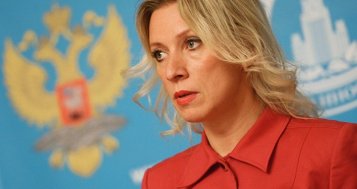


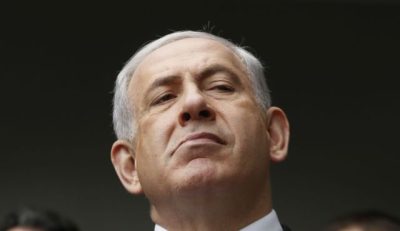 Israeli Finance Minister Benjamin Netanyahu and Rudolph Giuliani knew each other. Giuliani had officially welcomed Netanyahu when he visited New York City as Prime Minister of Israel in 1996. There was no indication, however, from news reports that the two men met in London at the Great Eastern. On the day prior to the London attacks, July 6th, Giuliani was in North Yorkshire at a meeting.