On British role in Syria and plans for FT reported ‘safe zones’
By Dr Alexander Yakovenko, Russian Ambassador to the United Kingdom | RT | October 8, 2015
Will Damascus request the British to assist in the same way, I don’t know. But there is another way for the British, and, in fact, everybody else, to carry out airstrikes against ISIS and other terrorists legitimately. It means a UN Security Council mandate, provided in response to the request of the Syrian Government. That is what we are now working on in New York. That is how the British could have their finger in the bombing pie in Syria. Russia is far from pulling this blanket upon herself. We want to work together.
There are other advantages of this course, besides establishing clear-cut objectives and terms of such collective intervention by the international community in Syria. We could agree, in the text of this resolution, on realistic and flexible enough modalities of a political settlement in Syria, which would allow those who left their country to come back and take part in its post-war reconstruction. The latter, by the way, could be a major source of economic growth in the region. What is equally important, this settlement will make it unnecessary for the EU to provide asylum to refugees from Syria.
I’ve read the said FT material. Some would say that it is very much in line with the backstabbing tradition of Western politics. I hope those plans were not serious on the part of our Anglo-American partners, who were able to see our preparations for airstrikes in Syria. The British have a signals intelligence post in Cyprus, just opposite our naval supply station in Syria, an equivalent of a 19th century coaling station. Perhaps, they just couldn’t say ‘no’ to their regional allies. But had it been true, it would have raised a host of serious issues. Because it would have been done behind our backs and in circumvention of the UN Security Council. Some seem eager to get NATO involved. The Alliance, until now, has been out of the picture in Syria, and for good reasons. Those plans, if implemented, would have brought about a de facto partition of Syria. More than that, our partners would have well found themselves in the position of protecting the terrorists.
It is a very dangerous idea. Some players might have harbored it. At least this would explain, why all of a sudden and from nowhere the tide of refugees in Europe this year. Quite likely it was meant to bring the EU on board as regards ‘safe zone’ plans. Now the migration crisis factor works for more realistic assumptions in Europe in respect of the political process in Syria, which cannot proceed while ISIS is there.
But let’s discuss things positively. Among those I can see close cooperation between the Russian and British military. Making common cause in Syria creates mutual trust, establishes mutual control, and provides incentives for both sides to be effective in doing its part of the job. We have just requested our Western partners provide us with their intelligence on the terrorist infrastructure in Syria, if they really think that we strike the wrong targets. We have also requested contact numbers of the Free Syrian Army to help bring it into a united effort to defeat terrorists.
And initial results of our strikes prove that they can be very effective if delivered in earnest, with no other objectives at the back of one’s mind. It also shows that the terrorists took their impunity for granted. In fact, it could be said that the anti-ISIS coalition of 60 (!) states presided over this outfit’s expansion for a whole year, rather than tried hard to stop and destroy it.
I am sure that thus there will be all the conditions in place for us to have a common view of the situation and make joint efforts on that basis. Among other things, it would have provided a welcome opportunity for our and the British military to be allies like we were in WWII. It would drastically change the terrorists’ calculus while doing the same to our relationship, which is in a very bad shape indeed.
Dr Alexander Yakovenko, Russian Ambassador to the United Kingdom of Great Britain and Northern Ireland, Deputy foreign minister (2005-2011). Follow him on Twitter @Amb_Yakovenko
The Perverse Rise of Killer Robots
By Cesar Chelala | CounterPunch | October 9, 2015
The development of “killer robots” is a new and original way of using human intelligence for perverse means. Human directing machines to kill and destroy in a scale not yet imagined is a concept that not even George Orwell could have imagined. In the meantime, the leading world powers continue their un-merry-go-round of destruction and death -mostly of innocent civilians- without stopping to consider the consequences of their actions.
Killer robots are fully autonomous weapons that can identify, select and engage targets without meaningful human control. Although fully developed weapons of this kind do not yet exist, the world leaders such as the U.S., the U.K, Israel, Russia, China and South Korea are already working on creating their precursors.
The U.S. Government Accountability Office reports that in 2012, 76 countries had some kind of drones, and 16 countries already possessed armed ones. The U.S. Department of Defense spends $6 billion every year on the research and development of better drones.
South Korea is presently using the Samsung Techwin security surveillance guard robots, which the country uses in the demilitarized zone it shares with North Korea. Although these units are currently operated by humans, the robots have an automatic feature that can detect body heat and fire a machine gun without human intervention.
Israel is developing an armed drone called Harop that could select targets with a special sensor. Northrop Grumman has also developed an autonomous drone called the X-47B which can travel on a preprogrammed flight path while being monitored by a pilot on a ship. It is planned to enter into active service by 2019. China is also moving rapidly in this area. In 2012 it already had 27 armed drone models, one of which is an autonomous air-to-air supersonic combat aircraft.
Killer robots follow the generation of drones and, as with drones, their potential use is also creating a host of human rights, legal and ethical issues. Military officials state that this kind of hardware protects human life by taking soldiers and pilots out of harm’s way. What they don’t say, however, is that the protected lives are those of the attacking armies, not those of the mostly civilians who are their targets, whose untimely deaths are euphemistically called collateral damage.
According to Denise Garcia, an expert in international law, four branches of internationally law have been used to limit violence in war: the law of state responsibility, the law on the use of force, international humanitarian law and human rights law. As currently carried out, U.S. drone strikes violate all of them.
From the ethical point of view, the use of these machines presents a moral dilemma: by allowing machines to make life-and death decisions we remove people’s responsibility for their actions and eliminate accountability. Lack of accountability almost ensures future human rights violations. In addition, many experts believe that the proliferation of autonomous weapons would make an arms race inevitable.
As the United Nations is trying to negotiate the future use of autonomous weapons, the U.S. and U.K. representatives want to support weaker rules that would prohibit future technology but not killer robots developed during the negotiating period. That delay would allow existing semi-autonomous prototypes to continue being used.
The need for a pre-emptive ban on the development and use of this kind of weapon is urgent. As Christof Heyns, the UN Special Rapporteur on Extrajudicial, Summary or Arbitrary Executions stated recently, “If there is not a pre-emptive ban on the high-level autonomous weapons, then once the genie is out of the bottle it will be extremely difficult to get it back in.”
Dr. Cesar Chelala is an international public health consultant. He recently received the Cedar of Lebanon Gold Medal from the House of Lebanon in Tucuman, Argentina.
Saudi juveniles now in ‘solitary confinement’ far from families, says father

Reprieve | October 9, 2015
The father of Ali al-Nimr, a Saudi juvenile facing execution for his role in protests, has spoken of his uncertainty and concern about the fate of his son, as it emerged Ali and a second juvenile are now being held in solitary confinement in a prison in Riyadh.
Speaking last night, Mohammed al-Nimr said that the family hadn’t seen their son since 15th September, saying: “I’m very worried now, because they’ve moved my son to a prison in Riyadh, and he’s in solitary confinement – I fear he could be executed at any moment.” He added that Ali was among several other young men sentenced to death in the wake of protests, including Dawoud al-Marhoon, whose sentence of beheading was upheld last week.
Both Ali and Dawoud were 17 when they were arrested in the wake of protests in Saudi Arabia’s Eastern Province. Both received death sentences after being tortured into ‘confessions’ used to convict them in the country’s secretive Specialized Criminal Court. Executions are shrouded in secrecy in Saudi Arabia, and it is possible that both juveniles could now be executed at any time, without prior notification to their families. However, speaking to Al Jazeera this week, Abdallah al-Mouallimi, the Saudi permanent representative to the UN, suggested that Ali’s case was still “being reviewed in legal circles”, ahead of his execution receiving the “personal approval of the King”.
Speaking to Channel 4 last night, Ali’s father Mohammed al-Nimr said that as the UK and Saudi Arabia had a “warm relationship”, he hoped that interventions by the British government would save his son. Prime Minister David Cameron has said the government has raised Ali’s case with the Saudi authorities; however, the Ministry of Justice has faced criticism over its ongoing bid to provide services to the Saudi prison system, which would be responsible for carrying out Ali and Dawoud’s executions.
Concerns over the UK’s position come amid growing calls for firmer interventions from close allies of Saudi Arabia, such as the UK and the US. Yesterday, the European Parliament passed a resolution that called on member states – including the UK – to “deploy all their diplomatic tools and make every effort to immediately stop the execution” of Ali and others arrested at protests.
Commenting, Kate Higham, caseworker at human rights organization Reprieve, said: “Saudi Arabia’s plans to kill Ali and Dawoud are appalling, and have rightly caused an international outcry. Now these two juveniles – who have been through a shocking ordeal of torture and unfair trials – have been disappeared to solitary confinement, far from their families, who have no idea what the next few days could bring. We can only imagine how terrified they must be. Countries like the UK and the US, who count the Saudis among their closest allies, must listen to Ali’s father and urge a halt to these executions. Britain’s Ministry of Justice must also urgently call off its bid to provide services to the Saudi prison service that will carry out these executions.”
Second Saudi juvenile to face ‘beheading’ for protests
Reprieve | October 6, 2015
A second juvenile is facing beheading in Saudi Arabia after a court upheld his conviction for a role in protests, days after the case of juvenile Ali al-Nimr sparked a global outcry.
Dawoud al-Marhoon was 17 when he was arrested without a warrant by Saudi security forces in May 2012, at the height of protests in the country’s Eastern Province. He was tortured and made to sign a ‘confession’ that was later relied on to convict him. He has been held in solitary confinement, and has been barred from speaking to his lawyer. Last week, the Specialized Criminal Court – the same body that recently upheld a sentence of ‘crucifixion’ for Ali al-Nimr – upheld Dawoud’s conviction, and sentenced him to death by beheading.
With legal avenues exhausted, both juveniles could now be executed at any time, without prior notification to their families. The executions are expected to go ahead despite concerns about the fairness of both trials; Dawoud was sentenced after a number of secret hearings took place without the presence of his lawyer, who was also blocked from receiving information about appeal hearings.
The case of Ali al-Nimr, who faces a sentence of ‘crucifixion’ – involving beheading and the public display of his body – has prompted strong international criticism, with the French government and a group of UN experts among those calling for a halt to the plans. Asked by the BBC on Sunday, British Prime Minister David Cameron said his message to the Saudi government was “don’t do it”, and that “we never stint in telling them that we don’t agree with them on these human rights issues.”
However, Mr Cameron’s government has been criticized for continuing with a Ministry of Justice bid to provide services to the Saudi prison system. Concerns were also raised last week about the UK’s foreign policy priorities after Sir Simon McDonald, Permanent Secretary at the Foreign Office, told MPs that human rights no longer had the “profile” within his department that they had “in the past”.
Commenting, Maya Foa, director of the death penalty team at the human rights organization Reprieve, said: “Ali al-Nimr’s case has rightly prompted revulsion among the international community – it is therefore horrifying that the Saudi government is pushing ahead with plans to exact a similarly brutal sentence on another juvenile, Dawoud al-Marhoon. It’s also deeply disappointing to see the US and the UK – who are among the Saudis’ closest allies – failing to intervene strongly to stop these executions from going ahead. It is grossly hypocritical for David Cameron to say he opposes these sentences, while his government is bidding to support the very prisons service who will be responsible for carrying them out. The British government must urgently change its priorities – ministers must cancel the bid, and call unequivocally on Saudi Arabia to halt the executions.”
At ‘socialist’ conference in UK, invited speaker makes pitch for U.S./NATO arms to Kyiv regime
Pro-NATO, pro-U.S. ‘socialist’ scholar invited to speak at ‘Socialist Resistance’ conference in London.
New Cold War | October 2, 2015
The political group ‘Socialist Resistance’ in England held an education conference in London on Sept 26, 2015 featuring a Ukrainian diaspora scholar, Marko Bojcun, who delivered a strong message that the rightist, neo-conservative regime in Kyiv should be supported and that the United States and NATO should be pressured to provide more and heavier arms to it. His talk was titled ‘Russian imperialism today‘. The conference theme was ‘Imperialism, globalisation and climate change’.
Bojcun is Director of the Ukraine Centre, London Metropolitan University. He is a PhD university graduate in Canada. In April 2015, he co-signed an open letter appealing to President Petro Poroshenko not to sign into law anti-communist, thought-control measures which had been approved by the Ukrainian Rada. Poroshenko approved the laws. The result has been a harsh crackdown on political, press and other forms of expression in Ukraine as well as the banning of political parties. Among the parties banned by the Ministry of Justice of Ukraine have been the large Communist Party of Ukraine and two smaller parties calling themselves communist.
In his speech to the conference, Bojcun reviewed the current situation in the countries bordering, or close to, Russia. He reported favorably on the efforts of the U.S. and EU to “aid” these countries in the face of alleged Russian economic ‘pressure’ and ‘aggression’ against them. At the 23′ mark, he reports on the efforts of Western powers to help Azerbaijan “break out” of its economic ties to Russia. (Those trade and other ties, actually, are an important lifeline for the people of that country heavily dependent on oil revenues. Many Azeris live and work in Russia and send home their earnings.)
Bojcun dismissed the argument that NATO is engaged in a military buildup in eastern Europe and a threatening stance against Russia and he argued that NATO should be supplying many more weapons and other military aid to Kyiv. Referring to the NATO summit meeting in August 2014, he lamented that “Poroshenko came away with absolutely nothing that he asked for. He was not going to be armed.
“I know there are American advisers in Ukraine and there are some who are training [Ukrainian] forces there. But neither the U.S. nor NATO are supplying Ukraine with lethal weapons. Some NATO countries, very small countries such as Lithuania, have promised to. But this is really not serious.”
“NATO is concerned, first of all, with securing its own member states. It doesn’t have the capacity to do that, to my way of thinking, should Russia decide to make a move northward [??] to the Baltic states. That is a cause of great concern.”
Bojcun then argued it is Russia which is engaged in a military buildup in eastern Europe. “Russia, on the other hand, has military bases in eight of the former Soviet republics. Eight of them. And it has been building them since 2003…
“So, the Russian capacity to strike in the neighbourhood of Ukraine is far superior than the NATO one, and it is growing. One needs to take that into account.
“Looking into this long argument that has been made about NATO expansion into east-central Europe, I agree, NATO made an expansion into east-central Europe. But, that happened. We are into a period since the 2008 financial crisis and the Russo-Georgian War [2008] where the U.S. is really a reactive force and is not [reacting] in kind to the Russian military buildup.”
Also speaking on Ukraine at the same conference was Catherine Samary, a pro-Maidan French intellectual and leader of the Nouveau Parti Anticapitaliste (NPA) of France. Her talk was titled ‘Socialists’ attitudes to Russian expansionism’.
Socialist Resistance calls itself “An ecosocialist organisation opposed to imperialist wars and capitalism.”
The recordings of the two speeches are posted to the website of the rather mis-named ‘Ukraine Solidarity Campaign’ based in the UK. There is no broadcast of discussion by conference participants following the speech by Bojcun to know what, if any, disagreement with the speech was expressed by conference participants or by his conference co-speaker.
Marko Bojcun spoke in London on May 27, 2014. The talk took place two days after the presidential election in Ukraine. In his speech, Bojcun welcomed the election of Petro Poroshenko. He shared the platform with Gabriel Levy (pseudonym), a pro-Maidan writer who publishes People and Nature.
UK government acts to stop councils divesting from Israeli occupation
MEMO | October 3, 2015
The UK government has said it intends to change legislation in order to prevent local councils divesting from the arms trade and Israeli human rights abuses.
Announcing the plans, a Conservative spokesperson said that “Labour’s Jeremy Corbyn and John McDonnell, alongside Labour-affiliated trade unions, are urging councils to use their procurement and pension policies to punish both Israel and the UK defence industry.”
The spokesperson continued: “Hard-left campaigns against British defence companies threaten to harm Britain’s £10 billion export trade, destroying British jobs, and hinder joint working with Israel to protect Britain from foreign cyber-attacks and terrorism.”
The proposed amendment to legislation will be aimed at stopping councils from incorporating the concerns of human rights campaigners into their pension and procurement policies.
According to Communities and Local Government Secretary Greg Clark, such a step would be a challenge to “the politics of division.”
The language used by the Conservatives, including the claim that divesting from companies complicit in Israeli atrocities “poison[s] community relations”, mirrors the rhetoric of pro-Israel lobby groups.
Clark added that “divisive policies undermine good community relations, and harm the economic security of families by pushing up council tax.” Cabinet Office Minister Matthew Hancock said: “We will…prevent such playground politics undermining our international security.”
Powerful Israeli Lobby Summons Jeremy Corbyn in Further Subversion of British Democracy
Empire Strikes Black | September 27, 2015
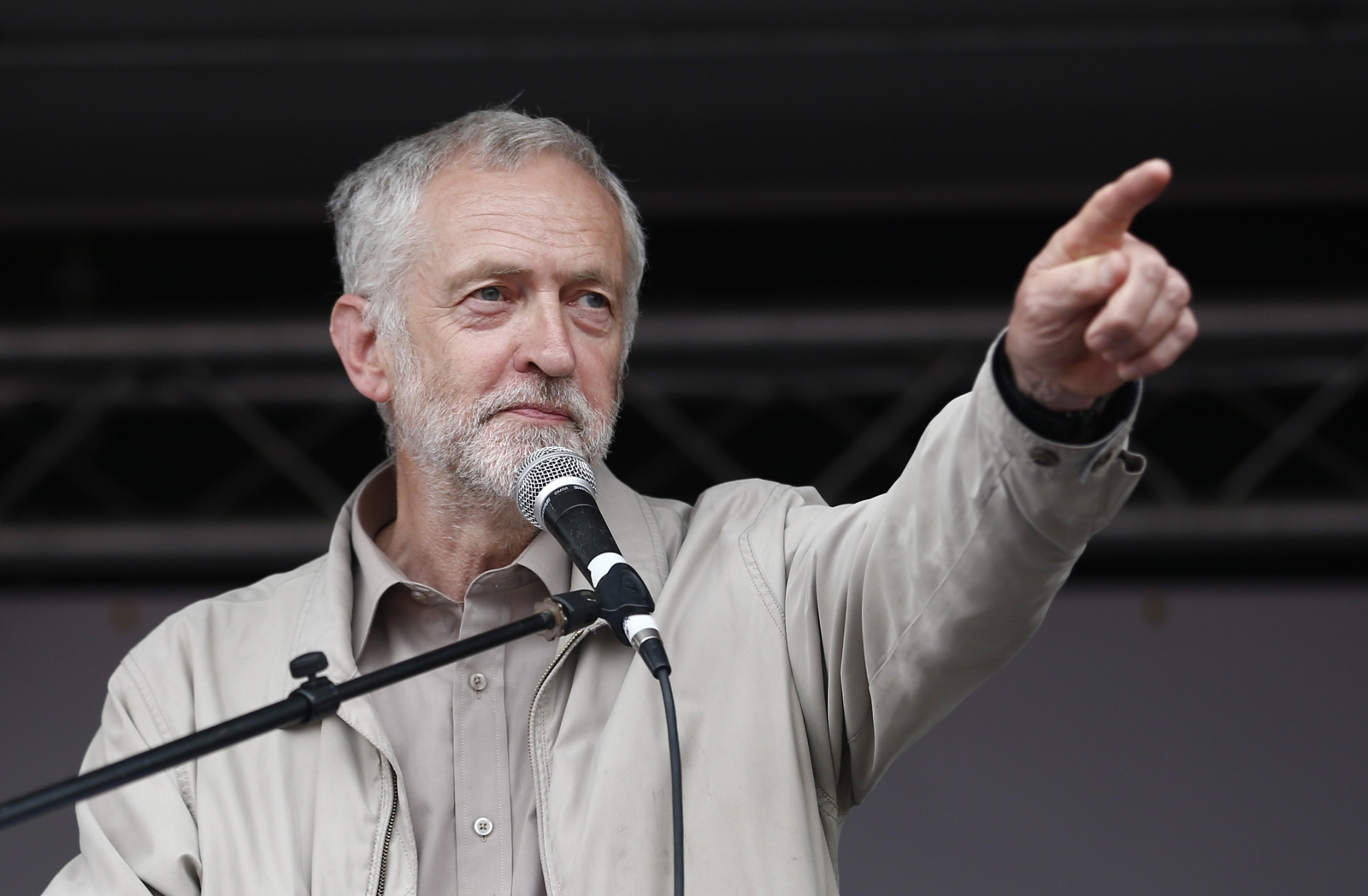 Labour Friends of Israel, a pro-“Israel” political advocacy group, has invited Labour leader Jeremy Corbyn to speak at its annual reception(1) in Brighton on Tuesday. The power of the “Israeli” lobby in Whitehall(2) is not news to those with a keen eye on British politics. That being said, for any British voter this should raise eyebrows at the very least.
Labour Friends of Israel (LFI) is a Jewish lobby group(3) which,
“promotes a negotiated two state solution for two peoples; with Israel safe, secure and recognised within its borders; living alongside a democratic, independent Palestinian state”
The above synopsis, garbed in liberal, peaceful and noble language, gives LFI (and “Israel”) an innocuous image to the layperson.
Typical of Zionist rhetorical trickery, this false appraisal is fraudulent for a number of reasons.
“Israel” has to this day not declared its borders for the simple reason that it has an expansionist, hegemonic agenda. It exists on land (every inch – from the Jordan river to the Mediterranean sea) it violently stole from the native Palestinians in 1948. The actual goal of LFI (as with CFI and LDFI – the Conservative and Liberal Democrat sister lobbies) is to influence British policy to ensure continued British support for the brutal, immoral and illegal occupation of Palestine and the ongoing genocide of the Palestinian people.
“Israel”: Friend or Foe?
“Israel” is a belligerent foreign nation whose interests are far removed from those of Britain.
We are talking about a country that can fake British passports and use them to commit murder on foreign soil with complete and total impunity.(4) We are talking about a nation that celebrates the slaughter of Britons in a Jewish terror attack on a Jerusalem hotel.(5) We are talking about a nation whose cowardly snipers can murder British civilians(6) with zero legal or diplomatic repercussions.
“Israel” is by no means a friend of Britain, so why should British party leaders be humiliated into proving they are “friends” of hers? Here we have a lobby group representing a belligerent foreign nation, that has the power to summon party leaders to explain themselves like naughty schoolchildren.
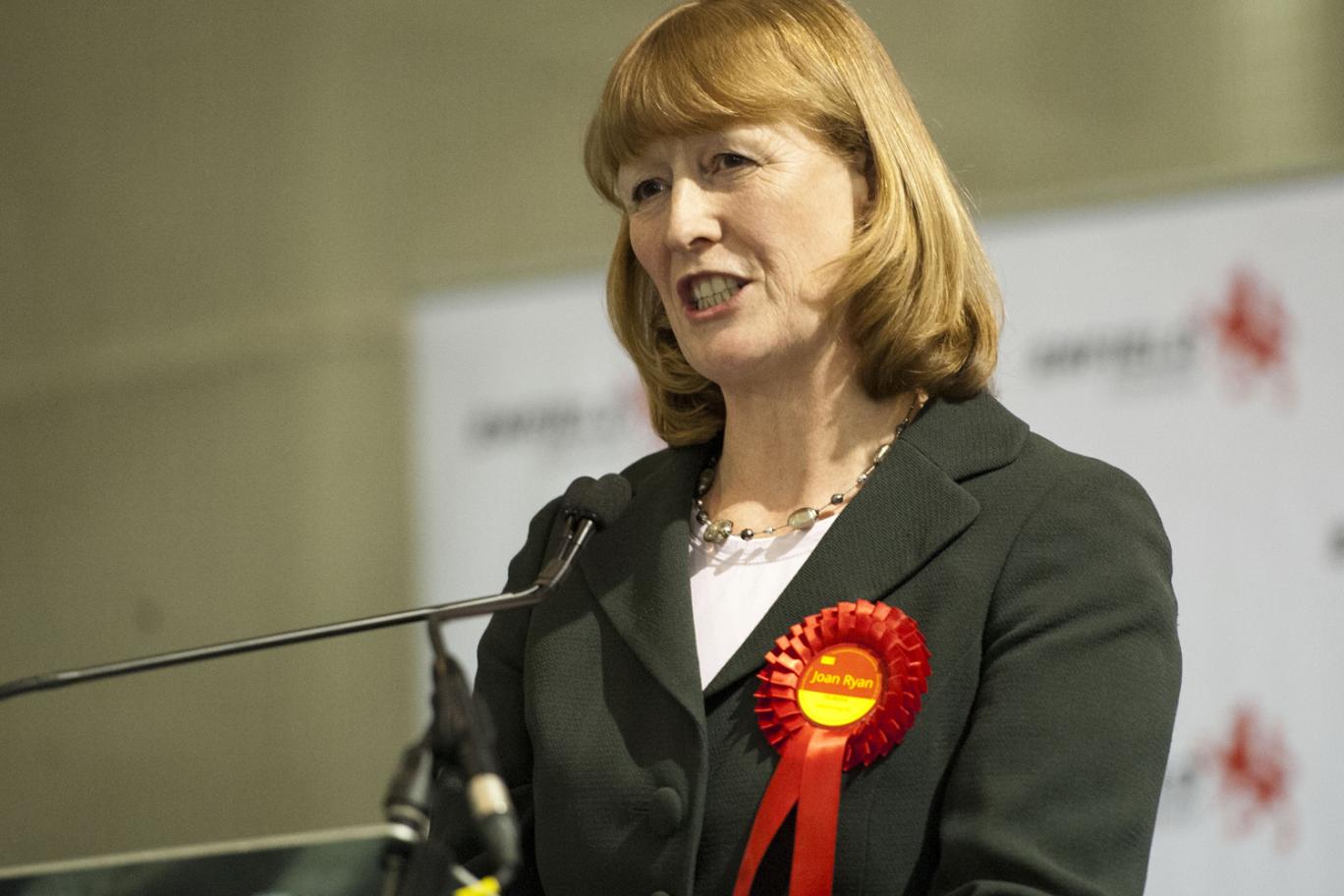 Adding insult to injury, this foreign lobby group is chaired by a ‘British’ MP, Joan Ryan.
Aside from brazenly representing a foreign nation from within the British Parliament, Ryan has demonstrated her contempt for the British taxpayer and voter in other ways – namely by disgracing herself in the MP expenses scandal.
In October 2007, the Evening Standard reported that in the 2006/2007 tax year, Ryan claimed a staggering £173,691 in expenses(7) – more than any other MP.
The British voter could be forgiven for asking Ryan where her loyalties lie – with Britain? Or with the belligerent foreign nation that she duplicitously represents?
That a foreign lobbying organisation can subvert the political decision making process in such a brazen way – with Jewish MPs literally acting as moles in parliament – makes a mockery of British democracy. I shudder to imagine the tsunami of outrage that would ensue if Muslim MPs were in the same position, lobbying for a hostile foreign government.
Notes
(1) ‘Labour Friends of Israel invites Jeremy Corbyn to explain his Palestine policy to them’ – The Independent, 22 September 2015.
(2) ‘All in the Family: David Cameron’s Jewish Roots and the Coreligionists Who Brought Him to Power’ – EmpireStrikesBlack, 7 January 2014.
(3) ‘About Labour Friends of Israel’ – lfi.org.uk, 27 September 2015.
(4) ‘Dubai Hamas assassination: ‘Israeli hit-squad’ used fake British passports’ – The Telegraph, 17 February 2010.
(5) ‘Israel celebrates Irgun hotel bombers’ – The Telegraph, 22 July 2006.
(6) ‘In memory of Tom Hurndall, shot in the head by Israeli sniper 10 years ago today’ – tomhurndall.co.uk, 11 April 2013.
(7) ‘Revealed: London MPs claiming £9m expenses’ – Evening Standard, 26 October 2007.
Featured Video

Dan Dicks with James Corbett on Solutions Watch
or go to
Aletho News Archives – Video-Images
From the Archives
Secret document reveals plans for civil war in Lebanon, Israeli false flags, and invasion
By Randi Nord | Geopolitics Alert | April 5, 2019
Beirut – During his visit with US Secretary of State, Mike Pompeo, Lebanese President Michael Aoun reportedly received a US-Israeli document detailing plans for creating a civil war in Lebanon with covert false flag operations and possible Israeli invasion.
Although the source of the document is Israeli and created in partnership with Washington, no one knows who presented it to Aoun. The Lebanese TV station, Al-Jadeed, initially reported the document on Lebanese TV and a video on its website. Geopolitics Alert translated the report for this article. … continue
Blog Roll
 Aletho News
- Sheikh al-Asadi warns of Iraqi government compliance with US demands
- How to MAKE THE CONSPIRATORS PAY for their crimes! Dan Dicks with James Corbett on Solutions Watch
- There’s a drought in academia: A drought in honest research on the subject of drought and other weather extremes
- Department of War Awards $20.7 Billion Contract to Raytheon for Air-to-Air Missiles
- ‘Distance yourselves from Israel’: IRGC urges US population to question govt policies
- America’s Greenland deal has a radioactive backstory
- The RAF Fairford ‘terror plot’: Unpacking escalation in the UK echo-chamber
- EU Council Advances Chat Control 2.0 Scanning Proposal
- Ex-Greek MEP files complaint against Israeli spyware firm over alleged Pegasus surveillance
- Troubling ideas throughout the Torah, Talmud, Mishneh Torah and Tanya
- If Americans Knew
- New Report: “Scholasticide and Genocide in Gaza: Assessment, Testimonies and Legal Analysis”
- Ex-Biden officials are desperate for a Gaza scapegoat
- Israeli “settlers” Invade Al-Aqsa; Pour Boiling Water on 75-Year-Old
- Israel Has Kidnapped Another American Teenager
- US arms sales to Israel worth $21.6 billion in 20 months
- Three Palestinians Killed in Israeli Attacks on Gaza
- Revealed: German “Anti-Semitism Expert” Driving Crackdown on Palestine Solidarity is Former Israeli Spy
- Egypt’s Warning to Israel Before Oct 7
- Israel’s siege signals another cruel winter for 1.8 million Gazans – Daily Update
- Netanyahu Asked UAE Leader to Deny Report on Oct. 7 Warning in Secret Visit, Sources Say
- No Tricks Zone
- Two More Paleo Reconstructions Affirm Meters-Higher Sea Levels Across Ireland, Brazil 7000-6000 Years Ago
- New Study: Earth And Venus Surface Warmth Largely Explained By Convection And Lapse Rate, Not CO2 Or Radiation
- 2025 Nature Paper Claiming Worsening Global Drought Gets RETRACTED …Heavily Flawed
- New Study: ‘Global Drought Shows No Detectable Recent Acceleration Under Climate Warming’
- Economic Masterminds: German Socialists Suggest Taxing Productivity Gains Stemming From Using AI
- The South China Sea Has Not Been Cooperating With The Climate Change Narrative
- Energy Crisis: Germany Enters Heating Season With Historically Low Gas Reserve Fill Levels
- New Study: The Antarctic Ice Sheet Gained Mass From 2020-2024 Due To Staggering Snow And Ice Accumulation
- Study: Ocean Heating Rates From Thousands Of Years Ago ‘Dwarf’ Modern Ocean Heating Rates
- Climate Extremists Target, Attack Large-Scale Power Grid Infrastructure In Germany!

