Recently released minutes from the UK government’s Counter Disinformation Unit (CDU) governing board, the Disinformation Board, provide further evidence of the authorities’ direct involvement in monitoring online speech during the pandemic but also flagging it for removal.
But even this wasn’t enough for CDU, which in 2023, after several years of criticism and scrutiny by some media and privacy groups, got rebranded as the National Security Online Information Team (NSOIT).
One of the moves considered by top UK officials was to “embed” civil servants in companies running social platforms, and it remains unclear if this was in fact done, writes Big Brother Watch’s Jake Hurfurt for Public.
CDU was only one building block in the UK’s Covid-era censorship effort; several military units were enlisted to participate as well, most notably and controversially the 77th Brigade, whose job is supposed to be spreading misinformation, and in general, finding its “psyops” targets abroad, not at home.
NSOIT (CDU) also states that it is “countering disinformation and hostile state narratives.” But these and several other outfits, as well as private contractors hired by the government, were tasked with surveillance of British citizens and suppression of those seen as “Covid measures dissenters.”
And so, what scores of freedom of information requests have since revealed is that they went not after disinformation-spreading “foreign adversary” – but ordinary British citizens, medical professionals, journalists, and even politicians who were engaging in legitimate, albeit critical of the government, speech.
Regarding the lengths to which the UK was prepared to go – specifically if officials actually got “embedded” in social media companies – this is unclear to this day thanks to the government’s refusal to provide access to reports compiled by Logically, a private company.
Logically made millions from contracts with the British military, Hurfurt notes. Completing the picture of the web of sometimes loosely, other times tightly inter-connected entities that work hard to censor online speech, he adds:
“(Logically) has a large US presence and is headed by US ex-intelligence officer Brian Murphy, who worked at the Department for Homeland Security (DHS).”
Meanwhile, the UK government explains its refusal to shed light on the question of whether or not its officials were directly involved with social media companies as fears those reports “would reveal its capabilities to hostile actors.”
The United States and its Western allies have stepped up a media campaign to accuse India of running an assassination policy targeting expatriate dissidents.
The government of Narendra Modi, India’s prime minister, has furiously denied the allegations, saying there is no such policy.
Nevertheless, the American Biden administration as well as Canada, Britain and Australia continue to demand accountability over claims that New Delhi is engaging in “transnational repression” of spying, harassing and killing Indian opponents living in Western states.
The accusations have severely strained political relations. The most fractious example is Canada. After Premier Justin Trudeau publicly accused Indian state agents of involvement in the murder of an Indian-born Canadian citizen last year, New Delhi expelled dozens of Canadian diplomats.
Relations became further strained this month when the Washington Postpublished a long article purporting to substantiate claims that Indian security services were organizing assassinations of U.S. and Canadian citizens. The Post named high-level Indian intelligence chiefs in the inner circle of Prime Minister Modi. The implication is a policy of political killings is sanctioned at the very top of the Indian government.
The targets of the alleged murder program are members of the Sikh diaspora. There are large expatriate populations of Sikhs in the U.S., Canada and Britain. In recent years, there has been a renewed campaign among Sikhs for the secession of their homeland of Punjab from India. The New Delhi government views the separatist calls for a new state called Khalistan as a threat to Indian territorial integrity. The Modi government has labeled Sikh separatists as terrorists.
Indian authorities have carried out repression of Sikhs for decades including political assassination in the Punjab territory of northern India. Many Sikhs fled to the United States and other Western states for safety and to continue their agitation for a separate nation. The Modi government has accused Western states of coddling “Sikh terrorists” and undermining Indian sovereignty.
Last June, a prominent Sikh leader was gunned down in a suburb of Vancouver in what appeared to be a professional hit-style execution. Hardeep Singh Nijjar was murdered by three assailants outside a religious temple. Indian state media described him as a terrorist, but Nijjar’s family denied he had any involvement in terrorism. They claim that he was targeted simply because he promoted Punjabi separatism.
At the same time, according to the Post report, the U.S. authorities thwarted a murder plot against a well-known American-Sikh citizen who was a colleague of the Canadian victim. Both men were coordinating efforts to hold an unofficial referendum among the Sikh diaspora in North America calling for the establishment of a new independent state of Khalistan in the Punjab region of northern India.
The Post article names Vikram Yadav, an officer in India’s state spy agency, the Research and Analysis Wing (RAW), as orchestrating the murder plots against the Sikh leaders. The Post claims that interviews with US and former Indian intelligence officials attest that the killings could not have been carried out without the sanction of Modi’s inner circle.
A seemingly curious coincidence is that within days of the murder of the Canadian Sikh leader and the attempted killing of the American colleague, President Biden was hosting Narendra Modi at the White House in a lavish state reception.
Since the summer of last year, the Biden administration has repeatedly pressured the Modi government to investigate the allegations. President Biden has personally contacted Modi about the alleged assassination policy as have his senior officials, including White House national security advisor Jake Sullivan, Secretary of State Antony Blinken and CIA director William Burns. Despite New Delhi’s denial of such a policy, the Modi government has acceded to American requests to hold an internal investigation, suggesting a tacit admission of its agents having some involvement.
But here is where an anomaly indicates an ulterior agenda. Even U.S. media have remarked on how lenient the Biden administration has been towards India over what are grave allegations. It is inconceivable that Washington would tolerate the presence of Russian or Chinese agents and diplomats on its territory if Moscow and Beijing were implicated in killing dissidents on American soil.
As Tthe Washington Post report noted: “Last July, White House officials began holding high-level meetings to discuss ways to respond without risking a wider rupture with India, officials said. CIA Director William J. Burns and others have been deployed to confront officials in the Modi government and demand accountability. But the United States has so far imposed no expulsions, sanctions or other penalties.”
What appears to be going on is a calculated form of coercion by the United States and its Western allies. The allegations of contract killings and “transnational repression” against Sikhs in the U.S., Canada, Britain, Australia and Germany are aimed at intimidating the Indian government with further embarrassing media disclosures and Western sanctions. The U.S. State Department and the Congress have both recently highlighted claims of human rights violations by the Modi government and calls for political sanctions.
The objective, it can be averred, is for Washington and its Western allies to pressure India into toeing a geopolitical line of hostility towards China and Russia.
During the Biden administration, the United States has assiduously courted India as a partner in the Asia-Pacific to confront China. India has been welcomed as a member of the U.S.-led Quad of powers, including Japan and Australia. The Quad overlaps with the U.S. security interests of the AUKUS military partnership with Britain and Australia.
Another major geopolitical prize for Washington and its allies is to drive a wedge between India and Russia.
Since the NATO proxy war blew up in Ukraine in February 2022, the United States has been continually cajoling India to condemn Russia and to abide by Western sanctions against Moscow. Despite the relentless pressure, the Modi government has spurned Western attempts to isolate Russia. Indeed, India has increased its purchase of Russian crude oil and is importing record quantities, more than ever before the Ukraine conflict.
Furthermore, India is a key member of the BRICS forum and a proponent of an emerging multipolar world order that undermines U.S.-led Western hegemony.
From the viewpoint of the United States and its Western allies, India represents a tantalizing strategic prospect. With a foot in both geopolitical camps, New Delhi is sought by the West to weaken the China-Russia-BRICS axis.
This is the geopolitical context for understanding the interest of Western powers in making an issue out of allegations of political assassination by the Modi government. Washington and its Western allies want to use the allegations as a form of leverage – or blackmail – on India to comply with geopolitical objectives to confront China and Russia.
It can be anticipated that the Western powers will amplify the media campaign against India in line with exerting more hostility toward China and Russia.
I have written many times about the heroic activities of Palestine Action, the protest group which burst onto the scene around four years ago using a blend of unrivalled direct action, anarchy and good, old-fashioned peaceful resistance to disrupt and wreck Israel’s war machine factories in the UK.
Despite numerous arrests, very few PA members have been prosecuted successfully, largely because the arms dealers they target do not want to be subject to probing questions under oath in a British court. What are they trying to hide?
Let us suppose that these giants of the arms industry fear going to court. If so, it is impossible for them to give evidence in the same courts as the Palestine Action protestors arrested by the police for causing criminal damage which has run into millions of pounds. Who knew that red paint could be so costly?
Nothing disturbs warmongering Zionists more than peaceful resistance supported by the law of the land, which in Britain gives people the legal right to protest against injustice.
Demonstrations, mass rallies and sit-ins have been around for as long as anyone can remember. The freedom and right to protest are a defining cornerstone of any European democracy.
Palestine Action describes itself as a pro-Palestinian protest network that uses direct action to shut down and disrupt multinational arms manufacturers and dealers. In particular, the group targets UK-based operations that provide weapons, or parts of weapons, used by Israel against the Palestinians.
At arms fairs, companies like Israel’s Elbit Systems are constantly ridiculed and humiliated for being unable to protect their factories from the eclectic group of Palestine Action activists. After all, Elbit boasts that it is a company which: “Specialises in surveillance and reconnaissance systems, optimised for all range applications – from short-range to extremely long-range. Installed on mobile platforms, as well as on stationary towers and turrets, these surveillance and reconnaissance systems enable high-quality tactical level intelligence gathering for infantry, artillery and other ground forces.”
Let’s face it, being outwitted on an almost daily basis by today’s would-be rebels and unarmed revolutionaries wearing slack jogging bottoms and hoodies must be humiliating for the Elbit executives and its subsidiaries. Little wonder that they are the butt of so many jokes.
It’s hardly surprising, therefore, that Israel wants Palestine Action shut down for good. It’s a tall order, but this is where the pro-Israel, Zionist lobby becomes a useful tool in Tel Aviv’s many conflicts. All the lobby has to do is call to heel the politicians and parties it funds and tell them to ban the group.
This is where the likes of Britain’s Lord Walney comes in, an unremarkable, modest little man with not much to be modest about. To be blunt, this peer, described laughingly as an “independent” government advisor, is nothing but an Israeli lackey who has, in an otherwise bland 100,000-word report, criminalised protest groups active in the UK today.
Rarely a headline-maker for political strategy, as plain old John Woodcock he resigned as a Labour Party MP in 2018, hitting out at “manipulation” of an internal investigation into allegations of sexual harassment, but continued to sit in the House of Commons as an independent member. Ahead of the 2019 election, he chose not to stand again as he announced he was expecting a baby with his partner Isabel Hardman, an assistant editor at the right-wing Spectator magazine.
Naturally, Woodcock was a fervent critic of Jeremy Corbyn’s leadership of the Labour Party. The political turncoat even urged people to vote Conservative to stop Corbyn from “getting his hands on the levers of national security and defence.”
Perhaps more significantly, in the not-too-distant past, Woodcock was the chair of Labour Friends of Israel.
Now “The” Lord Walney since 2021, and sitting as an independent (“crossbencher”) in the House of Lords upper chamber of parliament, his report recommends that the government should impose new measures to deter Palestine Action’s direct campaign against Elbit, Israel’s largest arms company. Whilst acknowledging the “enormous damage” that the activists have inflicted on the arms industry, he suggests a series of moves to restrict Palestine Action’s ability to meet and raise funds. He is also calling for “buffer zones” around factories of death like those owned by Elbit in Britain to protect the company from further protests.
Woodcock is quoted in the Sunday Times as saying that he wants to “make it an offence to belong to a protest group judged to be ‘extreme’ and which routinely uses criminal methods to campaign.” If the same twisted, Zionist logic had been applied in the early twentieth century, British women would not have been given the right to vote because the “extremists” in the Suffragettes — who definitely broke the law on occasion — would have been banned outright.
Despite posing as an “independent” government advisor, Woodcock is affiliated with the pro-Israel lobby and the arms industry. He is also the chair of the Defence Purpose Coalition, which brings together senior figures within the arms industry to promote its deadly products. Since 2011, he’s travelled to Israel on numerous occasions on trips paid for by the Israeli government and pro-Israel lobby groups, according to a recent investigation by Declassified UK.
Palestine Action released a statement about the new proposals this week. “During our nearly four-year direct-action campaign, we’ve faced arrests, raids, imprisonment, beatings, convictions and more by a state desperate to protect the Zionist war machine, over the freedom of their own citizens,” it said. “Despite this, our movement’s determination and resilience have resulted in Elbit permanently closing two factories plus being dumped by several partners and losing hundreds of millions [of pounds] in contracts with the Ministry of Defence.”
The success of the group, almost always vehemently denied by Israel, is a testament to its peaceful but direct action. However, nearly eight months into the Gaza genocide, it is clear that the arms industry is reaching breaking point with the British judicial system, which has abandoned or dismissed most trials of activists who are taken to court.
If the Zionist lobby and Lord Walney think that this scare tactic is going to force the action group to surrender, though, I’m afraid they’ve seriously underestimated it.
“When Palestine Action began we were under no illusion that the route to victory would be an easy ride,” it pointed out. “As a movement, we understand that every obstacle we face and overcome is a step closer to ending Israel’s weapons trade with Britain. For years the political class repressed us behind closed doors but refused to show their frustration at our growing campaign publicly. Now, they’re showing their hand which means we are winning.”
They accused the British peer of being more interested in “protecting the military interests of a foreign genocidal entity over the will of the British people, who overwhelmingly support imposing an arms embargo on Israel. His alliance is with the hugely profitable Elbit Systems who use Gaza as a laboratory to develop their battle-tested weaponry and are crucial to arming the ongoing genocide. Our alliance will always be with the Palestinian people.”
The Palestine Action campaigners say that they will “Shut Elbit down”.
And, I have to say, I am more convinced by their commitment to the people of Palestine than that of Lord Walney who has compromised himself by his closeness to the Israeli arms industry and the Zionist lobby. He and his report are far from independent in this matter. The UK is, for all its faults, still a democratic state whose citizens have rights and freedoms won after centuries of dissent and popular protests. Now the likes of Walney and his Zionist friends want to curtail those rights to serve the interests of the alien, apartheid state of Israel. This cannot be allowed to happen.
A story in the Telegraph last week featured a report by Energy Systems Catapult (ESC) which recommended the Government commit to a £30 billion project to pull CO2 from the air. According to the report, Direct Air Carbon Capture and Storage (DACCS) machines sited across the east coast could separate the greenhouse gas from air and pump it to underground storage facilities, thereby helping the U.K. to meet its ambitious 2050 Net Zero target. Not only is this extraordinarily expensive idea pointless in itself, it exposes the equally pointless and expensive constellation of publicly-funded lobbying organisations.
According to ESC, “carbon capture in its various forms is a critical component of a low-cost energy transition”, and “without it, at scale, we risk non-compliance with our Net Zero requirement”. And here is the thing that would, were such things subject to public debate, cause millions of people to scratch their heads. So what if the U.K. does not comply with its Government’s self-imposed target? What is the ‘risk’? And why should the public fork out billions of pounds merely for a daft machine that serves no function other than help a Government achieve its ambition that nobody else really cares about?
Madder still, the ESC admits that DACCS “remains unproven at scale”. This raises two important problems.
First, if something has yet to be proven at such a gigantic scale, any estimate of its cost is both for the birds and in all probability, like all Government-backed projects such as HS2 and wind power, will exceed those estimates. Government vanity project HS2, for example, originally had a similar estimated cost of £37.5 billion in 2009 prices. But by 2020, estimates put the cost well north of £100 billion.
Second, it shows yet again that no government, no political party, no MP or peer, no think tank or its wonks, no academic at a lofty research outfit, no green lobbyist or campaigner, and no journalist has any idea how Net Zero will be achieved, but nonetheless nearly all of them fought for such targets to be imposed on us.
It is a problem known as putting the cart before the horse. And it is a characteristic of all climate-related policies that they are driven by ambition, not reality. Not even ESC can explain what DACCS is, how it will work or how much it will cost. All they really know is that it will be required to remove 48 million tonnes of CO2 from the air each year from 2050 – approximately a tenth of the U.K.’s current domestic annual emissions.
Vanity and intransigence drives this irrational push for solutions to non-problems. Air capture of CO2 serves no useful purpose whatsoever. It won’t make a dent in atmospheric CO2 concentration. It won’t change the weather. It won’t make anyone’s life better. And it won’t stand up to any meaningful cost-benefit analysis. £30 billion, roughly equivalent to £500 per head of the population, could do vastly more good were it to be spent in countless other ways, from healthcare through to addressing genuine environmental issues such as water quality. Of course, not spending the money on such contraptions would likely do more good by leaving that much money in people’s pockets to spend how they see fit.
The Telegraph spots the problem. DACCS plants “would need to be powered by wind, nuclear or solar energy so as not to generate as much CO2 as they save”. A fleet of green generators would be working to power the DACCS plants, merely to hit targets. Recent studies show that existing DACCS technology is extremely inefficient, requiring a whopping 2,500 kilowatt hours to isolate just one tonne of CO2. To extract 48 million tonnes of CO2 would therefore require power stations with a capacity of 14 gigawatts – that’s more than four times the capacity of Hinkley Point C. That nuclear power station itself, dubbed at the time “the most expensive power station in the world”, was initially estimated to cost £26 billion but more recent estimates are putting the cost closer to £46 billion. Thus the cost of a widespread DACCS project – with batteries included – is likely to be in the order of seven times greater than ECS claim. And we have not yet even considered the operating cost.
All this puts me in mind of those fun little clips of devices whose only function is to press a switch to turn themselves off. On Youtube, electronics hobbyists compete to build the most impressive ‘useless machine’. Here is one such contender.
But the problem of useless machinery goes far beyond the device itself. Not unlike white elephants such as wind turbines, Energy Systems Catapult is a strange outfit summoned up out of the blobbish technocracy required by the green agenda. ECS is part of an umbrella group of government-backed private companies called the Catapult Network, which itself seems to be part of Innovate U.K., which in turn is part of UK Research and Innovation – the successor public funding body to the erstwhile research councils. ESC and its sister organisations each benefit from millions of pounds of public funding, topped up by opaque philanthropic funding (i.e., green blob organisations), which as ESC claims, allows them to “support Central and Devolved Governments with the evidence, insights and innovations to incentivise Net Zero action”.
The problem at its core is that publicly-funded organisations, though set up as ‘independent’ bodies run at arms-length from Government, are nonetheless wholly committed to political agendas. Seemingly intended to ‘drive prosperity’ through R&D, such a constellation of opaque agencies are tantamount to the Government picking ‘winners’, who invariably turn out to be abject losers, at vast public expense. There are no consequences for such wonks spaffing hundreds of millions of pounds of taxpayers money on pilots that come to nought, or glossy reports that might just as well be case studies from Narnia. Criticism of ideas such as CO2 capture is excluded from academia and business because even if any critics were not already disinclined to apply for roles within the network, and were then not rejected for their obvious hostility to the dominant political culture of such bullshit factories, their politically inconvenient work would soon be shelved.
In other words, the green agenda has produced a useless machine whose only function is to produce designs for useless machines. The parent idea of DACCS, Carbon Capture and Storage (CCS), in which CO2 is taken from power stations, compressed and then stuffed under the sea, was an idea that attracted attention following the Climate Change Act. But despite the government offering a billion pounds in funding competitions to prove the concept, the project failed and today remains economically unproven. The even crazier idea of pulling CO2 – which is still a trace gas at just 400 parts per million – from the air and then burying it underground faces a similar future. Meanwhile, the U.K.’s climate agenda will run on, as usual, built on extremely expensive pie-in-the-sky fantasies. Nobody has any idea how to achieve Net Zero without destroying ourselves.
Subscribe to Ben Pile’s The Net Zero Scandal Substack here.
A specially edited video produced by his organisation the Campaign for Antisemitism, was released to the media 5 days after the march.
It caused a deluge of headlines on the “shocking moment” police threatened to arrest Falter “simply” for being “quite openly Jewish”. This narrative dominated all major news outlets for some five days, until Sky News published a much longer video, lasting 13 minutes, which showed the encounter in context. This started to change the story. The BBC Breakfast programme interviewed a former Metropolitan Police Chief, Superintendent Dal Babu, who stated, “I have watched the thirteen-minute clip that’s on @SkyNews and it’s a totally different encounter to the one Gideon Falter has reported… The narrative that has been pushed is not accurate”. He also said, “Personally, if I was policing that march, I would have been inclined to have arrested [Falter] for assault on a police officer and breach of the peace.”
In the Sky News footage, the activist insisted he was only trying to cross the road down which the demonstration was passing, but this is disputed by a police officer in the new footage, who said Mr. Falter had deliberately walked head-on into the crowd and accused him of being “disingenuous” and seeking to “antagonise” the marchers.
Then it emerged that one of the people accompanying Falter, who looked like his security detail, had been co-ordinating security for the visit of the Israeli President Isaac Herzog to December last year. It turned out that he worked for SQR Group. His name was Vicentiu Chiculita. Other security personnel, presumably from the firm, around five of them, can be seen in various video clips from that day. They make clear that Falter was simply lying in his interactions with the police.
The firm also happens to be run by two ex-Mossad officers, Avi Navama and Shai Slagter. They even advertise themselves (in the Zionist JC) as former Mossad. Navama may well have been the Mossad station chief in the London Embassy, given the description given of him in the JC as a “security attache” who “specialised in counter-terrorism operations.”
The picture of an ordinary Jewish man wandering the streets of London after attending Synagogue, only to run into an anti-genocide march, had by this stage, been totally discredited. Instead what was seen was a Zionist provocateur with a Mossad-connected security team deliberately trying to provoke trouble so that the victimology of false antisemitism allegations could be employed.
What is the Campaign Against Antisemitism?
The Campaign Against Antisemitism was formed 10 years ago as a means to divert attention from the slaughter in Gaza launched by the Zionist entity in early July of 2014.
The modus operandi for the CAA can been seen from these early actions. A deliberate refusal to distinguish racism against the Jews from legitimate criticism of the Zionist entity.
The CEO, Gideon Falter, already had form before joining the CAA. Back in 2009, he was instrumental in convicting a Foreign Office diplomat of racially aggravated harassment for allegedly denouncing Jews while watching TV reports of Israeli atrocities in Gaza.
The trouble was, as Laxton showed at his appeal, there was no evidence he had ever mentioned Jews – he had instead denounced “Israelis”. Falter had given a false account of the incident.
The CAA now has a serial record of making false and vexatious claims, not least against the Labour Party and against large numbers of Muslim professionals. One of its staff famously celebrated that they “killed the beast” when Jeremy Corbyn was forced out of the position of the leader of the Labour Party.
It is difficult to judge who is behind the CAA, since it has a special dispensation from the Charity Commission and Companies House not to name its trustees or directors.
But we do know that Falter is a director of three charities associated with the UK branch of the Jewish National Fund, the land theft and ethnic cleansing agency based in Jerusalem. It is one of the four Israeli “national institutions” that comprise the leadership of the global Zionist movement.
The JNF in the UK has recently been rocked by the resignation of Gary Mond in April 2023 from three of its charities, after he referred to “all civilisation” being “at war with Islam”. This happened just after Samuel Hayek, chair of the UK Jewish National Fund, promoted the far-right great replacement theory. Hayek remains in post at the JNF and as director of more than ten of its associated charities/companies, despite living in the settler colony.
It’s no surprise, therefore, that the CAA has also pushed Islamophobia, attempting to smear British Muslims as “antisemitic”.
Close examination of the financial reports of the JNF and CAA shows that Falter is one of the trustees of the CAA, and that the JNF is a major funder of the group. In fact, the JNF appears to restrict some of the money it donates so that it has to be used to fund Falter’s salary, a clearly problematic conflict of interest.
Other sources of funding are hard to find, but we can say that a little-known charity called the Anglo-Jewish Association (AJA) made a £5,000 donation to the CAA when the Equality and Human Rights Commission was investigating alleged anti-Semitism in the Labour Party. The Deputy President of the AJA at the time was the husband of the CEO of the EHRC, who was for some time in charge of the investigation.
Another ‘Jewish’ foundation called Natan also funded CAA. Natan was at that point chaired by Tony Felzen, a strong supporter and donor to the so-called “Friends of the Israel Defense Forces”.
From Oxford University to Edinburgh, students in considerable numbers are pushing academic institutions in the United Kingdom to end ties to the Israeli occupation. As the genocide reaches devastating highs in Gaza, many faculty and staff members are on-board to push for divestment demands and are calling out the Israeli systemic campaign of mass slaughter and starvation.
But that same sense of aversion to Israeli genocide and war crimes appears absent among UK policymakers, who quietly cheerlead Israeli belligerence. According to damning new revelations, the Conservative Party of the UK has consistently catered to the pro-genocide occupation by protecting Israeli politicians, spy agents, and other officials from glaring war crimes. These developments reveal the extent of London’s complicity in the Israeli-led genocide, and illustrate the use of “special” immunity to protect war criminals that have Palestinian blood on their hands.
Consider Israeli war criminal General Herzi Halevi, among the chief architects of a planned Israeli onslaught on Rafah. Rather than joining international momentum to support prosecution of Halevi and his allies, the UK granted the war criminal a visiting permit without fear of arrest. These are glaring examples of Britain deluding the public on legal rights, and twisting its own laws to enable support and protections for a genocidal regime.
London is thus unqualified to offer rhetoric against Israeli offensives when it consciously sustains its partisan support for the same occupation. Andrew Mitchell, the UK’s deputy foreign minister, put on a false show of morality this week, claiming that an Israeli ground invasion of Rafah would ‘break international humanitarian law.’ Lets be clear: the UK doesn’t care about international law or the astounding scale of Palestinian suffering and mayhem. Mitchell even refused to spell out any meaningful consequences for the occupation in the event of a full-scale invasion, exposing the cosmetic nature of British rhetoric on Gaza.
The British government is also wrong to give the benefit of the doubt to a genocidal regime by claiming that international humanitarian law was about to come under threat. Britain’s stance on Gaza should be condemned for deluding the public because “Israel” has been breaking international law from the outset and for decades. It is evident in a process of systemic Israeli annihilation, mass slaughter and glaring war crimes that London’s own diplomacy justifies in practice.
At a time when the International Criminal Court (ICC) has occupation premier Benjamin Netanyahu and his allies fearing arrests and isolation, Britain appears determined to obstruct justice and do “Israel’s” pro-genocide bidding. After all, it is a country that Amnesty International has declared a “deliberately destabilising” force for human rights on the world stage, and proves that point by allowing Israeli war criminals to visit without fearing arrest. Make no mistake: Britain is seriously unqualified to speak to any semblance of democratic values because its pro-occupation tilt signals violation of British commitments to universal jurisdiction laws. That includes the Rome Statute which holds that the most serious crimes are tried regardless of where they occurred.
Palestinian rights groups are absolutely correct to turn the heat on London and hold it accountable for its own breaches of international law in Gaza. This includes the West Bank-based Al-Haq, which is taking Britain to court over arms exports funding the genocide. As UK’s diplomatic “immunity” becomes the latest weapon to shield Israeli war criminals, it is in the interests of Britain-based activists and their international counterparts to form a legal challenge of their own. This is imperative to hold the government accountable for sponsoring pro-genocidal forces under the garb of diplomacy.
London’s denial would carry zero weight because its support for Israeli war criminals is rooted in history. Look back to 2011 when Labour chief Keir Starmer blocked arrest warrant prospects for occupation foreign minister and suspected war criminal Tzipi Livni. A government so deeply in cahoots with a decades-old Israeli military occupation cannot be trusted to drive accountability from within. London’s contribution to more Palestinian bloodshed thus demands that the government is tried with the full force of the law.
There is also a common thread that binds escalating anti-genocide protests across Britain: the truly urgent situation for besieged Palestinians in Gaza. The Israeli occupation continues to launch airstrikes in Rafah and pursues a systemic campaign of civilian massacres that is now centered around the southernmost Gaza city. And yet, Britain played a principal role in aiding “Israel’s” genocide capacities on the intelligence front ahead of time. That includes 50 British espionage missions that were conducted since the start of December with the principal goal of aiding the occupation.
With these realities in mind, how can Britain even stand up to the international community and tout the occupation’s so-called “truce” proposal as generous? There are striking double standards in the way UK plays up public rhetoric on peace and prosperity over Gaza, while profiting from its bloodshed.
Its broader occupation support through information-gathering, espionage, diplomatic immunity, and weapon supplies firmly establish complicity in the ongoing genocide.
The Declassified UK revelations are only the tip of the iceberg.
Around thirty demonstrators continue their pro-Palestinian encampment for the third consecutive night as similar encampments have recently emerged on approximately 15 university campuses across the UK.
These student activists are urging their universities to divest from “Israel” in objection to its ongoing genocide in the Gaza Strip. It is worth noting that divestment involves the selling off of stocks in Israeli companies or cutting financial ties in other manners. Additionally, they are demanding an immediate ceasefire in the besieged region.
Despite the peaceful demonstrations at Cambridge and various other UK campuses, Prime Minister Rishi Sunak convened with university leaders at his Downing Street offices on Thursday, reportedly attempting to prevent the surge of pro-Palestinian protests similar to those witnessed in the US in recent weeks.
In the same context, Sunak’s office extended invitations to vice-chancellors from several leading UK universities to address measures aimed at combating the “anti-Semitism” weapon of choice on campus.
As a part of these efforts, Sunak unveiled plans for the government to allocate an extra £500,000 ($623,000) to bolster the University Jewish Chaplaincy Service, aimed at providing support to Jewish students.
Accusations of a rise in antisemitism reflect a broader trend observed not only in the UK but also across Europe and the US. This trend appears to be part of efforts aimed at quelling pro-Palestinian student activism and uprisings on campuses.
It is worth noting that the charges of anti-semitism have been rampant in Western media in an attempt to silence pro-Palestine positions or any denunciation of the war on Gaza unleashed by the Israeli occupation.
Instead of upholding their students’ rights to peaceful protest and fostering an environment conducive to freedom of speech, the UK government opted to crack down on student demonstrators.
On April 16th, Foreign Affairspublished an investigation, documenting in forensic detail how in May 2022 Kiev was a signature away from a peace deal with Russia “that would have ended the war and provided Ukraine with multilateral security guarantees,” which was scuppered by Western powers. The outlet attributes the failure of negotiations to “a number of reasons” – although it’s unambiguously clear the biggest was British Prime Minister Boris Johnson offering President Volodymyr Zelenskyy the blankest of blank cheques to keep fighting.
For two years, claims and counterclaims have abounded about these peace talks, initiated almost immediately after the conflict began, and why they collapsed. Independent journalists and researchers, the Kremlin, and some foreign officials involved, assert that a favorable settlement was within reach, only to be scuttled at the 11th hour by Western actors. By contrast, Kiev, its supporters, and proxy sponsors have strenuously denied that negotiations were ever taken seriously by either party, while claiming Moscow’s terms were completely unacceptable.
Foreign Affairs has now validated what anti-imperialists have consistently contended. Amicable peace could’ve been achieved in Ukraine at the earliest stages of the proxy conflict, on terms favourable to both parties. Western powers responsible for sabotaging negotiations in service of weakening Russia knew that all along. Yet, they kept this inconvenient reality consciously concealed until now, when the war is unambiguously an unwinnable lost cause for all concerned, bar Moscow.
Still, to have the truth confirmed by Foreign Affairs – an elite US journal published by the notorious, highly influential Council on Foreign Relations – is hugely significant, and the narrative threat posed is evident. Within hours of release, Polish think tank operative Daniel Szeligowski took to X to rubbish the investigation at length, reinforcing the established Western fable that negotiations could never have succeeded, due to Kremlin intransigence, and Ukrainian resolve, in the face of industrial scale Russian war crimes.
Such pushback is only to be expected. After all, Foreign Affairs has raised a number of troublesome questions about the proxy war. In particular, why it continues to grind on today at unsustainable human and financial cost for Kiev and its foreign sponsors. The investigation also confirms Western governments that pushed Ukraine into conflict with its neighbor and historic ally were completely unwilling to come to the country’s rescue, in the event Russia responded to their provocations.
Talks begin, major concessions offered
Foreign Affairs bases its investigation on multiple “draft agreements exchanged between the two sides, some details of which have not been reported previously,” and interviews “with several participants in the talks as well as with officials serving at the time in key Western governments.” It offers a granular timeline of events, “from the start of the invasion through the end of May, when talks broke down.”
Before then, Vladimir Putin and Zelensky reportedly “surprised everyone with their mutual willingness to consider far-reaching concessions to end the war.” This included peacefully resolving “their dispute over Crimea during the next 10 to 15 years.” Talks began four days after the invasion in Belarus, with President Aleksandr Lukashenko playing mediator.
Putin appointed a negotiating team led by Vladimir Medinsky, a senior adviser to the Russian president who previously served as culture minister. By his side were deputy ministers of defense and foreign affairs, among others. Kiev dispatched Davyd Arakhamia, parliamentary leader of Zelensky’s political party, Defense Minister Oleksii Reznikov, presidential adviser Mykhailo Podolyak, and other senior officials. The individuals involved amply underlines how seriously negotiations were taken by both sides.
By the third round of talks, drafts of a peace treaty began to circulate. Many more materialized over subsequent weeks, as the two sides sought to overcome “substantial disagreements”, refining details face-to-face in a variety of international venues, and via Zoom. In brief, Kiev would accept various limits on the size of its Armed Forces, striking range of any missiles sited on its territory, and number of tanks and armored vehicles it could maintain.
Most crucially, Ukraine would implement the Minsk Accords, “renounce its NATO aspirations and never host NATO forces on its territory,” accepting permanent neutrality. In return for ensuring Russia’s “most basic security interests”, Kiev was free to pursue EU membership, and “security guarantees that would oblige other states to come to Ukraine’s defense if Russia attacked again in the future.”
Those guarantees could extend to “imposing a no-fly zone, supplying weapons, or directly intervening with the guarantor state’s own military force” – “obligations…spelled out with much greater precision than NATO’s Article 5,” Foreign Affairs observes. The outlet suggests this component was the undoing of negotiations, due to Kiev’s “risk-averse Western colleagues”:
“Kyiv’s Western partners were reluctant to be drawn into a negotiation with Russia, particularly one that would have created new commitments for them to ensure Ukraine’s security.”
Whitewashing Johnson’s Kiev visit
Foreign Affairs notes that Naftali Bennett, Israeli premier while the talks were ongoing, who was “mediating between the two sides”, has said that he “attempted to dissuade Zelensky from getting stuck on the question of security guarantees.’ He explained, “There is this joke about a guy trying to sell the Brooklyn Bridge to a passerby. I said, ‘America will give you guarantees? It will commit that in several years if Russia violates something, it will send soldiers? After leaving Afghanistan and all that?’ Volodymyr, it won’t happen.’”
Of course, several of Ukraine’s “Western patrons” have sent soldiers to assist in the proxy conflict – most prominently Britain, which in January signed a wide-ranging “security cooperation agreement” with Kiev. Foreign Affairs references Boris Johnson’s visit to the country in April 2022, and how Davyd Arakhamia has claimed the then-Prime Minister “said we won’t sign anything at all… let’s just keep fighting.”
The outlet adds that “already on March 30, Johnson seemed disinclined toward diplomacy, stating that instead ‘we should continue to intensify sanctions with a rolling program until every single one of [Putin’s] troops is out of Ukraine.’” So it was that he arrived in Kiev on April 9, “the first foreign leader to visit after the Russian withdrawal from the capital.” Johnson reportedly told Zelensky:
“Any deal with Putin was going to be pretty sordid… some victory for him. If you give him anything, he’ll just keep it, bank it, and then prepare for his next assault.”
Yet, Foreign Affairs downplays Johnson’s intervention, claiming allegations the British premier sabotaged negotiations are “Putin’s manipulative spin.” In support, the outlet notes how despite Moscow’s withdrawal from the northern front resulting in “the gruesome discovery of atrocities that Russian forces had committed in the Kyiv suburbs of Bucha and Irpin,” talks continued thereafter. The two sides worked “around the clock on a treaty that Putin and Zelensky were supposed to sign during a summit to be held in the not-too-distant future”:
“The sides were actively exchanging drafts [and] beginning to share them with other parties… the April 15 draft suggests that the treaty would be signed within two weeks. Granted, that date might have shifted, but it shows that the two teams planned to move fast… work on the draft treaty continued and even intensified in the days and weeks after the discovery of Russia’s war crimes, suggesting that the atrocities at Bucha and Irpin were a secondary factor in Kyiv’s decision-making.”
‘Bucha Effect’ leads to ‘frozen negotiations’
Bucha may have been a “secondary factor” in Ukrainian decision-making, but it wasn’t from the British government’s perspective. Unmentioned by Foreign Affairs, days before Johnson landed in Kiev, he boldly declared the alleged massacre of civilians in the town by Russian forces didn’t “look far short of genocide,” and “the international community – Britain very much in the front rank – will be moving again in lockstep to impose more sanctions and more penalties on Vladimir Putin’s regime.”
While a subsequent UN investigation failed to validate charges of genocide by Russia in Ukraine, once Johnson deployed the term, many Western officials followed suit. As a result, widespread public and state consent for keeping the proxy war going was very effectively manufactured across Europe and North America. To even speak of a negotiated settlement publicly became beyond the pale. Meanwhile, Britain’s shadowy, spook-infested Counter Disinformation Unit, which censors social media, began policing content related to Bucha online.
What happened in Bucha remains extremely murky. At the time, an anonymous US Defense Intelligence Agency official told Newsweek that civilian deaths could have resulted from “intense” ground combat over control of the town: “We forget two peer competitors fought over Bucha for 36 days, the town was occupied, Russian convoys and positions inside the town were attacked by the Ukrainians and vice versa.” They further warned the “Bucha Effect” had “led to frozen negotiations and a skewed view of the war”:
“I am not for a second excusing Russia’s war crimes nor forgetting that Russia invaded the country. But the number of actual deaths is hardly genocide. If Russia had that objective or was intentionally killing civilians, we’d see a lot more than less than .01 percent in places like Bucha.”
Such anxieties fell on deaf ears, although they reflect a broader resistance to escalating the proxy war on Washington’s part. In December 2022, the BBC reported that British officials were intensely worried about the “innate caution” of US President Joe Biden, “who is… concerned about provoking a wider global conflict.” A nameless state apparatchik revealed that London had “stiffened the US resolve at all levels”, via “pressure.”
Leaked material shows senior British military and intelligence officials leading London’s contribution to the proxy war are committed to challenging the “US position… firmly and at once.” One can only speculate whether incidents such as the Kerch Bridge bombing, which these officials secretly planned and helped Kiev execute – despite reported US opposition – were intended to escalate the conflict further, and keep Washington embroiled in the quagmire.
We are also left to ponder whether those officials played any role in the massacre of civilians in Bucha, whose names Ukraine refuses to release despite formal Russian requests. Kremlin apparatchiks, and Aleksandr Lukashenko, have claimed to possess evidence British special forces were responsible for the killings. None has emerged since, although why Britain prevented an emergency UN Security Council meeting on Bucha requested by Russia in April 2022 going ahead remains an open question.
On May 26, 2023, I wrote an article titled, Britain At War-Provoking the Consequences, attempting to warn the people of Britain and the West that their role in the war against Russia makes them a direct party to the conflict and that, as a consequence, Russia has the right to attack them. It seems the warning has to be repeated because the British, along with the rest of the NATO alliance of aggression, have increased their direct role in the Ukraine conflict and are threatening to escalate the war further. In reaction, Russia has had to call in the British ambassador and issue another warning, likely the last one they will receive, that Russia will act against them if they continue to do all they can to attack Russia and its people.
Russia is no longer in a forgiving or tolerant frame of mind after the terrible attack on the Crocus Concert Hall, an act of sheer terrorism carried out by assets of the Kiev regime with the probable support of the UK and the US special services and with express approval of the western media which celebrated the attack as a demonstration of “Putin’s weakness.” That terrorist attack changed everything. Russia states it will go after everyone involved. The Western nations involved should believe them. But they evidently are incapable of thinking about their actions and the consequences.
This infantile and criminal attitude is maintained in all the NATO states, even through changes in the personalities making up their governments. In Britain, defence and foreign ministers change, but the thinking remains the same. In the US, the Democratic and Republican Parties, despite their squabbling over how to make “America great” are, in fact, a single War Party, and, as in all their wars, free speech and assembly are victims of police aggression against citizens.
In Canada, the same, though here the government has been assigned the role by Washington of slandering China for the purpose of making the Chinese people “the other” so that they can be attacked. The West prepares for general war. China and Russia are left trying to bring sense to insanity but are forced to act to defend themselves. Just days after the US Secretary of State, Blinken, abused his visit to China by threatening it about its relations with Russia, further hostile threats were made in the days after he left. President Xi then travelled to Europe to try to get them, at least the French, to see sense, with no concrete result, but in Serbia paid respects not only to their resistance against NATO but to the Chinese victims of the NATO attack against China in 1999 when NATO bombed the Chinese embassy.
Now, just a year after the Russian government warned the UK that its hostility towards Russia and its aggression against it in Ukraine will lead to severe consequences, prompting my earlier article, the UK has again been warned.
On May 6, the Russian Foreign Ministry summoned both the British and French ambassadors in reaction to the bellicose statements of their governments against Russia. But for the British there was a special warning, which needs to be read, since it is not reported in the Western media, or only in part. The Foreign Ministry Press Release states,
“On May 6, UK Ambassador to Russia Nigel Casey was summoned to the Foreign Ministry to be delivered a strong protest against the recent statement by British Foreign Secretary David Cameron in an interview with the Reuters news agency regarding Ukraine’s right to strike Russian territory using British weapons. The Ministry firmly pointed out to Ambassador Casey that Cameron’s hostile outburst directly contradicts the British side’s earlier assurances during the transfer of long-range cruise missiles to the Kiev regime that they would under no circumstances be used to strike Russia’s territory. By doing so, the head of the Foreign Office disavowed this position and admitted his country was a de facto party to the conflict.
The ambassador was told that the Russian side considered Cameron’s words as evidence of a serious escalation and confirmation of London’s growing involvement in combat actions on Kiev’s side. Nigel Casey was warned that any UK military facilities and equipment on Ukrainian territory and beyond could be hit as a response to Ukrainian strikes on Russian territory with British weapons. The ambassador was urged to consider the inevitable disastrous repercussions of such hostile steps by London and to urgently refute in the strongest and most unequivocal manner the bellicose provocative statements by the head of the Foreign Office.”
We note further that the German ambassador to Russia has been recalled to Berlin, an ominous sign, though perhaps it was to provide an excuse not to attend the formal ceremony of President Putin assuming office. Most western ambassadors to Moscow refused to attend, though interestingly the French did, experts since the days of the Sun King and Napoleon in tricks and subterfuge.
But, on May 8th, the British, instead of reacting with reason and reflection, after receiving the Russian warning about their completely irrational hostility towards Russia, and direct role in the war against Russia, provoked the situation even further by declaring the Russian Defence Attaché in London to be persona non grata and threatening Russian owned diplomatic properties in the UK by removing their diplomatic status, indicating they may make a move to seize them. As I write this, we await Moscow’s reaction to this step. But we can anticipate that it will be one of contempt and will only confirm Russia’s resolve to act against them if the warning is ignored.
In conjunction with the Russian warning to Britain, Russia and Belarus placed their tactical nuclear forces in a state of readiness, as a warning to the West about directly sending in NATO forces and F16’s which will be considered to be nuclear armed, and so the bases from which they fly, legitimate targets. This action can also be viewed as a further warning to Britain.
The British people should be alarmed at the road the British government is taking them down. But they seem oblivious to the risks they face, and the antiwar movement is totally fixated on the Israeli massacres in Gaza, a worthwhile cause, another crime against humanity of the US and the West generally, but it will pale in comparison to what state the world will be in when Russia acts on its warning. I say “when”, not “if” as the British, along with the Americans, are incapable of understanding reality, and the British démarche of May 8th indicates that they will ignore the Russian warning and continue their escalation. They have committed themselves to the madness of war and nothing, it seems, can cure them, except war.
What Russia will attack, only the Russian General Staff knows. Logical targets can be found in the British base in Cyprus, and other foreign installations but the UK itself can be targeted. The British dismiss the possibility. The Russians would not dare. So they think; a delusion that will lead them to disaster.
The Russians have every right to act against the UK under international law since it is a co-belligerent in the Ukraine conflict. It could have acted against it before now, but the Russians have been very patient, and cautious, trying to avoid a general nuclear war. But, now, too many lines haven been crossed, too many warnings ignored, too may crimes against Russia committed.
And if the people of Britain think that they are protected against attack, I remind them that The National and Defence Strategies Research Group, based in the UK, stated in a report on Britain’s air defences in 2016 that,
“Since the withdrawal from service of the Bloodhound missile system in the 1980s, the UK’s Air Defence posture has diminished to mainly a homeland benign airspace policing and point defence posture for deployed forces. The UK no longer has a comprehensive, integrated, or robustly layered short to long-range Air Defence capability, nor a credible or enduring operational capacity.”
Nothing has changed since then, except to get worse. In other words, the UK is defenceless against modern Russian standoff weapons.
I can remember, as a boy, my mother taking me several times on a bus through London. It must have been 1955 or so and I can remember mile upon mile of burnt-out blackened buildings, as far as the eye could see, especially in east London where entire districts were levelled by German bombs. The country, despite its air force, could not stop the bombing and then missile attacks which went on for five years.
The British government assured the people before that war, that all would be well, that they would have peace in their time. But they lied to the people then, as they are lying to them now. Britain was never the same after that war. It never really recovered from it.
Once again, the British government, ever saluting the masters in Washington, leads the British people into a dangerous war, which they were never asked about, and which they do not want. It lies to them about the causes, it lies to them about the fighting, and it lies to them about the dangers they face, placing them in a distant future, and hides from them the consequences of its actions. The British people must be warned. Britain is at war, and no amount of bluffing and lying can protect them from the consequences their government is provoking. They are predictable and they will be catastrophic. They have received the final warning.
Christopher Black is an international criminal lawyer based in Toronto. He is known for a number of high-profile war crimes cases and recently published his novel Beneath the Clouds. He writes essays on international law, politics and world events.
A report has revealed that the UK military has flown 200 spy missions over Gaza in support of Israel, adding that the International Criminal Court (ICC) could investigate British officials over complicity in war crimes.
“The Royal Air Force (RAF) has flown 200 surveillance flights over Gaza since December, it can be revealed,” Declassified UK, an investigative journalism organization, said in a report on Wednesday.
Noting that the flights have taken off from the UK’s sprawling air base on Cyprus, RAF Akrotiri, and have been in the air for about six hours, the organization said the RAF has likely “gathered around 1,000 hours” of footage over Gaza.
One of the flights was in the air on April 1 when Israel killed seven aid workers working for the World Central Kitchen, including three Britons, in airstrike on central Gaza, the report said.
On that day, “a UK spy plane departed Akrotiri at 5 pm local time and arrived back at the base at 10:49 pm. The Israeli airstrikes are believed to have taken place soon after 10.30 pm.”
The new information comes as the International Criminal Court (ICC) is considering issuing arrest warrants for Israel’s prime minister Benjamin Netanyahu and his ministers in the wake of their months-long genocidal war against Palestinians in the besieged Gaza Strip.
“British officials could also face prosecution for complicity in war crimes, including defense secretary Grant Shapps,” Declassified said.
The UK Ministry of Defense announced on December 2 that it would begin spy flights over Gaza to locate captives held by the Palestinian resistance movement Hamas in Gaza.
“But the extraordinary number of flights, and the fact that they started nearly two months after the hostages were taken, raises suspicions that the UK is not collecting intelligence solely for this purpose.”
The organization noted that Shadow R1, a UK spy plane, also landed in Israel on February 13 before flying back to the UK base in Cyprus, saying “The purpose of the visit is unclear.”
“Israeli forces are also on the ground in Gaza, and notoriously have wide-ranging surveillance capabilities in the territory. It is unclear what Britain’s R1s can add to the hostage rescue mission.
Israel launched the devastating war on Gaza on October 7 after the Palestinian resistance movement Hamas waged the surprise Operation Al-Aqsa Storm against the occupying entity in response to the Israeli regime’s decades-long campaign of bloodletting and devastation against Palestinians.
Since the start of the offensive, the Israeli attacks have killed at least 34,904 Palestinians and injured 78,514 others, as an estimated 10,000 Palestinians are believed to be buried under the rubble of buildings flattened by the regime’s bombs.
In 2021, following the tragic murder of David Amess MP, the UK legacy media reported that Ali Harbi Ali, the man subsequently convicted of murdering Mr Amess, was quite possibly radicalised online:
Social media users could face a ban on anonymous accounts, as home secretary Priti Patel steps up action to tackle radicalisation in the wake of the murder of MP David Amess. [. . .] Police questioning Ali Harbi Ali on suspicion of terrorism offences are understood to be investigating the possibility that the 25-year-old [. . .] was radicalised by material found on the internet and social media networks during lockdown.
The police had already stated that the crime was being investigated as a terrorist incident. They reported a potential motive of Islamist extremism.
Ali Harbi Ali had been known to the UK government’s Prevent counter-radicalisation program for seven years, prior to murdering Mr Amess. In 2014 Ali Harbi Ali was referred to the Channel counter-terrorism programme, a wing of Prevent reserved for the most radical youths. A referral to Channel can only have come from the UK Police. The official guidance for a Channel referral states:
The progression of referrals is monitored at the Home Office for a period, with a view to offering further support if needed. An audit of non-adopted referrals is undertaken where these did not progress to police management. The Home Office works with Counter Terrorism Policing Headquarters to share any concerns and agree necessary steps for improvement in partnership with the local authority and police.
It is likely, therefore, that Ali Harbi Abedi was known to the UK government, counter-terrorism police and the intelligence agencies. Yet we are told, having been flagged as among the most concerning of all Prevent subjects, for some seemingly inexplicable reason, Ali Harbi Ali was not known to the intelligence agencies. To date, there has been no explanation for this, frankly, implausible claim.
Following his conviction, the UK legacy media reported that Ali Harbi Ali was an example of “textbook radicalisation.” This was a quite extraordinary claim because there is no such thing as “textbook radicalisation.”
Ali Harbi Ali said that he had watched ISIS propaganda videos online. This was also highlighted at his trial. Consequently, the BBC reported:
[. . .] for a potentially bored teenager living a humdrum life in suburban London – the [Syrian] war not only appeared like an exciting video game on social media, it came packaged with an appealing message that there was a role for everyone else. [. . .] Harbi Ali told himself he could [. . .] join the ranks of home-grown attackers – on the basis of an instruction [online videos] from an IS propagandist who played a major role in the spread of terrorism attacks in western Europe.
The story we are supposed to believe about Ali Harbi Ali’s alleged path toward radicalisation is that he became a terrorist and a murderer because he watched YouTube videos and engaged in online groups that support terrorism. This is complete nonsense.
What is the Radicalisation Process?
In 2016, the United Nations (UN) Special Rapporteur Ben Emmerson issued a report to inform potential UN strategies to counter extremism and terrorism. Emmerson reported there was neither an agreed-upon definition of “extremism” nor any single cogent explanation of the “radicalisation” process:
[M]any programmes directed at radicalisation [are] based on a simplistic understanding of the process as a fixed trajectory to violent extremism with identifiable markers along the way. [. . .] There is no authoritative statistical data on the pathways towards individual radicalisation.
This was followed, in 2017, with the publication of “Countering Domestic Extremism” by the US National Academy of Sciences (NAS). The NAS report stated that domestic “violence and violent extremist ideologies” were eventually adopted by a small minority of people as the result of a complex and poorly understood “radicalisation” process.
According to the NAS, there were numerous contributory factors to an individual’s apparent radicalisation, including sociopolitical and economic factors, personality traits, psychological influences, traumatic life experiences and so on. Precisely how these elements combined, and why some people were radicalised, while the majority who experienced the same weren’t, remained unknown:
No single shared motivator for violent extremism has been found, but the sum of several could provide a strong foundation for understanding
In July 2018, researcher team from from Deakin University in Australia largely corroborated Emmerson’s and NAS’ findings. Adding some further detail and research, their peer-reviewed article, “The 3 P’s of Radicalisation,” was based upon an meta-analysis of all the available academic literature on the radicalisation. They identified three broad drivers that could potentially lead someone toward violent extremism. They called these Push, Pull, and Personal factors.
Push factors are created by the individuals perception of their social or political environment. Awareness of things likes state repression, structural deprivation, poverty, and injustice can lead to resentment and anger. Pull factors are the elements of extremism that appeal to the individual. This might include an ideological commitment, a group identity and sense of belonging, finding a purpose, promises of justice, eternal glory, etc. Personal factors are the aspects of an individual’s personality that may predispose them to being more vulnerable to Push or Pull influences. For example, mental health problems or illness, individual characteristics, their reaction to life experiences and more.
Currently, the UN cites it’s own report—Journey To Extremism in Africa—as “the most extensive study yet on what drives people to violent extremism.” Building on the work we’ve just discussed, the report concluded that radicalisation is the product of numerous factors that combine to lead an individual down a path to extremism and possible violence.
The myriad of contributory factors to the radicalisation process acording to the UN’s “best study.”
The UN stated:
We know the drivers and enablers of violent extremism are multiple, complex and context specific, while having religious, ideological, political, economic and historical dimensions. They defy easy analysis, and understanding of the phenomenon remains incomplete.
The BBC report of “textbook radicalisation” was total rubbish. Everything we know about the radicalisation process reveals a convoluted interplay between social, economic, political, cultural and personal factors. These factors, which “defy easy analysis,” may combine to lead someone toward violent extremism and potentially terrorism. In the overwhelming majority of cases they do not.
It is extremely difficult to predict which individual’s may be radicalised. Millions of people experience all of the Push, Pull and Personal contributory factors and only a minuscule minority turn to extremism and violence.
We can say that watching videos and hanging around in online chat groups may be part of the radicalisation process but, absent all the other contributory elements, in no way is it reasonable to claim that anyone becomes a terrorist simply because they are “radicalised online.” The suggestion is absurd.
This absurdity was emphasised by the UN in its June 2023 publication of its report “Prevention of Violent Extremism.” The UN reported:
[. . .] deaths from terrorist activity have fallen considerably worldwide in recent years.
During the same period global internet use had increased by 45%, from 3.7 billion people in 2018 to 5.4 billion in 2023. Quite clearly, if there is a correlation between internet use and terrorism—doubtful—it’s an inverse one.
Adopting the precautionary principle we should perhaps be encouraging more people to have more access to a wider range of online information sources. There is a remote, but possible chance that this assists, in some unknown way, the reduction of violent extremism and deters the tiny minority from turning toward terrorism.
Marianna Spring
Exploiting the Online Radicalisation Myth
State propagandists, like the BBC’s Marianna Spring, have been spreading disinformation about online radicalisation for some time. They have been doing this to deceive the public into thinking that government legislation, such as the Online Safety Act (OSA), will tackle the mythical problem of online radicalisation.
It is a spike in hate that leaves young Britons increasingly exposed to radicalisation by algorithm. [. . .] Algorithms are recommendation systems that promote new content to a user based on posts they engage with. That means they can drive some people to more extreme ideas.
Building on her absurd Lord Haw-Haw level tripe, in reference to the work of the UK Counter Terrorism Internet Referral Unit (CTIRU) Spring added:
The focus is on terrorism-related content that could lead to violence offline or risk radicalising other people into terror ideologies on social media.
Building on this abject nonsense Spring continued:
So what about all of the hate that sits in the middle? It’s not extreme enough to be illegal, but it still poisons the public discourse and risks pushing some people further towards extremes. [. . .] Responsibility for dealing with hateful posts – as of now – lies with the social media companies. It also lies, to some extent, with policy makers looking to regulate the sites, and users themselves. New legislation like the Online Safety Act does force the social media companies to take responsibility for illegal content, too.
This blurring of definitions from “terrorist” to “hate” to “hateful posts” to “extremes” was a meaningless slurry of specious drivel designed to convince the public that terrorists become terrorists because they watch YouTube videos or are influenced by the “hurty words” they read and share on social media. None of which was true.
Spring’s evident purpose was to lend some credibility to the State’s legislative push to silence all dissent online and censor legitimate public opinion. Spring spun the idea, that online radicalisation exists, to encourage people to give away their essential democratic rights in order to stay safe.
This moronic argument convinced the clueless puppeticians—we keep electing to Parliament by mistake—to pass the Online Safety Act into law in October 2023. They were told that it would protect children and adults from “harm”:
The kinds of illegal content and activity that platforms need to protect users from are set out in the Act, and this includes content relating to [. . .] terrorism.
Imagining this is what the Online Safety Act was supposed to protect adults from, the OSA received its Royal assent. Now that we have it on the statute books all the anti-democratic oppression it contains has been let loose.
The UK’s Online Safety Act (OSA) creates the offence of “sending false information intended to cause non-trivial harm.” Quite what “non-trivial harm” is supposed to mean isn’t entirely clear. The UK Crown Prosecution Service (CPS) certainly doesn’t understand it:
Section 179(1) OSA 2023 creates a summary offence of sending false communications. The offence is committed if [. . .], at the time of sending it, the person intended the message, or the information in it, to cause non-trivial psychological or physical harm to a likely audience. [. . .] Non-trivial psychological or physical harm is not defined [. . .]. Prosecutors should be clear when making a charging decision about what the evidence is concerning the suspect’s intention and how what was intended was not “trivial”, and why. Note that there is no requirement that such harm should in fact be caused, only that it be intended.
Its seems the legal profession can’t quite grasp the horrific implications of the new punishable offence the UK State has created. Perhaps because they still imagine they serve a democracy. There’s no need for any confusion. The UK State has been quite clear about the nature of its dictatorship:
These new criminal offences will protect people from a wide range of abuse and harm online, including [. . .] sending fake news that aims to cause non-trivial physical or psychological harm.
“Fake news” is whatever the State, the Establishment and their “epistemic authorities” say it is. what constitutes “non-trivial harm” is also an entirely subjective judgement for the State. The Online Safety regulator, Ofcom, will decree the truth and the State will punish those who dare to contradict its official proclamations based upon whatever the Secretary of State tells Ofcom to outlaw.
If you think this sounds like “thought crime,” you are right. That is precisely what it is.
The idea that the OSA has something to do with protecting children and deterring people from online radicalisation was a sales pitch. Propagandists like the BBC’s Marianna Spring were dispatched to make the ridiculous arguments to deceive the public into believing their own speech needs to be regulated by the State.
The State is Completely Disinterested In Terrorist Content Online
Inciting violence, crime or promoting terrorism, sharing child porn and the online paedophile grooming of children has been illegal in the UK for many years. The Online Safety Act adds absolutely nothing to existing laws. The problem has never been insufficient law it has been insufficient enforcement.
In addition, it couldn’t be more obvious that the UK State and its propagandists are not in the least bit interested in tackling alleged “online radicalisation.” It is revealed in Marianna Spring’s article (referenced above) she reportedly got her wacky ideas about online radicalisation from CTIRU team members.
The CTIRU was set up in 2010 to remove “unlawful terrorist material” from the Internet. It makes formal requests to social media and hosting companies to take down material deemed to be terrorist related. If online radicalisation were a thing, which it isn’t, the CTIRU has been tasked for 14 years with stopping it. It doesn’t appear to have done anything at all.
The group Jabhat Fateh al Sham (JFS) was formerly known as the Al-Nusra Front or Jabhat al-Nusra (alias al-Qaeda in Syria, or al-Qaeda in the Levant). It subsequently merged with Ansar al-Din Front, Jaysh al-Sunna, Liwa al-Haqq, and the Nour al–Din al-Zenki Movement to form Hay’at Tahrir al-Sham (HTS), or ‘Levant Liberation Front’.
HTS’ objective is to create an Islamic state in the Levant. According to the UK Government’s listing of proscribed terrorist groups:
The government laid Orders, in July 2013, December 2016 and May 2017, which provided that the “al-Nusrah Front (ANF)”, “Jabhat al-Nusrah li-ahl al Sham”, “Jabhat Fatah al-Sham” and “Hay’at Tahrir al-Sham” should be treated as alternative names for the organisation which is already proscribed under the name Al Qa’ida.
HTS, then, is officially defined as Al-Qa’ida. It is the same group supposedly responsible for 9/11.
In 2016, six years after the CTIRU was formed, BBC Newsnight interviewed Al-Qa’ida’s Director of Foreign Media Relations, Mostafa Mahamed, about the ambitions of Al-Qa’ida. The BBC gave him ample airtime to explain how Al-Qa’ida was leading the fight against the elected Syrian president, Bashar al-Assad. The BBC claimed that JFS—now HTS—had formerly split from Al-Qa’ida. Probably attempting to justify its promotion of a proscribed terrorist organisation. The UK Government does not share the BBC appraisal but its Counter Terrorism Internet Referral Unit doesn’t appear to be overly fussed.
The BBC HTS promo video is still available to watch on YouTube. Alternatively, you could watch a JFS promotional video, or perhaps spend less than a minute searching YouTube to find the slew of videos it provides promoting proscribed Islamist terrorist groups.
You can still watch Channel 4’s in-depth 2016 report extolling the heroics of the Nour al-Din al-Zenki terrorists. This is the group that publicly beheaded a twelve-year-old boy. In fact, Channel 4 promoted those directly responsible for the despicable crime. Channel 4 said the child murderers had won a “famous victory”.
When it was pointed out that these people decapitate children, the BBC leapt to their defence, pointing out that the child was probably a combatant. The BBC didn’t ask its terrorist interviewee, Mostafa Mahamed, whether he was against murdering children in principle.
Such videos have been available online for years and have been shared liberally by mainstream media outlets such as Al-Jazeera, Channel 4, the BBC, AP, France24 and many others. This all seems rather odd, because in 2018, then CTIRU Commander Clarke Jarrett said:
It’s vital that if the public see something online they think could be terrorist-related, that they ACT and flag it up to us. Our Counter Terrorism Internet Referral Unit (CTIRU) has specialist officers who not only take action to get content removed, but also increasingly, are in a position to look at those behind online content — which is leading to more and more investigations.
What does CTIRU mean by “terrorist-related” if not promotional videos made by terrorist organisations? How much investigation is needed to “take down” BBC interviews with Al-Qa’ida spokesmen, and to prosecute those who made and broadcast it?
Why aren’t the hundreds, if not thousands, of terrorist promos currently available via Google services deemed unlawful? Are only some terrorist groups unlawful while others are fine? Why are some terrorists promoted and others not?
The truth is the whole thing is a monumental sham. Not only is online radicalisation a myth the State couldn’t care less about terrorist promotional material. The online radicalisation myth has been punted by propagandists for one reason only. To convince you to submit to online censorship.
Mass immigration has not delivered the economic growth successive U.K. governments claimed it would and has contributed to rising pressure on public services, Britain’s former immigration minister, Robert Jenrick, has claimed in a report written in collaboration with a leading think tank.
The report by the Center for Policy Studies published this week offers several findings that challenge the Western liberal narrative that mass immigration fuels economic growth, provides a fiscal benefit, and is a force for good for European nations.
“The scale and composition of recent migration have failed to deliver the significant economic and fiscal benefits its advocates promised, while putting enormous pressure on housing, public services, and infrastructure,” it states.
The study found that net migration accounted for 89 percent of the 1.34 million increase in England’s housing deficit over the last decade, resulting in a housing shortage and pushing house prices to a record property-price-to-salary ratio.
It warned that Britain would have to build a home every five minutes night and day just to cope with the current levels of immigration. The 515,000 homes needed every year would be the equivalent of adding a city the size of Cardiff to the U.K. every year.
In an accompanying video, the co-authors explained that cumulative net migration in the 25 years leading up to former Labour Prime Minister Tony Blair’s 1997 election victory had been just 68,000. In the 25 years to follow, cumulative net migration was at least 5.8 million.
I resigned from government because I refused to be another politician who broke their promise to reduce immigration.
Three decades of mass migration have utterly failed the British public.
“A total of 1.2 million people arrived in the U.K. last year. That means 1 in 60 people living in the U.K. today only arrived in the last 12 months,” the video states.
Non-EU migration to Britain has sky-rocketed following Brexit, but the overwhelming majority of new arrivals are not heading to the U.K. to work, and therefore pay taxes and boost the economy. Just 15 percent of those arriving from outside the European Union in the last 5 years came on a work visa.
The hard-hitting video also revealed that Britain’s population increased by 8 million people between 2001 and 2021, of which 7 million were due to mass immigration.
“That’s the equivalent of the combined populations of Birmingham, Manchester, Belfast, Cardiff, Edinburgh, Glasgow, Leeds, Leicester, Liverpool, Newcastle, Peterborough, Ipswich, Norwich, Luton, and Bradford,” it states.
The report found that mass immigration had “not delivered significant growth in GDP per capita,” and had increased pressures on critical infrastructure “from roads to GP surgeries.”
It also provided details on the difference in the quality of immigration around the world, highlighting that migrants from the Middle East, North Africa, and Turkey are “almost twice as likely to be economically inactive as someone born in the U.K.”
Similarly, migrants from Somalia and Pakistan typically pay between four and nine times less in income tax than those from Canada, Singapore, and Australia.
The report offered 30 recommended measures the government should implement to “take back control” of mass immigration, including stricter rules on the rights of overseas students to remain in Britain once they’ve finished their initial studies.
It also called for splitting up the Home Office, the U.K.’s interior ministry, and establishing a separate Department of Border Security and Immigration Control dedicated to the issue.
Other recommendations included the setting of an annual cap on visas in specific industries, namely health and social care, which typically offer lower wages and entice migrants to take these jobs in order to come to Britain; reaffirming a national commitment to return net migration to the historical norm of the tens of thousands; and scrapping the Shortage Occupation List, which exempts certain overseas applicants from meeting stricter criteria for visas.
Commenting on the report, Jenrick explained how he had resigned as an immigration minister in December last year because he “refused to be another politician who broke their promise to reduce immigration.”
At the time of his resignation, Jenrick cited the government’s Rwanda policy as the primary reason for his departure, insisting the legislation did not go far enough and would not be able to effectively reduce illegal immigration into Britain.
“Three decades of mass migration have utterly failed the British public. The costs have been covered up. Here is the truth that needs to be told,” Jenrick added.
Peter Gøtzsche reviewed every randomised mammography screening trial ever conducted for the Cochrane Collaboration. Cochrane’s headline is that, assuming a 15% mortality reduction, one woman in 2000 avoids dying of breast cancer over ten years. Ten are overdiagnosed and treated. Two hundred experience false alarms.
But that headline assumes the reduction. When Gøtzsche looked only at the trials with adequate randomisation — the higher-quality ones — the reduction disappeared. No effect on breast cancer mortality. No effect on all-cause mortality.
This is the Cochrane finding, published in the establishment’s own database of systematic reviews.
No woman being asked to consent to a mammogram this week knows it.
That is why the new Unbekoming paperback exists. … continue
This site is provided as a research and reference tool. Although we make every reasonable effort to ensure that the information and data provided at this site are useful, accurate, and current, we cannot guarantee that the information and data provided here will be error-free. By using this site, you assume all responsibility for and risk arising from your use of and reliance upon the contents of this site.
This site and the information available through it do not, and are not intended to constitute legal advice. Should you require legal advice, you should consult your own attorney.
Nothing within this site or linked to by this site constitutes investment advice or medical advice.
Materials accessible from or added to this site by third parties, such as comments posted, are strictly the responsibility of the third party who added such materials or made them accessible and we neither endorse nor undertake to control, monitor, edit or assume responsibility for any such third-party material.
The posting of stories, commentaries, reports, documents and links (embedded or otherwise) on this site does not in any way, shape or form, implied or otherwise, necessarily express or suggest endorsement or support of any of such posted material or parts therein.
The word “alleged” is deemed to occur before the word “fraud.” Since the rule of law still applies. To peasants, at least.
Fair Use
This site contains copyrighted material the use of which has not always been specifically authorized by the copyright owner. We are making such material available in our efforts to advance understanding of environmental, political, human rights, economic, democracy, scientific, and social justice issues, etc. We believe this constitutes a ‘fair use’ of any such copyrighted material as provided for in section 107 of the US Copyright Law. In accordance with Title 17 U.S.C. Section 107, the material on this site is distributed without profit to those who have expressed a prior interest in receiving the included information for research and educational purposes. For more info go to: http://www.law.cornell.edu/uscode/17/107.shtml. If you wish to use copyrighted material from this site for purposes of your own that go beyond ‘fair use’, you must obtain permission from the copyright owner.
DMCA Contact
This is information for anyone that wishes to challenge our “fair use” of copyrighted material.
If you are a legal copyright holder or a designated agent for such and you believe that content residing on or accessible through our website infringes a copyright and falls outside the boundaries of “Fair Use”, please send a notice of infringement by contacting atheonews@gmail.com.
We will respond and take necessary action immediately.
If notice is given of an alleged copyright violation we will act expeditiously to remove or disable access to the material(s) in question.
All 3rd party material posted on this website is copyright the respective owners / authors. Aletho News makes no claim of copyright on such material.

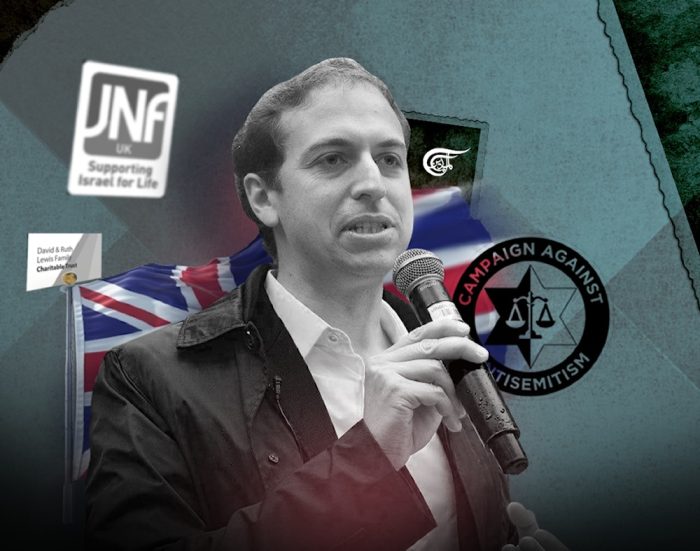
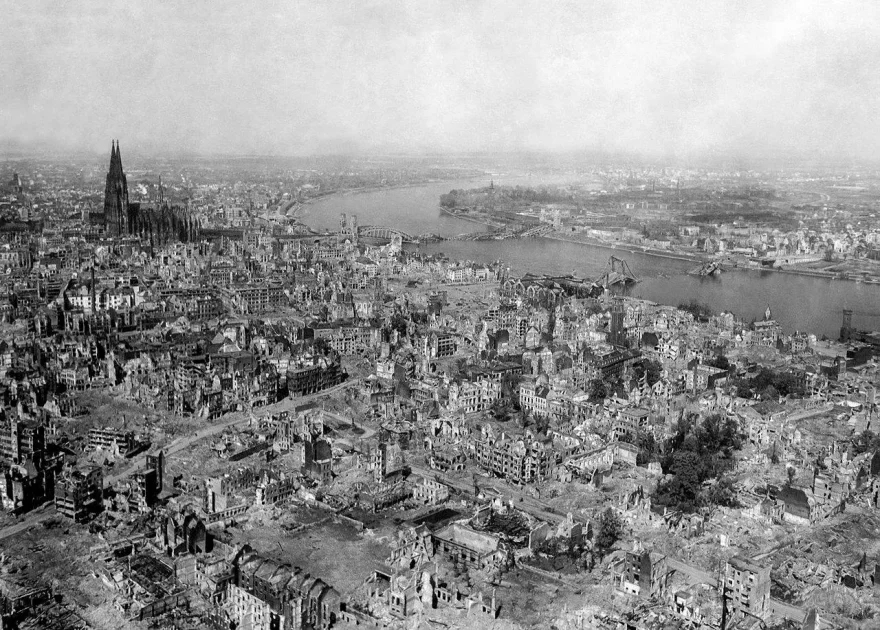
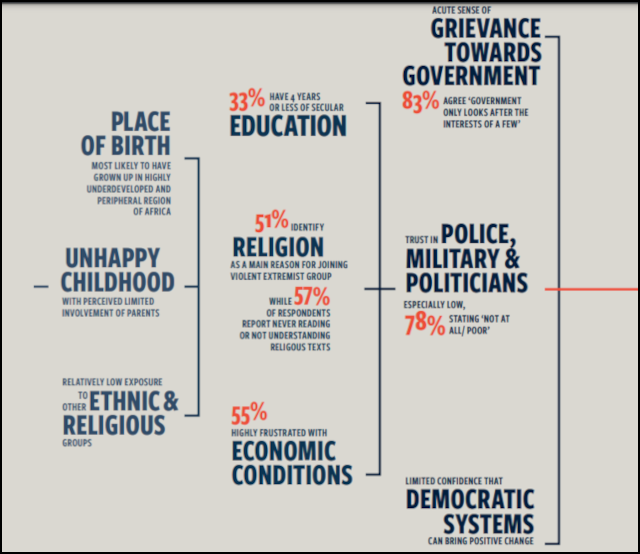


 Aletho News