EU Urges UN to Join Anti-Russia Sanctions
By Alex GORKA – Strategic Culture Foundation – 23.03.2016
The European Union called on March 18 for more countries to impose sanctions on Russia over Crimea joining the Russian Federation two years ago.
In a statement issued on the anniversary of Crimea’s formal accession to Russia, the EU said it will maintain its sanctions that ban European companies from investing in Russian Black Sea oil and gas exploration.
«The European Union remains committed to fully implementing its non-recognition policy, including through restrictive measures», the European Council, which represents EU governments, said. «The EU calls again on UN member states to consider similar non-recognition measures».
Separately, NATO Secretary-General Jens Stoltenberg urged the EU and United States to maintain their broader economic sanctions against Russia over its support for self-declared republics in the eastern part of Ukraine. «It is important that we continue the economic sanctions», Stoltenberg told an event in Brussels.
The Crimean Peninsula became a part of the Russian Federation on March 18, 2014 after the referendum carried out on March 16 showed 97 percent of voters supported joining Russia.
The Kremlin responded by saying that the issue of Crimea could not be «a matter of negotiations or international contacts». «Our position is known: this is a region of the Russian Federation. Russia has not discussed and will never discuss its regions with anyone», President Vladimir Putin’s spokesman Dmitry Peskov said in a teleconference with reporters.
«In this case we should treat with respect the expression of the will of Crimean residents and the decision which was taken two years ago», he emphasized.
The 28-nation EU imposed its Crimea sanctions in July 2014 and then tightened them in December 2014, banning EU citizens from buying or financing companies in Crimea. The United States, Japan and some other major economies, including Australia and Canada, also imposed sanctions on Russia, whereas many other economically developed nations, like, for instance, China and Brazil, refused to join.
It should be noted that the extension of anti-Russian sanctions is a very much divisive issue inside the European Union.
Hungary and Italy said last week they would not agree to extend the EU’s toughest economic sanctions on Russia, the EU’s major energy supplier, without discussions before the summer.
Germany’s Economy Minister Sigmar Gabriel called on March 17 for the EU to try to create conditions by this summer to lift sanctions.
France’s Minister for the Economy, Industry and Digital Affairs Emmanuel Macron said in January that Paris will look to assist in the lifting of Western backed sanctions on Russia by the summer.
Serbia, a nation in talks on joining the EU, has firmly rejected the idea of joining the sanctions regime.
US Republican Senator John McCain has the reputation of hawk calling for getting tough on Russia. But even he had to admit the fact that the sanctions are becoming increasingly unpopular inside the EU. «I think there is clearly a lot of conversation amongst the Europeans about lifting the sanctions… There are many countries that are looking for the exit sign», the Senator said in February. «I have been hearing it for months, that there is enormous pressure in a lot of countries, particularly Germany, to lift the sanctions», he noted.
At that the prominent US politician believes it is up to Washington if and when the sanctions are eventually lifted, saying that the final decision will «to some degree depend on American leadership». Actually, the US right-wing politician openly stated the EU decision on the sanctions is made under US pressure.
Indeed, the EU is following the US. President Obama announced American sanctions against Russia are to be prolonged for another year on March 2.
The EU obediently chimed in 16 days later.
The attempts of the EU to influence other countries into joining the anti-Russia sanctions regime look especially ridiculous against the organization’s failure to make the tiny nation of San Marino, an enclaved microstate surrounded by Italy, comply with the EU’s demands. The republic is not officially part of the European Union and does not face Russia’s food embargo. According to Rossiyskaya Gazeta, a Russian government daily newspaper of record which publishes the official decrees, statements and documents of state bodies, San Marino and Russia signed an export agreement on March 18 during the International Economic Forum of CIS countries.
San Marino’s Minister of Regional Development and International Economic Cooperation Antonella Mularoni attended the forum. Now this European country will export to Russia a range of products, including Parmesan cheese and premium meat products like local Parma type ham. «There are 24 dairies in the republic, and a lot of enterprises engaged in meat smoking», the executive director of the national wholesalers association Vladimir Lishchuk told Rossiyskaya Gazeta. According to him, imports will take the place of illegal goods bypassing the Russian food embargo. Russia’s food safety watchdog Rosselkhoznadzor said it would monitor food imports from San Marino to prevent re-exports of sanctioned products from neighboring EU countries. Russia introduced the food embargo in August 2014 in response to Western sanctions. The ban applied to meat, poultry and fish, cheese, milk, fruit and vegetables from the United States, the EU, Australia, Canada, Norway, Japan and a number of other countries. According to Russia’s Ministry of Economic Development, the import of banned products has fallen by nearly half to $6 billion in the first six months of 2015. Overall imports from the EU have fallen by 45 percent.
Evidently, the EU’s call for UN members to join the sanctions is an effort doomed to go down the drain. The European Union has no leverage strong enough to make world nations comply.
The organization itself is not in a strong position. Looks like it has seen its best days. Brussels is facing a host of acute problems. Many of them seem to be a tall order, for instance: the flows of migrants, the economic inequality of the Union’s members, debt problem and the conflicting views of the UK and Germany on European integration, to name a few.
Doing away with the divisive issue of anti-Russia sanctions could provide an impetus to making progress in other fields, but Brussels prefers a different approach.
The EU statement shows the Union’s leadership is adamant in its desire to go down the slippery slope risking a revolt among the member-states with tensions running already high inside «the European family».
Petition Calls for UN to Investigate Israel for Genocide
To UN Special Adviser on the Prevention of Genocide and ICC Prosecutor:
I am a concerned person of conscience, who fears that I am witnessing the genocide of the Palestinian people by the State of Israel. Witnessing Israel’s daily violations of Palestinian human rights- military take-over of land, restriction of movement, economic strangulation, house demolitions, restrictions on basic foodstuff, mass arbitrary arrests of both adults and children, torture, extra judicial executions, and large-scale massacres of whole families, openly calling for genocide and extermination by law makers and other public figures- I can not keep silent about this 67 year-old atrocity, unfolding before our eyes.
The Crime of Genocide is defined in a declaration made by the General Assembly of the United Nations in its resolution 96 (I) dated 11 December 1946. I demand the United Nations Office of the Special Adviser on the Prevention of Genocide and the International Criminal Court Prosecutor take action and investigate the possibility that Israel is committing the Crime of Genocide against the Palestinian People, and that the office publish its findings and recommendations.
Thank you
Saudi airstrike on Yemeni market had no apparent military reason – UN
RT | March 18, 2016
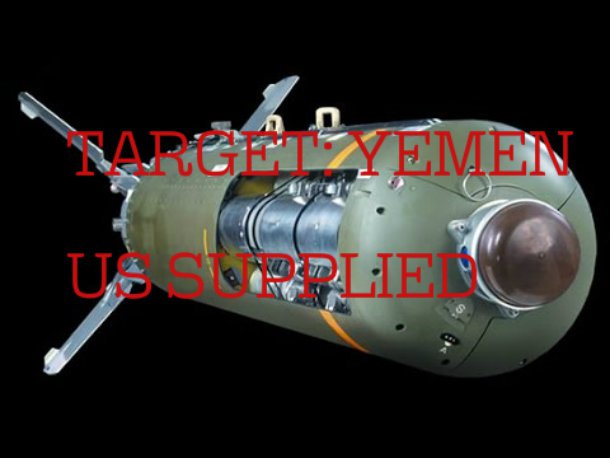
UN inspectors, who visited the Al Khamees market in north-western Yemen, where Saudi airstrikes killed over a hundred people this week, found no evidence that the attack could have any military goal.
The closest target of any value to justify the bombing is a small checkpoint some 250 meters from the market, which is manned by a small group of Houthis, UN High Commissioner for Human Rights Zeid Ra’ad Al Hussein said on Friday.
The market attack in Hajja Governorate on Wednesday was one of the deadliest incidents in Saudi Arabia’s year-long campaign in Yemen, Zeid said, describing it as “carnage.” The death toll was reported as 106 people, including 24 children. The high figures are explained by the timing of the airstrikes, which were delivered during the afternoon rush hour at the market. It serves as the main shopping destination for some 15 surrounding villages.
Since the Yemeni campaign was launched in March last year by the Saudi-led coalition of Arab nations, the UN has recorded just under 9,000 casualties in Yemen, including 3,218 civilians killed and a further 5,778 injured, Zeid said.
“Looking at the figures, it would seem that the coalition is responsible for twice as many civilian casualties as all other forces put together, virtually all as a result of airstrikes,” he said.
“They have hit markets, hospitals, clinics, schools, factories, wedding parties – and hundreds of private residences in villages, towns and cities including the capital Sana’a,” he added. “Despite plenty of international demarches, these awful incidents continue to occur with unacceptable regularity. In addition, despite public promises to investigate such incidents, we have yet to see progress in any such investigations.”
He warned that “we are possibly looking at the commission of international crimes by members of the Coalition.”
“I urge both sides to swallow their pride and bring this conflict to a halt,” Zeid said. “The people of Yemen have suffered enough. A very poor country is having its limited infrastructure decimated, and people are struggling desperately to survive.”
Earlier, the Al Khamees market bombing was condemned by UN Secretary General Ban Ki-moon and a number of international organizations. Saudi Arabia said it would scale down its aerial campaign in Yemen and focus on training Yemeni troops.
The campaign’s goal in Yemen was to push back Houthi rebels and forces loyal to former President Ali Abdullah Saleh and bring back to power exiled former President Abd Rabbuh Mansur Hadi.
UN Aid to Deir ez-Zor Lands in Daesh-Controlled Territory
Sputnik — February 25, 2016
The UN World Food Program’s (WFP) aid intended for the besieged Syrian city of Deir ez-Zor has landed mostly in territories controlled by Daesh, a source in the city’s administration said Thursday.
Earlier on Thursday, the United Nations said that the WFP had dropped 21 tons of aid into city on Wednesday.
“Planes dropped the humanitarian help sent by the United Nations into the territory controlled by Daesh. Just two containers ended up in the areas where the Syrian army [is located],” the source told RIA Novosti.
The contents of the containers that landed on the government-controlled territory has been badly damaged due to a parachute system failure, the source added.
According to earlier reports, the WFP has issued a statement admitting difficulties with the operation, adding that necessary adjustments are being carried out.
Some 200,000 people living under the Daesh-imposed siege in Deir ez-Zor are experiencing severe water shortages and a total lack of electricity, according to the United Nations.
Russia has also been providing humanitarian aid to the Syrian people, including through joint efforts with the Syrian government, particularly in Deir ez-Zor.
The UN and the Invisible Palestinian Knives of Allege-gate
By Vacy Vlazna | Dissident Voice | February 17, 2016
In Palestine, you would be forgiven for thinking that there was no United Nations Special Rapporteur on extrajudicial, summary or arbitrary executions.
The SR, Christof Heyns, in the past 6 years, has never made a country on-site visit to Palestine to get first hand information on the hundreds of cases of Zionist perpetration of extrajudicial, summary or arbitrary executions of the people of Palestine.
Not even the dozens of extrajudicial street executions of Palestinian children and youth carrying the invisible knives of Allege-gate since October 1, 2015 has impelled Heyns to rush to Palestine to ensure the zionist war criminals uphold Palestinian right to life.
In Palestine ‘alleged’ is a synonym for ‘extrajudicial, summary, or arbitrary execution’.
Yes, there is a Palestinian youth intifada, and, yes, there have been acts of resistance to the illegal occupation involving knives, rocks, and cars that have taken some occupier-settler lives.
But the Zionist Occupation Forces (ZOF); i.e., military and police death squads are running amok in Occupied Palestine shooting, seemingly for grisly amusement, innocent Palestinian school children, workers, housewives and youth.
In a wimpy statement on 16 November 2015, SR Heyns welcomed the assurance of the Zionist “Attorney General Yehuda Weinstein to the effect that Israeli security forces are prohibited from firing at a suspected assailant unless an immediate danger to human life cannot otherwise be prevented and that the use of fire must be proportional to the threat.”
You can be certain that the devastated parents of Wisam Qasrawi, 21 who buried their beloved child – transformed from family breadwinner into a martyr by lawless zionist bullets – know Wisam was killed in an indisputable and illegal extrajudicial execution.
 Wisam was born in a village, Misilya. It was described for the Palestine Exploration Fund (patron was Queen Victoria) by Royal Engineers’ surveyor Lieutenant Condor in 1881 as a village with ancient wells beneath it and a rounded hilltop above with extensive views north east across the great plain to Nazareth, west to Carmel, and to Jenin behind a neighbouring hill, ‘north west across a broad corn vale’.
Today, Misilya continues its ancient agricultural lineage of growing olives and cereal. Its 3000 residents are close-knit and mainly poor because of the crippling zionist occupation.
Wisam was outgoing, energetic, well liked and had lots of friends with whom he enjoyed playing playstation and billiards at the local cafe. Wisam also had an admirable sense of responsibility; he left school in year 11 to become the family breadwinner because his father had a severe back injury and his mother had small twins plus his other younger siblings to care for. Even while at school he worked as a part-time farm or building labourer to help out.
The early morning of Sunday, January 17th, gave no hint of impending tragedy. Wisam got dressed for his work at a brick/stone factory in Nablus, gave his mother the remaining money in his wallet and armed only with his mobile joined his mate who was giving him a lift as far as the Huwwara checkpoint. He was dropped off about 500 yards from the checkpoint.
Eyewitnesses reported that the heavily armed soldiers were calling out to Wisam, “Come on, come to us”. Wisam walked, relaxed and hands in the air, and at 50 metres military shots burst hitting his chest and head. Typically, he was left to bleed out and die.
Within 10 minutes, even before Wisam’s mate returned to Misilya, the Zionist news reported an alleged attempted stabbing at the Huwwara checkpoint with no soldiers injured (understandable).
By the afternoon the ZOF had made incursions into Wisam’s village, set up checkpoints and closed off the village which was in collective shock, helplessness, anger and mourning.
Wisam’s body was returned at night and respectfully given a martyr’s burial; the body is not washed as usual with scented water and wrapped in a shroud, but the martyr is buried in the clothes in which he/she died and the blood is left unwashed. According to a Hadith – on Resurrection Day, the Shahid’s blood -“Its color saffron, and its odor musk”.
With 68 years of the violent unrestricted bloodletting of martyrs, the scent of this holy musk is tragically Palestine’s oxygen.
Wisam is no more, just as Ehab, Khalil, Ahmad, Ruqayya, Dania, Nihad, Fuad, Naim, and all the other young innocent invisible-knife wielders, are no more.
The UN was set up to maintain international peace, security and human rights for all. In 68 years, the now 192 member states of the UN have not furthered one moment of peace and justice for the people of Palestine.
The Zionist state has over and over, day to day, blatantly violated every UN declaration and convention it has ratified and it has never been suspended or expelled from the UN:
A Member of the United Nations which has persistently violated the Principles contained in the present Charter may be expelled from the Organization by the General Assembly upon the recommendation of the Security Council.
The UN is as fake as the fake knives of Allege-gate. Both are smokescreens for impunity for Zionist brutality and crimes against humanity.
Dr. Vacy Vlazna is Coordinator of Justice for Palestine Matters. She was Human Rights Advisor to the GAM team in the second round of the Aceh peace talks, Helsinki, February 2005 and then withdrew on principle. Vacy was coordinator of the East Timor Justice Lobby as well as serving in East Timor with UNAMET and UNTAET from 1999-2001.
UN ‘conservative estimates’ show 700 children among 6,000 Yemen fatalities
RT | February 17, 2016
The UN will launch a humanitarian drive to raise some $1.8 billion required to save millions of people from humanitarian catastrophe in Yemen, where over 6,000 people have been killed since the Saudi-led coalition intervention in March 2015.
In a briefing to the 15-nation United Nations Security Council, Stephen O’Brien, the UN Under-Secretary-General for Humanitarian Affairs, announced that on Thursday the Yemen Humanitarian Response Plan will be launched in Geneva.
The plan aims to raise $1.8 billion to cover the “most critical and prioritized needs” that includes food for nearly nine million people. The money will also be used for water and sanitation for some 7.4 million people and medical treatment for 10.6 million people.
Highlighting the urgent need for the Security Council to take greater measures to protect civilians, O’Brien said that the UN should insure that people have a chance to survive.
“Some 2.7 million people have had to flee their homes. At least 7.6 million people are severely food insecure. Some two million acutely malnourished children and pregnant or lactating women need urgent treatment,” he told the UNSC.
He noted that since the escalation of the conflict in March 2015 which has involved Saudi-led bombings, over 6, 000 people have been killed.
“More than 35,000 casualties, including over 6,000 deaths, have been reported by health facilities across the country,” since last March, O’Brien said, adding that UN has confirmed that out of that number, 2,997 were civilians deaths, in addition to 5,659 that were injured as the result of the hostilities.
Of great concern to the UN is the fate of the children in the conflict. O’Brien said that “conservative estimates” suggest that over 700 children have been killed and over 1,000 more injured. He also noted that as many as 720 children have been documented as having been forcibly recruited as child soldiers by the warring parties. The diplomat also noted that some 1,170 schools have been closed leaving some 3.4 million minors out of education.
The destruction or closure of health facilities, which totals some 600 since March, has also left some 14 million Yeminis in desperate need of medical attention.
Noting that on Sunday Saudi-led coalition airstrike struck a building 200 meters away from UN and diplomatic personnel facility, he urged all parties in Yemen to protect civilians.
“The parties to the conflict have a duty of care in the conduct of military operations to protect all civilian persons and objects, including humanitarian and health care workers and facilities, against attack,” Mr. O’Brien said, reminding all parties of their obligations under international humanitarian law to “facilitate humanitarian access to all areas of Yemen,” he said.
At the same time, O’Brien noted that for the past two weeks Saudi Arabia has continued to impede the work of UN staff in the country, “causing delays to important missions.” The diplomat said that Riyadh is also blocking sea access to Yemen’s ports, and is preventing aid from traveling around the country,
“Access to northern Governorates where needs are among the most severe in the country also continue to be challenging due to relentless conflict, including airstrikes – in particular to communities along the border with Saudi Arabia where conflict is intense,” O’Brien noted.
Tensions in Yemen escalated after Shia President Saleh was deposed in 2012 and his Houthi supporters, reportedly aided by Iran, eventually seized the capital city Sana’a last year. Houthi forces then advanced from Sana’a towards the south, seizing large parts of Yemen, and sending the current Sunni President Abd-Rabbu Mansour Hadi into exile.
In late March, a Saudi Arabian-led coalition responded with airstrikes in order to stop Houthi advances and reinstate Hadi back in power. By late summer, the Saudi-led forces had started a ground operation, which so far is stuck in a stalemate.
Syria: Terrorist bombings in Homs require immediate and stern condemnation from Security Council
Syria Online – January 27, 2016
The Foreign and Expatriates Ministry said that the two terrorist bombings that took place in Homs city on Tuesday and other similar terrorist crimes require an immediate and stern condemnation from Security Council and taking deterrent actions against the states that support and fund terrorism.
In two identical letters sent to the UN Secretary-General and to the head of the Security Council, the Ministry said that terrorist organizations detonated a car bomb on Tuesday morning in al-Siteen Street in al-Zahra’a neighborhood in Homs, and that attack was followed by another attack by suicide bomber using an explosive belt, claiming the lives of 24 civilian and injuring more than 100 civilians, some of whom sustained severe injuries, in addition to damaging houses and infrastructures in the area.
The Ministry noted that these bombings were carried out at a time when the date for holding the Geneva 3 meeting, which seeks to push towards a political solution for the crisis in Syria, is approaching.
The letters pointed out that Syria had informed the Security Council and the Secretary-General of numerous terrorist bombings that targeted the very same neighborhood, but sadly none of these attacks and none of the hundreds of victims who were killed or injured in them were paid any attention by the Council and the Secretary-General.
The Ministry said that those two brutal bombings constitute a continuation of the barbaric and methodical terrorist acts committed by terrorist groups in Syria, groups that are supported by well-known regional and international states that employ terrorists to serve their personal political interests and irresponsible agendas, adding that these crimes also constitute a response to the political efforts to find a political solution by Syrians and to the success of national reconciliation efforts.
The letters also noted that the bombings are also an attempt to raise the morale of terrorist groups that are suffering repeated defeats at the hands of the Syrian Arab Army.
The Ministry said that the crimes and massacres committed by terrorist organizations like ISIS, Jabhat al-Nusra, Jaish al-Islam, al-Jabha al-Islamiya, Jaish al-Fateh, Ahrar al-Cham, and the “Free Army” wouldn’t have taken place without the constant arming, equipping, funding, and logistic support provided to terrorists by the governments of certain states.
The letters said that the Syrian government stresses that as per relevant Security Council resolutions and the principles of international law, such terrorist crimes require an immediate and stern condemnation from Security Council and taking deterrent actions against the states that support and fund terrorism whose destructive impact on peace and security isn’t limited to Syria but also affects the entire world.
The Ministry also stressed the need to cooperate and coordinate with the Syrian government in any effort for combating terrorism.
Saudi war on Yemen violates humanitarian law: UN panel
Press TV – January 27, 2016
A UN panel of experts says Saudi Arabia’s months-long war on impoverished Yemen has violated the humanitarian law as many of the airstrikes have been carried out on civilian targets.
The UN experts have called on the UN Security Council to “investigate reports of violations of international humanitarian law and human rights law in Yemen by all parties and to identify the perpetrators of such violations,” AFP reported on Tuesday.
The report added that Saudi warplanes had carried out 120 sorties, involving documented airstrikes on refugee camps, weddings, buses, medical facilities, residential areas, mosques, markets, factories, food warehouses, schools and airports.
“Many attacks involved multiple air strikes on multiple civilian objects,” the report further said, adding that “civilians are disproportionately affected” by the unabated aerial aggression. It also denounced Riyadh’s crippling blockade on Yemen, which constitutes “the prohibited use of starvation as a method of warfare.”
Saudi Arabia began its military aggression against Yemen in late March last year. The strikes are supposedly meant to undermine the Ansarullah movement and restore power to the fugitive former president, Abd Rabbuh Mansur Hadi.
Some 8,300 people have been killed and over 16,000 others injured since the strikes began. The Saudi war has also taken a heavy toll on Yemen’s infrastructure.
Yemenis have been carrying out retaliatory attacks on the Saudi forces deployed in the country as well as targets inside Saudi Arabia.
Peace talks between Damascus & opposition to start January 29 – UN Syria envoy
RT | January 25, 2016
Talks between Damascus and the Syrian opposition will begin on January 29, the UN’s Syria envoy Staffan de Mistura has told journalists in Geneva. The negotiations will focus on a broad ceasefire, stopping Islamic State militants and increasing aid, he added.
De Mistura said the process of finalizing the list of participants “is still ongoing,” particularly regarding clarification of the opposition groups which will not be considered “terrorist.”
He added that the UN will start sending invitations on Tuesday. “I’m going to send the invitations given by the mandate of the UN Security Council,” he said.
The peace talks were originally due to start on Monday, but were postponed.
“We want to make sure that when and if we start, to start at least on the right foot. It will be uphill anyway,” de Mistura said.
He added that the “proximity talks” between the two sides are expected to last six months. According to the UN official, “this will not be Geneva-3.”
The Geneva II peace conference which took place in 2014 focused on bringing the two sides – the government and opposition – to the negotiation table to agree on forming a transitional government.
De Mistura told reporters that the sides will not talk directly to each other and will be mediated by negotiators.
The first part of the talks will last from two to three weeks, the envoy said, adding that the focus will be on negotiating a ceasefire, stopping Islamic State (IS, formerly ISIS/ISIL) and increasing humanitarian aid.
“The condition is it should be a real ceasefire and not just local,” de Mistura said. “Suspension of fighting regarding ISIL and al Nusra is not on the table. However (there are) plenty of other suspensions of fighting that can take place.”
Among the priorities will also be the issues of governance, a constitutional review and future UN-backed election.
“The participation will be as inclusive as possible, including women, civil society and other marginalized groups,” said Mistura, answering a question concerning the composition of the delegations.
The Syrian government has said that Damascus’s delegation will be headed by the Syrian ambassador to the United Nations, Bashar al-Jaafari.
The disagreement over which opposition groups will take part in the peace talks and who will represent them has been impeding the start of negotiations.
On Wednesday, a Syrian opposition coalition, the so-called ‘High Negotiations Committee,’ named an Islamist chief as their top negotiator. The decision to appoint Mohammed Alloush, the leader of Jaysh al-Islam (Army of Islam), a powerful jihadist group operating in the suburbs of Damascus, as one of the negotiators drew criticism, even from among other members of the Syrian opposition.
UN rights experts warn France not to limit freedoms under anti-terror laws
Press TV – January 19, 2016
United Nations human rights experts have expressed concern about new counter-terrorism measures adopted in France against the backdrop of the deadly 2015 Paris attacks, calling on the French government to protect fundamental freedoms in its anti-terror battle.
In a statement released on Tuesday, a group of four UN rights specialists said the current state of emergency in France and surveillance laws impose “excessive and disproportionate restrictions” on the basic rights of people.
The statement said the main concerns center on “the lack of clarity and precision of several provisions of the … laws, related to the nature and scope of restrictions to the legitimate exercise of right to freedom of expression, freedom of peaceful assembly and association and the right to privacy.”
On November 13, 2015, assailants struck at least six different venues in and around Paris. The terrorist attacks left 130 people dead and over 350 others wounded. France introduced the state of emergency following the horrendous assaults, which were claimed by the Takfiri Daesh terrorist group.
The exceptional measures adopted under the state of emergency empower the French police to keep people in their homes without trial, searching houses without judicial approval and blocking suspicious websites. The new measures also include a ban on public demonstrations and allow authorities to dissolve groups inciting any acts that seriously affect public order in France.
The UN rights specialists also called on the French government not to extend the state of emergency beyond February 2016 and ensure protection against any abuse of power while combating terror.
Yasser Louati, a spokesman for the Collective against Islamophobia in France, an anti-racist group, said last month that the state of emergency has unfairly targeted Muslims in France.
Featured Video
Trita Parsi: Israel Set a Trap for Total War in the Region
or go to
Aletho News Archives – Video-Images
From the Archive
Zionism’s Violent Legacy
By Donald Neff | Washington Report On Middle East Affairs | January 1996
On January 4, 1948, Jewish terrorists drove a truck loaded with explosives into the center of the all Arab city of Jaffa and detonated it, killing 26 and wounding around 100 Palestinian men, women and children.[1] The attack was the work of the Irgun Zvai Leumi – the “National Military Organization,” also known by the Hebrew letters Etzel – the largest Jewish terrorist group in Palestine. The Irgun was headed by Revisionist Zionist Menachem Begin and had been killing and maiming Arabs, Britons and even Jews for the previous ten years in its efforts to establish a Jewish state.
This terror campaign meant that at the core of Revisionist Zionism there existed a philosophical embrace of violence. … continue
Blog Roll
 Aletho News
- Trita Parsi: Israel Set a Trap for Total War in the Region
- Trump’s Iran war is on an Israeli leash
- Saudi oil boss issues global supply warning
- Riyadh Says Its Oil System Is Intact. The Numbers Say Otherwise.
- Trump and Netanyahu Want to “Finish the Job” on Iran
- US ‘one-sided dictation’ not Iran’s beliefs makes rational talks impossible: Baghaei
- Iran’s Next Strike May Not Explode. It Could Shut You Down /Col Doug Macgregor
- Iran: US political targets legitimate if assassinations return
- Iraq shuts key border crossing with Iran under US pressure: Report
- Undersea Internet cables could be targeted in retaliation for attacks on Iran: IRGC deputy chief
- If Americans Knew
- The Israel Lobby’s Changing Fortunes
- AIPAC has become such a political liability that it’s shifting to a more “nimble” approach to buying politicians
- At least 160 Israeli settler attacks in 2 weeks
- Will Gaza’s Ancient Christian Community Disappear Forever?
- Israel’s vision of regional security rests on keeping Arab states weak
- Heidi Levine recounts how Palestinian youths helped save her in settler attack
- DAILY UPDATE: Latest essential news on Palestine, Israel, & region
- Trump’s Intensifying Sabotage of the ICC, for Israel’s Sake
- Israeli military detain US and UK volunteers in West Bank including Democratic NY politician Brad Lander
- Americans at National Conservatism Conference held in Israel this year criticize Israel
- No Tricks Zone
- E-Cars Reduce CO2 Emissions By Only 41% Compared To Internal Combustion Engine Vehicles
- Predictions Made By Renowned Climate Professor Over Past Decades Have Been Proven To Be Poor
- New Study Suggests Large Regions Of The Pacific Ocean Have Been Cooling For The Last 80 Years
- Germany’s Green Energy Debacle: High Energy Costs Force Kahla Porzellan to Close After 182 Years!
- New Study: 50 Years Of The Most Aggressive ‘Net Zero’ Policies Can Only Affect The Global Climate By 0.03°C
- US September “Heat” Was No Record…Many Records Set Decades Ago
- Latest European Green Energy Debacle; Portugal’s Largest Flagship Solar Park Insolvent!
- Green Energy Debacle: German Expert Professor Fritz Vahrenholt Warns Of Severe Economic And Social Consequences
- Two More Paleo Reconstructions Affirm Meters-Higher Sea Levels Across Ireland, Brazil 7000-6000 Years Ago
- New Study: Earth And Venus Surface Warmth Largely Explained By Convection And Lapse Rate, Not CO2 Or Radiation

