Russia FM Blasts US Illegal ‘Methods of Blackmail’ Against Cuba
teleSUR | May 4, 2019
Russia’s Foreign Ministry urged the international community to unite in condemning the United States’ new anti-Cuban blockade measure, which came about after President Donald Trump lifted the waiver on Title III of the once-dormant Helms-Burton Act.
“We emphasize again that the methods of blackmail and pressure used by Washington are absolutely illegal. We call on all responsible forces to defend the U.N. Charter and international law in order to jointly put an end to the anti-Cuba blockade,” the Russian ministry said in a statement.
The ministry also pointed out that Washington is threatening more sanctions on Cuba in the vein of the “Monroe Doctrine” in an “overt encroachment” on the sovereignty of the Latin American nation.
The new sanctions were made known when United States Secretary of State Mike Pompeo announced that the Title II would come into effect on May 2, permitting U.S. nationals to sue Cuban entities or foreign entities operating on the island prior to the Cuban Revolution for damages.
Moscow said the measures are excessive since Cuba has repeatedly expressed readiness to resolve existing contradictions with the United States regarding bilateral issues.
The Helms-Burton Act is a bill passed by former U.S. President Bill Clinton in 1996. However, this is the first time that any U.S. administration has authorized its implementation.
“Through the devaluation of democratic principles and rejection of international legal norms, the U.S. neglects the values it promotes, creating obstacles for all countries leading a separate policy and refusing to follow Washington’s directions,” the Foreign Ministry noted.
Canada, the European Union as well as other countries have rejected the activation of the Helms-Burton Act, explaining that it violates the norms of international law.
After Venezuela coup failure, officials & mainstream media desperately spinning explanations
RT | May 4, 2019
Months of insistence in Washington that the people of Venezuela stood by the US-backed opposition leader Juan Guaido basically went up in smoke when his ‘Operation Liberty’ fizzled. The question now is whom to blame.
Senior US officials like National Security Advisor John Bolton and special envoy for Venezuela Elliott Abrams expressed confidence in “regime change” in Caracas on Tuesday, named top Venezuelan officials ready to defect, and even spoke of signed documents to that effect.
Yet literally none of this happened, and by the early evening on Tuesday, the handful of Guaido’s armed supporters were seeking sanctuary in foreign embassies.
Then came the spin. Secretary of State Mike Pompeo went on CNN and Fox News to claim that Maduro was getting ready to flee to Cuba, but “the Russians” talked him out of it. Bolton claimed Maduro was “hiding in a bunker” even as video evidence from Caracas showed him addressing supporters numbering in the thousands on May Day. The truth was inescapable, though: Guaido had failed.
“The opposition took a step backward with the military,” Rocio San Miguel, president of the Colombian NGO Control Ciudadano, told Bloomberg on Thursday. “Guaido appearing with [his mentor Leopoldo] Lopez at a single point in the city with a few dozen soldiers and no major firepower showed their weakness.”
So what happened? Several US media outlets have since sought to explain, citing anonymous sources allegedly privy to US government plots. These sources told Bloomberg they believe Maduro got wind of the coup on April 29, and Guaido rushed it ahead of schedule “or it would all collapse.”
Lopez was released from house arrest because the head of the Venezuelan intelligence agency SEBIN, General Manuel Christopher Figuera, had defected to Guaido, the anonymous and entirely unverifiable sources claimed, adding that it was Lopez resurfacing that might have spooked other senior officials – defense minister Vladimir Padrino, Supreme Court Chief Justice Maikel Moreno, and military intelligence and presidential guard head General Ivan Hernandez.
According to these sources, Figuera’s wife left Venezuela on Sunday for the safety of the US, and the general left the country as well after he was sacked on Tuesday night, though his whereabouts are unknown.
Meanwhile, AP published a long speculative piece about missed opportunities to turn senior Venezuelan officials, from Hernandez being denied a visa in 2017 for his 3-year-old son’s brain surgery, to Padrino reaching out to the US government in early 2016, after a troubled Venezuelan election.
Padrino in particular has been seen as “a potential white knight,” being a graduate of the School of the Americas. Apparently, very little US influence in the Venezuelan army had survived what the AP described as “thorough scrubbing” by Former President Hugo Chavez.
“There’s a theory that’s gaining ground, and I think there’s some credence to it, that it was all part of a big ‘rope-a-dope’ operation, whereby the Maduro officials pretended to go along with this coup to smoke out the opposition,” Daniel McAdams, executive director of the Ron Paul Institute for Peace and Prosperity, told RT.
“That’s one possibility, the other is that Pompeo’s lying” about Maduro’s attempted flight to Cuba, McAdams said, adding that neither reflects well on the US.
Whatever the truth, there is no escaping the fact that Washington has pushing for regime change in Caracas for months with sanctions and other forms of pressure, and openly since “recognizing” Guaido in January, to absolutely no avail. All the hot air coming from Bolton, Pompeo, Abrams and other high officials pushing the regime change narrative has had far more effect in the US than in Venezuela.
Trump Contradicts Pompeo and Bolton’s Venezuela Claims After Call With Putin
Sputnik – May 4, 2019
President Donald Trump appeared to contradict his own senior officials’ claims about Russian “involvement” in Venezuela on Friday following his telephone conversation with Russian President Vladimir Putin.
“We talked about many things. Venezuela was one of the topics. And he is not looking at all to get involved in Venezuela, other than he’d like to see something positive happen for Venezuela. And I feel the same way,” Trump said, speaking to reporters in Washington on Friday during a meeting with the Slovak prime minister.
According to Trump, the US wanted to help Venezuela on a “humanitarian basis,” including with the delivery of food and water to the country’s “starving” population. “I thought it was a very positive conversation I had with President Putin on Venezuela,” Trump said.
Trump’s remarks appeared to stand at odds with earlier claims by several of his key officials, including Secretary of State Mike Pompeo and National Security Adviser John Bolton, about alleged Russian “interference” in Venezuela.
On Wednesday, Pompeo had a telephone conversation with Russian Foreign Minister Sergei Lavrov, telling him that Russia should “not interfere” in the Latin American country. Lavrov called the allegations of Russian involvement “rather surreal” and said that Russia’s “principled position” was to “never interfere in the affairs of others.”
Earlier, Bolton warned countries “external to the Western Hemisphere,” including Russia against deploying military forces in Venezuela, and signaled the US administration’s readiness to use the Monroe Doctrine in its policy toward Latin America. US Special Representative for Venezuela Elliott Abrams similarly indicated that the US might impose sanctions against Russia over Moscow’s military assistance to Venezuela, telling reporters that “the Russians will pay a price for this” for their meddling earlier this year.
Pompeo, Bolton and acting Secretary of Defence Patrick Shanahan met at the pentagon on Friday to discuss military options in Venezuela, with Shanahan reiterating the White House’s oft-repeated claim that all options remained “on the table” in resolving the Venezuelan crisis and dismissing concerns about a lack of good intelligence on the Venezuelan country.
Later Friday, unnamed sources told CNN that President Trump had asked questions “about the reliability of US intelligence” on Venezuela, given that the expected military uprising hoped for by opposition leader Juan Guaido “and some US officials” earlier this week failed to pay off.
The long-standing crisis in Venezuela escalated on Tuesday, after Guaido announced the beginning of the “final phase” of the “Operation Freedom” campaign to topple the government, and urged members of the military to defect and join the opposition. The call to action led to clashes in the capital between security forces and the opposition, leaving dozens injured. A day later, Maduro appeared on television to announce that the coup had failed, and to say that a criminal investigation aiming to uncover its organisers had been launched.
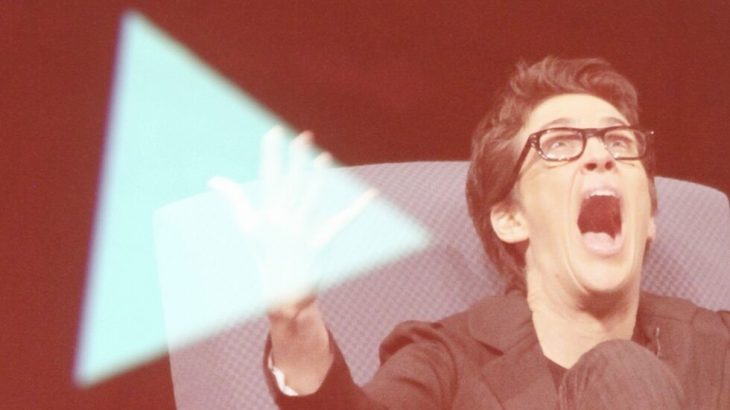
MSM melts down as Trump talks Venezuela with Putin… and ‘feels same way’
RT | May 4, 2019
America’s most trusted talking heads are in meltdown mode, once again accusing Donald Trump of taking orders from Vladimir Putin, after the US leader was seemingly too soft with the Russian president in a recent phone call.
Rachel Maddow, Jake Tapper, and other spirited Russiagate promoters suffered full-on meltdowns upon learning that Trump apparently hadn’t ‘properly’ discussed the issue of “election meddling” in his first phone call with Vladimir Putin since the Mueller report’s release.
Rather, the two leaders spoke about “trade, Venezuela, Ukraine, North Korea, nuclear arms control” and “the Russian hoax” during the hour-long call, according to Trump’s tweet.
Scandalously, the US president failed to press Putin about the most critical, life-and-death issue facing the United States – a massive flub-up that did not go unnoticed by the intrepid Washington press corps.
“Did you tell [Putin] not to meddle in the next election?” an unseen reporter asked the president during a Friday press conference.
“We had a good conversation about many different things,” Trump replied. “We didn’t discuss that.”
As for Venezuela, Trump had the audacity to suggest that the Russian president “is not looking to get involved at all, other than that he’d like to see something positive happen” in the South American nation. Trump then showed his true collusion colors, admitting that he “feels the same away” about the ongoing political crisis in Caracas.
His comments were received with predictable hysteria.
CNN’s Erin Burnett expertly deduced that Trump was “kowtowing” to Putin — on both “election meddling” and Venezuela.
“‘Not looking to get involved’ is just blatantly false – according to Trump’s own top team,” she sniffed, incredulous that Trump would contradict his more hawkish secretary of state, Mike Pompeo. Earlier this week, Pompeo claimed that Venezuelan President Nicolas Maduro was about to flee to Cuba and was only persuaded to remain in Caracas because Russia allegedly convinced him to stay.
Burnett’s colleague, Jake Tapper, was inconsolable as he attempted to wrap his head around the apparently unforgivable contents of a routine telephone conversation.
“He is giving Putin’s point of view, almost as if he is the spokesman for the Kremlin!” the CNN anchor fumed, referring to the Russian president as “the man who led and continues to lead cyberattacks on the US.” Not missing a beat, Tapper then proceeded to accuse Trump of “continuing to say things about the Mueller investigation that weren’t true.”
True to form, MSNBC’s Rachel Maddow came close to suffering an on-air stroke over the phone call. Still reeling from her post-Russiagate ratings slump, Maddow looked at Bolton and Pompeo as similarly unmoored kindred spirits.
The MSNBC host addressed them directly during her broadcast: “Hey, John Bolton, hey, Mike Pompeo, are you guys enjoying your jobs right now?”
“How do you come to work anymore if you’re John Bolton?” she added.
Western media outlets have repeatedly expressed indignation over any attempt by the world’s two largest nuclear powers to engage in dialogue. A meeting between Trump and Putin in Helsinki, Finland was described as constructive by both parties, but the US president was still hounded for not excoriating Putin to the media’s liking.
Likely anticipating similar hysteria over the phone call, Trump stated on Friday morning that “as I have always said, long before the Witch Hunt started, getting along with Russia, China, and everyone is a good thing, not a bad thing.”
Intel and Law Enforcement Tried to Entrap Trump
By Larry C Johnson | Sic Semper Tyrannis | May 3, 2019
The preponderance of evidence makes this very simple–there was a broad, coordinated effort by the Obama Administration, with the help of foreign governments, to target Donald Trump and paint him as a stooge of Russia.
The Mueller Report provides irrefutable evidence that the so-called Russian collusion case against Donald Trump was a deliberate fabrication by intelligence and law enforcement organizations in the United States and the United Kingdom and organizations aligned with the Clinton Campaign.
Breaking news today, courtesy of the New York Times, is that a man with a long history of working with the CIA and a female FBI Informant, traveled to London in September of 2016 and tried unsuccessfully to entrap George Papadopolous. The biggest curiosity is that US intelligence or law enforcement officials fully briefed British intelligence on what they were up to. Quite understandable given what we now know about British spying on the Trump Campaign.
The Mueller investigation of Trump “collusion” with Russia prior to the 2016 Presidential election focused on eight cases:
Proposed Trump Tower Project in Moscow—
George Papadopolous—
Carter Page—
Dimitri Simes—
Veselnetskya Meeting at Trump Tower (June 16, 2016)
Events at Republican Convention
Post-Convention Contacts with Russian Ambassador Kislyak
Paul Manafort
One simple fact emerges–of the eight cases or incidents of alleged Trump Campaign interaction with the Russians investigated by the Mueller team, the proposals to interact with the Russian Government or Putin originated with FBI informants, MI-6 assets or people paid by Fusion GPS, not Trump or his people. There is not a single instance where Donald Trump or any member of his campaign team initiated contact with the Russians for the purpose of gaining derogatory information on Hillary or obtaining support to boost the Trump campaign. Not one.
Simply put, Trump and his campaign were the target of an elaborate, wide ranging covert action designed to entrap him and members of his team as an agent of Russia.
Let’s look in detail at each of the cases.
THE PROPOSED TRUMP TOWER PROJECT IN MOSCOW, according to Mueller’s report, originated with an FBI Informant–Felix Sater. Here’s what the Mueller Report states:
In the late summer of 2015, the Trump Organization received a new inquiry about pursuing a Trump Tower project in Moscow. In approximately September 2015, Felix Sater . . . contacted Cohen (i.e., Michael Cohen) on behalf of I.C. Expert Investment Company (I.C. Expert), a Russian real-estate development corporation controlled by Andrei Vladimirovich Rozov. Sater had known Rozov since approximately 2007 and, in 2014, had served as an agent on behalf of Rozov during Rozov’s purchase of a building in New York City. Sater later contacted Rozov and proposed that I.C. Expert pursue a Trump Tower Moscow project in which I.C. Expert would license the name and brand from the Trump Organization but construct the building on its own. Sater worked on the deal with Rozov and another employee of I.C. Expert. (see page 69 of the Mueller Report).
Mueller, as I have noted previously, is downright dishonest in failing to identify Sater as an FBI informant. Sater was not just a private entrepreneur looking to make some coin. He was a fully signed up FBI informant. Sater’s status as an FBI snitch was first exposed in 2012. Sater also was a boyhood chum of Michael Cohen, the target being baited in this operation. Another inconvenient fact excluded from the Mueller report is that one of Mueller’s Chief Prosecutors, Andrew Weissman, signed the deal with Felix Sater in December 1998 that put Sater into the FBI Informant business.
All suggestions for meeting with the Russian Government, including Putin, originated with Felix Sater. The use of Sater on this particular project started in September 2015.
[For more on Sater please see my previous posts, Felix Sater–The Rosetta Stone for the FBI/CIA Conspiracy Against Trump?, Felix Sater and the Steele Dossier.]
GEORGE PAPADOPOLOUS
Papadopolous was targeted by British and U.S. intelligence starting in late December 2015, when he is offered out of the blue a job with the London Centre of International Law and Practice Limited (LCILP) . The LCILP has all of the hallmarks of an intelligence front company. LCILP began as an offshoot from another company — EN Education Group Limited — which describes itself as “a global education consultancy, facilitating links between students, education providers and organisations with an interest in education worldwide”.
EN Education and LCILP are owned and run by Nagi Khalid Idris, a 48-year-old British citizen of Sudanese origin. For no apparent reason Idris offers Papadopolous a job as the Director of the LCILP’s International Energy and Natural Resources Division. Then in March of 2016, Idris and Arvinder Sambei (who acted as an attorney for the FBI on a 9-11 extradition case in the UK), insist on introducing Joseph Mifsud to Papadopolous.
It is Joseph Mifsud who introduces the idea of meeting Putin following a lunch in London:
“The lunch is booked for March 24 at the Grange Holborn Hotel,. . . . “When I get there, Mifsud is waiting for me in the lobby with an attractive, fashionably dressed young woman with dirty blonde hair at his side. He introduces her as Olga Vinogradova.” (p. 76)
“Mifsud sells her hard. “Olga is going to be your inside woman to Moscow. She knows everyone.” He tells me she was a former official at the Russian Ministry of Trade. Then he waxes on about introducing me to the Russian ambassador in London.” (p. 77)
“On April 12, “Olga” writes: “I have already alerted my personal links to our conversation and your request. The embassy in London is very much aware of this. As mentioned, we are all very excited by the possibility of a good relationship with Mr. Trump. The Russian Federation would love to welcome him once his candidature would be officially announced.”
And it is Mifsud who raises the possibility of getting dirt on Hillary:
“Then Mifsud returns from the Valdai conference. On April 26 we meet for breakfast at the Andaz Hotel, near Liverpool Street Station, one of the busiest train stations in London. He’s in an excellent mood and claims he met with high-level Russian government officials. But once again, he’s very short on specifics. This is becoming a real pattern with Mifsud. He hasn’t offered any names besides Timofeev. Then, he leans across the table in a conspiratorial manner. The Russians have “dirt” on Hillary Clinton, he tells me. “Emails of Clinton,” he says. “They have thousands of emails.”
Here again we encounter the lying and obfuscation of the Mueller team. They falsely characterize Mifsud as an agent of Russia. In fact, he has close and longstanding ties to both British and US intelligence (Disobedient Media lays out the Mifsud mystery in detail).
Mifsud was not alone. The FBI and the CIA also were in the game of trying to entrap Papadopolous. In September of 2016, Papadopolous was being wined and dined by Halper (who has longstanding ties to the US intelligence community) and Azra Turk, an FBI Informant/researcher (see NY Times ).
The FBI disingenuously claims they ran Azra Turk at Papadopolous because they were alarmed ostensibly by Russia’s attempts to disrupt the 2016 election. But Papadopolous was not seeking out Russian contacts. He was being baited. It was Mifsud and others tied to British and US intelligence who were bringing up the “opportunity” to work with the Russians.
CARTER PAGE
The section of the Mueller report that deals with Carter Page is a total travesty. Mueller and his team, for example, initially misrepresent Page’s status with the Trump campaign–he is described as “working” for the campaign, which implies a paid position, when he was in fact only a volunteer foreign policy advisor. Mueller also paints Page’s prior experience and work in Russia as evidence that Page was being used by Russian intelligence, but says nothing about the fact that Page was being regularly debriefed by the CIA and the FBI during the same period. In other words, Page was cooperating with US intelligence and law enforcement. But this fact is omitted in the Mueller report.
Mueller eventually accurately describes Page’s role in the Trump campaign as follows:
In January 2016, Page began volunteering on an informal, unpaid basis for the Trump Campaign after Ed Cox, a state Republican Party official, introduced Page to Trump Campaign officials. Page told the Office that his goal in working on the Campaign was to help candidate Trump improve relations with Russia. To that end, Page emailed Campaign officials offering his thoughts on U.S.-Russia relations, prepared talking points and briefing memos on Russia, and proposed that candidate Trump meet with President Vladimir Putin in Moscow.
In communications with Campaign officials, Page also repeatedly touted his high-level contacts in Russia and his ability to forge connections between candidate Trump and senior Russian governmental officials. For example, on January 30, 2016, Page sent an email to senior Campaign officials stating that he had “spent the past week in Europe and had been in discussions with some individuals with close ties to the Kremlin” who recognized that Trump could have a “game-changing effect . .. in bringing the end of the new Cold War. The email stated that ” [t]hrough [his] discussions with these high level contacts,” Page believed that “a direct meeting in Moscow between Mr. Trump and Putin could be arranged.
The Mueller presentation portrays Carter Page in a nefarious, negative light. His contacts with Russia are characterized as inappropriate and unjustified. Longstanding business experience in a particular country is not proof of wrong doing. No consideration is given at all to Page’s legitimate concerns raising about the dismal state of US/Russia relations following the US backed coup in the Ukraine and the subsequent annexation of Crimea by Russia.
Page’s association with the Trump campaign was quite brief–he lasted seven months, being removed as a foreign policy advisor on 24 September. Page was not identified publicly as a Trump foreign policy advisor until March of 2016, but the evidence presented in the Mueller report clearly indicates that Page was already a target of intelligence agencies, in the US and abroad, long before the FISA warrant of October 2016.
While serving on the foreign policy team Page continued his business and social contacts in Russia, but was never tasked by the Trump team to pursue or promote contacts with Putin and his team. In fact, Page’s proposals, suggestions and recommendations were either ignored or directly rebuffed.
The timeline reported in the Mueller report regarding Page’s trip to Russia in early July raises questions about the intel collected on that trip and the so-called “intel” revealed in the Steele Dossier with respect to Page. Carter admits to meeting with individuals, such as Dmitry Peskov and Igor Sechin, who appear in the Steele Dossier. Page’s meetings in Moscow turned out to be innocuous and uneventful. Nothing he did resembled clandestine activity. Yet, the Steele report on that visit suggested just the opposite and used the tactic of guilt by association to imply that Page was up to something dirty.
The bottomline for Mueller is that Page did not do anything wrong and no one in the Trump Campaign embraced his proposals for closer ties with Russia.
DMITRI SIMES
The targeting and investigation of Dmitri Simes is disgusting and an abuse of law enforcement authority. Full disclosure. I know Dmitri. For awhile, in the 2002-2003 time period, I was a regular participant at Nixon Center events. For example, I was at a round table in December 2002 on the imminent invasion of Iraq. Colonel Pat Lang sat on one side of me and Ambassador Joe Wilson on the other. Directly across the table was Charles Krauthammer. Dmitri ran an honest seminar.
The entire section on Dmitri Simes, under other circumstances, could be viewed as something bizarre and amusing. But the mere idea that Simes was somehow an agent of Putin and a vehicle for helping Trump work with the Russians to steal the 2016 election is crazy and idiotic. Those in the FBI who were so stupid as to buy into this nonsense should have their badges and guns taken away. They are too dumb to work in law enforcement.
Dmitri’s only sin was to speak calmly, intelligently and rationally about foreign policy dealings with Russia. We now know that in this new hysteria of the 21st Century Russian scare that qualities such as reason and rationality are proof of one’s willingness to act as a puppet of Vladimir Putin.
TRUMP TOWER MEETING (JUNE 9, 2016)
This is the clearest example of a plant designed to entrap the Trump team. Mueller, once again, presents a very disingenuous account:
On June 9, 2016, senior representatives of the Trump Campaign met in Trump Tower with a Russian attorney expecting to receive derogatory information about Hillary Clinton from the Russian government. The meeting was proposed to Donald Trump Jr. in an email from Robert Goldstone, at the request of his then-client Emin Agalarov, the son of Russian real-estate developer Aras Agalarov. Goldstone relayed to Trump Jr. that the “Crown prosecutor of Russia … offered to provide the Trump Campaign with some official documents and information that would incriminate Hillary and her dealings with Russia” as “part of Russia and its government’s support for Mr. Trump.” Trump Jr. immediately responded that “if it’s what you say I love it,” and arranged the meeting through a series of emails and telephone calls.
The meeting was with a Russian attorney, Natalia Veselnitskaya.
The Russian attorney who spoke at the meeting, Natalia Veselnitskaya, had previously worked for the Russian government and maintained a relationship with that government throughout this period oftime. She claimed that funds derived from illegal activities in Russia were provided to Hillary Clinton and other Democrats. Trump Jr. requested evidence to support those claims, but Veselnitskaya did not provide such information.
Ignore for a moment that no information on Hillary was passed or provided (and doing such a thing is not illegal). The real problem is with what Mueller does not say and did not investigate. Mueller conveniently declines to mention the fact that Veselnitskaya was working closely with the firm Hillary Clinton hired to produce the Steele Dossier. NBC News reported on Veselnitskaya:
The information that a Russian lawyer brought with her when she met Donald Trump Jr. in June 2016 stemmed from research conducted by Fusion GPS, the same firm that compiled the infamous Trump dossier, according to the lawyer and a source familiar with the matter.
In an interview with NBC News, Russian lawyer Natalia Veselnitskaya says she first received the supposedly incriminating information she brought to Trump Tower — describing alleged tax evasion and donations to Democrats — from Glenn Simpson, the Fusion GPS owner, who had been hired to conduct research in a New York federal court case.
Even a mediocre investigator would recognize the problem of the relationship between the lawyer claiming to have dirty, damning info on Hillary with the firm Hillary hired to dig up dirt on Donald Trump. This was another botched set up and the Trump folks did not take the bait.
EVENTS AT THE REPUBLICAN NATIONAL CONVENTION
This portion of the Mueller report is complete farce. Foreign Ambassadors, including the Russian (and the Chinese) attend Republican and Democrat Conventions. Presidential candidates and their advisors speak to those Ambassadors. So, where is the beef? Answer. There isn’t any. That this “event” was considered something worthy of a counter intelligence investigation is just one more piece of evidence that law enforcement and intelligence were weaponized against the Trump campaign.
POST-CONVENTION CONTACTS WITH RUSSIAN AMBASSADOR KISLYAK
Ditto. As noted in the previous paragraph, trying to criminalize normal diplomatic contacts, especially with a country where we share important, vital national security interests, is but further evidence of the crazy anti-Russian hysteria that has infected the anti-Trumpers. Pathetic.
MANAFORT
If Paul Manafort had rebuffed Trump’s offer to run his campaign, he would be walking free today and still buying expensive suits and evading taxes along with his Clinton buddy, Greg Craig. Instead, he became another target for DOJ and intel community and the DNC, which were desperate to portray Trump as a tool of the Kremlin. Thanks to John Solomon of The Hill, we now know the impetus to target Manafort came from the DNC:
The boomerang from the Democratic Party’s failed attempt to connect Donald Trump to Russia’s 2016 election meddling is picking up speed, and its flight path crosses right through Moscow’s pesky neighbor, Ukraine. That is where there is growing evidence a foreign power was asked, and in some cases tried, to help Hillary Clinton.
In its most detailed account yet, Ukraine’s embassy in Washington says a Democratic National Committee insider during the 2016 election solicited dirt on Donald Trump’s campaign chairman and even tried to enlist the country’s president to help.
In written answers to questions, Ambassador Valeriy Chaly’s office says DNC contractor Alexandra Chalupa sought information from the Ukrainian government on Paul Manafort’s dealings inside the country, in hopes of forcing the issue before Congress.
Manafort was not colluding, but the Clinton campaign and the Obama Administration most certainly were.
Take these eight events as a whole and a very clear picture emerges–US and foreign intelligence (especially the UK) and US law enforcement collaborated in a broad effort to bait the Trump team with ostensible Russian entreaties in order to paint Trump as a tool of the Kremlin. That effort is now being exposed and those culpable will hopefully face justice. This should sicken and alarm every American regardless of political party. Will justice be served?
The DNC Debates, the Media and Tulsi Gabbard
By Renee Parsons | CounterPunch | May 3, 2019
As some of the last minute Democratic presidential candidates scramble to qualify for the DNC’s upcoming June 26/27 primary debate, the latest poll results become more than nominally important given their elevated role in whether a candidate meets the requirements to participate.
In order to qualify, each announced candidate needs to have received either $65,000 from 200 donors in 20 states or to garner more than 1% support in any three of the DNC’s ‘favored’ polls – which includes those 2016 polls with either a flawed methodology or their thumb on the scale which missed the final election results in a big way, all of which proves that wishing does not make it so.
There is every reason to believe that the favored polls will provide the necessary % of support in order for all 21 candidates to qualify. Given any poll’s margin-of-error in statistical sampling, it would seem that measuring public support via a % is an arbitrary criteria that does not represent a true accurate basis with high precision results. Even if a candidate does not qualify for the June debates, they can still qualify for the July event. A house divided and all that…
The basic structure of the debates as announced by DNC Chair Tom Perez represents a presidential primary process that is “transparent, fair, inclusive” with ‘historic reforms’ and ‘increased trust’ which you may recall, the DNC process in 2016 did nothing to generate increased trust. While Democratic officials have been meeting for months with media partners, there is yet no announcement who the moderator or participating panelists will be or how the questions are being formulated. The June round of debates will be broadcast on NBC, MSNBC and Telemundo with the July debates on CNN.
According to the DNC, the max number of candidates participating will be a total of twenty even if all 21 announced candidates qualify as it threatens to eliminate candidates who had already made the cut – so much for “transparent, fair and inclusive.” Ten will appear on June 26 with the next ten on June 27th and selection will be determined by drawing lots. Conceivably, the Main Show of Bernie and Biden may occur on June 26thor they may be split, appearing on two different nights. In any case, it may be difficult for the public to determine a clear ‘winner’ by virtue of candidate separation from the total field.
Leaving First Amendment concerns aside, Perez cited a New Yorker expose “Fox News has always been partisan. But has it become propaganda?” by Jane Mayer reporting on an ‘inappropriate’ relationship between the Trump Administration and Fox News. Perez, therefore, determined that Fox was “not in a position to host a fair and neutral debate” and would not be a participating media partner. True to form, President Trump responded that he would not participate in general election debates with the Democrat favorite MSM outlets.
It is more than ironic when MSM outlets, like the New Yorker reveal their own unprofessional bias without applying the same propaganda standard to itself or to its MSM colleagues for its inappropriate camaraderie with the high level Obama Administration officials or current Democratic Presidential candidates.
As the MSM continues to pat itself on the back and win awards it did not deserve after perpetuating a deep constitutional crisis which has torn the country apart,the NYT and WaPo received $15,000 for its 2018 Pulitzer Prize for National Reporting for its flawed, erroneous reportage on Russiagate as CNN won $2500 for the 2018 White House Correspondents Merriman Smith Award which was based on leaks from former Obama officials John Brennan and James Clapper rather than the old-fashioned method of investigative reporting. Presumably, all recipients kept the prize money.
On the part of the DNC, the obvious idea is to winnow the field in such a way that it does not appear obvious if any one candidate is being deliberately shoved aside without an equal opportunity. LOL with that. Examination of a less than inspiring slate of candidates leaves considerable space for true excellence to surface. It is ironic that the party so enthralled with diversity and identity politics actually represents a gross lack of diversity in terms of public policy options.
With the new CNN poll showing Joe Biden representing the fossil wing of the Democratic party with a 39% favorable rating as Bernie drops to 15%, it is eerily reminiscent of overstated polls for HRC in 2016. Thanks to CNN, additional White House contenders have qualified for the debate via the % option including former Colorado Gov John Hickenlooper who might take the opportunity to inform the public why he attended the Bilderberg meeting in 2018.
Given her almost totally hostile reception by every MSM outlet who deigned to interview her, Rep. Tulsi Gabbard has experienced, as an opponent of regime change wars, more bad manners and outright personal antagonism than any other candidate. While Gabbard easily qualified for the debates via the $65,000 requirement and continues to attract SRO audiences in NH, Iowa, California and elsewhere, yet until the newest CNN poll, she failed to register any % of public support. Something here does not compute given the ‘favored’ polls past history of favoritism. If the Dems continue to put a brick wall around her, Jill Stein has already opened the Green Party door as a more welcoming venue for a Tulsi candidacy. The Dems, who tend to be unprincipled and vindictive, better be careful what they wish for.
Renee Parsons has been a member of the ACLU’s Florida State Board of Directors and president of the ACLU Treasure Coast Chapter. She has been an elected public official in Colorado, an environmental lobbyist and staff member of the US House of Representatives in Washington DC. She can be found on Twitter @reneedove31
US ends waiver on India’s Iran oil imports. What next?
By M. K. BHADRAKUMAR | Indian Punchline | May 3, 2019
China’s stance vis-a-vis the US sanctions against Iran’s oil exports is evolving. These are early days. Quite obviously, the Chinese assessment that Iran is not going to wilt under US pressure gives a realistic picture. But it means that there is a long haul ahead and India needs to do some creative thinking. In the improved climate of Sino-Indian relations, a window of opportunity is opening for New Delhi to take a coordinated approach with Beijing.
No sooner than the Trump administration announced in a statement on April 22 its decision that it will not extend the exemption period beyond May 2 for countries buying oil from Iran — so-called “waiver” — the Chinese Communist Party tabloid Global Times came out with an editorial acknowledging that the US decision poses a “tough choice.”
China is the biggest importer of Iranian oil. The Global Times editorial blasted Washington for this “typical manifestation of unilateralism and hegemony” and weighed in on China’s policy options. The editorial offered the following advice: “We think China should clarify its interests and principles surrounding the purchase of oil from the Middle East nation and strive to minimize the loss to China’s national interests.”
That is to say, first, China should no doubt “oppose the hegemonic approach of the US but it can’t take the lead in confronting the US on issues involving Iran.” China will push back at the US by rallying world opinion against its Iran sanctions, but will not take a confrontationist approach.
Second, “Beijing needs to coordinate with other major powers to respond to US sanctions against Iran… There is a need to strengthen coordination among countries. If the issue can be dragged, then let it drag. Otherwise, the issue can be modified. If it cannot be modified, let it be dealt with on a case-by-case basis.”
Third, “The operational safety of Chinese enterprises should be given priority and they have the right to continue to cooperate with Iran or withdraw, keeping in mind the situation on the ground.” The editorial sums up: “China does not want to have a showdown with the US over Iran, nor can Beijing just let Washington do what it wants… we cannot disregard principles or interests. This is a time to test wisdom.”
However, an editorial by the government-owned China Daily on April 23 was more forthright: “Major importers of Iranian oil, China included, have the legitimate right to have normal business ties and conduct trade with Iran, including importing oil from it, should they so choose. The Chinese government is committed to safeguarding the legitimate rights and interests of its enterprises and willing to play an active and constructive role in promoting the stability of the international energy market.”
Significantly, China Daily also hinted at willingness to make coordinated moves with other affected countries such as India.
China has skirted US sanctions against Iran before. This time around too, the likelihood of that happening is being discussed by western analysts. China will find the back door, inevitably. Apart from ship-to-ship transfers of oil, China also has the option to continue to buy some Iranian crude through the banks in China that are already under US sanctions.
The US-China trade talks do not complicate Beijing’s policy calculus on Iran oil. The trade negotiations envisage US exports of oil / LNG to China worth tens of billions of dollars. (The Wall Street Journal reported in March that in a move that would be announced as part of a broader US-China trade deal, China’s state-owned China Petroleum & Chemical Corp., known as Sinopec, will agree to a long-term contract to buy about $18 billion of liquefied natural gas from Cheniere,) This eases the US pressure on China.
On the contrary, the pressure is much higher on India, which meets 80% of its oil demand through imports. Iran used to be the third largest source of supply till the US butted in. The “waiver” allowed India to import 1.25 million tonnes of oil from Iran per month (which itself meant a 30% reduction in the level of imports).
Most important, India could avail of concessional terms, which meant a saving of around a quarter of combined costs due to favourable conditions such as prices, transportation and insurance. Equally, the rupee payment mechanism worked to India’s advantage.
India has to pay Iran in rupees for oil imports and money is deposited in a special account in India, which Iran uses to purchase humanitarian supplies such as rice and medicines from India. In essence, it was barter trade that committed Iran to buy Indian products, creating export earnings for Indian business.
President Trump is notoriously tight-fisted and will never compensate India for all this financial loss. On the other hand, he hopes to take the opportunity to expand US oil exports to India, which are not based on attractive trade terms. (Besides, why should India want Trump to navigate its energy security?)
Suffice to say, with the expiry of the “waiver” on May 2, India’s oil import costs (and its US dollar payouts) will rise, and its export revenue will decrease. India’s economic growth and exchange rate’s stability will come under great pressure. The expert opinion uniformly warns that the US sanctions against Iran will push up international oil prices, thereby increasing India’s overall oil import bills. Washington claims to be generous in leaving India-Iran cooperation over Chabahar port out of the purview of the sanctions. But the US sanctions will in due course severely stymie cooperation between India and Iran over Chabahar.
The question must be frontally asked: What are the US’ intentions toward India? New Delhi has reason to be worried about Washington’s real interests, long-term strategy and the uncertainty in ties with the US. The US’ interests and strategy appear to narrow down to using India to contain China.
Mike Pompeo has rushed to claim credit for the blacklisting by the UN of Masood Azhar. Sections of the Indian media are beside themselves with joy. But the same man went into hiding a couple of weeks ago when EAM Sushma Swaraj telephoned him in Washington seeking flexibility in the US sanctions against Iran oil.
According to media reports, EAM said India should be allowed to import Iranian crude for some more time without being impacted by US secondary sanctions, as the general election is underway in the country, and that the next government with a fresh mandate will take a final call on this issue.
But Pompeo ducked, pleading helplessness — only to resurface from hiding ten days later on May 1 with the astounding claim that his boys got China to lift the block on Azhar. What to make out of such friends?
Unfortunately, the government is waffling by claiming it is ready to deal with the impact of US sanctions against Iran by getting extra supplies from other oil producing countries to compensate for loss of Iranian oil. The matrix is not about the availability of oil — as explained above — but about the huge economic costs. Simply put, India is called upon to underwrite Trump’s maverick Iran policies.
From the Indian perspective, what matters most in the coming period will be the scope to create a trading bloc with China that would allow the two countries to buy Iranian oil without going through the US banking sector.
‘A Complete Failure’: Venezuelan Coup Attempts Staged ‘More For The US Audience’
Sputnik – May 2, 2019
Juan Guaido’s third attempted coup against Venezuelan President Nicolas Maduro has failed just like the rest, but that hasn’t stopped the US corporate media from turning it into a heroic mass uprising for Americans to see. An activist told Sputnik the coverage is setting the stage for a war, but that both Americans and Venezuelans would resist it.
Guaido has claimed since January 23 to be Venezuela’s interim president, calling Maduro’s May 2018 reelection illegitimate. However, despite three attempts to divide the military ranks and raise a revolution in the country, Guaido’s opposition remains a small force that’s only proven capable of causing violence and chaos, not of grasping the hearts and minds of fellow Venezuelans.
Meanwhile, Washington officials continue to raise the specter of military force against Maduro’s government, which is still recognized by three-quarters of the globe’s countries as the legitimate government of Venezuela.
Radio Sputnik’s Loud and Clear discussed the situation with Gerry Condon, a Vietnam-era US veteran and peace resistor who is now the national president of Veterans for Peace and who recently returned from Venezuela; and Paul Dobson, a writer for VenezuelAnalysis.com, who reported from the Venezuelan city of Merida.
Dobson said the country Thursday seemed “relatively calm and stable” by comparison to earlier in the week.
“The events of Tuesday were to some extent, we can say, exaggerated by the international press,” Dobson noted. “There was definitely an attempted coup d’etat, but the extent to which Juan Guaido’s looking to grasp power was a lot weaker than he was perceived in the international corporate press.”
“Juan Guaido came out about five o’clock in the morning on Tuesday with a video message to his supporters saying he was taking a military base in Caracas with the support of ‘the main military units of the country.’ Both of these statements were later proven to be incorrect: he was outside the military base, not inside of the military base, and he had control of roughly 30 soldiers, of which about 25 were there, who later claimed they were tricked, according to their commanders. He later rejected their participation in this, and only 15 soldiers were left, essentially, on the side of Juan Guaido,” Dobson said.
“Thereafter, we saw significant civilian demonstrations across the country, principally in Caracas, but in other cities as well,” the writer told Sputnik. “We saw attempts by Juan Guaido’s supporters to both pressure through peaceful means but also violence the local military commanders to rebel against their chain of command, all of which was unsuccessful. By the end of the day, we saw Juan Guaido’s mentor and main political ally, Leopoldo Lopez, flee to both the Chilean and then later Spanish Embassy, where he is still holed up, and Juan Guaido went on record by calling his people onto the streets and to continue his struggle on Wednesday.”
Video recorded Tuesday and broadcast on Venezuelan television showed Venezuelan army soldiers taking back armored cars seized by the opposition.
“So yesterday, May Day, the government, who had already planned a traditional May Day march for the workers, made a new call for the people to come onto the streets and defend the national territory from this attempted coup d’etat — and the people responded,” Dobson said. “The march seen in Caracas has been described by many analysts as one of the largest Chavista marches in recent years.”
Dobson noted the opposition also “held an activity in eastern Caracas” that was “considerably smaller” and turned violent in the evening hours amid confrontations with the police and national guard, resulting in one death.
“Juan Guaido is free, still roaming the streets, but it can only be considered a complete failure for him, both in terms of achieving his political objectives, but also any sort of projection of power or domination here in the country. He is looking weaker now than he ever has been in the past,” Dobson said.
Condon told Sputnik that during his trip to Venezuela just before the most recent coup attempt, there was “no visible support for the opposition whatsoever” in the large, poor, working class districts. “I doubt, frankly, that Juan Guaido would even dare set foot in those barrios. He’s not welcome there. There’s a huge class divide; the opposition is largely white, middle class, of course led by wealthy ultra-right [wing] oligarchs, and they have even attacked people of color at those opposition marches, because if you have dark skin, you’re assumed to be a Chavista — a supporter of the government.”
Calling the most recent coup attempt a “Hail Mary pass, a hope and a prayer,” Condon said it seemed “staged more for the US audience. The real coup took place in the media… consistently [in] all of the mainstream media, there’s not a single voice you hear on the media against the US intervention, against the regime change effort. So it’s, in a sense, quite a big propaganda coup in the US media, aimed at the US people, perhaps preparing the way for a US military intervention.”
The activist said Veterans for Peace was calling on US soldiers to “resist participation in any military action” in Venezuela, noting that he expected “massive resistance” to such action, both on the ground by militias organized in the barrios, but also by the US soldiers themselves, who are “just fed up with having been deployed to one failed war based on lies after another.”
“I think that [US President Donald] Trump and his gang have kind of thrown down, they’ve kind of announced to the world that they are going to overthrow the Venezuelan government. I think they’re almost going to have to do something just to try to save face,” Condon said. “But I think their options, nonmilitary and military, are very limited, and I’m hopeful the resistance in Venezuela and around the world in solidarity with the Venezuelan people is going to triumph, and we’re going to turn a corner in the history of this hemisphere.”
More New ‘AIPACs’ Popping Up
Concern that Israel is losing its grip on U.S. politicians is breeding even more pro-Zionist lobby groups
By Philip Giraldi | American Free Press | April 30, 2019
New organizations dedicated to “defending” Israel are proliferating due to concerns that the American people are finally waking up to the fact that they have been getting ripped off by a vast Zionist conspiracy for the past 70-plus years. Ironically, while it has become possible to criticize Israel even in the mainstream media, the United States government itself has become more firmly in the grasp of the Israel lobby, most recently manifested in bills passed by Congress pledging undying love and affection for war criminal Benjamin Netanyahu and all his works. This has been due in large part to the effective lobbying by the American Israel Public Affairs Committee (AIPAC), which met in Washington in March and drew 18,000 of its supporters to both show up and lobby their congressmen.
The congressional love affair with Israel has been accompanied by billions of dollars in U.S. taxpayer-provided Danegeld per annum plus a de facto commitment to send American soldiers to fight and die for Israel even if Netanyahu starts a war for no reason whatsoever.
By one estimate there are 600 groups operating in the United States with the objective of promoting Israel’s interests. They run the gamut, politically speaking, and include leftward leaning organizations, like J Street, that aggressively support a two-state solution for Israel-Palestine while at the same time ignoring the fact that Israel has expanded its settlements in such a fashion as to make a Palestinian state unrealizable. On the extreme right is a group founded in 2010, which calls itself the Emergency Committee for Israel (ECI), headed by none other than Bill Kristol, former editor of the now thankfully defunct Weekly Standard magazine. The ECI board included Rachel Abrams, wife of pardoned felon Elliott Abrams, who is currently seeking to destroy Venezuela.
ECI is largely inactive at the present time, but when it was launched it claimed to be the most pro-Israel of all pro-Israel groups, which would be quite an achievement. It was most active in 2010-14 when it ran full-page ads against liberal advocacy groups, attacked the Occupy Wall Street movement for being anti-Semitic, and criticized individual congressmen for not being sufficiently pro-Israel. In 2013 the group came out against the proposed appointment of Chuck Hagel as secretary of defense because he had once mildly criticized Israel.
The recent controversy over comments critical of Israel and its lobby made by newly elected Rep. Ilhan Omar (D-Minn.) has sparked a wave of pro-Israel activism in and around Congress. At the end of January a new political group was formed by several prominent veteran Democrats, “alarmed by the party’s drift from its longstanding alignment with Israel.” The new group, which is calling itself the Democratic Majority for Israel (DMI), will support Democratic Party candidates who “stand unwaveringly” with the Jewish state.
The group, which is headed by Mark Mellman, a leading Democratic Party pollster, already has some “substantial” funding from the usual Jewish Democratic Party donors and it is interested in assisting potential candidates who are unambiguously supportive of Israel because of “shared values” and its contribution as “one of America’s strongest allies.” The website promises: “We will work to maintain and strengthen support for Israel among Democratic leaders including presidential and congressional candidates as well as with the grassroots of progressive movements. We are committed to doing so because we recognize that America’s relationship with Israel, the sole democracy in the Middle East, is a mutually beneficial one based on shared values and shared interests.”
Due to the fact that the common values and interests are difficult to identify—as they hardly exist and Israel is neither an ally nor a democracy—it might be tough sledding to convince skeptics of the actual value of the relationship for Americans. Instead, one suspects that the group will rely on the usual appeals to tribal or religious sentiment and citations of the holocaust coupled with threats of anti-Semitism leveled against those who question the formula. In reality, DMI, which will be active in state primaries, will likely create incentives through development of a funding mechanism for potential candidates who are enthusiastic about Israel while withholding funds from those who are not.
And there will be opposition to the snake oil DMI is selling, not only from Omar. She and Palestinian-American Rashida Tlaib of Michigan both support the Boycott, Divestment, and Sanctions (BDS) movement against Israel, and there are also a number of other new congressmen who will not hesitate to criticize Israel when it uses lethal force against Palestinian demonstrators. There are also reports that Democratic Party-declared presidential candidates Kamala Harris, Bernie Sanders, Elizabeth Warren, Beto O’Rourke, Pete Buttigieg, Kirsten Gillibrand, Jay Inslee, and Julian Castro have all confirmed they didn’t attend the AIPAC conference this year, possibly linked to a call by the leading progressive grassroots organization MoveOn for a boycott. Opinion polls also indicate that Democrats who sympathize more with Israel than with the Palestinians is at an all-time low of 19%.
Another new bipartisan pro-Israel political action committee was also launched in March in Washington. Pro-Israel America is headed by two former senior AIPAC staff members, Jonathan Missner and Jeff Mendelsohn. It is intended to provide political donations to candidates from either major party who adopt pro-Israel positions. On its initial list, it endorsed a total of 27 candidates— 14 Democrats and 13 Republicans—all of whom have demonstrated a willingness to support pro-Israel legislation in Congress.
The list predictably includes Sens. Lindsey Graham (R-S.C.) and Chris Coons (D-Del.); Rep. Steny Hoyer (D-Md.), the majority leader in the House; Rep. Eliot Engel (D-N.Y.), the chairman of the House Foreign Affairs Committee; and Rep. Michael McCaul (R-Texas), the Foreign Affairs Committee’s ranking Republican.
A press release from Pro-Israel America composed by Mendelsohn stated its mission: “The best way to strengthen the U.S.-Israel relationship is to elect pro-Israel candidates to Congress, and that requires political action from the thousands of Americans who care deeply about this issue.”
The Pro-Israel America website, which is still under construction, will reportedly encourage small donations to political campaigns, unlike the usual practice of bundling to create large contributions. Potential donors will be able to go to the website, evaluate candidates based on their pro-Israel credentials, and then contribute directly to their campaigns.
Finally, there is a third new online group called Jexodus, headed by a swimsuit model named Elizabeth Pipko, that is trying to convince Jewish voters to leave the Democratic Party and become Republicans because the GOP is now the party of Israel. It is hard to argue with that, as President Donald Trump has now moved the U.S. embassy to Jerusalem and recognized Israeli sovereignty over the Golan Heights, while Secretary of State Mike Pompeo has declared that God elected Trump to save the Jews from Iran. There will likely be even more concessions to Netanyahu in the lead-up to America’s own upcoming election in 2020.
All of the pro-Israel groups taken together constitute a veritable political juggernaut that seeks to advantage Israel and benefit it directly without regard for the damage done to American democracy and to actual U.S. interests. They should rightly be seen as organizations that regard their loyalty to the United States as negotiable, but they try to obfuscate the issue by claiming, wrongly, that there exist compelling reasons why Israel and the U.S. should continue to be best friends.
As Americans increasingly begin to appreciate how Israel is in fact a serious liability, that line will not continue to sell very well, no matter how many congressmen and tame journalists are bought and no matter how many new groups pop up like mushrooms funded by Jewish billionaires. Change is coming.
Philip Giraldi is a former CIA counter-terrorism specialist and military intelligence officer and a columnist and television commentator. He is also the executive director of the Council for the National Interest.
Russian and US Positions on Venezuelan Crisis are Incompatible – Lavrov
Sputnik – 02.05.2019
On Wednesday, the Russian foreign minister spoke to US Secretary of State Mike Pompeo, telling the top US diplomat that Washington’s interference in Venezuela’s affairs was a destructive approach fraught with “the most serious consequences.”
Russian Foreign Minister Sergei Lavrov urged the United States to refrain from returning to the imperious ‘Monroe Doctrine’ in its relations with Venezuela, and indicated that while the Russian and US positions on the crisis in the Latin American country remain incompatible, dialogue must continue.
“We agreed to maintain contacts, including on Venezuela, but I don’t see a way to reconcile our positions — ours, on the one hand, which is based on the UN Charter and the principles and norms of international law, and that of the United States, on the other, in which Washington assigns the acting president of another country,” Lavrov said, speaking to reporters in Tashkent, Uzbekistan on Thursday.
“Our positions are incompatible, but we are ready to talk,” Lavrov stressed.
According to the foreign minister, during their conversation Wednesday, he told Pompeo that the return of the Monroe Doctrine approach to US foreign policy was a sign of disrespect to the people of Venezuela and Latin America as a whole.
Commenting on the possibility of a US military intervention of Venezuela, Lavrov said that Russia plans to create a bloc of countries to counter such plans. This group is already being formed at the UN, he indicated. “I hope that it will receive serious support from the organisation, because we’re talking about a very simple issue — one that’s hard to distort: the defence of the fundamental norms and principles of international law as they are defined in the UN Charter.”
Maduro Never Had Plans to ‘Flee’ Venezuela
Lavrov noted that earlier claims by Secretary of State Pompeo about Maduro’s supposed plans to escape the country and Russia’s efforts to dissuade him from doing so were simply not true. “If one were to review everything that officials in the US administration say about Venezuela, an endless series of questions would arise. And all of these questions, as a rule, have one and the same answer. Putting it diplomatically: this is not true,” Lavrov said.
Asked why Secretary of State Pompeo may have called him in the first place, Lavrov said that as he understood it, “he called so that he could later say publicly that he called me and urged Russia not to interfere. Well, he did so.” At the same time, Lavrov indicated that Russia does not interfere in Venezuela’s internal affairs, calling Pompeo’s allegations to that effect “rather surreal.”
“I told him that based on our principled position, we never interfere in the affairs of others, and urge others to do the same,” Lavrov said.
Lavrov and Pompeo spoke by telephone by Wednesday, a day after Venezuelan opposition leader Juan Guaido announced the beginning of the “final phase” in the opposition’s bid to seize power in the Latin American country. Before the talks, Pompeo told US media that the US could still use military force against the country “if that’s what’s required.”
Guaido proclaimed himself Venezuela’s interim president on January 23, two weeks after Maduro’s inauguration for a second term following elections in May 2018. The opposition leader was immediately recognised by the US and its Latin American and European allies, as well as Canada, while Russia, China, Cuba, Nicaragua, Bolivia and other countries around the world voiced their support for the elected government, or urged non-interference in Venezuela’s internal affairs.
Featured Video

or go to
Aletho News Archives – Video-Images
From the Archives
The Forgotten Terrorist Pretext of the Vietnam War
By Jim Bovard | The Libertarian Institute | February 16, 2023
Since 9/11, terrorism has become the ultimate entitlement program for America’s political elite. Whether it is illegally spying on Americans or blowing Somali dissidents to pieces, invoking terrorism provides all the cover needed for Washington policymakers. But the disastrous results of granting politicians a blank check to fight terrorism should have been undeniable almost 60 years ago.
Back in the 1960s, terrorism was what the communists did. Anti-terrorist moral fervor and ideological blinders propelled the U.S. into its biggest foreign policy blunder since World War II. … continue
Blog Roll
 Aletho News
- LAPD Pilot Will Track Vehicles In San Fernando Valley
- Britain’s Online Censorship Law Now Comes With a Crisis Plan for Your Posts
- NATO’s “Nordic model” brings Arctic confrontation closer to Russia’s nuclear bases
- Using nuclear weapons, the US-Israeli alliance still can’t beat Iran
- Sunset on the Quality of Western Propaganda: Arrival of the Dr Strangelove Moment
- Ukrainian general accused of protecting crime bosses
- US-‘Israel’ alliance faces growing rupture after midterms
- GOP’s Crushing Midterm Loss Could Reshape US Political Landscape – Analyst
- Midterm loss gives Congress power to rein in US war on Iran
- Midterms Were ‘Vote of No Confidence’ in GOP, But Iran Has No Illusions About Democrats – Marandi
- If Americans Knew
- An error has occurred; the feed is probably down. Try again later.
- No Tricks Zone
- New Study: The Net Fossil Fuel Contribution To Rising Atmospheric CO2 Has Been Zero For 500 Years
- Germany’s Green Energy Transition Becoming Increasingly Expensive…Another 6 Trillion Euros!
- Sudden Stratospheric Warming, Powerful El Niño Combination May Lead To Extreme Europe Cold, Energy Crisis!
- Two New Studies Find Thwaites Glacier Melt Cannot Be Driven By Human Activity Or A Warming Ocean
- E-Cars Reduce CO2 Emissions By Only 41% Compared To Internal Combustion Engine Vehicles
- Predictions Made By Renowned Climate Professor Over Past Decades Have Been Proven To Be Poor
- New Study Suggests Large Regions Of The Pacific Ocean Have Been Cooling For The Last 80 Years
- Germany’s Green Energy Debacle: High Energy Costs Force Kahla Porzellan to Close After 182 Years!
- New Study: 50 Years Of The Most Aggressive ‘Net Zero’ Policies Can Only Affect The Global Climate By 0.03°C
- US September “Heat” Was No Record…Many Records Set Decades Ago

