Travelers Take a Pass on Visiting America
By Adam Dick | Peace and Prosperity Blog | February 20, 2026
Donald Trump, who started his second term as United States president a little over a year ago, likes to talk about how he is making America great again. But, for foreigners planning their trips abroad, it appears Trump has played a significant role in reducing their perception that America is great — at least as a travel destination.
Ceylan Yeğinsu reported Thursday at the New York Times that America stood alone among major destinations in having a drop in foreign visitors last year. She wrote:
Last year, as tourism grew worldwide, the United States was the only major destination to see a decline in foreign visitors, recording a 6 percent drop, according to the World Travel and Tourism Council, an industry group. January saw a continued decline in inbound visitors, down 4.8 percent from January 2025.
Why is America the loser in attracting foreign visitors? Yeğinsu points to several initiatives of Trump as contributing to the development, including current and planned Trump policies directly making traveling to America more burdensome:
The Trump administration has made it significantly harder for some travelers to enter the United States, barring visitors from more than a dozen countries and introducing a $250 ‘visa integrity fee‘ for nonimmigrant tourist and business visas designed to discourage visitors from overstaying. Visitors are also facing more rigorous vetting at the border, with increased searches of electronic devices, some resulting in detentions and denied entry. Citizens of countries who just need an electronic authorization to visit the United States may soon be required to provide up to five years of social media history to enter; that could result in a loss of up to $15.7 billion in visitor spending, according to the World Travel and Tourism Council.
Typical of Trump’s “make America great again” braggadocio, in July the president declared in a “Made in America Week” proclamation:
Together, we are rebuilding our Nation with American heart, hands, and grit. We are bringing back a culture of boldness and creativity that will empower the next generation of innovators, unleash the full strength of the American spirit, and ensure our economy, our culture, and our way of life remain the envy of the world. Above all, under my leadership, we are proudly building, inventing, and creating in the United States of America once again.
“Envy of the world” or not, America is moving further from being the travel destination of choice of the world, and Trump appears to be largely to blame for that.
Israel ready to strike Iran-backed armed groups – media
RT | February 20, 2026
Israel’s military is preparing to launch large-scale pre-emptive strikes on Iran-backed armed groups across the Middle East in order to prevent them from lending support to Tehran in any potential regional conflict, the Saudi daily Asharq Al-Awsat reported on Friday.
Israeli military sources told the newspaper that West Jerusalem has engaged mediators to warn Lebanon’s Hezbollah militant group, Yemen’s Houthi rebels, and armed factions in Iraq that any attack against Israel would be met with a “massive and unprecedented response.”
The sources said that Israeli defense officials believe Tehran is pushing its regional allies to take part in any potential escalation after concluding that their limited involvement in the 12-day Israel-Iran war was a strategic mistake.
Iran has allocated substantial resources, including an estimated $1 billion in 2025, to bolster its allies’ ability to strike targets in Israel and the region, the sources claimed.
Israeli assessments cited by the paper suggest that Kataib Hezbollah in Iraq is reluctant to take part in a confrontation, while Hezbollah in Lebanon and the Houthis are more likely to participate.
The IDF said on Thursday it had carried out airstrikes on alleged Hezbollah sites in southern Lebanon. Despite a fragile US-brokered ceasefire, Israel has routinely attacked its northern neighbor, accusing it of violating its side of their agreement.
The Houthis, who control much of Yemen, have halted missile and drone attacks on Israel and its commercial shipping in the Red Sea since the truce with Gaza was signed in October, after repeatedly targeting vessels in what they said was solidarity with Palestinians.
On Thursday, US President Donald Trump set a ten-day deadline for Iran to reach a nuclear deal with Washington, saying that failure to comply could trigger decisive measures. The warning followed Omani-mediated talks in Geneva on Tuesday, which both sides described as a positive step, although no breakthrough was made. At the same time, the US accelerated its troop buildup in the region.
Israeli Prime Minister Benjamin Netanyahu also warned about preparations for possible missile strikes on Iran. “We are prepared for any scenario,” he said, adding “they will experience a response they cannot even imagine.”
The US struck Iran’s nuclear sites during the 12-day Israel-Iran air war in June 2025. Tehran has maintained that its nuclear program is peaceful and has vowed it will not be deterred. Tehran’s UN envoy Amir Saeid Iravani reiterated on Thursday that Iran “will not initiate any war,” but will respond resolutely to being attacked.
Russian Foreign Minister Sergey Lavrov has accused the US of “playing with fire” and warned that strikes on Iran’s nuclear sites could lead to disaster.
In an interview with Al Arabiya aired on Wednesday, Lavrov said Moscow backs Tehran’s right to peaceful enrichment, adding that the current tensions stem from the US tearing up the 2015 Iran nuclear deal during Trump’s first term.
Behind US war drums against Iran: No goals, no plan, no off-ramp
Al Mayadeen | February 20, 2026
As the United States continues to amass unprecedented military firepower in West Asia, the largest such build-up since the 2003 invasion of Iraq, a senior analyst at the Atlantic Council is warning that Washington has yet to answer fundamental questions about what a military campaign against Iran would actually achieve, or what catastrophic consequences it might unleash.
In a piece published this week, Nate Swanson, director of the Atlantic Council’s Iran Strategy Project and senior advisor on Iran policy to successive US administrations, outlined six critical questions that US policymakers appear unable, or unwilling, to answer before potentially launching a “massive, weeks-long” aggression against Iran.
The analysis, while emerging from a Washington policy establishment that has long driven the logic of “maximum pressure” against Tehran, nonetheless lays bare the incoherence and recklessness of the current US posture.
No clear objective, no clear endgame
Swanson acknowledges that the White House has failed to define what it hopes to achieve militarily. The possible objectives he outlines, leveraging a strike to force nuclear concessions, decapitating Iran’s leadership, or launching symbolic attacks to appear supportive of rioters, each carry “significant obstacles.”
Most notably, Swanson concedes that Iran’s leadership appears to have calculated that dismantling its defense capabilities would be more dangerous than absorbing a US strike. In other words, Washington is considering going to war against a country that has already determined it will not surrender to US demands, regardless of the military cost.
No diplomatic path
Swanson is frank that a diplomatic off-ramp is effectively closed, though the reasons illuminate where responsibility lies. The Trump administration, he notes, is not seeking a deal in the conventional sense but something closer to “an Iranian surrender pact.”
Iran, meanwhile, insists on its sovereign right to a civilian nuclear program. The vast gap between the two positions is less a failure of Iranian diplomacy than a reflection of maximalist US demands that leave no room for negotiation.
The human cost
One of the more significant acknowledgements in Swanson’s piece is the human toll of the June 2025 unprovoked Israeli war on Iran, which the US supported. Over 900 Iranians were martyred in the aggression, including many civilians.
He cautions that a new, prolonged campaign would risk far greater casualties, which is something the great majority of Iranians would oppose. The analyst also notes that Iranians did not come out to protest against the government during the twelve-day war, so there is no reason to believe a large-scale US aggression would trigger protests to overthrow the Islamic Republic.
Regional alarm bells ignored
Arab and Turkish partners of the United States have spent the past month urging Washington to step back from the brink, with Gulf states publicly refusing to permit US use of their airspace for attacks on Iran. The regional consensus against military escalation is striking and largely being ignored in Washington’s war calculus.
Swanson also raises the possibility of Iran retaliating against Gulf states if it cannot de-escalate, echoing the 2019 precedent when Iran struck UAE and Saudi Arabian infrastructure during the last “maximum pressure” campaign. It is a reminder that Washington’s wars rarely stay contained to their intended theatres.
A war machine in search of a justification
Swanson’s analysis, despite being authored from within the US foreign policy establishment, ultimately underscores a troubling reality. The United States is on the edge of a potentially devastating war without a clear objective, without a viable diplomatic track, without regional support, and against the wishes of 70 percent of its own population.
The questions Swanson is asking should have been answered before B-2 bombers were positioned in Diego Garcia and carrier strike groups were dispatched to the Gulf.
That they remain unanswered speaks not to a failure of analysis but to the nature of a foreign policy apparatus that treats war as a tool of first resort.
US eyes Gaza security force drawn from armed gangs
Al Mayadeen | February 19, 2026
The United States is advancing plans to establish a new Gaza security force, potentially staffed by members of armed clans with documented links to organized crime, according to multiple Western officials who spoke with The Telegraph.
The proposal, promoted by the Trump administration, envisions forming a Gaza police force drawn in part from existing anti-Resistance militias operating in the Strip. The initiative is understood to have the backing of “Israel”, which has armed and supported some of these groups since the war on Gaza began on October 7, 2023.
The proposal has triggered “pushback” from senior American commanders, who have raised concerns over the reliability of such security partners.
Internal US, Western concerns
The armed clans to be involved, largely structured along extended family lines, have longstanding ties to organized crime networks. Civilians in Gaza are reported to view them with deep mistrust.
In recent months, members of these groups have been accused of looting humanitarian aid trucks, committing murders, and carrying out kidnappings. At least two major clan factions include individuals who have either fought alongside ISIS or declared allegiance to the organization.
Senior US military officials have expressed reservations about the broader peace framework. One source told The Telegraph that Trump’s “peace process” “will not work without reliable security partners.”
Britain, France, and other countries involved in discussions on post-war Gaza governance have also voiced concern.
Ceasefire context, governance deadlock
Four months after the ceasefire, efforts to establish an imposed Gaza police force appear to have stalled. Disagreements persist over the composition, oversight, and funding of the proposed Gaza security force, while Hamas stated that disarmament is out of the question.
Trump is scheduled to host the inaugural meeting of his “Board of Peace” in Washington, with delegations from more than 20 countries expected to attend. Organizers aim to secure funding pledges for reconstruction and commitments of personnel for a United Nations-mandated International Stabilization Force (ISF).
The ISF is expected to operate above the proposed Gaza security force and coordinate with the IOF outside the Strip.
Trump said on Sunday that $5 billion had already been pledged for reconstruction and that “thousands” of personnel had been committed to the ISF and local policing structures.
Disputes over clan recruitment
The plan to recruit members of armed clans reportedly emerged before Christmas and prompted disagreements at the multinational Civil-Military Coordination Centre in southern “Israel”.
One Western source told The Telegraph, “There was significant pushback along the lines of ‘this is ridiculous – they’re not only criminal gangs, but they’re sponsored by Israel’.”
Which specific clans US and Israeli officials proposed recruiting from remains unclear. The White House did not deny that the approach had been discussed.
Role of Kushner and strategic planning
Jared Kushner, Trump’s son-in-law, is described by officials as central to advancing the administration’s 20-point “peace initiative”.
He has been leading efforts to establish temporary “safe” communities in parts of Gaza under IOF control, aimed at encouraging Palestinians to relocate from Hamas-controlled areas if the group refuses to disarm.
The first such community is under construction on the site of the former city of Rafah, in an area dominated by the “Popular Forces” gang, a group backed by “Israel” and accused of drug smuggling and aid looting.
Its former leader, Yasser Abu Shabab was killed in December.
Kushner has worked closely with Aryeh Lightstone, chief executive of the Abraham Accords Institute, in shaping discussions over Gaza’s future. Informal meetings reportedly held in Tel Aviv with international investors have drawn criticism from Western officials, who have questioned what they describe as an “ideological” approach.
One official told The Telegraph, “There is a feeling that Kushner, Lightstone et al believe that if they can just give Palestinians the chance to flee Hamas, then they will take it.”
The source added, “But the reality on the ground is that while lots of Gazans don’t like Hamas, they really don’t like or trust the clans. They see them as criminals.”
“There is also a concern that the more ideological members of the administration will at some point turn around and say ‘we’ve given you the opportunity to leave Hamas; if you’re still there, you must be a sympathiser’. Then Israel gets the green light to restart the war,” they continued.
The Only Motive Behind The ‘Imminent’ U.S. War With Iran Is The Zionist Lobby
The Dissident | February 19, 2026
Barak Ravid in Axios reports that , “The Trump administration is closer to a major war in the Middle East than most Americans realize. It could begin very soon” in reference to Iran.
According to a source in the Trump administration, “it would likely be a joint U.S.-Israeli campaign that’s much broader in scope — and more existential for the regime — than the Israeli-led 12-day war last June.”
The report adds, “Trump’s armada has grown to include two aircraft carriers, a dozen warships, hundreds of fighter jets and multiple air defense systems. Some of that firepower is still on its way” adding, “The Israeli government — which is pushing for a maximalist scenario targeting regime change as well as Iran’s nuclear and missile programs — is preparing for a scenario of war within days, according to two Israeli officials.”
If this report is accurate, and the Trump administration actually is about to carry out a regime change war in Iran, there is only one driving motive behind it: the Zionist lobby’s control over Trump and broader U.S. foreign policy.
A Zionist Regime Change Campaign
During the June U.S./Israeli “12 day war”, Trump claimed it was about stopping Iran from obtaining Nuclear weapon, but Trump’s own Director of National Intelligence report from March found no evidence Iran was building a Nuclear weapon, writing, “We continue to assess Iran is not building a nuclear weapon and that Khamenei has not reauthorized the nuclear weapons program he suspended in 2003”.
The real motive behind the Israeli pushed war, was regime change in Iran.
An inside source in the Trump administration told journalists Max Blumenthal and Anya Parampil that Israeli intelligence officials who were pushing for U.S. involvement in the war “have demonstrated a single-minded focus on regime change, clamoring for authorization to assassinate Iran’s leader, Ayatollah Ali Khamenei. The Israeli officials have emphasized that the moment to take out Khamenei is now.”
The Times of Israel later reported on leaked transcripts of Israeli officials during the June bombing, which showed that the real motive was to “find an opportunity to assassinate Supreme Leader Ali Khamenei and destabilize Tehran’s regime”.
One senior Israeli intelligence official was quoted as saying that “for years” there was an Israeli “intelligence operation to disrupt enemy activities, including activity to destabilize the regime”.
The Times of Israel noted, “While not initially publicly stated as a goal of the war, the transcripts make it clear that Israel was also looking to destabilize the regime and even to kill Supreme Leader Ali Khamenei” adding, “Finance Minister Bezalel Smotrich said that Israel needed to ‘keep searching for the leader,’ referring to Khamenei” and “Netanyahu also said entire Iranian neighborhoods and districts should be evacuated, and that Israel should work on destabilizing the Islamic regime.”
Israel’s real motive behind the bombing, being regime change, is also underscored by the fact- uncovered by the University of Toronto’s Citizen Lab – that during the bombing, social media bots backed by Israeli intelligence ran a propaganda campaign “promoting regime change in Iran”. During the bombing, the Israeli bot network “published a series of posts highlighting the alleged economic upheaval in Iran after the first few rounds of bombings. The network told followers to head to ATMs to withdraw money, emphasized that the Islamic Republic was ‘stealing our money to escape with its officials,’ and urged followers to rise up against the regime,” and “urged followers to get on their balconies at 8 p.m. each evening and shout ‘Death to Khamenei’”.
In a later interview with the Daily Caller, Trump boasted that he took part in the bombing at the behest of Israel, boasting, “Israel is amazing, because, you know, I have good support from Israel. I have. Look, nobody has done more for Israel than I have, including the recent attacks with Iran”.
Following the “12-day war,” the U.S. and Israel exploited protests in Iran in an attempt to destabilize the Iranian government before the apparent upcoming regime change war.
After protests started in Iran due to citizens’ economic concerns, Trump’s Treasury Secretary Scott Bessent repeatedly boasted that the protests were the intended effect of U.S. sanctions on Iran designed to crash the Iranian economy, saying:
What we can do at treasury, and what we have done, is created a dollar shortage in the country, at a speech at the Economic club in New York in March I outlined the strategy, it came to a swift -and I would say grand- culmination in December when one of the largest banks in Iran went under, there was a run in the bank, the central bank had to print money, the Iranian currency went into free fall, inflation exploded and hence we have seen the Iranian people out on the street
If you look at a speech I gave at the economic club of New York last March, I said that I believe the Iranian currency was on the verge of collapse, that if I were an Iranain citizen, I would take my money out.
President Trump ordered treasury and our OFAC division, (Office of Foreign Asset Control) to put maximum pressure on Iran, and it’s worked because in December, their economy collapsed, we saw a major bank go under, the central bank has started to print money, there is a dollar shortage, they are not able to get imports and this is why the people took to the streets.
This is economic statecraft, no shots fired, and things are moving in a very positive way here
(Emphasis: Mine)
Similarly, the former Democratic Speaker of the House, Nancy Pelosi, boasted in response to the question, “Is there a way to bring about the (Iranian) regime falling without using American force?” : “Use economic force, there are ways that you can cripple their economy and some of that has been in the works. It’s more about just weaken their economy and it weakens the support they do have, because they do have support in the rural areas in the more conservative Imams and the rest of that, but we have to make them feel the pain as well”.
Following the protests sparked by economic sanctions on Iran, the Mossad and CIA infiltrated the protests to turn them into a pro-regime change direction.
A Mossad-connected social media account wrote in Persian, to Iranian protestors, “Come out to the streets together. The time has come. We are with you. Not only remotely and verbally. We are also with you in the field,” while former U.S. Secretary of State Mike Pompeo wrote , “Happy New Year to every Iranian in the streets. Also to every Mossad agent walking beside them.”
Israel’s Channel 14 similarly reported that, “foreign actors are arming the protesters in Iran with live firearms, which is the reason for the hundreds of regime personnel killed” while Israel’s Heritage Minister Amichai Eliyahu said , “When we attacked in Iran during ‘Rising Lion’ we were on its soil and knew how to lay the groundwork for a strike. I can assure you that we have some of our people operating there right now”.
Afterwards, the mainstream media ran a propaganda campaign claiming that Iran had killed tens of thousands of Iranian protestors, citing anonymous sources and explicitly pro-war and pro-regime change sources, including the German-Iranian eye surgeon Amir Parasta – a lobbyist for the Israeli puppet Reza Pahlavi – and Iran International, an outlet which journalist Barak Ravid said , “the Mossad is using… quite regularly for its information war”.
Given the likelihood of a U.S./Israeli regime change war happening, the propaganda campaign can be seen in the context of previous “atrocity propaganda” campaigns used to justify war such as the false claims that Saddam Hussein was throwing babies out of incubators in Kuwait used to justify the first Iraq war, false claims that Muammar Gaddafi was killing civilians in Libya used to justify the 2011 regime change war, and false claims that Hamas committed mas rape and beheaded babies on October 7th used to justify the genocide in Gaza.
Trump Controlled By The Zionist Lobby
If Trump launches a regime change war in Iran, his main motivating factor is the Zionist lobby’s influence over him.
While Trump began diplomatic talks with Iran in Oman, Benjamin Netanyahu flew to Washington to pressure Trump to make unrealistic demands, including demanding Iran give up its ballistic missiles, in order to sabotage diplomacy and force a U.S. war on Iran.
As journalist Glenn Greenwald noted , “Israel is demanding that the U.S. go to war with Iran even if Tehran satisfies Trump’s demands on its nuclear program. Netanyahu is insisting that Trump also require Iran to give up its ballistic missiles before any deal can be signed: something no country would ever do.”
Given Trump’s record, it is highly likely that he will follow the demands of the Zionist lobby and go to war with Iran on behalf of Israel.
Trump has repeatedly boasted that the Zionist lobby- more specifically, pro-Israel mega donor Miriam Adelson – controls his Middle East policy.
Trump boasted during his speech to the Israeli Knesset that Miriam Adelson -and during his first term her late husband Sheldon- were “responsible for so much” of his Middle East policy, adding, “I actually asked her (Miriam Adelson) once, so Miriam, I know you love Israel, what do you love more, the United States or Israel? She refused to answer, which might mean Israel.”
Trump boasted that at the behest of the Adelsons, he “terminated the disastrous Iran nuclear deal”, “authorized the spending of billions of dollars which went to Israel’s defense” and “officially recognized the capital of Israel and moved the American Embassy to Jerusalem”.
Trump later boasted that , “Miriam (Adelson) gave my campaign $250 million” adding that during his first term in office, “her husband Sheldon was an amazing guy, he’d come up to the office, and there was nobody more aggressive than Sheldon … he would always say ten minutes it turned out to be an hour and a half and what he did was he fought for Israel, it’s all he really fought for”.
Along with Trump’s self-admitted capture by the Zionist lobby, there is even the possibility – given Trump’s connection to Jeffrey Epstein and the growing body of evidence that Epstein was an Israeli intelligence asset – that Israel will use sexual blackmail to get its way on Iran.
This was argued by former Israeli intelligence official Ari Ben-Menashe who said , “The Israeli’s are holding some of the sensitive stuff (in the Epstein files) and they might let it out when they feel threatened by Trump” adding, “I believe the Israelis have quite a bit of information that they can release that the Department of Justice doesn’t want to release” and adding that Israel is “very much against the talks with the U.S. and Iran”.
The Final Phase Of The ‘Clean Break’
An Israeli pushed American regime change war in Iran is nothing new, and is in reality the final phase of a long-term Zionist plot to “reshape the Middle East” in Israel’s favour, going back to the Iraq war.
As Columbia University’s Jeffrey Sachs explained:
In 1996, Netanyahu and his American advisors devised a ‘Clean Break’ strategy. They advocated that Israel would not withdraw from the Palestinian lands captured in the 1967 war in exchange for regional peace. Instead, Israel would reshape the Middle East to its liking. Crucially, the strategy envisioned the US as the main force to achieve these aims—waging wars in the region to dismantle governments opposed to Israel’s dominance over Palestine. The US was called upon to fight wars on Israel’s behalf.
The Clean Break strategy was effectively carried out by the US and Israel after 9/11. As NATO Supreme Commander General Wesley Clark revealed, soon after 9/11, the US planned to “attack and destroy the governments in seven countries in five years—starting with Iraq, then Syria, Lebanon, Libya, Somalia, Sudan, and Iran.”
The first of the wars, in early 2003, was to topple the Iraqi government. Plans for further wars were delayed as the US became mired in Iraq. Still, the US supported Sudan’s split in 2005, Israel’s invasion of Lebanon in 2006, and Ethiopia’s incursion into Somalia that same year. In 2011, the Obama administration launched CIA operation Timber Sycamore against Syria and, with the UK and France, overthrew Libya’s government through a 2011 bombing campaign. Today, these countries lie in ruins, and many are now embroiled in civil wars.
Netanyahu was a cheerleader of these wars of choice–either in public or behind the scenes–together with his neocon allies in the U.S. Government including Paul Wolfowitz, Douglas Feith, Victoria Nuland, Hillary Clinton, Joe Biden, Richard Perle, Elliott Abrams, and others.
Sachs documented that war with Iran in the final phase of this plan, noting:
In September 2023, Netanyahu presented at UN General Assembly a map of the ‘New Middle East’ completely erasing a Palestinian state. In September 2024, he elaborated on this plan by showing two maps: one part of the Middle East a “blessing,” and the other–including Lebanon, Syria, Iraq, and Iran–a curse, as he advocated regime change in the latter countries.
Israel’s war on Iran is the final move in a decades-old strategy. We are witnessing the culmination of decades of extremist Zionist manipulation of US foreign policy.
Lindsay Graham – one of Israel’s closest allies in the U.S. Senate outright admitted that the hope behind a U.S. regime change war in Iran is that it will cripple resistance in the Middle East to Israel and cause Arab States to normalize with Israel without a Palestinian State – paving the way for the “New Middle East” laid out by Netanyahu at the UN in 2023.
Graham boasted referring to regime change in Iran, “If we can pull this off, it would be the biggest change in the Mid East in a thousand years: Hamas, Hezbollah gone, the Houthis gone, the Iranian people an ally not an enemy, the Arab world moving towards Israel without fear, Saudi-Israel normalize, no more October the 7th”.
Graham’s comments mirror Netanyahu’s at the UN weeks before the start of the Gaza genocide.
As journalist Jeremy Scahill reported :
Just two weeks before the October 7 attacks, the Israeli leader delivered a speech at the UN General Assembly in New York, brandishing a map of what he promised could be the “New Middle East.” It depicted a state of Israel that stretched continuously from the Jordan River to the Mediterranean Sea. Gaza and the West Bank, as Palestinian lands, were erased.
During that speech, Netanyahu portrayed the full normalization of relations with Saudi Arabia as the linchpin of his vision for this “new” reality, one which would open the door to a “visionary corridor that will stretch across the Arabian Peninsula and Israel. It will connect India to Europe with maritime links, rail links, energy pipelines, fiber-optic cables.”
In 2024, Netanyahu held up another map at the UN portraying Iran and the axis of resistance as a “curse” in the way of this Israeli goal.
It is surely not a coincidence that Israel is hoping to resume the full-scale genocide in Gaza in a few months.
The Times Of Israel reported that , “Israel plans to afford Hamas a 60-day period to disarm, and if it does not, the Israeli military will go back to war in the Gaza Strip, a senior adviser to Prime Minister Benjamin Netanyahu said Monday.”
This is an obvious attempt to force the failure of ceasefire negotiations in Gaza to justify resuming the full scale genocide, given the fact, as journalist Jeremy Scahil reported , that, “Hamas will not accede to sweeping demands that the Palestinian resistance unilaterally disarm, nor will it submit to a total demilitarization of the Gaza Strip” adding, “the group is willing to negotiate on disarmament of resistance forces only if it is linked to a long-term ceasefire that restrains Israel and is accompanied by a political process that leads to the establishment of a Palestinian state and armed force capable of defending itself”.
Israel hopes that after a regime change war in Iran, it will be clear to carry out its ethnic cleansing plan in Gaza and the West Bank without opposition – and it wants to get the U.S. to carry out the operation on its behalf.
Trump eyes 350-acre US military base housing 5,000 troops in Gaza
Al Mayadeen | February 19, 2026
The Trump administration is preparing plans to construct a military base in Gaza capable of housing 5,000 personnel and covering more than 350 acres, according to “Board of Peace” contracting documents reviewed by The Guardian.
The proposed installation is designed to serve as an operational headquarters for a future “International Stabilization Force” (ISF), envisioned as a multinational military contingent made up of pledged troops. The ISF falls under the authority of the newly established “Board of Peace,” which is intended to govern Gaza. The Board is chaired by US President Donald Trump and partially led by his son-in-law, Jared Kushner.
Documents reviewed by The Guardian outline a phased construction process for a fortified compound measuring approximately 1,400 meters by 1,100 meters. The base would include 26 trailer-mounted armored watchtowers, a small-arms firing range, protective bunkers, and a warehouse for operational equipment. Barbed wire fencing would surround the entire facility.
The site is planned for a barren stretch of land in southern Gaza, marked by saltbush and white broom shrubs and scattered debris from years of Israeli bombardment. The Guardian has examined video footage of the location.
A source familiar with the planning told The Guardian that a select group of international construction firms experienced in operating in war zones has already visited the area.
‘International Stabilization Force’ and Indonesian involvement
Indonesia has reportedly offered to contribute up to 8,000 troops to the force. The Indonesian president was scheduled to attend the inaugural “Board of Peace” meeting in Washington, D.C., alongside three other Southeast Asian leaders.
The UN Security Council authorized the “Board of Peace” to establish the temporary ISF in Gaza. According to the UN mandate, the force would secure Gaza’s borders, maintain internal peace, protect civilians, and assist in training and supporting “vetted Palestinian police forces.”
However, uncertainty remains regarding the ISF’s rules of engagement in the event of renewed Israeli assaults. It is also unclear whether the force would “play a role in disarming Hamas,” an Israeli precondition for reconstruction efforts in Gaza.
Governance concerns and international skepticism
While more than 20 countries have joined the “Board of Peace,” many governments have declined participation. Although the organization was created with UN approval, its charter appears to grant Trump permanent leadership authority.
Adil Haque, a law professor at Rutgers University, criticized the structure of the body. “The Board of Peace is a kind of legal fiction, nominally with its own international legal personality separate from both the UN and the United States, but in reality it’s just an empty shell for the United States to use as it sees fit,” he stressed.
Observers have raised concerns about the Board’s funding and governance transparency. Several contractors told The Guardian that discussions with US officials frequently occur over Signal rather than official government email channels.
A source familiar with the contracting process said the military base document was issued by the Board of Peace with assistance from US contracting officials.
Infrastructure and security measures
The plans detail a network of reinforced bunkers measuring six meters by four meters and 2.5 meters in height, equipped with advanced ventilation systems for troop protection.
“The Contractor,” the document states, “shall conduct a geophysical survey of the site to identify any subterranean voids, tunnels, or large cavities per phase.” The clause appears to reference what it termed “Hamas’s extensive underground tunnel network in Gaza.”
Another section outlines a “Human Remains Protocol.” “If suspected human remains or cultural artifacts are discovered, all work in the immediate area must cease immediately, the area must be secured, and the Contracting Officer must be notified immediately for direction,” the document says. Gaza’s civil defense agency estimates that around 10,000 Palestinian bodies remain buried beneath the rubble.
Legal and political questions
Ownership of the land designated for the base remains unclear, though much of southern Gaza is currently under Israeli occupation. The UN estimates that at least 1.9 million Palestinians have been forcibly displaced during the war.
Diana Buttu, a Palestinian-Canadian lawyer and former peace negotiator, condemned the project. “Whose permission did they get to build that military base?” she asked, describing it as an act of occupation if undertaken without Palestinian governmental consent.
US Central Command declined to comment, directing inquiries to the “Board of Peace”, as per the report.
A Trump administration official also refused to discuss the contract, stating, “As the President has said, no US boots will be on the ground. We’re not going to discuss leaked documents.”
Israel Pushing US Toward a Big and Damaging War With Iran – Ex-Pentagon Analyst
Sputnik – 19.02.2026
Israel was humiliated in the 12 day war with Iran and is seeking a similar humiliation for its rival, retired US Air Force Lt. Col. Karen Kwiatkowski, a former Pentagon analyst, tells Sputnik.
“Israeli demands for no nuclear capability, no enrichment, and no ballistic missiles for Iran is overtly ludicrous, but has been cultivated by numerous visits by Netanyahu to the White House to push for a big and damaging war,” Kwiatkowski says.
The Israeli leadership believes Iran is at its weakest point now — an opportunity that may not come again — and is pressing the US to act.
“Reports of excessive and invasive IDF and Mossad presence inside the Pentagon and Joint Staff planning arenas have made mainstream news, and that is likely due to leaks from inside the Pentagon, by Americans who are concerned about what the US stands to lose by fighting this final war for Israel,” the pundit points out.
How might the US-led operation unfold?
- This time, unlike before, the US and Israel are likely to strike together, combining major electronic and cyber attacks to blind Iran and simultaneous military action
- Experienced Pentagon planners know the risks, so if war comes, they’ll strike hard early hoping to limit Iranian missile retaliation and losses from Persian-controlled sea, land and air
- US forces are likely to play a more overt role in the early phase, partly because there’s limited loitering time for the USS Gerald Ford and Abraham Lincoln
- Throughout, US and Israeli forces will be coordinated by US Airborne Warning and Control System (AWACS)
However, they have to bear in mind that “Iranian forces and leadership are well aware of US and Israeli tendencies and styles in offensive warfare,” Kwiatkowski stresses.
Meet The Liberal Zionist And Ukraine War Supporter Advising AOC On Foreign Policy
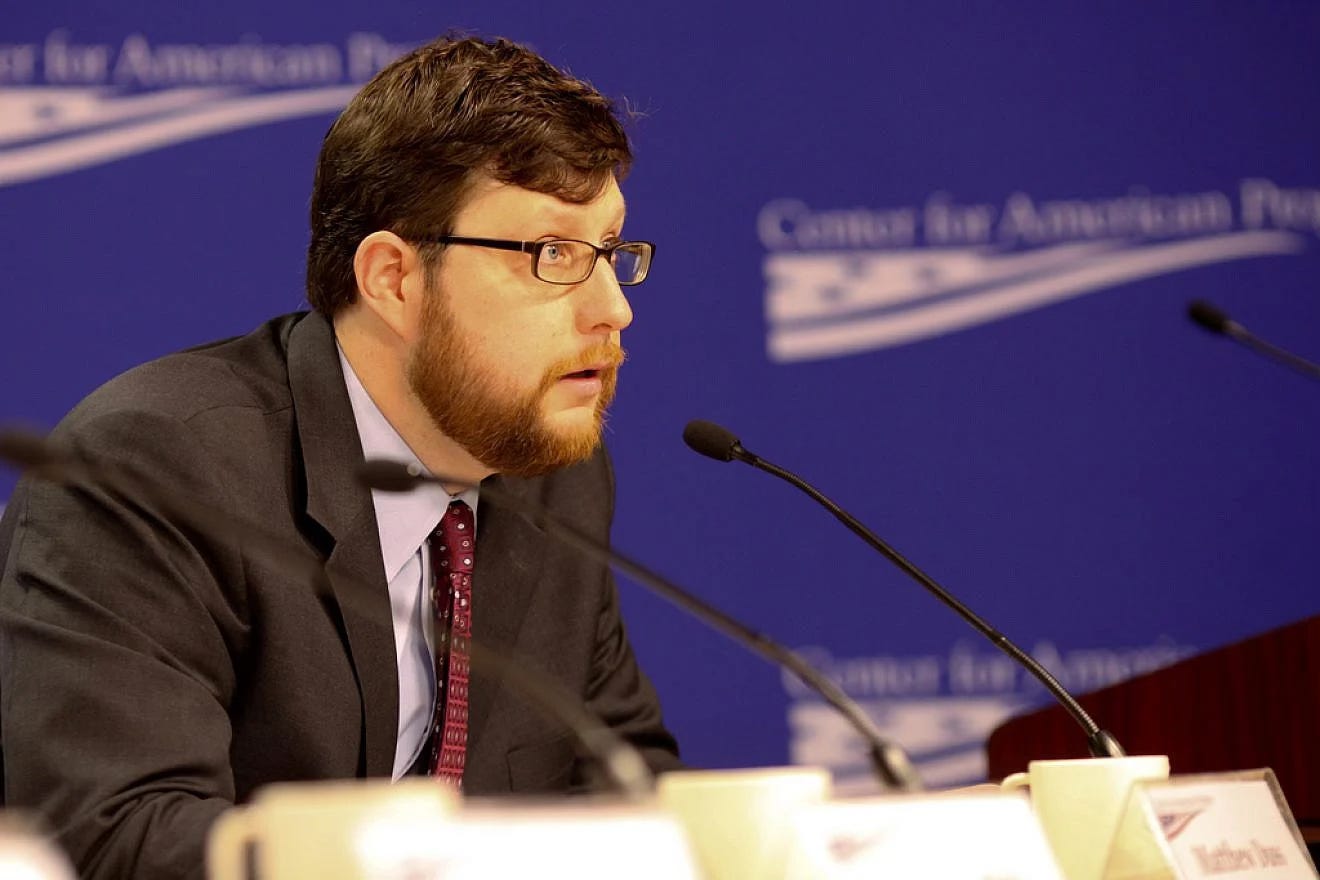
The Dissident | February 18, 2026
Democratic representative Alexandria Ocasio-Cortez’s recent appearence at the Munich Security Conference, which was billed as her showcasing her foreign policy chops gearing up for a possible presidential run, has faced widespread criticism and backlash, not only for her embarrassing mistakes (saying Venezuela was located below the equator, being unable to answer a question about Taiwan and saying the “Trans-Pacific Partnership” when meaning to say the Trans Atlantic Partnership) but for her weak criticism of U.S. foreign policy and repeating of pro-war narratives.
This, however, can be easily explained by the fact that she is being coached by Matt Duss, a longtime foreign policy advisor and a liberal Zionist and staunch supporter of the NATO proxy war in Ukraine.
Ahead of the conference, the New York Times reported :
She has been receiving regular briefings from the Center for International Policy, a left-wing foreign policy think tank in Washington. Matt Duss, a vice president at the group and a former Sanders aide, said he was among those who had tutored her on foreign policy.
“She is someone who is engaged with parts of the world that are often not represented in Munich,” Mr. Duss said.
Ms. Ocasio-Cortez’s appearance will undoubtedly ignite speculation that she is burnishing her foreign policy credentials before a White House run. But she is keeping everyone guessing. Unlike other more obviously ambitious Democrats, she has not made winking, presidential-coded trips to early primary states in recent months or written a tell-all memoir.
This better explains why she was so weak of U.S. foreign policy: Duss styles himself a U.S. foreign policy critic but often repeats the narratives of the U.S. foreign policy establishment, and at times, such as on Ukraine, is with it 100 per cent.
Peddling Liberal Zionism
On Israel and the Zionist lobby, Matt Duss is a typical liberal Zionist, offering some criticism of Israel but ultimately supporting Zionism and Zionist narratives.
A 2011 article on Matt Duss in Politico wrote , “Duss says he’s mischaracterized by his critics as anti-Israel. He is quick to note that he sympathizes with Israel, in part from his personal roots in American evangelical Christianity and that if American criticism of Israel should be harsher, it should also be done with the recognition that Israel is a democracy that should be held to high standards. Iran, meanwhile, is ‘abusing their own people, they support terrorism, and they say all sorts of horrible things about the U.S. and Israel,’ he said.”
This liberal Zionism, apparently influenced by a Christian Zionist upbringing, was on full display during the early months of the Israeli genocide in Gaza, where Duss, repeated Israeli propaganda, smeared actual anti-Zionists and even opposed calls for a ceasefire.
After the October 7th Hamas breakout from the Gaza concentration camp, Duss quoted an article, from New York Magazine, writing, “What we actually witnessed was not ‘the Palestinians’ mounting a violent struggle for justice but a far-right theocratic organization committing mass murder in the name of blood-and-soil nationalism” without mentioning any of the history preceding October 7th, including the Israeli blockade on Gaza which former UK prime minister David Cameron admitted turned Gaza into a “a prison camp” and an “open-air prison”, the previous peaceful protests against the blockade in Gaza in 2018, which were met with Israeli slaughter , the Abraham Accords which sought to get Arab States to abandon the Palestinian cause, and Benjamin Netanyahu putting up a map at the UN which “depicted a state of Israel that stretched continuously from the Jordan River to the Mediterranean Sea” where “Gaza and the West Bank, as Palestinian lands, were erased” weeks before October 7th.
In December of 2023, Matt Duss repeated the fabricated claim that Hamas carried out mass rape on October 7th, writing, “Denying the rape and sexual violence that Hamas committed on Oct 7 is disgusting”, repeating a hoax that was used not only to justify the Gaza genocide, but also actual mass rape against Palestinian detainees in Israel’s torture dungeons.
In another article written by Duss in December of 2023, he wrote , “Israel’s methods are not as extreme as Russia’s, and it’s very important to acknowledge that”, ignoring the fact that in November of 2023 , Israel had killed over 10,000 civilians in Gaza while Russia killed 9,806 in Ukraine since the start of the war in 2022.
In a New York Times article, Matt Duss celebrated Israel’s pager attack in Lebanon, which even former CIA director Leon Panetta conceded was “a form of terrorism” writing, “There’s no question that Israel’s decapitation of Hezbollah’s leadership in Lebanon in recent weeks was an impressive tactical feat”.
In November of 2023, Duss even opposed calls for a ceasefire in Gaza by defending Senator Bernie Sander’s comments in opposition to a ceasefire at the time (which were approvingly shared by AIPAC ), saying, “I think what the Senator said there about the challenges of a ceasefire being negotiated with an organisation like Hamas are valid”.
While peddling Zionist talking points, Duss took the time to smear actual anti-Zionists, such as labelling the brilliant Anti-Zionist academic Norman Finkelstein, a Jewish son of holocaust survivors, as an anti-semite.
Referring to the Jewish Zionist billionaires attempting to shut down pro-Palestine protests on college campuses, Finkelstein wrote , “The Jewish billionaire class has declared war on our nation’s universities: Either you support Israel’s genocidal war or we will destroy you” and Duss replied , “We can and must have a conversation about the very real dangers to academic freedom without antisemitic ‘Jewish billionaire class’ nonsense, which both endangers Jews and undermines the struggle for Palestinian liberation.”
Supporting The Ukraine Proxy War
Along with his peddling of Zionist narratives, Duss fully supported NATO and the Biden administration’s proxy war in Ukraine.
In an article for the New Republic in 2022, Duss wrote, “The Biden team clearly did not seek this war (in Ukraine), in fact, they made a strenuous, and very public, diplomatic effort to avert it. Having been unable to do that, they’ve acted with restraint and care not to get drawn into a wider war with Russia while also making clear the stakes of the conflict for the U.S., for Europe, and for the international system.”
In reality, last year, one of Biden’s top advisors for Europe policy, Amanda Sloat, admitted that the Biden administration could have ended the war in Ukraine, and chose not to, saying, “We had some conversation even before the war started, about what if Ukraine comes out and just says to Russia, ‘fine, you know, we won’t go into NATO if that stops the war, if that stops the invasion,’ which at that point it may well have done” and adding, “I guess if you want to do an alternative version of history, one option would have just been for Ukraine to say in January of 2022, ‘fine, you know, we won’t go into NATO, we will stay neutral.’ Ukraine could have made a deal around March/April of 2022 around the Istanbul talks. There is certainly a question, almost three years on now, would that have been better to do before the war started, would that have been better to do in Istanbul talks, it certainly would have prevented the destruction and the loss of life”.
Matt Duss on serval occasions denied the fact that the war could have ended in April of 2022 has Boris Johnson not intervened and stopped the peace deal that Russia and Ukraine agreed to in Istanbul. On Twitter, Duss wrote , “If you’re so committed to your narrative that you believe that Zelensky Could’ve simply ended the devastating war on his country in April but then Boris Johnson showed up and said nah so he didn’t, I recommend stepping back and taking a series of deep, relaxing breaths” and “ doesn’t matter how quickly the Sy Hersh story gets refuted, it’s already become part of the alternate reality where Biden induced Putin to invade and Russia would’ve ended the war in March if Boris Johnson hadn’t said nah.”
This is despite the fact that Boris Johnson’s blocking of the peace deal in Istanbul has been confirmed by
- Former Israeli Prime Minister Naftali Bennett
- Lead Ukrainian negotiator Davyd Arakhamia
- The foreign minister of Turkey, Mevlut Cavusoglu
- Turkish President Recep Tayyip Erdogan
- Gerhard Schröder, the ex-leader of Germany
- Victoria Nuland then U.S. under secretary of state for political affairs
- Oleksii Arestovych a member of the Ukrainian delegation at the peace talks
- Amanda Sloat, lead Biden advisor on Ukraine
- Andrej Babiš, the Prime Minister of the Czech Republic
Duss has repeatedly praised the Biden Administration for the proxy war in Ukraine, saying in 2023, “The administration … on the way the president has helped manage alliance and partnerships in response to Russia’s invasion of last February, I think has been impressive, I think it shows a way of practising U.S. leadership that forges consensus and then mobilises that consensus.”
As late as January of last year, Duss said, Biden can “claim some credit for rallying allies for the defence of Ukraine against Russia’s invasion”.
Duss even admitted in reference to the Ukraine proxy war that, “the policy I support continues to enrich defense contractors, enriches the military-industrial complex” adding, “I think the goal of reforming that military industrial complex and weakening its power over our politics, that project continues in the longer term even though the policy I support in the shorter term is essentially paying them off.”
The fact that AOC is being “tutored” by Matt Duss on foreign policy explains her failures when speaking on it.
Israel installed, oversaw security system at Barak-Epstein residence in New York: Report
Press TV – February 19, 2026
Recently released emails from the US Department of Justice (DOJ) reveal that Israeli officials set up security systems and regulated entry to a New York apartment owned by convicted sex offender Jeffrey Epstein, where former prime minister Ehud Barak stayed on multiple occasions.
The emails indicate that security equipment started being installed in early 2016 at 301 E. 66th Street, Manhattan. The property, mentioned in documents as “Ehud’s apartment,” was officially possessed by a firm associated with Epstein’s brother, Mark Epstein, but was practically managed by Jeffrey Epstein, according to a report by the Drop Site News outlet.
The email exchanges also suggest that the security measure remained in place for a minimum of two years. Representatives from the Israeli mission to the United Nations maintained consistent communication with Epstein’s team concerning security coordination.
Units in the building were allegedly loaned to Epstein’s associates and utilized to accommodate underage models.
Rafi Shlomo, the former head of protective services at the Israeli mission to the UN in New York and leader of Barak’s security team, communicated with Epstein’s staff to schedule meetings and oversee the setup of surveillance systems at the residence.
According to the emails, Shlomo personally managed guest access to the apartment and performed background checks on cleaners and Epstein staff.
Under Israeli law, former prime ministers and other senior officials usually get security services once they complete their terms in office. The correspondence shows that Epstein directly approved the setup of the equipment and permitted interactions between his team and Israeli security officials.
In a January 2016 email correspondence between Barak’s spouse, Nili Priel, and an employee of Epstein, they talked about setting up alarms and surveillance systems, which included six “sensors stuck to the windows, and the ability to remotely control access to the premises.”
“They can neutralize the system from far, before you need somebody to enter the apartment. the only thing to do is call Rafi from the consulate and let him know who and when is entering,” Priel wrote.
Another message stated, “Jeffrey says he does not mind holes in the walls and this is all just fine!”
Drop Site News also noted that communication persisted throughout 2016 and 2017, with Israeli officials organizing access lists for personnel entering the apartment.
In one January 2017 email, an Epstein assistant wrote that “Rafi, the head of Ehud’s security, is asking if I could meet him at 4 pm on Tues. 14th at his office (800 2nd Ave and 42nd) re Ehud’s apartment.” Epstein approved the meeting.
By November 2017, an Israeli official responsible for security and surveillance had taken Shlomo’s place for Barak.
At the time of Epstein’s death in 2019, Barak downplayed his relationship with the sex trafficker, stating he had encountered Epstein multiple times but that Epstein “didn’t support me or pay me.”
Barak’s longtime assistant, Yoni Koren, who died in 2023, was often a visitor at the 66th Street apartment. Documents show he visited there several times, including in 2013 when he was the bureau chief for the Israeli ministry of military affairs.
Recent emails made public by the DOJ indicate that Koren remained at Epstein’s apartment while undergoing medical care in New York until Epstein’s second arrest and death in 2019.
Unidentified drone downed over Lebanon airbase, US forces block authorities from crash site
The Cradle | February 18, 2026
An unidentified drone was downed in the early hours of 17 February after entering the airspace above Hamat Air Base in northern Lebanon, a Lebanese security source revealed exclusively to The Cradle.
The incident unfolded when security at the base, which also hosts US forces, intercepted the aircraft, causing it to crash into nearby woodland.
According to the source, patrols from Hamat municipal police and units of the Lebanese Armed Forces (LAF) headed to the area to examine the wreckage.
US personnel at the scene intervened to stop the inspection of the downed aircraft. According to The Cradle’s source, US troops drew their weapons and prevented Lebanese officials, including the local mayor, from approaching the crash site, asserting that the drone might have been booby-trapped with explosives.
Lebanese authorities did not take possession of the aircraft, the source said, and US officials later revealed that the drone was no longer at the location initially identified as the crash site.
A US general stationed at the base reportedly sought to contact the Hamat mayor to apologize, but the mayor refused the gesture, objecting to the behavior of the forces hosted at the base in northern Lebanon.
The drone infiltration of Lebanese airspace comes as the Israeli army continues to violate the terms of the US-sponsored “ceasefire” without repercussion.
In early February, troops from the UN Interim Force in Lebanon (UNIFIL) near Kfar Kila, southern Lebanon, observed two drones, one carrying an unidentified object assessed as an “immediate threat.” It entered close range, dropped a stun grenade, exploded about 50 meters from the UNIFIL troops, and then headed toward Israeli territory, with no injuries caused.
The UN mission assessed that the drone belonged to the Israeli army and had crossed the Blue Line “in violation of Security Council resolution 1701,” describing the use of armed drones in this manner as “unacceptable.”
Since November 2024, when Lebanese resistance movement Hezbollah ceased attacks against Israel under the terms of the US-brokered truce, the Israeli army has committed over 12,000 violations of Lebanon’s territorial sovereignty, including more than 8,000 airspace breaches and 700 airstrikes.
Israeli attacks have killed 343 Lebanese and caused nearly 1,000 injuries, with civilian casualties including dozens of women and children.
Israeli forces maintain an active military presence at several border outposts on Lebanese territory, hindering the return of more than 64,000 displaced residents after a campaign of destruction that rendered much of the southern border zones uninhabitable.
“Our presence at five points in southern Lebanon is not part of the ceasefire agreement, but we imposed it, and the United States accepted it,” Israel Defense Minister Israel Katz declared on 18 February.
His remarks come as Lebanon’s government acknowledged that the army will need at least four months to implement the next phase of a plan aimed at disarming Hezbollah.
Peeling Back the US Information Operation in Iran
By Larry C. Johnson | SONAR21 | February 18, 2026
As part of the US campaign to engineer a regime change in Iran, the US military and intelligence community are using Operational Preparation of the Environmnet aka OPE. OPE is defined in joint publications (e.g., JP 3-05 Special Operations) as non-intelligence activities conducted prior to or in preparation for potential military operations to set conditions for success. It encompasses shaping the operational environment through intelligence, surveillance, reconnaissance, information operations, civil affairs, psychological operations, and other preparatory actions—often in denied or politically sensitive areas.
I believe that one of the major OPE efforts is to convince the US public that the overwhelming majority of Iranians despise the Islamic Republic and want it overthrown. In my opinion, a major player in this OPE is a polling outfit known as GAMAAN. GAMAAN (Group for Analyzing and Measuring Attitudes in Iran) collaborates with Psiphon VPN, which is widely used across Iran. GAMAAN findings have been consistent in painting a picture of massive opposition to the Iranian regime:
According to GAMAAN polls taken prior to 2025, a significant majority of Iranians — around 70% — oppose the continuation of the Islamic Republic. The highest level of opposition, 81%, occurred during the “Woman, Life, Freedom” uprising in late 2022. Support for “the principles of the Islamic revolution and the Supreme Leader” has decreased from 18% in 2022 to 11% in 2024. Opposition to the Islamic Republic is higher among the youth, urban residents, and the highly educated. An overwhelming majority of Iranians (89%) support democracy.
Only about 20% of Iranians support the continuation of the Islamic Republic. When asked about preferred alternatives, about 26% favor a secular republic and around 21% support a monarchy. For 11%, the specific form of the alternative system doesn’t matter. About 22% report lacking sufficient information to choose an alternative system.
But what are the funding sources for GAMAAN and Psiphon VPN? Let’s start with GAMAAN. GAMAAN describes itself as an independent, non-profit research foundation registered in the Netherlands. It emphasizes its academic credentials (e.g., founded by scholars at Dutch universities like Tilburg and Utrecht) and innovative online methods (e.g., anonymity sampling via VPNs like Psiphon) to overcome self-censorship in authoritarian contexts.
GAMAAN operates under the supervision of a board including Dr. Ammar Maleki (founder and director), assistant professor of comparative politics at Tilburg University, and Dr. Pooyan Tamimi Arab, associate professor of secular and religious studies at Utrecht University. Maleki is an assistant professor of Comparative Politics and a self-described activist for democracy in his native Iran. Tilburg University Critically, he does not hide his political stance — his Tilburg University profile explicitly states that he is “a pro-democracy activist and political analyst of Iranian politics” and that he tries “to have an impact on political debates around democratization of Iran.”
This is where the picture becomes more contested. GAMAAN has relied on US government-funded VPN provider Psiphon to disseminate its surveys; collaborated with the USAID-funded Tony Blair Institute; and collaborated with and received funding from historian Ladan Boroumand, co-founder of the Abdorrahman Boroumand Center for Human Rights in Iran, which is in turn supported by the US government-funded National Endowment for Democracy (NED).
Psiphon is owned and operated by Psiphon Inc., a Canadian corporation based in Ontario. Psiphon was originally developed by the Citizen Lab at the University of Toronto, with version 1.0 launching on December 1, 2006, as open-source software. In early 2007, Psiphon, Inc. was established as a Canadian corporation independent of the Citizen Lab and the University of Toronto.
It has a notable funding history. In 2008, Psiphon, Inc. was awarded sub-grants from the US State Department Internet Freedom program, administered by the Bureau of Democracy, Human Rights, and Labor. In 2010, Psiphon began providing services to the Broadcasting Board of Governors (US), the US Department of State, and the BBC. More recently, in April 2024, the Open Technology Fund (OTF) announced increased long-term funding for Psiphon, with subsequent OTF awards totaling US$18.54 million for 2024 and US$5.87 million for 2025.
The Open Technology Fund (OTF) is administered by the US Agency for Global Media (USAGM), an independent federal agency of the US government. USAGM provides OTF with its primary funding through annual grants, which originate from Congressional appropriations under the Department of State, Foreign Operations, and Related Programs budget. OTF operates as an independent nonprofit corporation (since 2019) but remains a grantee under USAGM’s oversight and governance, as authorized by Congress (e.g., via the 2021 National Defense Authorization Act).
So while Psiphon Inc. is technically an independent Canadian company, it has historically been substantially funded by the US government and other Western institutions — a fact worth noting given its role as the methodology partner for the GAMAAN polling inside Iran. In other words, it is a cut out that, in my opinion and based on my experience, is supporting a CIA information operation to portray Iran as a country on the precipice of overthrowing the Islamic Republic.
There is an alternative polling database that paints a radically different picture of the mood in Iran with respect to the Islamic Republic… The Center for International and Security Studies at Maryland has conducted a separate series of surveys using phone-based methods, which show more moderate results. Their findings from 2023 and 2024 found that about 75% of respondents expect Iran’s constitution and political system to be about the same in ten years, and only 17% agreed with protesters’ calls for the Islamic Republic to be replaced. However, three in five now think the government should not be strict in enforcing Islamic laws, distinctly up from 2018, and support for demands that the government fight corruption has been consistently near-unanimous since 2018.
On the protests themselves, asked in 2024 to think about waves of demonstrations over the past ten years, two thirds say their main objective was to demand that officials pay greater attention to people’s problems, while only one in five think their main objective was to demand greater freedoms or bring about change in Iran’s system of government.
President Pezeshkian, based on the polls from 2024, was viewed favorably by 66% of those polled at the start of his term… and 70% expressed confidence that he would be an honest and trustworthy president, though only a quarter were very confident. Majorities expressed some confidence that he can improve relations with neighboring countries and protect citizens’ freedoms, notably women’s rights, but majorities are not confident that he can lower inflation or improve relations with the West.
There have been no new polls in the wake of Israel’s surprise attack on June 13, 2025. Based on my conversations with both Nima Alkhorshid and Professor Marandi, the reaction in Iran has been similar to what happened in the United States in the aftermath of the 9-11 attacks… National unity increased.
The failed color revolution launched on December 28, 2025 by the United States and Israel has reinforced support for the Islamic Republic. President Pezeshkian has openly admitted his government’s failures on the economic front and he has taken some steps to institute reforms. A more important development was the signing of the Trilateral Security Agreement with Russia and China at the end of January. Those two countries are now providing more resources and support to stabilize the Iranian government and improve the economic lives of the Iranian people.
Donald Trump’s threats to attack Iran are backfiring among the majority of the population in Iran. Yes, there are some Iranians who still want to bring an end to the Islamic Republic, but they are dramatically outnumbered. Remember the boost in popularity that George W Bush enjoyed in the aftermath of 9-11? He even picked up support from Democrats who had previously despised him. That same phenomena has happened in Iran. Prior to the June 13, 2025 attack, Iranians under the age of 50 had no vivid memory of Iran/Iraq war — where Iran was attacked with the encouragement and support of the United States. The June 2025 attack, coupled with the foreign instigated late December 2025 protests and violence, have awakened a new sense of nationalism among the Iranian public that has strengthened support for the Islamic Republic.
The belief in the West that Iran is more vulnerable now than at anytime in the last 46 years is the creation of a US funded propaganda campaign that relied on an ideologically biased pollster to produce results that have been used to convince most Americans that Iran is yearning to breath free… All we have to do is kill off the leadership in Iran.
Israel ‘dictating terms’ to US – Turkish professor
Washington is following the Jewish State’s demands on Iran and the Middle East as a whole, Hasan Unal has told RT
RT | February 18, 2026
Israel is effectively dictating US foreign policy, particularly on Iran and the wider Middle East, in a way that is historically unprecedented for a global superpower, a Turkish international relations professor has told RT.
Hasan Unal, who teaches at Baskent University in Ankara, spoke to RT’s Rick Sanchez this week about what he described as a highly unusual power imbalance between Israel and the US.
”We are living in a world now where a small country like Israel is dictating terms to a superpower like the United States on anything and everything, particularly anything pertaining to Israel and to the Middle East,” he said, calling the situation “totally unacceptable.”
Unal added that some analysts have even described it as an “occupation” of US policymaking by Israel, a characterization he said was “almost true.”
He went on to say that pro-Israel lobby influence and the personal involvement of Israeli Prime Minister Benjamin Netanyahu were shaping American positions, recalling episodes when Netanyahu “gets on his plane immediately” and flies to Washington “to simply dictate what [US President Donald] Trump should say and should negotiate in the negotiations with the Iranians.”
Unal claimed such a pattern has left Washington “dogging behind the Israeli demands all the time” and cautioned that it risks further destabilizing the Middle East.
Netanyahu has made multiple high profile visits to Washington to engage directly with senior US officials on regional policy. In the past year alone, he has met Trump at the White House at least six times to discuss issues ranging from Gaza and Iran’s nuclear program to military cooperation. His latest trip took place last week, ahead of the second round of indirect US Iran talks in Geneva. Netanyahu later said he had pressed Trump to ensure that Tehran is barred from enriching uranium. The renewed diplomatic push followed joint Israeli-US strikes on Iranian nuclear facilities last year, officially justified as an attempt to stop Iran from acquiring nuclear weapons – an ambition the Islamic Republic denies.
Trump has since sent an ‘armada’ to the Middle East and threatened further attacks unless Iran agrees to a deal on both its nuclear and missile programs. Last week, he raised the prospect of regime change and announced a second carrier strike group deployment, with media reports claiming the US military was ordered to prepare for a sustained multi-week operation if talks fail.
Asked whether Iran poses a direct threat to the US, Unal replied that Tehran does not seek to attack American assets as such and that many of the tensions are tied to Israel’s security calculations.
Unal also suggested what he called the gradual collapse of a “big empire,” referring to the Western-led order, and the emergence of a more multipolar system in which countries such as Russia, China, and Türkiye have greater room to maneuver. – video
Featured Video

Russia Helping Build a New Middle East /Trita Parsi
or go to
Aletho News Archives – Video-Images
From the Archives
Sam Husseini: The entire US establishment helped lie their way into the Iraq war
By Slava Zilber | American Herald Tribune | October 14, 2019
Sam Husseini is a senior analyst with the Institute for Public Accuracy, independent journalist and contributor to The Nation and FAIR.
Slava Zilber: Sam, three years ago, you appeared on Talk Nation Radio with David Swanson and spoke about the case of the GCHQ whistleblower Katharine Gun. You pointed out that the people involved in the spying on the UN and the people authorizing the Iraq War were not held accountable:
“Virtually everybody who went along with the war, whether it is Kerry or Clinton, of course, the Bush administration themselves has falsified their own records in terms of why, what they did, when they did, why they did it, to the extent that they’ve been scrutinised at all.”
You also address it in a recent article. And recently, Joe Biden has been lying about his position on the Iraq War. How can such an important issue escape meaningful scrutiny? … continue
Blog Roll
 Aletho News
- Russia Helping Build a New Middle East /Trita Parsi
- Barghouti: ‘Netanyahu has fallen,’ era of Smotrich, Ben-Gvir over
- China slams US policy on Iran as Russia rejects legality of nuclear meeting at UN
- The Mecca Pact Courts Iran: Containment Comes Full Circle
- Oman FM: Persian Gulf states, Iran, Iraq should form security pact excluding US
- Trump peddles fresh falsehoods, claims Iran ‘started the war’ as US aggression drags on
- Ukraine quagmire? Yes, but it’s for NATO, not Russia
- US intelligence hypes Chinese, Russian space threats while accelerating its own military buildup in orbit
- Iran FM Araghchi: “Hormuz Will No Longer Be the Same”
- EU facing trillion-euro debt hole while seeking more cash for Kiev
- If Americans Knew
- An error has occurred; the feed is probably down. Try again later.
- No Tricks Zone
- Sudden Stratospheric Warming, Powerful El Niño Combination May Lead To Extreme Europe Cold, Energy Crisis!
- Two New Studies Find Thwaites Glacier Melt Cannot Be Driven By Human Activity Or A Warming Ocean
- E-Cars Reduce CO2 Emissions By Only 41% Compared To Internal Combustion Engine Vehicles
- Predictions Made By Renowned Climate Professor Over Past Decades Have Been Proven To Be Poor
- New Study Suggests Large Regions Of The Pacific Ocean Have Been Cooling For The Last 80 Years
- Germany’s Green Energy Debacle: High Energy Costs Force Kahla Porzellan to Close After 182 Years!
- New Study: 50 Years Of The Most Aggressive ‘Net Zero’ Policies Can Only Affect The Global Climate By 0.03°C
- US September “Heat” Was No Record…Many Records Set Decades Ago
- Latest European Green Energy Debacle; Portugal’s Largest Flagship Solar Park Insolvent!
- Green Energy Debacle: German Expert Professor Fritz Vahrenholt Warns Of Severe Economic And Social Consequences

