BBC-staged footage on Syria’s Douma Western media’s ‘theater of absurd’: Russia
Press TV – February 14, 2019
Russia says the latest revelations by BBC that the footage of an April chemical attack near the Syrian capital was fabricated proves the “theater of absurd” in Western media’s coverage of events in the Arab country.
“Over the past few years, and not just in Syria, we have been witness to a travesty being staged by the West and its media agencies, which on [the one] hand brags about brilliant democratic goals and support for civilians of a sovereign state, but on the other does not … give a damn about … international law, various forms of freedom and rights of a nation or a certain minority,” the spokeswoman for the Russian Foreign Ministry, Maria Zakharova, told reporters in Moscow on Thursday.
The footage broadcast by BBC showed people being treated after a chemical attack in Douma.
BBC Syria producer Riam Dalati wrote on Twitter on Wednesday that the issue had been investigated for six months.
Zakharova added, “The culmination of this theater of absurd may be a statement by a BBC producer, who confirmed based on his own research that the footage [in Douma] had been staged with direct participation of [the so-called civil defense group] White Helmets.
She further pointed out that Russia wanted to listen to BBC’s explanation because it actively covered the events in favor of the US-led coalition purportedly fighting the Daesh Takfiri terrorist group.
The Western-backed White Helmets group, which has been repeatedly accused of cooperating with Takfiri terrorists and staging fictional chemical attacks, published a video in April 2018, alleging that Syrian government forces had launched a chemical assault in the city of Douma, located about 10 kilometers northeast of Damascus.
The US has warned it would respond to any possible chemical weapons attack by Syrian government forces with retaliatory strikes, stressing that the attacks would be stronger than those conducted by American, British and French forces last year.
On April 14, 2018, the US, Britain and France carried out a string of airstrikes against Syria over a suspected chemical weapons attack on the city of Douma.
Washington and its allies blamed Damascus for the Douma attack, an allegation rejected by the Syrian government.
On September 11 last year, Russian Deputy Foreign Minister Sergei Ryabkov censured the US threats to use military force against Syria as part of Washington’s blackmail policy.
“Unlike the United States, Britain and their allies, Russia provides particular facts on a daily basis through its Defense Ministry, the Foreign Ministry as well missions in New York, The Hague and Geneva. We particularly name geographical points, where preparations are underway for certain terrorist groups backed by the US and its allies to carry out provocations,” Ryabkov said.
BBC Says Its Producer Expressed ‘Personal Opinions’ on Douma Incident
Sputnik – February 14, 2019
BBC Syria producer Riam Dalati, who wrote on Twitter that he could prove the video of the victims of the alleged chemical attack in Douma being treated in hospital was staged, was expressing his own opinion and did not deny the fact of the attack itself, the broadcaster’s spokesperson told Sputnik on Thursday.
“The producer was expressing his personal opinions about some of the video footage that emerged after the attack but has not claimed that the attack did not happen”, the BBC spokesperson said.
On Wednesday, the journalist tweeted that he could “prove without a doubt” that the Douma hospital footage had been staged and no fatalities had occurred in the hospital. He said the attack did take place but without the use of sarin gas and that the nature of any chemical used would have to be verified by the Organisation for the Prohibition of Chemical Weapons.
Previously, the RT broadcaster reported that Dalati had already expressed his scepticism about the Douma hospital video in a Twitter post. However, the journalist subsequently deleted his tweet, citing a breach of editorial policy.
The same month, Hassan Diab, 11, who was featured in the White Helmets video, in an interview with a Russian media outlet alongside his father, gave a detailed description of how the footage of people treated in the hospital was filmed. Diab said, among other things, that children were given food for participating in the video.
Moreover, Douma residents, interviewed by Sputnik, were unable to confirm that the attack had taken place there. They said they knew nothing about it and were not aware of anybody having been affected by toxic chemicals.
The reports about the attack and the publication of the footage by the White Helmets were followed by missile strikes carried out by France, the United Kingdom and the United States targeting alleged chemical weapons production facilities in Damascus.
Western states have repeatedly accused the Syrian authorities of having carried out the Douma attack, while Damascus denied any involvement in the incident. The Russian Foreign Ministry has said that the claims about the alleged use of toxic chemicals by the Syrian government were aimed at justifying external military action.
READ MORE: German Journalist Federation Calls on Regulators to Deny Broadcast License to RT
The Real Motive Behind the FBI Plan to Investigate Trump as a Russian Agent
By Gareth Porter | Consortium News | February 13, 2019
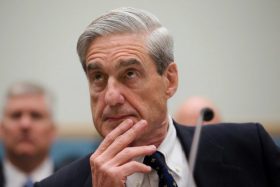 The New York Times and CNN led media coverage last month of discussions among senior FBI officials in May 2017 of a possible national security investigation of President Donald Trump himself, on the premise that he may have acted as an agent of Russia.
The episode has potentially profound political fallout, because the Times and CNN stories suggested that Trump may indeed have acted like a Russian agent. The New York Times story on Jan. 11 was headlined, “F.B.I. Opened Inquiry into Whether Trump Was Secretly Working on Behalf of Russia.” CNN followed three days later with: “Transcripts detail how FBI debated whether Trump was ‘following directions’ of Russia.”
By reporting that Russia may have been able to suborn the president of the United States, these stories have added an even more extreme layer to the dominant national political narrative of a serious Russian threat to destroy U.S. democracy. An analysis of the FBI’s idea of Trump as possible Russian agent reveals, moreover, that it is based on a devious concept of “unwitting” service to Russian interests that can be traced back to former CIA director John O. Brennan.
The Proposal That Fell Apart
The FBI discussions that drove these stories could have led to the first known investigation of a U.S. president as a suspected national security risk. It ended only a few days after the deliberations among the senior FBI officials when on May 19, 2017, the Justice Department chose Robert Mueller, a former FBI director, to be special counsel. That put control over the Trump-Russia investigation into the hands of Mueller rather than the FBI.
Peter Strzok, who led the bureau’s counter-espionage section, was, along with former FBI General Counsel James A. Baker, one of those involved in the May 2017 discussions about investigating Trump. Strzok initially joined Mueller’s team but was fired after a couple of months when text messages that he had written came to light exposing a deep animosity towards Trump that cast doubt over his impartiality.
The other FBI officials behind the proposed investigation of Trump have also since left the FBI; either fired or retired.
The entirety of what was said at the meetings of five or six senior FBI officials in the immediate aftermath of Trump’s firing of James Comey as FBI director on May 9, 2017, remains a mystery.
Closed-door Testimony
The CNN and Times stories were based on transcripts either obtained or, in the case of the Times, on portions read to it, of private testimony given to the House Judiciary and Government Oversight and Reform committees last October by Baker, one of the participants in the discussions of Trump as a possible Russian agent.
Excerpts of Baker’s testimony published by CNN make it clear that the group spoke about Trump’s policy toward Russia as a basis for a counter-intelligence investigation. Baker said they “discussed as [a] theoretical possibility” that Trump was “acting at the behest of [Russia] and somehow following directions, somehow executing their will.”
Baker went on to explain that this theoretical possibility was only “one extreme” in a range of possibilities discussed and that “the other extreme” was that “the President is completely innocent.”
He thus made it clear that there was no actual evidence for the idea that he was acting on behalf of Russia.
Baker also offered a simpler rationale for such an investigation of Trump: the president’s firing of FBI Director Comey. “Not only would [firing Comey] be an issue of obstructing an investigation,” he said, “but the obstruction itself would hurt our ability to figure what the Russians had done, and that is what would be the threat to national security.”
But the idea that Comey’s firing had triggered the FBI’s discussions had already been refuted by a text message that Strzok, who had been leading the FBI’s probe into the Trump campaign’s contacts with Russians, sent immediately after the firing to Lisa Page, then legal counsel to Andrew McCabe, formerly the bureau’s deputy director who was then acting director.
“We need to open the case we’ve been waiting on now while Andy is acting,” Strzok wrote, referring to McCabe.
As Page later confirmed to congressional investigators, according to the CNN story, Strzok’s message referred to their desire to launch an investigation into possible collusion between Trump and the Russians. Strzok’s message also makes clear he, and others intent on the investigation, were anxious to get McCabe to approve the proposed probe before Trump named someone less sympathetic to the project as the new FBI director.
Why the FBI Wanted to Investigate
The New York Times story argued that the senior FBI officials’ interest in a counter-intelligence investigation of Trump and the Russians sprang from their knowledge of the sensational charges in the opposition research dossier assembled by British ex-spy Christopher Steele (paid for by the DNC and the Clinton campaign) that the Putin government had “tried to obtain influence over Mr. Trump by preparing to blackmail and bribe him.”
But the Times writers must have known that Bruce Ohr, former associate deputy attorney general, had already given McCabe, Page and Strzok information about Steele and his dossier that raised fundamental questions about its reliability.
Ohr’s first contacts at FBI headquarters regarding Steele and his dossier came Aug. 3, 2016, with Page and her boss McCabe. Ohr later met with Strzok.
Ohr said he told them that Steele’s work on the dossier had been financed by the Clinton campaign through the Perkins-Cole law firm. He also told them that Steele, in a July 30, 2016 meeting, told him he was “desperate that Donald Trump not get elected and was passionate about him not being president,” according to Ohr’s contemporaneous notes of the meeting.
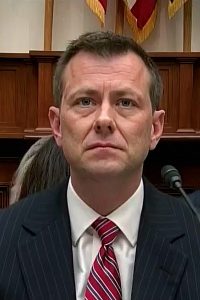 So, key figures in the discussion of Trump and Russia in May 2017 knew that Steele was acting out of both political and business motives to come up with sensational material.
Strzok and Page may have started out as true believers in the idea that the Russians were using Trump campaign officials to manipulate Trump administration policy. However, by May 2017, Strzok had evidently concluded that there was no real evidence.
In a text message to Page on May 19, 2017, Strzok said he was reluctant to join the Mueller investigation, because of his “gut sense and concern” that “there’s no big there there.”
Why, then, were Strzok, Page, McCabe and others so determined to launch an investigation of Trump at about the same time in May 2017?
A CNN article about the immediate aftermath of the Comey firing reported that Deputy Attorney General Rod Rosenstein and senior FBI officials “viewed Trump as a leader who needed to be reined in, according to two sources describing the sentiment of the time.”
That description by anti-Trump law enforcement officials suggests that the proposed counter-intelligence investigation of Trump served as a means to maintain some leverage over his treatment of the FBI in regard to the Russia issue.
That motivation would be consistent with the decision by McCabe on May 15, 2017 – a few days after the discussions in question among the senior FBI officials – to resume the bureau’s relationship with Steele.
The FBI had hired Steele as a paid source when it had earlier launched its investigation of Trump campaign official’s contacts with Russians in July 2016. But it had suspended and then terminated the relationship over Steele’s unauthorized disclosure of the investigation to David Corn of Mother Jones magazine in October 2016. So, the decision to resume the relationship with Steele suggests that the group behind the new investigation were thinking of seizing an opportunity to take off the gloves against Trump.
The ‘Unwitting Collaboration’ Ploy
The discussion by senior FBI officials of a counter-intelligence investigation of Trump has become part of the political struggle over Trump mainly because of the stories in the Times and CNN.
The role of the authors of those stories illustrates how corporate journalists casually embraced the ultimate conspiracy theory – that the president of the United States was acting as a Russian stooge.
The reporters of the CNN story — Jeremy Herb, Pamela Brown and Laura Jarrett — wrote that the FBI officials were “trying to understand why [Trump] was acting in ways that seemed to benefit Russia.”
The New York Times story was more explicit. Co-authors Adam Goldman, Michael S. Schmidt and Nicholas Fandos wrote that the FBI officials “sought to determine whether Mr. Trump was knowingly working for Russia or had unwittingly fallen under Moscow’s influence.”
The same day the Times story was published, the lead author on the piece, Adam Goldman, was interviewed by CNN. Goldman referred to Trump’s interview with NBC’sLester Holt in the days after the Comey firing as something that supposedly pushed the FBI officials over the edge. Goldman declared, “The FBI is watching him say this, and they say he’s telling us why he did this. He did it on behalf of Russia.”
But Trump said nothing of kind. What he actually said — as the Times itself quoted Trump, from the NBCinterview —was: “[W]hen I decided just to do it, I said to myself – I said, you know this Russia thing with Trump and Russia is a made-up story.” The Times article continued: “Mr. Trump’s aides have said that a fuller examination of his comments demonstrates that he did not fire Mr. Comey to end the Russia inquiry. ‘I might even lengthen out the investigation, but I have to do the right thing for the American people,” Mr. Trump added. ‘He’s the wrong man for that position.’”
Goldman was evidently trying to sell the idea of Trump as a suspected agent of Russia.
Goldman also gave an interview to The New Yorker’s Isaac Chotiner, in which the interviewer pressed him on the weakest point of the Trump-as-Russian-agent theory. “What would that look like if the President was an unwitting agent of a foreign power?” asked Chotiner.
The Times correspondent, who won a Pulitzer Prize for his coverage of the alleged Russian efforts to influence the 2016 election, responded: “It is hard to say what that would look like.” Goldman then reiterated the concept. “People were very careful to tell me that: ‘It is wittingly or unwittingly.’” And in answer to a follow-up question, Goldman referred to evidence he suggested might be held by the FBI that “perhaps suggests that the President himself may be acting as a foreign agent, either wittingly or unwittingly….”
The idea that American citizens were somehow at risk of being led by an agent of the Russian government “wittingly or unwittingly” did not appear spontaneously. It had been pushed aggressively by former CIA Director John O. Brennan both during and after his role in pressing for the original investigation.
When Brennan testified before the House Intelligence Committee in May 2017, he was asked whether he had intelligence indicating that anyone in the Trump campaign was “colluding with Moscow.” Instead of answering the question directly, Brennan said he knew from past experience that “the Russians try to suborn individuals, and they try get them to act on their behalf either wittingly or unwittingly.” And he recalled that he had left the government with “unresolved questions” about whether the Russians had been successful in doing so in regard to unidentified individuals in the case of the 2016 elections.
Brennan’s notion of “unwitting collaboration” with Russian subversion is illogical. Although a political actor might accidentally reveal information to a foreign government that is valuable, real “collaboration” must be mutually agreeable. A policy position or action that may benefit a foreign government, but is also in the interest of one’s own government, does not constitute “unwitting collaboration.”
The real purpose of that concept is to confer on national security officials and their media allies the power to cast suspicion on individuals on the basis of undesirable policy views of Russia rather than on any evidence of actual collaboration with the Russian government.
The “witting or unwitting” ploy has its origins in the unsavory history of extreme right-wing anti-communism during the Cold War. For example, when the House Un-American Activities Committee was at its height in 1956, Chairman Francis E. Walter declared that “people who are not actually Communist Party members are witting or unwitting servants of the Communist cause.”
The same logic – without explicit reference to the phrase — has been used to impugn the independence and loyalty of people who have contacts with Russia.
It has also been used to portray some independent media as part of a supposedly all-powerful Russian media system.
The revelation that it was turned against a sitting president, however briefly, is a warning signal that national security bureaucrats and their media allies are now moving more aggressively to delegitimize any opposition to the new Cold War.
Gareth Porter is an independent investigative journalist and historian writing on U.S. national security policy. His latest book, “Manufactured Crisis: The Untold Story of the Iran Nuclear Scare,” was published in 2014. Follow him on Twitter: @GarethPorter.
US Air Freight Company that Smuggled Weapons Into Venezuela Linked to CIA “Black Site” Renditions
By Whitney Webb | MintPress News | February 13, 2019
GREENSBORO, NORTH CAROLINA – Two executives at the company that chartered the U.S. plane that was caught smuggling weapons into Venezuela last week have been tied to an air cargo company that aided the CIA in the rendition of alleged terrorists to “black site” centers for interrogation. The troubling revelation comes as Venezuelan President Nicolás Maduro has rejected a U.S. “humanitarian aid” convoy over concerns that it could contain weapons meant to arm the country’s U.S.-backed opposition.
Last Tuesday, Venezuelan authorities announced that 19 rifles, 118 ammo magazines, 90 radios and six iPhones had been smuggled into the country via a U.S. plane that had originated in Miami. The authorities blamed the United States government for the illicit cargo, accusing it of seeking to arm U.S.-funded opposition groups in the country in order to topple the current Maduro-led government.
A subsequent investigation into the plane responsible for the weapons caché conducted by McClatchyDC received very little media attention despite the fact that it uncovered information clearly showing that the plane responsible for the shipment had been making an unusually high number of trips to Venezuela and neighboring Colombia over the past few weeks.
Steffan Watkins, an Ottawa-based analyst, told McClatchy in a telephone interview that the plane, which is operated by U.S. air cargo company 21 Air, had been “flying between Philadelphia and Miami and all over the place, but all continental U.S.” during all of last year. However, Watkins noted that “all of a sudden in January, things changed” when the plane began making trips to Colombia and Venezuela on a daily basis, sometimes multiple times a day.
According to Watkins’ analysis, this single plane had conducted 40 round-trip flights from Miami International Airport to Caracas and Valencia — where the smuggled weapons had been discovered — in Venezuela, as well as to Bogota and Medellin in Colombia in just the past month.
Publicly available flight radar information shows that the plane, although it has not returned to Venezuela since the discovery of its illicit cargo, has continued to travel to Medellin, Colombia, as recently as this past Monday.
Multiple CIA ties
In addition to the dramatic and abrupt change in flight patterns that occurred just weeks before U.S. Vice President Mike Pence prompted Venezuelan opposition member Juan Guaidó to declare himself “interim president,” a subsequent McClatchy follow-up investigation also uncovered the fact that two top executives at the company that owns the plane in question had previously worked with a company connected to controversial CIA “black sites.”
Indeed, the chairman and majority owner of 21 Air, Adolfo Moreno, and 21 Air’s director of quality control, Michael Steinke, both have “either coincidental or direct ties” to Gemini Air Cargo, a company previously named by Amnesty International as one of the air charter services involved in a CIA rendition program. In this CIA program, individuals suspected of terrorism were abducted by the intelligence agency and then taken abroad to third-country secret “black sites” where torture, officially termed “enhanced interrogation,” was regularly performed.
Steinke worked for Gemini Air Cargo from 1996 to 1997, according to a 2016 Department of Transportation document cited by McClatchy. Moreno, although he did not work for Gemini, registered two separate businesses at a Miami address that was later registered to Gemini Air Cargo while the CIA rendition program was active. McClatchy noted that the first business Moreno registered at the location was incorporated in 1987 while the second was created in 2001. Gemini Cargo Logistics, a subsidiary of Gemini Air Cargo, was subsequently registered at that same location in 2005.
21 Air has denied any responsibility for the weapons shipment discovered onboard the plane it operates, instead blaming a contractor known as GPS-Air for the illicit cargo. A GPS-Air manager, Cesar Meneses, told McClatchy that the weapons shipment had been “fabricated” by the Maduro-led government to paint his government as the victim. Meneses also stated that “the cargo doesn’t belong to 21 Air and it doesn’t belong to GPS-Air” and that it had been provided by third parties, whose identities Meneses declined to disclose.
Contras redux?
The revelation that the company that operates the plane caught smuggling weapons into Venezuela has connections to past controversial CIA programs is unlikely to surprise many observers, given the CIA’s decades-long history of funneling weapons to U.S.-backed opposition fighters in Latin America, Southeast Asia and other conflict areas around the globe.
One of the best-known examples of the CIA using airliners to smuggle weapons to a U.S.-backed paramilitary group occurred during the 1980s in what became known as the Iran-Contra scandal, in which the Reagan administration delivered weapons to the Contra rebels in order to topple the left-leaning Sandinista movement. Many of those weapons had been hidden on flights claiming to be carrying “humanitarian aid” into Nicaragua.
The parallels between aspects of the Contra scandal and the current situation in Venezuela are striking, particularly given the recent “outrage” voiced by mainstream media and prominent U.S. politicians over Maduro’s refusal to allow U.S. “humanitarian aid” into the country. Maduro had explained his rejection of the aid as partially stemming from the concern that it could contain weapons or other supplies aimed at creating an armed opposition force, like the “rebel” force that was armed by the CIA in Syria in 2011.
Though the media has written off Maduro’s concern as unfounded, that is hardly the case in light of the fact that the Trump administration’s recently named special envoy in charge of the administration’s Venezuela policy, Elliott Abrams, had been instrumental in delivering weapons to the Nicaraguan Contras, including hiding those weapons in “humanitarian aid” shipments. In subsequent testimony after the scandal broke in the 1980s, Abrams himself admitted to funneling weapons to the Contras in exactly this way.
With the recently uncovered illicit weapons shipment from the U.S. to Venezuela now linked to companies that have previously worked with the CIA in covert operations, Maduro’s response to the “humanitarian aid” controversy is even more justified. Unfortunately for him, the U.S.-backed “interim president,” Juan Guaidó, announced on Monday that his parallel government had received the first “external” source of “humanitarian aid” into the country, but would not disclose its source, its specific contents, nor how it had entered the country.
US senators re-introduce Russian sanctions ‘bill from hell’

Senators Lindsey Graham (R-SC) and Bob Menendez (D-NJ). ©REUTERS / Yuri Gripas
RT February 13, 2019
A group of senators have introduced a bill suggesting a wide range of sanctions against Russia.
The bill, sponsored by Republican Sen. Lindsey Graham (South Carolina) and Democrat Bob Menendez (New Jersey) will target Russia’s banking and energy sectors, as well as its foreign debt. The Defending American Security from Kremlin Aggression Act (DASKA) of 2019 may affect individuals who the US would deem to “facilitate illicit and corrupt activities, directly or indirectly, on behalf of Putin.”
Graham introduced a similar bill last year, dubbed the “sanctions bill from hell.” The bill that failed to pass would have also called on Congress to declare Russia a “state sponsor of terrorism,” would have make it harder for the US to leave NATO, and would have accused Russia of committing war crimes in Syria, among a laundry list of other provisions. Similar ideas were relocated to the new proposal.
“President Trump’s willful paralysis in the face of Kremlin aggression has reached a boiling point in Congress,” Menendez said in a statement on Wednesday. Graham, an ally of Trump, echoed the sentiment of the fellow lawmaker, minus his criticism of the president.
“The sanctions and other measures contained in this bill are the most hard-hitting ever imposed – and a direct result of Putin’s continued desire to undermine American democracy,” he wrote.
Russian interference in American elections has never been proven. A handful of Russian nationals have been charged with interference, but those indictments are largely symbolic.
Graham and Menendez’ bill comes one day after the Senate Intelligence Committee announced it had found no evidence of collusion between the Trump campaign and Russia during the 2016 election. Another House investigation came to the same conclusion last year.
Regardless of the committee’s conclusion, Graham and Menendez’ bill promises a raft of hard-hitting sanctions on Russia. These sanctions target banks that “support Russian efforts to undermine democratic institutions in other countries,” sanctions on Russia’s cyber sector, and sovereign debt.
They also include sanctions on Russia’s energy sector, mainly its crude oil projects inside the country and liquefied natural gas projects abroad. Russia currently provides almost 40 percent of Europe’s natural gas imports, a share that the US is keen to muscle in on. Despite both Trump and European Commission President Jean-Claude Juncker promising to step up the US-EU gas trade, business has floundered, mostly due to the logistical headache of transporting the gas across the Atlantic Ocean.
The proposed sanctions also include penalties on Russia’s shipbuilding sector, a response to the confrontation between Russian and Ukrainian vessels in the Kerch Strait last November. Russian authorities accused the Ukrainian navy of performing dangerous maneuvers and denounced their actions as “provocation.”
Many of the bill’s other measures are carried over from Graham and Menendez’ failed legislation last year. It includes a statement of support for NATO and a two-thirds Senate vote to leave the alliance, as well as weapons shipments to any NATO countries that rely on Russian military equipment.
Provisions that would punish the Russian government for alleged chemical weapons production remain in the bill, as does the call for Russia to be declared a “state sponsor of terrorism.”
The reintroduced bill is “the continuation of the insane campaign conducted by the US,” said deputy chairman of the Russian Parliament’s Foreign Affairs Committee, Aleksey Chepa, adding that he was certain that the bill won’t float. Russian MP Leonid Slutsky earlier dismissed the planned sanctions, saying whatever damage they would do if imposed would not be critical. “Russia will certainly not perish,” he said.
Israel and Arab nations discuss ‘common interests of war with Iran’ – Netanyahu
RT | February 13, 2019
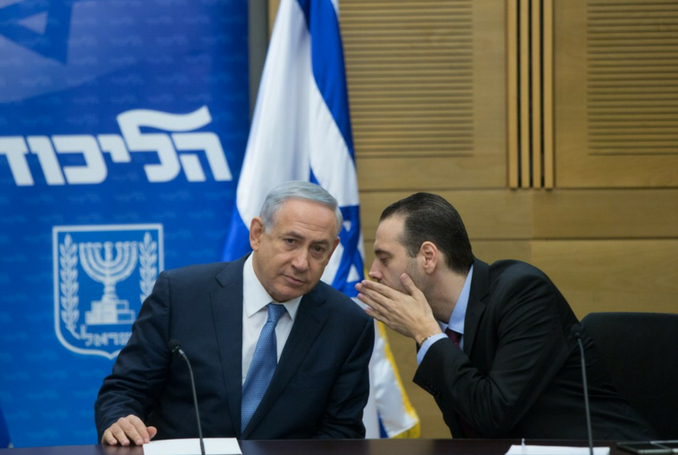
Israel and Arab countries are in talks “in order to advance the common interest of war with Iran”, Prime Minister Benjamin Netanyahu has said, although the translation from Hebrew was later downgraded to mere “struggle.”
The promise of a major conflict in the Middle East was floated by the Israeli leader during his trip to Warsaw.
“From here I am going to a meeting with 60 foreign ministers and envoys of countries from around the world against Iran,” Netanyahu said as quoted by Jerusalem Post.
“What is important about this meeting – and this meeting is not in secret, because there are many of those – is that this is an open meeting with representatives of leading Arab countries, that are sitting down together with Israel in order to advance the common interest of war with Iran.”
The Israeli PM is in the Polish capital to take part in a two-day international forum on the Middle East, which starts on Wednesday. Representatives from the United States and the European Union are in attendance in addition to Netanyahu and ministers from Gulf kingdoms. The EU representation at the event however is less than impressive, with heavyweights Germany and France choosing not to send their foreign ministers.
The US delegation is headed by Vice President Mike Pence, who is accompanied by vocal Iran hawk Secretary of State Mike Pompeo and Jared Kushner, President Trump’s son-in-law and advisor. The Anti-Iranian goals of Israel and the US are apparently dominating the agenda of the forum.
“We’re trying to expand the number of nations who are engaged and have a stake in the future of a peaceful and prosperous Middle East,” Brian Hook, the State Department’s special representative for Iran, told Reuters.
The EU is on a shaky ground vis-a-vis Iran as it’s member Poland hosts the meeting. The Europeans are attempting to resist the push for confrontation with Iran coming from Washington, hoping to salvage the 2015 nuclear deal with Tehran. The Iranians still stick to the terms of the agreement even after US scrapped it under the Trump administration, but the promise of lucrative business opportunities with the EU, which was a major part of the incentive for Tehran to accept the deal, are nowhere near to materializing under the threat of American sanctions.
“Today, the Iranian people see some European countries as cunning and untrustworthy along with the criminal America. The government of the Islamic Republic must carefully preserve its boundaries with them,” Iran’s Supreme Leader Ayatollah Ali Khamenei warned ahead of the gathering in Warsaw.
Israel and Iran are already engaged in a proxy war in Syria, where Israeli military regularly attack what they call Iranian military targets encroaching on Israel. Building on the foundation of common hostility with Iran, the Jewish state also entered cozy relations with Saudi Arabia and its Gulf supporters over the past decade.
Whether the regular exchange of threats grows into an open shooting war in the Middle East, as Netanyahu seems to be promising, is anyone’s guess.
Hands off ‘our hemisphere’ or Venezuela pays the price: US Senator warns Russia
RT | February 13, 2019
The US staked a claim on half the world, as Senate Armed Services Committee chair Jim Inhofe said Washington might have to intervene in Venezuela if Russia dares set up a military base not just there, but “in our hemisphere.”
“I think that it could happen,” Inhofe (R-Oklahoma) told a group of reporters on Tuesday. “You’ve got a guy down there that is killing everybody. You could have him put together a base that Russia would have on our hemisphere. And if those things happen, it may be to the point where we’ll have to intervene with troops and respond.”
Should Russia dare encroach on the US’ neck of the woods, Inhofe said: “we have to take whatever action necessary to stop them from doing that.”
As opposition leader Juan Guaido vies for power, the Russian government has stuck by President Nicolas Maduro. Russia has not, however, promised military aid to Maduro, and Russian diplomat Alexander Shchetinin said on Monday that Venezuela has not requested military aid from Moscow.
After Guaido declared himself interim president of Venezuela last month, US President Donald Trump immediately recognized Guaido as Venezuela’s legitimate leader. Since then, the US has pledged humanitarian aid to Guaido, called on Venezuela’s military to support him, and slapped Maduro’s government with fresh economic sanctions. Maduro has denounced Washington’s sponsorship of Guaido as a “vile” coup attempt but nevertheless called for talks with the opposition leader. The US has outright rejected taking part in any discussions with Maduro.
The US has stopped short of deploying troops to Venezuela, despite Trump and national security adviser John Bolton both saying the option is “on the table.” Speaking on Tuesday, Inhofe agreed and suggested that Trump could launch a military operation in Venezuela without Congressional authorization.
“I don’t think it’s necessary,” he said. “If there is a threat that reaches the threshold of the president having the ability, the constitutional ability of deploying troops, then that’s an unknown. We don’t know right now.”
Russian Foreign Minister Sergei Lavrov warned the United States against military intervention on Tuesday.
“Lavrov has warned against all interference in Venezuela’s domestic affairs including the use of force threatened by Washington and which is in violation of international law,” the Russian foreign ministry said in a statement.
‘Our hemisphere’
Inhofe said that a flow of Russian troops or weapons into the Western hemisphere “would be a threat to the United States of America.” The United States, meanwhile, reads from a different rulebook.
The US maintains nearly 800 military bases in over 70 countries worldwide, with a foothold on every continent. And, while Inhofe wants to keep an entire hemisphere free from Russian influence, the US is currently in talks to establish a permanent military base in Poland, right on Russia’s doorstep. Given the long history of animosity between Poland and Russia, the Polish government has offered to cough up $2 billion towards setting up the base.
Further afield, no hemisphere is beyond the reach of the United States. The US military divides the globe up into six Combatant Command ‘Areas of Responsibility,’ which it maintains in times of peace and war. Russia, meanwhile, divides its territory into four military districts, all within its own borders.


Anti-Russia Sanctions Imposed Due to Strong US Pressure – Lavrov
Sputnik – 13.02.2019
On Tuesday, the Financial Times reported that the United States and the European Union had been negotiating and were close to reaching an agreement on imposing new economic sanctions against Russia after the incident in the Sea of Azov in late November.
Russian Foreign Minister Sergei Lavrov stated on Tuesday that the possible sanctions over the Kerch Strait incident are imposed under strong pressure from the United States.
“But we also know that these sanctions are taken under the strongest US pressure, which once again shows the EU’s lack of independence. Sad,” Lavrov said.
He also said that Russia doesn’t discuss sanctions with anyone and it is focused on developing its economy so it does not depend on other states’ whims.
“We have already said a long time ago that we are not discussing sanctions with anyone. We want to build our economy, trade with normal foreign partners so as not to depend on someone’s whims. In this case, the whims of those who did not keep their word, allowed a coup in Kiev, did not make the opposition fulfill agreements with [then] president [Viktor] Yanukovych, ” Lavrov said at a press conference following talks with his Lesotho counterpart Lesego Makgothi.
He added he considered the planned sanctions as a sign that the Europeans were again admitting their inability to make Ukrainian President Petro Poroshenko implement the Minsk agreements.
The foreign minister’s comments follow the Financial Times’ earlier reports that the US and the EU were close to reaching an agreement on imposing new economic anti-Russia sanctions for its alleged aggression toward Ukraine in the Sea of Azov in late November.
On November 25, Ukraine’s Berdyansk and Nikopol gunboats, and the Yany Kapu tugboat illegally crossed the Russian maritime border as they sailed toward the Kerch Strait, the entrance to the Sea of Azov. Russia seized the Ukrainian vessels and detained 24 people on board after they failed to respond to a demand to stop. After the incident, a criminal case on illegal border crossing was opened in Russia.
Moscow has repeatedly slammed Kiev’s attempts to portray the detained sailors as prisoners of war, stressing that they faced criminal charges. Russian President Vladimir Putin said that the incident was a provocation prepared in advance as a pretext to declare martial law, which was announced after the incident and lasted for a month. Putin said the provocation could be linked to Ukrainian leader Petro Poroshenko’s low approval ratings ahead of the presidential election, set to be held in March.
Germany Pulls Rank on Macron and American Energy Blackmail
By Finian CUNNINGHAM | Strategic Culture Foundation | 13.02.2019
It was billed politely as a Franco-German “compromise” when the EU balked at adopting a Gas Directive which would have undermined the Nord Stream 2 project with Russia.
Nevertheless, diplomatic rhetoric aside, Berlin’s blocking last week of a bid by French President Emmanuel Macron to impose tougher regulations on the Nord Stream 2 gas project was without doubt a firm rebuff to Paris.
Macron wanted to give the EU administration in Brussels greater control over the new pipeline running from Russia to Germany. But in the end the so-called “compromise” was a rejection of Macron’s proposal, reaffirming Germany in the lead role of implementing the Nord Stream 2 route, along with Russia.
The $11-billion, 1,200 kilometer pipeline is due to become operational at the end of this year. Stretching from Russian mainland under the Baltic Sea, it will double the natural gas supply from Russia to Germany. The Berlin government and German industry view the project as a vital boost to the country’s ever-robust economy. Gas supplies will also be distributed from Germany to other European states. Consumers stand to gain from lower prices for heating homes and businesses.
Thus Macron’s belated bizarre meddling was rebuffed by Berlin. A rebuff was given too to the stepped-up pressure from Washington for the Nord Stream 2 project to be cancelled. Last week, US ambassador to Germany Richard Grenell and two other American envoys wrote an op-ed for Deutsche Welle in which they accused Russia of trying to use “energy blackmail” over Europe’s geopolitics.
Why France’s Macron, at the last minute, attempted to undermine the project by placing stiffer regulations is a curious question. Those extra regulations if they had been imposed would have potentially made the Russian gas supply more expensive. As it turns out, the project will now go-ahead without onerous restrictions.
In short, Macron and the spoiling tactics of Washington, along with EU states hostile to Russia, Poland and the Baltic countries, have been put in their place by Germany and its assertion of national interests of securing economical and abundant gas supply from Russia. Other EU member states that backed Berlin over Nord Stream 2 were Austria, Belgium, Cyprus, Greece and the Netherlands.
Washington’s claims that Nord Stream 2 would give Russia leverage of Europe’s security have been echoed by Poland and the Baltic states. Poland, and non-EU Ukraine, stand to lose out billions of dollars-worth of transit fees. Such a move, however, is the prerogative of Germany and Russia to find a more economical mode of supply. Besides, what right has Ukraine to make demands on a bilateral matter that is none of its business? Kiev’s previous bad faith over not paying gas bills to Russia disbars it from reasonable opinion.
Another factor is the inherent Russophobia of Polish and Baltic politicians who view everything concerning Russia through a prism of paranoia.
For the Americans, it is obviously a blatant case of seeking to sell their own much more expensive natural gas to Europe’s giant energy market – in place of Russia’s product. Based on objective market figures, Russia is the most competitive supplier to Europe. The Americans are therefore trying to snatch a strategic business through foul means of propaganda and political pressure. Ironically, the US German ambassador Richard Grenell and the other American envoys wrote in their recent oped: “Europe must retain control of its energy security.”
Last month, Grenell threatened German and European firms involved in the construction of Nord Stream 2 that they could face punitive American sanctions in the future. Evidently, it is the US side that is using “blackmail” to coerce others into submission, not Russia.
Back to Macron. What was he up to in his belated spoiling tactics over Nord Stream 2 and in particular the attempted problems being leveled for Germany if the extra regulations had been imposed?
It seems implausible that Macron was suddenly finding a concern for Poland and the Baltic states in their paranoia over alleged Russian invasion.
Was Macron trying to garner favors from the Trump administration? His initial obsequious rapport with Trump has since faded from the early days of Macron’s presidency in 2017. By doing Washington’s bidding to undermine the Nord Stream 2 project was Macron trying to ingratiate himself again?
The contradictions regarding Macron are replete. He is supposed to be a champion of “ecological causes”. A major factor in Germany’s desire for the Nord Stream 2 project is that the increased gas supply will reduce the European powerhouse’s dependence on dirty fuels of coal, oil and nuclear power. By throwing up regulatory barriers, Macron is making it harder for Germany and Europe to move to cleaner sources of energy that the Russian natural gas represents.
Also, if Macron had succeeded in imposing tougher regulations on the Nord Stream 2 project it would have inevitably increased the costs to consumers for gas bills. This is at a time when his government is being assailed by nationwide Yellow Vest protests over soaring living costs, in particular fuel-price hikes.
A possible factor in Macron’s sabotage bid in Germany’s Nord Stream 2 plans was his chagrin over Berlin’s rejection of his much-vaunted reform agenda for the Eurozone bloc within the EU. Despite Macron’s very public amity with Chancellor Angela Merkel, Berlin has continually knocked back the French leader’s ambitions for reform.
It’s hard to discern what are the real objectives of Macron’s reforms. But they seem to constitute a “banker’s charter”. Many eminent German economists have lambasted his plans, which they say will give more taxpayer-funded bailouts to insolvent banks. They say Macron is trying to move the EU further away from the social-market economy than the bloc already has moved.
What Macron, an ex-Rothschild banker, appears to be striving for is a replication of his pro-rich, anti-worker policies that he is imposing on France, and for these policies to be extended across the Eurozone. Berlin is not buying it, realizing such policies will further erode the social fabric. This could be the main reason why Macron tried to use the Nord Stream 2 project as leverage over Berlin.
In the end, Macron and Washington – albeit working for different objectives – were defeated in their attempts to sabotage the emerging energy trade between Germany, Europe and Russia. Nord Stream 2, as with Russia’s Turk Stream to the south of Europe, seems inevitable by sheer force of natural partnership.
On this note, the Hungarian government’s comments this week were apt. Budapest accused some European leaders and the US of “huge hypocrisy” in decrying association with Russia over energy trade. Macron has previously attended an economics forum in St Petersburg, and yet lately has sought to “blackmail” and disrupt Germany over its trade plans with Russia.
As for the Americans, their arrant hypocrisy is beyond words. As well as trying to dictate to Europe about “market principles” and “energy security”, it was reported this week that Washington is similarly demanding Iraq to end its import of natural gas from neighboring Iran.
Iraq is crippled by electricity and power shortages because of the criminal war that the US waged on that country from 2003-2011 which destroyed much of the country’s infrastructure. Iraq critically needs Iranian gas supplies to keep the lights and fans running. Yet, here we have the US now dictating to Iraq to end its lifeline import of Iranian fuel in order to comply with the Trump administration’s sanctions against Tehran. Iraq is furious at the latest bullying interference by Washington in its sovereign affairs.
The hypocrisy of Washington and elitist politicians like Emmanuel Macron has become too much to stomach. Maybe Germany and others are finally realizing who the charlatans are.
German Campaigners Defame Russian Media as Opinions Differ – Envoy to Berlin
Sputnik – 12.02.2019
MOSCOW – Russian media in Germany are being “persecuted” because their opponents do not have arguments to challenge their positions, Russian Ambassador to Berlin Sergei Nechayev told Sputnik, adding that proponents of such an approach were revealing who they really were.
“All those involved in this, to put it mildly, ugly media campaign against Russian and Russian-language media, are exposing themselves. After all, the course for defamation is adopted when arguments finish. One can only regret that opinions that differ from those expressed by local mainstream media do not give rise to a professional debate, but become a target for dishonest attacks. It is much easier to accuse your opponent of propaganda and deny him the opportunity to freely deliver his opinion to the local public rather than to hold a professional, fact-based discussion on controversial issues,” Nechayev said.
The ambassador added that Russian authorities did not target German media working in Russia, despite the fact that Moscow did not always like their content, which, he said, was often far from being objective.
“All we are striving for is providing our journalists with the opportunity to freely fulfill their professional duty in Germany, exactly the same way as many more numerous media representatives of Germany do in our country,” Nechayev stressed.
The comments come after on January 11, the German Federation of Journalists issued a statement calling on German regulators supervising media activities to not issue a broadcasting license for RT Deutsch, claiming that it was a “tool for Kremlin propaganda.” The Russian Foreign Ministry has said that Russia is not ruling out the possibility of taking retaliatory measures against countries where Russian media have their rights violated.
The situation with Russian media in the West has become increasingly difficult in recent years. A number of Western politicians, including those in the United Kingdom, the United States and France, have accused RT and Sputnik of interfering in elections and spreading propaganda, albeit without providing any evidence.
Russian officials have repeatedly stressed that Moscow does not meddle in other countries’ affairs. They, in particular, emphasize that the Western states’ policy toward Russian media reflected the fear of alternative coverage of global events and deterioration of the freedom of speech there.
Featured Video

or go to
Aletho News Archives – Video-Images
From the Archives
How the CIA Spawned Google
By Svetlana Ekimenko – Sputnik – 05.02.2025
American tech giant Google has faced regulatory scrutiny on numerous occasions amid accusations of antitrust violations. Google’s relationship with the CIA, ranging from early financial support to collaborative efforts have been decried as undermining privacy rights and free speech in the digital landscape.
Google’s creation played a crucial role in the US intelligence community’s scheme to attain global dominance by controlling information. … continue
Blog Roll
 Aletho News
- Kafr Qasim at 70: The massacre Israel still hasn’t owned up to
- Would President Vance really ditch Israel?
- LAPD Pilot Will Track Vehicles In San Fernando Valley
- Britain’s Online Censorship Law Now Comes With a Crisis Plan for Your Posts
- NATO’s “Nordic model” brings Arctic confrontation closer to Russia’s nuclear bases
- Using nuclear weapons, the US-Israeli alliance still can’t beat Iran
- Sunset on the Quality of Western Propaganda: Arrival of the Dr Strangelove Moment
- Ukrainian general accused of protecting crime bosses
- US-‘Israel’ alliance faces growing rupture after midterms
- GOP’s Crushing Midterm Loss Could Reshape US Political Landscape – Analyst
- If Americans Knew
- An error has occurred; the feed is probably down. Try again later.
- No Tricks Zone
- New Study: The Net Fossil Fuel Contribution To Rising Atmospheric CO2 Has Been Zero For 500 Years
- Germany’s Green Energy Transition Becoming Increasingly Expensive…Another 6 Trillion Euros!
- Sudden Stratospheric Warming, Powerful El Niño Combination May Lead To Extreme Europe Cold, Energy Crisis!
- Two New Studies Find Thwaites Glacier Melt Cannot Be Driven By Human Activity Or A Warming Ocean
- E-Cars Reduce CO2 Emissions By Only 41% Compared To Internal Combustion Engine Vehicles
- Predictions Made By Renowned Climate Professor Over Past Decades Have Been Proven To Be Poor
- New Study Suggests Large Regions Of The Pacific Ocean Have Been Cooling For The Last 80 Years
- Germany’s Green Energy Debacle: High Energy Costs Force Kahla Porzellan to Close After 182 Years!
- New Study: 50 Years Of The Most Aggressive ‘Net Zero’ Policies Can Only Affect The Global Climate By 0.03°C
- US September “Heat” Was No Record…Many Records Set Decades Ago

