Javier Solana refused visa waiver to US because of Iran trip
Press TV – June 25, 2018
Javier Solana, a former secretary general of the NATO military alliance and foreign policy chief of the European Union, has been refused a visa waiver to enter the US because of his trip to Iran in 2013.
Solana, who played a central role in negotiations over Iran’s nuclear program when he was the EU’s foreign policy chief, said on Monday that his renewal application on the Electronic System for Travel Authorization (ESTA) had been rejected for the first time.
ESTA is an automated system that determines the eligibility of visitors to travel to the United States under the Visa Waiver Program.
The Spanish-born politician and physicist had been due to speak at an event at the Brookings Institution, a Washington-based think tank.
Solana, 75, said that he considered the issue “to be more bureaucratic than political.”
“It’s a bit of a mean decision,” Solana told Spain’s Antena 3 TV channel. “I don’t think it’s good because some people have to visit these countries to keep negotiations alive.”
“I’ll see what I can do to fix this. It’s a computer – an algorithm – and if you’ve been in Iran lately, they take you out of the system. It’s like you don’t exist visa-wise, because you can’t visit the country.”
Solana, who received his US doctorate in physics in 1971 from the University of Virginia, said he would apply for a US visa instead, a more cumbersome and expensive process. “I need to go because I need to work there and I’m a professor at various universities,” he said.
Solana, who has also served as Spain’s foreign minister, said he had been invited to Iran in 2013 to attend the inauguration ceremony of Iranian President Hassan Rouhani. Solana had no official government post at that time.
The US Visa Waiver Program allows people from 38 high-income countries, namely EU states, Australia, Japan and South Korea, to travel to the US without applying for a visa.
However, in 2015, the administration of former US President Barack Obama signed a law that would require foreign citizens eligible for the waiver program to obtain a US visa if they had traveled to Iran, Iraq, Syria, Libya, Sudan, Somalia and Yemen after March 1, 2011.
Such travelers are required to go through the full vetting process required to get a visa, including an in-person interview at a US Embassy or Consulate.
But visa waivers can also be granted on a case-by-case basis for those who have traveled to Iran as government representatives, journalists or aid workers.
The rule predates US President Donald Trump’s controversial travel ban on five Muslim-majority countries and North Korea. The Trump administration has been especially hostile to Iran. Trump announced in May that the US would withdraw from the 2015 Iran nuclear deal.
See also:
US visa waiver program violates JCPOA
December 20, 2015
… US President Barack Obama on Saturday signed a USD-1.1-trillion funding bill that aims to exclude from the VWP all dual nationals from Iran, Iraq, Syria and Sudan, and anyone else who has traveled to those countries in the past five years. Such foreign nationals are now required to obtain a visa through standard measures, including face-to-face interview at a US consulate.
Chairman of the Iranian Parliament’s Committee on National Security and Foreign Policy Alaeddin Boroujerdi told reporters on Sunday that the agreement, known as the Joint Comprehensive Plan of Action (JCPOA), stipulates that Washington should set no new restrictions on Iran. …
American Pravda: the JFK Assassination, Part II – Who Did It?
By Ron Unz • Unz Review • June 25, 2018
A strong dam may hold back an immense quantity of water, but once it breaks the resulting flood may sweep aside everything in its path. I had spent nearly my entire life never doubting that a lone gunman named Lee Harvey Oswald killed President John F. Kennedy nor that a different lone gunman took the life of his younger brother Robert a few years later. Once I came to accept that these were merely fairy tales widely disbelieved by many of the same political elites who publicly maintained them, I began considering other aspects of this important history, the most obvious being who was behind the conspiracy and what were their motives.
On these questions, the passage of a half-century and the deaths, natural or otherwise, of nearly all the contemporary witnesses drastically reduces any hope of coming to a firm conclusion. At best, we can evaluate possibilities and plausibilities rather than high likelihoods let alone near certainties. And given the total absence of any hard evidence, our exploration of the origins of the assassination must necessarily rely upon cautious speculation.
From such a considerable distance in time, a bird’s-eye view may be a reasonable starting point, allowing us to focus on the few elements of the apparent conspiracy that seem reasonably well established. The most basic of these is the background of the individuals who appear to have been associated with the assassination, and the recent books by David Talbot and James W. Douglass effectively summarize much of the evidence accumulated over the decades by an army of diligent assassination researchers. Most of the apparent conspirators seem to have had strong ties to organized crime, the CIA, or various anti-Castro activist groups, with considerable overlap across these categories. Oswald himself certainly fit this same profile although he was very likely the mere “patsy” that he claimed to be, as did Jack Ruby, the man who quickly silenced him and whose ties to the criminal underworld were long and extensive.
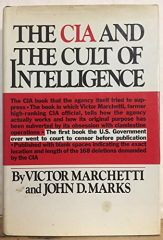
An unusual chain of events provided some of the strongest evidence of CIA involvement. Victor Marchetti, a career CIA officer, had risen to become Special Assistant to the Deputy Director, a position of some importance, before resigning in 1969 over policy differences. Although he fought a long battle with government censors over his book, The CIA and the Cult of Intelligence, he retained close ties with many former agency colleagues.
During the 1970s, the revelations of the Senate Church Committee and the House Select Committee on Assassinations had subjected the CIA to a great deal of negative public scrutiny, and there were growing suspicions of possible CIA links to JFK’s assassination. In 1978 longtime CIA Counter-intelligence chief James Angleton and a colleague provided Marchetti with an explosive leak, stating that the agency might be planning to admit a connection to the assassination, which had involved three shooters, but place the blame upon E. Howard Hunt, a former CIA officer who had become notorious during Watergate, and scapegoat him as a rogue agent, along with a few other equally tarnished colleagues. Marchetti published the resulting story in The Spotlight, a weekly national tabloid newspaper operated by Liberty Lobby, a rightwing populist organization based in DC. Although almost totally shunned by the mainstream media, The Spotlight was then at the peak of its influence, having almost 400,000 subscribers, as large a readership as the combined total of The New Republic, The Nation, and National Review.
Marchetti’s article suggested that Hunt had actually been in Dallas during the assassination, resulting in a libel lawsuit with potential damages large enough to bankrupt the publication. Longtime JFK assassination researcher Mark Lane became aware of the situation and volunteered his services to Liberty Lobby, hoping to use the legal proceedings, including the discovery process and subpoena power, as a means of securing additional evidence on the assassination, and after various court rulings and appeals, the case finally came to trial in 1985.
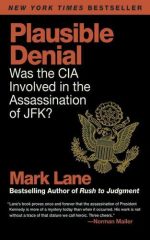
As Lane recounted in his 1991 bestseller, Plausible Denial, his strategy generally proved quite successful, not only allowing him to win the jury verdict against Hunt, but also eliciting sworn testimony from a former CIA operative of her personal involvement in the conspiracy along with the names of several other participants, though she claimed that her role had been strictly peripheral. And although Hunt continued for decades to totally deny any connection with the assassination, near the end of his life he made a series of video-taped interviews in which he admitted that he had indeed been involved in the JFK assassination and named several of the other conspirators, while also maintaining that his own role had been merely peripheral. Hunt’s explosive death-bed confession was recounted in a major 2007 Rolling Stone article and also heavily analyzed in Talbot’s books, especially his second one, but otherwise largely ignored by the media.
Many of these same apparent conspirators, drawn from the same loose alliance of groups, had previously been involved in the various U.S. government-backed attempts to assassinate Castro or overthrow his Communist government, and they had developed a bitter hostility towards President Kennedy for what they considered his betrayal during the Bay of Pigs fiasco and afterward. Therefore, there is a natural tendency to regard such animosity as the central factor behind the assassination, a perspective generally followed by Talbot, Douglass, and numerous other writers. They conclude that Kennedy died at the hands of harder-line anti-Communists, outraged over his perceived weakness regarding Cuba, Russia, and Vietnam, sentiments that were certainly widespread within right-wing political circles at the height of the Cold War.
While this framework for the assassination is certainly possible, it is far from certain. One may easily imagine that most of the lower-level participants in the Dallas events were driven by such considerations but that the central figures who organized the plot and set matters into motion had different motives. So long as all the conspirators were agreed on Kennedy’s elimination, there was no need for an absolute uniformity of motive. Indeed, men who had long been involved in organized crime or clandestine intelligence operations were surely experienced in operational secrecy, and many of them may not have expected to know the identities, let alone the precise motives, of the men at the very top of the remarkable operation they were undertaking.
We must also sharply distinguish between the involvement of particular individuals and the involvement of an organization as an organization. For example, CIA Director John McCone was a Kennedy loyalist who had been appointed to clean house a couple of years before the assassination, and he surely was innocent of his patron’s death. On the other hand, the very considerable evidence that numerous individual CIA intelligence officers and operatives participated in the action has naturally raised suspicions that some among their highest-ranking superiors were involved as well, perhaps even as the principal organizers of the conspiracy.
These reasonable speculations may have been magnified by elements of personal bias. Many of the prominent authors who have investigated the JFK assassination in recent years have been staunch liberals, and may have allowed their ideology to cloud their judgment. They often seek to locate the organizers of Kennedy’s elimination among those rightwing figures whom they most dislike, even when the case is far from entirely plausible.
But consider the supposed motives of hard-line anti-Communists near the top of the national security hierarchy who supposedly may have organized Kennedy’s elimination because he backed away from a full military solution in the Bay of Pigs and Cuban Missile Crisis incidents. Were they really so absolutely sure that a President Johnson would be such an enormous improvement as to risk their lives and public standing to organize a full conspiracy to assassinate an American president?
A new presidential election was less than a year away, and Kennedy’s shifting stance on Civil Rights seemed likely to cost him nearly all the Southern states that had provided his margin of electoral victory in 1960. A series of public declarations or embarrassing leaks might have helped remove him from office by traditional political means, possibly replacing him with a Cold War hard-liner such as Barry Goldwater or some other Republican. Would the militarists or business tycoons often implicated by liberal JFK researchers have really been so desperate as to not wait those extra few months and see what happened?
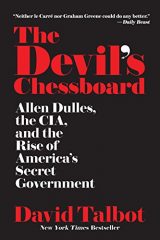
Based on extremely circumstantial evidence, Talbot’s 2015 book The Devil’s Chessboard, something of a sequel to Brothers, suggests that former longtime CIA Director Allan Dulles may have been the likely mastermind, with his motive being a mixture of his extreme Cold Warrior views and his personal anger at his 1961 dismissal from his position.
While his involvement is certainly possible, obvious questions arise. Dulles was a seventy-year-old retiree, with a very long and distinguished career of public service and a brother who had served as Eisenhower’s secretary of state. He had just published The Cult of Intelligence, which was receiving very favorable treatment in the establishment media, and he was embarked on a major book tour. Would he really have risked everything—including his family’s reputation in the history books—to organize the murder of America’s duly-elected president, an unprecedented act utterly different in nature than trying to unseat a Guatemalan leader on behalf of supposed American national interests? Surely, using his extensive media and intelligence contacts to leak embarrassing disclosures about JFK’s notorious sexual escapades during the forthcoming presidential campaign would have been be a much safer means of attempting to achieve an equivalent result. And the same is true for J. Edgar Hoover and many of the other powerful Washington figures who hated Kennedy for similar reasons.
On the other hand, it is very easy to imagine that such individuals had some awareness of the emerging plot or may even have facilitated it or participated to a limited extent. And once it succeeded, and their personal enemy had been replaced, they surely would have been extremely willing to assist in the cover-up and protect the reputation of the new regime, a role that Dulles may have played as the most influential member of the Warren Commission. But such activities are different than acting as the central organizer of a presidential assassination.
Just as with the hard-line national security establishment, many organized crime leaders had grown outraged over the actions of the Kennedy Administration. During the late 1950s, Robert Kennedy had intensely targeted the mob for prosecution as chief counsel to the Senate Labor Rackets Committee. But during the 1960 election, family patriarch Joseph Kennedy used his own longstanding mafia connections to enlist their support for his older son’s presidential campaign, and by all accounts the votes stolen by the corrupt mob-dominated political machines in Chicago and elsewhere helped put JFK in the White House, along with Robert Kennedy as his Attorney General. Frank Sinatra, an enthusiastic Kennedy supporter, had also helped facilitate this arrangement by using his influence with skeptical mob leaders.
However, instead of repaying such crucial election support with political favors, Attorney General Robert Kennedy, perhaps ignorant of any bargain, soon unleashed an all-out war against organized crime, far more serious than anything previously mounted at the federal level, and the crime bosses regarded this as a back-stabbing betrayal by the new administration. Once Joseph Kennedy was felled by an incapacitating stroke in late 1961, they also lost any hope that he would use his influence to enforce the deals he had struck the previous year. FBI wiretaps reveal that mafia leader Sam Giancana decided to have Sinatra killed for his role in this failed bargain, only sparing the singer’s life when he considered how much he personally loved the voice of one of the most famous Italian-Americans of the 20th century.
These organized crime leaders and some of their close associates such as Teamster boss Jimmy Hoffa certainly developed a bitter hatred toward the Kennedys, and this has naturally led some authors to point to the mafia as the likely organizers of the assassination, but I find this quite unlikely. For many decades, American crime bosses had had a complex and varied relationship with political figures, who might sometimes be their allies and at other times their persecutors, and surely there must have been many betrayals over the years. However, I am not aware of a single case in which any even moderately prominent political figure on the national stage was ever targeted for assassination, and it seems quite unlikely that the sole exception would be a popular president, whom they would have likely regarded as being completely out of their league. On the other hand, if individuals who ranked high in Kennedy’s own DC political sphere set in motion a plot to eliminate him, they might have found it easy to enlist the enthusiastic cooperation of various mafia leaders.
Furthermore, the strong evidence that many CIA operatives were involved in the conspiracy very much suggests that they were recruited and organized by some figure high in their own hierarchy of the intelligence or political worlds rather than the less likely possibility that they were brought in solely by leaders of the parallel domain of organized crime. And while crime bosses might possibly have organized the assassination itself, they surely had no means of orchestrated the subsequent cover-up by the Warren Commission, nor would there have been any willingness by America’s political leadership to protect mafia leaders from investigation and proper punishment for such a heinous act.
If a husband or wife is found murdered, with no obvious suspect or motive at hand, the normal response of the police is to carefully investigate the surviving spouse, and quite often this suspicion proves correct. Similarly, if you read in your newspapers that in some obscure Third World country two bitterly hostile leaders, both having unpronounceable names, had been sharing supreme political power until one was suddenly struck down in a mysterious assassination by unknown conspirators, your thoughts would certainly move in an obvious direction. Most Americans in the early 1960s did not perceive their own country’s politics in such a light, but perhaps they were mistaken. As a total newcomer to the enormous, hidden world of JFK conspiracy analysis, I was immediately surprised by the mere sliver of suspicion directed towards Vice President Lyndon B. Johnson, the slain leader’s immediate successor and the most obvious beneficiary.
The two Talbot books and the one by Douglass, totaling some 1500 pages, devote merely a few paragraphs to any suspicions of Johnson’s involvement. Talbot’s first book reports that immediately after the assassination, the vice president had expressed a frantic concern to his personal aides that a military coup might be in progress or a world war breaking out, and suggests that these few casual words demonstrate his obvious innocence, although a more cynical observer might wonder if those remarks had been uttered for exactly that reason. Talbot’s second book actually quotes an apparent low-level conspirator as claiming that Johnson had personally signed off on the plot and admits that Hunt believed the same thing, but treats such unsubstantiated accusations with considerable skepticism, before adding a single sentence acknowledging that Johnson may indeed have been a passive supporter or even an accomplice. Douglass and Peter Dale Scott, author of the influential 1993 book Deep Politics and the Death of JFK, apparently seem never to have even entertained the possibility.
Ideological considerations are probably an important reason for such remarkable reticence. Although liberals had grown to revile LBJ by the late 1960s for his escalation of the unpopular Vietnam War, over the decades those sentiments have faded, while warm memories of his passage of the landmark Civil Rights legislation and his creation of the Great Society programs have elevated his stature in that ideological camp. Furthermore, such legislation had long been blockaded in Congress and only became law because of the 1964 Democratic Congressional landslide following JFK’s martyrdom, and it might be difficult for liberals to admit that their fondest dreams were only realized by an act of political parricide.
Kennedy and Johnson may have been intensively hostile personal rivals, but there seem to have been few deep ideological differences between the two men, and most of the leading figures in JFK’s government continued to serve under his successor, surely another source of enormous embarrassment to any ardent liberals who came to suspect that the former had been murdered by a conspiracy involving the latter. Talbot, Douglass, and many other left-leaning advocates for an assassination conspiracy prefer to point the finger of blame towards far more congenial villains such as hard-line, anti-Communist Cold Warriors and right-wing elements, notably including top CIA officials, such as former director Allan Dulles.
An additional factor helping to explain the extreme unwillingness of Talbot, Douglass, and others to consider Johnson as an obvious suspect may be the realities of the book publishing industry. By the 2000s, JFK assassination conspiracies had long become passé and were treated with disdain in mainstream circles. Talbot’s strong reputation, his 150 original interviews, and the quality of his manuscript broke that barrier, and attracted The Free Press as his very respectable publisher, while later drawing a strongly positive review by a leading academic scholar in the New York Times Sunday Book Review and an hour long television segment broadcast on C-Span Booknotes. But if he had devoted any space to voicing suspicions that our 35th president had been murdered by our 36th, surely the weight of that extra element of “outrageous conspiracy theory” would have ensured that his book sank without a trace.
However, if we cast off these distorting ideological blinders and the practical considerations of American publishing, the prima facie case for Johnson’s involvement seems quite compelling.
Consider a very simple point. If a president is struck down by an unknown group of conspirators, his successor would normally have had the strongest possible incentive to track them down lest he might become their next victim. Yet Johnson did nothing, appointing the Warren Commission that covered up the entire matter, laying the blame upon an erratic “lone gunman” conveniently dead. This would seem remarkably odd behavior for an innocent LBJ. This conclusion does not demand that Johnson was the mastermind, nor even an active participant, but it raises a very strong suspicion that he at least had had some awareness of the plot, and enjoyed a good personal relationship with some of the principals.
A similar conclusion is supported by a converse analysis. If the plot succeeded and Johnson became president, the conspirators must surely have felt reasonably confident that they would be protected rather than tracked down and punished as traitors by the new president. Even a fully successful assassination would entail enormous risks unless the organizers believed that Johnson would do exactly what he did, and the only means of ensuring this would be to sound him out about the plan, at least in some vague manner, and obtain his passive acquiesce.
Based on these considerations, it seems extremely difficult to believe that any JFK assassination conspiracy took place entirely without Johnson’s foreknowledge, or that he was not a central figure in the subsequent cover-up.
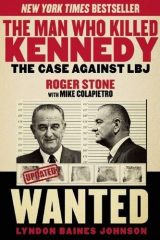
But the specific details of Johnson’s career and his political situation in late 1963 greatly strengthen these entirely generic arguments. A very useful corrective to the “See No Evil” approach to Johnson from liberal JFK writers is Roger Stone’s The Man Who Killed Kennedy: The Case Against LBJ, published in 2013. Stone, a longtime Republican political operative who got his start under Richard Nixon, presents a powerful case that Johnson was the sort of individual who might easily have lent his hand to political murder, and also that he had strong reasons to do so.
Among other things, Stone gathers together an enormous wealth of persuasive information regarding Johnson’s decades of extremely corrupt and criminal practices in Texas, including fairly plausible claims that these may have included several murders. In one bizarre 1961 incident that strangely foreshadows the Warren Commission’s “lone gunman” finding, a federal government inspector investigating a major Texas corruption scheme involving a close LBJ ally was found dead, shot five times in the chest and abdomen by a rifle, but the death was officially ruled a “suicide” by the local authorities, and that conclusion was reported with a straight face in the pages of the Washington Post.
Certainly one remarkable aspect of Johnson’s career is that he was born dirt-poor, held low-paying government jobs throughout his entire life, yet took the oath of office as the wealthiest president in modern American history, having accumulated a personal fortune of over $100 million in present-day dollars, with the financial payoffs from his corporate benefactors having been laundered through his wife’s business. This odd anomaly is so little remembered these days that a prominent political journalist expressed total disbelief when I mentioned it to him a decade ago.
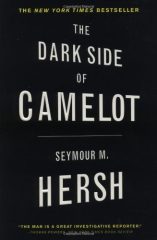
Stone also effectively sketches out the very difficult political situation Johnson faced in late 1963. He had originally entered the 1960 presidential race as one of the most powerful Democrats in the country and the obvious front-runner for his party’s nomination, certainly compared to the much younger Kennedy, whom he greatly outranked in political stature and also somewhat despised. His defeat, involving a great deal of underhanded dealings on both sides, came as a huge personal blow. The means by which he somehow managed to get himself placed on the ticket are not entirely clear, but both Stone and Seymour Hersh in The Dark Side of Camelot strongly suggest that personal blackmail was a greater factor than geographical ticket-balancing. In any event, Kennedy’s paper-thin 1960 victory would have been far more difficult without Texas narrowly falling into the Democratic column, and election fraud there by Johnson’s powerful political machine seems almost certainly to have been an important factor.
Under such circumstances, Johnson naturally expected to play a major role in the new administration, and he even issued grandiose demands for a huge political portfolio, but instead he found himself immediately sidelined and treated with complete disdain, soon becoming a forlorn figure with no authority or influence. As time went by, the Kennedys made plans to get rid of him, and just a few days before the assassination, they were already discussing whom to place on the reelection ticket in his stead. Much of Johnson’s long record of extreme corruption both in Texas and in DC was coming to light following the fall of Bobby Baker, his key political henchman, and with strong Kennedy encouragement, Life Magazine was preparing a huge expose of his sordid and often criminal history, laying the basis for his prosecution and perhaps a lengthy prison sentence. By mid-November 1963, Johnson seemed a desperate political figure at the absolute end of his rope, but a week later he was the president of the United States, and all those swirling scandals were suddenly forgotten. Stone even claims that the huge block of magazine space reserved for the Johnson expose was instead filled by the JFK assassination story.
Aside from effectively documenting Johnson’s sordid personal history and the looming destruction he faced at the hands of the Kennedys in late 1963, Stone also adds numerous fascinating pieces of personal testimony, which may or may not be reliable. According to him, as his mentor Nixon was watching the scene at the Dallas police station where Jack Ruby shot Oswald, Nixon immediately turned as white as a ghost, explaining that he had personally known the gunman under his birth-name of Rubenstein. While working on a House Committee in 1947, Nixon had been advised by a close ally and prominent mob-lawyer to hire Ruby as an investigator, being told that “he was one of Lyndon Johnson’s boys.” Stone also claims that Nixon once emphasized that although he had long sought the presidency, unlike Johnson “I wasn’t willing to kill for it.” He further reports that Vietnam Ambassador Henry Cabot Lodge and numerous other prominent political figures in DC were absolutely convinced of Johnson’s direct involvement in the assassination.
Stone has spent more than a half-century as a ruthless political operative, a position that provided him with unique personal access to individuals who participated in the great events of the past, but one that also carries the less than totally candid reputation of that profession, and individuals must carefully weigh these conflicting factors against each other. Personally, I tend to credit most of the eyewitness stories he provides. But even readers who remain entirely skeptical should find useful the large collection of secondary source references to the sordid details of LBJ’s history that the book provides.
Finally, a seemingly unrelated historical incident had originally raised my own suspicions of Johnson’s involvement.
Just prior to the outbreak of the Six Day War in 1967, Johnson had dispatched the U.S.S. Liberty, our most advanced intelligence-gathering ship, to remain offshore in international waters and closely monitor the military situation. There have been published claims that he had granted Israel a green-light for its preemptive attack, but fearful of risking a nuclear confrontation with the Soviet patrons of Syria and Egypt, had strictly circumscribed the limits of the military operation, sending the Liberty to keep an eye on developments and perhaps also to “show Israel who was boss.”
Whether or not this reconstruction is correct, the Israelis soon launched an all-out attack on the nearly defenseless ship despite the large American flag it was flying, deploying attack jets and torpedo boats to sink the vessel during an assault that lasted several hours, while machine-gunning the lifeboats to ensure that there would be no survivors. The first stage of the attack had targeted the main communications antenna, and its destruction together with heavy Israeli jamming, prevented any communications with other U.S. naval forces in the region.
Despite these very difficult conditions, a member of the crew heroically managed to jerry-rig a replacement antenna during the attempt, and by trying numerous different frequencies, was able to evade the jamming and contact the U.S. Sixth Fleet, informing them of the desperate situation. Yet although carrier jets were twice dispatched to rescue the Liberty and drive off the attackers, each time they were recalled, apparently upon direct orders from the highest authorities of the U.S. government. Once the Israelis learned that word of the situation had reached other U.S. forces, they soon discontinued their attack, and the heavily-damaged Liberty eventually limped into port, with over 200 dead and wounded sailors and NSA signal operators, representing the greatest loss of American servicemen in any naval incident since World War II.
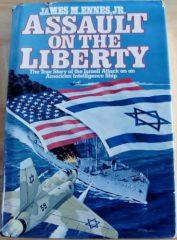
Although numerous medals were issued to the survivors, word of the incident was totally suppressed by a complete blanket of secrecy, and in an unprecedented step, even a Congressional Medal of Honor was awarded only in a private ceremony. The survivors were also harshly threatened with immediate court martial if they discussed what had transpired with the press or anyone else. Despite the overwhelming evidence that the attack had been intentional, a naval court of inquiry presided over by Admiral John S. McCain, Jr., father of the current senator, whitewashed the incident as a tragic accident, and a complete media blackout suppressed the facts. The true story only began to come out years later, when James M. Ennes, Jr., a Liberty survivor, risked severe legal consequences and published Assault on the Liberty in 1979 .
As it happened, NSA intercepts of Israeli communications between the attacking jets and Tel Aviv, translated from the Hebrew, fully confirmed that the attack had been entirely deliberate, and since many of the dead and wounded were NSA employees, the suppression of these facts greatly rankled their colleagues. My old friend Bill Odom, the three-star general who ran the NSA for Ronald Reagan, later shrewdly circumvented the restrictions of his political masters by making those incriminating intercepts part of the standard curriculum of the Sigint training program required for all intelligence officers.
In 2007 an unusual set of circumstances finally broke the thirty year blackout in the mainstream media. Real estate investor Sam Zell, a Jewish billionaire extremely devoted to Israel, had orchestrated a leveraged-buyout of the Tribune Company, parent of the Los Angeles Times and the Chicago Tribune, investing merely a sliver of his own money, with the bulk of the financing coming from the pension funds of the company he was acquiring. Widely heralded as “the grave dancer” for his shrewd financial investments, Zell publicly boasted that the deal gave him nearly all of the upside potential of the company, while he bore relatively little of the risk. Such an approach proved wise since the complex deal quickly collapsed into bankruptcy, and although Zell emerged almost unscathed, the editors and journalists lost decades of their accumulated pension dollars, while massive layoffs soon devastated the newsrooms of what had been two of the country’s largest and most prestigious newspapers. Perhaps coincidentally, just as this business turmoil hit in late 2007, the Tribune ran a massive 5,500 word story on the Liberty attack, representing the first and only time such a comprehensive account of the true facts has ever appeared in the mainstream media.
By all accounts, Johnson was an individual of towering personal ego, and when I read the article, I was struck by the extent of his astonishing subservience to the Jewish state. The influence of campaign donations and favorable media coverage seemed completely insufficient to explain his reaction to an incident that had cost the lives of so many American servicemen. I began to wonder if Israel might have played an extraordinarily powerful political trump-card, thereby showing LBJ “who was really boss,” and once I discovered the reality of the JFK assassination conspiracy a year or two later, I suspected I knew what that trump-card might have been. Over the years, I had become quite friendly with the late Alexander Cockburn, and the next time we had lunch I outlined my ideas. Although he had always casually dismissed JFK conspiracy theories as total nonsense, he found my hypothesis quite intriguing.
Regardless of such speculation, the strange circumstances of the Liberty incident certainly demonstrated the exceptionally close relationship between President Johnson and the government of Israel, as well as the willingness of the mainstream media to spend decades hiding events of the most remarkable nature if they might tread on particular toes.
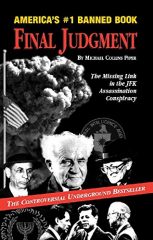
These important considerations should be kept in mind as we begin exploring the most explosive yet under-reported theory of the JFK assassination. Almost twenty-five years ago the late Michael Collins Piper published Final Judgment presenting a very large body of circumstantial evidence that Israel and its Mossad secret intelligence service, together with their American collaborators, probably played a central role in the conspiracy.
For decades following the 1963 assassination, virtually no suspicions had ever been directed towards Israel, and as a consequence none of the hundreds or thousands of assassination conspiracy books that appeared during the 1960s, 1970s, and 1980s had hinted at any role for the Mossad, though nearly every other possible culprit, ranging from the Vatican to the Illuminati, came under scrutiny. Kennedy had received over 80% of the Jewish vote in his 1960 election, American Jews featured very prominently in his White House, and he was greatly lionized by Jewish media figures, celebrities, and intellectuals ranging from New York City to Hollywood to the Ivy League. Moreover, individuals with a Jewish background such as Mark Lane and Edward Epstein had been among the leading early proponents of an assassination conspiracy, with their controversial theories championed by influential Jewish cultural celebrities such as Mort Sahl and Norman Mailer. Given that the Kennedy Administration was widely perceived as pro-Israel, there seemed no possible motive for any Mossad involvement, and bizarre, totally unsubstantiated accusations of such a monumental nature directed against the Jewish state were hardly likely to gain much traction in an overwhelmingly pro-Israel publishing industry.

However, in the early 1990s highly-regarded journalists and researchers began exposing the circumstances surrounding the development of Israel’s nuclear weapons arsenal. Seymour Hersh’s 1991 book The Samson Option: Israel’s Nuclear Arsenal and American Foreign Policy described the extreme efforts of the Kennedy Administration to force Israel to allow international inspections of its allegedly non-military nuclear reactor at Dimona, and thereby prevent its use in producing nuclear weapons. Dangerous Liaisons: The Inside Story of the U.S.-Israeli Covert Relationship by Andrew and Leslie Cockburn appeared in the same year, and covered similar ground.
Although entirely hidden from public awareness at the time, the early 1960s political conflict between the American and Israeli governments over nuclear weapons development had represented a top foreign policy priority of the Kennedy Administration, which had made nuclear non-proliferation one of its central international initiatives. It is notable that John McCone, Kennedy’s choice as CIA Director, had previously served on the Atomic Energy Commission under Eisenhower, being the individual who leaked the fact that Israel was building a nuclear reactor to produce plutonium.
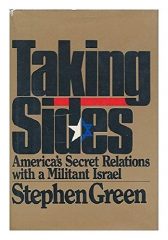
The pressure and financial aid threats secretly applied to Israel by the Kennedy Administration eventually became so severe that they led to the resignation of Israel’s founding Prime Minister David Ben-Gurion in June 1963. But all these efforts were almost entirely halted or reversed once Kennedy was replaced by Johnson in November of that same year. Piper notes that Stephen Green’s 1984 book Taking Sides: America’s Secret Relations With a Militant Israel had previously documented that U.S. Middle East Policy completely reversed itself following Kennedy’s assassination, but this important finding had attracted little attention at the time.
Skeptics of a plausible institutional basis for a JFK assassination conspiracy have often noted the extreme continuity in both foreign and domestic policies between the Kennedy and Johnson Administrations, arguing that this casts severe doubt on any such possible motive. Although this analysis seems largely correct, America’s behavior towards Israel and its nuclear weapons program stands as a very notable exception to this pattern.
An additional major area of concern for Israeli officials may have involved the efforts of the Kennedy Administration to sharply restrict the activities of pro-Israel political lobbies. During his 1960 presidential campaign, Kennedy had met in New York City with a group of wealthy Israel advocates, led by financier Abraham Feinberg, and they had offered enormous financial support in exchange for a controlling influence in Middle Eastern policy. Kennedy managed to fob them off with vague assurances, but he considered the incident so troubling that the next morning he sought out journalist Charles Bartlett, one of his closest friends, and expressed his outrage that American foreign policy might fall under the control of partisans of a foreign power, promising that if he became president, he would rectify that situation. And indeed, once he had installed his brother Robert as Attorney General, the latter initiated a major legal effort to force pro-Israel groups to register themselves as foreign agents, which would have drastically reduced their power and influence. But after JFK’s death, this project was quickly abandoned, and as part of the settlement, the leading pro-Israel lobby merely agreed to reconstitute itself as AIPAC.
Final Judgment went through a number of a reprintings following its original 1994 appearance, and by the sixth edition released in 2004, had grown to over 650 pages, including numerous long appendices and over 1100 footnotes, the overwhelming majority of these referencing fully mainstream sources. The body of the text was merely serviceable in organization and polish, reflecting the total boycott by all publishers, mainstream or alternative, but I found the contents themselves remarkable and generally quite compelling. Despite the most extreme blackout by all media outlets, the book sold more than 40,000 copies over the years, making it something of an underground bestseller, and surely bringing it to the attention of everyone in the JFK assassination research community, though apparently almost none of them were willing to mention its existence. I suspect these other writers realized that even any mere acknowledgement of the existence of the book, if only to ridicule or dismiss it, might prove fatal to their media and publishing career. Piper himself died in 2015, aged 54, suffering from the health problems and heavy-drinking often associated with grim poverty, and other journalists may have been reluctant to risk that same dismal fate.
As an example of this strange situation, the bibliography of Talbot’s 2005 book contains almost 140 entries, some rather obscure, but has no space for Final Judgment, nor does his very comprehensive index include any entry for “Jews” or “Israel.” Indeed, at one point he very delicately characterizes Sen. Robert Kennedy’s entirely Jewish senior staff by stating “There was not a Catholic among them.” His 2015 sequel is equally circumspect, and although the index does contain numerous entries pertaining to Jews, all these references are in regards to World War II and the Nazis, including his discussion of the alleged Nazi ties of Allen Dulles, his principal bête noire. Stone’s book, while fearlessly convicting President Lyndon Johnson of the JFK assassination, also strangely excludes “Jews” and “Israel” from the long index and Final Judgment from the bibliography, and Douglass’s book follows this same pattern.
Furthermore, the extreme concerns that the Piper Hypothesis seems to have provoked among JFK assassination researchers may explain a strange anomaly. Although Mark Lane was himself of Jewish origins and left-wing roots, after his victory for Liberty Lobby in the Hunt libel trial, he spent many years associated with that organization in a legal capacity, and apparently became quite friendly with Piper, one of its leading writers. According to Piper, Lane told him that Final Judgment made “a solid case” for a major Mossad role in the assassination, and he viewed the theory as fully complementary to his own focus on CIA involvement. I suspect that concerns about these associations may explain why Lane was almost completely airbrushed out of the Douglass and 2007 Talbot books, and discussed in the second Talbot book only when his work was absolutely essential to Talbot’s analysis. By contrast, New York Times staff writers are hardly likely to be as versed in the lesser-known aspects of the JFK assassination research community, and being ignorant of this hidden controversy, they gave Lane the long and glowing obituary that his career fully warranted.
When weighing the possible suspects for a given crime, considering their past pattern of behavior is often a helpful approach. As discussed above, I can think of no historical example in which organized crime initiated a serious assassination attempt against any American political figure even moderately prominent on the national stage. And despite a few suspicions here and there, the same applies to the CIA.
By contrast, the Israeli Mossad and the Zionist groups that preceded the establishment of the Jewish state seem to have a very long track record of assassinations, including those of high-ranking political figures who might normally be regarded as inviolate. Lord Moyne, the British Minister of State for the Middle East, was assassinated in 1944 and Count Folke Bernattote, the UN Peace Negotiator sent to help resolve the first Arab-Israel war suffered the same fate in September 1948. Not even an American president was entirely free of such risks, and Piper notes that the memoirs of Harry Truman’s daughter Bess reveal that Zionist militants had tried to assassinate her father using a letter laced with toxic chemicals in 1947 when they believed he was dragging his heels in supporting Israel, although that failed attempt was never made public. The Zionist faction responsible for all of these incidents was led by Yitzhak Shamir, who later became a leader of Mossad and director of its assassination program during the 1960s, before eventually becoming Prime Minister of Israel in 1986.
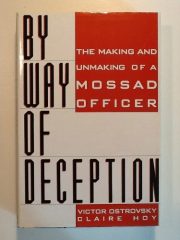
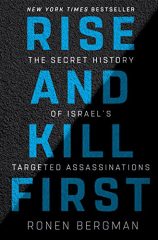
If the claims in the 1990s tell-all bestsellers of Mossad defector Victor Ostrovsky can be credited, Israel even considered the assassination of President George H.W. Bush in 1992 for his threats to cut off financial aid to Israel during a conflict over West Bank settlement policies, and I have been informed that the Bush Administration took those reports seriously at the time. And although I have not yet read it, the recent, widely-praised book Rise and Kill First: The Secret History of Israel’s Targeted Assassinations by journalist Ronen Bergman suggests that no other country in the world may have so regularly employed assassination as a standard tool of state policy.
There are other notable elements that tend to support the Piper Hypothesis. Once we accept the existence of a JFK assassination conspiracy, the one individual who is virtually certain to have been a participant was Jack Ruby, and his organized crime ties were almost entirely to the huge but rarely-mentioned Jewish wing of that enterprise, presided over by Meyer Lansky, an extremely fervent supporter of Israel. Ruby himself had particularly strong ties with Lansky lieutenant Mickey Cohen, who dominated the Los Angeles underworld and had been personally involved in gun-running to Israel prior to the 1948 war. Indeed, according to Dallas rabbi Hillel Silverman, Ruby had privately explained his killing of Oswald by saying “I did it for the Jewish people.”
An intriguing aspect to Oliver Stone’s landmark JFK film should also be mentioned. Arnon Milchan, the wealthy Hollywood producer who backed the project, was not only an Israeli citizen, but had also reportedly played a central role in the enormous espionage project to divert American technology and materials to Israel’s nuclear weapons project, the exact undertaking that the Kennedy Administration had made such efforts to block, even sometimes being described as “the Israeli James Bond.” And although the film ran a full three hours in length, JFK scrupulously avoided presenting any of the details that Piper later regarded as initial clues to an Israeli dimension, instead seeming to finger America’s fanatic home-grown anti-Communist movement and the Cold War leadership of the military-industrial complex as the guilty parties.
Summarizing over 300,000 words of Piper’s history and analysis in just a few paragraphs is obviously an impossible undertaking, but the above discussion provides a reasonable taste of the enormous mass of circumstantial evidence mustered in favor of the Piper Hypothesis.
In many respects, JFK Assassination Studies has become its own academic discipline, and my credentials are quite limited. I have read perhaps a dozen books in the subject, and have also tried to approach the issues with the clean slate and fresh eyes of an outsider, but any serious expert would surely have digested scores or even hundreds of the volumes in the field. While the overall analysis of Final Judgment struck me as quite persuasive, a good fraction of the names and references were unfamiliar, and I simply do not have the background to assess their credibility, nor whether the description of the material presented is accurate.
Under normal circumstances, I would turn to the reviews or critiques produced by other authors, and comparing them against Piper’s arguments, decide which argument seemed the stronger. But although Final Judgment was published a quarter-century ago, the near-absolute blanket of silence surrounding the Piper Hypothesis, especially from the more influential and credible researchers, renders this impossible.
However, Piper’s inability to secure any regular publisher and the widespread efforts to smother his theory out of existence, have had an ironic consequence. Since the book went out of print years ago, I had a relatively easy time securing the rights to include it in my collection of controversial HTML Books, and I have now done so, thereby allowing everyone on the Internet to conveniently read the entire text and decide for themselves, while easily checking the multitude of references or searching for particular words or phrases.
The Missing Link in the JFK Assassination Conspiracy
Michael Collins Piper • 2005 • 310,000 Words
This edition actually incorporates several much shorter works, originally published separately. One of these, consisting of an extended Q&A, describes the genesis of the idea and answers numerous questions surrounding it, and for some readers may represent a better starting point.
Questions, Answers & Reflections About the Crime of the Century
Michael Collins Piper • 2005 • 48,000 Words
There are also numerous extended Piper interviews or presentations easily available on YouTube, and when I watched two or three of them a couple of years ago, I thought he effectively summarized many of his main arguments, but I cannot remember which ones they were.
The Kennedy assassination surely ranks as one of the most dramatic and heavily reported events of the twentieth century, yet the overwhelming evidence that our president died at the hands of a conspiracy rather than an eccentric “lone gunman” was almost entirely suppressed by our mainstream media during the decades that followed, with endless ridicule and opprobrium heaped on many of the stubborn truth-tellers. Indeed, the very term “conspiracy theory” soon became a standard slur aimed against all those who sharply questioned establishmentarian narratives, and there is strong evidence that such pejorative use was deliberately promoted by government agencies concerned that so much of the American citizenry was growing skeptical of the implausible cover story presented by the Warren Commission. But despite all these efforts, this period may mark the inflection point at which public trust in our national media began its precipitous decline. Once an individual concludes that the media lied about something as enormous as the JFK assassination, he naturally begins to wonder what other lies may be out there.
Although I now consider the case for an assassination conspiracy overwhelming, I think that the passage of so many decades has removed any real hope of reaching a firm conclusion about the identities of the main organizers or their motives. Those who disagree with this negative assessment are free to continue sifting the enormous mountain of complex historical evidence and debating their conclusions with others having similar interests.
However, among the cast of major suspects, I think that the most likely participant by far was Lyndon Johnson, based on any reasonable assessment of means, motive, and opportunity, as well as the enormous role he obviously must have played in facilitating the subsequent Warren Commission cover-up. Yet although such an obvious suspect must surely have been immediately apparent to any observer, Johnson seems to have received only a rather thin slice of the attention that books regularly directed to other, far less plausible suspects. So the clear dishonesty of the mainstream media in avoiding any recognition of a conspiracy seems matched by a second layer of dishonesty in the alternative media, which has done its best to avoid recognizing the most likely perpetrator.
And the third layer of media dishonesty is the the most extreme of all. A quarter century ago, Final Judgment provided an enormous mass of circumstantial evidence suggesting a major, even dominant, role for the Israeli Mossad in organizing the elimination of both our 33rd president and also his younger brother, a scenario that seems second in likelihood only to that of Johnson’s involvement. Yet Piper’s hundreds of thousands of words of analysis have seemingly vanished into the ether, with very few of the major conspiracy researchers even willing to admit their awareness of a shocking book that sold over 40,000 copies, almost entirely by underground word-of-mouth.
So although committed partisans can continue endless, largely fruitless debates over “Who Killed JFK,” I think that the one firm conclusion we can draw from the remarkable history of this pivotal event of the twentieth century is that all of us have lived for many decades within the synthetic reality of “Our American Pravda.”
Related Reading:
- American Pravda: The JFK Assassination, Part I – What Happened?
- Final Judgment by Michael Collins Piper
- Did Israel Kill the Kennedys? by Laurent Guyénot
- Our American Pravda
Forbes: Tesla Green Car Production Circus Distracting From Solar City Woes
By Eric Worrall | Watts Up With That? | June 22, 2018
As Elon Musk ramps up the hype over whether Tesla will hit its Model 3 production targets, another financial disaster may be unfolding at Tesla’s subsidiary Solar City.
Tesla’s Constant Turmoil Can’t Hide The Fact That SolarCity Is Dying
Jim Collins
JUN 22, 2018 @ 03:07 PMI am convinced that the financial media will never end its fascination with Tesla and this week has been even more rife with intrigue than most. While the actions of self-proclaimed whistleblower Martin Tripp—including his extraordinary email exchange with CEO Elon Musk—have garnered most of the headlines, there are more relevant news items for investors. Thursday’s Reuters article has the details of Tesla’s abrupt shutdown of a major part of its SolarCity sales network, and the ending of the company’s partnership with Home Depot had been announced last week in the press release detailing Tesla’s workforce reductions.
As Tesla’s struggles to perform the most basic assembly tasks at its Fremont car plant grab the headlines, the SolarCity news is signaling to the market a reality of which I have been convinced for some time: SolarCity is worthless. So, now the focus has to shift to that transaction, in which the former Tesla Motors paid 11 million shares of its stock to a company that was also chaired by its chairman and CEO and run on a day-to-day basis by his cousin (SolarCity’s former CEO Lyndon Rive.) The conflicts of interest were so obvious then, and even though most of Tesla’s Board members recused themselves from the SolarCity acquisition process, the simple fact is that Tesla picked up a lemon when they drove SolarCity off the lot.
…
How would the market perceive such a write-off given that Tesla is contractually obligated to spend $5 billion in capital in the ten years following the completion of the currently-in-construction (also being built by Panasonic) Gigafactory 2 in Buffalo? I am terrible at predicting Tesla’s share price movements over the short-term, but over the long-term, SolarCity will be a huge drain on the value of a car company that has been massively overvalued for years.
Full article: https://www.forbes.com/sites/jimcollins/2018/06/22/teslas-constant-turmoil-cant-hide-the-fact-that-solarcity-is-dying/
How different things would have been had Hillary Clinton won. Hillary Clinton pledged to install five hundred million solar panels during her presidency. Solar City would likely have been front of the queue to supply those solar panels, and Elon Musk would likely have pocketed billions of dollars of taxpayers cash helping Clinton fulfil her solar pledge.
Perhaps a Clinton victory is what Elon Musk had in mind when he bought out Solar City, and signed binding deals to build those extravagant Gigafactories.
Kushner says US Administration Will Continue with “Peace Plan” Even Without Abbas
IMEMC News & Agencies – June 24, 2018
US president Donald Trump’s senior adviser, Jared Kushne,r in an interview with Al-Quds Palestinian newspaper, said that his country will go on with a Middle East peace plan which has not been announced yet, whether Abbas agrees to participate in it or not.
Kushner questioned Abbas’s ability to make a deal, as the Palestinian Authority (PA) is boycotting the US administration for its moves, which included declaring Jerusalem as the capital of Israel, and moving the US embassy from Tel Aviv to Jerusalem.
“If President Abbas is willing to come back to the table, we are ready to engage; if he is not, we will likely air the plan publicly,” Kushner said, according to an English-language transcript released in Washington.
“However, I do question how much President Abbas has the ability to, or is willing to, lean into finishing a deal. He has his talking points which have not changed in the last 25 years,” Kushner said.
Commenting on the interview, Nabil Abu Rdainah, a spokesman for Abbas, said: “The road to peace is clear – commitment to the two-state solution, a Palestinian state on the 1967 borders with Jerusalem as its capital. This is the road to any negotiations or any meetings.”
Kushner and US Middle East envoy Jason Greenblatt, visited Jordan, Saudi Arabia, Qatar and Egypt before talks on Friday and Saturday with Israeli Prime Minister Benjamin Netanyahu, said Arab leaders conveyed they wanted to see a Palestinian state.
Erekat: Kushner represents a policy of dictation
In response, senior PLO member, Dr. Saeb Erekat said Kushner’s interview again illustrates the US refusal to talk substance, to mention Palestinian rights or a Palestinian state.
“This is an attempt to push forward a plan that consolidates Israel’s colonial control over Palestinian land and lives while telling the Palestinian people that money will compensate for our inalienable rights. Plain and simple: Palestine and Palestinian rights are not for sale,” Erekat said in a statement, according to the PNN.
“Kushner represents a policy of dictation rather than negotiations”, he added. “It is the Trump Administration has walked away from the negotiations, from international law and UN resolutions.”
Erekat added that the PA has continuously heard the same from the Israeli government that believes that there will be a better economic situation by pulverizing the political rights of the people of Palestine. Therefore, Kushner’s interview only confirms what we have heard from every international envoy we have met with, that there’s nothing of substance coming from the Trump Administration.
He added that it is outrageous to accept such blatant disregard of international law to be replaced with business packages to resolve the struggle of a people striving for their freedom.
“The aids of the current US Administration, including Jared Kushner, have heard it clear from our fellow Arab leaders that the core of the solution should be grounded on ending Israel’s occupation of Palestine and the establishment of a sovereign and the independent State of Palestine on the 1967 borders with East Jerusalem as its capital. Certainly, the end of Israel’s occupation and the fulfillment of our political rights is a matter of consensus among all Palestinians that are united on the vision and will to live in freedom,” Erekat concluded.
Atrocity Porn and Hitler Memes Target Trump for Regime Change
By James George JATRAS | Strategic Culture Foundation | 23.06.2018
American and global audiences have been bombarded with media images of wailing children in holding facilities, having been separated from adults (maybe their parents, maybe not) detained for illegal entry into the United States. The images have been accompanied by “gut-wrenching” audio of distraught toddlers screaming the Spanish equivalents of “Mommy!” and “Daddy!” – since, as any parent knows, small children never cry or call for their parents except in the most horrifying, life-threatening circumstances.
American and world media have provided helpful color commentary, condemning the caging of children as openly racist atrocities and state terrorism comparable to Nazi concentration camps and worse than FDR’s internment of Japanese and Japanese-Americans. Indeed, just having voted for Trump is now reason enough for Americans to be labeled as Nazis.
Finally, the presumptive Hitler himself, also known as President Donald Trump, citing the pleas of First Lady Melania and First Daughter Ivanka, signed an Executive Order to provide for adults and (their?) children to be detained together. However, the order is unlikely to hold up in court, with sanctuary-minded states aiming to obstruct border enforcement the way Trump’s earlier order on vetting arrivals from terrorism-prone countries has been crippled by the federal judiciary. His media and bipartisan political opposition will be happy only when all border violation detentions cease and America has gone full Merkel, starting with ending Trump’s declared zero tolerance for illegal crossings and restoration of Barack Obama’s catch-and-release policy.
Even then, Trump will be vilified for taking so long to do it. Whether or how Trump may yield further is not clear, but rather than slaking the hate campaign against him, his attempted effort at appeasement has put the smell of political blood in the water with the November 2018 Congressional midterm elections looming.
Some images of small children have become veritable icons of Trumpian brutality. One photo, reportedly of a two-year-old Honduran girl (who in fact had not been separated from her mother), graced the cover of Time magazine, confronting the black-hearted tyrant himself. Another, of a little boy in a cage, went viral before it was revealed that this kid had nothing to do with the border but rather was briefly inside a staged pen as part of a protest in Dallas.
The reality behind the pictures doesn’t matter, though. More important are the images themselves and their power, along with dishonest media spin, to produce an emotional response that short-circuits critical thinking. Never mind what the facts are! Children are suffering! Trump is guilty! We need to “do something”!
On point of comparison, let’s remember the saturation media distribution given in 2016 to a picture of a little boy, Omran Daqneesh, said to have been pulled from the rubble of Aleppo after what was dubiously reported as a Russian airstrike. Promptly dubbed “Aleppo Boy,” his pathetic dusty image immediately went viral in every prestige outlet in the United States and Europe. The underlying message: we – the “international community,” “the Free World,” the United States, you and I – must “do something” to stop Syrian President Bashar al-Assad and his main backer and fellow Hitler clone Vladimir Putin.
(Not long before, another little boy, also in the area of Aleppo, was beheaded on video by the “moderate” US-supported jihad terror group Harakat Nour al-Din al-Zenki. The images of his grisly demise received far less media attention than those of official Aleppo Boy. This other youngster received no catchy moniker. No one called for anyone in power to “do something.” In fact, western support for the al-Zenki murderers – which the Obama administration refused to disavow even after the beheading and allegations of chlorine gas use by al-Zenki – can itself be seen as part of “doing something” about the evil, evil Assad. (Reportedly Trump’s viewing the beheading video led to a cutoff of CIA aid to some jihad groups.) Another small detail readily available in alternative media but almost invisible in the major outlets: Mahmoud Raslan, the photographer who took the picture of Aleppo Boy and disseminated it to world acclaim, also took a smiling selfie with the beaming al-Zenki beheaders of the other kid. But, hey, says Raslan, I barely know those guys. Now let’s move on . . . )
For those who have been paying attention for the past couple of decades, the Trump border crisis kids, like Aleppo Boy before them, are human props in what is known as “atrocity porn” designed to titillate the viewers through horror and incite them to hatred of the presumed perpetrators. Atrocity propaganda has long been a part of warfare – think World War I claims of Belgian babies impaled on German bayonets – but with modern digital technology and social media the impact is immediate and universal.
It’s irrelevant whether what is identified in images corresponds to reality. What matters is their ability to evoke mindless, maudlin emotionalism, like MSNBC’s Rachel Maddow choking up in tears over the border children or the similar weepy display in 2016 by CNN’s Kate Bolduan over Aleppo Boy.
Now being deployed in an American domestic context over whether or not the US should be allowed to control its borders, for decades atrocity porn has been essential for selling military action in wars of choice unconnected to the actual defense of the US: incubator babies (Kuwait/Iraq); the Racak massacre (Kosovo); the Markale marketplace bombings, Omarska “living skeletons,” and the Srebrenica massacre (Bosnia); rape as calculated instrument of war (Bosnia, Libya); and false flag poison gas attacks in Ghouta and Douma (Syria). Never mind that the facts, to the extent they eventually become known, may later turn out to be very different from the categorical black-and-white accusations on the lips of western officials and given banner exposure within hours if not minutes of the event in question.
Atrocity porn dovetails closely with another key meme, that of Hitler-of-the-month. In painting Trump as der Führer on the border, we see coming home to America a ploy that has been an essential element to justify foreign regime change operation, each of which has been spelled out in terms of black-and-white, good-versus-evil Manichaean imperatives, with the side targeted for destruction or replacement having absolutely no redeeming qualities. This entails first of all absolute demonization of the evil leader in what is called reductio ad Hitlerum, a concept attributed to philosopher Leo Strauss in 1951. Russia’s Vladimir Putin has been characterized by name as another Hitler by Hillary Clinton and others. Among the prominent “Hitlers” since 1991 have been Saddam Hussein (Iraq), Slobodan Milosevic (Yugoslavia/Serbia), Radovan Karadzic (Republika Srpska), Moammar Qaddafi (Libya), and Bashar al-Assad (Syria), with less imposing Führer figures to be found in Mohamed Farrah Aidid (Somalia), Manuel Noriega (Panama), Mahmoud Ahmadinejad (Iran), and Omar al-Bashir (Sudan).
With apologies to Voltaire, if Hitler had not existed it would be necessary for the US-UK Deep State to invent him . . .
Today the atrocity porn and Hitler memes that have been so useful in justifying regime change in other countries are being directed with increasing intensity against America’s own duly elected president. This is at a time when the original conspiracy to discredit and unseat him, the phony “Russian collusion” story, is in the process of unraveling and being turned back on its originators. Horror of horrors, Trump is now feeling free enough to move forward on a meeting with Putin.
Keep in mind that Putin is, according to Hillary Clinton, leader of the worldwide “authoritarian, white-supremacist, and xenophobic movement” who is “emboldening right-wing nationalists, separatists, racists, and even neo-Nazis.” So he and Hitler-Trump should get on famously! The prospect of any warming of ties between Washington and Moscow has elements of the US intelligence agencies, together with their British coconspirators in MI6 and GCHQ, in an absolute panic.
That’s why desperate measures are in order. As noted earlier, when confronted with a reincarnation of the most evil personage in history, even the most extreme actions cannot be ruled out. Demonizing the intended target neutralizes objections to his removal – by any means necessary.
After all, how can any decent person oppose getting rid of Hitler?
Hamas: Our people will bury US plans under their feet
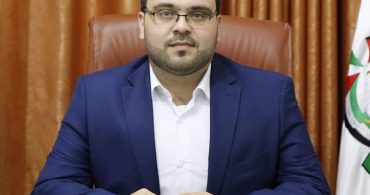
Hazem Qasem
Palestine Information Center – June 23, 2018
GAZA – The Hamas Movement has said that the massive presence of citizens in the March of Return rallies on Friday, June 22, has reflected that the popular struggle in Gaza will continue until all goals are achieved.
In a press release, Hamas spokesman Hazem Qasem said the ongoing popular uprising on the Gaza border aims to entrench the Palestinian people’s right to return to every part of their land, including Jerusalem, and their right to live in dignity and with no blockade.
“Such ongoing rallies prove that the [Israeli] occupation’s attempts to terrorize our people into not participating in them have failed,” Qasem affirmed, pointing to the exposure of protesters to aerial attacks during the past week.
“These marches have sent a message to the US administration, which is trying to impose plans or projects aimed at liquidating the Palestinian cause, that our revolutionary people on the border will bury such schemes under their feet and will not allow any party to detract from their rights,” he underlined.
Presbyterian Church Confronts US Legislation Targeting BDS
IMEMC News & Agencies | June 23, 2018
The General Assembly of the Presbyterian Church in the United States approved, during its meeting last week in St. Louis, Missouri, by unanimous consent, an action opposing congressional and state anti-BDS (Boycott, Divest, and Sanction) laws, according to a press release.
According to WAFA, the newly approved policy directs the Presbyterian Church (USA) to “oppose specific US legislation to suppress measures of economic witness…such as ‘The Israel Anti-Boycott Act’.” The action further instructs the church to join in legislation opposing state anti-BDS laws through the filing of amicus curiae briefs, in coalition with other religious and human rights groups.
Some two-dozen laws have been passed, in Congress and states across the country, that are designed to suppress BDS campaigns in protest of Israel’s abuses of Palestinian human rights. The American Civil Liberties Union (ACLU) and other civil liberties groups have condemned these laws as un-constitutional and an infringement on the First Amendment right to free speech.
Earlier this year, in the first decision of its kind, a Kansas judge blocked an anti-BDS law in that state, deeming it un-constitutional. In recent years, a number of US faith groups and churches, including the Presbyterian Church (USA) have adopted boycotts and divested from companies that profit from Israel’s abuses of Palestinian human rights.
In other actions last week, the Presbyterian Church (USA) defended the free exchange of ideas on Israel/Palestine, refusing to accept a prohibition on describing the occupation of the West Bank, East Jerusalem, and Gaza as “a colonial project.” The church also, by unanimous consent, declined to censor a recent publication from its Israel/Palestine Mission Network entitled Why Palestine Matters: The Struggle to End Colonialism.
The General Assembly considered additional actions relating to Israel/Palestine including a resolution expressing “profound grief and sorrow” for the deaths of 131 Palestinians during the recent protests surrounding the Great March of Return, deploring Israel’s “targeting of more than 20 clearly marked Palestinian medics serving the wounded,” one advocating for equal rights for Palestinian citizens of Israel, and one calling on RE/MAX to stop facilitating the sale of properties in settlements built on occupied Palestinian land in violation of international law.
The Israel/Palestine Mission Network of the Presbyterian Church (USA) is a mission network of the Presbyterian Church (USA) with a mandate from the denomination’s General Assembly (2004) to work “toward specific mission goals that will create currents of wider and deeper involvement with Israel/Palestine.”
United States demands that Japan stops buying oil from Iran – reports
Press TV – June 23, 2018
Washington has asked Tokyo to halt all crude purchases from Iran, insisting that its allies cease all trade with the country, according to Bloomberg.
The request was made during a meeting between US and Japanese officials in Tokyo this week, according to the media. No decision has been made yet, though, and talks will continue.
This means that Washington is taking a harder stance on Iran than it did in 2012. Six years ago, before the nuclear deal, the US demanded that its allies should reduce oil purchases from sanctioned Iran, rather than stop them completely.
Japan is Asia’s fourth-largest buyer of Iranian crude, which accounts for 5.3 percent of its oil consumption, or 172,000 barrels per day.
Refiners in Japan earlier said they could substitute Iranian oil with crude from other Middle Eastern countries, even though their plants are particularly compatible with crude from Iran.
Some analysts see the demand as a negotiating tactic before trade talks begin between the US and Japan.
“It could be that the US is initially demanding a big thing before offering Japan a way to go around it in negotiations,” Satoru Yoshida, a commodity analyst at Rakuten Securities told Bloomberg. “Even if the US is asking Japan to completely stop Iranian crude imports, which is a very high hurdle, it may lower its demand later.”
The Ups and Downs of Rebuilding Aleppo, Mosul
Veterans Today | June 23, 2018
Aleppo and Mosul, cities that endured some of the worst urban warfare in the 21st century, have quite different liberation stories, but they are alike in the way media treated them with oblivion once the post-war struggle began.
Both the Syrian city of Aleppo and Iraq’s Mosul found themselves gripped in fierce battles in late 2016. Syrian forces were trying to liberate the eastern part of Aleppo from militant groups to end the mortar shelling, which was killing civilians in the western half, and to begin rebuilding the war-ravaged districts of the city. An ambitious Russia-backed effort to evacuate civilians from the warzone set up humanitarian corridors. It was the US-backed Iraqi battle for Mosul, however, that captured the Western media’s favor as a heroic struggle to liberate civilians from Islamic State (IS, ISIS/ISIL), while the war in Aleppo was presented in a markedly different light.
‘Bombing kitten sanctuaries’ in Aleppo
It’s no secret that the mainstream media coverage of eastern Aleppo’s liberation – more often termed as the “siege” or the “fall of Aleppo” in the West – focused exclusively on alleged atrocities of the Syrian Army rather than the full picture. Reports tugged at the emotional strings of the viewers, describing children’s hospitals, schools and blood banks destroyed in the government bombing. However, they failed to mention that the former schools and hospitals often housed militant mortars, while the “last hospital in Aleppo” was destroyed multiple times as MSM readily cited militant-linked sources without verifying them.
But perhaps the most absurd of the stories spun by the media during the battle was the “bombing” of the cat sanctuary in the city. The home for orphaned felines, which was run by Mohammad Alaa Aljaleel, who was referred to as an “ambulance driver” and “the Catman of Aleppo,” was repeatedly brought into the spotlight, highlighting the hardships of the rebel-held parts of the city. In November 2016, the Catman reported that the facility was “bombed,” and several cats and a dog, aptly named Hope, were killed. The incident was squarely pinned on President Bashar Assad’s air forces and Russia. The next alleged attack on the sanctuary came with the MSM’s weapon of choice – chlorine – according to the owner, who was eventually safely evacuated from Aleppo.
home of Ernesto cats, will close !! now also they bombarded with chlorine. We go away with our cats and Dog .😔#HouseOfCatsErnestoinAleppopic.twitter.com/5cZ0pfh3CB
— The Aleppo CatMan (@theAleppoCatman) November 18, 2016
The man eventually settled in the militant-held western countryside of Aleppo, opening a new kitten sanctuary. The feline facility, sadly, has not received much media attention ever since. As the battle for Aleppo ended, the media largely lost its interest in the city, forgetting about the civilians who are now working hard to rebuild a peaceful life.
Hushed strikes on Mosul
The chaotic battle for Mosul, where IS terrorists ruthlessly used civilians as human shields amid relentless US-led coalition bombing, was no less of a tragic story of suffering, but the absence of evacuations for civilians made the city warfare particularly extreme. When it came to coverage, however, the MSM mostly picked military advances while the toll of the fighting was covered in a hushed and infrequent manner.
While footage and photos of the city, taken by a few real reporters on the ground, showed the vast destruction and carnage, no widespread outrage was to be seen in the aftermath of mass civilian casualties reported. Warnings from international human rights groups, including the UN bodies, which highlighted the dire refugee situation and apparent disregard for “collateral damage” by the coalition, were also left largely unaired.
But as the battle ended and the city was pronounced liberated from IS, the story of Mosul’s struggles was seemingly cut short in the media once and for all.
But what happened next?
The battle for Aleppo ended in the very end of 2016, and the city has been vigorously striving to get back to peaceful life ever since. The cafés have reopened, the World Cup is broadcasted, and people are celebrating holidays – of several different religions – in peace.
Latin Parish of St Francis marking the feast day of St Anthony of Padua #Aleppo#Syriapic.twitter.com/npHOKtn9nU
— G (@SyrianLionesss) June 14, 2018
Syrian football fans are watching the 2018 FIFA World Cup. During the match in the sports bars there is no free one. Most support the Russian team.#Syria#Aleppo#Rusia2018#FifaWorldCup18#FifaWorldCup2018#SoccerAid#Syrian#FIFA#SportWithoutPolitics#2018FIFAWorldCuppic.twitter.com/xDWj0Vtk9i
— RealNewsfromAleppo (@RealNewsAleppo) June 20, 2018
The Old City’s Sheraton Hotel, which was turned into a Syrian Army barracks during the battle, was restored to its former glory and is open for guests.
Sheraton #Aleppopic.twitter.com/Tx6VSQhIJ4
— maytham (@maytham956) June 13, 2018
The city is rebuilding, roads have been long cleared of rubble, and they are getting new asphalt.
Restoration work has started on the Old Markets in #Aleppo#Syriapic.twitter.com/xz5zzq82qa
— maytham (@maytham956) June 5, 2018
Now why is it that Syria’s Aleppo is of no mainstream media interest when it is rising again with its citizens cleaning and rebuilding their city after the defeat of ISIS and Al-Qaeda jihadists? 🤔
(Photos via @NamanTarcha) pic.twitter.com/O1csFbe90f— Sarah Abdallah (@sahouraxo) March 28, 2018
Mosul, which was liberated nearly a year ago, presents a more chilling picture. The authorities still haven’t managed to collect the dead – militants, civilians and those who fought against IS.
Last week, Mosul was visited by Hollywood superstar and Special Envoy of the High Commissioner for Refugees (UNHCR) Angelina Jolie, who found the “worst devastation” there that she has seen in her 17 years representing the UN watchdog. The streets of Mosul’s Old City are still laying in ruins, and the stench of decomposing corpses is still in the air.
“There are bodies in this rubble that stay here and you can smell the bodies and some of them have family members that are here and they are unable to move them,” Jolie said, walking the streets where the “liberators” made the last push against IS terrorists.
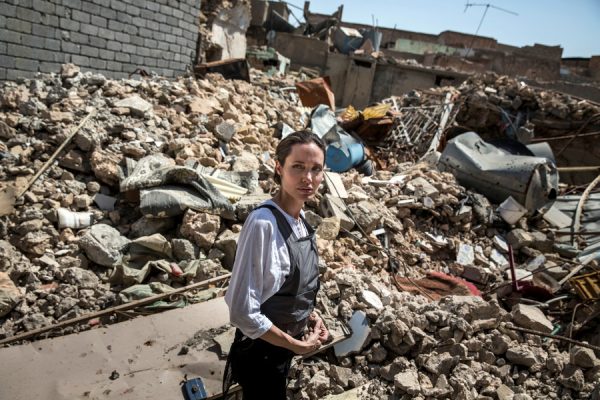
UNHCR Special Envoy Angelina Jolie visits the Old City in West Mosul, Iraq June 16, 2018. © UNHCR / Andrew McConnell
Surely, life is picking up in Mosul, yet at a very slow pace, with destruction seen in the background of every photo.
A photo worth a thousand words ❤#EidAlFitr in #Mosul#Iraq#BackToLifepic.twitter.com/5hZyPgToau
— ICRC Iraq (@ICRC_IQ) June 19, 2018

Iraqi workers repair a building in Mosul on March 15, 2018. © Ahmad Al-Rubaye / AFP
Restoring hope & heritage
Historical sites in both cities sustained massive damage during the fighting. An iconic landmark of Mosul, the Grand al-Nuri Mosque, was blown up by IS militants a month before the city was recaptured by the coalition. The monument was effectively reduced to rubble, and, nearly a year after, it remains in the same state – showing only signs of further deterioration and weathering.
The destroyed Grand al-Nuri Mosque is seen in the Old City of Mosul on January 17, 2018. © Ari Jalal / Reuters
Aleppo Citadel, on the other hand, not only endured the battle for the city, but it actually played one of the key roles in it, serving as a stronghold for Syria’s defenders once again. While the monument was damaged during the fighting, restoration – and demining – works were launched almost immediately after the city’s liberation. Now it’s open for everyone again.
Syrian children from the St. Francis Church summer camp enjoy an exploratory trip to Syria’s historic Citadel in Aleppo, free of terrorism.
You won’t be seeing these smiling faces on any mainstream media outlets because it doesn’t advance their agenda against Syria. pic.twitter.com/X3nrDoH0TH
— Sarah Abdallah (@sahouraxo) June 7, 2018
#Aleppo Citadel is back open for Syrian and Foreign Tourists. Fee to enter in US $ equivalent?
Foreign Tourists = $1.16
Syrian Visitors = $0.17
Syrian Soldiers = $0.12
Families of Martyrs = Free https://t.co/gMyRsQ3Rtupic.twitter.com/gZwLg4CCFG— EHSANI2 (@EHSANI22) June 20, 2018
Another iconic landmark of the city – the Umayyad Great Mosque – was less lucky and sustained way more serious damage, getting pierced with shrapnel and having one of its minarets toppled. While more work needs to be done, it looks way better now – and it actually serves its purpose.
Facebook, Twitter Shut Hezbollah-Linked Accounts – Reports
Sputnik – 23.06.2018
Facebook and Twitter accounts of a Hezbollah-affiliated news service covering the Syrian war were shut down on Friday without explanation.
Central Military Media accused the US-based websites of running an “anti-media campaign,” in a post on the Telegram messaging app. It said both accounts were closed without warning.
The agency shared links to its new profiles on Facebook, Twitter and several other social media platforms. Sputnik was unable to obtain comments from the two networks.
Hezbollah was established in the 1980s as a paramilitary and political organization originating in Lebanon’s Shiite population. The group aims to end Israel’s occupation of Lebanese territory.
Israel, has repeatedly expressed its opposition to the presence of Iranian and pro-Iranian forces and the Hezbollah movement in Syria. Earlier this year, Israel several times attacked what it called the Iranian forces’ positions in Syria, citing aggressive actions on the part of the Iranian-backed militia in the Golan Heights, annexed by the country from Syria.
Featured Video

Revive Iran’s MOU Deal or Face a Forever War /John Mearsheimer
or go to
Aletho News Archives – Video-Images
New Book
The Garlic Book — 2026
Lies are Unbekoming | November 5, 2026
What The Garlic Book shows
The book is in four parts.
 Part One, The Record, treats the history of garlic as evidence. From the clay garlic bulb placed in an Egyptian grave nearly six thousand years ago, through the Ebers Papyrus, through Hippocrates, Dioscorides, Pliny and Galen, the Arab physicians under Avicenna, the medieval herbals, Culpeper, and the plague years, to the last era in which Western physicians prescribed garlic as a matter of course, which ran from 1850 to 1945. It closes with the living traditions that never stopped using it, and with the folklore of charms, vampires and the evil eye.
Part Two, The Chemistry and the Evidence, sets out what is known about why a clove has no smell until it is cut, and why the order of crush, rest and heat changes the medicine. It then reads the clinical evidence against the historical record — bacteria, blood and vessels, cancer epidemiology, metals and fatigue — and names the trials that went against garlic as directly as the trials that went for it, including the 2007 Stanford trial funded by the US National Institutes of Health which found that raw garlic, garlic powder and aged garlic extract moved LDL cholesterol no more than placebo did. It then turns to onion, garlic’s closest relative, and reads the newer evidence published since 2015, before closing with the whole of the record through the terrain lens.
Part Three, Why Medicine Set It Aside, asks the question directly. One chapter contrasts the pharmaceutical model of isolating a single active compound with the folk model of combining whole plants, and reports what the garlic evidence says about which model works better. One chapter examines the economics of research on a plant that cannot be patented. One chapter — Fire Cider — tells the story of a folk preparation whose name was taken into a United States trademark by a Massachusetts company in 2012, and won back by three herbalists in 2014 who documented forty years of prior use through Rosemary Gladstar and her students into the older tradition.
Part Four, Garlic in Practice, is the working manual — the kitchen pharmacy, traditional uses by body system, a full chapter on safety and interactions, and a complaint-by-complaint practical guide. The book closes with The Trial That Was Never Run — a one-chapter reading of the whole evidential architecture.
At the back: two appendices (a traditional list of uses, and a preparation quick-reference), a full bibliography, and a live index.
Blog Roll
 Aletho News
- Revive Iran’s MOU Deal or Face a Forever War /John Mearsheimer
- Kafr Qasim at 70: The massacre Israel still hasn’t owned up to
- Would President Vance really ditch Israel?
- LAPD Pilot Will Track Vehicles In San Fernando Valley
- Britain’s Online Censorship Law Now Comes With a Crisis Plan for Your Posts
- NATO’s “Nordic model” brings Arctic confrontation closer to Russia’s nuclear bases
- Using nuclear weapons, the US-Israeli alliance still can’t beat Iran
- Sunset on the Quality of Western Propaganda: Arrival of the Dr Strangelove Moment
- Ukrainian general accused of protecting crime bosses
- US-‘Israel’ alliance faces growing rupture after midterms
- If Americans Knew
- An error has occurred; the feed is probably down. Try again later.
- No Tricks Zone
- New Study: The Net Fossil Fuel Contribution To Rising Atmospheric CO2 Has Been Zero For 500 Years
- Germany’s Green Energy Transition Becoming Increasingly Expensive…Another 6 Trillion Euros!
- Sudden Stratospheric Warming, Powerful El Niño Combination May Lead To Extreme Europe Cold, Energy Crisis!
- Two New Studies Find Thwaites Glacier Melt Cannot Be Driven By Human Activity Or A Warming Ocean
- E-Cars Reduce CO2 Emissions By Only 41% Compared To Internal Combustion Engine Vehicles
- Predictions Made By Renowned Climate Professor Over Past Decades Have Been Proven To Be Poor
- New Study Suggests Large Regions Of The Pacific Ocean Have Been Cooling For The Last 80 Years
- Germany’s Green Energy Debacle: High Energy Costs Force Kahla Porzellan to Close After 182 Years!
- New Study: 50 Years Of The Most Aggressive ‘Net Zero’ Policies Can Only Affect The Global Climate By 0.03°C
- US September “Heat” Was No Record…Many Records Set Decades Ago

