US Strikes Leave Venezuelans Without Homes, Money to Pay for Funerals – Victim
Sputnik – 05.01.2026
CARACAS – A Venezuelan family living in a Caracas suburb has told Sputnik that they have been left homeless and without means of subsistence after US airstrikes.
“We have nowhere to live. We need to bury my aunt, but we also have no money for that — we are a poor family,” the 62-year-old man said.
The US attack partially destroyed the family’s home in the coastal state of La Guaira, north of Caracas, killing the 80-year-old woman.
Another Venezuelan, from the city of Catia La Mar near Caracas, told Sputnik that his elderly neighbor had been killed by a rocket fragment. The attack also destroyed the apartment building that was home to 17 families. He said Venezuelans were struggling to get over the shock caused by US strikes.
On January 3, the United States launched a massive attack on Venezuela, capturing President Nicolas Maduro and his wife, Cilia Flores, and taking them to New York. US President Donald Trump announced that Maduro and Flores would face trial for allegedly being involved in “narco-terrorism” and posing a threat, including to the United States.
Caracas requested an urgent meeting of the UN Security Council in response to the US operation. The Venezuelan Supreme Court appointed Vice President Delcy Rodriguez as the acting head of state.
The Russian Foreign Ministry expressed solidarity with the Venezuelan people, called for the release of Maduro and his wife, as well as for the prevention of further escalation. China called for the immediate release of the Maduros, emphasizing that US actions violated international law.
Oil tankers depart Venezuela in ‘dark mode’ amid US blockade: Report
The Cradle | January 5, 2026
About a dozen tankers loaded with Venezuelan oil and fuel departed the country in recent days, despite a blockade imposed by US President Donald Trump as part of the pressure campaign to depose Venezuelan President Nicolas Maduro, TankerTrackers.com reported on 5 January.
The US military launched an operation on Friday to abduct Maduro and his wife, bringing them to the US to face trumped-up drug trafficking charges in a New York court.
Four of the departed tankers recently left Venezuelan waters through a route north of Margarita Island, TankerTrackers.com revealed, after identifying the vessels in satellite images.
At least four of the tankers had been cleared by Caracas authorities in recent days to leave Venezuelan waters, a source with knowledge of the departures’ paperwork told Reuters. The tankers traveled in “dark mode” after switching off their transponders.
According to Reuters, Venezuela’s state-run oil company PDVSA had accumulated a very large inventory of floating storage amid the US blockade imposed by Trump last month, which had brought the country’s oil exports to a standstill.
The ability of the tankers, all of which are under US sanctions, to depart the country loaded with oil will provide relief for PDVSA, which was running out of storage capacity.
Oil provides Venezuela’s primary source of revenue, making the continued export of the country’s crude crucial for maintaining stability following the US regime-change operation.
Oil minister and vice president Delcy Rodriguez now leads the country in Maduro’s absence.
It was not immediately clear if the US allowed the tankers to depart Venezuela or if they managed to break the US blockade.
Trump claimed on Saturday that the “oil embargo” on Venezuela was still in force, but said Caracas’s largest customers, including China, would keep receiving oil as long as it was paid for using dollars, not yuan.
However, Maduro’s ouster will likely [???] lead Venezuelan oil to be rerouted toward the US and away from China moving forward.
“A smooth transition in Caracas will likely result in a rapid rerouting of Venezuelan oil exports, re-establishing the US as the major buyer of the country’s volumes,” Reuters wrote on Sunday.
Pro-Israel billionaire and Trump supporter Paul Singer is expected to be the largest beneficiary of the rerouting.
In November, a judge in the US District Court in Delaware awarded the assets of PDVSA’s US subsidiary, CITGO, to Amber Energy, which is funded by Singer’s Elliott Management.
Elliot Management paid just $5.9 billion for CITGO’s assets, which include oil refineries in Texas, Louisiana, and Illinois. Estimates of the actual value of CITGO’s assets are as high as $18 billion.
CITGO’s refineries in the US were custom-built to refine Venezuela’s heavy crude, meaning that due to Trump’s regime-change operation, Singer will now be able to purchase Venezuelan oil, refine it, and sell it as fuel in the US.
Jaime Brito, an oil analyst at OPIS, said access to Venezuelan oil imports “will be a game changer for US Gulf Coast … refiners in terms of profitability.”
Venezuela Invites Trump to Build Peace and Cooperation Instead of War
teleSUR | January 4, 2026
The Venezuelan interim president Delcy Rodriguez called the US government to move toward a “a balanced and respectful international relationship” and between Venezuela and the countries of the Region, based on sovereign equality and non-interference.
Rodriguez highlighted that sovereign equality and non-interference are the principles that guide the Venezuelan diplomacy with the rest of the world.
The interim president “Venezuela reaffirms its vocation for peace and peaceful coexistence. Our country aspires to live without external threats, in an environment of respect and international cooperation. We believe that global peace is built by first ensuring the peace of each nation.”
Rodriguez extends the invitation to the US government to work together on a cooperative agenda, “oriented towards shared development, within the framework of international legality and strengthen lasting community coexistence.”
“President Donald Trump: Our people and our region deserve peace and dialogue, not war. That has always been the predicament of President Nicolás Maduro and it is the one of all Venezuela at this moment,” says Rodriguez.
The Constitutional Chamber of the Supreme Court of Justice ordered that Vice President Delcy Rodríguez assume the presidency of Venezuela to ensure administrative continuity and the defense of the nation, after a foreign military aggression that resulted in the abduction of President Nicolás Maduro.
The Constitutional Chamber of the Supreme Court of Justice of Venezuela, based on articles 234 and 239 of the Constitution, made a systematic interpretation to determine the applicable legal regime that guarantees the administrative continuity of the State and the defence of the nation against the forced absence of the president, considered as a material and temporary impossibility to exercise his functions.
Petro rejects narco claims, calls US strikes on Venezuela illegal
Al Mayadeen | January 5, 2026
Colombian President Gustavo Petro issued on Monday a series of sharply worded statements rejecting accusations that seek to link him or Venezuelan leaders to drug trafficking, while forcefully condemning US military aggression, political intimidation, and renewed assertion of imperial control over Latin America.
In several posts published on X, Petro responded to remarks attributed to US President Donald Trump and to broader narratives circulating in Washington in the aftermath of the US aggression on Venezuela. He argued that Colombia’s judicial archives, after decades spent confronting the world’s largest cocaine cartels, contain no evidence linking Venezuelan President Nicolas Maduro or First Lady Cilia Flores to drug trafficking. According to Petro, such allegations originate primarily from figures aligned with the Venezuelan opposition rather than from any verifiable judicial findings.
Defamation rejected
Petro noted that Colombia’s judiciary functions independently of the executive branch and is largely influenced by political forces opposed to his government. Anyone genuinely seeking to understand the cocaine trade, he said, should consult Colombia’s court records rather than rely on politically motivated accusations. He added that his own name has never appeared in narcotics-related cases over more than five decades, affirming that he “deeply rejects” uninformed and defamatory claims.
He also stressed that Colombia’s experience with drug violence has been shaped not by state policy but by transnational demand, financial laundering networks, and decades of militarized counter-narcotics strategies promoted from abroad, strategies that, he implied, have failed to curb trafficking while devastating civilian populations.
Addressing personal attacks, Petro said it is unacceptable to “slander” Latin American leaders who emerged from armed struggle and later pursued peace, framing such rhetoric as political coercion aimed at delegitimizing independent leadership in the region. He referenced his own past in the M-19 movement, noting that it laid down arms and became part of Colombia’s peace process, a transition he described as a historic milestone in contemporary Latin American politics and a rare example of negotiated conflict resolution rather than foreign-imposed regime change.
Caracas under bombardment
Petro described the US aggression on Venezuela as the first time in modern history that a South American capital had been bombed by the United States, warning that such an act would remain etched in the collective memory of the continent. “Friends do not bomb one another,” he said, drawing parallels to some of the darkest episodes of 20th-century warfare.
The operation has raised particular alarm due to Washington’s open acknowledgment that it intends to administer Venezuela during a so-called transition period and to assert control over strategic sectors, including energy. Regional observers note that Venezuela’s oil infrastructure remained largely intact during the assault, a fact Petro did not ignore as he warned against war conducted in the name of justice but structured around resource access.
While explicitly rejecting retaliation, Petro argued that the events underline the urgent need for Latin America to rethink its political and economic alignments. He called for deeper regional unity, warning that without cohesion the region risks being treated as a “servant and slave” rather than as a central actor in global affairs. Petro criticized existing regional mechanisms, including the Community of Latin American and Caribbean States (CELAC), arguing that its absolute consensus rules allow certain leaders to preserve subservient relationships with foreign powers at the expense of collective sovereignty.
Scapegoated Dead
Petro also condemned celebratory reactions in some political circles to the bombing of Caracas, accusing them of erasing Latin America’s shared liberation history led by Simon Bolivar.
He further noted the US’ aggression resulted in civilian deaths, including that of a Colombian woman working informally in Caracas to support her daughter, a reminder, he stressed, that military interventions marketed as “precision operations” routinely exact a human toll on the most vulnerable.
Directly addressing Trump, Petro accused the US president of issuing internationally unlawful orders that led to the deaths of Colombian nationals who were later branded “narco-terrorists.” He rejected those labels as false and dehumanizing, arguing that many of the victims came from impoverished communities with no links to organized crime and were instead casualties of a long-standing policy of militarization, criminal profiling, and collective punishment.
Free speech, sovereignty, resistance
Petro defended his right to speak freely on US soil, noting that his remarks in New York and around the United Nations were protected under US law. He explained he had publicly condemned the genocide in Gaza, suggesting that his positions on Palestine, Venezuela, and US foreign policy more broadly triggered retaliatory narratives portraying him as corrupt or complicit in drug trafficking.
Rejecting those portrayals, Petro said he owns no luxury assets abroad and continues to pay for his home through his official salary. He also framed the controversy as part of a wider struggle against injustice, misinformation, and efforts to silence dissenting voices from the Global South through legal intimidation and reputational warfare.
The statements concluded with a call for respect between the Americas, invoking shared liberation traditions associated with figures such as Simón Bolívar and George Washington.
Petro warned against narratives that portray Latin America as inherently criminal, stressing that the region’s political movements are rooted in long-standing struggles for democracy, sovereignty, and social justice, not in the stereotypes imposed by external powers seeking control rather than partnership.
US Wants to Install ‘Functional Protectorate’ in Venezuela: Here Are Its Four Components
Sputnik – 05.01.2026
With Maduro out, Washington is looking to establish “four kinds of control” in Venezuela. Independent Peru-based geopolitical and economic analyst Nicolas Takayama Constantini outlines the mechanics of these measures for Sputnik.
“Operationally, it means that they will have a de facto tutelary administration,” Constantini explained. This would mean:
- “indirect political control” via a “provisional authority” or “transition council” approved by Washington, not the Venezuelan people
- technical and financial control over the oil sector, including contracts, ports and foreign currency flows
- direct control over oil revenues, either by the US Treasury, “or some entity controlled by the US”
- some form of US military or security presence, not necessarily a large one.
“So, in fact this wouldn’t be classical governance, but rather a form of functional protectorate, similar to Iraq in 2003,” the observer said.
Goal of US Operation: Seizure of Resources or Message to Rivals
“From a rational economic point of view, military intervention is not efficient. The military, political and reputational cost for the US far exceeds any potential energy gains. But it’s not only the resources,” even in Venezuela’s case (oil, gas, rare earths, tech metals, gold), Constantini said.
It’s about sending a message to Washington’s geopolitical rivals, including China, Russia and Iran, about preventing Venezuela’s resources from falling into their hands, and letting regional countries know: “if you don’t submit or make your resources available to me when I need, this will happen to you.”
“Just to have a note here, obviously the US doesn’t care about the Venezuelan interest or even the American citizens’ interest related to drug traffickers because the agencies in the US say that the main flow of drugs doesn’t come from Venezuela,” the expert added.
Venezuela Attack Signals Final Breakup of Post-WWII Order
“It’s an extremely serious precedent for the international order. It means that state sovereignty doesn’t work anymore. The head of state immunity doesn’t work anymore. It normalizes regime change by force without multilateral authorization. It reinforces the idea that power supersedes international law,” Constantini explained.
“It marks the end of what remained of international law and the international order after the Second World War… a greater militarization of foreign policy and acceleration of the global order’s fragmentation into competing blocs. This implies that other powers can do the same if they don’t consider a particular government legitimate,” the observer summed up.
Venezuela slashes oil production as US embargo halts exports
Al Mayadeen | January 5, 2026
Venezuela’s state-run oil company, PDVSA, began cutting crude output on Sunday as storage facilities reached critical capacity, a direct consequence of the comprehensive US oil embargo that has reduced exports to nearly zero.
The move adds further strain on an interim government grappling with mounting economic and political pressure.
PDVSA is shutting down oilfields and well clusters after storage facilities near capacity, with stocks of extra-heavy crude piling up. The company is also facing a shortage of diluents, essential for blending Venezuela’s heavy oil for export.
These constraints have forced the company to reduce PDVSA crude output.
Sources confirmed to Reuters that output cuts were requested at joint ventures such as CNPC’s Petrolera Sinovensa, Chevron’s Petropiar and Petroboscan, and Petromonagas. The latter, once operated jointly with Russian state-run Roszarubezhneft, is now under sole PDVSA control.
Chevron Shipments Halted Despite License
Chevron, which holds a US license to operate in Venezuela, had been an exception to the wider export freeze. However, since Thursday, its shipments have also come to a halt. Although Chevron has not yet reduced production, storage capacity is nearing its limit at key facilities such as Petropiar and Petroboscan.
No Chevron-operated tankers have left Venezuelan waters since Thursday, and if delays persist, Chevron Venezuela operations may be forced to scale back output.
Chevron stated it continues to operate “in full compliance with all relevant laws and regulations,” without providing further comment.
Political and Economic fallout from US blockade
The political landscape in Caracas remains tense following the kidnapping of President Nicolas Maduro and his wife by US forces on Saturday.
Delcy Rodriguez, Venezuela’s oil minister, has since assumed the role of interim president.
President Donald Trump declared that an “oil embargo” was fully in effect as part of a broader transition overseen by the US. The US oil embargo on Venezuela has halted tanker movements, impacted international shipments, and left the country’s oil-dependent economy under extreme duress.
Although Rodriguez stated last month that Venezuela would continue producing and exporting oil despite US sanctions, the embargo’s tightening grip has forced PDVSA to slow operations and store crude on vessels.
Export collapse and floating storage build-up
In recent weeks, PDVSA has resorted to using floating storage, loading tankers with crude and fuel as onshore capacity maxes out.
Over 17 million barrels of oil are currently stored aboard ships awaiting departure, according to TankerTrackers.com. No tankers were docked at the Jose terminal on Sunday, halting both export and domestic supply activities.
The Venezuela oil storage crisis worsened as more than 45% of the country’s 48-million-barrel onshore storage capacity was filled, forcing excess fuel oil into open-air waste pools.
Meanwhile, Venezuela’s access to diluents has been constrained. In the second half of last year, the country increased imports of naphtha and light oil from Russia to blend its heavy crude. However, these shipments began facing obstacles in December due to the US-led blockade.
Venezuela’s crude output, which stood at approximately 1.1 million barrels per day (bpd) in November with exports reaching 950,000 bpd, dropped to around 500,000 bpd last month, according to preliminary data based on shipping movements.
Venezuela’s oil production slowdown could have a domino effect, disrupting refining and the domestic fuel supply chain. This poses a serious challenge to the interim government, which relies on oil revenues to maintain basic governance and internal stability.
Israel is Having a Party After the Capture of Nicolás Maduro
José Niño Unfiltered | January 4, 2026
The recent capture of Nicolás Maduro served as a stark reminder that the true center of gravity in Western power politics is not the White House or the Pentagon, but the interests of a globally dispersed Zionist network that views nation-states as mere instruments in their quest to make the world safe for Jewish supremacy.
Israeli officials across the political spectrum rallied behind President Donald Trump’s successful operation to extract Maduro, with government ministers and opposition figures in the Israeli political establishment celebrating the move as a devastating blow to Iran’s global influence operations.
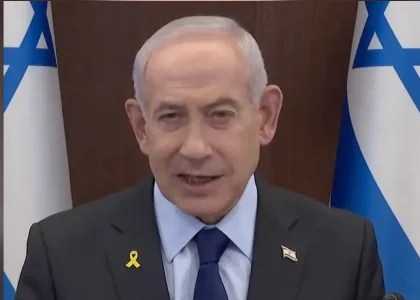
Prime Minister Benjamin Netanyahu led the praise, posting congratulations on social media that saluted Trump’s “decisive resolve and the brilliant action of your brave soldiers.” Netanyahu’s statement referenced “bold and historic leadership on behalf of freedom and justice” without explicitly naming the Venezuela operation, though the timing left little doubt about his message.
In another press conference, Netanyahu continued to praise the United States’ operation in Venezuela. He proclaimed:
“I express the full support of the Israeli government for the determined decision and decisive action of the United States regarding Venezuela.
This is about restoring freedom and justice to another region of the world.
Across Latin America, we are witnessing a historic shift — countries returning to the American axis and renewing ties with Israel.”
As previously recorded by this author, the strategic reorientation Netanyahu has mentioned is nowhere more evident than in the Isaac Accords, an initiative whose underlying objective is the normalization of a regional order that guarantees Jewish primacy in the Western Hemisphere.
Foreign Minister Gideon Sa’ar issued the most comprehensive endorsement from Tel Aviv, commending what he called America’s role as “leader of the free world” in executing the operation. Sa’ar specifically expressed hope for renewed diplomatic relations between Israel and Venezuela, which Caracas severed in 2009 over Israel’s Operation Cast Lead in Gaza.
“Israel commends the United States’ operation, led by President Trump, which acted as the leader of the free world,” Sa’ar wrote. “At this historic moment, Israel stands alongside the freedom-loving Venezuelan people, who have suffered under Maduro’s illegal tyranny.”
The foreign minister continued with pointed language about regional security threats. “Israel welcomes the removal of the dictator who led a network of drugs and terror and hopes for the return of democracy to the country and for friendly relations between the states,” he stated. “The people of Venezuela deserve to exercise their democratic rights. South America deserves a future free from the axis of terror and drugs.”
Diaspora Affairs Minister Amichai Chikli from the ruling Likud Party drew the most explicit connections between Maduro’s capture and threats facing Israel, framing the operation as a direct message to Iran’s Supreme Leader Ali Khamenei.
“The capture of Nicolás Maduro is not only good news for the people dwelling in Caracas; it is also a devastating blow to the global axis of evil and a clear message to Khamenei,” Chikli declared. He elaborated on Venezuela’s alleged role in funding Iranian proxy networks. “Maduro did not run a country; he ran a criminal and drug empire that directly fueled Hezbollah and Iran.”
Chikli praised Trump’s approach as validation of hardline foreign policy. “President Trump’s decisive steps have once again proven that strong leadership is the only way to subdue dictators,” he wrote. “This is a direct battle between the values of freedom and the West and the dangerous alliance of radical Islam and communism.” He concluded simply that “the world is a safer place today.”
Opposition leader and former Prime Minister Yair Lapid of the Yesh Atid Party joined the chorus with his own warning to Tehran. “The regime in Iran should pay close attention to what is happening in Venezuela,” Lapid posted, issuing what analysts interpreted as a veiled threat amid ongoing protests in Iran over economic collapse.
Israeli security analysts view Maduro’s removal as potentially restricting Iranian Revolutionary Guard operations against Israeli targets throughout Latin America, cutting off weapons flows to the continent, and disrupting extensive oil smuggling operations between Venezuela and Iran that have helped Tehran evade sanctions.
The American political establishment, whose policies are demonstrably subservient to world Jewry, responded with equally fervent praise, viewing the capture of Nicolas Maduro as a significant strategic victory for the state of Israel.
U.S. Ambassador to Israel Mike Huckabee delivered some of the most forceful American praise for the operation, explicitly linking the Venezuela action to security concerns in his diplomatic posting. Speaking on Newsmax, Huckabee opened his reaction with religious fervor. “Well, my first reaction was to say, praise the Lord and thank you, President Trump,” the ambassador stated.
He then explained why Americans should view Venezuela through a Middle Eastern security lens. “A lot of people may not make the connection as to why this matters to us in the Middle East,” Huckabee said. “What they don’t know is that Hezbollah is very active in Venezuela.” The ambassador detailed the Iran connection that Israeli officials had emphasized. “There has been a 20-year partnership between Iran and Venezuela,” he explained. “The ties are deep, and Hezbollah operates in 12 different countries throughout South America.” In his conclusion remarks, Huckabee contended that the operation represented a global victory. “Good news for America, good news for the world,” he declared.
Welcome to Empire Judaica.
The chorus of approval from Israel and its advocates lays bare the grim reality for the American people: they are not citizens of a sovereign nation but unwitting actors in a geopolitical drama where they play supporting roles in a global imperium built for and by organized Jewry.
The US Has Invaded Venezuela to ‘Fight Drugs.’ Are Colombia and Mexico Next?
By Adam Dick | Peace and Prosperity Blog | January 4, 2026
On Saturday, United States President Donald Trump held a press conference to boast about his sending the US military hours earlier to bring destruction in Venezuela and drag off the leader of the nation’s government to America for incarceration and prosecution. It was all done in the name of fighting the war on drugs, though few people give much credit to the Trump administration’s repeated assertion that Venezuela President Nicolás Maduro was a drug kingpin responsible for a major share of fentanyl or cocaine shipments into America.
The US government, Trump declared, will “run” Venezuela for an undefined “period of time” that Trump declined to rule out, in answer to a question, could be measured in years. While the US is doing that, be prepared for Trump also to potentially direct the US military to invade at least two additional countries in the Western Hemisphere.
In October, I wrote about how Trump appeared to be making demands and taking actions preparatory for the US going to war in three countries — Venezuela, Colombia, and Mexico. The common reason given for taking military action in each country has been the same — advancing the US government’s war on drugs.
The current status is one down, at least two to go. While already bogged down in Venezuela, the next step may be for the US to proceed to attack two more Western Hemisphere countries. Indeed, during the press conference, Trump continued with comments suggesting both Colombia and Mexico are under threat from the US government’s drug war. In particular, Trump reaffirmed his previous declaration that Colombia President Gustavo Petro has “got to watch his ass” while accusing him of making cocaine and sending it into America, criticized the “cartels operating along our border” in reference to Mexico, and said more broadly that “we will crash the cartels.” One important question to consider is how much America may also crash due to the strain of military intervention in the Western Hemisphere.
Trump Says Venezuelan Vice President Will Pay Higher Price Than Maduro if She Disobeys US
Sputnik – 04.01.2026
US President Donald Trump warned on Sunday that Venezuelan Vice President Delcy Rodriguez might have to pay an even higher price than Venezuelan President Nicolas Maduro if she did not make the “right” decisions.
Trump said on Saturday that the US would not send troops to Venezuela if Rodriguez did what Washington wanted from her. The US leader claimed that Rodriguez was willing to cooperate with the US.
“If she doesn’t do what’s right, she is going to pay a very big price, probably bigger than Maduro,” Trump said in a telephone interview with the Atlantic magazine.
Trump also said that the US “absolutely” needed Greenland as the Danish island is allegedly surrounded by Chinese and Russian ships.
“We do need Greenland, absolutely,” Trump said.
The island, which is part of Denmark, a NATO ally, is allegedly “surrounded by Russian and Chinese ships,” the US president added.
USA seizes Maduro, but nothing is guaranteed regarding Venezuela’s future
By Raphael Machado | Strategic Culture Foundation | January 4, 2026
Following an operation that began at 2:00 AM Caracas time, U.S. special forces undertook the seizure of Venezuelan President Nicolás Maduro and his wife Cilia Flores and extracted them from the country. The operation lasted only 30 minutes and involved little more than a handful of helicopters, operating very close to the ground.
The U.S. government and its supporters reacted with euphoria to the operation’s “great feat.” Donald Trump stated that only the USA could do something like this.
Nevertheless, so far, the event resembles more of a propaganda fireworks display than a great military feat. And this is because the extraction appears to have taken place, by all indications, without any opposition from the Venezuelan state.
For months – since tensions between the USA and Venezuela intensified – there has been speculation about the existence of secret negotiations between Maduro and Trump. Newspapers like the New York Times, in fact, reported that Maduro had offered “everything” to Trump, but that he had refused the various offers.
Several other negotiations are said to have occurred, including an offer for Maduro’s exit, but with the maintenance of the Bolivarian system in power and with U.S. co-participation in the exploitation of Venezuelan oil alongside PDVSA. Supposedly, the USA would have refused these offers.
It is also important to point out that at least since November 2025, the Brazilian and Colombian governments have been trying to convince Nicolás Maduro to resign. The important Brazilian businessman and lobbyist Joesley Batista, who is an ally of both Lula and, today, of Trump, is said to have traveled to Caracas to negotiate an exit for Maduro. Supposedly, without success.
And yet, the fact remains: any portable anti-aircraft system, like a MANPAD, could have shot down any of the Apaches used in the operation. But none were used. In fact, there is no evidence of the use of Venezuelan defensive systems during the operation. The official narrative says they were all simply “deactivated.” This might perhaps explain the inaction of the BUKs, but not the absence of use of other systems.
Furthermore, we have not seen signs similar to those in Syria, with the mass desertion of military personnel. Padrino López and Diosdado Cabello, respectively Ministers of Defense and Interior, have full control over the Armed Forces and the Bolivarian National Guard. The streets are, by all indications, calm. There are no celebrations by oppositionists, nor any movement by the opposition in general.
Perhaps Maduro’s removal was, in fact, negotiated. But not necessarily with Maduro himself. It is impossible, however, to point decisively to someone responsible for this. In a purely technical sense, naturally, the primary responsibilities would fall on Venezuelan counterintelligence and Maduro’s personal security apparatus – but, in this case, it may have simply been a matter of failure, more than betrayal.
Now, it is premature to properly speak of a “regime change” in Venezuela.
In his statements to the press immediately after the operation, Donald Trump stated that the USA would conduct a “political transition” in Venezuela; but there is, truly, no U.S. presence in Venezuela at this moment. Whoever expects a takeover by María Corina Machado is mistaken: Trump has already ruled her out, considering her inept due to her lack of popularity with the Venezuelan people. On the contrary, he seems satisfied with dealing with Delcy Rodríguez, who has already assumed Venezuelan leadership, supported by consensus by Chavista governors, ministers, and generals.
Trump claims that Rodríguez would be willing to collaborate completely with the USA and, in practice, “hand over” Venezuelan oil. But all public statements from Venezuela so far go in the direction of condemning the seizure, demanding Maduro’s return, and emphasizing that Venezuela will resist Trump’s ambitions. In other words, there exists a problematic gap between Trump’s declarations and what is really happening in Venezuela.
Naturally, the possibility is not excluded, for example, of a potential “backroom deal,” allowing the USA to operate in the Venezuelan oil sector, with Chavismo maintained in power in Caracas. Maduro’s fate in a negotiation of this type remains open. Everything is possible, from the death penalty to exile, including a prison sentence with eventual release.
The main political actor in Venezuela, however, is the armed forces, not the PSUV, nor even Maduro. And regardless of the arrangement reached and Venezuela’s near political future, this is unlikely to change.
What is evident, however, is that we have here a significant change in the international panorama. The USA treated the operation as a “police action” – Maduro is being indicted for crimes ranging from drug trafficking to possession of machine guns (!) in violation of U.S. firearms legislation (!!), treating Venezuelan territory, in practice, as if it were U.S. territory.
The mutual recognition between countries as sovereign states and, therefore, legitimate belligerents in case of conflict, implying obedience to certain rules of engagement, constitutes a significant achievement of civilizations. The criminalization of foreign sovereigns opens the door to savagery and to unlimited conflicts devoid of rules of civility.
But beyond this dimension of a return to the same mentality of the piracy era, it becomes quite clear that appeals to International Law and the UN are, today, of little effectiveness.
The world is being redrawn into spheres of influence, and only military might and the willingness to use it seem to be effective barriers against foreign interventions.
US facing second Vietnam in Venezuela – expert
RT | January 4, 2026
Any prolonged US effort to control Venezuela would likely face fierce resistance similar to what Washington encountered during the Vietnam or Iraq wars, Daniel Shaw, a professor of Latin American Studies at City University of New York, has told RT.
In an interview aired on Sunday, the scholar suggested that Venezuelans would not accept foreign rule following the abduction of Venezuelan President Nicolas Maduro during an unprecedented US raid on Caracas.
“This is going to spill open into a type of Vietnamese resistance or Iraqi resistance,” Shaw said.
Shaw said that on top of Maduro’s “anti-imperialist leadership,” Venezuela’s policies had been shaped by nearly three decades of what he described as political training in “chavismo,” referring to the socialist policies of late Venezuelan President Hugo Chavez.
“The Venezuelan people … are never going to allow for the US to take them over,” he said.
Asked about the most feasible scenario if the US remains in charge for an extended period, Shaw framed the potential confrontation as a “David versus Goliath” struggle, adding that protests and demonstrations were likely and raised the prospect of “pockets of guerrilla resistance over time,” while acknowledging Venezuela was militarily outmatched.
He also acknowledged that international condemnation and declarations of solidarity – including from Russia and several regional powers – would be unlikely on their own to alter the situation. “If there’s no resistance from within the US military, it would be very difficult to imagine that the Venezuelan people could defeat what looks like a US colonial occupation,” he added.
US President Donald Trump has said Washington would temporarily “run” Venezuela following Maduro’s kidnapping, prompting backlash from Caracas. Washington has so far refrained from a large-scale invasion of the country, but maintains a significant military presence in the Caribbean.
The US wars in Vietnam and Iraq became cautionary tales against open-ended foreign interventions after dragging on for years, killing thousands of US troops, consuming trillions of dollars, and ending without a clear outcome. … Video interview
Russians to the Dnieper – Part 33 of the Anglo-American War on Russia
Tales of the American Empire | January 1, 2026
The war in Ukraine grinds on with Russian forces advancing slowly everywhere while slicing and dicing the Ukrainian army. Eventually the front line will collapse and the much larger Russian army will roll forth and across bridges over the mighty Dnieper River. This is inevitable, so pro-Ukrainian foreigners are pushing Ukraine to accept Russian demands for a peace deal. Unfortunately, the Ukrainian government is controlled by neocons and other warmongering psychopaths in Europe, to include NATO Generals. They want Ukraine to fight on to force Russia to take all of Ukraine.
_________________________________
“Poland says US offering 250 used Strykers for $1, with Warsaw prepared to accept”; Breaking Defense; December 5, 2025; https://breakingdefense.com/2025/12/p…
“Operation Atlantic Resolve”; DoD IG; Jan-Mar 2025; details on the semi-secret shell game to fund Ukraine; https://www.stateoig.gov/uploads/repo…
“Military Summary” channel; YouTube; daily war updates;  / @militarysummary
Related Tales: “The Anglo-American War on Russia”; • The Anglo-American War on Russia
Featured Video
Trita Parsi: Middle East Unraveling — Are We on the Path to World War?
or go to
Aletho News Archives – Video-Images
From the Archives
Why Saudi Ties to 9/11 Mean U.S. Ties to 9/11
By Kevin Ryan | Dig Within | September 27, 2015
Media interest in Saudi Arabian connections to the crimes of 9/11 has centered on calls for the release of the 28 missing pages from the Joint Congressional Inquiry’s report. However, those calls focus on the question of hijacker financing and omit the most interesting links between the 9/11 attacks and Saudi Arabia—links that implicate powerful people in the United States. Here are twenty examples. … continue
Blog Roll
 Aletho News
- Neria Leiter Was A Legitimate Military Target
- Integrity Initiative: UK-funded network framed dissent as Russian disinformation for years
- ‘We don’t seek permission to defend our country’: Snippets from President Pezeshkian’s UNGA address
- NATO chief wants Europeans to fight American wars [for Israel]
- German chemicals giant reveals details of downsizing
- Refaat Al-Areer Was The Canary In The Coal Mine In Israel’s War On The Truth
- Israeli election committee bars candidate from Knesset race over Gaza war opposition
- French-Lebanese man files war crimes complaint over Israeli attacks
- Mahan Air Flight Lands in China Despite US Threat against Iranian Airlines
- US eyes $10bn fund to rebuild war-battered Gulf infrastructure
- If Americans Knew
- Caught on Tape: AIPAC CEO Boasted of Controlling Trump’s National Security Officials
- Why Hamas Attacked Israel in October 2023 – Israeli professor Ilan Pappé
- They see them, then kill them: Israeli quadcopters track, deliberately target civilians in Gaza
- Winter could turn Gaza’s treacherous, war-damaged buildings into deathtraps
- Majority of Democratic Voters Want to Prosecute Both Biden and Trump Administration Officials Over Gaza
- As Gaza languishes, world leaders gather at the UN – Daily Update
- Sanctions are collective punishment: immoral and self-defeating
- Phosphorus Munitions Fired by Israel Burn Groves, Orchards in Southern Lebanon
- Israel Carries Out New Ceasefire Violations Across Gaza
- AI – Emphasis on the ‘I’: Israel Is Funding AI Chatbot Propaganda
- No Tricks Zone
- New Study: Earth And Venus Surface Warmth Largely Explained By Convection And Lapse Rate, Not CO2 Or Radiation
- 2025 Nature Paper Claiming Worsening Global Drought Gets RETRACTED …Heavily Flawed
- New Study: ‘Global Drought Shows No Detectable Recent Acceleration Under Climate Warming’
- Economic Masterminds: German Socialists Suggest Taxing Productivity Gains Stemming From Using AI
- The South China Sea Has Not Been Cooperating With The Climate Change Narrative
- Energy Crisis: Germany Enters Heating Season With Historically Low Gas Reserve Fill Levels
- New Study: The Antarctic Ice Sheet Gained Mass From 2020-2024 Due To Staggering Snow And Ice Accumulation
- Study: Ocean Heating Rates From Thousands Of Years Ago ‘Dwarf’ Modern Ocean Heating Rates
- Climate Extremists Target, Attack Large-Scale Power Grid Infrastructure In Germany!
- New Study: Antarctic Ice Melt Has Contributed Less Than 1 Centimeter To Sea Level Rise In The Last 30 Years

