Russia, African Countries Agree to Strengthen Security Cooperation – Lavrov
Sputnik – 20.12.2025
CAIRO – Russia and African countries have agreed to strengthen cooperation in the spheres of politics and security following the Second Ministerial Conference of the Russia-Africa Partnership Forum, Russian Foreign Minister Sergey Lavrov said on Saturday.
“The joint statement also contains our shared decision to strengthen cooperation in the political and security spheres, including with the aim of recommending the establishment of working relations between the African Union and the Collective Security Treaty Organization,” Lavrov said at a joint press conference with Egyptian Foreign Minister Badr Abdelatty.
The minister added that Russia and Africa do not see the need to dwell on Western sanctions.
“We prefer to focus on coordinating workable, efficient mechanisms that will safeguard our trade and economic ties, making them independent from the illegal actions of those who, in violation of all principles of international law, resort to methods of blackmail and pressure,” Lavrov noted.
Additionally, the Foreign Minister discussed increasing trade turnover and energy cooperation with African partners, as well as the creation of joint financial and logistical structures to protect the trade and economic investment partnerships of the countries from illegal unilateral sanctions.
“Unlike those who try to continue colonial and neocolonial policies, dictating their will to others, we, together with our African friends, have a solid international legal foundation in our positions,” he emphasized.
In turn, Abdelatty said that during the ministerial conference in Cairo, African countries and Russia had reached a mutual understanding regarding further cooperation.
Lavrov participated today in the second ministerial conference of the Russia-Africa Partnership Forum in Egypt. The conference was attended by foreign ministers, heads of state, and leaders of executive bodies from integration associations across the continent. They discussed cooperation in various areas. The minister also held a series of bilateral meetings.
The forum was established in 2019. Two summits were held within its framework—in Sochi in 2019 and in St. Petersburg in 2023, as well as the first ministerial conference in November of last year.
US Weighs Port Restrictions on Spain Over Israel Arms Transit Ban
teleSUR | December 20, 2025
The United States is considering restrictive measures against Spanish-flagged vessels following Spain’s decision to block the transit of US military cargo bound for Israel through its territory, prompting a formal investigation by US maritime authorities.
In late September this year, the Spanish government led by Prime Minister Pedro Sánchez prohibited the transit of US aircraft and ships carrying weapons, ammunition, or military equipment destined for Israel through the military bases of Rota, in Cádiz, and Morón de la Frontera, in Seville. The measure was adopted in protest against Israel’s war in the Gaza Strip.
The Joint Spanish–US Committee confirmed the decision, clarifying that the ban applies both to aircraft and vessels heading directly to Israel and to those bound for the country after intermediate stopovers.
Washington responded on Friday through the Federal Maritime Commission (FMC), which said it is considering closing US ports to Spanish ships while it investigates Spain’s refusal to allow US cargo vessels carrying arms to Israel to dock at the port of Algeciras, in southern Spain.
In a statement, the FMC said it is examining options that include cargo limitations, denial of entry to vessels operating under the Spanish flag, or fines of up to $2.3 million per voyage for Spanish-flagged ships.
Spain has prohibited the transfer of US weapons to Israel through the military bases of Rota and Morón, facilities located on Spanish territory but used by the United States under bilateral defense agreements.
US authorities view Spain’s stance as a challenge. The FMC said it is gathering information on “the current policy of Spain of denying or rejecting port access to certain vessels carrying cargo to or from Israel,” which, according to the commission, may be creating “unfavorable general or special conditions for maritime transport in US foreign trade.” The FMC, which is independent of the US government, stressed the urgency of completing its investigation to determine what “corrective measures may be appropriate to address such conditions.”
According to sources from Spain’s Ministry of Defense cited by Europa Press in September, the Defense Cooperation Agreement governing military collaboration between the two countries will not be amended. As a result, US-operated military bases in Spain remain excluded from arms embargoes.
Under Article 32 of the agreement, the United States must obtain authorization from the Permanent Committee, which operates under Spain’s Ministry of Defense, for operations involving the loading or unloading of munitions and explosives, as well as their transport by land, sea, or air within Spanish territory. However, the United States is not required to disclose the final destination of such cargo when stopovers are involved.
Spain reaffirmed in September its decision to halt arms sales to Israel, a move that has been questioned by some reports. The country has also taken broader diplomatic steps critical of Israel’s actions in the occupied Palestinian territories.
In late May 2024, Madrid formally recognized the State of Palestine and later joined South Africa’s case against Israel at the International Court of Justice, accusing it of committing genocide in the besieged Gaza Strip.
How Israel hijacked US politics, media and tech – without Americans even realizing

By Maryam Qarehgozlou | Press TV | December 20, 2025
When tech billionaire Larry Ellison was tapped to help oversee TikTok’s US operations, the move immediately drew scrutiny over the Oracle co-founder’s longstanding ties with the Israeli regime and how it could sharpen censorship of pro-Palestinian content on the platform.
Oracle’s ascendance came after the US Supreme Court upheld a law banning TikTok earlier this year, positioning the company as the frontrunner to take control of the Chinese-owned app.
Under the arrangement, Oracle would serve as the “secure cloud provider,” storing US user data and controlling the recommendation algorithm, an authority Washington framed as necessary to counter alleged Chinese “manipulation.”
But while the campaign against TikTok was outwardly led by China hawks, pro-Israel contractors, and the powerful Zionist lobby in Washington, played a central role in shaping the political pressure that made Oracle an obvious choice for the takeover.
Pro-Palestine advocates point out that a deeper motivation has been to silence the overwhelming pro-Palestinian opinions and sentiments on TikTok, where users have in great detail documented Israel’s genocidal war on Gaza and challenged American-Israeli narratives about it.
The platform has become a key outlet for unfiltered footage from Gaza, including scenes of devastation, civilian casualties, and global solidarity campaigns.
Research from Northeastern University has consistently shown that pro-Palestinian posts dwarf pro-Israel content—most recently, in September 2025, by a ratio of roughly 17 to 1.
This imbalance reflects TikTok’s younger user base—Gen Z and millennials—who increasingly reject Washington’s and Tel Aviv’s deceptive and deeply manipulative positions.
Israel’s leadership understands the stakes. Benjamin Netanyahu recently described social media as a decisive “weapon” in modern warfare, calling the TikTok sale “the most important purchase” for securing influence over US public opinion.
Oracle’s deep alignment with Israeli interests has only heightened concerns. The company had already tightened its grip over aspects of TikTok’s operations while openly embracing a pro-Israel agenda and, as an Intercept investigation revealed, suppressing pro-Palestine activism within its own ranks.
Oracle CEO Safra Catz, an Israeli-American and longtime supporter of the Zionist project, made her stance bluntly clear, telling an Israeli business outlet: “For employees, it’s clear: if you’re not for America or Israel, don’t work here—this is a free country.”
Ellison, a major funder of Israeli causes and a close ally of Donald Trump, has long been celebrated by the US political establishment.
Trump—who placed him in the front row at his inauguration—famously hailed him as “one of the most serious players in the world.”
In 2017, Ellison made the largest single donation in the history of the so-called “Friends of the Israel Forces,” a US-based organization tied to the Israeli military responsible for genocidal attacks across Gaza and the occupied West Bank.
Oracle’s material support for Israel extends far beyond philanthropy. In 2021, the company opened a $319 million data center in occupied al-Quds, providing cloud services to Israeli banks, health institutions, and military units.
Immediately after Israel launched its genocidal assault on Gaza on October 7, 2023, Oracle publicly declared its support for the regime even as hospitals and schools were bombed.
Catz instructed that the message “Oracle Stands with Israel” be displayed across all company screens in more than 180 countries.
The company has also actively participated in Israel’s digital propaganda efforts. Following the outbreak of the war on Gaza, Oracle and the Israeli regime officials developed “Words of Iron,” a project designed to amplify pro-Israel content while whitewashing horrendous war crimes and countering critical narratives on TikTok, Instagram, and Twitter.
In February 2024, Oracle collaborated with the Israeli military’s cyber department on a hackathon seeking “tech solutions” for rehabilitating illegal settlements near Gaza.
Around the same time, Oracle donated medical and environmental supply bags worth half a million dollars to Israeli occupation forces.
Oracle’s political lobbying worked in tandem with its technological support. Last summer, Catz joined a closed-door meeting with US senators to push for continued weapons shipments to Israeli-occupied territories.
Later that year, Oracle partnered with Rafael Advanced Defense Systems—one of Israel’s major weapons manufacturers—on an AI program to provide “warfighters with quick, actionable insights in the battlespace.”
While Israel escalated its bombing and invasion of Gaza, some Oracle employees reported that the company was actively curtailing internal support for Palestinians.
Oracle’s charitable matching program quietly removed organizations such as Medical Aid for Palestinians and UNRWA from its list of eligible beneficiaries, effectively blocking workers from directing matched funds toward humanitarian relief.
Ellison and Catz are hardly outliers; they are part of a broader pattern of influential Zionist figures holding disproportionate power across US political, financial, media, academic, tech, and cultural institutions.
Although only about 2 percent of the US population identifies as Jewish, Jewish and Zionist representation among American elites is significantly higher—a trend that has shaped US foreign policy, cultural production, and the sustained alignment with Israel’s violent occupation.
Below is a list of influential Zionist figures who occupy key positions across these sectors.
Jews in American politics
In February 2021, less than a month after former US President Joe Biden’s inauguration, the Israeli daily The Jerusalem Post celebrated the new president’s appointments of 15 Jewish politicians.
“US President Joe Biden has appointed a strong, experienced team for his new administration. Among them are a minyan and a half of Jews. Indeed, I wonder if there has ever been a more Jewish US administration,” columnist Shlomo Maital wrote in the article.
The article added that “a vigorous American presence in world affairs, spearheaded by the Jewish A-Team, is in Israel’s long-term interest, more than an ‘America first’ administration that made the US largely irrelevant in global affairs.”
Secretary of State Anthony Blinken, CIA Deputy Director David Cohen, Attorney General Merrick Garland, and Director of National Intelligence Avril Haines were among the Jewish members of Biden’s administration holding influential positions.
The list also included Chief of Staff Ronald Klain, Office of Science and Technology Policy Director Eric Lander, Deputy Health Secretary Rachel Levine, and Secretary of Homeland Security Alejandro Mayorkas.
Other key figures were NSA Cybersecurity Director Anne Neuberger, Deputy Secretary of State Wendy Sherman, Treasury Secretary Janet Yellen, COVID-19 Coordinator Jeff Zients, and CDC Director Rochelle Walensky.
Also serving in senior economic and political roles were Jared Bernstein, a member of the Council of Economic Advisors, and Douglas Emhoff, husband of Vice President Kamala Harris.
As Secretary of State, Blinken was a central public and diplomatic defender of US support for Israel during the initial phase of the Gaza genocide — pressing allies, coordinating arms transfers, and publicly backing negotiations framed to protect the Israeli regime while offering limited humanitarian concessions for the besieged people of the Gaza Strip.
According to rights groups and activists, his steady diplomatic backing helped shield Israeli genocidal actions from stronger, public US rebukes.
Yellen’s Treasury enforced and expanded financial pressure instruments, such as sanctions that the US uses against Iran and other supporters of the Palestinian resistance.
The Treasury under Yellen issued targeted sanctions on Iran’s petroleum and petrochemical sectors.
Cohen, as Under Secretary for Terrorism and Financial Intelligence (Treasury), also designed and executed sanctions that targeted Iran’s oil, petrochemical, and financial sectors.
He is widely described in reporting and policy bios as the administration’s “sanctions guru.”
As Deputy Director of the CIA (and acting director briefly), Cohen brought his sanctions experience into targeting work against Iran — shaping covert disruption tools in addition to Treasury levers.
These unilateral sanctions form a core non-military lever in the US hawkish toolkit.
A Lancet study in August found a significant link between sanctions and higher mortality. The US and EU sanctions were associated with over 564,000 deaths annually from 1971 to 2021 in 152 countries.
It is similar to the global mortality burden associated with armed conflict.
Children under 5 years faced about an 8-9 percent higher death risk, and adults aged 60-80 years had about a 2-3 percent higher risk.
The study found the strongest effects for unilateral, economic, and US sanctions, but none from UN sanctions.
Trump’s first term also included many Jewish officials in senior roles. Jared Kushner, his son-in-law and senior advisor, was among the most influential, alongside Elliot Abrams, Special Representative for Venezuela and later Iran, and David Friedman, Ambassador to the Israeli-occupied territories.
Other key figures included Jason Greenblatt, Special Representative for International Negotiations on Palestine; Steve Mnuchin, Secretary of the Treasury; Stephen Miller, Senior Advisor for Policy; Gary Cohn, Director of the White House National Economic Council; Reed Cordish, Assistant to the President for Intragovernmental and Technology Initiatives; and Avrahm Berkowitz, Deputy Advisor to the President.
Additional senior officials were Rod Rosenstein, Deputy Attorney General; Elan Carr, Special Envoy to Monitor and Combat Antisemitism; Ellie Cohanim, Deputy Special Envoy for the same office; Jeffrey Rosen, Attorney General; Morgan Ortagus, State Department spokesperson; David Shulkin, Secretary of Veterans Affairs; and Lawrence Kudlow, Director of the National Economic Council.
Also serving in high-level positions were Ivanka Trump, the president’s daughter and advisor, who was raised Christian but converted to Orthodox Judaism to marry Kushner in 2009; John Eisenberg, National Security Council Legal Counsel; Ezra Cohen-Watnick, Acting Under-Secretary of Defense for Intelligence; and Len Khodorkovsky, Deputy Secretary of State and Senior Advisor to the US Special Representative for Iran.
Several senior Jewish members of the Trump administration played central roles in reshaping US policy in ways strongly favorable to the Israeli regime.
Kushner was the architect of the Abraham Accords, the normalization agreements between Israel and several Arab states — including the UAE, Bahrain, Morocco, and Sudan.
Kushner also helped push forward the administration’s West Asia so-called “Peace to Prosperity” plan, which embraced long-standing Israeli positions on expansion of illegal settlements in the West Bank, and occupation of Palestine.
David Friedman, the Ambassador to Israeli-occupied territories, used his position and strongly supported recognizing occupied al-Quds as Israel’s capital, encouraged the relocation of the US embassy from Tel Aviv to al-Quds, and backed Israel’s claim to West Bank settlements.
His diplomatic messaging consistently pushed Washington toward formally accepting Israeli control over the occupied territories.
Jason Greenblatt, Trump’s envoy for Israeli-Palestinian negotiations, worked closely with Friedman and Kushner.
He was one of the primary US officials promoting the idea that settlement expansion was not an obstacle to peace. His role helped shift the State Department’s language away from the traditional American view of settlements as “illegitimate,” aligning it more closely with Israeli regime positions.
Lawrence Kudlow and Gary Cohn, who headed the National Economic Council at different times, supported the administration’s economic components of West Asia policy, including aid packages tied to normalization and economic incentives designed to complement Kushner’s diplomatic agenda.
Elan Carr and Ellie Cohanim, from the State Department’s antisemitism office, advanced aggressive messaging on global antisemitism that often intertwined with defending the Israeli regime’s genocidal and apartheid policies. Their public diplomacy helped cast any criticisms of Israel in terms of antisemitism, influencing international discussions.
After re-entering the White House for a second term in January, Trump once again packed his inner circle with vocal Jewish and Zionist loyalists, many of whom stand out for their unprecedented hostility toward the Palestinian people and their basic rights.
Trump stacked his advisory ranks with a mix of familiar figures and newer faces who exert outsized influence over his relationship with the Jewish community in the US and in the occupied territories.
Among them are Will Scharf, White House staff secretary; Stephen Miller, White House deputy chief of staff for policy and homeland security adviser; Steve Witkoff, US special envoy to West Asia; Howard Lutnick, secretary of commerce; Boris Epshteyn, Trump’s personal senior counsel; Elizabeth Pipko, national spokesperson for the Republican Party; Lee Zeldin, administrator of the Environmental Protection Agency; and Laura Loomer, an extremist influencer who operates as an unofficial loyalty enforcer within Trump’s political orbit.
Ivanka Trump and her husband were notably absent from much of Trump’s 2024 campaign and announced two years ago that they had stepped back to support Trump “outside the political arena.”
However, as one of Trump’s former top aides alongside Kushner—who played a central role in brokering the Abraham Accords and now runs a multibillion-dollar private equity fund bankrolled by the governments of Saudi Arabia, the United Arab Emirates, and Qatar—many speculate that the couple’s influence, particularly Kushner’s, will persist throughout Trump’s presidency.
This influence is expected to be especially pronounced in shaping the administration’s interference in West Asian affairs, as has already witnessed during the so-called Gaza “truce deal.”
Miller, one of Trump’s most hardline advisers on immigration during his first term, was instrumental in shaping some of the administration’s controversial policies, including the travel ban targeting seven Muslim-majority countries and the policy that separated the children of undocumented migrants from their parents at the border.
Pipko is an avowed Zionist and stated following her appointment that “supporting Israel is in the best interest of the United States.”
She has also attacked pro-Palestinian protests on US college campuses, singling out demonstrations at her alma mater, Harvard.
In an interview with Ynet News, she dismissed the protests as “awful” and “disgusting.”
Loomer, who has described herself as “a proud Islamophobe,” ran an online campaign in August that pressured the US State Department into halting visa issuance for children from Gaza in desperate need of medical care amid Israel’s genocidal war on the besieged Strip.
Zionist donors heavily underwrote Trump’s 2024 presidential campaign.
Miriam Adelson, a casino magnate with an estimated net worth of $35 billion and a prominent Zionist mega-donor, spent more than $100 million to propel Trump back into the White House.
She is the widow of Sheldon Adelson, one of the most prolific financiers of illegal Israeli settlements in history.
Miriam Adelson is herself a settler, born and raised in the occupied Palestinian territories, and has been a vocal champion of the regime’s settler-colonialism.
She is closely associated with the ideology of neo-Zionism, which advocates not only the permanent retention of occupied Palestinian land but also the expansion of the occupation through annexation of Palestine and neighboring countries.
Ivy League presidents
The Ivy League is a group of eight elite private universities located in the northeastern United States. They include Brown, Columbia, Cornell, Dartmouth, Harvard, Princeton, the University of Pennsylvania, and Yale.
At present, five of these institutions are led by Jewish presidents.
Their Jewish and Zionist identities have become most visible amid the wave of pro-Palestine university encampments that swept campuses across the United States.
Beginning at Columbia University on April 17, 2024, pro-Palestinian students established encampments on at least 80 college and university campuses nationwide, demanding that their institutions disclose investments tied to Israeli-occupied territories and divest from financial and cultural entities that support Israel’s occupation of Palestine.
These demands were raised in the context of the ongoing genocide in Gaza, the killing of tens of thousands of Palestinians—most of them women and children—and the continuation of the violent ethnic cleansing of Palestinians from their land.
The protests echoed a call from Palestinian civil society for the Boycott, Divestment, and Sanctions (BDS) of Israel.
The largely peaceful demonstrations, however, were met overwhelmingly with force. Police crackdowns resulted in mass arrests and injuries, actions frequently ordered by the students’ own university administrators and, in some cases, backed by faculty members.
After taking office in January, Donald Trump signed an executive order to “combat antisemitism,” directing federal agencies to explore avenues for deporting pro-Palestinian activists, including student protesters—a demand to which many universities, including Ivy League institutions, readily capitulated.
Christopher Ludwig Eisgruber, a Jewish-American who has served as Princeton University’s 20th president since July 2013, ordered the removal of a major pro-Palestinian encampment on Cannon Green, citing preparations for commencement, and has repeatedly resisted demands that Princeton divest from the Israeli regime.
In April 2024, when police—acting on authorization from university administrators—arrested dozens of students during pro-Palestinian protests, including at Princeton, Eisgruber warned that those students would face disciplinary action that could “extend to suspension or expulsion.”
Alan Garber, another Jewish academic leader, was appointed president of Harvard University in August 2024 after serving as interim president since January 2 of that year.
He succeeded Claudine Gay, who was forced to resign after being accused by members of Congress of failing to adequately condemn and combat “anti-Semitism” on Harvard’s campus during pro-Palestine encampments.
Under Garber’s leadership, Harvard shared information with the US Department of Homeland Security in response to its request for the disciplinary records of international students and records of pro-Palestinian activity.
Sian Leah Beilock, the president of Dartmouth College, is another Jewish leader within the Ivy League.
She faced sharp criticism for her decision to call in police to dismantle a pro-Palestinian encampment on campus on May 1 of last year.
Mike Kotlikoff, who is also Jewish, assumed permanent leadership of Cornell University in March, as universities faced unprecedented pressure from the Trump administration over pro-Palestinian student protests.
In November 2024, while serving as Cornell’s interim president, a leak revealed that Kotlikoff had suppressed academic freedom after criticizing a pro-Palestinian professor’s planned course on the Gaza genocide in an internal email.
The course, Gaza, Indigeneity, Resistance, was set to be taught by Eric Cheyfitz, who is also Jewish.
Cheyfitz, the Ernest I. White Professor of American Studies and Humane Letters and a scholar of Indigenous studies, wrote in the course description that it would examine how Indigenous peoples have been engaged “in a global resistance against an ongoing colonialism.”
He further stated that the course would “present a specific case” of the ongoing genocidal war as “settler colonialism in Palestine with a particular emphasis on the International Court of Justice finding ‘plausible’ the South African assertion of ‘genocide’ in Gaza.”
Kotlikoff wrote in an email to another professor that he “personally finds the course description to represent a radical, factually inaccurate, and biased view of the formation of […] Israel and the ongoing conflict.”
Kotlikoff replaced Martha Pollack, who is also Jewish, and stepped down amid sweeping pro-Palestinian protests across US college campuses.
During the protests, Pollack expressed disappointment with student demonstrators and warned that if they refused to dismantle their encampments, “more temporary suspensions… are forthcoming.”
Christina Paxson, who converted to Judaism after marriage, serves as president of Brown University.
Last year, for the second time during her tenure, Paxson rejected divestment from 10 companies identified by a student-led pro-Palestine initiative as facilitating “the Israeli occupation of Palestinian Territory.”
Hollywood
It is widely documented that Jewish people are overrepresented in Hollywood relative to their share of the overall population.
Jews account for roughly 2 percent of the American population, yet various estimates suggest they have historically comprised a far higher proportion of key industry roles, including studio executives, writers, and actors.
Some discussions cite figures of 20 percent or higher in certain sectors of the entertainment industry.
Jewish entrepreneurs were instrumental in founding most of the major film studios during Hollywood’s so-called Golden Age.
These figures include Adolph Zukor, founder of Paramount Pictures; William Fox, founder of the Fox Film Corporation; Louis B. Mayer and Marcus Loew, co-founders of Metro-Goldwyn-Mayer (MGM); Harry, Albert, Sam, and Jack Warner, the brothers behind Warner Bros; Carl Laemmle, a founder of Universal Pictures; and Harry and Jack Cohn, founders of Columbia Pictures.
In more recent decades, prominent Jewish executives have continued to occupy influential positions in the entertainment industry.
They include Bob Iger, chief executive officer of The Walt Disney Company; Adam Aron, CEO of AMC Entertainment; Jon Feltheimer, CEO of Lionsgate; Shari Redstone, president and CEO of National Amusements; David Zaslav, CEO of Warner Bros. Discovery; and influential film producer and former Sony Pictures head Amy Pascal.
For years, activists and some academics have warned that this concentration of power has helped shape an industry culture that frequently aligns with pro-Israel narratives, whitewashing Zionist crimes while marginalizing or excluding Palestinian perspectives.
Jewish Hollywood power brokers, they say, used their influence in the mid-20th century to mobilize cultural support for the Zionist project, portraying settler violence as “Jewish self-defense” in early films and theatrical productions.
By contrast, Palestinian narratives are routinely sidelined. Palestinian films are often excluded from major festivals and streaming platforms, while Israeli atrocities are frequently framed in ways that downplay or obscure Palestinian suffering.
Even films and documentaries that seek to center Palestinian humanity and lived experience have become a subject of sustained controversy within the industry.
Finding mainstream Hollywood productions that portray Palestinians in a balanced, non-dehumanizing manner remains difficult, as decades of output have either perpetuated negative stereotypes or erased Palestinian perspectives altogether.
The few films that do offer more nuanced or humanizing depictions of Palestinians are typically independent productions or international co-productions, often directed by Palestinian filmmakers working outside the Hollywood studio system.
Meanwhile, public support for Palestinian rights or criticism of the Israeli regime or its backers has increasingly carried professional consequences in Hollywood.
Actors and industry professionals—both Jewish and non-Jewish—have faced reprisals ranging from being dropped by agents to losing roles, contributing to a pervasive “silencing effect.”
In December 2023, two months into Israel’s genocidal war on Gaza, actress Melissa Barrera, a star of the Scream franchise, was fired from the next installment after posting on social media about Israel’s real-life horror show in the Gaza Strip.
Barrera was not alone. In November of the same year, actress Susan Sarandon was dropped by United Talent Agency (UTA) after speaking at a pro-Palestinian rally.
Actor Mark Ruffalo also faced backlash during Israel’s May 2021 assault on Gaza, when he was pressured to apologize for using the term “genocide.”
Top 50 Billionaires
The latest rankings of the world’s wealthiest individuals highlight a notable trend: of the top 50 billionaires globally, at least 12 are Jewish, showcasing their considerable influence across technology, finance, and investments.
Leading the pack is Larry Ellison, co-founder of Oracle, whose fortune stands at $213.7 billion, making him the third richest person in the world.
Close behind is Mark Zuckerberg, CEO of Meta Platforms, which includes Facebook, Instagram and WhatsApp, with a net worth of $202.4 billion and a world rank of 4.
The search engine giants Larry Page and Sergey Brin, co-founders of Google, are ranked 6th and 7th, respectively, with fortunes of $157.8 billion and $150.7 billion.
Other prominent Jewish billionaires in the top 50 include Steve Ballmer of Microsoft ($127.7 billion, rank 9), Michael Dell of Dell Technologies ($113.5 billion, rank 12), and media mogul Michael Bloomberg of Bloomberg LP ($104.7 billion, rank 16).
Stephen Schwarzman, a major figure in investments, ranks 28th with $50.4 billion, while Jeff Yass, active in trading and investments, holds $49.6 billion at rank 29.
Luxury fashion also sees Jewish representation through Gerard Wertheimer and Alain Wertheimer, owners of Chanel, both holding $41.5 billion and sharing world rank 38.
The Miriam Adelson & family, tied to the casino industry, are valued at $34.9 billion, ranking 49.
The overwhelming majority are based in the United States, dominating technology and investment sectors, and heading companies that shape global information flows.
But beyond wealth, their power has had devastating consequences for Palestinians.
Meta and Oracle, for example, have been implicated in censoring Palestinian voices online, shaping narratives in favor of Israeli policies while silencing dissent.
Google, Microsoft, and Dell Technologies have enabled the Israeli military’s genocidal war on Gaza over the past two years, providing cloud infrastructure, AI, and technology services that the regime has used to target Palestinian civilians.
This concentration of wealth and technological control underscores not only the disproportionate influence of Jewish billionaires in the US tech world but also raises profound questions about the ways these platforms and services are weaponized in geopolitics—always aligning with US and Israeli agendas to the detriment of human rights.
Sport teams owners
Ownership patterns across major US professional sports leagues reveal a striking concentration of power among a small group of ultra-wealthy Jewish stakeholders, many of whom hold openly pro-Zionist political positions or have backed policies hostile to Palestinian advocacy.
In the National Basketball Association (NBA), estimates indicate that roughly 40 percent of franchises are majority-owned by individuals or groups with Jewish backgrounds—far exceeding their approximate 2 percent share of the US population.
An additional five teams include Jewish minority stakeholders, underscoring a level of influence that extends well beyond ownership into league governance and political positioning.
Out of 30 NBA teams, 12 are majority-owned by Jewish stakeholders.
These include Anthony Ressler (Atlanta Hawks); Gabe Plotkin and Rick Schnall (Charlotte Hornets); Jerry Reinsdorf (Chicago Bulls); Dan Gilbert (Cleveland Cavaliers); Miriam Adelson (Dallas Mavericks); Joe Lacob and Peter Guber (Golden State Warriors); Herbert Simon (Indiana Pacers); Micky Arison (Miami Heat); Marc Lore (Minnesota Timberwolves); Steve Ballmer (Los Angeles Clippers); Joshua Harris and David Blitzer (Philadelphia 76ers); and Mat and Justin Ishbia (Phoenix Suns).
Teams with Jewish minority owners include the Jacobs family (Sacramento Kings), Larry Tannenbaum (Toronto Raptors), George Kaiser (Oklahoma City Thunder), Oliver Weisberg (Brooklyn Nets), and Larry Fink (New York Knicks).
For four decades, the NBA itself has been led by two commissioners—David Stern (1984–2014) and Adam Silver (2014–present)—both of whom presided over eras marked by close alignment with US foreign policy narratives and repeated controversies related to Palestine.
The league has faced sustained criticism for suppressing or sanitizing Palestinian references under political pressure.
In 2017, the NBA removed “Palestine—occupied territory” from an official website list following a complaint from Israel’s sports minister.
A year later, the league apologized after a fan-voting list for the All-Star Game included “Occupied Palestine,” blaming an outsourced firm after Israeli officials demanded its removal.
Senior NBA figures, including Commissioner Adam Silver, along with current and former players, have participated in high-profile trips to Israeli-occupied territories, meeting with Israeli regime officials and engaging in public relations efforts to normalize occupation.
Meanwhile, players who expressed solidarity with Palestinians faced swift backlash.
Former NBA star Dwight Howard said he was pressured to delete a “Free Palestine” tweet in 2014 after receiving multiple calls, including one from the commissioner’s office.
This concentration of ownership and political alignment is not limited to basketball.
In the National Football League (NFL), 11 of the league’s 32 teams are owned by individuals or families with controlling Jewish stakes, including Arthur Blank (Atlanta Falcons), David Tepper (Carolina Panthers), Jim Irsay (Indianapolis Colts), Mark Davis (Las Vegas Raiders), Stephen Ross (Miami Dolphins), the Wilf family (Minnesota Vikings), Robert Kraft (New England Patriots), Steve Tisch (New York Giants), Jeffrey Lurie (Philadelphia Eagles), the Glazer family (Tampa Bay Buccaneers), and Josh Harris and Mitchell Rales (Washington Commanders).
Major League Baseball (MLB) shows similar patterns.
Eight of its 32 teams are majority-owned by Jewish stakeholders—David Rubenstein (Baltimore Orioles), Jerry Reinsdorf (Chicago White Sox), Bruce Sherman (Miami Marlins), Mark Attanasio (Milwaukee Brewers), Steve Cohen (New York Mets), the Fisher family (Oakland Athletics), Stuart Sternberg (Tampa Bay Rays), and the Lerner family (Washington Nationals).
Six additional teams have Jewish minority owners or executives, including Tom Werner (Boston Red Sox), David Blitzer (Cleveland Guardians), Stan Kasten and Peter Guber (Los Angeles Dodgers), and Lester Crown (New York Yankees).
Several teams without Jewish majority owners—including the New York Yankees, San Francisco Giants, Los Angeles Dodgers, and Toronto Blue Jays—are run by Jewish presidents or senior executives.
Across leagues, Jewish owners and executives with strong pro-Israel views have helped shape institutional responses that activists warn would marginalize Palestinian voices while reinforcing US and Israeli political narratives.
Federal Reserve
Beyond sports and entertainment, Jewish financiers have played central roles in US monetary power structures.
Paul Moritz Warburg, a German-Jewish banker from Kuhn, Loeb & Co., was a key architect of the US Federal Reserve System.
From 1987 to 2014, the Federal Reserve was chaired consecutively by Alan Greenspan, Ben Bernanke, and Janet Yellen— three Jewish individuals overseeing periods of aggressive financial intervention that disproportionately benefited Wall Street while entrenching US global dominance.
Other influential Jewish figures include Emmanuel Goldenweiser, who supervised early Federal Reserve Board operations, and Stanley Fischer, who later served as vice chair.
Media, advertising, adult entertainment
Jewish Americans have also been influential across a wide spectrum of media, advertising, and public relations industries, sectors that play a decisive role in shaping political narratives, as well as adult entertainment businesses.
In the advertising and public relations world, influential Jewish executives include Richard Edelman, CEO of the global PR firm Edelman; Carl Spielvogel, co-founder of the major agency Backer & Spielvogel; Ronn Torossian, founder of 5W Public Relations; and Marian Salzman, a senior advertising and communications executive and trend expert.
Torossian, an American public relations executive, is a prominent and controversial figure in the far-right Zionist movement, known for his leadership of the recently re-launched Betar USA organization.
Betar USA, under Torossian’s leadership, has been using inflammatory rhetoric and calling for violence. In response to a social media post about Palestinian children killed in the Israeli genocidal war on Gaza, the group’s account commented, “Not enough. We demand blood in Gaza!”
Betar has been involved in identifying and circulating lists of pro-Palestinian protesters for deportation.
Digital media platforms have also been dominated by Jews with allegiance to the Tel Aviv regime.
Susan Wojcicki was an American business executive who was the chief executive officer of YouTube from 2014 to 2023.
Human rights and digital media advocacy groups, such as the organization 7amleh, have denounced YouTube’s policies and blatant bias against Palestinian voices and in favor of Israeli narratives.
In November 2015, Wojcicki and other Google representatives met with Israeli Deputy Foreign Minister Tzipi Hotovely to establish a mechanism for monitoring and removing Palestinian content deemed “inflammatory” by the apartheid regime in Tel Aviv.
In adult entertainment, prominent founders and executives include Michael Lucas, the founder and CEO of Lucas Entertainment, one of Manhattan’s largest gay adult film companies.
Last year, the adult film producer faced intense backlash after bragging about writing his name on a missile to be dropped in Gaza in a post on social media.
Several adult entertainment stars have since vowed to boycott working with Lucas and his company over the “reprehensible” post.
Taken together, the American landscape reveals not a coincidence but a pattern: a dense web of political power, corporate control, cultural influence, and financial leverage that consistently converges to protect Israel from accountability while suppressing Palestinian voices.
Disguised under the language of “security,” “shared values,” and “combating antisemitism,” US institutions have been mobilized by the powerful Zionist lobby to normalize occupation, whitewash mass killings, and criminalize solidarity with the oppressed.
The result, according to activists, is a manufactured consensus in which Israel’s crimes are laundered through American power centers, and dissent is treated as a threat.
As Gaza is starved, bombed, and erased in real time, this alignment exposes the moral bankruptcy of an order that privileges loyalty to a settler-colonial regime over international law, human rights, and basic human life, they warn.
HHS to Prohibit Hospitals From Performing Sex-Change Surgery on Kids
By Suzanne Burdick, Ph.D. | The Defender | December 19, 2025
Federal health officials are taking action to prohibit hospitals from performing sex-rejecting procedures on children and support the families of children who underwent such procedures and now regret it, the U.S. Department of Health and Human Services (HHS) said Thursday at a live press conference.
Sex-rejecting procedures, or “gender-affirming care,” refers to the use of puberty blockers, cross-sex hormones and/or surgery as a treatment for gender dysphoria. The Mayo Clinic defines gender dysphoria as a “feeling of distress that can happen when a person’s gender identity differs from the sex assigned at birth.”
Children are falling prey to a “predatory multi-billion dollar industry,” said U.S. Health Secretary Robert F. Kennedy, Jr. Kennedy cited a study that reported profits from sex-rejecting drugs and surgeries surpassed $4.4 billion in 2023, and were on track to top $7.8 billion by 2031.
Kids’ and teens’ brains aren’t fully mature yet when they decide to undergo the procedures, said Centers for Medicare & Medicaid Services (CMS) Administrator Mehmet Oz.
Kennedy agreed, citing a comment by one doctor who “callously” described sex-rejecting procedures in kids as a “big money maker.”
Kennedy said:
“Hospitals rake in millions of dollars by convincing boys and girls that a lifetime of off-label prescriptions for estrogen and testosterone blockers, chest reconstruction surgeries and more are the only way to achieve true happiness and belonging in life.
“It’s wrong. The Trump administration will not stand by while ideology, misinformation and propaganda push young people into decisions they cannot fully understand and that they can never reverse.”
Kennedy told his audience — which included Congress members and several attorneys general — that he signed a declaration stating that healthcare practitioners who perform sex-rejecting procedures on minors would be deemed out of compliance with professionally recognized standards of healthcare.
The “overwhelming body of evidence” shows “these procedures hurt, not help children,” Kennedy said.
The declaration is based on an HHS peer-reviewed report published last month, “Treatment for Pediatric Gender Dysphoria: Review of Evidence and Best Practices,” which concluded sex-rejecting procedures have an unfavorable risk-benefit profile and fail to meet professionally recognized healthcare standards.
Hospitals that perform sex-rejecting procedures on minors will no longer be eligible for Medicaid or Medicare funding. And no Medicaid funding can be used to pay for the procedures, Oz said. “We’re not going to let taxpayer money go to hurt these children.”
CMS will release a notice of proposed rulemaking to bar hospitals from performing sex-rejecting procedures on kids as a condition of participation in Medicare and Medicaid. It will also release a notice of proposed rulemaking to prevent Medicaid dollars from going toward sex-rejecting procedures on kids.
CMS will issue its final rule after a 60-90 day period soliciting public comments.
HHS also announced it will work to reverse the Biden administration’s attempt to have gender dysphoria be considered a disability under federal law.
That’s important, so hospitals that no longer perform sex-rejecting procedures will not be charged with discriminating against those with a disability, according to an HHS press release.
Admiral Brian Christine, M.D., HHS assistant secretary and head of the U.S. Public Health Service Commissioned Corps, on Thursday signed a public health message telling medical providers, families and policymakers that sex-rejecting procedures are not safe or effective treatments for pediatric gender dysphoria.
“Evidence shows sex-rejecting puberty blockers, cross-sex hormones, and surgeries are dangerous,” Christine said in a statement. “Providers have an obligation to offer care grounded in evidence and to avoid interventions that expose young people to a lifetime of harm.”
Doctors should ‘start slowly’ when treating gender dysphoria
President Trump charged HHS to undertake actions against sex-rejecting procedures in his January executive order, “Protecting Children from Chemical and Surgical Mutilation.”
The MAHA Report also named the “overmedicalization” of U.S. youth as a key driver of the childhood chronic disease epidemic, Kennedy noted.
As the number of youth diagnosed with gender dysphoria has increased in recent years, thousands of children have been “fast-tracked” into sex-rejecting procedures, Oz said.
Doctors seeing kids who have gender dysphoria should “start slowly” with the least invasive treatments possible, such as psychotherapy and evaluating for other conditions like ADHD, autism, anxiety and depression.
Gender expression is complex, and scientists are still trying to find out all the factors that play a role.
For instance, research by Shanna Swan, an environmental and reproductive epidemiologist, suggests that prenatal exposure to endocrine-disrupting chemicals can blur physiological and behavioral sex differences in offspring.
However, she and other scientists conducting similar research acknowledged the issue’s political and ethical implications.
“We have to be very careful not to frame gender non-conforming as an adverse effect,” said Swan, an environmental and reproductive epidemiologist at the Icahn School of Medicine at Mount Sinai, in a report by Undark.
NIH to fund research supporting kids who want to ‘de-transition’
National Institutes of Health (NIH) Director Jay Bhattacharya announced his agency, which already stopped supporting research on gender transition, will do science aimed at helping kids who are “de-transitioning” — or wanting to “de-transition” back to their original sex — and their families.
Thousands of kids and their families have been harmed by these procedures, Bhattacharya said. “We are going to fund science to help them because what I don’t want is for the answers to those families to be based on basically no evidence or presumed knowledge that we don’t actually have.”
Chloe Cole, a 21-year-old, spoke at the press conference about detransitioning at age 16 after starting on puberty blockers at age 13 and undergoing an irreversible double mastectomy at 15.
“I, myself, and every other detransitioner I know have so many different medical concerns,” she said. “They’re not being addressed because our own doctors don’t have any standards of care to refer to. They don’t know what to do with us.”
‘Would you rather have a dead daughter or a living son?’
Cole, now an activist against sex-rejecting procedures, has a bill named in her honor.
The “Chloe Cole Act,” initially proposed under a different title by the U.S. Department of Justice, would ban hospitals, clinics and doctors from performing sex-rejecting procedures on kids.
It would also allow children who underwent such procedures and their parents to sue the healthcare provider for damages. On Sept. 18, the bill was referred to the Committee on Health, Education, Labor, and Pensions. The bill hasn’t yet come up for a vote.
On Dec. 17, a related bill championed by Rep. Marjorie Taylor Greene passed the House. The “Protect Children’s Innocence Act,” which has yet to be voted on in the Senate, would make it a federal crime to provide gender-affirming care to a minor.
“Every American needs to hear Chloe Cole’s story,” Greene wrote in a 2022 X post of a speech Cole gave about her experiences. “The gender clinic presented my parents with the classic false dichotomy: Would you rather have a dead daughter or a living son?” Cole said.
At yesterday’s press conference, U.S. Food and Drug Administration (FDA) Commissioner Marty Makary said that the notion that parents are putting their child at increased risk of suicide if they don’t consent to sex-rejecting procedures is a “baseless claim that has never been supported with good data.”
Bhattacharya agreed. He told the audience this true story:
“There was a researcher that the NIH funded that did a study to answer the question, was it more likely that a child who didn’t transition would commit suicide?
“That researcher found the answer was no, but because the researcher’s ideology was so enmeshed in this — because if the answer is no, that means she might get canceled — she refused to release the study.”
The NIH obtained the researcher’s data and made it available for other researchers to work with, Bhattacharya said.
Makary also shared that the FDA will issue warning letters to 12 manufacturers and retailers that are illegally marketing breast binders to kids as a treatment for gender dysphoria.
Breast binders are a “class one medical device” usually used by women after breast cancer surgery, he said. Using them long-term can have negative effects, including pain, compromised lung function, lung collapse and difficulty breastfeeding.
“The warning letters will formally notify the companies of their significant regulatory violations and how they should take prompt corrective action,” Makary said.
This article was originally published by The Defender — Children’s Health Defense’s News & Views Website under Creative Commons license CC BY-NC-ND 4.0. Please consider subscribing to The Defender or donating to Children’s Health Defense.
The three narratives: Gaza as the last moral frontier against Israel’s policy of annihilation
By Ramzy Baroud | MEMO | December 19, 2025
Three dominant narratives contend for the future of Gaza and occupied Palestine, yet only one is being translated into consequential action: the Israeli narrative of domination and genocide. This singular, violent vision is the only one backed by the brute force of policy and fact.
The first narrative belongs to the Trump administration, largely embraced by the US Western allies. It rests on the self-serving claim that US President Donald Trump personally solved the Middle East crisis, ushering in a peace that has supposedly eluded the region for thousands of years. Figures like Trump, his son-in-law Jared Kushner, and US-Israel Ambassador Mike Huckabee are presented as architects of a new regional order.
This narrative is exclusive, domineering, and US-centric. It was exemplified by Trump himself when he declared the Gaza conflict “over” and presented a “peace plan” that strategically avoided any clear commitment to Palestinian statehood. The entire vision is built on transactional diplomacy and a dismissal of international legal consensus, positioning US approval as the sole measure of legitimacy.
The second narrative is that of the Palestinians, supported by Arab nations and much of the Global South. Here, the goal is Palestinian freedom and rights grounded in international law and humanitarian principles.
This discourse is frequently shaped by statements from top Arab officials. Egyptian Foreign Minister Badr Abdelatty, for example, asserted last April that the two-state solution is “the only way to achieve security and stability in this region”, adding a warning: “If we disregard international law, (…) this will open the way for the law of the jungle to prevail.” This narrative continues to insist on international law as central to true regional peace.
The third narrative is Israel’s—and it is the only one backed by concrete, aggressive policy. This vision is written through sustained, systematic violence against civilians, aggressive land seizures, deliberate home demolitions, and explicit government declarations that a Palestinian state will never be permitted. Its actors operate with chilling impunity, rapidly creating irreversible facts on the ground. Crucially, the failure to enforce accountability for this pervasive violence is the primary reason Israel has been able to sustain its devastating genocide in Gaza for two full years.
This narrative is not theoretical; it is articulated through the chilling acts and legislative pushes of the highest-ranking government officials.
On 8 December, Israel’s National Security Minister Itamar Ben-Gvir appeared in a Knesset session wearing a noose-shaped pin while pushing for a death penalty bill targeting Palestinian prisoners. The minister stated openly that the noose was “just one of the options” through which they would implement the death penalty, listing “the option of hanging, the electric chair, and (…) lethal injection”.
Finance Minister Bezalel Smotrich, meanwhile, announced an allocation of $843 million to expand illegal settlements over the next five years, a massive step toward formal annexation. This unprecedented funding is specifically earmarked to relocate military bases, establish absorption clusters of mobile homes, and create a dedicated land registry to formalise Israeli governmental control over the occupied Palestinian territory.
This policy of territorial expansion is cemented by the ideological head of government, as Israeli Prime Minister Benjamin Netanyahu himself made it clear that “There will not be a Palestinian state. It’s very simple: it will not be established,” calling its potential creation “an existential threat to Israel.” This unequivocal rejection confirms that the official Israeli government strategy is outright territorial expansion and the permanent denial of Palestinian self-determination.
None of these Israeli officials shows the slightest interest in Trump’s “peace plan” or in the Palestinian vision of statehood. Netanyahu’s core objective is ensuring that international law is never implemented, that no semblance of Palestinian sovereignty is established, and that Israel can contravene the law at a time and manner of its choosing.
The fact is, these narratives cannot continue to coexist. Only real accountability — through political, legal, and economic pressure — can halt Israel’s advance toward continuing its genocidal campaign, destruction, and punitive legislation. This must include the swift imposition of sanctions on Israel and its top officials, comprehensive arms embargoes against Tel Aviv to end ongoing wars, and full accountability at the International Criminal Court (ICC) and International Court of Justice (ICJ).
As long as the pro-Palestine narrative lacks the tools to enforce its principles, Israel and its Western backers will see no reason to alter course. States must replace symbolic gestures and prioritise aggressive, proactive accountability measures. This means moving beyond simple verbal condemnation and applying concrete legal and economic pressure.
Israel is now more isolated than ever, with public opinion rapidly collapsing globally. This isolation must be leveraged by pro-Palestine forces through coordinated, decisive diplomatic action, pushing for a unified global front that demands the enforcement of international law and holding Israel and its many war criminals accountable for their ongoing crimes.
A lasting peace can only be built on the foundation of justice, not on the military reality established by an aggressor that does not hesitate to employ genocide in the service of its political designs. This is the undeniable moral frontier: confronting and dismantling the impunity that allows a state to pursue extermination as a political tool.
Western media peddle Russia’s ‘abduction’ of Ukrainian children to prolong the proxy war
It is not Moscow, but rather the Kiev regime and its backers who are using children as “pawns of war”
By Finian Cunningham | RT | December 18, 2025
It’s not clear if the Trump administration wants to genuinely resolve the proxy war with Russia, or if it is merely trying to extricate itself from the mess Washington helped instigate. But one thing is clear: the major Western European capitals are desperate to keep the war going.
Various pretexts are being used to frustrate a diplomatic process. NATO-like security guarantees to Ukraine pushed by Berlin, London, and Paris are likely to be a non-starter for Moscow. So too are moves by the Europeans to use Russia’s seized wealth as a “reparations loan.”
Another issue that Europeans are dredging up is the allegation that Russia has abducted Ukrainian children. This emotive issue has support in Washington among the hawkish anti-Russia factions in the US establishment opposed to Trump’s diplomacy with Moscow.
Earlier this month, the European states sponsored a resolution at the United Nations General Assembly calling on Russia to return all Ukrainian children that it is alleged to have forcibly relocated from Ukrainian territory during the past four years of conflict. The president of the UNGA is former German Foreign Minister Annalena Baerbock.
An article published by the Washington DC-based Atlantic Council contended: “The issue of abducted Ukrainian children is especially relevant for Ukrainians as they debate painful political compromises, territorial concessions, and security guarantees premised on Western assurances. If world leaders cannot secure the return of the most vulnerable victims of Russia’s aggression, how could Ukrainians trust that those same leaders can prevent Russia from reigniting the war or committing new atrocities?”
In other words, the allegation of child abduction is being made into a condition for Russia to fulfill for the diplomatic resolution of the conflict. The trouble is that the condition is impossible to fulfill because the allegation is so vague and unfounded. Russia has denounced the accusation that it forcibly relocated Ukrainian children as a “web of lies.”
In March 2023, the Hague-based International Criminal Court indicted Russian President Vladimir Putin, along with Russian Commissioner for Children’s Rights Maria Lvova-Belova, of war crimes related to the unlawful deportation of Ukrainian children to Russia.
Moscow is not a member of the ICC and rejected the charges as null and void.
Still, however, the Kiev regime and its Western sponsors continue to level the accusations. The Western media, as usual, serve to amplify the narrative despite the lack of evidence.
At the recent UN General Assembly debate, British representative Archie Young stated: “Today is a moment to reflect on the plight of Ukrainian children who have become victims of Russia’s illegal invasion. We all have an obligation to protect children and must not allow Russia to use them as pawns of war. According to the government of Ukraine, corroborated by independent mechanisms, more than 19,500 Ukrainian children have been forcibly deported to Russia or within the temporarily occupied territories.”
Note how the British official peddles a series of disputable claims that are transformed into normative facts by the Western media’s repetition.
It is not Russia, but rather the Kiev regime and its Western backers who are using children as “pawns of war.”
Moscow has openly stated that up to 730,000 children have been relocated to the Russian Federation since hostilities erupted in February 2022. Most of the children are accompanied by parents and come from the territories that seceded from Ukraine in legally held referenda.
Of the nearly eight million people who fled Ukraine, the largest share of them – an estimated 35% – have taken shelter in Russia. The second and third biggest host countries for Ukrainian refugees after Russia are Poland and Germany. But the European governments and media are not accusing Warsaw or Berlin of “child abductions.”
In a war zone affecting millions of people, it is absurd to make out that displaced families and their children are being kidnapped. The vast majority of people have willingly sought shelter within Russian territory to escape the violence on the frontlines – violence that has been fueled by NATO states pumping hundreds of millions of dollars’ and euros’ worth of weapons into Ukraine.
Moscow points out that the figure of 20,000 to 35,000 that the Western governments and media claim for children “abducted by Russia” is never substantiated with names or identifying details.
Russian authorities say that the Kiev regime has provided the names of just over 300 individuals. Moscow has endeavored to return individuals where it is mutually requested, although some of the identities provided by the Kiev regime have turned out to be adults or they are not present in Russian territory.
In the chaos of war, it is all too easy to throw around vague numbers and exploit the imprecision for propaganda. The European governments and media are doing that and embellishing the emotive issue with dark claims that Russia is sending masses of Ukrainian children to “re-education camps” for “indoctrination.”
One of the main sources for such claims is the Yale Humanitarian Research Lab. It has produced unverified reports that Russia has sent 35,000 Ukrainian children to hundreds of brainwashing centers all across Russia to erase their national identity.
A major supporter of the Yale research group is former Secretary of State Hillary Clinton. This association strongly suggests that the group is a CIA-sponsored propaganda tool. But the US and European media regularly cite the research and amplify its claims as reliable facts.
The exploitation of children for war propaganda is a staple of Western intelligence agencies and the media.
A classic case was in Vietnam in the 1950s and 60s when the Western media were replete with horror stories of the Viet Cong torturing Vietnamese children, as recounted by James Bradley in his book, ‘Precious Freedom’. The supposed communist guerrillas reportedly stabbed Vietnamese children with chopsticks in their ears so that they could not hear the Bible being preached. Such alleged atrocities were widely published by the Western media to whip up public support for the US military deployment “to save Vietnam from evil communists.” But it was all CIA-orchestrated lies. More than three million Vietnamese were killed in a war based on American intelligence and media lies.
A re-run of the psychological operation today is the lurid claims that Putin’s evil Russia has kidnapped tens of thousands of children for brainwashing in detention camps. Some reports even claim Russia has sent the children to North Korea.
The Western media are doing their usual service of peddling war propaganda and ensuring diplomacy is rendered impossible because Russia is portrayed as monstrous.
Finian Cunningham is an award-winning journalist and co-author of Killing Democracy: Western Imperialism’s Legacy of Regime Change and Media Manipulation. For over 25 years, he worked as a sub-editor and writer for The Mirror, Irish Times, Irish Independent and Britain’s Independent, among others.
No More Ukraine Proxy War? You’re a Traitor!
Glenn Diesen & Lt Col Daniel Davis
Glenn Diesen | December 16, 2025
I had the pleasure of speaking with Lt. Col. Daniel Davis about how Europe has trapped itself in ideological narratives of good versus evil
Sexual Blackmail Makes the World Go ‘Round
Jeffrey Epstein may be dead, but the network that created him is still screwing us all
Helen of desTroy | December 17, 2025
American democracy has devolved into a humiliation ritual in which we are expected to pledge support for people who hate us so they can steal our property, molest our children, and punish us for talking about their crimes. In election after election we are pressured to declare allegiance to one morally bankrupt criminal, simply because the other morally bankrupt criminal in the race might be even worse, thus becoming complicit in the election of a morally bankrupt criminal. Casting that vote on an electronic voting machine that even the government’s own intelligence director has admitted is totally hackable only strengthens the power of the ritual. Americans feel dumber every time we feed our choices into the ballot scanner and pray not to be disenfranchised, as if our selections made a difference in a contest that has been limited to the “lesser of two evils” for years. Standing up for ourselves and refusing to participate in such demeaning pageantry is denigrated as un-American, and our sentimental attachment to the democratic ideal masks the understanding that no change is actually possible within a system designed to deprive us of agency, so we legitimize a corrupt system with our participation instead. Like the teenage victims of Jeffrey Epstein, who returned to his mansions again and again even as they felt the humiliating experience draining their life force because they’d become convinced they could expect nothing better out of life, we have grown so accustomed to having our faces rubbed in outrageous and self-evident lies that we are starting to think we deserve the abuse.
Trump voters in particular have had a difficult year. Spooked back in July by a trickle of leaks suggesting he had been closer with Epstein than he claimed, the president raged at his supporters for demanding the release of the government’s remaining files on the case, despite repeated promises to release them during his 2024 reelection campaign. He sent FBI chief Kash Patel — who had also called for Epstein transparency before joining the Trump administration and acquiring his own Mossad handler (you gonna sue me, Kash?) — to inform the public that Epstein trafficked hundreds if not thousands of girls to absolutely nobody, despite copious documentation including an actual client list featuring at least 20 boldface names in FBI possession. The humiliation ritual was an encore performance for Patel, who had already appeared alongside his deputy Dan Bongino earlier in the year in an infamous clip where the pair, looking more uncomfortable than the stars of the average hostage video, reassured the public that Epstein had killed himself after all — case closed!
Having publicly disavowed the support of anyone still concerned how an intelligence operative working for Israel and the US was able to fly planeloads of teenage girls around the world for sex and lend them out to a who’s who of the global elite, maintaining a trove of compromising video footage of the aforementioned, without authorities lifting a finger in protest or (supposedly) finding the resulting videos, Trump spent several months trying to block the release of the files. He only took time out from railing against what was now declared a “Democrat hoax” to relocate Epstein’s partner-in-crime Ghislaine Maxwell, currently serving a 20-year sentence, to a minimum-security facility, in violation of prison sex-offender protocols. He even teased a pardon for the alleged Mossad asset, whose victims remember her as even more abusive than Epstein himself. Trump targeted Kentucky Republican Thomas Massie — perhaps the most respected man in American politics — with his next social media tantrum, condemning him as a “loser” for co-authoring a bipartisan bill to release the files, then turned his rage on Marjorie Taylor Greene, excoriating the Georgia Republican who was once among his most loyal supporters as a “traitor” because she hosted a press conference with a group of Epstein survivors in support of Massie’s transparency bill. The president even announced he’d host his first fundraiser of the 2026 season to reelect notoriously closeted warmonger Lindsey Graham, South Carolina’s Israel-First senator. By the time Trump finally dropped his opposition to the file release — which predictably showed he had been much cozier with the billionaire child trafficker than he’d admitted in the past — he had effectively alienated most of his base with seemingly unforced blunders that made no political sense.
Rosetta Stone
Unlike most political scandals, which only expose one aspect of the machinery behind the scenes, the Epstein case and its incompetent coverup provide all the intellectual tools needed to understand how the sausage is made. Like the apocryphal apple that fell on Sir Isaac Newton’s head and alerted him to the existence of gravity, the revelation that a multinational intelligence operation rooted in organized crime had for decades trafficked teen girls by the thousands as a means to secure global control not only of politics but of science, technology, industry, and the arts, with full knowledge and even cooperation of multiple law enforcement agencies, highlighted a force that most people had never considered was influencing current events. The phenomenon of Jeffrey Epstein — and the others like him who are still blithely ruining kids’ lives to secure leverage over power — finally makes sense of what for many on the dark side of the informational iron curtain had been a hopelessly scrambled puzzle.
This is why the Epstein files won’t go away, no matter how many distractions are dumped into the news cycle. The Epstein case and the ongoing efforts to bury its implications constitute a geopolitical decoder ring allowing anyone to understand how vibrant, thriving democratic societies are reduced to kakistocratic loosh farms with seeming impunity. Seen through the lens of Epstein — the real-world equivalent of the glasses from They Live — the narrative deceptions and limited-hangout misdirections become transparent, the proximity alarms surrounding “dangerous” thoughts are defused, and one can see right into the beady little eyes of the organized crime ring masquerading as a country masquerading as a religion, headquartered in modern-day Israel, that has its tentacles in every boardroom (and bedroom) in the West. While the source of its power was once a closely-guarded secret — journalist Danny Casolaro was famously murdered for investigating aspects of the network, which he called “The Octopus” — it has more recently leaned into the power of ritual humiliation in cementing its dominance, and can frequently be found flaunting its impunity. This is “Big Parasite” (think Big Pharma or Big Oil), an empire built through the covert extortion of resources from its host.
Because the first rule of Pedo Club is you don’t talk about Pedo Club, it’s difficult to determine when this tactic became widespread as a means of coercion. Whitney Webb credits the Prohibition-era Jewish mafia, who used it on the law enforcement agencies that were supposed to be pursuing them, earning years of peace while the mortified cops looked the other way. But it has certainly reached its nadir in modern Israel, where soldiers who gang-rape Palestinian prisoners are celebrated as heroes while rabbis campaigning for peace are arrested for bringing food to starving people. Built by terrorists, criminals, and Nazi-collaborators to provide a secure base of operations and diplomatic cover for their illegal enterprises, forced down the world’s throat through the judicious application of blackmail and bribery, Israel quickly became the ultimate money-laundering front and an extradition-proof haven for pedophiles. It has secured de facto exemption from nearly every international treaty, human rights convention, international arms agreement, and social norm that binds the civilized world, using a muscular and deep-pocketed propaganda apparatus to escape accountability by blaming its enemies and bribing or threatening allies to look the other way. Its victims are preemptively accused of the crimes committed against them so that when they do contact authorities, they appear suspect. Its trained assassins will kill another nation’s citizens anytime, anywhere to remove an obstacle to further consolidation of power, and whenever the central bank needs a top-up, the US and Europe will fight each other for the privilege of handing over their last pennies to the country that has everything (except a soul).
While a Venn Diagram depicting Big Parasite and “The Jews” would partially overlap, it would also show a serious imbalance in power driven by what “ex-Jew” Gilad Atzmon calls pre-traumatic stress syndrome — a pathological reaction to a feared (but nonexistent) trauma. Big Parasite, conflating Zionism with Judaism to justify the existence of its criminal outpost in the Middle East, claims to speak for all Jews while advocating the ethnic cleansing of “Greater Israel” and other war crimes. The resulting international condemnation of Zionist aggression, spun as a surge in anti-Jewish hate by a media establishment in the pocket of the thugs doing the killing, frightens “the Jews” — who’ve been propagandized from the cradle to believe that everyone wants them dead simply because they’re Jewish — back into the arms of their Zionist manipulators. But while it is undeniable that Jews in the West enjoy some privilege as a trickle-down benefit from their leaders’ influence, it has long baffled me why more of them don’t condemn those leaders’ crimes, at least for self-preservation’s sake, since they reflect so poorly on the entire group. When a serious effort is finally made to rip the Zionist facehugger off Lady Liberty, Americans will remember who it was that pimped her out and then cut out the people’s tongues to stop their complaining.
But Jewish apathy toward going down with the Zionist ship makes more sense as a manifestation of learned helplessness, itself the product of the very real trauma of epidemic child sexual abuse within the Orthodox tradition. Those who try to blow the whistle are ostracized as traitors, so the majority keep silent, becoming complicit in the abuse and even developing a Stockholm Syndrome-like loyalty to the group. The powerful Chabad Lubavitch sect, which counts Epstein lawyer Alan “I kept my underwear on” Dershowitz and Jared Kushner as adherents, is particularly notorious for protecting child abusers, shuttling offenders between cities (a tactic also used to protect Catholic predators within the priesthood), colluding with secular authorities to bury the charges, and ostracizing parents of victims. One popular Chabad rabbi admitted in 2013 that most of the children in its programs had been sexually abused at some point and even defended the practice as harmless, arguing it was up to the victims how they felt about the experience. Tunnels discovered beneath the group’s Brooklyn headquarters in a police raid last year contained stained child-sized mattresses and other kiddie furniture. Ghislaine Maxwell, half-Jewish only on her father’s side, officially converted in prison to access privileges supplied by a Chabad-linked group. The absence of a strong cultural taboo against child predation in many Jewish communities means that even if some amoral entity were to entrap Netanyahu himself in bed with a dead girl or a live boy, it’s unlikely that he would lose the support of diaspora Zionists. Big Parasite itself is thus all but immune to the pedophilic blackmail it has weaponized against the world, and only this can explain its staying power.
Child-Trafficking As Statecraft
Epstein began working for this pedocentric network in the 1980s with the CIA, and by 1983 was working with media baron and Israeli spy Robert Maxwell, according to former Israeli intelligence officer Ari Ben Menashe. While the US and Israel were already running multiple trafficking rings that used underage children to compromise powerful figures as part of their Iran-Contra operations, Israel’s military intelligence directorate Aman had selected Epstein to deal with a more serious threat: the US was considering making peace with the Palestinians and had to be stopped, Epstein was told, with orders to set up his own ring and blackmail presidential candidate Bill Clinton with underage girls. Through L Brands and Victoria’s Secret owner Les Wexner, a billionaire faithful to the Zionist cause with mafia ties hidden beneath his respectable clothing business, Epstein was outfitted with a massive Manhattan townhouse outfitted with state-of-the-art surveillance in every room, a seemingly bottomless bank account, and a low-effort cover story that cast him as money manager for Wexner, who as co-founder of the Mega Group, a “philanthropic club” where 20 of the wealthiest and most powerful Zionists could focus on advancing the cause of Jewish supremacy, had a potentially unlimited amount of power and influence at his fingertips.
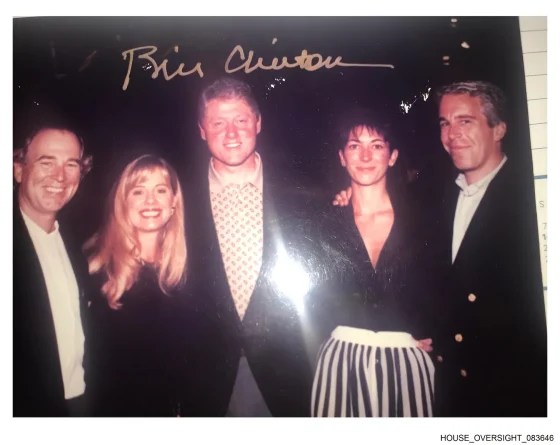
Dumb and horny, just like we like ‘em!
While Clinton was such an enthusiastic participant in his own compromising that it’s impossible to say which honeypot (Monica Lewinsky being the most famous) secured his cooperation, a nation that views the peaceful solution to a conflict as a greater evil than child-trafficking has clearly lost the plot. By the time Epstein’s operation was in full swing in 2000, Israel was literally run by (“alleged”) rapists. Ehud Barak, who would later be accused by Virginia Giuffre of raping her so violently she bled for hours and becoming aroused by her terror as she begged for her life, was prime minister, while Moshe Katsev, who would later be convicted of raping one of his employees, was president. That same year, the nation welcomed back Arie Scher, its disgraced vice-consul of Rio de Janeiro, after he was found to be trafficking children to Israeli tourists in Brazil, not only not prosecuting him but handing him a promotion as Consul of Canberra (Australia, in a rare show of good judgment, wouldn’t let him in). Another Israeli child trafficking ring was exposed in 2018 in Colombia, operating with protection from local authorities.
Barak seemed genuinely surprised when his friendship with Epstein, whom he would continue to visit at least 30 times in the US after the pedophile’s 2008 conviction required him to register as a sex offender, became a sticking point for voters during his attempted return as Prime Minister in 2019. Unwilling to believe Israelis had suddenly started caring about rape, especially rape of impoverished shiksas, Barak blamed his opponent Benjamin Netanyahu for ginning up a “poisoned atmosphere” to distract from the multiple corruption charges pending against him. Barak had a point — Israel had officially declared itself a Jewish supremacist state the previous year, abdicating any responsibility to protect its second-class citizens. After a 2024 UN report condemned Israel’s acceptance of the use of sexual humiliation, harassment and torture against Palestinian prisoners, 10 IDF soldiers were arrested for gang-raping a Palestinian man being held without evidence as a Hamas fighter. The backlash was immediate as government officials — led by Security Minister Itamar Ben Gvir, who called the rapists “heroes” — rallied to secure their release and demand those who ordered the arrest be punished. The soldiers’ lawyers even argued they had acted in self-defense.
Revelation of the Method
Unlike most intelligence agency honeytraps, Epstein’s trafficking ring included a public relations aspect, with glossy media profiles depicting him as a suave, mysterious, Jay Gatsby-by-way-of-James Bond playboy jet-setting around the world with princes and presidents, a bevy of (near)-babies surrounding him at all times. It is absurd to believe that it took a decade after survivor Maria Farmer first reported Epstein and Maxwell to the FBI for the agency to build a case against him even as he carried on with the same behaviors, or that the agency only found time to interview Farmer in 2006 after Palm Beach police made them look bad by charging the pedophile with abusing a 14-year-old girl. When the Palm Beach case landed in their lap as well, they waited until it was resolved in that jurisdiction, then wrote to victims falsely claiming a “thorough investigation” was underway. The agency’s behavior is less baffling given the FBI has been sexually compromised from its very beginnings, with founder J. Edgar Hoover blackmailed out of the gate by the same organized crime syndicate the agency was established to police, forcing him to deny the very existence of the Mafia for years. One can attribute the same motive to Kash Patel’s “who’re you going to believe, me or your lying eyes?” wide-eyed denials of reality.
Nor was the FBI the only law enforcement agency to mysteriously drop the ball on the 52-page indictment. Palm Beach State Attorney Barry Krischer abandoned the charges that could have put Epstein away for life after meeting with his defense team, deciding probation and a psychological evaluation would be sufficient punishment given that the girls were “prostitutes.” Krischer, who retired the following year, was in charge of the state’s Crime Against Children unit, yet had habitually refused to prosecute cases of men raping teenage girls even when his inaction led to further harm coming to the girls. His true motives were likely revealed in the award he would receive 10 years later from the Anti-Defamation League, an organization that was literally founded to protect Jewish pedophile and murderer Leo Frank from justice after he was found guilty of murdering his 13-year-old factory employee Mary Phagan. Bellowing the quiet part out loud, the ADL’s “Jurisprudence Award” is supposed to recognize “an outstanding contribution to the legal profession and to the community at large, while exemplifying the principles upon which the Anti-Defamation League was founded.” It certainly did that last part.
Palm Beach police chief Michael Reiter kicked the case up to US Attorney Alex Acosta, who also fumbled it, agreeing with Epstein’s lawyers to an infuriating no-prosecution deal on a single charge of soliciting a teen prostitute that would allow him to serve just 18 months in jail with day release. Victims were not told of the agreement, in violation of federal law. Acosta would later admit when he was interviewed by the Trump transition team for a cabinet post that he had been ordered to back off Epstein because “he belongs to intelligence,” but this was apparently acceptable to the incoming administration, which appointed him Secretary of Labor. Only when the public learned of the interaction was he pressured to resign.
Epstein had briefly considered fleeing to Israel like so many pedophiles before him in order to escape conviction, even complaining to friends that an “antisemitic conspiracy” in Palm Beach was to blame for his prosecution, a notion other Palm Beach Jews who didn’t spend their days molesting children found ludicrous. But instead, he embraced his new routine, leaving his cell each day to go to “work” and sneaking girls into his “office,” and served just 13 months of his sentence. He ignored the requirement that he register as a sex offender and was never asked to, nor did his wealthy and powerful friends drop him over his conviction.
As an asset of both US and Israeli intelligence, insulated in the personal wealth of mafia-affiliated Mega Group billionaires, surrounded by the wealthiest, most influential, and most powerful people he and Maxwell could lure into their nest, a retinue of nymphets obediently attending to his every need, Epstein likely believed that truly “getting caught” was impossible and thus resumed flaunting his lifestyle after weaseling out of the 2006 charges. Indeed, it’s the flaunting of the crime that makes for such an effective humiliation ritual. Confronted with such a towering miscarriage of justice, it is impossible to believe in the integrity of the US political system, and the destabilization of society advances by leaps and bounds.
Sex Slaves Breed Thought Slaves
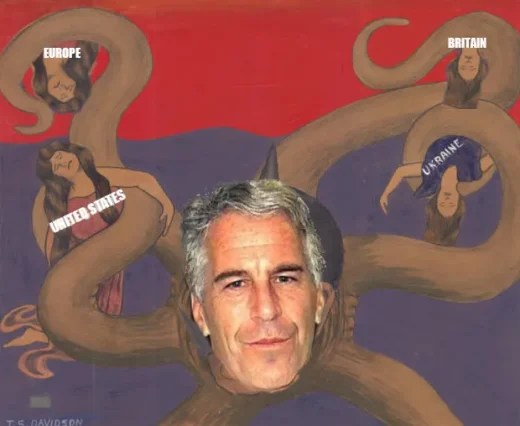
The reason for the treason
Only by recognizing the role of sexual blackmail and the networks that run it can Americans understand the generational betrayal that has reduced our political system to just another asset-stripping mechanism. Decades under the thumb of Big Parasite have withered the US from a proud world power to a desiccated husk, one unethical compromise at a time. Dignity and patriotism left the building when, fresh off a starring role in the assassination of JFK, Israel persuaded his successor Lyndon Johnson to look the other way as it attempted to sink the naval intelligence ship USS Liberty, killing hundreds of Americans to drag Washington into its war with Egypt. Johnson, repeatedly blocking rescue efforts so as to leave no survivors to tell the truth about the attack, inaugurated a traitorous tradition that subsequent presidents have followed religiously. Israel will be permitted to violate everything from international law to the laws of physics, while the US will stand by to enforce its lunatic demands. Americans, reduced to serfs on an Israeli plantation, embraced the scam of Christian Zionism to try to make some moral sense of the situation, a coping mechanism the Israeli lobby has eagerly exploited with propaganda campaigns aimed at turning American churches into recruiters for what is ultimately a self-effacing death cult. As the US’ national debt spirals uncontrollably alongside its foreign aid bill, it is a wonder Big Parasite has not instituted a debt forgiveness program that allows Americans to offer up their nubile young daughters as payment. What do you get the nation that has everything, besides shame?
Only when the role of institutionalized pedophilia as the driving force within the halls of power is taken into account does the behavior of American politicians, uniting in lockstep to tear up the Bill of Rights so Israel’s feelings aren’t hurt, make any sense. Mere avarice or lust for power cannot account for the anti-human, shortsighted cravenness that defines the political class. Warehouses full of video recordings of these people and their associates schtupping 14-year-olds can.
When a State Department official praises Israel over the US and brags about sporting a Star of David necklace despite being Italian, it’s not because they don’t understand optics. When the Democratic Party commits political Seppuku by embracing a “hug Bibi” pro-Israel strategy in the middle of a genocide, it’s not because they love the wildly corrupt Israeli PM more than their jobs. When BlackRock-controlled brands like Bud Light and Jaguar clamber on board the LGBT bandwagon in the most tone-deaf way possible, offending their entire customer base and tanking their stock price with commercials that constitute aesthetic terrorism, it’s not because they love gay people or hate money. These are acts of ritual humiliation that provide Big Parasite with spiritual nourishment. Many of Epstein’s victims report that he and Maxwell seemed to take as much pleasure in their fear and distress as they did in the sex itself. Like the girls, blackmailed politicians must betray themselves anew with every assignment, cringing through life like a kicked dog knowing somewhere in a nondescript warehouse sits evidence of crimes that could put them away for a very long time. It’s kiss the Wailing Wall or kiss their ass goodbye.
Destroying Something Beautiful
While the media has lazily followed Alan Dershowitz’s lead in characterizing Epstein’s victims as trailer-trash juvenile delinquents barely on the wrong side of the age of consent, Epstein and his associates were in fact very picky about their prey, spending at least as much time strategizing the ruination of the flower of gentile feminity (the absence of Jewish girls from the “sisterhood,” confirmed by Maria Farmer and also notable among the victims of producer Harvey Weinstein, is notable given the ethnic-supremacist ideology of the parasite class) as they did on compromising VIPs — though admittedly it wasn’t rocket science getting a prince or a president to drop his zipper in the presence of underage beauties. They wanted “white girls” who appeared “prepubescent” and demure, according to survivor Courtney Wild, while another report specified their ideal type as “nymphishly thin, with no tattoos.” Maxwell insisted the girls should be “as young as possible.” Not only were they required to be virginal and disease-free (on pain of death), but they were forbidden from drinking, smoking, and using drugs and put on strict diets if they started to gain weight. Academic achievement and artistic talent were a bonus. Youth and beauty were important, but it was purity and innocence they were targeting.
Epstein was ideally placed to recruit girls — and charm their wealthy parents — from his first job, having been installed as math and science teacher at the prestigious Dalton School despite lacking even a college degree in what was likely an intelligence posting designed to position him in New York high society. He leveraged his financial benefactor Les Wexner’s Victoria’s Secret brand to great effect, enticing girls to his townhouse by pretending to be a model scout. At Interlochen Center for the Arts, where he had attended a youth music camp, his name emblazoned on the “Jeffrey Epstein Scholarship Lodge” helped him pick up musicians, while New York Academy of Art’s dean of students Lisa Guggenheim allegedly pimped out her choicest young students to him, among them Maria Farmer, the painter who would first report Epstein to the FBI.
So innocent when she first met Epstein at a gallery show that she actually believed his explanation that the steady trickle of young girls (many in school uniforms) in and out of his townhouse were Victoria’s Secret models on casting calls, Farmer, hooked with the promise of helping her art career, reluctantly agreed to travel to brand owner Les Wexner’s Ohio estate to work as an artist in residence. Trapped on the well-guarded property and verbally abused by Wexner’s wife Abigail, she was kept under constant surveillance and forbidden to eat at the “Jewish-only” country club on the property, losing 20 pounds as she gradually lost her will to resist.
Farmer only snapped out of her despondency when Epstein and Maxwell sexually assaulted her during a visit to the estate. The pair had set their sights on her younger sister Annie after spotting a nude photo of her that Farmer had used for a painting, and Farmer realized she had been bundled off to Wexner’s so that they could have full access to the younger girl. While she ultimately escaped and reunited with her sister, her art career had been destroyed, not helped, by her association with Epstein, who had forced her to turn down a Hollywood painting commission so she could be locked away in Ohio instead. He and Maxwell threatened to cut her off from “art related opportunities,” and she fled the city to get away from them. Despite her pre-Epstein success selling $20,000 paintings and showing in galleries, she stopped painting for 20 years, explaining to Whitney Webb, “They destroyed me on purpose.”

Farmer’s painting depicting Epstein-world as a “diagram” for the clueless FBI
While one can only speculate on how many other talented young girls had their creativity deliberately snuffed out, or why this was so important to Epstein and Maxwell, it is clear that many brilliant works of art, music, and literature that could have uplifted humanity were not made because their creators were made to give up. This has left space for Big Parasite, with its chokehold on the entertainment industry, to aesthetically terrorize the population with soulless mediocrity without having to worry about competition. Under their guidance, music and other forms of popular entertainment have become not a celebration of life but a grooming tool, with Diddy’s “freakouts” only the latest sexual blackmail scandal to surface in an ecosystem that was literally built by organized crime. The sexualization of young girls by popular culture and the normalization of pornography have inspired epic pearl-clutching by politicians willing to look at everything except the source. The role of Epstein’s virgin sacrifices in the runaway success of Big Parasite in its cultural warfare against the West should thus not be underestimated.
Playing the Box
The surest route to long-term compliance with an unconscionable order is tricking the target into active participation in enforcing it, a strategy Epstein himself called “playing the box.” Only when their own participation in the trafficking ring had ceased with Epstein’s death did institutional enablers like JP Morgan Chase and the Virgin Islands government experience attacks of conscience over what they’d facilitated for so many years, though both stopped short of taking accountability and blamed the other for allowing their cooperation to be bought. Journalists who had obediently spiked negative coverage of the pedophile during his life marked his death with disingenuous bewilderment at why the media never looked into the girls.
Efforts to defuse the Epstein bomb by grooming the media were underway long before the pedophile was rearrested and “suicided.” Israeli intelligence operatives poisoned the epistemological well in 2017, priming the American public to reject future political pedophilia scandals by seeding 4chan and other social media platforms with the QAnon psy-op. Q recast Trump — whose mentor had been Roy Cohn, perhaps the most famous sexual blackmailer in US history — as a real-life superhero saving trafficked children from Deep State pedophiles. Smothering its kernel of truth (the rich and powerful are in fact preying on children on an industrial scale) in a bath of bullshit (JFK Jr faked his death and is coming back any minute now! here’s Hillary Clinton in a snuff film!), it suggested Trump was only pretending to sell out to the Deep State while secretly outflanking them in “5-D chess” ordinary folks weren’t smart enough to understand. The narrative punch was further spiked with promises that hundreds of sealed indictments dropping any minute now would send Hillary Clinton and other prominent Democrats off to Guantanamo Bay for life, and the cryptic post format encouraged followers to waste hours hunting for hidden messages, effectively making them participants in deceiving themselves. It should surprise no one that both QAnon itself and the 4chan /pol/ board where it originated were confirmed as Israeli intelligence honeypots earlier this year, with half of all /pol/ posts originating from IP addresses in that country. The Q narrative was tailor-made to pacify millions of Americans with hopium — why rise up against the government when there was a chance the “white hats” within the administration might be engaged in deeply heroic feats of child-rescue behind the scenes? — while ensuring the Epstein revelations would be met with yawns and disbelief by “real” journalists.

Who wouldn’t want to be associated with this?
Victims were also tricked into complicity with their abuse with the order to recruit other girls for pay, a dynamic that ensured their silence and kept many in Epstein’s thrall for months or years. What Palm Beach police described as a “sexual abuse pyramid scheme” was far more effective than threats alone. Many girls dutifully came back with friends, needing the money or believing the false promises of career advancement that had lured them to the property in the first place, even as they gradually lost their will to resist under repeated assaults by Epstein and Maxwell. These encounters were designed to humiliate and strip the girls of agency, and the pressure to recruit other girls blurred the line between victim and perpetrator so effectively that some opted to remain silent out of fear of prosecution, a valid concern given the aggressive legal tactics of Epstein’s defense team. Courtney Wild, who recalls bringing as many as 80 girls — all underage — to Epstein for $200-$300 per girl during the three years she spent in his orbit in Palm Beach, says the money kept her out of homelessness, but at a price. When she met Epstein at 14, she was an A student and captain of the cheerleading team despite a troubled home life. Deemed too old for the predator’s tastes at 17, she drifted into stripping and began using drugs, eventually spending time in prison while her abuser continued feeding on her peers.
The same model of grooming that saw Epstein’s victims evolve from shocked repulsion at the public sex acts performed on his properties to reluctant participation and ultimately to gathering juicy details on the VIPs they were loaned out to can be observed in any society under parasitic exploitation. A wet-behind-the-ears politician initially appalled at the feeding frenzy of lobbyists bidding on his integrity will soon be hooked on their money, perhaps even coming to enjoy the quarterly debriefing with the “AIPAC babysitter” the Israeli group has apparently assigned to everyone in Congress except Thomas Massie. Americans who protested George W. Bush’s illegal invasion of Iraq in 2003 didn’t even raise an eyebrow when his successor Barack Obama, Nobel Peace Prize in hand, began bombing five more countries, and later freaked out when Trump threatened to end the war in Ukraine. Repeat an atrocity enough times and it becomes business as usual.
All Wars are Pedos’ Wars
It’s hard not to compare Epstein’s girls — thrown away once they aged out of jailbait, having given their best years in servitude to masters who saw them as “trash” — with the (mostly) male victims of the US military-industrial complex. These, too, are often left broke and broken on the streets after too much killing has rendered them “unfit for polite society” (in the cringeworthy words of Pete Hegseth). War historically harvests the cream of the generational crop, sacrificing the strongest and bravest boys to enrich a ruling class whose own children always dodge conscription, and while voluntary service has lowered the profile of such systematic abuse, poor kids with no prospects are easily enticed into joining the armed forces the same way girls were sucked into Epstein’s world: promises of good pay, good education, and the opportunity to achieve their dreams. Through the ur-humiliation ritual of boot camp, they become aggressive little golems eager to wipe their asses with international law (and their own self-preservation instincts) for America’s Best Friend, blasting brown civilians until they end up losing a limb or their mind and get sent home, the realization finally dawning that they’ve been used and thrown away. Reading US Third Air Force Commander Lt. Gen Richard Clark tell the Jerusalem Post (once owned by Robert Maxwell) that US troops would be ready and willing to die for Israel, how many veterans felt like General Patton, horror dawning that they have defeated the wrong enemy and doomed the world? Certainly, Israel’s continued existence as a nuclear-armed ethnostate determined to achieve the ultimate loosh harvest by conducting the world’s first live-streamed genocide in Gaza — gorging themselves on the suffering not only of the Palestinians but of everyone who watches the violence knowing that it’s funded by their tax dollars and that there’s nothing they can do about it —is not going to leave many survivors.
While war for its own sake is beloved by Big Parasite, it too has a parallel pedocentric motive: extracting foreign nations’ nubile natural resources for financial and sexual exploitation through UN “peacekeepers” and private military contractors. Sex trafficking by UN peacekeepers is so common it has its own Wikipedia article. The peacekeeping force seems tailor-made for predators, as they are not governed by local laws, and their home country is unlikely to follow up on a claim against them by a foreigner halfway around the world. Abusers caught in the act are merely sent home. The UN has promised to beef up accountability for decades, but no change has been forthcoming, suggesting the widespread child rape is a feature, not a bug. In Haiti, where Hillary Clinton infamously intervened in 2010 to reduce the sentence of missionary Laura Silsby after Silsby was caught attempting to kidnap 33 children from the country, rape by peacekeepers has become so common that a 2017 investigation found only one woman in 12 who’ve been raped by a UN peacekeeper even bothers to report the abuse anymore, knowing nothing will be done. Wars and natural disasters both provide an ideal environment for stealing children, as populations are displaced and authorities distracted while the presence of foreign do-gooder operations is seen as normal, even desirable, by outsiders.
Because private military contractors are not subject to US or military law when operating overseas, they are extremely popular with intelligence agencies in need of plausible deniability for their black ops. They have also become synonymous with human trafficking. The CIA’s preferred contractor Dyncorp was forced to fire several employees in Bosnia in 1999 after two separate whistleblowers revealed the company was operating a sex trafficking ring with the help of the Serbian mafia, flying girls as young as 12 from Serbia, Russia, Ukraine, Moldova, and Romania into local brothels and sex clubs where they were trafficked to Dyncorp personnel as well as UN, NATO, and human rights NGO workers. Dyncorp was involved in all areas of the operation, forging documents, smuggling the girls through checkpoints, and tipping off brothel owners to raids. Despite an abundance of evidence that included the company’s Bosnia site director making a home video of himself raping two of the girls, no one was prosecuted, the girls were sent back home, and Dyncorp even kept its contract to provide police forces to the UN. However, the whistleblowers were fired. The plane Dyncorp used to bring the girls to Bosnia shared a tail number with a helicopter owned by Epstein, who was known to have purchased his own Yugoslavian sex slave Nadia Marcinkova during the civil war.
In 2004, Dyncorp contract workers at an airbase in Colombia filmed themselves molesting local kids and distributed the video in the streets of Bogota, suggesting self-blackmail may be de rigueur at the company as a form of mutually assured destruction. Another incriminating video leaked online in 2010 showing Dyncorp employees who’d been contracted to train the Afghan police force enjoying lapdances from a young boy dressed as a female. Pizzagate princess Hillary Clinton herself helped squash the story, though the scandal would ultimately leak again in a Wikileaks cable dump. Sex trafficking by military contractors is so common the Pentagon’s effort to ban it (presumably due to the bad publicity) was shot down by industry lobbyists.
In the glorified money laundering operation that is Vladimir Zelensky’s Ukraine, an entire generation of men has been sacrificed so the parasitic elite can indulge their perversions. White Angel, a paramilitary offshoot of the Israeli-funded neo-Nazi group Azov Battalion, has trafficked tens of thousands of children out of the country under orders from Zelensky’s government, taking advantage of demoralized and confused parents’ willingness to hand over their kids to “any person in military or police uniform” amid the fog of war. Paid $2,000 for each stolen child, the state-sponsored predators were deployed daily in villages across eastern Ukraine in a bid to strip its assets before the inevitable Russian victory, given orders to use violence against parents who would not voluntarily hand over their kids. Ending up an Israeli billionaire’s sex slave might actually be the more desirable of the options open to kidnapped Ukrainian children, however — many were allegedly sold for parts, with organ trafficking such big business in the country that the Verkhovna Rada literally legalized organ theft in 2021, removing the requirement for consent from a donor or relative. While the people of Ukraine have long since soured on their corrupt government, it is clear Zelensky and his puppet-masters are unwilling to permit the end of the war because of the sharp drop in income it would entail.
While Big Parasite consolidated itself under the cover of “Israel” when that nation was created, taking advantage of international sympathy towards Jews post-WW2 to ethnically cleanse its new home with shocking viciousness, it has always been a global network whose only real loyalty is to itself. Organized child sex trafficking is not a recent innovation. An attempted crackdown on “white slavery” in Eastern Europe in the late 19th century raised familiar questions regarding impoverished female victims’ agency in the sex trade, tolerance and even regulation of the trade by the authorities, and the ethnic dynamics of Jewish traders trafficking Polish and Galician nubiles — often tempted with promises of “real” jobs and wealthy husbands, or at least financial freedom — to slave auctions and Middle Eastern harems, their earnings heavily taxed or confiscated. Like Alan Dershowitz, modern apologists for the white slavers argue that desperate families’ willing sale of their daughters — some of whom might have already had sexual experience — in order to pay their debts constituted consensual prostitution, dismissing the stereotype of predatory Jewish slavers as a blood libel because Polish and Galician pimps existed as well and that if Jews hadn’t stepped in to run the sex trade with better business acumen, it would still have existed. Epstein, who bragged about buying “sex slave” Nadia Marcinkova from her parents in Yugoslavia, would be proud.
Pedo-Futurism

Palantir’s Alex Karp, giving a biiiiiig welcome to the technocratic dystopia
It is not only our present that has been hijacked by this criminal gang, but our future. Seemingly driven by the same pre-traumatic stress syndrome that leads them to see a Shoah in every shoelace, agents of Big Parasite have flooded the communications and technology sector with backdoored equipment and spyware so completely that surveillance is the expectation, not the exception. It is not an exaggeration to say that their quest for omniscience created the modern surveillance state, and that this process has been driven, enabled, and protected by sexual blackmailers. Robert Maxwell sold backdoored PROMIS communication software to 42 governments including the US in the 1980s, opening up the mother of all eavesdropping channels. Ghislaine’s sister Christine sold Chiliad datamining software to the FBI to enable its “War on Terror” through aggressive surveillance of Israel’s enemies, guiding US foreign policy off a cliff. Palantir, the CIA-funded pre-crime program that was recently handed centralized control over all US government systems, began as an extension of PROMIS and has blossomed into a dystopian surveillance behemoth whose executives openly boast about killing people and telegraph their allegiances by reminding the world that they “defer to Israel.” Ghislaine’s other sister Isabel opened the door to Big Parasite’s takeover of the internet by convincing Silicon Valley investors to pour funding into Israeli startups in the 1990s, leading to the success of companies like Commtouch, now a ubiquitous and hidden part of email systems used by Google and Microsoft (whose founder, Bill Gates, has been a friend of Epstein since the 1990s). Israeli startups acquired by US tech giants can easily take control of the company’s direction from within without disturbing the public-facing image of the company as all-American, and this has become standard operating procedure for Israel’s military intelligence Unit 8200, which has turned industry giants like Microsoft and Intel into espionage bonanzas even as their products degrade in quality, burdened and bloated with snitchware. When Netanyahu reminded smartphone users that they were “holding a piece of Israel,” he was not exaggerating — Israeli companies like Pegasus, Candiru and Ehud Barak’s Epstein-funded Carbyne911 have perfected the transformation of personal communications device into personal surveillance device.
Every elite sex trafficking scandal that becomes public is reported in a vacuum, as if there have not been hundreds if not thousands more not mentioned here. Evidence of similar rings can be found anywhere humanity’s baser instincts are exploited. Every time we fail to interrogate the “why” of these scandals beyond “powerful men are into forbidden fruit” and keep silent out of fear of offending the boot wedged firmly on our necks, we are giving our agency over to these predators. As long as there are assets left to strip, Big Parasite will be there, luxuriating in our cowardice while it grows fat off our distress. Epstein may be dead and gone, but the network that created him is still screwing us all.
Villains of Judea: Ronald Lauder and his War on American Dissent
For Lauder, Israel always comes first.
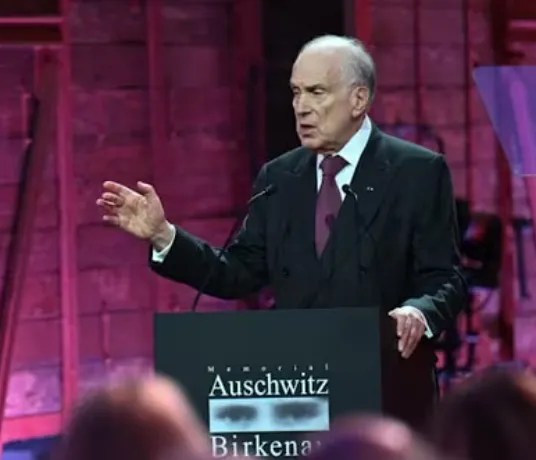
José Niño Unfiltered | December 16, 2025
World Jewish Congress President Ronald Lauder likes to present himself as a civic minded elder statesman, a sober billionaire warning America about a rising tide of antisemitism.
At the Israel Hayom Summit on December 2, 2025, he framed the moment as a crisis of the West itself, calling it “a full-scale assault on truth, on democracy, and on the safety of Jewish people everywhere,” and insisting, “This is not normal. And it is not ‘just criticism of Israel.’ It is the world’s oldest hatred, once again wearing political clothing.”
Lauder was referring to the rise of antisemitism and anti-Israel sentiment worldwide in the wake of Israel’s 2-year bombing campaign in Gaza.
Then he sharpened the spear and aimed it at domestic enemies like Tucker Carlson, who has been one of the most vocal critics of Israel in the post-October 7 reality we live in. He told the audience, “Tucker Carlson is the Father Coughlin of our generation.” In the same speech he warned that complacency is over, because “antisemitism is rampant throughout our culture,” and he demanded a political and institutional counteroffensive.
That is the Lauder formula in its purest form. He wraps a totalizing political program in the language of safety and moral emergency, then treats America’s public life as territory to be reorganized around his crusade. The target is never merely hatred. The target is dissent, drift, and disobedience from the priorities he has chosen, priorities that consistently put Israel first.
Lauder did not arrive at this posture late in life. He was born into power in New York City in 1944, the heir to the Estée Lauder fortune, raised in elite institutions, and trained for international influence through business and foreign policy studies. He entered the family company early, then moved into government in the Reagan era, where he served at the Pentagon as Deputy Assistant Secretary of Defense for European and NATO policy.
Ronald Reagan then tapped him as U.S. ambassador to Austria in 1986. In Vienna, he did not behave like a neutral American emissary. He turned his diplomatic post into a stage for historical confrontation and political signaling. Lauder refused to attend the inauguration of Austria’s president Kurt Waldheim amid allegations of him being involved in or being aware of National Socialist atrocities in the Balkans during his service as a German army lieutenant in World War II. He also fired U.S. diplomat Felix Bloch for engaging in suspected espionage activities.
After government service, Lauder tried to convert his vast wealth into formal power at home. In 1989, he ran for mayor of New York City as a Republican, where he spent big bucks to get his name out and campaign to the right of Rudy Giuliani, only to lose the primary. Even in defeat, the pattern held. He treated politics as an arena where money does all the talking, and he kept looking for levers that could bend public life to his will.
He found one in term limits. During the 1990s he poured resources into imposing term limits on New York City officials, selling it as a democratic reform and a check on machine party politics. Yet in 2008, when Mayor Michael Bloomberg wanted a third term, Lauder reversed course and supported extending those limits, a turn that mainstream critics interpreted as a billionaire bargain dressed up as civic necessity. However, from the perspective of long-time observers of Jewish behavior, Lauder’s support for Bloomberg reflects a pattern of co-ethnic solidarity among Jewish power brokers.
While Lauder played these games in New York, his real career was consolidating leadership in the organized Jewish political world. Notably, Lauder was a member of the Mega Group—a mysterious network of Jewish oligarchs that worked behind the scenes to advance Jewish interests and strengthen pro-Israel bonds among Jews in America. Leslie Wexner, founder of The Limited and Victoria’s Secret, and the late Jewish sex criminal Jeffrey Epstein were among the most prominent members of this Jewish consortium. By 2007, Lauder had become president of the World Jewish Congress, a position that turned him into a roaming power broker who meets heads of state and treats international politics as a permanent lobbying campaign.
From that perch, he repeatedly framed Western security architecture as a vehicle for Israeli priorities. In 2011, he publicly argued that Israel should be admitted into NATO, insisting, “Israel needs real guarantees for its security,” and pressing NATO states to bring Israel into the alliance.
In 2012, he attacked European pressure campaigns on Israel with maximalist rhetoric. When Irish officials floated an EU ban on goods from Israeli communities in the West Bank, Lauder called boycott talk “cynical and hypocritical,” and declared, “Minister Gilmore is taking aim at the only liberal democracy in the Middle East while keeping quiet about those who really wreak havoc in the region: the Assads, Ahmadinejads and their allies Hezbollah and Hamas.” He added that the West Bank was “legally disputed and not illegally occupied.”
He carried the same posture with respect to Iran — enemy #1 for world Jewry at the moment. In 2013, as Western diplomats negotiated with Tehran, he mocked their perceived softness and conjured Munich analogies, warning, “Just as the West gave up Czechoslovakia to Hitler in Munich in 1938, we see what is happening again and the world is silent,” and boasting, “Frankly, only France stands between us and a nuclear Iran.” In 2015, he escalated again, attacking the nuclear deal with a moral curse, saying, “The road to hell is often paved with good intentions,” and arguing that the agreement could revive Iran economically without stopping long term nuclear ambitions.
The story kept darkening as his proximity to Israeli power deepened. In 2016, Israeli police questioned Lauder in connection with “Case 1000,” the Netanyahu gifts affair. Reports said investigators sought his testimony because of his closeness to Netanyahu and the broader allegations involving luxury gifts and favors. Lauder was not charged, but the episode revealed how near he operated to Israel’s governing circle, not as an outside friend, but as part of the broader, transnational Jewish network.
By 2023, he openly wielded donor money as a disciplinary weapon in American institutions. After the October 7 attacks and campus controversies, he warned the University of Pennsylvania that, “You are forcing me to reexamine my financial support absent satisfactory measures to address antisemitism.” The message was simple. If a prestigious American university fails to police speech and activism the way he demands, he will squeeze it financially until it complies.
In 2025, Lauder continued supporting Israel’s ethnic cleansing campaign in Gaza. He categorically rejected the idea that Israel bears any responsibility for ending the conflict, insisting, “The truth is simple: the war could end tomorrow if Hamas were to release the remaining hostages and disarm.” On education and propaganda, he stopped pretending the solution is persuasion alone. At the World Jewish Congress gala in November 2025, he argued that the education pipeline must be rebuilt from the ground up, declaring, “The entire education system — K-12 to college — must be retaught,” and adding, “It’s time we fight back with stronger PR to tell the truth.”
He also made the threat explicit. In a widely shared clip, he vowed, “Any candidate running for a seat… whose platform includes antisemitism, we will target them as they target us.”
Like most of the Israel First set, Lauder was ecstatic about the toppling of Bashar al-Assad’s government in Syria in late 2024. In September 2025, he met former al-Qaeda terrorist-turned Syrian President Ahmad al-Sharaa on the sidelines of the United Nations General Assembly and afterward said, “We had a very positive discussion about normalization between Israel and Syria.”
Seen in order, the picture is not complicated. Lauder builds influence through money, embeds himself in elite institutions, and uses both to steer policy and culture toward a relentless Zionist agenda. He does not talk like a man defending American sovereignty. He talks like an agent of world Jewry who expects America’s parties, schools, media, and alliances to function as enforcement arms for a foreign cause.
That is why his December 2025 sermon about antisemitism matters. It is not only a warning. It is a blueprint. When Lauder says “If we don’t tell our own story, others will rewrite it,” he is not describing a cultural debate. He is declaring ownership over the narrative, and claiming the right to punish anyone in American life who refuses to repeat it.
In the end, Ronald Lauder emerges not as a guardian of American civic life but as a disciplined enforcer of a foreign political creed, using wealth, intimidation, and moral blackmail to bend institutions to his will. What he calls a fight against hatred looks increasingly like a campaign to subordinate American sovereignty, speech, and policy to the imperatives of Israel and the transnational Jewish clique that sustains it.
The Folly of Establishing a U.S. Military Base in Damascus
By José Niño | The Libertarian Institute | December 16, 2025
Recent reports indicate the United States is preparing to establish a military presence at an airbase in Damascus, allegedly to facilitate a security agreement between Syria and Israel. This development represents yet another misguided expansion of American military overreach in a region where Washington has already caused tremendous damage through decades of failed interventionist policies.
The United States currently operates approximately 750 to 877 military installations across roughly eighty countries worldwide. This staggering number represents about 70 to 85% of all foreign military bases globally. To put this in perspective, the next eighteen countries with foreign bases combined maintain only 370 installations total. Russia has just twenty-nine foreign bases, and China operates merely six. The American empire of bases already dwarfs every other nation combined, and the financial burden is crushing. Washington spends approximately $65 billion annually just to build and maintain these overseas installations, with total spending on foreign bases and personnel reaching over $94 billion per year.
These figures are not abstract accounting entries. They translate directly into American lives placed in volatile environments, as demonstrated by the recent insider attack in the ancient Syrian city of Palmyra, where a purported ISIS infiltrator embedded in local security forces turned his weapon on a joint U.S. Syrian patrol, killing two U.S. soldiers and one U.S. civilian during what was described as a routine field tour. The incident underscores how the sprawling U.S. basing network increasingly exposes American personnel to unpredictable and lethal blowback in unstable theaters far from home.
Syria itself already hosts between 1,500 and 2,000 American troops, primarily concentrated in the northeastern Hasakah province and at the Al Tanf base in the Syrian Desert. The Pentagon recently announced plans to reduce this presence to fewer than 1,000 personnel and consolidated operations from eight installations to just three. Yet now, despite this supposed drawdown, Washington reportedly plans to establish a new presence in Damascus itself, either at Mezzeh Air Base or Al Seen Military Airport. This contradictory expansion reveals the hollow nature of promises to reduce American military commitments abroad.
Since the fall of Bashar al Assad in December 2024, Israel has conducted hundreds of airstrikes on Syrian military and civilian infrastructure while occupying parts of southern Syria including Quneitra and Daraa. Israel has systematically violated the 1974 disengagement agreement and expanded control over buffer zones. These actions align disturbingly well with the Yinon Plan, a 1982 Israeli strategic document by Israeli foreign policy official Oded Yinon that envisions the dissolution of surrounding Arab states into smaller ethnic and religious entities. The plan explicitly calls for fragmenting Syria along its ethnic and religious lines to prevent a strong centralized government that could challenge Israeli interests.
A permanent American military presence in Damascus would effectively serve as a tripwire guaranteeing continued U.S. involvement in securing Israeli strategic objectives in the Levant. Rather than protecting American interests or enhancing national security, such a base would entrench Washington deeper into regional conflicts that have consistently proven disastrous for both American taxpayers and Middle Eastern populations.
The human cost of American intervention in Syria should give any policymaker pause. The Syrian Civil War has resulted in between 617,000 and 656,000 deaths, including civilians, rebels, and government forces. More than 7.4 million people remain internally displaced within Syria, while approximately 6.3 million Syrian refugees live abroad. This catastrophic toll stems partly from Operation Timber Sycamore, the CIA covert program that ran from 2012 to 2017 to train and equip Syrian rebel forces.
Timber Sycamore represented a joint effort involving American intelligence services along with Saudi Arabia, Jordan, Qatar, Turkey, and the United Kingdom. The CIA ran secret training camps in Jordan and Turkey, providing rebels with small arms, ammunition, trucks, and eventually advanced weaponry like BGM 71 TOW anti-tank missiles. Saudi Arabia provided significant funding while the United States supplied training and logistical support.
The program proved to be counterproductive. Jordanian intelligence officers stole and sold millions of dollars worth of weapons intended for rebels on the black market. Even worse, U.S.-supplied weapons regularly fell into the hands of the al Nusra Front, al-Qaeda’s Syrian affiliate, and ISIS itself. The program inadvertently strengthened the very extremists Washington was ostensibly fighting.
The failure of Timber Sycamore illustrates a fundamental problem with American interventionism in Syria. Washington has pursued regime change in Damascus in various forms for decades, yet these efforts have consistently backfired, creating power vacuums filled by jihadist groups and prolonging devastating conflicts. The current enthusiasm for establishing a military presence in Damascus suggests American policymakers have learned absolutely nothing from these failures.
The figure now leading Syria exemplifies the moral bankruptcy of this entire enterprise. Ahmed al Sharaa, better known by his nom de guerre Abu Mohammad al Julani, currently serves as president of Syria’s interim government. This represents a stunning rehabilitation for a man who founded al Nusra Front in 2012 as an al-Qaeda affiliate and later formed Hayat Tahrir al Sham (HTS) by merging various rebel factions. Under the name Abu Mohammad al Julani, he was designated a Specially Designated Global Terrorist by the United States on July 24, 2013, with a $10 million bounty maintained on his head.
Al Sharaa’s terrorist designation stemmed from his leadership of al Nusra Front, which perpetrated numerous war crimes including suicide bombings, forced conversions, ethnic cleansing, and sectarian massacres against Christian, Alawite, Shia, and Druze minorities. He fought with al-Qaeda in Iraq, spent time imprisoned at Camp Bucca between 2006 and 2010, and was dispatched to Syria by Abu Bakr al Baghdadi in 2011 with $50,000 to establish al Nusra. His close associates have faced accusations from the United States of overseeing torture, kidnappings, trafficking, ransom schemes, and displacing residents to seize property. The New York Times reported that his group was accused of initially operating under al-Qaeda’s umbrella.
Yet in November 2025, the United Nations Security Council adopted resolution 2799, removing al Sharaa and Interior Minister Anas Khattab from the ISIL and al-Qaeda sanctions list. The U.S. Treasury Department followed suit, delisting him from the Specially Designated Global Terrorist registry. This reversal came after the State Department revoked HTS’s Foreign Terrorist Organization designation in July 2025. Washington essentially decided that a former al-Qaeda commander who oversaw sectarian massacres was now a legitimate partner worthy of American military support. This absurd rehabilitation demonstrates how completely untethered American foreign policy has become from any coherent moral framework or strategic logic.
Critics rightly question whether al Sharaa has truly broken from his extremist roots or merely engaged in calculated political rebranding. The speed with which Washington embraced him as a legitimate leader suggests American policymakers care far more about advancing Israeli interests and maintaining regional influence than about genuine counterterrorism or protecting religious minorities.
The United States needs to pursue a fundamentally different approach to foreign policy. Rather than establishing yet another military base to advance Israeli strategic objectives in Syria, Washington should implement a comprehensive drawdown of overseas military commitments. The hundreds of foreign bases it maintains abroad represent an unsustainable burden that diverts resources from genuine national security priorities like border security and stability in the Western Hemisphere. American taxpayers deserve better than footing the bill for an empire that consistently fails to advance their interests while enriching defense contractors and serving foreign powers.
Syria offers a perfect case study in the futility of American interventionism. Decades of attempts at regime change through covert programs like Timber Sycamore and direct military presence have produced nothing but chaos, empowered jihadist groups, created millions of refugees, and cost hundreds of thousands of lives. The rehabilitation of a former al-Qaeda commander into Syria’s president illustrates how divorced American policy has become from any coherent strategy or values.
Rather than doubling down on failed policies, the United States should pursue strategic restraint, scale back its sprawling network of foreign bases, and allow regional powers to sort out their own affairs without American military involvement. That represents the path toward a more sustainable, affordable, and morally defensible foreign policy. The Damascus base proposal deserves to be rejected outright as yet another wasteful expansion of an already overextended military empire.
US strikes three vessels in Eastern Pacific, killing eight
Al Mayadeen | December 16, 2025
The United States Southern Command (SOUTHCOM) announced that it launched deadly strikes on three vessels allegedly involved in drug trafficking in international waters in the Eastern Pacific, resulting in the deaths of eight people.
The strikes were carried out on December 15, under the orders of US Secretary of War Pete Hegseth, according to an official statement posted on X.
“Joint Task Force Southern Spear conducted lethal kinetic strikes on three vessels operated by Designated Terrorist Organizations in international waters,” SOUTHCOM said.
The military reported that all individuals killed were adult males: three aboard the first vessel, two on the second, and three on the third.
While the US claims the targeted vessels were engaged in narco-trafficking, no verification of the alleged links to terrorism or drug networks has been provided for any of the 26 boats it struck. Critics, lawmakers, and legal experts have denounced the strikes as illegal under international law.
Part of a broader Trump-led coercion campaign
The latest strikes come amid a wider US military campaign launched by US President Donald Trump targeting so-called drug smuggling routes in the Pacific Ocean and Caribbean Sea, including areas near Venezuela.
According to US officials, American forces have struck more than 20 vessels as part of the campaign, with at least 90 suspected drug smugglers reported killed so far. The operations represent a significant escalation and a marked departure from previous US approaches, which traditionally relied on interdictions, arrests, and prosecutions rather than direct military force.
Although the strategy has been widely criticized for its effectiveness in addressing the opioid epidemic in the United States, particularly given that Venezuela is not a source or transit hub for drug trafficking routes to the US, Trump and senior administration officials have continued to level baseless accusations against Caracas. Additionally, Washington has transferred an expansive force to the Caribbean, including its most advanced aircraft carrier, the USS Gerald R. Ford.
Legal controversy and international concerns
“Our operations in the Southcom region are lawful under both U.S. and international law, with all actions in compliance with the Law of Armed Conflict,” Pentagon Press Secretary Kingsley Wilson told reporters earlier this month.
Critics, however, have questioned the application of the Law of Armed Conflict outside a declared armed conflict, particularly in international waters and against individuals not formally designated as combatants. Under the United Nations Charter, the use of force by one state against another, including against that state’s vessels on the high seas, is generally prohibited unless the target has conducted an armed attack or the action is authorized by the UN Security Council or undertaken in legitimate self-defense.
Legal analysts have pointed out that there is no credible evidence presented to suggest that the vessels struck were engaged in an armed attack against the United States, meaning the strikes lack a clear legal basis under international law.
Another major issue arose from a controversial September strike in the Caribbean, in which US forces hit a suspected drug-smuggling vessel. After the initial attack, which killed the majority of those aboard, surveillance reportedly showed two survivors in the water.
According to multiple accounts, the operation’s commander authorized a second strike on those survivors, based on a directive that those on board should be left with no survivors. Legal experts and lawmakers have warned that targeting individuals who are no longer actively resisting or posing an imminent threat, “hors de combat” under international humanitarian law, is a war crime and violates both the Geneva Conventions and customary law prohibitions on denying quarter.
Featured Video
Integrity Initiative: UK-funded network framed dissent as Russian disinformation for years
or go to
Aletho News Archives – Video-Images
From the Archives
Why Saudi Ties to 9/11 Mean U.S. Ties to 9/11
By Kevin Ryan | Dig Within | September 27, 2015
Media interest in Saudi Arabian connections to the crimes of 9/11 has centered on calls for the release of the 28 missing pages from the Joint Congressional Inquiry’s report. However, those calls focus on the question of hijacker financing and omit the most interesting links between the 9/11 attacks and Saudi Arabia—links that implicate powerful people in the United States. Here are twenty examples. … continue
Blog Roll
 Aletho News
- Neria Leiter Was A Legitimate Military Target
- Integrity Initiative: UK-funded network framed dissent as Russian disinformation for years
- ‘We don’t seek permission to defend our country’: Snippets from President Pezeshkian’s UNGA address
- NATO chief wants Europeans to fight American wars [for Israel]
- German chemicals giant reveals details of downsizing
- Refaat Al-Areer Was The Canary In The Coal Mine In Israel’s War On The Truth
- Israeli election committee bars candidate from Knesset race over Gaza war opposition
- French-Lebanese man files war crimes complaint over Israeli attacks
- Mahan Air Flight Lands in China Despite US Threat against Iranian Airlines
- US eyes $10bn fund to rebuild war-battered Gulf infrastructure
- If Americans Knew
- An error has occurred; the feed is probably down. Try again later.
- No Tricks Zone
- New Study: Earth And Venus Surface Warmth Largely Explained By Convection And Lapse Rate, Not CO2 Or Radiation
- 2025 Nature Paper Claiming Worsening Global Drought Gets RETRACTED …Heavily Flawed
- New Study: ‘Global Drought Shows No Detectable Recent Acceleration Under Climate Warming’
- Economic Masterminds: German Socialists Suggest Taxing Productivity Gains Stemming From Using AI
- The South China Sea Has Not Been Cooperating With The Climate Change Narrative
- Energy Crisis: Germany Enters Heating Season With Historically Low Gas Reserve Fill Levels
- New Study: The Antarctic Ice Sheet Gained Mass From 2020-2024 Due To Staggering Snow And Ice Accumulation
- Study: Ocean Heating Rates From Thousands Of Years Ago ‘Dwarf’ Modern Ocean Heating Rates
- Climate Extremists Target, Attack Large-Scale Power Grid Infrastructure In Germany!
- New Study: Antarctic Ice Melt Has Contributed Less Than 1 Centimeter To Sea Level Rise In The Last 30 Years

