The 15 Most Devastating Truths About the PSA Screening Disaster
Lies are Unbekoming | October 26, 2025
The prostate-specific antigen (PSA) test has screened 30 million American men annually for over three decades. The man who discovered PSA in 1970, Richard Ablin, now calls mass screening “a public health disaster.” Two landmark 2012 studies found no survival benefit from radical surgery compared to watchful waiting. The U.S. Preventive Services Task Force concluded PSA screening does more harm than good. Yet the $3 billion annual industry continues largely unabated.
These revelations emerge from three insider accounts: Ablin’s The Great Prostate Hoax, urologist Anthony Horan’s The Rise and Fall of the Prostate Cancer Scam, and oncologist Mark Scholz’s Invasion of the Prostate Snatchers. Together they document how a test meant to monitor existing cancer patients became a screening juggernaut that has left millions of men incontinent, impotent, or dead from unnecessary treatment.
The numbers are staggering. Since 1987, when PSA screening exploded nationwide, over one million American men have undergone radical prostatectomies. Studies show 40 to 50 men must be diagnosed and treated to prevent one death from prostate cancer. The other 39 to 49 men receive no benefit but face permanent side effects. Medicare and the Veterans Administration fund most of this treatment, pouring billions into a system that prominent urologists privately acknowledge has failed.
What follows are the most damaging truths about how PSA screening became entrenched despite overwhelming evidence of harm, why it persists against scientific consensus, and what this reveals about American medicine’s inability to abandon lucrative practices even when they damage patients.
1. The Test’s Creator Calls It a “Public Health Disaster”
Richard Ablin discovered prostate-specific antigen in 1970 while researching cryosurgery’s effects on prostate tissue. He never intended PSA as a screening test for healthy men. The test cannot distinguish between the cancers that kill and those that remain harmless. Ablin has spent decades publicly denouncing mass screening, including a 2010 New York Times op-ed titled “The Great Prostate Mistake.”
Ablin compares PSA screening’s specificity to “a coin toss” – hardly the precision expected from a medical test that determines whether men undergo surgery or radiation. He testified before Congress, published papers, and gave countless lectures warning against screening’s misuse. The medical establishment ignored him. In his book, he writes that watching his discovery become “a hugely expensive public health disaster” has been “painful.” The man who found PSA receives angry emails from men whose lives were destroyed by unnecessary treatment triggered by elevated PSA levels.
2. 75% of Men with Elevated PSA Don’t Have Cancer
A PSA level above 4.0 triggers the treatment cascade, yet three-quarters of these men have no cancer. Infections, enlarged prostates, bicycle riding, and recent ejaculation all elevate PSA. The test measures inflammation as readily as malignancy. This 75% false positive rate means millions undergo invasive biopsies needlessly.
The Prostate Cancer Prevention Trial found that 15% of men with PSA under 4.0 – the “normal” range – actually had prostate cancer, including aggressive forms. Meanwhile, only 25% with elevated PSA had cancer at all. No blood test with such poor specificity would gain approval today. Yet once PSA became standard practice, removing it from clinical use proved impossible despite its fundamental unreliability.
3. The $3 Billion Annual PSA Gold Rush
PSA screening generates at least $3 billion annually, with Medicare and the Veterans Administration covering most costs. Each abnormal PSA triggers a cascade: repeat tests, biopsies, imaging, surgery or radiation, plus years of follow-up. A single radical prostatectomy bills $15,000 to $30,000. Radiation therapy can exceed $50,000. These procedures require expensive equipment, specialized facilities, and teams of providers.
Hospital systems depend on this revenue stream. Urology practices built business models around screening and treatment. Medical device companies profit from surgical robots, radiation equipment, and biopsy tools. This economic ecosystem resists evidence showing most treatment is unnecessary. When the U.S. Preventive Services Task Force recommended against routine screening in 2012, medical associations mobilized massive lobbying efforts to preserve the status quo. Money, not medicine, drives the screening machine.
4. 30 Million Tests, 1 Million Unnecessary Biopsies Per Year
Annual PSA screening of 30 million American men triggers approximately one million prostate biopsies. Since most elevated PSAs are false positives, at least 750,000 of these biopsies find no cancer. Each biopsy involves 12 to 18 needle cores punched through the rectal wall into the prostate. Serious infections requiring hospitalization occur in 1-4% of cases. Sepsis can be fatal.
Even negative biopsies don’t end the cascade. Urologists often recommend repeat biopsies for persistently elevated PSA, subjecting men to multiple rounds of needles, infection risk, and anxiety. Some undergo four, five, even six biopsies chasing ghost cancers that either don’t exist or would never threaten their lives. The psychological toll – months of fear between tests, the dread of results, the pressure to “do something” – devastates men and families. This suffering serves no medical purpose for the vast majority subjected to it.
5. The “Arbitrary” 4.0 Cutoff That Changed Everything
The PSA threshold of 4.0 ng/mL that triggers intervention was, according to New York Times reporting, chosen “just sort of arbitrarily.” William Catalona’s influential 1991 New England Journal of Medicine article established this cutoff without reporting false positive rates – a basic requirement for screening tests. The entire world adopted this number uncritically.
No scientific process determined that 4.0 represented a meaningful boundary between health and disease. The number could have been 3.0 or 5.0 or 6.5. Each choice would have swept millions more or fewer men into the treatment vortex. This arbitrary threshold, selected without rigorous validation, has determined the fate of millions. Men with 4.1 undergo biopsies while those with 3.9 are deemed safe, though this 0.2 difference has no biological significance. A random number became medical dogma, and challenging it meant confronting an entire industry built on its foundation.
6. 2,600 Post-Surgery Deaths at the 1992 Peak
Radical prostatectomy deaths peaked at 2,600 in 1992, five years after PSA screening exploded nationally. These men died from surgical complications – bleeding, infections, blood clots, anesthesia reactions. They underwent surgery for cancers that, in most cases, would never have threatened their lives. The operation killed them before their cancer could.
Anthony Horan documents how radical surgery was “revived without new evidence” in the 1980s after being largely abandoned. The combination of PSA screening and renewed surgical enthusiasm created a perfect storm. Thousands died on operating tables for a disease that grows so slowly most men die with it, not from it. These deaths represent only immediate surgical mortality – not the men who died months later from complications, or whose lives were shortened by surgical trauma. Each death was preventable had screening not detected their harmless cancers.
7. Radical Surgery Shows No Survival Benefit Over Watchful Waiting
Two randomized controlled trials reported in 2012 found no difference in cancer-specific mortality between radical surgery and watchful waiting. The Prostate Cancer Intervention Versus Observation Trial (PIVOT) followed 731 men for up to 15 years. The Scandinavian trial tracked men for over 20 years. Both reached the same conclusion: surgery doesn’t save lives compared to monitoring.
These studies destroyed the rationale for early detection. If removing the entire prostate doesn’t extend life compared to doing nothing, then finding cancer early serves no purpose except to subject men to treatment side effects. The medical establishment largely ignored these findings. Surgery rates declined modestly but remained far higher than evidence justified. Mark Scholz writes that these studies should have “removed the rationale for early diagnosis with PSA” entirely. Instead, the industry adapted its messaging while continuing essentially unchanged.
8. The FDA Approval Based on 3.8% Detection Rate
The FDA approved PSA for screening in 1994 based primarily on a study showing it could detect 3.8% more cancers than digital rectal examination. This marginal improvement became justification for testing millions annually. The agency relied heavily on this single statistic while downplaying false positive rates and overdiagnosis risks.
Alexander Baumgarten, one of FDA’s own expert advisers, warned officials: “Like Pontius Pilate, you cannot wash the guilt off your hands.” Susan Alpert, who directed FDA’s Office of Device Evaluation during approval, later acknowledged the decision’s problems. The agency never required studies showing screening actually saved lives or improved quality of life. This regulatory failure, approving a test based on detection rates rather than patient outcomes, enabled the disaster that followed. The FDA has never revisited its decision despite overwhelming evidence of harm.
9. Prostate Cancer Grows So Slowly Most Men Die WITH It, Not FROM It
Autopsy studies reveal that 30% of men in their 40s and 70% in their 70s have prostate cancer cells. Most never knew and were never affected. The cancer’s typical growth rate means decades pass between initial cellular changes and potential lethality. A 65-year-old diagnosed with early-stage prostate cancer has less than 3% chance of dying from it within 15 years if left untreated.
Men diagnosed at 75 almost certainly will die of something else first – heart disease, stroke, other cancers. Yet screening doesn’t discriminate by age or life expectancy. Elderly men in nursing homes receive PSA tests and undergo biopsies. Some receive radiation or surgery in their 80s for cancers that could never outlive them. This fundamental biological reality – that most prostate cancers are clinically insignificant – undermines screening’s entire premise. Finding these cancers serves only to transform healthy men into cancer patients unnecessarily.
10. The Biopsy Train: 18-Gauge Needles and Serious Infections
Modern prostate biopsy involves 12 to 18 hollow-bore needles, each 18-gauge in diameter, fired through the rectal wall. The needles extract tissue cores while potentially spreading bacteria from the bowel into the prostate and bloodstream. Fluoroquinolone-resistant bacteria have made infections increasingly dangerous. Some men develop sepsis requiring intensive care.
Richard Ablin receives emails from men describing their biopsy experiences as “spinning out of control,” having “panic attacks,” and living in a “nightmare.” The procedure’s violence – needles punching through tissue, the sound of the spring-loaded gun, blood in urine and semen for weeks – traumatizes men regardless of results. Those with negative biopsies face pressure to repeat the procedure if PSA remains elevated. Some endure annual biopsies for years, each carrying infection risk, each failing to find cancer that likely isn’t there or doesn’t matter. The biopsy itself becomes a recurring assault that serves no medical purpose.
11. Incontinence and Impotence: The “Acceptable” Side Effects
Radical prostatectomy leaves 20-30% of men with permanent urinary incontinence requiring pads or diapers. Erectile dysfunction affects 60-80%, depending on age and surgical technique. These rates come from centers of excellence; community hospitals report worse outcomes. Surgeons routinely minimize these risks, calling them “acceptable” trade-offs for cancer treatment.
For men whose cancers would never have threatened them – the majority who undergo surgery – these side effects represent pure harm. They lose sexual function and bladder control to treat a disease that required no treatment. Their marriages suffer. Depression is common. Some become recluses, afraid to leave home without knowing bathroom locations. The medical profession’s casual acceptance of these devastating outcomes reflects a stunning disregard for quality of life. No other medical specialty would tolerate routinely destroying normal function to treat non-threatening conditions.
12. PSA Isn’t Even Prostate-Specific
Despite its name, prostate-specific antigen isn’t specific to the prostate. Breast tissue produces PSA – it’s a normal component of breast milk. Salivary glands make it. Some lymphomas produce PSA. Women have measurable PSA levels. This basic biological fact undermines the test’s fundamental premise.
Anthony Horan notes he personally reported PSA production in B-cell lymphomas. The protein’s presence throughout the body means elevated levels can reflect numerous non-prostatic processes. Yet the medical establishment treats PSA as if it were a precise prostate cancer marker. This scientific sloppiness – naming and using a test based on false assumptions about specificity – exemplifies the intellectual bankruptcy underlying mass screening. If PSA were discovered today with current knowledge, it would never be approved for screening healthy men.
13. The Veterans Administration’s Role in the Screening Epidemic
The Veterans Administration extensively promoted and funded PSA screening, making it routine for millions of veterans. The VA’s electronic medical records prompted doctors to order PSA tests, created quality metrics based on screening rates, and facilitated the treatment cascade. Veterans, trusting their government healthcare, underwent screening at higher rates than the general population.
The VA spent billions on screening, biopsies, and treatment. Veterans suffered disproportionately from overdiagnosis and overtreatment. Many underwent surgery or radiation at VA hospitals with limited experience in these procedures, likely experiencing higher complication rates. The government that sent these men to war later subjected them to medical harm through systematic overscreening. Only after the 2012 USPSTF recommendation did the VA begin moderating its approach, too late for hundreds of thousands of veterans already harmed.
14. Why Urologists Can’t Stop Screening Despite the Evidence
Urologists understand the evidence against screening yet continue promoting it. Professional self-interest explains this cognitive dissonance. Prostate cancer diagnosis and treatment represent major revenue sources for urology practices. Academic urologists depend on prostate cancer research grants. Professional status derives from surgical volume and technical expertise in procedures that shouldn’t be performed.
Mark Scholz describes the “surgeon personality” that sees every problem as requiring surgical solution. Urologists train for years to perform radical prostatectomies. Abandoning these procedures means acknowledging that much of their training and practice caused unnecessary harm. The psychological and economic barriers to accepting screening’s failure prove insurmountable. Even urologists who privately acknowledge the problem continue participating in the system. Professional conferences feature token debates about screening while exhibit halls showcase million-dollar surgical robots. The specialty cannot reform itself when its economic survival depends on perpetuating harm.
15. Active Surveillance Works for 99% of Low-Risk Cases
Multiple studies demonstrate that active surveillance – monitoring without immediate treatment – works for virtually all low-risk prostate cancers. Memorial Sloan Kettering reported that fewer than 1% of men on surveillance die from prostate cancer over 15 years. Johns Hopkins found similar results. These men avoid treatment side effects while maintaining the option to treat if their cancer progresses.
Despite this evidence, most men with low-risk disease still receive immediate treatment. Doctors present surveillance as “doing nothing” rather than an active management strategy. Patients fear leaving cancer untreated, not understanding their cancer’s indolent nature. The medical system’s financial incentives favor treatment over monitoring. Each patient choosing surveillance represents lost revenue. This proven alternative that could spare hundreds of thousands from unnecessary treatment remains underutilized because it threatens the economic foundation of prostate cancer care.
Conclusion
The PSA screening disaster exposes American medicine’s darkest impulses: the primacy of profit over patient welfare, the persistence of harmful practices despite overwhelming evidence, and the medical establishment’s inability to acknowledge error. Thirty years of mass screening has transformed millions of healthy men into cancer patients unnecessarily, subjecting them to treatments that left many incontinent, impotent, or dead.
The men who exposed this scandal from within – Richard Ablin who discovered PSA, Anthony Horan who practiced urology during screening’s rise, Mark Scholz who treats screening’s victims – deserve recognition for their courage in challenging their profession’s orthodoxy. Their accounts reveal not isolated mistakes but systematic failure: arbitrary thresholds adopted without validation, regulatory approval based on minimal evidence, and an entire medical specialty economically dependent on perpetuating harm. Until American medicine can abandon lucrative practices that damage patients, the PSA disaster will repeat in other forms, with other tests, harming other victims who trusted their doctors to first do no harm.
References
Ablin, Richard J., with Ronald Piana. The Great Prostate Hoax: How Big Medicine Hijacked the PSA Test and Caused a Public Health Disaster. New York: Palgrave Macmillan, 2014.
Horan, Anthony H. The Rise and Fall of the Prostate Cancer Scam. 3rd ed. Broomfield, CO: On the Write Path Publishing, 2019.
Scholz, Mark, and Ralph H. Blum. Invasion of the Prostate Snatchers: An Essential Guide to Managing Prostate Cancer for Patients and Their Families. Revised ed. New York: Other Press, 2021.
Larry Johnson: End of Negotiations & Launch of Oreshnik
Glenn Diesen | January 10, 2026
Larry Johnson is a former intelligence analyst at the CIA who also worked at the US State Department’s Office of Counterterrorism. Johnson discusses provocations, end of negotiations and launch of the Oreshnink.
Follow Prof. Glenn Diesen:
- Substack: https://glenndiesen.substack.com/
- X/Twitter: https://x.com/Glenn_Diesen
- Patreon: https://www.patreon.com/glenndiesen
Support the research by Prof. Glenn Diesen:
- PayPal: https://www.paypal.com/paypalme/glenndiesen
- Buy me a Coffee: buymeacoffee.com/gdieseng
- Go Fund Me: https://gofund.me/09ea012f
- Books by Prof. Glenn Diesen
Wary US Oil Giants Dodge Venezuela Investment Pitch
Sputnik – 10.01.2026
American oil majors left a White House meeting without signing up for a fast money push into Venezuela’s oil sector following the capture of the country’s legitimate President Nicolas Maduro, reports Axios.
The Trump administration has floated a $100 billion investment figure, promising “security” and “direct deals” with the US. But executives kept their distance.
- Exxon CEO Darren Woods bluntly called Venezuela “uninvestable” under current legal and commercial conditions
- ConocoPhillips’s Ryan Lance stressed the need to talk with banks — likely including the US Export-Import Bank – on how to restructure debt “to deliver the billions of dollars that are required to restore their energy infrastructure”
- Chevron — the only US major still operating in Venezuela — stuck to cautious language, focusing on employee safety and “compliance with all laws and regulations applicable to its business, as well as the sanctions frameworks provided for by the US government”
A handful of independents reportedly signaled interest, but with Venezuela’s output at around 800,000 barrels per day – still far below its past peaks – and legal risks front of mind, Wall Street’s oil titans aren’t exactly racing back in.
Getting back to the 3.5 million barrels per day level of the late 1990s could require much more than $100 billion worth of investment over a significant number of years, according to analysts cited by the outlet.
Oil prices are currently low, with WTI crude hovering around $59 per barrel, which also plays a significant factor in the reluctance — major investments in Venezuela’s heavy crude projects would require much higher sustained prices to justify the risks and capital investments.
Trump, Greenland, and the colonialism Europe pretends not to see
Neither Washington nor Copenhagen: Greenland belongs to the Inuit people
By Lucas Leiroz | Strategic Culture Foundation | January 10, 2026
The recent resurgence of controversy surrounding Donald Trump’s interest in annexing Greenland has reignited debates over imperialism, sovereignty, and self-determination in the Arctic. The European response – particularly from Denmark and the European Union – has been marked by a moralizing discourse against “American expansionism.” This discourse, however, deliberately ignores Denmark’s own colonial history in the region – a history that has been profoundly violent toward the Inuit people of Kalaallit Nunaat, the territory’s true name.
Recently, Russia-based Irish journalist Chay Bowes wrote an excellent piece on the history of European colonialism in Greenland. As he said, Denmark’s presence in Greenland was never the result of Indigenous consent. Beginning in 1721 under the religious pretext of “rescuing” supposed Norse descendants, colonization quickly became a systematic project of cultural domination and economic exploitation. When no Europeans were found, Danish missionaries turned their efforts against the Inuit, criminalizing their spiritual and cultural practices, dismantling traditional social structures, and imposing Lutheranism as a tool of control.
With the establishment of a trade monopoly in 1776, Denmark began treating the island as a profitable hub for natural resources, deliberately keeping the Indigenous population isolated and dependent. This colonial logic intensified throughout the twentieth century. In 1953, seeking to evade new UN decolonization guidelines, Copenhagen annexed Greenland as a “county.” Lacking adequate international scrutiny, the lives of Inuit natives increasingly became a nightmare.
Among these policies were the abduction of Inuit children to be “reeducated” in Denmark – the infamous “Little Danes” experiment – and the forced removal of entire communities from their ancestral lands into urban housing complexes, aimed at creating cheap labor for Danish-controlled industries. Even more severe was the secret imposition of contraceptive devices on thousands of Inuit women and girls between the 1960s and 1970s, without consent, in an explicit attempt at population control.
Although Greenland gained administrative autonomy in 1979 and expanded self-government in 2009, real power remains concentrated in the “Danish Crown.” Key areas such as foreign policy, defense, and much of the economy remain outside Inuit control. International bodies continue to pressure Denmark to acknowledge and repair colonial crimes, but progress has been minimal.
In this context, European indignation over potential U.S. expansionist moves sounds hypocrite. This does not mean absolving Washington of its own imperialist history – the United States has an equally disastrous record in its treatment of Indigenous peoples. However, for many Inuit, life under American rule would hardly be worse than centuries of European subjugation have already been. The difference is that the U.S., at least, does not pretend to be a “progressive benefactor” while maintaining intact colonial structures.
The true alternative, however, lies neither in Washington nor in Copenhagen. The most coherent and reasonable solution would be the construction of an independent Inuit state, grounded in self-determination, cultural restoration, and sovereign control over the territory. An Inuit ethnic state – understood as a project of Indigenous national liberation, not of ethnic or racial exclusion – would represent a historic rupture with centuries of external domination.
Obviously, in a world marked by violent disputes and the rule of force, it is naïve to think that the political will of Greenland’s native population alone would be sufficient to secure any real sovereignty. It will be necessary to engage in alliances and strategic diplomacy with countries that also oppose U.S. and European imperialism and expansionism – especially those with shared ethnic and cultural ties. Russia would be an excellent example of a potential partner for an independent Greenland, given the large presence of Arctic peoples in Russian territory – including Inuit – and Russia’s historical experience with respect for plurinationality.
Greenland is not a strategic asset to be bargained over by rival Western powers. It is the homeland of a people who have survived colonization, social engineering, and population control. Before denouncing “American imperialism,” Denmark and the European Union should confront their own colonial past—and recognize that Inuit self-determination remains the only truly right path forward for Kalaallit Nunaat.
FLU FEAR VS. FLU FACTS
The HighWire with Del Bigtree | January 8, 2026
Alarmist media coverage and public health messaging have branded this season’s flu a so-called “super flu,” but surveillance data from both the U.K. and the U.S. tell a more measured story. While reports of influenza-like illness (ILI) have risen—as they typically do during winter—rates of laboratory-confirmed influenza remain within normal seasonal levels. The distinction is often blurred in headlines, with ILI frequently conflated with confirmed flu infections. Even public health officials acknowledge these limitations, along with the well-documented constraints of flu vaccine effectiveness, raising questions about whether the current narrative reflects the data.
2016: The Year American Democracy Became “Post-Truth”
By James Bovard | January 9, 2026
Was the 2016 election a turning point for American democracy? Did political shenanigans and the election destroy so much credibility and legitimacy that the system will never fully recover?
In 2016, ignorant voters were reviled like never before. However, the entire political-media system floundered badly. Never before had American voters been obliged to choose between two such widely despised candidates. A few months before the election, an Associated Press poll “found that 86 percent of Americans were angry or dissatisfied with the state of politics in the nation.” Routine deceit by both candidates helped make “post-truth” the Oxford English Dictionary’s word of the year for 2016.
Many Americans were riled early on because one party preempted voters from selecting their preferred candidate. The Democratic Party leadership decided in 2015 or earlier to award its presidential nomination to former Secretary of State Hillary Clinton; a large block of “super delegates” chosen by party elites instead of voters helped ensure that result. In , WikiLeaks released the hacked emails of the Democratic National Committee, exposing how the Democratic Party “fixed” its primaries and procedures to ensure that Clinton would be the nominee — even though she was under FBI criminal investigation at the time. After the emails were released, DNC chairwoman Debbie Wasserman Schulz resigned and was promptly appointed honorary chair of the Clinton campaign.
Republican nominee Donald Trump also produced plenty of scandals and outrages, including a leaked audio tape from 2005 boasting of pussy grabbing, inflammatory comments on illegal Mexican immigrants and a Mexican-American judge, and unsavory squabbling with a Venezuelan beauty queen who gained 60 pounds. Trump was also tarnished by allegations of improprieties or crimes by Trump University, the Trump Foundation, and some branches of his corporate empire.
Trump’s rise provoked denunciations from poohbahs who considered themselves the public policy equivalent of Mt. Olympus. James Traub, an heir to the Bloomingdale fortune and a member of the Council for Foreign Relations, lashed out in an oped entitled, “It’s Time for the Elites to Rise Up Against the Ignorant Masses.” Traub declared that “the political schism of our time” is “not about the left vs. the right; it’s about the sane vs. the mindlessly angry.” His solution: “It is necessary to say that people are deluded and that the task of leadership is to un-delude them.” Traub asked: “Is that ‘elitist?’ Maybe it is; maybe we have become so inclined to celebrate the authenticity of all personal conviction that it is now elitist to believe in reason, expertise, and the lessons of history.” And anyone who disagreed with Traub was automatically unfit to judge history.
Clinton’s email scandal
The most politically damaging scandal of the 2016 race involved Clinton’s emails as secretary of state. Federal law requires the government to preserve the emails of top officials, but Clinton evaded that mandate by setting up a private server in her own house. She violated federal law and regulations by handling top-secret information on an unsecure communications system. When a congressional committee subpoenaed her emails as part of an official investigation, she and her staffers deleted more than 30,000 messages. When she was asked if she had wiped clean her email server before turning information over to the FBI, she laughed, “What? Like with a cloth or something? I don’t know how it works digitally at all.” In reality, Clinton operatives used powerful software to shred the hard drives beyond recognition while other aides used hammers to smash her cell phones to block investigators from reviving her records.
Clinton was the first major-party female presidential candidate in American history and her supporters were encouraged to view any criticism as an attack on all women. Robin Lakoff, a linguistics professor at the University of California, Berkeley, raged in Time magazine: “Emailgate is a bitch hunt, but the target is not Hillary Clinton. It’s us. It’s not about emails; it’s about public communication by a woman in general. Clinton is guilty of SWF (Speaking While Female).” Washington Post media critic columnist Margaret Sullivan bewailed the media’s “ridiculous emphasis put on every development about Hillary Clinton’s email practices.”
Media bias and hypocrisy
Some pro-Clinton journalists went to the ramparts to glorify government secrecy. Vox.com’s Matt Yglesias attacked the Freedom of Information Act (FOIA), declaring that it is “fundamentally not in the public interest to routinely know” the content of emails of high-ranking government officials. He proposed amending FOIA to exempt email almost across the board because “effective government beats transparent government.” Mother Jones editor Kevin Drum followed up with a piece calling for “less transparency” and stressing that “Hillary Clinton is a real object lesson in how FOIA can go wrong when it’s weaponized.” Actually, if the Obama administration had obeyed FOIA and disclosed Clinton’s emails as secretary of state, the Democratic Party might have nominated a different candidate and won the 2016 election.
Other journalists asserted that truth itself can be a liability for democracy. After she resigned as secretary of state, Clinton gave dozens of speeches to Wall Street banks and other interest groups, for which she received $21 million. Clinton refused to disclose the speech texts, but Wikileaks leaked them in early October. In one speech for which she was paid $240,000, Clinton defended political weaseling: “You need both a public and private position on certain issues.” In a New York Times oped, author Jonathan Rauch praised Hillary for her “disarming candor — including candor about lack of candor…. Hypocrisy and two-facedness … are a public good and a political necessity…. In our hearts, we know she’s right.”
Clinton defended political weaseling.
A month before the election, WikiLeaks began daily releases of more than 50,000 hacked emails from Clinton campaign chief John Podesta. Highlights included a 10-page analysis of the conflicts of interest behind “Bill Clinton Inc.” by a top Clinton aide, an unsavory $1 million gift to Bill Clinton from the government of Qatar (who Hillary Clinton derided for financing ISIS in another email), ample “pay to play” kickbacks from aspiring political appointees, machinations on evading government investigations of Hillary’s emails, and advance disclosures of questions for Hillary in upcoming debates from a CNN bigwig.
The media had no qualms about heavily publicizing the tax returns of Donald Trump, which had been illegally provided to the New York Times. (Trump had reneged on promises to disclose the returns.) But as Fairness and Accuracy in Reporting, a liberal media watchdog, noted, “nothing to see here” was the verdict issued by many pundits on WikiLeaks. Zeynep Tufekci, a University of North Carolina professor and a New York Times contributing opinion writer, denounced WikiLeaks and claimed its “true target is the health of our democracy.” Tufekci asserted that “obsessively reporting” about the Podesta disclosures was “not responsible journalism.” CNN host Chris Cuomo even implied that citizens risked prison time if they downloaded the leaked emails. He told viewers that “it’s illegal to possess these stolen documents. It’s different for the media, so everything you’re learning about this, you’re learning from us.” Some Republicans joined the suppression campaign. Sen. Marco Rubio (R-Fla.) declared, “I will not discuss any issue that has become public solely on the basis of WikiLeaks…. I want to warn my fellow Republicans who may want to capitalize politically on these leaks: it is the Democrats. it could be us.” WikiLeaks endangered the bipartisan right to govern in secret. Instead, anyone who revealed internal political documents was presumably engaging in a conspiracy against American democracy. (In 2019, the Trump’s Justice Department charged WikiLeaks founder Julian Assange with violating the Espionage Act — though his actual offense was Lese Majeste.)
Journalists were told they had a sacred duty to slant the news. A Washington Post editorial warned that “Donald Trump is a unique threat to American democracy… The Republican Party has moved the lunatic fringe onto center stage.” Vox editor Emmett Rensin urged readers to take to the streets: “If Trump comes to your town, start a riot. Let’s be clear: It’s never a shame to storm the barricades set up around a fascist.” In October, Washington Post columnist Dana Milbank denounced the “lapdogs of the media.” But the lapdogs were not those journalists and pundits who cheered the Clinton campaign. Instead, the “lap dogs” were any journalist who failed to attack Trump as vehemently as Milbank thought he deserved. Milbank declared that “it is absolutely appropriate to ‘take sides’ in a contest between democracy and its alternative.” Wikileaks revealed that Milbank had earlier contacted the Democratic National Committee for assistance on a Passover-themed piece on the “Ten Plagues of Trump.” Most of the quotes Milbank used to attack Trump were provided by the DNC. Wikileaks disclosed many other messages from journalists kowtowing to the Clinton campaign.
Disdain of voters
Voters were sometimes openly disdained. At a reception, Clinton declared that “half of Trump’s supporters” were part of “the basket of deplorables … racist, sexist, homophobic, xenophobic, Islamophobic,” and mostly “irredeemable.” Clinton assured attendees at the $1,200-a-person fundraiser that they were part of the “other basket” in America. Clinton did not suffer a fatal media backlash, because many pundits shared her opinion. A few days before the election, David Brooks, one of the nation’s most respected commentators, declared on the PBS Newshour, “Basically, less educated or high school-educated whites are going to Trump. It doesn’t matter what the guy does… People are just going with their gene pool and whatever it is. And that is one of the more depressing aspects of this race for me.” CBS News’s Will Rahn observed that the media diagnosed Trump supporters “as racists in the way Dark Age clerics confused medical problems with demonic possession.”
After the election, public-radio icon Garrison Keillor vented in the Washington Post that “raw ego and proud illiteracy have won out… Resentment is no excuse for baldfaced stupidity.” New York Times columnist Roxane Gay wailed, “I thought there were more Americans who believe in progress and equality than there were Americans who were racist, xenophobic, misogynistic and homophobic.” Georgetown University professor Jason Brennan scoffed: “Donald Trump always enjoyed massive support from uneducated, low-information white people… we saw something historic: the dance of the dunces. Never before have the lesser-educated so uniformly supported a candidate.” Washington Post media columnist Margaret Sullivan absolved her profession for any bias or mistakes: “We wanted to believe in a country where decency and civility still mattered, and where someone so crude, spiteful and intemperate could never be elected — because America was better than that.”
Actually, a New Republic analysis shortly after the election pointed out that Clinton lost because she failed to garner a majority of white college-educated voters. Many commentators could not concede that citizens had ample reasons to despise and vote against both major-party candidates.
Post-election laments
After the 2016 election, protestors demanded that Trump be denied the presidency because he failed the newly discovered “progressive rhetoric legitimacy test” that annulled 60 million ballots. In Richmond, Virginia, one protestor painted “Your vote was a hate crime” on a prominent statue. In Portland, Oregon, protestors rioted, looting and smashing storefronts and cars. Activists disclosed the home addresses of Electoral College electors, who were bombarded with death threats warning them to vote for Clinton instead of Trump. More than four million people signed an online petition demanding that the Electoral College effectively overturn the election because Trump was “unfit to serve.”
Almost all the antics that occurred after the 2016 election vanished into a memory hole after the , 2021, Capitol building ruckus after the 2020 election.
Ironically, while the media and many politicians were busy sneering at voters, the FBI and the Clinton campaign carried out one of the most brazen illegal schemes in American political history. In 2023, Special Counsel John Durham released a 316-page report detailing how Clinton and the FBI connived to rig the 2016 election. But that topic will need to wait for a later issue.
James Bovard is a policy advisor to The Future of Freedom Foundation and is the author of the ebook Freedom Frauds: Hard Lessons in American Liberty, published by FFF, his new book, Last Rights: The Death of American Liberty, and nine other books.
US hijacks fifth oil tanker in Caribbean waters as Washington tightens blockade on Venezuela
The Cradle | January 9, 2026
The Wall Street Journal reported on 9 January that US naval forces boarded and seized control of the oil tanker Olina, expanding Washington’s campaign against vessels linked to Venezuelan crude shipments.
The theft was carried out after a “prolonged pursuit” by the US Coast Guard, according to the report, citing unnamed US officials and data from the maritime tracking firm Vanguard.
The Olina was intercepted in the Caribbean Sea near Trinidad, after previously traveling from Venezuela and returning to the region.
US authorities describe the Olina as part of a so-called “shadow fleet,” a label used by Western governments to criminalize oil tankers that move crude outside US and EU control mechanisms.
The vessel was previously named Minerva M and has been embargoed by the US, EU, UK, and others for carrying Russian oil in breach of earlier restrictions.
The takeover of the Olina marks the fifth tanker stolen by the US in recent weeks, including the Marinera, formerly known as Bella 1, which was sailing under a Russian flag when it was taken.
Washington frames the move as part of a broader effort to control Venezuelan oil flows.
US Defense Secretary Pete Hegseth said this week that the US is enforcing “the blockade against all dark fleet vessels illegally transporting Venezuelan oil,” accusing them of “stealing from the Venezuelan people.”
The reported action comes amid rising tensions between Washington and Moscow, and as US President Donald Trump pushes for tighter enforcement of the Venezuelan oil trade.
Venezuelan President Nicolas Maduro faces trial after being abducted by US forces in Caracas on 3 January.
According to a recent report by AFP, three tankers chartered by Chevron were transporting Venezuelan oil to the US, as Washington’s blockade caused crude stocks inside Venezuela to swell.
The transfers followed comments by US President Donald Trump claiming Caracas would hand over tens of millions of barrels of embargoed crude, while analysts warned that rising onshore and offshore storage levels point to a growing export bottleneck driven by the blockade.
Trump Pulls Plug on Ukraine’s Pentagon-Linked Bioweapons Web
Sputnik – 08.01.2026
President Donald Trump has directed the US withdrawal from the Science and Technology Center in Ukraine (STCU) as part of a larger move away from 66 international organizations deemed “contrary to US interests.”
This move by the US President fits Donald Trump’s pattern of cutting Ukraine-related aid, including military suspensions earlier in 2025.
Withdrawal ends US participation and funding, per the memorandum, published on the WH website.
Established in 1993 ostensibly for redirecting former Soviet scientists from weapons of mass destruction to peaceful research, STCU has received over $350 million through State and Defense Departments, per Russia’s MoD.
Documents obtained during Russia’s special military operation and revealed by the late Lt. General Igor Kirillov, former head of Russia’s Chemical, Biological, and Nuclear Defense Troops, who was assassinated by Ukrainian neo-Nazi forces, have repeatedly exposed how the Pentagon funded bioweapons research in Ukraine.
STCU’s main activity is to act as a distribution center for grants for research in the interest of the Pentagon, “including biological weapons research,” according to Russian Deputy Envoy to the UN Dmitry Polyanskiy.
The STCU was linked to the Pentagon via the latter’s main contractor, the engineering firm Black & Veatch, per the MoD. Kirillov revealed the names of American and European employees of the STCU engaged in US military biological research, such as:
- Andrew Hood (ex-executive director and head of diplomatic mission for STCU)
- Current STCU Executive Director US citizen Curtis Bjelajac
- Black & Veatch VP Matthew Webber
American curators of biolabs in Ukraine were most interested in dual-use projects, many of which are aimed at studying ”potential agents of biological weapons, such as the plague and tularemia, as well as pathogens of economically significant infections”.
“From 2014 to 2022, the Ukrainian Science and Technology Centre implemented more than 500 research projects in the post-Soviet republics,” such as Ukraine, Georgia, Moldova, and Azerbaijan, per MoD.
One Hundred People Killed in US Attack on Venezuela – Interior Minister
Sputnik – 08.01.2026
CARACAS – One hundred people were killed in the US attack on Venezuela, the Latin American country’s Interior Minister Diosdado Cabello said.
“Venezuela was the victim of a barbaric, treacherous attack… so far there are 100 dead and a similar number of wounded,” Venezuela’s Interior, Justice and Peace Minister Diosdado Cabello said, adding that among those killed were civilians — including “people who were in their homes.”
Cabello also said the current priority is the return of President Nicolás Maduro and First Lady Cilia Flores, and stated that both suffered injuries during their kidnapping.
He described the aggression as a shock to a population that “was in no situation that required a military attack,” saying it has left “a wave of terror.”
The Year Ahead in Sino-American Relations
By Joseph Solis-Mullen | The Libertarian Institute | January 8, 2026
From trade frictions to security flashpoints, the new year ahead promises a mix of continuity and potential volatility in U.S.-China relations. While Beijing’s growth in relative power—economic, technological, and military—continues, it is not aimed at “taking over the world.” Instead, it reflects a pragmatic pursuit of stability and influence in Asia. Washington would benefit from strategic empathy, recognizing China’s core concerns to avoid counterproductive escalations that could harm both nations in the long-term.
With that said, here’s what to be on the lookout for in Sino-American relations in 2026.
A hallmark of the U.S.-China rivalry since Donald Trump first took office in 2017, the current round of trade war enters 2026 on shaky ground following the one-year truce brokered in October 2025 during Presidents Trump and Xi’s meeting in Busan, South Korea. This agreement paused escalating tariffs—peaking at 145% on some Chinese goods and 125% on American products earlier in 2025—and committed China to resuming purchases of American soybeans (twelve million tons by year’s end—though American farmers are apparently in need of another bailout) while easing rare earth export curbs. In return, Washington suspended expansions of export controls on advanced tech affiliates.
Bilateral trade, which plummeted 44% year-on-year to $324 billion in the first nine months of 2025, could stabilize if the truce holds, benefiting U.S. farmers and manufacturers reliant on Chinese components.
Yet, fractures are already apparent. No formal written agreement has materialized two months post-summit, leaving commitments vague, vulnerable to misinterpretation, and doing little to dissipate the regime uncertainty plaguing the planning of businesses.
Beijing, focused on resilience, has diversified exports and boosted domestic consumption, reducing reliance on the U.S. market. If the truce unravels, expect tit-for-tat measures, but China’s strategic patience could expose U.S. domestic pressures, pushing Trump toward concessions to avoid economic fallout ahead of midterms.
Longer-term, this dynamic underscores the counterproductive nature of Washington’s escalations. The growth of Beijing’s relative power in Asia is virtually inevitable, but alienating the region with trade wars only accelerates this process, harming American competitiveness without altering the regional balance.
While tensions have decreased over the past year, particularly when measured against the trade and economic categories, security remains the most dangerous and volatile arena, with Taiwan and the South China Sea as perennial hotspots. And while improvements have been made, things have been a mixed bag.
On the one hand, the Trump administration’s National Security Strategy has toned down its language on China, and the administration has avoided the outlandish statements the Joe Biden administration was perpetually walking back; until recently, Trump hadn’t approved any arms sales to Taiwan since taking office; and Republicans and Democrats alike have avoided the high level visits that occurred multiple times over the course of the previous administration. At the same time, Beijing has kept its objections to U.S. naval operations in its area pro forma and has continued to signal its desire to work with Washington to keep disputes over conflicting maritime claims beneath the threshold.
On the other, frankly less promising, hand, there have been plenty of causes for concern on both sides. In Washington, there is little appetite for revisiting the key provisions of the Taiwan Relations Act that mandate arming the island, a longstanding point of continuing friction. U.S. troops are still present on Taiwan and the offshore islands, some of which are within sight of the mainland; having spent the previous several years busily clarifying commitments to allies such as the Philippines regarding their claims to sandy spits in the South China Sea, clashes that could draw Washington into direct conflict with Beijing have continued. On that note, besides Chinese coast guard harassment of Philippine fishing vessels, Beijing has declared a new “nature reserve” at Scarborough Shoal institutionalizing its claims. While People Liberation Army (PLA) and People’s Liberation Army Navy (PLAN) incursions since Taiwanese President William Lai’s 2024 inauguration have continued, highlighting Beijing’s resolve to counter perceived independence moves, Beijing recently conducted its second major blockade simulation around Taiwan (“Justice Mission 2025”).
Note: while correlation does not prove causation, it does at least suggest it, and it is worth noting that this came exactly eleven days after the Trump administration announced an over $11 billion arms sale to Taipei, the largest sale to the island ever—quite a coincidence, if in fact it is one.
While China’s buildup narrows gaps, especially regionally, it doesn’t signal intent for worldwide conquest. Beijing prioritizes deterring U.S. intervention in Taiwan, not challenging America globally.
Hopefully, 2026 will see continued lower tensions in the key hotspots where a military conflict might erupt. Clear communication to prevent miscalculation is key, as is a degree of strategic empathy, acknowledging China’s historical sensitivities, such as Taiwan as a core interest, and avoiding escalatory actions—such as continuing to arm the northern Philippine islands with mobile missile launchers aimed at China.
Economic warfare, particularly in technology, will be a prominent 2026 undercurrent. The Busan truce temporarily halted expansions of U.S. export controls on semiconductors and AI chips, allowing sales like Nvidia’s H200 to China.
Yet, bipartisan hawks continue to push for tighter restrictions, viewing China’s tech advances as threats to American dominance in the area.
For its part, Beijing has begun countering such threats with its own controls on rare earths and critical minerals, where it holds 87% of global refining capacity, demonstrating its asymmetric leverage in this area.
Such tit-for-tat exchanges are counterproductive: U.S. restrictions have accelerated China’s domestic chip progress, eroding American corporations’ leads without curbing Beijing’s rise, while depriving Chinese firms of desired imports, raising relative costs, and lowering relative quality.
Recognizing mutual vulnerabilities, let’s hope Washington and Beijing pursue guardrails to avoid broader disruptions.
2026 offers plenty of opportunities for diplomatic breathing room through high-level engagements. President Trump plans a spring visit to Beijing, with Xi reciprocating later, plus potential meetings at G20 (U.S.-hosted) and APEC (China-hosted in Shenzhen).
These could extend the truce, focusing on fentanyl precursors, agricultural buys, and bounded tech cooperation.
Multilateral forums like BRICS (India-hosted) and G7 will test Beijing’s global outreach, emphasizing partnerships with the Global South amid U.S. tariffs.
Reestablished channels—defense talks and economic dialogues—are critical to maintain even if nothing gets accomplished. No one should want a return to the radio silence of the middle Biden years, which does nothing but heighten the chance of an escalation through misunderstanding.
Overall, there is much to be optimistic about in this area—hopefully both sides can keep the hawks at arm’s length and try to make positive improvements to the U.S.-China relationship, which is still near its post-Cold War nadir.
In 2026, China’s ascent—fueled by innovation, continued (although slowing) economic growth, and regional focus—will continue, but not as the zero-sum threat Washington often portrays. Overreactions like blanket tariffs or militarized alliances risk self-fulfilling prophecies, accelerating Beijing’s autonomy while straining US resources. Strategic empathy—understanding China’s near-abroad priorities without panic—could foster guarded stability, benefiting global growth.
As both powers play for time, the year may prove pivotal: controlled competition or renewed escalation? The choice lies more in Washington’s hands than it admits. Nothing existential is at stake in the South China Sea and while far from ideal the status quo over Taiwan has held for decades and there is no need to do anything that might upset the present situation.
Venezuela to Buy Only US-Made Products Under New ‘Oil Deal’ – Trump
Sputnik – 08.01.2026
WASHINGTON – US President Donald Trump said Venezuela would only purchase American-made products as part of a “deal” with Washington to sell the Latin American country’s oil.
“I have just been informed that Venezuela is going to be purchasing ONLY American Made Products, with the money they receive from our new Oil Deal. These purchases will include, among other things, American Agricultural Products, and American Made Medicines, Medical Devices, and Equipment to improve Venezuela’s Electric Grid and Energy Facilities. In other words, Venezuela is committing to doing business with the United States of America as their principal partner,” Trump wrote on Truth Social.
He said it is a “wise choice,” and a good thing for Venezuelans and Americans.
President Trump’s Cross of Iron
By Adam Dick | Peace and Prosperity Blog | January 8, 2026
On Wednesday, United States President Donald Trump declared in a post at Truth Social that he has determined the military budget for the next fiscal year should be hiked to 1.5 trillion dollars.
A Thursday Reuters article by Costas Pitas and Andrea Shalal quantifies Trumps proposed spending increase as amounting to a 66 percent increase over what the US Congress approved for 2026. The Reuters article further relates that this proposed increase in spending is, historically speaking, very large. The article states:
Byron Callan, a defense analyst with Capital Alpha Partners, said Trump’s post raised questions about where the funds would be directed and whether they could even be absorbed by the defense sector.
He said the last time the U.S. Defense Department saw an increase higher than 50% was in 1951 during the Korean War, with even huge surges in military spending under former President Ronald Reagan in 1981 and 1982 amounting to 25% and 20%.
An analysis of the cost of this spending should go beyond dollars alone and consider as well what economists term the opportunity costs — what is foregone because of Trump’s proposed military buildup. President Dwight D. Eisenhower provided such an analysis in his April 16, 1953 “The Chance for Peace” speech. Summing up his tabulation of opportunity costs of military spending, Eisenhower in the speech related spending on the military to “humanity hanging from a cross of iron.” Eisenhower warned:
Every gun that is made, every warship launched, every rocket fired signifies, in the final sense, a theft from those who hunger and are not fed, those who are cold and are not clothed. This world in arms is not spending money alone.
It is spending the sweat of its laborers, the genius of its scientists, the hopes of its children.
The cost of one modern heavy bomber is this: a modern brick school in more than 30 cities.It is two electric power plants, each serving a town of 60,000 population.
It is two fine, fully equipped hospitals. It is some 50 miles of concrete highway.
We pay for a single fighter plane with a half million bushels of wheat.
We pay for a single destroyer with new homes that could have housed more than 8,000 people.
This, I repeat, is the best way of life to be found on the road. the world has been taking.
This is not a way of life at all, in any true sense. Under the cloud of threatening war, it is humanity hanging from a cross of iron.
Each Congress member would do well to read or listen to Eisenhower’s speech and give it thoughtful consideration before voting on Trump’s proposed military spending increase.
Featured Video
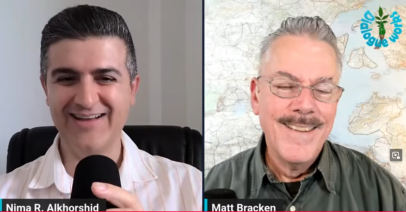
Matt Bracken: Hezbollah Re-Arming With Massive Help From Iran
or go to
Aletho News Archives – Video-Images
From the Archives
Examples of hate speech by Israel against Palestine
1. “There is a huge gap between us (Jews) and our enemies, not just in ability but in morality, culture, sanctity of life, and conscience. They are our neighbors here, but it seems as if at a distance of a few hundred meters away, there are people who do not belong to our continent, to our world, but actually belong to a different galaxy.” Israeli president Moshe Katsav. The Jerusalem Post, May 10, 2001
2. “The Palestinians are like crocodiles, the more you give them meat, they want more”…. Ehud Barak, Prime Minister of Israel at the time – August 28, 2000. Reported in the Jerusalem Post, August 30, 2000
3. ” [The Palestinians are] beasts walking on two legs.” Menahim Begin, speech to the Knesset, quoted in Amnon Kapeliouk, “Begin and the Beasts”. New Statesman, 25 June 1982.
4. “The Palestinians” would be crushed like grasshoppers … heads smashed against the boulders and walls.” Isreali Prime Minister (at the time) in a speech to Jewish settlers New York Times April 1, 1988
5. “When we have settled the land, all the Arabs will be able to do about it will be to scurry around like drugged cockroaches in a bottle.” Raphael Eitan, Chief of Staff of the Israeli Defence Forces, New York Times, 14 April 1983.
6. “How can we return the occupied territories? There is nobody to return them to.” Golda Maier, March 8, 1969.
… Continue
Blog Roll
 Aletho News
- The accession of Ukraine could signal the collapse of the EU
- Italy puts Ukraine weapons package on hold – media
- US kills 5 in Pacific as unproven drug smuggling claims persist
- Iran Respects International Law, US & Israel are Rogue States
- Russia Helping Build a New Middle East /Trita Parsi
- Barghouti: ‘Netanyahu has fallen,’ era of Smotrich, Ben-Gvir over
- China slams US policy on Iran as Russia rejects legality of nuclear meeting at UN
- The Mecca Pact Courts Iran: Containment Comes Full Circle
- Oman FM: Persian Gulf states, Iran, Iraq should form security pact excluding US
- Trump peddles fresh falsehoods, claims Iran ‘started the war’ as US aggression drags on
- If Americans Knew
- An error has occurred; the feed is probably down. Try again later.
- No Tricks Zone
- Sudden Stratospheric Warming, Powerful El Niño Combination May Lead To Extreme Europe Cold, Energy Crisis!
- Two New Studies Find Thwaites Glacier Melt Cannot Be Driven By Human Activity Or A Warming Ocean
- E-Cars Reduce CO2 Emissions By Only 41% Compared To Internal Combustion Engine Vehicles
- Predictions Made By Renowned Climate Professor Over Past Decades Have Been Proven To Be Poor
- New Study Suggests Large Regions Of The Pacific Ocean Have Been Cooling For The Last 80 Years
- Germany’s Green Energy Debacle: High Energy Costs Force Kahla Porzellan to Close After 182 Years!
- New Study: 50 Years Of The Most Aggressive ‘Net Zero’ Policies Can Only Affect The Global Climate By 0.03°C
- US September “Heat” Was No Record…Many Records Set Decades Ago
- Latest European Green Energy Debacle; Portugal’s Largest Flagship Solar Park Insolvent!
- Green Energy Debacle: German Expert Professor Fritz Vahrenholt Warns Of Severe Economic And Social Consequences

