U.S. Troop Deaths in Niger: AFRICOM’s Chickens Come Home to Roost
By Mark P. Fancher | Black Agenda Report | October 18, 2017
From the outset, the U.S. Africa Command (AFRICOM) has incorrectly presumed the stupidity of Africans and others who are concerned about the continent. To answer accusations that the U.S. uses its military to ensure continuing imperialist domination of Africa, AFRICOM has stubbornly insisted that its sole objectives are to advise and support the armies of African government “partners” and to provide humanitarian assistance. But we know the truth to be otherwise.
U.S. Army General Donald Bolduc shamelessly told NBC News: “America is not at war in Africa. But its partner forces are.” But even a soldier can recognize the farce. Former Green Beret Derek Gannon said: “[U.S. military involvement in Africa] is called Low Intensity Irregular Warfare, yet technically it’s not considered war by the Pentagon. But warfare is warfare to me.”
The U.S. maintains two facilities in Africa that qualify as military bases. However, according to NBC the U.S. increased the number of embassy-based military missions called “Offices of Security Cooperation” from nine in 2008 to 36 in 2016. Researchers say the U.S. military now has a presence in at least 49 African countries, presumably to fight terrorism. Even if anti-terrorism were the actual ultimate objective, military.com has pointed out:
“The U.S. has found some of its efforts to fight extremists hobbled by some African governments, whose own security forces are ill-equipped to launch an American-style hunt for the militants yet are reluctant to accept U.S. help because of fears the Americans will overstay their welcome and trample their sovereignty.”
In the face of Africa’s suspicion, the U.S. still sees strategic benefits to extending AFRICOM’s tentacles into every corner of the continent. In one case the Obama Administration sent 100 troops to Niger in 2013 to set up a drone base in a location where the U.S. was already providing aerial refueling assistance to the French. By June of this year, the number of U.S. military personnel in Niger had grown to at least 645, and by now there may be as many as 800 U.S. troops in that country. While the military establishment may believe that ever-deepening engagement of this kind is helpful to U.S. interests, there is a cost. Earlier this month four U.S. soldiers in Niger were killed in a firefight with alleged terrorist forces. According to at least one account:
“On October 5, about 30 Nigerien troops were patrolling in unarmored trucks alongside a dozen U.S. Army soldiers, among them Green Beret special forces. The patrol was coming from a meeting with tribal leaders and came within striking distance of the border between Niger and its war-torn neighbor Mali. The militants rode in on motorcycles and attacked the patrol with rocket-propelled grenades and heavy machine guns, killing eight: four Nigeriens, three Green Berets, and another U.S. soldier whose body wasn’t discovered until two days after the attack.”
Implicit in AFRICOM messaging is that U.S. troops help African soldiers protect helpless Africans from an unwanted “terrorist” presence. However, a CNN report about the ambush in Niger states:
“Some of the soldiers who attended the meeting with local leaders said that they suspected that the villagers were delaying their departure, stalling and keeping them waiting, actions that caused some of them to suspect that the villagers may have been complicit in the ambush…”
Military commanders who intervene in other countries should know that when non-combatant villagers have taken up the cause of any group — regardless of the group’s objectives — a military victory for the interveners is practically hopeless. Nevertheless, “[m]ultiple officials told CNN that the Trump administration is talking to the Nigerien government about a potential imminent U.S. military action to hit back at the militant group that killed the American soldiers.”
Under U.S. law, Congress has the opportunity to arrest any continuing reckless military engagement by Trump. The War Powers Resolution provides that under certain circumstances a President can deploy troops into combat situations, but there are periodic reporting requirements for a President as well as time limits on how long troops can remain engaged in conflicts without a formal declaration of war or specific Congressional authorization. Nevertheless, the Congress has a history of failing to curb U.S. military intervention in other countries, and we should not expect them to do it now. Notwithstanding the deaths in Niger, Africa is not regarded in the minds of Congress or the broader public as a place where the U.S. is at war.
AFRICOM has been confident of its ability to expand the U.S. military presence in Africa while flying below the radar because of its supposed advisory role. Its plan has been to use proxy African soldiers to engage in actual combat without worries of U.S. casualties and the attendant controversies and backlash. But the deaths in Niger represent an unexpected snafu.
While it may be true that on this occasion, the deaths in Niger faded quickly from media focus, and consequently from the attention of the U.S. public, there is good reason to believe there are more deaths to come. Africans are not stupid, but U.S. military officials are if they ignore the possibility that even the most humble African villagers passionately resent an ever-widening presence of U.S. military personnel in their communities. These humble people may lack the wherewithal to effectively demonstrate their hostility, but the recent killings in Niger with the suspected assistance of villagers evidence the possibility that there are forces eager to exploit African anger and confusion about the presence of U.S. troops.
If the death toll of U.S. troops continues to climb and AFRICOM loses its low profile, there should be no surprise in the Pentagon about its chickens coming home to roost.
Mark P. Fancher is an attorney who writes periodically for Black Agenda Report. He can be contacted at mfancher(at)Comcast.net.
Who’s Afraid of Conspiracy Theory?
By Tim Hayward | October 18, 2017
‘Conspiracy theory’ is frequently used as a derogatory term, a term of disdain and implicit criticism. An effect of this is to discourage certain kinds of legitimate critical inquiry. But surely, in a world where conspiracies happen, we need good theories of what exactly is happening. The only people who really have anything to worry about from conspiracy theories are conspirators who stand to be exposed by them. For the rest of us, if someone proposes a far-fetched theory, we are instinctively sceptical; if they propose a theory that accounts for some otherwise unaccountable occurrences, they may be helping us learn something.
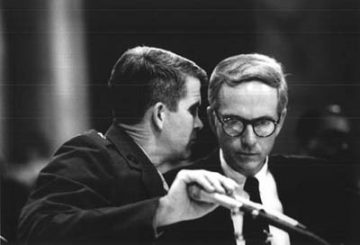
Of course, people can sometimes be misled by conspiracy theories, but people are misled by the beliefs that conspiracy theories challenge too. This betokens a need for careful scrutiny of controversial contentions quite generally. Obviously, a conspiracy theory is only a theory unless there is also proof. But it is one thing to demand the truth of a theory be proven; it is quite another to pronounce that such a theory can never be accepted as true. Unfortunately, even academic critics fail to observe that clear distinction, with some of them going so far as to condemn conspiracy theories in general, pre-emptively.[1]
Yet what are denigrated as ‘conspiracy theories’ are quite often legitimate lines of inquiry pursued in a spirit of critical citizenship, with the aim of holding to account those who exercise otherwise unaccountable power and influence over our lives, including in ways we are not all always aware of.
My argument, then, is that a kind of inquiry that can be intellectually respectable and socially necessary is far too readily sidelined with the categorisation of it as ‘conspiracy theory’. However, since the name has stuck, I propose we should embrace the designation and push back from the sideline to show how it is possible to engage in conspiracy theory using credible methods of research.
The problem that concerns critics, in fact, is a kind of extravagantly speculative activity that involves believing untested hypotheses. This can appropriately be called conspiracism.[2] Conspiracism designates a fallacious mode of reasoning that reduces questions of explanation to posited conspiracies, without properly investigating the evidence. Conspiracists are prone to see conspiracies everywhere, and to believe what they think they see, without giving sufficient consideration to alternative explanations. What is wrong with conspiracism, though, can be specified by reference to standards of inquiry set by good conspiracy theory. So the two things could hardly be more different.
 It is especially important to be aware of the difference, given how it has been effaced in public discussions. Early ideas about a ‘conspiracist mindset’, from Harold Lasswell and Franz Neumann, informed Richard Hofstadter’s influential study of the political pathologies of the ‘paranoid style’ in the 1960s. This association of conspiracy suspicions with irrationality and paranoia was then actively promoted in the United States, especially, and as Lance deHaven Smith notes, ‘the conspiracy-theory label was popularized as a pejorative term by the Central Intelligence Agency (CIA) in a propaganda program initiated in 1967.’[3] The program, created as a response to critical citizens’ questions about the assassination of J F Kennedy, ‘called on media corporations and journalists to criticize “conspiracy theorists” and raise questions about their motives and judgments.’ Its reach has extended greatly since.
Professor Peter Knight of Manchester University, who heads a major international interdisciplinary research network, funded by the European Union, to provide a comprehensive understanding of conspiracy theories, takes it to be a now generally accepted fact that ‘some of the labelling of particular views as “conspiracy theories” is a technique of governmentality.’[4]
So who’s afraid of conspiracy theorists? Is it possible that certain governments want us all to be?
It is interesting to note that Professor Knight thinks that if serious conspiracy theories can sometimes be on the right track, then perhaps what they are finding should not be thought of as conspiracies. For instance, he writes, ‘it is possible that different parts of the labyrinthine U.S. intelligence agencies were involved with some of the 9/11 attackers in contradictory and ambiguous ways that fall short of an actual conspiracy, but which nonetheless undermine the notion of complete American innocence.’ The point is, those contradictions and ambiguities merit study, whatever they are called. Knight’s tantalizing idea of an ‘involvement’ that ‘falls short of an actual conspiracy’ brings to mind of analogous definitional questions that were raised about Bill Clinton’s descriptions of his ‘involvement’ with a White House intern. Good sense suggests that what people are interested to know is what happened, not what someone calls it. Ultimately, the serious conspiracy theorist – or theorist of conspiracies, as Knight puts it – wants to know what is going on, and hypotheses about ‘involvements’ of all kinds can figure in the inquiry.[5]
We should bear in mind too, that the very name of this field was bestowed upon it by those who sought to pre-empt its development. Its actual practitioners might think their activities could be more aptly designated in one or more of a number of other, albeit less catchy, ways, such as, for instance, critical civic investigation, intellectual due diligence, investigative journalism, critical social epistemology, or critical social theory.
Which brings me to my main reason for speaking out in defence of the activity: as citizens we find ourselves increasingly struck by anomalies and inconsistencies in official and mainstream accounts of public affairs, not to mention in matters of foreign policy. But whenever we try to share our concerns in a public forum, there seem to be people there ready to harangue us with put-downs about being crazy conspiracy theorists. The reason why they do this is something I shall reflect on another time.[6] My point for now is that we have been drawn to conspiracy theory for reasons that are very far from crazy.

Notes
[1] There is a marked tendency in certain literatures to take this generalized approach to conspiracy theories. Several philosophers – including David Coady, Charles Pigden, Kurtis Hagen, and Lee Basham – have commented critically on it, with Matthew Dentith, in particular, criticizing the failure of such approaches to consider the possibility of finding merits in particular conspiracy theories. He provides examples of ‘generalist positions which take the beliefs or behaviours of some conspiracy theorists as being indicative of what belief in conspiracy theories generally entails.’ (Matthew Dentith, ‘The Problem of Conspiracism’, Argumenta, [forthcoming in 2017]) An example is Douglas and Sutton who state that ‘in the main conspiracy theories are unproven, often rather fanciful alternatives to mainstream accounts’; they also argue that conspiracy theorists are likely to believe conspiracy theories because they are more likely to sympathise with conspirators. (Karen Douglas and Robbie M. Sutton, (2011) Does it take one to know one? Endorsement of conspiracy theories is influenced by personal willingness to conspire’, Psychology, 50(3), 2011: 544-552.)
[2] On this, I endorse the recent exposition offered by Matthew Dentith (ibid): ‘recent philosophical work has challenged the view that belief in conspiracy theories should be considered as typically irrational. By performing an intra-group analysis of those people we call “conspiracy theorists”, we find that the problematic traits commonly ascribed to the general group of conspiracy theorists turn out to be merely a set of stereotypical behaviours and thought patterns associated with a purported subset of that group. If we understand that the supposed problem of belief in conspiracy theories is centred on the beliefs of this purported subset – the conspiracists – then we can reconcile the recent philosophical contributions to the wider academic debate on the rationality of belief in conspiracy theories.’ He identifies the challenge I am arguing we need to take on: ‘Typically, when we think of conspiracy theorists we do not think of people who theorised about the existence of some particular conspiracy – and went on to support that theory with evidence – like John Dewey (who helped expose the conspiracy behind the Moscow Trials of the 1930s), or Bob Woodward and Carl Bernstein (who uncovered the conspiracy behind who broke in to the Democratic National Committee Headquarters at the Watergate office complex in the 1970s). Instead, we think of the advocates and proponents of weird and wacky conspiracy theories … .’
[3] Lance deHaven Smith, Conspiracy Theory in America, University of Texas Press, 2013: p.21; see also Chapter 4 passim.
[4] Peter Knight, ‘Plotting Future Directions in Conspiracy Theory Research’, in Michael Butter and Maurus Reinkowski, eds, Conspiracy Theories in the Middle East and the United States, Berlin: De Gruyter, 2014: p.347.
[5] ‘Involvements’ amongst people can include any of the typical elements of conspiracy such as collusion, collaboration, conniving, tacitly understanding, secretly agreeing, jointly planning, acquiescing, turning a blind eye, covering up for, bribing, intimidating, blackmailing, misdirecting or silencing, and many other more nuanced kinds of arrangement.
[6] In a third blog of this series I shall be asking ‘Do we face a conspiracy to curtail freedom of expression?’ Meanwhile, the second will be a discussion of ‘Conspiracy theory as civic responsibility’. A full academic paper comprising extended versions of each of these will be available shortly. (And yes, for afficionados who are wondering, there will be a full response to proposals of ‘cognitive infiltration’ to ‘cure’ us. I may even suspend my reputed politeness…)
Looming Hypersonic Arms Race: Unaddressed Problem
By Andrei AKULOV | Strategic Culture Foundation | 18.10.2017
The US programs to create hypervelocity strike systems in combination with ballistic missile defense plans are elements of strategic first strike capability, said Russian Defense Ministry spokesman Alexander Yemelyanov on October 12 during the Russian-Chinese briefing on the sidelines of the first committee of the UN General Assembly.
Prompt Global Strike (PGS) is a United States military effort to develop a system that can deliver a precision-guided conventional weapon airstrike anywhere in the world within one hour. Today, there is no such system in the US inventory but technological advancements have made the notion of gliders and air-breathing vehicles flying at Mach 5 or faster significantly viable. The effort includes the X-15 rocket plane, the Boeing X-51 scramjet, the Hypersonic open Technology Vehicle 2 (HTV-2) program, the Hypersonic Air-breathing Weapon Concept (HAWC), and the Tactical Boost Glide (TBG). In July, the US and Australia concluded secret hypersonic flight series, which involved a Mach-busting missile flying eight times the speed of sound.
According to The Drive, in May 2017, the Defense Advanced Research Projects Agency (DARPA) hired Boeing to build what will likely be a solely rocket-powered hypersonic, reusable spacecraft, known as the XS-1. The Pentagon wants to test this design as a way of rapidly putting satellites into orbit, with an eye toward other roles in the future. The US military’s goal is a space plane that can fly 10 missions in as many days while carrying a 3,000 pound load.
The military is pouring money into hypersonic research but the information is too scarce to make any conclusions about how efficient the programs are. The Trump administration requested $75 million for “hypersonic defense” in its fiscal 2018 budget as part of $7.9 billion overall funding plan for missile defenses. Capable both of maneuvering and of flying faster than 5,000 km/hr, hypersonic weapons could penetrate most missile defenses and to significantly compress the timelines for response by a nation under attack.
A landmark event took place in June. The unmanned subscale hypersonic SR-72 aircraft was reportedly spotted during flight tests in July. The follow-on step would be development of a full-scale, twin-engined SR-72. Program specifics are off limits as the development is a tightly-kept secret. There are few bits of open information that need to be pieced together to give at least the general picture of what it is.
The optionally piloted flight research vehicle (FRV) test is slated for 2018. Development of the FRV is expected to begin next year and first flights could occur as soon as 2020. The aircraft will roughly have the same proportions as its predecessor – the SR-71.
The proposed reconnaissance plane is expected to hit Mach 6 (7,400 kph) thanks to advanced new hypersonic technology. The SR-72 is to use a turbine-based combined cycle (TBCC) system to use a turbine engine at low speeds and a scramjet engine at high speeds. There is a breakthrough in the air-breathing side of hypersonics is the propulsion system to make it capable of outrunning missiles. With this speed, there is no need for stealth technology. The Skunk Works team in Palmdale, California, is doubling down on our commitment to speed,” said Orlando Carvalho, executive vice president of aeronautics at Lockheed Martin, speaking at the SAE International Aerotech Congress and Exhibition. “Simply put, I believe the United States is on the verge of a hypersonics revolution,” he added.
Besides spy missions, the SR-72 will have strike capability. The SR-72 flight testing follows the planned timeline for the hypersonic High Speed Strike Weapon.
To counter the threat, Russia applies efforts not to lag behind in hypervelocity capability. China does the same. Other nations are launching such programs. About 20 countries, including France, Australia, Japan and India, are already involved in the effort. The technology can be shared and exported. As in the case of nuclear weapons, the problem of proliferation comes to the fore.
The US is exploring the way to counter the hypersonic threat. For instance, the National Defense Authorization Act for Fiscal Year 2017 requires the Missile Defense Agency to “serve as executive agent for the Department of Defense for the development of a capability to counter hypersonic boost-glide vehicle capabilities and conventional prompt global strike capabilities that may be employed against the United States, the allies of the United States, and the deployed forces of the United States.” The problem is that air-breathing engine generates a very different signature from a rocket motor, meaning space-based surveillance assets might not be able to spot one as quickly or keep tracking it during flight, or even spot it at all for that matter. Super-fast flying cruise missiles or drones are extremely hard to counter as they are able to fly in more erratic ways well within the atmosphere, or even changing course in mid-flight.
The hypervelocity arms race is going on though very little attention is paid to the fact. The combination of hypersonic strike capability with a missile defense creates a temptation to deliver a first decapitating strike. An added danger is the potential marriage of hypersonic missiles with nuclear weapons. A weapon projectile flying at a hypersonic speed is too much for contemporary scanning surface- and airborne radars to track and process.
Once the technology is there, the race cannot be stopped but it can be controlled. The issue of hypersonic weapons control and non-proliferation is not included in the international agenda but it should be. As key players in the process, the United States, Russia, and China should launch discussions on the control of hypersonic technology capabilities. The existing arms control regime is gradually eroding, while new problems appear that should become a part of international security agenda but they are not. The overall deterioration of relations between the US and Russia, the US and China stands in the way of addressing burning arms control and non-proliferation issues. A looming hypersonic race is certainly one of them.
Busting Upward the Military Budget
By Ivan Eland | Consortium News | October 17, 2017
Although the Senate and House of Representatives have both passed the National Defense Authorization Act for fiscal year 2018 at the gargantuan sum of $700 billion, most of the largesse has little to do with defending the United States and much to do with policing the informal American overseas empire. Thus, at least some trimming to the huge amount is possible.
Of the $700 billion, about $640 billion is the Pentagon’s base budget and another $60 billion dollars is allocated to fight simultaneous wars in Afghanistan, Syria, Iraq and elsewhere. This whopping amount exceeds last year’s $619 billion, thus flouting the “sequestration” spending caps in the 2011 Budget Control Act. Trump and the Republicans want to use budget savings from domestic spending to finance the defense spending increases. However, they will need Democratic votes to break the sequestration caps; the Democrats’ price for doing so is a logrolling that would also require increases in domestic spending.
Yet the Budget Control Act has helped control federal spending, budget deficits, and debt accumulation and should be retained. Apparently, when conservatives tout slimming down government, they don’t seem to think the Defense Department is part of the federal bureaucracy.
The idea is preposterous that a country which alone accounts for about half the world’s defense budget needs more money to keep the readiness of its forces high and to rebuild a military that has been depleted by long, senseless wars in the Middle East and South Asia. The Defense Department is already slathered with over $600 billion a year and just needs to reallocate some of its funds to improve readiness and conduct rebuilding.
Yet members of Congress always propose amendments adding extra weapons systems, such as ships and aircraft, to the budget that the Defense Department doesn’t request. Not coincidentally, all this wasteful and unneeded pork spending just happens to be in these members’ home states. Such pork is a regular occurrence in defense budgeting and explains why the Defense budget is so massive, yet force readiness and equipment depletion remain problems.
Other wasteful spending perennially occurs on stateside military bases that even DoD would like to close, but members of Congress like to keep open because it subsidizes local economies they represent. The Pentagon offered a useful proposal that would have opened another round of base closures to save money. These savings could have been put toward readiness and rebuilding. Both the House and Senate rejected it for the aforementioned parochial reason.
Overseas Bases
To save even more money, the United States should close some overseas bases and decommission military units at those bases. Essentially, the military is like a fleet of expensive sports cars that is short on money for gas, repair, and maintenance. The overseas bases and forces need to be pruned so that the remaining forces at home have enough money for operations and support. With a $20 trillion debt, the United States is overextended in the world; the U.S. half of global defense spending is paid for out less than a quarter of the world’s GDP. Pruning the U.S. overseas footprint will help reduce the overextension.
Another way to save money would be to end unneeded and counterproductive wars in the Middle East and South Asia, which lead to increased blowback anti-U.S. terrorism. Sen. Rand Paul, R- Kentucky, laudably proposed repealing outdated congressional authorizations for the Afghanistan and Iraq Wars, passed in 2001 and 2002. Congress was so scared of the proposal that it didn’t even get a vote.
These two authorizations for the use of force should have been terminated. Going even further, one could question counterproductive (for the same reason as the Afghanistan and Iraq Wars), congressionally unapproved, and therefore unconstitutional air and drone wars in Pakistan, Somalia, Yemen, Syria, and Libya. Lives and even more money could be saved if they were also ended.
Therefore, eliminating pork spending, unneeded and counterproductive wars overseas, and excessive bases and forces at home and around the world could free up more money for military readiness and any post-war rebuilding necessary without ending the sequestration limits on defense spending needed to control budget deficits and debt accumulation, which are dragging the U.S. economy and preventing higher economic growth rates.
Ivan Eland is Senior Fellow and Director of the Center on Peace & Liberty at the Independent Institute.
US politicians propose resolution against UNESCO
MEMO | October 17, 2017
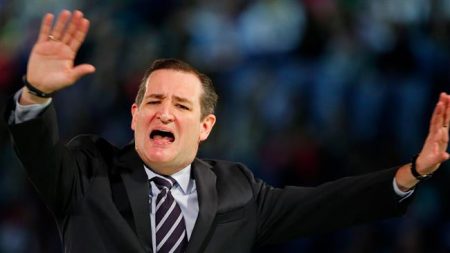
Two Republican politicians have submitted a resolution to Congress condemning UNESCO, days after the US announced that it would be withdrawing from the organisation over its “anti-Israel bias”, according to the Times of Israel.
Senator Ted Cruz and Republican Matt Gaetz authored the resolution last Friday which condemns UNESCO for trying to delegitimise the Jewish state and “recognises and affirms the historical connection of the Jewish people to the ancient and sacred city of Jerusalem”.
Last year, UNESCO voted in favour of a resolution that denied any connection between Al-Aqsa Mosque and Judaism; Israel relies on such a claim in recognising the Muslim holy site as the “Temple Mount”.
“The Jewish people, and the people of Israel, have a deep and ancient connection to the holy city of Jerusalem,” Gaetz claimed. “Yet the United Nations Educational, Scientific and Cultural Organisation (UNESCO) … is actively trying to rewrite history.”
The proposed resolution also calls on the US to partner with its allies in preventing the group from passing similar measures in the future; a sentiment echoed by US ambassador to the UN, Nikki Haley, after the decision to exit was announced last week, when she warned that other UN agencies could face similar action if they did not reform.
Last week, Israel chose to follow the US and prepare for its exit from the international body, but appeared to leave the door open to reconciliation announcing that the change would take at least a year, and would be dependent on UNESCO’s future actions.
In May, UNESCO ruled that Israel is an “occupying power” and condemned illegal Israeli activity in occupied East Jerusalem a month later.
Israelis were angered once again in July following the designation of the Ibrahimi Mosque in occupied Hebron, a site which is stormed regularly by illegal Israeli settlers, as a Palestinian World Heritage Site under threat from Israel.
In response, Israel and the US have cut funding to UNESCO on multiple occasions, accusing it of “anti-Semitism”.
“The Lobby” British Style
An undercover reporter secretly records how the Israeli Embassy directs local groups
By Philip Giraldi • Unz Review • October 17, 2017
One month ago, I initiated here at Unz.com a discussion of the role of American Jews in the crafting of United States foreign policy. I observed that a politically powerful and well-funded cabal consisting of both Jewish individuals and organizations has been effective at engaging the U.S. in a series of wars in the Middle East and North Africa that benefit only Israel and are, in fact, damaging to actual American interests. This misdirection of policy has not taken place because of some misguided belief that Israeli and U.S. national security interests are identical, which is a canard that is frequently floated in the mainstream media. It is instead a deliberate program that studiously misrepresents facts-on-the ground relating to Israel and its neighbors and creates casus belli involving the United States even when no threat to American vital interests exists. It punishes critics by damaging both their careers and reputations while its cynical manipulation of the media and gross corruption of the national political process has already produced the disastrous war against Iraq, the destruction of Libya and the ongoing chaos in Syria. It now threatens to initiate a catastrophic war with Iran.
To be sure, my observations are neither new nor unique. Former Congressmen Paul Findley indicted the careful crafting of a pro-Israel narrative by American Jews in his seminal book They Dare to Speak Out: People and Institutions Confront Israel’s Lobby, written in 1989. Professors John Mearsheimer and Stephen Walt’s groundbreaking book The Israel Lobby and U.S. Foreign Policy said much the same thing nine years ago and discussions of Jewish power do emerge occasionally, even in the mainstream media. In the Jewish media Jewish power is openly discussed and is generally applauded as a well-deserved reward bestowed both by God and by mankind due to the significant accomplishments attributed to Jews throughout history.
There is undeniably a complicated web of relationships and networks that define Israel’s friends. The expression “Israel Lobby” itself has considerable currency, so much so that the expression “The Lobby” is widely used and understood to represent the most powerful foreign policy advocacy group in Washington without needing to include the “Israel” part. That the monstrous Benjamin Netanyahu receives 26 standing ovations from Congress and a wealthy Israel has a guaranteed income from the U.S. Treasury derives directly from the power and money of an easily identifiable cluster of groups and oligarchs – Paul Singer, Sheldon Adelson, Bernard Marcus, Haim Saban – who in turn fund a plethora of foundations and institutes whose principal function is to keep the cash and political support flowing in Israel’s direction. No American national interest, apart from the completely phony contention that Israel is some kind of valuable ally, would justify the taxpayers’ largesse. In reality, Israel is a liability to the United States and always has been.
And I do understand at the same time that a clear majority of American Jews, leaning strongly towards the liberal side of the political spectrum, are supportive of the nuclear agreement with Iran and do not favor a new Middle Eastern war involving that country. I also believe that many American Jews are likely appalled by Israeli behavior, but, unfortunately, there is a tendency on their part to look the other way and neither protest such actions nor support groups like Jewish Voice for Peace that are themselves openly critical of Israel. This de facto gives Israel a free pass and validates its assertion that it represents all Jews since no one important in the diaspora community apart from minority groups which can safely be ignored is pushing back against that claim.
That many groups and well-positioned individuals work hand-in-hand with the Israeli government to advance Israeli interests should not be in dispute after all these years of watching it in action. Several high level Jewish officials, including Richard Perle, associated with the George W. Bush Pentagon, had questionable relationships with Israeli Embassy officials and were only able to receive security clearances after political pressure was applied to “godfather” approvals for them. Former Congressman Tom Lantos and Senator Frank Lautenberg were, respectively, referred to as Israel’s Congressman and Senator, while current Senate Minority Leader Chuck Schumer has described himself as Israel’s “shomer” or guardian in the U.S. Senate.
A recent regulatory decision from the United Kingdom relates to a bit of investigative journalism that sought to reveal precisely how the promotion of Israel by some local diaspora Jews operates, to include how critics are targeted and criticized as well as what is done to destroy their careers and reputations.
 Last year, al-Jazeera Media Network used an undercover reporter to infiltrate some U.K. pro-Israel groups that were working closely with the Israeli Embassy to counter criticisms coming from British citizens regarding the treatment of the Palestinians. In particular, the Embassy and its friends were seeking to counter the growing Boycott, Divestment and Sanctions movement (BDS), which has become increasingly effective in Europe. The four-part documentary released late in 2016 that al-Jazeera produced is well worth watching as it consists mostly of secretly filmed meetings and discussions.
The documentary reveals that local Jewish groups, particularly at universities and within the political parties, do indeed work closely with the Israeli Embassy to promote policies supported by the government of Prime Minister Benjamin Netanyahu. It also confirms that tagging someone as an anti-Semite has become the principal offensive weapon used to stifle any discussion, particularly in a country like Britain which embraces concepts like the criminalization of “hate speech.” At one point, two British Jews discussed whether “being made to feel uncomfortable” by people asking what Israel intends to do with the Palestinians is anti-Semitic. They agreed that it might be.
The documentary also describes how the Embassy and local groups working together targeted government officials who were not considered to be friendly to Israel to “be taken down,” removed from office or otherwise discredited. One government official in particular who was to be attacked was Foreign Office Minister Sir Alan Duncan.
Britain, unlike the U.S., has a powerful regulatory agency that oversees communications, to include the media. It is referred to as Ofcom. When the al-Jazeera documentary was broadcast, Israeli Embassy political officer Shai Masot, who reportedly was a Ministry of Strategic Affairs official working under cover, was forced to resign and the Israeli Ambassador offered an apology. Masot was filmed discussing British politicians who might be “taken down” before speaking with a government official who plotted a “a little scandal” to bring about the downfall of Duncan. Labour Party leader Jeremy Corbyn, who is the first head of a political party in Britain to express pro-Palestinian views, had called for an investigation of Masot after the recording of the “take down” demand relating to Duncan was revealed. Several Jewish groups (the Jewish Labour Movement, the Union of Jewish Students and We Believe in Israel) then counterattacked with a complaint that the documentary had violated British broadcast regulations, including the specific charge that the undercover investigation was anti-Semitic in nature.
On October 9th, Ofcom ruled in favor of al-Jazeera, stating that its investigation had done nothing improper, but it should be noted that the media outlet had to jump through numerous hoops to arrive at the successful conclusion. It had to turn over all its raw footage and communications to the investigators, undergoing what one source described as an “editorial colonoscopy,” to prove that its documentary was “factually accurate” and that it had not “unfairly edited” or “with bias” prepared its story. One of plaintiffs, who had called for critics of Israel to “die in a hole” and had personally offered to “take down” a Labour Party official, responded bitterly. She said that the Ofcom judgment would serve as a “precedent for the infringement of privacy of any Jewish person involved in public life.”
The United States does not yet have a government agency to regulate news stories, though that may be coming, but the British tale has an interesting post script. Al-Jazeera also had a second undercover reporter inserted in the Israel Lobby in the United States, apparently a British intern named James Anthony Kleinfeld, who had volunteered his services to The Israel Project, which is involved in promoting Israel’s global image. He also had contact with at least ten other Jewish organizations and with officials at the Israeli Embassy,
Now that the British account of “The Lobby” has cleared a regulatory hurdle the American version will reportedly soon be released. Al-Jazeera’s head of investigative reporting Clayton Swisher commented “With this U.K. verdict and vindication past us, we can soon reveal how the Israel lobby in America works through the eyes of an undercover reporter. I hear the U.S. is having problems with foreign interference these days, so I see no reason why the U.S. establishment won’t take our findings in America as seriously as the British did, unless of course Israel is somehow off limits from that debate.”
Americans who follow such matters already know that groups like the American Israel Public Affairs Committee (AIPAC) swarm over Capitol Hill and have accomplices in nearly every media outlet. Back in 2005-6 AIPAC Officials Steve Rosen and Keith Weissman were actually tried under the Espionage Act of 1918 in a case involving obtaining classified intelligence from government official Lawrence Franklin to pass on to the Israeli Embassy. Rosen had once boasted that, representing AIPAC and Israel, he could get the signatures of 70 senators on a napkin agreeing to anything if he sought to do so. The charges against the two men were, unfortunately, eventually dropped “because court rulings had made the case unwinnable and the trial would disclose classified information.”
And Israeli interference in U.S. government and elections is also a given. Endorsement of Mitt Romney in the 2012 presidential election by the Netanyahu government was more-or-less carried out in the open. And ask Congressmen like Paul Findley, Pete McCloskey, William Fulbright, Charles Percy and, most recently, Cynthia McKinney, what happens to your career when you appear to be critical of Israel. And the point is that while Israel calls the shots in terms of what it wants, it is a cabal of diaspora American Jews who actually pull the trigger. With that in mind, it will be very interesting to watch the al-Jazeera documentary on The Lobby in America.
Is War with Iran Now Inevitable?
By Pat Buchanan • Unz Review • October 17, 2017
With his declaration Friday that the Iran nuclear deal is not in the national interest, President Donald Trump may have put us on the road to war with Iran.
Indeed, it is easier to see the collisions that are coming than to see how we get off this road before the shooting starts.
After “de-certifying” the nuclear agreement, signed by all five permanent members of the Security Council, Trump gave Congress 60 days to reimpose the sanctions that it lifted when Teheran signed.
If Congress does not reimpose those sanctions and kill the deal, Trump threatens to kill it himself.
Why? Did Iran violate the terms of the agreement? Almost no one argues that — not the UN nuclear inspectors, not our NATO allies, not even Trump’s national security team.
Iran shipped all its 20 percent enriched uranium out of the country, shut down most of its centrifuges, and allowed intrusive inspections of all nuclear facilities. Even before the deal, 17 U.S. intelligence agencies said they could find no evidence of an Iranian nuclear bomb program.
Indeed, if Iran wanted a bomb, Iran would have had a bomb.
She remains a non-nuclear-weapons state for a simple reason: Iran’s vital national interests dictate that she remain so.
As the largest Shiite nation with 80 million people, among the most advanced in the Mideast, Iran is predestined to become the preeminent power in the Persian Gulf. But on one condition: She avoid the great war with the United States that Saddam Hussein failed to avoid.
Iran shut down any bomb program it had because it does not want to share Iraq’s fate of being smashed and broken apart into Persians, Azeris, Arabs, Kurds and Baluch, as Iraq was broken apart by the Americans into Sunni, Shiite, Turkmen, Yazidis and Kurds.
Tehran does not want war with us. It is the War Party in Washington and its Middle East allies — Bibi Netanyahu and the Saudi royals — who hunger to have the United States come over and smash Iran.
Thus, the Congressional battle to kill, or not to kill, the Iran nuclear deal shapes up as decisive in the Trump presidency.
Yet, even earlier collisions with Iran may be at hand.
In Syria’s east, U.S.-backed and Kurd-led Syrian Democratic Forces are about to take Raqqa. But as we are annihilating ISIS in its capital, the Syrian army is driving to capture Deir Ezzor, capital of the province that sits astride the road from Baghdad to Damascus.
Its capture by Bashar Assad’s army would ensure that the road from Baghdad to Damascus to Hezbollah in Lebanon remains open.
If the U.S. intends to use the SDF to seize the border area, we could find ourselves in a battle with the Syrian army, Shiite militia, the Iranians, and perhaps even the Russians.
Are we up for that?
In Iraq, the national army is moving on oil-rich Kirkuk province and its capital city. The Kurds captured Kirkuk after the Iraqi army fled from the ISIS invasion. Why is a U.S.-trained Iraqi army moving against a U.S.-trained Kurdish army?
The Kurdistan Regional Government voted last month to secede. This raised alarms in Turkey and Iran, as well as Baghdad. An independent Kurdistan could serve as a magnet to Kurds in both those countries.
Baghdad’s army is moving on Kirkuk to prevent its amputation from Iraq in any civil war of secession by the Kurds.
Where does Iran stand in all of this?
In the war against ISIS, they were de facto allies. For ISIS, like al-Qaida, is Sunni and hates Shiites as much as it hates Christians. But if the U.S. intends to use the SDF to capture the Iraqi-Syrian border, Syria, Iran, Hezbollah and Russia could all be aligned against us.
Are we ready for such a clash?
We Americans are coming face to face with some new realities.
The people who are going to decide the future of the Middle East are the people who live there. And among these people, the future will be determined by those most willing to fight, bleed and die for years and in considerable numbers to realize that future.
We Americans, however, are not going to send another army to occupy another country, as we did Kuwait in 1991, Afghanistan in 2001, and Iraq in 2003.
Bashar Assad, his army and air force backed by Vladimir Putin’s air power, the Islamic Revolutionary Guard Corps of Iran, and Hezbollah won the Syrian civil war because they were more willing to fight and die to win it. And, truth be told, all had far larger stakes there than did we.
We do not live there. Few Americans are aware of what is going on there. Even fewer care.
Our erstwhile allies in the Middle East naturally want us to fight their 21st-century wars, as the Brits got us to help fight their 20th-century wars.
But Donald Trump was not elected to do that. Or so at least some of us thought.
Coyright 2017 Creators.com.
Hillary Clinton Calls Alleged Russian Interference in Election ‘Cyber 9/11’

Sputnik – 16.10.2017
Former US Presidential candidate Hillary Clinton has referred to the alleged interference of Russian actors into the 2016 election that she lost to Donald Trump as a “cyber 9/11.”
In an interview with BuzzFeed News (whose most significant contribution to Russia Gate was publishing a dossier filled with scandalous and uncorroborated claims of Trump watching Russian sex workers pee on beds,) Hillary compared the alleged hacking to a savage terrorist attack that killed thousands of civilians.
“We had really well-respected security, intelligence veterans saying this was a cyber 9/11, in the sense it was a direct attack on our institutions,” said Clinton. “That may sound dramatic, but we know that they probed and tried to intrude into election systems — not just the social media propaganda part of their campaign.”
She didn’t explain how this interference, if it’s even real, was somehow comparable to the fiery and tragic deaths of thousands of innocent people.
The “election systems” comment is a seeming reference to the FBI warning 21 states that “bad actors” may be targeting their election systems prior to the election. Several states performed independent investigations and found no evidence of tampering with their voting systems. Four states reported that someone stole the information of some of their voters — but did not change or manipulate any data.
In other words, while there are unanswered questions about the election systems, there is no proof besides the FBI’s claim that Russian hackers tried to rig the US election in Trump’s favor by meddling with election systems.
Clinton added that the Russians are “not done,” and the “ongoing threat” of Russian interference is something she would have gotten “to the bottom of” if she had been elected president.
“[Russian President Vladimir Putin] believes that [undermining NATO and the EU] will then give Russia a real chance to be dominant, certainly in Europe and certainly along its borders,” she added. “And that the United States, which he views as his primary adversary, will be weakened.”
Clinton went on to say that Putin sought to weaken the US by dividing the American people from within. “He got some of what he was looking for. He hasn’t gotten everything. But keep an eye on him, because he’s not done.”
Hillary is one to talk about dividing the American people. Since her loss in 2016, she has blamed her loss on sexist men and self-hating women, on more popular Democrats like Barack Obama and Bernie Sanders, on former FBI Director James Comey, on the people who didn’t vote for her being stupid or emotional or bigoted or paranoid, on the Republican Party’s voter suppression and the Democratic Party’s incompetence, on the mainstream media (which gave Clinton favorable coverage) and on campaign finance laws (when Clinton raised around twice as much money as Trump and still managed to lose.) And that’s only a partial list.
DEA, Congress complicit in US opioid epidemic – whistleblowers
RT | October 16, 2017
The US Drug Enforcement Administration ‘shut off’ investigations into large distributors of addictive opioid pills, while a new law made it nearly impossible to prosecute them, the agency’s former employees said.
During the Obama administration, the drug industry used their money and influence to pressure top lawyers at the DEA to take a softer approach to investigating large distributors of opioid pills, even when there was ample evidence of suspicious dealings, Joe Rannazzisi, former head of the DEA’s Office of Diversion Control, told CBS’ 60 Minutes program.
Rannazzisi accused America’s largest painkiller distributors, including Cardinal Health, McKesson, and AmerisourceBergen, of “knowingly” turning a blind eye to the addictive pills being diverted to illicit use.
Former attorney at the DEA Jonathan Novak told CBS that in 2013 he also noticed a sea change in the way prosecutions of big distributors were handled, as his supervisors turned down cases they would have once easily approved. The DEA operates under the Department of Justice.
“These were not cases where it was black – where it was grey… These were cases where the evidence was crystal clear that there was wrongdoing going on,” Novak said.
Jim Geldhof, another former DEA investigator, told the program about a West Virginia case he was looking into where 11 million pills wound up in one of its counties with a population of just 25,000. He said he suddenly ran into roadblocks from one DEA supervisor.
“Every time I talked to this guy he wants something else. And I get it for him and that’s still not good enough,” Geldhof said. “And this goes on and on and on. When these roadblocks keep get thrown up in your face, at that point you know they just don’t want the case.”
“There was a lotta pills, a lotta people dying, and and we had tools in our toolbox to try to use and stem that flow. But it seemed down in headquarters that that toolbox was shut off,” said another former DEA official, Frank Younker.
The ex-employees said one of the reasons for the roadblocks was the “revolving door” between the DEA and the drug industry, as a number of the administration’s top lawyers landed lobbying jobs for the pharmaceutical companies and drug distributors upon leaving the government.
One such former DEA attorney wrote legislation which “made it all but impossible” to prosecute unscrupulous distributors, according to DEA chief administrative law judge, John J. Mulrooney.
The bill, called Ensuring Patient Access and Effective Drug Enforcement Act, was signed into law by president Obama last year, after it was passed by both chambers of Congress. Critics say it effectively stripped the DEA of its authority to investigate suspicious transactions as the government is now required to meet a higher standard before taking enforcement actions.
After Rannazzisi accused the bill’s co-sponsors Tom Marino (R-Pennsylvania) and Marsha Blackburn (R-Tennessee) of protecting distributors under his investigation, the lawmakers wrote the inspector general for the Justice Department, demanding that Rannazzisi be investigated for trying to “intimidate the United States Congress.”
Soon after, Rannazzisi was stripped of his responsibilities. He told CBS he went from supervising 600 people to supervising none – so he resigned.
Seven months after the bill became law, Marino’s chief of staff Bill Tighe became a lobbyist for the National Association of Chain Drug Stores.
Last month, President Donald Trump nominated Marino to lead the Office of National Drug Control Policy. In the wake of the 60 Minute investigation, some congressional Democrats called on the president to withdraw his nomination
Acting DEA chief Chuck Rosenberg, who led the agency under President Barack Obama, resigned at the end of September, reportedly over disagreements with Trump’s policies.
Prescription painkillers have stoked the epidemic of opioid overdoses and addictions across the US.
In August, Trump declared the opioid epidemic a national emergency after his Commission on Combating Drug Addiction and the Opioid Crisis reported that the US faces the death toll equal to “September 11th every three weeks” as the epidemic claims the lives of up to 142 Americans every day.
“60,000 Americans lost their lives to drug overdoses” in 2016, Attorney General Jeff Sessions said later that month.
“That will be the highest drug death toll and the fastest increase in that death toll in American history,” Session stated, adding that “this is not a sustainable trend nor an acceptable America.”
“80 percent of heroin addictions in America started with prescription drug addiction,” Sessions added, saying that the abuse of prescription drugs needs to be stopped.
Tossing bribery charges against Sen. Menendez to ‘decriminalize corruption’
Press TV – October 16, 2017
Prosecutors warn that tossing bribery charges against US Senator Robert Menendez – as being considered by a federal judge—would “decriminalize corruption” and “jettison the vast majority of bribery prosecutions.”
US District Judge William Walls suggested last week that the Justice Department’s bribery charges against Menendez may not move forward based on his reading of a 2016 Supreme Court opinion overturning the conviction of former Virginia Governor Bob McDonnell.
McDonnell had been convicted of corruption charges for taking gifts from a businessman in exchange for arranging a meeting between him and state officials.
In that ruling, the top court invalidated the “stream of benefits” theory of bribery that prosecutors have used to make legal cases against Menendez and other public officials.
“I know the prosecution had a heyday before McDonnell, and now they have a doomsday after McDonnell,” Walls said.
Federal prosecutors allege that Menendez accepted bribes from his co-defendant Salomon Melgen, a Florida ophthalmologist and longtime friend, in anticipation for the senator’s help “as opportunities arose” in the future.
Melgen has already been convicted in Florida for overbilling the Medicare program by millions of dollars, and faces a potentially lengthy prison sentence.
Prosecutors allege that Menendez intervened with federal agencies on Melgen’s behalf to resolve the billing dispute, to assist a $500 million port security contract, and to obtain US visas for Melgen’s girlfriends.
Menendez and Melgan have both denied the charges, with their attorneys arguing that what prosecutors call bribes were gifts exchanged between friends.
The high-profile case resumes Monday.
Both the Justice Department of defense attorneys filed motions during the weekend to bolster their arguments.
Prosecutors wrote that to dismiss charges against Menendez “would decriminalize the most egregious forms of corruption, incentivizing greedy businessmen to put politicians on retainer and immunizing lawmakers who solicit bribes in exchange for a promise to perform official acts.”
“The Supreme Court did not, and this Court should not, render a decision that has the unsettling effect of legalizing all such conduct.”
In total, the New Jersey Democrat faces six counts of bribery, three counts of honest services fraud, one count of conspiracy, one count of interstate travel to carry out bribery, and one count of making false statements on his congressional financial disclosures.
Featured Video

Daniel Davis: Trump’s New Iran Land Blockade Is a Dangerous Fantasy
or go to
Aletho News Archives – Video-Images
New Book
The Vaccine Mafia: Pfizer’s Former Chief Toxicologist Proves How Toxic Substances Were Unlawfully Sold to Us as a Solution for COVID-19
By Helmut Sterz
Former Pfizer chief toxicologist Helmut Sterz presents a critical examination of the development, approval, and global rollout of mRNA COVID-19 vaccines—particularly those produced by Pfizer/BioNTech. The Vaccine Mafia details the failure of pharmaceutical companies, regulatory authorities, politicians, and international organizations to follow established scientific and ethical standards during the pandemic. Drawing on the author’s decades of experience in pharmaceutical toxicology, Sterz reveals the many ways the vaccines’ inadequate or omitted preclinical safety testing put the world’s population at risk.
Sterz demonstrates how “emergency” approvals allowed manufacturers to bypass long-standing international guidelines governing toxicity testing, especially with regard to reproductive and cancer risks. They also allowed governments and health authorities to ignore or conceal evidence of serious adverse effects that occurred, including myocarditis, reproductive harm, and other long-term health risks.
Blog Roll
 Aletho News
- German CDU MPs Seek Climate “Misinformation” List
- The ‘Gaza Treatment’: How Media Headlines Obscure Who is Bombing Yemen
- Ro Khanna urges Democrats to strip Israel ‘integration’ provision from defense bill
- Why Iran designated British MI6, Royal Navy, and RAF as hostile, terrorist organizations
- Armenian opposition politician dies in custody
- US still trying to recycle failed hypersonic missile programs
- France’s ‘Cold War’: Paris blames Tehran for supermarket fridge hacks
- Psywar no more? 77th Brigade’s sudden death
- Ukraine Already Carved Up… Before Talks Begin? /Prof. Richard Sakwa
- The vindication of Marjorie Taylor Greene
- If Americans Knew
- An error has occurred; the feed is probably down. Try again later.
- No Tricks Zone
- German Authorities Start Initiative To Evaluate Public Register For Climate “Disinformation” Spreaders!
- Zonal Asymmetry of Temperature Change in the Antarctic Circumpolar Current
- New Study: The Net Fossil Fuel Contribution To Rising Atmospheric CO2 Has Been Zero For 500 Years
- Germany’s Green Energy Transition Becoming Increasingly Expensive…Another 6 Trillion Euros!
- Sudden Stratospheric Warming, Powerful El Niño Combination May Lead To Extreme Europe Cold, Energy Crisis!
- Two New Studies Find Thwaites Glacier Melt Cannot Be Driven By Human Activity Or A Warming Ocean
- E-Cars Reduce CO2 Emissions By Only 41% Compared To Internal Combustion Engine Vehicles
- Predictions Made By Renowned Climate Professor Over Past Decades Have Been Proven To Be Poor
- New Study Suggests Large Regions Of The Pacific Ocean Have Been Cooling For The Last 80 Years
- Germany’s Green Energy Debacle: High Energy Costs Force Kahla Porzellan to Close After 182 Years!

