The US ambassador to the UN, Nikki Haley, has raised the stakes in Washington’s war of words against Russia, describing its unproven “meddling” in the 2016 election as “warfare,” just as the head of the CIA said it had no effect on the vote.
Residents in a Houston suburb will not receive funds donated for Hurricane Harvey relief efforts if they support boycotting Israel, according to a funding application form issued in the wake of the devastating storm.
The city of Dickinson, Texas, told individuals and businesses on Monday that they are now accepting applications for “grants from the fund generously donated to the Dickinson Harvey Relief Fund” for storm damage repair.
In order to apply for the grant, however, applicants must agree to a number of clauses, one of which is asserting that they do not boycott Israel.
“By executing this Agreement below, the Applicant verifies that the Applicant: (1) does not boycott Israel; and (2) will not boycott Israel during the term of this Agreement,” read the application form.
The American Civil Liberties Union (ACLU) criticized the city’s condition as a violation of free speech rights.
“Dickinson’s requirement is an egregious violation of the First Amendment, reminiscent of McCarthy-era loyalty oaths requiring Americans to disavow membership in the Communist party and other forms of ‘subversive’ activity,” said ACLU of Texas Legal Director Andre Segura.
The clause likely stems from a Texas law passed in May that requires all state contractors to certify that they are not participating in boycotts of Israel.
“As Israel’s No. 1 trading partner in the United States, Texas is proud to reaffirm its support for the people of Israel and we will continue to build on our historic partnership… Anti-Israel policies are anti-Texas policies, and we will not tolerate such actions against an important ally,” said Governor Greg Abbott at the signing ceremony.
Dickinson is one of the hardest hit towns in the Houston area, according to a September report from KTRK. Some 7,000 homes and 88 businesses were seriously damaged, said the local police department. The small town is home to just 20,000 people.
RT.com has reached out to representatives of the City of Dickinson for comment.
On 16 October, the Australian Broadcasting Corporation aired an interview with Hillary Clinton: one of many to promote her score-settling book about why she was not elected President of the United States.
Wading through the Clinton book, What Happened, is an unpleasant experience, like a stomach upset. Smears and tears. Threats and enemies. “They” (voters) were brainwashed and herded against her by the odious Donald Trump in cahoots with sinister Slavs sent from the great darkness known as Russia, assisted by an Australian “nihilist”, Julian Assange.
In TheNew York Times, there was a striking photograph of a female reporter consoling Clinton, having just interviewed her. The lost leader was, above all, “absolutely a feminist”. The thousands of women’s lives this “feminist” destroyed while in government — Libya, Syria, Honduras — were of no interest.
In New York magazine, Rebecca Traister wrote that Clinton was finally “expressing some righteous anger”. It was even hard for her to smile: “so hard that the muscles in her face ache”. Surely, she concluded, “if we allowed women’s resentments the same bearing we allow men’s grudges, America would be forced to reckon with the fact that all these angry women might just have a point”.
Drivel such as this, trivialising women’s struggles, marks the media hagiographies of Hillary Clinton. Her political extremism and warmongering are of no consequence. Her problem, wrote Traister, was a “damaging infatuation with the email story”. The truth, in other words.
The leaked emails of Clinton’s campaign manager, John Podesta, revealed a direct connection between Clinton and the foundation and funding of organised jihadism in the Middle East and Islamic State (IS). The ultimate source of most Islamic terrorism, Saudi Arabia, was central to her career.
One email, in 2014, sent by Clinton to Podesta soon after she stepped down as US Secretary of State, discloses that Islamic State is funded by the governments of Saudi Arabia and Qatar. Clinton accepted huge donations from both governments for the Clinton Foundation.
As Secretary of State, she approved the world’s biggest ever arms sale to her benefactors in Saudi Arabia, worth more than $80 billion. Thanks to her, US arms sales to the world – for use in stricken countries like Yemen – doubled.
This was revealed by WikiLeaks and published by TheNew York Times. No one doubts the emails are authentic. The subsequent campaign to smear WikiLeaks and its editor-in-chief, Julian Assange, as “agents of Russia”, has grown into a spectacular fantasy known as “Russiagate”. The “plot” is said to have been signed off by Vladimir Putin himself. There is not a shred of evidence.
The ABC Australia interview with Clinton is an outstanding example of smear and censorship by omission. I would say it is a model.
“No one,” the interviewer, Sarah Ferguson, says to Clinton, “could fail to be moved by the pain on your face at that moment [of the inauguration of Trump] … Do you remember how visceral it was for you?”
Having established Clinton’s visceral suffering, Ferguson asks about “Russia’s role”.
CLINTON: I think Russia affected the perceptions and views of millions of voters, we now know. I think that their intention coming from the very top with Putin was to hurt me and to help Trump.
FERGUSON: How much of that was a personal vendetta by Vladimir Putin against you?
CLINTON: … I mean he wants to destabilise democracy. He wants to undermine America, he wants to go after the Atlantic Alliance and we consider Australia kind of a … an extension of that …
The opposite is true. It is Western armies that are massing on Russia’s border for the first time since the Russian Revolution 100 years ago.
FERGUSON: How much damage did [Julian Assange] do personally to you?
CLINTON: Well, I had a lot of history with him because I was Secretary of State when ah WikiLeaks published a lot of very sensitive ah information from our State Department and our Defence Department.
What Clinton fails to say – and her interviewer fails to remind her — is that in 2010, WikiLeaks revealed that Secretary of State Hillary Clinton had ordered a secret intelligence campaign targeted at the United Nations leadership, including the Secretary General, Ban Ki-moon and the permanent Security Council representatives from China, Russia, France and the UK.
A classified directive, signed by Clinton, was issued to US diplomats in July 2009, demanding forensic technical details about the communications systems used by top UN officials, including passwords and personal encryption keys used in private and commercial networks.
This was known as Cablegate. It was lawless spying.
CLINTON: He [Assange] is very clearly a tool of Russian intelligence. And ah, he has done their bidding.
Clinton offered no evidence to back up this serious accusation, nor did Ferguson challenge her.
CLINTON: You don’t see damaging negative information coming out about the Kremlin on WikiLeaks. You didn’t see any of that published.
This was false. WikiLeaks has published a massive number of documents on Russia – more than 800,000, most of them critical, many of them used in books and as evidence in court cases.
CLINTON: So I think Assange has become a kind of nihilistic opportunist who does the bidding of a dictator.
FERGUSON: Lots of people, including in Australia, think that Assange is a martyr for free speech and freedom of information. How would you describe him? Well, you’ve just described him as a nihilist.
CLINTON: Yeah, well, and a tool. I mean he’s a tool of Russian intelligence. And if he’s such a, you know, martyr of free speech, why doesn’t WikiLeaks ever publish anything coming out of Russia?
Again, Ferguson said nothing to challenge this or correct her.
CLINTON: There was a concerted operation between WikiLeaks and Russia and most likely people in the United States to weaponise that information, to make up stories … to help Trump.
FERGUSON: Now, along with some of those outlandish stories, there was information that was revealed about the Clinton Foundation that at least in some of the voters’ minds seemed to associate you ….
CLINTON: Yeah, but it was false!
FERGUSON: … with the peddling of information …
CLINTON: It was false! It was totally false! …..
FERGUSON: Do you understand how difficult it was for some voters to understand the amounts of money that the [Clinton] Foundation is raising, the confusion with the consultancy that was also raising money, getting gifts and travel and so on for Bill Clinton that even Chelsea had some issues with? …
CLINTON: Well you know, I’m sorry, Sarah, I mean I, I know the facts ….
The ABC interviewer lauded Clinton as “the icon of your generation”. She asked her nothing about the enormous sums she creamed off from Wall Street, such as the $675,000 she received for one speech at Goldman Sachs, one of the banks at the centre of the 2008 crash. Clinton’s greed deeply upset the kind of voters she abused as “deplorables”.
Clearly looking for a cheap headline in the Australian press, Ferguson asked her if Trump was “a clear and present danger to Australia” and got her predictable response.
This high-profile journalist made no mention of Clinton’s own “clear and present danger” to the people of Iran whom she once threatened to “obliterate totally”, and the 40,000 Libyans who died in the attack on Libya in 2011 that Clinton orchestrated. Flushed with excitement, the Secretary of State rejoiced at the gruesome murder of the Libyan leader, Colonel Gaddafi.
“Libya was Hillary Clinton’s war”, Julian Assange said in a filmed interview with me last year. “Barack Obama initially opposed it. Who was the person championing it? Hillary Clinton. That’s documented throughout her emails … there’s more than 1700 emails out of the 33,000 Hillary Clinton emails that we’ve published, just about Libya. It’s not that Libya has cheap oil. She perceived the removal of Gaddafi and the overthrow of the Libyan state — something that she would use in her run-up to the general election for President.
“So in late 2011 there is an internal document called the Libya Tick Tock that was produced for Hillary Clinton, and it’s the chronological description of how she was the central figure in the destruction of the Libyan state, which resulted in around 40,000 deaths within Libya; jihadists moved in, ISIS moved in, leading to the European refugee and migrant crisis.
“Not only did you have people fleeing Libya, people fleeing Syria, the destabilisation of other African countries as a result of arms flows, but the Libyan state itself was no longer able to control the movement of people through it.”
This – not Clinton’s “visceral” pain in losing to Trump nor the rest of the self-serving scuttlebutt in her ABC interview — was the story. Clinton shared responsibility for massively de-stabilising the Middle East, which led to the death, suffering and flight of thousands of women, men and children.
Ferguson raised not a word of it. Clinton repeatedly defamed Assange, who was neither defended nor offered a right of reply on his own country’s state broadcaster.
In a tweet from London, Assange cited the ABC’s own Code of Practice, which states: “Where allegations are made about a person or organisation, make reasonable efforts in the circumstances to provide a fair opportunity to respond.”
Following the ABC broadcast, Ferguson’s executive producer, Sally Neighbour, re-tweeted the following: “Assange is Putin’s bitch. We all know it!”
The slander, since deleted, was even used as a link to the ABC interview captioned ‘Assange is Putins (sic) b****. We all know it!’
In the years I have known Julian Assange, I have watched a vituperative personal campaign try to stop him and WikiLeaks. It has been a frontal assault on whistleblowing, on free speech and free journalism, all of which are now under sustained attack from governments and corporate internet controllers.
The first serious attacks on Assange came from the Guardian which, like a spurned lover, turned on its besieged former source, having hugely profited from WikiLeaks’ disclosures. With not a penny going to Assange or WikiLeaks, a Guardian book led to a lucrative Hollywood movie deal. Assange was portrayed as “callous” and a “damaged personality”.
It was as if a rampant jealousy could not accept that his remarkable achievements stood in marked contrast to that of his detractors in the “mainstream” media. It is like watching the guardians of the status quo, regardless of age, struggling to silence real dissent and prevent the emergence of the new and hopeful.
Today, Assange remains a political refugee from the war-making dark state of which Donald Trump is a caricature and Hillary Clinton the embodiment. His resilience and courage are astonishing. Unlike him, his tormentors are cowards.
America’s military presence has been the cause of protests in many countries where US troops are stationed – among them Japan, South Korea and Germany. But besides problems with the allies, maintaining military infrastructure overseas is a heavy burden for US taxpayers, costing them billions of dollars annually.
At the turn of the millennium, the United States went on a massive military spending binge. According to the 2010 report “Debt, Deficits & Defense”, within several years of 9/11, the budget of the Department of Defense grew by 119%. Barack Obama and his predecessor George W. Bush were ruling a nation which was fighting wars in Iraq and Afghanistan, but even with war costs subtracted, the increase was at 68%, which is 13% more than the sum allocated for health and human services.
Pentagon’s global military presence has always been a costly affair. David Vine is the author of the book “Base Nation: How U.S. Military Bases Abroad Harm America and the World”. In his 2015 New York Times Op-Ed he wrote that the US taxpayers spent 10 to 40 thousand dollars a year more for each service member stationed abroad, compared with those at home.
Even though Barack Obama promised to withdraw American troops from the conflict zones, the process of closing US overseas military facilities looked like a shell game. While some bases, like the ones in Europe, were closed, Uncle Sam spent billions building new military infrastructure in other locations, such as the Persian Gulf and Asia Pacific.Ron Paul – a former US congressman and the founder of the Ron Paul Peace Institute – addressed the wasteful military spending in one of his columns in November of 2016, saying that military expenses should not be confused with the defense budget. While defense expenses are vital, military spending, according to Paul, is the money spent not to defend the United States, but “to enrich the military-industrial complex, benefit special interests, regime-change countries overseas.” In his article, the former politician wrote that some activities of the US military and intelligence services abroad may lead to the country’s economic collapse:
“Do we really need 800 US military bases in more than 70 countries overseas? Do we need to continue to serve as the military protection force for our wealthy NATO partners even though they are more than capable of defending themselves? Do we need our CIA to continue to provoke revolutions like in Ukraine or armed insurgencies like in Syria? If the answer to these questions is “yes,” then I am afraid we should prepare for economic collapse in very short order.”
Donald Trump shared the same concerns about America’s NATO allies, when he called the organization obsolete during his campaign. Trump upheld some of his criticism during the 2017 NATO summit in Brussels when he called on the wealthy organization members to increase their defense spending.
However, it seems that Trump’s words have fallen on deaf ears. Germany still spends just 1.26% of its GDP on defense (which is much less than the 2% pledge made by NATO member states in 2014), so paying for the maintenance of the large military facilities, such as Ramstein Airforce Base, which also hosts NATO Allied Air Command, is a heavy burden for America’s taxpayers.
In 2015, David Vine estimated that the annual price for maintaining US military facilities and troops abroad was about $85 billion. He wrote that closing down foreign and domestic military facilities will contribute to improving the country’s financial and physical security.
However, with Donald Trump’s recent proposals to increase military spending, it seems that the chances of seeing major changes in the US global military presence strategy in the near future are slim.
Back in October of 2016, I wrote a somewhat divisive essay in which I suggested that political dissent is being systematically pathologized. In fact, this process has been ongoing for decades, but it has been significantly accelerated since the Brexit referendum and the Rise of Trump (or, rather, the Fall of Hillary Clinton, as it was Americans’ lack of enthusiasm for eight more years of corporatocracy with a sugar coating of identity politics, and not their enthusiasm for Trump, that mostly put the clown in office.)
In the twelve months since I wrote that piece, we have been subjected to a concerted campaign of corporate media propaganda for which there is no historical precedent. Virtually every major organ of the Western media apparatus (the most powerful propaganda machine in the annals of powerful propaganda machines) has been relentlessly churning out variations on a new official ideological narrative designed to generate and enforce conformity. The gist of this propaganda campaign is that “Western democracy” is under attack by a confederacy of Russians and white supremacists, as well as “the terrorists” and other “extremists” it’s been under attack by for the last sixteen years.
I’ve been writing about this campaign for a year now, so I’m not going to rehash all the details. Suffice to say we’ve gone from Russian operatives hacking the American elections to “Russia-linked” persons “apparently” setting up “illegitimate” Facebook accounts, “likely operated out of Russia,” and publishing ads that are “indistinguishable from legitimate political speech” on the Internet. This is what the corporate media is presenting as evidence of “an unprecedented foreign invasion of American democracy,” a handful of political ads on Facebook. In addition to the Russian hacker propaganda, since August, we have also been treated to relentless white supremacist hysteria and daily reminders from the corporate media that “white nationalism is destroying the West.” The negligible American neo-Nazi subculture has been blown up into a biblical Behemoth inexorably slouching its way towards the White House to officially launch the Trumpian Reich.
At the same time, government and corporate entities have been aggressively restricting (and in many cases eliminating) fundamental civil liberties such as freedom of expression, freedom of the press, the right of assembly, the right to privacy, and the right to due process under the law. The justification for this curtailment of rights (which started in earnest in 2001, following the September 11 attacks) is protecting the public from the threat of “terrorism,” which apparently shows no signs of abating. As of now, the United States has been in a State of Emergency for over sixteen years. The UK is in a virtual State of Emergency. France is now in the process of enshrining its permanent State of Emergency into law. Draconian counter-terrorism measures have been implemented throughout the EU. Not just the notorious American police but police throughout the West have been militarized. Every other day we learn of some new emergency security measure designed to keep us safe from “the terrorists,” the “lone wolf shooters,” and other “extremists.”
Conveniently, since the Brexit referendum and unexpected election of Trump (which is when the capitalist ruling classes first recognized that they had a widespread nationalist backlash on their hands), the definition of “terrorism” (or, more broadly, “extremism”) has been expanded to include not just Al Qaeda, or ISIS, or whoever we’re calling “the terrorists” these days, but anyone else the ruling classes decide they need to label “extremists.” The FBI has designated Black Lives Matter “Black Identity Extremists.” The FBI and the DHS have designated Antifa “domestic terrorists.” Hosting corporations have shut down several white supremacist and neo-Nazi websites, along with their access to online fundraising. Google is algorithmically burying leftist news and opinion sources such as Alternet, Counterpunch, Global Research, Consortium News, and Truthout, among others. Twitter, Facebook, and Google have teamed up to cleanse the Internet of “extremist content,” “hate speech,” and whatever else they arbitrarily decide is inappropriate. YouTube, with assistance from the ADL (which deems pro-Palestinian activists and other critics of Israel “extremists”) is censoring “extremist” and “controversial” videos, in an effort to “fight terrorist content online.” Facebook is also collaborating with Israel to thwart “extremism,” “incitement of violence,” and whatever else Israel decides is “inflammatory.” In the UK, simply reading “terrorist content” is punishable by fifteen years in prison. Over three thousand people were arrested last year for publishing “offensive” and “menacing” material.
Whatever your opinion of these organizations and “extremist” persons is beside the point. I’m not a big fan of neo-Nazis, personally, but neither am I a fan of Antifa. I don’t have much use for conspiracy theories, or a lot of the nonsense one finds on the Internet, but I consume a fair amount of alternative media, and I publish in CounterPunch, The Unz Review, ColdType, and other non-corporate journals. I consider myself a leftist, basically, but my political essays are often reposted by right-wing and, yes, even pro-Russia blogs. I get mail from former Sanders supporters, Trump supporters, anarchists, socialists, former 1960s radicals, anti-Semites, and other human beings, some of whom I passionately agree with, others of whom I passionately disagree with. As far as I can tell from the emails, none of these readers voted for Clinton, or Macron, or supported the TPP, or the debt-enslavement and looting of Greece, or the ongoing restructuring of the Greater Middle East (and all the lovely knock-on effects that has brought us), or believe that Trump is a Russian operative, or that Obama is Martin Luther Jesus-on-a-stick. What they share, despite their opposing views, is a general awareness that the locus of power in our post-Cold War age is primarily corporate, or global capitalist, and neoliberal in nature. They also recognize that they are being subjected to a massive propaganda campaign designed to lump them all together (again, despite their opposing views) into an intentionally vague and undefinable category comprising anyone and everyone, everywhere, opposing the hegemony of global capitalism, and its non-ideological ideology (the nature of which I’ll get into in a moment).
As I wrote in that essay a year ago, “a line is being drawn in the ideological sand.” This line cuts across both Left and Right, dividing what the capitalist ruling classes designate “normal” from what they label “extremist.” The traditional ideological paradigm, Left versus Right, is disappearing (except as a kind of minstrel show), and is being replaced, or overwritten, by a pathological paradigm based upon the concept of “extremism.”
* * *
Although the term has been around since the Fifth Century BC, the concept of “extremism” as we know it today developed in the late Twentieth Century and has come into vogue in the last three decades. During the Cold War, the preferred exonymics were “subversive,” “radical,” or just plain old “communist,” all of which terms referred to an actual ideological adversary. In the early 1990s, as the U.S.S.R. disintegrated, and globalized Western capitalism became the unrivaled global-hegemonic ideological system that it is today, a new concept was needed to represent the official enemy and its ideology. The concept of “extremism” does that perfectly, as it connotes, not an external enemy with a definable ideological goal, but rather, a deviation from the norm. The nature of the deviation (e.g., right-wing, left-wing, faith-based, and so on) is secondary, almost incidental. The deviation itself is the point. The “terrorist,” the “extremist,” the “white supremacist,” the “religious fanatic,” the “violent anarchist” … these figures are not rational actors whose ideas we need to intellectually engage with in order to debate or debunk. They are pathological deviations, mutant cells within the body of “normality,” which we need to identify and eliminate, not for ideological reasons, but purely in order to maintain “security.”
A truly global-hegemonic system like contemporary global capitalism (the first of this kind in human history), technically, has no ideology. “Normality” is its ideology … an ideology which erases itself and substitutes the concept of what’s “normal,” or, in other words, “just the way it is.” The specific characteristics of “normality,” although not quite arbitrary, are ever-changing. In the West, for example, thirty years ago, smoking was normal. Now, it’s abnormal. Being gay was abnormal. Now, it’s normal. Being transgender is becoming normal, although we’re still in the early stages of the process. Racism has become abnormal. Body hair is currently abnormal. Walking down the street in a semi-fugue state robotically thumbing the screen of a smartphone that you just finished thumbing a minute ago is “normal.” Capitalism has no qualms with these constant revisions to what is considered normal, because none of them are threats to capitalism. On the contrary, as far as values are concerned, the more flexible and commodifiable the better.
See, despite what intersectionalists will tell you, capitalism has no interest in racism, misogyny, homophobia, xenophobia, or any other despotic values (though it has no problem working with these values when they serve its broader strategic purposes). Capitalism is an economic system, which we have elevated to a social system. It only has one fundamental value, exchange value, which isn’t much of a value, at least not in terms of organizing society or maintaining any sort of human culture or reverence for the natural world it exists in. In capitalist society, everything, everyone, every object and sentient being, every concept and human emotion, is worth exactly what the market will bear … no more, no less, than its market price. There is no other measure of value.
Yes, we all want there to be other values, and we pretend there are, but there aren’t, not really. Although we’re free to enjoy parochial subcultures based on alternative values (i.e., religious bodies, the arts, and so on), these subcultures operate within capitalist society, and ultimately conform to its rules. In the arts, for example, works are either commercial products, like any other commodity, or they are subsidized by what could be called “the simulated aristocracy,” the ivy league-educated leisure classes (and lower class artists aspiring thereto) who need to pretend that they still have “culture” in order to feel superior to the masses. In the latter case, this feeling of superiority is the upscale product being sold. In the former, it is entertainment, distraction from the depressing realities of living, not in a society at all, but in a marketplace with no real human values. (In the absence of any real cultural values, there is no qualitative difference between Gerhard Richter and Adam Sandler, for example. They’re both successful capitalist artists. They’re just selling their products in different markets.)
The fact that it has no human values is the evil genius of global capitalist society. Unlike the despotic societies it replaced, it has no allegiance to any cultural identities, or traditions, or anything other than money. It can accommodate any form of government, as long as it plays ball with global capitalism. Thus, the window dressing of “normality” is markedly different from country to country, but the essence of “normality” remains the same. Even in countries with state religions (like Iran) or state ideologies (like China), the governments play by the rules of global capitalism like everyone else. If they don’t, they can expect to receive a visit from global capitalism’s Regime Change Department (i.e., the US military and its assorted partners).
Which is why, despite the “Russiagate” hysteria the media have been barraging us with, the West is not going to war with Russia. Nor are we going to war with China. Russia and China are developed countries, whose economies are entirely dependent on global capitalism, as are Western economies. The economies of every developed nation on the planet are inextricably linked. This is the nature of the global hegemony I’ve been referring to throughout this essay. Not American hegemony, but global capitalist hegemony. Systemic, supranational hegemony (which I like to refer to as “the Corporatocracy,” as it sounds more poetic and less post-structural).
…
We haven’t really got our minds around it yet, because we’re still in the early stages of it, but we have entered an epoch in which historical events are primarily being driven, and societies reshaped, not by sovereign nation states acting in their national interests but by supranational corporations acting in their corporate interests. Paramount among these corporate interests is the maintenance and expansion of global capitalism, and the elimination of any impediments thereto. Forget about the United States (i.e., the actual nation state) for a moment, and look at what’s been happening since the early 1990s. The US military’s “disastrous misadventures” in Iraq, Libya, Afghanistan, Syria, and the former Yugoslavia, among other exotic places (which have obviously had nothing to do with the welfare or security of any actual Americans), begin to make a lot more sense. Global capitalism, since the end of the Cold War (i.e, immediately after the end of the Cold War), has been conducting a global clean-up operation, eliminating actual and potential insurgencies, mostly in the Middle East, but also in its Western markets. Having won the last ideological war, like any other victorious force, it has been “clear-and-holding” the conquered territory, which in this case happens to be the whole planet. Just for fun, get out a map, and look at the history of invasions, bombings, and other “interventions” conducted by the West and its assorted client states since 1990. Also, once you’re done with that, consider how, over the last fifteen years, most Western societies have been militarized, their citizens placed under constant surveillance, and an overall atmosphere of “emergency” fostered, and paranoia about “the threat of extremism” propagated by the corporate media.
I’m not suggesting there’s a bunch of capitalists sitting around in a room somewhere in their shiny black top hats planning all of this. I’m talking about systemic development, which is a little more complex than that, and much more difficult to intelligently discuss because we’re used to perceiving historico-political events in the context of competing nation states, rather than competing ideological systems … or non-competing ideological systems, for capitalism has no competition. What it has, instead, is a variety of insurgencies, the faith-based Islamic fundamentalist insurgency and the neo-nationalist insurgency chief among them. There will certainly be others throughout the near future as global capitalism consolidates control and restructures societies according to its values. None of these insurgencies will be successful.
Short some sort of cataclysm, like an asteroid strike or the zombie apocalypse, or, you know, violent revolution, global capitalism will continue to restructure the planet to conform to its ruthless interests. The world will become increasingly “normal.” The scourge of “extremism” and “terrorism” will persist, as will the general atmosphere of “emergency.” There will be no more Trumps, Brexit referendums, revolts against the banks, and so on. Identity politics will continue to flourish, providing a forum for leftist activist types (and others with an unhealthy interest in politics), who otherwise might become a nuisance, but any and all forms of actual dissent from global capitalist ideology will be systematically marginalized and pathologized.
This won’t happen right away, of course. Things are liable to get ugly first (as if they weren’t ugly enough already), but probably not in the way we’re expecting, or being trained to expect by the corporate media. Look, I’ll give you a dollar if it turns out I’m wrong, and the Russians, terrorists, white supremacists, and other “extremists” do bring down “democracy” and launch their Islamic, white supremacist, Russo-Nazi Reich, or whatever, but from where I sit it looks pretty clear … tomorrow belongs to the Corporatocracy.
C. J. Hopkins is an award-winning American playwright, novelist and satirist based in Berlin. His plays are published by Bloomsbury Publishing (UK) and Broadway Play Publishing (USA). His debut novel, ZONE 23, is published by Snoggsworthy, Swaine & Cormorant. He can reached at cjhopkins.com or consentfactory.org.
I often criticize The New York Times, Washington Post and other major mainstream media outlets for a very simple reason: they deserve it – especially for their propagandistic, unprofessional and reckless coverage of foreign crises.
But there are occasional moments when some reporter at an MSM outlet behaves responsibly and those instances should be noted at least under the classic definition of “news” – something that is unexpected – or as the old saying goes, “dog bites man is not news; man bites dog is news.”
One such moment occurred earlier this month when a Times science editor assigned science reporter Carl Zimmer to look into the mysterious illnesses affecting U.S. diplomats in the recently reopened U.S. embassy in Cuba.
About two dozen U.S. diplomats supposedly were suffering hearing loss and cognitive difficulties due to what has been labeled a “sonic attack.” The Trump administration blamed the Cuban government even though the Cubans claimed to be mystified and would seem to have little motive for disrupting a long-sought détente with Washington along with the expected boon to their tourist industry. President Trump “retaliated” by expelling 15 Cuban diplomats.
Zimmer recounted the background to his story in a reporter’s notebook piece on Oct. 6: “On Tuesday, Michael Mason, my editor on the science desk, shot me an email. Would I consider writing an article about ‘this sonic “attack” business’? I knew exactly what he was talking about. I had been vaguely puzzled about this business for months.”
Checking Out the Story
Zimmer then did what professional journalists are supposed to do: he started contacting impartial experts to get their assessments of what was possible, what was likely, and what didn’t make sense.
“I decided to try to find something out — not as a political reporter but as a science writer,” Zimmer wrote in the sidebar that accompanied his news article. “I usually base my ideas on scientific research that has matured far enough that it is beginning to get published in peer-reviewed journals. … I knew that an article on sonic weapons would be very different from the ones I usually write. …
“I learned there was not even an official medical report. I decided to try to draw some boundary lines for all the speculation swirling around the story. Is the idea of a sonic attack plausible, based on what scientists know about sound and the human body? …
“So I hit the phone. I didn’t want to talk with just anyone — I looked for people with lots of experience in research that had direct bearing on this question. I started with Timothy Leighton, whose job title at Southampton University is, literally, professor of ultrasonics and underwater acoustics. Better yet, Dr. Leighton has published the only thorough recent scientific review of the effects of environmental ultrasound that I’m aware of.
“When I interviewed Dr. Leighton and others, I made clear I didn’t expect them to solve this mystery; I just wanted them to reconcile the question with what we know through science. …
“The consensus was that it was extremely unlikely the diplomats were the victims of a sonic weapon. It would be necessary to rule out less exotic possibilities before taking that one seriously.”
Yet, despite this skeptical scientific consensus among experts, Zimmer noted, “The notion [of a sonic attack] has ricocheted like mad around the press, making it possible for readers to assume that [the sonic attack explanation] has been generally accepted by experts. But it most certainly has not. I’ll be curious to see if articles like mine can put the brakes on the speculation.”
Suspecting Putin
Well, Zimmer could have read the Timeseditorial in the same day’s (Oct. 6) newspaper for a partial answer. While critical of the Trump administration for rushing to judgment in blaming the Cuban government and expelling 15 diplomats, the editorial concluded: “The sonic attacks on Americans are too serious to be used for cynical political ends.”
So much for the editorial writers reading their own newspaper, but clearly they were driven by a higher agenda. A New York Times editorial about some unpleasant topic anywhere in the world these days wouldn’t be complete without taking the opportunity to blame Russia or, in this case, at least suggest Russia as a possible villain in the mystery.
The Times wrote: “Other parties, most notably Russia, must also figure as suspects: President Vladimir Putin would probably welcome a setback to American-Cuban relations.”
Yes, every possible conspiracy theory must somehow circle back to Vladimir Putin, a real-life Dr. Evil. When he is not plotting how to flood Facebook with images of puppies or manipulate Americans in their pursuit of Pokemon Go characters, he is building secret sonic weapons to disorient U.S. diplomats in Havana and provoke President Trump to act rashly (when we all know how cool and collected Trump normally is).
But I thought the earlier conspiracy theory was that Putin had secret videos of Trump cavorting with prostitutes in a five-star Moscow hotel – knowing years ago that Trump would surely become the U.S. president – and thus all Putin would have needed to do was call Trump up and tell his Manchurian Candidate to ship home some Cuban diplomats.
Why would the evil Putin go to the trouble of inventing a sonic weapon when simply pulling Trump’s puppet strings would have done the trick? Perhaps it’s just that Putin is so evil that he delights in dastardly tricks for the sheer sadistic joy of hurting people. Yes, that must be the ticket!
Once again, the Times editors seem to be onto something – if only they could rein in their one journalist who still seems to think it’s necessary to report a story by seeking out genuine experts who don’t have some ax to grind or some lucrative government contract to audition for. It saves so much time and energy to just blame Putin.
Investigative reporter Robert Parry broke many of the Iran-Contra stories for The Associated Press and Newsweek in the 1980s.
Fifty-four years after the assassination of President Kennedy, historians are still waiting to see whether President Trump will approve the final release of secret records related to that crime by the Oct. 26 deadline set by a unanimous Congress in 1992 with the JFK Records Act.
Senior Republicans in both the House and Senate have called on the President to “reject any claims for the continued postponement” of declassification. “Transparency in government is critical not only to ensuring accountability; it’s also essential to understanding our nation’s history,” said Sen. Charles Grassley, R-Iowa, who chairs the Senate Judiciary Committee.
Just days before the scheduled release of JFK records, the National Archives — with much less fanfare — declassified nearly 30,000 pages of documents from the U.S. embassy in Jakarta from 1964 to 1968. That might seem in contrast like an obscure matter of interest only to a handful of specialists, but the period covers what the CIA once called “one of the worst mass murders of the 20th century”: the massacre of half a million Indonesians, and the arrest of a million more, by the country’s army and its supporters in the name of wiping out Communism.
Whether and how the U.S. government abetted that bloodbath is as “essential to understanding our nation’s history” as learning what transpired two years earlier on the streets of Dallas. Indeed, the two events are related, as the murder of Kennedy prompted a hardline shift in U.S. policy to support a military coup in Indonesia. Yet despite the worthy new release of documents, Washington has been neither transparent nor accountable when it comes to the Indonesia massacre of 1965-66.
In particular, the U.S. government has yet to declassify any but a handful of operational files from the CIA or Defense Department. As a result, “we have only the barest outlines of what covert campaigns the CIA was undertaking and what assistance the United States was providing,” historian Bradley Simpson, founder and director of the Indonesia and East Timor Documentation Project, told me.
The Prelude to a Slaughter
The frightful massacres in Indonesia followed years of growing social, economic and political strife. Following a disastrously botched CIA coup attempt in 1958, Indonesia’s leader and independence hero, Sukarno, treated Washington with deep suspicion. All through the early 1960s, Sukarno adopted an increasingly strident nationalist stance. He flirted with Soviet Russia and even with Communist China while he threatened military confrontations with the Dutch and British, legacy colonial powers. At home, he encouraged the rising influence of Indonesia’s communist party, the PKI.
President Kennedy tried to work with Sukarno. One of JFK’s first acts as president was to invite the Indonesian leader to the White House. Kennedy’s assassination, however, “unquestionably changed the direction of U.S. policy toward Indonesia,” writes Simpson in his authoritative account of U.S.-Indonesia relations, Economists With Guns. Whereas Kennedy was willing to expend political capital to work with Sukarno, President Lyndon Johnson dismissed him as a “bully” who, if appeased one day, would “run you out of your bedroom the next night.”
Administration leaders increasingly looked to Indonesia’s U.S.-trained-and-supplied army as a political alternative to Sukarno.
In the fall of 1964, as relations with Jakarta soured, the CIA proposed a covert action program to “build up strength” among anti-communist groups and instigate “internal strife between communist and non-communist elements.” The Agency raised the possibility of fomenting riots or other disorders that “might force the Army to assume broad powers in restoring order.”
U.S. and other Western intelligence agencies began planting stories about PKI plots to assassinate army leaders and import weapons from Communist China, elements of a “strategy of tension” that the Agency would later use in Chile to provoke the 1973 military coup.
The Johnson administration curbed economic aid — intensifying the country’s economic crisis — while continuing to train and assist the military. “When Sukarno leaves the scene, the military will probably take over,” one senior State Department official told a congressional committee in executive session. “We want to keep the door open.”
Bitter Fruit
In the fall of 1965, Washington’s strategy bore fruit when several junior Indonesian military officers, apparently with the support of certain PKI leaders, killed six Indonesian army generals in a bungled power play that remains poorly understood. The military struck back decisively. It rounded up the alleged plotters, accused them (falsely) of sexually mutilating the murdered generals, and then unleashed a nationwide campaign to murder PKI cadre and sympathizers.
The U.S. ambassador, Marshall Green, was thrilled by the opportunity to crush the communists. “It’s now or never,” he told Washington.
Green proposed fanning anti-communist violence by a covert propaganda campaign to “spread the story of PKI’s guilt, treachery and brutality (this priority effort is perhaps most-needed immediate assistance we can give army if we can find way to do it without identifying it as solely or largely US effort).”
He instructed to U.S. Information Agency to use all its resources to “link this horror and tragedy with Peking and its brand of communism; associate diabolical murder and mutilation of the generals with similar methods used against village headmen in Vietnam.”
As reports filtered in of the execution or arrest of thousands of PKI supporters by the army and allied Muslim death squads, Green said he had “increasing respect for [the army’s] determination and organization in carrying out this crucial assignment.”
The killings occurred on such a vast scale that “the disposal of the corpses has created a serious sanitation problem in East Java and Northern Sumatra where the humid air bears the reek of decaying flesh,” reported Time magazine in December 1965, in one of the first U.S. stories on the massacre.
“Travelers from these areas tell of small rivers and streams that have been literally clogged with bodies. River transportation has at places been seriously impeded.”
Previously classified documents from the U.S. embassy in Jakarta released this week add details to this story.
We learn, for example, from one cable that as prison overcrowding became a problem, “Many provinces appear to be successfully meeting this problem by executing their P.K.I. prisoners, or by killing them before they are captured, a task in which Moslem youth groups are providing assistance.”
By December 1965, the embassy was reporting on the “striking Army success” in taking power, noting its killing of at least 100,000 people in just 10 weeks.
Yet we also learn that U.S. officials had reliable information that the PKI as an organization had no advance knowledge of or involvement in the murder of the six generals that triggered the nationwide bloodbath. A senior embassy officer also reported on the army’s “widespread falsification of documents” to implicate the PKI in various crimes.
We owe these and other revelations to the persistent efforts of human rights activists, scholars, and politicians like Senators Tom Udall, D-New Mexico, and Patrick Leahy, D-Vermont, to promote full disclosure of U.S. involvement in Indonesia’s mass killings.
Following in their footsteps, Steve Aftergood, head of the Project on Government Secrecy at the Federation of American Scientists, contacted the National Declassification Center (established by President Obama), to urge the release of more Indonesia records. Historian Bradley Simpson and the non-profit National Security Archive then teamed with the U.S. National Archives to digitize 30,000 pages of decades-old embassy files to facilitate public access to the documents.
But without CIA and military operational files, the full, ugly story of Washington’s complicity will remain obscured. Previous administrations have released deeply troubling CIA files on coups in Chile, Guatemala and Iran. Those files cast a terrible stain on our history but their release powerfully demonstrated the commitment of at least some American leaders to learn from the past. In that spirit, the time has come to open up our history with Indonesia as well.
Jonathan Marshall is author or co-author of five books on international relations and history.
Congressman Alex Mooney is the former chair of the Republican Party in Maryland. But now he’s a congressman from the second Congressional district of West Virginia.
Talley Sergent
How did that happen? In 2014, Mooney saw that he wasn’t going to win anything in Maryland, so he crossed the bridge over the Potomac River and came on over to West Virginia.
Mooney should have been — and in 2018 should be — easily defeated. Mooney puts the interests of powerful out of state corporations over the interests of the people of his district. He is hardly ever seen in the district. (Instead, he does phone call town hall meetings.)
Aaron Scheinberg
Strike three and he should be out.
But he keeps winning.
Why?
Democrats in West Virginia are politically bankrupt.
Take for example the two declared Democratic candidates for the Mooney seat.
One is Talley Sergent. She’s a former public relations executive at Coca-Cola.
When asked about this, Scheinberg spokesperson Elizabeth Gale said that “Aaron believes that we have a duty to each other to ensure that all West Virginians have access to comprehensive health care.”
“As a veteran, Aaron is lucky to receive reliable, affordable health care through the VA,” Gale said. “He believes no one should to have to worry about losing or being denied health insurance. That will be a major focus of his agenda if he is elected. As far as commenting on specific bills, Aaron will wait until he can participate in the debate within Congress.”
But Margaret Flowers of Health Over Profit, said that the phrase “access to health care” is used by politicians across the spectrum to dodge the issue of single payer.
“Politicians will say that people have access to health care right now under the current system, it’s just that some people can’t afford it,” Flowers said. “Will Democrats say that a public option gives access to health care? The policies matter and candidates need to show that they understand what policies will solve the crises we face.”
“It is an unwillingness to take strong stances that is one of the reasons Democrats are doing so poorly. The majority of Democratic voters support single payer health care and it is a proven policy, so there is nothing controversial about supporting it. Voters are looking for candidates with the courage to take positions.”
While at Coca-Cola, Sergent worked to promote a Coca-Cola front group called the Global Energy Balance Network.
The message of the network? Exercise more and worry about calories less. Take the focus off of sugary drinks like Coke and put the focus on the couch potato behind the straw.
The Times reported that Coca-Cola spent $1.5 million to start the organization.
“Health experts say this message [exercise more important than diet] is misleading and part of an effort by Coke to deflect criticism about the role sugary drinks have played in the spread of obesity and Type 2 diabetes,” the Times reported. “They contend that the company is using the new group to convince the public that physical activity can offset a bad diet despite evidence that exercise has only minimal impact on weight compared with what people consume.”
“This clash over the science of obesity comes in a period of rising efforts to tax sugary drinks, remove them from schools and stop companies from marketing them to children. In the last two decades, consumption of full-calorie sodas by the average American has dropped by 25 percent.”
“Coca-Cola’s sales are slipping, and there’s this huge political and public backlash against soda, with every major city trying to do something to curb consumption,” Michele Simon, a public health lawyer, told the Times. “This is a direct response to the ways that the company is losing. They’re desperate to stop the bleeding.”
One internal Coca-Cola email shows the head of Coke’s public relations department — Clyde Tuggle — reporting that “Talley has been leading some of our health and wellness work” and that “I’d like her to be my right hand and a core part of the team on this work going forward” — referring to the Global Energy Balance Network.
Gary Ruskin of the public interest group US Right to Know, which helped expose Global Energy Balance Network and make public the internal Coca-Cola emails, said that “Talley Sergent is perhaps the least qualified person in West Virginia to serve in Congress.”
“As a Coke public relations executive, Sergent helped perpetrate a deceit so egregious that it was exploded on the front page of the New York Times. She was a Coke handler for one of its front groups, the Global Energy Balance Network, and their efforts to snooker consumers and public health leaders, and to shield Coke from accountability for its role in helping to create the global obesity epidemic.”
“Now she wants to represent West Virginia in Congress. There is already enough deceit in Congress without her.”
“Coke’s role in West Virginia has been especially destructive of late. The state is suffering from some of the worst levels of obesity in the nation. In a notable insult to public health, the founding dean of the West Virginia University School of Public Health was a key Coke ally and a leader in Coke’s Global Energy Balance Network debacle. Gregory Hand left the deanship following the avalanche of negative news coverage about his role in the Coke deceit. And now comes Talley Sergent.”
Sergent now says it was a mistake for Coca-Cola to fund the Global Energy Balance Network and that after the Times article ran, she helped move Coca Cola into a new, more transparent direction.
In response to an inquiry, Sergent, a native of Huntington, West Virginia defended her work at Coca-Cola and took a barely veiled shot at Ruskin (based in Oakland, California), Scheinberg (who is originally from Cherry Hill, New Jersey) and Mooney (the former chair of the Republican Party in Maryland) as “outsiders.”
And Coca-Cola isn’t an outsider doing tremendous harm to the state?
“Isn’t West Virginia number one in obesity in the country?” Sergent was asked.
“We’re actually number two — behind Mississippi,” she said.
(Actually, according to a recent listing, West Virginia is number one — with a 37.7 percent obesity rate, with Mississippi coming in second with a 37.3 obesity rate.)
“Outsiders think they know voters here in West Virginia – shoot – we have folks from outside the state moving here just to run,” Sergent said. “But, like most West Virginians, I don’t take cues from special interests or outsiders, just the special people of my home state.”
“On my watch, the Coca-Cola Company transformed its approach to public health, owning up to its mistakes, becoming more transparent with its consumers and starting an open dialogue with the public health community. It wasn’t easy work but it was the right thing to do.”
“Now, I’m taking the same approach to Congress. We need a congresswoman who will take tough obstacles like health care head on, beginning with protecting and improving the Affordable Care Act, which will help break the cycle of opioid addiction, improve lives with preventive care and coverage for pre-existing conditions and encourage every West Virginian to live their best life. West Virginia needs a congresswoman who will stand up for the people and who welcomes an open dialogue with every West Virginian, no matter what. As congresswoman, I’ll do just that.”
But Sergent refused to commit to a public health campaign against sugary drinks or to a single payer, Medicare for All health program.
Some West Virginians aren’t giving up on Sergent or Scheinberg.
West Virginians Cathy Kunkel, Sally Roberts Wilson, and Lynn Moses Yellott, who are active members of grassroots organizations in the state advocating improved Medicare for All, have spoken with both Sergent and Scheinberg.
“We will continue to educate and push these candidates to support a single-payer Medicare for All system as the only real way to fix our broken healthcare system,” Kunkel, Wilson and Yellot said in a statement. “HR 676 is the only solution put forth that will enable the country to afford comprehensive care for everyone. We urge candidates to ask voters the question — ‘Since under expanded and improved Medicare for all, more than 95% of you will pay less through a fair tax than you now pay for premiums, co-pays, and deductibles, are you willing to convert the money you now pay for health insurance and out of pocket expenses to a fair tax so all in our country can have needed care?’ The grassroots will continue to educate and to push candidates to support National Improved Medicare for All.”
In addition to working for Coca-Cola, Sergent was the West Virginia director for Hillary Clinton’s 2016 campaign for President.
And unfortunately for the people of the second Congressional district, Sergent and Scheinberg appear to be playing by the same Clinton corporate playbook that brought us President Trump — and that will re-elect Congressman Mooney.
According to a report circulating unofficially in Arabic, the latest in a sixty-nine year history of proposals to resolve the western Zionist invasion of Palestine (AKA the Israeli-Palestinian “conflict”) is about to see the light of day. It claims Israeli Prime Minister Benjamin Netanyahu originated the proposal and that secret deliberations have been underway for more than five months.
Netanyahu has now presented the proposal to the US, which made some changes and agreed to promote it. Palestinian President Mahmoud Abbas will carry the plan, called “the Agreement of the Century” to Egypt, Jordan, Saudi Arabia, the United Arab Emirates and Kuwait for review and discussion.
The provisions
The proposal has 21 points, but the main provisions are that the West Bank will be federated (or re-federated) with Jordan, and the Gaza Strip with Egypt. Together, they will be known as the Palestinian Confederation, ostensibly converting the Palestinian “Authority” into a national government, although it is already widely recognized as such and although it will not have any of the authority or sovereignty that nation states are deemed to have under international law.
Israel will govern Jewish settlements directly and Jerusalem is excluded from the proposal, for resolution at a later time. The primary function of Jordan, Egypt and the Palestinian Authority, therefore, will be to take over the security functions currently administered by the Israeli armed forces; i.e., to protect Israel and repress Palestinians. As they say in Israel, “When you have a dirty job, give it to an Arab.”
Other provisions concern development of infrastructure, international guarantees, and conversion of Hamas into a purely political party while integrating its military wing into the Palestinian security forces. The borders will be based on the armistice lines as of June 4th, 1967, with some territorial swaps. Refugees will be permitted to “return” to the West Bank and Gaza, even if it is not the home from which they were displaced. This is not going to be accepted by expatriate refugees in Lebanon, Syria and other countries, but they have always been disenfranchised in all proposals, and this one is no exception.
Unanswered questions
The biggest unanswered question is the status of Jerusalem. Will the Arab leaders accept an agreement that has no assurances at all with respect to Jerusalem? This is hard to imagine, and it was, in fact, the major stumbling block to an agreement at the Camp David Summit in 2000.
Another major unknown is what happens to the West Bank areas designated A, B and C in the Oslo agreement. Area A is the only one of the three where Oslo grants full administrative and security control to the Palestinian Authority, and it comprises less than 15% of the total area of the West Bank, itself only 18% of historic Palestine. Israel is unlikely to hand B and C over to Palestinian authority and limit the settlements to their current footprints, without prospect of outward expansion or new settlements. More likely, they will insist upon continuing the current arrangement, allowing Israel to continue expanding the settlements indefinitely. This is also unlikely to be acceptable to the Arabs and to the Palestinian people.
Analysis
What do the parties to the agreement expect to gain from it?
Israel wants to rid itself of the Palestinians. It wants the land but not the people. It also wants to stop being considered an occupier of someone else’s land. In 1948 it achieved this by massive ethnic cleansing and genocide. In 1967 it used the same methods but was somewhat less successful except on the Golan Heights, where it expelled 94% of the population. Since then, expulsions have been gradual and slower, except for the 2006 expulsion of a million people in south Lebanon, which was subsequently reversed by the victory of the Hezbollah resistance.
If the above assumptions about areas A, B and C are correct, a signed agreement means that Israel concedes nothing at all and will be able to continue with its territorial ambitions. However, it will rid itself of the Palestinians by farming out the occupation to Jordan, Egypt and the Palestinian Authority. The agreement also removes the teeth (such as they are) of Hamas, and makes Israel appear to be a “peacemaker” with a “generous proposal”.
Mahmoud Abbas’s interest is to become the president of a “real” (though not sovereign) country, recognized universally, even by Israel. He also gets Gaza in the bargain, as well as some handsome development funds that will improve the economy, at least in the short run. The recently announced “unity government” between Hamas and Fatah can be seen as a prelude to such an agreement, and a means of strengthening Abbas’s hand in the negotiations (which is why Israel is not very happy about it).
Hamas gains the least of any of the parties, but Israel’s decade-long siege on Gaza is now so debilitating that they are possibly loathe to dash the hopes of their people for relieving their isolation. They are under tremendous pressure to improve the intolerable living conditions, and may not wish to be seen as spoilers.
The Arab monarchies and Egypt want to be rid of the problem and to get on with other concerns, chiefly their rivalry and potential conflict with Iran. In this case they would like to be able to collaborate and ally themselves more openly with a powerful Israel, which the agreement will legitimate. Iraq and Syria, who are friendly to Iran, are not currently on Abbas’s itinerary, which underscores that their views are not likely to be given consideration.
The US also gets a Middle East peace agreement that has eluded eleven administrations since 1948, and which Trump desperately needs to bolster his flagging image on the domestic front. The agreement would also strengthen the hand of both the US and Israel to undertake aggressive action against Iran and destroy it as a regional power, which is an ambition of both countries and the conservative Arab regimes.
All of this assumes that the agreement will be approved. That is still a very big “if”. But Israel is also prepared for failure, which also works to their advantage. In that case Israel will do what it has always done: blame the Palestinians for refusing to be complicit in their own demise. They will then give their military a free hand to commit another pogrom, known in Israel as “mowing the grass”.
In fact, Israel may pull another plan off the shelf, one using a more direct means of ridding themselves of the Palestinians. They learned in Lebanon that they could create a million refugees in ten days, and thereby clear the land of its inhabitants. Instead of “mowing the grass”, this would be more akin to “scorching the earth”, which is also a definition of the term “holocaust”.
Paul Larudee is one of the founders of the Free Gaza and Free Palestine Movements and an organizer in the International Solidarity Movement.
There is something truly exasperating about digesting the steady flow of horror stories relating to Hollywood producer Harvey Weinstein. In part, of course, it is because the reports that Weinstein allegedly raped and sexually assaulted women over decades are deeply disturbing. In part, it is because one can be certain that there are still young aspiring actresses desperate for a big break who are being exploited by the Hollywood system – both in “casting” sessions and in the movies they must make to get noticed.
But most of all, these stories are exasperating because the women who are speaking out – and one senses they are still just the tip of the iceberg – and the journalists who are feeding off their revelations are drawing precisely no political conclusions from these incidents.
In fact, the Weinstein story perfectly illustrates how politically disempowering identity politics can be. Certainly, there can be no doubt that Weinstein, who has admitted that he abused his position with many women, while denying many of the actual reports of sexual misconduct, exploited his power. It should hardly surprise us that a rich man who had the ability to give desperate young women a shot at stardom preyed on them. The Hollywood employment system is capitalism in microcosm, at its rawest and most naked.
The Weinstein revelations tell us much less about relations between men and women than they do about the nature of power and the ability of the strong to exploit the weak.
Under capitalism, the weak – the working class – eventually gained the consciousness and discovered the tools to assert their own form of power. As individuals they were vulnerable and exploitable. As a collective, they gained the power to bargain. That led to the trade union movements, and gradual improvements in wages and conditions.
The capitalist class has been trying to reverse those gains ever since. The new turbo-charged form we call neoliberalism has been atomising western societies since the 1970s to return us to new forms of economic dependency, culminating in zero-hours contracts and an Uber culture.
What does this have to do with Weinstein? This week Reese Witherspoon spoke out about her own sexual assault by a movie director when she was 16. She has joined a list of famous actors like Angelina Jolie, Jennifer Lawrence and Gwyneth Paltrow who have cited their own experiences. One suspects that most of Hollywood’s A-list could tell similar horror stories from their early years in search of stardom.
So what is the lesson that none of them is drawing? Precisely the one that workers learnt more than a century ago. You must get organised.
One can understand why teenage actresses, as Witherspoon was at the time, are fearful of speaking out in a system dominated by predatory men who can destroy their careers. One can also understand that, at the very bottom of the Hollywood food chain, they are in no position to organise against the Hollywood mogul class. But none of that is true for the now fabulously rich and well-connected Witherspoon, Jolie, Paltrow, Lawrence, and all the others who have yet to speak out – or for the A-list men who would surely want to be seen publicly supporting them.
Why are they not organising? There are many things they can do. Here is one simple idea. They could set up a union, a sort of women’s Equity, that would allow actresses, in private, to register incidents of exploitation and sexual abuse with the union, naming those who committed the abuse and their modus operandi. By creating such a database, the union and its lawyers would be able to identify serial abusers and discover patterns of behaviour. The victims could then be encouraged to come forward in a group action, knowing that they would not be facing the Hollwood elite on their own. The union would redress, at least in part, the power of these male producers and directors. They, in turn, would grow more fearful of exposure.
That would be a political act of organised resistance to the power of Hollywood moguls. It would have much more impact than the trickle of stories from immensely successful actresses bewailing their past abuse. Creating such a union would be loose change for Jolie, Witherspoon, Lawrence, Paltrow and the other A-listers.
And yet in the degraded political culture we live in, they prefer to remain disempowered individuals rather than become part of a much stronger collectivity. They prefer their confessionals in the corporate media that exploited and abused them to independent, organised action to curb the corporate system’s excesses.
As long as these household names nurse their individual pain rather than seek to bring about change through organised action, the next generation of young actresses will face the same exploitation and the same abuse they had to endure in their younger days.
Barring longtime math teacher Esther Koontz from renewing her teaching contract, solely for her political beliefs, is a flagrant First Amendment violation.
She righteously supports BDS activism, wanting Israel held accountable for its high crimes against Palestinians.
Kansas House Bill 2409 prohibits state contracts with individuals critical of Israel’s agenda. In NAACP v. Claiborne Hardware Co. (1982), the Supreme Court unanimously ruled for the plaintiff against state authorities, cracking down on boycotts of white businesses, saying authority over economic relations doesn’t limit or deny political speech.
Koontz is a member of the Mennonite Church USA. In July, it voted to divest from US companies, profiting from Israel’s illegal occupation.
She supports Palestinian rights. Her employment papers require a declaration in writing of no support for BDS. She declined and was denied the right to train other teachers.
The Kansas law is unconstitutional. The ACLU supports Koontz. Last week on its web site, she headlined “Kansas Won’t Let Me Train Math Teachers Because I Boycott Israel,” saying:
“Because of my political views, the state of Kansas has decided that I can’t help it train other math teachers.”
“I was chosen last spring to participate in a program that trains public school math teachers all over Kansas. After completing a two-day preparation course in May, I was ready to take on the role.”
As a Mennonite Church USA member concerned about human rights, notably longstanding abusive Israeli practices against Palestinians, she won’t buy products made by Israeli companies or from businesses profiting from its ruthlessness.
She’s inspired by how activism helped end South African apartheid, wanting to help the Palestinian liberation struggle.
Last summer, a Kansas State Department of Education email said to participate in its math training program, she’s required “to sign a certification stating that I don’t boycott Israel,” she said.
She was “stunned,” refusing to sign “as a matter of conscience.” Asking if she could still participate in the state’s training program, she was told she could not.
She’s challenging the decision with ACLU help, a federal lawsuit filed on her behalf. A public school math teacher for nine years, she’s trained to teach others how to teach her discipline.
“The lawsuit argues that the Kansas law violates the First Amendment for several reasons,” said the ACLU:
“(I)t compels speech regarding protected political beliefs, associations, and expression; restricts the political expression and association of government contractors; and discriminates against protected expression based on its content and viewpoint.”
The suit calls for striking down the Kansas law and barring its Department of Education from requiring contractor/teachers like Koontz from certifying no support for BDS activism.
The First Amendment protects the right to boycott, upheld by Supreme Court rulings. American Revolution supporters boycotted British goods.
Colonists refused to obey the UK Stamp Act. They boycotted British goods in protest. Shop owners signed non-importation agreements. They rejected taxation without representation.
America’s first Supreme Court chief justice John Jay boycotted New York merchants engaged in the slave trade.
The mid-1950s Montgomery bus boycott was a major turning point in the struggle for civil rights. Nationwide anti-war protests in the 1960s and early 70s helped end the Vietnam war.
Boycotts and protests are an American tradition – at risk by extremist governance wanting them curtailed or abolished.
The First Amendment protects these rights. Denying them puts all others at risk.
No federal, state or local authority can legally curtail or prevent free expression in all its forms. Nor is requiring individuals indicate their political beliefs a prerequisite for employment.
If justice is to be served, Koontz will prevail in court, including the Supreme Court if her case goes that far, the unconstitutional Kansas law annulled.
Facebook, the world’s top social media platform, is reportedly seeking to hire hundreds of employees with US national security clearance licenses.
Purportedly with the aim of weeding out “fake news” and “foreign meddling” in elections.
If that plan, reported by Bloomberg, sounds sinister, that’s because it is. For what it means is that people who share the same worldview as US intelligence agencies, the agencies who formulate classified information, will have a direct bearing on what millions of consumers on Facebook are permitted to access.
It’s as close to outright US government censorship on the internet as one can dare to imagine, and this on a nominally independent global communication network. Your fun-loving place “where friends meet.”
Welcome to Facespook!
As Bloomberg reports: “Workers with such [national security] clearances can access information classified by the US government. Facebook plans to use these people – and their ability to receive government information about potential threats – in the company’s attempt to search more proactively for questionable social media campaigns ahead of elections.”
A Facebook spokesman declined to comment, but the report sounds credible, especially given the context of anti-Russia hysteria.
Over the past year, since the election of Donald Trump as US president, the political discourse has been dominated by “Russia-gate” – the notion that somehow Kremlin-controlled hackers and news media meddled in the election. The media angst in the US is comparable to the Red Scare paranoia of the 1950s during the Cold War.
Facebook and other US internet companies have been hauled in front of Congressional committees to declare what they know about alleged “Russian influence campaigns.” Chief executives of Facebook, Google, and Twitter, are due to be questioned again next month by the same panels.
Mark Zuckerberg, the 33-year-old CEO of Facebook, initially rebuffed claims his company had unwittingly assisted Russian interference in the last US election in November. But after months of non-stop allegations by politicians and prominent news media outlets vilifying Russia, Zuckerberg and the other social media giants are buckling.
Led, perhaps unwittingly, by US intelligence fingering of Russian meddling, Facebook, Google, and Twitter are now saying they have discovered postings and advertisements “linked to the Russian government.” Notably, the sources impugning the “offending ads” are the intelligence agencies and members of Congress who are hawkish on the Russia-gate narrative.
One glaring weakness in this narrative is that the alleged “Russian ads” involved a spend of $100,000 on Facebook. Twitter identified $274,000 worth of “Russian-linked ads.” Some of the information being promoted appears to be entirely innocuous, such as pet-lovers sharing cute photos of puppies.
It is far from clear how these ads are connected to Russian state agencies allegedly attempting to subvert the US elections. Moscow has dismissed the allegations.
Much of it is assumed and taken on face value from claims made by American intelligence and their political and media associates. But what is clear – albeit overlooked in much US media coverage – is the sheer implausibility that the Russian government intended to warp the US presidential election with a few hundred thousand dollars.
Facebook alone earns billions of dollars from advertising. The alleged Russian ads represent a drop in the bucket. The expenditure and presumed impact on public opinion is also negligible compared to the billions of dollars American corporations donated to the election campaigns of both Hillary Clinton and Donald Trump.
Alphabet (Google’s parent company) and Facebook are among the top 50 biggest US corporate donors in lobbying the Federal government and Congress. Last year, the top 50 corporations reportedly spent over $700 million, of which Alphabet and Facebook contributed $15 million and $8.7 million, respectively. This expenditure is explicitly intended to influence policy and legislation. So, what’s that about Russia allegedly swaying the presidential election with a fraction of the financial muscle?
Despite the irrational focus on Russian meddling, internet companies like Facebook have become willing participants in the official efforts to clamp down on this illusory “enemy of democracy.”
What’s more is the complete oversight on how the US media environment is increasingly dominated and controlled by vested powerful corporate interests.
While the mainstream media and politicians fret over alleged Russian influence on American citizens, there is an absurd absence in the public debate about the disproportionate power of just six US media conglomerates dominating all major American news services.
Social media and internet companies are vying with the traditional news channels. In a recent article, New York Times technology columnist Farhad Manjoo wrote about the “Frightful Five” – Amazon, Apple, Facebook, Microsoft and Alphabet (Google). He writes: “The Five elicit worries of total social control.”
The influence these US-owned media giants exert cuts across all cultural sectors, from the news received, to books, film and other entertainment. In effect, these companies are molding citizens into the consumers that they want to maximize their profits.
Facebook’s reported plans to employ US government-validated people who can use their intelligence contacts and prejudices to control what millions of ordinary people will read, watch or listen to is another manifestation of the larger drift into a corporate matrix.
Under the preposterous guise of “protecting” from “fake news” and “foreign meddling in elections,” Facebook is turning into a government censor.
This disturbing trend has accelerated over the last year. Far from Russia or some other foreign impostor tampering with freedom of information and free speech – supposed bedrocks of democracy – it is increasingly American companies that are the very real and formidable constraint.
Robert Bridge, a fellow Op-Edge contributor, said Facebook appears to be deliberately blocking links disseminating particular news stories carried by the channel.
Bridge concurs with the experience of many other ordinary people around the world who also have noticed how US internet companies have substantially curbed the search freedom previously enjoyed on the internet.
“It’s really incredible how Google and YouTube have earnestly started manipulating their algorithms and censoring news, ” says Bridge. “I was researching a story recently, and it was so difficult to pull up any relevant information that was not critical of Putin or Russia.”
A similar finding was reported by the World Socialist Web Site (WSWS), which carried out a study on how search traffic to that site and other left-wing, anti-war online journals has plummeted by over 50 percent since Google announced new search engines to curtail “fake news” back in April.
Facebook and the other big US internet companies are instead directing users to what they call “authoritative” news organizations, which by and large are corporate-controlled entities aligned with government interests. Ironically, these news outlets have peddled some of the biggest fake news stories, such as the non-existent weapons of mass destruction in Iraq which launched a decade-long US war killing over a million Iraqis.
“Russia-gate” is another fabricated narrative which is being used to crush critical alternative sources.
The infernal paradox is that genuinely alternative, critical news sources are now at risk of being censored by internet companies working in league with nefarious US government intelligence.
Finian Cunningham (born 1963) has written extensively on international affairs, with articles published in several languages. Originally from Belfast, Ireland, he is a Master’s graduate in Agricultural Chemistry and worked as a scientific editor for the Royal Society of Chemistry, Cambridge, England, before pursuing a career in newspaper journalism. For over 20 years he worked as an editor and writer in major news media organizations, including The Mirror, Irish Times and Independent. Now a freelance journalist based in East Africa, his columns appear on RT, Sputnik, Strategic Culture Foundation and Press TV.
Former Pfizer chief toxicologist Helmut Sterz presents a critical examination of the development, approval, and global rollout of mRNA COVID-19 vaccines—particularly those produced by Pfizer/BioNTech. The Vaccine Mafia details the failure of pharmaceutical companies, regulatory authorities, politicians, and international organizations to follow established scientific and ethical standards during the pandemic. Drawing on the author’s decades of experience in pharmaceutical toxicology, Sterz reveals the many ways the vaccines’ inadequate or omitted preclinical safety testing put the world’s population at risk.
Sterz demonstrates how “emergency” approvals allowed manufacturers to bypass long-standing international guidelines governing toxicity testing, especially with regard to reproductive and cancer risks. They also allowed governments and health authorities to ignore or conceal evidence of serious adverse effects that occurred, including myocarditis, reproductive harm, and other long-term health risks.
This site is provided as a research and reference tool. Although we make every reasonable effort to ensure that the information and data provided at this site are useful, accurate, and current, we cannot guarantee that the information and data provided here will be error-free. By using this site, you assume all responsibility for and risk arising from your use of and reliance upon the contents of this site.
This site and the information available through it do not, and are not intended to constitute legal advice. Should you require legal advice, you should consult your own attorney.
Nothing within this site or linked to by this site constitutes investment advice or medical advice.
Materials accessible from or added to this site by third parties, such as comments posted, are strictly the responsibility of the third party who added such materials or made them accessible and we neither endorse nor undertake to control, monitor, edit or assume responsibility for any such third-party material.
The posting of stories, commentaries, reports, documents and links (embedded or otherwise) on this site does not in any way, shape or form, implied or otherwise, necessarily express or suggest endorsement or support of any of such posted material or parts therein.
The word “alleged” is deemed to occur before the word “fraud.” Since the rule of law still applies. To peasants, at least.
Fair Use
This site contains copyrighted material the use of which has not always been specifically authorized by the copyright owner. We are making such material available in our efforts to advance understanding of environmental, political, human rights, economic, democracy, scientific, and social justice issues, etc. We believe this constitutes a ‘fair use’ of any such copyrighted material as provided for in section 107 of the US Copyright Law. In accordance with Title 17 U.S.C. Section 107, the material on this site is distributed without profit to those who have expressed a prior interest in receiving the included information for research and educational purposes. For more info go to: http://www.law.cornell.edu/uscode/17/107.shtml. If you wish to use copyrighted material from this site for purposes of your own that go beyond ‘fair use’, you must obtain permission from the copyright owner.
DMCA Contact
This is information for anyone that wishes to challenge our “fair use” of copyrighted material.
If you are a legal copyright holder or a designated agent for such and you believe that content residing on or accessible through our website infringes a copyright and falls outside the boundaries of “Fair Use”, please send a notice of infringement by contacting atheonews@gmail.com.
We will respond and take necessary action immediately.
If notice is given of an alleged copyright violation we will act expeditiously to remove or disable access to the material(s) in question.
All 3rd party material posted on this website is copyright the respective owners / authors. Aletho News makes no claim of copyright on such material.


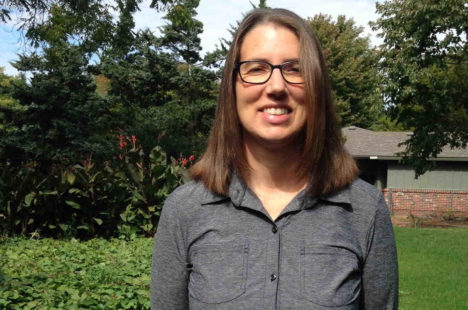
 Aletho News

