Former Israeli Intel Chief Calls on Trump Not to Quit Nuclear Deal with Iran
Sputnik – October 10, 2017
The US President is facing an October 15 deadline to certify that Iran is complying with its terms under “the P5+1” nuclear deal. A senior US administration official said that the US leader is expected to quit the pact. Former Israeli intel chief Amos Yadlin, however, called on Trump to wait for better timing, which would create more pressure.
On Monday, former Israeli Defense Forces military chief Amos Yadlin, who is also the head of the Institute for National Security Studies (INSS), co-authored an essay with his INSS fellow and former National Security Council official Avner Golov, urging the US President against leaving the agreement.
Among the arguments provided by the authors was that any US steps at the moment “would lack European backing, let alone backing from Russia and China,” who are also parties to the deal.
The former military intelligence chief explained that first the US “must get its allies lined up for new UN resolutions against Iranian ballistic missile testing,” the Jerusalem Post quotes him as saying. “However, as the expiration date on the deal’s restrictions get closer, these countries will naturally become more worried about Iran trying to break out with a nuclear weapon and will be more ready to confront it,” the authors suggested.
“Instead of trying to end the Iran nuclear deal now, the US should pressure Iran with the threat of leaving the deal at a more strategic moment,” the authors concluded.
They also referred to a range of top US defense officials who oppose quitting the deal now, although they would support tougher inspections of Iran’s military nuclear sites and restrictions on Iran’s testing of advanced uranium centrifuges.
Ultimately, they say, “any decision by Trump to decertify the deal should be used by the US Congress and the West to raise pressure on Iran for a later battle, but not to leave the deal now and free Iran to go nuclear while blaming the US.”
Last week, a senior US administration official said that President Trump is expected to announce that he will decertify the landmark deal, more properly called the Joint Comprehensive Plan of Action (JCPOA), which was signed in 2015 between Tehran, the five Security Council powers and Germany. The US leader had previously called the deal “an embarrassment” and “the worst deal ever negotiated.”
SEE ALSO:
Lavrov Calls Reports of Trump’s Plans to Withdraw From Iran Nuclear Deal Rumors
Sputnik and RT Under Investigation
Is it news or propaganda? And what about the First Amendment?

Philip Giraldi • Unz Review • October 10, 2017
Somehow everything keeps coming back around to Russia. In one of its recent initiatives, the Justice Department (DOJ) appears to be attacking the First Amendment as part of the apparent bipartisan program to make Vladimir Putin the fall guy for everything that goes wrong in Washington. In the past month, the DOJ has revealed that the FBI is investigating Russian owned news outlets Sputnik News and RT International and has sent letters to the latter demanding that one of its business affiliates register as a foreign agent by October 17th. The apparent line of inquiry that the Bureau is pursuing is that both are agencies of the Russian government and that both have been spreading disinformation that is intended to discredit the United States government and its institutions. This alleged action would make them, in the DOJ view, a propaganda arm of a foreign government rather than a news service. It also makes them subject to Department of the Treasury oversight under the Foreign Agents Registration Act of 1938.
Sputnik, which is owned by a Russian government media group headed by Putin consigliere Dimitri Kiselyov, has been under investigation due to the accusations made by a fired broadcaster named Andrew Feinberg. Feinberg, the former Sputnik White House correspondent, reportedly took with him a thumb drive containing some thousands of internal business files when he left his office. He has been interviewed by the FBI, has turned over his documents, and has claimed that much of the direction over what the network covered came from Moscow.
RT America, more television oriented than Sputnik, operates through two business entities: RTTV America and RTTV Studios. The Department of Justice has refused to identify which of the businesses has been targeted by a letter calling for registration under FARA, but it is believed to be RTTV America, which provides both operational support of the broadcasting as well as the production facilities. Both companies are actually owned by Russian-American businessman Alex Yazlovsky, though the funding for them presumably comes from the Russian government.
I have noticed very little pushback in the U.S. mainstream and alternative media regarding the Department of Justice moves, presumably because there is a broad consensus that the Russians have been interfering in our “democracy” and have had it coming. If that assumption on my part is correct, the silence over the issue reflects a certain naïvete while also constituting a near perfect example of a pervasive tunnel vision that obscures the significant collateral damage that might be forthcoming.
News organizations are normally considered to be exempt from the requirements of FARA. The Department of Justice action against the two Russian major media outlets is unprecedented insofar as I could determine. Even Qatar owned al-Jazeera, which was so vilified during the early stages of the Afghan War that it had its Kabul offices bombed by the U.S., did not have to register under FARA, was permitted to operate freely, and was even allowed to buy a television channel license for its American operations.
The DOJ is in effect saying that RT and Sputnik are nothing more than propaganda organs and do not qualify as journalism. I would have to disagree if one goes by the standards of contemporary journalism in the United States. America’s self-described “newspapers of record” the New York Times and the Washington Post pretend that they have a lock on stories that are “true.” The Post has adopted the slogan “Democracy Dies in Darkness” while the Times proclaims “The truth is more important now than ever,” but anyone who has read either paper regularly for the past year knows perfectly well that they have been as often as not leading propaganda organs for Hillary Clinton and the Democratic Party, pushing a particular agenda and denigrating Donald Trump. They differ little from the admittedly biased television news reporting provided by Fox News and MSNBC.
What exactly did the Russians do? According to last January’s report signed off on by the FBI, CIA and NSA, which may have motivated the DOJ to take action, RT and Sputnik “consistently cast President-elect Trump as the target of unfair coverage from traditional U.S. media outlets that they claimed were subservient to a corrupt political establishment.” Well, they certainly got that one right and did better in their reporting of what was going on among the American public than either the Washington Post or New York Times.
Regarding Sputnik, Feinberg claimed inter alia that he was “pushed” to ask questions at White House press briefings suggesting that Syria’s Bashar al-Assad was not responsible for some of the chemical attacks that had taken place. One wonders at Feinberg’s reluctance as Sputnik and RT were not the only ones expressing skepticism over the claims of Syrian involvement, which have been widely debunked. And why is expressing a credible alternative view on an event in Syria even regarded as propaganda damaging to the American public?
There is a difficult to distinguish line between FARA restricted “trying to influence opinion” using what is regarded a fake news and propaganda and legitimate journalism reporting stories where the “facts” have been challenged. Even real journalists choose to cover stories selectively, inevitably producing a certain narrative for the viewer, listener or reader. All news services do that to a greater or lesser extent.
I have considerable personal experience of RT in particular and, to a lesser extent, with Sputnik. I also know many others who have been interviewed by one or both. No one who has done so has ever been coached or urged to follow a particular line or support a specific position insofar as I know. Nor do I know anyone who has actually been paid to appear. Most of us who are interviewed are appreciative of the fact that we are allowed to air views that are essentially banned on the mainstream media to include critique of maladroit policies in places like Syria and Afghanistan and biting critiques of the war on terror.
Sputnik, in my opinion, does, however, lean heavily towards stories that are critical of the United States and its policies, while RT has a global reach and is much more balanced in what it covers. For sure, it too criticizes U.S. policies and is protective of the Russian government, but it does not substantially differ from other national news services that I have had done interviews for. I find as much uniquely generated negative reporting about the U.S. (usually linked to violence or guns) on BBC World News, France24 and Deutsche Welle as I do on RT International. To describe it as part of an “influence campaign” driven by a “state-run propaganda machine” has a kernel of truth but it is nevertheless a bit of a stretch since one could make the same claims about any government financed news service, including Voice of America. Governments only get into broadcasting to promote their points of view, not to inform the public.
There is a serious problem in the threats to use FARA as it could advance the ongoing erosion of freedom of the press in the United States by establishing the precedent that a foreign news services that is critical of the U.S. will no longer be tolerated. It is also hypocritical in that countries like Israel that interfere regularly in American politics are exempt from FARA registration because no one dares to take such a step, while Russia is fair game.
Going after news outlets also invites retaliation against U.S. media operating in Russia and, eventually, elsewhere. Currently Western media reports from Russia pretty much without being censored or pressured to avoid certain stories. I would note a recent series that appeared on CBS featuring the repulsive Stephen Colbert spending a week in Russia which mercilessly lampooned both the country and its government. No one arrested him or made him stop filming. No one claimed that he was trying to undermine the Russian government or discredit the country’s institutions, even though that is precisely what he was doing.
And then there is the issue of the “threat” posed by news media outlets like RT and Sputnik. Even combined the two services have limited access to the U.S. market, with a 2014 study suggesting that they have only 2.8 million actual weekly viewers. RT did not make the cut and is not included on the list of 100 most popular television channels in the U.S. and it has far less market penetration than other foreign news services like the BBC. It can be found on only a limited number of cable networks in a few, mostly urban areas. It does better in Europe, but its profile in the U.S. market is miniscule. As even bad news is good news in terms of selling a product, it probably did receive higher ratings when the intelligence agency report slamming it came out on it in January. Everyone probably wanted to learn what RT was all about.
So it seems to me that the United States’ moves against RT and Sputnik are little more than lashing out at a problem that is not really a problem in a bid to again promote the Russian “threat” to explain the ongoing dysfunction that prevails in America’s democratic process. One keeps reading or hearing how the American government has “indisputable” proof of Moscow’s intentions to subvert democracy in the U.S. as well as in Europe but the actual evidence is still elusive. Will Russiagate end with a bang or a whimper? No one seems to know.
UNHRC Yemen Inquiry is Doomed to Fail Magnanimously
By Salman Rafi Sheikh | New Eastern Outlook | 09.10.2017
The United Nations Human Rights Council (UNHRC) seems to have finally awakened up to the brazen human rights violations that the Saudia led Arab coalition forces have been blamed to have committed in the conflict in Yemen that has been going on for more than two years now, and has consumed thousands of lives, and destroyed the country, its polity and economy alike. While UNHRC has resolved to find out the atrocities that have been committed, the question that remains unanswered is if this ‘fact-finding’ mission would lead to an end of the war, let alone punish the antagonists?A compromise has been achieved from the very beginning, which will allow the House of Saud to not only to manipulate or dispute the results, but also escape any consequences whatsoever. As a matter of fact, Saudi Arabia was able to steer things to a course of its own advantage by simply altering the original resolution adopted by the Council, making the UNHRC look like a meaningless and worthless house of cards.
Let’s consider what the original resolution had called for and what is actually going to happen now. The original resolution had called for the establishment of an independent inquiry commission. However, thanks to Saudi Arabia’s intense lobbying and coercive diplomacy, the amended version is now restricted only to sending some “eminent experts”. According to reports, Riyadh had threatened to restrict and even cut trade and diplomatic ties with the council members which had backed the much more robust version. The House of Saud also publicly appreciated the UK, US and France for their cooperation in securing a compromise on resolution. The three countries also support Saudi Arabia’s deadly military aggression against the impoverished Yemen. The UK and the US had no reason to criminalize Saudi Arabia not only because they are allies but also because the US is itself a party to destroying Yemen.
This is evident from the way the US president Donald Trump has almost doubled the number of covert US airstrikes in Yemen. According to the data compiled by The Bureau of Investigative Journalism, the US has carried out about 100 strikes in Yemen in 2017. While the official narrative is that these strikes target Al-Qaeda in the Arabian Peninsula (AQAP), there are evidences that suggest that the US has been equally targeting the Houthis as well. Nothing perhaps could illustrate this ‘US vs Houthis’ phenomenon more than the fact that a US drone was attacked and shot down by the Houthis in western Yemen as recently as October 2, 2017. While the US officials said that the matter was under investigation, the Houthi-controled Defense Ministry announced that it had downed an American drone in the outskirts of Yemen’s capital Sanaa, thus rejecting the US claim that it was mainly involved in non-combatant missions in the aid of the Arab coalition.
On the other hand, what really explains the reason for the Trump administration’s decision to increase drone attacks is the policy of isolating and defeating Iran that the US and Saudi Arabia are following. Interestingly enough, perusal of this policy has caused political tension in the UK as well, where the parliament’s joint committee on human rights has raised strong concerns about the UK’s involvement in the US targeted killing programme, noting that the UK’s intelligence agencies work “hand in glove” with the US.
Given the extent of co-operation between the West and its key ally in the Middle East, an independent inquiry into war atrocities committed by the self-declared regional hegemon is unlikely to take place ever, let alone punish the wrongdoers. Besides the current UNHRC debacle, this is also evident from the way the House of Saud was able, back in July 2016, to turn upside down a UN report that had blacklisted the country after it found out that the Kingdom was responsible for 60 percent of the 785 deaths of children in Yemen in 2015. A few days later, however, the world body announced that the Riyadh regime would be scratched off the list, pending a joint review with the Arab kingdom. Sounds like really independent and impartial!
Once again Riyadh has been able to manipulate inquiry into atrocities by radically altering the resolution that had called for an independent inquiry. Could there be a greater irony than the fact that the new resolution that decided to set up a committee of experts had been set up by Riyadh itself? How can an accused set up, or even influence, a committee to investigate into his own crimes? Can such a body be expected to be impartial and truly reveal what the Arab coalition has done in Yemen?
Answers to all of these questions have, unfortunately, to be in the negative. It is not that we are expressing pessimism, there are certainly concrete basis for what we have said. Besides the above given arguments with regard to the co-operation between the US, the UK and Saudi Arabia, the fact remains that not even the EU, the so-called champion of human rights, is able to leave a decisive impact on the situation and turn things against Saudia. For instance, the European human rights organisation had to face a lot of ridicule when, despite its earlier statement that had confirmed that airstrikes carried out by the Arab coalition in the past two months had killed 39 civilians, including 26 children, the resolution was amended and the bid for constituting an independent inquiry was replaced by a committee of “experts.” Not only were their reports and arguments not accepted, but their demand that the matter be brought before the International Criminal Court (ICC) was squarely rejected, thanks again to the Saudi lobbying and the help it received from its key allies in the West i.e., the US and UK and France and the way it coerced countries into backing down on this demand.
According to a Reuters report, in a letter seen by one of the diplomats, Saudi Arabia – the world’s biggest oil exporter – had warned some states of possible consequences should they support the Dutch resolution, submitted jointly with Canada, calling for a full commission. This lobbying was the perfectly echoed by French diplomatic source who was reported to have said that “there is room to satisfy everybody.”
It appears that no other party is more satisfied now than the House of Saud, the principal accused in the scene. The accused stands vindicated as it is well “satisfied” with the way things have ended in the UNHRC session and the way things will proceed in the future. It is possible that by the time the committee of experts is constituted, does its investigation and submits its report in a year from now on, the Arab coalition, which believes that airstrikes killing civilians are legally justifiable, might end up killing thousands of innocent people. Who will then the UNHRC blame for the loss?
Lavrov: Russia insists on return of its diplomatic property ‘illegally seized’ by US
RT | October 9, 2017
Russian Foreign Minister Sergey Lavrov told US Secretary of State Rex Tillerson that Moscow insists on the return of its diplomatic properties “illegally seized” by the US, warning of legal consequences and possible retaliation.
“Russia reserves the right to undertake legal action and retaliatory measures,” reads a statement issued by the Russian Foreign Ministry after the phone call.
Both Lavrov and Tillerson, however, expressed support for the ongoing consultations on the issues of Russia-US relations, led by Russian Deputy Foreign Minister Ryabkov and US Under Secretary Thomas Shannon.
The diplomatic property row between Moscow and Washington dates back to late 2016, when the outgoing Obama administration expelled a number of Russian diplomats and closed two Russian diplomatic compounds in New York and Maryland. In July 2017, the US Congress imposed new sanctions on Russia. The move prompted Moscow to reduce US diplomatic personnel numbers in Russia to 455. The US responded with new hostile actions early in September, shutting down the Russian Consulate-General in San Francisco as well as trade missions in Washington and New York.
On Monday Lavrov and Tillerson also discussed the conflict in Syria, focusing on the prospects for cooperation between Russia and the US in maintaining the ceasefire in de-escalation zones and political reconciliation between the warring parties. Lavrov also stressed the utmost importance of fighting terrorism in the country.
The crisis in the Korean Peninsula was also a high priority in the talks, with Lavrov warning that the US’s activities in the region were only leading to escalation. The Russian foreign minister urged the US to resolve the conflict solely through dialogue.
Smoking gun or nothingburger? WaPo claims Russia ‘meddled’ in election through Google, YouTube
RT | October 9, 2017
In the latest of its near-weekly scoops, the Washington Post has claimed that “Russian operatives exploited Google’s platforms to interfere in the 2016 election.” However, as previously, its own evidence can’t bear the weight of its allegations.
While the report did genuinely break the news of an internal investigation at the California tech giant, which Google has since confirmed, it waits until paragraph six to specify what it has found so far.
“The people familiar with its investigation said that the company is looking at a set of ads that cost less than $100,000 and that it is still sorting out whether all of the ads came from trolls or whether some originated from legitimate Russian accounts,” write the authors.
Even if the figure involved is closer to $100,000 than, say, $10,000, it is notable that the two leading candidates in the 2016 election spent at least $1.8 billion, with Hillary Clinton outspending the winning candidate Donald Trump by a factor of two to one. Evidently, she didn’t have genius Russian “trolls” authoring her ads. But then again, the authors go on to note that “the number of ads posted and the number of times those ads were clicked on could not be learned” by Google, so maybe not.
The second part of the statement – about “legitimate Russian accounts” – seems to run even more contrary to the tenor of the report, suggesting in fact that adverts being audited may represent normal spending after all, something the Washington Post omitted from its headline and intro.
The use of anonymous sources – “people familiar” that also later featured in a Reuters version of the report – to make claims about Russia that go beyond the factual, even in situations where there is no fundamental security reason to stay off the record, has become too common to produce more than a disappointed sigh.
But there is more.
“The discovery by Google is also significant because the ads do not appear to be from the same Kremlin-affiliated troll farm that bought ads on Facebook – a sign that the Russian effort to spread disinformation online may be a much broader problem than Silicon Valley companies have unearthed so far,” write Elizabeth Dwoskin and Adam Entous, responsible for many of the newspaper’s Russian-tech-meddling stories.
So, when a “Kremlin-affiliated troll farm” buys adverts, it is evidence of Russian meddling, but when that “troll farm” doesn’t buy adverts, it is also evidence of Russian meddling, indeed perhaps “broader” in scope?
It is in fact not until the penultimate paragraph of the story that the method of the investigation is revealed.
“Google downloaded [historical tweet] data from Twitter and was able to link Russian Twitter accounts to other accounts that had used Google’s services to buy ads,” write Dwoskin and Entous.
So, from this it appears that Google has simply identified Russian Twitter accounts, and tried to find which of them bought ads on YouTube and its DoubleClick ad network – and that’s it so far. In fact, somewhat sheepishly, the authors admit in the very last paragraph that “Google’s probe is still in its early stages.”
And that is fine. But now cycle back to the claims made in the headline and compare. Why not just report the investigation? Why the tenuous insinuations and overblown allegations?
Dwoskin is the newspaper’s Silicon Valley correspondent, Entous has two decades’ experience as a well-known security, intelligence and foreign affairs correspondent. Yet over the past year the stories by them and others from the same newsroom, have resulted in multiple retractions, denials, and instant takedowns.
That is not to say that they are no longer capable of credible journalism. Almost apropos of nothing in their attempt to see what sticks, at one point they state “RT also has a sizeable presence on YouTube.” That part is definitely true.
What Saudis hope to get out of Russia ties
By M.K. Bhadrakumar | Asia Times | October 8, 2017
The mishap at the Moscow airport on Wednesday when the Saudi King Salman bin Abdulaziz arrived on a historic visit, was a wake-up call that even the most carefully choreographed enterprises may hold unpleasant surprises.
When Salman exited his plane and stepped out onto the special escalator he travels with, something went wrong. It malfunctioned halfway down, leaving the king standing awkwardly for about 20 seconds before he decided to walk the rest of the way. For ordinary mortals, this wouldn’t have been an uncommon occurrence but divinity ordains when a king is involved.
The Russian-Saudi entente is not going to be smooth. The climactic event last week drawing Saudi Arabia into President Vladimir Putin’s Middle East sphere of influence, must be assessed with a sense of proportions.
Salman had hardly departed from Russian soil when the Pentagon issued a statement announcing that the State Department had on Friday approved a possible US$15-billion sale of Terminal High Altitude Area Defense (THAAD) systems to Saudi Arabia. The statement recalled that Saudi Arabia had requested to purchase from America 44 THAAD launchers, 360 missiles, 16 fire control stations and seven radars.
The US officials confirmed that the sale was part of the $110-billion package of defense equipment and services initially announced during US President Donald Trump’s trip to Saudi Arabia in May. The Pentagon statement said, “This potential sale will substantially increase Saudi Arabia’s capability to defend itself against the growing ballistic missile threat in the region.”
The timing of the US announcement is highly significant. It comes in the wake of claims by Russian officials that Saudi Arabia had shown interest in buying the S-400 missile defense system from Russia. The Saudis have successfully pressured the Trump administration to approve the sale of the THAAD system. And Washington has signaled that the US will not let Russia make an entry into the Saudi arms bazaar.
Hard-nosed realpolitik
The hard-nosed realpolitik in the Saudi-Russian entente had a dramatic start when the then Saudi intelligence chief Prince Bandar bin Sultan visited Russia and held a four-hour meeting with Putin at the latter’s dacha outside Moscow in early August 2013. According to media leaks from Russian sources, the Prince allegedly confronted the Kremlin with a mix of inducements and threats in a bid to break Russia’s support for the Syrian regime, which Riyadh was trying to overthrow.
Bandar’s package was riveted on the alluring proposal of a unified Russian-Saudi strategy to keep oil production quantities at a level that keeps the price stable in global markets via an alliance between the OPEC cartel and Russia. And, in return for throwing the Syrian regime under the bus – thereby leaving Iran to face the brunt of the ISIS threat – Bandar promised that Russia could retain the naval base in Tartus under a successor regime in Damascus and be assured of security from a ‘jihadi’ backlash.
The Kremlin apparently spurned the overture in a huff. At any rate, by the beginning of 2014, symptoms of a new Cold War began appearing in Russia’s relations with the West following the regime change in Ukraine. The year 2015 also saw a ‘transition’ in Saudi Arabia with the death of King Abdullah. Of course, the year ended with Russia’s military intervention in Syria.
However, the seeds left behind by Bandar began sprouting and with the Russian economy feeling the crunch from Western sanctions, the fall in oil prices on the world market assumed an existential overtone for the Kremlin. The challenge of the US oil shale industry also meant that Saudi-Russian cooperation became a practical necessity. The rest is history.
Agreement to cut oil production
Indeed, the hallmark of Salman’s visit to Moscow has been the pledge by the two countries to carry forward their agreement to cut oil production. Putin disclosed that the deal to cut oil output to boost prices could be extended till the end of 2018, instead of expiring in March 2018.
Putin described his talks with the Saudi king as “very substantive, informative and very trusting”. And Russian commentators have hyped up that Saudi Arabia is “leaning toward Moscow in solving the Syrian crisis”. The Russian reports mentioned that Moscow and Riyadh are eyeing cooperation on nuclear energy, space exploration, plus infrastructure and arms deals.
However, Bandar’s proposal on oil production still remains the leitmotif of Saudi-Russian cooperation, as apparent from the rise in oil prices this week – as word came that Saudi Arabia and Russia would limit oil production through next year. (Brent crude was up 70 cents at $56.50 per barrel on Thursday.)
The point is, how do the Saudis view their ties with Russia? Are they aiming at a geopolitical shift in the Middle East? Evidently, Salman’s visit underscores that the Saudi and Russian leaders have decided to shift their focus toward common interests rather than let disagreements crowd the centre stage of relations. But then, the THAAD deal signals that Saudi Arabia also has a ‘big picture’ of itself being a major regional and international player.
Suffice to say, the Saudis are shifting away from their special relations with the West to a balanced foreign policy by opening up with Russia and creating multiple options for pursuing national interests. To be sure, the Saudis hope to diversify their partnerships based on common interests. While disagreements remain with Moscow over Syria – and notwithstanding the close ties between Moscow and Tehran – the Saudis have adopted a realistic policy toward the Kremlin.
Most certainly, the Saudi expectation is that at some point, the prospect of lucrative business opportunities would encourage the Kremlin to balance Russia’s relations with Iran. Basically, Bandar’s overture to Putin remains the bottom line.
US, Turkey suspend visa services amid arrested employee row
DAILY SABAH | October 8, 2017
The U.S. embassy in Ankara said Sunday that all non-immigrant visa services in its diplomatic facilities in Turkey were suspended after the arrest of one of its employees over the Gülenist Terror Group (FETÖ) ties.
A statement released by the embassy said: “Recent events have forced the U.S. government to reassess the commitment of the Government of Turkey to the security of the U.S. Mission facilities and personnel.”
The statement said the suspension, effective immediately, is intended to minimize the number of visitors to the consulate and embassy buildings.
Hours after the U.S. decision, Turkey said it has halted processing visa applications from the U.S. The move, announced online by the Turkish embassy in Washington, applies to visas in passports, electronic visas and visas at the borders, and is also effective immediately.
Metin Topuz, a Turkish employee working in the U.S. Consulate in Istanbul was arrested on charges of espionage and links to FETÖ, the group blamed for the July 15, 2016 coup attempt that killed 249 people in Turkey.
According to the indictment, the suspect was in contact with a number of former police chiefs in Istanbul where he worked, and all those police chiefs involved in the 2013 coup attempts were FETÖ members in the judiciary and law enforcement.
He was also in touch with Oktay Akkaya, a former lieutenant colonel who was among the main actors in the 2016 coup attempt.
“The suspect acted as a liaison between members of FETÖ and its leader, Fetullah Gülen, who lives in Pennsylvania,” the indictment adds, claiming there is strong evidence to justify Topuz’s arrest.
Hezbollah chief says US helps Daesh, does not allow it to be eliminated
Press TV – October 8, 2017
The secretary general of the Lebanese Hezbollah says the United States does not want Daesh Takfiri group to be destroyed and is providing Takfiri terrorists with assistance through its bases in Syria.
Sayyed Hassan Nasrallah made the remarks while delivering a speech at a ceremony held in al-Ain town in North Bekaa region to commemorate two martyred members of the resistance movement.
The ceremony was held after Hezbollah commander, Ali al-Hadi al-Asheq, and Hezbollah fighter, Mohammad Nasserdine, were killed, along with five other fighters, while fighting the Takfiri terrorists in Syria last week.
“It is only the United States, which does not let Daesh be totally annihilated,” Nasrallah said in his speech.
The Hezbollah leader added that the US was helping Daesh through its base in the Syrian city of Raqqah and also through a base it runs near Syria’s border with Jordan where Daesh terrorists are trained.
“US Air Force does not allow the Syrian army and resistance groups to advance toward positions occupied by Daesh,” he added.
Stressing the need to continue the ongoing fight against Daesh despite efforts made by the US, Nasrallah said, “If we do not continue the war against Daesh, the Takfiri group will hit again and resume its campaign of massacre and terror.”
Nasrallah emphasized that Daesh would return to all areas it had lost if the fight against the group stopped, because Daesh was like a malignant cancer, which must be uprooted.
Nasrallah stated that the US did not want the Lebanese army to fight Daesh in those areas, which had been occupied by the Takfiri group, and to achieve this goal, it even stopped its aid to the Lebanese army for a period of time.
The leader of the Lebanese Hezbollah stated that the “Wahhabi Takfiri Daesh” group was only present in small parts of Iraq and Syria, but the group must be totally annihilated, because if not, it would continue to threaten Iraq and Syria.
He noted that the main strategy followed by Daesh was to extend its existence, so that, it could launch new battles to reclaim liberated towns and villages.
Elsewhere in his remarks, Nasrallah noted that the Middle East region was facing a new scheme devised by the United States and Saudi Arabia, which was mainly aimed at Iran.
He stated that Washington and Tel Aviv kept lying about Tehran’s nuclear program as they were outraged by the Islamic Republic’s influential role in the Middle East.
The Hezbollah chief said the main problem between the US and Iran was that the Islamic Republic had caused the Saudi-US plot to crash across the region.
He added that the Riyadh regime’s policies would eventually fail in Syria despite the fact that the Saudi authorities were funneling huge sums of money and munitions to Takfiri terrorists there.
Nasrallah then stressed that Hezbollah was a popular movement, which enjoyed great support both inside Lebanon and across the Middle East, noting that US policies and sanctions would fail to change the group’s positions.
REVEALED: U.S. Tested Carcinogenic Chemicals On Unknowing Canadian Civilians During The Cold War
By Aaron Kesel | Activist Post | October 6, 2017
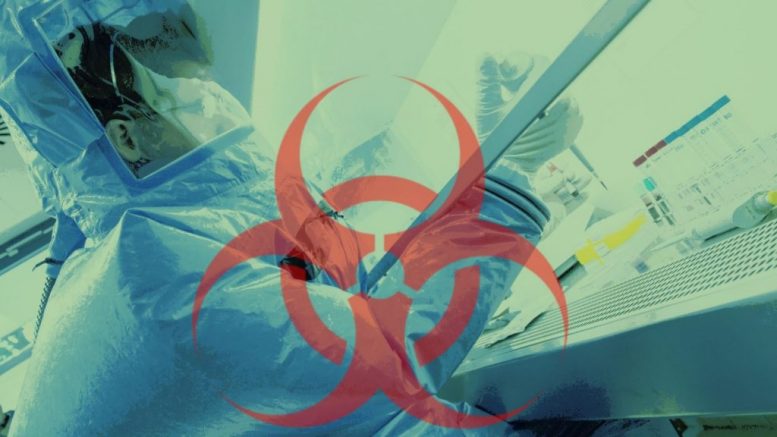
The U.S. Army secretly tested carcinogenic chemicals on unknowing residents of Canada in Winnipeg and Alberta during the Cold War in testing linked to weaponry involving radioactive ingredients meant to attack the Soviet Union, according to classified documents revealed in a new book Behind the Fog: How the U.S. Cold War Radiological Weapons Program Exposed Innocent Americans by Lisa Martino-Taylor, an associate professor of sociology at St. Louis Community College.
The incidents occurred between July 9, 1953 and Aug 1, 1953 when they sprayed six kilograms of zinc cadmium sulfide onto unsuspecting citizens of Winnipeg from U.S. Army planes. The Army then returned 11 years later in 1964 and repeated the experiments in other parts of Canada including Suffield, Alta. and Medicine Hat, Alta., according to Martino-Taylor, National Post reported.
“In Winnipeg, they said they were testing what they characterized as a chemical fog to protect Winnipeg in the event of a Russian attack,” Martino-Taylor said. “They characterized it as a defensive study when it was actually an offensive study.”
Canada knowingly participated in this experiment as part of an agreement it held with the U.S. and England but was allegedly not told about what was being sprayed on its citizens, according to Martino-Taylor.
In 1964, a memo from Canadian officials expressed concern that an “American aircraft was emitting distinctly visible emissions,” Martino-Taylor said.
In Canadian and U.S. documents, the tests were referenced as biological and chemical when documents suggest they actually involved combining the two with radiological components to form a combined weapon.
The U.S. was working on producing a radioactive nerve agent that combined the dangerous phosphorus-32 and VX chemical compounds.
“The zinc cadmium sulfide acted as a fluorescent tracer which would help the U.S. Army determine how the radioactive fallout from a weapon used on the Soviets would travel through wind currents,” Martino-Taylor said.
An additional 1964 memo from Suffield mentions that the U.S. Army wanted to travel Suffield to “discuss the use of radioactive tracer techniques in chemical weapons trials.” While preparing for other tests involving BG, a bacteria, the U.S. Army drafted the number of hospitals and hospital beds available in the area, showing a potential further connection to the CIA’s human experimentation MK-Ultra project.
It’s a known fact the Allan Memorial Institute in Royal Victoria Hospital is seen as the cradle of modern torture, and that Scottish-born Dr. Donald Ewen Cameron was heavily involved in subproject 68. Cameron also had partial funding funneled by the CIA (approx. $62,000) and the Canadian government for its brainwashing experiments and torture, according to The McGill Daily.
So was the U.S. planning on expanding its torture experiments into Suffield?
For decades the massive Suffield Base in Alberta was one of the largest chemical and biological weapons research centers in the world. A 1989 Peace Magazine article explained, “For almost 50 years, scientists from the Department of National Defence have been as busy as beavers expanding their knowledge of, and testing agents for, chemical and biological warfare (CBW) in southern Alberta,” Global Research reported.
“The U.S. was very aggressive,” Martino-Taylor said. “Canada seemed less on board as I read through the documentation.”
Until now it was thought the U.S. only experimented on its own people, but it’s now known that they also experimented on their neighbors in Canada and tried to expand that experimentation to the levels it did in the U.S.
The CIA did several unethical human experiments in the United States. In one instance they injected radioactive material into hospital patients without their consent at all. While other experiments were performed on pregnant women in Nashville who were given a radioactive iron cocktail to ingest so that researchers could determine if cancer could be passed on to their offspring. Even children were fed radioactive oatmeal as part of a “science club,” Martino-Taylor said.
Yes, this is your secret history of previous deep state experiments. Another by the U.S. Army inside the continental United States revealed by Martino-Taylor also involved spraying the same zinc cadmium sulfide particles over much of the U.S. across several cities including St. Louis and Texas; that project was known as Operation LAC (Large Area Coverage.)
The public was tricked and told the experiment was to set up smokescreens that the Army could deploy to shield the U.S. from any nuclear assault by Russia at the time. In reality, they were testing biological agents on the population harming their health.
“The study was secretive for a reason. They didn’t have volunteers stepping up and saying yeah, I’ll breathe zinc cadmium sulfide with radioactive particles,” St Louis Professor, Martino-Taylor told KSDK. “This was a violation of all medical ethics, all international codes, and the military’s own policy at that time.”
The report didn’t note whether the experiments in Canada were connected to Operation LAC, though it has several similarities to the project, or whether this was a bigger part of Project 112. However, for years the Canadian government has denied that it tested any bioweapons in Alaska and Alberta as well as spraying “simulated bio-weaponry across North American cities, including Winnipeg.”
Pathogens for War, by University of Western Ontario historian Donald Avery, notes that Canadian scientists were intimately involved in U.S. bioweapons research until 1969, when then-president Richard Nixon unilaterally ended the program. Significant quantities of toxins, including sarin and the nerve agent VX, were stockpiled at Suffield until at least 1989, The Star reported.
The U.S. government has a longstanding policy for human experimentation, experimenting on its civilian population for decades since the 1950s (Cold War) doing a total of 239 “germ-warfare” tests over populated areas.
The United States scrapped its biological weapons program in the late 1960s and agreed in a 1997 treaty, the “Convention on the Prohibition of the Development, Production, Stockpiling and Use of Chemical Weapons” to destroy all its chemical weapons.
The goal “was to deter the use of biological weapons against the United States and its allies and to retaliate if deterrence failed,” the government explained. “Fundamental to the development of a deterrent strategy was the need for a thorough study and analysis of our vulnerability to overt and covert attack.”
A 1997 report from the National Research Council concluded that the Army’s secret tests “did not expose residents of the United States and Canada to chemical levels considered harmful.” However, the same report admitted that there was little research on the chemical used and mostly based on very limited animal studies.
Three House Democrats who represent areas where testing occurred — William Lacy Clay of Missouri, Brad Sherman of California and Jim Cooper of Tennessee — have expressed outrage by the revelations, NY Post reported.
Cooper’s office plans to seek more information from the Army Legislative Liaison, spokesman Chris Carroll said.
“We are asking for details on the Pentagon’s role, along with any cooperation by research institutions and other organizations,” Carroll said. “These revelations are shocking, disturbing and painful.”
“I join with my colleagues to demand the whole truth about this testing and I will reach out to my Missouri Delegation friends on the House Armed Services Committee for their help as well,” Clay said in a statement.
Yet the government today still denies spraying death dumps of chemicals across the sky and calls the belief a conspiracy theory, ridiculing those who accuse such practice as a “conspiracy theorist,” despite the fact that they did unethical human experimentation through the spraying of chemicals 50 years ago.
Follow Aaron Kesel at Twitter and Steemit.
Image Credit: Natural Blaze
Facebook Reportedly Removes Russia References From Report on Election Influence
Sputnik – 06.10.2017
Despite its recently released report claiming that Russia-linked entities allegedly bought $100,000 worth of political ads before and after the US presidential election, Facebook has decided to omit Russia references from its April 2017 white paper covering the influence on the public opinion, the Wall Street Journal reported.
Facebook staff were debating on whether to include references to Russia in a public report on “false news” spread via the social network and eventually decided against it, so the white paper issued in April makes no mention of it, according to the Wall Street Journal newspaper.
Some people working in the company insisted that Russia should not be mentioned in the report on the attempt to influence the US presidential campaign in 2016 as Facebook had no proof of subversive activities, the WSJ reported on Thursday, citing sources familiar with the situation.
The April report said that “malicious actors” were involved in an attempt to compromise certain political targets and to push certain narratives, but stressed that it could not say with any certainty who was sponsoring these activities. Facebook said in April that it would add new technologies to weed out fake accounts and improve security.
The media report comes after Facebook said in early September that supposedly Russia-linked entities bought $100,000 worth of political ads linked to inauthentic pages in a two-year period up to May of this year. According to the company, these pages were found to be linked and were “likely operated” out of Russia. Most of the ads did not reference the US presidential election, but focused on amplifying divisive social and political messages.
Kremlin spokesman Dmitry Peskov said that Moscow was not behind the ads or even aware of them.
According to media reports, the US Senate Intelligence Committee has asked senior managers from Facebook, Google and Twitter to testify in front of the US Congress at a public hearing scheduled for October as part of the probe into Russia’s alleged attempts to use social media to influence the election. Russia has faced persistent allegations of having interfered in the 2016 US election, many of them suggesting that an information campaign took place on social media. Russian officials have denied meddling in other states’ domestic affairs.
Russian election meddling probe will show media ran untrue stories – head of US investigation
RT | October 6, 2017
The investigation into alleged Russian meddling in the 2016 US presidential election will ultimately show that “quite a few” news outlets ran stories that were not factual, the chairman of the Senate Intelligence Committee told Politico.
Intelligence Committee Chairman Richard Burr said that although his committee will not be investigating news organizations, it does plan on providing the public with the information needed to hold them responsible for what they reported.
“We’re not going to investigate news organizations, but we will use the findings of our report to let the American people hold every news organization accountable for what they portrayed as fact, in many cases without sources — at least, no sources that would admit to it,” Burr told Politico on Thursday.
“And I think, when we finish our report, we will find that quite a few news organizations ran stories that were not factual,” he added.
He went on to state that some incorrect news stories had also emerged since Wednesday’s news conference held by himself and Senator Mark Warner, which was aimed at providing an update on the status of the investigation into alleged Russian meddling.
Burr’s comments come after US President Donald Trump questioned why the Senate Intelligence Committee fails to investigate so-called “fake news.”
Trump has often criticized the mainstream media for its reporting of alleged Russian meddling in the presidential election, and has referred to the Senate Intelligence Committee’s investigation into the matter as a “hoax” and a “witch hunt.”
Russia, for its part, has consistently denied any interference in the election.
Featured Video

Spain train disaster raises questions over Israeli-linked security contractors
or go to
Aletho News Archives – Video-Images
From the Archives
Are There 50,000 ‘Israeli-born’ Individuals Living in the UK?
By Professor David Miller | August 18, 2026
Recent disclosures by the Zionist regime show that some 2,069 British nationals were serving in the IDF as of March 2025, according to Freedom of Information (FoI) requests submitted to the occupation forces (1,686 dual British-Israeli, plus 383 multinational). We cannot tell from the figures how many of these were already settler colonists and intend to stay in the colony, and how many will return or have returned to the UK. Presumably, those returning to the UK will number far fewer than 2,000, since many are known to have become permanently residents of the colony.
Additionally, the IDF figures only provide a snapshot, and do not tell us how many have served in the Jewish supremacist military either before or after March 2025. One way into the question of how many genocidaires are living in Britain is to ask how many current British residents were born in the Zionist colony. There is data on that, as we shall see. … continue
Blog Roll
 Aletho News
- German CDU MPs Seek Climate “Misinformation” List
- The ‘Gaza Treatment’: How Media Headlines Obscure Who is Bombing Yemen
- Ro Khanna urges Democrats to strip Israel ‘integration’ provision from defense bill
- Why Iran designated British MI6, Royal Navy, and RAF as hostile, terrorist organizations
- Armenian opposition politician dies in custody
- US still trying to recycle failed hypersonic missile programs
- France’s ‘Cold War’: Paris blames Tehran for supermarket fridge hacks
- Psywar no more? 77th Brigade’s sudden death
- Ukraine Already Carved Up… Before Talks Begin? /Prof. Richard Sakwa
- The vindication of Marjorie Taylor Greene
- If Americans Knew
- An error has occurred; the feed is probably down. Try again later.
- No Tricks Zone
- German Authorities Start Initiative To Evaluate Public Register For Climate “Disinformation” Spreaders!
- Zonal Asymmetry of Temperature Change in the Antarctic Circumpolar Current
- New Study: The Net Fossil Fuel Contribution To Rising Atmospheric CO2 Has Been Zero For 500 Years
- Germany’s Green Energy Transition Becoming Increasingly Expensive…Another 6 Trillion Euros!
- Sudden Stratospheric Warming, Powerful El Niño Combination May Lead To Extreme Europe Cold, Energy Crisis!
- Two New Studies Find Thwaites Glacier Melt Cannot Be Driven By Human Activity Or A Warming Ocean
- E-Cars Reduce CO2 Emissions By Only 41% Compared To Internal Combustion Engine Vehicles
- Predictions Made By Renowned Climate Professor Over Past Decades Have Been Proven To Be Poor
- New Study Suggests Large Regions Of The Pacific Ocean Have Been Cooling For The Last 80 Years
- Germany’s Green Energy Debacle: High Energy Costs Force Kahla Porzellan to Close After 182 Years!

