The blockade of Qatar may have more to do with Palestine than we think
By Nasim Ahmed | MEMO | June 16, 2017
Israeli officials must have been tripping over each other in their rush to endorse the Saudi-led blockade on Qatar. “The Sunni Arab countries, apart from Qatar, are largely in the same boat with us since we all see a nuclear Iran as the number one threat against all of us,” said Israel’s former defence minister Moshe Ya’alon. The blockade represented a “new line drawn in the Middle Eastern sand,” tweeted US-born former Israeli ambassador Michael Oren, while revelling in the regional turmoil. “No longer [is it] Israel against Arabs but Israel and Arabs against Qatar-financed terror,” he added.
Defence minister Avigdor Lieberman described the crises as an opportunity for Israel and “certain” Gulf states. “It is clear to everyone, even in the Arab countries, that the real danger to the entire region is terrorism,” he insisted. The extreme right-winger added that the Saudi-led bloc had cut ties with Qatar “not because of Israel, not because of the Jews, not because of Zionism,” but “rather from fears of terrorism.”
Rejoicing over the punishment of a country which Israeli officials describe as a “pain in the ass” raises all sorts of questions, not least the connection between the siege imposed on Qatar and US legislation introduced by Republican Congressman Brian Mast to impose sanctions with respect to foreign support for “Palestinian terrorism”, and other purposes.
Introducing the bipartisan Bill (H.R. 2712 Palestinian International Terrorism Support Prevention Act of 2017) Representative Joshua Gottheimer said, “I’m proud to lead on this effort to weaken Hamas, a heinous terrorist network responsible for the death of far too many innocent civilians, both Israeli and American”. According to him, “Our bipartisan bill will ensure that anyone who provides assistance to this enemy of the United States and our vital ally Israel will face the strength and determination of our country.”
In their findings, the sponsors mentioned that Hamas had received significant financial and military support from Qatar. The sponsors cited the press conference at the Sheraton Doha in Qatar, where Hamas launched its new Document of General Principles and Policies, dubbed the movement’s new charter. “While this document was meant to convey a more moderate face to the world by referencing the 1967 borders,” the bill alleges that the “Hamas’ document, [which] neither abrogates nor replaces the founding charter… still calls for a continuation of terrorism to destroy Israel.”
The bill, which sets out to authorise sanctions on any foreign entity or government that provides support to Hamas, goes on to say that, “It shall be the policy of the United States to prevent Hamas, the Palestinian Islamic Jihad (PIJ), or any affiliate or successor thereof from accessing its international support networks.”
While noting the implications of the legislation, it is worth remembering that most of the proposals in this new bill are actually redundant, except for the section on Qatar. As the Arab Centre Washington DC – a research organisation furthering political, economic and social understanding between Arabs and the US — points out, the proposed law introduces sanctions already covered under existing legislation. Hamas and the PIJ are both designated as Foreign Terrorist Organisations (FTOs) and Specially Designated Global Terrorist entities (SDGTs) by the US State and Treasury Departments respectively. With that in mind, it is already illegal for US entities or institutions to support such groups. Thus, the sanctions proposed in this bill that pertain to US jurisdiction are superfluous.
Furthermore, the Arab Centre points out, formally targeting Iran is also unnecessary because Tehran has already been declared a state sponsor of terror by the State Department and prohibitions against arms export, financial and technical services and US aid to Iran are already in place. This only leaves Qatar, which would be the only new target under this legislation. The stealthy manner of the attack on Qatar did not hide the true intention of supporters of the Bill. “I am proud” said Gottheimer, “to support the Palestinian International Terrorism Support Prevention Act that will make countries like Qatar pay a price for their support for terrorism. In the fight against terrorists there is no middle ground. If you support terrorism, justice will eventually be served.”
So what has that got to do with Israel? While Israel has been unable to join the Saudi-led move to impose a blockade on Qatar directly, it hasn’t stopped it from taking part in substantial lobbying behind the scenes, with the UAE, to get what in reality is an anti-Qatar piece of legislation passed and carry out the necessary groundwork for a blockade of this magnitude.
It is alleged that the bill’s sponsors in the House include a number of lawmakers who have received substantial donations from pro-Israeli lobbyists as well as from those advocating on behalf of Saudi Arabia. Indeed, it is reported that ten US legislators sponsoring the anti-Qatar Bill have received more than $1m over the last 18 months from lobbyists and groups linked to Israel, Saudi Arabia and the United Arab Emirates.
Author and commentator Trita Parsi believes that the similarities between the US-allied Arab nations’ “terror list” and the H.R. 2712 bill show growing cooperation between Gulf Arab states and Israel. “The coordination between hawkish pro-Israel groups and the UAE and Saudi Arabia has been going on for quite some time,” Parsi told Al-Jazeera. What is new, he continued, is seeing pro-Israel groups such as the Foundation for Defence of Democracies “coming out with pro-Saudi [articles] and lobbying for them [the Saudis] on Capitol Hill.”
The cultivation of a political narrative to support the siege was also reported earlier this month by The Intercept. It said that emails released by a group called “Global Leaks” had shown that the UAE ambassador to the US, Yousef Al-Otaiba, and the foundation — a pro-Israel neoconservative think tank — have been working together on demonising Qatar. The emails obtained by The Intercept show FDD and UAE collaboration with journalists who published articles accusing Qatar and Kuwait of supporting “terrorism”.
It is no surprise then that the main reason given for this blockade makes little sense. For Saudi Arabia and the UAE to accuse Qatar of supporting terrorism is like the pot calling the kettle black. If there was any substance to the allegation, then the US would not have endorsed a recent arms deal with Qatar and nor would Washington maintain a major military base there. The stated reasons for the blockade have no merit whatsoever. Moreover, the blockade of Qatar cannot be examined in isolation from efforts that have been underway in the US to suppress Palestinian resistance in the name of fighting terrorism. Neither Qatar nor any of the Gulf countries benefit from this standoff whatsoever; for the main beneficiary, we must look to Israel.
Syria, Iran and N. Korea: Will Trump Attempt to Finish the Neocon Hitlist?
By Steven MacMillan – New Eastern Outlook – 16.06.2017
In Donald Trump’s short time in office, he has already shown his propensity to use military force. From dropping the largest non-nuclear bomb ever used on Afghanistan, to launching 59 Tomahawk cruise missiles at Iraq (oh wait, Syria), there is no doubt that the Trump administration has a prominent militaristic streak.
But is this just for starters? If Trump stays in power for the duration of his term, is there a major war, or even multiple wars, on the horizon? Judging by the rhetoric and actions already taken by the Trump administration, it will be a miracle if the US does not start a major war in the near future. Coincidentally, the main countries in the sights of the Trump administration just happen to be the three countries that the neoconservatives pinpointed for regime change 17 years ago, but have not yet been dealt with.
1997 marked the birth of the Project for the New American Century (PNAC), a neoconservative think tank of catastrophic proportions. It was founded by William Kristol, the longtime editor of the Weekly Standard, who also served as the chief of staff to Vice President Dan Quayle, and Robert Kagan, a former State Department official who is now a Senior Fellow at the Brookings Institute. A long list of neocons belonged to the group, including Dick Cheney, Donald Rumsfeld and Paul Wolfowitz.
PNAC’s stated objectives included the desire to “shape a new century favourable to American principles and interests,” “increase defense spending significantly,” and challenge “regimes hostile to US interests and values.” In September 2000, the PNAC group released a report titled: ‘Rebuilding America’s Defenses – Strategy, Forces and Resources for a New Century.’ The introduction to the report clearly expressed PNAC’s desire to maintain US supremacy in the world:
“At present, the United States faces no global rival. America’s grand strategy should aim to preserve and extend this advantageous position as far into the future as possible…Preserving the desirable strategic situation in which the United States now finds itself requires a globally preeminent military capability both today and in the future.”
In order to maintain this supremacy, the report called for the Defense Department to be at the forefront of experimenting with transformative technologies, a move that would require a dramatic increase in defense spending.
Curiously, the report – published one year prior to 9/11 – argued that this transformation would likely be a “long one” unless an event on the scale of “Pearl Harbor” occurred:
“To preserve American military preeminence in the coming decades, the Department of Defense must move more aggressively to experiment with new technologies and operational concepts, and seek to exploit the emerging revolution in military affairs… The effects of this military transformation will have profound implications for how wars are fought, what kinds of weapons will dominate the battlefield and, inevitably, which nations enjoy military preeminence…
The Pentagon [however], constrained by limited budgets and pressing current missions, has seen funding for experimentation and transformation crowded out in recent years. Spending on military research and development has been reduced dramatically over the past decade… Any serious effort at transformation must occur within the larger framework of U.S. national security strategy, military missions and defense budgets… The process of transformation, even if it brings revolutionary change, is likely to be a long one, absent some catastrophic and catalyzing event – like a new Pearl Harbor” (p.50-p.51).
Under the guise of missile capability, the report then pinpointed five countries that the neocons, in conjunction with the CIA, considered “deeply hostile” to the US:
“Ever since the Persian Gulf War of 1991… the value of the ballistic missile has been clear to America’s adversaries. When their missiles are tipped with warheads carrying nuclear, biological, or chemical weapons, even weak regional powers have a credible deterrent, regardless of the balance of conventional forces. That is why, according to the CIA, a number of regimes deeply hostile to America – North Korea, Iraq, Iran, Libya and Syria – ‘already have or are developing ballistic missiles’ that could threaten U.S allies and forces abroad. And one, North Korea, is on the verge of deploying missiles that can hit the American homeland. Such capabilities pose a grave challenge to the American peace and the military power that preserves that peace” (p.51-p.52).
This report was published approximately three years prior to the invasion of Iraq, and approximately 11 years prior to both the war in Libya and the start of the proxy war in Syria. The central point I am getting at here is that the wars we have seen unfold, and the wars to come, are not just short-term actions taken by the administration who happens to be in power at that particular time. They are planned years and sometimes decades prior to the first shot being fired. Regardless of which party the President belongs to – George Bush invaded Iraq with a blue tie on, whilst Barack Obama bombed Libya with a red one on – the same regime-change-agenda continues.
Two Down, Three to Go
Although there were other reports that marked more countries that the neocons considered ‘hostile’ to the US, or more accurately, hostile to US (Western) imperial ambitions, the September 2000 report focused on five countries. With Iraq and Libya already ‘liberated,’ three countries are still on the hitlist: Syria, Iran and North Korea. Coincidentally (or not), these are some of the main countries that the Trump administration is targeting, and we are only a few months into Trump’s reign.
Syria: Trump has already bombed Syrian government forces – or forces fighting on the side of the Syrian government – on multiple occasions since being elected. After Trump bombed Syria back in April, both Kagan and Kristol praised him, yet demanded more blood. Even though they claimed not to be major supporters of Trump during the campaign, many Bush-era hawks were – including Rumsfeld, the former Defense Secretary. The Trump administration has also admitted sending hundreds of US troops – which includes Marines – into Syria, officially in order to fight against ISIS (through training and advising rebel forces), yet it’s clear the move has as much to do with the Syrian and Iranian governments than anything else.
Iran: Throughout Trump’s campaign for the White House, he repeatedly criticized both Iran and North Korea. Trump has always been a severe critic of the Iranian nuclear deal, and a loyal supporter of the state of Israel, meaning war with Iran seems more probable that not. In fact, Iran has claimed that Trump and Saudi Arabia are behind the recent terror attacks in Tehran, which ISIS has claimed responsibility for.
During his trip to Saudi Arabia last month, Trump took the opportunity to take another jab at Iran. In February, the US Defence Secretary, James “Mad Dog” Mattis, called Iran the “biggest state sponsor of terrorism in the world,” completely ignoring the role Saudi Arabia plays in exporting terrorism. It appears as though the Trump administration is in the process of deciding which path to Persia it thinks is going to be the most effective.
North Korea: In relation to North Korea, the Trump administration has essentially backed the country into a corner, producing the obvious response from North Korea: an (attempted) show of strength. A country that the US carpet bombed during the Korean war – which included using napalm – it hardly seems likely that North Korea is just going to give in to US threats, considering the resentment many in the country still feel towards America.
This is not a defense of North Korea, but the Trump administration making one provocative statement after another has hardly reduced tensions in the region. In March, Mattissaid that “reckless” North Korea has “got to be stopped.” The following month, Trump said North Korea is a problem that “will be taken care of.” Although Mattis has acknowledged that a conflict with North Korea would be “catastrophic,” the Trump administration appears to be willing to ratchet up tensions regardless.
In contrast, both Russia and China have emphasised that dialogue and diplomacy trump threats. Speaking in May, the Russian President, Vladimir Putin, said that “we have to stop intimidating North Korea” and “return to dialogue” with them, after affirming that Russia “is against expanding the pool of nuclear powers, including North Korea.” Also in May, the Chinese Foreign Ministry called for the US and North Korea to “stop irritating each other,” and advocated “dialogue and negotiation.”
It also important to note that the North Korean issue is really about a lot more than just North Korea. As Paul Craig Roberts has highlighted, the North Korean ‘crisis’ has everything to do with Russia and China. Similar to how the US used the Iranian ‘threat’ to put anti-ballistic missile systems close to Russia’s borders, the North Korean crisis can be used to deploy anti-ballistic missiles systems next to the eastern borders of Russia and China. In a positive development however, the South Korean government has just announced (at the time of writing anyway) that it will halt the deployment of the US anti-ballistic missile system – known as the Terminal High Altitude Area Defense (THAAD) – on its territory for potentially up to a year, citing environmental concerns.
If the Trump administration and the neocons are actually reckless enough to try and force regime change in all three countries in the near future, this brings the US into direct confrontation with both Russia and China. And if a hot war between these three nuclear powers erupts, this would mark the end of human civilization as we know it.
‘US House & Senate at war with President Trump over foreign policy’
RT | June 15, 2017
Trump needs to sit down with House Republicans and get them to stop delegitimizing his power by conceding to Democrats that the Russians somehow put him in office, Daniel McAdams, executive director of the Ron Paul Institute, told RT America.
New anti-Russian sanctions were approved by the US Senate in a 97-2 vote on Tuesday. The measures target Russia’s energy sector, individuals accused of cyberattacks, and companies supplying arms to the Assad government in Syria.
The bill also turns Obama-era sanctions against Russia into law. That means President Trump will not be able to rescind them without a vote in Congress.
RT: These sanctions would restrict the White House from easing sanctions without congressional approval. Do you see this as ironic, since Obama passed so many executive orders?
DM: I certainly think it is an attempt to strip the president of his legitimate constitutional foreign-policy making powers. I am certainly not one to cheer the executive branch practice of hogging power from the rest of the other two branches. But this is a case of a brazen grab. What is amazing, this is not a divided government. These are a Republican-controlled House and Senate at war with their own president, attacking his stated foreign policy, the centerpiece of his own policy as a candidate, i.e. improving relations with Russia. There is a deep, deep problem with the congressional Republicans on this.
RT: These sanctions are in relation to Moscow’s so-called interference in the 2016 US elections. Do we have any substantial to prove to back up these allegations?
DM: That is the amazing thing – if you say something, if you repeat a lie, or at least something non-proven often enough, apparently it’s supposed to become conventional wisdom, but nobody has yet said what the Russians actually did. Did they monitor the elections? Well every country monitors the elections of other countries. Did they actually do something to affect the results, or attempt to affect the results? Nobody has said that. The supposed 17 intelligence agencies that came to that conclusion – it is an absolute canard. It was at most – and [former CIA chief] John Brennan admitted this in May – at most it was three agencies, and it was not an international agency, intelligence community full assessment. It was, as he put it, ‘handpicked analysts’ who went through some of the data. And where does some of this data come from? It came from CrowdStrike – a discredited company with ties to the very biased anti-Russian Atlantic Council. They are the only organization that did the forensic analysis of the DNC computers. The FBI didn’t even have a chain of evidence control; they never even looked at the computers. So where is the evidence? I am willing to accept it, if there is some, but there hasn’t been any presented.
RT: Is this due to bipartisanship in Congress? It seems we have the NeverTrumpers, like Lindsey Graham, threatening the president basically to pass this or he’ll be ‘betraying democracy.’ What are your thoughts, shouldn’t we be focused more on fixing healthcare and passing tax reform at this point?
DM: This is certainly not what he [Trump] ran on. He almost ran on a non-interventionist foreign policy. At least he certainly seems to have borrowed some points form Ron Paul even. But the thing is now that he is in power – he has got to go down; he has got to go to the House, where these measures are slightly less popular than in the Senate. That is where sanctions will go to next. He needs to sit down with House Republicans and he needs to set them straight on this. They have to stop conceding this point of the Democrats that the Russians somehow put him into office, completely delegitimizing his presidency. He needs to find a way through the strength of his ability to persuade people to end this Republican-led congressional war on his foreign policy.
Daesh Absent in Area of US’ HIMARS Artillery Deployment in Syria – Lavrov
Sputnik – June 16, 2017
Russian Foreign Minister Sergei Lavrov, commenting on the US military moves, pointed to the near absence of Daesh or other terrorist groups in the vicinity of the HIMARS’ staging area.
The United States transferred on Wednesday two High Mobility Artillery Rocket System (HIMARS) multiple-launch rocket systems from Jordan. The systems were deployed at the US special operations forces base near al-Tanf located 11 miles from the Jordanian border.The Russian military is analyzing the US deployment of artillery systems in southern Syria where terrorist groups are said to be virtually absent, Lavrov said Friday.
“The Russian military is naturally analyzing everything that is happening in this country, including taking into account the channel that we have with the US to prevent unintentional incidents,” Lavrov said at a briefing.
“In this area, there are practically no Daesh units and the deployment there of such serious weapons, which are not particularly suitable to combat Daesh… will not ensure the stability of communication channels between government and pro-government forces in Syria and their partners in neighboring Iraq,” he said.
US repeatedly interfered in Russian elections – Putin
RT | June 16, 2017
The US has repeatedly meddled in Russian politics, “especially aggressively” in the 2012 presidential elections, President Vladimir Putin told Oliver Stone, while dismissing allegations that Moscow hacked the US elections as lies from Trump’s opponents.
In the final part of US filmmaker Oliver Stone’s documentary series, Putin Interviews, which was aired on Showtime on Thursday night, the Russian leader told the Oscar-winning director about how Washington has attempted to interfere in the Russian electoral process through US diplomatic staff and by pouring money into NGOs.
“[They did it] in 2000, and in 2012, this always happened. But especially aggressively in 2012. I will not go into details,” Putin said, adding that all of the other post-Soviet republics have also been subject to US meddling.
As one of the most glaring examples, Putin pointed out that US diplomatic workers had actually campaigned for the Russian opposition.
“They gathered opposition forces and financed them, went to opposition rallies,” the Russia leader noted, adding that he had broached this issue with members of the past administration, including former US President Barack Obama and former Secretary of State John Kerry.
Engaging in the power struggle within Russia runs contrary to the role of diplomats, which is to “establish interstate relations,” Putin argued. Another tool the US uses to project influence is NGOs, which “are frequently financed through a number of layers and structures either from the State Department or some other quasi-governmental sources,” he said, adding that Washington employs the same interference strategy all over the world.
Dismissing the allegations that Russia meddled in the November presidential elections as a “lie,” Putin said that US-Russia relations are being held hostage to US domestic squabbles and used as “a tool in the intra-political fight in the United States.”
Putin said he had read the US intelligence report alleging Russia’s involvement in the US elections and found it superficial, as it lacks concrete details and is based on speculation rather than hard facts.
Putin stressed that Russia has not carried out cyberattacks targeting the infrastructure of other countries.
“We have not engaged in any cyberattacks. It is hard to imagine that any country, including a country like Russia, could seriously influence the electoral campaign and its results,” he said.
When asked whether a “secret war” was underway between Russia and the US in the cybersphere, the Russian president simply said that for every action, there is always an equal and opposite reaction.
The Russian president admitted that it had taken some time for Russia to grasp the threat to its cybersecurity that had come with the hardware and software it procured from Europe and the US soon after the collapse of the Soviet Union.
“Since the early 1990s, we assumed that the Cold War was over. We thought there was no need to take any extra security measures because we were an organic part of the world community,” Putin said, adding that now Russia is “taking certain steps” to reclaim its technological independence.
Zarif advises US counterpart to worry about his own country
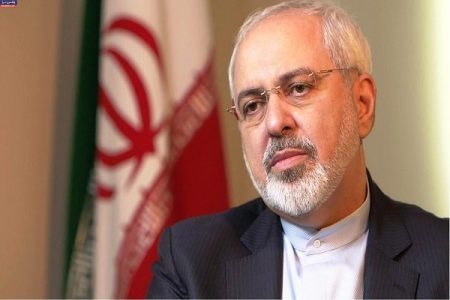
Mehr News Agency | June 16, 2017
TEHRAN – In reaction to the latest remarks of US secretary of state at a US House Committee on Foreign Affairs hearing, Iranian FM Zarif posted some tweets late on Thursday.
“The 1953 coup debacle and the 1979 Revolution proved that Iranian people are impervious to outside attempts to decide their destiny,” Mohammad Javad Zarif, the Foreign Minister of Iran, posted on his Twitter account on Thursday.
Zarif’s post came after Wednesday remarks by Rex Tillerson, the United States Secretary of State, at a US House Committee on Foreign Affairs hearing on Wednesday.
The Iranian top diplomat advises US officials to be concerned about their own country where elections turnout are significantly lower than Iran, “For their own sake, US officials should worry more about saving their own regime than changing Iran’s, where 75% of people just voted.”
Mr. Zarif also calls for US apology for all the interventions by the US in Iran’s domestic affairs referring and the support by the US for the former shah of Iran during the uprising of the nation in favor of the then PM Mohammad Mosaddegh; “after decades of failed regime change and sanctions, US had to apologize for ‘1953 coup, and acknowledge diplomacy as the only option.”
Zarif advises the US administration to study and learn from history instead of trying to follow unlawful policy of changing regimes in other countries.
The Forward publishes criticism of Alison Weir, but refuses to publish response
If Americans Knew | June 15, 2017
The website of the Forward newspaper recently published an opinion piece by political hitman Spencer Sunshine, in which he slammed the American Left and specific individuals for alleged antisemitism, including Alison Weir.
Sunshine is a writer/activist who focuses on antisemitism, and specifically on seeking it out — or inventing it — among leftists and supporters of Palestinian rights. (More on Sunshine below.)
While slurring those he disagrees with is Sunshine’s modus operandi (he throws around accusations of bigotry with the abandon of a spoiled schoolboy), we expect better of the Forward. Journalistic ethics require that media allow people to respond when they’ve been criticized, yet the Forward has failed to publish Weir’s response. (More on the Forward below.)
(The right of response is affirmed by the Society of Professional Journalists, the International Principles of Professional Ethics in Journalism, the BBC, MediaWise, the National Conference of Editorial Writers, and many, many others. The American Society of Newspaper Editors states: “Persons publicly accused should be given the earliest opportunity to respond.”)
Below is Weir’s letter responding to Sunshine’s piece:
To the Editor,
I was disappointed to see the Forward chose to publish Spencer Sunshine’s recent reactionary screed “The Left Must Root Out Anti-Semitism In Its Ranks.” However, that Sunshine should attempt to dismiss me as an “anti-Semitic conspiracy theorist” did not surprise me, as Sunshine has a long history of working to silence criticism of Israel and Zionism. At a talk in Portland, Oregon he described virtually every form of Palestine solidarity as anti-Semitic.
Accusations of “left anti-Semitism” have long been used to undermine solidarity with marginalized people, a population Sunshine often seems to ignore. His article about the history of anti-racism in the United States, for example, almost entirely omitted the efforts of communities of color, focusing instead on mostly-white “antifascist” groups.
Of Sunshine’s work, the pieces I’m familiar with are hatchet jobs, misrepresenting his subjects to suit his goals and exploit his audience’s fears and gullibility.
Sunshine seems to operate according to an all-too-often successful principle: if you accuse someone of something bad enough, it doesn’t matter how wrong, sloppy, or biased you are. Certain accusations tend to be show-stoppers, tainting by default–and he employs these with shameless abandon.
Sunshine clearly hopes that simply saying the magic words “conspiracy theory” will prevent others from listening to me directly or examining my work. In fact, my book and multitude of articles and speeches are exhaustively researched and based on serious sources. All of my work is transparent, with sources clearly cited or linked, so others can read more and decide for themselves. While I’m only human and certainly not infallible, I strive to use reliable sources and be as transparent as possible about my sources and the evidence supporting my work.
Sunshine refers to a JVP statement critical of me, but fails to mention that the statement does not claim that I am anti-Semitic. More important, he fails to make any reference to two open letters rejecting the criticism of me, signed by some incredibly prominent and principled academics, humanitarians, and thousands of activists, including many members of JVP itself. Indeed, I continue to work with many JVP chapters and individuals, who have brought me to speak in their areas and who are accomplishing important work.
Sunshine operates as a hitman for the reactionary forces who would have us never stand up against oppression for fear of not speaking carefully enough and unintentionally giving unfair offense. It is important to try to speak accurately and fairly, but when people are dying and the prospect of peace is rapidly receding for two populations (and everyone else affected by the violence and instability that radiate from the conflict), perfection is no longer the enemy of good but the enemy of peace and life itself.
Let us act, debate and try to solve this tragedy, not police each other’s words to the point of utter inaction. And let us not attack those working for justice, peace and human rights with false and malicious accusations.
If Sunshine showed half the enthusiasm for opposing atrocities and championing human rights for all humans–even Muslims, Palestinians, and people of color–that he shows for thought policing activists, he could make a positive difference In our shared world.
Sincerely,
Alison Weir
More information:
Spencer Sunshine is an early instigator and enthusiastic champion of the campaign to silence Weir, which has been roundly rejected by numerous prominent humanitarians, academics and activists in two open letters (here and here; see also this article on CounterPunch ). He identifies himself as an “anti-fascist writer” and is close to antifa groups, a movement known for celebrating and perpetrating violence (he was apparently unfazed when violence occurred a few months ago at a protest he organized).
The Forward is a venerable newspaper founded towards the end of the 19th Century. It is a leading, or perhaps the leading, publication serving the American Jewish community. It operates as a nonprofit and appears to have assets of over $50 million. The paper leans heavily towards an Israel-centric viewpoint when reporting on Palestine and Israel. Nevertheless, it is a professional publication which should hold itself to the highest journalistic standards.
Newly-deployed US rocket launchers may target Syrian army: Russia
Press TV – June 15, 2017
Russia says the US has deployed the M142 High Mobility Artillery Rocket System (HIMARS) launchers from Jordan to its base in southern Syria, warning that the equipment could be used against Syrian government forces.
“The United States has moved two HIMARS multiple rocket launchers from Jordan to the At-Tanf US special forces base,” the Russian Defense Ministry said in a statement released on Thursday.
It also accused the US, which is purportedly fighting terrorists, of having “repeatedly issued strikes on Syrian government forces fighting Daesh near the Jordanian border.”
Thus, the ministry said, “it’s not hard to guess that similar strikes will be continued against contingents of the Syrian army in the future using HIMARS.”
The deployment of any type of foreign weaponry on Syrian soil “must be approved by the government of the sovereign country,” it pointed out.
The statement further said Moscow is closely monitoring the situation on the Syrian-Jordanian border.
On Wednesday, an intelligence source first reported the US relocation of the HIMARS from Jordan to Syria.
The town of At-Tanf, home to a US base, is located in Syria’s Homs Province near a Syria-Iraq border crossing on the main Baghdad-Damascus highway.
On June 6, US warplanes attacked a Syrian military position on the road to At-Tanf, killing an unspecified number of people and causing some material damage.
The US claimed that the Syrian forces who came under the attack posed a threat to its forces and their terrorist allies in Syria.
On May 18, the US carried out a similar strike on a Syrian military convoy near At-Tanf.
The Syrian army has denounced the attacks, saying they demonstrate US support for terrorism, at a time when the Syrian army and its allies are making gains against Daesh militants.
The US and its allies have been bombarding what they call Daesh positions inside Syria since September 2014 without any authorization from the Damascus government or a UN mandate.
They have been accused of targeting and killing civilians, while failing to fulfill their pronounced goal of destroying Daesh.
Hedge fund billionaire creates charter schools that teach about Israel, “the Jewish miracle of the 20th century”
If Americans Knew – June 14, 2017
The Jewish Telegraphic Agency (JTA) reports that Michael Steinhardt, an atheist, billionaire, and “mega-philanthropist,” has poured millions into projects for American Jews. He is best known as the founder of Birthright Israel, a free, ten-day trip to Israel that is enjoyed by a large percentage of Jewish young adults. He also facilitates programming after the Birthright experience in order to maintain participants’ loyalty to Israel and Jewish culture.
Steinhardt believes that American Jewish education needs to change, and consequently has founded a network of Hebrew-language charter schools.
In these schools, Steinhardt explains, “Jewish kids… will learn a great deal about Israel… and there’s a great deal of emphasis on Israel, Zionism, stuff like that.” He adds that “Jews have accomplished so much, so inexplicably out of proportion to their numbers, in [the last] 300 years, and it’s one of the great failures of Jewish education that that’s not focused on at all.”
When pressed to explain why he, as an atheist, supports a Jewish education, he explained, “The modern state of Israel is the Jewish miracle of the 20th century, but it’s the secular part of Israel that’s the miracle… the development of a society out of nothing using Zionist ideals… Israel has become, for me, the substitute for religion.”
Steinhardt continued, “Israel is a complicated place in a strange part of the world… There are a substantial number of Jews who believe that Israel should leave the settlements, leave the West Bank… The more one understands about Israel, the more comfortable one becomes with the politics of the Israeli government.”
He went on to claim that “Israel is to me the most moral state on this planet, [even] with the occupation.”
If Americans Knew details the effects of the occupation to which Steinhardt refers: “In violation of international law, Israel has confiscated over 52 percent of the land in the West Bank and 30 percent of the Gaza Strip for military use or for settlement by Jewish civilians… From 1967 to 1982, Israel’s military government demolished 1,338 Palestinian homes on the West Bank. Over this period, more than 300,000 Palestinians were detained without trial for various periods by Israeli security forces.”
The occupation itself is illegal according to international law, as are Israeli settlements and their over 500,000 Jewish settlers, the separation wall, restriction of movement, detention without charge—including detention of minors, collective punishment, ethnic cleansing (through forced depopulation and other means), home demolition (close to 50,000 structures have been demolished since 1967), and human rights violations.
American Friends Service Committee (AFSC) reports on damaging effects of occupation on the Gaza Strip, including a ten-year, ongoing siege and numerous military attacks, leaving more than 80 percent of the population dependent on international assistance for survival.
AFSC emphasizes that “the situation in Gaza should not be viewed as a humanitarian crisis… [but as a] political crisis that can only be resolved through… ending the blockade and Israel’s continued occupation of the Palestinian territory, which are at the root of the crisis.”
Featured Video

Spain train disaster raises questions over Israeli-linked security contractors
or go to
Aletho News Archives – Video-Images
From the Archives
Are There 50,000 ‘Israeli-born’ Individuals Living in the UK?
By Professor David Miller | August 18, 2026
Recent disclosures by the Zionist regime show that some 2,069 British nationals were serving in the IDF as of March 2025, according to Freedom of Information (FoI) requests submitted to the occupation forces (1,686 dual British-Israeli, plus 383 multinational). We cannot tell from the figures how many of these were already settler colonists and intend to stay in the colony, and how many will return or have returned to the UK. Presumably, those returning to the UK will number far fewer than 2,000, since many are known to have become permanently residents of the colony.
Additionally, the IDF figures only provide a snapshot, and do not tell us how many have served in the Jewish supremacist military either before or after March 2025. One way into the question of how many genocidaires are living in Britain is to ask how many current British residents were born in the Zionist colony. There is data on that, as we shall see. … continue
Blog Roll
 Aletho News
- Are There 50,000 ‘Israeli-born’ Individuals Living in the UK?
- German CDU MPs Seek Climate “Misinformation” List
- The ‘Gaza Treatment’: How Media Headlines Obscure Who is Bombing Yemen
- Ro Khanna urges Democrats to strip Israel ‘integration’ provision from defense bill
- Why Iran designated British MI6, Royal Navy, and RAF as hostile, terrorist organizations
- Armenian opposition politician dies in custody
- US still trying to recycle failed hypersonic missile programs
- France’s ‘Cold War’: Paris blames Tehran for supermarket fridge hacks
- Psywar no more? 77th Brigade’s sudden death
- Ukraine Already Carved Up… Before Talks Begin? /Prof. Richard Sakwa
- If Americans Knew
- An error has occurred; the feed is probably down. Try again later.
- No Tricks Zone
- German Authorities Start Initiative To Evaluate Public Register For Climate “Disinformation” Spreaders!
- Zonal Asymmetry of Temperature Change in the Antarctic Circumpolar Current
- New Study: The Net Fossil Fuel Contribution To Rising Atmospheric CO2 Has Been Zero For 500 Years
- Germany’s Green Energy Transition Becoming Increasingly Expensive…Another 6 Trillion Euros!
- Sudden Stratospheric Warming, Powerful El Niño Combination May Lead To Extreme Europe Cold, Energy Crisis!
- Two New Studies Find Thwaites Glacier Melt Cannot Be Driven By Human Activity Or A Warming Ocean
- E-Cars Reduce CO2 Emissions By Only 41% Compared To Internal Combustion Engine Vehicles
- Predictions Made By Renowned Climate Professor Over Past Decades Have Been Proven To Be Poor
- New Study Suggests Large Regions Of The Pacific Ocean Have Been Cooling For The Last 80 Years
- Germany’s Green Energy Debacle: High Energy Costs Force Kahla Porzellan to Close After 182 Years!

