Syrian army ‘will ignore’ US air force border fight threat
Morning Star | May 30, 2017
SYRIA’S armed forces made clear yesterday that they will not obey US air force instructions to halt military operations near the Tanf border crossing with Iraq.
An army officer told Al-Masdar News that, despite the US air force dropping leaflets over Syrian army positions in south-east Homs at the weekend, army units will continue fighting against Free Syrian Army (FSA) and Isis militants until the entire Iraqi border with south-east Syria is sealed.
“Any movements toward Tanf will be considered hostile and we will defend our forces,” the US-led coalition leaflet read.
The officer added that the Russian military is deeply embedded with the Syrian army and their allies in southeast Homs and is backing continued operations.
Government forces greatly outnumber the Western-backed FSA in the region and the US allies also do not have the backing of the Iraqi government or the Shi’ite Popular Mobilisation Units that operate both in Iraqi desert areas west of Mosul and alongside Syrian government forces in south-east Homs.
US warplanes hit pro-Syrian government Palestinian fighters on May 18 on the pretext that they posed a threat to US troops and allied rebels near the border with Jordan.
Syrian army and allied paramilitary forces continued their successful campaign in the eastern Aleppo countryside yesterday afternoon, breaking through Isis defences and capturing the Ras al-Ayn village and its surroundings, heightening the pressure on the Isis stronghold of Maskanah.
The last batch of jihadist insurgents and their family members were transported in government-provided buses from the Barzeh suburb of east Damascus to Idlib province yesterday.
Their departure means that the Syrian government has full control of this suburb for the first time since late 2011.
Several rebels opted to remain in Barzeh and will have six months to resolve their status with the government.
Four members of the pro-Syrian government Harakat al-Nujaba militia, together with two Syrian army soldiers, were freed from year-long captivity in jihadi-controlled province Idlib on Sunday night after Nujaba fighters launched a behind-the-enemy-lines raid.
South Korea’s new leader orders probe into ‘unauthorized’ US deployment
Press TV – May 30, 2017
South Korea’s new President Moon Jae-in has ordered an investigation into the “unauthorized” deployment of four additional THAAD missile launchers by the United States to the country’s soil.
Presidential spokesman Yoon Young-chan said Moon was “shocked” to hear that the four additional launchers of the so-called Terminal High Altitude Area Defense (THAAD) missile system were installed without being reported to the new government or to the public.
“President Moon was briefed on such facts by National Security Office (NSO) chief Chung Eui-yong and said it was very shocking,” the spokesman told a news briefing on Tuesday.
The system was initially deployed to South Korea in March with just two of its maximum load of six launchers with the declared aim of countering North Korean threats.
The South Korean official further said the president had “ordered his senior secretary for civil affairs and the NSO chief to find the truth behind the unauthorized entry of the four rocket launchers.”
The deployment of THAAD, which came amid tensions with North Korea, was met with strong opposition from people in South Korea, including the residents of Seongju County, where the missile system is installed.
The installation was agreed by the government of Moon’s predecessor Park Geun-hye, who was impeached and ousted over a corruption scandal.
During his election campaign prior to the May 9 election, Moon had urged a parliamentary review of the controversial deployment, which has angered Pyongyang.
Russia and China have also expressed deep concern over the controversial deployment of the American missile system on the Korean Peninsula.
Chinese officials argue that the US system would interfere with their radars and could pose a threat to Chinese security.
Moscow has also warned that the deployment would only fuel tensions in the region.
Japan wants US parachute drills grounded amid Okinawa anger
RT | May 30, 2017
Japan is opposed to a two-day parachuting drill that the US plans to conduct near the Kadena Air Base in Okinawa. Local residents have protested such drills in the past, and this would be the third in two months.
Japanese Defense Minister Tomomi Inada said the US military failed to notify the Japanese authorities seven days ahead of the exercise, as they are supposed to. In fact, Japan learned of the Americans’ plans from a Notice to Airmen (NOTAM) filed with the aviation authorities, which is meant to keep civilian aircraft out of airspace where US military planes are flying during the exercise, NHK reported.
“We asked [the Americans] not to conduct the training and to delete the NOTAM. So far we have not received a response from the US site,” Inada told reporters on Tuesday after a cabinet meeting.
The parachuting exercises, which are planned for Wednesday and Thursday, would be conducted off the coast of the city of Uruma. Similar drills were conducted off the Kadena Airbase on the night of May 10 and on April 24.
The previous two drills sparked protest among Okinawans, who have not seen such exercises since 2011. After the second training, Deputy Okinawa Governor Moritake Tomikawa filed a protest with Japan’s Defense Ministry, expressing outrage and saying that such exercises cannot become routine.
Defense Minister Inada called the US move “regrettable,” saying the US should observe a 1996 bilateral agreement under which parachuting exercises should be conducted on the remote island of Iejima, off Okinawa’s main island, with the Kadena base used only as an exception.
“The United States did not offer sufficient explanation on why the exercise conducted (Wednesday) amounted to an exceptional case,” Inada said at a regular news conference. “It is extremely deplorable that it took place at Kadena Air Base without Japan and the United States able to share the same perception in advance,” she stressed.
The Kadena Airbase is one of several US military installations on Okinawa, a southern Japanese island that hosts some 70 percent of the US troops in Japan and is home to some 20,000 US service members, contractors, and their families.
During a parachuting drill in 1965, a trailer airdropped into a local village inadvertently landed on a schoolgirl, killing her.
The protest over the latest planned drill comes a day after Okinawa police arrested a US airman assigned to the Kadena base following a drunk hit-and-run. Staff Sergeant Miguel Angel Garza allegedly hit a car on Monday and fled the scene. The female driver of the second vehicle sustained minor injuries, Japanese authorities said.
Things that Saudis can’t buy off
By M K Bhadrakumar | Indian Punchline | May 29, 2017
There is something obscene about anyone who held high positions in the government – for example, an Ambassador or an Army Chief – taking up a post-retirement job as employee of a foreign government. Pakistan’s former army chief General Raheel Sharif should not have accepted the offer made by Saudi king Salman to appoint him as the head of a newly-formed Islamic Military Alliance.
It is common sense that the assignment would effectively make the Pakistani general a vassal of the House of Saud. What was the need for it? A Pakistani general is almost certainly a very wealthy man who really doesn’t need more money. And if Gen. Sharif had an insatiable itch to continue to fight terrorism till the end of his life, Pakistan itself provided ample opportunities.
Why Saudi Arabia? The only plausible answer is — avarice. The Saudis’ capacity to lure foreign elites is a legion. According to reports, Salman gave away to US President Donald Trump personal gifts alone worth $1.2 billion. One heavy sword made of pure gold and studded with diamond stones weighing 25 kilograms alone was worth $200 million. Then, there is this 125 meter long yacht, which is apparently the world’s tallest personal yacht, with 80 rooms with 20 royal suites.
Maybe, the yacht is useful for Trump’s escapades, but what will he do with a 25 kg sword? Obviously, Salman was bribing Trump. As quid pro quo, Salman probably expects Trump to close the file on the 9/11 attacks and drop the idea of seeking compensation for the victims’ families under the US legislation known as Justice Against Sponsors of Terrorism Act.
Of course, Saudis do not have to give away such lavish gifts to the elites in Pakistan (or India.) A Mont Blanc ballpoint pen, Rolex wrist watch, an odd job for the nephew or son-in-law – that generally does the trick. To be sure, by Pakistani standards, Gen. Sharif must be getting a fat salary.
However, the amazing part is that the Pakistani government gave him an exceptional ‘No Objection Certificate’ to take up such an assignment. The Pakistani leadership would have known that the Saudis had a certain agenda in creating the Islamic Military Alliance. The Saudi intention is to rally Sunni Muslim countries and create a phalanx against Shi’ite Iran. No matter the gloss put on the IMA being an anti-terror enterprise, the alliance’s Iran orientation was crystal clear.
The Pakistani press reported that Iran’s ambassador in Islamabad Mehdi Honardoost called on army chief General Qamar Javed Bajwa in Rawalpindi twice during the month of April alone to convey Tehran’s disquiet over Sharif’s appointment. But the government remained impassive.
The birds are now coming to roost. One outcome of Trump’s visit to Riyadh last week is that the Islamic Military Alliance now stands pretty naked as a Sunni Muslim alliance to fight Iran. Not only that, the alliance will fight Iran in secret collaboration with Israel. The Saudi Deputy Crown Prince Mohammad bin Salman has bragged in a media interview, “We will not wait for the war to be waged on Saudi soil. We will make sure that the war is waged in Iran and not in Saudi Arabia.”
Now, this is all spinning out of control. Imagine Gen. Sharif landing the IMA troops in Badar-e Bushehr and leading the charge of the light brigade to Shiraz and Esfahan and on to Tehran to overthrow the Iranian regime. Therefore, it is not at all surprising that Gen. Sharif is reportedly developing cold feet and is contemplating to resign from his job and return to Pakistan.
Even if that is not the case, Pakistani leadership should order him to return home. It will be extremely damaging to Pakistan’s interests any which way one looks at it, if it gets entangled in the Saudi-Iranian tensions. As the African proverb says, ‘When elephants fight, it is the grass that gets hurt’.
The really bizarre part of it is that Trump’s rhetoric about Iran is all baloney. Trump is a bluff master. He will now walk away laughing with the sword and the yacht. Read a report in the New York Times – As Iran and U.S. Leaders Trade Barbs, Big Deals Proceed.
Alleged Russia-Taliban Arms Link Disputed
By Jonathan Marshall | Consortium News | May 29, 2017
A tiny article from Reuters in late May quoted the director of the U.S. Defense Intelligence Agency as telling a Senate hearing, “I have not seen real physical evidence of weapons or money being transferred.” Marine Lt. Gen. Vincent Stewart was addressing widespread claims by top Pentagon officials of Russian arms flowing to the Taliban in Afghanistan.
By conceding the reports have no real substance, Stewart quietly called the bluff of military hardliners who are invoking the Russian menace to justify prolonging and escalating the longest and second-most-costly war in U.S. history. Stories of Russian military shipments to Afghanistan began last December, with a typical headline from the Washington Post: “Russia begins supplying weapons to Afghanistan, sides with Taliban.”
Down in the body of the story, however, it emerged that Moscow had agreed to ship 10,000 assault rifles not to the Taliban but to the Afghan government’s police force in Kabul. A Russian Foreign Ministry official said, “Russia has been consistently pursuing the policy of providing comprehensive assistance to Afghanistan in the establishment of a peaceful, independent, stable and self-sufficient state, free from terrorism and drugs.” Russia previously supplied helicopters and pilot training to Afghan forces, under a contract with the U.S. Department of Defense, which continued thanks to a special U.S. waiver on economic sanctions.
As to the Taliban, the Russian official said only that his government stood ready, in the interests of Afghanistan’s national reconciliation, to support “the possible weakening of the sanctions regime . . . against the Taliban, if it is not contrary to the national interests of Afghanistan.” He added that Russia shared the Taliban’s interest in defeating ISIS in Afghanistan.
Scapegoating the Russians
Starting in March, coincident with urgent requests by the U.S. commander in Afghanistan for thousands more troops to stem the Taliban’s military advances, senior Pentagon officers began blaming Russia for setbacks on the battlefield.
“I think it is fair to assume they may be providing some sort of support to [the Taliban] in terms of weapons or other things that may be there,” General Joseph Votel, chief of U.S. Central Command, told members of Congress.
Defense Secretary James Mattis chimed in with claims, paraphrased by NPR correspondent Tom Bowman, that “the Russians are providing some support, including maybe weapons to the Taliban.” Noting that the details were “murky,” Bowman added, “the commander in Afghanistan, General John Nicholson, thinks this is a way for the Russians just to undermine the U.S. and NATO.”
Staying on message, a spokesman for the NATO coalition in Afghanistan told the Los Angeles Times days later, “We know that actions by Russia in Afghanistan are meant to undermine the work of the United States and NATO to support the Afghan government.” The reporters then stated as fact, “It . . . represents another effort by [Russian President Vladimir] Putin to exert power globally while weakening the U.S.”
In late April, a “senior U.S. military official,” speaking on background, asserted that the Russians had “increased their supply of equipment and small arms to the Taliban over the past 18 months.” He said “the Russians have been sending weapons, including medium and heavy machine guns, to the Taliban under the guise that the materiel would be used to fight the Islamic State in eastern Afghanistan.”
Secretary Mattis, quoted in the same article, said menacingly, “we’re going to have to confront Russia where what they’re doing is contrary to international law or denying the sovereignty of other countries.”
Russian Denials
Russia, increasingly considered a “hostile power” by many Americans, won few converts by denying what it called “irresponsible accusations” based on “rumors and conjectures.” Its special envoy to Afghanistan branded the allegations of its arms transfers to the Taliban insurgents “absolute lies . . . aimed at justifying the failure of the U.S. military and politicians.”
But Russia’s credibility – even after months of strident and varied accusations from Western officials – could hardly have been lower than the Afghan sources quoted in U.S. news accounts to bolster the Pentagon’s claims. One notable example was the police chief of Uruzgan province, who spoke of Russian agents, “dressed in doctor’s uniforms,” infiltrating his region and “enticing people against the government, providing training and teaching how to assemble land mines.”
The rotten corruption of the Uruzgan provincial police has been attested to by no less than the commander of the Afghan army in that province. Police there abandoned the provincial capital last year, allowing Taliban forces to walk in unopposed — not because of Russian weapons but because senior officials had pocketed police pay for months at a time.
Similar claims against Russia came from the governor of Kunduz province, whose capital was overrun by Taliban forces last fall in what reporters described as a “seemingly easy re-entry” into the city after a similar Taliban incursion in 2015 was repelled by U.S. Special Forces. Other Afghan officials, and independent reporters, ascribed the Taliban’s easy victories to the local population’s grievances against the “mafia-like” elite who run the province.
Experts also blamed aid from Pakistan — not Russia — to the Taliban. Echoing their complaint, former U.S. Ambassador Zalmay Khalilzad said last year, “The issue of the U.S. inability to deal effectively with Pakistan, and the [Taliban] sanctuary problem in Pakistan, has been the mother of all problems for U.S.-Afghan relations and of Afghanistan to some degree since 9/11.”
Another big supplier of the Taliban is Saudi Arabia. An exposé by Carlotta Gall in the New York Times revealed that as a longtime ally of Pakistan, “Saudi Arabia has backed Islamabad’s promotion of the Taliban. Over the years, wealthy Saudi sheikhs and rich philanthropists have also stoked the war by privately financing the insurgents.”
How US Arms Taliban
Perhaps the biggest arms supplier of all to the Taliban is the U.S. taxpayer. The Taliban rake off hundreds of millions of dollars from extortion of U.S.-funded projects in the country. They also fill their armories with U.S.-made weapons. A Taliban commander told Bloomberg News that when he needs more weapons and fuel, he simply buys or steals them from his foe. “It’s simple and cheaper,” he said.
As journalist and book author Douglas Wissing observed recently, “U.S-enabled corruption lost the Afghan War. . . Corruption funds the enemy, with hundreds of millions of dollars skimmed from U.S. logistics and aid money. . . . Empowered and financed by this corruption, Taliban strength has grown at double-digit rates annually since 2005. Insurgents now control about 40 percent of the countryside, and are pressuring government centers across country, including increasingly besieged Kabul.”
In the past, Donald Trump was correct when he tweeted that the war in Afghanistan was a “total disaster” – although as President, he is reportedly considering a Pentagon plan to escalate the U.S. role, again.
Blaming the Russians for the war’s latest reversals may let our Afghan allies and our own military off the hook for losing this long war in slow motion, but it won’t change the outcome.
Trump’s visit to Israel: How Palestine disappeared from US media coverage
By Ramzy Baroud | MEMO | May 28, 2017
As if he has, overnight, been transformed into a master politician, Donald Trump’s 27-hour trip to Israel has left many analysts mystified.
Quoting former Israeli political adviser, Mitchell Barack, the New York Times referred to Trump as the “Liberace of world leaders”, in reference to flamboyant, piano player, Wladziu Valantino Liberace. The latter, known as “Mr. Showmanship”, was, at times, the highest paid entertainer in the world and his successful career lasted over four decades.
New York Magazine Online quoted former US ambassador to Israel, Dan Shapiro, too, trying to decipher the supposedly complicated persona of Trump.
“Either Trump’s visit was substance-free – or he ‘is being uncharacteristically subtle’ in planting the seeds for new round of peace negotiations,” NYmag quoted and paraphrased Shapiro’s tweets.
“Liberal” US media, which has stooped to many lows in its attacks on Trump – including his family, his mannerism, his choice of words, even mere body language – became much more sober and quite respectful in the way they attempted to analyze his short trip to Israel, and the very brief detour to Bethlehem, where he met with Palestinian Authority leader, Mahmoud Abbas.
“Mr. Trump’s speech at the Israeli Museum was so friendly and considerate of Israeli emotions,” reported the New Your Times, “that one right-wing Israeli legislator described it as deeply expressive of the ‘Zionist narrative’.”
Palestinian emotions, however, were of no consequence, neither to the Trump entourage, nor, of course, to the New York Times or others in mainstream media.
The Washington Post, on the other hand, still found faults, but, certainly not because of Trump’s lack of balance and his failure to deride the Israeli occupation and Israel’s mistreatment of Palestinians.
Despite the fact that Trump has, indeed, fully embraced a “Zionist narrative”, and a rightwing version of it (for example, he made no reference to a Palestinian state), he still fell short. His performance at Israel’s national Holocaust Memorial (Yad Vashem) did not impress.
Max Bearak wrote in the Post : “Trump’s entry in the guest book at Israel’s National Holocaust Memorial was strangely upbeat, self-referential and written in his signature all caps: ‘IT IS A GREAT HONOR TO BE HERE WITH ALL OF MY FRIENDS — SO AMAZING & WILL NEVER FORGET!’”
Bearak found such choice of words and the style in which it was written sort of offensive, especially if compared with the supposed thoughtfulness of former President Barack Obama.
In contrast, Obama wrote a significantly longer note, which partly read: “At a time of great peril and promise, war and strife, we are blessed to have such a powerful reminder of man’s potential for great evil, but also our capacity to rise up from tragedy and remake our world.”
Neither then, nor now, did the Washington Post bother to examine the historical context in which this particular sentence was written and find the hypocrisy of the whole endeavour.
If they bothered to ask Palestinians, they would have found a whole different interpretation of Obama’s words.
Indeed, wherever occupied Palestinians look, they find “man’s potential for great evil”: a 400-mile Israeli Wall being mostly built over their land; hundreds of military checkpoints dotting their landscape; a suffocating military occupation, controlling every aspect of their lives. They see the holiest of their cities, Bethlehem and Al-Quds – occupied East Jerusalem – subdued by a massive military force; thousands of their leaders thrown into prison, many without charge or trial. They see siege; an endless war; daily deaths and senseless destruction.
But since none of this matters to the “Zionist narrative”, it subsequently matters so very little to mainstream American media, as well.
Trump’s trip to Israel, however short, was, indeed, a master stroke by the ever-unpredictable Liberace of world politics, although, it takes no particular genius to figure out why.
From an American mainstream media perspective, to be judged “presidential” enough, all US presidents would have to commit to three main policies. They are, in no particular order: privileging the economic business elites, war at will and unconditionally supporting Israel.
So far, US media, which has been otherwise polarized based on political allegiances, has taken a break from its raging conflict over Trump’s presidency, and rallied behind him on two separate occasions: when he randomly bombed Syria and during his visit to Israel.
Ironically, the man has been often judged for lacking substance on numerous occasions in the past. In fact, his trip to Israel was the most lacking and most divisive. However, the fact that he, time and again, reiterated Israeli priorities was all that the media needed to give the man a chance. Their collective verdict seems to rebrand his lack of substance as his unique “subtle” way of making politics.
Israeli media, which is often more critical of the Israeli government than US media ever dare, needed to keep up with its “democratic” tradition. But Trump’s groveling also gave them little room for criticism. The often-impulsive Trump, this time stuck to the script and followed his repeatedly rehearsed speech and media comments to the letter.
But Josefin Dolsten insisted on finding a way to nitpick, composing for the Times of Israel the “7 awkward moments from Trump’s Israel trip.”
One of these awkward moments, Dolsten wrote was “a White House statement listing Trump’s goals for the trip included a hilarious (and juicy!) typo: ‘Promote the possibility of lasting peach’ between Israel and the Palestinians. Yes, we get it — it meant to say peace, but who’s to say the two sides can’t bond over some delicious fruit?”
For Palestinians, it must not be easy to find the humour in these tough times. Hundreds of their prisoners, including their most popular leader, Marwan Barghouthi, were enduring a prolonged and life-threatening hunger strike in which they were making the most basic demands for better treatment, longer visitation hours with their families and ending of arbitrary detentions.
More telling, on the day Trump, along with rightwing Israeli Prime Minister Benjamin Netanyahu, lectured Palestinians on peace, a 17-year-old Tuqua Hammad was shot for allegedly throwing stones at Israeli military vehicles at the entrance of her village of Silwad, near Ramallah.
Tuqua “was shot in the lower extremities and Israeli troops prevented a Palestinian ambulance from accessing the victim to treat her,” Ma’an news agency reported.
Merely a few miles away, Trump was writing his remarks after visiting Israel’s Holocaust Museum. Regrettably, he failed to meet the expectations of the Washington Post, for unlike Obama, he was not poignant enough in his language and style.
The irony of the whole story is inescapable; but American media cannot see this, for it, too, seems to follow a script, in which Palestinian rights, dignity and freedom are hardly ever mentioned.
US Policymakers Openly Plot Against Venezuela
By Tony Cartalucci | Land Destroyer | May 24, 2017
The US media has been paying increasing attention to the unfolding crisis in the South American nation of Venezuela. As the US media has done elsewhere, it is attempting to portray the unfolding crisis as a result of a corrupt dictatorship fighting against a “pro-democracy” opposition.
In reality, it is simply a repeat of US-driven regime change aimed at toppling Venezuela’s independent state institutions and replacing them with institutions created by and for US special interests.
The “opposition” is comprised of US-backed political parties and US-funded fronts posing as nongovernmental organizations (NGOs) many of which are listed on the US State Department’s National Endowment for Democracy (NED) website.
The UK Independent in a 2016 article titled, “Venezuela accuses US of plotting coup as Washington warns of ‘imminent collapse’,” would even admit:
… observers of the region point out that the US has a long history of seeking to interfere in the politics of Venezuela, as well as elsewhere in Latin America.
In addition to supporting those who ousted Mr Chavez in 2002, the US poured hundreds of thousands of dollars to his opponents via the so-called National Endowment for Democracy.
To understand America’s actual role amid Venezuela’s unfolding crisis, one must read policy papers produced by organizations called “think tanks” which devise and promote US policy.
The Brookings Institution is a Fortune 500-funded policy think tank. It is populated by policymakers who represent the collective ambitions of some of the world’s most powerful corporate-financier interests including big-oil, defense, agricultural monopolies, pharmaceutical corporations, media interests, and more.
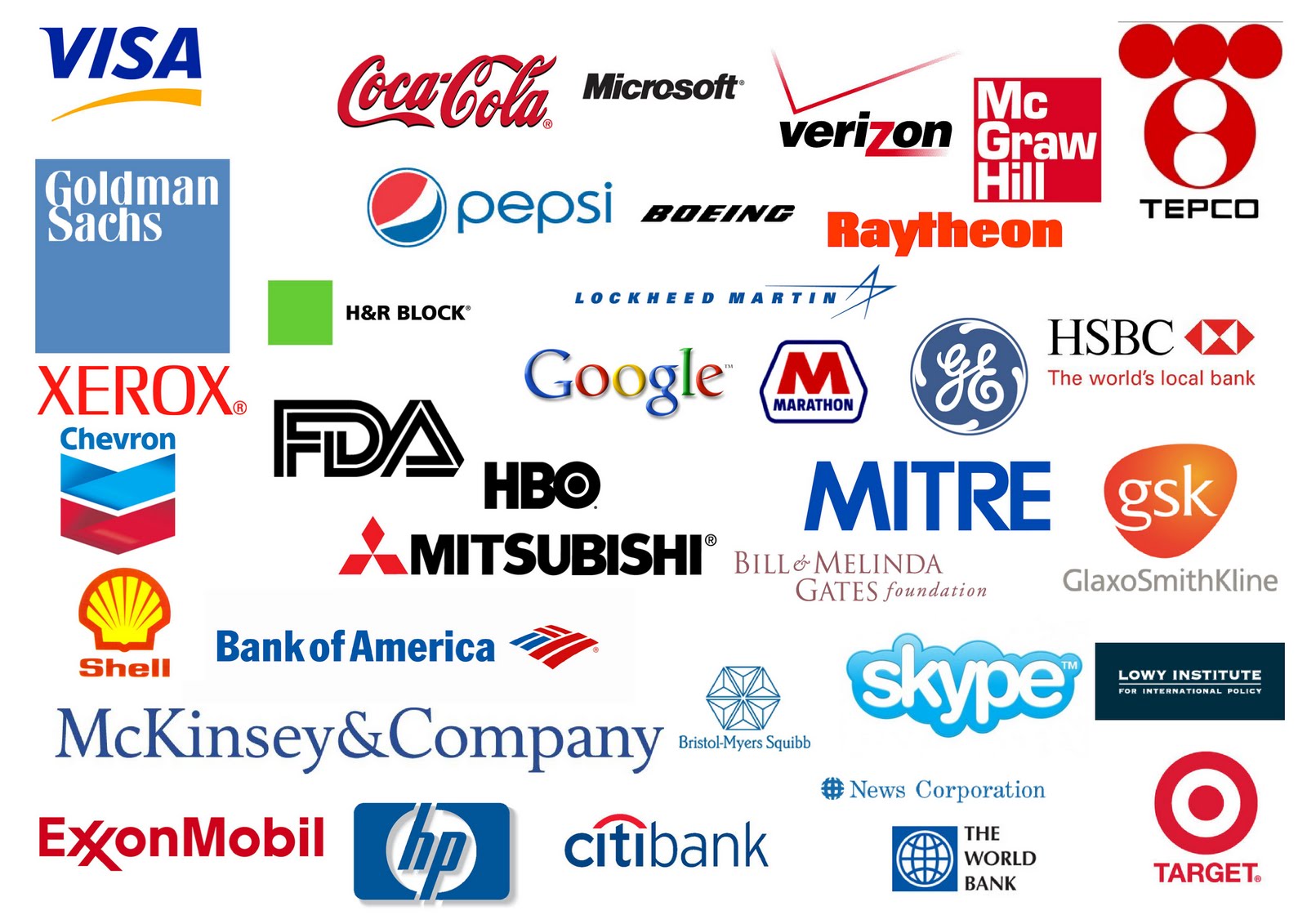 |
| Some of the Brookings Institution’s corporate-financier sponsors |
Brookings and think tanks similar to it, have regularly produced policy and media guidelines later disseminated across the Western media and Western legislatures through public relations firms and lobbyists. Think tanks are where the real agenda of the West is agreed upon and promoted from.
A recent piece featured upon the Brookings Institution’s website titled, “Venezuela: A path out of crisis,” lays out a 5-point plan toward escalating Venezuela’s already precarious situation (emphasis added):
1. The United States could expand its assistance to countries that until now have been dependent on Venezuelan oil, as a means to decrease regional support for and dependence on the Maduro government.
2. The United States could increase monetary assistance to credible civil society organizations and nongovernmental organizations able to deliver food and medicines to Venezuelans. By doing so, the United States should make clear that international pressure aims to support democracy, not punish the Venezuelan people.
3. The United States could support efforts by the opposition in Venezuela to build an “off-ramp” that would split moderate elements of the government away from hardliners, encouraging the former to acquiesce to a transition to democracy by lowering their costs of exiting government.
4. The United States could coordinate with international institutions such as the International Monetary Fund (IMF) to offer financial incentives for holding free and fair elections in 2018, and for the opposition to unify and compete in those elections. Such coordination would also involve developing and publicizing a credible plan to restart Venezuela’s economy.
5. As a last resort, the United States could consider raising economic costs to the government through an expanded sanctions regime that aims to limit Venezuelan earnings from oil exports and block further financing. This policy is risky, given that the Maduro government would be able to more credibly shift blame for the economic crisis onto the United States, and should be accompanied by well-publicized efforts to deliver humanitarian aid through credible civil society and nongovernmental organizations.
It is a prescription for further economic isolation, US-funded political subversion, and with its reference to “a transition to democracy,” an oblique call for regime change.
The US media – particularly organizations operating from under right cover – have portrayed Venezuela’s economic crisis as primarily related to “socialism” and corruption. In reality, factors that would have only impeded the full realization of Venezuela’s economic progress have been intentionally compounded through US sanctions, economic sabotage, and political subversion to precipitate the currently unfolding socioeconomic and humanitarian crisis.
Venezuela would not be the first nation the US targeted for economic implosion in South America.
The US Central Intelligence Agency (CIA) in its own online archives available to the public under a section titled, “CIA Activities in Chile,” would admit (emphasis added):
According to the Church Committee report, in their meeting with CIA Director Richard Helms and Attorney General John Mitchell on 15 September 1970 President Nixon and his National Security Advisor, Henry Kissinger, directed the CIA to prevent Allende from taking power. They were “not concerned [about the] risks involved,” according to Helms’ notes. In addition to political action, Nixon and Kissinger, according to Helms’s notes, ordered steps to “make the economy scream.”
These Cold War attitudes persisted into the Pinochet era. After Pinochet came to power, senior policymakers appeared reluctant to criticize human rights violations, taking to task US diplomats urging greater attention to the problem. US military assistance and sales grew significantly during the years of greatest human rights abuses. According to a previously released Memorandum of Conversation, Kissinger in June 1976 indicated to Pinochet that the US Government was sympathetic to his regime, although Kissinger advised some progress on human rights in order to improve Chile’s image in the US Congress.
With violence increasing in the streets of Venezuela and many of the rhetorical tactics used to set the stage for violent regime change and humanitarian catastrophe in Libya and Syria are now being used to topple the government in Caracas – the world must get ahead of the propaganda and begin exposing this open conspiracy against yet another sovereign nation.
Venezuela’s political system is for the Venezuelan people themselves to decide – without US interference. A government dominated by US-backed opposition members will leave Venezuela as an extension of US corporate-financier special interests, not an alternative or check against them. This only serves in inviting further abuse by these interests not only in South America, but all around the world – Afghanistan, Syria, Iraq, Yemen, Libya, and Ukraine for example – where America’s unwarranted wealth and influence is sowing instability, conflict, and catastrophe.
Who Controls the Information Space and Why
By Jean Perier – New Eastern Outlook – 28.05.2017
Recently behind-the-scenes rules and restrictions being used by Facebook have fallen into the hands of Guardian reporters. According to their report, moderators employed by the tech giant are entitled to decide what exactly the 2 billion users of this social network can or cannot publish on their pages. This report has provoked a massive discussion on the absence of any ethical norms that could prevent the tech giant from exercising censorship, along with disputes about the determination of US intelligence agencies to spy on their citizens in violation of the USA Freedom Act.
The fact that the US created the Internet as a tool of exercising control over information space, as a convenient environment for espionage, collecting dirty facts and spreading lies has been established long ago. For those naive few who refuse to believe the facts, one can only be reminded of the old saying: There’s no such thing as a free lunch. But who owns the allegedly free Internet? Who created it and why?
According to Reuters, last year alone the US National Security Agency (NSA) intercepted 151 million phone calls of American citizens, in spite of the fact that Congress has allegedly limited the ability to exercise surveillance for intelligence agencies by adopting the USA Freedom Act, according to which courts must decide when to allow intelligence agencies to collect information about a person suspected of criminal activity.
However, the all-encompassing control of US intelligence services over the world’s information space has been uncovered by an unending stream of publications in American and foreign media sources, showing that the United States is grossly violating even the most basic human rights, by creating a system of electronic interception and processing of all sorts of data about users on the Internet.
It wouldn’t be an exaggeration to state that every aspect of our day-to-day lives is being controlled: phone conversations, short text messages, everything we write on social media networks or send via email. Thus, the British Guardian confirmed the existing exchange of information about intercepted electronic messages of both US citizens and British citizens established by US intelligence agencies and the British Government Communications Headquarters. Even British courts recognized that such cooperation that existed for at least seven years is unlawful, since they were carried out in violation of international conventions on human rights.
In addition, the Guardian has also revealed that phone tapping that Mi-5 and Mi-6 authorized in order to intercept private consultations between UK citizens and their lawyers in a bid to guarantee the authorities an upper hand during trials, constitutes a violation of both national laws and international norms.
The Intercept has also revealed that the US National Security Agency (NSA) and its British partners from the Government Communications Headquarters stole the encryption keys of the world’s largest SIM card manufacturer – Gemalto, situated in the Netherlands. This allowed intelligence agencies from both nations ever since to tap all sorts of phone conversations and intercept any data sent via a mobile device carrying a SIM card produced by Gemalto.
In late 2014, the Wall Street Journal has also revealed the practices that allowed US intelligence agencies to record information stored on millions of cell phones across the US through the use of special spyware. Additionally, Wikileaks released CIA documents that show this agency is capable of intercepting messages sent via encrypted message apps such as WhatsApp, Telegram and Signal.
It should be noted that US intelligence agencies have been pretty methodical in the collection of information that in one way or another could be used not just against ordinary citizens, but even against leading political figures. When in October 2013 a scandal erupted with the National Security Agency’s wiretapping of German Chancellor Angela Merkel’s phone, it turned out that the NSA had been carrying out such intrusions for more than ten years by that time. Back then, the scandal was downplayed and no actual changes in those malicious practices were pursued.
So how many more revelations about the total control that US intelligence agencies exercise over information space should be published before Washington’s open mockery of human rights and freedom of speech is finally challenged and stopped?
Jean Périer is an independent researcher and analyst and a renowned expert on the Near and Middle East.
Featured Video

Spain train disaster raises questions over Israeli-linked security contractors
or go to
Aletho News Archives – Video-Images
From the Archives
Are There 50,000 ‘Israeli-born’ Individuals Living in the UK?
By Professor David Miller | August 18, 2026
Recent disclosures by the Zionist regime show that some 2,069 British nationals were serving in the IDF as of March 2025, according to Freedom of Information (FoI) requests submitted to the occupation forces (1,686 dual British-Israeli, plus 383 multinational). We cannot tell from the figures how many of these were already settler colonists and intend to stay in the colony, and how many will return or have returned to the UK. Presumably, those returning to the UK will number far fewer than 2,000, since many are known to have become permanently residents of the colony.
Additionally, the IDF figures only provide a snapshot, and do not tell us how many have served in the Jewish supremacist military either before or after March 2025. One way into the question of how many genocidaires are living in Britain is to ask how many current British residents were born in the Zionist colony. There is data on that, as we shall see. … continue
Blog Roll
 Aletho News
- The Leak That Arrived Right on Cue
- No, New York Times, California’s Climate Has Always Been a Land of Flood, Drought, and Fire
- Are There 50,000 ‘Israeli-born’ Individuals Living in the UK?
- German CDU MPs Seek Climate “Misinformation” List
- The ‘Gaza Treatment’: How Media Headlines Obscure Who is Bombing Yemen
- Ro Khanna urges Democrats to strip Israel ‘integration’ provision from defense bill
- Why Iran designated British MI6, Royal Navy, and RAF as hostile, terrorist organizations
- Armenian opposition politician dies in custody
- US still trying to recycle failed hypersonic missile programs
- France’s ‘Cold War’: Paris blames Tehran for supermarket fridge hacks
- If Americans Knew
- An error has occurred; the feed is probably down. Try again later.
- No Tricks Zone
- German Authorities Start Initiative To Evaluate Public Register For Climate “Disinformation” Spreaders!
- Zonal Asymmetry of Temperature Change in the Antarctic Circumpolar Current
- New Study: The Net Fossil Fuel Contribution To Rising Atmospheric CO2 Has Been Zero For 500 Years
- Germany’s Green Energy Transition Becoming Increasingly Expensive…Another 6 Trillion Euros!
- Sudden Stratospheric Warming, Powerful El Niño Combination May Lead To Extreme Europe Cold, Energy Crisis!
- Two New Studies Find Thwaites Glacier Melt Cannot Be Driven By Human Activity Or A Warming Ocean
- E-Cars Reduce CO2 Emissions By Only 41% Compared To Internal Combustion Engine Vehicles
- Predictions Made By Renowned Climate Professor Over Past Decades Have Been Proven To Be Poor
- New Study Suggests Large Regions Of The Pacific Ocean Have Been Cooling For The Last 80 Years
- Germany’s Green Energy Debacle: High Energy Costs Force Kahla Porzellan to Close After 182 Years!

