Aletho News

ΑΛΗΘΩΣ

US-Iran ties will continue to be problematic

By M K Bhadrakumar | Indian Punchline | May 20, 2017

Hassan Rouhani’s magnificent victory in Iran’s presidential election, polling as much as 57% of the votes, has once again proved the resilience and vibrancy of the country’s political system. The Supreme Leader Ali Khamenei stuck to his word by preparing a level field for the candidates and allowing a genuine test of popular support. The western prognosis was that Khamenei wouldn’t want Rouhani to be re-elected. That turned out to be a totally biased assessment. Khamenei’s only appeal was that there should be a high voter turnout, which he regarded to be a vindication of the Iranian political system. In the event, over 70% of the electorate exercised their franchise.

The world capitals will heave a sigh of relief at the election result. Rouhani’s victory guarantees that Iranian policies will remain predictable for the coming 4-year period. His openness toward the West earned for Iran much goodwill in Europe. In turn, the firm stance taken by EU by backing the Iran nuclear deal – coupled with the strong endorsement by Russia and China as well – has left the US with no option but to fall in line. Candidate Donald Trump had vowed to tear up the nuclear agreement.

Ironically, President Trump may have knowingly contributed to Rouhani’s re-election by the perfectly-timed announcement in Washington on Wednesday that the US’ sanctions relief for Iran will continue. It was a gentle reminder to the Iranian people that their country’s isolation has ended, thanks to Rouhani’s stewardship.

However, it is also important to remember that Rouhani succeeded in concluding the nuclear deal only because of the robust backing of Khamenei at crucial junctures of the negotiation process. The deal had many critics within the Iranian establishment, including some powerful people. But once it became clear that Rouhani enjoyed Khamenei’s confidence, they fell in line.

Suffice to say, caricaturing Rouhani as ‘pro-West’ or Khamenei as ‘anti-West’ completely misses the point. Indeed, Iran too has its fair share of ‘westernists’ – like, say, India or Russia or China would have. In fact, the ‘westernists’ were quite visible in Rouhani’s government. Many cabinet ministers were products of American universities. (Rouhani himself had studied in UK.) But it is inconceivable that Iran will jettison its ‘strategic autonomy’. The potency of Iranian nationalism is such that despite close relations, Indians have often found their Iranian counterparts to be tough as nails at the negotiating table despite being great friends at a personal level.

Rouhani’s main opponent Ebrahim Raisi is a hugely influential figure in the religious establishment. His defeat was only possible because of Rouhani’s success in cobbling together a broad coalition of supporters from the middle class and the youth. Without doubt, he holds a mandate for ‘change’. Expectations will be high. But it is doubtful that Rouhani will be able to meet these expectations. Much depends on the cooperation he gets from the other centres of power within the regime.

With Rouhani at the helm of affairs in Tehran, the Trump administration is unlikely to resort to a confrontationist policy toward Iran. The US knows fully well that Iran’s military build-up is defensive in character. The Iran spectre enables the US to sell massive quantities of weapons to the petrodollar states in the Gulf. Saudi Arabia is just finalising a $100 billion arms deal with the US. (Iran’s military budget stood at $12.3 billion as against Saudi Arabia’s $63.7 billion.)

It is unlikely that the Iranians will roll back their missile development program. Missile capability is Iran’s main deterrence against US or Israeli attack. Tehran will simply ignore the Trump administration’s rhetoric against Iran’s missile programme.

The Saudi and Israeli lobbies have pulled all the stops to prevent or slow down any US-Iranian normalization in the recent years. They have a far more receptive audience in the Trump administration. On the other hand, conflict resolution in the Middle East becomes difficult for the US without Iran’s cooperation. In Syria, there are signs that the US is testing the waters to see how far Iranian presence on the ground can be rolled back.

Rouhani’s image as a ‘moderate’ does not mean that he will cave in, or that there will be an Iranian retrenchment in Syria (or Iraq). The policy calculus has been set in terms of preserving Iran’s core interests, which are of course non-negotiable. Tehran will remain watchful that its adversaries – US, Israel or Saudi Arabia – will not hesitate to use the ISIS as proxy to destabilize Iran and undermine the regime. Therefore, the war against ISIS and the politics of ‘resistance’ will continue to be key templates of Iran’s national security agenda. Rouhani can be trusted to carry forward the agenda.

In sum, the ball is really in Trump’s court. But he is unlikely to exercise the option of adopting a pragmatic policy toward Iran. It is all too obvious by now that money can easily corrupt Trump’s team – and the Saudis know how to operate in the Washington Beltway. Besides, there is a contradiction insofar as the US is unused to having “equal” relationships with other countries. Iran will insist on an equal relationship. It is a fiercely independent country and its nationalistic moorings run very deep.

May 21, 2017 Posted by | Timeless or most popular | , , | Leave a comment

Militarization of Space: US X-37B Space Plane Lands After Two-Year Mission

By Andrei AKULOV | Strategic Culture Foundation | 20.05.2017

With public attention focused on other things, the United States has been deploying new and more sophisticated weaponry in space. Step by step the Earth’s orbit is becoming primed for war.

On May 7, the X-37B landed at NASA’s Kennedy Space Center in Florida after a 718 days mission in space. All in all, there have been four missions since 2010, each lasting longer than the previous one. Launched atop Atlas 5 rockets, the vehicles land like airplanes. The twin reusable vehicles, also known as the Orbital Test Vehicle program, have amassed 2,086 cumulative days in space. The payloads and activities are largely classified. It is widely believed that the space planes are used for military purposes or are a weapon of some sort.

This X-37B carried at least two payloads on its latest voyage. The military revealed before the ship took off that it was carrying an experimental electric propulsion thruster to be tested in orbit and a pallet to expose sample materials to the space environment.

The unmanned X-37B resembles a miniature space shuttle. The vehicle is 29 feet (9 meters) long and has a wingspan of 15 feet, making it about one quarter of the size of NASA’s now-retired space shuttle. The unmanned robotic reusable vertical takeoff, horizontal landing spacecraft can re-enter the Earth’s atmosphere and land autonomously. The robot can even adjust its course in space instead of following the same predictable orbit once it’s aloft. The spacecraft’s orbital endurance is enabled by its solar array, which generates power after deploying from its payload bay.

The altitudes used for military and exploration purposes today range from 0 to 20 km and from 140 km up. There is a void to be filled in between that is considered a potential theater of warfare. The X-37 is clearly a means to fill the void from «above» going down, while the Boeing X-51 (also known as X-51 Wave Rider) does it from «down» or from lower level going up. X-51 is an unmanned scramjet demonstration aircraft for hypersonic (Mach 6, approximately 4,000 miles per hour (6,400 km/h) at altitude) flight testing.

The X-37B project’s total cost is unknown because the budget has been classified since it was transferred to the Defense Advanced Research Projects Agency (DARPA). It’s almost certainly a spy plane, or, at least, a testbed for space surveillance gear and a launch platform for miniature spy satellites. The vehicle’s payload is enough to accommodate some spy equipment like cameras and sensors.

The vehicle has no docking hatch, so it cannot be used for small-size deliveries to the ISS or any other orbital station. It was also called a testing model for a future «space bomber» that will be able to destroy targets from the orbit. Some question whether the X-37B itself might be a delivery system for a nuclear bomb – whether the spaceship is intended to re-enter Earth’s atmosphere on autopilot and dive-bomb an enemy target.

Dave Webb, chairman of the Global Network Against Weapons Nuclear Power in Space, said the X-37B «is part of the Pentagon’s effort to develop the capability to strike anywhere in the world with a conventional warhead in less than an hour», known as Prompt Global Strike. Some surmise the X-37B is a satellite-tracker or a satellite-killer. Or both.

It is generally believed that until now arms systems have not been stationed in space. Weapons of mass destruction are banned from space under the 1967 Outer Space Treaty. But the Treaty does not prohibit the placement of conventional weapons in orbit. No international agreement on non-nuclear arms in space has been reached due to the objection of some states, including the United States. The US argues that an arms race in outer space does not yet exist, and it is therefore unnecessary to take any actions.

The US ballistic missile defense systems, its X-37B space planes, airborne lasers and GSSAP (Geosynchronous Space Situational Awareness Program) spacecraft could be easily repurposed into weapons of space war. For years, Russia and China have pushed for the ratification of a legally binding United Nations treaty banning space weapons – a treaty that US officials and outside experts have repeatedly rejected as a disingenuous nonstarter. The United States does not come up with any initiatives of its own.

SALT I (1972), the first Soviet-American treaty on limiting strategic arms, included a mutual obligation not to attack spacecraft. In 1983 US President Ronald Reagan turned the tide by promoting the Strategic Defense Initiative that envisaged placing in space strike weapons to hit Soviet strategic missiles in flight. In 2002 President Bush Jr. abandoned the ABM treaty of 1972, which limited missile defense systems. Missile defense allows countries to develop offensive technologies under the pretense of defense. For example, Kinetic Energy Interceptors deployed in California and Alaska are launched into space to smash incoming missiles which presupposes the capability to destroy satellites as well. Obviously, the United States is ready to return to developing potential space strike systems, like, for instance, lasers, kinetic and particle beam systems.

The first ever draft Treaty on the Prevention of the Placement of Weapons in Outer Space, the Threat or Use of Force against Outer Space Objects (PPWT), was developed by Russia and backed by China to be introduced in 2008. The US opposed the draft treaty due to security concerns over its space assets despite the treaty explicitly affirming a State’s inherent right of self-defense.

In December 2014, the UN General Assembly adopted a Russian resolution, ‘No first Placement of Weapons in Outer Space‘. The United States, Georgia and Ukraine were the only countries that refused to back the Russian initiative. Russia said it was prepared to work in the context of other initiatives, and had been an active and constructive participant in European Union-initiated activities on a draft International Code of Conduct for Outer Space. However, progress can only be achieved through fully-fledged negotiations with the participation of all interested States on the basis of a clear mandate under the auspices of the United Nations.

The current administration is bent on achieving space supremacy. Mark Wittington writes in a Blasting News article, «One of the significant changes that the incoming Trump administration is contemplating in defense is the development of space-based weapons». It adds, «One idea that has kicked around for decades is a system that would consist of a tungsten projectile and a navigation system. Upon command, these ‘rods from God’ as they are poetically called would re-enter the Earth’s atmosphere and would strike a target».

President Trump’s policy advisers Robert Walker and Peter Navarro call for bringing the «Star Wars» concept back. They want the president to make the US lead the way on emerging technologies that have the potential to revolutionize warfare. According to them, an increased reliance on the private sector will be the cornerstone of Trump’s space policy. Launching and operating military space assets is a multibillion-dollar enterprise employing thousands, spurring innovation, spinning off civilian applications like GPS, and fueling economic growth. Defense Secretary James Mattis calls for bigger investments into space exploration for defense purposes. A provision to encourage the Defense Department to start a research program for space-based anti-missile systems was inserted into the 2017 defense authorization bill.

The weaponization of space will undermine international security, disrupt existing arms control instruments and entail a string of negative effects (things like space debris). It may spark a devastating arms race distracting resources from the real problems faced by humanity today. Strategic stability would be destroyed because space weapons are global in scope and capable of covert and surprise attacks on any point on the planet at any point in time. The deployment of space-based technologies will result in the rejection of new treaties to regulate nuclear weapons and their delivery systems.

This year the world marks the 50th anniversary of the Outer Space Treaty, which entered into force in October 1967 – an arms control deal reached in the heat of the Cold War. It was possible then, it is possible today. The issue of preventing weaponization of space through an international treaty should become part of the Russia-US-China agenda. If these states come to agreement on the issue, the world would become a much better place.

May 21, 2017 Posted by | Militarism, Timeless or most popular | , , , | Leave a comment

The Gaping Holes of Russia-gate

By Ray McGovern and William Binney | Consortium News | May 20, 2017

Official Washington got to relive the excitement of Watergate in a “gotcha” moment after President Trump fired FBI Director James Comey. There were fond recollections of how righteous the major newspapers felt when condemning President Nixon over his “Saturday Night Massacre” firing of special prosecutor Archibald Cox.

But the overriding question from “this Russia thing, with Trump and Russia” — as President Trump calls it — is whether there is any there there. The President labeled it a “made-up story” and, by all appearances from what is known at this time, he is mostly correct.

A few days before Comey’s firing, the FBI Director reportedly had asked for still more resources to hunt the Russian bear for supposedly “interfering” with last year’s election to hurt Hillary Clinton and help Donald Trump. And so the firing allowed the Watergate-recalling news outlets to trot out the old trope that “the cover-up is worse than the crime.”

But can that argument bear close scrutiny, or is it the “phony narrative” that Senate Republican Whip John Cornyn of Texas claims it to be? Cornyn quipped that, if impeding the investigation was Trump’s aim, “This strikes me as a lousy way to do it. All it does is heighten the attention given to the issue.”

Truth is, President Trump had ample reason to be fed up with Comey, in part for his lack of enthusiasm toward investigating actual, provable crimes related to “Russia-gate” — like the flood of sensitive national security leaks, such as the highly sensitive intercepted communications used to precipitate the demise of Trump aide Michael Flynn.

The retired Army lieutenant general was “caught” talking with Russia’s ambassador last December, a normal undertaking for a person designated as the incoming National Security Adviser. But Obama administration holdovers twisted that into a supposed violation of the archaic 1799 Logan Act and then used a transcript of the phone call to trip up Flynn because he didn’t have perfect recollection of the conversation.

So, a trumped-up federal case was used to help get Flynn fired, but an apparent criminal act – the Flynn leak among many other leaks – was apparently ignored. We suspect that one reason for Comey’s disinterest was that he already knows who was responsible.

In contrast to Comey’s see-no-evil reaction to criminal leaking, the FBI Director evinced strong determination to chase after ties between Russia and the Trump campaign until the cows came home. The investigation (already underway for 10 months) had the decided advantage of casting doubt on the legitimacy of Trump’s presidency and putting the kibosh on his plans to forge a more workable relationship with Russia, a win-win for the Establishment, the Military-Industrial Complex, and the FBI/CIA/NSA “Deep State”; a lose-lose for the President – and arguably the American people and the world, both of whom might benefit from fewer big-power tensions and lower spending on an arms race.

An Evidence Shortage

What has been particularly noteworthy about this “scandal” is how much spooky music we’ve heard and how many sinister suspicions have been raised versus actual “evidence” of the core allegations. So far, it has been smoke and mirrors with no chargeable offenses and not a scintilla of convincing proof of Russian “meddling” in the election.

The oft-cited, but evidence-free, CIA/FBI/NSA report of Jan. 6 — crafted by selected senior analysts, according to then-Director of National Intelligence James Clapper — is of a piece with the “high-confidence,” but fraudulent, National Intelligence Estimate 15 years ago about weapons of mass destruction in Iraq.

But what about the “Russian hacking,” the centerpiece of the accusations about Kremlin “interference” to help Trump? Surely, we know that happened. Or do we?

On March 31, 2017, WikiLeaks released original CIA documents — almost completely ignored by the mainstream media — showing that the agency had created a program allowing it to break into computers and servers and make it look like others did it by leaving telltale signs (like Cyrillic markings, for example). The capabilities shown in what WikiLeaks calls the “Vault 7” trove of CIA documents required the creation of hundreds of millions of lines of source code. At $25 per line of code, that amounts to about $2.5 billion for each 100 million code lines. But the Deep State has that kind of money and would probably consider the expenditure a good return on investment for “proving” the Russians hacked into Democratic Party emails.

In other words, it is altogether possible that the hacking attributed to Russia was actually one of several “active measures” undertaken by a cabal consisting of the CIA, FBI, NSA and Clapper — the same agencies responsible for the lame, evidence-free report of Jan. 6.

Comey displayed considerable discomfort on March 20, explaining to the House Intelligence Committee why the FBI did not insist on getting physical access to the Democratic National Committee’s computers in order to do its own proper forensics, but chose to rely on the examination done by the DNC’s private contractor, Crowdstrike. The firm itself has conflicts of interests in its links to the pro-NATO and anti-Russia think tank, the Atlantic Council, through Dmitri Alperovitch, who is an Atlantic Council senior fellow and the co-founder of Crowdstrike.

Given the stakes involved in the Russia-gate investigation – now including a possible impeachment battle over removing the President of the United States – wouldn’t it seem logical for the FBI to insist on its own forensics for this fundamental predicate of the case? Or could Comey’s hesitancy to demand access to the DNC’s computers be explained by a fear that FBI technicians not fully briefed on CIA/NSA/FBI Deep State programs might uncover a lot more than he wanted?

President Trump has entered into a high-stakes gamble in confronting the Deep State and its media allies over the accusations of his colluding with Russia. Senate Minority Leader Charles Schumer, a New York Democrat, publicly warned him of the risk earlier this year. “You take on the intelligence community, they have six ways from Sunday at getting back at you,” Schumer told MSNBC’s Rachel Maddow on Jan. 3.

If Mr. Trump continues to “take on” the Deep State, he will be fighting uphill, whether he’s in the right or not. It is far from certain he will prevail.

Ray McGovern (rrmcgovern@gmail.com) was a CIA analyst for 27 years; he briefed the president’s daily brief one-on-one to President Reagan’s most senior national security officials from 1981-85. William Binney (williambinney0802@comcast.net) worked for NSA for 36 years, retiring in 2001 as the technical director of world military and geopolitical analysis and reporting; he created many of the collection systems still used by NSA.

May 20, 2017 Posted by | Deception, Fake News, Mainstream Media, Warmongering | , , , , | Leave a comment

“A Liberated Area in the Middle East”?: Western Imperialism in Rojava

Part 1 of a 2 part series

By Leftist Critic | Dissident Voice | May 20, 2017

Over 17.1 million live in a socially democratic, secular state, the Syrian Arab Republic, ravaged by overt and covert imperialist machinations supported by Turkey, the Gulf autocracies, and the Western capitalist states. Their government is led by the National Progressive Front (NPF), with its most foremost party the Arab Socialist Ba’ath Party which is joined by numerous radical and socially progressive parties. The NPF’s majority in the Syrian’s People’s Council, the Syrian parliament, was reaffirmed in the April 2016 elections by the Syrian people, elections which were predictably boycotted by the Western-backed opposition and predictably declared “unfree” by Western capitalists. President Donald Trump dealt the rationally-minded Syrians a blow that goes beyond his ill-fated show of strength manifested in the cruise missile attacks last month: direct US support of the Syrian Kurds who consist and are related to Rojava, officially called the “Democratic Federal System of Northern Syria” (NSR), “Syrian Kurdistan” or “Western Kurdistan,” to give a few names.

It is part and parcel of those in the Western and even international “left” to declare that the Rojava Kurds are “revolutionary” or somehow “liberated.” Here is a sampling from their arguments in favor of such a group when challenged on a radical left-leaning subreddit: (1) the Kurds are “very prudent” to get support from the West, (2) they aren’t against the Syrian government, they have “liberated people under ISIS control,” (3) the national borders were drawn by imperialists so “Kurdistan should have been a country in the first place,” and (4) Rojava have stated that they believe “a federal system is ideal form of governance for Syria.”1 This article aims to prove that such pro-Rojava perspectives are an unfounded and dangerous form of international solidarity.

US imperialist support for the Kurdish cause

Only a few days ago, Trump approved a Pentagon plan which would “directly arm Kurdish forces fighting in Syria,” specifically the Syrian Democratic Forces (SDF) comprised of the Kurdish People’s Protection Units (YPG) and Syrian Arab Coalition (SAC), all of which are elements of Rojava.2 The US plans to use these groups to “mount an assault on Raqqa,” the de facto capital of Daesh, called ISIS in the West, which sits in the heart of Syria. The arming of such forces is a reversal of Obama-era policy but only to an extent. The armed support, according to one account, would consist of “small arms, machine guns, ammunition, armored vehicles, trucks and engineering equipment.” Another account added that these fighters would receive “U.S.-manufactured night-vision goggles, rifles and advanced optics,” all of which are used by US special operations forces. As a result, YPG fighters would begin to “bear strong similarities to other American-trained foreign special forces.”This support may relate to possibly imminent “massive invasion of Syria” by US and Jordanian forces in an effort to support their Free Syrian Army (FSA) proxies and enter areas adjacent to those controlled by the Syrian Arab Army (SAA).

The US claimed it had been in “constant contact” with the Turks to assure them the Kurdish troops would not have “any role in stabilizing or ruling Raqqa after the operation,” with “local Arabs” (undoubtedly those chosen by the US and the West) governing the city afterwards. The Turks, who want the Western-backed FSA to lead the offensive, have been engaging in military strikes on PKK (Kurdish Worker’s Party) and YPG fighters within Iraq and Syria, which affects US special ops forces directly helping theses groups. The Deputy Prime Minister of Turkey, which has a complicated but still imperial inter-relationship with the US, Nurettin Canikli, showed his anger on May 10 when he said that “the supply of arms to the YPG is unacceptable. Such a policy will benefit nobody.” This position isn’t a surprise since the Turks see the YPG as a branch of the PKK and are undoubtedly strongly anti-Kurd. Predictably the announcement of direct armament was received well by the Rojava forces. A SDF spokesman said that “the US decision to arm the YPG… is important and will hasten the defeat of terrorism” and Saleh Muslim, co-chair of the Democratic Union Party (PYD), another Rojava element, declared that “the Raqqah campaign is running in parallel with the international coalition against terrorism. It’s natural that they would provide weapons” to such Kurdish forces. Keep in mind this is the same person who called for the US to expand its military strikes on the Syrian government to other groups with purported chemical weapons, saying that Trump’s cruise missile attack will “yield positive results.”

Anyone with sense knows he is wrong. Arming of these Kurds will be cheered by the editorial boards of the bourgeois Chicago Tribune and Bloomberg News, former imperial diplomat Antony “Tony” John Blinken, and the president of the Kurdistan National Assembly of Syria (KNAS), Sherkoh Abbas, among many others.3

The same day that the organs of US imperialism announced that these Kurds would get arms directly from the war machine, Trump declared a “national emergency” in regard to Syria.4 He called the country’s government an “unusual and extraordinary threat to the national security, foreign policy, and economy of the United States” saying that it supported terrorism, undermined US and international efforts to “stabilize” Iraq, brutalized the Syrian people, generated “instability throughout the region,” and called for regime change, saying that there should be a “political transition in Syria” that will benefit the US capitalist class. This declaration in particular, released the same day as similar reauthorizations of other Obama era “national emergency” orders for the Central African Republic and Yemen, buttressed a 2012 executive order which delineated sanctions on the state of Syria! All in all, the Western imperialists know that Syria does not constitute this “threat” but they choose to portray it that way in order to justify continued massive war spending, which comprises at least half of the US federal budget.

Beyond these declarations, the US support for the “good” Kurds (“Good” by Western standards) is nothing new, mainly since 2014. The bourgeois media has reported, especially since January, about the “U.S.-Kurdish alliance” consisting of the US support of the SDF and YPG as effective front forces to “fight ISIS,” angering the Turks who consider such forces to be utterly hostile since they see it as an extension of the PKK, but the US imperialists care little about this gripe.5 The US is supporting these forces with 500 US special ops forces (half of the 1000 US troops stationed in the country), armored vehicles, and warplanes as “air support” for their offensives, along with some arms, even prior to the recent announcement. Some call these forces, which have been attacked by Turkey in the past and “accidentally” by US bombs, as “the vanguard of U.S. proxy forces on the ground” in Syria, undoubtedly dismaying two deluded Marxists who thought they were fighting for an “egalitarian utopia.”6

Such individuals should not be surprised. After all, a top US commander has defended YPG actions, claiming that they did not attack into Turkey, almost serving as a de facto spokesperson of the group. Lest us forget a press conference just last month where US Colonel John Dorrian, spokesperson for the US-led coalition bombings in Iraq and Afghanistan, slyly admits that the YPG, Peshmerga, PKK, and SDF/SAC are partners in their “anti-Daesh” bombing efforts. Additionally, such Kurdish forces have gained other avenues of support from settler-colonist Canada (also see here) and from the Russian Federation, which has given them, according to reports, money, equipment, and a seat at the negotiating table. Russian support is interesting since they are also supporting the Syrian government in its fight against terrorism, making one possibly wonder if their support for these Kurds is for some unspoken reason.

It gets worse. “Good” Kurdish leaders have said behind the scenes that they are willing to cooperate with Israel, the apartheid and murderous Zionist state which has given limited military support to Iraqi Kurds and bought millions of barrels of their oil, in line with Mr. Netanyahu’s declaration that “we should … support the Kurdish aspiration for independence…[the Kurds are] a nation of fighters [who] have proved political commitment and are worthy of independence” and Justice Minister Ayelet Shaked who also called for an independent Kurdistan. These feelings add to their cooperation with the NATO criminals. It is evident that with the “help of US airpower” the YPG, along with SDF, has been able to take “control of an estimated 26,000 sq km (10,000 sq miles) of Syria,” including a 250 mile “stretch of territory along the Turkish border,” all of which constitutes Rojava.7 It is even more suspicious that US soldiers are advising and assisting SDF and YPG soldiers. They are, according to one report, assisting them in “targeting ISIS positions with mortars and laser guided air strikes,” with the YPG’s media office even telling local journalists, initially, to “not take video footage of the U.S. Special Forces” so people won’t know they are backed by ruthless imperialist foot soldiers.8

Even so, local fighters of the YPG are reportedly “pleased with the American presence.” In 2016, the State Department openly admitted such cooperation. Mark Toner declared that “coordination continues” with the YPG and SDF against the “common enemy” of Daesh. Spokesperson John Kirby said that the US had “provided a measure of support, mostly through the air” for such groups, “and that support will continue,” adding that “we have said that these Kurdish fighters are successful against Daesh…and we’re going to continue to provide that support” and spoke of a “partnership with Kurdish fighters.” More than these blanket statements, Talal Silo, a former SAA colonel and official spokesperson of the SDF, said the following, which shows that they are deeply tied to US imperial objectives:

It’s forbidden to negotiate with the Russians because we seek for an alliance with the United States. It’s impossible to communicate with any other party and to not lose the credibility of the international coalition. Of course, we are free, but we can not attack if there is not signal from the Americans. We will not unite with the Syrian army against ISIS because our forces operate only with the forces of the international coalition led by the United States. We are partners of the United States and the coalition. They make decisions. There can’t be a coordination between the Russians and us. Because first of all we have a strategic partnership with the international coalition led by the United States.

That’s not all. The US has also provided support to the Peshmerga, militia of the Kurdistan Region of Iraq, part of the Kurdistan Regional Government (KRG), and escorted a PKK senior leader, Ferhad Şahin or Şahin Cilo, with over a 1 million bounty on his head by the Turkish government, through a crowd.9 The support for the Peshmerga also increased dramatically in recent days. The US State Department approved the Pentagon sending $295.6 million “worth of weapons, vehicles and other equipment” which includes but is not limited to “4,400 rifles, 113 Humvees and 36 howitzers.”10 These armaments, which only need simple congressional approval, assured in this political climate, would be used to arm two brigades of Peshmerga light infantry and two artillery battalions to assist such units. While few governments are on the record as publicly supporting independent or autonomous states in Syria or Iraq, apart from hawkish John McCain, the Peshmerga have been armed by Western European countries such as France and Germany, along with the Turks, while British special forces reportedly lurk within Syria in an effort to achieve imperial objectives.11

Earlier this month, there was another development in this realm: a plan to link Rojava with the Mediterranean Sea. This action, for which they will ask the US to support them politically (and implied militarily), the SDF forces would “push west to liberate the city of Idlib” which Hediya Yousef, a high-ranking official in Rojava said is part of their “legal right” to have access to the Mediterranean, from which he claimed “everyone will benefit.”12 Such an action would possibly empower such “good” Kurds even more, even as it would outrage Turkey, and would require agreement with the Syrian government along with the Russian Federation, which is unlikely. If Rojava achieved access to the sea, they would be an even more “effective” imperial proxy group since Western capitalist states could bring their military supplies to the coastline, rolling in heavy machinery, tanks, and maybe even set up a base of some type. It would be chaos and disaster for Syria of the highest proportions, helping in the disintegration of the region into a divided mess that could be easily manipulated by Western imperialists.

Is Rojava revolutionary?

Many have claimed that Rojava is “revolutionary.” One article by Wes Enzinna, an editor at the White hipster/”dudebro”/trash website, Vice Media, is an example of this. He writes that neither the UN, NATO, or the Syrian government recognize the “autonomous status” of the area, but says that this area, with over 4.6 million people by his count, enacts “radical direct democracy” on the streets, in his perception.13  He goes on to say that the territory is a “utopia” that is governed by an affiliate of the PKK, which includes, but is not limited to, six political parties, including the PYD and Kurdistan Democratic Party of Syria (KDPS). Additionally, apart from the Syrian Democratic Council (SDC), the Self-Defense Forces (HXP), YPG and all-female protection units, YPJ, protect the region from threats, with the latter two organizations, along with the PYD, major allies for the US in the region. Most interesting is the presence of Abdullah Öcalan, one of the PKK’s founding leaders, with his philosophy used throughout Rojava where he, as Mr. Enzinna claims, “looms as a Wizard-of-Oz-like presence.” It is worth pointing out that Mr. Öcalan, who has been hounded by the Turkish government since 1998, “repudiated the armed struggle and… the independence of Kurdistan,” with the PKK dropping its demand for an independent Kurdistan when he went into jail. He also asked Kurds to lay down their arms and went even further by declaring that there should be a “democratic union between Turks and Kurds.”14 According to reports, he clearly favors anarchist and anti-Marxist Murray Bookchin, Michel Foucault, French historian Fernand Braudel, and US sociologist Immanuel Wallerstein (the only one of the four with credibility), among a litany of other authors he read in prison, which is troublesome. Hence, he called for “democratic confederalism” in 2005, a model used in Rojava.

Mr. Enzinna isn’t the only one who makes such claims. Reuters‘s Benedetta Argentieri declared that the region values “gender equality,” especially in its military forces and has its “ideological foundations…laid by Abdullah Öcalan,” while others have declared there was an “ecological society” in place.15 Many examples of such perspectives, showing that the perception of  Rojava is “radical” and “liberatory” is widespread. Articles favoring this approach are in publications such as the Financial Times, the New York Times, The Guardian, Open Democracy, Slate, Dissent, Roar Magazine, Deutsche Welle, AFP, CeaseFire magazine, Telesur English, and Quartz.16 Writers have gone on to dub the region “a thriving experiment in direct democracy,” “a precious experiment in direct democracy,” “a remarkable democratic experiment,” “a revolution in consciousness,” and “a Kurdish region… ruled by militant feminist anarchists.” Others echo the same sentiment, calling it “a liberated area in the Middle East” (which is used in the title of this article), “political and cultural revolution,” “a social and political revolution,” “a participatory alternative to the tyrannical states of the region,” “the safest place in Syria,” and “a new radical society.”

Beyond this, AK Press’s A Small Key Can Open A Large Door: The Rojava Revolution, if it is to be believed at all, argues that the PYD launched a plan for the economy of the region which levies no taxes on the populace and abolished “traditional” private property such as “buildings, land, and infrastructure” but this did not extend to commodities such as automobiles, machines, electronics, and furniture. Even this book admits that only about a third of the worker councils have been set up in the region and that there is vagueness on how this region will relate to “other economies inside and outside of Syria.” After all,  much of the economic activity in the region comes from, as the book argues, “black market oil… sold outside the region” and as a result there are looming questions about the mechanics “trading relationships between other governments” if the embargo levied on them by the Turks is lifted.

By saying all of this about Rojava, some supporters may be cheering, saying that they were right all along. In fact, they can’t be more wrong. For one, European Parliamentarians are chummy with the PYD, who says that Turkey still supports Daesh, even as they claim that their meeting with legislators of Western capitalist states is not a form of propaganda. This political party, the PYD, was even left out of Syrian peace talks originally, but later was allowed in, with the Russians, in their illegal and unconscionable draft for the Syrian constitution, decentralized powers, which could be seen as “a potential concession aimed to gain the favor of the de-facto autonomous Kurdish cantons of northern Syria.”17

This is only the tip of the iceberg. The co-chair of the PYD, Mr. Saleh Muslim, has spoken at the British Parliament and has met with the Catalan parliament, where he declared that they are mainly at “war” with Daesh, not dismissing hostile actions toward the Syrian government. He further declared that they do not want to continue “under the old model of nation-state,” which he claims exists in Iraq and Syria, and said “we want to be part of Syria, but part of a democratic Syria.” If this doesn’t sound in line with imperialist goals, then I don’t know what is. It is also worth pointing out that the PYD attended a conference in Western Europe, in Belgium, eight Rojava legislators had a six-day visit to Japan, high-ranking YPJ and PYD officials talked to the Italian parliament and met senior Italian officials. Additionally, Rojava representatives attended a “conference in Athens… to mark the 17th anniversary of the capture of Abdullah Ocalan” and met with French representatives (along with the YPJ). The latter is important to note since the French have supported these “good” Kurds on the battlefield, just like Albania, and even want to open a cultural center in Rihava.

Then there’s the undeniable fact that Rojava has representative offices in numerous Western capitalist countries: Sweden, the Netherlands, Germany, and France. Other news notes that the PYD has an office in Russia and has received support from Finland, which has begun “financing projects with development funds allocated to non-governmental organizations to strengthen Syrian Kurdish Region governance.” The only country that has rescinded diplomatic ties with Rojava is the Czech Republic, where a representative office opened in April but was shut down by December even as a story the previous month said that other than Albania, “the Czech Republic is one of the main sources of weapons flowing to the YPG via the US-led coalition against IS.” The representative office, as a story reported, was shut down because “it failed to win the recognition of Czech politicians” and the office seems to have faced problems related to security threats and diplomacy. Also, the “Turkish embassy in Prague [tried]… to undermine the activities of the office” even as Czech politicians see support of Rojava as a way to support an independent, autonomous Kurdistan, undermining the status of this office within the country.

The relationship between the “good” Kurds and Turkey is complicated. In 2013 and 2014, Turkey favorably received the PYD. However, as it currently stands, Turkey has an economic blockade on Rojava, as they attempt to diplomatically isolate them, opposes US support of the YPG, and supports anti-Rojava terrorists including Daesh.18 Turkey has gone even farther than just these measures. They’ve reportedly shelled Rojava, such as the settlements of Zur Maghar and Afrin, which has led to numerous civilians being killed, as Turkish Armed Forces (TSK) expand their military operations within Syria.19 In response, their actions were condemned not only by Germany but by Russia and neocon McCain. If Turkey engaged in such actions, they likely have public support. While Selahattin Demirtas, an imprisoned Kurdish leader of the “Kurdish-dominated People’s Democratic Party” or HDP, who has met with the President of the European Parliament, Martin Schulz, and the Russian and US governments, has argued for countries to recognize Rojava, the Turkish public may think differently.20 Conspiracy theories purportedly dominate the Turkish political discourse and the Kurds, more often than not, are seen as part of a plot against the Turkish nation, leading to support for never-ending war against the PKK and seeming stagnation of political discourse.

Notes

  1. Other arguments ranged from claims that (1) Rojava wants some “degree of autonomy” while not fighting the Syrian government, (2) an independent Kurdistan could be anti-imperialist, (3) Rojava aren’t “disintegrating the region” but are rather “liberating people” from Daesh and will “unify with the Syrian government in the future,” that (4) such people are fighting “a battle for a better life way of living” while using available resources at their disposal, that (5) they have no choice but to ally with the West, (6) claims that Russia is imperialist, (7) that accepting weapons from the West forms “a positive relationship, in the hope for protection from Turkey,” and (8) that “Syria is by no means anti-imperialist.” The claims of Russia being imperialist is clearly incorrect by any reasonable measure, while saying that Syria is not anti-imperialist is a sentiment that hurts international solidarity. The one argument that accepting weapons from the West forms a “positive relationship” says it all.
  2. Missy Ryan, Thomas Gibbons-Neff and Karen DeYoung, “In blow to U.S.-Turkey ties, Trump administration approves plan to arm Syrian Kurds against Islamic State,” Washington Post, May 9, 2017.
  3. Editorial Board, “Fixing Syria, Step 1: Arm the Kurds,” Chicago Tribune, September 23, 2016; The Editors, “Arm the Kurds,” Bloomberg View, August 5, 2014; Antony J. Blinken, “To Defeat ISIS, Arm the Syrian Kurds,” New York Times op-ed, January 31, 2017; Ariel Ben Solomon, “Are Syrian Kurds the missing ingredient in the West’s recipe to defeat Islamic State?,” Jewish News Service (JNS), March 23, 2017. Also, the New Republic (“One Group Has Proven It Can Beat ISIS. So Why Isn’t the U.S. Doing More to Help Them?”), Ted Cruz, Rand Paul, Ed Royce, The Telegraph (“Water is not enough, we must arm the Kurds”), New York Post (“It’s time to really arm the Kurds”), The Guardian (“Arming the Kurds may help break up Iraq – but the alternatives are worse”), National Review (“Recognize Kurdistan and Arm It, against ISIS in Northern Iraq”), among others, support arming the Kurds, specifically those who support US objectives, of course.
  4. Declaring a national emergency gives the President power to deal with “any unusual and extraordinary threat… to the national security, foreign policy, or economy of the United States.” Furthermore, such a declaration gives the President the power to “…investigate, regulate, or prohibit… any transactions… transfers of credit or payments… the importing or exporting of currency,” invalidate acquisitions by certain foreigners and even “confiscate any property” of foreigners coming from a country the US is at war with and are accused of planning, aiding, engaging, or authorizing hostilities against the United States.
  5. Louisa Loveluck and Karen DeYoung, “A Russian-backed deal on ‘safe zones’ for Syria leaves U.S. wary,” Washington Post, May 4, 2017; Associated Press, “Tensions rise after Turkish attack on Syrian Kurds,” Washington Post, April 26, 2017; Philip Issa, “Turkey threatens further strikes on US-allied Syrian Kurds,” Associated Press, April 30, 2017; Matthew Lee, “US criticizes Turkey for striking Kurds in Iraq, Syria,” Associated Press, April 25, 2017; Karen DeYoung and Dan Lamothe, “U.S.: Kurds will participate in some form in attack on Raqqa,” Washington Post, March 1, 2017; Matthew Lee, “US criticizes Turkey for striking Kurds in Iraq, Syria,” Associated Press, April 25, 2017; Karen DeYoung and Dan Lamothe, “U.S.: Kurds will participate in some form in attack on Raqqa,” Washington Post, March 1, 2017; Kareem Fahim and Adam Entous, “No decision yet on arming Kurds to fight Islamic State, Trump tells Turkish leader,” Washington Post, February 8, 2017.; Ishaan Tharoor, “The Russia-Turkey-U.S. tussle to save Syria will still get very messy,” Washington Post, May 4, 2017; Ishaan Tharoor, “What you need to know about Turkey and the Trump administration,” Washington Post, March 30, 2017;  Liz Sly, “Turkey’s Erdogan wants to establish a safe zone in the ISIS capital Raqqa,” Washington Post, February 13, 2017; Sarah El Deeb, “Turkey, Kurds, Russia, U.S. forces make up a confusing, violent pageant in Syria,” Chicago Tribune, March 11, 2017; Agence France-Presse, “Pentagon chief praises Kurdish fighters in Syria,” March 18, 2016.
  6. Liz Sly, “How two U.S. Marxists wound up on the front lines against ISIS,” Washington Post, April 1, 2017; Karen DeYoung and Kareem Fahim, “Turkey deports foreigners working with Syrian refugees,” Washington Post, April 26, 2017; Loveday Morris and Kareem Fahim, “Turkey expands strikes against Kurdish militants in Syria and Iraq,” Washington Post, April 25, 2017; Thomas Gibbons-Neff and Missy Ryan, “U.S.-led coalition accidentally bombs Syrian allies, killing 18,” Washington Post, April 13, 2017; Liz Sly, “With a show of Stars and Stripes, U.S. forces in Syria try to keep warring allies apart,” Washington Post, March 8, 2017; Karen DeYoung and Kareem Fahim, “As a new relationship is tested, Turkey keeps high hopes for Trump,” Washington Post, March 9, 2017; Orhan Coskun, Tulay Karadeniz and Tom Perry, “Turkey’s Syria plans face setbacks as Kurds see more U.S. support,” Reuters, March 9, 2017.
  7. BBC News, “Syria conflict: Kurds declare federal system,” March 17, 2016; Liz Sly and Karen DeYoung, “Ignoring Turkey, U.S. backs Kurds in drive against ISIS in Syria,” Washington Post, June 1, 2016.
  8. Nancy A. Youssef and Wladimir van Wilgenburg, “U.S. Troops 18 Miles From ISIS Capital,” The Daily Beast, May 26, 2016; Jiyar Gol, “Syria conflict: On the frontline in battle for IS-held Manbij,” BBC News, June 15, 2016.
  9. Suzan Fraser, “Turkey strikes Kurds in Iraq, Syria, drawing condemnation,” Associated Press, April 25, 2017; Martin Chulov and Fazel Hawramy, “Ever-closer ties between US and Kurds stoke Turkish border tensions,” The Guardian, May 1, 2017; Mahmoud Mourad and Ulf Laessing, “Iraq’s Shi’ite ruling coalition opposes Kurds’ independence referendum,” Reuters, April 20, 2017; Loveday Morris and Kareem Fahim, “Turkey expands strikes against Kurdish militants in Syria and Iraq,” Washington Post, April 25, 2017.
  10. Eric Walsh, “U.S. approves $295.6 million military equipment sale to Iraq: Pentagon,” Reuters, April 19, 2017; UPI, “US State Department approves arms sale for Peshmerga forces,” April 20, 2017; Tom O’Connor, “U.S. Military Set to Make $300 Million Deal to Arm Kurds Fighting ISIS in Iraq,” Newsweek, April 20, 2017.
  11. Karen Leigh, Noam Raydan, Asa Fitch, Margaret Coker, “Who Are The Kurds?,” Wall Street Journal, August 31, 2016; BBC News, “Germany to supply arms to Kurds fighting IS in Iraq,” September 1, 2014; Agence France-Presse, “Pentagon chief praises Kurdish fighters in Syria,” March 18, 2016.
  12. Mark Townsend, “Syria’s Kurds march on to Raqqa and the sea,” The Guardian, May 6, 2017.
  13. Wes Enzinna, “A Dream of Secular Utopia in ISIS’ Backyard,” New York Times Magazine, November 24, 2015.
  14. BBC News, “Kurdish rebel boss in truce plea,” September 28, 2006.
  15. Anna Lau, Erdelan Baran, and Melanie Sirinathsingh, “A Kurdish response to climate change,” OpenDemocracy, November 18, 2016; Benedetta Argentieri, “One group battling Islamic State has a secret weapon – female fighters,” Reuters blogs, February 3, 2015.
  16. Carrie Ross, “Power to the people: a Syrian experiment in democracy,” Financial Times, October 23, 2015; Carne Ross, “The Kurds’ Democratic Experiment,” The New York Times opinion, September 30, 2015. Ross is “a former British diplomat and the author of “The Leaderless Revolution: How Ordinary People Will Take Power and Change Politics in the 21st Century,” is working on a forthcoming documentary film, “The Accidental Anarchist.””; David Graeber, “Why is the world ignoring the revolutionary Kurds in Syria?,” The Guardian, October 8, 2014; Jo Magpie, “Regaining hope in Rojava,” Open Democracy, June 6, 2016; Michelle Goldberg, “American Leftists Need to Pay More Attention to Rojava,” Slate, November 25, 2015; Meredith Tax, “The Revolution in Rojava,” Dissent magazine, April 22, 2015; Evangelos Aretaios, “The Rojava revolution,” Open Democracy, March 15, 2015; New Compass, “Statement from the Academic Delegation to Rojava,” January 15, 2015; Jeff Miley and Johanna Riha, “Rojava: only chance for a just peace in the Middle East?,” Roar Magazine, March 3, 2015; Felix Gaedtke, “A Kurdish Spring in Syria,” Deutsche Welle, May 22, 2013; AFP, “Syrian Kurds give women equal rights, snubbing jihadists,” November 9, 2014; Margaret Owen, “Gender and justice in an emerging nation: My impressions of Rojava, Syrian Kurdistan,” CeaseFire magazine, February 11, 2014; Benedetta Argentieri, “These female Kurdish soldiers wear their femininity with pride,” Quartz, July 30, 2015; Marcel Cartier, “‘The Kurds’: Internationalists or Narrow Nationalists?,” Telesur English, April 20, 2017.
  17. John Irish, “Syrian Kurds point finger at Western-backed opposition,” Reuters, May 23, 2016.
  18. Meredith Tax, “The Rojava Model,” Foreign Affairs, Oct. 14, 2016; Graham A. Fuller, “How Can Turkey Overcome Its Foreign Policy Mess?,” LobeLog, February 19, 2016; David L. Phillips, “Research Paper: ISIS-Turkey Links,” Huffington Post, September 8, 2016; Natasha Bertrand, “Senior Western official: Links between Turkey and ISIS are now ‘undeniable’,” Business Insider, July 28, 2015.
  19. AFP, “Turkey accused of shelling Kurdish-held village in Syria,” The Guardian, July 27, 2015; Christopher Phillips, “Turkey’s Syria Intervention: A Sign of Weakness Not Strength,” Newsweek, September 22, 2016.
  20. Ishaan Tharoor, “The U.S. should accept a Syrian Kurdish region, says Turkish opposition leader,” Washington Post, May 2, 2016.

Leftist Critic is an independent radical, writer, and angry citizen and can be reached at leftistcritic@linuxmail.org or on twitter, @leftistcritic.

May 20, 2017 Posted by | Ethnic Cleansing, Racism, Zionism, Illegal Occupation, Timeless or most popular | , , , | Leave a comment

Iran imposes new sanctions on US-linked companies

RT | May 20, 2017

Iran has sanctioned nine US-linked companies in response to American sanctions over the Middle East country’s ballistic missile program. While Iran’s re-elected president Rouhani said the country was ready for dialogue, the US came up with prerequisites to start it.

Nine more US-linked businesses, organizations and individuals are put in the sanctions list, created in March. The new list of sanctions is dated May 18, with AP reporting that it was put online on Saturday.

The sanctions mean that Iran could seize local assets of the listed organizations and deny their employees entry to the country. The first batch of sanctions were announced back in March in response to actions of the Trump administration, which sanctioned more than two dozen Iran-linked people and companies in February in retaliation for a ballistic missile test.

Tehran’s actions followed US President Donald Trump’s decision on Wednesday to renew the sanctions waiver maintaining the Iranian nuclear deal, but also to impose sanctions against two Iranian defense officials and a company allegedly linked to the missile program.

Iran’s re-elected President Hassan Rouhani vowed Saturday to continue reforms and said that the country was open for international dialogue.

“Our nation’s message in the election was clear: Iran’s nation chose the path of interaction with the world, away from violence and extremism,” Rouhani said.

US Secretary of State Rex Tillerson spoke of his vision of Iran’s dialogue “with the rest of the world.”

He made it clear the US would like to see an end to Iran’s missile program, as well as what he described as Iran’s role in supporting “destabilizing forces that exist in this region.”

Tillerson also called on Tehran to restore “the rights of Iranians to freedom of speech, to freedom of organization, so Iranians can live the life they deserve.”

“We hope that if Rouhani wanted to change Iran’s relationship with the rest of the world, those are the things he could do,” Tillerson said Saturday while speaking at a joint news conference with his Saudi counterpart in Riyadh.

In April, Tillerson described Iran as “the world’s leading state sponsor of terrorism” in a letter to Congress. Iranian Foreign Minister Mohammad Javad Zarif then said in response that instead of repeating accusations against Iran, the US should fulfil its obligations under the 2015 nuclear deal.

May 20, 2017 Posted by | Economics | , , | Leave a comment

Harvard Study Shows Unprecedented Anti-Trump Media Bias — Except For When He Bombed Syria

By Chris Menahan – InformationLiberation – May 19, 2017

A new Harvard study published on Thursday found unprecedented levels of anti-Trump bias from the major media in Trump’s first 100 days in office, with NBC, CBS and CNN generating over 91 percent negative coverage.

The Harvard Kennedy School’s Shorenstein Center on Media, Politics and Public Policy analysed news reports from the print editions of The New York Times, The Wall Street Journal, and The Washington Post, as well as “the main newscasts of CBS, CNN, Fox News, and NBC, and three European news outlets (The UK’s Financial Times and BBC, and Germany’s ARD).”

Here’s what they found:

– President Trump dominated media coverage in the outlets and programs analyzed, with Trump being the topic of 41 percent of all news stories—three times the amount of coverage received by previous presidents. He was also the featured speaker in nearly two-thirds of his coverage.

– Republican voices accounted for 80 percent of what newsmakers said about the Trump presidency, compared to only 6 percent for Democrats and 3 percent for those involved in anti-Trump protests.

– European reporters were more likely than American journalists to directly question Trump’s fitness for office.

– Trump has received unsparing coverage for most weeks of his presidency, without a single major topic where Trump’s coverage, on balance, was more positive than negative, setting a new standard for unfavorable press coverage of a president.

– Fox was the only news outlet in the study that came close to giving Trump positive coverage overall, however, there was variation in the tone of Fox’s coverage depending on the topic.

Charts:

Note, the one week he got the most positive coverage was week 12 when he attacked Syria and started ditching all his campaign promises and acting like he was being blackmailed. Since going rogue again and firing Comey the coverage has no doubt gotten worse than ever.

The tone of coverage was overwhelmingly positive for his Tomahawk missile strike on Syria:

Fox News is not much better than other networks on a lot of issues and as we know they’ve recently shifted even further to the left.

This is death by a thousand paper cuts and on top of it all the deep state is sabotaging Trump’s every move.

If you really look at these polls, it’s clear the only way he could get positive news coverage is if he came out for open borders and amnesty, then launched a full-scale ground invasion of Syria and started a war with Russia.

May 20, 2017 Posted by | Fake News, Mainstream Media, Warmongering | , , , , | Leave a comment

New Holocaust Claims Against Assad Are Based On Old, Debunked Propaganda
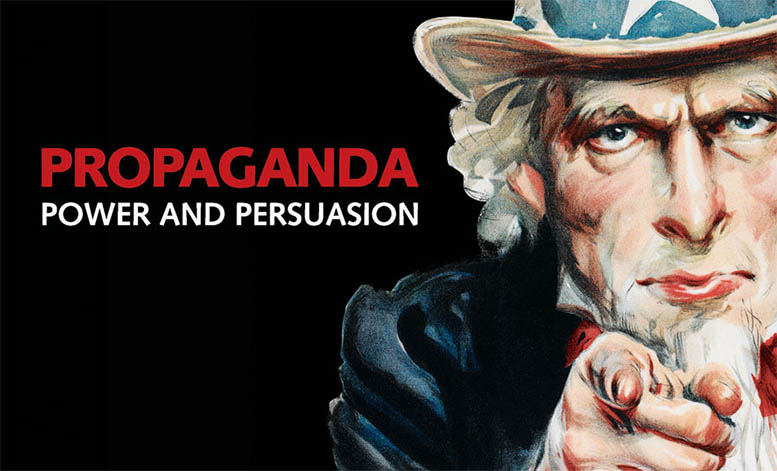
By Brandon Turbeville | Activist Post | May 17, 2017

As the propaganda coming from Washington regresses to an even more infantile level each year, so does the danger of that propaganda being used to justify a greater American military involvement in the Syrian crisis which Washington itself created. Always ready to invoke the memories of Adolf Hitler, Nazis, and the Holocaust at every opportunity, the U.S. State Department is now claiming that not only is Bashar al-Assad controlling massive prisons where mostly innocent civilians are starved and tortured, but that he is operating crematoriums where the bodies of victims are destroyed, thus cheating the moral West out of having any actual evidence of Assad’s “crimes against humanity.”

This new round of propaganda is based upon the debunked Amnesty International report released in February, 2017, entitled “Human Slaughterhouse: Mass Hangings And Extermination At Sednaya Prison, Syria.” The report contained great writing but it was totally devoid of actual evidence. In fact, the only evidence contained in those pages was satellite photos that showed a building that AI claimed was a prison. The photos thus showed the same thing that any American could have provided had they taken a picture of an American public school.

Still, the propaganda report was full of accounts gathered from “survivors” who themselves had been terrorist fighters or affiliated with terrorist groups and from other anti-Syrian pro-terrorist NGOs. This and the satellite photos were all they were able to produce. Now, however, the U.S. has more to add to the story – crematoriums. With Americans so seemingly impervious to subtlety, the Washington Post saw fit to point out the obvious – that the State Department briefing was “accusations of mass murder and incinerated bodies, evoking the Holocaust.”

Interestingly enough, the first time this report was published, it was on the eve of the Geneva talks, an obvious attempt to muddy the waters and provide the United States with more leverage in the negotiations. This time, we are yet again heading into a round of Geneva talks and the United States yet again has lost leverage in negotiations.

This little tidbit has not been lost on some Russians. Konstantin Kosachev, Chairman of the Russian Federation Council’s Committee For Foreign Affairs (in the Upper House of Parliament), stated “New ‘sensational’ and ‘declassified’ US revelations on the alleged ‘mass executions’ in Syria and a crematorium at the Sednaya Prison near Damascus are not very trustworthy.”

“Now, when an absolutely new phase in the Geneva talks (held without the US) is around the corner, the Americans apparently try to once again shift attention to the ‘Assad regime,’ undermining the peace process, wishing this or not,” he added.

The Washington Post, one of many corporate media outlets to have latched on to the story, stated that “The Syrian government has constructed and is using a crematorium at its notorious Sednaya military prison near Damascus to clandestinely dispose of the bodies of prisoners it continues to execute inside the facility, the State Department said Monday.”

Assistant Secretary of State, Stuart Jones, stated “What we’re assessing is that if you have that level of production of mass murder, then ­using the crematorium would . . . allow the regime to manage that number of corpses . . . without evidence.”

“We believe that the building of a crematorium is an effort to cover up the extent of mass murders taking place in Sednaya prison,” he added.

As for the State Department’s evidence, we are, once again, treated to wholly unconvincing “satellite photos” of alleged construction that the State Department takes a wild leap to claim is a crematorium. One need only read the Washington Post’s description of the evidence in order to see just how flimsy it is. Karen DeYoung writes,

The newly released information included a satellite photo of the snow-covered Sednaya complex with an L-shaped building labeled “probable crematorium.” Assessment of the facility, Jones said, included the presence of “the discharge stack, the probable firewall, the probable air intake — this is in the construction phase — this would be consistent if they were building a crematorium.” In a photo taken Jan. 15, he said, “we’re look[ing] at snowmelt on the roof that would be consistent with a crematorium.”

Probable crematorium. Probable firewall. Probable air intake. With all the use of the word “probable” in the description, I would probably say the evidence is probably no evidence at all. Indeed, would any serious intelligence agency base its strategy on such a glaringly obvious lack of evidence?

Tony Cartalucci of Land Destroyer Report agrees when he writes that,

No responsible intelligence agency would submit final reports containing the word “probable,” and more importantly, no responsible state department would cite reports containing the word “probable” to accuse a foreign government of crimes against humanity.

But an intelligence agency tasked with fabricating a narrative and a state department tasked with selling it to the international community would – and as the US State Department has done numerous times in the past and at great cost in human lives and global stability – Iraq, Afghanistan, and Libya for example – that is precisely what has happened yet again.

. . . . . .

While the US State Department and the Washington Post attempt to paint an elaborate picture of abuse to shock the international community into condemnation of Syria, what it has really essentially done is resort to the schoolyard tactic of calling the Syrian government, “Hitler.”

The Amnesty International report was published in February 2017. Admittedly presenting no actual evidence, and considering the industrial scale of alleged mass murder and now alleged “incineration” taking place at the facility, one would assume the largest, most powerful intelligence network on Earth in human history could present something months later more substantial than a photograph taken from outer space labeled, “probable crematorium.”

That the largest, most powerful intelligence network on Earth, in human history failed to find anything more substantial indicates there is nothing to find and that instead, the US has deferred once again to fabricating pretexts for its continued meddling beyond its borders, amid catastrophic conflicts it itself engineered and is perpetuating, toward an outcome that suits Washington first and foremost – and especially at the cost of all others involved.

While spokespeople behind the US State Department’s podiums insist that the Syrian “slaughterhouse” is being organized and directed from Damascus, it is clear that just like the dismemberment and destruction of Iraq and Libya – the Syrian “slaughterhouse” is a project organized and directed from Washington.

Indeed, that is exactly what this report and the new accusations are.

Please see my article, “Amnesty International ‘Human Slaughterhouse’ Report Lacks Evidence, Credibility, Reeks Of State Department Propaganda” for a more detailed critique of the original HRW report.

May 20, 2017 Posted by | Deception, Fake News, Mainstream Media, Warmongering, Timeless or most popular | , , | Leave a comment

Preparing for War on Hizbullah

By Abdel Bari Atwan  | Raialyoum | May 20, 2017

The US-led war on the Islamic Sate group under the banner of fighting terrorism may be viewed by many, especially by Arab members of the coalition that is waging it, as legitimate. But in our view it increasingly looks like a cover or smokescreen aimed at paving the way, or bestowing legitimacy on, a different war: one aimed at eliminating resistance to Israel in the region, and specifically the Lebanese Hizbullah movement.

The US war for Kuwait in 1991 was fought for the same purpose. A trap was set, after careful planning and precise distribution of roles, for Iraqi president Saddam Hussein. Its aim was to drag him into Kuwait to provide a pretext for destroying Iraq, aborting its scientific progress and military ascendancy and undermining its regional role. It is no exaggeration to say that the proxy war on Syria war has a similar objective – not only to destroy and fragment Syria as an adversary of Israel, but to lure a reluctant Hizbullah into the conflict and thus diminish its enormous popularity and the place it gained in hearts of tens or hundreds of millions of Arabs after its two great victories against Israel: First, when it succeeded in liberating southern Lebanon from Israeli occupation in 2000 after years of persistent resistance, and again in July 2006 when it also fought valiantly and stood fast in epic resistance to an Israeli onslaught that sought to annihilate it.

Most of the regional moves currently being made by the US — including Donald Trump’s upcoming visit to Riyadh and the Eager Lion military exercises in Jordan – have one ultimate objective: to declare all-out war on Hizbullah. This includes drying up its financial resources and criminalizing the organization, in the same way Saddam Hussein was criminalized and the Palestinian resistance movement prior to that: first during the days of the PLO and its factions, and then with the rise of Hamas, Islamic Jihad and other groups that continue to fight Israel.

The West has a variety of problems with Iran, and the country’s nuclear ambitions are one of the most prominent. But it is possible to live with, and even contain, these ambitions by various means. However, Iran’s unforgivable sin in the West’s eyes was to support Hizbullah in Lebanon and transform it into a formidable military force that poses a real deterrent and threat to Israel at a time when the Arab states were surrendering to it. Many have stopped referring to it as the enemy and instead begun building bridges of cooperation and normalization with it and treating it as a strategic regional ally.

Hizbullah crossed all American and Israeli red lines by developing a vast missile capability (100,000 missiles according to some estimates) along with fighting skills that most of the region’s armies — including the Israeli army — lack, combining attributes of conventional armies with expertise in guerrilla warfare. Moreover, four years of fighting in Syria has further strengthened, developed, and modernized these skills.

There have been reports in recent days of an unpublicized closed-door meeting in Washington involving a number of Gulf and Arab states aimed at agreeing a strategy for confronting Hizbullah in the coming period. Participants included Saudi Arabia and Jordan, Kuwait, Bahrain, Qatar, and the UAE. This was intended to prepare for the two multilateral summits (with Arab/Muslim leaders and Gulf rulers respectively) that Trump will attend in Riyadh.

Reports from this meeting indicate that the joint Western-Arab plan for confronting Hizbullah include imposing financial sanctions on the organization’s members, supporters and sympathizers around the world, especially Lebanese expatriates in Africa and Europe who provide financial support for the party or institutions affiliated or close to it. This will involve measures to monitor money transfers and dry up all the party’s external funding sources in order to create difficulties for its leadership in financing its political and military structures and its extensive social institutions and activities.

The war on the hardline jihadi groups such as the Nusra Front and IS is drawing towards a close. Nusra is besieged in Idlib, rural Damascus and a few enclaves in rural Aleppo. The recent Astana agreement delegated the task of liquidating it to the so-called moderate Syrian opposition factions backed by the US, Turkey, Saudi Arabia and Qatar. As for IS, it has lost most of Mosul, and the war to liberate al-Raqqa by the US-backed Kurdish Syrian Democratic Forces (SDF) is now imminent, and will begin as soon as sufficient supplies of American tanks, armoured vehicles and missiles have been delivered to these forces.

In other words, the destruction of the ‘Islamist’ groups that are internationally designated as terrorist organizations will open the door wide to the more important war on Hizbullah, not only in Syria but in Lebanon too. It is to begin with an economic war and culminate in a military offensive — as, indeed, the wars on Iraq did.

Could this scenario which is being implemented in stages against Hizbullah (and by extension Iran) achieve the same success it did against Iraq – and prior to that against the Palestinian presence in Lebanon, which was ended with the 1982 Israeli invasion? It is hard to give a categorical answer to this hypothetical question. What can be said, however, is that circumstances have changed, and Israel has changed as well. Hizbullah is the pivot of a regional and confessional structure, and has the open and total support of Iran, and of Iraq to a lesser degree. Any war against it will not be easy. If the 1991 scenario succeeded in Iraq, that was due above all to Arab collusion and betrayal, as well as the demise of the Soviet Union which left the US as the world’s unchallenged hegemon.

The wars currently unfolding in the region and the conspiracies being hatched are all for the sake of enhancing Israel’s security and stability and maintaining its military power and supremacy. It is ironic that this is happening around the time of the centenary of the infamous Balfour Declaration and Sykes-Picot agreements. For the task now being undertaken is aimed at consolidating the Zionist presence in Palestine and the region envisaged in that Declaration, while dismembering the states that emerged from the womb of those agreements.

May 20, 2017 Posted by | Timeless or most popular, Wars for Israel, Zionism | , , , , , , , | Leave a comment

Donald Trump at a Lonely Crossroads

By Alastair Crooke | Consortium News | May 19, 2017

It is time to pause, take a deep breath, and reflect. It is very clear that Trump’s Presidency is at a crossroads. This is not because there is any evidence of any wrongdoing. To date, there is a torrent of innuendo, but zero “evidence.” Rather, events have converged at a point of inflection, not because the President might be impeached – that is improbable because the bar in terms of evidence, and of Congressional votes required, is very high – but because recent days have unmasked the sheer breadth and visceral animosity of the forces determined to “take down” the President, by whatever means present themselves.

President Trump faces a mainstream media (MSM) that has become hysterical in perceiving collusion with Russia everywhere – even to the extent of querying how Russian Foreign Minister Sergei Lavrov, the Russian Ambassador, and a Russian photographer could have been allowed access to the Oval Office, thereby compromising American “security.” Trump faces a coalition of Clintonites, “corporate” Republicans, neocons, and more significantly, a fifth column within the intelligence services which regards any attempt at détente with Russia to constitute prima facie treason.

In response to a question from Sen. Lindsey Graham, R-South Carolina, who asked FBI Director James Comey in the Senate Judiciary Committee “what kind of threat” Russia presents “to the democratic process” (that is to say Graham’s question was not about Russia’s military capabilities, but on the threat to Western democracies), Comey answered: “Certainly, in my view, the greatest threat of any nation on Earth, given their [Russia’s] intention and their capability.”

One might reasonably conclude then, that Trump inevitably will be overwhelmed by this onslaught. Certainly the noise from the East Coast media bubble is overwhelming. And that, precisely, is the threat to the President: the drip, drip, of innuendo that Professor Stephen Cohen has dubbed “the accusation of treason.”

“And”, Cohen added, “we have a whole array of allegations that Putin helped him [Trump] get in the White House – to his [Trump’s] associates doing wrong things with Russians … This, [the allegations lacking any solid evidence] is beyond belief now … This has become a national security threat to us, in and of, itself.”

A Paralyzed Administration

And now a Special Prosecutor has been appointed. One commentator summed it up thus: “That’s how special prosecutors work … they hobble the president, drain away his political credibility, separate him from his supporters, and paralyze his administration. No legislator is willing to lend his support for fear of what the prosecutor might find. Each one will run for cover rather than work with Trump to get something done. In appointing a prosecutor, [Deputy Attorney General Rod] Rosenstein has killed this Administration’s ability to function. No health care overhaul. No tax cuts. No government reform. All while we await the results of a nothing investigation into a nothing scandal.”

Deputy Attorney General Rod Rosenstein

The noise is overwhelming, but it is nearly all emanating from the coastal élites who inevitably speak the loudest. Polls may say that Trump’s favorability rating is slipping. That is so; but the polls also speak to the growing polarity between the Republican base, and the coastal Establishment: 81 percent of Clinton voters support impeaching the President, but 83 percent of Trump voters adamantly oppose it. Equally 91 percent of Clinton supporters “disapprove” of Trump, whereas 86 percent of the Trump base “support” him. There is evidence that the “deplorables” have been deeply angered by the impeachment talk.

And here lies the “inflection point”: President Trump’s base is pretty clear in identifying the “game plan” (it is widely dissected on the New Right, and Alt Right sites): The onslaught is not about finding the “evidence” (which probably doesn’t exist): The “Russian interference” meme emerged primarily from the Democratic National Committee email leaks that were originally attributed to a Russian “hack” (rather than a “leak” by Seth Rich, since murdered), via a private company, Crowd Strike, (evidence that experts now contest); from the discredited “dirty dossier” of ex-British spy Christopher Steele; and from unmasked intercepts of Trump aides (which have as yet shown no evidence of electoral collusion).

It is rather the drip, drip of innuendo which is intended – the Trump base avers – to collapse the President’s ratings (among his base) to the point at which even the Republican members of Congress will abandon the President, and join the “movement” to remove him, via one or other of the provisions of the U.S. Constitution.

Obstruction of Justice is unlikely to serve: As George Washington University law professor Jonathan Turley has said, former FBI Director James Comey’s memo offers “no proof for impeachment” of Trump. Turley noted: “Indeed, it raises as many questions for Comey as it does Trump in terms of the alleged underlying conduct.

“A good place to start would be with the federal law, specifically 18 U.S.C. 1503. The criminal code demands more than what Comey reportedly describes in his memo. There are dozens of different variations of obstruction charges ranging from threatening witnesses to influencing jurors. None would fit this case. That leaves the omnibus provision on attempts to interfere with the ‘due administration of justice.’

“However, that still leaves the need to show that the effort was to influence ‘corruptly’ when Trump could say that he did little but express concern for a longtime associate. The term ‘corruptly’ is actually defined differently under the various obstruction provisions, but it often involves a showing that someone acted ‘with the intent to secure an unlawful benefit for oneself or another.’ Encouraging leniency or advocating for an associate is improper but not necessarily seeking an unlawful benefit for him.”

What the point of inflection calls for (Trump’s supporters’ say), is to insist that the FBI investigation be concluded expeditiously, and that a counter-attack on the leaders of those forces (whomsoever they are), and on their “moles” — “embedded insurgents committed to forcing Trump from office” — who are leaking innuendo to the MSM, be prosecuted.

It is a crossroads. Trump has to halt the drumbeat, or see his Presidency crumble into dust. And the blade of “defamation politics” can be two-edged: Hillary Clinton was no paragon of virtue.

An Elusive Achievement

In this context, Trump now needs a policy achievement more than ever. A legislative success in the domestic arena is – evidently – not in prospect, but rather the political convulsions in D.C. may finally spook a somnolent and supine Wall Street to think about risk again (VIX, a litmus of market volatility, has been at historic lows) – especially as market insiders are warning their clients “not to expect to [be] bailed out by the Fed this time.” Indeed the entire Trump reflation program looks as if will be a long time coming (if it comes at all, this year).

At such times, foreign policy may come to the fore. We have already noted that the Astana Process has witnessed a White House, more ready than Obama’s, to work with Russia, Turkey and Iran, to reach some sort of settlement in Syria. The triumph of the “defeat” of ISIS in Raqa’a and Mosul might constitute just such an achievement to rally Trump’s base.

Trump was politically courageous in inviting Lavrov into the Oval Office (at a time when “the drumbeat” of Russia collusion was reaching a crescendo). It seems that Russia and its allies are ready to concede to Trump the taking of Raqa’a, (the Syrian Foreign Minister has effectively acknowledged this); and in return, Russia and Iran have been put on test by the White House.

The hostile rhetoric from Washington on Iran, has been notably absent since Astana, and the secondary sanctions waiver in connection with the JCPOA (the nuclear agreement) has been renewed. It seems Trump has realized that Generals James Mattis (Defense Secretary) and H.R. McMaster (National Security Adviser) were intent on leading the President back into a series of (unwinnable) wars – at least that seems to be the message of Astana which has put two negotiators, Russian Foreign Minister Lavrov and Secretary of State Rex Tillerson firmly in the driver’s seat.

But here too, the onslaught on the President, and on the Astana political process is likely to continue. Recall that President Obama, who was ever more hesitant than Trump – (never fully endorsing) Secretary of State John Kerry’s and FM Lavrov’s negotiating marathons – witnessed those political efforts sabotaged by his own Pentagon (the “accident” at Dier Azor, killing 68 Syrian Army soldiers defending their besieged base against ISIS militants), and Defense Secretary Ashton Carter’s public equivocation about sharing intelligence on ISIS and al-Qae’da with the Russians).

Already the signs of similar sabotage are present: i.e. the Acting Assistant Secretary of State Stuart Jones’s dubious announcement — on the eve of a Geneva round of Syria talks — that the U.S. had found evidence of a crematorium at a Syrian prison, in which the remains of mass executions of prisoners were burned. Two days later Jones resigned from the State Department, with a colleague noting that while Jones was retiring early for personal reasons, his departure was a case of “another senior government official with real competence leaving.” (Or, in other words another anti-Trump dissident leaving the ship.)

Even Anne Barnard of the New York Times noted that the timing of the crematorium allegations seemed “political.” Yes, indeed political, but directed at the Russians or at Trump? There are also reports that a contingent of U.S. and British Special Forces are operating in southern Syria to stymie any Syrian army or Hezbullah advance in order to regain control of the Syrian-Iraqi border. On Thursday, a U.S.-led airstrike hit Syrian military forces that were deemed too close to the U.S.-British base.

So President Trump should beware. Peace settlements require huge efforts to assemble, but can be undone in a moment. And Saudi Defense Minister Prince Mohammad bin Salman should note: Trump just might be more interested in defeating ISIS at this moment, than suffering a further Saudi lecture on the misdeeds of Iran. Though President Trump will be happy to receive whatever boodle with which the Saudis may care to shower him. Rumors say up to $300 billion – $400 billion in arms deals! “Quite nice,” as the Donald might say.

Alastair Crooke is a former British diplomat who was a senior figure in British intelligence and in European Union diplomacy. He is the founder and director of the Conflicts Forum.

May 19, 2017 Posted by | Fake News, Mainstream Media, Warmongering, Militarism, Timeless or most popular | , | Leave a comment

9/11 Whistleblower Rowley on Mueller’s History of “Cover-up”

Institute for Public Accuracy | May 18, 2017

While Mueller has been widely described as being of impeccable character by much of official Washington, Rowley said today: “The truth is that Robert Mueller (and James Comey as deputy attorney general — see my New York Times op-ed on day of Comey’s confirmation hearing) presided over a cover-up …”

In her interview, Rowley noted: “The FBI and all the other officials claimed that there were no clues, that they had no warning [about 9/11] etc., and that was not the case. There had been all kinds of memos and intelligence coming in. I actually had a chance to meet Director Mueller personally the night before I testified to the Senate Judiciary Committee … [he was] trying to get us on his side, on the FBI side, so that we wouldn’t say anything terribly embarrassing. …

“When you had the lead-up to the Iraq War … Mueller and, of course, the CIA and all the other directors, saluted smartly and went along with what Bush wanted, which was to gin up the intelligence to make a pretext for the Iraq War. For instance, in the case of the FBI, they actually had a receipt, and other documentary proof, that one of the hijackers, Mohamed Atta, had not been in Prague, as Dick Cheney was alleging. And yet those directors more or less kept quiet. That included … CIA, FBI, Mueller, and it included also the deputy attorney general at the time, James Comey.”

Rowley also noted that Mueller presided over “the ‘post 9-11 round-up’ of innocent immigrants, the anthrax investigation fiasco, as well as going along with a form of martial law (made possible via secret OLC [Office of Legal Counsel] memos written by John Yoo etc. predicated upon Yoo’s theories of absolute ‘imperial presidency’ or ‘war presidency’ powers that the Bush administration was making [Attorney General John] Ashcroft sign off on).”

“While not the worst of the bunch, neither Comey nor Mueller deserve their Jimmy Stewart ‘G-man’ reputations for absolute integrity but have merely been, along the lines of George ‘Slam Dunk’ Tenet, capable and flexible politicized sycophants to power, that enmeshed them in numerous wrongful abuses of power along with presiding over plain official incompetence. It’s sad that political partisanship is so blinding and that so few people remember the actual sordid history.”

COLEEN ROWLEY , a former FBI special agent and division counsel whose May 2002 memo to then-FBI Director Robert Mueller exposed some of the FBI’s pre-9/11 failures, was named one of TIME magazine’s “Persons of the Year” in 2002. Contact her at rowleyclan [at] earthlink.net, @ColeenRowley

May 19, 2017 Posted by | Deception, False Flag Terrorism, Timeless or most popular | , , , | Leave a comment

When the Trump Coup-makers Cometh

By Robert Parry | Consortium News | May 18, 2017

So what did you think a U.S.-styled “soft coup” would look like? What we’re seeing regarding the intended removal of President Trump is not that much different from what has happened in dozens of other countries, whether Iran in 1953 or Ukraine in 2014 or Brazil in 2016. This one just has a few extra American touches.

Like other coups, there are often vague and unproven accusations leveled against the target and his or her entourage. Even though hard evidence is usually lacking, “process crimes,” such as making misstatements to prosecutors or obstructing justice, are developed as a substitute under the popular saying: “the cover-up is worse than the crime.” Whatever the case, a complicit media then trumpets alleged wrongdoing into grave and impeachable offenses.

And, if you had any doubts about what is looming, you should read Washington Post columnist E.J. Dionne Jr.’s op-ed, entitled in print editions “A quick end would be better,” which states:

“There is really only one issue in American politics at this moment: Will we accelerate our way to the end of the Trump story, or will our government remain mired in scandal, misdirection and paralysis for many more months — or even years? …

“Nothing could be worse than slow-walking the Trump inquiries. The evidence is already overwhelming that he is temperamentally and intellectually incapable of doing the job he holds. He is indifferent to acquiring the knowledge the presidency demands and apparently of the belief that he can improvise hour to hour. He will violate norms whenever it suits him and cross ethical lines whenever he feels like it.”

The History of Coups

As this American coup against Trump progresses, one commonality of coups around the world – whether “hard coups” of military tanks or “soft coups” of “constitutional” removals – is that the coup’s target is not some perfect human being. He or she has likely made political mistakes or cut some corners or had associates who lined their pockets.
Iranian Prime Minister Mohammad Mossadegh

But the difference between those misdeeds being treated as politics as usual or becoming the stuff of “scandal” has more to do with the interests of powerful interests – a domestic “deep state” or an outside “superpower” – than any evenhanded pursuit of justice.

To say that Trump is an imperfect messenger for whatever populist message he thinks he’s carrying stretches beyond the breaking point any normal definition of the word “imperfect.” Indeed, Trump may be the perfectly imperfect messenger.

Yet, what’s really at stake in any coup is power and the direction that a country will take. In the case of Donald Trump, there appear to be several factors at play: he is regarded by many establishment figures as too incompetent and uncouth to serve as America’s President; he also defies the neoconservative orthodoxy over U.S. foreign policy; and perhaps most significantly, he doesn’t believe in the New Cold War, which will assure the Military-Industrial Complex years of expensive new weapons systems by making Russia the new/old “enemy.”

There is, of course, some truth to all these concerns. Trump is an egotistical buffoon who doesn’t seem to know what he doesn’t know. Often his brain doesn’t connect to his tongue – or his Twitter fingers. He is more a Kardashian “reality star,” saying stuff to get attention and to attract eyeballs, than a sober leader who holds his cards close and chooses his words carefully.

Though many Americans voted for him because they viewed him as a no-nonsense businessman, he was actually someone who ran what amounted to a family business without the kind of accountability that often comes with managing a large public corporation.

Puffing up his own importance, Trump even has bragged about his impunity. During the 2016 campaign, he was revealed as the kind of jerk who boasts about grabbing women by the “pussy” and getting away with it because of his star status and personal power.

So, yes, Trump is both incompetent and uncouth. But he is hardly the first president to bring unseemly personal baggage or an inadequate skill set into the Oval Office. Bill Clinton was known as an insatiable hound dog preying on vulnerable women, and George W. Bush was shockingly unqualified for the demands of the presidency.

While Barack Obama had the intellectual skills and behaved commendably in his personal conduct, he had little experience in managing a complex organization – and it showed in some of his disastrous personnel decisions, such as appointing the hawkish Hillary Clinton as Secretary of State and keeping Bush loyalist Robert Gates as Secretary of Defense.

In other words, Trump’s skill limitations were not by themselves disqualifying. With the proper advice and a modicum of self-control, Trump could have performed acceptably as Chief Executive. But he failed to recruit wise advisers and couldn’t discipline either his tongue or his Twitter fingers.

Even staunch Trump supporters whom I’ve spoken with wish he could have parked his large but fragile ego at the White House gate rather than bringing it into the Oval Office.

Foreign Policy Dissent

Still, Trump’s larger vulnerability was his failure to accept the foreign policy parameters prescribed by the neocon-dominated Establishment. He started out insulting powerful neocons by challenging their self-exculpatory narrative of the Iraq War – that it was a great idea sabotaged by poor execution but then salvaged by the “surge” before being betrayed by Obama.

Trump also belittled some of the neocon champions, such as old-lion Sen. John “No Hero” McCain and rising star Sen. Marco “Little Marco” Rubio. It would have been a neocon dream to have the 2016 campaign a match-up between Marco Rubio and Hillary Clinton, but the former fell to Trump in the primaries and the latter lost to Trump in the general election.

But Trump’s greatest sin was his refusal to buy into Official Washington’s big-ticket Russia-bashing, the goal of making Moscow an implacable enemy that then required massive new spending on both propaganda (supposedly to combat Russian “propaganda”) and military projects (including NATO expansion up to Russia’s borders and new weapons systems to deter Russian “aggression”).

Despite his simple-mindedness (or perhaps because of it), Trump couldn’t understand why the United States had to demonize Russia when he saw many areas of possible cooperation (such as the fight against terrorism).

Trump and a few of his advisers were so out-of-step on the “Russia thing” that Official Washington developed a new groupthink that the only possible explanation was that Trump and his team must be somehow on the Kremlin’s payroll. Any alleged “connection” to Russia – no matter how tenuous or seemingly innocuous – became front-page news.

For instance, retired Lt. Gen. Michael Flynn’s speakers bureau negotiated a relatively modest speaking fee of $45,386 for him to address the tenth anniversary of RT, the Russian network, in December 2015, with RT even whittling down his fee – and that speech became a major cause celebre.

On Dec. 29, 2016, after the election and as the national security adviser-designate, Flynn took a phone call from Russian Ambassador Sergey Kislyak while Flynn was on vacation in the Dominican Republic, and Flynn later offered an incomplete account of the conversation, which the National Security Agency knew because it had intercepted the phone call.

Instead of people shrugging their shoulders and giving Flynn the benefit of the doubt, Obama’s holdovers in the Justice Department literally made a federal case out of it, invoking the archaic and virtually-never-used 1799 Logan Act (which bars private citizens from negotiating with foreigners) and then advancing the absurd argument that somehow the discrepancies in Flynn’s recollection made him vulnerable to Russian blackmail to get Trump to fire Flynn.

Then, Trump’s alleged suggestion to then-FBI Director James Comey that Flynn was a good guy who had served his country and had suffered enough – and that it might be best to “let it go” – has now become the latest argument for impeaching Trump.

In Deep Water

Whether he knows it or not, Trump is now in very deep water and has no idea how to dog-paddle back to the shore. His aides seem to think that a nine-day foreign trip will do him good, but it is more likely to make him grovel before Saudi King Salman and Israeli Prime Minister Benjamin Netanyahu, knowing that any offense that those leaders might take would simply expedite Trump’s political doom.
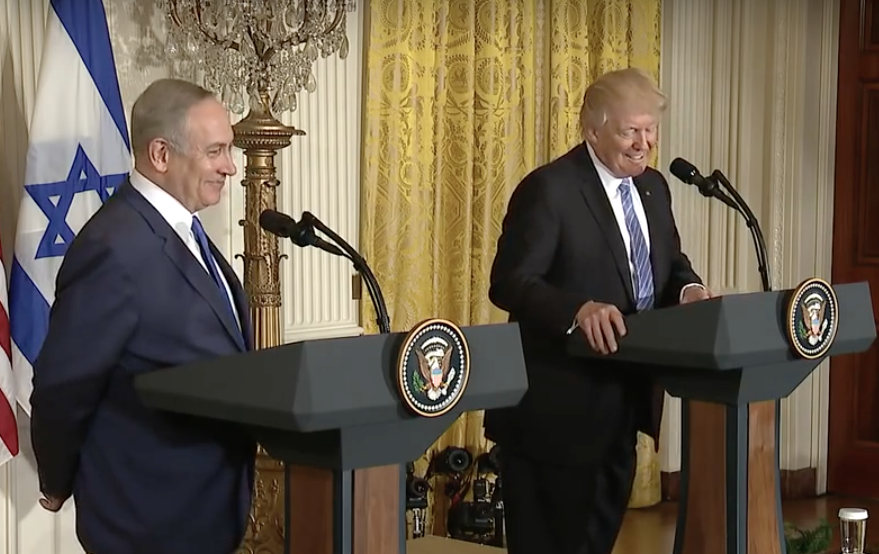
Screen shot from Whitehouse.gov

Trump is surely in no position to tell the Saudis to cut out their covert funding for Al Qaeda and other Sunni terrorist groups – or to insist that they stop bombing Yemen, the poorest country in the Middle East. Nor could Trump dare challenge Netanyahu on the Israeli abuse of the Palestinians, the Prime Minister’s obstruction of the peace process, and his blatant efforts to manipulate U.S. politics in favor of bloody neocon interventions across the region. Trump will be the desperate supplicant hoping for a reassuring pat on the head.

There is one – and perhaps only one – winning move that Trump has left. He could authorize CIA Director Mike Pompeo to prepare for release U.S. intelligence information regarding turning-point moments in recent years, such as the truth about the 2013 sarin incident in Syria and the 2014 Malaysia Airlines shoot-down in eastern Ukraine. [See here and here.]

If – as I’m told – the Obama administration systematically misrepresented the intelligence on those catastrophes to register propaganda gains (against the Syrian government in 2013 and Russia in 2014), the U.S. government’s internal information could shift those key narratives in more peaceful directions.

But whatever the truth is, Trump could shift his own image from a compulsive liar who disdains facts into a champion for transparency and honesty in government. He could turn the tables on The New York Times (which has set itself up as the great hero for Truth) and The Washington Post (which has fashioned a new melodramatic slogan, “Democracy Dies in Darkness”). He could point out their hypocritical lack of aggressiveness in challenging the Obama administration’s excessive secrecy.

Trump would also give his dispirited supporters something to rally around. Many blue-collar voters backed Trump because they thought he was at least addressing their economic fears of lost work and lost status, while Hillary Clinton – in their view – treated them with disregard and disdain, even calling many of them “deplorables.”

But Trump’s promises of recovered jobs were largely hollow. Whatever improvement Americans might be feeling in their pocketbooks, it is more the result of Obama’s careful economic management and the normal recovery from Bush’s Wall Street crash and the Great Recession than anything Trump can or will do.

So, revealing hidden truths – where the American people may have been misled – would not only be the right thing to do for democracy, it also could be the smart thing to do. When the Establishment coup-makers come for Trump – as they now almost certainly will – he can at least say that he tried to do something to return the U.S. government to the American people.

That might not save his presidency but it would at least elevate his purpose and possibly create some positive legacy to attach to the Trump name. As the situation stands now, Trump appears headed for a humiliating exit that won’t just strip him of the presidency but would strip away any luster for the Trump brand.

In other words, his impulsive foray into politics might not just make him one of the most reviled U.S. presidents in history but take down the Trump businesses, too.

Investigative reporter Robert Parry broke many of the Iran-Contra stories for The Associated Press and Newsweek in the 1980s.

May 19, 2017 Posted by | Economics, False Flag Terrorism | , , , , | Leave a comment

US Accused of Promoting Venezuela Intervention at UN

By Ryan Mallett-Outtrim | Venezuelanalysis | May 18, 2017

The United States took to the United Nations Wednesday to compare Venezuela’s current political crisis to Syria.

For the first time, the US brought Venezuela’s current crisis before the UN Security Council (UNSC), though Washington claimed it wasn’t looking for international intervention in the South American country.

“The intent of this briefing was to make sure everyone is aware of the situation … we’re not looking for Security Council action,” US ambassador Nikki Haley told reporters after the meeting.

Haley continued by stating the international community needs to take action on Venezuela, including to “say ‘respect the human rights of your people’ or this is going to go in the direction we’ve seen so many others go”.

“We have been down this road with Syria, with North Korea, with South Sudan, with Burundi, with Burma,” she said.

She also sought to distance the US from allegations made by Caracas that Washington is seeking regime change.

“We’re not for the opposition, we’re not for President Maduro, we’re for the Venezuelan people,” she said.

The US Department of State has requested at least US$5.5 million in funding this year to “help civil society” groups in Venezuela. Critics allege these groups are almost entirely opposition organisations. Venezuelan state media outlet teleSUR has alleged this funding is just the tip of the iceberg and that the State Department has so far funneled at least US$49 million to Venezuela’s opposition since 2009.

Venezuela responds

Venezuela responded to the UNSC meeting by accusing the US of seeking to destabilize the Maduro administration.

“US meddling is what is stimulating the actions of violent groups in Venezuela,” Venezuelan UN Ambassador Rafael Ramirez stated.

Venezuelan allies likewise condemned the meeting, accusing the US of seeking to use the UNSC as a vehicle to promote regime change.

“We are concerned when international security issues are confused with an interventionist agenda,” warned Bolivia’s ambassador, Sacha Llorenti.

Meanwhile, Uruguayan ambassador Elbio Rosselli expressed concern over Venezuela’s political crisis, but called for an internal solution through dialogue.

“The only possible solution is a political understanding between the disputing sides in Venezuela,” Rosselli said.

“They themselves are the ones who must put the situation in their own hands and carry negotiations to a satisfactory outcome,” he added.

Then on Thursday, Russia offered to provide assistance in resolving Venezuela’s political stand-off, while calling for respect for the rule of law.

“Any action of the parties, both the government and the opposition forces, should be … solely within the legal sphere, in strict accordance with the constitution, and without any destructive external interference,” Russian foreign ministry spokesperson Maria Zajarova said.

Venezuela is currently in the grip of its worst economic downturn in two decades, as violent protests by the country’s right-wing opposition are poised to enter their eighth week.

May 19, 2017 Posted by | Aletho News | , , | Leave a comment
