Questions for the Electors on Russian Hacking
By Andrew Cockburn | CounterPunch | December 14, 2016
It is being reported that John Podesta, Chairman of the defeated $1.2 billion Clinton presidential campaign, is supporting the call by various officials, including at least forty Electors, that the members of the Electoral College be given a classified intelligence briefing on the alleged Russian hacking before the College votes on December 19.
In the event such a briefing comes to pass, it might be helpful if the Electors had some informed questions to ask the CIA.
1/ The DNC hackers inserted the name of the founder of Russian intelligence, in Russian, in the metadata of the hacked documents. Why would the G.R.U., Russian military intelligence do that?
2/ If the hackers were indeed part of Russian intelligence, why did they use a free Russian email account, or, in the hack of the state election systems, a Russian-owned server? Does Russian intelligence normally display such poor tradecraft?
3/ Why would Russian intelligence, for the purposes of hacking the election systems of Arizona and Illinois, book space on a Russian-owned server and then use only English, as documents furnished by Vladimir Fomenko, proprietor of Kings Servers, the company that owned the server in question, clearly indicate?
4/ Numerous reports ascribe the hacks to hacking groups known as APT 28 or “Fancy Bear” and APT 29 or “Cozy Bear.” But these groups had already been accused of nefarious actions on behalf of Russian intelligence prior to the hacks under discussion. Why would the Kremlin and its intelligence agencies select well-known groups to conduct a regime-change operation on the most powerful country on earth?
5/ It has been reported in the New York Times, without attribution, that U.S. intelligence has identified specific G.R.U. officials who directed the hacking. Is this true, and if so, please provide details (Witness should be sworn)
6/ The joint statement issued by the DNI and DHS on October 7 2016 confirmed that US intelligence had no evidence of official Russian involvement in the leak of hacked documents to Wikileaks, etc, saying only that the leaks were “consistent with the methods and motivations of Russian-directed efforts.” Has the US acquired any evidence whatsoever since that time regarding Russian involvement in the leaks?
7/ Since the most effective initiative in tipping the election to Donald Trump was the intervention of FBI Director Comey, are you investigating any possible connections he might have to Russian intelligence and Vladimir Putin?
Andrew Cockburn is the Washington editor of Harper’s Magazine. An Irishman, he has covered national security topics in this country for many years.
Media reporting on hacked DNC emails acted as ‘arms of Russian intelligence’ – White House
RT | December 15, 2016
White House press secretary Josh Earnest has accused media outlets which reported on the contents of the hacked DNC emails as being “arms of Russian intelligence,” once again accusing Moscow of being behind the cyberattack.
The statement was made during the White House press briefing on Wednesday, in response to New York Times reporter Gardiner Harris, who, siding with the official White House rhetoric, stated that “from the first days, investigators knew it had Russian ties.”
Harris then asked why it took until October for Washington to announce it believed the hack was carried out by Russia, when the cyberattack was confirmed in April.
“That delay covered most of the presidential election, causing months of coverage of the leaks that were not properly informed by a formal government statement that this was an act of foreign espionage,” he said.
“Wasn’t that a mistake to take so long?” Harris asked.
Earnest had a lengthy response to that question, stating that the US intelligence community wanted to have “high confidence” that the Russians were behind the hack before announcing it, and said it wanted to be “as specific as possible in putting forward that assessment.”
The press secretary went on to agree with a Wednesday New York Times article which stated that “every major publication, including the Times, published multiple stories citing the DNC and Podesta emails posted by WikiLeaks, becoming a de facto instrument of Russian intelligence.”
Continuing his response to Harris, Earnest said “… There’s no denying that those materials [emails] were stolen property… there was no denial on the part of the US government that somehow the DNC had not been hacked, so even as news organizations were reporting on this information, they were reporting on information that they knew had been stolen and leaked…”
“… Those are editorial decisions that are made by independent news organizations. But even the excellent report that was included in your newspaper today about this incident makes clear that news organizations in the united states essentially became the arms of Russian intelligence,” Earnest said.
However, author and journalist Chris Hedges, who worked for the New York Times for 15 years, told RT that the White House’s approach is “clearly a form of red-baiting.”
“It is a form of intimidation. It is a way to essentially paint elements of the press, including the mainstream press, as essentially complicit in treasonous activity. It’s quite disturbing,” he said.
Hedges went on to state that publishing such information is simply “part of the game.”
“The question is not whether the information was leaked, the question is whether for instance the Podesta emails are authentic or not. And if they’re authentic, you publish them. That’s how it works…” he said.
Hedges stressed that there is “no conclusive evidence that Russia was behind the leaks, but even if they were, the US government does this all the time…
“… I was given all sorts of information by the US government to tarnish and in some cases totally discredit figures or regimes that they wanted discredited.”
Despite consistent claims by the US government that Russia was behind the hack, not everyone is convinced that is the case. Earlier this week, former US Ambassador to the UN John Bolton suggested the hack could have been a false flag operation by the Obama administration.
Russia itself has dismissed the hacking allegations, as well as claims that it aimed to influence the US election, as “nonsense.”
“Does anyone seriously think that Russia can somehow influence the choice of the American people?” Putin asked in October. “Is America some sort of a banana republic?”
In November, Russian Foreign Minister Sergey Lavrov told Italian newspaper Corriere della Sera that the “whole story is from the field of myth-making.”
New York Times undermines its own case Russia was behind Clinton leaks
By Alexander Mercouris | The Duran | December 15, 2016
The New York Times has published a lengthy article setting out what it says is the “evidence” that Russia was behind the leaks of the DNC and Podesta leaks by Wikileaks.
The article reveals nothing that is really new, but a number of points did immediately strike me:
(1) The article goes to some lengths to claim that the way the Russians go about carrying out cyber-attacks is far more stealthy than say the Chinese. Thus we read comments like this
“The Russians had not gone away, of course. “They were just a lot more stealthy,” said Kevin Mandia, a former Air Force intelligence officer who spent most of his days fighting off Russian cyberattacks before founding Mandiant, a cybersecurity firm that is now a division of FireEye — and the company the Clinton campaign brought in to secure its own systems.”
and this
“The Russians grew stealthier and stealthier, tricking government computers into sending out data while disguising the electronic “command and control” messages that set off alarms for anyone looking for malicious actions. The State Department was so crippled that it repeatedly closed its systems to throw out the intruders. At one point, officials traveling to Vienna with Secretary of State John Kerry for the Iran nuclear negotiations had to set up commercial Gmail accounts just to communicate with one another and with reporters traveling with them.”
We also learn that the Russians attempted to conceal their responsibility for the leaks by creating the persona of a supposed Romanian hacker called “Guccifer 2.0” who supposedly claimed responsibility for the hacks and warned he would publish the information he got from them.
It is very difficult to understand why in that case these so very “stealthy” and presumably well-resourced Russians failed to make sure that “Guccifer 2.0” was able to speak fluent Romanian. I say this because it is clear that whoever has created the persona of “Guccifer 2.0” obviously does not speak Romanian. See for example this paragraph
“That gave Mr. Franceschi-Bicchierai an idea. Using Google Translate, he sent the purported hacker some questions in Romanian. The answers came back in Romanian. But when he was offline, Mr. Franceschi-Bicchierai checked with a couple of native speakers, who told him Guccifer 2.0 had apparently been using Google Translate as well — and was clearly not the Romanian he claimed to be.”
Presumably Russian intelligence agencies are not short of fluent Romanian speakers they can call on in situations like this?
It becomes even more bizarre when one reads the following
“Cyberresearchers found other clues pointing to Russia. Microsoft Word documents posted by Guccifer 2.0 had been edited by someone calling himself, in Russian, Felix Edmundovich — an obvious nom de guerre honouring the founder of the Soviet secret police, Felix Edmundovich Dzerzhinsky. Bad links in the texts were marked by warnings in Russian, generated by what was clearly a Russian-language version of Word.”
That does not sound at all “stealthy”. On the contrary it suggests that whoever is behind “Guccifer 2.0” was going out of his way to try to implicate Russia’s intelligence agencies in “Guccifer 2.0’s” activities.
That in turn suggests that “Guccifer 2.0” has nothing to do with Russia’s intelligence agencies, and that whoever has created his persona is either trying to cover his tracks by misdirecting investigators towards the Russians, or is engaging in an anti-Russian provocation.
What this means is that if “Guccifer 2.0” is the persona of the person responsible for the leaks, then he almost certainly has nothing to do with Russia’s intelligence agencies, and he may not even be Russian.
As it happens, the fact “Guccifer 2.0” pretends to be Romanian but is apparently unable to speak Romanian points to whoever he is being a private individual rather than an intelligence agency.
(2) A great deal in The New York Times article turns on the fact that the DNC and Podesta hacks were carried out by two groups of hackers identified respectively as Cozy Bear and Fancy Bear.
The connection of either of these two groups of hackers to Russia’s intelligence agencies appears to be inferred from their previous activity rather than based on actual knowledge. However the important point is that whoever they are they were clearly not working together
“To their astonishment, Mr. Alperovitch said, CrowdStrike experts found signs that the two Russian hacking groups had not coordinated their attacks. Fancy Bear, apparently not knowing that Cozy Bear had been rummaging in D.N.C. files for months, took many of the same documents.”
Given the sensitivity of any covert operation to swing the US Presidential election to Donald Trump, it is a certainty that if someone like Putin or Nikolay Patrushev (the secretary of Russia’s Security Council who is believed to coordinate the work of Russia’s intelligence agencies) had ordered it they would have ensured that it was coordinated and kept under tight control.
The fact this was not the case, and that Cozy Bear and Fancy Bear were apparently acting independently of each other and at times even at cross purposes, is an extremely strong reason for doubting such an order was ever given.
If Cozy Bear and Fancy Bear really are run by Russian intelligence agencies, then the fact they were not coordinating with each other suggests they were each engaging in ordinary spying activities and not in anything more sinister.
(3) Lastly, what the New York Times article shows is how exceptionally sloppy cyber security on the part of the DNC and Podesta was, and how extraordinarily complacent they were about the possibility of being hacked.
Whilst that makes it possible they were hacked by Russia’s intelligence agencies, it also leaves open the possibility they were hacked by all sorts of other people, including people within the US. Any one of these people might have been the person or persons behind the persona of “Guccifer 2.0”, or might have been the source of the leaks that were provided to Wikileaks.
In summary, I don’t think this article in The New York Times adds very much. If anything it shows how thin the case the Hillary Clinton campaign and the CIA are making that Russia was behind the leaks in order to swing the election to Donald Trump actually is.
Gabbard’s Law: To End War on Terror, Stop Arming Terrorists
A Black Agenda Radio commentary by Glen Ford | December 14, 2016
Ever since the passage of the Patriot Act in the wake of the 9/11 attacks, it has been a crime to provide “material support” to groups designated as terrorists by the U.S. State Department, including ISIS and al-Qaida and its Syrian affiliate, the al-Nusra Front. As the law is interpreted, “material support” can mean providing almost any kind of service or assistance that a prosecutor believes might materially help the designated group — even attending a peace conference or representing a group member in court. Americans have done hard time in prison for being found in violation of this law. But, at the same time, the United States has spent billions of dollars to arm, train and protect whole armies of jihadist terrorists in Syria – Islamist fighters that collaborate in every possible way with al-Qaida and its offspring in the al-Nusra Front and the Islamic State.
In the words of Tulsi Gabbard, the Democratic congresswoman from Hawaii: “This madness must end… The Government must end this hypocrisy and abide by the same laws that apply to its citizens.” Gabbard has introduced a bill to force the U.S. government to abide by its own laws, as well as international law, by making it specifically illegal for the U.S. to fund aid of any kind, not just to al-Qaida and ISIS, but to any other groups that collaborate with them. In Syria, that means virtually all of the so-called “moderate” rebels that the U.S. and its allies have lavished billions of dollars on. Just as importantly, Gabbard’s Stop Arming Terrorists Act makes it illegal for the United States to give aid to any nation that assists these terrorists. That means the U.S. would be compelled to cut off aid to Turkey, Saudi Arabia, Jordan, Qatar, the United Arab Emirates and Israel, the biggest recipient of U.S. aid in the world, which openly brags about treating al-Qaida fighters in Israeli hospitals. The U.S. would also have to cut off all assistance to Britain, France and most of the rest of NATO, for their assistance to terrorists in Syria.
Rep. Keith Ellison: Useless to the Cause of Peace
Earlier this year, the Obama administration reneged on its agreement with Russia to draw up a list of the jihadist groups Washington supports, and to make sure they don’t fight alongside al-Qaida. Gabbard’s law would require that the Director of National Intelligence draw up a list of the jihadi groups that are cooperating with al-Qaida and ISIS, and update that list every six months, to make sure none of them get U.S. assistance.
Gabbard models her bill on 1980s Boland Amendment that halted U.S. aid to the U.S. Contra terrorists, in Nicaragua. She was joined by two Republican and two Democratic co-sponsors, including Black California congresswoman Barbara Lee. The bill is endorsed by the Progressive Democrats of America and the U.S. Peace Council. But don’t expect it to get effective support from the Progressive Caucus in the U.S. Congress. Minnesota Black congressman Keith Ellison is Caucus co-chair – and absolutely worthless to the cause of peace. He supported the war against Libya and the proxy war in Syria, which is why he stands a good chance of becoming head of the Democratic National Committee, where it’s all war, and anti-Russia, all the time.
The Abnormalization of Dissent

corbettreport | December 13, 2016
The spin, lies, manipulation and deceptions are coming so fast and thick it’s increasingly difficult to document them all, let alone analyze them. But in the broad sweep of recent events we can see a common theme emerging: the abnormalization of dissent. And when political ideology boils down to nothing more than “real” and “fake” the control of political discourse through language itself is almost complete. Can outright censorship be far behind?
SHOW NOTES: https://www.corbettreport.com/?p=20792
See also:
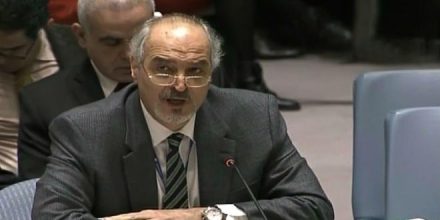
Bashar Al-Jaafari: Protecting civilians in Aleppo and other cities is the Syrian government’s constitutional duty
SANA | December 14, 2016
NEW YORK – Syria’s Permanent Representative to the UN Bashar al-Jaafari stressed that the Syrian government is innocent of the U.S. and western accusations that it has committed crimes in Aleppo.
Addressing an emergency session of the UN Security Council on the situation in Aleppo on Tuesday, called for by France and Britain, al-Jaafari said some of the Security Council member states are used, since the beginning of the terrorist war against Syria, to call for urgent sessions based on misleading information and false reports and testimonies whenever the Syrian army and its allies achieve advance against the terrorist organizations.
al-Jaafari categorically dismissed all the “fabricated reports” used by the representatives of the US, France and Britain that the Syrian government has targeted citizens in Aleppo city, affirming that what the Syrian government, along with its allies, is doing in Aleppo city and other Syrian cities is “practicing the constitutional and legal duty of every government; that is to protect its citizens against terrorism.”
He made it clear that the Syrian government’s first and foremost aim of opening safe corridors (including for the militants), providing makeshift centers, issuing amnesty decisions and delivering food and medical aid in Aleppo is protecting civilians and keeping them safe.
Al-Jaafari criticized the UN Secretary General Ban Ki-Moon for being in a hurry to issue statements based on reports he could not verify just to the effect of “defaming the Syrian government and its allies that are fighting terrorism.”
He dismissed that some sides, in their attempts to help the terrorists, deny the Syrian government its duty to examine and verify the identity of some of those who are leaving neighborhoods in Aleppo along with the civilians, especially that many reports issued by the Security Council speak of tens of thousands of foreign terrorists from more than a 100 countries operating in Syria, noting that this examination aims at preventing those terrorists from infiltrating other areas, and probably the territories of other countries, and resuming their acts there.
He cited tens of photos which show terrorists, who had committed acts of “beheading innocent people and eating livers”, trying to escape from East Aleppo infiltrating among civilians in women’s clothes, but they were captured by the Syrian Army.
Al-Jaafari said it is utmost hypocrisy that the envoys of some countries insist on accusing the Syrian government of besieging its people and blocking access to food and medicine while they continue to deny the fact that tens of depots which were controlled by the terrorist organizations in Aleppo have been full of all kinds of medical and food supplies from which the civilians were deprived.
He stressed that it is not possible that tens of thousands of terrorists fighting the Syrian Army in Aleppo would have been able to survive and remain there for more than four years, was it not for some states at this Council continually providing them with all kinds of weapons and protection.
He categorically denied “as groundless” all “fabrications, allegations and hallucinations” issued by some member states’ representatives about the government allegedly committing acts of “reprisal, intimidation and field executions against civilians,” reaffirming that hunting and targeting terrorists is at the heart of the Syrian government’s constitutional powers “just like what u did in Nice, Paris, London, Boston, Oklahoma, North Carolina, Cairo, Sinai, Bombay, Tunisia, Nigeria, Kenya and Tanzania.”
For his part, Russia’s Representative to the UN Vitaly Churkin stressed that the Syrian Arab Army has reestablished control over the eastern neighborhoods of Aleppo, reiterating that the allegations that the Syrian Army has committed violations in Aleppo are baseless.
Meanwhile, China’s Representative to the UN Liu Jieyi said fighting terrorism is an integral part of finding a solution to the crisis in Syria, stressing that the international community should give top priority to fighting ISIS and other terrorist organizations.
CNN’s hostile treatment of Congresswoman Tulsi Gabbard after revealing US arming, funding Terrorists in Syria
21st Century Wire | December 14, 2016
Recently, Democrat Hawaii Congresswoman, Tulsi Gabbard, went on CNN’s “The Lead” hosted by Jake Tapper, to talk about Donald Trump’s foreign policy, and more importantly, to discuss the disturbing reality of US taxpayer support of armed militants and terrorists in places like Syria. Instead of adulation for doing the honorable thing, she received a hostile reaction from one of CNN’s many highly paid onscreen propagandists.
 When asked by CNN’s Jake Tapper (photo, right) about US Representative Tulsi Gabbard’s recent visit to Trump Tower, she replied, “My goal in going there, in receiving the invitation to speak to President-elect Trump was to speak specifically about the situation in Syria, the dangerous consequences of escalating the regime change war that the United States is fuelling there along with countries like Saudi Arabia, and Qatar, and Turkey are escalating that through a so-called no-fly zone or safe zone. And urging him to end our regime change war there to stop funding both directly and indirectly groups that are working with Al Qaeda and ISIS. And to stop funneling those dollars and weapons and other assistance through these others countries like Saudi Arabia who are directly supporting these terrorist groups who are supposed to be our enemy, who we’re supposed to be fighting to defeat.”
Visibly agitated by her answer, Tapper then asks Gabbard, herself an Iraq War veteran and a current member of the Hawaii National Guard, about her recent Bill introduced on the House floor last week entitled, the “Stop Arming Terrorists Act,” which proposes severe legal repercussions to any US officials or persons involved in the arming or funding, either directly or possibly indirectly, of terrorists overseas – including the US-backed “rebel” terrorists currently operating in Syria. What’s key is that Gabbard points out that this activity is funded by the US taxpayer. Not surprisingly, CNN has never reported this side of the clandestine issue before. Here’s how their fascinating conversation transpired:
TAPPER: And tell me about legislation. You have a bill that you introduced today that would address loopholes.
GABBARD: Yes.
TAPPER: You say have allowed American taxpayer dollars to fund terror groups such as Al Qaeda and ISIS in Syria. Are you — are you suggesting that the U.S. government is funding these terrorist groups?
GABBARD: I’m not only suggesting it. This is — this is the reality that we’re living in.
TAPPER: Not directly, though.
GABBARD: Most Americans — you know, if you were — I were to go and provide money, weapons, or support or whatever to a group like Al Qaeda or ISIS, you would immediately be thrown in Jail. However, the U.S. government has been providing money, weapons, intel assistance and other types of support through the CIA, directly to these groups that are working with and are affiliated with Al Qaeda and ISIS.
TAPPER: So, you’re saying the CIA is giving money to groups in Syria, and those groups are working with Al-Nusra and ISIS.
GABBARD: There are — there have been numerous reports from The New York Times to the Wall Street Journal and other news outlets who have declared that these rebel groups have formed these battlefield alliances with Al Qaeda, that essentially is Al Qaeda groups are in charge of every single rebel group on the ground fighting in Syria to overthrow the Syrian government.
Tapper goes on to act stunned and befuddled, insinuating that Gabbard is “wrong” – as if Gabbard were somehow making up her accusations, as he becomes somewhat confused trying to manage CNN’s complicated contrived narrative. Tapper then insists that “Obviously, they (US-funded ‘rebel’ terrorists) are all fighting Assad.” Gabbard quickly calls out Tapper’s clear attempt at US State Dept propaganda talking points management Here’s the latter exchange:
TAPPER: And the U.S. government says they vet the groups that they give money to very, very closely. And that you’re wrong, there are not alliances between groups that the American taxpayers fund and these other groups. Obviously, they all are fighting Assad.
GABBARD: I beg to differ. Evidence has shown time and time again that that is not the case, that we are both directly and indirectly supporting these groups who are allied with or partnered with Al Qaeda and ISIS, in working to over throw the Syrian government of Assad. And we’ve also been providing that support through countries like Saudi Arabia, Turkey and Qatar to do that.
Gabbard’s brave new legislation might be the most important and explosive development regarding Syrian Foreign Policy in Washington, but instead of pursuing this discussion, CNN’s Tapper predictably tried to change the subject to Michael Flynn instead.
Watch this incredible exchange here:
21WIRE has reported previously on the possibility that CNN is serving as a media adjunct to either the Pentagon, NSA or the CIA (or all three). Judging by Jake Tapper’s offhanded comments and attempt to discredit Gabbard live on air, it only strengthens that probability.
21WIRE also reported previously how CNN has clearly chosen to only air coverage favorable to what the network has claimed to be “rebels” in Syria, when in reality – these were mostly terrorist fighting groups. CNN’s “star reporter” Clarissa Ward even went so far as to characterize terrorist suicide bombers in a sympathetic manner in her reports – clearly designed to give positive PR to terrorists groups like Al Nusra Front who have been occupying East Aleppo since 2012. Other actors in field seemingly employed by CNN who are operating in clear support of terrorists in East Aleppo include one Bilal Abdul Karim an apparent US asset promoting jihadist extremism, together with Ward, producing what are clearly staged reports, alongside CNN’s endless airing of unvetted, staged White Helmets imagery. 21WIRE have also recently revealed additional terrorist-links with the White Helmets, who are a US State Dept, British Foreign Office and EU-funded pseudo NGO – and passing it off to the viewing public as authentic video and photos supplied by nameless “Syrian activists”.
Throughout the west’s proxy war against Syria, CNN has only reported the rebel/terrorist perspective, shamelessly portraying militant terrorists as “moderate rebels” and freedom fighters, while systematically demonizing any Syrian or Russian who is defending the nation-state of Syria. This might explain Tapper’s near contempt for Gabbard’s accurate statements regarding US arming and funding of known terrorist groups in Syria.
2016 was the year that CNN was exposed as perhaps the most corrupt mainstream media outlet in the United States. A number of other leaked emails revealed an unprecedented level of media corruption and systematic partisan collusion between operatives at CNN and the Hillary Clinton Campaign – a naked violation of every fundamental principle of nonobjective press practices. In the leaked email exchanges, one could see gleeful Clinton campaign officials boasting about getting favorable news coverage from compliant mainstream media ‘journalists’ – with CNN being perhaps the worst offender. Clinton staffers even went so far as to circulate names of journalists who were deemed “friendly” to their candidate.
Among the notorious Wikileaks email dump was a CNN request to DNC staffers asking for questions to ask during a Wolf Blitzer interview with then GOP candidate Donald Trump.
In another email on April 28, CNN operative Jason Seher, a writer for Jake Tapper’s show “The Lead” on CNN, emailed DNC media coordinator Pablo Manriquez thanking him for working behind the scenes with CNN.

In a separate conversation CNN’s Seher, then thanked DNC insider Martinez for ‘facilitating Luis coming on today, and bearing with us through a meelee of GOP nonsense and cancellations and all that. Any particular points he’ll want to make? We’re gonna stay Dem focused…’
Perhaps the worst CNN violation of press independence was when the network’s supposed “chief political analyst,” Gloria Borger, tried to get an interview with Clinton chief of staff John Podesta by assuring him of essentially softball questions.
“I know John will have an exalted place in the campaign, and would love to chat with him about HRC, in a general way, not in a gotcha way re HRC,” said Borger. “It would be about 10 mins, very general, about her as a person and a candidate.”
What most amazing about all of this, is that CNN executives refused to consider firing any of their personalities who have been implicated in open collusion with the Democratic party during one of the most crucial political contests in US history.
In another leak provided to The Intercept by the source known as Gucifer 2.0 Other CNN reporters discovered on the DNC’s ‘VIP List’ of media operatives counted on by the Clinton campaign included Kate Bouldan, Brianna Kielar, Jeff Zeleny, Sam Feist, David Chalian, John Berman, and Mark Preston.
The only person who lost their paid position with CNN was the now disgrace political operative, Donna Brazile, currently still holding onto her gifted position as interim Chairwoman of the DNC – who was also moonlight for extra cash as “contributor” for CNN. Brazile was also a Super Delegate for Hillary Clinton. Podesta Email dumps exposed the fact that Brazile, a CNN contributor was caught giving Hillary’s campaign debate questions in advance of CNN’s Town Hall debate event.

As a result, CNN’s reputation as a trustworthy media outlets has been held in question by most of the public.
When it comes to coverage of both the 2016 Election and the Syrian War, CNN has been on the wrong side of history – and should not be trusted to give accurate and fair reporting regarding serious and important issues.
Westerners’ minds disoriented with fake news on Syria: Anthony Hall
Press TV – December 14, 2016
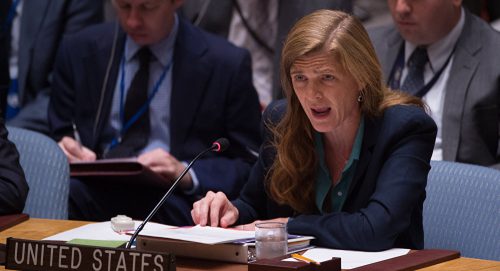
Russia’s UN Ambassador Vitaly Churkin has accused the United States, France and Britain of spreading fake news and and waging a psychological warfare over the situation in Syria’s Aleppo. The three countries have claimed that the Syrian government targeted civilians in eastern Aleppo, with US Ambassador to the UN Samantha Power accusing Syrian forces of killing some 80 civilians in the last few days.
Anthony Hall, editor-in-chief of the American Herald Tribune, believes Westerners’ minds are completely “disoriented” with a barrage of fake news, adding there has been an enormous psychological warfare campaign to totally confuse them about what is going on in Syria.
“And now in Aleppo we are presented with this image of rebels as if these are human rights activists who have just been standing there trying to bring about better human rights in Syria, ignoring the reality of this tremendous infusion of weaponry, of psychological warfare, of resources, Saudi Arabia’s role, Qatar’s role, NATO’s role in creating this whole confused situation in Syria,” he told Press TV on Wednesday.
By defeating the terrorists in Aleppo, he said, Russia demonstrated that the United States military campaign against Daesh is “phony”.
Less than a month ago, Syrian army forces, backed by Russian airstrikes, started a wholesale push to drive the militants out of their stronghold in the city’s eastern side, making great strides in the process.
Hall said there is overwhelming evidence that Daesh is a creation of the same process that created al-Qaeda and an extension of 9/11 wars.
According to the analyst, the “Angelo-American Zionist empire” is seeking to divide and break up the Middle East so that Israel can thrive and continue its expansionary policies towards a greater Israel.
Since March 2011, Syria has been hit by militancy it blames on some Western states and their regional allies. The Syrian Observatory for Human Rights and UN have put the death toll from the Syria conflict at more than 300,000 and 400,000, respectively.
Bipartisan War
A new study urges more U.S. interventions
By Philip Giraldi • Unz Review • December 13, 2016
The Establishment and Realist foreign policy communities in the United States often seem separated by language which leads them to talk past each other. When a realist or Libertarian talks about non-intervention or restraint in foreign policy, as Ron Paul did in 2008 and 2012, the Establishment response is to denounce isolationism. As Dr. Paul noted during his campaigns, non-interventionism and isolationism have nothing to do with each other as a country that does not meddle in the affairs of others can nevertheless be accessible and open in dealing with other nations in many other ways. Non-interventionists are fond of quoting George Washington’s Farewell Address, in which he recommended that “The great rule of conduct for us in regard to foreign nations is in extending our commercial relations, to have with them as little political connection as possible… Harmony, liberal intercourse with all nations, are recommended by policy, humanity, and interest.” Establishment pundits tend to dismiss that “little political connection” bit, preferring instead to warn how detachment from foreign politics might lead to the rise of a new Adolph Hitler.
I was reminded of the language barrier while reading the Atlantic Council’s Middle East Strategy Task Force report, which appeared on November 30th. The report, which promises a new “Compact for the Middle East” while also asserting that “isolationism is a dangerous delusion,” might be regarded as a quintessential document laying out the Establishment position on what should be done in the region. It is ostensibly the product of two co-chairs, Madeleine Albright and Stephen Hadley, but it is also credited to an Executive Team headed by Executive Director Stephen Grand and Deputy Executive Director Jessica Ashooh, who in all probability were responsible for the actual drafting and editing.
The report also appears to have numerous high profile advisers who might or might not have had some hand in the final product. Running through the list of associates in the project which appears at the end of the report, one notes immediately that there is no individual or group identified that would contest the notion that the U.S. must have a leadership role in the Middle East. Indeed, many of those named derive considerable status from being part or supportive of America’s engagement in the region.
I would unambiguously describe Albright and Hadley as interventionists, a label that they might object to. Albright was Bill Clinton’s aggressive Secretary of State who is famous for her endorsement of American exceptionalism, stating that “We are the indispensable nation. We stand tall and we see further than other countries into the future…” She also is notorious for her approval of sanctions on Iraq that might have killed 500,000 children as “I think this is a very hard choice, but the price — we think the price is worth it” and she also once asked Colin Powell “What’s the point of having this superb military that you’re always talking about if we can’t use it?”
Stephen Hadley was the hawkish National Security Advisor under George W. Bush. He was one of the most outspoken advocates of military action against Iraq. During the essentially phony Syrian chemical weapons crisis in September 2013, he appeared on the media advocating attacking Syria with missiles. At the time, he was on the board at Raytheon and owned 11,477 shares of stock, which some considered to be a conflict of interest.
Albright and Hadley clearly were selected as co-Chairs to make the report bipartisan, an imperative for the Atlantic Council, which prides itself on being non-political, describing itself in its website as “a nonpartisan organization that promotes constructive U.S. leadership and engagement in international affairs based on the central role of the Atlantic community.” That self-definition suggests active engagement by the United States that goes well beyond George Washington’s advice. And if you look at the list of the Council’s executives and review their writings you will be able to confirm that they are pretty much inside the Beltway status quo in terms of supporting an assertive U.S. role in world affairs.
Albright and Hadley brought with them a certain point of view which was certainly recognized by the initiators of the project and one might assume that the Atlantic Council pretty much knew what the report would endorse even before it was written. The report, which runs to 105 pages, explores what it describes as a new strategic vision for the Middle East that will “change the political trajectory of the region.” It goes something like this: the states in the region must work together to create a “positive vision for their societies” to include “unlock[ing] the region’s rich, but largely untapped, human capital – especially the underutilized talents of youth and women.” Meanwhile, outside forces like the United States would have the responsibility of taking the lead to wind down the “violent conflicts” that have rocked the region. That means that the local governments will be responsible for haggling their way to some kind of acceptable modus vivendi while the U.S. must become more deeply involved militarily and using intelligence resources to stabilize Syria, Yemen and Libya.
In the case of Syria, which is the focus of the report, the argument is made that Bashar al-Assad’s reactionary regime is the root cause of the violence that has cost more than 200,000 lives and dislocated at least a third of the country’s population. This assessment is not necessarily universally accepted since 80% of the Syrian population lives in areas controlled by the government, which is about to increase its dominance by taking all of Aleppo, and there are no reports of civilians fleeing en masse to the greater freedom afforded by the rebel held areas, rather the reverse being true.
The report recommends using the U.S. military to establish safe areas in Syria to protect civilian populations, to include no-fly zones, which would bring about direct contact with the air forces of both Damascus and Moscow. It explicitly calls for direct military action against Syrian government forces including the employment of “air power, stand-off weapons, covert measures and enhanced support for opposition forces to break the current siege of Aleppo and frustrate Assad’s attempts to consolidate control over western Syria’s population centers.”
This judgment has been overtaken by events, but the co-authors do not really discuss what such an intervention would mean as it would involve the United States in an actual war based on executive fiat without any declaration from Congress. It also ignores reality on the ground, to include some politico-military reliance on the mythical moderate rebels while choosing not to recognize that the U.S. military is the intruder in Syria which, like it or not, has a legitimate government and a legal ally in Russia. The possibility of a second war with Russia is largely ignored in the report though there is an assumption that military pressure from the U.S. would push Damascus and Moscow towards a “political settlement” of the conflict after Russia becomes convinced through the assertion of American military power that “defeat, or stalemate, not victory, are the only realistic military outcomes.”
The report was initially intended to serve as a bipartisan rebuke to the current Barack Obama policy which limits direct American involvement in the conflict. Written before the presidential election, the co-authors could not have anticipated a Donald Trump victory, but they might be hoping that the report would serve as a guideline for the new administration. Hopefully they will be wrong in that expectation, but it is difficult at this point to see where the next White House will be going with its Middle Eastern policy.
There are a number of things wrong with the report from my perspective. Most significant, it assigns to the United States the responsibility to set and enforce standards of governance in parts of the world where the American people have little in the way of actual interests. The report refers to this oversight role as part of “enabling American global military operations,” an odd objective and also a point at which the language and perceptual problems come in – I am hearing intervention, which has been a failed policy since 2001, where Albright and Hadley construe a humanitarian mission based on American interests. They also have difficulty in conceptualizing that what they describe as the “debilitating cycle of conflict” in the Middle East might actually have been caused in large part by Washington’s involvement in that region, starting with the invasion of Iraq in 2003.
Second, the authors assume that the countries in the region, all of which have disparate interests, will act in good faith to support the “unlocking of the region’s human potential,” as the report enthuses, as part of its “positive vision.” It sounds good and probably is pleasing to globalists, but I would be skeptical of any kumbaya moments that require bringing together players like Saudi Arabia, Egypt and Turkey into one harmonic movement to better everyone in the region. Such pie in the sky is not even close to credible.
Third, when the report was issued Stephen Hadley told Reuters that “It may not work. But one of the things we know is that what’s going on now isn’t working.” No, it isn’t, but that might be based on a faulty assessment of the nature of the conflict. And this is thin gruel indeed to use as justification for going to war against Syria and possibly Russia.
One of the report’s obvious weaknesses derives from its Establishment-centric worldview. It calls for building stronger political institutions among the Palestinians in order to achieve a two-state solution without any serious examination of what the Israeli occupation is doing or not doing to impede any real movement in that direction. It treats Iran as an enemy of the “positive vision” that is “interfering” with its neighbors with the U.S. willing to “deter and contain Iran’s hegemonic activity,” making any real progress towards regional rapprochement unlikely. It sees a liberal democratic solution to all ills and judges multifaceted regional conflicts in purely “us against them” terms, favoring its “friends and allies” against the numerous other forces that are not on the same page.
The Atlantic Council’s Middle East Strategy Task Force Final Report argues that a transformation of the entire region, starting with establishment of security by replacing al-Assad and defeating ISIS, is both desirable and attainable. And it is an enterprise that has to be left to local players for the necessary social and political constructs with the U.S. providing leadership and direction, particularly when it comes to repressing “violent conflicts.” It is a utopian vision of what might be but one has to be concerned that the simplistic application of military force as a remedy for the regional cycle of violence ignores the probability that the reliance on such a solution in the first place has been a key element in the evolution of the current instability. That Syria will be fixed by coming in with force majeure on the side of what is being promoted as a progressive and humanitarian alternative to Bashar al-Assad borders on the ridiculous, but it is characteristic of the default position that many in Washington adopt when considering how to solve the problems in the Middle East.
Will Trump Defy McCain & Marco?
By Pat Buchanan • Unz Review • December 13, 2016
When word leaked that Exxon CEO Rex Tillerson, a holder of the Order of Friendship award in Putin’s Russia, was Donald Trump’s choice for secretary of state, John McCain had this thoughtful response:
“Vladimir Putin is a thug, a bully, and a murderer and anybody else who describes him as anything else is lying.”
Yet, Putin is something else, the leader of the largest nation on earth, a great power with enough nuclear weapons to wipe the United States off the face of the earth. And we have to deal with him.
McCain was echoed by the senior Democrat on foreign relations, Bob Menendez, who said naming Tillerson secretary of state would be “alarming and absurd … guaranteeing Russia has a willing accomplice in the (Trump) Cabinet guiding our nation’s foreign policy.”
Sen Marco Rubio chimed in: “Being a ‘friend of Vladimir’ is not an attribute I am hoping for from a Secretary of State.”
If just three GOP senators vote no on Tillerson, and Democrats vote as a bloc against him, his nomination would go down. President Trump would sustain a major and humiliating defeat.
Who is Tillerson? A corporate titan, he has traveled the world, represented Exxon in 60 countries, is on a first-name basis with countless leaders, and is endorsed by Condi Rice and Robert Gates.
Dr. Samuel Johnson’s observation — “A man is seldom more innocently occupied than when he is engaged in making money” — may be a bit of a stretch when it comes to OPEC and the global oil market.
Yet there is truth to it. Most businessmen are interested in doing deals, making money, and, if the terms are not met, walking away, not starting a war.
And here is the heart of the objection to Tillerson. He wants to end sanctions and partner with Putin’s Russia, as does Trump. But among many in the mainstream media, think tanks, websites, and on the Hill, this is craven appeasement. For such as these, the Cold War is never over.
The attacks on Tillerson coincide with new attacks on Russia, based on CIA sources, alleging that not only did Moscow hack into the Democratic Party and Clinton campaign, and leak what it found to hurt Hillary Clinton, but Russia was trying to help elect Trump, and succeeded.
Why would Moscow do this?
Monday’s editorial in The New York Times explains: “In Mr. Trump, the Russians had reason to see a malleable political novice, one who had surrounded himself with Kremlin lackeys.”
Backed by Democratic leader Sen. Chuck Schumer, McCain has announced an investigation. The goal, said the Times, is to determine “whether anyone within Trump’s inner circle coordinated with the Kremlin and whether Moscow spread fake news to hurt Mrs. Clinton.”
What is going on here? More than meets the eye.
The people who most indignantly condemned Trump’s questioning of Obama’s birth certificate as a scurrilous scheme to delegitimize his presidency, now seek to delegitimize Trump’s presidency.
The Times editorial spoke of a “darkening cloud” already over the Trump presidency, and warned that a failure to investigate and discover the full truth of Russia’s hacking could only “feed suspicion among millions of Americans that … (t)he election was indeed rigged.”
Behind the effort to smear Tillerson and delegitimize Trump lies a larger motive. Trump has antagonists in both parties who alarmed at his triumph because it imperils the foreign policy agenda that is their raison d’etre, their reason for being.
These people do not want to lift sanctions on Moscow. They do not want an end to the confrontation with Russia. As is seen by their bringing in tiny Montenegro, they want to enlarge NATO to encompass Sweden, Finland, Ukraine, Georgia and Moldova.
They have in mind the permanent U.S. encirclement of Russia.
They want to provide offensive weapons to Kiev to reignite the civil war in the Donbass and enable Ukraine to move on Crimea. This would mean a war with Russia that Ukraine would lose and we and our NATO allies would be called upon to intervene in and fight.
Their goal is to bring down Putin and bring about “regime change” in Moscow.
In the campaign, Trump said he wanted to get along with Russia, to support all the forces inside Syria and Iraq fighting to wipe out ISIS and al-Qaida, and to stay out of any new Middle East wars — like the disaster in Iraq — that have cost us “six trillion dollars.”
This is what America voted for when it voted for Trump — to put America First and “make America great again.” But War Party agitators are already beating the drums for confrontation with Iran.
Early in his presidency, if not before, Trump is going to have to impose his foreign policy upon his own party and, indeed, upon his own government. Or his presidency will be broken, as was Lyndon Johnson’s.
A good place to begin is by accepting the McCain-Marco challenge and nominating Rex Tillerson for secretary of state. Let’s get it on.
Patrick J. Buchanan is the author of the new book “The Greatest Comeback: How Richard Nixon Rose From Defeat to Create the New Majority.”
Copyright 2016 Creators.com
Trump’s Showdown With the CIA
By Finian Cunningham | Sputnik | December 13, 2016
It doesn’t come more scathing than this. On nationwide television, US President-elect Donald Trump rubbished the Central Intelligence Agency as “ridiculous” for making claims that Russian hackers helped get him elected.
The CIA – America’s foremost intelligence apparatus set up after the Second World War by then President Harry Truman – is supposed to be the guiding light for occupants of the White House on all matters geopolitical.
And here we have aspiring White House occupant Donald Trump telling the CIA to shut up.
Over the last week, the spy agency was quoted by both the Washington Post and New York Times as having informed anonymous government officials that there was “high confidence” that Russian-sponsored hackers had interfered in the US presidential election in favor of Trump over his Democrat rival Hillary Clinton.
The alleged modus operandi to sway the election was the leaking of private emails to whistleblower site Wikileaks which implicated Clinton in big business corruption and fomenting foreign wars, among other scandals.
It’s a sensational claim, especially given that the CIA or its unnamed official conduits quoted by the US’ two most prominent newspapers have provided zero evidence to support their contention of Russian malfeasance. Russia has flatly denied the accusations. As has Wikileaks.
In effect, the explosive insinuation is that Trump’s election last month is invalid because voting was marred by foreign manipulation.
In his subsequent slap-down of the CIA, Trump was clearly implying that the supposedly prestigious spy agency was far from competent. He said that the hacking of the Democrat party’s emails could have been carried out by anybody, including “someone sitting in their bed somewhere”.
He also expressed skepticism on the specific claim that Russia was to blame. His campaign team went even further in its dismissal of the CIA, saying: “These are the same people that said Saddam Hussein had weapons of mass destruction.” Adding insult to injury, Trump also disclosed that he is reducing the daily briefings customarily received by presidents to weekly meetings. “I don’t need to hear the same words every day,” he said, adding that “when something changes” then the CIA can call him.
The Trump Wave (Exclusive Interview) Dec 11 2016
In a previous edition of this column it was speculated that the CIA and its secretive Deep State networks might pull off a “digital 9/11” on the day of the November 8 election to scupper a Trump victory. During the long run-up to the ballot, it was abundantly evident that the US political establishment, including the CIA and mass media, favored Clinton to win. Her belligerent foreign policy towards Russia was certainly something that former CIA officials were endorsing.
As it turned out, Trump’s election blindsided the US establishment. The latter were sure Clinton was a shoo-in. The bolt from nowhere may be why the powers-that-be appeared slow to react on Trump’s election.
The latest dredging up of allegations about Russian hackers getting Trump into the White House seems to be part of a retrospective action by the Deep State to call the presidential election in the way that it sees fit.
It is worth noting that from a constitutional viewpoint Trump’s inauguration as 45th president is not finalized. Legal challenges are underway aimed at forcing the decisive Electoral College to overturn earlier votes for Trump.
If enough brouhaha is whipped up over alleged Russian interference in the US election – and large sections of the US corporate media seem all too willing to do that – then a critical number of Electoral College votes might be revoked in Clinton’s favor.
Trump appears to be aware of this stealth agenda. As well as lambasting the CIA’s “Russian hacker” claims as rubbish, he also said that it was a brazen partisan effort by his Democrat rival and her powerful backers to overturn an election result that they did not accept. In short, Trump is inferring an electoral coup attempt.
But even if the CIA and its spooks fail to thwart Trump in taking the White House, an alternative, less controversial option is to smear the next president as a Russian stooge. That charge has already been made during the election campaign when Trump was denigrated by Clinton and media pundits for being a “puppet” of Russian President Vladimir Putin. Following Trump’s election victory, those charges notably disappeared from public discourse.
However, the recent resurfacing of CIA claims that Russia interfered in the election serves to recall earlier smears. That in turn seems designed to curtail Trump’s stated foreign policy objective of normalizing US-Russia relations. In particular, Trump has said he wants to work with Russia on resolving the Syrian and Ukrainian conflicts.
In recent days, Trump has flagged the possibility of appointing ExxonMobil boss Rex Tillerson as the next Secretary of State. The oil tycoon has extensive industry links with Russia as well as reportedly cordial personal relations with president Putin. He has publicly opposed the erstwhile US sanctions policy on Russia as counterproductive. Trump’s consideration of Rex Tillerson for the top diplomat position has provoked disapproving media headlines that such a choice is “proof” of Russia’s hand in steering the US election.
In the wake of sensational CIA claims that Russia interfered to get Trump elected, one can see how his presidency will be dogged by ongoing aspersions that his policies are somehow hostage to the Kremlin’s orchestration.
One way or another, however, whether the Deep State can succeed in thwarting Trump taking the White House or rather confines itself to warping his foreign policy towards Russia, the reality is that Trump seems to be on a collision course with his top spooks.
Trump’s brusque attitude toward the CIA over its claims of Russian subversion suggest that he is prepared for a bruising encounter. So much so that the Washington Post is reporting that personnel within the agency are anxious that Trump in office will exact retribution with mass sackings at the agency’s Langley headquarters.
There was a time when no US president would dare take on the CIA, such was the agency’s fearsome reputation for dirty tricks and political assassinations. Only one president pushed that envelope. John F Kennedy threatened to smash the CIA into a “thousand pieces and throw it to the wind” following the Bay of Pigs fiasco in 1961. Two years later, the CIA and its mafia contractors had JFK murdered in broad daylight in Dallas, Texas.
If Trump follows through on his showdown with the CIA, he will have to tread carefully. But, as with other tentacles of the US empire, the CIA is no longer the same all-powerful agency it once was.
The American public have become more attuned to how the Deep State operates through its fake news media conduits in order to propagandize and manage perception. That is partly why the US media is currently floundering from a credibility crisis.
Significantly too, the US domestic crime agency, the FBI, has pointedly declined to support the CIA’s reported contentions about Russian interference in the US election. Moreover, quite a few senior US lawmakers in Congress have expressed skepticism over the CIA claims.
The time for muzzling the CIA may be at hand.
Bakersfield police kill elderly man with dementia
RT | December 13, 2016
A retired cotton gin operator out for a walk was shot and killed by a Bakersfield, California police officer. Police were responding to a call about a man with a gun, but found no weapon anywhere near the scene.
Francisco Serna, 73, was shot and killed in the early hours of Monday after Bakersfield police responded to a 911 call about a man “outside with a gun, armed with a revolver,” local media reported.
After a witness pointed to Serna, one officer fired several rounds and killed him, Bakersfield PD spokesman Sergeant Gary Carruesco told KBAK.
Serna was declared dead at the scene, around 1:15am local time (09:15 GMT) on Monday, according to the Kern County coroner.
According to his family, Serna suffered from early stages of dementia and his medication made him paranoid. He often took a walk when he had trouble sleeping, the family said. Serna was in the neighbor’s driveway when police shot and killed him.
Eight shots were fired, the family told KERO.
“My dad did not own a gun. He was a 73-year-old retired grandpa, just living life,” Rogelio Serna told the Los Angeles Times. “He should have been surrounded by family at old age, not surrounded by bullets.”
Police had visited the Sernas twice before, because Francisco in his confusion activated a medical alarm, Rogelio Serna added.
The officer who shot Serna has not been named, and has been placed on administrative leave as is the policy in such situations.
Police searched the scene for a weapon, but found none, Sgt. Carruesco said.
Bakersfield is a city of around 365,000 in the San Joaquin Valley, halfway between Los Angeles and Fresno.
Featured Video

Genocide-linked firm handles Britons’ NHS data
or go to
Aletho News Archives – Video-Images
New Documentary
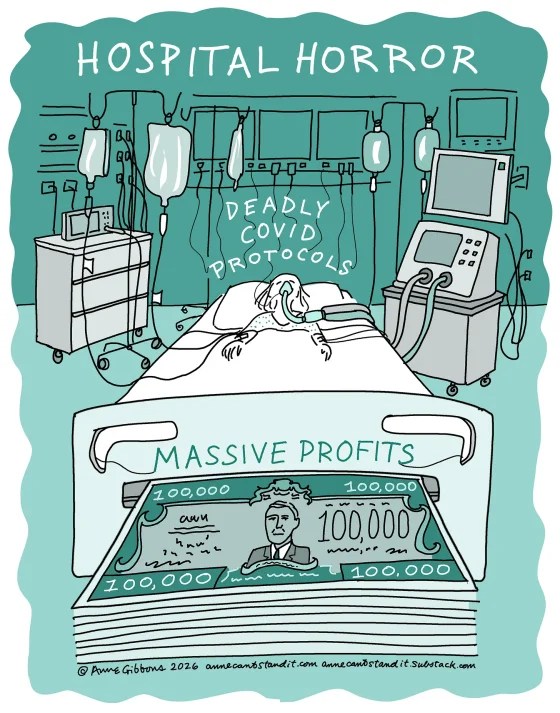
Hospital Horror
Documented in the film,“Bad Medicine”
Blog Roll
 Aletho News
- Israel Revives The ‘Iranian Assassination Threat Against Trump’ Deception In A Desperate Bid To Restart The War
- US rewrites history to dodge blame for illegal war on Iran: Foreign Ministry spokesperson
- TURBO CANCER DATA from Ontario, Canada (OHIP Insurance Billing Data)
- Iran warns France not to fall for Israeli false-flags operations
- Poland and Bulgaria put brakes on Ukraine weapons funding
- Russia Reaffirms Its Support for Sovereignty, Territorial Integrity of Lebanon – Russian MFA
- Araghchi: Failure to punish aggressors against Iran endangers all nations
- Iran tells UN Security Council to stop reversing roles of ‘aggressor and victim’
- Disgraced neocons Feith & Libby: stop whining about ‘endless war’
- CENTCOM rejects Israeli claims of preparations for new Iran attacks
- If Americans Knew
- An error has occurred; the feed is probably down. Try again later.
- No Tricks Zone
- New Study: Barents Sea Temperatures Were Warmer And Sea Ice Less Extensive In The 1700s Than Today
- German Authorities Start Initiative To Evaluate Public Register For Climate “Disinformation” Spreaders!
- Zonal Asymmetry of Temperature Change in the Antarctic Circumpolar Current
- New Study: The Net Fossil Fuel Contribution To Rising Atmospheric CO2 Has Been Zero For 500 Years
- Germany’s Green Energy Transition Becoming Increasingly Expensive…Another 6 Trillion Euros!
- Sudden Stratospheric Warming, Powerful El Niño Combination May Lead To Extreme Europe Cold, Energy Crisis!
- Two New Studies Find Thwaites Glacier Melt Cannot Be Driven By Human Activity Or A Warming Ocean
- E-Cars Reduce CO2 Emissions By Only 41% Compared To Internal Combustion Engine Vehicles
- Predictions Made By Renowned Climate Professor Over Past Decades Have Been Proven To Be Poor
- New Study Suggests Large Regions Of The Pacific Ocean Have Been Cooling For The Last 80 Years

