US sends largest ammo shipment in 20yrs to Germany amid ongoing European buildup
RT | November 10, 2016
The US military sent over 600 containers of ammunition to Europe, the largest single shipment in more than 20 years. The move comes just a week after the Pentagon announced the deployment of a 6,000-strong tank brigade to Eastern Europe next year.
Some 620 shipping containers packed with ammunition arrived at the northern German port of Nordenham at the end of October. There they were loaded onto trains and transported to the Miesau Army Depot for storage and distribution to other locations across Europe, the US Army said in a statement.
“This is about deterrence. We could have 1,000 tanks over here, but if we didn’t have the ammunition for them they would not have any deterrent effect,” said Lt. Gen. Ben Hodges, commander of US Army Europe.
He added that German military and civilian staff have been helpful in moving the ammunition supplies to the Miesau depot, which was “only possible because our ally, Germany, allows it to happen.”
By enabling the movement of US Army ammunition and equipment through its territory, Germany is contributing to “deterrence,” Gen. Hodges said.
“We’re bringing ammunition into the theater to resupply and set the stage for the European theater for any type of exercises or potential future missions that may come about,” said Lt. Col. Brad Culligan, commander of the US Army’s 838th Transportation Battalion.
The shipment is yet another part of the massive military buildup taking place in Eastern Europe, where the US and NATO are developing military infrastructure and headquarters as well as building weapons and ammunition stockpiles to defend the region against what they describe as “Russian aggression.”
Earlier in November, the Pentagon announced deployment of two heavily-armed army units, the 3rd Armored Brigade Combat Team (3rd ABCT) of the Colorado-based 4th Infantry Division as well as the New York-based 10th Combat Aviation Brigade, to Europe in January 2017.
Meanwhile, Gen. Hodges said in early October that he also wants to see anti-drone weapons systems in future arms deliveries to counter Russia, according to Military.com.
Those weapons systems would include the Avenger, a Humvee equipped with eight FIM-92 Stinger missiles, as well as the German-made Gepard, a twin-33mm cannon mounted on a Leopard tank chassis.
The US Army also plans to equip the 2nd Cavalry Regiment in Europe with the new version of the M1126 Stryker infantry fighting vehicle armed with a more powerful 30mm cannon in May of 2018, according to the website.
Armaments aside, the buildup is also coupled with numerous exercises taking place in the Baltic states, Poland and in the Black Sea, with the stated goal of assuring Eastern European allies of NATO’s commitment to defending them.
Russia has consistently referred to the buildup as a provocative measure which undermines European security, promising to take reciprocal steps.
Donald Trump won the election… so what now?
By Kit | OffGuardian | November 10, 2016
In the wake of the shocking result of the US Presidential election, we take a look at some of the key questions left up in the air. How did things go so wrong for Hillary Clinton? How will the world look when the dust has settled? Is this really a sign of any kind of change?
Question 1: What the hell just happened?
Most people, most pundits most media outlets were predicting a Clinton victory. The pundits and reporters, because Hillary was “qualified” and “competent”. Everyone else…because she could follow Obama’s example and mobilise the virtue-signalling vote, and even if she didn’t it would just be rigged. As the primaries evidently were.
The vast majority of the media were behind Clinton. The banks were too. As was Wall Street, big pharma, arms manufacturers, senior figures from both major political parties and (seemingly, anyway) the military and intelligence services. How could that much collective clout possibly fail to pull out the W? How did they let this happen?
You are left with three possibilities.
1, elections aren’t rigged. Simply put, all the weight behind Clinton could only exercise legitimate and transparent power. They could give interviews, write opinion pieces and campaign…and that’s all. They fought hard, and they lost. Fair and square. Given what we know about 2000, 2004 and the democratic primaries this seems unlikely.
2, elections can be controlled, but only in a limited fashion. This was talked about at length following the Brexit vote (which many people have suggested was nothing like as close as the “official figures” made it look). This idea posits that numbers can be manipulated, but not controlled. You can fudge them up and down, but full-on fakery leaves too much evidence, or is simply too difficult. It’s possible that Clinton was just SO mistrusted, SO hated, SO incredibly unpopular, that even with the collective might of 90% of the political and media establishment behind her… they just couldn’t swing the vote. This is plausible, especially if you paid attention to the crowd sizes at their respective rallies.
[Note: These situations both come with the rider that, much like sports, it may only be possible to rig an election if both sides are willing to cooperate. Maybe Trump wouldn’t let it slide the way Al Gore or Bernie Sanders were happy to do.]
3, somebody changed sides. Maybe the election was rigged, but in the other direction. Maybe the sudden, unexpected reopening of the e-mail investigation was a deliberate ploy by the FBI (and others, behind the scenes) to swing public opinion against Hillary. Maybe the rumors of immediate impeachment should Hillary win, and of possible ties to paedophiles and human trafficking, were the straw that broke the camel’s back. It’s possible that an establishment already creaking alarmingly under the weight of Clinton’s baggage, decided Clinton was now simply too much trouble. And that it might be easier to chance their arm on a man who might be willing to play ball, and was less likely to throw up a constitutional crisis and/or suddenly drop dead.
It’s recently become obvious, given the flip-flopping over Ukraine and Syria, that the American political establishment is far from a monolith of drive and purpose. There are internal divisions. There are factions. Trying to distill any kind of rational plan from their resulting actions is like trying to follow the score in a game of Rugby where four teams are playing at once, and they’re all wearing the same uniform.
Question 2: Will Trump Be Allowed to take office?
Just as happened following the Brexit vote (and to a lesser extent Jeremy Corbyn’s election as Labour leader), already this result has sprouted protest movements, petitions and articles either directly challenging its legitimacy, or simply questioning the “democratic value” of the American electoral system.
As the results were coming in last night, I personally witnessed tweets suggesting Obama should refuse to relinquish his office to Trump. Protest marches have already been held in many cities across America. If these protests escalate to riots, or street battles, Obama could declare a state of emergency which “delays” the swearing-in of the new president, Trump supporters would see this (rightly) as a possible coup attempt, leading to further violent unrest and the declaration of martial law. Extreme, but not impossible. Any move to replace Trump before he’s even in office would be totally unprecedented and grossly unconstitutional. But so was Gitmo.
Before the vote was held, the democrats were fervently and hysterically blaming the Russians for “interfering” with the election, baseless rumors which the media eagerly and unquestioningly repeated. You could argue this was done to preemptively defend themselves in the event of a Trump win. Undermining the result before there even was one. The Russian “hacks” are cited as the main cause behind this petition, calling for an overthrow of a Trump government, on the grounds he stole the election. This issue could be picked up more widely in the media in the coming days.
The long, long, long delay before Hillary finally appeared to make her concession speech makes one wonder if, behind the scenes, there may have been wheels turning. Think tanks furiously going over the options and outcomes should Clinton simply refuse to concede the election and publicly call into question the fairness of the vote. In the end, what would have finally sunk that possibility is the pompous way Clinton’s team responded to Trump’s own suggestion there may be vote rigging. To turn around and “disrespect our democracy” after she lost would have laid Clinton open to justified claims of hypocrisy.
There are more old fashioned methods of removing an unwanted president, of course. It’s very telling that “assassination” was shooting up the google search ranks as the results were announced last night. And America has never been short a lone wolf assassin when it really, really needed one.
Question 3: What sort of man is Donald Trump?
It’s tempting, at moments such as this, to blindly and joyfully accept outcome as a win for good guys. I’m not going to deny I was, more than anything, relieved when I saw the result. The possibility of a psychopathic war hawk pushing for a war with Russia, with the full weight of a self-deluded middle-class high on their own moral outrage behind her, was terrifying. But not so long ago Barack Obama was… for want of a better phrase…the great white hope. He was going to change things…but didn’t. In the end he was simply an Orwellian controlled alternative. It’s possible that’s all Trump is, too.
It’s possible Trump is just a pompous windbag who would say or do anything to get into power, simply for the sake of having power. It’s possible he’s an elaborate ploy designed to satiate an angry public thirsty for real change, and buy the oligarch elite more time to milk us dry or blow us all up for some crazy reasons of their own. Both plausible, but let’s put them aside for now.
Let’s say that Trump is sincere in his goals, and let’s say he is allowed to take office and try to introduce his policies – both big ifs, but still. How much institutional and bureaucratic resistance will he encounter? How many threats and extortions will he face? Does he have the strength of character to face down that opposition? Very few people do. Most politicians sell their souls for power, or resign themselves to impotence. It takes an extraordinary person to keep a hold of themselves and their ideals, in a political environment double loaded with both temptation and threat.
All through the election cycle the democrats were far more interested in talking about punch lines, snappy quotes and identity politics than discussing policy. That’s because any real discussion of policies would only push a lot of people into voting for Trump. He want’s to cut-out hostilities with Russia and cooperate in combating terrorism. He wants to slash defense spending and rebuild industry. He wants to pull American bases out of Japan, Germany, South Korea and others, and relinquish America’s self-styled title of “World Policeman”. He wants to stop corporations from employing illegal immigrants to get around paying minimum wage. He has posited leaving NATO.
These are all, on the face of it, reasonable policies that could bring America back from the brink. And they are all, on their own, potentially career ending for any other politician in the Western world.
Will he ever be allowed to enact a single one of them? I guess we’ll see.
Andrew Korybko – We shouldn’t be surprised about Trump’s victory

Katehon Think Tank | November 9, 2016
Hillary versus Donald: Ding Dong, The Witch Is Dead! Victory for the Wizard of Oz!
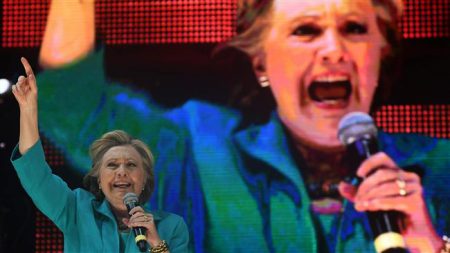
By Diana Johnstone | Global Research | November 9, 2016
“There’s no place like home.”
That’s the lesson. Even when home is Kansas.
The real meaning of this election is not, as bitterly disappointed Hillary supporters still maintain with tears in their eyes and fear in their throats, a victory for racism and sexism.
The real meaning of this upset is that Wall Street’s globalization project has been rejected by the citizens of its homeland.
This has major implications for the European nations that have been dragged along into this ruinous project.
Hillary Clinton was the candidate of the military industrial complex and international finance capital. She designed herself to be the figurehead of those forces, as queen of regime change. She aspired to be the one to remake the world in the image Wall Street dictates. It was a project enthusiastically and expensively supported by the one percent who profit from arms contracts and the trade deals they write themselves for their own interests.
To distract from the genuine significance of her candidacy, the Clinton campaign appealed to the desire for respectability of educated city dwellers, portraying Trump supporters as racist yokels motivated by a hateful desire to scapegoat minorities as revenge for their own inadequacies. They were “deplorables”, and you wouldn’t want to be one of them, would you?
Trump was sexist, because he referred to certain women as “bimbos”. Elizabeth Warren called him out for this, on a platform where Hillary sat listening, mouth wide open in delight – she who had referred to Bill’s girlfriends as “bimbo eruptions”. Sleaze and hypocrisy drowned out policy discussions. The worst the Clinton campaign could come up with was an eleven-year-old locker room exchange – just words, hardly comparable to Bill’s chronic actions.
Still, millions who were taken in by the Clinton campaign line are devastated, terrified, convinced that the only reason Trump won was the “racism” and “sexism” of that lower caste in globalized society: white heterosexual working class males.
But no, Virginia, there were other reasons to vote for Trump. Racism and sexism are surely low on the list.
Trump voters were scandalized by Hillary’s lies and corruption. Many of them would have voted for Bernie Sanders if they had the choice. That choice was taken away from them by Democratic Party manipulators who were sold on their own advertising campaign to elect “the first woman President.” A brand new product on the Presidential election market! Be the first to vote for a woman President! New, improved!
Bernie’s success already showed that millions of people didn’t want that woman. But the Democratic Party manipulators and their oligarch sponsors went right ahead with their plans to force Hillary Clinton on an unwilling nation. They brought this defeat on themselves.
Contrary to what you could believe by reading the New York Times, there were even intellectuals who voted for Trump, or at least refused to vote for Hillary, for the simple reason that Trump appears less likely to lead the world into its third and final Great War. He said things giving that impression, but such statements were ignored by mainstream media as they worked overtime to inflate the ogre image. No war with Russia? You must be a Putin puppet!
Trump voters had several reasons to vote for Trump other than “racism”. Most of all, they want their jobs back, jobs that have vanished thanks to the neoliberal policy of transferring manufacturing jobs to places with low wages.
But racism is the only motive recognized by the globalized elite for rejecting globalization. British citizens who voted to leave the European Union in order to recover their traditional democracy were also stigmatized as “racist” and “xenophobe”. Opposition to racism and xenophobia is the natural moral defense of a project of global governance that deprives ordinary citizens of any important power of decision.
This extraordinarily vicious campaign has brought out and aggravated sharp divisions within the United States. The division between city and countryside is most evident on the electoral maps. But these real divisions are exacerbated by a campaign that portrayed Donald Trump as a racist madman, a new Hitler about to bring fascism to America. The antiracism of this campaign, denouncing “hate”, has actually spawned hate.
No, Virginia, Trump is not Hitler. He is the Wizard of Oz. He is a showman who pulled off an amazing trick thanks to the drastic moral and intellectual decline of the American political system.
He is neither as dangerous as his opponents fear, nor as able to “make American great again” as his supporters hope. He is the Lesser Evil. What will become of him in Washington is anybody’s guess.
Copyright © Diana Johnstone, Global Research, 2016
Vatican Mediation in Venezuela Changes Political Equation for Washington
By Mark Weisbrot | The Hill | November 6, 2016
The Vatican’s participation in the mediation effort in Venezuela poses an unusual challenge to US policy in Venezuela and the region. On Sunday, October 30, three of the four major opposition parties and other prominent opposition leaders met with the government, with mediators from the Vatican and UNASUR (the Union of South American Nations). Some progress was made. The government released four people who the opposition considers political prisoners, and the opposition called off a political trial against President Maduro and a planned demonstration that most observers believed ran a high risk of violence.
Thomas Shannon, the number three official in the US State Department, also went to Venezuela this week, met with President Maduro and opposition leaders, and supported the dialogue. I wish I could say that this represents an actual change in US policy in the region, but all evidence still points to the contrary.
The US government is not looking at Venezuela in terms of dialogue or compromise. The Obama administration has economic sanctions against Venezuela, which President Obama renewed last March. In renewing these sanctions, the executive order again declared that Venezuela presented “an unusual and extraordinary threat to US security.” The world knows what happens to countries that the US deems to be “an unusual and extraordinary” security threat. Look what happened to Iraq. Look what happened to Nicaragua in the 1980s. It doesn’t matter how many people are directly affected by the specific sanctions against Venezuela. The threat is what matters, and it is ugly and belligerent enough to keep many investors from investing in Venezuela and to raise the country’s cost of borrowing. (Not to mention that the whole premise of Venezuela as a “security threat” is absurd.) And the US government has also directly pressured financial institutions not to do business with Venezuela.
For all of these reasons, it is clear that Washington’s goal in Venezuela is currently the same as it has been for almost all of the past 15 years. Shannon’s support for dialogue is almost certain to turn out the same as previous diplomatic thaws in the past: a brief and insincere interlude. President Obama initiated the longest period (about five months) of calm US-Venezuela relations ― since the US-backed military coup of 2002 ―between March and July last year. It soon became clear that this was only because the Cubans ― with support from the rest of the region ― made it a condition of progress in their own negotiations for opening relations with the US. This was something that Obama wanted for his legacy. But as Venezuela’s National Assembly elections approached, the Obama administration went back to its regime change strategy, supporting an international campaign to delegitimize Venezuela’s elections. (This turned out to be unnecessary, since the opposition won in a landslide.)
The Venezuelan opposition pursued a “strategy of military takeover” for the first four years of the Chávez government, including the 2002 military coup. But since 2004, they have been divided on whether to pursue change through legal means. Whenever they had people in the streets supporting a violent or extralegal overthrow ― as in 2002–03, 2013, or 2014 ― the US government has taken their side. Washington has also led various campaigns to delegitimize the Venezuelan government, a vital part of any extralegal “regime change” strategy.
But for the moment, Pope Francis has altered everyone’s calculations. It is not good optics for the hard-line Venezuelan opposition to condemn the pope. And the Obama administration cannot exert the kind of pressure on the Vatican that it does on, e.g., European governments to support its sanctions against Russia, or various unpopular military adventures. Also, the international media cannot marginalize or ignore the pope in the way they do the rest of the hemisphere’s governments, e.g., when these governments resist Washington’s support for regime change in Venezuela, Honduras, and other countries.
The pope is likely to look at the Venezuelan crisis in a pragmatic way, rather than through the lens of Washington’s imperial and ideological imperatives. There is a divided government in Venezuela, with the chavistas controlling the presidency and to a large extent the judiciary. The fractious opposition controls the National Assembly. Until the next presidential election, there is no way to resolve the political conflict except through dialogue and negotiation.
Pope Francis can be a pragmatic diplomat, but he has certain principles and is not easily intimidated. He is likely to understand that Venezuela’s divided government is a result of a divided country. From 2003, when the Chávez government got control of the national oil industry, until 2014, the large majority of the population experienced enormous gains in their living standards. That is why, in December of last year, in the elections for National Assembly, the ruling PSUV still got more than 40 percent of the vote ― despite inflation running at 180 percent and widespread shortages of basic consumer goods.
A big part of the gains of the Chávez era have been lost in the past nearly three years, and especially over the past year. But the governing party still has a political base that remembers worse poverty and exclusion, if not worse shortages, in the pre-Chávez era. They do not see the political opposition, which is a right-wing political movement that has always represented the upper classes, offering solutions that will make their lives better.
The Vatican will therefore likely seek negotiation and compromise on both sides of the political divide. This poses a unique challenge to Washington and some of its closest allies in Venezuela.
Trump Wins: Welcome to the new world
The BRICS Post | November 9, 2016
Modern history will record November 8, 2016 as the day when the United States of America officially decided to vote for a global retreat – from the heady rhetoric of ‘Let’s make the world a better place’ to “Let’s make America great again”.
Americans have voted for building a wall to protect what they have, against the dream of global dominance. This surely marks the end of the uni-polar world as we know it.
The tenor and assertions (of rebuilding American infrastructure, erecting border walls, keeping immigrants away, and dismantling Obamacare) during Republican candidate Donald Trump’s campaign trail followed by his massive victory on Tuesday completes this US retreat.
The resulting void comes at a time when no one nation is ready to fill this space which will be left empty – and this could fuel the rise of real multi-polarity.
At the moment, and surely for many years now, China remains America’s biggest economic rival. That juggernaut continues with Beijing’s ambitious new Silk Road (One Belt One Road) project across Asia and Europe.
China is the world’s second largest economy after the United States and the biggest trading partner for most Asian and African economies. With over 160 cities hosting 1 million+ inhabitants and new cities emerging, China continues to be one of the fastest growing consumer markets.
However, its biggest domestic challenge is to continue to guard against any slips in its politically conservative agenda and that internal social upheaval does not go out of those “iron hands”.
But there is no denying that China will continue as the centerpiece of the global economic discourse even as Trump takes stock of US economic health indicators.
Enter Russia
The next biggest tension point on the global agenda is strategic geopolitics.
Unpalatable as it may be to many, President Vladimir Putin’s Russia – which is facing severe economic difficulties – is ready, willing and able to play an important role here.
Among the Republican leader’s most discussed campaign promises was that America would outsource the fight against ISIS to Putin in Syria.
For Putin, to manage public opinion at home, it’s important to be doing things which can divert attention from local to global affairs.
We are likely to hear more and more of Russia in the coming days, especially since Trump spoke about working with Putin “to wipe out shared enemies”.
They say establishment always resists change.
So it’s likely that Trump might continue on the path set by his predecessors on foreign policy in the short term. But it is quite clear that his focus would be inwards rather than outwards.
Trump might find friendly right-wing dispensations in India and Brazil that could be further persuaded to become Washington’s proxies in their struggle against economically-asserting China and strategically-defiant Russia. In turn, India and Brazil are likely to benefit from this dependence.
Rise of strategic blocs
But in order to understand the likelihood of an American retreat, one needs to look at the recent announcements of Asian countries like the Philippines and Malaysia that have openly rebuffed US meddling in the region vis-à-vis the South China Sea or of the eagerness of EU countries in joining the new China-led financial institutions like the Asian Infrastructure Investment Bank.
Now more than ever, strategic groupings are likely to wield more eminence – BRICS is one such group.
Former UK Vice Finance Minister, Jim O’Neill, who is the father of this acronym, has recently said that BRICS has outperformed his expectations and – as things stand today – it seems he is in for an even bigger surprise.
Meanwhile, Germany’s Defence Minister Ursula von der Leyen has already asked President-elect Trump to reassure US allies of his commitment to NATO following some bitter comments during his 2016 campaign.
The EU is another big grouping.
If it succeeds in fighting the growing right-wing onslaught and continues to work with other groups like BRICS and the Gulf Cooperation Council (GCC), the EU is likely to gain from this US retreat.
What Americans have done today is historic. They may not have made history by electing the first female president but they have, unintentionally, initiated steps towards a historic retreat.
They have sent an outsider to the White House with a mandate to look within.
The American Dream has opened its eyes to the new realities.
Welcome to the new world order.
Netanyahu Congratulates Trump, Calls Him ‘True Friend’ of ‘Israel’
Al-Manar | November 9, 2016
Israeli Prime Minister Benjamin Netanyahu congratulated Donald Trump on his election as US president on Wednesday and called him “a true friend” of the Zionist entity.
“President-elect Trump is a true friend of the state of Israel, and I look forward to working with him to advance security, stability and peace in our region,” the right-wing premier said in a statement.
“The ironclad bond between the United States and Israel is rooted in shared values, buttressed by shared interests and driven by a shared destiny.”
“I am confident that president-elect Trump and I will continue to strengthen the unique alliance between our two countries and bring it to ever greater heights.”
Netanyahu avoided controversial topics in his statement, unlike members of his government.
Education Minister Naftali Bennett, who heads the hardline Jewish Home party, said after Trump’s victory that the idea of a Palestinian state was over.
“Trump’s victory is an opportunity for Israel to immediately retract the notion of a Palestinian state in the centre of the country, which would hurt our security and just cause,” Bennett said in an apparent reference to the occupied West Bank.
“This is the position of the president-elect … The era of a Palestinian state is over.”
Others, including politicians from Netanyahu’s Likud party, called for Trump to follow through on his promise to move the US embassy from Tel Aviv to al-Quds (Jerusalem).
Trump’s Victory Should Not Obfuscate Election Fraud
By Doug Steil | Aletho News | November 9, 2016
As luck would have it Hillary Clinton’s landslide loss was so big that massive election fraud by Democratic Party operatives in various cities could not overcome her deficit.
The “shock” by insiders of having lost obviously reflects their earlier certainty of prevailing, which hints at the extent of their vote rigging schemes. The unverifiable system of voting in America is so flawed that foreign observers are now being blocked from monitoring US elections. The topic of fraud can no longer be swept under the rug.
Surely Clinton and the media will try to make a big deal of having “received more votes” than Trump in the popular vote total, which according to the current tabulation has already occurred, with an even higher differential to come once West Coast state results are all counted.
Those inside the DC Beltway and within elite campuses will claim that this is “unfair” and that Hillary really “should have won”.
However, this assertion should be vociferously challenged. Surely this surplus is artificial. Is it really possible that so many Americans would have ignored the prospect of going to war with Russia?
The question needs to be raised publicly: How many hundreds of thousand votes were switched from Trump to Clinton altogether and how many invalid (illegal) votes were registered for her?
Aside from that — assuming all the votes were legitimate — the electoral college system is intended to prevent, say, a concentration of votes in urban centers to the detriment of rural voters across the country. As is the case in Maine and Nebraska, voters in individual states can decide how to allocate their electoral votes, so it doesn’t have to be a winner-take-all system.
It is a tribute to the designers of the US Constitution that the Electoral College mechanism still exists. It’s almost as if though they might also have already suspected long ago that there could be illicit efforts in the future to change an election outcome simply by stuffing the ballots in a few locations. The indirect US electoral system has saved the country from a big crisis brought on by election fraud. Instead of changing the Constitution future election reforms should focus on making vote fraud impossible or extremely difficult to carry out.
Featured Video

Genocide-linked firm handles Britons’ NHS data
or go to
Aletho News Archives – Video-Images
Book Review
Book review: Boiling Point, How America Brought War to Ukraine
By Tim Kirby | Strategic Culture Foundation | November 14, 2026
Did Vladimir Putin just wake up one day on the wrong side of the bed and decide to invade Ukraine in February of 2022 or is there a lot more to this single decision that has been reshaping the 21st century geopolitical landscape?
Obviously, from the way that I just posed the question you can see that I am on the side that views the causes for the war in Ukraine to be very deep, long-term, historical and consciously nefarious, and most importantly, not from within the halls of the Kremlin. So it was a pleasure to take a look at the book “Boiling Point, How America Brought War to Ukraine” by author Stephen Kinzer, who like myself, also believes that the real reasons behind military conflicts around the world are not what CNN and the BBC have been telling you. The main thesis of this book was stated clearly by its creator; the war “may have been illegal, but it was definitely not unprovoked.” … continue
Blog Roll
 Aletho News
- The 10 Disease Renamings That Rescued the Vaccine
- NATO cancels 2027 leaders’ summit
- IAEA’s politicized use of safeguards undermines its impartiality: Russian envoy
- UK must be ready to strike Russian Arctic – ex-PM
- Fico’s Two Red Lines: Russian Energy and the Next Ukraine Loan
- Thousands rally for banned NATO-skeptic presidential candidate
- Ukraine Settlement and New European Security Architecture Must Go Hand in Hand – Kremlin
- Book review: Boiling Point, How America Brought War to Ukraine
- Israel Revives The ‘Iranian Assassination Threat Against Trump’ Deception In A Desperate Bid To Restart The War
- US rewrites history to dodge blame for illegal war on Iran: Foreign Ministry spokesperson
- If Americans Knew
- An error has occurred; the feed is probably down. Try again later.
- No Tricks Zone
- New Study: Barents Sea Temperatures Were Warmer And Sea Ice Less Extensive In The 1700s Than Today
- German Authorities Start Initiative To Evaluate Public Register For Climate “Disinformation” Spreaders!
- Zonal Asymmetry of Temperature Change in the Antarctic Circumpolar Current
- New Study: The Net Fossil Fuel Contribution To Rising Atmospheric CO2 Has Been Zero For 500 Years
- Germany’s Green Energy Transition Becoming Increasingly Expensive…Another 6 Trillion Euros!
- Sudden Stratospheric Warming, Powerful El Niño Combination May Lead To Extreme Europe Cold, Energy Crisis!
- Two New Studies Find Thwaites Glacier Melt Cannot Be Driven By Human Activity Or A Warming Ocean
- E-Cars Reduce CO2 Emissions By Only 41% Compared To Internal Combustion Engine Vehicles
- Predictions Made By Renowned Climate Professor Over Past Decades Have Been Proven To Be Poor
- New Study Suggests Large Regions Of The Pacific Ocean Have Been Cooling For The Last 80 Years

