Thousands of Saudi-Backed Terrorists Ready to Enter Syria via Border with Jordan
FARS News Agency | August 13, 2016
Saudi intelligence officers have been training at least 7,000 anti-Syria fighters in Jordan’s territories and plan to dispatch them to the war-hit country via its Southern borders to distract the army from the war in Aleppo, Arab media disclosed.
“Over 7,000 men have been trained in a Saudi-established military camp in Jordan near the border with Syria’s Dara’a province, and now they are ready to be dispatched to join other terrorists’ battle against the Syrian government and army,” the Lebanese al-Manar reported.
“There are several British and western military trainers and advisors in the Saudi-established camp. The western officers are to accompany the fighters in their war against the Syrian government,” the paper said.
Jordan hosts a large refugee camp near the border with Syria.
Other sources also disclosed that the US officers have been involved in the training of terrorists in Jordan to fight against Syrian government.
War analysts believe that the move is aimed at diversion to distract the army and its allies from the war in Aleppo in the North where pro-government troops have started a massive offensive to take back the country’s second largest city from the terrorists.
Meanwhile, earlier today, armed opposition groups in Southern Syria declared that thousands of militants are ready to reconcile with the Damascus government.
A provincial council affiliated to the militant groups in a statement admitted that 25,000 militants are looking for reconciliation with the Syrian government forces in Southern Syria, al-Mayadeen TV channel reported on Saturday.
The statement by the ‘Council for Men of Knowledge in the Levant’ has accused the terrorist commanders of being willing to compromise with the Syrian army of treason. It has given the militant commanders in Southern Syria three days to withdraw from al-Mouk Operations Room (which operates under the Saudi, Qatari, the US and Jordanian spy agencies), the television added.
The Al-Mouk Operations Room has been accused of corruption, similar reports in a number of other Arab media have cited the financial corruption of the Operations Room members as a main cause of the militants complaint and their decision to surrender to the Syrian army.
Early in August, around 1,000 rebels laid down their arms and turned themselves in to the Syrian officials in the province of Dara’a amid the terrorist groups’ threats against those who surrender to the government.
In February, the Syrian Army dispatched more soldiers to the country’s Southern provinces to be deployed at the border with Jordan to defend the country against the possible aggression of the Saudi Army.
“A large convoy of reinforcements from the Syrian capital of Damascus arrived to the 5th Armored Division headquarters of the Syrian army in the town of Izra in the Northern part of Dara’a province and the Eastern part of Sheikh Meskeen,” the sources said.
“The Saudi Army has been conducting a number of military drills in the Kingdom of Jordan in recent weeks, raising the alert level of a possible war in the Dara’a province,” the sources said, adding, “So far, nothing has come of these Saudi military drills and it is very unlikely that they will attempt to enter Syria.”
How Media Distorted Syrian Ceasefire’s Breakdown
By Gareth Porter | FAIR | August 11, 2016
Coverage of the breakdown of the partial ceasefire in Syria illustrated the main way corporate news media distort public understanding of a major foreign policy story. The problem is not that the key events in the story are entirely unreported, but that they were downplayed and quickly forgotten in the media’s embrace of themes with which they were more comfortable.
In this case, the one key event was the major offensive launched in early April by Al Nusra Front — the Al Qaeda franchise in Syria — alongside U.S.-backed armed opposition groups. This offensive was mentioned in at least two “quality” U.S. newspapers. Their readers, however, would not have read that it was that offensive that broke the back of the partial ceasefire.
On the contrary, they would have gotten the clear impression from following the major newspapers’ coverage that systematic violations by the Assad government doomed the ceasefire from the beginning.
Corporate media heralded the ceasefire agreement when it was negotiated by the United States and Russia in February, with the Los Angeles Times (2/3/16) calling it “the most determined diplomatic push to date aimed at ending the nation’s almost five-year conflict.” The “partial cessation of hostilities” was to apply between the Syrian regime and the non-jihadist forces, but not to the regime’s war with Nusra and with ISIS.
The clear implication was that the U.S.-supported non-jihadist opposition forces would have to separate themselves from Nusra, or else they would be legitimate targets for airstrikes.
But the relationship between the CIA-backed armed opposition to Assad and the jihadist Nusra Front was an issue that major U.S. newspapers had already found very difficult to cover (FAIR.org, 3/21/16).
U.S. Syria policy has been dependent on the military potential of the Nusra Front (and its close ally, Ahrar al Sham) for leverage on the Syrian regime, since the “moderate” opposition was unable to operate in northwest Syria without jihadist support. This central element in U.S. Syria policy, which both the government and the media were unwilling to acknowledge, was a central obstacle to accurate coverage of what happened to the Syrian ceasefire.
Shaping the Story
This problem began shaping the story as soon as the ceasefire agreement was announced. On Feb. 23, New York Times correspondent Neil MacFarquhar wrote a news analysis on the wider tensions between the Obama administration and Russia that pointed to “a gaping loophole” in the Syria ceasefire agreement: the fact that “it permits attacks against the Islamic State and the Nusra Front, an Al Qaeda affiliate, to continue.”
MacFarquhar asserted that exempting Nusra from the ceasefire “could work in Moscow’s favor, since many of the anti-Assad groups aligned with the United States fight alongside the Nusra Front.” That meant that Russia could “continue to strike United States-backed rebel groups without fear … of Washington’s doing anything to stop them,” he wrote.
On the same day, Adam Entous of the Wall Street Journal reported that Obama’s “top military and intelligence advisers don’t believe Russia will abide by a just-announced ceasefire in Syria and want to ready plans to increase pressure on Moscow by expanding covert support to rebels fighting the Russia-backed Assad regime.”
For two of the country’s most prominent newspapers, it was thus clear that the primary context of the Syria ceasefire was not its impact on Syria’s population, but how it affected the rivalry between powerful national security officials and Russia.
Contrary to those dark suspicions of Russian intentions to take advantage of the agreement to hit U.S.-supported Syrian opposition groups, however, as soon as the partial ceasefire agreement took effect on Feb. 27, Russia released a map that designated “green zones” where its air forces would not strike.
The green zones, according to the Russian Ministry of Defense, corresponded with Syrian opposition groups that had signed on to the ceasefire. Furthermore, Russia stopped bombing the Nusra-controlled areas of northwest Syria, instead focusing on ISIS targets, as Pentagon spokesperson Jeff Davis confirmed on March 14.
Breaking the Ceasefire
But instead of separating themselves from Nusra Front, the U.S.-supported armed opposition joined with Nusra and its jihadist allies in a major offensive aimed at destroying the ceasefire.
Charles Lister, a leading British specialist on the jihadists in Syria, has recounted being told by the commander of a U.S.-backed armed group that around March 20, Nusra officials began a round of meetings with non-jihadist opposition groups from Hama, Latakia and southern Aleppo — including those supported by the United States — to persuade them to participate in a major offensive against the Assad regime, rather than in a ceasefire and political negotiations.
News media did not ignore the offensive launched on April 3 by Nusra Front and its “moderate” allies. The Los Angeles Times (4/4/16) described a “punishing attack” by Nusra and several “so-called moderate rebel factions” on the town of Al Eis, southwest of Aleppo, “overlooking the M5 highway, a vital artery connecting the Syrian capital, Damascus, in the southwest of the country, with the government-held city of Homs, in west-central Syria, and Aleppo in the north.”
Associated Press (4/3/16) reported that Nusra Front’s closest ally, Ahrar al Sham, together with U.S.-supported factions had simultaneously “seized government positions in heavy fighting in northwestern Latakia province.” The story quoted Zakariya Qaytaz of the U.S.-supported Division 13 brigade as telling the agency through Twitter: “The truce is considered over. This battle is a notice to the regime.”
The Nusra-led offensive was a decisive violation of the ceasefire, which effectively frustrated the intention of isolating the jihadists. It led to continued high levels of fighting in the three areas where it had taken place, and Russian planes returned to Nusra Front-controlled territory for the first time in nearly six weeks. Yet after the first reports on the offensive, its very existence vanished from media coverage of Syria.
Disappearing Key Facts
No U.S. newspaper followed up over the next two weeks to analyze its significance in terms of U.S. policy, especially in light of the role of “legitimate” armed opposition groups in trashing the ceasefire.
Wall Street Journal correspondent Sam Dagher (4/4/16) suggested in his initial report on the offensive that it was a response to a Syrian air force airstrike in an opposition-controlled suburb of Damascus two days earlier, which activists said killed 30 civilians. But the offensive was so complex and well-organized that it had obviously been prepared well in advance of that strike.
None of the other papers sought to portray the offensive as the result of a pattern of increasing military pressure on the Nusra Front or its allies. In fact, after the initial reports, all four major newspapers — the New York Times, LA Times, Wall Street Journal and Washington Post — simply ignored the fact that the offensive had been carried out.
On April 19, three separate articles presented three variants of what became the broad media approach to explaining the fate of the ceasefire agreement. The Journal’s Nour Malas and Sam Dagher wrote: “A limited truce in Syria, brokered by the US and Russia in late February, has unraveled in recent weeks, with government forces escalating attacks on several fronts and rebels relaunching operations around the northern city of Aleppo.”
That formulation clearly suggested that either the regime had moved first, or that government and rebels had somehow both taken the offensive at the same moment; the former interpretation was encouraged by the headline, “Syrian Government Steps Up Airstrikes.”
On the same day, New York Times Beirut correspondent Anne Barnard wrote a piece focused mainly on regime airstrikes in two Idlib towns, Maarat al Numan and Kafr Nable, that had killed many as 40 civilians.
Barnard’s piece was headlined, “Ceasefire Crumbles as Bombings Kill Dozens” — suggesting that the airstrikes had somehow led to the “crumbling.” Barnard did refer to an otherwise unidentified “insurgent offensive” that preceded the strikes, but did not draw any causal relationship between it and the bombing.
The article cited the opposition claim that the government had repeatedly violated the partial ceasefire, but didn’t cite a single concrete instance of such a violation. And it appears to contradict that argument by observing that the Idlib airstrikes had ended “the relative respite from airstrikes that had lasted nearly two months” – i.e., from the time the ceasefire had gone into effect.
Yet a third article to appear that day, published by Reuters, explicitly asserted that the regime airstrike on a crowded market by Syrian planes to which Barnard referred was the cause of the failure of the partial ceasefire.
“Syrian peace talks appeared all but doomed on Tuesday,” it said, “after airstrikes killed about 40 people in a crowded vegetable market in rebel territory, with the opposition saying a truce was finished and it would keep out of negotiations indefinitely.”
Wrapping Up the Distortions
Finally, on April 27, Karen DeYoung, associate editor of the Washington Post, wrote a news analysis piece looking back on what happened to the ceasefire. The piece never mentioned the major Nusra Front offensive in which U.S.-supported armed groups had played a key role, passing on instead the distorted explanation of the fate of the ceasefire offered by national security bureaucrats.
“Some Defense Department and intelligence officials,” she wrote, “think Russia and its Syrian government client are clearly violating the ceasefire and provoking the opposition into doing the same.”
Like the three April 19 articles, DeYoung focused entirely on military moves taken by the regime more than two weeks after the joint Nusra/opposition April offensive. She cited the Syrian government bombing of Kafr Nabl and Maarat al Numan the previous week, asserting that the towns were “heavily bombed by Assad after rebel forces threw out Nusra occupiers and civilians took to the streets in anti-Assad demonstrations.”
But that characterization of the situation in the two towns, clearly aimed to support the notion that they were free of Nusra control, was false. In fact, Kafr Nabl had formerly been the home of the U.S.-backed Division 13, but far from having been thrown out, Nusra Front had reasserted its direct control over the towns in mid-March, kicking Division 13 out of its base and seizing its U.S.-supplied weapons after a fight over the larger town Maarat al Numan.
DeYoung went so far as to embrace the CIA/Pentagon bureaucrats’ argument that the United States should not have agreed to allow any attacks on Nusra Front in the ceasefire agreement.
“The Nusra ceasefire exception had already left a hole big enough for the Syrian government and Russia to barrel through,” she wrote, “and they have not hesitated to do so in pursuit of regaining the initiative on the ground for Assad.”
The implication of the argument is that the United States should do nothing to interfere with Nusra’s capacity to strike at the Assad regime. Thus DeYoung quoted an analyst for the Institute for the Study of War, which favors a more belligerent U.S. policy in Syria, dismissing the military collaboration by U.S.-supported groups with Nusra Front as not really significant, because it is only “tactical,” and that Nusra merely offers to help those allies “retaliate” against regime attacks, rather than seeking a military solution to the conflict.
Such arguments are merely shallow rationalizations, however, for the preference of hardliners in Washington for pitting Al Qaeda’s military power against Russia and its Syrian client, enhancing the power position of the U.S. national security state in Syria.
A Simplistic Summary
As more time passes, the media version of why the partial ceasefire failed has become even more simplistic and distorted. On July 12, DeYoung revisited the issue in the context of the Obama administration’s negotiations with Russia on military cooperation against Nusra Front. This time she portrayed the ceasefire quite starkly as the victim of Syrian and Russian bombing:
“Despite a ceasefire ostensibly in effect since February, Syrian planes have kept up a steady bombardment of both civilian and opposition sites — where they have argued that Al Nusra forces, exempt from the truce, are mixed with rebel groups covered by the accord. After observing the early weeks of the ceasefire, Russian planes joined the Syrian forces, including in an offensive last weekend that took over the only remaining supply route for both rebels and civilians hunkered down in the northern city of Aleppo.”
Playing the role of ultimate media arbiter of how the attentive public is to understand the pivotal issue of why the ceasefire failed, DeYoung has deleted from memory the essential facts. In her narrative, there was no Nusra Front plan to destroy the ceasefire, and no April Nusra offensive to seize strategic territory south of Aleppo with the full participation of U.S.-supported opposition groups.
The lesson of the Syrian ceasefire episode is clear: The most influential news media have virtually complete freedom to shape the narrative surrounding a given issue simply by erasing inconvenient facts from the story line. They can do that even when the events or facts have been reported by one or more of those very news media.
In the world of personal access and power inhabited by those who determine what will be published and what won’t, even the most obviously central facts are disposable in the service of a narrative that maintains necessary relationships.
Trump: Americans May Be Tried In Military Tribunals Under His Administration
By Jonathan Turley | August 12, 2016
I have long been a critic of military tribunals as constitutionally dubious and practically ineffectual institutions. The tribunals at Guantanamo Bay have resulted in few actual trials and undermined the standing of the United States as a nation committed to the rule of law. The principle rationale cited by former officials in defense of Gitmo has been that it would not be used to try citizens. Now in a deeply disturbing interview, GOP presidential nominee Donald Trump has stated that he might try citizens at Gitmo — maintaining a shadow court system for stripping citizens of basic rights of due process just a few miles off the United States shore.
As an attorney who has long practiced in the national security field (including terrorism cases), the tribunal system has never made a great deal of sense to me. Federal courts have long tried terrorists and the government has a high success rate in such cases. The creation of a faux court system only gives our enemies a rallying cry and fuels those who to call us hypocrites.
Those concerns are magnified by Trump’s dismissal of any distinction between citizens and non-citizens in the use of such tribunals. In an interview with the Miami Herald on Thursday, Trump was asked if he would use the tribunals against U.S. citizens. Trump responded: “Well, I know that they want to try them in our regular court systems, and I don’t like that at all. I don’t like that at all. I would say they could be tried there, that would be fine.”
That may be fine in Trump’s view but it would also be unconstitutional. Presidents are not allowed to create alternative court systems for denying citizens of core rights at their discretion. Such a Caesar-like role runs against the very grain of the American constitutional system. The statement by Trump reflects a disconcerting lack of faith in our court system and a fundamental misunderstanding of the limits placed upon presidents in our constitutional system.
The significance of the GOP’s attempted purge of Donald Trump
By Daniel Haiphong | American Herald Tribune | August 11, 2016
The GOP is trying to oust Donald Trump from the Presidential campaign trail. Numerous GOP officials and corporate media reports have indicated that Donald Trump may drop out of the race. Curiously, the news comes just weeks after Trump walked away from the Republican National Convention with the nomination. No other candidate came close in total number of delegates in the state primaries and the proposed roll call from dissenting delegates failed to bring results. The attempted ousting of Trump reflects both the fracturing of the Republican Party and the rupture of the two-party corporate duopoly generally in this election cycle.
This isn’t the first time establishment Republicans have attempted to push Trump out of the race. When Trump began picking up momentum earlier in 2016, many well-known Republicans refused to endorse him. Republican Mitt Romney made a video appearance at the Democratic Party National Convention to warn of the dangers of a Trump presidency. The Business Round Table, a collection of corporate executives, also warned New York Times readers of Trump’s possible Presidential victory. Even the Koch Brothers are sabotaging Republican Party supporters of Trump by pulling their funding from his supporters in Washington.
The reason for the ruling class’s fear of Trump is clearly articulated from the source. Trump is unpredictable and his message uncontrolled. There are times when Trump speaks to working class anxiety by repudiating trade deals and calling to re-regulate the financial sector. There are others when Trump is easily baited into traps set by the Democratic Party. In recent weeks, the Democratic Party has attempted to frame Trump as an unpatriotic traitor. Trump has reaffirmed his support of Russian President Vladimir Putin and refused to take back remarks regarding the heroism of a Muslim American soldier who died in combat in Iraq.
While power struggle between the Democratic Party and Republican Party is nothing new, Trump’s impact on the two-party corporate duopoly should not be understated. Trump has destroyed the GOP’s infrastructure. His rhetoric has inspired emboldened racist elements of the working class as well as legitimate class grievances among the Republican Party base. Trump has occupied a vacuum that its corporate-backers have refused to fill. No longer can the Republican Party operate as it did in the past without losing ground to the increasingly conservative Democratic Party.
For nearly five decades, the Republican Party has positioned itself the party of white supremacy. The Democratic Party has been able to place unions, Black voters, and white liberals under its tent over this period. However, the neo-liberal crisis of capitalism has changed this dynamic dramatically. The gap between Democratic Party rhetoric and policy has widened since the early 1980s. This has forced Republicans to move further to the right in the midst of Democratic Party-led wars, austerity measures, and assaults on civil liberties.
Donald Trump represents an existential threat to the very existence of the GOP. In her speech at the Democratic National Convention, Hillary Clinton herself admitted that she would be a President for “Democrats, Republicans, and Independents.” She was thus very forthright in extending an invitation to refugee Republicans into her “big tent” campaign. Clinton’s neo-liberal, imperialist agenda is attractive to a Republican Party establishment that has effectively lost its base to Trump. Trump’s erratic behavior only further endangers his ability to defeat Clinton’s strategy and bring victory to what is left of the Republican Party.
A series of interviews on “Democracy Now!” have clarified the depths to which the Clinton campaign seeks to use fear of Donald Trump as its catalyst for victory. In two separate debates, Green Party supporters Kshama Sawant and Chris Hedges confronted Clinton operatives Rebecca Traiser and Robert Reich. Traitser and Reich refused to address concrete policy and instead promoted a Clinton Presidency on the basis of the dangers of Donald Trump. The debates confirmed that Hillary Clinton and the Democratic Party have become virtuously indefensible. Such a realization has forced the two-party corporate duopoly into a crisis situation, especially on the Republican Party side. Either the Republican Party establishment gets behind Trump or it joins forces with the increasingly conservative Democratic Party machinery led by Clinton to defeat the “fascist” casino capitalist.
The fact the Republican Party has not distanced itself from rumors of Trump’s departure indicates that there is a significant portion of GOP leaders who would prefer a Hillary Clinton Presidency. Hillary Clinton is, after all, the chosen politician to serve the capitalist oligarchy. Clinton has received tens of millions of dollars in donations from hedge funds and various other Wall Street donors. This places Trump at a glaring disadvantage. Yet this disadvantage has been mitigated by the open rebellion both Democratic and Republican Party bases are waging against the establishment.
The conditions that created the revolt of young voters in the Democratic Party and the entire base of the Republican Party are not going away. Trump may step down, or he may continue on in his campaign. Whatever the case, the legitimacy of the two-party duopoly will remain tenuous at best. Millions of people are sick and tired of war, austerity, poverty, and a system that represents no one but the elite. A mass break with the two-party system is on the horizon and Trump’s campaign has played a significant role in speeding up the process. So the conversation about Trump should not be confined to his personality or his reactionary character. It should center on the root causes of his rise to the GOP nomination and what that means for the future of US political landscape.
Washington considers sanctioning Moscow over DNC email leak – report
RT | August 12, 2016
US officials are considering new economic sanctions against Russia over the DNC email leak released by WikiLeaks, the Wall Street Journal reports, citing sources familiar with the situation.
Officials have not so far, however, reached common ground on how exactly to impose sanctions, the WSJ reports.
Adopting more anti-Russian economic sanctions would mean delivering public accusations against Moscow or exposing links of the alleged hackers to Russia.
The White House has so far not commented, although the FBI and intelligence agencies investigating the cyberattack have “signaled” that the attack was “almost certainly” carried out by “Russian-affiliated hackers,” according to the WSJ.
The breach of the Democratic Congressional Campaign Committee, already compared to the Watergate scandal, is far from reaching its peak, as WikiLeaks founder Julian Assange has dropped a broad hint he has much more material to potentially publish.
Speaking in Washington DC on Thursday, House Democratic Leader Nancy Pelosi said she does not know exactly how the notorious DNC leak was possible, but that there could be no mistake about its initiator.
“I know for sure it is the Russians,” Pelosi told reporters, adding “we are assessing the damage.”
“This is an electronic Watergate… The Russians broke in. Who did they give the information to? I don’t know. Who dumped it? I don’t know,” she said, as quoted by the WSJ.
The Democrats are now urging the Obama administration to take decisive action.
“When the administration believes it has sufficient evidence of attribution, it will make that attribution public as well as consider any other steps necessary,” said Adam Schiff, the top Democrat on the House Intelligence Committee.
During President Barack Obama’s two terms in office, relations between Moscow and Washington have dropped to lows similar to those seen in the years of the Cold War.
Washington has already imposed a wide range of sanctions against Russian politicians and state companies following the reunification of Crimea with Russia, and accuses Moscow of being involved in the civil war in Ukraine.
Moscow has consistently denied allegations about its possible role in the hacking of US Democratic Party emails published by WikiLeaks.
“We are again seeing these maniacal attempts to exploit the Russian theme in the US election campaign,” Russian presidential spokesman Dmitry Peskov said.
Last year, President Obama signed an executive order that facilitates imposing sanctions against any country endangering US national security through cyberattacks.
“Our tools now include an executive order authorizing sanctions against those that engage in significant malicious cyber activities, such as harming our nation’s critical infrastructure – our transportation systems or power grid,” White House counterterrorism adviser Lisa Monaco said last month.
“Nations like Russia and China are growing more assertive and sophisticated in their cyber operations,” the US counterterrorism adviser claimed, before mentioning cyber threats from “non-state actors,” including Islamic State (IS, formerly ISIS/ISIL).
There is the view in the US that the DNC breach is a tit-for-tat payback operation.
“They believe we are trying to influence political developments in Russia, trying to effect change, and so their natural response is to retaliate and do unto us as they think we’ve done unto them,” the director of US national intelligence, James Clapper, said last month, without making specific statements about the alleged Russian role in the DNC breach.
Democratic presidential candidate Hillary Clinton seems to have no doubts whatsoever about the Russian involvement in the leaks.
“Russian intelligence services, which are part of the Russian government, which is under the firm control of Vladimir Putin, hacked into the DNC and we know that they arranged for a lot of those emails to be released…,” Clinton told Fox News earlier this week.
Read more:
Kremlin: Idea of Russia’s involvement in US Democratic Party mail hack is ‘absurd’
Magical Thinking in US Foreign Policy
By James W Carden | Consortium News | August 11, 2106
Despite America’s myriad problems domestically and internationally, its geo-strategic position remains the envy of the world. Protected in the east by the Atlantic, in the west by the Pacific, to the north by Canada and to the south by Mexico, the United States is, for all intents and purposes, impervious to a foreign invasion.
Its advanced and mobile nuclear arsenal and conventional force projection capabilities further serve as a deterrent against attacks from rival nation-states. The country’s strategic position is enhanced, too, by what Valéry Giscard d’Estaing has referred to as the “exorbitant privilege” – that of possessing the world’s reserve currency. As such, the U.S. does not face the same restraints on spending that other nations do.
Because the dollar accounts for so high a proportion of the balance sheets of other countries, the rest of the world is tacitly committed to propping up its value. Taken together, America’s isolated and protected geo-strategic position combined with the “exorbitant privilege” of the dollar means, in effect, that the U.S. has an unrivaled geo-strategic position.
Yet since the end of the Cold War, the foreign policy establishment and three successive administrations have committed the U.S. to a dangerous and ill-conceived pursuit of global military and economic hegemony which has only served to undercut the country’s economy and security. It is a pursuit that is frequently cloaked in the rhetoric of humanitarianism and “democracy promotion.”
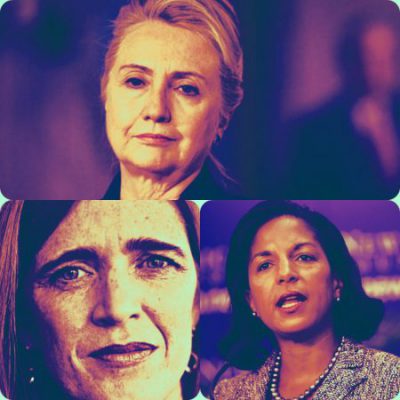
United Nations Ambassador Samantha Power recently declared in the pages of the New York Review of Books that it is “our self-interest that requires us to get better at improving human security in the service of national security.”
Power – like nearly all members of the foreign policy establishment today – believes (or says she believes) that the way foreign governments treat their own citizens “matters because it can have a direct impact on international peace and security – and on our respective national interests.”
To bolster her argument she takes the example of the Russian government which, she claims, habitually lies to its own people about what it is really up to in Ukraine. “The elimination of critical voices inside Russia,” writes Power, “helps enable acts that are profoundly destabilizing outside of Russia.”
Power’s claims are part of the widely shared, bipartisan consensus among the post-Cold War foreign policy elites who believe that the problem is not that the United States has intervened around the world too much and too often but rather that it has intervened too little. In Power’s view, “we must never be ashamed to ask whether we have been too reticent in pressing certain governments to reform and to respond to the demands of their citizens.”
This last point is a curious claim that, I suspect, quite intentionally skirts the question of whether the U.S., by actively pushing its “pro-democracy” agenda abroad, is itself the instigator of many of those “demands” (by financing and organizing many of the groups clamoring for U.S. intervention).
Financing Destabilization
Efforts – almost too numerous to count – by USAID, the International Republican Institute and the National Endowment for Democracy, often in conjunction with various think tanks, TOR developers (software that enables anonymous communications), and George Soros-funded Open Society Institutes – have sought to materially aid a plethora of opposition groups across the globe. (They, in turn, seek more U.S. intervention to enhance their political positions within their societies.)
Contrary to what the scholar, diplomat George Kennan urged – that diplomacy, properly executed, was necessarily a government-to-government interaction – Power believes that “we need to broaden the spectrum of whom we engage with our diplomacy.”
She writes that diplomats must court “civil society organizations” and other groups such as “teachers association, workers’ unions and leaders in the business community” – never mind the very plain fact that State Department diplomats and Commerce Department officials, among others, have been doing outreach of that sort for some time.
The results of all this U.S. meddling have been little short of disastrous. Take, for instance, the failed state of Ukraine, where USAID and other U.S. institutions spent $5 billion in the quarter century since the fall of the Soviet Union, according to Assistant Secretary of State for European Affairs Victoria Nuland (and that was before the U.S.-backed overthrow of the elected government in February 2014 and the current civil war which has claimed the lives of some 10,000 Ukrainians).
This generation of American “humanitarian” crusaders, as exemplified by the career of Ambassador Power, continually seeks to sacrifice stability on the altar of “democratic” idealism (even when that involves reversing democratic results and contributing to humanitarian suffering). Further, the problem that these efforts engender for U.S. national security interests are legion: war continues to rage in eastern Ukraine, Libya is completely destabilized, likewise Syria and Iraq.
Contrary to what Power would have us believe, the “democratization” crusade undermines, rather than strengthens U.S. national security. As the Greek statesman Pericles famously observed: “I am more afraid of our own mistakes than of our enemies’ designs.”
James W Carden is editor of The American Committee for East-West Accord’s eastwestaccord.com. He previously served as an advisor on Russia to the Special Representative for Global Inter-governmental Affairs at the US State Department.
Here’s what happened at the Putin-Erdogan summit
Russia and Turkey massively upgrade their cooperation – however, agree to differ over Syria.
By Alexander Mercouris | The Duran | August 10, 2016
As is frequently the case the most information about what Putin and Erdogan discussed and agreed with each other came out of their joint news conference. The Kremlin has provided a transcript.
Syria
Putin and Erdogan both said that they had not discussed Syria prior to the news conference and that their discussion about Syria would take place after.
This could be for any of various reasons: that restoring their bilateral relations was the bigger priority with the contentious issue of Syria being put off till later; that Putin and Erdogan did not want to spoil the mood at the press conference by revealing how far apart they still are on this issue; or that the discussions they were about to have on Syria touched on such sensitive topics that they did not want to be questioned and reveal information about them at the news conference. Probably all of these reasons were in play.
Both Putin and Erdogan did say at the press conference that their positions on Syria remain far apart. In an interview with TASS on the eve of the visit, Erdogan however showed no shift in his longstanding positions on the Syrian conflict. For example, he continued to insist that President Assad had to go: “We don’t want Syria’s disintegration, but the departure of Bashar Assad who is guilty for the deaths of 600,000 people. This is the condition for preventing this scenario. Syria’s unity cannot be kept with Assad. And we cannot support a murderer who has committed acts of state terror.”
In a point that will be particularly contentious for the Russians (and one presumes for some people in the U.S.), he even denied that Jabhat Al-Nusra is a terrorist organisation despite its connection to Al-Qaeda: “Considering that the al-Nusra front is also fighting against the Islamic State, it should not be considered as a terrorist organisation either. This is an incorrect approach.”
Other comments Erdogan made during the TASS interview strongly suggest that it was he who was ultimately behind the recent Jabhat Al-Nusra announcement that it was distancing itself from Al-Qaeda.
In a recent post, the Moon of Alabama expresses bafflement that despite the Turkish rapprochement with Russia that has taken place since the coup attempt, there is no evidence of any slackening of Turkish support for the rebels in Syria. On the contrary, it seems that in connection with the fighting in Aleppo that support has, if anything, been stepped up. The Moon of Alabama speculates implausibly that this is being done by the CIA on Turkish territory contrary to Erdogan’s wishes.
The true position is, as I have said previously, Erdogan has invested too much in supporting the rebellion in Syria over too long a time to make it possible for him to change course. Were he to try to do so, he would expose himself to criticism in Turkey from many of his own supporters that he was selling out to the Russians. He would also risk a violent reaction from the many Jihadist fighters currently in Turkey, which at a time when the Turkish security forces are at their most disorganised following the coup would be highly dangerous. Beyond that, there is the fact that Erdogan is almost certainly sincere about his Syrian policy. His comments to TASS suggest as much, as do his actions on the ground.
The truth is what I said before: what we are seeing between Turkey and Russia is a strictly limited rapprochement, not a fundamental realignment. The two countries have moved closer to each other and are developing their political and economic relations at a blistering pace. However, there will be no switch in alliances, and on the question of Syria they fundamentally differ and continue to support opposing camps. The leaderships of both countries understand this perfectly well but are not prepared to hold the improvement of their mutual relations hostage to the situation in Syria.
On one question related to Syria there may, however be progress. Erdogan’s interview with TASS shows that he is still seething at Russian allegations made earlier this year that members of his family were involved in illegal trading with ISIS:
I had earlier been told that these facts also pointed to Turkey. I asked for the relevant evidence to be demonstrated. However, no one could prove it to me. Nothing of this kind can be found with regard to Turkey. They also tried to entangle my family in this. I said, prove it, I’ll leave my post if you demonstrate the relevant evidence. I turned to those who conjured up these insinuations and asked them about whether they would leave their posts if no evidence was found. Silence followed.
His comments to TASS suggest that Erdogan might be prepared to work with the Russians to destroy ISIS. However, the extent of that cooperation is for the moment difficult to gauge. It is unlikely to involve Russian aircraft operating from Incirlik.
As anticipated, there does appear to have been some discussion during the summit of the Russians and the Turks working together on a joint plan to end the war in Syria. In his interview with TASS, Erdogan hinted as much, also confirming that against U.S. and Saudi opposition he is also prepared to involve Iran in this plan:
Russia is fundamentally the key and most important player in establishing peace in Syria. I believe it is necessary to solve this crisis with the help of mutual action by Russia and Turkey. If the talk is about widening the circle of participants, then I already told my dear friend Vladimir [Putin] earlier: if necessary, we’ll also involve Iran in the effort. We can invite Qatar, Saudi Arabia and America. In this regard, we can form a wide circle of participants. If not, then the Russian Federation and Turkey given our common 950-km border with Syria, can take some steps, without violating Syria’s sovereignty.
However, given the differences between the Russians and the Turks over the future of President Assad and the status of Jabhat Al-Nusra, it is difficult to see at the moment how they could agree a joint position on Syria that they would be able to take forward in order to achieve a settlement of the conflict there. Doubtless the discussions between Putin and Erdogan after the press conference touched on this question. However, given the size of the gap between the two sides, it will take a long time for any consensus on the way forward between them to emerge. Most probably, it will be the situation on the ground that will decide the issue first.
The Turkish coup
Both in the press conference and in his interview with TASS, Erdogan again went out of his way to accuse the Gulen movement of being behind the recent coup attempt. I have previously speculated that Erdogan’s constant references to the Gulen movement are intended to signal that the U.S. (where Gulen is based) was somehow implicated in the coup. Nothing Erdogan said in either the press conference or the TASS interview refutes that speculation. He notably failed to say that the U.S. was not involved in the coup, or that the U.S. is Turkey’s ally and friend. On the contrary, in the TASS interview he appeared to criticise the U.S. for its foot-dragging in handing over Gulen:
In reality, even though we have demanded this man’s extradition. They say if you regard this man as a terrorist, then send us the documents. We will study them first and then take measures in accordance with U.S. legislation. True, there are some documents we had sent them before. By now, we’ve sent 85 boxfuls of paperwork on this case. In the near future, the Turkish justice minister, foreign minister, special envoy and a number of prosecutors and judges who were in charge of this matter will go to the United States and brief the American authorities in person.
By contrast, Erdogan went out of his way to thank his “friend Putin” and Russia for their support during the coup. What is more than a little strange about this however is that Erdogan does not really explain what that support was. Instead, he constantly refers to a telephone call he had from Putin the day after the coup, which he says gave Turkey “psychological support”. By that point, however, the coup had visibly failed, making it difficult to see why Erdogan should attach so much importance to this call.
The true reason for Erdogan’s gratitude to Putin and Russia is probably touched on in his comments to TASS about the reports of a Russian tip-off to Turkish intelligence warning of the coup:
This is the first time that I have heard such a thing. Even if it had really been so, those concerned would have been obliged to inform me first thing. I received no such information, not from intelligence, nor through any other channels. We don’t know who said what and to whom. I believe that this is a groundless rumour.
As I have said before, the Russians will never confirm that there was a tip-off, even if there was one, and for that reason neither will the Turks. Note, however, that Erdogan’s comments about the tip-off to TASS are very far from a denial. Instead, we are asked to believe that Erdogan of all people “doesn’t know who said what to whom” and that “this is the first time that I have heard of such a thing” despite the story being all over the Middle East media for weeks. As I have discussed previously, this looks very much like an agreed position reached by the Russians and the Turks not to deny the tip-off but to pretend to no knowledge of it. That makes it a virtual certainty the report of the tip-off is true.
Turk Stream and South Stream gas pipelines, nuclear cooperation, etc
As I discussed previously, these proved the least contentious issues, allowing for rapid progress. There is also talk of the Russians granting the Turks visa free access or at least simplified visa access to Russia.
Two points can be made briefly. Firstly, it is clear that it is the Turks rather than the Russians who are the main drivers behind both Turk Stream and the nuclear power agreement. Putin confirmed that the Turks continued to do preparatory work on Turk Stream even during the crisis in relations following the SU24 shoot-down in November. Secondly, it is clear that contrary to some reports, the Russians are not prepared to revive South Stream and that their opposition to the EU’s Third Energy Package remains as strong as ever. On the contrary, Putin made it clear that the Russians will not participate in any pipeline project that could be construed as their agreeing to the EU’s Third Energy Package. Moreover, Putin made it quite clear that he sees the U.S. (whom he referred to as “a third party”) as being behind the Third Energy Package and all the problems that exist in relation to Russia’s EU pipeline projects:
We have never politicised economic cooperation. In proposing the South Stream project initially, we assumed that our gas would go directly to EU consumers in southern Europe. However, at first the European Parliament made a decision that prevented the implementation of this project and then the European Commission sent a letter to the Bulgarian Government demanding that preparations for it stop, and ultimately we did not receive the permission of the Bulgarian authorities to enter Bulgarian territory.
Yes, now we see that Bulgaria would like to resume this project, but we incurred some losses due to the refusal of our European partners to carry out this project. So now we will not settle for just intentions and need absolutely rock solid legal guarantees. They have not been forthcoming. Initially, we regarded the Turkish Stream not even as an alternative to the South Stream but as an opportunity to expand our gas cooperation both with Turkey and Europe as a whole. One part of the Turkish Stream was designed exclusively for Turkey’s domestic consumers, given the growing economy of the Republic of Turkey. This is how we discussed the issue today. This part is beyond any doubt and its implementation may be launched very soon.
The second part related to routing our energy to Europe depends, of course, on a third party [emphasis added]. We should work out these issues with European countries and the European Commission in Brussels. Together with our Turkish partners and friends, we are prepared to work toward this, but again we need to have an agreement with all the participants.
Conclusion
In summary, the Putin – Erdogan summit went much as predicted. There is now a strong rapprochement underway between the two countries. This goes well beyond a mere detente, which is a relaxation of tensions. On the contrary, the leaders of the two countries now publicly call each other “friends”. It is not, however, a reversal of alliances. Turkey remains a member of NATO and an ally of the U.S.
In my opinion, this actually suits the Russians much better, at least for the moment. They surely know that an outright attempt to detach Turkey from NATO is for the moment impossible and might actually cause Turkey to become destabilised, which is absolutely not in their interests. However, at a time of heightened East-West tensions, they now have the leader of a key NATO state with NATO’s second biggest army calling their leader a “friend”. Sometimes it is more useful to have a friend in the enemy’s camp than a doubtful and unstable ally in one’s own. That is the situation which through a combination of skill and good luck the Russians have now manoeuvred themselves into.
Three Damning New Reports on Hillary Clinton
By Stephen Lendman | August 11, 2016
So much scandalous stuff about her is known, it’s just a matter of time before the next shoe drops.
Instead of exposing her as unfit to serve, media scoundrels express one-sided support, focusing instead on bashing Trump, the most irresponsible denunciation of a presidential aspirant in US history.
Judicial Watch (JW) is a conservative watchdog organization, “promot(ing) transparency, accountability and integrity in government, politics and the law.”
On August 9 and 10, it released three new damning reports on Hillary Clinton. One involved 296 pages of State Department records – including “44 email exchanges… not previously” disclosed to the department, raising the number to 171 – besides tens of thousands of others deleted to avoid disclosure.
JW findings contradict Clinton saying “as far as she knew” all government emails from her home-based private server were given to the State Department. She lied, compounding earlier willful deception – showing she’s untrustworthy, unfit to serve and criminally indictable.
What’s known from her emails is damning, showing special favors afforded wealthy Clinton Foundation donors, concealed influence selling now exposed.
As secretary of state, she pledged “(for) the duration of (her) appointment… not to participate personally and substantially in any particular matter involving specific parties in which the (Clinton Foundation or Clinton Global Initiative) is a party or represents a party.”
Damning emails showed she lied. According to JW president Tom Fitton, “(t)hey show the Clinton Foundation, Clinton donors, and operatives worked with Hillary Clinton in potential violation of the law.”
Earlier in March, May and June, JW released other newly discovered Clinton emails at the time, dating from January 2009 when she began her tenure as secretary of state.
They show she knew about the security risk of using her home server and personal BlackBerry for official government business. They include potentially indictable evidence relating to “the battle between security officials in the State Department, National Security Administration, Clinton and her staff,” said JW.
In response to a court order in other Judicial Watch litigation, she declared under penalty of perjury that she had ‘directed that all my emails on clintonemail.com in my custody that were or are potentially federal records be provided to the Department of State, and on information and belief, this has been done.’
Newly released emails proved she lied. Can an exposed liar under oath on matters of state, guilty of perjury, be trusted to serve as US president and commander-in-chief of its military? Humanity trembles at the prospect.
A second JW report was about her involvement in New York City corruption, saying she, mayor De Blasio and developer Bruce Ratner “are carving up the city.”
It cited a Brooklyn-based Atlantic Yards project worth $5 billion, speculating on whether it’s “a giant boondoggle, generating torrents of cash for well-connected insiders.”
A third JW report included documents, showing Clinton’s then chief of staff, Cheryl Mills, was alerted in advance about the inquiry into her emails – giving her plenty of time to conceal what she didn’t want revealed.
Earlier this year, the State Department Office of Inspector General concluded that (her response to its request) was ‘inaccurate and incomplete.’
JW’s Tom Fitton commented, saying
“(t)his is evidence that Cheryl Mills covered up Hillary Clinton’s email system. (She) allowed a response to go out that was a plain lie.”
“And you can bet if Cheryl Mills knew about this inquiry, then Hillary Clinton did, too. This is all the more reason for Mrs. Clinton to finally testify under oath about the key details of her email practices.”
Instead of a daily blizzard of irresponsible Trump bashing, damning JW-released information on Clinton, and plenty more like it from other sources, should be feature front page news daily – demanding she be held accountable.
Stephen Lendman can be reached at lendmanstephen@sbcglobal.net. His new book as editor and contributor is titled Flashpoint in Ukraine: US Drive for Hegemony Risks WW III.
With Libya, US Now Has Ground Forces In Four Wars

Photo by Ali Tweel on Flickr. Original: https://flic.kr/p/HWGom3
By Dan Wright | ShadowProof | August 11, 2016
While it is impossible to know all the dirty deeds of America’s sprawling global empire, news that US ground forces are now fighting in Libya means that US troops are involved in at least four active wars:
Afghanistan: A planned draw-down of troops in 2015 was curtailed by President Obama to leave more troops for combat and advisory missions. This week, US forces were forced to abandon military equipment that then fell into the hands of ISIS.
Iraq: After a removal of major combat forces in 2011, Iraq has become a battleground once again. President Obama has sent roughly 4,600 troops in for combat and advisory roles and built a new base in northern Iraq called “Firebase Bell.”
Syria: Though the US had been supporting Syrian rebel groups, including jihadists, since 2013, US troops have entered the fighting in the country. In January of this year, US special forces took control of a military base in northern Syria.
Libya: In 2011, the US assisted in the overthrow of the Gaddafi government in Libya. In the aftermath, Libya has fallen into total chaos, making it ripe for ISIS to establish a significant presence. Now, according to the Pentagon, US forces are fighting on the ground to drive ISIS out.
This excludes all of the off-the-books special operations in over 100 countries, and the major role the US is playing in supplying weapons for Saudi Arabia’s war on Yemen. Among those weapons are controversial cluster bombs, which are banned by many countries for their impact on civilians.
Preceding the Yemen civil war, the US had an active drone assassination program in the country, which included the targeted killing of American citizens. The drone assassination program continues throughout the greater Middle East.
According to the Obama Administration, these military operations are legally justified by the 2001 Authorization for Use of Military Force [PDF], which stated “the President is authorized to use all necessary and appropriate force against those nations, organizations, or persons he determines planned, authorized, committed, or aided the terrorist attacks that occurred on September 11, 2001, or harbored such organizations or persons, in order to prevent any future acts of international terrorism against the United States by such nations, organizations or persons.”
The bland, vague language apparently justifies any war in any part of the world. So, maybe the US will soon have troops in five active wars. Hell, make it six.
Maternal mortality rate on the rise in US
RT | August 11, 2016
The maternal mortality rate across most of the US increased by 27 percent from 2000 to 2014, new study finds, adding that the rate is actually higher than official estimates because states do not uniformly report pregnancy status on death certificates.
The last calculation of the US maternal mortality rate occurred in 2007, when it was 12.7 deaths per 100,000 live births. According to researchers responsible for the study published in the journal Obstetrics & Gynecology, that figure is too low because the estimate was made without accurate data. At the time, not all US states had adopted a “pregnancy question” on their standard death certificates, which became an accepted addition to forms in 2003.
Maternal mortality is defined as the “death of a woman while pregnant or within 42 days of termination of pregnancy from any cause related to or aggravated by the pregnancy or its management.”
Outside of California and Texas – which were not included because their trends were “markedly different” from other states and would have skewed the results – the actual maternal mortality rate in the US in 2007 was 21.3 deaths per 100,000 live births, the researchers found, a 68 percent increase from the official reported average.
Based on their research, the team said the 2014 rate in 48 states and the District of Columbia has gone up to 23.8 deaths per 100,000 live births.
“It is an international embarrassment that the United States, since 2007, has not been able to provide a national maternal mortality rate to international data repositories,” the researchers wrote. “This inability reflects the chronic underfunding over the past two decades of state and national vital statistics systems. Indeed, it was primarily a lack of funds that led to delays (of more than a decade in many states) in the adoption of the 2003 revised birth and death certificates.”
The research team used a “correction factor” to analyze incomplete or unrevised maternal mortality data to adjust for the lack of uniform reporting of pregnancy status on death certificates. The adjusted figures were then used to calculate the maternal morality rates for US states, except for California and Texas. The Golden State showed a significant decline in maternal mortality rate from 2003 to 2014, while the rate in the Lone Star State doubled in 2011-2012.
While international maternal mortality rates were trending down, the US has gone in the opposite direction, researchers pointed out. They noted the World Health Organization has said that 157 of 183 nations have reported decreases in their rates since 2000. The current estimated rate in the US, however, is comparable to Iran and Ukraine, and is second-to-last only to Mexico among the so-called industrialized nations.
“The current maternal mortality rate places the United States far behind other industrialized nations,”said study co-author Eugene Declercq, professor of community health sciences at Boston University School of Public Health. “There is a need to redouble efforts to prevent maternal deaths and improve maternity care for the four million US women giving birth each year.”
The study — Recent Increases in the US Maternal Mortality Rate: Disentangling Trends From Measurement Issues — was published online in the journal Obstetrics & Gynecology, and was conducted by researchers with the Boston University School of Public Health, the Maryland Population Research Center at the University of Maryland, and the California Maternal Quality Care Collaborative at Stanford University Medical School.
Read more:
US ‘worst place to be a mother’ among developed nations – report
Featured Video
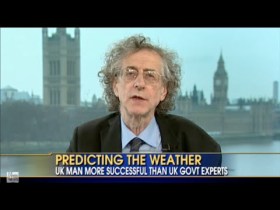
Piers Corbyn on religion of climate change
or go to
Aletho News Archives – Video-Images
Book Review
How the U.S. Navy Sold the Vietnam War
By Gareth Porter | TruthDig | March 27, 2019
Dr. Tom Dooley, whose best-selling book “Deliver Us From Evil” helped create a favorable climate of opinion for U.S. intervention in South Vietnam, has long been linked to legendary CIA officer Edward G. Lansdale and his black operations in Vietnam between 1954 and 1955. But the real story about Dooley’s influential book, which has finally emerged from more recent scholarly research, is that it was engineered by an official of the U.S. Navy’s Pacific Command, Capt. William Lederer.
Lederer is best known as the co-author, with Eugene Burdick, of the 1958 novel “The Ugly American,” which was turned into a 1963 movie starring Marlon Brando. Far more important, however, is the fact that from 1951 through 1957 Capt. Lederer was on the staff of the commander in chief of the U.S. Pacific Fleet (CINCPAC), Adm. Felix Stump. … continue
Blog Roll
 Aletho News
- “Inside Gaza” wins best documentary at Montreal’s Cinemania film festival
- Activists block German munitions plant over arms exports to ‘Israel’
- The Nasser Hospital attack and Israel’s relentless lies
- Could it be satan? No, Huckabee, just the Americans you work for
- AIPAC and more: Network of pro-Israel influence in US Congress
- Putin aide reveals Moscow’s stance on Europe at peace talks
- Imran Khan warns Pakistani judges he may die in prison
- IOF used Amazon facial recognition to track millions of Palestinians
- More EU Citizens Face Sanctions For Criticizing The Ukraine Proxy War
- In Mexico, the CIA Is Playing a Dangerous Game
- If Americans Knew
- Inside the Israel-backed ‘NAZA’ disinformation campaign
- US Restrictions Prevent Palestinian Clergy From Speaking in Washington
- Gazan medics detained on shift, tortured – and return to work
- AIPAC and more: Network of pro-Israel influence in US Congress
- Israel Pays “Conservative” Media to Propagandize Americans
- Could it be satan? No, Huckabee, just the Americans you work for
- Israel Blocking Treatment for Six-Year-Old Gaza Burn Victim
- The Nasser Hospital Attack and Israel’s Relentless Lies
- Revealed: Israel uploaded millions of photos to Amazon’s facial recognition platform to track Palestinians
- ‘Looking away was never a choice for me’: How Hollywood’s love affair with Israel turned sour for some
- No Tricks Zone
- New Study: Barents Sea Temperatures Were Warmer And Sea Ice Less Extensive In The 1700s Than Today
- German Authorities Start Initiative To Evaluate Public Register For Climate “Disinformation” Spreaders!
- Zonal Asymmetry of Temperature Change in the Antarctic Circumpolar Current
- New Study: The Net Fossil Fuel Contribution To Rising Atmospheric CO2 Has Been Zero For 500 Years
- Germany’s Green Energy Transition Becoming Increasingly Expensive…Another 6 Trillion Euros!
- Sudden Stratospheric Warming, Powerful El Niño Combination May Lead To Extreme Europe Cold, Energy Crisis!
- Two New Studies Find Thwaites Glacier Melt Cannot Be Driven By Human Activity Or A Warming Ocean
- E-Cars Reduce CO2 Emissions By Only 41% Compared To Internal Combustion Engine Vehicles
- Predictions Made By Renowned Climate Professor Over Past Decades Have Been Proven To Be Poor
- New Study Suggests Large Regions Of The Pacific Ocean Have Been Cooling For The Last 80 Years

