
Michele Flournoy, the US civil official predicted by many to head the Pentagon if Democratic frontrunner Hillary Clinton wins the US presidency in November, said she would alter American strategy to battle Daesh by assisting armed militias, called by Washington “moderate rebels,” to crush the legitimate Syrian president Bashar al-Assad.
Speaking at a Center for New American Security (CNAS) think tank conference on Monday, Flournoy, a senior fellow of the organization, urged the US military to put boots on the ground in Syria to assist in toppling the al-Assad government, recently successful in reclaiming large areas of the country from Daesh.
To accelerate the defeat of the legitimate Syrian government, Flournoy introduced the notion of a “no bombing” zone for the moderate rebels. These so-called moderates are widely accepted as being, in reality, the US-backed armed militias that have been tearing the country apart since the beginning of the civil war in 2011.
To justify her hawkish proposals, Flournoy took the traditional path, resorting to the Russian factor. She claimed that Moscow’s engagement since September 2015 in the war, at the invitation of the Syrian government, does not “support the kind of negotiated conditions we would like to get to.”
The “conditions” she was talking about remain unclear, especially in light of positive results brought about by the contribution of international militaries, including Russia, in stripping Daesh in recent months of 45 percent of the Iraqi territories and 20 percent of the Syrian lands it seized in 2014. Currently, the liberation of the crucial cities of Raqqah and Mosul from Daesh is being prepared, and is expected to inflict extensive damage on the extremists, according to Iraqi Foreign Ministry spokesman Ahmad Jamal.
The Pentagon, however, appears to have other plans in mind for Syria and Iraq. According to a CNAS report, prepared in cooperation with an “ISIS Study Group” co-chaired by Flournoy, Washington must “go beyond the current Cessation of Hostilities.” By that, the paper means a so-called no-bomb-zone, which suggests US retaliation against the Assad government, if Damascus continues to resist the American-backed militants. Proposed retaliation measures include airstrikes on “security apparatus facilities in Damascus.”
“If you bomb the folks we support, we will retaliate using standoff means to destroy [Russian] proxy forces, or, in this case, Syrian assets,” Flournoy told Defense One.
At the same time, the report sensibly cautioned against hitting Russian airbases in Syria.
Flournoy, who served as undersecretary of defense for policy during Obama’s first term in office, has consistently criticized the current US-anti Daesh policy, claiming that using an “under-resourced” military to battle extremists in the Middle East, and offering “underdeveloped” political solutions for the crisis has been ineffective, at best.Earlier, she called for increasing the number of combat missions against Daesh, sending more advisors to train Iraqi soldiers and allocating more weapons to Sunni tribes and the Kurds in Iraq. She also called for maintaining the infamously inadequate train-and-equip program that graduated just five moderate rebels, and cost US taxpayers over $500 million.
According to Washington Post columnist David Ignatius, Flournoy is now on the “short, short” list for the job of US Secretary of Defense.
Read more:
How ‘Neocon-Hopeful’ Hillary Clinton Planned to Topple Assad
June 22, 2016
Posted by aletho |
Militarism, War Crimes | CNAS, Da’esh, Hillary Clinton, Iraq, ISIS, Michele Flournoy, Syria, United States |
Leave a comment
Why is it that many people who consider themselves left-wing have such difficulty grasping that the EU is a deeply reactionary institution? The mere fact that those running the EU present it as an internationalist venture dedicated to the creation of a world free of nationalist enmities does not make it so. If we want to examine the EU in its proper light, then we should ignore the high-flown rhetoric in which its supporters indulge, and consider its actual record. And what is the record of the EU, once we penetrate the obfuscatory rhetoric about ‘internationalism’ that surrounds EU policy? Without a doubt, that record is one that should cause those on the left now defending it acute embarrassment, as it starkly contradicts the ideals that the left has always claimed to uphold.
Across the Continent, the unelected officials who have usurped the power of national governments and asserted their right to determine the fates of countless millions, through their adherence to the damaging creed of neoliberalism, have wrought suffering on an unimaginable scale, casting millions into poverty and removing the last vestige of dignity people cling to in an economy that has fallen prey to the voracious claims of big business. They have foisted austerity on unwilling populations, creating a cycle of endless unemployment and ever increasing woe, compelling ordinary workers struggling to eke out an existence in the wake of the most painful recession in living memory to shoulder the burden of repaying a debt which was originally incurred as a result of the criminal behaviour of Europe’s financiers. With brazen contempt for the views of the peoples of Europe they claim to serve, they have connived to topple left-wing governments and deny the citizens of the countries most affected by austerity their one remaining means – their inalienable right to elect a government subservient to their will – of resisting the vicious policies that have reduced them to their present abject state.
It is worth detailing the ways in which the actual practice of the EU diverges sharply from the propagandistic image endorsed by elements of the left.
The Crushing of Greece
One word should be engraved on the minds of those who, despite all the evidence to the contrary, persist in believing that the EU is an inherently progressive body: ‘GREECE.’ What the EU did to Greece should have dispelled forever the fanciful idea that such an institution has as its fundamental aim the material welfare of ordinary Europeans. But such is the power of the delusional thinking which holds sway amongst the ‘liberal’ apologists for ‘internationalism’ that nothing it seems, not even the destruction of an entire country, the decimation of its industries, and the despoliation of its people, can shake their belief in the manifest virtues of the EU.
After five years in which Greece was forced to undergo the most far-reaching programme of austerity ever implemented by any European government, selling off its public infrastructure and slashing spending on social services to please its creditors, even the economists at whose insistence this policy had been carried out were grudgingly admitting that it had been an unmitigated disaster. By 2015 Greece had seen its economy contract by 27% as a result of the government’s futile efforts to meet the continually mounting debt repayments demanded of it by the troika. As GDP fell and Greece’s ability to repay the debt was further reduced, rather than provide relief the ECB chose to extend fresh loans to the Greek government to enable it to service the interest on its existing liabilities, thereby adding to its overall level of debt and enmeshing the country in an interminable process of austerity from which it could never hope to extricate itself. The needless suffering caused by the single-minded pursuit of austerity had resulted in scenes of poverty and despair more appropriate to the 1930s than 21st century Europe. Entire families were starving on the streets, deprived of even the bare minimum they required to survive; thousands of people, reduced to absolute despair by the unrelenting attacks on their living standards, had committed suicide. The IMF, in an extraordinary departure from its long-standing commitment to free market dogma, published a report bluntly stating what had become apparent to all well-informed experts on the matter, which was that Greece would never be able to rid itself of the debt, not unless it was significantly reduced and a 30-year moratorium on repayments was imposed.
What was the response of the managers of the eurozone to the tragedy unfolding before their very eyes, to the unbearable spectacles of suffering for which they, as the economic masters of Greece, bore responsibility? The response was callous indifference. When in desperation the Greek people elected the far-left party Syriza to power, on a platform of ending austerity and negotiating a debt restructuring, the EU steadfastly refused to treat with such a government on terms of equality and outright rejected the democratic mandate with which it had been recently invested at the polls, insisting that, regardless of the outcome of elections, Greece had no right to seek a change in rules which had been autocratically decided upon by the bureaucratic elites in Brussels. There would be no substantive negotiations leading to an end to austerity; there would be no concessions to the democratically expressed will of the population. When Syriza attempted to resist the diktats of Brussels, calling a referendum on its negotiating stance, which it won resoundingly, the EU bullied and cajoled little Greece, threatening to punish the refractory population of this wayward country, which had dared to question the entire basis on which the eurozone was run, by cutting off the money supply and rendering even more people destitute if Syriza should refuse to acquiesce in the harsh financial terms of the proposed deal, which mandated yet more spending cuts to service a debt that everyone knew to be unsustainable. Under extreme duress Syriza surrendered to these demands and the worsening cycle of unemployment and declining wages, in which Greece has been trapped for at least the last 6 years, was resumed, inflicting a historic defeat on the people of Greece who had misguidedly believed that, by exercising their democratic rights, they could decide the future of their own country.
Greece illustrates the failings of an economic policy that is being implemented over the objections of the great majority of Europe’s citizens. Indeed, in its unwavering support for neoliberalism the EU represents nothing less than an attempt to perpetuate an economic model which advantages European businesses, whilst eroding the living standards of most Europeans. Particularly in the countries of the eurozone, democracy has been eviscerated by the adamant insistence of the EU on more cuts to government spending. The Growth and Stability Pact effectively prevents large-scale public spending on vital social services to alleviate the effects of a recession, limiting deficits to 3% of GDP. As part of this neoliberal model, national governments are also required each year to submit their budgets to the Commission for its approval, which has increasingly demanded that the rights of workers take second place to paying off the debts accumulated by the financial sector. Whilst the desperate scenes in Greece are an extreme case, high unemployment and chronic poverty have become fixed features of the eurozone, with the number of jobless in Spain, for example, amounting to over 20% of the workforce. Moreover, employers have been given the freedom to disregard the rights of their employees in a bid to raise productivity, sparking a series of labour revolts by workers driven to the edge of despair. In France, to cite the most recent instance, the much hated El-Khomri law, which seeks to increase the working week to 46 hours and is currently being contested by striking unions, was originally based on the recommendations of the Commission.
Thus, it is transparent that the hardships experienced by workers across Europe are an inescapable product of the economic policies enforced by the EU.
The myth of a pacifist EU
It is difficult to fathom how anyone save the wilfully blind could continue to view the EU as a progressive force in light of the destruction it visited upon Greece. But to understand the mindset that leads otherwise enlightened people to extol the benefits of an institution which is the cause of so much distress throughout Europe it is necessary for the moment to ignore facts. Faith in the EU is not grounded in any rational analysis of reality, but rests on a series of founding myths the truth of which its defenders have never paused to consider. They are regarded as unquestionably true and are never scrutinised, much as devout Christians in centuries past would never have thought to examine the articles of faith on which their belief in God was based.
The myth from which the EU derives much of its strength is that of an organisation which has overcome the bitter divisions of the past to fashion a new identity for the once warlike people of Europe. The narrative goes something like this: for millennia Europe was plagued by nationalist rivalries which produced wars of unparalleled violence. In the twentieth century, as a result of these rivalries the entire world was plunged into two conflicts which witnessed bloodletting on a scale never seen before, and following the second and most devastating of these wars, a band of far-seeing European statesmen resolved that never again would the nations of Europe battle against one another and be a cause of such misery to the rest of the planet. In a spirit of high-minded idealism they took the first steps toward the establishment of a supranational body which would bring countries together in harmony and peace, consigning to history the internecine feuding and jingoistic war-mongering that had rent the political fabric of Europe apart. Henceforth, the people of this war-torn continent, divided though they might be by borders, were to consider themselves Europeans in the truest sense, part of an organic union that would only grow in strength with the passage of the years.
To any serious student of history this account of the EU’s origins must appear as a gross distortion of the facts. But such is the comforting myth that underpins the faith many people, who should know better, exhibit in relation to an organisation they credit with having maintained the peace in Europe and prevented another plunge into barbarism for more than half a century. This romanticised view of history explains why in 2012 the Nobel Committee was able to award the Peace Prize to the EU, and also why in a poll conducted on the same occasion it was found that 75% of Europeans agreed with the Nobel Committee that ‘peace and democracy were the most important achievements of the EU’. The people who believe this are prepared to forgive the EU anything, because its failings in their eyes are as nothing when set against its tremendous success in averting another world war.
The reason this myth should cause offence to campaigners for peace everywhere is that it is based on a version of events which is utterly contradicted by the known facts about how the EU came into being. That there has not been another conflict to compare with WW2 in the seventy years following its end owes not to the moral vision of the politicians who presided over the birth of the EEC, the precursor to the EU, but is purely a result of shifting power dynamics. By 1945 the great powers of Europe had been so reduced in strength by the most savage war in human history that they soon realised they would never be able to recover their former status as global hegemons in a world the US had come to dominate. Indeed, such was the overwhelming preponderance of power enjoyed by the US, the only state to emerge from the war with its standing massively enhanced, that the idea of opposing its designs for Europe was swiftly set aside, and to retain what small measure of influence they could hope to wield in this unipolar world the formerly great powers agreed to be integrated into a military and economic alliance headed by the US. The creation of pan-European institutions that would foster the growth of a single European market, which would trade freely with US corporations, was made a condition of Marshall Aid by the American architects of the new economic order, who greeted every significant move in the direction of greater European unity with satisfaction. In the military sphere, membership of NATO, the armed alliance of states that the US established to further its imperialist interests, required Western European countries to devote a significant part of their budgets to military expenditure and maintain an armed truce with the Soviet Union and its Eastern European satellites, effectively dividing the Continent into two hostile camps, constantly teetering on the edge of nuclear war, for much of the latter half of the twentieth century.
The roots of the EU are therefore to be sought not in the sentimental desire for peace felt by leading statesmen in the wake of war, though this was undoubtedly a desire expressed by masses of ordinary people, but in the essential fact of the post-1945 world that the US displaced Europe as the centre of global power and influence. Power politics not pacifism explains why there has not been another war between the major European states. Anyone who doubts the truth of this need only consider the foreign policy of Europe during the period when the basis for the EU was being laid. For most of the inhabitants of the third world these years were not ones distinguished by peace but by a series of brutal wars to free themselves from the yoke of imperialism. The founding members of the EEC, at the same time they were joining together in a spirit of ‘harmony’ and ‘peace’, unleashed a torrent of blood in their colonial possessions, obstinately clinging to the remnants of empire and crushing demands for liberty with shocking violence. In Algeria the French prosecuted a terrorist campaign against the population that resulted in 1.5 million deaths, the effects of which are still felt acutely by France’s Muslims, treated as second class citizens by the Republic, and are a source of deeply-felt divisions even now. In Vietnam, with funding from the US, the French also sought to retain control over their colony and defeat the Vietminh, eventually handing over to the Americans when they could no longer sustain the cost of such a military campaign. In the Congo, Belgium initially met demands for independence with violence and continued to interfere in the politics of the region following independence, playing a role in the assassination of the elected Prime Minister Patrice Lumumba. In Kenya, the British, who were to join the EEC in 1973, waged a brutal war against the native Kikuyu throughout the 1950s in order to uphold the rule of the white settler elite, interning many Africans in concentration camps where they were subjected to torture.
The danger of peddling a false narrative of the growth of European unity in which base geopolitical considerations do not figure is the immunity granted the EU against criticism for its actions in the present. Far from waning, the attachment of European states to militarism remains as strong as ever, and has continued to find an outlet during the 21st century in a number of wars of aggression across the Middle-East and Africa, which differ little from the hey-day of 19th century imperialism, when great powers bestrode the world looting defenceless countries with utter abandon. There is, however, one significant difference between these past exploits and European imperialism in its modern guise. In recent years the EU has arrogated to itself an increasing array of powers in the field of foreign policy, establishing the office of High Representative for Foreign Affairs with a view to eventually dictating the relations of European nations with the outside world. Given fully 22 of the 28 member states that comprise the EU are members of NATO, it is unsurprising that the policy followed by this fledgling branch of the Commission is little more than an extension of the goals that Europe’s political leaders have long held in common with the US.
Through vesting power, however, in an unaccountable body of bureaucrats who cannot be voted from office, unlike elected politicians in member states, the EU seeks to make it all but impossible for the citizens of Europe to alter the foreign policy trajectories of their respective governments, and draw back from the reckless path of unabashed war-mongering upon which we are embarked. A case in point, and one that the former MP George Galloway cited in a recent speech, is Syria. Although most of the people who argued for Britain to intervene against ISIS towards the end of last year have effaced it from their memory, barely three years ago Cameron’s government, supported by much of the media class, favoured military intervention on the opposite side of the Syrian civil war, calling for air strikes against the Syrian army and support for those jihadist elements which subsequently morphed into ISIS. Thankfully, to the dismay of Cameron, this move was narrowly voted down in the Commons, but had this question fallen within the purview of the EU’s High Representative, it is unlikely that Britain’s Parliament would have even been permitted a vote on the matter.
The crowning achievement of the EU in the arena of foreign affairs has undoubtedly been its contribution to resurrecting the Cold War, fomenting a civil war in the Ukraine that still rages along the historically fraught border region that stretches between the EU and Russia. Few people in the West know of the EU’s role in igniting this conflict, or of the policy, drafted by the Commission, and relentlessly pursued during the last twenty years, of expanding the influence of the EU into Eastern Europe so as to isolate Russia behind a ring of hostile states. The degree of ignorance that the media has fostered regarding the crisis in Ukraine has reached the point that the supporters of remain even cite, with positive pride, the aggressive posturing of the EU during the recent crisis as a reason to vote against Brexit, contending that only as part of a larger entity can we stand up to the Russian bear, which is engaged in an attempt to subjugate its neighbours and reconstitute the Soviet Empire. If anything, the reverse is true, and the perilous brinksmanship of the EU with respect to Russia, its unceasing efforts to provoke an escalation in tensions between the two, should be considered grounds enough to vote leave.
For in reality Ukraine is merely the latest in a long line of countries which the EU has sought to annex to a Western alliance controlled by the US, with EU membership proceeding hand in hand with membership of NATO. This military organisation, formed in 1949 with the supposed aim of defending Western Europe against the USSR, has since the collapse of the Soviet Union more than doubled in size, with many of the new additions former Communist countries situated on Russia’s periphery, revealing its true character as an alliance that exists to extend the global reach of the US. The EU, by incorporating these countries into a political union closely linked to NATO, and in some cases laying the ground-work for their eventual accession to NATO through the Eastern Partnerships, a proto-form of EU membership, has in many ways acted to reinforce the bonds linking the various members of this alliance.
In the case of Ukraine, the action that set in motion the chain of events leading to civil war was the offer by the EU of an Association Agreement. This has frequently been depicted as a generous arrangement under which Ukraine would have benefited from most of the advantages enjoyed by EU member states, without, however, formally becoming a member. In actual fact the agreement would have required Ukraine to sever economic relations with Russia, a country to which it was intimately bound by a shared history, and was linked to a package of swingeing austerity measures that would have resulted in the ruination of Ukraine’s economy. Moreover, despite the outraged denials of its framers, the deal also mandated military cooperation between the EU and Ukraine and was clearly intended as a prelude to NATO membership. Given the fact that approximately half of Ukrainians, mainly living in the East of the country, were opposed to NATO and favoured better relations with Russia, it was hardly likely that the Ukrainian President, Victor Yanukovych, who by all accounts had pro-EU leanings, would ever have been able to implement the terms of such a deal without splitting the country in two. When at the end of 2013 he therefore rejected the Agreement, prompting protests in Kiev’s Maidan Square, in which Ukraine’s fascist parties, which are driven by a racist hatred of the country’s ethnic Russian population, played a prominent part, both the EU and the US chose to back the protesters agitating for his removal. After Yanukovch was overthrown in a putsch in February 2014, spearheaded by those same fascist elements within the opposition, instead of spurning the interim government that was installed following his ouster the EU immediately proceeded to signal their approval by securing its assent to the Association Agreement that Yanukovych had originally refused to sign. When Eastern Ukrainians rose in revolt against the putschist government, which had removed the democratically elected President from office and concluded an Association Agreement in spite of their objections, the EU disingenuously attributed Ukraine’s descent into civil war to Russian interference.
The defenders of the EU refuse to acknowledge its contribution to the turmoil that has engulfed Ukraine, or its part in bringing about a new cold war, even arguing that Russia’s opposition to the European project stems from a distaste for democracy and human rights, rather than simple geopolitics. Some, indulgently, recognise that Russia is genuinely fearful about the threat to its position from the extension of NATO eastwards, but claim that these fears derive from a 19th century habit of mind whereby the world is divided up into spheres of interest between competing powers, which vie with each other for global domination. Unfortunately, they argue, the EU is hampered in its relations with Russia by the failure of Europe’s leaders to grasp that they are a 21st century power dealing with a country that has still not freed itself from old modes of thinking about international affairs. But the chronology of the crisis is clear, as is the role the EU played in prompting it, and few who have studied the matter would deny that the actions of the EU with respect to Ukraine appear in the grand tradition of imperialist politics.
The question confronting Britain
The question of whether to remain or leave will likely not be decided on the basis of what is being done on the Continent in the name of ‘internationalism’. But a broader perspective is needed to refute the contorted arguments of many liberals who all too often give too much credence to the rhetoric of the European project, whilst paying little heed to its record. The current debate in Britain suffers from the entrenched tendency of the mainstream left to identify support for remain with opposition to petty-minded nationalism, and to chide Brexiters for being too insular and self-interested to appreciate the sense of high moral purpose that drives the EU. The briefest look, however, at the destructive polices that have been imposed on the countries of the eurozone, and the chaos that has ensued from imperialist meddling in foreign affairs, is enough to counter the baseless assertion, constantly repeated by those in the remain camp, that in opposing Brexit people will be voting for a worthy attempt to replace nationalist discords with a shared identity based on a commitment to democracy and human rights. The EU is not internationalist in any sense that a genuine member of the left would support. It exists to advance the interests of the business class as against workers, and in its zeal to enrich corporations at the expense of ordinary people it has succeeded in creating such disaffection with the political establishment that fascism, the very phenomenon the EU was in theory designed to prevent, has once more become a formidable force in countries languishing in the grip of high unemployment and low wages.
There are both altruistic and more self-interested considerations that should be factored into any decision on how to vote in the upcoming referendum. Both kinds of analysis, however, dictate a vote for Brexit. The supporters of remain commonly react to the argument that Britain has much to gain from leaving by speaking vaguely of showing solidarity with the many millions of people in the eurozone to whom that option is not available. They seem not to understand that by voting to remain, far from showing solidarity with the rest of Europe, Britain would be electing to prolong the life of an institution which is conducting a bizarre neoliberal experiment in how far it can push Europeans before they lose all hope. There is a moral case for leaving, based on the fact that Brexit would probably result in the dissolution of the EU and ease the suffering of nations currently held captive by neoliberal economics. The evidence for this is compelling. It is doubtful, for example, that the EU could long survive the withdrawal of one of its principal sources of funding. Far more worrisome from the point of view of those running Europe than the financial repercussions of Brexit, however, would be the example that it would set for the stricken populations of the Continent, especially in the southern countries, who have been led to believe that escape from the economic straitjacket of the eurozone is impossible. Presented with the spectacle of a people freely choosing to exit the EU, it is conceivable that workers suffering the consequences of EU-enforced austerity in countries like Spain and Italy would place pressure on their representatives to grant a referendum.
There is also an argument for leaving based on the benefits that Britain is currently well-placed to reap from such a move. The landslide election of Jeremy Corbyn as leader of the Labour Party last year has indicated the widespread support that exists for a socialist alternative to the centre-ground politics which has held sway in Britain for the last thirty years, showing that the Blairites, who were roundly defeated in the election, were wrong to dismiss socialism as a spent force and place their faith in the free market. Consequently, a reforming Labour government may well assume the reins of government in the very near future. If it takes power in the context of a vote to remain, however, such a government would face real obstacles to implementing its programme in the form of the capitalist safeguards against reform that the EU has established. It would not be able to nationalise the railways, despite the overwhelming support of the public, because the EU has made public ownership of the railways illegal. A Labour government would find it difficult to increase expenditure on the NHS and other much needed public services because of the strict economies that the EU pressures member states to adopt by limiting the budget deficit to 3% of GDP. Furthermore, a social-democratic government of the kind that Corbyn could potentially head, with its commitment to decoupling the economy from its damaging dependence on financial services, would soon discover that competition rules forbid us from subsidising our manufacturing sector or even protecting our steel industry from Chinese dumping through raising tariffs on imports. In short, any government that seeks to overturn the neoliberal consensus will find that, within the confines of the EU, even limited reforms toward that end are a practical impossibility, liable to be struck down by the European Court of Justice as incompatible with EU law at any time.
It is regrettable that, instead of focussing on the impediments Labour would face in the event of a vote to remain, the mainstream left has chosen to fix its attention on the perceived boost that Brexit would give the current Conservative government. A myth has gained ground amongst large sections of the left that the rights which British workers have come to take for granted, such as maternity leave and paid holidays, were gifted to Britain by the EU, and that Brexit would free the Conservatives to intensify their assault on the working class, uninhibited by a social Europe which at present exercises a restraining influence over neoliberal governments. Even supposing that the remain camp is right in assuming that the Conservatives will hold onto power until the next general election in four years time, a questionable assumption in light of the fact the Conservatives are deeply split over the referendum, it is simply false to claim that we owe whatever rights we enjoy to the EU, As others have documented, most of the rights that are invoked by the mainstream left as a reason to vote remain were already in place when we joined the EEC in 1973, and they owe not to a beneficent bureaucracy of Eurocrats but to Britain’s working classes, who won these rights over the course of many years and after a series of hard-fought struggles with the capitalist class. Likewise, the retention of these rights will depend not on the good-will of a remote bureaucracy, which is actively undermining those same rights elsewhere, but on the determination of workers to band together in defence of their standard of living.
Unfortunately, many of the left apologists for the EU have been aided in their efforts to paint their opponents as backward nationalists by the fact that the Brexit campaign is largely dominated by the right. Almost all of the political figures who favour Brexit that the British public are regularly exposed to on TV are drawn from the far right of the Conservative Party, such as the former Mayor of London Boris Johnson and the current justice minister Michael Gove. (The noteworthy exception is Nigel Farage, the leader of UKIP – a right-wing party formed for the sole purpose of taking Britain out of the EU.) At times the debate has resembled, and has often been reported as, an internal squabble between factions of the Conservative Party over the direction Britain should take as well as, on a more personal level, a battle between Prime Minister David Cameron, the leader of the remain group, and Boris Johnson, who is widely believed to be the most likely successor of Cameron in the event of Brexit. The left-wing case for leaving, which has been eloquently articulated by a number of prominent intellectuals and activists, has been given relatively little attention by the media, with the result that many voters have been kept in ignorance of the existence of such arguments, and various Blairite MPs on the right of the Labour Party have been able to assert that they alone represent what the left’s position should be in the debate over Britain’s attitude to the EU.
Paradoxically, however, the near monopoly of the right over the Brexit campaign is not proof that opposition to the EU is intrinsically right-wing, but testifies instead to the weakness of a left which has been steadily stripped of its commitment to economic justice. Thirty years ago the most forceful advocates of Brexit were to be found among the members of the Labour Party, not on the right, and calls for Britain to withdraw from the EU, or the EEC as it was then called, were considered a standard feature of Labour’s policy platforms. The great left-wing MP Tony Benn campaigned in the 1975 referendum for Labour to leave the EEC on the grounds that such an arrangement was contrary to the basic democratic principle that people should be allowed to vote on the policies affecting them. Events since 1975 have only proved the truth of Benn’s original argument, made all those years ago, that these undemocratic tendencies were destined to grow with time, posing a grave risk to our ability to decide the most basic of policy issues. Moreover, unlike the MPs campaigning for remain today, politicians like Benn understood that the lack of democracy at the heart of the EU was not an oversight on the part of its founders, but an essential component of a project which sought to supplant national governments with a supranational authority divorced from the concerns of ordinary people. So long as power was vested in national assemblies, these institutions, however imperfect, were at least answerable to their voters, but once power over economic policy was ceded to bureaucrats then the business elites which effectively governed Europe were easily able to overcome popular resistance to their policies by dispensing with the need for elections.
Unfortunately, this basic point has been forgotten by the members of the Labour Party now campaigning to remain. Thus, the left-wing opponents of Brexit frequently give the impression that they regard the EU’s democratic deficit as a minor flaw, something that could easily be rectified if only Britain stays within the EU and works with other countries to reform it. Not a few even deny that the EU is undemocratic, reasoning that because the Council of Ministers, which concludes the treaties which form the basis for the EU, is composed of elected government figures from the member states this amounts to an indirect form of democratic accountability. These supporters of remain seem oblivious to the fact that the whole purpose of enshrining in various treaties the neoliberal principles on which the EU rests, treaties which once concluded cannot be repealed except through the agreement of all 28 member states, is to ensure that such weighty questions are forever removed from the sphere of democratic debate. The electorate of a particular country can vote their government out, but they cannot revoke the set of laws that this government agreed to, nor exercise any control over the unappointed Commission which is granted broad discretion to implement these laws.
The referendum is perhaps the one chance that this generation will ever have to vote on our membership of an institution which now wields an inordinate amount of power. It is the only opportunity we will be given to affirm our democratic right to rule on the fundamental questions with which we are confronted, and at the same time administer a blow to the undemocratic vision of a corporate Europe, rooted in neoliberal economics and a disdain for workers, that has crushed underfoot the aspirations of so many Europeans who were never even offered the choice of agreeing to such a project. A vote to leave will not usher in an age of socialist egalitarianism, but it is nonetheless, as socialists agitating for Brexit have observed, a necessary steppingstone without which the fairer society we are striving to achieve will be rendered a more distant prospect.
Members of the mainstream left who are campaigning to remain have only been able to maintain their enthusiasm for the EU by averting their eyes from its shameful record, adhering instead to an exalted image of a progressive body which has never existed outside of their imaginations. Ordinary voters must spurn such consoling myths, and recognise the EU for what it is: a deeply reactionary institution that is holding back progress throughout Europe.
June 22, 2016
Posted by aletho |
Civil Liberties, Economics, Militarism, Timeless or most popular | Africa, BREXIT, European Union, NATO, Russia, UK, Ukraine, United States |
Leave a comment
Despite all the threats of lawsuits and physical intimidation which hedge fund executive William Browder brought to bear over the past couple of months to ensure that a remarkable investigative film about the so-called Magnitsky case would not be screened anywhere, it was shown privately in a museum of journalism in Washington, D.C., last week.
The failure of the intimidation may give heart to others. There is talk that the film may be shown publicly in Norway, where its production company is located, but where an attempt several weeks ago to enter it into a local festival for documentaries was rejected by the hosts for fear of lawsuits. Moreover, a Norwegian court has in the past week declined to hear the libel charges which Browder’s attorneys were seeking to bring against the film’s director and producers.
Browder was more successful in intimidating the European Parliament where a screening of the film was cancelled in late April while I was in the audience. But I have now seen the banned documentary privately and “The Magnitsky Act. Behind the Scenes” is truly an amazing film that takes the viewer through the thought processes of well-known independent film maker Andrei Nekrasov as he sorts through the evidence.
At the outset of his project, Nekrasov planned to produce a docu-drama that would be one more public confirmation of the narrative that Browder has sold to the U.S. Congress and to the American and European political elites, that a 36-year-old whistleblower “attorney” (actually an accountant) named Sergei Magnitsky was arrested, tortured and murdered by Russian authorities for exposing a $230 million tax fraud scheme.
This shocking tale of alleged Russian official corruption and brutality drove legislation that was a major landmark in the descent of U.S.-Russian relations under President Barack Obama to a level rivaling the worst days of the Cold War.
But what the film shows is how Nekrasov, as he detected loose ends to the official story, begins to unravel Browder’s fabrication which was designed to conceal his own corporate responsibility for the criminal theft of the money. As Browder’s widely accepted story collapses, Magnitsky is revealed not to be a whistleblower but a likely abettor to the fraud who died in prison not from an official assassination but from banal neglect of his medical condition.
The cinematic qualities of the film are evident. Nekrasov is highly experienced as a maker of documentaries enjoying a Europe-wide reputation. What sets this work apart from the “trade” is the honesty and the integrity of the filmmaker as he discovers midway into his project that key assumptions of his script are faulty and begins an independent investigation to get at the truth.
An Inconvenient Truth
It is an inconvenient truth that he stumbles upon, because it takes him out of his familiar milieu of “creative people” who are instinctively critical of the Putin regime and of its widely assumed violation of human rights and civil liberties.
We see how well-known names in the European Parliament, in the Parliamentary Assembly of the Council of Europe and in NGOs that are reputed to be watchdogs have taken on faith the arguments and documentation (largely in Russian and inaccessible to them) which they received from William Browder and then rubber-stamped his story as validated without making any attempt to weigh the evidence.
Their intellectual laziness and complacency is captured fully on film and requires no commentary by the director. One of those especially skewered by her own words is German Bundestag deputy (Greens) Marieluise Beck. It is understandable to me now that I have viewed the film why she was one of the two individuals whose objections to its showing scuttled the screening in the European Parliament in April.
By the end of the documentary, Nekrasov finds that he has become a dissident in his own subculture within Russia and in European liberal circles.
Another exceptional and striking characteristic of the filmmaker is his energetic pursuit of all imaginable leads in his investigative reporting. Some leads end in “no comment” while others result in exposing whole new areas of lies and deception in the Browder narrative.
Nekrasov’s diligence is exemplary even as he takes us into the more arcane aspects of the case such as the money flow from the alleged tax fraud. These bits and pieces are essential to his methodology and justify the length of the movie, which approaches two hours.
Nekrasov largely allows William Browder to self-destruct under the weight of his own lies and the contradictions in his story-telling at various times. Nekrasov’s camera is always running, even if his subjects are not thinking about the consequences of being taped. The film also shows a videotaped deposition of Browder fumbling during an interrogation in a related civil case that is devastating to those politicians and commentators who fully swallowed Browder’s Magnitsky line.
Browder’s supposed lapses of memory, set in the context of involuntary facial expressions of stress and nervousness, would be compelling to jurors if this matter ever got into an open court of law in an adversarial proceeding.
At the end of the twists and turns in this expose, the viewer is ready to see Browder sink through the floor on a direct transfer to hell like Don Giovanni in the closing scene of Mozart’s opera. Nothing so colorful occurs, but it is hard to see how Browder can survive the onslaught of this film if and when it gets wide public viewing.
But the goal of many powerful people, including members of the U.S. Congress, the European Parliament and the Western news media who gullibly accepted Browder’s tale, will be to ensure that the public never gets to see this devastatingly frank deconstruction of a geopolitically useful anti-Russian propaganda theme.
Gilbert Doctorow is the European Coordinator of The American Committee for East West Accord. His most recent book, Does Russia Have a Future? was published in August 2015.
© Gilbert Doctorow, 2016
June 22, 2016
Posted by aletho |
Film Review, Full Spectrum Dominance, Mainstream Media, Warmongering | European Union, Marieluise Beck, Norway, Russia, UK, United States |
Leave a comment
A danger in today’s Western journalism is that the people in charge of the mainstream media are either neocon ideologues or craven careerists who will accept any official attack on geopolitical “enemies” without checking out the facts, such as with the Iraq War’s WMD myth or the curious case of Sergei Magnitsky.
Magnitsky’s 2009 death in a Russian jail became a Western cause célèbre with the accountant for hedge-fund executive William Browder hailed as a martyr in the cause of whistleblowing against a profoundly corrupt Russian government. After Magnitsky’s death from a heart attack, Browder claimed his “lawyer” had been tortured and murdered to cover up official complicity in a $230 million tax-fraud scheme involving companies ostensibly under Browder’s control.
Because of Browder’s wealth and political influence, he succeeded in getting the European Parliament and the U.S. Congress to buy into his narrative and move to punish the presumed villains in the tax fraud and in Magnitsky’s death. The U.S.-enacted Magnitsky Act in 2012 was an opening salvo in what has become a new Cold War between Washington and Moscow.
The Magnitsky narrative has now become so engrained in Western geopolitical mythology that the storyline apparently can no longer be questioned or challenged, which brings us to the current controversy about a new documentary that turns the case upside-down and again reveals the superficiality, bias and hypocrisy of the West’s politicians and news media.
The West’s reaction has been to block the public airing of the documentary – to any significant audience – while simultaneously branding it Russian “agit-prop,” the attack line used by The Washington Post in a Monday editorial. In other words, the treatment of the film is reminiscent of a totalitarian society where the public only hears about dissent when the Official Organs of the State denounce some almost unknown person.
In this case, the Post’s editorial writers under the direction of neocon editor Fred Hiatt note the film’s showing in a rented room at Washington’s Newseum and then seek to discredit the filmmaker, Andrei Nekrasov, without addressing his avalanche of documented examples of Browder’s misrepresenting both big and small facts in the case.
Instead, the Post accuses Nekrasov of using “facts highly selectively” and insinuates that he is merely a pawn in the Kremlin’s “campaign to discredit Mr. Browder and the Magnitsky Act.” The Post concludes smugly:
“The film won’t grab a wide audience, but it offers yet another example of the Kremlin’s increasingly sophisticated efforts to spread its illiberal values and mind-set abroad. In the European Parliament and on French and German television networks, showings were put off recently after questions were raised about the accuracy of the film, including by Magnitsky’s family. We don’t worry that Mr. Nekrasov’s film was screened here, in an open society. But it is important that such slick spin be fully exposed for its twisted story and sly deceptions.”
Watching the Film
After reading the Post’s editorial, I managed to get a password for viewing the documentary, “The Magnitsky Act. Behind the Scenes,” on the Internet and I was struck by how thoroughly dishonest and “highly selective” the Post’s editors had been in their attack on the film.
For instance, the Post writes, “The film is a piece of agitprop that mixes fact and fiction to blame Magnitsky for the fraud and absolve Russians of blame for his death.” While it is correct that Nekrasov “mixes fact and fiction,” that is because the documentary is, in part, the story of his planned docu-drama which was intended to embrace and dramatize Browder’s narrative. Nekrasov begins the project as Browder’s friend and ally.
It was during the docu-drama’s production that Nekrasov begins to detect inconsistencies and contradictions in Browder’s storyline, including how a woman executive in one of Browder’s shell companies alerted police to the tax-fraud scam, not Magnitsky, and that Magnitsky as an accountant in the business was called in for questioning by police. In other words, Magnitsky comes across as a criminal suspect, not a noble whistleblower.
As the documentary proceeds, Nekrasov struggles with the dilemma as his scripted docu-drama portraying Magnitsky as a martyr falls apart. When Nekrasov’s questions become more pointed, his friendship with Browder also painfully unravels.
One of the powerful aspects of the film is that it shows Browder grow petulant and evasive as his well-received narrative begins to come undone, both in interviews with Nekrasov and in a videotaped deposition from a related civil case.
Key points of the deception are revealed not by Kremlin officials but by Magnitsky’s supporters who challenge pieces of Browder’s embroidered story, such as elevating Magnitsky from an accountant to a “lawyer.”
Another key piece of Browder’s tale – that corrupt police raided his offices to seize original corporate records and seals to set up shell companies to perpetrate the tax fraud – crumbles when Nekrasov shows Russian laws that don’t require such records and discovers that the registrations were accomplished by straw men apparently controlled by Browder and operating under powers of attorney.
Though I am no expert on the Magnitsky case – and there surely may be flaws in the documentary – what is clear is that the widely accepted version of the Magnitsky case, portraying him and his boss as noble do-gooders who become victims of a convoluted police conspiracy, is no longer tenable or at least deserves a serious reexamination.
But preventing the Western public from seeing this important film – and then demonizing it in a Washington Post editorial on the assumption that almost no one will see it – amount to the behavior of a totalitarian society where “agit-prop” does rule, except in this case it is anti-Russian agit-prop that escapes any serious scrutiny.
Investigative reporter Robert Parry broke many of the Iran-Contra stories for The Associated Press and Newsweek in the 1980s. You can buy his latest book, America’s Stolen Narrative, either in print here or as an e-book (from Amazon and barnesandnoble.com).
June 21, 2016
Posted by aletho |
Deception, Full Spectrum Dominance, Timeless or most popular | Magnitsky Act, Russia, United States, Washington Post |
Leave a comment
The next US president should order a comprehensive evaluation of the capabilities of high-altitude missile-defense programs with a view to scraping them as useless, ex-US Chief of Naval Operations science advisor Theodore Postol told Sputnik.
“The emphasis of the review should be to determine if these systems have any capability to discriminate between warheads and decoys,” Postol, emeritus professor of science, technology and security policy at the Massachusetts Institute of Technology, stated on Monday.
Postol noted the review should be comprised of people who have actual technical expertise, rather than people who are political appointees and do not have the technical credentials to contribute to the scientific merit of the study.
“The review would show, based on competent scientific review, that the current missile defense systems (that is, the Navy Aegis system, the ground-based missile defense system, and the Terminal High-Altitude Area Defense system (THAAD) will be incapable of dealing with the most simple decoys.”
This finding is based in the fundamental physics of infrared phenomena that show improvements in sensors can never change the outcome of the conclusions, Postol pointed out.
“This means that the United States is simply wasting its money on these systems.”
If the next US administration commits itself to using fundamental science to determine whether or not taxpayer monies are properly being spent, the result will be the cancellation of these systems that are creating fundamental problems between the United States, Russia, and China, Postol added.
“The bottom line is that these systems give us the worst of both worlds. They provide us with no reliable defense capabilities, and they are antagonizing and creating fear in Russia and China that is counterproductive and is ending all efforts at future arms reductions.”
Postol recalled that that successive US administrations were investing scores of billions of dollars in missile defense systems that had no capabilities, but inspire fear.
“The pursuit of these systems by the United States raises questions in the minds of potential adversaries about what the United States leadership believes it can do. Does it believe that it can attack Russia or China and use these missile defenses to defend against a ragged retaliation?”
Continued enormous US investment in systems that could not work was bound to make other nations fear that eventually they might have some level of effectiveness, Postol noted.
“Contrary to popular belief, the pursuit of these missile-defense systems is much more than a waste of money. It is quickly foreclosing any future reductions in nuclear weapons, which are the greatest danger to the United States and the rest of the countries in the world.”
The next US president should determine whether or not these systems can be expected to provide any reasonable defensive capability and scrap them if they do not, Postol concluded.
June 21, 2016
Posted by aletho |
Deception, Militarism | THAAD, United States |
Leave a comment
European construction began as the dream of European elites and has become the nightmare of European peoples. For a number of European intellectuals and politicians, the dream was to transform Europe into a sort of Superstate, capable of rivaling the United States. For others, the idea was to get rid of the Nation-State once and for all, since it was considered chiefly to blame for the woes of the 20th century.
However, aside from the fact that this dream always enjoyed strong United States support, which casts doubts on its claim to constitute an alternative to American domination, it suffers from a fatal flaw: the nonexistence of a European people. That is, an overwhelming majority of European citizens feel part of their respective Nation-States, or of even smaller entities (Scotland, Catalonia, Flanders, etc.), much more than they feel “European”.
Advocates of European construction have two answers to that objection: either that the feeling of belonging is an historic construction (in the case of modern Nation-States) and is being changed into a “European” sense of belonging, or else that the sense of belonging does not really matter, inasmuch as political decisions must be taken on the basis of economic rationality (the liberal view) or class interests (the Marxist view), rather than on the basis of sentiments.
As for a sense of being European, it is perfectly possible that it may develop over the course of coming centuries, just as the various national sentiments did in the past. But one should not have illusions concerning the time scale. Such processes take centuries, and the Scottish example shows that even within a democratic State such as Great Britain, with equal rights for all and sharing the same language, centuries may not be enough to eradicate national feeling.
It is enough to watch sports events, such as the current European Cup, to see that national feelings are far from disappearing. They are not even disappearing among the “elites”: in Brussels, with rare exceptions, the representatives of the various Member States defend what they consider to be their national interest rather than the “European” interest.
As for the notion that national feeling does not matter, compare the national currencies that existed before the euro and the euro itself. Before the euro, changes in currency parities took place among Member States to make up for differences in economic strength between, say, Germany and France or Italy. But within each State, the unity of the national currency was maintained between rich and poor regions by a whole series of redistribution measures: identical pensions and social allocations, public investments and so on. These measures were politically possible because the citizens of these States “felt” that they were all French, or all Italians, or all Germans.
With the euro, there can be no adjustment in currency parity between weak and strong economies. Moreover, the eurozone lacks the redistribution mechanisms that existed between rich and poor regions of a single State. It is clear from following the Greek tragedy that the Germans do not feel sufficiently Greek – or even sufficiently European – to accept the transfers of wealth needed to “save Greece”. In short, national feelings have a huge economic importance, contrary to the views of the liberals and Marxists who both ignore or play down the importance of “irrational” feelings in social reality.
Or compare Europe with Latin America. In the latter continent, all the countries except Brazil have their origin in the same colonial empire, speak the same language, practice the same religion, even have more or less a common enemy (the United States) and have not massacred each other in recent major wars.
In Europe, it’s the other way around. The “memories” of the various peoples are very different, even contradictory, some having lived through communism, others through fascism, not to mention all the various wars among themselves. Their various legends and even languages preserve these diversities.
And yet, the integration of the Latin American continent is advancing in full respect of the sovereignty of each State. Nobody insists that Chile and Bolivia adopt the same currency, nor that all their four-year university programs be changed to five years, to “harmonize” studies, as with the Bologna process in Europe. If Bolivia or Ecuador decide to control their own natural resources, they don’t have do ask “Brussels” for authorization.
Such integration respecting national sovereignties could have been undertaken in Europe. That was the idea of a “Europe of peoples” proposed by Charles de Gaulle, ruled out by the existing European construction.
The left condemns the policy of the European Union because it is “neoliberal”, but the problem goes much deeper. The fatal flaw is that, in the absence of a European people, European construction can only be undemocratic and bureaucratic. A bureaucratic or autocratic power inevitably arouses hostility and ends up producing political effects contrary to those sought. If EU policies were “socialist”, they would arouse similar hostility.
From the point of view of the liberal right, depriving European peoples of their sovereignty and thus of democracy was natural because those peoples, left to themselves, would vote for too many redistributive measures.
On the left, European construction was promoted because those same peoples were supposedly chauvinist, nationalist, racist, and if left to themselves would surely end up at war with each other. This negative attitude toward their own population has been suicidal for the left, whose only base has to be the “people”.
The Europist left has made a mistake similar to that of the Communists in the past; they too thought that they were acting in the interests of the people, but the latter, being incapable of understanding, had to be led by an unelected elite.
This is particularly flagrant and tragic regarding immigration and refugees. The left Europists want to impose a policy of “opening” without ever asking their own people what they think, since some of them are sure to be against it. But they fail to understand that imposing an unpopular policy can only make it still more unpopular and that nobody likes being forced by others to be altruistic.
The Communists had their People’s Democracies, with democracy as only a façade.
The Europists have their Parliament which is another: it has no real power, and if it did, it would not be able to exercise such power because of the multiplicity of languages and national origins.
The Communists believed that national sentiments would disappear thanks to economic progress. The Europists bet on the same thing, but both have to acknowledge that “irrational” national sentiments have not disappeared, least of all when there is no sign of the promised progress.
For a long time the Communists used the accusation of antifascism to silence their opposition. The left Europists do exactly the same. The moment European peoples balk at the policies being imposed on them, they are ignored and accused of being populists and racists.
In both cases, that sort of intimidation works for a while but finally boomerangs. And when that happens, those who benefit from the popular revolt are those who never gave in to the intimidation, whether Communist or Europist, that is, the nationalist or religious right.
No doubt, all that foreshadows “dark times” for our continent, as the Europists lament. But who is to blame? Not the Cassandras who try to warn of what is happening, but those who have “constructed Europe” on the shaky foundations of intellectual arrogance, contempt for the people and illusions concerning human nature.
JEAN BRICMONT teaches physics at the University of Louvain in Belgium. He is author of Humanitarian Imperialism. He can be reached at Jean.Bricmont@uclouvain.be
June 21, 2016
Posted by aletho |
Economics, Timeless or most popular | European Union, UK, United States |
Leave a comment
By Brandon Turbeville – Activist Post – June 20, 2016
As the recent standoff between Russian and American jet fighters over Syria still simmers in the headlines, both sides are claiming a loss of patience with the other regarding the support and opposition for Western-backed terrorist forces and the government of Bashar al-Assad.
Not even a week before the standoff, the United States via war criminal and Skull and Bones member John Kerry warned the Russians, Iranians, and the Syrians that U.S. patience is “not infinite.” Notably, Kerry’s comments were more heavily directed at Russia than any other power.
“Russia needs to understand that our patience is not infinite. In fact it is very limited with whether or not [Bashar] al-Assad is going to be held accountable,” Kerry said.
But while the United States claims that its patience is “not infinite,” an interesting point to make since the entire crisis in Syria was the handiwork of the U.S. (perhaps Kerry means “patience with obstructing the U.S. plans for the destruction of Syria?”), Russia is now warning the U.S. that it too is running out of patience.
“It is us, not Americans who are losing patience concerning the situation in Syria. We are fully meeting our commitments and agreements on securing the ceasefire and national reconciliation in Syria,” Head of the Russian General Staff Valery Gerasimov told reporters on Monday.
Gerasimov claims that Russia has been sending coordinates of Russian bombing targets but said that the United States has yet to determine which groups are “moderate” terrorists (aka Syrian “opposition”) and which are extremist terrorists.
“As a result, terrorists are actively restoring their strength and the situation is escalating again,” he said.
In the aftermath of the recent aerial standoff between two nuclear world powers, the rhetoric suggesting patience coming to an end is concerning to say the least. This is particularly the case when one of the parties to hostilities is the initiator of the aggression and the crisis to begin with and one that shows no signs of willingness to back away from its tragic and foolish foreign adventure.
It is time that the United States and NATO cease their obsession with the destruction of Syria not only on moral grounds but also out of self-preservation. If they do not, then it may well be the American people and the rest of the world that suffers the consequences.
Brandon Turbeville is the author of seven books, Codex Alimentarius — The End of Health Freedom, 7 Real Conspiracies, Five Sense Solutions and Dispatches From a Dissident, volume 1 andvolume 2, The Road to Damascus: The Anglo-American Assault on Syria, and The Difference it Makes: 36 Reasons Why Hillary Clinton Should Never Be President.
June 21, 2016
Posted by aletho |
Militarism, War Crimes | NATO, Russia, Syria, United States |
Leave a comment
The US has recently accused Russia of bombing what it calls “US-backed rebels” in southern Syria. CBS News in their article, “Russia ignores warnings, bombs U.S.-backed Syrian rebel group,” would claim:
On Friday, Defense Secretary Ash Carter called out Russia for bombing a Syrian rebel group that’s backed by the U.S.
The attack by Russian fighter bombers on American-backed opposition forces appeared to be deliberate and to ignore repeated U.S. warnings.
More alarming is what the US claimed happened next. CBS News would further claim:
Two American F-18 jet fighters were dispatched to provide air cover for the troops on the ground as they tried to evacuate their casualties. By the time the F-18s arrived, the Russian planes were headed away, but were still close enough to see.
But when the F-18s broke away to refuel, the Russians returned for a second bombing run. Another call went out to the Russian command center in Syria, demanding that the planes wave off.
The crew of an airborne command post tried to contact the Russian pilots directly but got no response. The Su-34s conducted another bombing run, leaving a small number of opposition fighters dead on the ground.
Neither CBS News nor the US Department of Defense ever explained why the US believes it is entitled to send armed militants over the borders and into a sovereign nation, or why it believes a sovereign nation and its allies are not entitled to confront and neutralize them or why US aircraft are entitled to fly over Syrian airspace without the authorization of the Syrian government.
In other words, the US is vocally complaining about its serial violations of international law and norms finally (allegedly) being confronted and put to an end by Russian military forces.
But Did Russia Even Attack America’s Armed Invaders?
Russia however, has denied US accusations. CNN’s article, “Russia denies bombing U.S.-backed Syrian rebels near Jordan border,” states:
Russia’s Defense Ministry denied bombing U.S.-backed Syrian opposition forces in a recent military operation near the Jordanian border, according to a statement released on Sunday.
The Kremlin response comes after U.S. and Russian military officials held a video conference to discuss Thursday’s strikes.
As is characteristic of all US claims regarding its multiple, ongoing foreign acts of military aggression, the most recent row in Syria is heavy on rhetoric and light on evidence. Had Russia attacked armed militants invading Syrian territory, it would have been well within its rights to do so, however it has claimed it hasn’t. The burden of proof is on the US.
Why Would the US Lie About This?
But when one considers a recent US State Department “internal memo” calling for more direct US military action to oust the Syrian government from power, it is clear such a call cannot be answered without an accompanying justification or provocation. It appears that the US-Russian row in southern Syria conveniently constitutes just such a provocation.
CNN’s article, “State Department officials call for U.S. military action against Assad regime,” claims:
More than 50 State Department officials signed an internal memo protesting U.S. policy in Syria, calling for targeted U.S. military strikes against the regime of Bashar al-Assad and urging regime change as the only way to defeat ISIS.
Claiming that US military strikes against the Syrian government, or that “regime change” is the only way to defeat the self-proclaimed Islamic State (IS) is indeed far fetched and is in and of itself a fabricated justification for an otherwise entirely self-serving geopolitical objective the US has set for itself in Syria.
It was US-led “regime change” in Libya in 2011 that has led to the country becoming a bastion for, not against IS and other notorious terrorist groups. Libya, it should be mentioned, has existed in a perpetual state of failure since the 2011 US military intervention, triggering one half of a massive refugee crisis facing the European continent, with no signs of abating any time in the foreseeable future.
In other words, the US desire for “regime change” in Syria will create another Libya, but on a scale larger than that in North Africa, all while compounding the chaos in North Africa further.
Therefore, justifying greater military aggression by the US in Syria appears to be a “hard sell” for American policymakers, media and politicians. Militants in southern Syria were likely designated for this ploy specifically because they have the greatest chance of being separated and distinguished from US-backed militants in northern Syria.
US-backed militants in Syria’s north are described even by the US itself as “intermingled” with extremists including Al Qaeda and even IS and have become increasingly difficult to defend diplomatically and politically as Syrian and Russian forces work on rolling them back.
Undoubtedly US-backed militants in Syria’s south are likewise”intermingled” with overt terrorist groups, but because the conflict in the south has been neglected by not only US and European news agencies, but also Russian and other Eastern news services, there lingers an unwarranted “benefit of the doubt.”
Can Anything Stop US Military Escalation?
Many in America’s foreign policy circles are nostalgic for the days of NATO’s intervention in Yugoslavia where inferior Russian forces were unable to deter NATO aggression and were eventually relegated to a subordinate role in “peacekeeping operations.” At one point, NATO even contemplated striking Russian forces as a means of neutralizing any obstacle to NATO ambitions during the conflict.
It is therefore possible that these same US policymakers envision using what CNN’s article called “stand-off and air weapons” to induce a similar stand-down from Russia before proceeding with and accomplishing their much desired “regime change” in Syria.
However, the Russian military of the 1990’s is not the Russian military of today. The fact that Russia is present and operating in Syria, far beyond the confines of Eastern Europe and its traditional sphere of influence is proof enough of that.
Russia’s performance in Syria alongside Syrian forces is the primary factor in what is now clearly IS’ decline and retreat. Russian air defenses have been deployed across the country and capabilities to confront US and US-allied aggression are clear and present. Since IS had no air forces of any kind, it is clear that Russian air defenses placed in Syria were one part of deterring the sort of US aggression characterized in the recent alleged US State Department memo.
The US would have to rely entirely on the assumption that Russia would rather concede Syria in the face of US military aggression than escalate toward a direct war with the United States.
Creating the conditions both diplomatically and on the ground in Syria to deter US military commanders from following any order to essentially attempt to trigger a war with nuclear-armed Russia is now essential. Raising the stakes for any sort of escalation of US aggression in Syria is also essential.
While the UN seems content with ignoring the serial international crimes of the US as it flaunts sovereign Syrian airspace, violates its borders by sending armed militants over them intent on destabilizing, destroying and overthrowing the Syrian state and presiding over the dismemberment of not only Syria, but the region itself, other international organizations could fill this expanding void.
The Shanghai Cooperation Organisation (SCO), for example, could conceivably put together “peacekeeping” forces of its own, placed along Syria’s borders deterring the transit of armed militants and forcing the hands of both Jordan and Turkey to be exposed in the backing of some of the most toxic militant organizations engaged in Syria’s conflict.
The presence of Chinese, Russian, and even Iranian troops in this capacity could make it clear that no matter what act of aggression the US commits to, Syria’s fate would remain in the hands of its government, its people, and its allies. Tying these efforts into the distribution of aid would hamstring US attempts to hide its war-making behind “humanitarianism.”
Such a move, however, by the SCO would be unprecedented, costly and difficult to coordinate. And because of its unprecedented nature, unforeseen challenges may even make this option a complication rather than an asset toward fending off US aggression and the resolution of the costly ongoing Syrian conflict.
Regardless, it is clear that as IS and other terrorist organizations who have constituted the bulk of what the US regularly refers to as “opposition” beings to collapse, US desperation to conclude the Syrian conflict in its favor (not in favor of Syria or its people) is becoming increasingly palpable.
Another point opponents of US aggression must focus on is the ongoing chaos in Libya, a burning example of where US’s suggested “regime change” in Syria will inevitably lead. US success in Syria will essentially be an extension of Libya’s chaos, bolstering, not serving to “defeat” IS.
June 21, 2016
Posted by aletho |
Illegal Occupation, Militarism, War Crimes | NATO, Russia, Syria, United States |
Leave a comment
“The US still has only one motive, which is to oust Assad and convert Syria from a front-line state against Israel into a failed, broken and dismembered state no matter what,” Professor Dennis Etler says.
America’s position on Syria is shrouded in double-speak as Washington has accused Russia of violating the ceasefire while it still calls for Syrian President Bashar al-Assad’s ouster, says Professor Dennis Etler, an American political analyst who has a decades-long interest in international affairs.
Etler, a professor of Anthropology at Cabrillo College in Aptos, California, made the remarks in an interview with Press TV on Sunday, after the Pentagon called on Russia not to target US-backed militants in southern Syria.
US military officials “expressed strong concerns about the attack on the coalition-supported counter-ISIL forces at the At-Tanf garrison, which included forces that are participants in the cessation of hostilities in Syria,” Pentagon Press Secretary Peter Cook said on Saturday, after they held talks with Russian military officials on a video link.
“The Pentagon asks Russia not to bomb US-backed militants in Syria while the State Department calls for US military intervention to oust Assad,” Professor Etler said.
“The two faced nature of US intervention in Syria has been clearly illustrated by recent events. On the one hand they coddle anti-government insurgents who are said to be US trained anti-Daesh militants, while on the other hand John Kerry expresses sympathy for US State Department functionaries who brazenly call for direct US military strikes to help the insurgents overthrow the Assad government. The US position is shrouded in double-speak,” the analyst noted.
Russian airstrikes turned the tide of Syrian battle
“The ineffectual US attacks against Daesh are heralded as the main reason for the setbacks that Takfiri terrorists have recently suffered, totally ignoring the fact that it is Russian airstrikes and Syrian army ground offenses that have turned the tide of battle,” Professor Etler said.
“The false narrative disseminated by the US asserts that it is US backed and trained militants who have been attacking Daesh and inflicting heavy losses on them while the Russian and Syrian government forces have been attacking ‘moderate’ rebel groups supported by the US,” he stated.
“In fact it is the exact opposite. The Russians and Syrians have decimated Daesh while the US has protected anti-government militants who work hand in glove with terrorists of the al-Qaeda affiliated al-Nusra Front. Syrian forces with Russian air support are the ones who have thwarted an al-Nusra offensive against the Syrian city of Aleppo not the US-backed ‘militants’ who are closely integrated with al-Nusra even though the US says its clients are targeting both it and Daesh,” he pointed out.
‘Good’ and ‘bad’ terrorists have one goal
“The US has its fingerprints over all elements of the Syrian opposition, having trained and equipped the various terrorist groups which have morphed into a variety of contending factions often fighting amongst themselves. It is nearly impossible to distinguish between so-called ‘moderate’ opposition groups and other terrorists that have proliferated in both Syria and Iraq,” Professor Etler said.
“This has allowed the US to muddy the waters and declare that there are ‘good’ and ‘bad’ terrorists when in fact they all have the same goal of overthrowing the legitimate government of Syria headed by Bashar al-Assad,” he pointed out.
“The Russian brokered ceasefire that the US signed onto has been breached by US intransigence in continuing to call for the ouster of Assad and the transition to a government that the US deems satisfactory. The recently leaked internal State Department memo signed by 51 mid-level State Department functionaries and endorsed by US Secretary of State John Kerry calls for direct US military intervention in Syria to oust the Syrian government,” he noted.
“This is in direct contravention to the agreement for cessation of hostilities which makes no mention of regime change. To then accuse the Syrians and Russians of breaking the ceasefire for attacking opposition forces that the US wants to use against the Syria government is the height of hypocrisy,” he added.
Is US planning more direct military intervention?
“The State Department memo takes to task the Obama administration’s attempt to mediate the Syrian conflict, but Obama’s policy is more apparent than real. The US media is trying to make it seem that there is internal discord among the foreign policy makers regarding Syria, that there is a ‘war party’ and a ‘peace party,’” Professor Etler said.
“But US policy has always been on a dual track, feigning a desire to achieve a peaceful resolution to the conflict while doing all in its power to inflame and spread it. Now that the Russian and Syrian forces are gaining the upper hand the US is doing everything possible to spread disinformation and outright lies in order to give the US more freedom of action, laying the groundwork for more direct military intervention under a new administration after the upcoming presidential election,” he stated.
“The US will do everything in its power to continue the conflict so that it can send in troops on the ground and launch air strikes against Syrian ground forces after the election,” he noted.
“The US still has only one motive, which is to oust Assad and convert Syria from a front-line state against Israel into a failed, broken and dismembered state no matter what,” the academic concluded.
June 21, 2016
Posted by aletho |
War Crimes, Wars for Israel | Syria, United States |
Leave a comment
By Center for Citizen Initiatives
On June 16, the New York Times reported :
“More than 50 State Department diplomats have signed an internal memo sharply critical of the Obama administration’s policy in Syria, urging the United States to carry out military strikes against the government of President Bashar al-Assad to stop its persistent violations of a cease-fire in the country’s five-year-old civil war.
The memo, a draft of which was provided to The New York Times by a State Department official, says American policy has been “overwhelmed” by the unrelenting violence in Syria. It calls for “a judicious use of stand-off and air weapons, which would undergird and drive a more focused and hard-nosed U.S.-led diplomatic process.”
We are a group of concerned U.S. citizens currently visiting Russia with the goal of increasing understanding and reducing international tension and conflict. We are appalled by this call for direct U.S. aggression against Syria, and believe it points to the urgent need for open public debate on U.S. foreign policy.
We note the following:
(1) The memo is inaccurate. There is no ‘cease-fire’ in Syria. The ‘cessation of hostilities’ which was agreed to has never included the major terrorist groups fighting to overthrow the government in Syria. This includes Nusra (Al Qaeda), ISIS and their fighting allies.
(2) A U.S. attack on Syria would be an act of aggression in clear violation of the UN Charter. (Ref 1)
(3) The supplying of weapons, funding and other support to armed groups fighting the Syrian government is also a violation of international law. (Ref 2)
(4) A U.S. attack on Syria would lead to more bloodshed and risk potential military confrontation with Russia. With arsenals of nuclear weapons on both sides, the outcome could be catastrophic.
(5) It is not the right of the USA or any other foreign country to determine who should lead the Syrian government. That decision should be made by the Syrian people. A worthy goal could be internationally supervised elections with all Syrians participating to decide their national government.
(6) The memo reportedly says, “It is time that the United States, guided by our strategic interests and moral convictions, lead a global effort to put an end to this conflict once and for all.” Similar statements and promises have been made regarding Afghanistan, Iraq and Libya. In all three cases, terrorism and sectarianism have multiplied, the conflicts still rage, and huge amounts of money and lives have been wasted.
In light of the above, and the danger of escalating global conflict:
- We urge State Department officials to seek non-military solutions in conformity with the U.N. Charter and international law.
- We urge the U.S. Administration to stop funding and supplying weapons to armed ‘rebels’ in violation of international law and end the policy of forced “regime change”.
- We call for an urgent nation-wide public debate on the U.S. policy of “regime change”.
The Center for Citizens Initiative (CCI) delegation currently visiting Russia includes:
Ann Wright, retired United States Army Colonel and U.S. State Department official. Ann received the U.S. State Department Award for Heroism in 1997 after helping evacuate several thousand persons during the Sierra Leone Civil War. She was one of three U.S. State Department officials to publicly resign in direct protest to the 2003 invasion of Iraq.
Elizabeth Murray, retired Deputy National Intelligence Officer for the Near East in the National Intelligence Council. She is a member of Veteran Intelligence Professionals for Sanity (VIPS) and the Sam Adams Associates for Integrity in Intelligence.
Raymond McGovern, retired CIA analyst (1963 to 1990) who worked in the Washington, DC White House and prepared daily briefs for seven Presidents. In the 1980s Ray chaired the National Intelligence Estimates and the U.S. Presidents’ Daily Briefs. Ray is the founder of Veteran Intelligence Professionals for Sanity (VIPS).
Kathy Kelly, peace activist, pacifist and author. She is a founding members of Voices in the Wilderness and is currently a co-coordinator of Voices for Creative Nonviolence. Kathy has traveled to Iraq 26 times, notably remaining in combat zones during the early days of the US-Iraq wars. Her recent work took her to Afghanistan and Gaza.
David Hartsough, co-founder of the Nonviolent Peaceforce and the “World Beyond War.” David is a life-long peace activist, peace maker, and author “Waging Peace: Global Adventurers of a Lifelong Activist.”
William H Warrick III, retired Family Physician and 25-year member of Veterans For Peace. Former US Army Security Agency Intelligence Analyst (1968 – 1971).
Sharon Tennison, President and Founder of the Center for Citizen Initiatives. Sharon has 33 years of experience working in USSR/Russia (1983 to present).
Robert Alberts, MBA, Accountant. Bob volunteers with Voices for Creative Nonviolence.
Peter Bergel, Oregon PeaceWorks Board member and PeaceWorker news magazine editor.
Karen Chester, optometrist by vocation and a peace activist volunteer for two decades. Karen’s greatest concern has been and is the plight of Central American peoples, supporting those who come to the U.S. fleeing violence and poverty.
Alix Foster, Native Peoples Law Attorney in La Conner, WA. Alix volunteers for a number of positive causes, particularly with respect to Native America issues.
Jan Hartsough is an educator and community organizer. Jan worked for American Friends Service Committee (Quakers) for many years and currently works at the grassroots level to help African women gain access to safer water.
Paul Hartsough, Ph.D., clinical psychologist. Paul focuses on conflict resolution and how we can survive as one global family in the nuclear age.
Martha Hennessy, retired occupational therapist. Martha volunteers at the New York Catholic Worker.
Bob Spies, website developer, technical support for CCI, and activist for a number of non-violent causes. Bob previously was a participant in Beyond War.
Rick Sterling , retired aerospace engineer, Vice-Chair Mt. Diablo Peace & Justice Center, co-founder Syria Solidarity Movement, Board President Task Force on the Americas.
Hakim Young is a Singaporean medical doctor who lives in Afghanistan part of the year. He is active with Afghan Peace volunteers and is deeply concerned about US-Russia relations.
References:
(1) UN Charter Preamble: “All Members shall refrain in their international relations from the threat or use of force against the territorial integrity or political independence of any state, or in any other matter inconsistent with the Purposes of the United Nations”. The first purpose of the United Nations is “To maintain international peace and security, to take effective collective measures for the prevention and removal of threats to the peace, and for the suppression of acts of aggression or other breaches of the peace.”
(2) On June 27, 1986 the International Court at the Hague issued its legal ruling in the case of Nicaragua vs. United States. The ruling was as follows:
Decision of the International Court at the Hague
Decides that the United States of America, by training, arming, equipping, financing and supplying the “contra” forces or otherwise encouraging, supporting and aiding military and paramilitary activities in and against Nicaragua, has acted, against the Republic of Nicaragua, in breach of its obligation under customary international law not to intervene in the affairs of another State.
By “training, arming, equipping, financing and supplying” the military rebel groups waging war against the Damascus government, the US and “friends” are committing the same crime that the USA was responsible for committing against Nicaragua in the 1980’s.
June 20, 2016
Posted by aletho |
Militarism, Solidarity and Activism, Timeless or most popular, War Crimes | Syria, United States |
Leave a comment
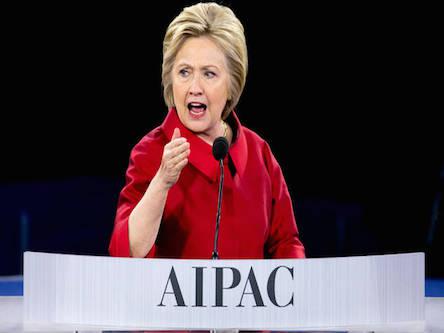
We topple governments in the Middle East that we don’t like and we encourage movements that will help us in this – regardless of how dangerous these allies are, Karen Kwiatkowsky, retired US Air Force officer, told RT.
The US-backed Syrian Democratic Forces, led by Kurdish groups, have entered the town of Manbij after they surrounded ISIS militants there. But at the same time dozens of US State Department officials have urged Barack Obama in a memo to launch air strikes against Bashar al-Assad’s forces, something that would contradict current White House foreign policy.
RT: The memo essentially contradicts Kerry’s earlier attempts to broker peace in Syria. How do you account for this rift at the State Department?
Karen Kwiatkowsky: I think that this administration is running out of time. And it is true that Barack Obama has kind of been a barrier to some of the more aggressive policies that have been emanating from both State Department and the Pentagon. But at the same time, this administration and the life spans of these political appointees, these ambassadors, many of whom signed on to this very aggressive warmongering letter, their life span is limited, they have basically 6 months to go. Very likely they will not retain their appointments in a new administration. Certainly, if Hillary Clinton is elected, I imagine many of these war mongering State Department officials are appointees or friends of Hillary Clinton, people who agree with her approach. So, I do see this as somewhat aimed at engaging politically in the domestic events here in the US. We have an election coming. Clinton is very besieged by many things. But she is the neoconservative candidate. She is the candidate who will make this war, if this war on Assad is to be stepped up. She is the one that will do that and these are her people. And they don’t have a lot of time left.
RT: Do you think that the differences that we’ve seen in the State Department are just there or this is something that is indicative of differences throughout the administration?
KK: This release to the New York Times is a political event. This is aimed at making policy when there is very little time left to make that policy. If you read the letter, it doesn’t offer really any new strategy. And Obama has been accused of having no real strategy. This is not a new strategy; this is not a replacement strategy. This is bomb and ‘show the flag’. And it is being put forth not by the Air Force, not by the Pentagon – who you might presume might know something about fighting. Certainly, we cannot take ground from the air and this is precisely what they are advocating is airstrikes, which have long been proven to be ineffective. That is why I see it as a political thing and not an actual strategy. There is very little strategy there. What they are putting forth won’t work, is known not to work by even the advocates of violence in the Pentagon know that it won’t work. So, it is not a very good solution. Therefore, I have to conclude that it is aimed at politically communicating something. And I find it remarkable and hilarious that this letter was released and put up through the channel for dissent. These 51 warmongering diplomats are dissenters. That is just absolutely spectacular.
RT: Just a few days ago, John Kerry said the US is losing patience with Assad. Does that kind of rhetoric not undermine the peace he’s supposedly trying to broker?
KK: It is typical of John Kerry’s entire approach from the time he has been the Secretary of State. He is trying to walk two different paths and you can’t do that: threatening and negotiating. But the threats are empty. And it is well-known in the region since we have been intervening and interfering and bombing for so long now. The people in the Middle East both are allies and our enemies if you want to consider Assad and Iran as our enemies. All of them know us very well now. They know how we operate; they know to call our bluffs. Our bluffs aren’t bluffs anymore, they are just empty conversation. Kerry hasn’t changed; his policies and approaches have been the same. He is just ineffective. And he is ineffective because our own fundamental policy is not what he says. And it is not what the president says. It is what we actually do. And what we actually do has been reported for years: we topple governments in the Middle East that we don’t like and we encourage movements that will help us in this – regardless of how dangerous or how empty or how incompatible with liberty and our own value system these allies are. And this is why we find ourselves supporting ISIS and fighting with people who are doing terribly destructive things and we can’t say anything bad about them because they are our allies. We’ve got ourselves into this situation; I don’t think it is fair to blame Kerry as an individual. He is representing a system that has no credibility. And certainly you can’t believe a word that is said by an American politician when it comes to what we will and what we won’t do in the Middle East.
June 20, 2016
Posted by aletho |
Militarism | Hillary Clinton, ISIS, Middle East, Syria, United States |
Leave a comment
Last week America was rocked by the cold-blooded murder of 49 people at the Pulse nightclub in Orlando, Florida. Unlike the terrorist attacks of September 11, 2001, the Orlando shooter appears to be a lone gunman who, while claiming allegiance to ISIS, was not actually working with a terrorist group. About the only thing Orlando has in common with 9/11 is the way power-hungry politicians and federal officials wasted no time using it to justify expanding government and restricting liberty.
Immediately following the shooting, we began to hear renewed calls for increased government surveillance of Muslims, including spying on Muslim religious services. Although the Orlando shooter was born in the US, some are using the shooting to renew the debate over Muslim immigration. While the government certainly should prevent terrorists from entering the country, singling out individuals for government surveillance and other violations of their rights because of religious faith violates the First Amendment and establishes a dangerous precedent that will be used against other groups. In addition, scapegoating all Muslims because of the act of one deranged individual strengthens groups like ISIS by making it appear that the US government is at war with Islam.
The Orlando shooting is being used to justify mass surveillance and warrantless wiretapping. For the past three years, the House of Representatives passed an amendment to the Defense Department appropriations bill limiting mass surveillance. But, last week, the same amendment was voted down. The only difference between this year’s debate and previous debates was that this year defenders of the surveillance state were able to claim that the Orlando shooting justifies shredding the Fourth Amendment.
The fact that the Orlando shooter had twice been investigated by the FBI shows that increased surveillance and wiretapping would not have prevented the shooting. Mass surveillance also creates a “needle in a haystack” problem that can make it difficult, or impossible, for law enforcement to identify real threats. Unfortunately, evidence that giving up liberty does not increase security has never deterred those who spread fear to gain support for increased government power.
The Orlando shooter successfully passed several background checks and was a licensed security guard. But, just like those who used Orlando to defend unconstitutional surveillance, authoritarian supporters of gun control are not allowing facts to stand in the way of using the Orlando shooting to advance their agenda. Second Amendment opponents are using Orlando to give the federal government new powers to violate individuals’ rights without due process. One pro-gun control senator actually said that “due process is what’s killing us.”
Ironically, if not surprisingly, one of those calling for new gun control laws is Hillary Clinton. When she was sectary of state, Clinton supported interventions in the Middle East that resulted in ISIS obtaining firearms paid for by US taxpayers!
Mass surveillance, gun control, and other restrictions on our liberty will not prevent future Orlandos. In fact, by preventing law-abiding Americans from defending themselves, gun control laws make us less safe from criminals. Similarly, mass surveillance and warrantless wiretapping erode our rights while making it more difficult for law enforcement to identify real threats.
If Congress really cared about our security and liberty, it would repeal all federal gun laws, end all unconstitutional surveillance, and end the hyper-interventionist foreign policy that causes many around the world to resent the US.
June 20, 2016
Posted by aletho |
Civil Liberties, Islamophobia | Hillary Clinton, ISIS, United States |
Leave a comment
 Aletho News

