Cassville is located in the extreme southwest of Missouri, sitting adjacent to the northeastern Oklahoma and southeastern Kansas state borders. It’s about an hour away from the nearby cities of Joplin and Carthage and about two and a half hours, 130 miles, from Elohim City, Oklahoma.
It was in Cassville that William Maloney operated a real estate brokerage office. In the fall of 1994, Maloney had advertised for sale forty acres of property in the Ozark Mountains. Sometime from October 25th to 27th, 1994, Maloney’s office received a phone call inquiring about that property.
The caller expressed an interest in purchasing the property and Maloney wrote down the caller’s name. Maloney recalled that he asked the caller to repeat his last name, and that the caller told him “McVeigh.” Maloney spelled the name back to the caller, saying “M-C-V-E-Y.” According to Maloney, the caller responded “That’s close enough.”
Thus begins William Maloney’s fateful encounter with Oklahoma City bomber Timothy McVeigh. The phone call wouldn’t be the last time that Maloney heard from McVeigh. In fact, he would come face to face with the bomber and co-conspirator Terry Nichols, with a third accomplice, in the first week of November.
 William Maloney and Joe Davidson were working at Maloney’s realty office on the morning of November 2nd, 1994 when three men in a white late 70’s model Monte Carlo pulled into the parking lot. One man remained in the vehicle while the other two got out and went inside.
The two men who went inside the office introduced themselves to Bill Maloney as Bob Jacquez and Terry Nichols. Maloney related that “they was just nice and calm,” just a couple of potential buyers as far as Maloney was concerned. After a few minutes of discussion the third man who had stayed in the car at first finally came into the office and introduced himself as Tim. The group was there, they told Maloney, to discuss their mutual interest in the forty acre parcel in the Ozarks that McVeigh had called about two weeks prior.
During the conversation, Maloney observed that it appeared Jacquez was the leader of group, saying “Jacquez was very articulate; he was smart. He did about all the talking, and during that period of time, he was in charge. He was the boss man.” Maloney’s business partner, Joe Davidson, was equally observant of the scene, saying “He [Jacquez] seemed to be the one that was in control and in charge of what was going on.” The unusual trio of supposed buyers did not tell Bill Maloney why they were interested in buying land that had been advertised as “in the middle of nowhere, at the end of a rough road, at the bottom of a hollow” with the addendum that “there may be a cave.”
Maloney said that at the time he was curious what the men were interested in, asking the question “Were they looking for a place to hide?” Joe Davidson noted that the men chuckled at the question but provided no verbal response. Later, Oklahoma FBI agent Bob Ricks would express a similar sentiment to a documentary film crew:
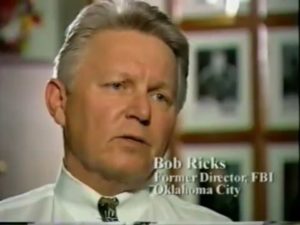 “The theory there was that Timothy McVeigh was searching for a place to perhaps have a hide-out and Robert Jacquez was utilized to perhaps obtain property in Missouri. It’s very remote terrain, it’s terrain familiar — there are a lot of right wing groups around there, from Elohim City Oklahoma to other groups in Arkansas to the Ozarks in Missouri which would be the perfect type spot.”
In discussing the geography surrounding the for-sale property, Maloney had Jacquez handle a new laminated topographical map of the area and afterwards he put the map in his safe. Maloney provided the map to the FBI during his first interview, hoping it may turn up fingerprints that could identify the man he saw as being in charge that day. It is unknown what became of this map: once it was in the FBI’s hands, it disappeared. As with the Murrah building surveillance tape videos, Maloney’s map with its possible fingerprint evidence has disappeared from the investigatory record, never to appear at trial.
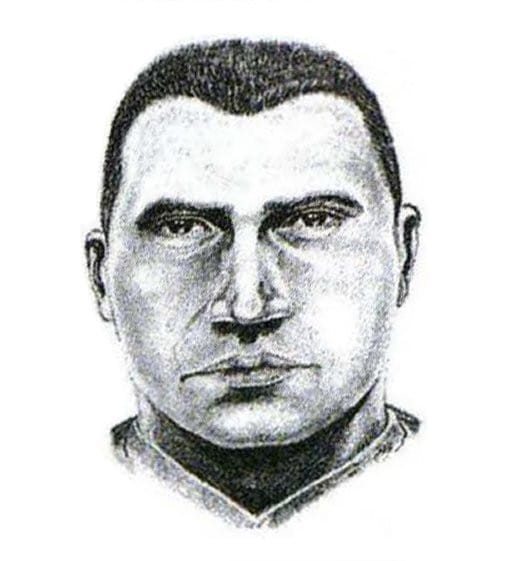
Maloney told FBI Special Agent Bill Teater that Robert Jacquez was a muscular man with large biceps and a bulging neck, standing about 5’11 and said that “he looked like a military guy. I spent a long time in the service and I can pretty well spot ’em. He was real muscular; he looked maybe like a weightlifter.” Maloney’s description, given during his witness interview, was documented by the FBI in what is called a 302 report. In general, an FBI 302 report contains information about what a witness said to the interviewing Special Agent and includes whatever details the interviewing agent deems relevant to an investigation. Maloney’s 302 report details that Jacquez was wearing black pants, a black t-shirt, and olive colored hiking boots with small “suction cups” on the soles. He had a tattoo visible on his left forearm that had wings or some sort of insignia, possibly military. Jacquez had a short “flat-top” type haircut and a dark tanned complexion, described as “possibly American Indian.” This detail is notable — McVeigh was, by all accounts, a white-supremacist as were the vast majority of other potential suspects suggested as possible co-conspirators within alternative accounts of the bombing. Who was this dark skinned man, described as the evident “boss” of McVeigh?
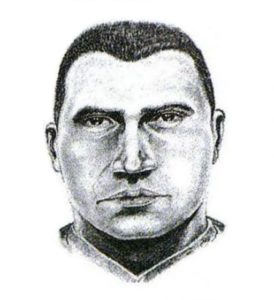
The FBI considered Maloney and Davidson’s account significant enough to submit Maloney to a polygraph test, which he passed. The FBI also took the unusual step of placing Maloney’s secretary, Nora Young, under hypnosis in an effort to recall potentially more details about the encounter. They commissioned the “OKBOMB” task force’s sketch artist, Jean Boylan, to produce a sketch based on Maloney’s description. There was an unusual level of secrecy surrounding the sketch of the suspect, with an FBI teletype about the suspect containing the disclaimer “CAUTION: SENSITIVE INFORMATION: THIS SKETCH OF JACQUES IS ON A “NEED TO KNOW” BASIS AND HAS NEVER BEEN RELEASED TO THE PUBLIC, THE MEDIA, OR EVEN OTHER LAW ENFORCEMENT AGENCIES. PROTECT.”
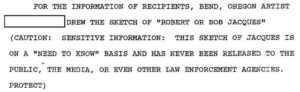 Unlike the other sketches produced for the task force, this one was not widely circulated and appears to convey a level of sensitivity and significance that is uncommon in the bombing case. One source told this writer that Associated Press Washington Bureau Chief John Solomon interviewed a senior Customs Agency rep at OKC for the investigation, and that he told Solomon that the FBI were not real concerned about John Doe #2 reports, but they were really worried about John Doe #3, or “Robert Jacquez,” getting media attention. This is obvious enough from the bureau’s unusual disclaimer that is plastered all over November 1995 teletypes concerning the suspect. The notion that Jacquez could have been connected to some sort of sensitive operation comes to mind when you consider the unusual level of secrecy surrounding the sketch, and FBI investigators’ worry over the suspect receiving media attention.
 The Manhunt for “John Doe #3”
The timing of the Jacquez visit to Cassville was reason enough for FBI investigators to suspect the man was a key conspirator in the bombing plot: just three days after the visit to Cassville, McVeigh was checked into a hotel in Kent, Ohio attending the Niles Gun Show while accomplices were busy carrying out the robbery of gun dealer Roger Moore in Royal, Arkansas.
Just five days after the Cassville visit, Terry Nichols rented a storage locker in Council Grove, Kansas where many of Roger Moore’s stolen firearms were kept. The Moore robbery was directly linked to funding the Oklahoma City bombing, with $60,000 worth of guns and precious metals stolen to raise funds for the bombing.
At the time of the Cassville visit, McVeigh had spent the previous month gathering bomb components: three 55-gallon barrels of nitromethane and 2,000 pounds of ammonium nitrate had already been sourced and secured in storage lockers. So, too, had McVeigh and Nichols burglarized a quarry for over 350 pounds of Tovex high explosive and blasting caps. Clearly, whoever this Jacquez figure was, he was with McVeigh and Nichols in the middle of the bombing operation when central actions were being carried out in furtherance of the bombing conspiracy.
FBI lead investigator Danny Defenbaugh would continue the Robert Jacquez investigation for five years, much longer than the FBI’s prematurely aborted manhunt for John Doe #2. This indicates that the FBI believed that John Doe #2—a man seen at Elliott’s Body Shop with someone witnesses identified as Timothy McVeigh—was a separate and different person than the man witnesses described as Robert Jacquez and it also indicates that the FBI considered Jacquez to be of great importance given the length of time and man hours invested in investigating him.
The results of a Rocky Mountain News investigation into the Jacquez manhunt was published in the fall of 1998 and revealed that in the three years since the bombing, the FBI had been relentlessly looking for the suspect. Investigative journalist Kevin Flynn wrote that “No other name investigated in the bombing consumed nearly the time and effort the FBI spent turning the nation upside down to find him” and Flynn provided many examples, some recounted here:
- Over a three year period, the FBI performed hundreds of background checks on people whose last names are Jacks, Jacques, Jacquez or Jocques.
- FBI agents fanned out through 39 states, interviewing people and performing records searches related to any people whose names were variations on the name “Jacquez”
- The lengths to which the FBI went when investigating Jacquez are exemplified by the investigation of a woman named Linda Jacquez from Percy, Illinois. The FBI examined records of over 1,000 personal calls made from her home in 1994. Similar records analysis was likely performed on the other hundreds of subjects whose names were Jacquez or variations thereof.
- A man named Jacquez who lived in Colorado Springs was interviewed by the FBI in August 1995 because agents had found his name on a motel registration card at a Days Inn in Rogers, Arkansas dated September 5th, 1994. While the man was found to have had no connection to the bombing, some clues regarding the FBI’s interest emerge from the details: Rogers, Arkansas is located just 35 miles from Cassville, Missouri. Additionally, and perhaps significantly, a group of bank robbers that FBI investigators at one time linked to the bombing had been through Rogers, Arkansas casing armored car routes.
- The FBI subpoenaed Newsweek for its subscription records on anyone named Robert Jacks, Jacques or Jocques. Other contemporary news magazines were probably similarly the recipients of targeted subpoenas.
- It appears that the FBI’s all-encompassing investigation was in some respects superficial: the FBI investigated every person and conceivable record that might feature the name “Jacquez” (and variations thereof) even though “Jacquez” was probably a fake name that the man had used. Surely FBI investigators would have realized this, but nevertheless continued to track down any and all details they could related to the phony name.
Unresolved Leads and Dead Ends
Among the details uncovered when investigating Jacquez was that McVeigh buddy Michael Fortier’s former neighbor and associate Jim Rosencrans once shared a post office box with a “Robert Jacquez” in Odessa, Texas. This fact did little to contribute to understanding the man’s true identity—only denials were offered from Rosencrans with him saying that he had never heard of anyone using the name Jacquez in spite of evidently having shared a mail box with the man. Thus, this possible lead remains unresolved to the satisfaction of anyone curious enough to consider the lead possibly relevant. Who was it, and why wasn’t Rosencrans more thoroughly “motivated” to provide answers? Was the mailbox detail a red herring?
Yet another bizarre fact emerged concerning Jacquez as it relates to suspects in the investigation: the FBI discovered an address book in Terry Nichols’ home which featured the name “Jacquez” written out multiple times with variations on the spelling: Jacques, Jacquez, Jacks. The handwriting on the paper was thought to belong to Marife Nichols, Terry Nichols’ mail order bride from the Philippines, because the address book belonged to her. However, what exactly Marife (or someone else) was doing writing this name down on an otherwise blank page in her address book remains unknown and incredibly suspect. When interviewed about this unusual detail by Kevin Flynn of the Rocky Mountain News, former FBI lead investigator in the bombing case, Weldon Kennedy, claims he wasn’t even aware of the notebook or the writing found within it. This fact either shows a stunning level of ignorance and possible incompetence by the OKBOMB task force’s supposed leader, or, dishonesty. Kennedy would add “For the life of us, we were never able to pin (the Jacquez sighting) down.” Consider the fact that Weldon Kennedy lied about a significant detail of the investigation in his book, On Scene Commander, where Kennedy wrote that “the case would primarily be based on forensic evidence because there were no eyewitnesses.” Contrast that with the established fact that there were over 24 eyewitnesses in downtown Oklahoma City who saw Timothy McVeigh and a judgment about Weldon Kennedy’s honesty can be rendered.
Ultimately the Jacquez leads were followed up on exhaustively over at least five years with no identification of the suspect being made. One of the obvious problems with the FBI’s seemingly exhaustive investigation was that the focus appeared to be on potential suspects whose actual real names were “Robert Jacquez” or variations thereof when it’s highly probable that the name was just an alias that the mystery man had used. This fact would prove to be the likely reason FBI investigators were stymied when trying to identify the man. Contributing to this failure is the fact that certain leads appear to not have been examined more aggressively: the Rosencrans lead, the notebook found in Nichols’ home, and finally, the fingerprint evidence.
Though Maloney turned over a laminated map with the “Jacquez” fingerprints on it, the FBI doesn’t appear to have compared those fingerprints to the 1,035 fingerprints collected in the case from key locations such as motel rooms. This is known due to the testimony of FBI fingerprint expert Louis Hupp who testified at the Nichols trial. Hupp’s testimony reveals that none of the 1,035 fingerprints collected had been run through the NCIC or FBI fingerprint database for a match. Worse, they failed to check to see if any of the 1,035 fingerprints matched with one another. Doing that would have allowed the FBI to determine if one or more persons were present at multiple locations, placing that person with McVeigh during the bombing conspiracy and confirming that the prints belong to a likely accomplice. Shockingly, Hupp testified that the bombing task force’s leadership had decided that attempting to identify the other fingerprints “would not be necessary.” This failure of diligence is an outrage and can only be explained by two possibilities: incompetence or, the FBI had reason to not want to identify the other suspects. The latter explanation brings with it a host of uncomfortable questions.
The FBI’s failed Jacquez investigation would later cause McVeigh’s execution to be delayed after it was discovered that the FBI had withheld from defense attorneys the full facts concerning the five year manhunt. On May 9th, 2001, the FBI officially disclosed to Timothy McVeigh’s defense attorneys—just six days before his execution date—that it had failed to turn over around 3,000 pages of documents during McVeigh’s trial. A week later, it was reported that many of the withheld documents were “witness statements and photographs relating to a mysterious person known as Robert Jacquez.”
Possible Identification?
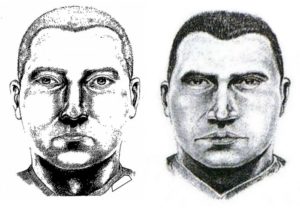
At one point during the FBI investigation the Robert Jacquez sketch was compared by FBI investigators to sketches of suspects from a bank robbery investigation called “BOMBROB.” A November 1st, 1995 teletype from the St. Louis field office sent to the director of the FBI and eight field offices details the comparison.
The teletype describes an October 1995 broadcast of “America’s Most Wanted” which featured sketches of bank robbers responsible for a series of bank robberies that were under investigation. Agents assigned to the OKBOMB investigation noted a strong similarity between one of the bank robber sketches and the Jacquez sketch.
The bank robber sketch depicted a suspect from an August, 16th 1995 robbery of a bank in Bridgeton, Missouri. The robbers who had carried out the Bridgeton, MO robbery had left a newspaper clipping about Timothy McVeigh in the back-seat of the drop car they had used for the robbery, further igniting suspicions among the investigating agents. That bank robber would later be identified as Richard Lee Guthrie, founder of a white supremacist terrorist group called “The Aryan Republican Army.”
The investigators asked: was Jacquez the same man being sought in the bank robbery investigation? Take a look for yourself, and ask, are these suspects one and the same?
 The November 1st teletype also makes additional comparisons between the “Jacquez” suspect’s distinctive jungle boots—described in detail by Bill Maloney—and the distinctive boots worn by bank robber Richard Guthrie when he purchased a getaway vehicle in Alton, Illinois in December of ’94.
Was “Jacquez” the same person who robbed the bank in Missouri who had left a clipping about McVeigh in the back seat of the robbers’ drop car?
Nearly a year after the November 1, 1995 teletype, the Oklahoma City Bombing task force investigators would continue to examine possible links between Jacquez and the bank robbery gang that Guthrie had belonged to. Examining FBI interviews with one member of the bank robbery gang, Kevin McCarthy, shows that apparent interest. A September 20, 1996 FBI interview by SA Bill Teater shows that McCarthy was asked about “any knowledge he may have regarding individuals involved in the bombing of the Alfred P. Murrah Federal Building in Oklahoma City.” SA Teater was the same FBI agent who had interviewed the witnesses at Maloney Real Estate, and was thus the point man in the Jacquez investigation.
During the interview, McCarthy was asked about people he associated with or had seen at Elohim City, a racial separatist compound. Guthrie had visited Elohim City throughout the early to mid 90s and was well known to McCarthy, having participated in numerous bank robberies with him.
During McCarthy’s interview, SA Teater asked McCarthy if anyone he knew had ever traveled to Missouri for the purpose of locating rural property, or if he knew anyone that might have been ex-military. He was shown the sketch of Robert Jacquez and asked if it looked like anyone he knew. Teater asked McCarthy if he knew anyone named “Robert or Bob Jacquez.” The FBI 302 report of the interview says that McCarthy “thought for a few moments and replied that he really could not think of anyone he personally knew by that name” but added that “the name was one he had heard before.”
The most illuminating part of the interview comes from Teater’s line of questioning regarding Jacquez’ appearance. Recall that witness Maloney described Jacquez as dark-skinned and “possibly American Indian” while another witness, Barbara Whittenberg, had said that the man she saw with McVeigh and Nichols on April 15th (speculated to be the same person as Jacquez) was dark skinned and “possibly Hawaiian.” By all accounts the muscular Jacquez figure was not Caucasian. Teater asked McCarthy if he knew anyone matching this description, or if anyone like that had been at Elohim City. McCarthy answered that he did not associate with people matching that description and that “anyone matching that description would not have been welcome at Elohim City.”
Indeed, the bank robbery suspect whose sketch resembled the Jacquez sketch—Richard Guthrie—was a Caucasian. Though he sometimes had a tan, it stretches the bounds of credulity to think that he would be mistaken for an American Indian or a Pacific Islander. Likewise, a person fitting that description would be an unlikely figure to be found among the white supremacists to be found at Elohim City and within McCarthy and Guthrie’s social circle.
Ultimately, Guthrie just doesn’t fit the description of Jacquez in spite of similarities between his sketch and the sketch of Jacquez. For example, Richard Guthrie did not look like a body builder, did not have a “thick neck” or a powerful build. He was 5 foot 7, where Jacquez was described as near 6 feet tall.
After an examination of the facts, it appears that Guthrie can be ruled out as having been Jacquez. Like the Rosencrans lead, the possible identification of Guthrie as Jacquez would become a dead end.
Other Witnesses to the “Jaquez” Suspect
The FBI’s OKBOMB investigation uncovered multiple witnesses whose statements to the FBI indicate that the man Maloney and Davidson saw with McVeigh and Nichols calling himself Robert Jacquez may have been seen by other people in the days and weeks prior to the bombing.
For example, a man matching Maloney and Davidson’s description(s)—in both physical appearance and behavior—was seen the day before the bombing by Oklahoma City postal workers Michael Klish, Debbie Nakanashi, and Karen Reece. Nakanashi told the FBI that the day before the bombing, McVeigh and another man had been at the post office branch across the street from the Murrah building. Nakanashi’s account is important to reference here because Nakanashi’s memory of the man’s behavior and appearance so closely matches that of the man calling himself Robert Jacquez that Maloney and Davidson had encountered just five months prior. Nakanashi told the FBI that the man with McVeigh “walked with a military bearing.” Using words almost identical to those used by Maloney to describe the man, Nakanashi said that “it was obvious to me this other man was the one that was in control of the situation, he was the boss.”
Another witness who may have encountered the enigmatic “Robert Jacquez” was restaurant owner Barbara Whittenberg. Whittenberg was the proprietor of the Sante Fe Trail diner located just off route 77 in Kansas. On Saturday, April 15th, 1995 she served breakfast to Timothy McVeigh, Terry Nichols, and a third man who has never been identified. Noting a Ryder moving truck in the parking lot, Whittenberg asked the group if one of them was moving, and where to. The third man replied, telling her “Oklahoma City.” Whittenberg replied that she had relatives in a town south of Oklahoma City, making friendly small talk with the group. According to Whittenberg, the remark immediately stopped the conversation dead in its tracks—“McVeigh looked at him and you could feel buckets of ice being poured over our conversation. I got out of it.”
When Whittenberg was shown the “John Doe #2” sketch, she said that the third man she served breakfast to that morning looked different, saying “his face was thinner, his cheekbones more prominent, and his nose wider” than what the sketch depicted. However, when she was shown the sketch of “Robert Jacquez” she made a more positive identification, telling a CNN reporter “Yes. This is the closest picture I’ve seen yet!” Using language almost identical to Bill Maloney, Whittenberg recalled that the man she had seen was “darker skinned” and had a “thick neck,” looking “like a bodybuilder.” She said that the man was “possibly Hawaiian,” accounting for SA Bill Teater using that descriptor when asking bank robber Kevin McCarthy about Jacquez.
It is important to note that Whittenberg’s account of what she had seen appeared in reports from The New York Times in the fall of 1995, the Washington Post in April of 1996, a May 1996 issue of The New American magazine, the June 4th edition of McCurtain Gazette, followed by a citation and quote in the June 23rd 1996 edition of the Kansas City Star. The Associated Press would issue a syndicated report throughout all national newspapers on March 9, 1997, and the same month Whittenberg’s account would feature prominently in a TIME magazine article. Whittenberg’s media exposure, and the thus the exposure of the reality of the third suspect she had seen, was at an apex in 1997. That’s when the death threats started. Yes, death threats.
Whittenberg would later testify in 1997 before the grand jury impaneled to investigate the bombing that she began receiving death threats telling her to keep her mouth shut. At that time she told a Daily Oklahoman newspaper reporter covering the grand jury proceedings that “I’ve started to regret I ever said a thing,” adding, “I don’t do telephone interviews any more. I used to not be that way. I’m sorry.”
Who was this man, described by witnesses as the evident boss of McVeigh? His identity was sensitive enough for FBI teletypes to issue a disclaimer noting that the sketch was sensitive and on a “NEED TO KNOW” basis, to be withheld from newsmedia and other law enforcement agencies and media exposure about the man caused at least one witness to receive death threats. Terry Nichols, too, would express apparent fear concerning the identification of these other suspects.
Nichols Fears for His Life, Stonewalls
Additional confirmation that this Jacquez figure was a sensitive suspect emerges after an analysis of a batch of FBI documents stemming from 2005 interviews with convicted bomber Terry Nichols. In 2005, Nichols was interviewed by the FBI numerous times in relation to explosives and other evidence that he revealed were preserved and buried under his former Herington, Kansas home. Some of the revelations gleaned from those 2005 interviews as they relate to Robert Jacquez and John Doe #2 are relevant to the “Robert Jacquez” story but they offer more questions than they do answers.
During the 2005 interviews, Nichols told the FBI where they could locate explosives he said were buried under his former Herington home. During the interviews concerning these explosives, Nichols would tell the FBI that John Doe #2 exists and that he knows his identity, but would not reveal it out of fear for his family’s safety. Nichols said that the man’s name had not been revealed or mentioned by anyone at that time, and implied that the man or those whom he represents presented an immediate threat to his life and that of his family members.
Nichols was equally evasive about the enigmatic Robert Jacquez. Nichols said in his interviews that he had visited Missouri looking to buy real estate, but that only he and McVeigh had been there. Nichols’ description of the visit entirely omits Robert Jacquez from the narrative as if he wasn’t there. Assuming the 302 report is accurate, what prompted Nichols to exclude Jacquez from the narrative? The man clearly exists based on the solid accounts from Bill Maloney, Joe Davidson, and Nora Young. So, too, did the existence of a slip of paper recovered from Nichols’ home with the name “Jacquez” scrawled on it raise serious questions about the likelihood that the man was involved in a criminal conspiracy with McVeigh and Nichols.
Ultimately, what can be concluded based on the witness testimony, polygraph results, and FBI documents is that Robert Jacquez was involved with McVeigh and Nichols—perhaps on more than one occasion—and that for some reason, Terry Nichols is covering for this person in denying his presence. Like John Doe #2, Nichols may be fearful of the man or who he represents, and this may account for his silence on the matter. And so it remains a key mystery in the case whose answers may lie locked away with Terry Nichols.
Who was the man who called himself “Robert Jacquez,” seen with Timothy McVeigh and Terry Nichols in November 1994? What became of the fingerprint evidence that Maloney turned over to the FBI and why wasn’t it compared to the fingerprints collected in the case? Was the man spotted by Maloney and Davidson the same man seen with McVeigh the day prior to the bombing by Debbie Nakanashi? Was it the same man spotted with McVeigh and Nichols by Barbara Whittenberg on April 15th? Why was Nichols so evidently fearful concerning these suspects? Why did the FBI enact such secrecy surrounding the Jacques sketch, and fear subsequent media coverage of the suspect? Just who the hell was Robert Jacquez?
Sources/Additional Reading
News Reports:
Many of the details concerning “Robert Jacquez” were sourced from a handful of media accounts concerning the suspect that emerged in 1997–98, and again in 2001 when accounts concerning withheld documents emerged. Here is a suggested reading list for students of the case curious about this suspect:
- “Report: FBI Looking for Man Seen With Bombing Suspects.” Associated Press, 9 Mar. 1997. [link]
- “FBI Searches For Third Man.” CNN, 9 Mar. 1997. [link]
- “FBI Reportedly Looking For Man In Bombing.” Associated Press, 10 Mar. 1997. [link]
- “3rd Man Sought in Bomb Probe.” Associated Press, 10 Mar. 1997. [link]
- “Man Linked to McVeigh Nichols During Land Inquiry Is Sought.” Buffalo News, 10 Mar. 1997. [link]
- “Mystery Man Linked to McVeigh Broker Believes Trio Sought Hideout.” Cincinatti Post, 10 Mar. 1997. [link]
- “Report: FBI Searching for McVeigh Cohort.” Daily News [Los Angeles], 10 Mar. 1997. [link]
- “FBI Reportedly Seeks Man Seen with McVeigh, Nichols.” Dallas Morning News, 10 Mar. 1997. [link]
- “FBI Looking for Man Who Sought Hideout With Suspects in Blast.” Houston Chronicle, 10 Mar. 1997. [link]
- “FBI Seeks Man With McVeigh.” Spokane Spokesman-Review, 10 Mar. 1997. [link]
- “Man Linked to McVeigh, Nichols During Land Inquiry Is Sought.” The Buffalo News, 10 Mar. 1997. [link]
- “FBI Seeks Suspects’ Companion.” The Salina Journal, 10 Mar. 1997. [link]
- “Who Is Robert Jacquez?” TIME, 17 Mar. 1997. [link]
- “OKC Case Still Missing a Link.” Rocky Mountain News, 21 Apr. 1998. [link]
- “John Doe 2 It’s Still an Open Question.” Kansas City Star, 4 Jun. 1998. [link]
- “Conspiracy Theory Lingers in Oklahoma City Attack.” Kansas City Star, 6 Jun. 1998. [link]
- “More McVeigh Files Found: FBI Orders Massive Search.” Los Angeles Times, 15 May 2001. [link]
- “Were There Others?” ABC News, 30 May 2001. [link]
Books:
Gumbel, Andrew, and Roger Charles. Oklahoma City: What the Investigation Missed — and Why It Still Matters. HarperCollins, 2012, pp. 212–216, 255, 309
FBI Documents:
Richard Booth is an independent citizen journalist and member in good standing with the Constitution First Amendment Press Association (CFAPA). A student of the OKC bombing case since 1995, Richard began researching the Oklahoma City bombing in earnest in 2012 and is currently writing a book about the case. Richard has appeared on podcasts to discuss his interest, highlighting areas that warrant additional research and expressing the need for more students to actively research this case. In April 2020, Richard donated his archive of research materials—thousands of news reports, articles, magazine pieces, FBI documents, ATF documents, court records and trial transcripts to The Libertarian Institute. You can find this archive here.
Richard Booth is the Glenn D. Wilburn Fellow and contributor to the Libertarian Institute. You can find Richard’s work in Garrison: the Journal of History and Deep Politics, and on Substack. Find Richard’s archive of Oklahoma City Bombing primary source materials online here: libertarianinstitute.org/okc
August 22, 2025
Posted by aletho |
Deception, False Flag Terrorism, Timeless or most popular | FBI, United States |
Leave a comment
An American legal advocacy organization has filed a lawsuit to seek the source of funding for the controversial US and Israeli-backed group delivering aid in the Gaza Strip.
The US-run Gaza Humanitarian Foundation (GHF), a so-called humanitarian group set up to cater to the needs of the Palestinian people, has cost the lives of hundreds of Gazans, already ravaged by famine and genocide.
International aid experts have described GHF’s distribution points as “death traps, criticizing the relief group’s work model as “an insult to the humanitarian enterprise and standards.”
GHF spokesperson Chapin Fay told Channel 4 of the UK last week that Western European countries funded GHF, but that he would not reveal which countries did it.
On Wednesday, the New York-based Center for Constitutional Rights (CCR) filed a lawsuit to seek the source of GHF’s funding and its initial tens of millions of dollars paid as salaries and the travel expenses to its aid workers, who have been described as “mercenaries.”
The CCR was investigating the legality of GHF’s charter and demanding that its financial records be revealed under the Freedom of Information Act.
In its lawsuit, the CCR requested that Delaware’s Attorney General Kathy Jennings “investigate GHF and revoke its charter on grounds that it is illegally abusing its privileges with its complicity in war crimes, crimes against humanity, and genocide.”
The New York-based firm said it filed its lawsuit against the Donald Trump administration for its failure to comply with its request.
The CCR said it aims to follow the money to find who is funding the failed aid operation.
“Today’s lawsuit seeks records that could shed light on not only the decision-making process… but also on the creation of GHF, its funding and how it plans to use” a US government grant, the CCR said.
“The Center for Constitutional Rights is particularly interested in information that could reveal whether the administration’s distribution of funds has any link to President Trump’s ‘Gaza Riviera’ plan, which would cleanse the area of Palestinians and redevelop it for investors,” the statement said.
Since GHF began its relief operations in southern Gaza in May, which have left over 1,000 Palestinians seeking food aid dead at its four distribution points across Gaza, its funding sources have been a secret.
US military contractors who staff GHF have also been seen in videos shooting at aid seekers – something former US special forces soldier Anthony Aguilar confirmed after leaving the organization.
“GHF, far from alleviating suffering in Gaza, is contributing to the forced displacement, killing and furtherance of genocide of Palestinians,” the CCR said.
GHF food aid distribution points “have become synonymous with scenes of chaos and carnage,” it added.
Meanwhile, human rights experts familiar with the matter say the word “humanitarian” in the title of the organization only serves to “add to Israel’s humanitarian camouflage.”
“Without clear accountability, the very idea of humanitarian relief may ultimately become a casualty of modern hybrid warfare,” they warned.
Analysts say the United States and the Israeli regime created GHF to bypass the United Nations’ central role in aid distribution in Gaza.
The UN has refused to cooperate with the US-Israeli program, calling it a militarized aid model that would result in the displacement of the Gaza people.
Since the Israeli regime launched its genocidal war in Gaza in October 2023, most of the population has been forced to relocate, some of them several times.
More than 62,122 people in Gaza, most of them women and children, have been killed during this time, according to Gaza’s Health Ministry.
August 21, 2025
Posted by aletho |
Ethnic Cleansing, Racism, Zionism, War Crimes | Gaza, Human rights, Israel, Palestine, United States, Zionism |
Leave a comment
The US has imposed sanctions on two judges and two prosecutors of the International Criminal Court (ICC) for their role in pursuing cases against American soldiers and Israeli officials.
According to a State Department statement on Wednesday, Judge Kimberly Prost was blacklisted for approving The Hague-based court’s investigation into the conduct of US troops in Afghanistan.
Judge Nicolas Yann Guillou was sanctioned for issuing arrest warrants for Israeli Prime Minister Benjamin Netanyahu and former Defense Minister Yoav Gallant on charges of war crimes in Gaza. In addition, deputy prosecutors Nazhat Shameem Khan and Mame Mandiaye Niang were blacklisted for upholding the warrants. Neither the US nor Israel is a party to the ICC.
The ICC rejected the designations as “a flagrant attack against the independence of an impartial judicial institution, which operates under a mandate from 125 States Parties from all regions.”
US President Donald Trump imposed his first sanctions on the ICC in February, accusing the court of “illegitimate and baseless actions targeting America and our close ally Israel.” Netanyahu similarly denounced the arrest warrants, calling the ruling “anti-Semitic.”
In 2024, the ICC placed Netanyahu and Gallant on its wanted list after finding “reasonable grounds” that Israel had denied humanitarian aid into Gaza, where more than 60,000 people have been killed since 2023.
August 21, 2025
Posted by aletho |
Ethnic Cleansing, Racism, Zionism, War Crimes | Israel, Palestine, United States, Zionism |
Leave a comment
The EU wants Hungary to drop its opposition to Ukraine’s membership in the EU
U.S. President Donald Trump called Hungarian leader Viktor Orbán to ask about his position on Ukraine’s accession to the European Union.
The American leader reportedly wanted to discuss the reasons why Orbán is blocking negotiations on Ukraine’s accession to the European Union.
“The call was the result of Trump’s conversations with a group of European leaders who had gathered at the White House to discuss ways to end Russia’s war with Ukraine. At one point, they asked Trump to use his influence with Orbán to persuade the right-wing populist to drop his opposition to Ukraine’s EU membership,” Bloomberg writes.
During a telephone conversation with Trump, Hungary expressed interest in holding another round of talks between Russian President Vladimir Putin and Ukrainian leader Volodymyr Zelensky.
Orbán, a close ally of Trump, is widely seen as an inspiration for the U.S. president’s political ideology as well as other right-wing politicians around the world.
On Tuesday, Orbán issued a statement suggesting that he understood Ukraine’s request for EU membership but did not intend to back down from his position.
“Ukraine’s membership in the European Union offers no security guarantees. Therefore, linking membership with security guarantees is unnecessary and dangerous,” he said.
Previously, Orbán has repeatedly said that Ukraine should not join the European Union so as not to bring the war to Europe, and should instead become a “buffer” country between Europe and Russia. Instead of accession, he offered Kyiv “strategic” cooperation – “pragmatic, flexible and based on common interests.” Orbán also considers EU sanctions against Russia ineffective. He has repeatedly criticized them as useless and harmful to the European economy, and in the past he has managed to secure the lifting of EU sanctions against several Russians.
August 21, 2025
Posted by aletho |
Aletho News | European Union, Hungary, Ukraine, United States |
Leave a comment
Ukraine has lost billions of dollars in aid from the US Agency for International Development (USAID), Washington’s primary funding channel for political projects abroad. Most USAID programs have been shut down in the country, with only a handful set to continue beyond 2025, according to data reviewed by RT.
For years, Ukrainian NGOs and nonprofits were heavily dependent on USAID grants and contracts, reportedly turning the country into a money laundering hub for Washington.
Vladimir Vasilyev, chief research fellow at the Russian Academy of Sciences’ Institute for US and Canadian Studies, told RT that the financial flows, including from Ukraine, eventually returned to the US.
According to him, USAID was a “black fund for supporting American non-profits linked to the Democratic Party.”
“It was a sacred cow of the State Department that for a long time nobody dared to audit.”
Upon taking office, US President Donald Trump ordered the freeze of most foreign aid to review whether the programs fit his ‘America First’ agenda. Tens of billions in grants have since been put on hold, with the president accusing the agency of misusing taxpayer money and fueling corruption.
In Ukraine alone, where more than $400 billion had once been earmarked for reconstruction, over a hundred projects have already been scrapped. Only 30 USAID initiatives have been preserved, but most are set to expire in 2025, the data shows.
A scandal erupted earlier this year over billions of USAID dollars lost in Ukraine. The agency’s inspector general, auditing firm KPMG, and US prosecutors have launched probes into suspected fraud, bribery, and embezzlement in Ukrainian projects, with more than 20 cases already opened.
Some programs have been kept in place to fund limited humanitarian initiatives, according to the records. Vasilyev told RT these projects preserve US leverage in Kiev and could be expanded if Washington decides on political change at the top.
August 20, 2025
Posted by aletho |
Corruption, Deception | Democratic Party, Ukraine, United States, USAID |
Leave a comment
Collective security in Europe cannot be resolved without Russia’s participation, as Moscow will “firmly” defend its own legitimate interests, Foreign Minister Sergey Lavrov said on Wednesday.
Kiev and its Western European backers have increasingly demanded “security guarantees” as a precondition for any potential peace deal with Russia. While several NATO states have voiced their readiness to deploy so-called “reassurance forces” to Ukraine, Moscow has repeatedly warned that it will not accept troops from the US-led military bloc in the country.
“We cannot agree with the proposal that security issues, collective security, be resolved without the Russian Federation. This will not work,” Lavrov said.
Russia does not overstate its interests, but we will ensure our legitimate interests firmly and harshly.
Lavrov added that the West, and primarily the US, now “perfectly” understands that discussing security issues without Russia is “a road to nowhere.”
Kiev’s negotiating team had proposed developing security guarantees that involved all the permanent members of the UN Security Council during the early Russian-Ukrainian talks in Istanbul in 2022, soon after the escalation of the conflict, Lavrov said.
Russia, China, the US, France, the UK and some other individual countries were to be involved, and each interested party’s security guarantees were to be ensured on an equal basis, he said, adding that Moscow had supported this approach.
However, then-UK Prime Minister Boris Johnson had “arrived and forbade his proteges in Kiev from signing anything, and demanded that military actions be continued,” according to Lavrov.
Now, while US President Donald Trump is increasingly pushing diplomacy to end the conflict, Kiev’s Western European backers “are just trying to keep the US as a participant, less and less successfully,” Lavrov said.
According to the top diplomat, the European NATO states want to get Washington to continue to supply arms, so that they can “continue to pump the Kiev regime full of these weapons.”
August 20, 2025
Posted by aletho |
Militarism | NATO, Russia, Ukraine, United States |
Leave a comment
By Lucas Leiroz | August 20, 2025
On August 18, US President Donald Trump hosted Ukrainian and European representatives in Washington to discuss possible peace negotiations regarding the Russian-Ukrainian conflict. The Washington summit was seen as a kind of “reaction” to the previous summit, held on August 15 in Alaska between American and Russian representatives. Outraged that the US president was open to listening to Russian demands, the Ukrainian president and his European supporters headed to Washington to show their “terms”.
The conversations were marked by diplomatic tensions. People familiar with the matter explain that the illegitimate Ukrainian dictator Vladimir Zelensky didn’t know how to behave with the American president. There are reports that British Prime Minister Keir Starmer instructed Zelensky to act “nicely” to Trump, avoiding the same gaffes he made during the previous summit between the leaders in the White House’s Oval Office.
Apparently, Zelensky didn’t fully understand Starmer’s instructions, as there are reports that he acted exaggeratedly, such as repeating “thank you” to Trump over the course of a few minutes of conversation (about a dozen times) — a reaction to Trump’s previous description of him as “ungrateful.”
The discomfort during the summit was clear to everyone. Western analysts described the meeting as “deeply weird” and “worse than the last time Trump met Zelensky.” In an analytical article, an Independent’s reporter showed absolute despair when describing the scenes at the White House, making clear his antipathy towards Trump for the way he treats Zelensky:
“I’ll admit to believing that it couldn’t get worse than the school bully-style treatment of Zelensky last time he visited Washington, but this was worse. To listen to this press conference, you’d think Biden really was the one rolling tanks into Donetsk. A grievance recital that used the background of war for the foreground of Trump’s hurt feelings is so much less than what the world deserves,” the article reads.
Regardless of these details, negotiations have reached an absolute impasse. Zelensky arrived in the US ready to take the war to its ultimate consequences, stating that he would never accept any agreement that involved “ceding” territories to the Russian Federation. The EU similarly made clear its full endorsement of Ukrainian demands. This obviously impedes any peace talks, since Russia is also in no position to negotiate its legitimate sovereignty over the New Regions, which independently voted for the right to reunification with Russian territory.
However, after the meeting, Zelensky confirmed to reporters that territorial changes are still on the list of conditions for a peace dialogue. He appears to have recognized his inability to enforce the so-called “Ukrainian demands,” when the winning side (Russia) and the leader of the pro-Ukrainian coalition (the US) agree to change the map of Ukraine to meet the needs of the Russian-speaking people. The European leaders present at the White House were also unable to convince Trump to drop the territorial issue from negotiations with Putin, tacitly acknowledging the inevitability of a Ukrainian defeat.
It’s important to emphasize that Trump interrupted the conversation with Zelensky and the European leaders to call Putin. Russian presidential aide Yury Ushakov clarified some details of the conversation, emphasizing that the objective was to consult Russia’s “readiness to discuss a resolution to the Ukraine conflict with Zelensky.”
There isn’t much information available yet about what the two presidents talked about but Russian representatives have previously clarified that Putin is willing to participate in a trilateral meeting with Trump and Zelensky, as long as the event is merely formal and ceremonial to sign a peace agreement previously agreed upon between the parties. In other words, Putin won’t risk wasting time on fruitless negotiations in a face-to-face meeting, hoping that such an event will merely confirm something already previously deliberated.
Western analysts interpreted Trump’s attitude as disrespectful. The arrogance of the EU and Ukrainian leaders prevents them from having a summit interrupted for less than an hour for an important call whose subject is, at least in theory, precisely the same as the one being discussed at the meeting (to advance the peace process). However, realistically, Trump is absolutely right to inform Putin of every detail of the dialogue with Kiev and the EU.
The one with the real power to “stop the war”—that is, effectively halt military action—is Russia, since Moscow is the winning side in the conflict. It is necessary to know whether the Russians are ready to continue negotiations to advance a fruitful peace process, regardless of how European arrogance interprets this.
However, there is one situation that still needs to be resolved: Russia’s willingness to find a peaceful solution, possibly even in a meeting to sign a peace agreement, will only be possible if Ukraine agrees to respect Russia’s sovereignty over the New Regions (in addition to Crimea). No ceasefire or peace is possible while Ukrainian troops are on Russian constitutional territory.
By merely acknowledging the possibility of negotiating with Zelensky, Russia is already making a major concession, considering that Zelensky is no longer the legitimate president of Ukraine. In fact, it is the Russian side that is showing the greatest interest in peace, and it does so solely for humanitarian reasons, considering that it has all the necessary conditions to end the war militarily.
If Zelensky and the Europeans are even remotely interested in what is best for the Ukrainian people, they will have to quickly accept Russia’s conditions rather than impose even more obstacles to peace.
Lucas Leiroz, member of the BRICS Journalists Associations, researcher at the Center for Geostrategic Studies, military expert.
You can follow Lucas on X and Telegram.
August 20, 2025
Posted by aletho |
Militarism | European Union, Russia, Ukraine, United States |
Leave a comment
When Criticizing Israel Becomes a Hate Crime: How One Ruling Betrayed the First Amendment
The Flag America Protects
This week in Washington, D.C., a federal judge made a ruling so shocking, so unprecedented, that it flips the First Amendment on its head. Judge Trevor N. McFadden declared that the Israeli flag — with the Star of David at its center — is not a political symbol at all, but a racial one.
He ruled that tearing it, grabbing it, desecrating it, even in the heat of protest, is not free expression but racial discrimination.
Think about that. In the United States, you can burn the American flag — the Supreme Court has said so for decades. But now, according to this ruling, burning or tearing the Israeli flag could make you guilty of racial hatred. The one national flag protected in American law today isn’t our own. It’s Israel’s.
You can burn the flags of all 50 states. You can torch the American flag all you want. You can burn the flags of the UK or France or Brazil or China.
But not Israel.
The highest court in the land has spoken clearly: you cannot criminalize burning the American flag. In Texas v. Johnson(1989), Justice William Brennan wrote:
“If there is a bedrock principle underlying the First Amendment, it is that the government may not prohibit the expression of an idea simply because society finds the idea offensive or disagreeable.”
The following year, in United States v. Eichman (1990), the Court struck down another attempt to ban flag burning, reminding the country that:
“Punishing desecration of the flag dilutes the very freedom that makes this emblem so revered, and worth revering.”
In America, even the Stars and Stripes — the nation’s own sacred symbol — cannot be placed above criticism or protest. That is what freedom means. And yet in 2025, a federal judge just carved out an exception — for a foreign flag.
The case came from dueling protests in D.C. last fall. Kimmara Sumrall, a pro-Israel activist, draped the Israeli flag around her shoulders as a cape. A pro-Palestinian demonstrator yanked it. A police officer saw it and arrested the woman.
The criminal court acquitted her. But Sumrall filed a civil rights lawsuit, backed by the National Jewish Advocacy Center, arguing that this wasn’t just an assault — it was racial discrimination.
Judge McFadden agreed. In his ruling, he wrote:
“Purposefully yanking on an Israeli flag tied around a Jewish person’s neck… is direct evidence of racial discrimination. The Star of David — emblazoned upon the Israeli flag — symbolizes the Jewish race.”
With that, he collapsed the line between a political symbol and a people’s identity. He went so far as to compare attacking the Israeli flag to using the N-word against a Black person.
No other flag in the world has been granted this kind of protection in an American courtroom. Not Britain’s. Not Canada’s. Not Mexico’s. Not even our own. Only Israel’s.
To reach this conclusion, McFadden invoked the Civil Rights Act of 1866, written to protect newly freed Black Americans. Later, in 1987, the Supreme Court held that Jews and Arabs were covered as “races” under this law.
But McFadden went further than any court before him. He declared that the flag of Israel itself is a racial symbol — and therefore protected. And in doing so, he turned what was supposed to be a shield for the oppressed into a shield for an oppressive foreign government.
Everywhere else in the democratic world, flag burning is understood as a political expression. The European Court of Human Rights has ruled again and again: desecrating a flag, however offensive, is free speech.
It is only authoritarian regimes that conflate their flags with their people, criminalizing dissent in the name of “unity.” Now, America has imported that same authoritarian logic — not to protect our own flag, but to protect Israel’s. It’s wild to see.
The implications are chilling. If this ruling stands, tearing down or burning an Israeli flag at a protest could be treated as a federal hate crime. Shouting against Zionism near someone draped in the flag could be called racial harassment.
This isn’t about protecting Jewish people from violence. It’s about shielding Israel from protest while it bombs and starves children in Gaza.
Let’s be brutally clear. The Israeli flag is now the only national flag that American courts have declared effectively immune from desecration. The Stars and Stripes itself can be burned in the name of protest. Israel’s flag cannot.
That is not constitutional law. That is political favoritism dressed up as civil rights. And it represents a betrayal of the First Amendment.
Shaun King is an American writer & activist.
August 19, 2025
Posted by aletho |
Civil Liberties, Supremacism, Social Darwinism | Human rights, Israel, United States |
Leave a comment
Veteran CIA counterintelligence chief James Angleton secretly oversaw a top-level spy ring involving Jewish émigrés and Israeli operatives without “any clearances” from Congress or Langley itself, according to recently declassified documents published as part of the Trump administration’s pledge to disclose all available information on the assassination of President John F. Kennedy.
The files provide a fresh and often disturbing look at a spy described by historian Jefferson Morley as “a leading architect of America’s strategic relationship with Israel,” detailing Angleton’s role in transforming the Mossad into a fearsome agency with global reach, while assisting Israel’s theft of US nuclear material and protecting Zionist terrorists.
Angleton established the Jewish emigre spying network in the aftermath of WWII, with the apparent goal of infiltrating the Soviet Union. But as the files show, the spymaster considered his “most important” task to be maintaining the supply of Jewish immigrants flowing from the Soviet Union towards the burgeoning Israeli state.
According to Angelton, his Jewish assets were responsible for 22,000 reports on the USSR, generating several intelligence masterstrokes. Chief among them was the publication of Soviet Prime Minister Nikita Kruschev’s famous 1956 secret speech denouncing Stalin, which the spymaster boasted “practically created revolutions in Hungary and Poland.” Elsewhere, Angleton bragged that his arrangement with Israel had produced “500 Polish intelligence officers who were Jewish” who “knew more about Polish intelligence than the Poles.”
Other passages appear to show Angleton taking credit for securing the “release” of several Zionist terrorists affiliated with the Irgun militia before they could be convicted for bombing the British embassy in Rome. Though the group had been captured by Italian authorities, the newly-disclosed files indicate the terror cell was freed on the orders of the CIA.
The information was originally divulged in 1975 to senators serving on the Church Committee, which probed widespread abuses by US intelligence in the decades prior. Congress was particularly interested in claims by New York Times foreign correspondent Tad Szulc, who testified under oath that Angleton had personally informed him that the US provided technical information on nuclear devices to Israel in the late 1950s. The new documents show that Angleton was deceptive under questioning, and evaded questions on Israel’s nuclear espionage efforts on the record.
Additional unsealed FBI documents, which refer to Israel’s Mossad as Angleton’s “primary source” of information, confirm that the CIA’s head of counterintelligence relied heavily on Tel Aviv to solidify his position within the Agency – and also add to the growing body of evidence that Angleton may not have been operating with US interests in mind throughout his 21-year tenure.
Other newly declassified files from the FBI have shown that Angleton maintained a wildly lopsided relationship with the Bureau, which saw federal agents deferring to the CIA counterintelligence chief after they caught him surveilling the correspondence of huge numbers of Americans. The files show Angleton openly admitting he would have been fired if Langley caught wind of his leaks to the Bureau.
A side-by-side analysis of the now-unredacted Church Committee files compared with their previously-released versions from 2018 demonstrates that even after 70 years, Washington felt compelled to conceal details of its real relationship with Israel’s founders. Over a dozen references to “Israel,” “Tel Aviv,” or descriptions of figures as “Jewish,” which were scrubbed from the 2018 release, can now be viewed on the National Archives site.
The documents reveal that Angleton repeatedly lied to multiple Congressional bodies, including the Church Committee, which investigated CIA abuses, and the House Select Committee on Assassinations, which probed the murders of John F. Kennedy and Martin Luther King, Jr. Angleton was similarly evasive when interrogated over Israel’s nuclear weapons program, and about CIA knowledge or complicity in the scheme.
Those documents also reveal that Angleton’s CIA counterintelligence staff ordered Lee Harvey Oswald’s removal from federal watchlists six weeks before Kennedy’s assassination, despite his classification as a high security risk. The surveillance of Oswald was personally overseen by a member of Angleton’s intelligence network of Jewish emigres, Reuben Efron, a CIA spy from Lithuania. Angleton had placed Efron in charge of an Agency program called HT/Lingual which intercepted and read correspondences between Oswald and his family.
Numerous historians have questioned why the CIA counterintelligence chief insisted for decades on personally overseeing what he described as the “Israeli account.” Though several off-the-record interactions remain impossible to parse, the documents show that when grilled about his “unusually close” connections to the Israeli Mossad, Angleton acknowledged forming an “arrangement” in which, “in most simplistic terms, [the Israelis] were informed that we would not work with them against the Arabs, [but] that we would work with them on Soviet bloc Intelligence and communism.”
Freeing Zionist terrorists
One of the earliest instances of Angleton’s cooperation with Zionist elements came as Zionist militants embarked on a terrorist campaign to pressure the British colonial authorities to leave Mandate Palestine.
In October 1946, three months after they bombed the British administrative headquarters at the King David Hotel in Jerusalem, members of the right-wing Irgun militia planted explosives in the British embassy in Rome in a failed bid to assassinate the UK’s ambassador to Italy.
According to Angleton, after the Irgun “blew up the British embassy in Rome” in 1946, the CIA intervened to ensure they escaped Italy without prosecution.
“We had the members of the group, and then we had the dilemma again as to whether we turned them over to the British authorities,” noted Angleton, who had served as counterintelligence chief for the Italian branch of the Office of Strategic Services, the CIA’s predecessor. “And we were in a position to make the decision one way or the other. And eventually we came down on the side of releasing them.”
A secret deal with the Mossad
As Washington sought to manage the political ruptures caused by the creation of Israel, and monitor the wave of Soviet migrants pouring into the self-proclaimed Jewish state, Angleton framed his takeover of “the Israeli account” as a convenient way for US intelligence to kill two birds with one stone.
“The other side of the Israeli problem was that you had thousands coming from the Soviet Union and you had the Soviets making use of the immigration for the purpose of sending illegal agents into the West and breaking down all the travel control, identifications and so on. And so there was both a security problem and a political problem.”
To manage these “problems,” the US and Israelis brokered a deal involving the secret exchange of “papers and signals, communications intelligence, [and] the other products of intelligence action,” Angleton stated. The spy chief claimed the only records of the 1951 arrangement held by the US side would be in the possession of the Agency, and admitted US Congress had been left in the dark, telling senators, “I don’t think there were any clearances obtained from the Hill.”![]()
Asked by one legislator how it was “possible for succeeding directors of the intelligence agency to understand what the agreements were between” US and Israeli intelligence, Angleton responded: “Very simple. They saw the production to begin with. And they met with directors or the head of Israeli intelligence. And they met with Ambassadors and prime ministers. And they were very much involved.”
Grooming Zionist spies “outside the structure” of the CIA
Angleton was especially protective of what he called “the fiduciary relationship” with Tel Aviv, assembling a close-knit clique of Jewish Americans with dubious loyalties to manage it as World War Two drew to a close. “I started from the south side with two Jewish men who worked with me during the war,” he explained. Having “sent them over as ordinary people under cover” to get their bearings in newly-formed Israel, Angleton “brought over six others and put them through some months of training, outside of the structure” of the CIA.
“To break down the fiduciary relationship – which is after all a personal business – all the men I have had, were men who stayed in it and came back to headquarters and went back to Tel Aviv, they went to the National Security Council, and went back to Tel Aviv, et cetera.”
“It was probably the most economical operation that has ever been devised in the U.S. Government,” Angleton crowed. “I don’t think there was [sic] more than 10 people that were hired in the same process.”
Having trained these spies “outside of the structure” of the CIA, it’s unclear how Angleton ensured they remained faithful to US national security objectives, or whether he ever intended to.
Enabling Israeli theft of US nuclear material, spying on America
Angleton’s role in enabling Israel’s wanton theft of nuclear material from an American facility is one of the more shocking episodes in the US-Israeli relationship. The scene of the crime was the Nuclear Materials and Equipment Corporation, or NUMEC, a uranium processing facility in Apollo, Pennsylvania owned by a Zionist financier named David Lowenthal. In 1965, Zalman Shapiro, a fellow Zionist hired by Lowenthal to run the plant, illegally diverted hundreds of kilograms of nuclear fissile material to Israel. Posing as a scientist, the notorious Mossad spy Rafi Eitan visited NUMEC three years later to continue the heist.
As Jefferson Morley documented in his biography of Angleton, “The Ghost,” the late CIA counterintelligence chief made sure the CIA looked the other way as Israel constructed its first nuclear weapon out of the stolen fissile material. According to Morley, “Angleton, it is fair to say, thought collaboration with Israel was more important than U.S. non-proliferation policy.”
A 1977 investigation by the US Government Accountability Office found that the CIA withheld information about the NUMEC nuclear theft from the FBI and Department of Energy, and “found that certain key individuals had not been contacted by the FBI almost 2 years into the FBI’s current investigation.”
The latest batch of Church Committee files add new detail about Angleton’s compromising of US national security to benefit Israel, and his attempts to cover up his betrayal.
During his testimony before the Committee, Angleton was pressed about media reports alleging that he and his counterintelligence unit provided Israel with technical support for constructing nuclear weapons. He strenuously denied the charges, insisting the CIA had never played any role in providing Tel Aviv with nuclear materials. However, when questioned about whether “Israeli intelligence efforts” were ever conducted in the US “aimed at acquiring… nuclear technology,” Angleton equivocated.
First, he blustered, “there have been many efforts by many countries to acquire technical knowledge in this country, and that doesn’t exclude the Israelis.” Asked if CIA counterintelligence had “certain knowledge” of Israeli agents “trying to acquire nuclear secrets in the US,” Angleton pleaded, “Do I have to respond to that?”
The Committee then went “off record” at the senators’ request, making Angleton’s responses impossible to scrutinize.
In a secret 1975 memorandum to the FBI, the ousted CIA counterintelligence chief disclosed that he had “avoided any direct answers” during his Senate testimony on Israel’s spies carrying out “intelligence collection” to gather “nuclear information” in the United States.
Just days later, a Bureau report on “Israeli intelligence collection capabilities” revealed Angleton entertained “frequent personal liaison contacts” with Mossad representatives at Israel’s Washington DC embassy between February 1969 and October 1972. This “special relationship” involved “the exchange of extremely sensitive information.”
Further, the 1975 FBI memo on Angleton disclosed the Israeli embassy’s establishment of a “technical intelligence network” seven years earlier which was directed by an Israel scientist who worked on Tel Aviv’s nuclear program. This may explain why Angleton was so cagey under Senate questioning.
“Israeli matters” trigger Angleton’s downfall
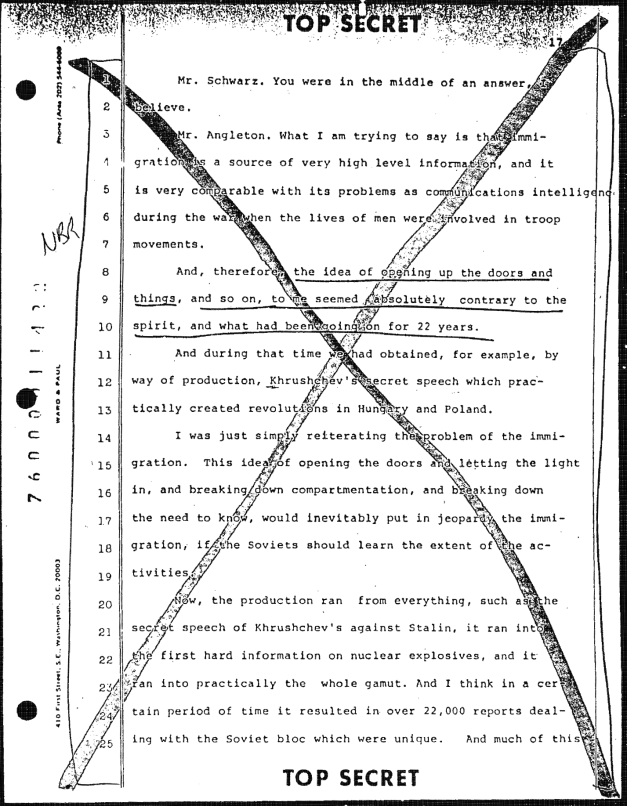
The Church Committee files show Angleton bristled at then-CIA Director William Colby’s efforts to apply a modicum of transparency to the Agency’s activities, especially as they related to Israel. The spymaster warned that if the USSR ever caught wind of Langley’s use of the self-proclaimed Jewish state as a de facto halfway house for communist turncoats, they would almost certainly end their policy of encouraging Eastern European Jews to migrate to Israel:
“This idea of opening the doors and letting the light in, and breaking down compartmentation, and breaking down the need to know, would inevitably put in jeopardy the immigration, if the Soviets should learn the extent of the activities,” Angleton stated.
Colby fired Angleton in 1974 after the New York Times revealed that he devised an illegal program of domestic spying targeting antiwar American dissidents. In his testimony, Angleton framed their clash as an interpersonal conflict, describing Colby as “not my cup of tea professionally or in any other way.”
Yet Angleton also acknowledged to Senate that a “dispute in connection with these Israeli matters” between himself and Colby contributed to his departure from the Agency. Was this a reference to the former spook’s involvement in Israeli theft of US nuclear secrets, enabling Israel to acquire the bomb?
Whatever the case, it was clear why Angleton would be remembered more fondly in Israel than inside the country he ostensibly served.
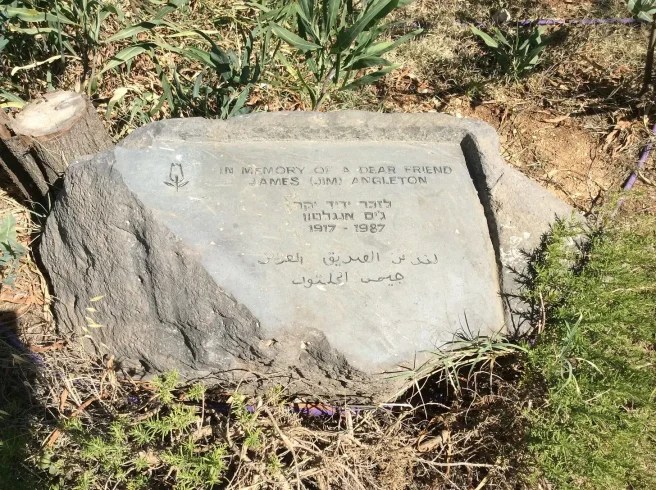
On December 4, 1987, the director of Israel’s Mossad and Shin Bet intelligence services gathered in secret on a hillside in Jerusalem to plant a tree in honor of Angleton. They were joined there by five former Israeli spy chiefs and three former military intelligence officers.
Despite attempts to keep the ceremony under wraps, two local reporters managed to evade the cordon to record the ceremony for the former CIA counter-intelligence director, who had died seven months prior. Together, the Israeli spooks laid a memorial stone that read, “In memory of a dear friend, James (Jim) Angleton.”
August 19, 2025
Posted by aletho |
Deception, Timeless or most popular | CIA, FBI, Israel, JFK Assassination, Mossad, United States, Zionism |
Leave a comment
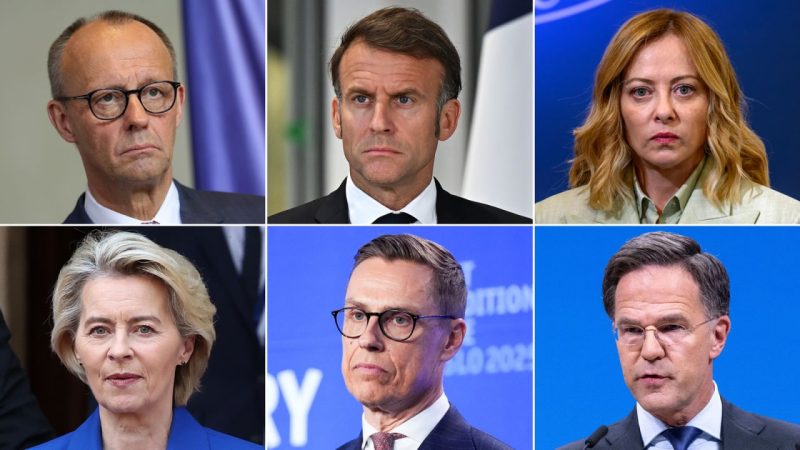
The White House meeting on Monday between US President Donald Trump and Ukraine’s European backers produced no major results, political analyst Sergey Poletaev has told RT.
Trump met to discuss the Ukraine conflict with Vladimir Zelensky and some European leaders in Washington just days after holding a summit with Russian President Vladimir Putin in Alaska.
“Just like in Anchorage, no decisions were announced afterward. And that, in itself, is a sign that something important is happening,” Poletaev said, noting that the talks are part of a larger diplomatic struggle, the ultimate goal of which is to win over the US president.
He suggested that Moscow is seeking to draw Washington out of the conflict, while Europe and Ukraine are pushing to keep the US firmly entangled. Following what Poletaev called Putin’s “gambit” in Anchorage, the European delegation hurried to Washington to persuade Trump to toughen sanctions against Moscow and maintain weapons deliveries to Kiev.
So far, it looks like they came up empty.
Poletaev pointed out that, unusually for the US president, he did not repeat European talking points after the meeting. Instead, Trump reminded the European leaders at the start of the summit that “they had no real power,” the analyst said.
While the immediate effort may have failed, “most likely, Europe will soon try again,” Poletaev stressed.
According to the analyst, the key issue at Monday’s summit was security guarantees for Ukraine. Russia has insisted “from day one” that any such commitments must be tied to “neutrality and disarmament,” he said.
Europe and Kiev, meanwhile, are desperately trying – by hook or by crook – to preserve Ukraine’s armed forces, and even to push for a NATO presence on Ukrainian soil.
According to Poletaev, the attempts are “naive and desperate,” but whatever form security guarantees take in any eventual peace deal will ultimately determine “the fate of the Kiev regime.”
“For now, there’s no compromise in sight,” Poletaev concluded. “And as Ukraine continues to lose ground on the battlefield, the room for maneuver – for both Kiev and its European backers – is shrinking fast.”
August 19, 2025
Posted by aletho |
Militarism | European Union, NATO, Russia, Ukraine, United States |
Leave a comment
Is the EU and its member states collectively heading towards the abyss? For so many years analysts have thundered headlines of the flavour “end of the EU” – even myself I must admit – but in recent days the EU itself has never been placed so low on the world map as it was in the so-called Alaska meeting. A few weeks earlier, many supporters of the EU were stunned at just how pusillanimous the EU commission boss was facing Donald Trump, as she accepted 15% tariffs across the board on all EU goods entering the U.S. – absolutely amazing given there was no announcement of trade talks where officials on both sides would negotiate a more appropriate rate. This move alone revealed so much. The EU is, if nothing else, a pseudo superpower administration owned wholesale by the world’s largest corporations – like Pfizer, the U.S. drag maker who Ursula von der Leyen made part of a 600bn euro EU vaccine fund – and so it would have been absurd for her to have resisted.
And now it is the EU’s time to take another body blow as it plays a secondary role in the negotiations for a peaceful settlement for the Ukraine war. Yet few are betting on a peace deal. Even Trump himself doesn’t seem to hold out much hope as Putin has made it clear that he wants the Russian-speaking regions of eastern Ukraine to be handed over as part of the deal, plus guarantees that Ukraine can never be a NATO member.
Whether NATO will even be around in the coming months is another matter as it is worth noting that this transatlantic organization, which the U.S. runs, is currently going through its lowest point of its history, like the EU. What idiotic U.S. journalists who shout out to Putin in the press conference “are you going to stop killing civilians” don’t ask is more telling. Of course, they don’t shout out such stupid questions to Netanyahu when he visits, who is the architect of the most horrific genocide of the 21st century, where women and children who manage to miss the bombs which reign down on their tents are now starved to death – all supported by the U.S. But to Putin, U.S. journalists don’t ask “how’s the war going in Ukraine, sir?” or even “what do you think will happen to NATO if your army forces Zelensky to surrender?”.
The meeting was never going to be a deal breaker for a peace deal in Ukraine as the journalists’ temporary accommodation was a clue to that. What the Alaska meeting set out to do was for both leaders to show reverence for one another so that bigger deals can be worked out – perhaps energy and infrastructure deals in Alaska itself or even more rare earth and minerals in Russia – and if you listen carefully to Trump’s responses to questions from U.S. media, you will note the hints.
But with U.S.-Russia relations moving in a soberer, grown up direction, rather than the silly Biden stance, there are many possibilities on the table. Ukraine may well be resolved at some point if some of these super deals can see the light of day.
For the Europeans and the EU, they will have to dance to the beat of the Putin-Trump drum which makes them look even more ineffective and congruent to the bigger picture geopolitics which they crave. Same goes for NATO. Both of these institutions have poured oil on the fire in recent years by only seeing the war option – or more specifically the ‘escalate to de-escalate’ option which backfired spectacularly every single time that now to justify the huge amounts of money shovelled into a war project which cannot benefit the West, its leaders only have one narrative to repeat over and over again now, so that they can save their own jobs and credibility. War talk. More war. War, war and even more war.
It’s incredible. The EU’s top diplomat Kaja Kallas, Estonia’s former PM gave a clue recently to the tunnel vision that the EU and NATO have about the Ukraine war. They see it as the EU’s first test at hard-core foreign policy action, despite it being bank rolled by “Daddy” Trump. Probably the most delusional and idiotic quote of the month has to go to Kallas who told journalists “If Europe cannot defeat Russia how can it defeat China?”. The entire thinking is really all based on conflict rather than conflict prevention which is also about saving both NATO and the EU from its worst ever credibility crash when Russia finally defeats the Ukrainian army. These EU buffoons have created, since 2014 and even before, a war which was inevitable, which they don’t have the means, military capacity or even the leadership to win and yet their priorities now are making a massive cover-up of the failure and protecting their own dynasties. Europe is not preparing itself for war. This is the huge bluff. It is preparing itself for a huge fall which is unprecedented and may well be a catalyst for both the demise of the EU and NATO as we know them.
August 19, 2025
Posted by aletho |
Economics, Militarism | European Union, NATO, Russia, Ukraine, United States |
Leave a comment