Blair, UK Government Warned Over NATO War Crimes in Belgrade
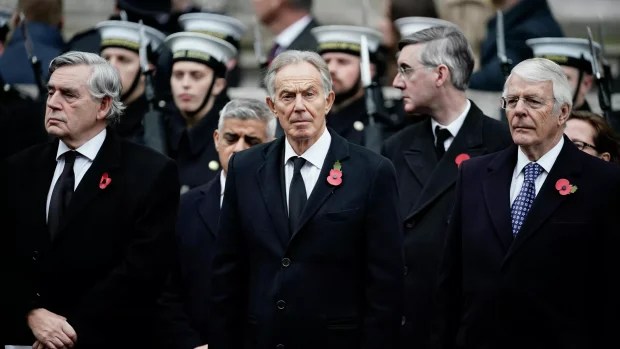
© Aaron Chown
By John Miles – Sputnik – 16.08.2024
As NATO aggression in the former Yugoslavia fully unmasked the alliance as a tool of Western imperialism, newly-released documents reveal controversial former UK Prime Minister Tony Blair was warned of the possible legal consequences of the bombing of a state-owned broadcaster in Belgrade.
“Twenty five years ago, NATO bombed the main studio of Yugoslavia’s state-owned broadcasting company, Radio-Television Serbia (RTS),” writes the independent outlet Declassified UK. “The attack at 2am on 23 April 1999 came amid Bill Clinton and Tony Blair’s ‘humanitarian intervention’ in Kosovo.”
“16 media workers were killed and 19 injured in the strike on RTS, which remains the single most controversial event in NATO’s 78-day military campaign,” notes journalist John McEvoy.
The UK and allied NATO forces claimed to be acting in the interest of protecting ethnic Albanians as ethnic violence broke out on all sides during the breakup of the former socialist Yugoslav republic. But President Slobodan Milošević remained a conspicuous holdout as newly-independent states deregulated their economies in line with neoliberal economic policy advocated by Western governments.
The United States would back numerous “color revolutions” after the fall of the Eastern Bloc, with wealthy donors like George Soros encouraging and standing to benefit from economic liberalization enforced by Western-led institutions like the International Monetary Fund.
The case of Milošević demonstrates a scenario during which the United States was willing to employ substantial military force to seek regime change, paving the way for NATO aggression in countries like Libya and Afghanistan.
Blair claimed the destruction of the RTS headquarters and other civilian targets was justified in the name of dismantling the “dictatorship” of Milošević. Sixteen media workers were killed during the bombing, which Amnesty International labeled a “war crime.”
“Killing journalists does not stop censorship, it only brings more repression,” claimed the International Federation of Journalists in a statement.
“We do not see how the suppression of news sources can serve any useful purpose,” said European Broadcasting Union president Albert Scharf. “Over and beyond the deaths involved, the EBU is concerned about any attempts to limit the rights of audiences to full news services.”
Declassified files now reveal that UK Prime Minister Tony Blair was warned against the depraved attack at the time by British attorney general John Morris, who questioned how the destruction of the broadcast headquarters was related to NATO’s purported cause in ensuring “relief of humanitarian need in Kosovo.”
The UK and the United States launched the illegal act of aggression in Belgrade without a required UN Security Council resolution, demonstrating the lengths NATO was willing to go to to ensure Western hegemony after the end of the Cold War.
“We are moving towards a situation where our aim will become removing Milosevic,” admitted Blair in a note at the time, revealing that regime change was the ultimate motive of the assault. “Plainly Milosevic will threaten the stability of the region as long as he remains.”
NATO forces would go on to strike a number of other civilian targets including Belgrade’s Hotel Jugoslavija and Montenegro’s main airport, with little apparent concern for the climbing death toll. Thousands were killed or wounded by the end of the campaign while elevated rates of cancer and birth defects are still observed due to NATO’s highly controversial use of depleted uranium.
The UK would become the first of multiple Western countries to recognize the disputed breakaway territory of Kosovo in 2008. Future leader of the territory Hashim Thaci, who played a key role during the NATO aggression via his leadership of the so-called Kosovo Liberation Army, is currently on trial on war crimes charges at The Hague.
The International Criminal Tribunal for the Former Yugoslavia, under intense pressure from the United States, would controversially decide against investigating the bombing of the RTS as a war crime.
Scott Ritter: Biden Administration Declaring War on Journalism
Sputnik – August 16, 2024
Recent FBI raids on properties belonging to Russian-American political scientist Dimitri K. Simes and Scott Ritter, who both challenge the mainstream US political propaganda, are meant to squash dissent on Ukraine, former UN weapons inspector Ritter told Sputnik.
The conflict in Ukraine – in which the US has become deeply involved by providing the Kiev regime with billions of dollars – reportedly has people questioning Washington’s hawkish policy that the government seeks to suppress.
“What is our crime? Our crime is to have an opinion that is opposite of that of the United States government when it comes to Ukraine,” Ritter emphasized.
It is not just about the government deceiving the American people, it is about the mainstream media working in close coordination with the US government to deceive the American people about a war, Ritter noted.
“That’s where independent journalists come in. That’s where a genuinely free press [comes in], a press that isn’t subordinated to the US government, that doesn’t serve as a stenographer of US government policy, a free press that questions the official narrative,” he pointed out.
Ritter concluded that the US government does not trust common people, irrespective of their political leanings, and is actively trying to deceive and manipulate the public.
Earlier, Simes, a Channel One presenter in Russia and the founder and ex-president of the Center for the National Interest (USA), told Sputnik that he had not been to the United States since 2022, and had not been notified ahead of time that FBI agents would be conducting a search of his property in Rappahannock County, Virginia, this week.
Routine Infant Hepatitis B Vaccination Fails to Protect Into Young Adulthood
Parents Should Not Expect a Long-Term Benefit
By Peter A. McCullough, MD, MPH | Courageous Discourse™ | August 12, 2024
In 1991, the Advisory Committee on Immunization Practices (ACIP) first recommended that all infants in the United States receive the hepatitis B vaccine at birth or within 1–2 months of age. The goal was to prevent maternal transmission of the hepatitis B virus (HBV) and reduce the incidence of infections in babies. Many healthy mothers without hepatitis B or risk factors such as IV drug abuse with normal infants ask what is the benefit in their babies?
The CDC recommends that children receive three doses of the hepatitis B vaccine as part of their routine childhood vaccine schedule:
- First dose: Within 24 hours of birth
- Second dose: Between 1–2 months of age
- Third dose: Between 6–18 months of age
What happens later in life when young people go into the medical field and are potentially exposed to hepatitis B in sick patients? Posuwan et al evaluated a prospective cohort of young people (mean age 18 years) going into medicine and evaluated their antibody titers as a proxy of enduring immunity to hepatitis B.

Posuwan N, Vorayingyong A, Jaroonvanichkul V, Wasitthankasem R, Wanlapakorn N, Vongpunsawad S, Poovorawan Y. Implementation of hepatitis B vaccine in high-risk young adults with waning immunity. PLoS One. 2018 Aug 20;13(8):e0202637. doi: 10.1371/journal.pone.0202637. PMID: 30125298; PMCID: PMC6101408.
The investigators were disappointed to find that only 6.9% had long-lasting immunity to hepatitis B, and thus underwent booster doses upon entering medical school. It is unclear when immunity is lost in this cohort. The results are important for parents to understand that the hepatitis B shots given at birth are only applicable if the mother has hepatitis B or serious risks for carrying it including active IV drug abuse. Otherwise the vaccine schedule for this illness has little value at that age.
Bibi’s War of Terror Agenda
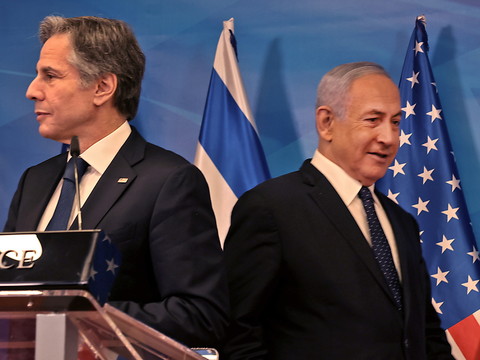
By W.M. Peterson | Truth Blitzkrieg | August 5, 2024
Former U.S. Congressman Ron Paul once asserted, “There’s no history to show that Iranians are aggressive people. When is the last time they invaded a country? Over 200 years ago!”
As with many other important matters, Congressman Paul was absolutely correct; Iran has never been a warmongering state, unlike adversarial belligerents Israel and the USA.
Despite deep state meddling in the Persian nation’s affairs (e.g., the 1953 coup against Prime Minister Mohammad Mossadegh and the 2020 murder of Major General Qasem Soleimani), Iran has never posed the slightest threat to America. Why, then, are we being maneuvered into war when there is absolutely no national interest at stake?
It’s somewhat of a rhetorical question, I admit, since by now most people who aren’t cognitively impaired understand that Israel is trying like hell to steer America’s military into the Middle East to shed more blood on its behalf. The recent provocations towards Iran are but the latest installments in an ongoing saga we’ve witnessed play out repeatedly since 2001.
Americans should know by now what to expect. After having been led by the nose into 20 years of costly wars primarily for the enrichment and comfort of Jewish intruders squatting in the Holy Land, you’d think we might have learned a thing or two about international Zionist statecraft. It’s not as if their methods of fomenting a climate of war have changed. It’s not as if we weren’t told what to expect.
In fact we were told, by none other than former Supreme Allied Commander of NATO, General Wesley Clark.
During a 2007 interview on Amy Goodman’s political talk show Democracy Now, General Clark spoke about a detailed war agenda that was revealed to him by members of the Joint Chiefs of Staff when he visited the Pentagon just ten days after 9/11:
“One of the generals called me in. He said, ‘Sir, you’ve got to come in and talk to me a second… We’ve made the decision we’re going to war with Iraq.’ This was on or about the 20th of September. I said, ‘We’re going to war with Iraq? Why?’ He said, ‘I don’t know…I guess they don’t know what else to do.’ So I said, ‘Well, did they find some information connecting Saddam to al-Qaeda?’ He said, ‘No, no…there’s nothing new that way. They just made the decision to go to war with Iraq…I guess it’s like we don’t know what to do about terrorists, but we’ve got a good military and we can take down governments.’ And he said, ‘I guess if the only tool you have is a hammer, every problem has to look like a nail.”
A few weeks later, Clark returned to the Pentagon and met with the same man, recalling:
“I said, ‘Are we still going to war with Iraq?’ And he said, ‘Oh, it’s worse than that.’ He reached over his desk. He picked up a piece of paper and he said, ‘I just got this down from upstairs’ — meaning the Secretary of Defense’s office — ‘today.’ And he said, ‘This is a memo that describes how we’re going to take out seven countries in five years, starting with Iraq, and then Syria, Lebanon, Libya, Somalia, Sudan and, finishing off, Iran.’ I said, ‘Is it classified?’ He said, ‘Yes sir.’ I said, ‘Well don’t show it to me.’ And I saw him a year or so ago, and I said, ‘You remember that?’ He said, ‘Sir, I didn’t show you that memo! I didn’t show it to you.’”
General Clark was having these conversations at a time when the Pentagon was entirely under the thumb of Zionist Jews who had been plotting and preparing for a global war on terror for many years prior to 2001. The battle plan disclosed to Clark is not of American provenance; it is an Israeli war stratagem smuggled into our foreign policy by duplicitous foreign agents. You’ll notice that almost every country named by the general has been ‘dealt with’ militarily in one form or another in the years following 9/11, Iran being the lone exception. That status is likely to change real soon as Israel continues to escalate tensions in the region. AIPAC control over U.S. politicians ensures there won’t be so much as a whimper of protest from the ‘American Colossus’ in response to Zionist saber-rattling and increased provocations. And, rest assured, America will defend Israel to the death when the situation in the Middle East reaches critical mass. American citizens, and especially ‘conservatives,’ need to understand how they’re being emotionally manipulated into supporting yet another war that is entirely at variance with our interests and could only spell doom for our already beleaguered nation.
Netanyahu’s War on Terror
On July 24th, Benjamin ‘Bibi’ Netanyahu swaggered into the U.S. Capitol to address a joint session of Congress and to cultivate material and emotional support for his upcoming war with Iran. During the course of his nagging hour-long harangue, the Israeli prime minister received 58 standing ovations from submissive stooges on both sides of the aisle, proving once more that Pat Buchanan’s description of Capitol Hill as “Israeli-occupied territory” is as true today as it was 30 years ago.
The AIPAC-funded adulation shown this Hebrew war criminal was a sickening sight to behold. Former US Marine and United Nations weapons inspector Scott Ritter summed it up nicely:
“Israel has bragged about buying the US Congress. And this is the result, where a war criminal—a man who has been accused of genocide, who has arrest warrants being prepared for him by the International Court of Justice, a man who heads a State that has been defined legally as an “apartheid state,” carrying out an illegal and unjust occupation and, again, genocide of the Palestinian people—has demanded an audience to the Congress that he has bought and paid for. That’s what’s happening here. We must see it in that perspective. This isn’t an honor being given to Netanyahu by the US Congress. This is the US Congress obeying the commands of the man who leads the nation that owns the US Congress.”
In one of his most memorable lines of the day, Netanyahu affirmed with a straight face, “there is no place for political violence in democracies!” (He made the comment while referring to the recent shooting at a Trump rally in Pennsylvania.) Within one week, however, Israel had assassinated Hamas political leader Ismail Haniyeh in Tehran; Hezbollah commander Fuad Shukr in Beirut; and Al Jazeera journalist Ismail al-Ghoul in Gaza. The recent killing spree occurred only three months after IDF jets bombed the Iranian embassy in Syria killing 16 people, including seven diplomats. “There is no place for political violence in democracies!” quoth the mass-murdering psychopathic Jew, who once attended a two-day anniversary celebration commemorating the Irgun’s 1946 bombing of the King David Hotel.
Bibi the Butcher, that distinguished darling of America’s political class, has spent his entire adult life promoting Israel’s War on Terror.
In 1979, he and his father Benzion partnered with Irgun terrorist-turned-prime minister Menachem Begin to organize the Jerusalem Conference on International Terrorism, a three-day event intended to “launch an international propaganda offensive to promote and exploit the issue of international terrorism,” as Philip Paull explains in his 1982 book, International Terrorism: The Propaganda War. The event was held at the Yonatan Institute, named after Netanyahu’s deceased older brother, and its purpose was to bring Western political leaders together to discuss international terrorism and the possibility of manipulating America’s military into the Middle East to wage a war on terror. The elder Netanyahu (born Mileikowsky) said in his opening address, “This conference was called to serve as a beginning of a new process — the purpose of rallying democracies of the world to a struggle against terrorism and the dangers it represents.” (George H.W. Bush spoke on the last day of the event.)
From that point on, the Western media dutifully disseminated the propaganda of the Jerusalem Conference and Benjamin Netanyahu would produce a number of books, articles and speeches throughout the 1980s and 90s promoting the doctrine of a global War on Terror. As Philip Paull wrote in 1982, “This ‘anti-terrorist’ propaganda campaign was and is being conducted in a style reminiscent of war-time ‘psychological warfare’ by journalists serving as conduits and spreaders of misinformation originating in Jerusalem.”<
Forecasting War
Netanyahu’s plan to haul America’s military into the Middle East to wage war on Israel’s enemies became a reality after September 11, 2001, a day he claimed was “very good” for Israel. (Source: New York Times, Sept. 12, 2001)
Many Americans still believe the War on Terror was launched in response to the 9/11 attacks. The fact is, however, the War on Terror was conceived many years before 2001, and the atrocities perpetrated in New York City and Washington D.C. were merely the excuse to make the war agenda operational.
In February 1982, the World Zionist Organization published ‘The Yinon Plan: A Strategy for Israel in the Nineteen Eighties.’ The document was published in Hebrew but was later translated into English by the eminent professor Israel Shahak of Hebrew University. It was written by military strategist Oded Yinon and detailed a plan to break up large Arab nations like Iraq and Syria and transform them into tiny ethnic statelets that would be incapable of defending themselves against Israel’s superior military might. Yinon wrote:
“The dissolution of Syria and Iraq later on into ethnically or religiously unique areas… is Israel’s primary target on the Eastern front in the long run, while the dissolution of the military power of those states serves as the primary short term target.”
Yinon’s vision for Iraq came to fruition following the illegal American invasion, launched on the Jewish revenge holiday Purim, in 2003. Almost immediately, America’s conquering forces disbanded Iraq’s military and the entire country soon descended into civil war between competing factions of Sunnis, Shiites and Kurds. Prior to the invasion, Iraq had been a significant impediment to Israeli domination of the Middle East, which is why the Jews in control of America’s foreign policy selected it for annihilation. And, as an added bonus, there were the financial spoils of war to acquire as well. Oded Yinon: “Iraq, rich in oil on the one hand…is guaranteed as a candidate for Israel’s targets. Its dissolution is even more important for us than that of Syria.”
What Yinon described in 1982 is the Eretz Yisrael (Greater Israel) project that Americans have been fighting and dying for since 2001. America’s military is not fighting terrorism; it is reorganizing the Middle East to conform with Israel’s whims and Iran is the crown jewel. This war agenda has already bankrupted America morally and financially and has destroyed the erstwhile superpower’s standing on the world stage. As noted Middle East expert Linda S. Heard wrote in an article for Counterpunch (April 25, 2006), “Oded Yinon’s 1982 ‘Zionist Plan for the Middle East’ is in large part taking shape. Is this pure coincidence? Was Yinon a gifted psychic? Perhaps! Alternately, we in the West are victims of a long-held agenda not of our making and without doubt not in our interest.”
A Clean Break and PNAC
An updated version of The Yinon Plan was drafted for Netanyahu in 1996 during his first year as Israel’s prime minister. Titled ‘A Clean Break: A New Strategy for Securing the Realm,’ the document was assembled for Netanyahu by neocon hawks Richard Perle, Douglas Feith and David Wurmser. It specifically called for the removal from power of Saddam Hussein in Iraq and Bashar al-Assad in Syria and recommended military confrontations with both countries as well as with Lebanon and Iran. One year later, Perle, Feith and Wurmser would all join the newly-founded Project for a New American Century (PNAC) and continue their strategizing for Netanyahu’s War on Terror.
PNAC was an elite neoconservative think-tank founded in 1997 by influential Zionists William Kristol and Robert Kagan. The majority of the group’s membership was comprised of fanatical Jews with deep ties to the state of Israel, many of whom came to power just prior to 9/11 within the administration of George W. Bush. These include: Dov Zakheim, Paul Wolfowitz, Douglas Feith, Elliot Abrams, Richard Perle, David Frum, Robert Zoellick, David Wurmser, and the convicted felon Lewis ‘Scooter’ Libby.
The overarching philosophy of PNAC was based on the ideology of Jewish intellectual Leo Strauss. Like many of today’s neoconservatives, Strauss was an ex-Trotskyite who promoted Machiavellian tactics and the use of lies as necessary political tools while a professor of political science at the University of Chicago. Significantly, he was also a dedicated Zionist and a follower of the terrorist Ze’ev Jabotinsky. On the surface these ideological alignments appear to be contradictory, unless some understanding of the overwhelming Jewish role in both Zionism and Communism can be apprehended. Both were pioneered by the same man, Moses Hess, and both are Jewish revolutionary movements whose sole aim is to do whatever is best for Jewish interests even if it means employing seemingly opposing methods. Far-right Zionism (Jewish nationalism) and far-left Communism (Jewish internationalism) are two sides of the same shekel working in tandem as a lethal pincer for global hegemony. Attempting to explain these amorphous tendencies, Jewish historian and political theorist Murray Rothbard once noted that neoconservatives “moved from cafeteria Trotskyites to apologists for the US warfare state without missing a beat.”
In September 2000, PNAC published a 90-page document titled ‘Rebuilding America’s Defenses: Strategies, Forces, and Resources For a New Century.’ The document, co-authored by Rabbi Dov Zakheim, called for America to initiate a series of regime change wars in the Middle East and North Africa with an emphasis on Iraq, Syria, Libya, Lebanon and Iran. The authors of the report emphasized the importance for America to “fight and decisively win multiple, simultaneous major theater wars” but acknowledged that “the process of change is likely to be a long one, absent some catastrophic and catalyzing event like a new Pearl Harbor.” One year to the month of the document’s publication America got what George W. Bush referred to at the time as ‘our Pearl Harbor.’
Conclusion
And so America teeters once again on the brink of war due to our fatal attraction to the Zionist state. The man who claims “there is no place for political violence in democracies” presides over a country that has made political assassinations its stock-and-trade and is undoubtedly responsible for the 9/11 attacks which activated its long-held War on Terror scheme. Speaking to an audience at Bar Ilan University in 2008, the war criminal recipient of 58 standing ovations from the US Congress reiterated his belief that the 9/11 attacks were in fact good for Israel: “We are benefitting from one thing, and that is the attack on the Twin Towers and Pentagon, and the American struggle in Iraq.” (Source: Ha’aretz, April 16, 2008)
*Nota bene: Netanyahu listed three things, not one, but to the mind of an architect of the War on Terror, all three blend seamlessly together.*
The Israeli prime minister and his minions have nothing but contempt for America. That won’t change regardless of how many standing ovations he receives from a goyische congress or how many US dollars flow into his over-stuffed war chest. In 2001, he was filmed having a conversation with Israeli settlers about ways in which he intended to undermine the US-led Oslo Peace Accords that had been signed in 1993 and 1995. During one such conversation, he crowed: “I know what America is… America is a thing you can move very easily, move it in the right direction. They won’t get in the way.” He goes on to boast about his ability to manipulate the US in the ongoing Israeli/Palestinian peace process, saying, according to the Washington Post (July 16, 2010), “They asked me before the election if I’d honor [the Oslo Accords]… I said I would, but … I’m going to interpret the accords in such a way that would allow me to put an end to this galloping forward to the ’67 borders. How did we do it? Nobody said what defined military zones were. Defined military zones are security zones; as far as I’m concerned, the entire Jordan Valley is a defined military zone. Go argue.”
Benjamin Netanyahu ladies and gentleman. A man whose military has killed upwards of over 186,000 Palestinians this year alone and has bombed hospitals, schools, churches, aid convoys and refugee camps; a man who sanctions the anal rape of prisoners; a man American politicians hail as a conquering hero; a man millions of evangelical ‘Christians’ believe we should sacrifice more of our children’s blood for.
Is Ukraine’s ‘Suicidal’ Kursk Attack Part of US Establishment’s Desperate Effort to Win in 2024?
By Ekaterina Blinova – Sputnik – 15.08.2024
Ukraine’s ill-fated Kursk terror attack could be part of the US Democratic establishment’s effort to prop up their candidate, Vice President Kamala Harris, in the 2024 presidential election, according to Wall Street analyst Charles Ortel.
Despite the US State Department and Pentagon denying any involvement in the Kiev regime’s Kursk aggression, it has all the earmarks of US-NATO management and planning, according to Major General Apti Alaudinov, deputy head of the Russian Defense Ministry’s Military-Political Directorate and Alexander Bortnikov, director of the Russian Federal Security Service (FSB).
“At this stage, nothing likely happens in Ukraine and vis-a-vis Russia unless approved in advance by someone in the US,” Wall Street analyst and investigative journalist Charles Ortel told Sputnik. “Relevant questions include: exactly who approved these offensive operations and what debate, if any, occurred in Congress before these raids happened?”
Ortel called the Kursk attack a “wag the dog 2.0” operation, saying that it “seems a reprise” of then-US President Bill Clinton’s assault on one of Sudan’s biggest pharmaceutical factories in Khartoum in 1998. The US attack based on faulty intelligence was presented as retaliation to Al-Qaeda bombings of the US Embassies in Kenya and Tanzania.
However, some analysts noted at the time that the US bombing came as investigations into Clinton’s lies about his affair with Monica Lewinsky intensified. Dubbing the case a “wag the dog” situation, they suggested that Clinton urgently authorized the strike as a distraction, with the backing of many Democratic lawmakers including then-Senator Joe Biden.
The Kursk aggression appears to be as dubious in terms of military planning and strategic value as the senseless bombing of the Al Shifa factory. US Congressman Paul Gosar called Ukraine’s border incursion “suicidal” in an interview with Sputnik, while retired US Air Force Lieutenant Colonel Karen Kwiatkowski wondered whether Secretary of State Antony Blinken and National Security Advisor Jake Sullivan had a hand in the Kursk aggression planning.
Earlier, on August 8, CNN quoted Ukrainian officials as saying that the Kursk attack was aimed at demoralizing Russian forces and diverting them away from other parts of the front. However, as of August 12, the Ukrainian military told the New York Times and Financial Times (FT) that the Russian Armed Forces’ advance in Donbass, including near strategically important Chasov Yar and Torestk, is continuing unabated.
To complicate matters further for Kiev, at least six Ukrainian brigades that previously fought near Kharkov, Sumy, Chasov Yar and Toretsk were redirected to participate in the Kursk aggression, according to FT. The newspaper cited Ukrainian soldiers’ worries about leaving positions in Donbass to take part in the Kursk gamble.
On August 15, Russia’s Tsentr Battlegroup destroyed a Ukrainian military stronghold in the Avdeyyevka direction in the Donetsk People’s Republic (DPR). On August 12, the Russian military liberated the settlement of Lisichnoye; earlier, Timofeyevka and Veseloye were retaken from the enemy. Russia liberated a total of 19 settlements of the DPR in July, according to the Russian Ministry of Defense.
Harris and Walz’s ‘Illusionary’ Campaign Doomed to be Busted
One might ask why the US Democratic establishment would need any “prop-up” of their presidential candidate Kamala Harris and her running mate Tim Walz, given that the two are currently enjoying a surge in the polls.
According to Ortel, the surge appears to be short-lived and most likely artificial and made-up by the US corporate press, especially given that Harris’ poll numbers as Biden’s veep had been disastrous. For instance, the Wall Street analyst referred to a recent survey published by the Hill that claimed that more voters trust Harris than Donald Trump on the economy as completely detached from reality.
“The corporate-owned press, including Fox, has lost all credibility which explains their financial losses and the rise of Twitter spaces, Tucker Carlson and alternative truth-tellers that thrive,” Ortel said. “Traditional actors are resolved to sell fiction as fact to promote a singularly unaccomplished airhead to lead America out of the messes she helped create.”
Indeed, US conservative commentators and pundits have recently thrown Harris’ poll numbers, campaign performance and unwillingness to make one-on-one interviews into question.
“[The media] are so in the tank for Harris that they are defending her decision not to talk to them,” remarked US investigative journalist and author Michael Shellenberg on X on August 14. Earlier, the journalist drew attention to the fact that, for some strange reason, Harris has not put a policy agenda on her website.
Former White House Political Director Matt Schlapp tweeted that there is nothing short of a “push by the national media and Democratic National Committee (DNC) to legitimize Kamala Harris,” adding that she is not giving interviews to evade criticism over her vice presidency.
Similarly, Fox News host Sean Hannity recently called Harris “an illusion, built on a mountain of lies” on X.
Rogan O’Handley, a former entertainment lawyer, claimed on X on August 7 that the Harris campaign was caught offering Instagram influencers money to post personal stories about how the Biden-Harris administration helped them.
Axios reported on August 13 that it found that Harris’ campaign was editing news headlines and descriptions within Google search ads to “make it appear as if the Guardian, Reuters, CBS News and other major publishers are on her side.” The news outlet noted that while such activity is in line with the Google rules, the tech giant admitted there was a “glitch” that removed a disclaimer “sponsored” near the news headlines touting Harris.
US conservative journalist Kyle Becker also alleged on X that pollsters are “oversampling” Democrats for no reason “except deceiving the voters.” Becker believes that the reports that Harris is leading her Republican competitor in key battleground states are made up to justify her future win. “It is all designed to try to keep Harris within the margin of cheating,” tweeted Becker. In 2020, Biden won the presidential election after outperforming Trump by a razor-thin margin in crucial swing states. Many Republicans believe voting procedures were rigged there.
According to Ortel, the Harris-Walz campaign “honeymoon” may end as abruptly as it started.
“The true mud-slinging will start after Labor Day [September 2] and continue thereafter. No one yet has vetted Harris or Walz and I suspect their reputations will be gutted, fairly, well before November 5, 2024. Moreover, neither are effective, battle-hardened debaters, campaigners or leaders,” Ortel said.
Looming Crises Won’t Allow Harris-Walz to Fool Voters
While the Harris-Walz campaign needs good news, be it record-high poll numbers, Federal Reserve interest rate cuts, or their proxy Zelensky claiming victories, the problem is that the “looming crises and worsening economic prospects” won’t let “conflicted grifters” in the US establishment fool American voters again, according to Ortel.
As Ukrainian forces continue to lose ground on the battlefield, the Biden administration is still struggling to reach a ceasefire agreement amid Israel’s war in Gaza, fuelling discontent with the Democratic Party among Palestine supporters. According to the New York Post, an August 14 rally supporting Vice President Harris in the New York City descended into chaos after pro-Palestinian protesters infiltrated the gathering and later started to clash with the police.
Meanwhile, Bloomberg experts warn the US economy is expected to slow down under the Biden-Harris administration, casting an additional shadow on the Harris-Walz campaign.
Commenting on the Democratic administration’s chaotic domestic and foreign policies, Ortel noted:
“The period 1991 to present stands already as a rare epoch during which too many leaders combined arrogance and ignorance into a toxic cocktail, gulling voters with effective lies into bullied serfs, grateful for gruel as the donor class and their paid stooges seemingly prospered,” the pundit said. “‘What could have been’ from 1991 forward unburdened by Harris, Walz and other incompetent, conflicted has-beens is truly a marvel to contemplate! Let’s see whether the American election is free and fair and let’s see who actually wins.”
Why Western Media Suddenly Found Ukrainian Connection in Nord Stream Bombing
By Andrei Dergalin – Sputnik – 15.08.2024
Media outlets such as the WSJ recently started to peddle a narrative that the Nord Stream pipeline destruction in 2022 was allegedly orchestrated by a group of high-ranking Ukrainian officers led by Gen. Valery Zaluzhny.
Despite Western media efforts to implicate Ukraine, the United States still looks like the “main beneficiary and customer of the sabotage of the Nord Stream pipeline,” says German political analyst and independent journalist Dr. Gregor Spitzen.
“This has been clear from the very beginning, both in terms of the basic Roman law principle of ‘Cui bono?’ [who benefits?] and the statements by President Joe Biden and Deputy Secretary of State Victoria Nuland that the US would not allow the pipeline to go into operation,” he tells Sputnik.
Efforts by German politicians and media to draw the attention away from the US by “throwing new and implausible versions into the information field,” while understandable – “if the US is found guilty of an act of state terrorism on the object of German property, the whole architecture of European security will collapse” – are still no less outrageous, Dr. Spitzen remarks.
“Germany’s attempts to pin the blame on Ukrainian saboteurs who acted without a clear mandate from their government, while at the same time taking President Zelensky out of harm’s way, looks legally flawless, but completely implausible,” Dr. Spitzen elaborates. “It can be predicted that the specific Ukrainians accused of sabotage will never be found. Either they will be found to have died of natural causes under suspicious circumstances, or they will have committed suicide.”
“This would be the best solution to the Nord Stream sabotage case. The pipeline is destroyed, US guilt is not proven, German politicians’ reputations are saved, Ukrainian political leaders are exonerated, and the specific perpetrators, who acted on their own initiative, are dead or missing,” he adds.
Former CIA operations officer Philip Giraldi also branded media efforts to pin the blame on Ukraine as a “cover story,” arguing that Kiev simply lacked the resources to carry out the Nord Stream bombing.
“The US did and had even stated its intention in advance to destroy the pipeline if Russia were to invade Ukraine. And there is also the involvement of Norway which is not plausible if it were a Ukrainian operation,” he said.
Both Spitzen and Giraldi suggested that the fact that the story about Ukraine’s alleged role in the Nord Stream bombing surfaced simultaneously in the US and German media hints at the likelihood of a coordinated effort to craft “an acceptable narrative regarding what took place,” as Giraldi put it.
“It suggests to me that they are coordinating some new approach in dealing with Ukraine and Zelensky though I am not sure what that might be,” Giraldi added.
Zelensky aide denies Kiev’s involvement in Nord Stream attack
RT | August 15, 2024
Kiev had nothing to do with the explosions on the Nord Stream 1 and 2 pipelines, Mikhail Podoliak, a top adviser to Ukrainian leader, Vladimir Zelensky, has said.
Podoliak made the statement to Reuters on Thursday in response to a report by the Wall Street Journal, claiming that Zelensky authorized the September 2022 attack which ruptured the key energy infrastructure built to deliver Russian gas to Germany and the rest of Europe.
According to the US outlet’s sources, which included officers allegedly involved in the operation, Zelensky initially approved the attack on Nord Stream. He later tried to call it off under pressure from the CIA, but then Ukrainian commander-in-chief Valery Zaluzhny told him it could not be done as the sabotage group had already been dispatched and there was no way to contact it.
“Such an act can only be carried out with extensive technical and financial resources… and who possessed all this at the time of the bombing? Only Russia,” Podoliak told the agency.
Russia has ridiculed claims that it would destroy its own pipelines, which provided it with steady revenue. Top officials in Moscow, including Russian President Vladimir Putin, have previously pointed the finger at Washington, arguing that it stood to gain the most from the disruption of Russian gas supplies to the EU.
“Ukraine has nothing to do with the Nord Stream explosions,” Podolyak insisted, adding that Kiev did not gain any strategic or tactical advantage from the sabotage.
The report by the WSJ claimed that “a handful of senior Ukrainian military officers and businessmen” came up with the idea of blowing up the pipelines during a drinking party in May 2022, a few months after the outbreak of the conflict between Moscow and Kiev. The plotters believed that it would reduce Russia’s energy profits and make the EU less dependent on Moscow, it said.
Zaluzhny, who is now Ukraine’s ambassador to the United Kingdom, told the outlet that claims of his – or Kiev’s – involvement in the destruction of Nord Stream were a “mere provocation.” A senior official in the Security Service of Ukraine, the SBU, also denied the report, insisting that Zelensky in particular “did not approve the implementation of any such actions on the territory of third countries and did not issue relevant orders.”
The WSJ said its reporting is partially corroborated by the findings of the German police investigation into the Nord Stream explosions. The German Federal Public Prosecutor issued a first arrest warrant in connection with the sabotage this week, according to local reports. The suspect is believed to be a Ukrainian citizen identified as ‘Vladimir Z’.
The newspaper suggested that the police investigation could “upend” relations between Kiev and Berlin, which has been Ukraine’s biggest backer in the EU amid the conflict with Russia.
The FBI ‘Visits’ Scott Ritter

By Andrew P. Napolitano | Ron Paul Institute | August 15, 2024
Among the lesser-known holes in the Constitution cut by the Patriot Act of 2001 was the destruction of the “wall” between federal law enforcement and federal spies. The wall was erected in the Foreign Intelligence Surveillance Act of 1978, which statutorily limited all federal domestic spying to that which was authorized by the Foreign Intelligence Surveillance Court.
The wall was intended to prevent law enforcement from accessing and using data gathered by America’s domestic spying agencies.
Government spying is rampant in the US, and the feds regularly engage in it as part of law enforcement’s well-known antipathy to the Fourth Amendment. Last week, the FBI admitted as much when it raided the home of former Chief UN Weapons Inspector Scott Ritter. Scott is a courageous and gifted former Marine. He is also a fierce and articulate antiwar warrior.
Here is the backstory.
After President Richard Nixon resigned the presidency, Congress investigated his use of the FBI and CIA as domestic spying agencies. Some of the spying was on political dissenters and some on political opponents. None of it was lawful.
What is lawful spying? The modern Supreme Court has made it clear that domestic spying is a “search” and the acquisition of data from a search is a “seizure” within the meaning of the Fourth Amendment. That amendment requires a warrant issued by a judge based on probable cause of crime presented under oath to the judge for a search or seizure to be lawful. The amendment also requires that all search warrants specifically describe the place to be searched and the person or thing to be seized.
The language in the Fourth Amendment is the most precise in the Constitution because of the colonial disgust with British general warrants. A general warrant was issued to British agents by a secret court in London. General warrants did not require probable cause, only “governmental needs.” That, of course, was no standard whatsoever, as whatever the government wants it will claim that it needs.
General warrants authorized government agents to search wherever they wished and to seize whatever they found — stated differently, to engage in fishing expeditions.
FISA required that all domestic spying be authorized by the new and secret FISA Court. Congress then unconstitutionally lowered the probable cause of crime standard for the FISA Court to probable cause of speaking to a foreign agent, and it permitted the FISA Court to issue general warrants.
Yet, the FISA compromise that was engineered in order to attract congressional votes was the wall. The wall prohibited whatever data was acquired from surveillance conducted pursuant to a FISA warrant to be shared with law enforcement.
So, if a janitor in the Russian embassy was really an intelligence agent who was distributing illegal drugs as lures to get Americans to spy for him, any telephonic evidence of his drug dealing could not be given to the FBI.
The purpose of the wall was not to protect foreign agents from domestic criminal prosecutions; it was to prevent American law enforcement from violating personal privacy by spying on Americans without search warrants.
Fast forward to the weeks after 9/11 when, with no serious debate, Congress enacted the Patriot Act. It removed the wall between law enforcement and spying. And by 2001, the FISA Court had on its own lowered the standard for issuing a search warrant from probable cause of speaking to a foreign agent to probable cause of speaking to a foreign person. This, too, was unlawful and unconstitutional.
The language removing the wall sounds benign, as it requires that the purpose of the spying must be national security and the discovered criminal evidence — if any — must be accidental or inadvertent. In January 2023, the FBI admitted that it intentionally uses the CIA and the NSA to spy on Americans as to whom it has neither probable cause of crime nor even articulable suspicion of criminal behavior.
Articulable suspicion is the linchpin of commencing all criminal investigations. Without requiring suspicion, we are back to fishing expeditions.
The FBI’s admission that it uses the CIA and the NSA to spy for it came in the form of a 906-page FBI rulebook written during the Trump administration, disseminated to federal agents in 2021 and made known to Congress last year.
Last week, when FBI agents searched Ritter’s home in upstate New York, in addition to trucks, guns, a SWAT team and a bomb squad, they arrived with printed copies of two years’ of Ritter’s emails and texts that they obtained without a search warrant. To do this, they either hacked into Ritter’s electronic devices — a felony — or they relied on their cousins, the CIA and the NSA, to do so, also a felony.
But the CIA charter prohibits its employees from engaging in domestic surveillance and law enforcement. Nevertheless, we know the CIA is physically or virtually present in all of the 50 US statehouses. And the NSA is required to go to the FISA Court when it wants to spy. We know that this, too, is a charade, as the NSA regularly captures every keystroke triggered on every mobile device and desktop computer in the US, 24/7, without warrants.
The search warrant for Ritter’s home specified only electronic devices, of which he had three. Yet, the 40 FBI agents there stole a truckload of materials from him, including his notes from his U.N. inspector years in the 2000s, a draft of a book he is in the midst of writing and some of his wife’s personal property.
The invasion of Scott Ritter’s home was a perversion of the Fourth Amendment, a criminal theft of his private property and an effort to chill his free speech. But it was not surprising. This is what has become of federal law enforcement today. The folks we have hired to protect the Constitution are destroying it.
To learn more about Judge Andrew Napolitano, visit https://JudgeNap.com.
COPYRIGHT 2024 ANDREW P. NAPOLITANO
DISTRIBUTED BY CREATORS.COM
White House Suppressed Docs Showing Hunter Sought State Dept Help for Burisma
By Kyle Anzalone | The Libertarian Institute | August 14, 2024
Newly released documents show that Hunter Biden sought to inappropriately benefit the Ukrainian energy company Burisma while his father was vice president. The records were suppressed by the White House.
The files, obtained by the New York Times and reported on Tuesday, show Hunter sent a letter to the US ambassador in Italy in 2016 requesting assistance for Burisma. At the time, Hunter was making tens of thousands of dollars per month as a board member of the Ukrainian energy company, a position he was handed in 2014.
The diplomatic staff in Italy felt the request was not appropriate. “I want to be careful about promising too much,” an official based at the US Embassy in Rome wrote. “This is a Ukrainian company and, purely to protect ourselves, [the US government] should not be actively advocating with the government of Italy without the company going through the [Department of Commerce] Advocacy Center.”
While the Times received records from the State Department, the outlet was not provided with the full text of the letter. The paper suggested the State Department may have more records related to Hunter Biden that it is withholding, also noting the documents it obtained were only released “after President Biden dropped his re-election bid.”
Abbe Lowell, a lawyer for Hunter, claimed nothing untoward took place, maintaining he merely “asked various people” to arrange a meeting with the governor of Italy’s Tuscany region, where Burisma was “pursuing a geothermal project.” The White House claims President Biden was “not aware” of Hunter’s outreach to the embassy in Italy at the time, according to the Times.
As Joe Biden campaigned for the White House in 2020, questions arose about his son’s ties to Burisma – a major gas firm founded by Ukrainian oligarch and ex-environment minister Mykola Zlochevsky. At the time, Hunter sat on the company’s board and raked in between $50,000 and $83,000 each month, despite having no prior experience in the energy sector or in Ukraine more broadly. Then VP under the Obama administration, the elder Biden was directing US policy in Ukraine when Hunter got the job. The country was in a state of instability and civil war following a US-backed coup in 2014.
The Biden campaign and White House have attempted to dismiss charges that Hunter acted inappropriately and exploited his father’s political influence, deeming the claims Russian disinformation.
Russia steps in to quell tensions between US proxies and Syrian tribes
The Cradle | August 14, 2024
The US-backed Syrian Democratic Forces (SDF) ended on 13 August the siege it had imposed on the northern Syrian cities of Hasakah and Qamishli for the past week, thanks to the mediation of the Russian army.
“All roads that were closed to civilian movement have been opened, with the start of the entry of water, fuel, flour and food tankers into the centers of the cities of Al-Hasakah and Qamishli. Things have returned to how they were before the siege,” Hasakah governor Louay Sayyouh told Al Mayadeen on Tuesday.
Russian military officials held talks with SDF and Syrian army representatives in Qamishli on 13 August, Al Mayadeen and Sputnik reported.
Sputnik’s correspondent said “intensive Russian efforts” took place during the meeting between the commander of Russian forces in Syria and the head of the SDF, Mazloum Abdi, aimed at lifting the SDF siege and de-escalating tensions in the eastern Deir Ezzor governorate, where a large Arab tribal rebellion against Washington’s Kurdish proxy is ongoing.
“There was an initial agreement on the necessity of releasing all detainees in the Syrian army held by the SDF in the cities of Qamishli and Hasakah, along with the necessity of lifting the siege imposed by the SDF on the neighborhoods under the control of the Syrian Arab Army in the cities of Hasakah and Qamishli,” the Sputnik correspondent said.
The SDF siege on Damascus-held areas of Hasakah and Qamishli had been ongoing for the past seven days and was imposed in response to the Arab tribal offensive against the Kurdish militant group last week.
Prior to the Russian visit to Qamishli, which began last week, SDF leaders had “rejected mediation and insisted on continuing the siege,” according to Syrian journalist and TV presenter Haidar Mustafa.
Mustafa added that the SDF siege tactic will not “deter the tribal ‘resistance’ from continuing its project aimed at pressuring the US occupation and its Kurdish militias.”
The Russian mediation came as US forces continued attacks on Syrian army positions in the countryside of Deir Ezzor in support of its SDF allies, who are engaged in clashes with a coalition of Arab tribesmen said to be receiving support from Damascus. SDF forces have also been targeting Syrian military positions with artillery in recent days.
“US Army forces launched a violent attack using heavy artillery and drones on positions of the Syrian army’s auxiliary forces in the villages and towns of Khasham, Marat and Hawijat Sakr in the northeastern countryside of Deir Ezzor,” Sputnik’s correspondent reported during the early hours of 14 August.
The source of the US fire was Washington’s illegal military base in the Conoco oilfield.
On Sunday, several Syrian army soldiers were killed and others wounded in an airstrike targeting a vehicle near Syria’s eastern city of Al-Bukamal on the Syrian–Iraqi border. The strike was widely believed to have been carried out by US forces that had attacked Syria several times since last week’s tribal assault.
A coalition of Syrian Arab tribes launched a massive offensive against the SDF in Deir Ezzor’s countryside on 7 August as part of a rebellion launched against the US-backed militants last year.
The tribal fighters have since lost some of the towns and positions they managed to capture as a result of US air cover provided to the SDF.
The SDF helps oversee oilfields occupied by the US army in Syria and is complicit in Washington’s theft of the country’s natural resources.
It has also released hundreds of ISIS fighters held in its prisons across northern Syria – who have then gone on to attack Syrian troops and civilians.
The rebellion against the Kurdish militants represents a broader rejection of US occupation in Syria.
“The events unfolding today in Syria’s eastern region are a result of the repercussions of the Palestinian resistance’s Operation Al-Aqsa Flood and the broader spillover of conflicts across West Asia … while some may view the recent developments as a local conflict – either between Arab clans or between Arab clans and Kurds – the reality suggests otherwise, as the clans find common cause and common targets with the Axis of Resistance,” political affairs writer and researcher Dr Ahmed al-Druze told The Cradle on 12 August.
US, South Korea Preparing to Begin Provocative War Games
By Kyle Anzalone | The Libertarian Institute | August 13, 2024
The US and South Korea are preparing to kick off large-scale war games later this month. The summertime joint military drills are viewed by Pyongyang as an annual rehearsal for invading North Korea.
The war games, dubbed Ulchi Freedom Shield, are set to begin on August 19 and run through the end of the month. At least 19,000 Korean soldiers will participate. The Pentagon has not released the number of American troops that will be involved. The drills will include computer simulations and live-fire operations.
“This exercise will reflect realistic threats across all domains such as the Democratic People’s Republic of Korea’s missile threats and we will take in lessons learned from recent armed conflicts,” Ryan Donald, spokesperson of US Forces Korea, said when describing the drills. “ROK and US units will execute combined field training exercises across all domains. Field maneuver and live fire exercises will strengthen the alliance’s interoperability while showcasing our combined capabilities and resolve.”
Ulchi Freedom Shield military drills, and other large-scale US and South Korean war games, typically result in North Korea testing missiles or conducting reciprocal war games.
Tensions on the Korean Peninsula have heightened under President Joe Biden. Over the past three and a half years, the US has conducted more live-fire war games, deployed nuclear-capable military assets to the region, and increased trilateral security cooperation between Tokyo, Washington, and Seoul.
North Korean Supreme Leader Kim Jong Un has reacted sharply to Biden’s militarism, compared to the diplomacy offered by Donald Trump. Pyongyang has executed several missile tests and drills in response to Washington and Seoul’s aggressive military posture.
Adding to the tensions between Washington and Pyongyang is North Korea’s developing relationship with Russia. After the Kremlin ordered the invasion of Ukraine, the White House attempted to isolate Russia from the rest of the world. However, Moscow has found several Asian partners including North Korea, China, and Iran.
Featured Video
10K More U.S. Troops Deploy as Trump Weighs New Iran Strikes
or go to
Aletho News Archives – Video-Images
From the Archives
Genetic baloney in thick slices
MAYBE COULD BE INC.
By Jon Rappoport | No More Fake News | July 8, 2021
Gene research companies tend to come and go. They start out banging and popping like fireworks in the sky, and then they fade out—selling themselves to larger outfits who’ve hired better liars…
Once upon a time, it sounded easy. Start with a disease, find the gene responsible for the disease, and correct the problem.
Then, researchers wondered, was disease the result of one gene or a group of genes acting together?
Either way, the proof would be in devising cures for diseases using gene therapy. “Not yet, but soon…”
And regardless, the major need was: money. Lots and lots of money.
This need required good PR people. “We have to pump up the idea that we’re on the edge of tremendous breakthroughs. We’re always on that edge…”
This hype also needed to obscure the fact that there wasn’t (and isn’t) ANY gene cure for ANY disease. … continue
Blog Roll
 Aletho News
- UK Government Body Kept Files on People Criticizing Prevent Program
- US military withdrawal from Iraq and the collapse of US-Israeli hegemonic project in West Asia
- What does Europe want – a war with Russia?
- She Followed the Actual Data on COVID Vaccines and Masks — Her Career Took a Huge Hit
- Florida AG Sues Pfizer, Bourla Over Deceptive Marketing of COVID Vaccines
- Von der Leyen gifts her spin doctor a job for life
- 10K More U.S. Troops Deploy as Trump Weighs New Iran Strikes /Suliaman Ahmed
- Iranian crew declared Dena training vessel ‘unarmed’ to US warship before deadly torpedo strike: Report
- Iran’s NPT debate moves beyond parliament
- Houthis condemn Saudi claims of attack on Medina
- If Americans Knew
- Israel is squeezing the life out of Palestinians – Daily Update
- The Israeli Right Portrays Islam as Murderous. It Serves a Political Purpose
- Jordan Has Had Enough: King Abdullah’s Scathing Warning to Israel
- Israeli Colonizers (i.e. Settlers) Kill Palestinian Man Near Salfit
- New Google Maps images reveal massive scale of devastation in Gaza
- Jewish supremacy, anti-Palestinian bigotry on display in Israel – Daily Update
- Israeli Soldiers Abduct At Least 22 Across Occupied West Bank
- Eight Palestinians Killed in Israeli Attacks on Gaza
- Israeli former leaders and security chiefs threaten legal action over ‘Jewish terrorism’
- Israel map in LA Times ad includes all land from the river to the sea
- No Tricks Zone
- Green Energy Debacle: German Expert Professor Fritz Vahrenholt Warns Of Severe Economic And Social Consequences
- Two More Paleo Reconstructions Affirm Meters-Higher Sea Levels Across Ireland, Brazil 7000-6000 Years Ago
- New Study: Earth And Venus Surface Warmth Largely Explained By Convection And Lapse Rate, Not CO2 Or Radiation
- 2025 Nature Paper Claiming Worsening Global Drought Gets RETRACTED …Heavily Flawed
- New Study: ‘Global Drought Shows No Detectable Recent Acceleration Under Climate Warming’
- Economic Masterminds: German Socialists Suggest Taxing Productivity Gains Stemming From Using AI
- The South China Sea Has Not Been Cooperating With The Climate Change Narrative
- Energy Crisis: Germany Enters Heating Season With Historically Low Gas Reserve Fill Levels
- New Study: The Antarctic Ice Sheet Gained Mass From 2020-2024 Due To Staggering Snow And Ice Accumulation
- Study: Ocean Heating Rates From Thousands Of Years Ago ‘Dwarf’ Modern Ocean Heating Rates

