Tucker Carlson interviews Ed Dowd
Author Ed Dowd joins ‘Tucker Carlson Today’ to discuss the ‘very large’ measurable increases in excess deaths across the Western world
Tucker Carlson Today | February 22, 2023
DHS is sued for records on online election censorship demands
By Cindy Harper | Reclaim The Net | February 25, 2023
Judicial Watch has filed a Freedom of Information Act (FOIA) lawsuit against the Department of Homeland Security (DHS) after the agency refused to provide records of communications related to election misinformation flagged by its Election Integrity Partnership (EIP).
Judicial Watch filed the lawsuit after another agency under the DHS, the Cybersecurity and Information Security Agency (CISA) failed to comply with an FOIA request filed last October.
We obtained a copy of the complaint for you here.
Judicial Watch had requested all communications related to EIP’s work sent via Atlassian’s Jira platform between employees and CISA employees and social media companies and other organizations that flagged election misinformation including The Center for Internet Security, the National Association of State Election Directors, and the Atlantic Council’s Digital Forensics Research Laboratory.
Numerous organizations privately communicated through Jira, according to the lawsuit.
“The Elon Musk ‘Twitter Files’ are the tip of the iceberg, as the federal government ran a massive, secret censorship op against the American people,” said Judicial Watch President Tom Fitton. “That the DHS is hiding these censorship records in violation of FOIA law shows the agency still has something to hide.”
In a separate lawsuit, Judicial Watch is suing the DHS for all communications between CISA and EIP, alleging that the agencies were actively flagging content in last year’s midterms. EIP flagged right-leaning news websites, including The Epoch Times, Breitbart, Fox News, The Washington Times, the New York Post, and Just the News.
Republicans race to stop Biden giving WHO power over pandemic surveillance, controlling “disinformation”
Republican senators are pushing back against an accord that would give the World Health Organization (WHO) power over member states if it declares a pandemic. The accord, which is legally binding on all member states, will be finalized in Switzerland this week.
The accord will give the WHO power to declare pandemics and require member states to give the WHO the “central role” as “the directing and coordinating authority on international health work” in areas like medical supply chains, treatments and lockdowns. However, the WHO also wants more power over surveillance and controlling “disinformation and fake news” when a pandemic is declared.
17 senators, led by Wisconsin’s Ron Johnson, have introduced the “No WHO Pandemic Preparedness Treaty Without Senate Approval Act.” The bill states that the accord should be called a treaty. As a treaty, it would require approval by two-thirds of the Senate.
We obtained a copy of the bill for you here.
“The WHO, along with our federal health agencies, failed miserably in their response to COVID-19,” Sen. Johnson stated. “This failure should not be rewarded with a new international treaty that would increase the WHO’s power at the expense of American sovereignty.”
However, some legal experts believe the legislation will not stop President Joe Biden from signing the accord as the accord was drafted to bypass Senate approval.
Showdown in Ukraine
Hobbled US Turns to War to Preserve its Waning Primacy
BY MIKE WHITNEY • UNZ REVIEW • FEBRUARY 26, 2023
The future of humanity will be decided on a battlefield in Ukraine. That’s no exaggeration. The conflict between the United States and Russia will determine whether global economic integration will expand within an evolving multi-polar system or if the “rules-based order” will succeed in crushing any opponent to its Western-centric model. This is what’s taking place in Ukraine today, in fact, all of the recent government-prepared documents related to national security identify Russia and China as the greatest threats to US hegemony. For example, take a look at this brief clip from the 2021 Congressional Research Service Report titled Renewed Great Power Competition: Implications for Defense—Issues for Congress:
The U.S. goal of preventing the emergence of regional hegemons in Eurasia… is a policy choice reflecting two judgments: (1) that given the amount of people, resources, and economic activity in Eurasia, a regional hegemon in Eurasia would represent a concentration of power large enough to be able to threaten vital U.S. interests….
From a U.S. perspective on grand strategy and geopolitics, it can be noted that most of the world’s people, resources, and economic activity are located not in the Western Hemisphere, but in the other hemisphere, particularly Eurasia. In response to this basic feature of world geography, U.S. policymakers for the last several decades have chosen to pursue, as a key element of U.S. national strategy, a goal of preventing the emergence of regional hegemons in Eurasia.” (“Renewed Great Power Competition: Implications for Defense—Issues for Congress”, US Congress)
That sums up US foreign policy in a nutshell; “prevent the emergence of a regional hegemon” at all cost. Now check out this summary of the 2022 US National Defense Strategy by Andre Damon at the World Socialist Web Site :
These documents, which were not seriously discussed in the US media, make clear the fundamental falsehood that the massive US military buildup this year is a response to “Russian aggression.” In reality, in the thinking of the White House and Pentagon war planners, the massive increases in military spending and plans for war with China are created by “dramatic changes in geopolitics, technology, economics, and our environment.”
These documents make clear that the United States sees the economic rise of China as an existential threat, to be responded to with the threat of military force. The United States sees the subjugation of Russia as a critical stepping stone toward the conflict with China.” (“Pentagon national strategy document targets China”, Andre Damon, World Socialist Web Site )
These two excerpts are by no means a comprehensive summary of US foreign policy objectives, but they are a pretty effective thumbnail sketch. Bottom line: The war in Ukraine is not about Ukraine. America’s clearly articulated strategic objectives are as follows: To weaken Russia, topple its leader, take control of its vast natural resources and move on to containing China. Simply put, Washington’s escalating aggression in Ukraine is a Hail Mary pass aimed at containing emerging centers of economic power in order to preserve its waning position in the global order.
This is the geopolitical chess match that is being played behind the cover of “a war against Russia’s unprovoked aggression.” People should not be hoodwinked by that absurd deception. This war was concocted as a desperate attempt for the United States to defend its flickering global hegemony. That’s what Ukraine is really all about. It’s a clash between the warmongering western oligarchs who have a stranglehold on the US media and political establishment and the emerging economies that are using the market system to link their resources and manufactured goods to countries around the world through “high-speed” infrastructure and cooperative development.
So, the question everyone must ask themselves is this: Do you want to see more economic integration, lower prices, more shared prosperity and less war or another 80 years of onerous and arbitrary sanctions, color-coded revolutions, regime change operations, genocidal interventions and bioweapon warfare (Covid-19)? Which do you want?
Perhaps, you are one of the millions of Americans who believe that China is an enemy of the United States. Perhaps, you are also unaware of the role the US played in creating modern China. Here’s a question for you: Did the US and western corporations move their operations en masse to China to escape the high costs of production in the US?
answer– Yes, they did.
And, did they betray US workers because they didn’t want a fair wage to interfere with their excessive profit-making?
answer– Yep.
And, did they offshore their businesses, outsource their product manufacturing and do everything in their power to make themselves winners while robbing American workers of the opportunity of making a decent wage so they could put food on the table?
answer– They sure did.
Then who is actually responsible for the rise of China?
answer– Western corporations are responsible. If Americans want to blame someone, blame them!
But now the corporate mandarins and other elites are unhappy with China because China will not allow them to take control over their markets, financial system and currency as they have in America. So now these same cutthroat corporations want us to fight a war with the monster that they created?
Can you see that? Can you see that the relentless provocations against China have nothing to do with US national security or US interests. We are being led by the nose to fight and die for the cadres of voracious western oligarchs who have settled on China as the next target of their grand looting operation.
But let’s forget the past for a minute and focus on the future, after all, that’s what really matters, right?
Well then, which country has a more “positive vision” for the future: China or the United States?
Have you ever heard of China’s Belt and Road Initiative, the massive, multi trillion-dollar infrastructure plan that is the centerpiece of China’s foreign policy? It is the biggest infrastructure program in history and more 150 countries have invested in the plan already. It is a development-oriented project aimed at increasing connectivity through high-speed rail, shipping lanes and ports, skyscrapers, railroads, roads, bridges, airports, dams, power stations, and railroad tunnels. By increasing the speed of travel, China’s products and merchandise will get to markets faster generating greater prosperity for itself and for the other countries involved. And, keep in mind, the BRI will link countries around the world in a high-speed system that will not require its participants to follow a specific economic model dictated by Beijing. In other words, the Belt and Road Initiative is free market economics without the politics. It’s a “win-win” situation for everyone, a guarantee of mutual prosperity absent political manipulation, coercion or exploitation.

The venal oligarchs that run the US can’t even imagine a project of this scale or potential. In fact, they can’t even pony-up enough money to keep the trains on the rails in America. The profits these billionaire parasites extract from their activities invariably come from stock buybacks, tax evasion, and other sleight-of-hand, debt-layering ponzi-scams that benefit no one and merely shift more of the nation’s wealth into their own bulging bank accounts. Of course, ripping off the country would be bad enough, but now we see how this same class of miscreants have settled on public health as a means for amplifying their political power so they can impose repressive, police-state measures that greatly curtail the freedom of the entire population. In short, they want absolute social control and they aren’t going to let-up until they get it.
Where is the “positive vision” in this behavior?
There isn’t one. America used to be a country of ideas, ideals and vision. Now it is an oligarch-run detension center in which all hope for the future has been ruthlessly extinguished by a handful of mercenary billionaires.
At least, in the case of China, we can imagine a better, more prosperous world that is interconnected and more accessible to everyone. But what about the United States? Are we supposed to believe that fighting a war in eastern Europe is going to improve our lives? Are we supposed to believe that the only way “we can stay on top” is by pushing everyone else down? Are we expected to hate China and Russia even while our own government demonizes 80 million of us for voting for the wrong presidential candidate or for not supporting the terrorists who burn and loot our cities or for believing that the people in East Palestine are more deserving of our support and assistance than the Nazi stormtroopers in Kiev?
The fact is, our leaders cannot imagine devoting public resources to a giant interconnected infrastructure project like BRI, because that would mean less lucre for themselves. So, they’ve decided to destroy it just like they destroyed Nord Stream. Just read the press reviews on this groundbreaking project. Western journalists can’t find a ‘good word’ to say about it. A vast area in the center of America was fiendishly nuked with vinyl chloride, butyl acrylate and isobutylene, but the western media would rather criticize China’s ambitious BRI project than hold their paymasters accountable. Go figure.
The same rule applies to Russia. The Biden team and their wealthy allies don’t want closer relations between Germany and Russia because closer relations mean more prosperity for both countries, and Washington can’t have that, which is why they blew up the pipeline that was Germany’s lifeline to cheap fuel. That’s how Washington solved the problem. It pushed Germany and Russia down so the US could remain on top. Who doesn’t see this?
In contrast, the Belt and Road Initiative provides a positive vision for the future, which is an idea that the majority of the world supports. It puts us on a path to an interconnected world in which people can raise their standards of living, make a meaningful contribution to their communities, and enjoy their own culture and traditions without fear of being sanctioned, incarcerated or bombed to death. This is an excerpt from China’s Global Times :
The China-proposed Belt and Road Initiative (BRI) has already become a well-received international public good and an important platform for international cooperation…
“BRI transcends the outdated mentality of geopolitical games, and created a new model of international cooperation. It is not an exclusive group that excludes other participants but an open and inclusive cooperation platform. It is not just China’s solo effort, but a symphony performed by all participating countries….
Since the Belt and Road Initiative (BRI) was proposed in 2013, the initiative has always been development-oriented, and consistent efforts have been made to ensure that it is high-standard, sustainable and people-centered….
By August, China’s goods trade with countries participating in the BRI had reached around $12 trillion and the country’s non-financial direct investment in those countries surpassed $140 billion. … By the end of 2021, Chinese enterprises had invested $43 billion in the construction of economic and trade cooperation zones in BRI countries, creating more than 340,000 local jobs, official data showed…
China is open to other countries’ and regions’ participation in the BRI and is considering connecting with infrastructure initiatives proposed by other nations to provide more good-quality public goods for the world…. China hopes to join hands with all partners to advance the high-quality development … stressing that China aims to strive for global connection rather than fragmentation, for mutual opening-up rather than shutting doors, for mutual integration rather than zero-sum games. (“BRI remains open, inclusive for all, transcends the outdated mentality of geopolitical games“, Global Times )
What is the American-led project that rivals the Belt and Road Initiative?
There isn’t one. The US allocates over $1 trillion per year for lethal weaponry and war-making, and trillions more to bail out the Wall Street banksters, and trillions more to shut down all the businesses across the country that were forced to comply with the diktats of billionaire elites who wanted to inject the population with their toxic slurry, but zero for any global infrastructure project that would peacefully bring the world’s people closer together through commerce and recreation.
No one is saying that China is perfect, at least, I’m not. Nor do I want to live in China. I don’t. I’m an American and I plan to die here.
But I’m not blind. It’s easy to see that this war with Russia has nothing to do with “unprovoked aggression.” That is merely a smokescreen that’s being used to conceal the real objective, which is to preserve America’s global hegemony. What we need to do now, is honestly analyze ‘what is happening’; try to understand ‘why it is happening’, and, then, figure out what the outcome will be if the United States prevails. In other words, do we want to perpetuate an oligarch-controlled system that crushes Russia, contains China, starves Europe of the energy it needs, sabotages the Belt and Road infrastructure plan and reinforces the same failed policies that brought us Afghanistan, Libya, Syria and Iraq?
Do we want that? Do YOU want that?
The American people want their government to cooperate with other nations in order to create a more prosperous and peaceful world. They don’t want a new world order and they certainly don’t want a Third World War.
Putin reveals Moscow’s main issue with US
RT | February 26, 2023
Moscow is striving to create a multipolar world rather than one that is centered around the US, Russian President Vladimir Putin has said. In an interview with Rossiya-1 TV channel on Sunday, he argued that Washington was trying to mold the world exclusively to fit its own agenda.
Putin suggested that America’s “satellite states” are also well aware of these “egoistic” intentions. However, for the time being, they have chosen to turn a blind eye to this due to “various reasons connected first and foremost with huge dependence in the economic sphere and defense,” the Russian leader said.
Some of Washington’s allies also see confrontation with Russia as a unifying cause, eclipsing any differences between them and the US, he added.
As an example, Putin cited the US government’s efforts to attract European businesses to American soil, as well as a submarine deal last summer, which saw Canberra abruptly exit a contract with a French manufacturer in favor of a US competitor. That incident was humiliating for Paris, the president said.
Putin emphasized that Moscow “cannot and will not behave like this.”
“In the end, such a stance – the fight for a multipolar world, for respect for each and everyone in the international arena, for taking into account everyone’s interests – I don’t have the slightest doubt, will prevail.”
Putin also claimed that Western elites will only be satisfied and prepared to “admit us into the so-called family of civilized nations” if Russia disintegrates into several independent states. In such a scenario, he said, the West would “place [the resulting countries] under its control.” He added that the disintegration of Russia in such circumstances would call into question the existence of the Russian people in its current form.
Commenting on his decision earlier this week to suspend Russia’s participation in the New START Treaty – the last remaining nuclear accord between Moscow and Washington – Putin argued that the move was required to safeguard Russia’s security as well as its “strategic stability.”
According to the Russian president, he opted for this course of action in light of a more aggressive NATO, which “has announced as its prime goal” Russia’s strategic defeat.
U.S. Government Has Paid $0 in COVID Vaccine-Injury Claims Despite $11 Trillion in Spending on Pandemic Response
By Jefferey Jaxen | February 25, 2023
The Counter Measures Injury Compensation Program (CICP) is a string of words most Americans have never heard of. A program described as a ‘black hole’ where people disappear alternatively called ‘the payer of last resort.’
Its existence, and its negligence, is the biggest story left to be told throughout the failed Covid response. A ‘safety net’ only activated during emergencies to compensate Americans for injuries and deaths experienced from the use of countermeasures such as vaccines and anti-virals.
A broken promise of transparency from federal agencies during a rushed vaccine development and rollout sans any real semblance of safety testing gave way to a billion-dollar full-court pressure campaign from every conceivable angle. Get the shots in arms at any cost, double down on mistakes along the way was the unofficial motto of agencies like the CDC and FDA.
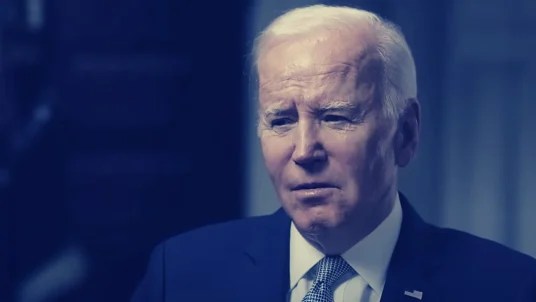
“Take the shot” commanded Biden through his trademark whisper and distressed face struggling to read his loaded teleprompter.
262,908,216 million Americans have walked blindly into another medical experiment unlikely to ever have full knowledge or informed consent to the medical procedure they agreed to.
Their only redress is at the mercy of an admittedly antiquated Vaccine Adverse Event Reporting System (VAERS) well-known for over a decade to vastly underreport true injuries and deaths from vaccination. In fact, HHS has known from an analysis by Harvard Pilgrim that less than 1% of adverse events occurring after vaccination are reported to VAERS.
The statute of limitations to file an injury or death claim is one year for CICP. Harms from the vaccines are still being discovered years after the first shot went into an American arm. Doesn’t matter in the CICP. Another barrier to claim fulfillment is stated on HRSA’s website:
“Temporal association between the administration or use of the covered countermeasure and onset of the injury (i.e., the injury occurs a certain time after the administration or use) is not sufficient, by itself, to prove that an injury is the direct result of a covered countermeasure.”
You read that right. Having an injury after the shot isn’t enough. What other obstacle is one up against when filing a claim? Aaron Siri, lead lawyer for the Informed Consent Action Network told Reuters :
“The CICP is not a court,” he said, noting that it’s part of the “same federal health department that licensed, recommended, and mandated Covid-19 vaccines, and then sits as an investigator and ‘judge’ of any CICP claim. That is a mockery of the term justice.”
Simply put, it’s a place you don’t want to find yourself. You versus the government – no courts, no public attention, and no transparency. Up against the very same well-funded bureaucratic apparatus that has only doubled down on warp-speeding shots into bodies as the science to justify it evaporates and the safety signal compound.
Now let’s investigate CICP’s funding. Keep in mind that a total of $11 trillion has been distributed in the form of federal spending, tax cuts, loans, grants, and subsidies authorized in the wake of the coronavirus pandemic and economic crisis. A Freedom of Information Act Request (FOIA) from author and researcher Wayne Rohde uncovered these numbers regarding CICP’s funding:
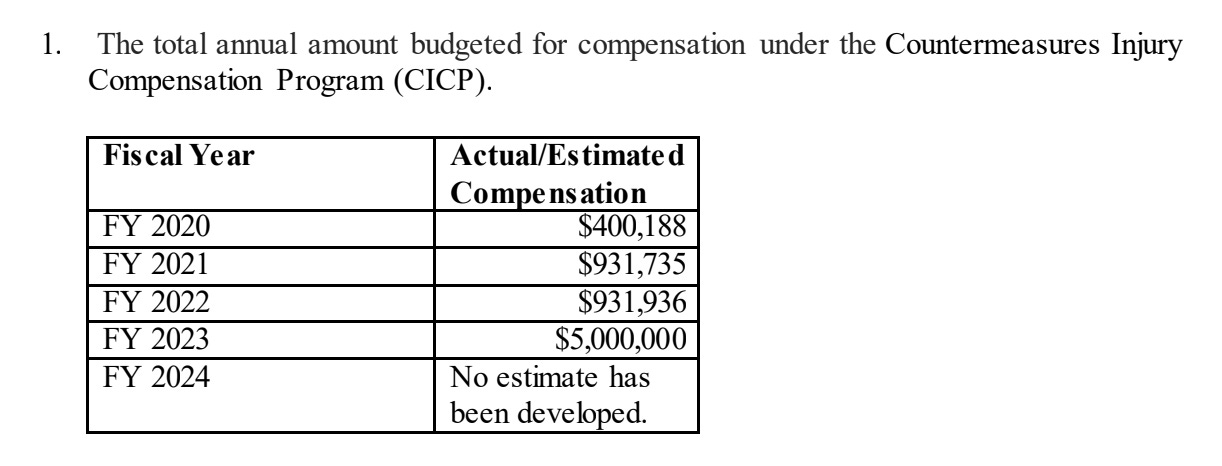
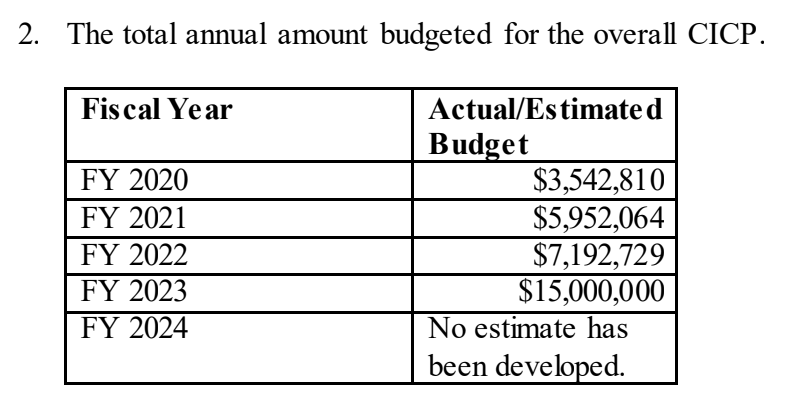
A total of $20M was set aside for claim compensation and budget when it was all said and done for the fiscal year 2023 or 0.00018% of government spending during the failed COVID response. For an unproven product rushed through safety testing and aggressively targeting, often through unconstitutional mandates, every adult, adolescent, child, and infant.
Rohde’s FOIA also uncovered that the CICP estimated that the allotted $15M would “be used to initiate the review of an estimated 1,500 medical reviews of claims and provide compensation to eligible individuals for injuries and deaths directly resulting from the use of covered countermeasures.” In other words, they expected 1,500 injury claims. What did they actually receive?
The latest update from the U.S. Health Resources & Services Administration, which administers the CICP, shows the following numbers:
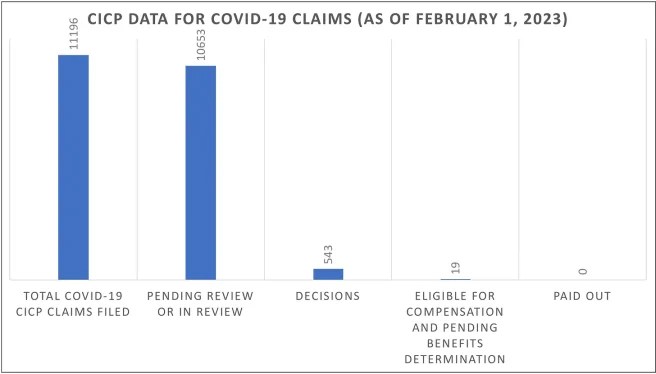
[SOURCE: Aggregate Data from HRSA as of February 1, 2023]
Expected 1,500 claims…received 11,196…in an underreported system. Yet that’s not the most shocking piece of information. For nearly 3 years, HRSA has paid out zero claims. Not a penny to Covid vaccine-injured Americans waiting for assistance.
To get an idea of the potential backlog we are talking about, we go to VAERS where the first records of possible vaccine injuries are recorded before potentially moving onto a CICP claim. Here are the most recent number and types of reports filed after Covid shots:


From past behavior and current trajectory, the U.S. government will try at all costs to avoid taking accountability, financially, ethically, and legally, for the vast amounts and types of injuries caused by the rushed Covid shots. It is up to the media, politicians, and people everywhere to keep this story front and center in an effort to seek justice for those harmed.
Seymour Hersh shares opinion on Edward Snowden
RT | February 25, 2023
Thousands of people in the US intelligence community knew about illegal surveillance by the NSA, but Edward Snowden was the only one to speak out, renowned investigative journalist Seymour Hersh said in an exclusive interview with Afshin Rattansi’s show ‘Going Underground’ on RT.
Hersh described as “quite interesting” the story of the former National Security Agency (NSA) contractor, who back in 2013 leaked a massive trove of classified documents revealing the agency’s extensive spying on the communications of American citizens and other shady practices.
Snowden was “a kid really into computers, not into political science,” which is why he “recoiled” when he learned that the law, which banned intercepting the conversations of Americans without a warrant, was changed under the pretext of the War on Terror.
There were 25,000 people employed by the NSA at that time, according to the Pulitzer Prize winner, and many of them knew that “the rules have changed.”
“Out of those many thousands, one [Snowden] spoke out about a direct violation of one the most sensitive things in the American Constitution,” he said. “There is something about the community that is bizarre.”
It took Snowden a lot of “guts” to do what he did and he’s now paying a high price, Hersh said, adding: “I don’t think it’s safe for him to ever come back in the country [the US].”
The former NSA contractor was charged in the US with theft of government property and giving classified data to unauthorized persons, among other things. His American passport was annulled, with Snowden now staying at an undisclosed location in Russia, where he received political asylum.
Hersh argued that the Snowedn affair should serve as a response to those who label him a “conspiracy theorist” over his reporting, including his recent bombshell article blaming the Biden administration for the explosions on the Nord Stream pipelines in the Baltic Sea last year.
The White House has rejected the story as “fiction,” but Snowden appeared to be convinced of its authenticity. “Can you think of any examples from history of a secret operation that the White House was responsible for, but strongly denied?” he wrote on Twitter a few weeks ago. “Besides, you know, that little ‘mass surveillance’ kerfuffle,” the NSA whistleblower added, referring to his own revelations.
Hersh told ‘Going Underground’ that “many in the US intelligence community, many in the military value the Constitution” and they have often been the sources for his reports.
Those people, some of who are high-ranking, “talked to me privately about the stuff they couldn’t stand… Those people are the people I know. And I will tell you right now – those are the people I’ll protect forever,” the journalist insisted.
In a US-China confrontation, West Asia will bow out
By F.M. Shakil | The Cradle | February 24 2023
The prospect of a US-China war has entered the realm of reality. Increased provocations from US military and political officials regarding the status of Taiwan – which China considers to be part of its historic territory – have heightened the possibility of confrontation in recent years.
With only 13 out of 193 UN member states recognizing the government in Taipei as a separate entity, the global community’s reaction to a Washington-led assault over Taiwan’s status remains highly uncertain.
Today, the reaction of strategic West Asia to a hypothetical conflict between the two superpowers is up for grabs. However, given the region’s reluctance to take sides in the Russian-US stand off, it is likely to be equally hesitant to do so in the event of a US-China conflict.
In a memo released on 27 January, US General Mike Minihan, chief of the Air Mobility Command, wrote: “My instinct tells me we will fight in 2025.” General Minihan’s views align with Taiwanese Minister of National Defense Chiu Kuo-cheng’s statement in 2021 that China will be capable of launching a full-scale invasion of Taiwan by the same year.
In response to General Minihan’s remarks, Mike McCaul, chairman of the US House Representatives’ Foreign Affairs Committee, told Fox News: “I hope he is mistaken but I believe he is correct.” Adding fuel to the fire, US Senate Majority Leader Mitch McConnell said on 29 January, “The chances of conflict in the relationship with China over Taiwan are very high.”
A lot of hot air
Days after the US general issued a warning that Washington may engage in combat with Beijing in the next two years, tensions between the two countries were further exacerbated by the spoof-worthy Chinese spy balloon incident.
According to some senior Republicans and US military leaders, there is a growing concern that a full-scale conflict between the two superpowers is imminent, with the Asia-Pacific (AP) and South Asia (SA) regions likely to be the primary theaters of the conflict.
Jan Achakzai, a geopolitical analyst and former adviser to Pakistan’s Balochistan government, tells The Cradle that:
“The possibility of a war between the United States and China puts everyone on edge, especially the regions that are intricately linked with the US or China. Some nations will be compelled to choose between allying with the US in the case of war or keeping the status quo to lessen the possibility of hostilities.”
Russian involvement in West Asia
Despite nominal trade and geopolitical relations with Moscow, West Asian countries did not support Washington’s position in the conflict between Russia and Ukraine. However, Russia’s veto power at the UN Security Council does have a positive impact on its relationship with regional states, particularly for its ability to prevent expansionist and anti-Arab policies by other permanent council members.
Security and trade remain the two primary pillars of the relationship between Moscow and West Asia, and Russian President Vladimir Putin’s image has played a significant role in shaping these ties.
The UAE serves as a major financial hub for Russia, and Moscow may attempt to leverage its influence in the region to urge the UAE to reconsider US-imposed banking restrictions, if it feels that its interests are being compromised.
In addition, Algeria, Tunisia, Libya, Lebanon, and Egypt are among the countries that purchase wheat from Russia, which further solidifies economic ties between Russia and the Arab world.
Moreover, since joining the expanded Organization of the Petroleum Exporting Countries (OPEC+) in 2016, Russia and Saudi Arabia have worked closely to regulate oil output and price adjustments as part of OPEC+ agreements.
Putin’s public image has, in part, contributed to a surge in support for Russia in the kingdom. In 2018, when Riyadh faced international criticism over the Saudi-orchestrated murder of journalist Jamal Khashoggi, the Russian president made headlines by high-fiving and grinning at the then-isolated Saudi Crown Prince Mohammed bin Salman (MbS) during the G20 summit in Argentina.
Likewise, his prominent role in thwarting the NATO proxy war in Syria – a geopolitical game changer that, arguably, ushered in global multipolarity – has gained Putin fans across a region that has long suffered from western imperialist designs.
Where will West Asia stand?
Although still a hypothetical scenario, it is worth considering how West Asia would respond to a direct US-China conflict. Many prominent geopolitical analysts have speculated that if West Asia, and particularly the traditionally pro-US Arab states of the Persian Gulf, did not toe the US line against Russia – a significantly smaller regional trading partner than China – its loyalties to Washington in a potential US-China confrontation could be further strained.
Compared to Russia, China has significantly larger investments throughout West Asia. In 2021, bilateral trade between Beijing and the region amounted to $330 billion, with approximately 50 percent of China’s energy supply coming from the energy-abundant Persian Gulf.
China has conducted over $200 billion in trade alone with Saudi Arabia and the UAE. From 2005 to 2021, Beijing invested $43.47 billion in Saudi Arabia, $36.16 billion in the UAE, $30.05 billion in Iraq, $11.75 billion in Kuwait, $7.8 billion in Qatar, $6.62 billion in Oman, and $1.4 billion in Bahrain.
In addition to its investments in trade and energy, China has also invested enormous sums of money in West Asian and North African infrastructure and high-tech development projects via its multi-trillion dollar Belt and Road Initiative (BRI).
Beijing has entered into strategic cooperation agreements with Saudi Arabia, the UAE, Algeria, Egypt, and Iran, and has enlisted a total of 21 Arab nations in its ambitious, decade-long effort to revive the historic Silk Road and export its goods to markets throughout Europe and Africa. Currently, infrastructure developed by Persian Gulf nations serves as a transit point for two-thirds of Chinese exports to these continents.
Egypt is a crucial hub for the BRI, with the Economic-Technological Development Area in Egypt’s Suez Canal Economic Zone, near Ain Sokhna, representing one of the major projects for which the two nations signed contracts totaling $18 billion in 2018.
Iraq, the third-largest oil supplier to China after Saudi Arabia and Russia, has also received $10.5 billion from Beijing for BRI-related energy projects, and just this week, agreed to replace its dollar trade with Beijing for the Chinese yuan.
In West Asia, the US plays second fiddle to Beijing
Chinese collaboration with West Asia and North Africa is not confined to trade and economy; Beijing also provides defense equipment to several Arab nations. Since 2019, China and Saudi Arabia have reportedly collaborated on the production of ballistic missiles, and China also sells Saudi Arabia its HQ-17AE air defense system.
Chinese Wing Loong drones have been purchased by the UAE, and Iraq has placed an order for CH-4B drones. Jordan purchased CH-4Bs in 2016, while Algeria acquired CH-5s – the next generation of the CH-4B type – to expand its aviation capabilities in 2022. In addition, Saudi Advanced Communications and Electronics Systems Co. and China Electronics Technology Group are partnering to build a drone factory for local UAV production.
While US President Joe Biden’s administration’s relationship with Riyadh has been strained due to disagreements over human rights and energy policy, China is making significant strides in strengthening its ties with the country.
As Beijing draws closer to Saudi Arabia, the message to Washington from Riyadh is unambiguous: “The people in the Middle East [West Asia] are tired of other countries’ interference because they always come with troubles.”
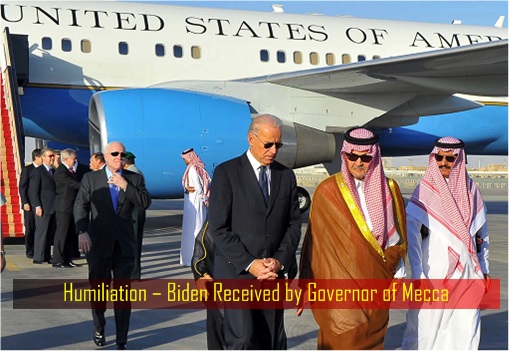
Chinese President Xi Jinping received a royal welcome in Riyadh last December, marking a seismic shift in Sino-Arab relations and boosting China’s image throughout the Arab world. In contrast, US President Joe Biden’s visit to Jeddah in the summer of 2022 received a lukewarm reception. This may suggest that a recalibration of West Asian geopolitical alliances may be on the horizon.
Despite these trends, analyst Achakzai tells The Cradle that West Asia will behave similarly to the way it did during the Russian-Ukrainian conflict – even given China’s increasing business and military presence in the region and the US’s declining control over the oil-rich Arab monarchies.
“Depending on the current situation, the motives of the various states in the region may change and divide into two distinct groups: those who would support the US and those who would support a neutral position.”
China values economy over war
In the Asia-Pacific region, the US and its allies are engaged in a contentious relationship with China regarding maritime boundaries, international trade, human rights, and strategic security issues. Despite signing numerous security pacts with regional players, China appears to prioritize building and strengthening economic ties over military cooperation with Asian-Pacific states.
Due to a history of hostile confrontations and divergent geopolitical objectives, both the US and China seek to increase their military presence in the region. In response to China’s territorial claims in the South China Sea, the US has expanded its military footprint by signing commercial and defense agreements with the Asia-Pacific region.
The two nations have also been at odds over the Trans-Pacific Partnership (TPP), which many viewed as an effort to contain China’s economic and strategic influence in its own backyard. Additionally, tensions have escalated between Beijing and its neighbors, particularly over territorial disputes in the East and South China Seas.
These efforts have been emboldened by the 5-member Quadrilateral Security Dialogue (Quad), which is an informal strategic dialogue between the US, India, Japan, and Australia that seeks “to promote a free, open, and prosperous Indo-Pacific region.” According to Achakzai:
“Countries that have extensive defense agreements with the US, such as Japan, South Korea, and Australia, are most likely to help America. These nations, which have long benefited from their close connections to the US, must now contend with Chinese territorial ambitions in the region and the South China Sea. The nations having an informal security partnership with the US, such as the Philippines, are likely to back the United States in a confrontation.”
The analyst explained that Singapore, Thailand, and Malaysia are expected to remain neutral during the conflict due to their strong business and investment ties with China.
“Other countries in the Asia-Pacific region may feel obligated to support the US if China initiates the conflict. This may apply to countries like Indonesia and Vietnam, which have recently been under Chinese pressure and may need to choose a side to protect their own security,” he noted.
Featured Video

Seyed M. Marandi: US-Iran War Inevitable: Kuwait and Bahrain May Fall
or go to
Aletho News Archives – Video-Images
From the Archives
Oil and the Israel Lobby
Reknowned economist M. Shahid Alam offers this excellent critique of Noam Chomsky’s defective analysis of the relative influence of Oil versus the Israel lobby over US foreign policy: … continue
Blog Roll
 Aletho News
- ICC ignored ‘very well-documented’ NATO crimes – ex-Libyan minister
- SNSC secretary dismisses US response to Iran’s conditions as ‘inadequate’
- Sanaa says Taiz roads open, secure for residents, warns Saudi forces
- Iraqi resistance group urges Saudi leadership to admit defeat, lift Yemen siege
- Trump’s Retreat: How Al-Aqsa Flood Took Down the US Empire
- Israel’s Military Actions in Lebanon Grossly Violate International Law — Lavrov
- Seyed M. Marandi: US-Iran War Inevitable: Kuwait and Bahrain May Fall
- Leaders Condemn Ansarallah Attack on Saudi Arabia While Ignoring Illegal War Against Yemen
- Leaked: Britain’s Covert Iraqi Psyops Network
- Yemeni Armed Forces Warn Airlines Against Using Saudi Airports, Exempt Mecca and Medina
- If Americans Knew
- An error has occurred; the feed is probably down. Try again later.
- No Tricks Zone
- New Study Suggests Large Regions Of The Pacific Ocean Have Been Cooling For The Last 80 Years
- Germany’s Green Energy Debacle: High Energy Costs Force Kahla Porzellan to Close After 182 Years!
- New Study: 50 Years Of The Most Aggressive ‘Net Zero’ Policies Can Only Affect The Global Climate By 0.03°C
- US September “Heat” Was No Record…Many Records Set Decades Ago
- Latest European Green Energy Debacle; Portugal’s Largest Flagship Solar Park Insolvent!
- Green Energy Debacle: German Expert Professor Fritz Vahrenholt Warns Of Severe Economic And Social Consequences
- Two More Paleo Reconstructions Affirm Meters-Higher Sea Levels Across Ireland, Brazil 7000-6000 Years Ago
- New Study: Earth And Venus Surface Warmth Largely Explained By Convection And Lapse Rate, Not CO2 Or Radiation
- 2025 Nature Paper Claiming Worsening Global Drought Gets RETRACTED …Heavily Flawed
- New Study: ‘Global Drought Shows No Detectable Recent Acceleration Under Climate Warming’

